The Mental Load – A Feminist Comic


By Emma, translated by Una Dimitrijevic (Seven Stories Press)
ISBN: 978-1-60980-918-8 (TPB) eISBN: 978-1-60980-919-5

It’s never been a fair world, although until relatively recently (if our choice of leaders can be seen as contrarily evidential) that’s a situation we all apparently aspire to create and maintain. Simultaneously in that nebulous “recent” period, many have sought to address imbalances between the roles and burdens of men and women in a civil and cohesive society, but the first problem they all hit was simply how to state the problems in terms all sides could understand. We have a lot more names and concepts to utilise now in discourse, but the difficulties don’t seem to have diminished at all…

In 2010, software engineer Emma had a revelation and first joined the public debate: crafting and curating a book of strips reflecting upon social issues impacting women, from long hours to workplace politics and getting on with partners… and how unfair and unjust the world was.

The daughter of two mathematicians from Troyes – in the North-eastern region of France – she studied computer science, grew older and lived like most adults: work, fun (when possible), relationships, family. Things changed after she had her first child…

At age 30 she became an avowed feminist, having been compelled to closely observe and re-assess her life in society even as she discovered the concept of “collective intelligence”. Her approach to formalising her thoughts was to identify and deftly dissect components of behaviour – hers and everyone else’s – and the result was The Mental Load. This was her term for all the unacknowledged, unpaid, incessant, invisible crap (mostly thanks to men, absolutely to partners in relationships, but also to many other women) that comprises and comes with almost every relationship.

Those observations were translated into activism, initially as self-published and distributed pamphlets, and in 2016 she started adding cartoons and drawings to the mix. The extreme positive response led her to launch cartoon blog Emmaclit, focussing on issues of racism, capitalism and police violence as well as feminism, following up a year later with sister webcomic Fallait demander (“You only had to ask”) which first posited the notion of an inescapable relational imbalance… a mental load…

In the webcomic, Emma used her own domestic and work life to provide biographical examples of how an unfair, unspoken – and often unrecognised – distribution of labour and responsibility falls on women in even the most equitable and ostensibly harmonious heterosexual relationships. The material went viral and struck a global chord…

Delivering her thoughts as a series of pictorial essays/lessons, Emma convincingly and compellingly argues that the vast majority of the overwhelming, relentless, inescapably burdensome life-tonnage had somehow settled on one side of the bed in most households…

The book – and sequel The Emotional Load (strips from them subsequently appeared in British newspaper The Guardian) – caused something of a commotion and as much trollish kickback as you’d expect from all the usual (and usually wrong) places…

Because a large proportion of humans who won the gender (genital?) lottery don’t really give a damn about other people’s woes – especially if the food keeps coming and the appropriate drawers magically refill with clean clothes and groceries – I fear there’s a segment of truly needy folk who will never benefit from this selection of treatises, anecdotes, statistics and life-changing stories.

Nevertheless, since many guys are genuinely clueless and baffled but willing to adapt, maybe enough of us will give change and thought a chance, even at this late stage. It’s certainly clear that there’s quite some way to go yet…

Best of all, most women reading this will realise that it’s not just them feeling the way they do and may even risk starting a conversation with their significant others, or at the very least, start talking to other women and organising together…

Working in the manner of the very best observational stand-up comedy, Emma forensically identifies an issue and dissects it, whilst offering advice, suggestions and a humorous perspective. Here that’s subdivided into a dozen comical chapters, preceded by an autobiographical context-setting Introduction, before ‘You Should’ve Asked’ finds sexism and discrimination at work heaped upon anyone bold enough to use their legal right to maternity leave, whilst cataloguing who does what around the house in terms of cooking, cleaning, provisioning, time managing, general “adulting”, noticing and remembering stuff needs to be cooked and cleaned, and providing clear-cut alternatives even an old geezer like me could understand, As always telling examples are offered…

‘Violence of the Oppressed’ offers a non-establishment view of 2016s protests against the dismantling of the French Labor Code and citizens’ rights, supplemented by a history of how women got them in the first place, followed by shocking facts about childbirth experiences and time-saving tactics of some medical practitioners in ‘The Story of My Friend C.’

What guys have always claimed they can’t control is carefully explored in ‘The Male Gaze’ and more fully explored in ‘Show Me That Bosom’ (via a deliciously barbed allegory of a land where bared breasts are mandatory).

‘The Wonderful Tale of Mohamed’ singles out one case to detail the treatment of immigrants and brown people in general. It examines what happens when police can use terrorism threats as justification for overreaction, whilst ‘The Wait’ explores individual freedoms and action in committed relationships with specific attention to Emma’s own life and who usually gets left holding the baby. ‘Work!’ then lays out a possible solution and alternatives to the rat race roles if only we ensure time and resources could be more evenly distributed. There’s also plenty of revelations on the way women have messed up the value of the work market…

Other than making men uncomfortable, ‘Check Your Pussy!’ then offers a public service announcement on knowing oneself for all women, setting out actual facts – and even biological route maps! – before social iniquity returns in the form of another exposé on police treatment of non-whites after the death of ‘Just Another Guy from the Hood’…

The ultimate male shield is the concept of “banter” and most effective weapon is the concept of “just kidding”. Both get a well-deserved and thoroughly effective kicking in ‘Chill Out’ before – to celebrate a year of the blog – Emma opted to share a formulative experience that triggered her late-found militancy. The upshot was personal anecdote ‘The Holidays’: describing her bout of childbirth and how it changed her life in all the ways absolutely no one had warned her about…

Now a full-time cartoonist, broadcaster and columnist, Emma continues to poke and probe an unfair world, but this subversively smart, amusingly addictive, slickly convincing, plausibly rational discussion of the way things should not be is undoubtedly a high point in her work and our communal advancement. It may still be a largely male-centric society, but amidst the many moments that will have any decent human weeping in empathy or raging in impotent fury, there are decisive points where a little knowledge and a smattering of honest willingness to listen and change could work bloody miracles…

Buy this book, learn some stuff. Be better, and please accept my earnest apologies on behalf of myself and my entire gender.

Dial it down and literally Man Up guys!
© 2017 by Emma. English translation © 2018 by Una Dimitrijevic. All rights reserved.

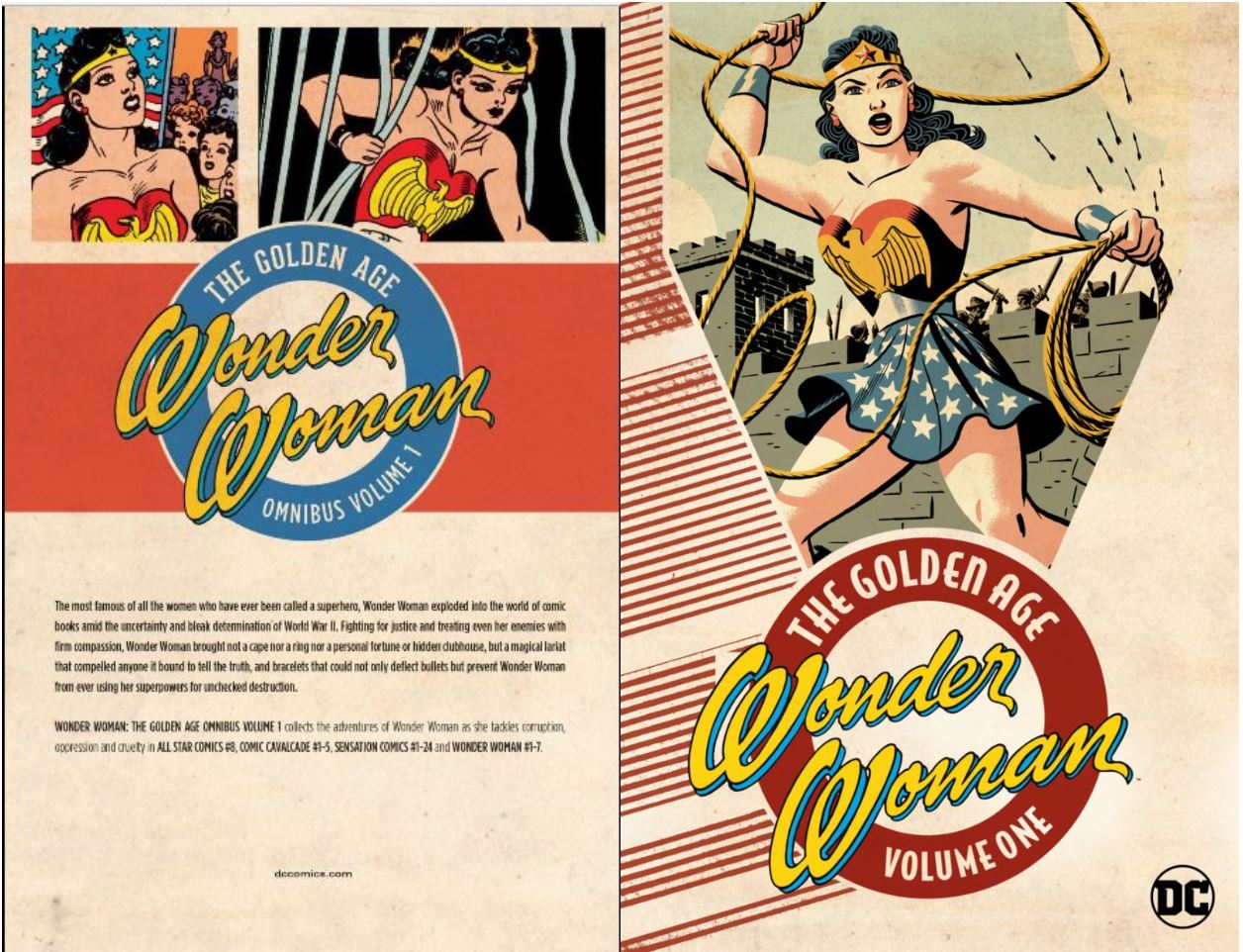
Wonder Woman: The Golden Age volume 1


By William Moulton Marston & Harry G. Peter & various (DC Comics)
ISBN: 978-1-4012-7444-3 (TPB/Digital edition)

We can’t get too far into a month of comics by and/or about women without acknowledging the greatest role model of all time…

Wonder Woman was famously created by polygraph pioneer William Moulton Marston – apparently at the behest of his formidable wife Elizabeth – and illustrated by Harry G. Peter in a well-intentioned attempt to offer girls a positive and forceful role model. Her spectacular launch and preview (that’s the comic book superstar, not Mrs. Marston) came in one of the company’s most popular publications: an extra feature inside All Star Comics #8, home of the immortal Justice Society of America.

One month later the Perfect Princess gained her own series – including the cover-spot – in new anthology title Sensation Comics, and was a huge and instant hit. She won her own eponymous title in late Spring of that year (cover-dated Summer 1942).

Using the nom de plume Charles Moulton, Marston scripted all the Amazing Amazon’s many and miraculous adventures until his death in 1947, whereupon Robert Kanigher took over the writer’s role. Venerable co-creator H.G. Peter illustrated almost every WW tale until his own death in 1958.

Spanning December 1941 – February/March 1943, this superb full-colour compilation (also collects that seminal debut from All Star Comics #8, and her every iconic adventure from Sensation Comics #1-14 and Wonder Woman #1-3, plus the first outing in anthological book of (All) Stars Comics Cavalcade.#1

Naturally, we begin with ‘Introducing Wonder Woman’

On a hidden island of immortal super-women, an American aviator crashes to Earth. Near death, US Army Intelligence Captain Steve Trevor is nursed back to health by young Princess Diana. Fearing her growing obsession with the man, her mother Queen Hippolyte reveals the hidden history of the Amazons to the child. Diana learns how her people were seduced and betrayed by men but rescued by the goddess Aphrodite on condition that they thenceforward isolate themselves from the rest of the world and devote their eternal lives to becoming ideal, perfect creatures.

However, after Trevor explains the perfidious spy plot which accidentally brought him to the Island enclave, divine Athena and Aphrodite appear, ordering Hippolyte to assign an Amazon warrior to return with the American to fight for freedom and liberty.

Hippolyte diplomatically and democratically declares an open contest to determine the best candidate and, despite being forbidden to participate, Diana enters and wins. Accepting the will of the gods, the worried mother outfits her in the guise of Wonder Woman and sends her out to Man’s World…

A month later the story continued where the introduction had left off. Sensation Comics #1 declares ‘Wonder Woman Comes to America’, seeing the eager immigrant returning the recuperating Trevor to the modern World. She also trounces a gang of bank robbers and falls in with a show business swindler…

One major innovation here is the newcomer buying a secret identity: that of lovelorn Army nurse Diana Prince, elegantly allowing the Amazon to be close to Steve whilst enabling the heartsick medic to join her own fiancé in South America…

Even with all that going on, there was still room for Wonder Woman and Captain Trevor to bust up a spy ring attempting to use poison gas on a Draft induction centre, before Steve breaks a leg and ends up in hospital again, where “Nurse Prince” is assigned to tend him…

Sensation #2 introduced deadly enemy agent ‘Dr. Poison’ in a cannily crafted tale which also debuted the most radical comedy sidekicks of the era…

The plucky fun-loving gals of the Holliday College for Women and their chubby, chocolate-gorging Beeta Lamda sorority-chief Etta Candy would get into trouble and save the day in equal proportions for years to come: constantly demonstrating Diana’s – and Marston’s – philosophical contention that girls, with correct encouragement, could accomplish anything that men could…

With War raging and in a military setting, espionage and sabotage were inescapable plot devices. ‘A Spy at the Office’ finds Diana arranging a transfer to the office of General Darnell as his secretary so that she can keep a closer eye on the finally fit Steve. She isn’t there five minutes before uncovering a ring of undercover infiltrators amongst the typing pool and saving her man from assassination.

Unlike most comics of the period, Wonder Woman employed tight continuity. ‘School for Spies’ in #4 sees some of those fallen girls murdered by way of introducing inventive genius and Nazi master manipulator Baroness Paula von Gunther. She employs psychological tricks to enslave girls to her will and sets otherwise decent Americans against their homeland.

Even Diana succumbs to her machinations… until Steve and the Holliday Girls crash in…

America’s newest submarine is saved from destruction and cunning terrorists brought to justice in ‘Wonder Woman versus the Saboteurs’ before issue #6 has the Amazing Amazon accepting a ‘Summons to Paradise’ to battle her immortal sisters in Kanga-riding duels before receiving her greatest weapon: an unbreakable Lasso of Truth which compels and controls anyone who falls within its golden coils.

It proves quite handy when Paula escapes prison and uses an invisibility formula to wreak havoc on American coastal defences…

‘The Milk Swindle’ is pure 1940s social advocacy drama, with homegrown racketeers and Nazi von Gunther joining forces to seize control of America’s milk supply with the incredibly long-sighted intention of weakening the bones of the country’s next generation of soldiers.

Closely following in Sensation #8 is ‘Department Store Perfidy’ wherein the Amazon goes undercover in the monolithic Bullfinch emporium to win better working conditions and fair pay for the girls employed there.

There was a plethora of surprises in #9 with ‘The Return of Diana Prince’ from South America. Now Mrs Diana White, the young mother needs her job and identity back until her inventor husband can sell his latest invention to the US army. Luckily, Wonder Woman and an obliging gang of saboteurs help to expedite matters…

The next major landmark was the launch of the Amazon’s own solo title. The first quarterly opens here a text feature on the Amazon’s pantheon of godly patrons in ‘Who is Wonder Woman?’ after which comic action commences with a greatly expanded revision of her first appearance in ‘A History of the Amazons: The Origin of Wonder Woman’. This precedes a beguiling mystery tale as ‘Wonder Woman Goes to the Circus’ wherein Diana solves the bizarre serial murders of the show’s elephants before Paula von Gunther rears her shapely head again in ‘Wonder Woman versus the Spy Ring’ wherein the loss of the Golden Lasso almost causes her demise and ultimate defeat of the American Army…

The issue ends with ‘The Greatest Feat of Daring in Human History’ as Diana and Etta head for Texas, only to become embroiled in a sinister scheme involving Latin Lotharios, lady bullfighters, lethal spies and a Nazi attempt to conquer Mexico…

Back in Sensation Comics #10 (October 1942) ‘The Railroad Plot’ celebrates Steve and Wonder Woman’s first anniversary by exposing a sinister plan devised by Japanese and German agents to blow up New York using the labyrinth of subway tunnels under the city, whilst ‘Mission to Planet Eros’ debuts the Princess’ long line of cosmic fantasy exploits. The Queen of Venus requests Diana’s aid in saving an entire planetary civilisation from gender inequality and total breakdown, before ‘America’s Guardian Angel’ – from Sensation #12 – sees the Warrior Princess accepting an offer to play herself in a patriotic Hollywood movie, only to find the production infiltrated by the insidious Paula and her gang of slave-girls…

Preceded by an illustrated prose piece about ‘The God of War’, Wonder Woman #2 comprises a 4-part epic introducing the Astounding Amazon’s greatest enemy in ‘Mars, God of War’. He apparently instigated a World War from his HQ on the distant red planet but chafes at the lack of progress since Wonder Woman entered the fray on the side of the peace-loving allies. He now opts for direct action, no longer trusting his earthly pawns Hitler, Mussolini and Hirohito

When Steve goes missing, Diana allows herself to be captured and ferried to Mars. Here she starts disrupting the efficient working of the war-god’s regime and fomenting unrest amongst the slave population, before rescuing Steve and heading home to Earth. ‘The Earl of Greed’, one of Mars’ trio of trusted subordinates, takes centre stage for the second chapter, with orders to recapture Steve and Diana at all costs.

As the duo attempt to infiltrate Berlin, Greed uses his influence on Hitler to surreptitiously redirect the German war effort, using Gestapo forces to steal all the USA’s gold reserves…

With Steve gravely injured, the Amazon returns to America and whilst her paramour heals, uncovers and foils the Ethereal Earl’s machinations to prevent much-needed operating funds from reaching Holliday College, where young girls learn to be independent free-thinkers…

With Greed thwarted, Mars dispatches ‘The Duke of Deception’ to Earth, where the spindly phantom impersonates Wonder Woman and frames her for murder.

Easily escaping from prison, the Princess of Power not only clears her name but also finds time to foil a Deception-inspired invasion of Hawaii, leaving only ‘The Count of Conquest’ free to carry out Mars’ orders.

His scheme is simple: through personal puppet Mussolini, the Count tries to physically overpower the Amazing Amazon with a brutal giant boxing champion, even as Italian Lothario Count Crafti attempts to woo, seduce and suborn her. The latter’s wiles actually worked, too, but capturing and keeping her are two different things entirely and after breaking free on the Red Planet, Diana delivers a devastating blow to the war-machine of Mars…

This issue ends with a sparkling double page patriotic plea when ‘Wonder Woman Campaigns for War Bonds’

Sensation Comics #13 (January 1943) claims ‘Wonder Woman is Dead’ when a corpse wearing her uniform is discovered, and the astounded Diana Prince discovers her alter ego’s clothes and the irreplaceable magic lasso are missing…

The trail leads to a diabolical spy-ring working out of Darnell’s office and an explosive confrontation in a bowling alley, whilst ‘The Story of Fir Balsam’ in #14 presents a seasonal tale concerning lost children, an abused mother and escaped German aviators. All was happily resolved around a lonely pine tree, after which the Immortal Warrior celebrated her next publishing milestone…

The 1938 debut of Superman propelled National Comics to the forefront of their fledgling industry and a year later the company was licensed to produce a commemorative comicbook celebrating the opening of the New York World’s Fair.

The Man of Tomorrow prominently featured on the appropriately titled New York World’s Fair Comics among such four-colour stars as Zatara, Butch the Pup, Gingersnap and The Sandman. In 1940 another abundant premium emerged with Batman and Robin added to the roster, and the publishers felt they had an item and format worth pursuing commercially.

The spectacular card-cover 96-page anthologies had been a huge hit: convincing editors that an over-sized anthology of their pantheon of characters, with Superman and Batman prominently featured, would be a worthwhile proposition. Thus, the format was retained for a wholly company-owned, quarterly high-end package, retailing for the then-hefty price of 15¢.

Launching as World’s Best Comics #1 in Spring 1941, the book morphed into World’s Finest Comics from #2, beginning a stellar 45-year run which only ended as part of the massive clear-out and decluttering exercise that was  Crisis on Infinite Earths. During the Golden Age, however, it remained a big blockbuster bonanza of strips to entice and delight readers…

At this time National/DC was in an editorially-independent business relationship with Max Gaines that involved shared and cross promotion and distribution for the comicbooks released by his own outfit All-American Publications. Although technically competitors if not quite rivals, the deal included shared logos and advertising and even combining both companies’ top characters in the groundbreaking All Star Comics as the Justice Society of America.

However, by 1942 relations between the companies were increasingly strained – and would culminate in 1946 with DC buying out Gaines, who used the money to start EC Comics.

All-American thus decided to create its own analogue to World’s Finest, featuring only AA characters. The outsized result was Comics Cavalcade

Cover-dated December 1942-January 1943 – and following Frank Harry’s gloriously star-studded cover to Comic Cavalcade #1 – Wonder Woman’s fourth regular star slot began with the company superstar solving the ‘Mystery of the House of the Seven Gables’ (as ever the fruits of Marston & Peter’s fevered imaginations) wherein Diana Prince stumbles upon a band of Nazi spies. All too soon, the Amazing Amazon needs the help of some plucky youngsters to quash the submarine-sabotaging brutes…

Wonder Woman #3 then dedicates its entirety to the return of an old foe; commencing with ‘A Spy on Paradise Island’ as the undergrads of Holliday College for Women – and Etta Candy – are initiated into some pretty wild Amazon rites on Paradise Island. Sadly, the revels inadvertently allow an infiltrator to gain access and pave the way for an invasion by Japanese troops…

Naturally Wonder Woman and the Amazons prevail on the day but the sinister mastermind behind it all is exposed and strikes back in ‘The Devilish Devices of Baroness Paula von Gunther’.

Whilst the on-guard Amazons build a women’s prison that will be known as “Reform Island”, Wonder Woman – acting upon information received by the new inmates – trails Paula and is in time to crush her latest scientific terror: an invisibility ray…

‘The Secret of Baroness von Gunther’ offers a rare peek at a villain’s motivation when the captured super-spy reveals how her little daughter Gerta has been a hostage of the Nazis for years and remains a goad to ensure the genius’ total dedication to the German cause… Naturally, the Amazing Amazon instantly determines to reunite mother and child at all costs after which ‘Ordeal by Fire’ confirms the Baroness aiding Diana and Steve in dismantling the spy network and slave-ring the Nazis had spent so long building in America… but only at great personal and physical cost to the repentant Paula…

Much has been posited about subtexts of bondage and subjugation in Marston’s tales – and, to be frank, there really are lots of scenes with girls tied up, chained or about to be whipped – but I just don’t care what his intentions (subconscious or otherwise) might have been: I’m more impressed with the skilful drama and incredible fantasy elements that are always wonderfully, intriguingly present: I mean, just where does the concept of giant war-kangaroos come from?

Exotic, baroque, beguiling and uniquely exciting, these Golden Age tales of the World’s Most Famous female superhero are timeless, pivotal classics in the development of comic books and still provide lashings of fun and thrills for anyone looking for a great nostalgic read. If that’s you, you know what you need to do…
© 1941, 1942, 1943, 2017 DC Comics. All Rights Reserved.


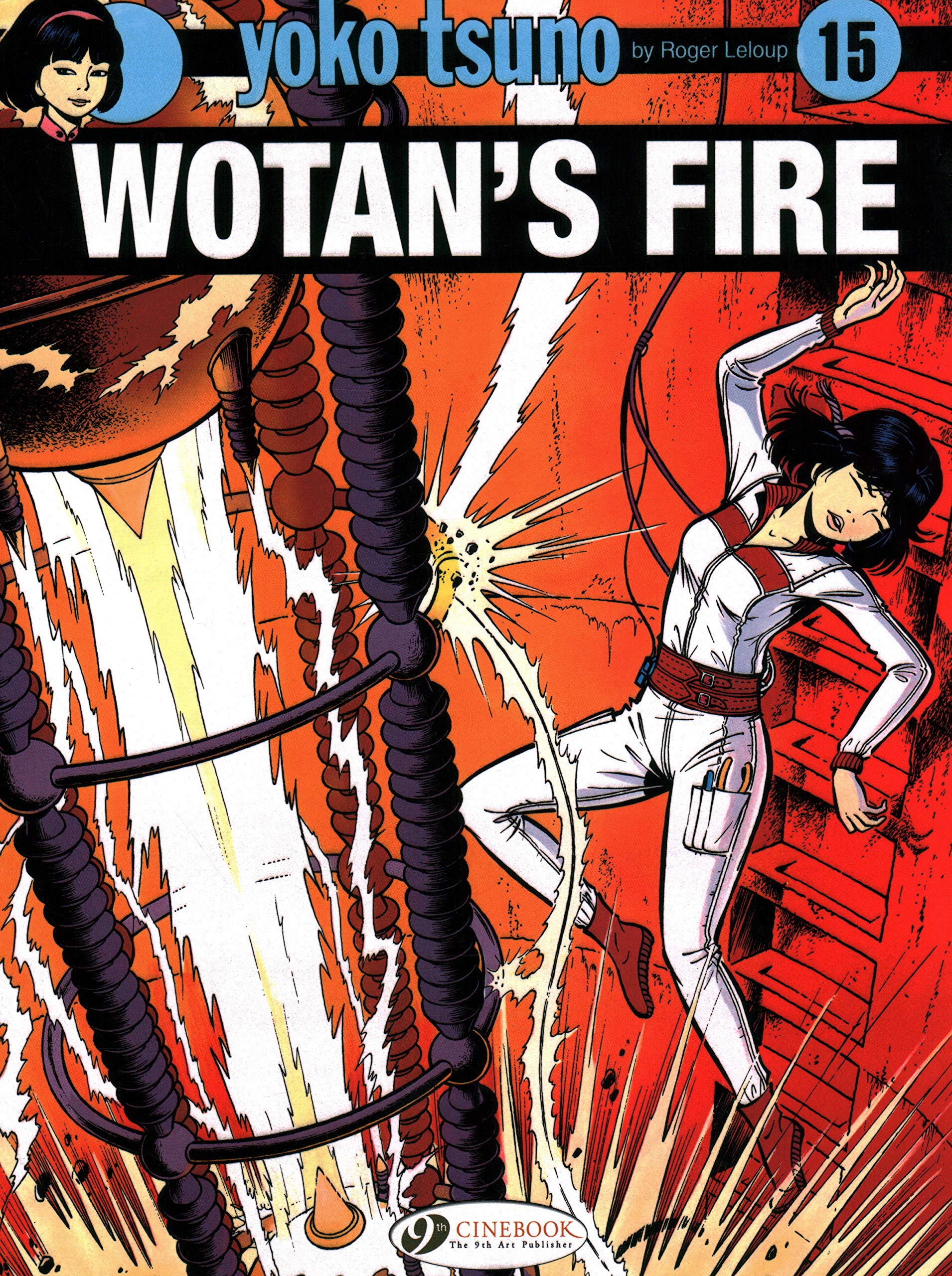
Yoko Tsuno volume 15: Wotan’s Fire


By Roger Leloup, translated by Jerome Saincantin (Cinebook)
ISBN: 978-1-84918-536-3 (Album PB)

In 1970, indomitable intellectual adventurer and “electronics engineer” Yoko Tsuno began her career in Le Journal de Spirou. She is still delighting readers and making new fans to this day in amazing, action-packed, astoundingly accessible adventures which are amongst the most intoxicating, absorbing and far-ranging comics thrillers ever created.

The globe-girdling, space-&-time-spanning epics were devised by monumentally multi-talented Belgian maestro Roger Leloup, who began his own solo career after working as a studio assistant and technical artist on Hergé’s Adventures of Tintin, beginning in 1953.

Compellingly told, superbly imaginative and – no matter how implausible the premise of any individual yarn may seem – always firmly grounded in hyper-realistic settings underpinned by authentic, unshakably believable technology and scientific principles, Leloup’s illustrated escapades were at the vanguard of a wave of strips revolutionising European comics.

That long-overdue sea-change heralded the rise of competent, clever, brave and formidably capable female protagonists taking their rightful places as heroic ideals; elevating Continental comics in the process. These endeavours are as engaging and empowering now as they ever were, and none more so than the trials and tribulations of Miss Tsuno.

Her first outings (the still unavailable Hold-up en hi-fi, La belle et la bête and Cap 351) were mere introductory vignettes before the unflappable troubleshooter and her valiant if lesser male comrades Pol Paris and Vic Van Steen properly hit their stride with premier full-length saga Le trio de l’étrange in 1971 (Le Journal de Spirou’s May 13th edition)…

Yoko’s cases include explosive exploits in exotic corners of our world, sinister deep-space sagas and even time-travelling jaunts. There are 30 European albums to date but only 16 translated into English thus far, and – ironically – none of them digitally.

First serialised in LJdS #2388-2391, Le feu de Wotan hails from 1984: a compelling science crime thriller that was the 19th astounding album. It reached us Brits as Cinebook’s 15th outing, delivering dark drama, murderous mystery and enthralling intrigue…

It begins as Yoko Tsuno arrives at Eltz Castle near Koblenz. She has returned to West Germany after being contacted by an old pal with a problem. Ingrid Hallberg is one of the world’s most esteemed classical musicians and has been hired by the Richter family to examine and assess their collection of ancient musical instruments. On discovering something extraordinary, she immediately contacted her old partner in peril…

Their first encounter (see The Devil’s Organ) was strange and deadly, and now, surrounded by a daunting team of private security guards and other suspicious characters, Ingrid has called in the freelance electrical engineer to assess the castle’s “acoustic qualities”. It’s a ploy masking the fact that Ingrid has uncovered another superweapon from history…

Sneaking around to avoid the suspiciously constant attention of architecture student Franz Thaler, Ingrid shows Yoko a bizarre futuristic battery erratically emitting electrical charges and a larger, deconstructed device in an attic. When Yoko assembles it, the result looks very like a giant gun…

As a storm builds that night, Yoko learns former resident Hans Richter was an experimental physicist who died in 1930s. He built both mechanisms and it appears the briefcase-sized battery connects to the larger device: a tool that fires bolts of lightning …it’s a Death Ray!

Before they can react, Franz steals the battery and locks them in, but his frantic escape is ended when lightning is seemingly pulled from the turbulent skies into the car he’s driving…

Acting quickly, Ingrid and Yoko recover the unharmed battery from the wreck, exploiting the guards’ uncharacteristic eagerness to cover up the event. Later, searching Franz’s room for clues, Yoko finds a radio and is startled to hear from someone who was giving the dead man orders…

A complex string of anonymised instructions and directions soon leads Yoko and Ingrid across country to Wupperthal and a secret rendezvous on an automated suspended railway train. They are being closely observed and followed…

Splitting up, Ingrid follows the “sky-train” as, in the first carriage, Yoko meets Professor Zimmer: Richter’s supervisor on the “Wotan’s Fire” project. He tells her all about the endeavour and how it ultimately killed Richter. In the course of their discussions they realise that his instructions to her had been intercepted and altered. Both have stumbled into a trap set by an unsuspected third agency…

Confronted by a gunman, Yoko deftly disarms the attacker, but her escape is foiled when everyone disembarks at Oberbarmen and she find two more villains waiting. They are holding a gun to Ingrid’s head…

However, when they trade the battery for her, Yoko retains crucial computer discs. As the thieves flee, she realises it’s all as the aged professor hoped. Allying with him and tech businessman/secret agent Peter Hertzel, Yoko learns the plot was allowed to unfold thus in an effort to locate a full-scale version of Richter’s device and foil plans to terrorise the world for profit…

Hertzel pays her a small fortune to help him stop them and soon she and her trusted comrades Vic Van Steen and Pol Paris are in action again…

After deducing where and how the terrorists will strike, the troubleshooters move rapidly. With Ingrid and Zimmer along for the ride, they are soon repairing the long-abandoned bunker installation Zimmer and Richter used to perfect the original weapon: charging more super-batteries to literally fight fire with fire. It works, but almost costs another life…

The final act opens with Yoko spectacularly boarding an oil supertanker at sea to convince the captain that his vessel is about to be an example and object lesson of ruthless criminals.

Yoko’s plan is risky: using their own death ray to counter the impending attack. However, she’s not so much worried about whose gun is bigger, only that by saving the ship and crew she must kill the crooks. That’s when she risks everything on a suicidal strategy, desperate to save the terrorists from themselves…

Rocket-paced, deviously twisted and terrifying plausible, this race against time and war against greed is a superb and mesmerising thrill ride that shows not just the smarts and combat savvy of our adventuring crusader but also her aiding compassion.

As always, the most potent asset of these edgy dramas is the astonishingly authentic and hyper-realistic settings, benefitting from Leloup’s diligent research and meticulous attention to detail. Tourists could use these pages as an A-Z and never get lost, except in rapturous wonder…

Wotan’s Fire is a magnificently wide-screen thriller, tense and satisfying, and will appeal to any fan of blockbuster action fantasy or breathtaking derring-do.
Original edition © Dupuis, 1984 by Roger Leloup. All rights reserved. English translation 2020 © Cinebook Ltd.

Fruit of Knowledge – The Vulva vs. The Patriarchy


By Liv Strömquist, translated by Melissa Bowers (Virago)
ISBN: 978-0-349-01072-4 (B/Digital edition)

We’re going to be using grown-up words today and there’s stuff discussed and depicted here that many strident, officious (and mostly male) people simultaneously deny, deny access to, denigrate and demonise. They even dare to police how actual possessors & users of these body parts may employ or maintain them. Those guys won’t like this book at all.

If that’s you, Go Away. There’s nothing for you to see here and you’ll only get upset. If that’s not you, but you know where they live or hang out, there’s no law that prevents you from buying a copy and sending it to them. Just a thought…

If you know anything about female anatomy, all this will be funny, frightening, glaringly obvious and even enlightening. However, if you’re male – or really, really repressed and/or religious to a fundamental degree – you might want to stop here and pretend this book doesn’t exist.

Wars are fought with intolerant attitudes, economics and misinformation far more than with guns, bombs, knives or deadly chemicals. Oddly enough, that latter arsenal has been used far more than you might imagine: by an ostensibly well-meaning parochial and explicitly patriarchal establishment intent on suppressing women in every walk of life.

In 1978, Liv Strömquist was born in Lund, Sweden. After studying political science, she rekindled an early interest in comics and fanzines to explore topics that gripped her. A cartoonist and radio presenter, she is dogged, diligent, meticulous and devastatingly hilarious when exploring themes important to her. Her first graphic enquiry was 2005’s Hundra procent fett (Hundred Percent Fat) and she’s since followed up with another 10 books, as well as articles and features for newspapers, magazines, assorted media platforms …and comics. She leans left, despises hypocrisy and champions socio-political iniquities like income inequality and gender-determined disempowerment. She does it with scrupulously researched facts translated into cruelly hilarious satirical cartoons.

A ferocious truth-speaker incensed by injustice, in 2014 Strömquist released Kunskapens frukt, an historical exploration of taboos surrounding women’s bodies. It was a global sensation translated into a dozen languages and arrived in English as Fruit of Knowledge.

In a string of carefully constructed comic polemics, she explores, elucidates upon and demystifies the biology of women, how power-seeking groups and individuals have suppressed female autonomy, how male-led societies suppress knowledge, stifle debate, and use shame and gaslighting techniques to keep females downtrodden, destabilised and totally dependent at every level. We’ve even twisted science and history to the cause: excising the very terms needed to efficiently debate the problem…

Guided by a curating avatar, a journey of rediscovery begins with Chapter 1: a history lesson discussing the quirks, insane beliefs and perpetrated atrocities of ‘Men Who Have been Too Interested in the Female Genitalia’

A staggering listicle of ignorance, arrogance and criminal callousness, this section details beliefs and actions of prominent personages who dictated how women should be. I’m staying vague on detail for reasons of taste, but our countdown begins with the socially-applauded misdeeds of John Harvey Kellog and Dr. Isaac Baker Brown before spending lots of time with mega-misogynist St. Augustine.

The shocking influence of “sexologist” John Money is outdone by the combined results of the instigators of Europe and America’s witch trials (including an outrageous game of “hunt the devil’s teat/clitoris”), before aristo fetish slaver Baron George Cuvier mixes kink with racism to a degree that shaped decades of followers. Top dishonours go to those who exhumed Queen Christina of Sweden’s 300-year old corpse in an attempt to prove that the incredibly effective and pioneering monarch had been a “pseudo-hermaphrodite” – AKA Man – all along…

The appalling litany of deranged anti-female delusion is not simply cited for comedic effect (much of it is actually stomach churning to read) but is used to prove Strömquist’s argument that the aggregated efforts of “Men” shaped today’s unjust system: from toxic medical attitudes regarding “women’s issues” to the nonsense-&-prejudice minefield of gender attribution/reassignment policies to the eternal verity that women only exist for men’s use…

Crushing pressure to conform and excel is tackled in ‘Upside-Down Rooster Comb’: showing how women and girls are deprived of knowledge of themselves and groomed to believe their most intimate parts are sub-standard, ugly, unhygienic, freakish and utterly unacceptable.

In discussing a rise in labial plastic surgery, we see how men from every walk of life dictate what women must look like. There is special, prolonged, recurring an hilarious focus on how NASA airbrushed out a human vulva in images on the 1972 Pioneer space probe, and how successive male experts “proved” the female state of being (and attendant reduced self-esteem) was subordinate and dependent on male primacy…

The philosophical, negativistic macho clap trap of Jean-Paul Sartre, Stig Larsson and others is balanced by the views of psychologist Harriet Lerner, but in the end science and school books confirm that the world believes women are there for men to put things in…

It wasn’t always so though, and Strömquist’s masterstroke is a formal lesson on anatomy, supported by thousands of years of art proudly “putting the Vulva on display.” Starting with the Greek myth of Demeter, an almost sidelined fuller history of civilisation follows, citing how women “exposing” themselves remained a component of life everywhere well into the 1800s…

Because there aren’t shocks enough yet, ‘AAH HAA’ re-examines female orgasm, revealing how much even the most supportive and in-tune bloke has been misinformed and misled, and how that elusive “Big O” was cynically reclassified and deemphasised. God and his earthly representatives don’t do well in this chapter, and there’s a stunning parade of quotes from medical men down the ages showing how we all slowly switched from “did the earth move?” to “what’s wrong with you?”…

Throughout, but especially here, historical anecdotes back up the argument. If the thought of woman after woman being maimed or killed by male intransigence is likely to upset you, suck it up: it’s the least anyone can do to expiate centuries of accumulated and unwarranted sexual privilege…

A whimsical peek at a potential matriarchy and more revelatory biology regarding the clitoris heralds a full colour reworking of the Judaeo-Christian creation story in ‘Feeling Eve – or: In Search of Our Mother’s Gardens’. Interview excerpts illustrate women’s eternal concerns: uncovering intimate moments of shame, fear, guilt, menstruation, masturbation, assault, body image and general ego-sabotage…

The book confronts head-on the uncomfortable occurrence we’ve all been programmed to shy away from in ‘Blood Mountain’: challenging adamant yet unshakably coy assumptions that make period products so gosh-darned profitable via some inspired role swapping, targeted historical trawling, a catalogue of nasty myths, modern psychoanalytic theories, episodic exposés of the magic power of blood from “down there”, reports of male PMS from ancient Greece, the revolting habits of Sigmund Freud and fellow period fan Dr. Wilhelm Fliess and examples and depictions of the “red flowering” from as far back as 15,000 years ago…

All that climaxes with a hard look at manufacturers’ obsession with “freshness” and “cleanliness” and how many of their “hygiene” products are killing the planet, all backed up by evaluations of fairy tales through the lens of menstruation rituals…

Fierce, funny and thoroughly thought-provoking, Fruit of Knowledge is acute, astute and magnificently uplifting: challenging and negating centuries of divisive bias and propaganda by asking women to be their own person. This is a book to arm and unite everyone everywhere in accepting that women’s biology and sexuality has never been the business of any man or organisation.
© Liv Strömquist. Original Swedish edition 2014 Ordfront/Galago. Translation © 2018 Fantagraphics Books. All rights reserved.

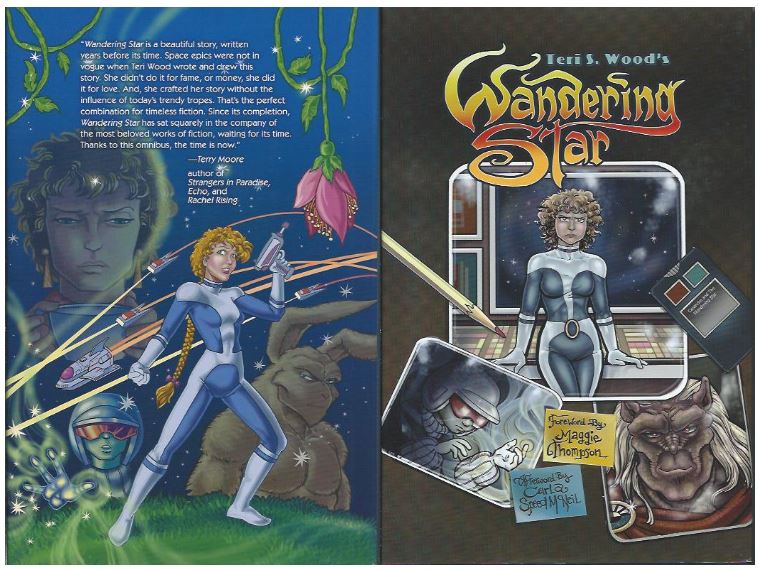
Wandering Star


By Teri S. Wood (Dover Comics & Graphic Novels)
ISBN: 978-0-486-80162-9 (HB/Digital edition)

The 1980s were an immensely fertile time for English-language comics and creators. In America a whole new industry grew around a boom in specialist shops as dedicated retail outlets sprung up all over the country. Operated by fans, for fans, they encouraged and emboldened a host of new creators and publishers to experiment with format, genre and content, whilst eager readers celebrated the happy coincidence that for the first time in a long time they seemed to have a bit of extra cash to play with.

Consequently, the comics-creating newcomers were soon aggressively competing for the attention and cash of consumers who no longer had to get their sequential art fix from DC, Marvel, Archie and/or Harvey Comics. European and Japanese material started creeping in too, and by 1983 a host of young companies such as WaRP Graphics, Pacific, Eclipse, Capital, Now, Comico, Dark Horse, First and many others had established themselves and were making impressive inroads.

Most importantly, by avoiding traditional family-focussed sales points such as newsstands, and general stores, more grown-up material could be produced: not just increasingly violent or sexually explicit, but also more politically astute and intellectually challenging. And even – just occasionally – addressing classic genres with a simple maturity comic books had not been allowed to express since the Comics Code shut down EC Comics.

New talent, established stars and different thematic takes on old forms converged, finding a thriving forum hungry for something a little different. Small companies and even foreign outfits had a fair shot at the big time and many great publications came – but, almost universally, as quickly went – without getting the attention or success they warranted. The era encouraged many untried creators to take a shot and, although the surge led to a spectacular implosive bust, a few truly impressive series weathered the storm and left their mark.

One such was Wandering Star by Teri S. Wood who soldiered on to create a true epic. After self-publishing for years, in 2016 the entire 21-issue odyssey was collected in a monumental and prestigious hardback edition. We all hoped it would belatedly transform the tale from beloved cult classic to the pioneering trail blazer of comics science fiction it deserves to be. We’re not there yet, but the book is still available if you want to come late to the party…

Resa Challender started out as most cartoon aspirants did back then; selling strips to fan press publications (Amazing Heroes), progressing to a regular series gig at one of the smaller companies (Rhudiprrt: Prince of Fur for MU Press) and all the while looking for a signature concept to cement inevitable stardom.

For Teri/Resa that was proudly self-professed space opera Wandering Star, which she originally self-published in 1988 (Happy 35th, kiddo!) without appreciably troubling the comics-buying masses…

That original exuberant, raw-edged first episode is included in the copious Bonus Material section at the back of this book, accompanying an Afterword from Carla Speed McNeil (and I will get around to covering her fabulous Finder series soon…), plus a 30-page full-colour section displaying a vibrant gallery of covers and promotional prints created during the series’ original run from 1993-1997 …and again Happy Anniversary!!

Nearly 500 pages earlier Maggie Thompson starts the ball rolling with her reminiscence-rich Foreword, recalling the author’s early days and connection to Comics Buyers Guide, which Wood expands upon in her own fact-filled Introduction.

When she was ready, Teri S. Wood returned to her 30-page draft of Wandering Star and severely retooled it. The result then launched through her own Pen and Ink Comics for 11 issues of a loudly touted 12 issue maxi-series, before being picked up Sirius Press who took away all the administrative hassles and let her get on with writing and drawing it until its actual conclusion with #21.

I called this a space opera, and it qualifies in the truest sense of the term. The story of an Earthling stuck at a hostile pan-species university overcoming alien prejudice and – with a small group of allies – becomes instrumental in stopping a vast intergalactic war is the very essence of that particular genre, but Wandering Star was different then and still delights today because it avoids all the easy pit-stops and pitfalls of the trope.

There is an overwhelming threat to universal peace, there is a monstrous and dreadful cosmic personal antagonist (in the form of brutal Commander Narz) and there is a doughty, trusty crew of allies. These include blind psionic powerhouse Madison, energy being Elli, wise old veteran Graikor and hateful bully-turned-staunch-comrade Mekon Dzn Appogand, plus (latterly) fellow human Joey – all frantically hurtling across the cosmos as embattled heroes trying to keep the fugitive vessel Wandering Star out of the clutches of an invading army willing and able to rip the Galactic Alliance to shreds…

From the start Wood favoured emotional involvement rather than over-used and obvious action/spectacle to engage her readership: deftly utilising the serial form to shape cast and characters, and show scary, painful, funny and ultimately intimately revelatory moments.

Stooping to an obvious if rather unfair comparison, it’s something Star Wars movies have never accomplished, and why those players are so wooden and 2-dimensional, whereas TV series like Star Trek (especially Picard and Strange New Worlds), Farscape, Firefly or Killjoys excel at making theirs authentic and believable. They use screen time for interaction, not extra action…

That’s not to say that there isn’t plenty of cataclysmic cosmic conflict and ominous, last-ditch clashing, only that Wood knew from the get-go that people – no matter what shape, colour or construction – are infinitely more interesting than one more exploding planet or looming astral dreadnought. Most importantly, she knew how to use them and when to expend them for maximum impact…

It all begins on peaceful planet Machavia as history student Aldar tracks down celebrated recluse Casandra Andrews and convinces the aged Earther to share the true story of how 30 years ago a bunch of raw kids on the legendary Wandering Star saved the Galactic Alliance from the seemingly invincible, duplicitous and rapacious Bono Kiro Empire

Potent, powerful, uplifting and breathtaking authentic, this is a war story that deals with consequences rather than simple victories and defeats.

Wandering Star is a true and pure example of sequential narrative as Art. Wood produced it practically as a labour of love; for precious little financial reward or public acclaim. She improved and gained confidence with every page and every issue and she did it because she had a story that wouldn’t let her go until she told it…

And once you read it, it won’t loosen its hold on you, either…
© 1993, 1994, 1995, 1996, 1997 2016 Teri S. Wood. Foreword © 2016 Maggie Thompson. Afterword © 2016 Carla S. McNeil. All rights reserved.

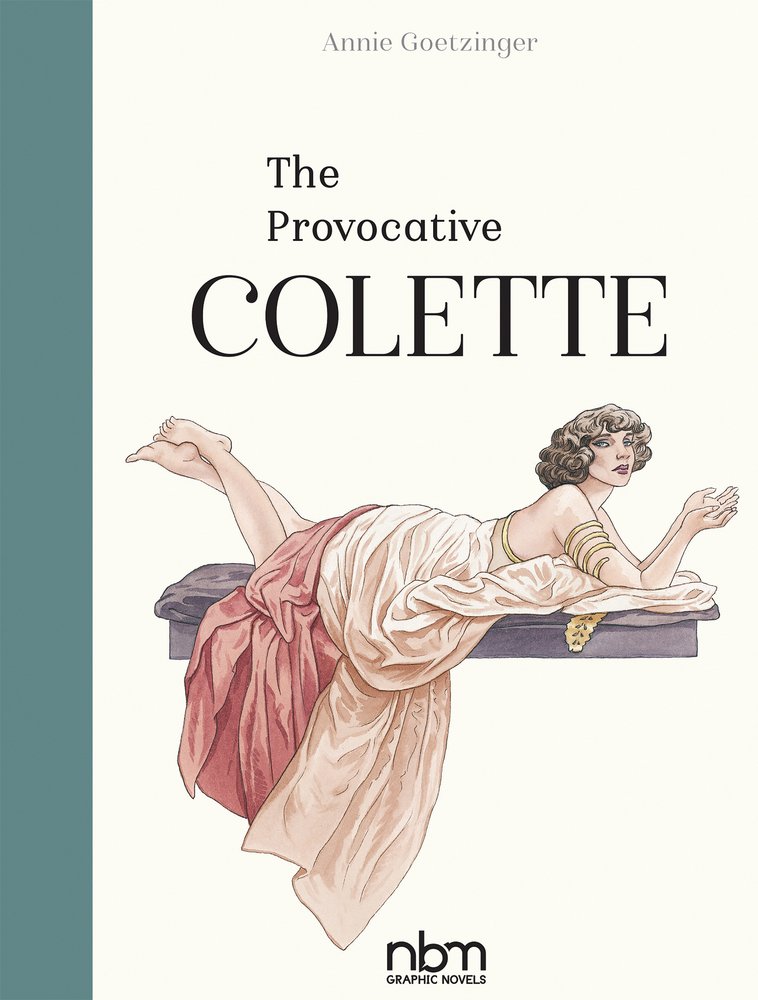
The Provocative Collette


By Annie Goetzinger, translated by Montana Kane (NBM)
ISBN: 978-1-68112-170-3 (HB)

Publisher NBM struck pure gold with their line of European-created contemporary arts histories and dramatized graphic biographies. This one is one of the very best but is tragically still only available in physical form. Hopefully that oversight will be addressed soon as it is a most enticing treat: diligently tracing the astoundingly unconventional early life of one of the most remarkable women of modern times.

Sidonie-Gabrielle Colette (January 28th 1873 – August 3rd 1954) escaped rural isolation and stagnation via an ill-considered marriage but, by sheer force of will and an astonishing gift for self-expression, rose to the first rank of French-language (and global) literature through her many novels and stories. The one you probably know best is Gigi, but you should really read a few more such as La Vagabonde or perhaps The Ripening Seed

For her efforts she was elected to the Belgian Royal Academy in 1935 and France’s Académie Goncourt a decade later. She became its President in 1949, the year after she was nominated for a Nobel Prize. Her grateful country also celebrated her as Chevalier (1920) and Grand Officer (1953) of the Légion d’honneur.

Colette’s relentless search for truths in the arena of human relationships – particularly in regard to women’s independence in a hostile and patronising patriarchal society – also led her to pursue freedom of expression through dance, drama, acting & mime, in film and as a journalist.

The fact that – for most of her early life – men controlled her money also prompted her far-reaching career path until she finally managed to win control of her own destiny and coffers…

Our drama unfolds in 1893 as 20-year-old Sidonie-Gabrielle readies herself for her wedding to prestigious and much older music journalist Henry Gauthier-Villars. The great man is celebrated nationally under his nom de plume “Willy”.

That’s also the name under which he will publish his wife’s first four, hugely successful Claudine novels whilst pocketing all the profits and attendant copyrights…

Eventually breaking free to live a life both sexually adventurous and utterly on her own terms, Colette never abandoned her trust in love or reliance on a fiercely independent spirit. And she shared what she believed about the cause of female liberty with the world through her books and her actions…

This bold, life-affirming chronicle was meticulously crafted by the superb and much-missed Annie Goetzinger (18th August1951 – 20th December 2017). Tragically it was her last in a truly stellar career. The award-winning cartoonist, designer and graphic novelist (The Girl in Dior, The Hardy Agency, Félina, Aurore, Marie Antoinette: Phantom Queen, Portraits souvenirs series) supplied here sumptuous illustration perfectly capturing the complexities and paradoxes of the Belle Epoque and the wars and social turmoil that followed. Her breezy, seductively alluring script brings to vivid life a wide variety of characters who could so easily be reduced to mere villains and martinets, but instead resonate as simply people with their own lives, desires and agendas…

The scandalous escapades are preceded by an adroit and incisive Preface from journalist and author Nathalie Crom: and bookended with informative extras such as ‘Literary References’, and full ‘Chronology’ of the author’s life, plus potted biographies of ‘Colette’s Entourage’: offering context and background on friends, family and the many notables inevitably gathered around her.

Additional material includes a suggested Further Reading and a Select Bibliography.

A minor masterpiece honouring a major force in the history and culture of our complex world, this book should be at the top of the reading list for anyone who’s thought “that’s not fair” and “why do I have to?”

The Provocative Colette is a forthright and beguiling exploration of humanity and one you should secure by any means necessary.
© DARGAUD 2017 by Goetzinger. All rights reserved. © 2018 NBM for the English translation.

Captain Carter: Woman Out of Time


By Jamie McKelvie, Marika Cresta, Erick Arciniega, Matt Milla & various (MARVEL)
ISBN: 978-1-3029-4655-5 (TPB/Digital edition)

Comics fans are a strange breed. We funnybook cognoscenti have always wanted lesser, non-enlightened mortals to understand why our addiction to convoluted continuity and printed pamphlets are the best of all possible worlds, but then carp and whine when the greater world catches on via a major movie franchise, and embrace what we churlishly declare is not the “right “Avengers or Batman

We also wish more girls read X-Men and The Hulk

Seriously though, now that superheroes are a common global currency, us paper purists just need to accept that other media not only exploit our preferred area of delight, but inevitably affect and reinforce it. After all, does it really matter when comic book stories come from, if they are as good as possible and just as entertaining as any classic in-continuity romp?

It’s not as if comics didn’t already have an in-built mechanism for incorporating outlandish elements. We call it The Multiverse

The Marvel Cinematic Universe bound together many beloved but radically reinterpreted elements of historical comics innovation into a separate reality (more than one, actually), and here that pays off big for movie icon Peggy Carter as her subsequent solo TV series and animated What If? appearances are finally parlayed into a comic series.

Written by Jamie McKelvie (Phonogram, The Wicked + The Divine, Catwoman, Batman, Young Avengers), illustrated by Marika Cresta (Star Wars: Doctor Aphra, Power Pack, Fearless, X-Men and Moongirl) and colourists Erick Arciniega & Matt Milla, all lettered by VC’s Clayton Cowles, her debut 5-issue series (cover-dated May-October 2022) is collected here: offering a glimpse at a possible world where the super-soldier serum that created Captain America transformed not passionate idealistic kid Steve Rogers, but a potent, competent, highly trained and educated woman of the world…

Mirroring mainstream continuity, it begins with the finding and thawing of a WWII legend who supposedly perished battling arch-Nazi Baron von Strucker. Margaret “Peggy” Carter quickly adapts to the many changes of a new century: appreciating how far women – and minorities – have advanced even as ambitious men and untrustworthy governments squabble over who will control her. Some things never change…

Ultimately she agrees to work for British Intelligence, taken under the wing of Prime Minister Harry Williams, who sees her a living symbol of a go-getting country on the move again. He’s going to personally manage and supervise the career of the UK’s only superhero extremely carefully and very closely…

To that end, and over her grudging protests, he’s placed the Captain with new agency S.T.R.I.K.E. (Special Tactical Reserve for International Key Emergencies) and appointed operative Lizzie Braddock as her liaison/minder. She’s not what she at first appears to be, but then again, neither is the PM…

Before Carter can get her bearings, a string of deadly attacks hurls her back into the bloody superhero spy game when a mysteriously resurgent Hydra targets their oldest enemy and turn London into a war zone…

The hero quickly falls into old habits, living her new life on a war footing, but something just doesn’t feel right. Facing an endless barrage of missions against foes like people-smuggler Batroc, Carter slowly realises that the government has been massaging the political messages she’s been learning, and might not be acting on behalf of all the people.

A different and uncomfortable truth comes via neighbour Harley Davis: a young black girl who explains what “processing” illegal migrants and asylum seekers actually means…

Appalled and now informing herself from a variety of sources, Carter refuses to be a flashy propaganda tool any longer, provoking an immediate and lethal response from the headline-obsessed government. As bodies drop and attacks intensify, she finds a welcome ally in Tony: grandson of genius inventor (and Carter’s closest WWII comrade) Howard Stark

He’s just as smart as grandpa and also despises tyrants and fascists…

As the government go into spin mode, blaming and framing everybody else for their sins, Carter, Stark, Braddock and Davis take the fight to them, only to discover an ancient and unholy secret aristocracy at the heart of the conspiracy, one that has been feeding on Britain’s life blood for centuries…

Now it’s time the people saw the light and our assembled heroes cleaned house…

Backed up by a cover gallery and costume/uniform designs by McKelvie, this tome includes a wealth of variant covers from Sara Pichelli & Matthew Wilson, Marvel Studios, Jen Bartel, Todd Nauck & Rachelle Rosenberg, Paco Medin & Jesus Aburtov, Marc Aspinall, Ashley Witter, and Romy Jones.

Fun, fast, furious, filled with the kind of in-joke riffs veteran fans love and telling a fresh new tale featuring a truly forceful “fighting female”, Captain Carter is also a wry and barbed political and social statement on the responsibilities of rule, and a damn fine read as well. She’s not The Captain, but she’s just as good – and maybe even better…
© 2022 MARVEL.

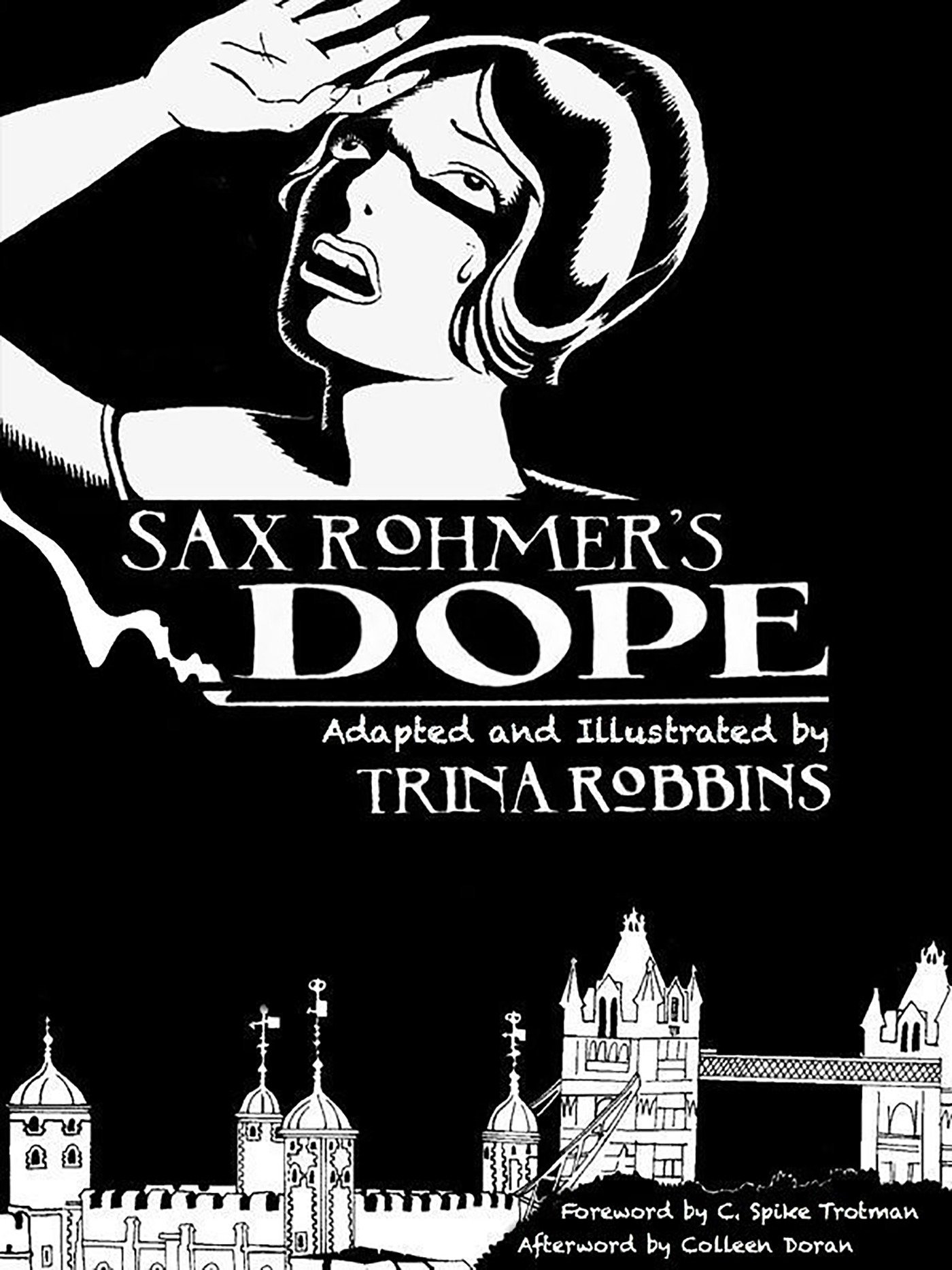
Sax Rohmer’s Dope


Adapted by Trina Robbins from the novel by Sax Rohmer (It’s Alive/IDW)
ISBN: 978-1-63140-957-8 (HB/Digital edition)

The 1980s were a hugely fertile time for American comics-creators. An entire new industry started with the birth of the Direct Sales market and – as dedicated specialist retail outlets sprung up all over the country (operated by fans for fans) – new companies experimented with formats and content whilst eager readers celebrated the happy coincidence that everybody seemed to have a bit of extra cash to play with.

Most importantly, much of the “kid’s stuff” stigma finally dissipated. America was catching up to the rest of the world in acknowledging that sequential narrative might just be a for-real actual art-form able to handle sophisticated themes and notions…

Consequently, many new publishers were soon competing for the attention and cash of punters who had grown resigned to getting their on-going picture stories from DC, Marvel, Archie and/or Harvey Comics. European and Japanese material had been creeping in and by 1983 a host of young companies such as WaRP Graphics, Pacific, Capital, Now, Comico, Vortex, First, Dark Horse Comics and many others had established themselves and were making impressive inroads.

New talent, established stars and fresh ideas all found a thriving forum to try something a little different both in terms of content and format. Even smaller companies had a fair shot at the big time and a lot of great material came – and too often, as quickly went – without getting the attention or success it warranted.

At the forefront of the revolution – and a perfect example – was Eclipse Comics who entered the arena at the start in 1981 with a black-&-white anthology magazine; quickly followed by a terrific line of genre titles crafted by the industry’s top talents and emerging superstars.

Although the bold fledglings were gone a decade later, their influence still lives on, as does much of the material they originally released: picked up, reprinted and expanded upon by more fortunate successors…

The latest long-overdue returnee is a decades-anticipated and awaited (by me at the very least) cartoon compilation of a scarce-remembered book adaptation. The inspirational original tome was a scandalous classic of crime and debauchery from a semi-mythical era, penned by Sax Rohmer …mostly remembered these days for inventing the ultimate personification of stranger-danger… Fu Manchu.

Starting its serialised run in monochrome anthology Eclipse (The) Magazine and concluding in the pages of full-colour indie anthology Eclipse Monthly, Sax Rohmer’s Dope was deftly adapted by pioneering cartoonist, historian and activist Trina Robbins, beginning in issue #2 (July 1981) and featuring in all the rest until the 8th and final one (January 1983).

Uncompleted, the saga continued and climaxed over the first three issues of Eclipse Monthly (August – October 1983) before promptly vanishing from view, despite magazine stablemates such as Ms. Tree, I Am Coyote, Ragamuffins, Masked Man and others all going on to greater success – and collected editions…

Here then at last is Trina Robbins’ lost masterpiece: a moody interpretation of a rather infamous and groundbreaking book – sensationally based on the first recorded celebrity death due to recreational drug abuse, and available as a sturdy monochrome hardback or digital edition. The stark shenanigans are preceded by an effusive Foreword from artist and publisher C. Spike Trotman, and a revelatory, reminiscing Introduction by Robbins herself, disclosing the origins of her adaptation whilst confronting head-on the dreadful truth: Dope was a book of its time, unashamedly racist (as was its author) and probably even unaware of any harmful connotation to such an attitude…

Robbins then makes a rock solid and potently valid case for why we elevated 21st centurians should read it anyway…

The astounding shocker opens in ‘London, 1919’ as sound fellow Quentin Gray meets up with fellow swells Mrs. Irvin and her raffish companion Sir Lucien Pyne before being introduced to the seductive and tantalising half-world of the High Society drugs scene; as disseminated through the machinations of ostensible perfume trader Sheikh El Kazmah

It’s the same old story: flighty Rita Irvin has succumbed to addiction but has no more money. Yet still she baulks when the seedy dealer suggests another manner of payment…

‘Chapter Two: The Fatal Cigarette’ opens a little later when Quentin greets formidable government official Commissioner Seton (recently returned from the east where he earned the title “Pasha” for his services to the Empire). The wise authoritarian has come to view the recently expired corpse of Pyne: stabbed to death soon after Gray left him and now lying in Kazmah’s apartments. Of Rita there is no sign…

On later meeting Rita’s physician Dr. Margaret Halley, Quentin’s disquiet grows. The boldly modern young woman even demands he throw away the cigarettes Pyne gave him before she speaks further. Of course, he had no idea until she warned him that they were laced with opium…

‘Chapter Three: A Star is Born – and Falls’ relates the sad tale of rising theatrical sensation Rita Dresden and how the nightly pressures of performing were temporarily assuaged by the scheming Pyne who offered her comfort and calming chemical gifts: comforts that she soon could not do without…

Rita’s fall retroactively continues in ‘Chapter Four: Pipe Dreams’ as she is introduced into a dope ring of well-heeled degenerates: attending the “poppy parties” of Mr. Cyrus Kilfane and encountering the striking and sinister Lola Sin

Fleeing that debauched debacle, Rita literally ran into well-meaning Monte Irvin and was almost saved.

Almost…

‘Chapter Five: Limehouse Blues’ relates how the triply-addicted (veronal, cocaine and opium) Rita decides to marry Monte but cannot shake the corrupting influence of Pyne, his circle of privileged peers and the implacable beast her addiction has become…

Even her marriage proves no bulwark and ‘Chapter Six: To the Brink’ sees the new bride drawn into a cycle of abuse and exploitation as Madame Sin and her enigmatic husband fleece the newlywed and seek to use her to expand their clientele…

Events rush towards a sordid, inevitable conclusion in ‘Chapter Seven: Mollie Gets Amorous’ as Gray, Seton and formidable Police Chief Inspector Kerry close in on the poppy club and the nefarious dealers; leading to a daring Limehouse raid in Chapter Eight: A Visit to Sin’ with shocking disclosures in ‘Chapter Nine: Above and Below’ and the exposing of even darker secrets and an intoxicating conclusion in ‘Chapter Ten: The Song of Sin Sin Wa’

Following an in insightful Afterword from groundbreaking cartoonist Colleen Doran, Jon B. Cooke offers a wealth of background and historical context in ‘Sax, Drugs, and the Yellow Peril’: describing the nativity of Rohmer’s novel and the very real scandal of London actress and rising Society ingenue Billie Carleton whose death from a cocaine overdose rocked the Empire and beyond in 1918.

The photo-filled feature section also offers “Background Dope” sidebars on Rohmer’s ‘The Red Kerry Mysteries’, ‘Her Other Drugs of Choice’, ‘Slumming in the East End’ and ‘The Devil Doctor in Comics’ as well as a captivating ‘Trina Robbins Biographical Sketch’ and other contributors.

Potent, innovative, powerful and – in comicbook terms at least – a damned fine read, Dope is a sheer delight no lover of the graphic medium should miss and this hard-hitting stylish hardback may be the best thing you’ll buy this year.
Dope © 1981-2017 Trina Robbins. Foreword © 2017 C. Spike Trotman. “Sax, Drugs, and the Yellow Peril”, Trina Robbins bio © 2017 Jon B. Cooke. Afterword © 2017 Colleen Doran. All Rights Reserved.

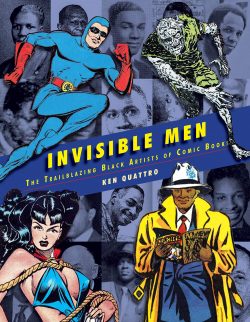
Invisible Men – The Trailblazing Black Artists of Comic Books


By Ken Quattro, and featuring material by Adolphus Barreaux Gripon, Elmer Cecil Stoner, Robert Savon Pious, Jay Paul Jackson, Owen Charles Middleton, Elton Clay Fox & George Dewey Lipscomb, Clarence Matthew Baker, Alvin Carl Hollingsworth, Ezra Clyde Jackson Alfonso Greene. Eugene Bilbrew, Orrin C. Evans, George J. Evans Jr., John H. Terrell, William H. Smith, Leonard Cooper, Calvin Levi Massey & various (IDW/Craig Yoe Books)
ISBN: 978-1-68405-586-9 (HB) eISBN: 978-1-68406-912-5

I’ve spent a lot of time here talking about “firsts” and “breakthroughs”, “role models” and changes in culture, and frankly, I’m not apologizing for any of it. We are not just the Naming ape and the Making ape, we’re also the Worshipping ape: contriving a never-ending blend of guesses, fiction and unexplained phenomena to bolster our courage, feed our hopes and explain away bewildering mysteries.

No other animal worships anything or uses supposition to build a model of the universe. Well, maybe cats do, but only in front of refrigerators. I’m still pondering that one and I’ll get back to you…

In comics we have always noted what hero and villain does what, mused on how that affects the reader and generally congratulated ourselves on how far we’ve come. What we don’t do so often is focus on how those comics are made, who did the work and how their lives were and are shaped by and impacted upon in what has always been a very hard-hearted if not actually cutthroat commercial industry.

For decades, a notion persisted that American comic books and the newspaper and magazine strips they grew out of were the sole preserve and creation of white men. It’s a blatant lie of omission fuelled by ignorance and apparent lack of interest. In recent years, as the world of word/picture stories became both an acceptable art form and cultural wellspring as valid and profitable – and high-fallutingly pompous – as movies, ballet or even jazz, it’s a belief that has been thoroughly challenged and utterly rubbished.

This superb, Award-winning collection drives a final great big stake through the notion by detailing the lives of black contributors to and workers in comics who were unnecessarily neglected and sidelined from the start. Here is a catalogue of almost universally unsung stars whitewashed out of comics history – just like in so many other areas of human endeavour over the last three centuries…

This scholarly examination details and commemorates the artists (some of whom you may have even heard of), threading and weaving them back into the full tapestry through a concise history of America’s negro culture spanning the end of slavery to the latter quarter of the last century. when the Civil Rights movement reminded white America and the wider western world that black people still dwelt amongst them and would no longer tolerate being Separate and (un)Equal…

Published under the aegis of Craig Yoe’s pioneering, tireless efforts to legitimise the world of funnybooks, Invisible Men is Compiled and written by author, essayist and historian Ken Quattro (Hoo-Hah!, The Al Williamson Reader). It shines a light on dozens of African Americans who contributed to the burgeoning comic book field. Many also had lengthy careers in a parallel but unspoken, black-only publishing industry (to which, just like the movies, made books, comics and magazines white audiences were utterly oblivious). Others were not so fortunate…

These personal histories are supported by copious examples of their work and even the other sort of stories: complete strips to read and enjoy, elevating this collection beyond mere historical tract and cultural correction whilst conveying and sharing the joyous exuberance and “anything goes mentality of Golden Age” comics entertainments…

Setting the scene is an Introduction from archaeologist, cultural anthropologist and comics fan Stanford W. Carpenter, PhD, addressing the vast, varied and deliberately buried social and racial mix that was almost uniformly subverted to a male, white, Anglo-Saxon sensibility and agenda in the natal moments of the comics industry…

Then Quattro’s essay ‘Seeing the Unseen’ scrupulously details the lousy, dangerous working world for non-white mass media artists and how the situation so-slowly altered over decades. He also bravely takes the bull by the horns in addressing the ever-shifting terminologies used to define racial (and religious) differences over decades. If even reading certain words or mercifully archaic and obsolete phrases might cause you difficulties, you’re better off stopping here and staying unenlightened. We’ll just go on without you…

The first candidate for your attention is ‘Adolphus Barreaux Gripon – Visible Man, Invisible Pioneer’ and he is the perfect example to discuss the far from clear-cut social scene of this era. Well-educated and relatively well-off, he was also called Adolphe Leslie Barreaux and was officially classified by the US Census Bureau as “mulatto”. For many that meant he was just white enough to acceptable…

He worked as a magazine illustrator, newspaper strip artist and – when comic books were born – drew those too. Here, that translates to beautiful examples of The Enchanted Stone of Time (Dell’s The Comics), Flossie Flip (a regular of the Police Gazette), Dragon’s Teeth from Champion Comics, and the legendarily salacious Sally the Sleuth (Private Detective Stories, Crime Smashers). His entry concludes with Sally saga ‘Death Bait’, as seen in Private Detective Stories volume 21, #3 from June 1949.

‘Elmer Cecil Stoner – Harlem Renaissance Man’ traced his lineage back to George and Martha Washington (before the first First Lady freed his ancestors), and became a prominent artist in Pennsylvania. His comics efforts included The Golden Age Blue Beetle, The Challenger and Phantasmo whom he created for Dell’s The Funnies. After WWII he moved into producing commercial and promotional comics as well as high profile advertising work. His major contribution here is ‘The Threat from Saturn’ as originally seen in The Blue Beetle #34, September 1944 and biographic strip ‘Rev. Ben, Fighter of Fascism’ (detailing the life of black anti-fascist preacher Ben Richardson from 1945’s The Challenger #1).

Money talks and at this juncture enforced egalitarianism. The new big thing in entertainment was exploding and publishers needed pages filled as cheaply as possible, even if they had to be written, drawn and lettered by black people or even women…

Legendary designer and Civil Rights activist ‘Robert Savon Pious – The Afrocentric Historian’ is represented by many of his most important works. However we’re focussing on his early strips The Dopes, Blue Bolt covers and Kalthar the Giant Man (Zip Comics). Also on show is informational feature ‘Facts on the Negro in World War Two’ with horror classic ‘The Ghost from Algol’ (Adventures into the Unknown #8: December 1949/January 1950). Tragically short-lived ‘Jay Paul Jackson – an Artist Apart’ is celebrated in many racy works (such as Tisha Mingo, Speed Jaxon and Home Folks) from black newspapers; patriotic cartoons and paintings and his only known comic book strip ‘Blond Garth’ (from Colossus Comics #1, March 1940).

Troubled ‘Owen Charles Middleton – Resilient Idealist’ reveals a talented creator who spent much of his as an incarcerated black man, union worker, and American political campaigner. His art entries include paintings, political advertising imagery, newspaper cartoons and comics such as Fawcett’s Spy Smasher. His complete tale is ‘Two Months in the Bush’ from Dell’s War Heroes #5 (July-September 1943).

The contrasting lives of ‘Elton Clay Fox & George Dewey Lipscomb – The Progressive and the Professor’ displays Fax’s landmark posters for the NAACP and his rousing anti-“Jim Crow” newspaper cartoons. Less well known are pioneering teen magazine Young Life, syndicated biographical panel cartoon ‘They’ll Never Die’, cover/interior illustrations from Dr. George Washington Carver, Scientist and extracts from the Classics Illustrated newspaper serial. Also on view are Susabelle and Afro Comics strips, as well as a complete Bull’s-Eye Bill episode from Target Comics (vol. 6, #3 May 1945). Lipscombe’s contribution is the script for African adventure strip ‘Simba Bwana – Lion Master!’, limned by Fax for Jack Armstrong #1 (November 1947).

If the nebulous cohort of black comics artists had a super star, it was absolutely ‘Clarence Matthew Baker – The Natural’ who lived fast, drew lots and died notoriously young. Matt Baker is famed for racy sexy adventure, but he evolved into a sublimely gifted master illustrator of subtle drama and romance. Unlike most of his contemporaries, Baker did most of his work in comic books, as seen here in covers for Phantom Lady, Seven Seas Comics, Cinderella Love and Teen-Age Temptations. Interior Tiger Girl pages complement extracts from Canteen Kate – an early, outrageous “crossdresser” challenging those hidebound male role models…

Examples of his magazine illustration work comes from Pulp Mystery Tales #6 and the Flamingo newspaper strip, but the true gold here is the complete Voodah adventure from Crown Comics #3. Cover-dated Fall 1945, it featured the first clearly, indisputably black hero in American comics: an otherwise standard jungle god type character battling white hunters and marauding natives. By issue #6, the editors had noticed what was happening and Voodah magically and without fuss turned into a far more believable white guy king of the jungle…

Baker is so darned wonderful that his chapter includes a second complete strip with the improbably pneumatic Phantom Lady polishing off ‘The Subway Slayer!’ in a wild romp from the appropriately dubbed All Top Comics #12 (July 1948)…

A pre-eminent illustrator of a later era, ‘Alvin Carl Hollingsworth – The Young Professional’ blends fascinating tales of the educational opportunities enjoyed by young black and ethnic artists (like Joe Kubert or Alex Toth) with later adult success. Many comic books ultimately benefited from New York’s forward-looking scholastic integration policies as seen in images re-presented here.

These include Hollingworth excerpts from Diary of Horror #1, Inspector Roc’s Felony Files (inked by Kubert), ‘Farewell to Love’ (True-To-Life Romances #9, 1949), and even superhero Bronze Man. Horror snippet ‘The Ripper’s Return’ precedes a selection of prospective newspaper features about black schoolteachers. Somehow, neither Dorothy Tutor or Bob Mentor caught on in the 1950s…

Hollingsworth was of Afro-Caribbean rather than African American origins and the dichotomy and tensions between the distinctly different communities makes for fascinating reading here, supplemented by later fine art, design, political, editorial and journalistic paintings and prints.

His comic book section delivers biographical tale ‘Lena Horne’ (Juke Box Comics #2, May 1948) and ‘Where Zombies Walk!’ (Witchcraft #5, December 1952/January 1953)…

Triumph and tragedy tinge the stories of ‘Ezra Clyde Jackson & Alfonso Greene – A Tale of Two Students’ who attended Manhattan’s High School of Industrial Art.

Originally Jackson paired with white veteran Maurice Whitman before going solo, in features such as The Iron Ace (Airboy Comics), ‘The Secret Seven’ (Patches Comics #1, 1945) and Classics Illustrated: Typee. His complete solo outing here is eerie chiller ‘Sentence of Death’ (Suspense Comics #9, August 1945).

As described in a heartbreaking testimony from Alex Toth, Alfonso Greene had a far harder ride and died the way so many black men still do today, but his work at least survives in strips like ‘Swimming Lessons Save a Life’ and true crime yarn ‘Bandit Patrol’ (both from New Heroic Comics #64, January 1951), ‘Boy Hero’ (life-saving black youngster Roy Marshall Jr.in New Heroic Comics #53, March 1949), and ‘Wonder Women of History: Sojourner Truth’ (Wonder Woman #13, Summer 1945).

‘Eugene Bilbrew – A Different Talent’ found his place in comics via popular music and record design, via strips like Astro Girl, The Charlie Mingus Record Club, fetish magazines and the comedic Clifford back-up strip in Will Eisner’s syndicated Spirit Section.

As previously stated, America at this time supported two separate worlds, one black and the other acceptable. Even in liberal states that championed full equality, most black folk kept to their own neighbourhoods, ran their own businesses and ran their own churches and entertainments. Inevitably, that led to comics for coloured folks thanks to ‘Orrin C. Evans, George J. Evans, Jr., John H. Terrell, William H. Smith, Leonard Cooper – At Last, The First’ who acted in concert and launched All-Negro Comics in June 1947. Closely allied to left wing political movements the output was target-specific, limited in distribution and short lived, but it proved there was room for many kinds of readership. This chapter includes formative strips from black papers – such as Adventures of Tiger Ragg by John Terrell – and describes how All-Negro Comics was born and died. On show are house ad, covers, excerpts from assorted series ‘Sugarfoot’, ‘Lion Man’ various gags and cartoons and the complete first exploit of two-fisted street tough private eye ‘Ace Harlem’

This astounding chronicle concludes with the life of breakthrough artist ‘Calvin Levi Massey – Vanguard of the Next Generation’. His later artistic endeavours advanced black culture on a rapidly-shifting world stage, but only after a relatively stellar comics career as a cartoonist. Employers included James Warren, and he was a mainstay of Atlas/Timely and a jobbing illustrator; as seen here in moments from ‘The Milton Berle Story’ (Uncle Milty #2, February 1952), and all of ‘Absent-Minded Professor’ (Horror from the Tomb #1, September 1954)…

Augmented by an affirming ‘Afterword by Ken Quattro’ and a prodigious ‘Index’, this powerful tract balances some historical scales and bestows acclaim on those unjustly excluded, by offering a sublime selection of strips and stories crafted by Invisible Men who – like women – were always there, if we’d only bothered to look…
™ & © 2020 Gussoni-Yoe Studio, Inc. All Rights Reserved.

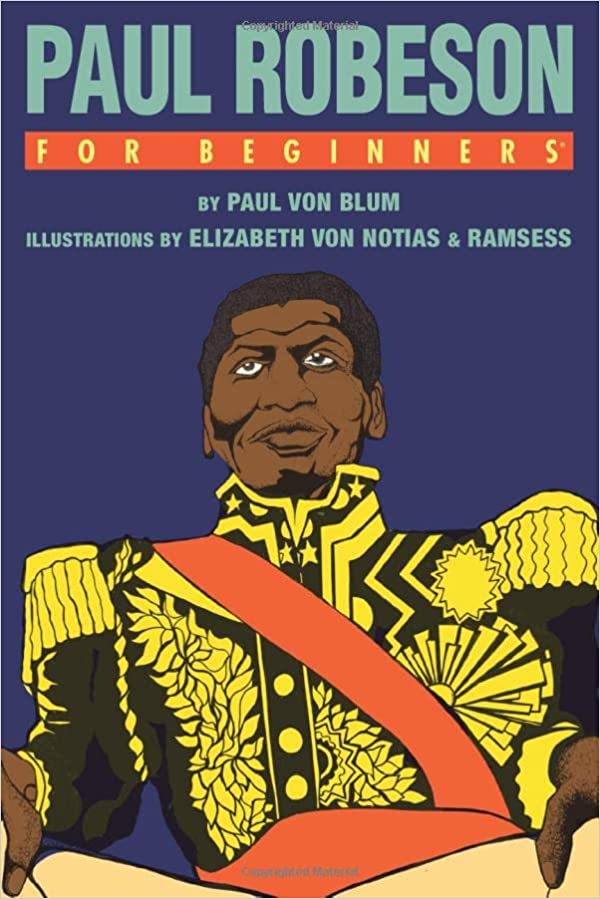
Paul Robeson for Beginners


By Paul Von Blum, illustrated by Elizabeth Von Notias & Ramsess (For Beginners)
ISBN: 978-1-934389-81-2 (PB/Digital edition)

For Beginners books are heavily-illustrated text primers: accessible graphic non-fiction foundation courses in a vast variety of subjects ranging from art to philosophy, politics to history and much more, all tackled in an accessible yet readily respectful manner. This particular volume was written by Paul Von Blum, author and Senior Lecturer in African American Studies and Communication Studies at UCLA, wedded to a wealth of strips and illustrations by graphic design specialist Elizabeth Von Notias and self-taught multi-media creator Ramsess.

If remembered at all, Paul Leroy Robeson ((9th April 1898-23rd January 1976) is regarded by most people as that African American performer with an incredibly deep voice. Maybe some will recall that he was a left wing political activist who particularly incensed Senator Joe McCarthy during America’s infamous “Red-baiting” witch-hunting period… so, kudos for that, too…

That’s all true enough, but he was also one of the most accomplished and gifted individuals in the nation’s history: a true Renaissance man who was cheated of his ultimate potential simply because his skin was the wrong colour…

An Introduction lists Robeson’s astonishing accomplishments – all the more amazing when you realise the lack of opportunities if not outright repression facing negroes in segregated America at the time of his birth and not truly tackled until the Civil Rights movement began gaining traction in the late 1950s. If even then…

As told in more telling detail – via word and pictures in ‘The Early Days’, ‘Paul Robeson the Athlete’, ‘Paul Robeson the Stage Actor’, ‘Paul Robeson the Screen Actor’ and ‘Paul Robeson the Singer’ – he was the son of a preacher and born in Princeton, New Jersey. He was the last of five children, locked into a time and place rigidly defined by class and race divisions…

A brilliant student, Paul Robeson graduated Somerville High School in 1915 and won a 4-year scholarship to Rutgers University, where – despite initial hostility and actual physical assaults – he became the star of the Football, Baseball, Basketball and Athletics squads. He was twice designated “All-American”.

Graduating from Rutgers, he attended New York University Law School before transferring to Columbia University Law School. Talented and seemingly tireless, Robeson turned an interest in the dramatic arts into a part-time stage career and became a professional Football player in 1920.

He married, acted, sang, played Pro ball and kept on studying: graduating Columbia in 1923 to work as a lawyer at a prestigious firm… until the bigotry he experienced from his own subordinates became too much.

In 1924, during the enthralling localised period of negro liberality and cultural growth dubbed “The Harlem Renaissance” (1923-1927), he switched from stage acting to movies, but still carried on a glittering international career: starring as Othello in London and playing in many hit plays and musicals including Showboat, Emperor Jones, Stevedore and All God’s Chillun’s Got Wings

Incessantly, helplessly politically active, he visited the Soviet Union in 1934, spoke out against Fascism during the Spanish Civil War, co-founded the anti-colonial Council on African Affairs and used his name and fame to agitate for social and legal changes in such contentious areas as Southern lynch law and trade union legislation. These activities made him a prime target in the USA and in 1941 J. Edgar Hoover ordered the FBI to open a file on him…

In 1950, the US government took away his passport because he refused to recant his pro-Soviet, pro-socialist stance, making Robeson an exile in his own country. He was unable to leave America for 8 years, until a Supreme Court ruling decreed the State Department had no right to revoke passports due to an individual’s political beliefs.

Somehow, I’m reminded of how successive British Home Secretaries have smugly wallowed in the shameful, self-granted ability to revoke and deny the nationality and movements of its own citizens: especially the young, brown, non-Christian, groomed and trafficked one…

Robeson’s life was filled with such astounding breakthroughs and landmarks. Once free to travel again, he became an international political celebrity and social commentator, using his concerts and stage appearances in places as disparate as Wales, Australia, Russia, New Zealand, East Germany, Canada, and elsewhere to promote a dream of World “Freedom, Peace and Brotherhood”…

His beliefs, struggles achievements and failures are scrutinised in ‘Paul Robeson the International Activist’, ‘Paul Robeson the Domestic Political Activist’ before a thorough appreciation in ‘The Final Years and His Lasting Legacy’

Augmented by a ‘Bibliography’, ‘Selected Chronology’ and creator biographies, this absorbing documentary proves again the astounding power of visual narrative when wedded to the life story of a truly unique individual, and begs the question: where are his graphic biography and definitive biopic?
© 2013 Paul Von Blum. Illustrations © 2013 Elizabeth Von Notias & Ramsess. All rights reserved. A For Beginners Documentary Comic Book © 2013.