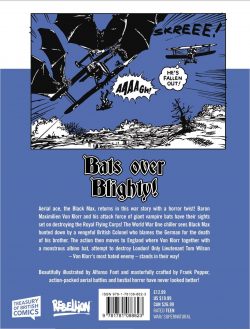
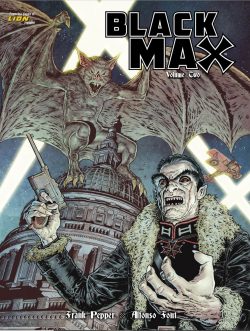
Black Max: Volume 2


By Frank S. Pepper, Alfonso Font & various (Rebellion Studios)
ISBN: 978-1-78108-862-3 (TPB/Digital edition)

Win’s Christmas Gift Recommendation: Astounding Air Ace Action… 9/10

It’s time for another sortie down memory lane for us oldsters and hopefully a fresh, untrodden path for fans of the fantastic seeking a typically quirky British comics experience.

This stunning sequel selection delivers one more stunning nostalgia-punch from Rebellion’s superb and ever-expanding Treasury of British Comics, collecting more episodes of seminal war/horror shocker Black Max.

The strip debuted in Thunder #1 and ran the distance: surviving cancelation and merger and continuing into Lion and Thunder until that magazine finally gave up the ghost mid-decade.

This second volume carries the next wave of those stories, covering May 15th to December 25th 1971, with the periodical perils rounded out by longer yarn taken from Thunder Annual 1973.

The series is typical of the manner in which weekly periodicals functioned back then: devised by screenwriter, veteran Editor and prolific scripter Ken Mennell (Cursitor Doom, Steel Claw, The Spider and many more) with the first episode limned by the company’s star turn for mood and mystery Eric Bradbury (Invasion, The Black Crow, Cursitor Doom, House of Dolman, Hookjaw and dozens more). The whole kit and kaboodle was then handed off to another team to sink or swim with, which they did until 1974: a pretty respectable run for a British comic…

In many ways, the attrition rate of British comic strips bore remarkable similarities to casualty figures in war, but this serial was well-starred. The assigned writer was Frank S. Pepper. who began his legendary comics career in 1926. By 1970 he had clocked up many major successes like Dan Dare, Rockfist Rogan, Captain Condor, Jet-Ace Logan and Roy of the Rovers to name but a very, very few.

Series illustrator Alfonso Font was a ten-year veteran – mostly for overseas publications. Based in Spain, he had worked not just for Odhams/Fleetway but on strips for US outfits Warren and Skywald and continental classics such as Historias Negras (Dark Stories), Jon Rohner, Carmen Bond, Bri D’Alban, Tex Willer, Dylan Dog and more…

Episodic by nature and generally delivered in sharp, spartan 3-page bursts, by the time of these trench warfare and skyborne tales the premise and key characters were firmly established and Pepper & Font were growing bolder and more experimental…

In 1917, the Great War was slowly being lost by Germany and her allies. In the Bavarian schloss of Baron Maximilien von Klorr, the grotesque but brilliant scientist and fighter ace had devised a horrific way to tip the scales back in favour of his homeland. His extremely ancient family had for millennia enjoyed an affinity with bats and the current scion had bred giant predatory versions he controlled by various means – including telepathy – that flew beside him to terrify and slaughter the hated English. Initially, they had been a secret weapon used sparingly but by this juncture soldiers and aviators knew well this other form of death from the skies…

His schemes were imperilled and countered on a weekly basis by young British pilot Tim Wilson of Twelve Squadron. Originally a performer in a peacetime flying circus, the doughty lad was possibly the best acrobatic aviator on the Western Front and his constant encounters with von Klorr and the colossal chiropteran constantly frustrated the manic monster master…

Now, Wilson’s superiors are aware of the fearsome bio-weapons, and thanks to his constant interference, the Baron devotes an astonishing amount of time and effort to killing the English fighter ace …when not butchering Allied fliers and ground troops in vast numbers.

The odds seemed to shift once von Klorr began mass-producing his monsters, but Wilson eventually gained the upper hand: driving “Black Max” out of his castle HQ and into a hidden facility where the villain retrenched and made bigger, better terrors…

The private duel resumes here as extended, multi-part serials became standard. The first finds veteran English Ace Colonel “Hero” Hall quitting his desk job to take personal command of Twelve Squadron, after his younger brother is reported missing after meeting Max’s bats.

The vendetta makes life particularly hard for Tim Wilson and leads to Hall’s gross dereliction of duty in the field, but does send the German into retreat and cost him almost all of his monstrous animal allies…

On the back foot and frantically rebuilding, von Klorr is forced to improvise. Capturing and brainwashing ambitious new British recruit Johnny Crane the evil genius embeds him as a secret weapon against Wilson. After miraculously and obliviously escaping many traps, Tim is eventually captured by his nemesis and subjected to the same torture process, before turning the tables on Black Max and apparently killing the bat man in a spectacular escape…

Of course it’s not true and the Baron resurfaces in London weeks later. Wilson is there too, on sick leave, but as Zeppelins bomb the capital, he stumbles into a plot to kidnap British animal scientist Professor Dutton. Von Klorr needs the boffin to improve the strength of his killer beasts, but cannot resist going after Wilson too: a mistake that scuttles his grand scheme and costs him dearly…

Down but never out, the Baron returns to his regular tactics and familiar killing fields, but suffers another reversal when Wilson discovers his current laboratory base. With only one giant bat and his resources exhausted, Von Klorr relocates to a deserted aerodrome to consider his options and is shocked to receive a message from his grandfather. The terrifying patriarch of the bat clan has arcane knowledge spanning millennia and reveals he has unearthed an ancient potion to recreate the “great King-bat”!

Recovering the actual formula is far from easy as it rests beneath Allied lines, but after herculean efforts Black Max secures it and doses his final pet. Thanks to more timely interference from Tim, the killer beast imbibes far too large a dose and mutates into an immense, unstoppable horror that attacks both German and British lines, necessitating an unprecedented alliance of the sworn enemies. Wilson is completely ready for von Klorr to betray him, but is still taken unawares when the moment comes – just as they finally kill the rampaging terror…

To Be Continued…

As previously stated, this initial collection also includes a complete adventure from Thunder Annual 1973: an extended saga rendered by Font but sadly uncredited as regards a writer. It’s 1917, and Black Max is distracted from his obsession when glory-hungry Prussian Ace Major Heinrich Stynkel uses his influence to ground the bats and their master so that he can have first pick of the English fliers. The new psychopath’s plot almost ends the reign of terror until cruel fate and Wilson play their part in a macabre comedy of errors…

These strip shockers are amongst the most memorable and enjoyable exploits in British comics: smart, scary and beautifully rendered. This a superb example of war horror that deserves to be revived and revered.
© 1971, 1973 & 2021 Rebellion Publishing Ltd. Black Max and all related characters, their distinctive likenesses and related elements are ™ Rebellion Publishing Ltd. All Rights Reserved.
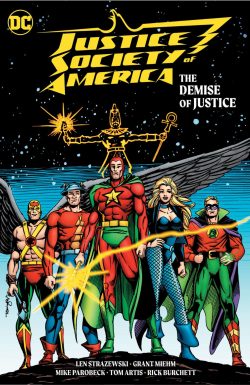
Justice Society of America: The Demise of Justice


By Len Strazewski, John Broome, Paul Levitz, Rick Burchett, Grant Miehm, Mike Parobeck, Tom Artis, Frank McLaughlin, Frank Giacoia, Arthur Peddy, Bernard Sachs, Joe Staton & various (DC Comics)
ISBN: 978-1-7795-0744-0 (HB/Digital edition)

Win’s Christmas Gift Recommendation: Golden Ageist Evergreen Enjoyment… 8/10

Released in 2021 to celebrate their 80th anniversary, here’s yet another DC core concept given fresh wings by a modern movie. If you can find it, this hardback/digital delight is good old fashioned fun and will make a perfect present for you or yours…

After the actual invention of the comic book superhero – the Action Comics debut of Superman in 1938 – the most significant event in the industry’s history was the combination of individual sales-points into a group.

Thus what seems blindingly obvious to us with the benefit of four-colour hindsight was proven: consumers couldn’t get enough of garishly-hued mystery men, and combining many characters inevitably increased readership. Plus, of course, a mob of superheroes is just so much cooler than one – or one-and-a-half if there’s a sidekick involved…

The creation of the Justice Society of America utterly changed the shape of the budding business and – technically – All Star Comics #3 (cover-dated Winter 1940-1941, released in December 1940) was the kick-off. However, in that landmark, the assembled heroes merely had dinner whilst recounting recent cases and didn’t actually go on a mission together until #4 (cover-dated April 1941).

With the simple notion that mighty mystery men hung out together, history was made and it wasn’t long before they started working together…

However, when WWII ended, superheroes gradually declined, and most companies had shelved them by 1950. The plunge in popularity led to a revival in genre-themed titles and characters, and it was a stripped-down team (Flash, Green Lantern, Hawkman, The Atom, Black Canary, Dr. Mid-Nite and Wonder Woman) who battled on in contemporarily tailored crime and science fiction sagas before the title abruptly changed into All Star Western with #58.

It would take a second age of superheroes to revive them, this time as the champions of a parallel universe dubbed Earth Two…

Gathered here is a near-forgotten limited series concerning the latter days of the team’s Golden Age that originally ran in Justice Society of America #1-8 (April to November 1991), augmented by the last tale of the original era as seen in All-Star Comics #57, (February/March 1951), plus a turning point tale from Adventures Comics #466 (December 1979). They are preceded a sparkling, informative and appreciative Foreword by Golden Age aficionado and super scripter Mark Waid.

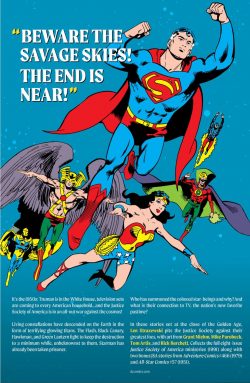
The miniseries – subtitled Vengeance from the Stars! – that comprises the majority of this tome was scripted by journalist and educator Len Strazewski (Speed Racer, The Flash, Phantom Lady, Starman, The Fly, The Web, Prime, Prototype, Elven) and illustrated by a rotating team of artists, opening as Rick Burchett illustrates ‘Beware the Savage Skies’. Here recently-retired mystery man Ted Knight – AKA Starman – is attacked in his private New Mexico observatory by incredible astral energy beings. Broken and dispirited, he is then enslaved by an old enemy who purloins his wondrous gravity rod before luring Jay (Flash) Garrick into a deathtrap that results in power outages across America…

The plot thickens with ‘The Sack of Gotham’ (art by Grant Miehm) as radio and television executive Alan Scott seeks to keep the lights on in his city whilst Black Canary prowls the darkened streets deterring looters and career criminals. Distracted by a museum break-in, she finds herself punching way, way up as undead monster/moron Solomon Grundy and a gang of determined bandits help themselves to ancient Egyptian artefacts at the behest of a hidden client. By the time Scott arrives as Green Lantern, the Canary has been thrashed and captured, leaving him to battle an animated star constellation dubbed Sagittarius

Burchett inks the astoundingly talented Mike Parobeck in #3’s ‘Dead Air’, as the star thing blacks out Gotham and Scott struggles to stop it. Complications occur when Grundy – afflicted with an obsessive hatred of Green Lantern – forgets the orders from the mystery Machiavelli to attack his emerald enemy. Far away, Ted Knight learns that his gleeful foe intends to conquer Earth by eradicating modern technologies and attitudes and replace them with primordial magic and tyranny…

Tom Artis & Frank McLaughlin limn #4 as ‘Evil of the Ancients’ sees reincarnating Egyptian warrior Hawkman uncovering star-themed neolithic treasures in his day job as archaeologist Carter Hall. These findings expose the history and provenance of the constellation creatures, but also trigger the arrival of another…

Despite aerial valour and the US Army’s best efforts, deadly colossus Andromeda storms off with a clutch of atom bombs and only the sudden arrival of The Flash prevents utter disaster. The clash resumes in ‘Double Star Rising!’ by Parobeck & Burchett, as arcane knowledge and modern tech savvy combine to trace the stellar plunderer and the incredible pyramid of power it is constructing. When the heroes try to destroy it they are confronted with a second energy horror but find a way to defeat both at once, compelling the man behind the plot to finally take a personal hand in the fight…

Far across the country the Lantern and the Canary escape captivity in ‘Danger Flies the Skies’ (Artis & McLaughlin), thanks to some timely aid from valiant sidekick Doiby Dickles, and track west after the museum artefacts in time to reinforce Flash and Hawkman in ‘The Return of the Justice Society’ (art by Miehm & Burchett). Redeemed and reinspired, Knight once more takes up his costumed identity to end the villain’s plot in ‘Battle of the Stars!’

In the heady aftermath, the JSA ponder what the next decade will bring, unaware that political conspiracies, public paranoia and a wave of intolerance masquerading as social conformity was waiting to change the world in ways no one could anticipate…

In continuity terms, this was technically the antepenultimate adventure of the JSA, with the rousing romp slyly heralding mood swings in the heartland of Democracy. It is thus smartly supplemented by the team’s final appearance of the Golden Age (in All-Star Comics #57) and a chilling, thematically-aligned codicil from Adventures Comics #466.

Written by John Broome and illustrated by Frank Giacoia, Arthur Peddy & Bernard Sachs, All-Star Comics #57 was the JSA’s last hurrah as ‘The Mystery of the Vanishing Detectives!’ pitted them against criminal mastermind The Key. When he abducted Earth’s greatest criminologists in advance of a spectacular robbery spree, the superheroes were called in to solve the case and prevent an impending catastrophe. It took a lot of time and effort, but the JSA never fail…

The fallow period and gradual return of the JSA was a major success of fan power in the 1960s, but that decade too ended with superheroes on the wane. During the torrid and turbulent 1970s, many of the comics industry’s oldest publishing ideas were finally laid to rest. The belief that characters could be “over-exposed” was one of the most pernicious and long-lasting (although it never hurt Superman, Batman or the original Captain Marvel), garnered from years of experience in an industry which lived or died on that fractional portion of pennies derived each month from the pocket-money and allowances of children which wasn’t spent on candy, toys or movies.

By the end of the 1960s, comic book costs and retail prices were inexorably rising and a proportion of titles – especially the newly revived horror stories – were consciously being produced for older readerships. Nearly a decade of organised fan publications and letter writing crusades had finally convinced publishing bean-counters what editors already knew: grown-ups avidly read comics too. Moreover, they happily spent more than kids and craved more, more, more of what they loved.

Explicitly: If one appearance per month was popular, extras, specials and second series would be more so. By the time Marvel Comics Wunderkind Gerry Conway left The House of Ideas, DC was willing and ready to expand its variegated line-up with some oft-requested fan-favourite characters. Paramount among these was the Justice Society of America, the first comic book super-team and a perennial gem whose annual guest-appearances in the Justice League of America and other superhero titles had become a beloved tradition and treat.

Thus in 1976 writer/editor Conway marked his second DC tenure (he had first broken into the game writing horror shorts for Joe Orlando) by reviving All Star Comics with #58.

In 1951, the original title transformed overnight into All Star Western with the numbering running for a further decade for the home of cowboy crusaders like Strong Bow, The Trigger Twins, Johnny Thunder and Super-Chief. Now, set on Earth-Two, and in keeping with the editorial sense of ensuring a series be relevant to young readers too, Conway reintroduced the veteran team, leavened with a smattering of teen heroes forming a contentious, generation gap-fuelled “Super Squad”…

Augmented by Robin (a JSA-er since the mid-1960s in Justice League of America #55), Sylvester Pemberton/Star-Spangled Kid and a busty young thing who rapidly became the feisty favourite of a generation of growing boys: Kara Zor-L Power Girl. Closing this collection is a short piece as she and fellow newcomer Huntress discuss how the Golden Age ended…

Taken from massive 68-page anthology title Adventure Comics 466 where Paul Levitz & Joe Staton delivered a pithy history lesson exposing the reason why the team vanished at the beginning of the 1950s, ‘The Defeat of the Justice Society!’ shows how the American Government cravenly betrayed their greatest champions. Set during early days of the McCarthy era anti-communist witch-hunts, a sham trial provoked the mystery men into voluntarily withdrawing from public, heroic life. There they stayed until the costumed stalwarts of Earth-One started the whole Fights ‘n’ Tights scene all over again…

These exuberant, rapid-paced and imaginative yarns perfectly blend the naive charm of Golden Age derring-do with cynically hopeful modern sensibilities. Here you will be reassured that no matter what, in the end our heroes will always find a way to save the day. These are classic tales from simpler times and a glorious example of traditional superhero storytelling at its finest: fun, furious and ferociously engaging, excitingly written and beguilingly illustrated. No Fights ‘n’ Tights fan should miss these marvellous sagas.
© 1951, 1979,1991, 2020 DC Comics. All Rights Reserved.

Superman: Strange Attractors


By Gail Simone, Dan Abnett & Andy Lanning, John Byrne & Nelson (DC Comics)
ISBN 978-1-4012-0917-9 (TPB)

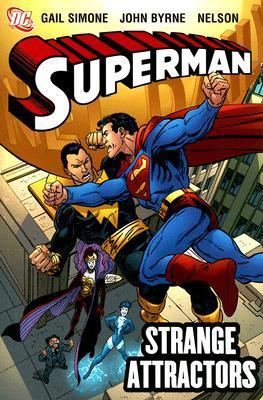
Here’s a Superman collection tailored to the fight fan, as the mighty Man of Steel takes on a bevy of baddies in terse tales designed as an antidote to an over-abundance of multi-chapter epics. I’m focussing on it here primarily because it’s also a complication- and continuity-light compendium featuring movie Man of the Moment Black Adam

Created by Otto Binder & C.C. Beck, Black Adam/Teth Adam debuted in The Marvel Family #1, cover-dated December 1945. There he was revealed as the power-corrupted predecessor of current magical superhero (the Original…) Captain Marvel. The Egyptian relic’s reign of evil ended with his death at the end of the story…

You can’t keep a good villain down though, and when the Golden Age Marvel was revived in the 1970s as Shazam!, the ancient antithesis eventually returned to bedevil the heroes. He even survived the continuity changing chaos of Crisis on Infinite Earths and numerous subsequent reboots.

For present purposes, the following is the backstory new readers should access…

Once upon a time Billy Batson was a little boy living on the streets of Fawcett City. His archaeologist parents had left him with an uncle when they went on a dig to Egypt. They never returned, his little sister vanished and Billy was thrown out so his guardian could steal his inheritance.

Sleeping in a storm drain and selling newspapers for cash, the indomitable lad grew street-smart and resilient, but when a shadowy stranger bade him follow into an eerie subway, the boy somehow knew it was all okay. Soon after, he met the wizard Shazam, who bestowed upon him the powers of six ancient Gods and Heroes.

Thus began an astounding career as wholesome powerhouse hero Captain Marvel. Billy eventually found lost sister Mary and shared his nigh-infinite power with her, as they both subsequently did with disabled friend Freddy Freeman.

They fought and eventually reached an accommodation with militant progenitor Black Adam, who was the wizard’s first superhuman champion, reborn in the body of Theo Adam – a distant descendant who had murdered the Batson’s parents. When a succession of crises arose, everything changed.

Immortal Shazam was murdered, Billy was exiled to the transcendent Rock of Eternity as his replacement and Freddy became a new Captain Marvel; his mighty gifts supplied by a completely different pantheon of patrons.

Meanwhile, Black Adam had found peace and redemption in the love of ascendant nature goddess Isis …until she was cruelly taken from him. The worst tragedies befell poor Mary. Deprived of her intoxicating powers she became an addict without a fix… until soul-sick Adam shared his dark energies with her. His corrupted spirit fatally tainted the once-vibrant innocent…

During his lost phase, the Egyptian warrior vacillated between hard-line hero and outright menace: joining the Justice Society of America but also arbitrarily administering his old testament brand of judgement whenever he felt the need…

This selection of Superman stories comes from Action Comics #827-828, and #830-835 (spanning July 2005 through March 2006). The run of was originally interrupted for the “Sacrifice” storyline (and collected as a graphic novel of the same name), so the volume reconvenes with the episode after…

First up is eponymous 2-part saga ‘Strange Attractors’ and Strange Attractors part 2 – Positive Reinforcement’: a battle against the incredibly bad and quite mad Master of Magnetism Dr Polaris, aided, if not abetted, by the resurrected reprobate Black Adam, currently holding a high position in supervillain army The Society

Following the aforementioned Sacrifice pause, we reconvene with #830’s ‘The Great Society’ as the Man of Tomorrow tackles Dr. Psycho. The old Wonder Woman villain is a physically stunted, sadistic psychologist with the power to control minds. When he arrives in Metropolis intent on mischief, Superman finds that every citizen is a foe and hostage at the same time.

Once again, Black Adam is on hand to render ambivalent assistance as ‘Black & Blue’ (a Villains United tie-in) sees Adam reassess his role before it all devolves into the obligatory fist fight.

Scripted by Dan Abnett & Andy Lanning ‘Old Ghosts’ sees Devil-surrogate Lord Satanus and the Spectre use the city as a phantasmal Ground Zero next, and, after refereeing that little cataclysm, Superman finds himself the target of a psychic and spiritual assault from old JLA foe The Queen of Fables in ‘Depths’ and ‘Awake in the Dark’ – with Norm Rapmund, Larry Stucker, Marc Campos, & Oclair Albert joining Nelson in applying inks to John Byrne’s pencils..

The furious ferocious fun concludes in a duel with Livewire, that perky punkette with absolute control of all things electrical who contracts ‘A Contagion of Madness’ with Gail Simone, John Byrne and inker Nelson delivering potent, punchy and self-contained mini-classics.

Not overly complicated, concentrating on exhilaration and excitement, but still managing to sustain some tense sub-plots involving Lois Lane-Kent and the rest of the venerable supporting cast, these stories are just plain fun. It’s a shame that the experiment doesn’t seem to have caught on …
© 2005, 2006 DC Comics. All Rights Reserved.

It Was the War of the Trenches & Goddam This War!


By Tardi with Jean-Pierre Verney, translated by Kim Thompson & Helga Dascher (Fantagraphics Books)
ISBN: 978-1-60699-353-8 (HB Trenches) & 978-1-60699-582-2 (HB Goddam)

For years I’ve been declaring that Charley’s War the best comics story about The Great War ever created, but, while I’m still convinced of that fact, there’s a strong contender for the title in the astonishing award-winning conception C’était la guerre des tranchées by cartoonist Jacques Tardi. It began publication in France in 1993 and was released as an English edition by Fantagraphics in 2010. Three years later it was supplemented by an even more impressive and heart-rending sequel.

Credited with creating a new style of expressionistic illustration dubbed “the New Realism”, Tardi is one of the greatest comics creators in the world, blessed with a singular vision and adamantine ideals, even apparently refusing his country’s greatest honour through his wish to be completely free to say and create what he wants.

He was born in the Commune of Valence, Dróme in August 1946 and subsequently studied at École Nationale des Beaux-Arts de Lyon and the prestigious Parisian École Nationale Supérieure des arts Décoratifs before launching his career in comics in 1969 at the home of modern French comics: Pilote.

From illustrating stories by Jean Giraud, Serge de Beketch and Pierre Christian, he moved on to Westerns, crime tales and satirical works in magazines like Record, Libération, Charlie Mensuel and L’Écho des Savanes whilst also graduating into adapting prose novels by Louis-Ferdinand Céline and Léo Malet.

The latter’s detective hero Nestor Burma became the subject of all-new albums written and drawn by Tardi once the established literary canon was exhausted leading, in 1976. to the creation of Polonius in Métal Hurlant and a legendary, super-successful star turn. Les Aventures Extraordinaires d’Adéle Blanc-Sec is an epic period fantasy series which initially ran in the daily Sud-Ouest. The series numbers ten volumes thus far and is still being added to.

The passionate auteur has also crafted many unforgettable anti-war stories – Adieu Brindavoine, Le Fleur au Fusil, Le trou d’obus and more – examining the plight of the common soldier, and has written novels, created radio series, worked in movies, and co-created (with writer Jean Vautrin) Le Cri du Peuple – a quartet of albums about the Parisienne revolt of the Communards.

Whilst his WWI creations are loosely inspired by the experiences of his grandfather, his 2012 graphic novel Moi René Tardi, prisonnier de guerre au Stalag IIB revealed the experiences of his father, a POW in the second conflict to ravage France in a century.

Far too few of this master’s creations are available in English (barely 20 out of more than 50) but, thanks to NBM, iBooks and Fantagraphics, we’re quickly catching up…

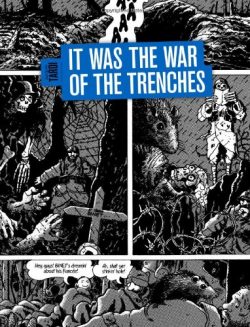
An unquestionable masterpiece and international multi-award winner, It Was the War of the Trenches begins with Tardi’s forthright Foreword detailing his process and motivations, plus a copious and chilling Special Thanks page, before a cartoon catalogue of humanity’s greatest folly unfolds.

These interlinked and cross-fertilising vignettes are about people not causes or battles or the fate of nations, with each tale linking to others: comprised of epigrammatic, anecdotal observations of the war as experienced by ordinary soldiers. The saga first saw print in A Suivre before being stitched together as a patchwork quilt of endurance, complaint, venality, misfortune, bravery, cupidity and stupidity, all informed primarily by family stories, but always verified and augmented by focussed research.

As the pages proceed, a litany of injustice and abiding horror unfolds as scared, weary, hopeless, betrayed and crazy men of every type suffer constant pressure, relentless ennui, physical abuse and imminent death…

Seeking and succeeding in bring those appalling experiences to life, Tardi forensically displays the constant shelling, awful weather, death in the skies and in the mud plus every possible variation in between them as an ever-changing roster of reluctant warriors wait for the end. They think of past lives and wasted chances and what turn of fate brought them to this muddy hole in the ground…

Especially poignant are those twists of luck that so often place supposed enemies together against the War itself, but always brief friendships end abruptly and badly, with the only winners being death and guilt and shame…

This is a book no one could read and sustain any vainglorious illusion of combat and honour as noble inspirations. This is a story that begs us all to stop war forever…

In 2013, after more than a decade of meticulous research and diligent crafting, It Was the War of the Trenches was finally supplemented by a sequel…

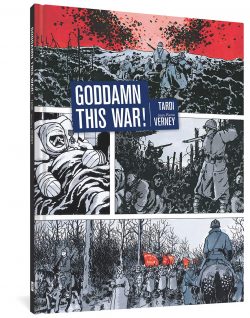
Translated as a potent and powerful hardback edition in full colour and moody, evocative tonal sequences, this pictorial polemic was originally released as six newspaper-format pamphlets entitled Putain de Guerre! From there it was collected in two albums and came to us as Goddamn This War!, tracing the course of the conflict through the experiences of an anonymous French “grunt”.

At once lucky, devious and cynically suspicious enough to survive, he is a tool used to relate the horrific, boring, scary, disgusting and just plain stupid course of an industrialised war managed by privileged, inbred idiots who think they’re playing games: restaging Napoleon’s cavalry campaigns, but this time as seen from the perspective of the poor sods actually being gassed and bombed and shot at…

Divided into five chapter-years running from ‘1914’ to ‘1919’ (as the global killing didn’t stop just because the Germans signed an Armistice in 1918 – just ask the Turks, Armenians, Russians and other Balkan nations forgotten when hostilities officially ended), the narration is stuffed with the kind of facts and trivia you won’t find in most history books. as our frustrated and disillusioned protagonist staggers from campaign to furlough to what his bosses call victory, noting no credible differences between himself and the “Boche” on the other side of the wire, but huge gulfs between the men with rifles and the toffs in brass on both sides…

This staggeringly emotional testament is backed up and supplemented by a reproduction of ‘The Song of Craonne’ – a ditty so seditious that French soldiers were executed for singing it – and a capacious, revelatory year-by-year photo-essay by historian, photographer and collector Jean-Pierre Verney. His World War I: an Illustrated Chronology chillingly shows the true faces and forces of war and is alone worth the price of admission…

It Was the War of the Trenches (C’était la guerre des tranchées) © 1993 Editions Casterman. This edition © 2010 Fantagraphics Books.
Goddamn This War! (Putain de Guerre!) © 2013 Editions Casterman. This edition © 2013 Fantagraphics Books.

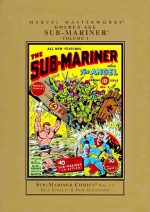
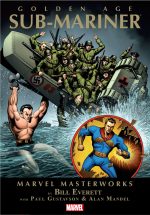
Marvel Masterworks: Golden Age Sub-Mariner volume 1


By Bill Everett, Paul Gustavson, Roy Gill, Harry Sahle, Lewis Glanzman, Stan Lee, Alan Mandel, Mickey Spillane, Art Gates, Basil Wolverton & others (Marvel)
ISBN: 978-0-7851-1617-2 (HB) 978-0-7851-5789-2 (TPB/Digital edition)

Win’s Christmas Gift Recommendation: The Sea Son’s Greatest Golden Moments… 8/10

Prince Namor, the Sub-Mariner was the second super-star of the Timely Age of Comics – but only because he followed the cover-featured Human Torch in the running order of Marvel Comics #1 in October 1939. He has had, however, the most impressive longevity of the company’s “Big Three”: Torch, Subby and Captain America

The Marine Marvel was revived in 1962, an unbeatable force in Fantastic Four #4; once again an anti-hero/noble villain, prominent in the company’s pantheon ever since.

In world, the hybrid offspring of an undersea Atlantean princess and American polar explorer is a being of immense strength: highly resistant to physical harm, able to fly and thrive above and below the waves.

Created by young Bill Everett, Namor technically predates Marvel/Atlas/Timely Comics entirely, and first caught the reading public’s attention as part of the “Fire vs. Water” headliners in the anthological Marvel Comics #1 – which became Marvel Mystery Comics with the second issue. His elementally apposite co-star was the Human Torch, but Namor had originally been seen – albeit in a truncated version – in the monochrome freebie Motion Picture Funnies: a weekly promotional giveaway handed out to moviegoers earlier that year.

Swiftly becoming one of Timely’s biggest draws, Namor won his own title at the end of 1940 (cover-dated Spring 1941) and was one of the last super-characters to go at the end of the first heroic age.

In 1954, when Atlas (as the company had become known) briefly revived the Big Three Everett returned for an extended run of superb fantasy tales, but the time wasn’t right for superheroes yet and the title sunk again. Once again, Subby was the last revived character to be cancelled, as rumours of a possible TV series deal kept the book afloat…

When Stan Lee & Jack Kirby reinvented superheroes in 1961 with the Fantastic Four, they revived the angry amphibian as a troubled, amnesiac, yet decidedly more regal and grandiose anti-hero, who was understandably embittered at the loss of his sub-sea kingdom (seemingly destroyed by American atomic testing). He also became a dangerous bad-boy romantic interest: besotted with the FF’s golden-haired Sue Storm – who couldn’t make up her mind about him for decades…

Namor knocked around the budding Marvel universe for years, squabbling with assorted heroes like the Avengers, X-Men and Daredevil before securing his own series as part of “split-book” Tales to Astonish beside fellow antisocial antihero the Incredible Hulk. From there both went on to become cornerstone of the modern Marvel Universe.

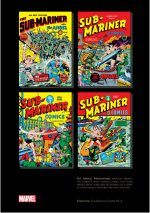
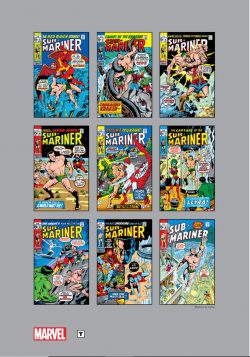
Way back then, after his illustrious (and at long last finally filmic) career began in Marvel Comics #1, the Sub-Mariner solo vehicle launched in Spring 1941. The first four issues are gathered here – in hardcover, trade paperback and digital formats – accompanied by a fact-filled reminiscent Introduction from Subby scribe and comics historian Roy Thomas: sharing all the context and backstory any finny fun-fan could ever need. This titanic tome also incorporates all the rousing in-situ ads seen in the original releases…

Sub-Mariner Comics #1 featured two complete strip-stories starring the conflicted overlord of a “lost subsea kingdom at the South Pole”, plus a chilling back-up yarn starring costumed detective/adventurer The Angel: the first of a long run of macabre thrillers…

The drama begins with a ‘Deep-Sea Blitzkrieg’, prompting Namor to declare war on the perfidious Nazis after a fleet of U-Boats depth-charges his underwater home city. The Avenging Prince immediately retaliates in a bombastic show of super-power that deftly displays the unmatched graphic virtuosity of his creator Bill Everett.

The second story (by Everett and unknown assistants) concerns a deadly disease afflicting the Prince’s aquatic subjects, necessitating the Sub-Mariner’s return to New York. This trip is to obtain – by any means necessary – a supply of Radium. The dual nature of the antihero was always a major factor in Namor’s popularity, so even a shared enemy couldn’t keep him on the good side of the American authorities for long…

For most of these stories Everett and other lead artists used a string of assistants culled from the comic book “Shop” outfits. Sadly, with no accurate records, best guesses for uncredited contributors include Charles Nicholas (nee Wojtkoski), Witmer Williams, Ben Thompson, Sam Gilman, George Mandel, Mike Roy, Al Fagaly & Jimmy Thompson.

These deluxe editions also include the mandatory text features comics were compelled to run to maintain their postal status (an arcane system allowing publishers to procure large postal discounts as “second class mail”) so you can also enjoy prose fable ‘Namor… His Boyhood’ by Roy Gill before moving on to Paul Gustavson’s caped & costumed shamus in 20-page gothic chiller ‘The Angel and the House of Horror’.

Although dressed like a superhero, this dashing do-gooder was actually a blend (knock-off would be perhaps a bit unkind) of Leslie Charteris’ The Saint and The Lone Wolf (Louis Vance’s urbane two-fisted hero who was the subject of 8 books and 24 B-movies between 1917 – 1949).

One marked difference was the quality of the Angel’s enemies: his foes tended towards the arcane, the ghoulish and the just plain demented…

The globe-trotting paladin also seemed able to cast a giant shadow in the shape of an angel -. not the greatest aid to cleaning up the scum of the Earth, but he seemed to manage…

Sub-Mariner Comics #2 (Summer 1941) starts off with an untitled Nazi-busting tale – even though America was officially neutral until December 8th of that year – with Namor foiling a scheme to spring thousands of German POW’s from internment in Canada.

Everett’s hand is still in evidence, but by this time a growing number of the aforementioned assistants were slowly diluting his work as he struggled to produce a monthly strip in Marvel Mystery and his other commitments.

‘Steaming Statistics of Fire and Water’– illustrated by Harry Sahle – offers a package of fun facts before a second tale finds Namor in a Pennsylvania town hunting Fifth columnists and spies fomenting a strike amongst the miners producing coal for ships fuel. Cartoonist Lewis Glanzman provided a ‘Bum Jokes’ gag-page and young Stan Lee scripts text feature ‘The Story behind the Cover: Namor “Blitzes” a Nazi Sub’ before The Angel (art by Alan Mandel) quashes a sinister plot in New England to free ‘The Slaves of the Python’.

The Fall 1941 issue then opens with ‘The Mystery of the Disappearing Island’: a strikingly topical two-part tale combining Winston Churchill, the thorny question of Irish neutrality and a submerged city of druids invaded by Nazis as a staging post for future bomber raids on Britain.

Tinged with immediacy by political issues, this exotic fight-heavy romp was extra-length (40 pages), and followed by a mediocre, uncredited prose tale ‘Dispatch from Africa’ before culminating with a rather incestuous murder mystery wherein the Angel hunts for a killer when ‘Death Draws a Comic Strip!’

Sub-Mariner Comics #4 opens with ‘Murders by Ghost Light’ as Namor investigates a haunted hospital hiding all manner of non-Hippocratic shenanigans. The spooky themes continue when he then encounters a giant madman-made monster in ‘The Horror That Walked’.

‘Fresh Meat for a Raider’ is a prose naval adventure written by a promising young writer named Mickey Spillane, whilst ‘Pop’s Whoppers’ (by Art Gates) is a jolly comedy feature starring an inveterate tall-tale teller, followed by another sinister horror puzzler for the Angel: ‘Death’s Merry-Go-Round!’.

The vintage voyages conclude with a lost gem from legendary graphic genius Basil Wolverton who wraps things up with a comically surreal Dr. Dimwit page.

Before we leave, however, a selection of Sub-Mariner Comics house ads and photo features of a contemporary comics newsstand – with Everett himself – further enhance the period experience…

Many early Marvel Comics are more exuberant than qualitative, but this compendium, even if largely devoid of premier league talent, is a wonderful exception. Offering high-octane – albeit outrageously jingoistic and culturally enmired in its time – staggering action, it is a splendid, historically unvarnished read as well as a forgotten treasure Fights ‘n’ Tights fans will find irresistible.
© 1941, 2005, 2012, 2017 Marvel Characters, Inc. All rights reserved.

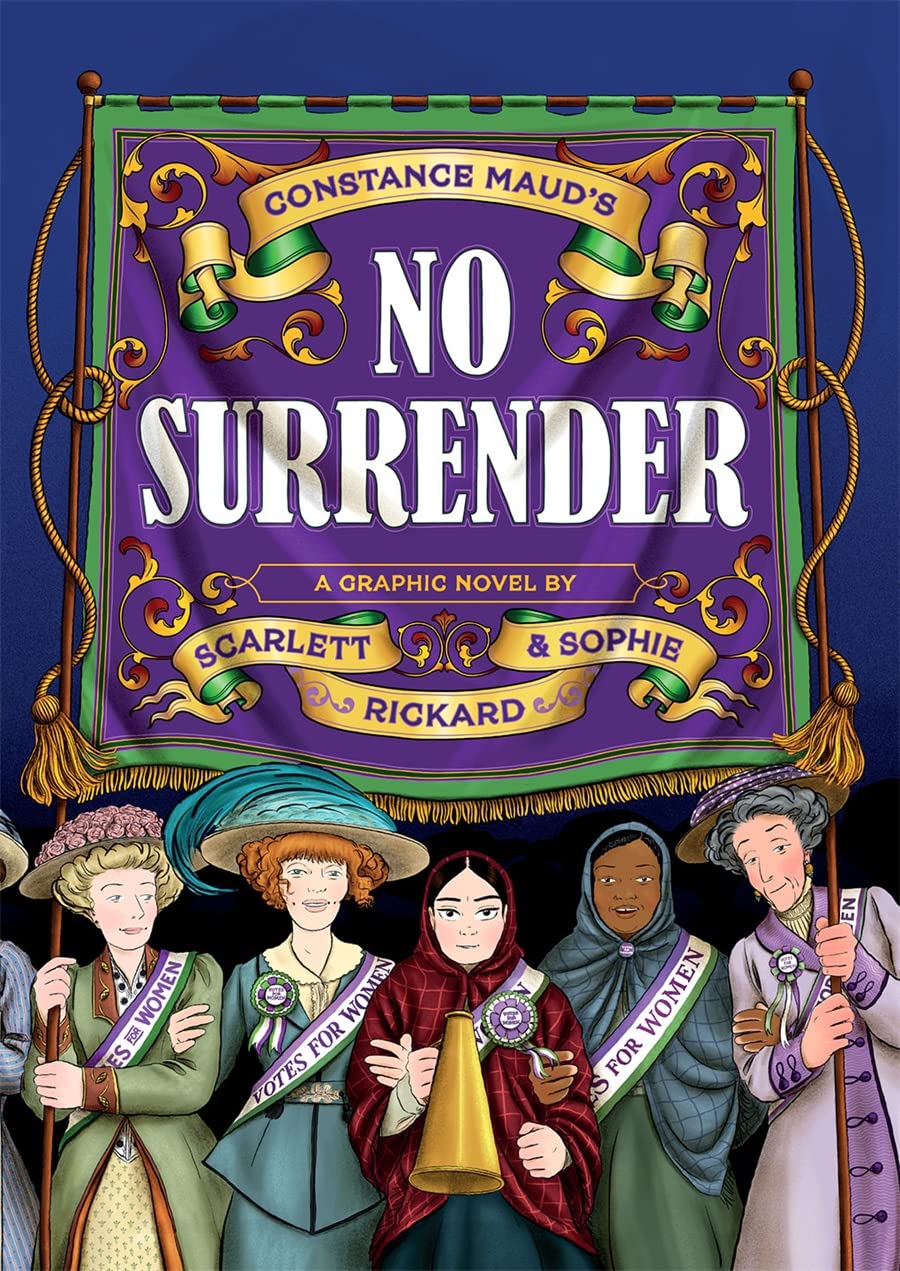
No Surrender


By Constance Maud: adapted by Scarlett & Sophie Rickard (SelfMadeHero)
ISBN: 978-1-91422-406-5 (TPB/Digital edition)

Win’s Christmas Gift Recommendation: Triumphant Tribute to Freedom Fighters and Literary Legends… 9/10

Constance Elizabeth Maud (1857-1929) was a child of privilege: daughter of a celebrated English scholar and cleric. She was primarily educated in France and lived there or in Chelsea for most of her life. Between 1895 and 1924 she wrote numerous articles and 8 novels – of which No Surrender was the penultimate – and became a member of the 400-strong Women Writers Suffrage League.

In 1908 she joined The Women’s Social and Political Union and The Women’s Freedom League: turning her writings to the needs of the cause. Her work subsequently appeared in many periodicals, especially magazines like the Suffragist movement’s newspaper Votes For Women.

In No Surrender (published in 1911 – and again in an annotated centenary edition released by publisher Persephone in 2011), Maud incorporated actual events with fictionalised analogues of many contemporary activists participating in the struggle to craft a history and playbook of the campaign for emancipation. The book became a rallying point and recruiting tool for the movement and was used to promote the soft end of the battle for equality. It inspired countless women (and presumable many male sympathisers) with a dramatised story of how the great and good would join with the humblest workers and unite to overcome…

Maud lived just long enough to see British women secure the right to vote: in 1918 with the Representation of the People Act – which enfranchised women over 30 years old – and at last witnessing universal female suffrage established in 1928’s Act, legislating that all Britons of 21 years or above could freely vote.

The main reason why No Surrender was such an effective weapon in the war to win the vote for all is that its propaganda and polemic were disguised by readily accessible drama. Beginning in industrial hub Greyston, ‘The Mill’ tells how northern mill worker Jenny Clegg is fired up by the many injustices afflicting women’s lives: with cruelty, unfair taxation, financial neglect, legitimised maltreatment and a status of second-class citizens chaining every female to a man of the gutter…

Rebelling, she forsakes her crusading socialist love interest Joe Hopton – a successful prime mover in winning better lives and wages for male workers – and dedicates her life to winning those same rights and representation for women. Upper class Suffragist Mary O’Neill has a more refined but similarly intransigent family at ‘The Country House’ all decrying her passion for women’s suffrage. She and Jenny will become friends, allies and leading lights in the struggle, inspiring millions of women, converting men, embarrassing the authorities and challenging a society where even other women refuse to see a status quo threatened…

Both driven by ‘The Calling’, they and a growing army of allies will invade London and suffer police and legal suppression in ‘The Courtyard’ and face ‘The Magistrate’ but never stray from their course. Whether testing tactics in ‘The Routes To Battle’ or challenging their detractors through heated debate on ‘The Cart’ the socially-distanced allies never stop their work, and gradually make converts even amongst the stratified intelligentsia who enjoy the closeted luxuries of ‘The Weekend Cottage’

The story sees numerous characters interact on many levels like a soap opera, but underpinning it all is a roster of actual protest events woven into the plot, such as ambushing a number of off-duty cabinet ministers in ‘The Church’ and then infiltrating ‘The Dinner Party’ to reinforce their message.

The darkest and most notorious moments of the cause are also featured, as Clegg, O’Neill and other notable activists of every class endure imprisonment, abuse and medical torture – but each according to their own social rank and standing in ‘The Crushed Butterfly’, ‘The Prison’ and the deeply distressing culmination of ‘The Punishment’. Always, efforts to disunite and separate rich from poor, inherently virtuous from tawdry and lowborn, fails as the core principle – that they are all women together – completely eludes the smug, hectoring, insensate elitist male oppressors, prejudiced and scared working men and the Anti-Suffrage Women’s groups populated with ladies who know and defend their privileged place in the world…

Ultimately, Jenny and Joe are united in the cause and Mary makes her own converts in ‘The Homecoming’ before the story ends with a proud rallying of all in the march to inevitable universal enfranchisement and victory in ‘The Standard is Raised’ – a rousing graphic tour de force with illustrator Sophie Rickard crafting a stunning multi-page fold-out any art fan would cry to see…

Maud’s tale was ostensibly a romance and account of families in crisis with a thinly disguised moral message like a Dickens or Thomas Hardy novel. She explored and contrasted the lives of poor working folk with gentry and aristocracy, but also scrupulously catalogued the added travails and insecurities of working women. At this time women had been successively deprived of most financial and civil rights and privileges. They had to pay taxes but enjoyed no representation under the law; could not be legal guardians of their own children or property and, if married, could not divorce whilst their husbands could. The men could also beat them, but only with cudgels of judicially-mandated size…

At the end of this hefty and substantial graphic novel there’s a chart showing when – and how incrementally – the nations of the world instituted female enfranchisement, and an Afterword by adapting creators Scarlett & Sophie Rickard (Mann’s Best Friend, A Blow Borne Quietly, The Ragged Trousered Philanthropists), naming names and offering factual provenance for the incidents and characters enriching the narrative.

It also declares why – in the current environment where a citizen’s right to dissent and protest is being deviously and criminally whittled away – the principles of organised resistance and role and consequences of righteous civil disobedience must be stridently defended…

Fair minded, honestly and powerfully expressing the views of all – including those opposing universal enfranchisement (and restoration of previously-removed social and civil rights) – Maud’s words are reinvigorated here with the authorities, capitalists, police and judiciary all given a fair hearing – and generally convicted out of their own mouths.

Of particular interest to modern readers will be the opinions of women who didn’t want a vote and the low workingmen who were generally the most passionate and violent opponents of change and equality…

Powerful, enraging, engaging and even occasionally funny, this never-more-timely tale of the force of the disenfranchised with their backs to the wall and ready to fight is supremely readable and should be compulsory viewing for all – as long as we don’t force anyone to…
© 2022 SelfMadeHero. Text © 2022 Sophie Rickard. Artwork © 2022 Scarlett Rickard. All rights reserved.

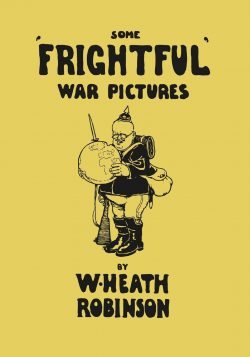
Some Frightful War Pictures illustrated by W. Heath Robinson


By W. Heath Robinson (Last Post Press)
ISBN: 978-1-4733-3483-0 (PB/Digital edition)

Not many people enter the language due to their own works and efforts. Fewer still last the course and remain relevant. Can you recall what “doing an Archer” means? We’ll soon be calling it “doing a Boris”… or “Truss” or “Sunak” or…

Moreover, when such endeavours also challenge egregious public perceptions and seek to correct outrageous out-of-control attitudes whenever  governments seek to enflame the worst of humanity for immediate political gain – and yes I am drawing parallels with now – these heroes need to be remembered just as much as The Fallen of so many wars. On this day of all days, never forget that, and also please recall that all the dead we commemorate are only that way because politicians and diplomats on all sides of every conflict failed to do their jobs right and only cartoonists and satirists ever called them out for it…

William Heath Robinson was born on 31st May 1872 into an artistic dynasty. His father Thomas was chief staff artist for Penny Illustrated Paper and older brothers Thomas and Charles were also illustrators of note. After proper schooling, William tried – unsuccessfully – to become a watercolour landscape artist before turning to the family trade.

In 1902, he released fairy story Uncle Lubin before finding graphic work at The Tatler, Sketch, Strand, Bystander and London Opinion. During this period, he developed the humorous whimsy and penchant for eccentric over-engineered mechanical devices for simple tasks which made him a household name.

During The Great War, Heath Robinson uniquely avoided the jingoistic stance and fervour of many of his competitors, preferring to satirise the absurdity of conflict itself in every periodical venue and volumes of collected cartoons. When the shooting stopped, he went on to a career of phenomenal success and creativity in cartooning, illustration and advertising.

Sadly he found himself doing it all over again in World War Two…

William Heath Robinson died on 13th September 1944.

There was a mild resurgence of interest in his efforts some years ago (from whence stems this timely collection) and if you’re interested you could scour the internet or even real bookshops for Hunlikely! (1916) or The Saintly Hun: A Book of German Virtues (1917). More general joys and niggles can be seen in Flypapers (1919), Get On With It (1920), The Home Made Car (1921), Quaint and Selected Pictures (1922), Humours of Golf (1923) and Let’s Laugh (1939), and in larger compendia Heath Robinson At War (1941) and The Penguin Heath Robinson (1946)

His literary collaborations can be found in The Incredible Inventions Of Professor Branestawm – 1933, accompanying the novels of N Hunter – or in Mein Rant with R. F. Patterson (1940).

In the 1970s and 1980s Duckworth reprinted a selection of albums including Inventions, Devices, The Gentle Art of Advertising, Heath Robinson at War, Humours of Golf, How To Be A Motorist, How To Be A Perfect Husband, How To Live in a Flat, How To Make your Garden Grow, How To Run a Communal Home, How To Build a New World, and, ominously and rather perspicaciously foresightfully, How To Make the Best of Things

Some of these may still be found at or ordered through your local Library Service. Both Ribaldry and Absurdities were reissued in the 1990s and were readily available online last month…

There is very little point of in-depth analysis in the limited space available here, but surely some degree of recommendation is permissible. In Absurdities (1934), Heath Robinson personally gathered his favourite works into a single volume that more than any other describes the frail resilience of the human condition in the Machine Age and particularly how the English used to deal with it all. They are also some of his funniest panels.

In Railway Ribaldry – a commission from The Great Western Railway Company to celebrate their centenary in1935 (and more power to them; can you imagine a modern company paying someone to make fun of them?) – he examined Homo Sapiens Albionensis, as steel and rails and steam and timetables gradually bored their way into the hearts and minds of us folk. Much too little of his charming and detailed illustrative wit is in print today, a situation that cries out for rectification more than any other injustice in the sadly neglected field of cartooning and Popular Arts.

I apologize for the laundry-list nature of the above, but I’m not sorry to have produced it and neither will you be when you find any the wonderful, whimsical, whacky work of William Heath Robinson, Wizard of Quondam Mechanics.

In the spirit of his unique contribution to war and peace, this review ostensibly concerns his first combat collection which is readily available in digital editions. Published in 1915, Some Frightful War Pictures reprinted gags and observations first published in The Sketch and The Illustrated Sporting and Dramatic News: assaulting both the despised and press-pilloried “Boche” and the Empire’s own inept High Command with genteel mockery.

In complex, convoluted cartons with titles like ‘The True Reason of the War (July 1914)’, ‘Nach Paris!’, ‘Hague Convention Defied!’, ‘Kolossal!’, ‘The War Lord at the Front!’ and ‘War Komforts!’, the artist repeatedly points out how alike all sides are, whilst subtly hinting that other ways of settling issues are always available…
© 2017 The Estate of William Heath Robinson.

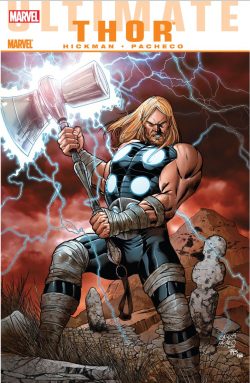
Ultimate Comics Thor


By Jonathan Hickman, Carlos Pacheco & Dexter Vines & various (Marvel)
ISBN: 978-0-7851-5187-6 (HB/Digital edition)

Distressing times never come singly. Yet again I’m spreading unhappy news as another comics great leaves us way too young. Our condolences go out to his family and we share the sadness of the millions of devoted fans now deprived of future glories. Now let’s look again at one of his most remarkable, influential and neglected works and ponder what’s gone… 

Carlos Pacheco Perujo (14th November 1961 – 9th November 2022) was born in Spain but found his greatest fame in the USA drawing the cream of the superhero crop.

After learning his craft creating covers, pin-ups, posters and transition art for Spanish reprints of Marvel Comics – and inventing his own Spanish superheroes – Pacheco got his big break illustrating Dark Guard for Marvel UK in 1992. Before long, his cleanly effective, realistic visualisations graced numerous Ultimate Comics and X-Men titles and spin-offs; The Fantastic Four; Captain America; The Inhumans; Superman; Superman/Batman; Flash; Green Lantern and Justice Society of America.

Despite indie triumphs such as Arrowsmith and Astro City, the writer/artist will always be remembered for his mainstream superhero virtuosity and landmark limited series like Final Crisis and Avengers Forever, and Original Graphic Novels such as JLA/JSA: Virtue and Vice.

In 2000, when Marvel retooled their traditional continuity into a separate, darker, grittier universe more relevant to the video game-playing, movie-watching 21st century readers, they started with the most popular characters and only gradually added analogues for the established characters and trademarks.

Even when the Avengers finally appeared in this continuity – as the Ultimates – readers were only sparingly brought up to speed on the assorted back-stories of these alternative heroes and villains – especially a wild, hammer-wielding warrior who couldn’t decide if he was Thorlief Golmen, mental patient, psychiatric nurse and anti-American radical protester or Thor, ancient Norse god of Thunder and battle.

After many struggles against his malicious, reality-warping brother Loki, incalculably mighty Thor is found here as a patient under the care of the European Union Super Soldier program. When their doctors call in linguistic expert/psychotherapist Donald Blake, the true and fantastic story of the patient’s origins unfold…

Eons ago, Asgard was a fantastic place of adventure and glory; an ideal paradise for the young warrior-brothers Balder, Thor and Loki to fight, carouse and enjoy life. But even gods grow older and apart…

The time was just prior to the start of World War II. Nazi Occult scientist Baron Zemo leads an army against Asgard, having already allied himself with the gods’ greatest enemies: Frost Giants…

All is not as it seems, however, and Zemo is no mortal invader. Moreover, his intention is to end all gods and bring about Ragnarok. Despite the magnificent heroics of the Norse deities, he eventually succeeds. But now it is revealed that the brothers did not die, but were reborn in mortal form on Earth.

Now as an Age of Supermen begins, the brothers awaken… and one of them is mad…

Compellingly scripted by Jonathan Hickman and beautifully illustrated by Pacheco with inks from Dexter Vines, Jason Paz, Jeff Het and colors by Edgar Delgado, J. Aburtov & Jorge Gonzalez, this spectacular yarn (originally released as a 4-issue miniseries) might be a mite confusing for readers unfamiliar with Thor’s other Ultimate appearances, or taking their cues from the movie iteration this version inspired.

It’s also quite choppy in delivery as it in-fills the missing portions of those stories but even so this is still a hugely engaging adventure that could easily act as an introduction to those other epics and is well worth your attention. And it is so very beautiful to look upon…
© 2020 MARVEL

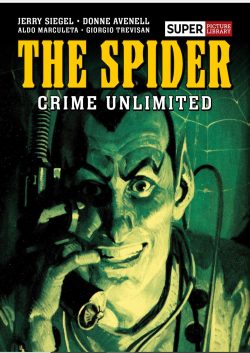
The Spider: Crime Unlimited


By Jerry Siegel, Donne Avenell, Aldo Marculeta, Giorgio Trevisan & various (Rebellion Studios)
ISBN: 978-1-78618-465-8 (HB/Digital)

Win’s Christmas Gift Recommendation: Bizarrely Bombastic Action Adventure… 8/10

Part of Rebellion’s Treasury of British Comics strand, The Spider: Crime Unlimited is a sublimely cool hardback collection celebrating an all-but forgotten sub-strand of the 1960s comics experience.

Until the 1980s, comics in the UK were based on an anthological model, offering variety of genre, theme and character on a weekly – or sometimes fortnightly – basis. Humorous periodicals like DC Thomson’s The Beano were leavened by thrillers like Billy the Cat or General Jumbo and adventure papers like Amalgamated Press/Fleetway’s Lion or Valiant always included gag strips such as The Nutts, Grimly Feendish, Mowser and a wealth of similar quick laugh treats. And yes, both rival companies had equivalents in those categories too…

They also produced Seasonal specials, hardcover Annuals and digest-sized anthology publications. DCT still publishes Commando Picture Library and used to have romance and science fiction titles such as Starblazer, matched by their London competitors with titles like Super Picture Library, War Picture Library, Air Ace Picture Library and Action Picture Library. These were half-sized, 64 page monochrome booklets with glossy soft-paper covers, but between 1967 and 1968 – at the height of the sixties Spy and Superhero booms – were supplemented by a deluxe, card-cover, 132 page version – The Fleetway Super Library.

As well as the always-popular war option of “Front Line” (starring by turn Maddock’s Marauders or Top-Sergeant Ironside), this line offered a “Secret Agent Series” – alternating cool spy operatives Johnny Nero and Barracuda – and the “Stupendous” (formerly and briefly “Fantastic”) series: delivering lengthy complete sagas starring either The Steel Claw or The Spider. These extra adventures came twice a month and ran 13 tales for each, and this spiffy hardback tome (245x177mm) re-presents the second and fourth releases, both starring the eerie webspinning master of crime…

British comics had a strange and extended love affair with what can only be described as “unconventional” (for which feel free to substitute “creepy”) heroes. So many of the stars and potential role models of our serials and strips were just plain “off”: self-righteous, moody voyeurs-turned vigilantes like Jason Hyde, sinister masterminds like The Dwarf, deranged geniuses like Eric Dolmann, jingoistic, racist supermen like Captain Hurricane and more often than not reformed criminals or menaces like Charlie Peace, The Steel Claw or The Spider

…And don’t get me started on our legion of lethally anarchic comedy icons or that our most successful symbol of justice is an Eagle-bedecked, anonymously-helmeted, jack-booted poster boy for a fascist state. Perhaps that explains why these days we can’t even imagine or envision what a proper leader looks like and keep on electing clowns, crooks and obliviously blinkered over-privileged simpletons…

All joking aside, British comics are unlike any other kind and simply have to be seen to be believed and enjoyed. One of the most revered stars of the medium has finally begun to be collected in various archival editions, and perfectly encapsulates our odd relationship with heroism, villainy and particularly the murky grey area bridging them…

Mystery criminal genius and eventual superhero The Spider launched in peerless weekly anthology Lion with the June 26th 1965 issue. He would reign supreme until April 26th 1969, and periodically return in reprint form (in Vulcan) and occasionally new stories ever since.

As first introduced by Ted Cowan (Ginger Nutt, Paddy Payne, Adam Eterno, Robot Archie) & Reg Bunn (Robin Hood, Buck Jones, Captain Kid, Clip McCord), the moody malcontent is an enigmatic super-scientist whose goal is to be acclaimed the greatest criminal of all time. The flamboyantly wicked narcissist began his public career by recruiting crime specialists: safecracker Roy Ordini and genteelly evil inventor Professor Pelham before attempting a massive gem-theft from America’s greatest city. He was foiled by cruel luck and resolute cops Gilmore and Trask: crack detectives cursed with the task of capturing the arachnid arch-villain.

Cowan scripted the first two serialised sagas before handing over to comics royalty: Jerry Siegel (Superman, Superboy, The Spectre, Doctor Occult, Slam Bradley, Funnyman, The Mighty Crusaders, Starling), who was forced to look elsewhere for work after an infamous dispute with DC Comics over the rights to the Man of Steel.

Here his unique approach and astounding imagination results in a truly bizarre outing for Aldo Marculeta – who draws like Massimo Bellardinelli – to illustrate in 2 panels per page as Super Picture Library #2 heralds the menace of ‘The Professor of Power’

It begins as The Spider crashes a fancy party to mock retiring Police Chief Brady whilst abusively reminding his minions who is boss, but has unexpected repercussions as outraged scientist Aldo Cummings creates a process to counteract the evil of such villainy by removing wickedness from living beings. Sadly, his ray machine malfunctions and utterly alters his own personality whilst also bestowing other arcane gifts…

Although completely evil now, the shapeshifter is still obsessed with The Spider and sets out to humiliate and destroy him through a campaign of terror that sees his opponent beaten and jailed whilst the Professor disrupts global peace and even sacrifices humanity to alien body snatchers from an extradimensional realm. With human beings inhabited by the evil entitoids, the maniac deems his duels with the webspinner over, but he has underestimated the cunning and resolve of his foe, who finds himself in the strange position of being Earth’s saviour…

Following is ‘Crime Unlimited’ from SPL #4, illustrated by Italian multinational star turn Giorgio Trevisan (Cherry Brandy, War Picture Library, Battler Britton, HMS Outcast, Trelawney of the Guards, The Flying Fortress, Bob Pepper, Silver Arrow, Ken Parker, Sherlock Holmes and so much more) with a terse, gritty script from British legend Donne Avenell.

Staring his career before WWII, Avenell cut his teeth on many British comics icons like Radio Fun, War Picture Library, The Phantom Viking, Adam Eterno and Dr. Mesmer’s Revenge, major international features line Nigeria’s Powerman, Buffalo Bill, The Phantom and assorted Disney strips. He was equally at home with newspaper strips such as Tiffany Jones, Axa and Eartha novels and TV screenwriting on shows like The Saint). Here he pits the swaggering arrogant super-criminal against a brilliant and ruthless inventor who applies Henry Ford’s business practices to organised crime: using vast engineering talents and mass-production techniques with the view to getting rich by stealing The Spider’s title as Emperor of Crime…

Mr. Mass begins with a wealth magnet to snatch the proceeds of a Florida heist right out of the Spider’s bony fingers, builds an unstoppable mole machine and ultimately unleashes an army of plundering doppelganger thanks to his Mass-Replicator, with neither Pelham & Ordini nor Trask & Gilmore able to slow the warring masterminds down.

Implacable foes conducting industrial warfare, the duelling geniuses hurtle towards a spectacular final accounting after Mass reduces an entire city to mental infancy, but fails to stop his webspinning nemesis tracking him down to a catastrophic clash in an automated factory…

These retro/camp masterpiece of arcane dialogue, insane devices and rollercoaster antics are augmented by Extras including original covers, biographies of the writers and ads for even more uncanny UK comics collections, both available and forthcoming…

This titanic tome reaffirms that the Emperor is back at last and should find a home in every kid’s heart and mind, no matter how young they might be, or threaten to remain. Batty, baroque and often simply bonkers, The Spider proves that although crime does not pay, it always provides a huge amount of white-knuckle fun…
© 1967 & 2022 Rebellion Publishing IP Ltd. All Rights Reserved.
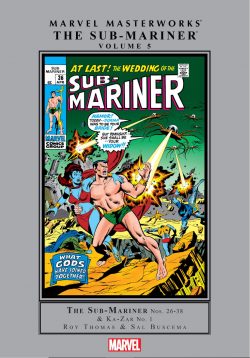
Sub-Mariner Marvel Masterworks volume 5


By Roy Thomas, Allyn Brodsky, Sal Buscema, Ross Andru, Frank Springer & various (Marvel)
ISBN: 978-0-7851-6619-1 (HB/Digital edition)

Prince Namor, the Sub-Mariner is the offspring of a water-breathing Atlantean princess and an American polar explorer; a hybrid being of immense strength, highly resistant to physical harm, able to fly, and thrive above and below the waves. Created by young, talented Bill Everett, Namor technically predates Marvel/Atlas/Timely Comics.

He first caught the public’s avid attention as part of an elementally appealing fire vs. water headlining team-up in the October 1939 Marvel Comics #1 (which renamed itself Marvel Mystery Comics from #2 onwards). The amphibian antihero shared honours and top billing with The Human Torch, but had originally been seen (albeit in a truncated, monochrome version) in Motion Picture Funnies: a promotional booklet handed out to moviegoers earlier in the year. Rapidly emerging as one of the industry’s biggest draws, Namor won his own title at the end of 1940 (cover-dated Spring 1941) and was one of the last super-characters to vanish at the end of the first heroic age.

In 1954, when Atlas (as the company then was) briefly revived its “Big Three” line-up – the Torch and Captain America being the other two – Everett returned for an extended run of superbly dark, mordantly timely fantasy fables. However, even his input wasn’t sufficient to keep the title afloat and eventually Sub-Mariner sank again.

In 1961, as Stan Lee & Jack Kirby were reinventing superheroes with the landmark title Fantastic Four, they revived the awesome, all-but-forgotten aquanaut as a troubled, semi-amnesiac antihero. Decidedly more bombastic, regal and grandiose, this returnee despised humanity: embittered and broken by the loss of his sub-sea kingdom which had been (seemingly) destroyed by American atomic testing. His rightful revenge became infinitely complicated after he became utterly besotted with the FF’s Susan Storm.

Namor knocked around the budding Marvel universe for a few years, squabbling with other star turns such as The Hulk, Avengers, X-Men and Daredevil before securing his own series as one half of Tales to Astonish, and from there graduating in 1968 to his own solo title.

This fifth subsea selection trawls Prince Namor, the Sub-Mariner #26-38 and portions of Ka-Zar #1, spanning June 1970 to June 1971, and opens with another heartfelt appreciation and more creative secret-sharing in an Introduction from life-long devotee – and primary scribe of this book – Roy Thomas. The drama recommences as recently self-appointed relentless guardian of the safety and ecology of all Earth’s oceans, the Prince of Atlantis furtively returns to the surface world.

In ‘“Kill!” Cried the Raven!’ by Thomas, Sal Buscema & Joe Gaudioso (AKA Mike Esposito) the Sub-Mariner has come to investigate reports of comatose superhuman Red Raven. He was the human emissary of a legendary race of sky-dwelling Birdmen recently encountered by The Angel of the X-Men in their last clash with Magneto. With the covert assistance of old friend Diane Arliss, Namor seeks to forge an alliance with the Avian race, but shocks, surprises and the Raven’s trauma-induced madness all conspire to sink the plan…

Back brooding in Atlantis in the wake of another failure, Namor’s mood is further plagued when a human pirate uses his giant monster-vessel to attack shipping with Atlantis bearing the brunt of blame ‘When Wakes the Kraken!’ His hunt for bizarre bandit Commander Kraken again involves Diane and ends only when the Sub-Mariner demonstrates what a real sea monster looks like…

Recuperating with her in New York City, Namor is incensed by the actions of an unrepentant industrial polluter and joins teen protestors fighting developer Sam Westman’s thugs and mega machines in ‘Youthquake!’ before we pause for a little diversion…

Beginning as a Tarzan tribute act relocated to a lost world in a sub-polar realm of swamp-men and dinosaurs, Ka-Zar eventually evolved into one of Marvel’s more complex and mercurial characters. Wealthy heir to one of Britain’s oldest noble families, his best friend is Zabu the sabretooth tiger, his wife is feisty environmental-crusader Shanna the She-Devil and his brother is a homicidal super-scientific bandit. Kevin Reginald, Lord Plunder is perpetually torn between the clean life-or-death simplicity of the jungle and the bewildering constant compromises of modern civilisation.

The primordial paragon even outranks Namor in terms of longevity, having begun as a prose pulp star, boasting three issues of his own magazine between October 1936 and June 1937. They were authored by Bob Byrd – a pseudonym for publisher Martin Goodman or one of a fleet of writers on his staff – and he was latterly shoehorned into a speculative new-fangled comic book venture Marvel Comics #1. There he roamed alongside another pulp mag graduate: The Angel, plus Masked Raider, the Human Torch and Sub-Mariner

When Ka-Zar reappeared all rowdy and renovated in 1965’s X-Men #10, it was clear the Sovereign of the Savage Land was destined for bigger things. However, for years all he got was guest shots as misunderstood foe du jour for Daredevil, Sub-Mariner, Spider-Man, and the Hulk.

In 1969, he took his shot with a solo saga in Marvel Super-Heroes and later that year – after Roy Thomas & Neal Adams used him so effectively in their X-Men run (issues #62-63) – was awarded a giant-sized solo title reprinting many previous appearances. The title also incongruously offered all-new stories of Hercules and the second, mutant X-Man Angel. That same month, Ka-Zar’s first regular series began in Astonishing Tales

That Hercules back up from Ka-Zar #1 (August 1970 by Allyn Brodsky, Frank Springer & Dick Ayers) is reprinted here as it impacts Namor’s exploits…

‘In his Footsteps… The Huntsman of Zeus!’ sees the potent Prince of Power on the run from an Olympian agent despatched by the King of the Gods. Following another bitter dispute with his sire Hercules returns to Earth, leaving Ares to foment trouble and prompt Zeus to set his terror-inducing Huntsman on the godling’s trail…

After seeking sanctuary with the Avengers, Hercules sees his mortal friends brutally beaten and flees once again…

The panicked rush takes him to Sub-Mariner #29 and the distant Mediterranean where the Huntsman ensorcells Namor and pits him against the fugitive. Although Hercules soon breaks the hypnotic spell, ‘Fear is the Hunter!’ reveals why the pursuer is so dreaded as he sends mythical terrors Scylla, Charybdis and Polyphemus against the heroes and the pitiful mortals of the region, until a valiant breakthrough ends the threat and forces a paternal reconciliation…

Another guest star treat materialises in #30 as ‘Calling Captain Marvel!’ sees Namor again reduced to a mesmerised puppet and attacking the Kree warrior and his human host Rick Jones. This time the condition is due to the amphibian’s falling in battle against toxic terrorist Mr. Markham who attempts to blackmail Earth by threatening to poison the seas with his molecular polluter. Once Captain Marvel batters Namor back to his right mind, they make quick work of the maniac in a concerted twin assault…

The fallout from his recent actions have unsettled Namor’s old friend Triton, and the Inhuman goes looking for the prince in #31 just as apparent Atlantean attacks on surface shipping mounts. Meeting equally concerned human Walt Newell (who operates as undersea Avenger Stingray) they finally find – and fight – the Sub-Mariner, only to learn the crisis has been manufactured by his old enemy who is now ‘Attuma Triumphant!’

The barbarian’s plans include destroying human civilisation, but he still has time to pit his captives against each other in a gladiatorial battle to the death; which of course is Attuma’s undoing…

Jim Mooney comes aboard as inker with #32 as a new and deadly enemy debuts in ‘Call Her Llyra… Call Her Legend!’ when fresh human atomic tests prompt Namor to voyage to the Pacific and renew political alliance with the undersea state of Lemuria. However, on arrival he finds noble Karthon replaced by a sinister seductress who lusts for war and harbours a tragic Jekyll & Hyde secret…

By the time he reaches Atlantis again the Sunken City is being ravaged by seaquakes and old political enemy Prince Byrrah is seizing control from Namor’s deputies and devoted paramour Lady Dorma. ‘Come the Cataclysm’ sees him first accuse surface-worlders before locating and defeating the true culprits – an alliance of Byrrah with failed usurper Warlord Krang and human mad genius Dr. Dorcas. In the throes of triumph, Prince Namor announces his imminent marriage to Dorma…

Antihero superteam The Defenders officially begin with Sub-Mariner #34-35 (cover-dated February & March 1971). As previously stated, the Prince of Atlantis had become an early and ardent activist and advocate of the ecology movement, and here he takes radical steps to save the planet by fractiously recruiting The Hulk and Silver Surfer to help him destroy an American Nuclear Weather-Control station.

In ‘Titans Three!’ and concluding chapter ‘Confrontation!’ (by Thomas, Sal Buscema & Jim Mooney) the always-misunderstood outcasts unite to battle a despotic dictator’s legions, the US Army, UN defence forces and the mighty Avengers to prevent the malfunctioning station from vaporising half the planet…

Inked by Berni Wrightson, Sub-Mariner #36 augurs a huge sea change in Namor’s fortunes that begins with time-honoured holy preparations for a happy event as ‘What Gods Have Joined Together!’ Elsewhere, arcane enemy Llyra is resuurected and seeks to steal the throne by abducting and replacing the bride-to-be whilst Namor is distracted by an invasion of Attuma’s hordes.

Ross Andru & Esposito take over illustration duties with #37 as an era ends and tragedy triumphs, leading to a catastrophic battle on ‘The Way to Dusty Death!’

Betrayed by one of his closest friends and ultimately unable to save his beloved, the heartbroken prince thinks long and hard before abdicating in #38 ‘Namor Agonistes!’: reprising his origins and life choices before choosing to henceforth pursue the human half of his hybrid heritage as a surface dweller…

To Be Continued…

More sunken treasures salvaged here include the cover to all-reprint Sub-Mariner Annual #1 (January 1971, and reprising the underwater portions of Tales to Astonish #70-73) plus Bill Everett’s pin-up of young Namor, contemporary House Ads and Marie Severin’s glorious cover sketch for #33, plus a huge Biographies section.

Many early Marvel Comics are more exuberant than qualitative, but this volume, especially from an art-lover’s point of view, is a wonderful exception: a historical treasure with narrative bite that fans will delight in forever. Moreover, with the Prince of Atlantis now a bona fide big screen sensation that no one’s ever heard of, now might be the time to get wise and impress your friends with a little insider knowledge…
© 2018 Marvel Characters, Inc. All rights reserved.