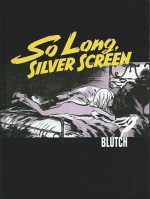
The Wasteland


By Dave Louapre & Dan Sweetman (Piranha Press/DC Comics)
No ISBN, ASIN: B000UE4MBE

During the anything-goes 1980s the field of comics publishing expanded exponentially with new companies offering a vast range of fresh titles and ideas. To combat the upstart expansion, Marvel and DC also instigated innovative material for those freshly growing markets with the latter colossus especially targeting readers for whom old-fashioned funnybooks were anathema …or at least a long-abandoned childhood flirtation.

DC pioneered new, more mature-oriented niche imprints such as Vertigo and Helix, but undoubtedly some of the most intriguing treats came out of their Piranha Press line, formed in 1989 and re-designated Paradox Press in 1993.

When DC founded this off-key, adult special projects imprint, both the resultant releases and reader’s reaction to them were passionately mixed.

It had long been a Holy Grail of the business to produce comics for people who don’t read comics and, despite the inherent logical flaw, that’s a pretty sound and sensible plan, but the delivery is always problematic.

Is the problem resistance to the medium? Then try radical art or narrative styles, unusual design or typography, and use talent from outside the medium to fill your books: you get some intriguing results, but risk still not reaching a new audience whilst alienating those readers already on board…

This superbly eclectic and overwhelmingly effective collection partially mitigated that risk by using new creators with an already established pedigree outside the comics industry and material which had found a fan-base elsewhere in publishing…

It’s also was one of the best and most wickedly addictive books Piranha produced…

Dave Louapre & Dan Sweetman had worked together since college, producing self-published illustrated stories which they sold direct to local bookstores. This led to a macabre and deliciously dark panel-gag series published in the L.A. Reader and movie magazine Fangoria and the creation of stunningly off-kilter, ironically post-modern and media-celebrated cartoon-fiction analect Beautiful Stories for Ugly Children, which winningly combined outré, edgy domesticity with the aesthetic sensibilities of Jean Paul Sartre, Ambrose Bierce, O. Henry, Charles Addams, Aubrey Beardsley and Gahan Wilson. It was not your average comicbook…

The Piranha Press experiment was always a tenuous dream in a cutthroat business, and though BSFUC was undoubtedly its greatest triumph – 41 delirious issues, some specials and a “Best Of” collection – the imprint was radically restructured in 1992 and Dave and Dan moved on and out to Hollywood.

Before they finally left, however, the company published also The Wasteland: a compilation – with some new material – of that aforementioned gag feature…

Produced as a single captioned panel, the strip offered the trademarked weird ideas and compelling, alluring prose rendered (sur)real via lovely, sketchy, scratchy, frantically evocative monochrome illustrations with the same skewed worldview, supplemented with a heaping helping of mordant Gary Larson wryness added to the mix.

There’s no point my trying to relate the contents of this superb, tragically out-of-print but mercifully still available tome: 128 pages of graphic imagery blending the cute with the grotesque, the mundane with the bizarre and the unexpected with the cheerily distasteful which you just have to see to believe.

All I can do here is tease you with a few atypically typical sample subject-lines such as ‘Men without Women meet Dogs without Snouts’, ‘The Little Cyclops Puppy Nobody Would Play With’, ‘Cheerleaders on Fire’, ‘Lover’s Hop, for the Less-than-Devastated’, ‘The Substitute Executioner’, ‘My Dinner with Medusa’, ‘Jump-Starting the Dog’, ‘We Got Along Swimmingly Once I Learned They Hated Me’, ‘A Day at the Nun Jousts’ ‘Rudolph the Red Light Reindeer’, ‘Zero-Gravity Autopsy’, ‘The Gas Chambermaid’ and ‘Rumble Monks’, and rest assured that some of you will now be unable to rest until you experience the sheer creative anarchy for yourselves…

Happy Easter, comic fans…
The Wastelands © 1989 Dave Louapre & Dan Sweetman. All Rights Reserved.

The UmbrellaAcademy volume 1: Apocalypse Suite


By Gerard Way & Gabriel Bá (Dark Horse)
ISBN: 978-1-59307-978-9

Superheroes have been around long enough now that they’ve been able to evolve into different sub-sets: straight Save-the-World continuity types as championed by DC and Marvel, obsessively “real” or realist iterations such as Marvelman, Masked Man, Crossfire or Kick-Ass, comedy versions like Justice League International, Ambush Bug, Deadpool or She-Hulk and some rare ducks that straddle a few barstools in between.

Cut from the same cloth of Edgy, Catastrophic Absurdism as Scott McCloud’s Zot!, Brendan McCarthy’s Paradax or Grant Morrison’s Doom Patrol and Flex Mentallo, the archly anti-didactic antics of The Umbrella Academy offered readers a subtly subversive take on the idiom which impressed the heck out of everybody and lured many disillusioned fans back to the pitifully tired and over-used genre when first released…

This debut collected volume gathers the initial 6-issue miniseries as well as a 2-page online tease from MySpace Dark Horse Presents and an introductory short story from the company’s Free Comic Book Day issue in 2007.

Once upon a time a strange event occurred. All across Earth 43 babies were unexpectedly born as the result of apparent immaculate conceptions – or perhaps some kind of inexplicable parthenogenesis. The births even surprised the mothers, most of whom abandoned or put up for immediate adoption their terrifying newborns.

Seven of these miracle babies were acquired by esteemed inventor and entrepreneur Sir Reginald Hargreeves. The inventor of the Levitator, mobile umbrella communicator, Clever Crisp cereal, Televator and a process which enabled chimps to speak was in actuality an over-achieving alien with a secret plan, and he raised the children to become superheroes to enact it.

He was not a good or caring parent…

The callously experimental family, after a number of early spectacular successes such as ‘The Day the Eiffel Tower Went Berserk’, soon proved to be unmanageable and the Umbrella Academy – created and trained “to save the World” – sundered in grief and acrimony, but not before poor Ben, Number 6 or “The Horror”, pointlessly lost his brave young life and Number 5 “The Boy” took a short trip into the future and never came back…

An utterly dysfunctional superhero team, the children parted, but now, twenty years later, the surviving members of the squad gather again at the news that Hargreeves – whose nom de crime was The Monocle – has died…

In the interim, Number 1 son Luther became an off-earth defender and pioneer, but was hideously damaged on a doomed journey to Mars. To save him, The Monocle grafted his head onto the body of a colossal Martian Gorilla but the “Spaceboy” found it far easier to live alone on the Moon than stay with his saviour.

Poor, neglected Vanya however, whose musical gifts Hargreeves deemed utterly useless, became a drop-out and wrote a scandalous tell-all book before becoming a voluntary exile amidst Earth’s lowest dregs…

In ‘We Only See Each Other at Weddings and Funerals’ the disparate clan gathers and Luther discovers The Boy has returned, looking not a day different. He isn’t – but his mind is sixty years old and has experienced horrors beyond all imagining…

Made welcome by technologist, housekeeper and talking chimp Dr. Pogo, Luther is startled by the return of Allison (Number 3, The Rumor). She’s changed a lot since her marriage – although she’s now single again – but Diego (Number 2, The Kraken) and Klaus (Number 4, The Séance) are just the same: physically mature but still completely, scarily demented…

The interment ceremony is a complete fiasco and descends into a brawl, but the savage bitterness the family exhibits towards each other is as nothing compared to the carnage caused by the arrival of merciless robotic Terminauts tasked with stopping the Umbrella Academy reforming at any cost…

Across town, poor forgotten Vanya has an audition with some very special musicians. The Orchestra Verdammten need only the best if their unconventional maestro, The Conductor is to perfectly premiere his latest opus – The Apocalypse Suite…

As the reluctantly reunited Academy fall into old habits and dash off to save innocents from slaughter, The Boy drops his last bombshell: in the future he’s returned from, Earth was destroyed three days after the Monocle died…

Built by a long-vanquished foe, the killer mechanoids are ‘Dr. Terminal’s Answer’ to the pesky kids who ruined his plans, although they don’t fare well against Spaceboy, Rumor Séance and The Kraken.

Dr. Pogo has stayed to examine The Boy and finds him exceedingly strange: a 60-year old mind wearing a 10-year old body that hasn’t aged a single second since it reappeared. There’s even stranger stuff going on which the monkey medic can’t detect, though…

Diego never stopped fighting monsters and has become a darkly driven vigilante, who even now has ignored the flamboyant threat of the robots to save imperilled kids. However when Vanya – fresh from fleeing the deranged Conductor – stumbles into the conflagration he disparages her; calling her useless, just like Hargreeves used to.

As her strange siblings wrap things up and return to the puzzle of exactly how the Earth will end in a matter of days, the dejected, rejected Number 7 returns to The Orchestra Verdammten…

Subjected to outrageous experiments in ‘Baby, I’ll be Your Frankenstein’, Vanya is quickly transformed into a finely-tuned instrument to shatter reality, even as Pogo and The Boy stop for coffee and meet time-travelling trouble.

…And at the Icarus Theatre, the once disregarded and discarded White Violin makes her deadly, devastating debut…

At a certain Diner, distressed waitress Agnes tells Police Inspector Lupo how a veritable army of futuristic thugs were reduced in seconds to scarlet shreds and tatters by a little boy who politely said ‘Thank You for the Coffee’ before leaving with his chimpanzee friend. Lupo has endured a long and difficult unofficial association with ruthless avenger Kraken which has kept the city’s worst criminals from running riot, but when the old cop casually remarks that a lot of violinists have suddenly vanished even he is quite unprepared for the vigilante’s reaction…

The family gathers at the Academy: Luther and The Rumor slowly rekindling a long suppressed relationship even as The Boy makes the huge mistake of looking through Hargreeves’ trademark Monocle just as prodigal sister Vanya knocks on the door – with shattering, killing force…

The shocked stunned survivors quickly marshal their forces for ‘Finale or, Brothers and Sisters, I Am an Atomic Bomb’, but even though they achieve some sort of victory and save reality, it’s at a terrible, World-shattering cost…

Following Editor Scott Allie’s Afterword on the trials, tribulations and triumph of working with a big-name rock-star (yes, that Gerard Way: the multi-talented musician/writer/artist/designer who fronts the band My Chemical Romance…) whilst trying to maintain a comicbook schedule, illustrator Gabriel Bá and the author then reveal a host of production secrets in ‘Designing the Umbrella Academy’.

But that’s not all: the introductory ‘Short Stories’ – with notes and commentary from Bá – follow, revealing a lighter side to the team in ‘“Mon Dieu!”’ and a surprisingly deft surreal murder mystery in‘…But the Past Ain’t Through with You’ (first seen in MySpace Dark Horse Presents and Dark Horse Free Comic Book Day 2007 respectively).

Whilst happily swiping, homaging, sampling and remixing the coolest elements from many and varied comics sources, The Umbrella Academy created a unique synthesis and achieved its own distinctive originality within the tired confines of the superhero genre. Maybe because it stylishly combines the tragic baroque tone of a La Belle Époque scenario with an ironic dystopian fin de siècle sensibility and re-presents it all as a witty post-modern heroic fable, or perhaps more likely simply because it’s all just really damned good, darkly sardonic fun, conceived with love and enthusiasm and crafted with supreme skill and bravura by extremely talented people who love what they do…?

Read The Umbrella Academy: Apocalypse Suite if you’re smart, read it if you’re bored, read it because I said so, but if you too love the medium and the genre, read it, read it, read it.
™ © 2008 Gerard Way. All rights reserved.

Wolverine Origins: Romulus


By Daniel Way, Scot Eaton & Andrew Hennessy (Marvel)
ISBN: 978-0-7851-3539-5

Ever since his glory days in the AllNew, All Different X-Men, the mutant berserker known variously as Wolverine, Logan, Patch and latterly James Howlett has been a fan-favourite who appealed to the suppressed, put-upon, catharsis-craving comic fan by perpetually promising to cut loose and give bad guys the kind of final punishment we all know they truly deserve.

Always skirting the line between and blurring the definitions of indomitable hero and maniac murderer, Wolverine soldiered on, a tragic, brutal, misunderstood hero cloaked in mysteries and contradictions until society changed and, as with ethically-challenged colleague the Punisher, final sanction and quick dispatch became acceptable and even preferred options for costumed crusaders.

Debuting as a foe for the Incredible Hulk in a tantalising teaser-glimpse at the end of issue #180 (October 1974) before indulging in a full-on scrap with the Green Goliath in the next issue, the semi-feral Canadian mutant with fearsome claws and killer attitude rode – and maybe even caused – the meteoric rise of the reconstructed and rebooted X-Men before gaining his own series, super-star status and silver screen immortality.

He hasn’t looked back since, although over the years many untold tales of the aged agent (since the original miniseries Origins revealed the hero had been born at the end of the 19th century) have explored his missing exploits in ever-increasing intensity and torturous detail.

Thus Wolverine’s secret origin(s) and increasingly revelatory disclosures regarding in his extended, conveniently much-brainwashed life have gradually seeped out. Cursed with recurring and periodic bouts of amnesia and mind-wiped ad nauseum by sinister or even well-meaning friends and foes, the Chaotic Canucklehead has packed a lot of adventurous living into his centuries of existence – but doesn’t remember most of it.

This permanently unploughed field has conveniently resulted in a crop of dramatically mysterious, undisclosed back-histories, so from June 2006 to July 2010 supplementary series Wolverine Origins, for a 50-issue run, began revealing certain discrete pockets of that rich but occluded seam of comicbook gold.

Short and feisty, Logan has always threatened and promised an explosion of visceral, vicarious ultra-violence and grim, gritty justice at every moment and in this slim, savage collection (gathering issues #37-40 of Wolverine Origins from), the panting comicbook public once again gets what it’s never stopped clamouring for…

Wolverine is the ultimate tracker and for months has been hunting for his own past. His search has revealed one inescapable, horrific fact: for most of his life the mutant has been repeatedly manipulated and tortured by a madman. Over decades a mysterious mastermind has been invisibly moving in and out of his life: even exerting complete mental dominance over the wandering warrior.

Only recently has Logan realised this and by setting all his prodigious instincts and tracking skills to the task, is at last closing in on the sadistic phantom he only knows as Romulus…

The infinitely patient phantom is the force behind numerous programs such as Weapon X (which first agonisingly bonded miracle metal Adamantium to Wolverine’s skeleton) and is dedicated to manufacturing and augmenting appalling human killing machines.

Of late Logan has been confronted by many of Romulus’ greatest successes, overcoming walking tragedies and monstrous atrocities such as tortured US super-soldier Nuke, old associates Wildchild and Sabretooth, foes Cyber and Omega Red and even his own, now-adult, psychotic son Daken.

Crisscrossing the globe, the implacable stalker has gradually come closer to finding his ancient tormentor, discovering ever-more chilling details about his shadowy opponent. Now he is ready for a final showdown…

The eponymous 4-part ‘Romulus’ opens with Wolverine in Russia following the mastermind’s trusted factotum Victor Hudson to the brutal Vutluga Prison, where a modern pestilence is plaguing hope-starved, desperate inmates and warders alike. As the infuriated mutant moves in for the long-deferred confrontation he’s been hungering for he realises he’s been set up in another stupid test… just as the life-leeching Omega Red ambushes him…

The staggeringly brutal battle goes to Wolverine – but only just – and as the exhausted victor staggers outside he falls prey to fellow feral mutant Wildchild.

Dragging the battered hero to a steel mill and a doom even Wolverine’s legendary healing factor can’t overcome, the boastful brat reveals a shocking truth.

Inhuman Romulus is apparently thousands of years old and considers himself the planet’s absolute apex predator. Logan’s quarry has spent centuries creating, shaping and honing his own successor. To this extent he has bred, if not actually farmed, Wolverine’s bloodline – among others – for generations: constantly improving human killers through technology and the crucibles of torment and combat, even killing Logan’s first wife Itsu and stealing the son the X-Man never knew existed…

Moreover, although Logan was the preferred option to succeed him, Romulus has always had other prospects in play and is content to stand well back and let the very best killer win…

Wildchild’s plan comes undone when the seemingly unstoppable Omega Red intervenes, resulting in one more cutthroat clash as another of Romulus’ frontrunners falls. Soon after, with the aid of Russian super-spy The Black Widow, Wolverine’s last rival falls and the master manipulator finally reveals himself for the climactic last battle…

It doesn’t end in the way you’d expect…

With covers by Doug Braithwaite & Art Lyon, variants from Mike Mayhew, Herb Trimpe and Simone Bianchi, fact-files on Omega Red and Logan and a comprehensive bibliography in ‘Wolverine: the Reading Chronology’, this plot-light, carnage-driven collection of gory delights is a vicarious thrill for the devoted but might well be hard to follow for new or returning readers.
© 2009 Marvel Characters, Inc. All rights reserved.

New Crusaders: Rise of the Heroes


By Ian Flynn, Ben Bates, Alitha Martinez & Gary Martin (Archie Comics)
ISBN: 978-1-936975-31-0

In the dawning days of the comic book business, just after Superman and Batman had ushered in a new genre of storytelling, many publishers jumped onto the bandwagon and made their own bids for cash and glory. Many thrived and many more didn’t, relished only as trivia by sad old blokes like me. Some few made it to an amorphous middle-ground: not forgotten, but certainly not household names either…

MLJ were one of the quickest publishers to jump on the mystery-man bandwagon, following the spectacular successes of the Man of Tomorrow with their own small but inspirational pantheon of gaudily clad crusaders, beginning in November 1939 with Blue Ribbon Comics, soon followed by Top-Notch and Pep Comics. The content was the standard blend of two-fisted adventure strips, prose pieces and gag panels and, from #2 on, costumed heroes…

However, after only a few years Maurice Coyne, Louis Silberkleit and John Goldwater (hence MLJ) spotted a gap in the blossoming market and in December 1941 nudged aside their masked heroes and action strips to make room for a far less imposing hero; an “average teen” who would have ordinary adventures like the readers, but with triumphs, romance and slapstick emphasised.

Pep Comics #22 featured a gap-toothed, freckle-faced, red-headed goof who clearly took his lead from the popular Andy Hardy matinee movies starring Mickey Rooney. Goldwater developed the concept of a youthful everyman protagonist, tasking writer Vic Bloom and artist Bob Montana with the job of making it work. The 6-page tale introduced Archie Andrews and pretty girl-next-door Betty Cooper as well as his unconventional best friend and confidante Jughead Jones in their small-town utopia of Riverdale.

The feature was an instant hit and by the winter of 1942 had won its own title. Archie Comics #1 was the company’s first solo-star magazine and with it began the gradual transformation of the entire company. With the introduction of rich, raven-haired Veronica Lodge, all the pieces were in play for the comicbook industry’s second Genuine Phenomenon (Superman being the first)…

By 1946 the kids had taken over, so MLJ renamed itself Archie Comics; retiring its heroic characters years before the end of the Golden Age and becoming, to all intents and purposes, a publisher of family comedies. Its success, like Superman’s, changed the content of every other publisher’s titles, and led to a multi-media industry including TV shows, movies, and a chain of restaurants. In the swinging sixties the pop hit “Sugar, Sugar” (a tune from their animated show) became a global smash: their wholesome garage band The Archies has been a fixture of the comics ever since.

Nonetheless the company had by this stage blazed through a rather impressive pantheon of mystery-men who would form the backbone of numerous future superhero revivals, most notably in the High-Camp/Marvel Explosion/Batman TV show-frenzied mid-60’s…

The heroes impressively resurfaced in the 1980s under the company’s Red Circle imprint but again failed to catch the public’s attention and Archie let them lie fallow (except for occasional revivals and intermittent guest-shots in regular Archie titles) until 1991, when the company licensed its heroes to superhero specialists DC for a magically fun, all-ages iteration (and where’s that star-studded trade paperback collection, huh?!).

Impact Comics was a vibrant, engaging and fun all-ages rethink that really should have been a huge hit but was again cruelly unsuccessful…

When the line folded in 1993 the characters returned to limbo until DC had one more crack at them in 2008, trying to incorporate the Mighty Crusaders & Co into their own maturely angst-ridden and stridently dark continuity – with the usual overwhelming lack of success.

Now at last the wanderers have returned home to Archie for a superbly simplistic and winningly straightforward revival aimed squarely at old nostalgics and young kids reared on highly charged action/adventure cartoon shows: brimming with all the exuberant verve and wide-eyed honest ingenuity you’d expect from an outfit which has been pleasing kids for nearly seventy years.

Released initially online in May 2012 – and followed by a traditional monthly print version that September – the first story-arc even made it to full legitimacy in this thrill-packed collection, equally welcoming to inveterate fanboys and eager newcomers alike.

The first 6 issues collected here offer grand old-fashioned Costumed Drama and modern teen-targeted Fights ‘n’ Tights action that begins with the 2-part introduction ‘From the Ashes’ by Ian Flynn, Ben Bates & Gary Martin.

Red Circle is an idyllic, storybook American town – now. That wasn’t always the case however, and as Mayor Jack Sterling hosts a party for some very old friends and their kids in ‘Reunions’, that dark past horrifically resurfaces as the festivities are cancelled due to a murderous attack by a manic super-villain.

One minute Ralph Hardy, John Dickering and wife Thelma, John and Rose Raymond, Ted Tyler and Kim Brand are watching their respective teenagers mooching about and not getting along and the next they’re all dead at the hands of alien overlord the Brain Emperor…

Only late arriving Joe Higgins is left to shepherd the kids from the burning Mayoral mansion, operating under a long-practised escape plan devised by the heroic Mighty Crusaders…

Debuting way back when in Pep Comics #1, January 1940, Higgins was an FBI scientist who devised a suit which gave him enhanced strength, speed and durability, battling the USA’s enemies as The Shield in the days before America entered WW II. He also devised a serum which enhanced those powers, smashing spies, saboteurs, subversives and every threat to Democracy and well-being. A minor sensation, he is credited as comics’ first Patriotic Hero, predating Captain America and Quality’s Uncle Sam in “wearing the Flag”.

In the sixties he and many of his lost cohorts returned to battle crime and craziness once more…

After accomplishing the impossible and wiping out super-crime he, Steel Sterling, Jaguar, Comet, The Web, Pow-Girl, Fireball and Fly Girl happily retired from action. Unable to settle or relax, Higgins became a virtual recluse and, as Evil Never Dies, laid contingency plans with his old comrades.

Now with all his nightmares come true, he sequesters the traumatised kids in his high-tech bunker and relates the truth about the seemingly dull-and-boring dearly departed in ‘Birthrights’.

The Red Circle tragedy is covered up by Federal spooks from the Military Logistics & Jurisdiction Bureau and dubbed a freak storm on the Impact City news, but orphans Johnny Sterling, Alex Tyler, Greg Dickering, Kelly Brand, Wyatt Raymond and Hardy’s young apprentice Ivette Velez know the truth. They just can’t come to grips with it.

Once Old Man Higgins had saved them from the monster-maniac, he locked them up in his subterranean wonderland – with the full approval of the MLJ – and started talking nonsense.

He claimed their folks were the world’s greatest superheroes and expects them to take up their identities and mission. It’s crazy and totally impossible to believe, but he has all kinds of evidence and gadgets in his bunker. There’s even a mutant talking monkey named Dusty, and somehow he makes more sense than his snarky, impatient boss…

It’s too much and the kids rebel, so Higgins lets them go. All they have to do is get out of the bunker alive…

The terrifying gauntlet proves to the shell-shocked teens that they are far from average and they elect to stay. ‘Legacies part 1: Growing Pains’ then describes the mandatory training process wherein the neophytes, through determination, pre-prepared inheritances, sheer dumb luck and rash stupidity become a second generation of heroes, privy to all the secrets and responsibilities of a world hidden from most of humanity.

Kelly is dispatched by Dusty (or Dr. Uruk Ak’ahk to give him his proper title) to a trans-dimensional space station operated by veteran Crusader Bob Phantom to pick up the alien gimmicks which will make her the new Fly Girl, whilst timid low-esteem-plagued Ivette is given the magical Jaguar Helmet of Ai Apaec, discovered by her boss Ralph Hardy and intended for her alone. However no-one realised it would put her into deadly contact with and at the mercy of a terrifying, possessive, savage lost god…

Puny Wyatt is as smart as his parents The Web and Pow-Girl ever were but has none of their physical gifts. A high-tech combat suit handles the muscle, speed and agility deficit, and the psionic power he’s hidden since infancy more than makes up for his lack of combat experience.

The real problems come with the three alpha-males. Impetuous and rebellious, Alex and Greg hastily misuse the serums intended to duplicate the pyrokinetic and lethal light-wielding power of Fireball and the Comet – nearly dying in the process – whilst Johnny just can’t bring himself to submit his perfect Jock’s body to the nasty nano-surgical procedure that will make him a second Steel  Sterling…

As ‘Legacies part 2: Inheritance’ (illustrated by new regular penciller Alitha Martinez) opens only Fly Girl is willing – or indeed able – to embrace her destiny, but fate takes charge as the implacable Brain Emperor strikes again, just as a poignant message from his departed dad inspires Johnny Sterling to take up the metallic mantle of a champion.

The Brain Emperor strikes in ‘Trial by Fire part 1’ raiding the penitentiary holding the original Crusaders’ greatest foes and causing a deadly ‘Jailbreak’ forcing the junior heroes and their aged tutor into action far too soon. Nevertheless, the kids do alright and the Cerebral Conqueror has made a crucial error: the prison held not only an army of vicious super-freaks but also three rogue heroes in special isolation.

The Black Hood, Hangman and Deadly Force are a remorseless Riot Squad just itching to get their merciless hands on more criminal scum ‘Caught in the Flames’…

As the alien Emperor gathers selected villains for his next enterprise, the New Crusaders’ blistering trial by fire proves to be an education for all, but not every hero survives…

To Be Continued…

Full of vim and vigour, this no-nonsense superhero saga is a slick and smart return to tried-and-true comicbook bombast and action which manages to feel brand-new whilst somehow still remaining faithful to all of the many iterations and re-imaginings of the assorted superheroes – even the two produced in conjunction with DC Comics.

This delightful exercise in recapturing the straightforward excitement of a genre also includes such special features as a variant cover gallery by Bates, Mike Norton, Ryan Jampole & Matt Helms, ChrisCross & Thomas Mason, Sanford Greene, Rich Buckler, Francesco Francavilla and Fiona Staples plus bonus featurette ‘Dusty’s Files’ on ‘The Pitch’, ‘The Cast’, ‘The Braintrust’ (creators Ian Flynn & Ben Bates), ‘The Legacy’, ‘The Villains’ and ‘The Future’.

Fast, fulfilling and fun, New Crusaders might just be Archie’s long-awaited superhero “one that didn’t get away”…
© 2013 Archie Comics Publications. All rights reserved. NEW CRUSADERS and RED CIRCLE COMICS ® ACP, Inc.

The Initiates – A Comic Artist And a Wine Artisan Exchange Jobs

Initiates front 2
By Étienne Davodeau, translated by Joe Johnson (NBM/Comics Lit)
ISBN: 978-1-56163-703-4

Throughout 2010 Bande Dessinée author/artist Étienne Davodeau (Friends of Saltiel, Lulu femme Nue, Un monde si tranquille, The Poor People: A History of Activists), noted for both brilliant fiction and moving factual comicbook novels, participated in a fascinating life (or perhaps vocation) swap experiment.

The artist, writer and designer was born in 1965 and, whilst studying art at the University of Rennes, founded Psurde Studios with fellow comics creators Jean-Luc Simon and Marc Le Grand, AKA “Joub”. His first album The Man Who Did Not Like Trees was released in 1992 and he forms an integral part of the modern graphic auteur movement in French and Belgian comics.

Released as Les Ignorants in October 2011, this lyrical and beguiling cartoon documentary reveals the year when the artist and independent specialist wine-maker Richard Leroy shared the secrets and mundane realities of each other’s insular, introspective and fearsomely philosophical solitary professions.

Davodeau knew absolutely nothing of the ferocious demands of the elite, experimental grape-growing game nor the oenophilic secrets and mysteries of tasting wine, but similarly the bluff, irascible son of the soil had barely read a comic in his entire life. The journal of discovery opens with ‘To Pruning, Then (Plus One Belgian Printing)’ as the artist is put to work in icy winds on the terroir of Montbenault, cutting and shaping the lianas which hold such glorious potential. Then Leroy is taken on an eye-opening tour of a Belgian print-works where Davodeau is summoned to sign off his latest album…

In ‘Wood’ a trip to a cooperage dissects the role of barrels in the slow fermentation process, as the new friends discuss the imponderables of judgement. It’s hard to define, but in their own fields each knows right and wrong, good and bad and most especially “not perfect yet”…

Leroy’s extra-curricular work includes reading lots of comics and graphic novels, as well as being introduced to the peripheral joys such as signings, collectors fads and so forth, but when he is introduced to major creator Gibrat a fascinating discourse on the aesthetics of the medium ensues in ‘Jean-Pierre (and Jimi, and Wolfgang Amadeus and a Few Others)’, liberally lubricated by the vintner’s ever-present samples of his own form of creative expression…

A charming interview and guest appearance with Lewis Trondheim graces ‘The Art of the Portrait and its Vicissitudes, or “The Theory of the Beak”’ even as the spring brings terror, confusion and greater back-breaking toil as the artist has his first brush with tractors and even more obscure specialist technologies, ‘What Goes Without Saying’ offers personal history and raking in the hot sun, after which ‘In Praise of Manure’ focuses on subjectivity as he learns the pros and cons of the controversial vintners’ heresy of “Biodynamics”…

Ploughing and accidental self-immolation features in ‘A Question of Proximity’, whilst the arrival of the world’s most influential wine critic opens a whole new area of discourse in ‘New York/Montbenault/New York’, and the tables are satisfactorily turned in ‘Saying Something Stupid: (Sometimes) a Good Idea’ as Richard attends an editors’ meeting in Paris in July before a little break at a Bistro reveals the true depth of the naïve comic-consuming artisan’s liquid gifts…

Wine-making is a 24/7 occupation and as storm season hits the terroir ‘The Blunder’ offers moments of genuine tension and apprehension for this year’s crop before a successful “disbudding” of the vines leaves time for a taste-training session for the novice drinker and reluctant reader alike.

In ‘Blacks and Whites’ the never-shy Leroy meets a creator whose work deeply affected him, and the pleasant hours spent with author/artist Marc-Antoine Mathieu lead to deep thoughts all round before ‘Wherein, When Certain Vintners Suffer Sulphur’ covers the raging debate in the wine industry on the use of elemental additives to “manage” fermentation, which leads inevitably to the frantic camaraderie of the grape-picking and constant cry for another ‘Bucket!’

October, and with the year’s harvest pressed and in barrels there’re a few quiet moments to disparage foolish ‘Label Drinkers’ at Wine Exhibitions, happily contrasting the snobs with Leroy’s first experience of a Comics Festival, before November brings the first tentative tastings of the new vintage and a long-awaited epiphany moment for reluctant reader Leroy in ‘Montbenault/Paris/Kabul’…

The Photographer (“Into War-Torn Afghanistan with Doctors Without Borders”, by Emmanuel Guibert, Didier Lefèvre and Frédéric Lemercier ) was the book the vintner responded to on a purely, frighteningly visceral level, so Davodeau takes the bemused convert to meet the lead creator and consequently discovers a tenuous connection between his life-swap partner and the documentary graphic novel’s subjects…

In ‘A Teetering Statue’ the quiet winter weeks allow breathing space to learn the travails of shipping and export, as well as encompassing a visit to the Paris Cartier Foundation’s Moebius Exhibition and some deliciously piquant home truths for comics cognoscenti before returning again to pruning vines, whilst ‘Savagnins, Poulsards, and Company’ takes us almost full circle as Leroy takes the artist to the vintner’s own personal promised land and a fellow elite wine maverick, whilst a trip to Corsica takes in the Bastia Comics Convention and the unique vineyard of the “Patrimonio Arena” in ‘Nielluccio, Vermentinu, Bianco Gentile and Oubapo’…

The magnificently elegiac and languorously evocative account wraps up in genteelly seductive manner with one final excursion as The Initiates head for the Dordogne to follow up on Emmanuel Guibert’s introduction to the survivors of The Photographer. One last gracious day of cross-fertilised booze and books conversation in ‘Final Revelations under a Cherry Tree‘ then leads inevitably back to where and how it all began for both participants…

Of course all I care about is comics, but even on my terms this rapturous, studious yet impossibly addictive account of two open-minded, deeply dedicated artists’ tentative exploration of each other worlds – at once tediously familiar and utterly unknown – is a masterpiece of subtle education, if not benevolent propaganda and, like good wine or a great book, takes its own sweet time to hook you.

Also included in this surprisingly compelling hardback chronicle is ‘Drunk/Read’ – a list of wines and graphic novels introduced to each novitiate; an intriguing bucket list for readers to aspire to and complete our second hand education into the greatest arts on Earth…

This dazzling display of harsh fact and the theosophical fervour of the grape-growers art, seamlessly blended with an outsider’s overview of our whacky, cosy world of cartoons and funnybooks, is enchanting beyond measure and should figure high on any fan’s list of books to seduce comics non-believers with. It might also be the perfect gift for all those people you thought you couldn’t buy a graphic novel present for…

Europeans excel at making superb comics which simultaneously entertain and educate (check out the sublime On the Odd Hours or The Sky over the Louvre to see what I mean) and the seductive, evocative, eclectically human monochrome illustration and dialogue perfectly capture the sensorial effect of wine and work and weather, and the backbreaking, self-inflicted artisan toil and ineffable rewards of making comics or creating wine…

Every so often a book jumps our self-imposed ghetto wall of power fantasies and rampaging adventurism, and I pray this elegiac documentary of a bizarrely fitting experiment makes that sort of splash in the wider world.
© Futuropolis 2011. © 2013 NBM for English translation.

A Treasury of Victorian Murder Compendium


By Rick Geary (NBM/Comics Lit)
ISBN: 978-1-56163-704-1

Master cartoon criminologist Rick Geary has been sifting through humanity’s dark drives for years: researching and presenting a compelling cavalcade of corruption with his series of graphic novel/true-murder mystery reconstructions, each beguilingly combining a superlative talent for laconic prose, incisive observation and forensically detailed pictorial extrapolation with his formidable fascination for the darker aspects of human history.

Geary’s unblinking eye has of late been examining the last hundred years or so in his Treasury of XXth Century Murder series, but first began his graphic assignations with Mankind’s darker aspects in a delicious anthologised tome entitled A Treasury of Victorian Murder in 1987. Now that initial volume and three of the eight that succeeded it (Jack the Ripper from 1995, The Fatal Bullet from1999, and 2003’s The Beast of Chicago) have all been re-issued in a splendid morbidly monochrome deluxe hardback – because, after all, bloody murder is always a black and white affair…

Geary’s fascination with his subject is irresistibly infectious and his unique cartooning style a perfect medium to convey the starkly factual narrative in a memorable, mordant and undeniably enjoyable manner.

The basic premise is simple. The feel and folklore of Queen Victoria’s evocative era is irredeemably ingrained in the psyche of the contemporary world, and that first flourishing of social modernity invested crime and especially murder with a whole new style and morbid appeal to the general public. Each of the cases the author adapts was big news at a time when burgeoning technologies, rising literacy levels and crass populism first began to stoke the fires of an insatiable hunger for gory news. Moreover, many of the cases still resonate with today’s catalogue of atrocities and will stir familiar feelings in readers of a later century – especially the unsolved ones.

The eponymous first volume begins with a stunning background feature depicting ‘Celebrated Events of the Victorian Age’, ‘Illustrious Personages’, ‘Statesmen, Explorers and Innovators’, stars of ‘Literature and the Arts’ and naturally many of the most notorious ‘Murders and Murderesses’ before setting the scene and tone with compelling illustrations of ‘Picadilly Circus, London 1887’ and a dissertation on the Victorians’ obsession with death.

Following the text page ‘Introductory Remarks to the First Three Murders and Bibliography’ the still-unsolved case known as ‘The Ryan Mystery’ is diligently laid out, wherein a brother and sister were brutally slain in Lower Manhattan in 1873, after which ‘The Crimes of Dr. E.W. Pritchard’ outlines the deadly narcissism and fraudulent career and just deserts (the last man to be publicly executed in Scotland) of a very nasty physician who outraged sensibilities with a campaign of genteel slaughter in 1865 Glasgow, before concluding with an early fully-documented account of that now-common miscreant, the child-killer in the salutary tale of ‘The Abominable Mrs. Pearcy’, whose atrocities in Hampstead, Hertfordshire dumbfounded the Empire in 1890…

Geary chose a novel methodology for the next, book-length saga – presumably because the case has been the subject of so much investigation and bowdlerisation over the years.

Jack the Ripper – a Journal of the Whitechapel Murders 1888 -1889 is “compiled from the journals of an unknown British Gentleman… who closely followed the increasingly savage killings” and wittily narrates a day by day account of the horror that stalked Whitechapel and gripped the world as it became the first media-led, press-fed cause célèbre.

Following a comprehensive map of ‘Whitechapel and the Crimes of Jack the Ripper, 1888‘, Geary – producing some of the most moodily inspired art of his prodigious career – unravels, reworks and remixes all the myths, facts and exploitative stunts of assorted participants. Also included are some potential early murders missed by the police and possible copy-cat crimes from that frenzied period of London life, in a truly captivating take on the most famous murder-mystery in history.

With an Introduction and full Bibliography this graphic exposé is still one of most engaging of expeditions into the legend of Saucy Jack…

If the Ripper has moved far beyond the realm of cold, hard plain facts, the next tale is its very antithesis: a phenomenally well-documented and demystified political assassination that allows the wryly witty Geary to fully exploit his ironically charged talents…

The Fatal Bullet – a True Account of the Assassination, Lingering Pain, Death and Burial of James A. Garfield, Twentieth President of the United States begins with a simple comparison of ‘The Two Roads’ which led the politician and his killer Charles J. Guiteau to their respective fates, before ‘The Journey Home’ begins the sorry tale with the interment of the nation’s lost leader.

From there the story harks back and simultaneously examines both participants’ oddly ‘Parallel Lives’, tracing their different responses to their nation’s call during the War Between the States whilst in ‘A Deadly Campaign’ as Garfield is literally called by duty to public office, his increasingly delusion stalker Guiteau insinuates himself into the politician’s orbit before at last shooting the great man on Saturday, July 2nd 1881.

‘The Long Summer’ then describes the nightmarishly bizarre and appallingly prolonged death throes of the President – including many of the positively baroque remedies and solutions prescribed by a phalanx of eminent physicians and inventors, all desperately seeking to find and extract the shell lost somewhere in the fallen leader’s body…

When Garfield finally passed on September 9th all that was left was the trial of his clearly deranged killer, as remarkably recorded in ‘Conclusion: At the Bar of Justice’…

This stunning compilation then concludes with a genuinely terrifying tale of modern murder with The Beast of Chicago – an Account of the Life and Crimes of Herman W. Mudgett, known to the world as H.H. Holmes, H.M. Howard, D.T. Pratt, Harry Gordon, J.A. Judson, Edward Hatch, A.C. Hayes et al. – a jolly catalogue of criminality and carnage describing the astounding killing career of a bogus doctor and mesmerising psychopath whose official body count was twenty-seven souls, but may well have topped two hundred.

Attributed as America’s first documented serial killer, Mudgett/Holmes seemingly did it all first: a serial bigamist and conman, he hunted and slaughtered for fun and profit, lured victims to a purpose-built killing ground in the placid heart of a quiet suburb, seduced women, abducted children, corrupted and controlled entire families – making them his accomplices and even proxy killers – and, when finally caught, cultivated notoriety with an aplomb that guaranteed him a place in history…

His worst recorded atrocities took place during the 1893 World’s Columbian Exposition; a vast trade fair in Chicago where he had constructed a unique hotel and guest house dubbed “The Holmes Castle”…

Following maps of the sites, floor plans of his Castle and the 1894 escape route that revealed ‘The Desperate Journey of H.H. Holmes’, Geary treats us to a elucidatory Prologue ‘This is Chicago!’ to set the stage , before beginning the horrific tale of woe in ‘Dr. Holmes Comes to Town’ wherein the dapper, personable medical charlatan and insurance fraudster’s early life is disclosed before he inveigles himself into a position of respectability in suburban Englewood and commences to build his dream palace…

‘The Castle’ was an incredible, insane machine designed to lure in travellers and generate missing persons, and although its unique amenities were never fully understood or its death toll confirmed, Holmes’ secondary business – selling display skeletons to medical institutions – did extremely well in the four years that it was open for business, after which time Holmes took his incredible seduction and slaughter show on the road, or rather rails, during ‘The Desperate Journey’.

With events and disappearances spiralling, Holmes made a rare mistake and was briefly imprisoned for fraud. Unable to help himself, he then cheated his cellmate – a professional train-robber – who exacted vengeance by telling the authorities the truth about his boastful bunk mate…

With only a hint of the true extent of the bogus doctor’s crimes disclosed in ‘The Castle Revealed’, Holmes remained ‘The Prisoner’ for the rest of his short life, but even incarcerated with every day bringing fresh revelations of his horrific crimes, the first American Psycho succeeded in taking hold of his story and skilfully manipulating his own legend and myth…

As ever, Geary presents facts and theories with chilling pictorial precision, captivating clarity and devastating wit, and this still broadly unresolved mystery is every bit as compelling as his other homicidal forays: a perfect example of how graphic narrative can be so much more than simple fantasy entertainment.

With the inclusion of highly informative pictorial background essays and maps throughout, this big book of death is a sublimely readable successor to that era’s “Penny-Dreadfuls”: a startling yet accessible read that will engross fans of graphic narrative and similarly entice followers of True Crime thrillers. This merrily morbid murder masterpiece should be mandatory reading for all comic lovers, mystery-addicts and crime-collectors.
© 1987-2003, 2012 Rick Geary. All Rights Reserved.

Age of Reptiles Omnibus volume 1


By Ricardo Delgado (Dark Horse)
ISBN: 978-1-59582-683-1

There’s an irresistible, nigh-visceral appeal to dinosaurs. Most of us variously and haphazardly evolved hairless apes seem to be mesmerically drawn to all forms of education and entertainment featuring the monster lizards of our primordial past.

Designed as a purely visual experience, this hypnotically beguiling series of sequences from Ricardo Delgado offers one of the most honestly awesome brushes with prehistory ever imagined. Age of Reptiles opens a window onto distant eons of saurian dominance and, completely devoid of sound or text, provides a profound, pantomimic silent movie that focuses on a number of everyday experiences which simply have to be exactly how it was, way back then…

Crafted by one of the most respected concept and storyboard men in Hollywood, these dino-dramas offer – even in comicbooks – a unique reading experience that must be seen to be believed, which is why I’m forgoing my usual laborious forensic descriptive blather in favour of a more general appreciation…

The tales originally appeared as a sequence of miniseries between 1993 and 2010 before being subsequently collected as individual compilations. In 2011 this titanic tome, part of Dark Horse’s excellent and economical Omnibus line, gathered the material into one handy Brachiosaur-sized book to treasure forever. In this way older material stays in print as classy, full-colour digests (slightly smaller in proportion than regulation US comic-books but larger and far thicker than standard manga “tankobon” volumes, running about 400 pages per book).

Following the expansive praise of Animator, Director and Producer Genndy Tartarkovsky in his Foreword the original introductions to initial outing ‘Tribal Warfare’ (from Ray Harryhausen, Burne Hogarth and John Landis) precede a fantastic extended clash between a pack – or perhaps more properly clan – of Deinonychus and a particularly irate opportunistic and undeterrable Tyrannosaur.

The savage struggle, literally red in tooth and claw, takes both sides to the very edge of extinction…

As in all these tales, the astoundingly rendered and realised scenery and environment are as much leading characters in the drama as any meat and muscle protagonists and all the other opportunistic scavengers and hangers-on that prowl the peripheries of the war, ever eager to take momentary advantage of what seems more a mutual quest for vengeance than a simple battle for survival…

That theme is further explored in ‘The Hunt’ (with Disney chief Thomas Schumacher offering his observations in the introduction) wherein the eat-or-be-eaten travails of a mother Allosaurus end only after she dies defending her baby. The culprits are a determined and scarily organised pack of Ceratosaurs who then expend a lot of energy trying to consume the carnosaur’s kid amidst scenes of staggering geographical beauty and terrifying magnificence.

Their failure leads to the beast’s eventual return and a bloody evening of the score. Think of it as Bambi with really big teeth and no hankies required…

The theme of unrelenting and ruthless species rivalry and competition is downplayed or at least diverted for the final episode.

‘The Journey’, with introduction and appreciation by educator and illustrator Ann Field) concentrates on an epic migration across the barren surface of the world as millions of assorted saurians undertake a prodigious trek to more welcoming feeding and spawning grounds, dogged every step of the way by flying, swimming and remorselessly running creatures ever-eager for their next tasty meal…

Supplementing the feral beauty of these astonishing adventures is a full Cover Gallery from the assorted original miniseries and book compilations, Delgado’s fulsome and effulgent Essays on his influences (‘Ray Harryhausen and the Seventh Voyage to the Drive-In’, ‘Desi Arnaz and the Eighth Wonder of the World’, ‘Real Dinosaurs: the Art of Charles R. Knight’ and ‘Zen and ZdenÄ›k Burian’) and a fabulous, copious and envy-invoking Sketchbook section with everything from quick motion studies to full colour preliminary pieces for the final artwork..

Although occasionally resorting to a judicious amount of creative anachronism and historical overlap, Delgado has an unquestioned love for his subject, sublime feel for spectacle and an unmatchable gift for pace and narrative progression which, coupled to a deft hand that imbues the vast range and cast of big lizards with instantly recognisable individual looks and characters, always means that the reader knows exactly who is doing what. There’s even room for some unexpectedly but most welcome rough-love humour in these brilliantly simple forthright, primal dramas…
© 1993, 1994, 1996, 1997, 2009, 2010, 2011 Ricardo Delgado. All rights reserved.

Golden Age Sandman Archives volume 1

Sandman Arc front
By Bert Christman, Gardner F. Fox, Creig Flessel, Chad Grothkopf, Ogden Whitney & various (DC Comics)
ISBN: 978-1-4012-0155-5

Probably created by and originally illustrated and scripted by multi-talented all-rounder Bert Christman (with the assistance of young scripting star Gardner Fox), The Sandman premiered in either Adventure Comics #40 July 1939 (two months after Batman debuted in Detective Comics #27) or two weeks earlier in New York World’s Fair Comics 1939, depending on which distribution records you choose to believe.

Intriguingly, the Dark Knight didn’t make the cut for the legendary commemorative comicbook and only appeared in New York World’s Fair Comics #2 in Summer 1940…

Head utterly obscured by a gas-mask and slouch hat; caped, business-suited millionaire adventurer Wesley Dodds was cut from the radio drama and pulp fiction mystery-man mould that had made The Shadow, Green Hornet, The Lone Ranger, Phantom Detective, Black Bat, Spider, Avenger and so many more household names big hits of early mass-entertainment and periodical publication.

Wielding a sleeping-gas gun and haunting the night to hunt a host of killers, crooks and spies, he was eventually joined and accompanied by plucky paramour Dian Belmont, before gradually losing the readers’ interest and slipping from cover-spot to last feature in Adventure Comics, just as the shadowy, morally ambiguous avengers he emulated slipped from popularity in favour of more flamboyant and true-blue fictional fare.

This splendidly sturdy, moodily atmospheric Archive edition re-presents the landmark early appearances from both New York World’s Fair Comics, (1939 and 1940) and the rip-roaring exploits from Adventure Comics #40-59 – July 1939-February 1941 – a period when Detective Comics Incorporated frantically sought to follow up Superman and Batman with the Next Big Thing in Comicbooks…

Following an erudite appreciation from historian and comics all-star Jim Amash, the adventure begins here with the fast-paced thriller from the groundbreaking, pioneering comics premium New York World’s Fair Comics #1 as Christman & Fox introduced ‘Sandman at the World’s Fair’…

In those long-lost days, origins and back story were not nearly as important as action and spectacle so we’re quickly plunged into a fast-paced yarn as wealthy, rugged playboy scientist Dodds visits the global festival with the plans for a new ray-gun and encounters spies and a traitor within his own company. Already active as The Sandman -and sought by the cops for it – the vigilante quickly and beguilingly tracked down and dealt with the pre-war enemies of America…

Over in Adventure Comics #40, at about the same time, the cover-featured crusader was on hand to save kidnapped actress Vivian Dale when ‘The Tarantula Strikes’ (Christman & Fox) in a rousing romp reminiscent of the High Society hi-jinks of movie marvels the Saint, Falcon or Lone Wolf; prowling allies and rooftops, breaking into criminals’ lairs, rifling safes and dealing as much death as dream gas. He also had a unique calling card: sprinkled sand to proclaim and terrify wherever he had silently been and gone…

Christman wrote and drew many of the early thrillers such as #41’s ‘On the Waterfront’ wherein plucky reporter Janice Blue inadvertently stumbled into a dockside narcotics ring just as murderous seadog Captain Wing made a fateful takeover bid. Luckily for her the stealthy Sandman was already on the case…

Adventure #42 highlighted Christman’s love of aviation in ‘The Three Sandmen’ as Wes Dodds met up with a couple of his old Navy Flying Corps buddies to solve a string of murders. Somebody was rubbing out all the members of the old squadron…

Allen Bert Christman first came to public attention by following the near-mythic Noel Sickles on seminal newspaper strip Scorchy Smith. A dedicated patriot and flyer, Christman entered the Naval Air School in 1940 and joined Claire Lee Chennault’s 1st American Volunteer Group, known as the legendary fighter squadron the Flying Tigers.

These volunteers began fighting the Japanese in China long before America officially entered WWII on December 8th 1941, and Christman – officially designated a Colonel in the Chinese Air Force – used his artistic talents to personalise and decorate many of the  planes in his Flight.  He was shot down and died in horrific circumstances on January 23rd 1942.

Issue #43 featured his last official story as Dodds went on a South Seas flying vacation and became embroiled in an ‘Island Uprising’, spectacularly saving embattled white pearl hunters from natives enraged to fury by latter-day pirate Red Hatch…

In Adventure #44 (November 1939), Fox & Creig Flessel stepped into the breach left by Christman as ‘The Sandman Meets the Face’ found the playboy back in civilisation and aiding a down-and-out old friend against a mercurial disguise artist and mob boss terrorising the city. This splendid blood-&-thunder caper also saw the feature’s page count rise from six to ten as the Sandman finally found his lurking, moody metier…

‘The Golden Gusher’ (#45 by Fox & Flessel) was nightclub singer Gloria Gordon, threatened with kidnap or worse until the Master of Sleep intervened, whilst #46 ‘The Sandman Meets with Murder’ saw rising talent Ogden Whitney step into the artistic hot seat when the slaying of an old Dodds pal led into a deliciously convoluted murder-mystery involving beautiful twins, counterfeiting and a macabre cross-dressing killer…

A huge step in continuity occurred in #47 as District Attorney Belmont agreed to an unofficial truce with the Sandman following the assassination of a prominent banker. Simultaneously, Wesley Dodds caught a wily thief trying to crack his safe and became unwilling partner to the ‘Lady in Evening Clothes’ (Fox & Whitney) after she discovered his secret identity.

A celebrated cat-burglar, the sophisticated she-devil was plagued by not knowing who her parents were but happily went straight(ish) in return for Dodd’s pledge to help her…

Revealed as long-lost Dian Belmont she became a regular cast addition in #48 as ‘Death to the D.A.’ found her newly-restored father under threat from gangsters and far less obvious killers on a palatial island retreat after which ‘Common Cold – Uncommon Crime’ (#49 by Fox, Flessel & perhaps Chad Grothkopf on inks) found the mystery-man tracking killers who were eradicating the scientists who refused to hand over their cure for one of our most unforgiving ailments.

With a year gone by and global war looming, the “World of Tomorrow” exhibition was slowly closing but there was still time for New York World’s Fair Comics #2, where this time ‘Sandman Goes to the World’s Fair’ (by Fox & Grothkopf on pencils and inks) delivered a blistering crime caper wherein Wesley and Dian got stuck babysitting her maiden Aunt Agatha around the fair and were targeted by ambitious but exceedingly unwise kidnapper Slugger Slade…

In Adventure Comics #50 ‘Tuffy and Limpy’s Revenge Plot’, by Fox & Flessel, covered similar ground as a murderous campaign of apparently unrelated deaths eventually pointed to another scheme to get rid of the dauntless DA and led Sandman and Dian into a blockbusting battle against ruthless rogues, whilst in #51 (June 1940, by Fox & Flessel and previously reprinted elsewhere as ‘The Pawn Broker’) ‘The Van Leew Emeralds’ provided a fascinating detective mystery romp for the romantically inclined crimebusters to solve in fine style and double-quick time…

A burglary at the Belmont residence only netted a pair of gloves in #52’s ‘Wanted! Dead or Alive’ but inexorably led to a perplexing scavenger hunt with sinister overtones and a deadly pay-off when scandalous Claudia Norgan tried to frame her best gal-pal Dian for the Amber Apple Gang‘s crimes, after which in #53 ‘The Loan Sharks’ unwisely aroused the ire of the dynamic dream-maker when they graduated from simple leg-breaking to murder to enforce their demands. They almost ended the Sandman too before he finally got the better of them…

In issue #54 ‘The Case of the Kidnapped Heiress’ found Wes and Dian witnesses to a bold snatch-and-grab but their frenzied pursuit only resulted in both the DA’s daughter and millionairess Nana Martin being abducted together. Fury-filled and frantic, the Sandman tracked down the ransoming rogues only to find himself in the unexpected role of Cupid.

When the legendary jewel ‘The Star of Singapore’ was stolen in #55, the trail led to a ever increasing spiral of death and destruction until the Man of Dreams finally recovered it, whilst in the next issue ‘The Crook Who Knew the Sandman’s Identity’ (Fox, Flessel & Grothkopf) learned to his eternal regret that it just wasn’t so, thanks to some delightfully imaginative improvisation from Dian…

The mystery and general skulduggery gave way to world-threatening science fiction in #57 when the Sandman battled a mad scientist who had devised a deadly atom-smasher for blackmail and ‘To Hammer the Earth’, after which some macabre murders pointed the dream-team towards spies and killers profiting from ‘Orchids of Doom’, before this stylish selection of outré crime-thrillers concludes with Adventure #59’s ‘The Story of the Flaming Ruby’ as a cursed gem enabled a hypnotic horror to turn honest men into thieves and Dian into a mindless assassin…

Possessing a certain indefinable style and charm but definitely dwindling pizzazz, the feature was on the verge of being dropped when The Sandman abruptly switched to a skin-tight yellow-and-purple costume – complete with billowing cape for two issues – and gained a boy-sidekick, Sandy the Golden Boy (in Adventure Comics #69, December 1941, courtesy of Mort Weisinger & Paul Norris), presumably to emulate the overwhelmingly successful Batman and Captain America models currently reaping such big dividends. It didn’t help much at first but when Joe Simon & Jack Kirby came aboard with #72 that all spectacularly changed.

A semi-supernatural element and fascination with the world of dreams (revisited by S&K a decade later in their short-lived experimental suspense series The Strange World of Your Dreams) added a moody conceptual punch to equal the kinetic fury of their art, as Sandman and Sandy became literally the stuff of nightmares to the bizarre bandits and murderous mugs they stalked. Those spectacular but decidedly different adventures can be found in The Sandman by Joe Simon & Jack Kirby if you dare…

With covers by Sheldon Mayer, Jack Burnley and Flessel, these raw, wild and excessively engaging comics capers are actually some of the best but most neglected thrillers of the halcyon Golden Age. Modern tastes too have moved on and these yarns are probably far more in tune with contemporary mores, making this a truly unmissable treat for fans of mystery, murder and stylish intrigue…
© 1939, 1940, 1941, 2004 DC Comics. All Rights Reserved.

Bone: Stupid, Stupid Rat-Tails – the Adventures of Big Johnson Bone, Frontier Hero


By Jeff Smith, Tim Sniegoski & Stan Sakai (Cartoon Books)
ISBN: 978-1-88896-306-9

Jeff Smith burst out of relative obscurity in 1991 and changed the comics-reading landscape with his captivating all-ages comicbook Bone. The compelling black and white saga intoxicated the market and prospered at a time when an endless procession of angst-ridden, steroid-breathed super-vigilantes and implausibly clad “Bad-Grrls” came and went with machine-gun rapidity.

Born in Pennsylvania and raised in Ohio, Smith avidly absorbed the works of Carl Barks, Charles Schultz and especially Walt Kelly from an early age, and purportedly first began producing the adventures of his Boneville creations at age ten.

Whilst attending OhioStateUniversity he created a prototype strip for the College newspaper: ‘Thorn’ was another early incarnation of his personal universe and a valuable proving ground for many characters that would eventually appear in Bone. A high school classmate became a Disney animator and Smith subsequently gravitated to the field before striking out on his own, having mastered the graceful gentle slapstick timing and high finish style which typifies his art style.

He founded Cartoon Books to self-publish 55 delightful black and white issues: a fantasy-quest yarn that owed as much to Tex Avery as J.R.R. Tolkien, as well as his personal holy trinity, Barks, Schultz & Kelly. The thrilling and fantastically funny saga progressed at its own unique pace between 1991 and 2004 and since then has been collected into nine volumes from Cartoon Books (with two further collections of prequels and side tales), reissued in colour by Scholastic Books and even reprinted in Disney Adventures magazine.

Fone Bone is the strange, amorphous, affably decent little hero, a thematic blend of Mickey Mouse and Asterix, who had been run out of the town of Boneville along with his tall, not-so-bright cousin Smiley due to the financial and political irregularities, misdemeanours and malfeasances of their dastardly, swindling relative Phoncible P. “Phoney” Bone…

After an incredibly journey the trio ended up in LostValley: an oasis of pastoral beauty hidden from the rest of the world. Along the way Bone was adopted by a dragon he doesn’t believe in, stalked by ghastly rat monsters and befriended by many talking animals and people…

At series’ end, Smith issued a monumental one volume compilation (more than 1300 black and white pages) which Time magazine dubbed “the best all-ages graphic novel yet published” and one of the “Top Ten Graphic Novels of All Time.”

Smith has won many awards including 11 Harveys and 10 Eisners. In 2011, a spectacular 20th anniversary full-colour edition of the Brobdingnagian single volume was released, stuffed with extras and premiums. If you’ve got the dough, that’s the book to shoot for…

The core series also spawned a few prequel series such as dark origin tale Rose and this far-lighter yarn introducing the Bone cousins’ pioneering ancestor: a rootin’ tootin’ rip-snorter of a trapper and loud-mouthed, itinerant Frontier Scout named Big Johnson Bone who found and saved an idyllic valley from an all-consuming threat and made the place safe from marauding monsters. Since there are plenty of versions to opt for, purist that I am, I’ve again plumped for an original monochrome Cartoon Books collection.

Originally appearing as back-ups in the original comicbook and the one-shot Stupid, Stupid Rat-Tails between 1998 and 1999. these tremendously intoxicating tall tales were first gathered together in 2000 and remain one of the best and most entertaining all-ages comics sagas of the modern age.

Once upon a time a distant land was filled with huge, scary, fiercely rapacious rat creatures with magnificent tails…

Scripted by Tom Sniegoski and illustrated by Smith, the eponymous 3-part epic ‘Stupid, Stupid Rat-Tails: the Adventures of Big Johnson Bone, Frontier Hero’ opens with the boastful lone scout – except for his mule Blossom and Mr. Pip, a dolorous, depressive, nagging monkey he won in a card game – getting snatched up in a real rip-roarer of a twister and whirled across the landscape to be unceremoniously dumped in a beautiful, unspoiled valley…

Actually it’s not completely perfect: there are a vast number of stupid but rapacious monsters eating all the local fauna. After giving two of the surly critters a sound drubbing, Johnson finds the last few animal kids still unconsumed by the long-tailed, giant ratty beasts. Lily the bearcub, Pete the Porcupine, Ramona the fox kitten and Porter the turtle then ask the big-hearted little guy for help in getting their mummies and daddies back…

The kits, cubs, pups and tads already have a protector of sorts but Stillman is a very little dragon, lacking in size, power and confidence as he can’t breathe flame because it gives him indigestion and makes him puke. He’s a dab hand at throwing rocks though…

Stillman says that a proper protector from the High Council of Dragons is on the way, but has no idea how soon the saviour will arrive.

Some distance away Maud, queen of the rat creatures, has problems of her own. It’s really hard to stay happy and well-groomed when your son is as big as a mountain, dumb as a rock and hungrier than all the rest of her stupid, stupid subjects combined. The big darling might be a hundred feet tall, but he has such a sensitive tummy and is a martyr to bilious attacks. With a kid like Prince Tyson it’s no wonder she has to kill so often.

If you’ve ever heard the phrase “mad as a bag of rats”? Maud is the bag they were taking about.

When she hears from her chastened subjects of tough, two-fisted mammals falling from the sky, stopping her subjects from rightfully expanding her territory and just plain refusing to be eaten, she decides to send a party to capture them – which coincidentally is just what Johnson Bone has decided to do to her…

The rat things attack first however but only get another fierce trouncing for their troubles. In fact the old scout might well have ended it all then and there had not Stillman joined in with an extremely poorly thrown stone…

Taking advantage of Bone’s temporarily stunned state, the rats scoop up Lily and Pete and amscray pronto, leaving the slowly recovering trapper with but one thought… those giant varmint pelts would be worth a fortune back home…

As soon as his head clears Johnson is off in pursuit, tracking the rat things to Maud’s cave, where the accounts of what the sky-dropped mammal does to rat beast tails has the entire tribe in a tizzy. In a fit of regal rage Maud sends everybody to kill the invaders…

When the opposing forces clash, despite routing the ordinary man-sized rodent rogues, even the dapper trapper is daunted when Tyson snatches up him and Ramona and swallows them whole…

Left behind, Blossom and snooty Mr. Pip are in a world of trouble until the wily monkey tries to romance Maud, whilst inside the cavernous Tyson Bone is still alive and kicking and he’s even found most of the animal kids’ missing parents alive and as yet undigested. Elsewhere Stillman has discovered his inner firedrake – much to the rat creatures’ dismay… and that’s when the wily explorer in Tyson’s tum gets a hankering for a good old hootenanny and roaring bonfire barbeque…

A stunning blend of slapstick and wry laughs for young and old alike, this gloriously over-the-top, tall tales prequel and modern “Just So” story is a pure cartoon delight of all-ages action and comedy adventure, but this terrific tome has even more fun in store.

Again scripted by Sniegoski, Riblet introduces a real problem child to the valley’s animal population in a fabulously arch yarn illustrated by the amazing Stan Sakai.

The other cubs and kits don’t like hanging out with Riblet. The baby boar is a bully: mean, rough and developmentally challenged, he just doesn’t play well – or safely – with the other kids. So when a couple of starving rat creatures capture him, thinking ‘A Little Pork Would be Lovely’ they have no idea of the trouble they’ve made for themselves…

In ‘Bringing Home the Bacon’, the suddenly liberated kids celebrate their good fortune and nobody tries that hard to get him back even as Riblet begins working his unique charms on his unlucky abductors, revelling in his favourite ‘Fun & Games’ even as the hungry horrors learn the logic of ‘Losing One’s Appetite’ and resort to ‘Something Drastic’ even as the kids begin to feel the tiniest pangs of conscience…

Fast-paced, trenchant and wickedly uproarious, Riblet is a smart, beguiling counterpoint to the sometime saccharine sweetness of the Valley Forest’s frolicsome animal kids and a sheer ribald riot in its own right.

Bone is a truly perfect cartoon tale and one that appeals with utterly universal appeal. Already it is in the rarefied ranks of Tintin, Pogo, Rupert Bear, Little Nemo and the cherished works of Schultz, Kelly and Barks, and it’s only a matter of time before it breaks out of the comic club completely and becomes kin to the likes of The Wind in the Willows, Alice in Wonderland, the Moomins and Oz.

If you have kids or can still think and feel like one you must have these books…
© 1998, 1999 and 2000 Jeff Smith. All rights reserved.

Batman and Robin volume 1: Batman Reborn


By Grant Morrison, Frank Quitely, Philip Tan & Jonathan Glapion (DC Comics)
ISBN: 978-0-85768-213-0

The Final Crisis cost Earth dearly, but only the superheroic community really understood the scale of the true loss. In the process of defeating invading evil god Darkseid, the mighty Batman had been lost.

In the aftermath of that epochal loss, a secret, sustained and epic Battle for the Cowl ensued amongst the fallen hero’s closest allies and disciples before eventually Dick Grayson succeeded his lost mentor.

Carrying on the tradition of the Dark Knight, the new Batman took it upon himself to complete the education of Bruce Wayne‘s League of Assassins-trained son Damian, continuing the rehabilitation with the headstrong and potentially lethal lad as the latest iteration of Robin, the Boy Wonder…

In 2009, the post-Crisis Dynamic Duo debuted in new series Batman & Robin; core title of a refreshed and edgy franchise with scripter Grant Morrison joined by preferred partner and collaborator Frank Quitely. This collected volume gathers the first six issues and hits the ground running in a spectacular 3-part thriller aptly entitled ‘Batman Reborn’…

It all begins with ‘Domino Effect’ as yet another baroque and murderously bizarre villain invades the benighted city. However the recklessly manic Mr. Toad‘s spectacular rise and fall merely presages the arrival of a much more macabre gang of criminals and their mad master Professor Pyg…

At home in a new Bat Bunker, the Caped Crusaders are undergoing a difficult period of adjustment with the obnoxious Damian constantly testing his unwanted senior partner at every opportunity, but their relationship takes a solid upswing once they start patrolling Gotham in the new flying Batmobile…

Whilst Pyg is happily mutilating one of his less trustworthy flunkies and turning the fool’s daughter Sasha into his latest slave by burning one of his slave masks onto her face, more of his myriad vassals are raiding Police Headquarters to spring Toad in a bravura display of ruthless abandon. Despite Batman and Robin being on hand, the odiously outrageous freaks comprising ‘The Circus of Strange’ are almost too much for the heroes to handle…

Once the battle is over, however, Robin again overreacts and sullenly storms off, falling into a subtle trap set by Pyg…

With Batman hot on his trail, Robin faces a dire crisis of conscience and confidence when, in the blistering finale ‘Mommy Made of Nails’, he and the Dark Knight save Sasha from Pyg only to lose her to someone far worse…

Philip Tan & Jonathan Glapion provided the art for the second story-arc ‘Revenge of the Red Hood’ as the most dangerous contender for Bruce Wayne’s legacy returned with a bloody Plan B…

Another orphan taken in by Batman, Jason Todd once served valiantly as the second Boy Wonder, but his many psychological problems remained hidden and unresolved even after he was murdered by the Joker.

Subsequently resurrected by one of the frequent Cosmic Upheavals that plague the DC Universe (Infinite Crisis if you’re interested, but it all happened off-camera and post hoc…), the boy took on the identity of the Red Hood and began cleaning up Gotham his way: using Batman’s training and the merciless tactics of the villains he remorselessly stalked.

When the role of Dark Knight became vacant Todd tried to make the mask and the mission his own, but was resoundingly defeated by Grayson.

Now, still determined to deliver the heroes Gotham City always deserved, he recruits the traumatised Sasha, dragging her from hospital to become his sidekick and ‘Red Right Hand’: beginning a lethal campaign against small-time creeps like Lightning Bug before graduating to the city’s super-criminal aristocracy such as Black Mask, Two-Face and the Penguin…  

Even the arrival and assistance of enigmatic British masked sleuth Oberon Sexton AKA Gravedigger isn’t enough to staunch the terror, and Batman and Robin are compelled to play catch-up as the homicidal vigilantes cut a brutal, bloody swathe through the streets. Both teams are blithely unaware of even greater chaos in store as global crimelord El Penitente, fed up with caped clowns interfering with his business, dispatches the world’s most infallible punisher to deal with the mess. The Eater of Faces is coming…

The carnage continues until Red Hood and ‘Scarlet’ crash a crime conference and come face to face with the CapeCrimebusters, resulting in a catastrophic but inconclusive clash of arms and ideology. The war comes to an unexpected end when Batman and Robin are soundly defeated and captured by their dark counterparts.

Meanwhile a few miles away a plane lands in Gotham, filled with flayed corpses gorily announcing that ‘Flamingo is Here!’

Before long the ultimate assassin has tracked the Hood and his homely help to their hideout, easily overpowering and humiliating them, but the deadly debacle has given the Dark Knights time to break free for the most dangerous fight of their lives…

Accompanying the covers and variants (by J.G. Jones, Andy Kubert, Tony S. Daniel, Quitely & Tan) is ‘Batman Redrawn’, an extended sketchbook and commentary section by Morrison, Quitely & Tan, offering an issue-by-issue tour of the re-imagining process that led to the new state of play.

Bold, explosive and breathtaking, this furious renewal and reboot of the World’s most successful comics franchise is a highly-charged, high-octane action extravaganza both impressive and imaginative. If you were bored with Batman, this might well make you a fan all over again…
© 2009, 2010 DC Comics. All Rights Reserved.