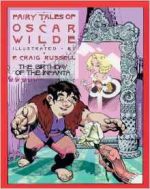
Fairy Tales of Oscar Wilde volume 3: The Birthday of the Infanta


Adapted by P. Craig Russell with Galen Showman (NBM)
ISBN: 978-1-56163-214-5 (Signed HC)        978-1-56163-775-1 (PB)

Win’s Christmas Gift Recommendation: A Comicbook Gift of the Graphic Magi… 9/10

Craig Russell began his illustrious career in comics during the early 1970s and came to fame young with a groundbreaking run on science fiction adventure series Killraven, Warrior of the Worlds.

Although his increasingly fanciful, meticulous classicist style was derived from the great illustrators of Victorian and Edwardian heroic fantasy and his visual flourishes of Art Nouveau were greatly at odds with the sausage-factory deadlines and sensibilities of the mainstream comicbook industry, the sheer power and beauty of his illustrative work made him a huge draw.

By the 1980s he had largely retired from the merciless daily grind, preferring to work on his own projects (generally adapting operas and plays into sequential narratives) whilst undertaking the occasional high-profile Special for the majors – such as Dr. Strange Annual 1976 (totally reworked and re-released as Dr. Strange: What Is It that Disturbs You, Stephen? in 1996) or Batman: Robin 3000.

As our industry grew up and coincided with the global fantasy boom, Russell returned to the comics industry with Marvel Graphic Novel: Elric (1982), further adapting prose tales of Michael Moorcock’s iconic sword-&-sorcery star in the magazine Epic Illustrated and elsewhere.

Russell’s stage-arts adaptations had begun appearing in 1978: first in the independent Star*Reach specials Night Music and Parsifal and then from 1984 at Eclipse Comics where the revived Night Music became an anthological series showcasing his earlier experimental adaptations; not just operatic dramas but also tales from Kipling’s Jungle Books and other favourite literary landmarks.

In 1992, he began adapting the two volumes of Fairy Tales of Oscar Wilde – a mission he continues to date, deftly balancing tales of pious allegorical wonderment with a wry touch and clear, heartfelt joy in the originating material of a mercurial misunderstood, much-maligned master of devastating, so-quotable epigrams who was briefly the most popular man in London Society…

First published in May 1888, The Happy Prince and Other Tales was Oscar Fingall O’Flahertie Wills Wilde’s first book for children with the lead story merely one of a quintet of literary gems. The others within were The Nightingale and the Rose, The Devoted Friend, The Remarkable Rocket and The Selfish Giant.

It was followed in 1891 by A House of Pomegranates; Wilde’s second book of stories for children which held The Young King, The Fisherman and his Soul, The Star-Child and our subject today The Birthday of the Infanta, with adaptor Russell utilising all his skills to staggering effect to deliver a masterpiece of sardonic whimsy and casual cruelty.

In the glittering court of the King of Spain, the monarch is celebrating his beautiful daughter’s twelfth birthday. For such an occasion the normally closeted, haughty child is allowed to play with other, lesser youngsters whilst conniving courtiers look on and seek any moment of advantage which might further their own prospects.

There’s little chance of that, however. The King is not the man he was and has languished in growing misery since his beloved wife died soon after delivering the sole heir. So bereft is he at the loss of his flighty French bride’s boundless spirit and joyous joie de vivre that he cannot bear to have her interred. Instead her mummified corpse still occupies the chapel in the grand palace…

Thus the Infanta grew up isolated by her elevated position and swamped with magnificence, drowning in privilege and inundated in all things beautiful, but deprived of companionship. Today she takes full advantage of the youthful playthings around her, revelling in every boisterous dance and all attentions paid by the sons and daughters of the Court. The entertainments are even more thrilling: acrobats, jugglers, jongleurs, dancers, magicians and wild beasts all amaze, but nothing delights the lovely child more than the hideous, malformed dwarf-boy who dances for her, lost in his own simple, insensate world.

The deformed, inadvertent fool is a present from two particularly noxious nobles who had seen him capering innocently in the forests and promptly made off with him. The blithe simpleton knows nothing of this, only that his actions in this immaculate garden of boughs and flowers make the most beautiful creature in the world happy… and that her laughter is music to him…

His idiot caperings concluded, the dwarf is given a perfect white rose by the Infanta before the nobles’ children are escorted away. This casual, indifferent act drives him to even greater paroxysms and in his head a dangerous idea forms…

Later he sneaks into the Palace, finding room after room of breathtaking opulence and dazzling magnificence until he reaches at last the Infanta’s apartments. Curiously peeking in, he spies a coarse, misshapen monster mimicking his every move. Never has he seen such a thing of such utter ugliness…

What follows is one of the saddest, most relentless withering denouements in literature; a thinly-veiled yet ferocious condemnation of the brutal force of vanity and deadly power of surface glamour devastatingly depicted with debilitating detail by Russell and his assistant/letterer Galen Showman.

Bring tissues, and probably a stiff drink. You’ll need them.

A deeply moving, studiously horrific and truly tragic fairytale that shows not all endings are happy or even just, The Birthday of the Infanta displays Wilde’s razor-edged social commentary and scathingly beautiful cynicism to full effect; denying us the requisite happy ending and harbouring a cruel barb to prick and train the conscience…

This unsettling yet unmissable adaptation signalled another high point in Russell’s astounding career: another milestone in the long, slow transition of an American mass market medium into a genuine art form.

Most importantly, this and the other volumes in the series are incredibly lovely and irresistibly readable examples of superb writing (so please read Wilde’s original prose tomes too) and sublime examples of comics at their most potent.
© 1998 P. Craig Russell. All rights reserved.

Doctor Who Graphic Novels #23: The Highgate Horror


By Mark Wright, Jonathan Morris, Steve Lyons, Roger Langridge, Jacqueline Rayner, Scott Gray, David A. Roach, Mike Collins, John Ross, Adrian Salmon, Martin Geraghty, Dave Gibbons, John Ridgway, Dan McDaid & various (Panini Comics)
ISBN: 978-1-84653-749-3

Win’s Christmas Gift Recommendation: Timeless Tradition… 9/10

The British love comic strips and they love celebrity and they love “Odd Characters.”

The history of our graphic narrative has a peculiarly disproportionate amount of radio comedians, stars of theatre, film and TV: folk like Charlie Chaplin, Arthur Askey, Winifred Atwell, Max Bygraves, Charlie Drake and their ilk, as well as actual shows and properties such as Whacko!, ITMA, Our Gang, (a British version of the Hal Roach film sensation by Dudley Watkins in The Dandy as well as the American comicbook series by Walt Kelly), Old Mother Riley, Supercar, Pinky & Perky and literally hundreds more.

Anthology variety comics such as Radio Fun, Film Fun, TV Fun, Look-In, TV Tornado, TV Comic and Countdown amongst others translated our viewing and listening favourites into pictorial escapism every week, and it was a pretty poor lead or show which couldn’t parley the screen job into a licensed comic property.

Television’s Doctor Who premiered with part one of ‘An Unearthly Child’ on November 23rd 1963, and the following year a decades-long association with TV Comic began in issue #674 and the first instalment of ‘The Klepton Parasites’.

On 11th October 1979 (although, adhering to US off-sale cover-dating system, it says 17th) Marvel’s UK subsidiary launched Doctor Who Weekly, which regenerated into a monthly magazine in September 1980 (#44), efficiently entitled Doctor Who Monthly. It has been with us through various title-changes ever since. All of which only goes to prove that the Time Lord is a comic hero with an impressive pedigree and big shoes to fill.

Panini’s ongoing process of collecting every strip from the prodigious annals and archives in a uniform series of over-sized graphic albums – each concentrating on a particular incarnation of the deathless wanderer – reaches its twenty-third volume here as the Twelfth Doctor returns in another (inter)stellar line-up of comic strip sagas.

This particular tome gathers stories from DWM #484 and #489-500; spanning March 2015 to July 2016; starring Peter Capaldi’s irascible old chrononaut and his saucy sidekick Impossible Girl Clara Oswald in unforgettable action across the universe and every Elsewhen imaginable.

The adventures of the Grumpy Gallifreyan are – as always – described and delineated by a rapidly rotating roster of British creators who also provide a treasure-trove of background information in the Commentary section at the back, comprising story-by-story background, history and insights from the authors and illustrators, supplemented by scads of sketches, roughs, designs, production art and photos.

None of which is relevant if all you want is a darn good read. However all the imagineers involved have managed the ultimate task of any artisan – to produce engaging, thrilling, fun work which can be enjoyed equally by the merest beginner and the most slavishly dedicated and opinionated fans imaginable.

That feast of fun – coloured throughout by James Offredi and lettered by the multi-talented Roger Langridge – opens with ‘Space Invaders!’ by Mark Wright, Mike Collins & David A. Roach as The Doctor and Clara fetch up at an orbiting storage facility just as the owners start their latest sell-off of unclaimed items. Sadly, the time-travellers are not quite quick enough to stop the avid bargain-hunters opening a container full of just hatched planet-eating monster eggs…

Following smart social satire is a multi-part action romp. ‘Spirits of the Jungle’ by Jonathan Morris & John Ross sees our heroes joining an extraction mission to recover lethal intelligent weapons-tech before apparently walking into trap on a planet where the forests have their own definition of World Wide Web…

Gothic horror and vintage thrills permeate Wright, Roach & Collins’ superb chiller ‘The Highgate Horror’ wherein Clara, her immortal straight man and neophyte Companion Jess Collins hunt vampires and satanic covens in a 1970s London cemetery and instead encounter a race of ancient predators who want far worse than mere blood…

As conceived and realised by Steve Lyons & Adrian Salmon, ‘The Dragon Lord’ was a radical activist attempting to save magnificent saurians from human fun-seekers who hunted them for sport on a medieval-themed fantasy resort world. By the time our wandering troubleshooters turn up however, things have turned decidedly bloody and it looks like nobody is getting out alive…

Roger Langridge then offers an all-him treat as Harry Houdini sends out a distress call and old pal The Doctor dutifully answers. Sometimes even fakers and charlatans have power and really resent being de-bunked by upstart human escapologists playing in the ‘Theatre of the Mind’…

A new time-bending miscreant debuts in Jacqueline Rayner, Martin Geraghty & Roach’s epic tale of persecution and justice as temporal prankster Miss Chief infiltrates Clara’s workspace. After causing havoc at Coal Hill School the trickster drops Miss Oswald in the vicious clutches of Witchfinder General Matthew Hopkins, leaving The Doctor to either participate in a time duel or somehow search the entire 17th century for his missing school chum in a ‘Witch Hunt’ with potentially fatal and final consequences…

Our temporal tintinnabulations conclude with a splendidly appropriate anniversary party get-together of old friends and foes that will delight long-tern fans without baffling newbies or casual readers.

Written by editor Scott Gray, ‘The Stockbridge Showdown’ returns The Doctor to the alien-beleaguered British village just as cosmic corporate conqueror Josiah W. Dogbolter thinks he’s finally leveraged the keys to time itself.

As the universe nears a shocking “Going Out of Business” sale, the wily Gallifreyan and many allies from the past 500 issues unite to teach the richest man in creation the paucity of his resources and the lesson of his life in a tale crafted by artists past and current, including Dave Gibbons, Langridge, Salmon, Dan McDaid, Ross, Collins, John Ridgway, Geraghty and Roach…

This is another marvellous book for casual readers, a fine shelf-addition for dedicated fans of the show and a perfect opportunity to cross-promote our particular art-form to anyone minded to give comics one more go…
All Doctor Who material © BBCtv. Doctor Who, the Tardis and all logos are trademarks of the British Broadcasting Corporation and are used under licence. Licensed by BBC Worldwide. Tardis image © BBC 1963. Daleks © Terry Nation. All commentaries © 2016 their respective authors. Published 2013 by Panini UK Ltd. All rights reserved.

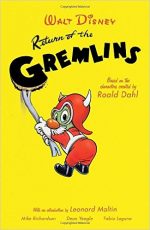
Walt Disney: Return of the Gremlins


By Mike Richardson, Dean Yeagle, Fabio Laguna, Nelson Rhodes & various (Dark Horse Books)
ISBN: 978-1-61655-669-3

Win’s Christmas Gift Recommendation: A Charming Offensive Celebrating all Spanners in the Works … 9/10

In 1940, fighter pilot Roald Dahl survived a plane crash and was despatched to America to recuperate and perhaps do a little spying…

During that period he began writing. His first children’s book – The Gremlins – formalised much of the myth and superstition fondly fostered by pilots and airmen in a lovely story about a pilot named Gus who survived a dreadful crash and learned the truth about the mischievous, pixie-like creatures who wrecked aircraft like his…

A fortuitous meeting with an American doctor who knew Walt Disney put Dahl in touch with the studio in an endeavour to create a morale-building feature film. It never got off the drawing boards and Leonard Maltin’s Introduction ‘The Gremlins Got ‘Em: How Walt Disney and Roald Dahl Didn’t Get to Make a Movie Together’ tells you why in captivating detail: just one of the splendid treats in this superb hardback collection from 2008 – and now available in a digital download edition.

The company facilitated publication of the illustrated book in 1943 with the Disney publicity machine doing as much preparatory work as the writers, story-boarders, layout men, animators and other studio staff, so the winningly wicked wreckers also saw daylight as strip-stars in licensed Dell comicbook Walt Disney Comics and Stories (#33-41, between June 1943 and February 1944): in usually silent gag shorts by limned Vivie Risto and the legendary Walt Kelly.

In more recent times 3-issue miniseries Return of the Gremlins revived the concept and this splendid tome gathers that new material and bundles it up with a wealth of vintage treasures into a book that will delight young and old alike.

Following Maltin’s sprightly history lesson the revival begins in a jolly tale scripted by Mike Richardson, rendered by Dean Yeagle (with backgrounds by Nelson Rhodes), coloured by Dan Jackson and lettered by Michael David Thomas, revealing how years after World War II ended Gus’ American grandson returns to a certain dilapidated house in the north of England…

He had recently inherited the old place plus its wild woodland and only came over to sell the place to the local council and their pet property developer. However what he finds in the trees and suspiciously tidy abandoned cottage soon changes his mind and alters his life forever…

Finding love with a like-minded local girl whilst battling ruthless monied interests who won’t take no for an answer (in ‘Chapter Three’, illustrated by Fabio Laguna), Gus secures a permanent homeland for the multitudinous, malarkey-making Gremlins in an uproarious kids romp that would also make a terrific family movie.

It also seemed to promise more adventures to come, but we’re still waiting for those…

Accompanying the breezy yarn is a picture-packed voyage through Yeagle and Laguna’s sketchbooks in ‘Making of Return of the Gremlins’ which also includes complete unused covers. Then the Golden Age greats come to the fore in ‘Classic Gremlins Comics’ and ‘Gremlins the Early Years’, re-presenting the cover of Walt Disney Comics and Stories #34 (volume 3, #10), a strip adaptation of Dahl’s story illustrated by an anonymous aggregation of Disney Studio artists and half a dozen slapstick vignettes by Kelly and Risto starring Gremlin Gus and the Widgets (baby Gremlins).

Also on show are a number of ‘World War II Air Force Service Patches’ created by Disney artists for branches of the service and a Gremlin-infested 1943 magazine ad pieces for Life Savers (you and me call them Polo Mints).

‘Winter Draws On: Meet the Spandules’ was a 1943 booklet created by Disney for Army Air Force pilots. Rendered in blue and black ink and reproduced here in full, it stars arctic Gremlins illustrating all the ways cold, snow and ice can wreck aircraft and is followed by a truncated version of Dahl’s original prose tale – again copiously illustrated by Disney staffers – and writing by the author under the pen-name “Pegasus”.

‘“The Gremlins’” was a planted pre-publicity feature for the prospective movie, created for the December 1942 issue of Cosmopolitan magazine and includes editorial pages, full reproduction of the book’s cover and even a painted tableau ‘Introducing the Gremlins’…

Wrapping up the treats is a fulsome section highlighting the ‘Collectible Toys’ Dark Horse commissioned to supplement the comicbook revival and their reissue of the original 1943 Dahl/Disney novel. There’s even as a peek at said tome to ice the cake.

Peppered throughout with Laguna’s Puckish marginals of playful Gremlins, this a gloriously whimsical treat to delight the fanciful and far-seeing dreamers of every age imaginable.
© Walt Disney Productions. All rights reserved throughout the world by Walt Disney Productions.

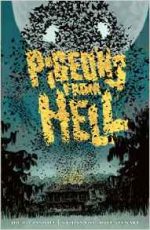
Pigeons from Hell


By Joe R. Lansdale, Nathan Fox & various (Dark Horse Books)
ISBN: 978-1-59582-237-6

Robert Ervin Howard is justly celebrated for his burly, barbarian sword-&-sorcery creations such as Conan, Kull, Bran Mak Morn and others, but he was a successful jobbing writer in the heyday of pulp fiction and also turned his blazing typewriter to most of the other popular genres of the era.

Moreover, as aficionados of his blistering fantasy fiction are well aware, he was a dab hand at inculcating tension, suspense and moody macabre horror.

During the too-brief time of his creative peak he crafted a number of chilling supernatural stories set in the evocative southern milieu known as ArkLaTex – a doom-shrouded, Deep South meeting-point of the darkest corners of Arkansas, Louisiana, Oklahoma and his beloved Texas.

Inspired by old stories heard at his grandmother’s knee, Howard transformed oft-told anecdotes into masterpieces of terror such as ‘The Shadow of the Beast’, ‘Moon of Zambebwie’, ‘Black Hound of Death’, ‘Black Canaan’ and the particular masterpiece under scrutiny here: a creation described by Stephen King as “one of the finest horror stories of our century”…

The tirelessly prolific Howard committed suicide in 1936 and the prose Pigeons from Hell (unsold since its drafting in 1932) was published posthumously in the May 1938 edition of premier pulp Weird Tales.

It has become a classic not just of the genre but also a notional inclusion into the prestigious literary canon of the Southern Gothic movement of writers such as William Faulkner, Erskine Caldwell, Thomas Wolfe, Tennessee Williams and others.

In 1988 the original prose short story was incorporated into a stunning, lavishly painted adaptation by Scott Hampton, released by West Coast maverick publishers Eclipse, which remains one of the best graphic novels ever produced.

You should do your damnedest to track down and heartily absorb both it and the original text versions.

In 2008, Dark Horse – current holders of the license for Howard comic adaptations – approached esteemed author, occasional comics scripter and devout REH fan Joe R. Lansdale to adapt and update the story, crafting a notional sequel: first as a 4-issue miniseries and then as this sterling terror tome which is every bit as potent and gripping as the Eclipse release.

Illustrated by Nathan Fox with colours by Dave Stewart and letters from Richard Starkings & Comicraft, the story is translated to contemporary times but still centres on the desolate, dilapidated, dank and doom-laden Blassenville House and the swamp-encircled former plantation grounds it festers in.

As the sun sets a car with five forthright youngsters pulls up at the ravaged mansion deep in the Acadiana boondocks. Scaring away an army of fluttering pigeons, the deeply disappointed travellers are far from impressed with the inheritance sisters Janet and Claire have come from Texas to view.

Risking their lives on the shaky stairs the curious, disgusted kids reach the attic and find a mountain of dead birds. For all their tough talk and brave fronts the place is getting to them and their bold bravura starts to fade. Going back down, the first casualty occurs and the horrified friends head straight for the car and anywhere but here…

They don’t get far and the survivors are soon forced to return to the house where something vile and uncanny continues to pick them off…

Faced with appalling events and now certain that Grandmas’s crazy old horror stories were not just true but toned down for the kids, the Blassenville girls resolve to save who they can and then get the hell out.

They’re true believers now; having been separated from their friends and barely escaped a bloody shambling horror in the house. A vast sea of anxious spirits congregated in the fields around it also add veracity to everything the old lady once spooked them with. When these amorphous shades chase them into the sceptical arms of a local sheriff the sisters agree to go back inside but it’s not long before the lawman is also fully aware that ghosts are real and extremely dangerous…

Escorting them into the woods he takes the Blassenvilles to a crazy old witchman (he once thought…) who clues them all in on the history of the house before giving them vital clues they need to fight the thing inside and perhaps end the horror at long last…

Blending compulsive suspense with riotous splatter-action and a wry undertone of trenchant sassiness, this ferociously effective homage includes context and commentary in Lansdale’s ‘Notes from the Writer’, critique and historical background from Howard scholar Mark Finn in his ‘Afterword: The Brothers Gothic’ and a full Cover Gallery from the comic books.

Adding to the informational overload is a stunning picture-packed treasure trove as ‘The Sketchbook from Hell, with commentary from artist Nathan Fox’ reveals secrets of the creative process whilst guest artists Tomer Hanuka, Hector Casanova, Greg Ruth, Guy Davis, Paul Maybury, Jim Mahfood, Brandon Graham, David Crosland, Paul Chatem and Nathan Fox offer alternative outlooks in a copious ‘Bonus Pinups’ section.

Not only is the original prose work one of the best pieces of horror fiction ever written, but in this rare instance the follow-up – like the movie Alien and its gung-ho sequel Aliens – slips sneakily from one classic genre to another and makes both the better for it. This is a coming classic of graphic narrative; something every fright fan should see – but only with all the lights on…
Pigeons from Hell © 2008, 2009 Robert E. Howard Properties Inc. (“REHP”). All rights reserved.

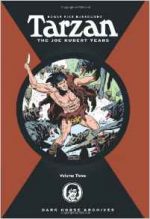
Tarzan Archives: The Joe Kubert Years volume 3


By Joe Kubert with Robert Kanigher, Russ Heath & various (Dark Horse Comics)
ISBN: 978-1-59307-417-3

The early 1970s were the last real glory days of National/DC) Comics. As they slowly lost market-share to Marvel they responded by producing controversial and landmark superhero material, but their greatest strength lay, as it always has, in the variety and quality of its genre divisions. Mystery and Supernatural thrillers, Science Fiction, Romance, War and Kids’ titles remained powerful attractions and the company’s eye for a strong licensed brand was as keen as ever.

A global multi-media phenomenon, Edgar Rice Burroughs’ Tarzan had long been a comicbook mainstay of Dell/Gold Key/Whitman, and when DC acquired the title they rightly trumpeted it out, putting one of their top Artist/Editors, Joe Kubert, in charge of the immortal Ape-man’s monthly exploits.

After decades as Whitman staples, total licensing of ERB properties was transferred to DC – not just Tarzan and his extended family, but also the author’s pioneering science fantasy characters – with DC wisely continuing the original numbering.

Tarzan #207 was the first (with an April 1972 cover-date) and the series stormed, garnering great acclaim until #258 in February 1977. Thereafter Marvel, Malibu, Dark Horse and Dynamite extended the Jungle Lord’s comicbook canon in sporadic sorties to recapture the sales and popularity of the 1950s…

The latter days of the Gold Key run had suffered ever since Russ Manning left the title to draw the syndicated newspaper strip, and even the likes of Doug Wildey were unable to revive the comic’s success in the face of constantly rising costs and a general downturn in sales across the market. DC’s continuation of the franchise premiered in a blaze of publicity at the height of a nostalgia boom and was generally well-received by fans.

DC pushed the title in many places and formats (such as bookstore digest collections and the gloriously oversized Tabloid Editions) and adapted other properties such as John Carter of Mars, Pellucidar and Carson of Venus in their own features and titles.

This third and final fabulous hardcover archive collection (also available in digital formats) re-presents material from Tarzan #225-235, covering November 1973 through February/March 1975 and concluding the master’s interior artistic contributions – writing, illustrating and lettering.

After more fond reminiscences in Kubert’s Introduction, the pictorial wonderment resumes with original tale ‘Moon Beast’ which sees a mother and child brutally slaughtered and Tarzan framed for the hideous crime by cunning medicine man Zohar. When the vile trickster overreaches himself, the captive Ape-Man breaks free but still has to deal with the mutant brute Zohar employed to perpetrate the atrocity…

Kubert only produced the cover for #226 as the crushing deadline pressures finally caught up with him. The contents – not included here – featured a retelling of the Ape-Man’s origins by Russ Manning, taken from the Sunday newspaper strips of 15th November 1970-7th February 1971.

Back in control for #227, Joe took Tarzan out of his comfort zone as ‘Ice Jungle’ saw young native warrior Tulum endure a manhood rite at the top of a mountain. Also converging on the site for much the same reason is American trust-fund brat J. Pellington Stone III, determined to impress his father by bagging a legendary snow ape. Sensing impending doom, Tarzan follows them both and is not wrong in his assessment…

After single-handedly killing an immense Sabretooth tiger in an unexplored region of the continent, Tarzan is captured by pygmies intent on offering him as to a mighty monster who has terrorised them for years. However, his ‘Trial By Blood!’ sees Tarzan cleverly outwit the giant lizard and teach the tribal elders a valuable lesson in leadership, after which albino queen Zorina seeks to extend her power by making him her consort.

The Ape-Man wants nothing to do with ‘The Game!’, and, after the kingdom descends into savage civil war, sees ironic Fate deal the white queen a telling death blow…

With Tarzan #230 (April/May 1974), the title transformed into a sequence of 100-page giants, mixing new material with reprints of ERB characters and thematically-aligned stars from DC’s vast back-catalogue.

Leading off that issue was a brief all-Kubert vignette as ‘Tarzan’ saved a deer from a lioness which neatly segued into ‘Leap into Death’ starring Korak, Son of Tarzan, written by Robert Kanigher, drawn by Kubert and inked by Russ Heath.

Here the titanic teen nomad hunted for his stolen true love Meriem and the barbarian Iagho who had taken her, before stumbling into a nest of aggressively paranoid bird-people who learned to respect his courage but still flew away with his lover…

The next issue featured the start of another-Kubert-adapted Burroughs novel: possibly the most intriguing conception of the entire canon.

‘Tarzan and the Lion Man Part One’ saw a movie company on location in the deep jungle to make a picture about a white man raised by animals to become undisputed master of all he surveyed. The chain of coincidences grew more improbable as actor Stanley Obroski was a dead ringer for Tarzan… which probably explained why he was taken by savages set on torturing him to death…

Rescued by Tarzan, Stanley explained how the expedition was attacked, unaware exactly how much trouble his fellow actors were in. During Obroski’s absence, stand-in Rhonda Terry and starlet Naomi Madison were kidnapped by El Ghrennem‘s Arab bandits who believed the production’s prop map actually led to a valley of diamonds…

When Tarzan found the rest of the film crew he was mistaken for Stanley and drawn into their search for the missing women. The plucky Americans had already made a mad dash for freedom, however, and Rhonda had been captured by creatures she simply could not believe…

After a fascinating bonus section revealing Kubert’s ‘Layouts and Thumbnails’ for the opening chapter, ‘Tarzan and the Lion Man Part Two’ sees Rhonda taken by apes who speak Elizabethan English, and made the subject of a fierce debate. Half of the articulate anthropoids want to take her to “God” whilst the other faction believes her a proper prize of their liege lord “King Henry VIII”…

After being briefly recaptured by El Ghrennem, Naomi too is taken by the talkative Great Apes. When Tarzan discovers the kidnapper’s corpses he follows the trail up an apparently unscalable escarpment. Rescuing and returning Miss Madison to her surviving friends, Tarzan/Stanley then returns to ascend the stony palisade and discover an incredible pastoral scene complete with feudal village and English castle…

Tracking Rhonda, he enters the citadel and meets a bizarre human/ape hybrid calling himself God. The garrulous savant explains that once he was simply a brilliant Victorian scientist pursuing the secrets of life. When his unsavoury methods of procuring test subjects forced him to flee England and relocate to this isolated region of Africa, he eventually resumed his experiments and transformed himself into a superior being and apes into fitting servants.

Now they have a society of their own – based on the history books he brought with him – and his experiments are nearing completion. Having already extended his life and vitality far beyond its normal span by experimenting upon himself, God is now ready to attain immortality and physical perfection. All he has to do is consume Tarzan…

Of course the madman has no conception of his captive’s capabilities, and when the Ape-Man and Rhonda promptly vanish from their dungeon it sends the palace into turmoil and God into a paroxysm of insanity…

The chaos also prompts already ambitious apostate King Henry to begin a revolution to overthrow his creator. As ‘Tarzan and the Lion Man Part Three‘ opens, the war between Church and State is in full swing and Tarzan battles to rescue Rhonda whilst God’s castle becomes a flaming hell.

Losing her in the chaos Tarzan is forced into a hasty alliance with God, unaware that maniacal monarch Henry has taken her back to the jungles below the escarpment and into a region where God casts his scientific failures…

All too soon Henry is dead and Rhonda is facing beings even stranger than talking apes. Thankfully ‘Tarzan and the Lion Man Part Four‘ sees “Stanley” arrive in time to save her from incredible peril and return her to the film party in the dazzling, tragic conclusion…

Kubert then ended his close association with Tarzan in #235’s ‘The Magic Herb’. After the jungle hero saves a couple from a crashed aeroplane, siblings Tommy and Gail urge him to help them find a legendary flower that might cure the man’s fatal ailment. However, something about them makes Tarzan suspicious…

Nevertheless he takes them to the primeval lost valley where it grows, only to be betrayed as the intruders frame him: throwing the jungle lord to the resident lizard men whilst they make off with specimens that will make them millionaires in the outside world.

Sadly, the treacherous pair have completely misunderstood the powers of the plant and pay the ultimate price all betrayers must…

Wrapping up the astounding thrills and captivating artistry (splendidly remastered by Sno Cone Studious and Jason Hvam) is a revelatory selection of drawings from ‘Joe Kubert’s Sketchbook’ tracing the art process from page-roughs to competed page

Supplemented by Creator Biographies of Burroughs and Kubert, this tome is another unmissable masterpiece of comics creation and wild adventure no lover of the medium or fantasy fan can afford to be without.
Edgar Rice Burroughs’ Tarzan ® The Joe Kubert Years Volume Two © 1973, 1974, 1975, 2006 Edgar Rice Burroughs, Inc. All rights reserved. Tarzan ® is owned by Edgar Rice Burroughs Inc., and used by permission.

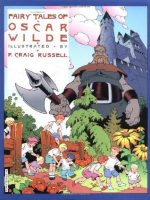
Fairy Tales of Oscar Wilde volume 1: The Selfish Giant and The Star Child


Adapted by P. Craig Russell (NBM)
ISBN: 978-1-56163-056-1 (HC)        :978-1-56163-375-3 (PB)

Craig Russell began his illustrious career in comics during the early 1970s and came to fame young with a groundbreaking run on science fiction adventure series Killraven, Warrior of the Worlds.

Although his increasingly fanciful, meticulous, classicist style was derived from the great illustrators of Victorian and Edwardian heroic fantasy, and the craftsmanlike visual flourishes of Art Nouveau was greatly at odds with the sausage-factory deadlines and sensibilities of the mainstream comicbook industry, the sheer power and beauty of his work made him a huge draw.

By the 1980s he had largely retired from the merciless daily grind, preferring to work on his own projects (generally adapting operas and plays into sequential narratives) whilst undertaking the occasional high-profile Special for the majors – such as Dr. Strange Annual 1976 (totally reworked and re-released as Dr. Strange: What Is It that Disturbs You, Stephen? in 1996) or Batman: Robin 3000.

As the industry grew up and a fantasy boom began, he returned to the comics industry with Marvel Graphic Novel: Elric (1982), further adapting prose tales of Michael Moorcock’s iconic sword-&-sorcery star in the magazine Epic Illustrated and elsewhere.

Russell’s stage-arts adaptations had begun appearing in 1978: first in the independent Star*Reach specials Night Music and Parsifal and then from 1984 at Eclipse Comics where the revived Night Music became an anthological series showcasing his earlier experimental adaptations; not just operatic dramas but also tales from Kipling’s Jungle Books and other literary landmarks.

In 1992, with this tome (now in its fourth reprinting) he began adapting the assorted Fairy Tales of Oscar Wilde – a mission he continues to date, deftly balancing tales of pious allegorical wonderment with a wry touch and clear, heartfelt joy in the originating material of the masterful yet misunderstood, much-maligned master of devastating, so-quotable epigrams who was briefly the most popular man in London Society…

First published in May 1888, The Happy Prince and Other Tales was Oscar Fingall O’Flahertie Wills Wilde’s first book for children with the lead story merely one of a quintet of literary gems.

The others within were The Nightingale and the Rose, The Devoted Friend, The Remarkable Rocket and poignant parable The Selfish Giant, upon which adaptor Russell here lavishes all his skills to staggering effect and creates an evocative, beguiling, heart-breaking evocation of spirituality for this graphic collection.

The children of a village once played in the most beautiful garden in the land, until its owner returned from a seven-year absence and took great umbrage at their trespass. Chasing them away, the ferocious giant built a colossal wall around his garden so nobody but he could enjoy it. Then a strange thing happened. When the seasons turned, the garden remained draped in chilling winter and spring never came, nor summer or autumn.

After an intolerable period of frozen bafflement, one morning the giant was awoken to a linnet’s song and found that spring had finally arrived. The children had found a gap in his stony barricade and come through to play on the trees, bringing warmth and green growth with them.

In one corner, however, winter still clung on as a tiny boy struggled to climb into the boughs of a snow-draped tree.

Wracked by revelation, the giant’s heart thawed too and he rushed out to help the lad into the tree, thereafter tearing down the walls and sharing his garden with everybody, although he never again saw the little boy he had so happily helped…

Years passed and the seasons resumed their normal course and eventually one winter he again saw the boy as something incredibly joyous yet grievously sad occurred…

Balancing that metaphor of Christian virtue and moral instruction is The Star-Child which was originally published in 1891, one of the quartet of stories in Wilde’s second book of stories for children: A House of Pomegranates.

Notionally a far more traditional-seeming fairy tale but again loaded with ethical life-lessons, it begins with a poor woodcutter finding a baby wrapped in cloth-of-gold after a falling star crashes to earth.

Although living on the edge of starvation, the peasant and his wife add the boy to their large, hungry family and care for him as if their own. The child grows up physically beautiful but exceedingly cruel and arrogant, viciously picking on the less fortunate souls around him and casually torturing the animals and lesser creatures.

As he approaches manhood a wandering beggar recognises him as her long-lost son but he savagely rebukes and rejects her for her shabby ugliness. The act has staggering repercussions, as he soon after transforms into a hideous frog-faced, snake-like wretch and flees from the only home he has ever known, reviled and chased away by people and all the forest beasts he once tormented…

His ceaseless wanderings eventually take him to a grand city where he is sold as a slave to a magician who treats him with great cruelty. The suffering slave is tasked with the hopeless mission of recovering great lost riches for the mage but, at his very lowest ebb, a rabbit shows pity on the homely slave and the reformation of the Star-Child begins…

A deeply moral tale of redemption through effort and grace through revelation, The Star-Child still retains much of Wilde’s barbed cynicism and astute social observation; providing the requisite happy ending whilst concealing a wry and wicked sting…

The brace of brilliant adaptations signalled another high point in Russell’s astounding career: another milestone in the long, slow transition of an American mass market medium into a genuine art form.

Most importantly, this and the other volumes in the series are incredibly lovely and irresistibly readable examples of superb writing (so please read Wilde’s original prose tomes too) and sublime examples of comics art their very best.

Most assuredly, you simply must avail yourself of this masterful confection…
© 1992 P. Craig Russell. All rights reserved.
Sonic the Hedgehog/Mega Man Worlds Unite Book 1: Deadly Fusion


By Ian Flynn, Joel Enos, Dan Schoening, Tracy Yardley, Terry Austin, Luis Antonio Delgado, Matt Herms, Ben Bates, Jack Morelli & various (Archie Comics)
ISBN: 978-1-62738-998-3

From the earliest days of comicbooks, the periodical pamphlets have been a cheap and effective way to augment brands and franchises: offering stopgap and interim “extra” adventures and experiences for stars like John Wayne, Roy Rogers or Alan Ladd, TV, movie and kids cartoon dynasties such as Star Trek, Tom & Jerry or Bugs Bunny and an almost infinite number of games, toys and even sugar-packed edibles.

It’s solid business sense and mutually advantageous: publishers get to sell comics, maintain space on shop shelves and cross-sell to new audiences whilst licensees get a relatively inexpensive method of keeping their properties active in at least part of the public consciousness in the long periods between blockbuster releases or off-season doldrums.

Since its 1991 release, Sega’s video game Sonic the Hedgehog has become a fully entrenched global phenomenon. Soon after the initial game release the speedy beast and his crime-busting animal associates became comicbook stars in Britain, America and all over the world.

In the USA, family friendly Archie Comics won the rights to publish an ever-expanding cast of characters beginning with a brace of miniseries in 1992 and 1993. Sonic the Hedgehog volume 3 debuted in July 1993 and has continued continuously ever since, becoming the longest-running game/toy based comicbook in American history at 283 issues and counting. With demand remaining high, the Hedgehog quickly generated a raft of spin-off titles such as Knuckles the Echidna and Sonic X to fill out a whole boutique universe of similarly-themed titles.

Decades later Capcom also picked Archie as publisher for their own complex, complicated and heavily cross-marketed video game franchise Rockman. You probably know it as Mega Man. An expanding line of comics started in April 2011 as the time-bending, dimension-hopping sci fi exploits of the plucky robot warrior and his worthy allies became another genuine funnybook phenomenon.

Last year the world – especially the corporate fantasy-scape shared by kids and game-playing adults – grew closer and overlapped when these two separate but intellectual properties clashed in a spectacular, monolithically successful team-up called Worlds Collide wherein the universes of Sonic and Mega Man were explosively thrown together, creating fresh worlds, a new kind of excitement and better villains to battle…

Nothing screams “sequel” like record-breaking sales and a legion of strident, thrill-starved fans, so that breakthrough meeting was swiftly revisited in an even more ambitious follow-up. The Worlds Unite event reunites the heroes and villains, encompassing all the disparate titles of both pantheons and will eventually fill three graphic novel compilations.

Deadly Fusions – gathering material from Sonic Universe #76, Sonic Boom #8, Sonic the Hedgehog #273, Mega Man #50, Sonic the Hedgehog: Worlds Unite Battles #1 and Mega Man: Worlds Unite Battles #1 – sets the ball rolling; filled with a frankly bewildering array of heroes and villains in constant (family-friendly) conflict, but that’s merely a tantalising, appetite-whetting prelude to cataclysmic and universe altering events yet to come…

Cooperatively crafted by scripters Ian Flynn & Joel Enos with art by Dan Schoening, Ben Bates, Tracy Yardley, Terry Austin, Luis Antonio Delgado, Matt Herms, Ben Bates, Jack Morelli & Rachel Deering, the drama begins when über-menace Sigma comes back from a furious future in the realm of Mega Man X to ally with contemporary master-menace Zavok and crazed terrorist Xander Payne. In his spare time Sigma also kidnaps Mega Man and Sonic’s respective arch-nemeses Dr. Wily and Dr. Eggman to create a legion of baddies dubbed the Deadly Six of Lost Hex…

From his pocket dimension he then declares war on Mega Man’s world and that of Sonic and his animal allies. Sigma seems unstoppable after both heroes are defeated and “disappeared”, even though their friends the Robot Masters and Freedom Fighters valiantly take up the struggle.

However, as the tomorrow tyrant’s schemes inexorably near fruition, he is unaware that his captive scientific renegades are scurrilously working their own agendas: preparing to each become sole survivor and singular conqueror of all the varied realms of creation…

To Be Continued…

A non-stop, manic fight-fest to delight youngsters – and everybody with bulging thumbs who steadfastly hone their competitive natures on a console every chance they get – Deadly Fusion is an uncomplicated and relentless avalanche of non-stop rollercoaster action, packed with visually potent extras.

These include a handy prequel recap feature, a brace of ‘Bonus Battles’ vignettes, a series of gag-strips (by Bill Freiberger, Jonathan H. Gray, Lamar Wells, Rick Bryant & Aleah Baker), a copious sketch and design section detailing the development of the new characters and a truly vast gallery of covers and variants by Patrick “SPAZ” Spaziante, Rafa Knight, Ben Bates, Evan Stanley, Jamal Peppers, Phyllis Novin, Ben Hunzeker, Ryan Jampole, Gary Martin, Steve Downer, T. Rex, Roger & Idalia Robinson, Ed Huang, Irvin Rodriguez and Patrick Thomas Parnell.

Breathtaking and compulsive game-based fun –all that’s missing is the electronic beeping and explosion sounds, and I’m sure someone will be happy to provide those as the pages oh-so-swiftly turn…
© Sega. All rights reserved. CAPCOM, Mega Man and all related characters © CAPCOM. Published by Archie Comics Publications, Ltd under license.

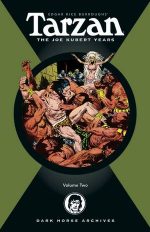
Tarzan Archives: The Joe Kubert Years volume 2


By Joe Kubert with Hal Foster, Frank Thorne & various (Dark Horse Comics)
ISBN: 978-1-59307-416-6

The early 1970s were the last real glory days of National (now DC) Comics. As they slowly lost market-share to Marvel they responded by producing controversial and landmark superhero material, but their greatest strength lay, as it always has, in the variety and quality of its genre divisions. Mystery and Supernatural thrillers, Science Fiction, Romance, War and Kids’ titles remained powerful attractions and the company’s eye for a strong licensed brand was as keen as ever.

A global multi-media phenomenon, Edgar Rice Burroughs’ Tarzan had long been a comicbook mainstay of Dell/Gold Key/Whitman, and when DC acquired the title they rightly trumpeted it out, putting one of their top Artist/Editors, Joe Kubert, in charge of the immortal Ape-man’s monthly exploits.

After decades as Whitman staples, total licensing of ERB properties was transferred to DC – not just Tarzan and his extended family, but also the author’s pioneering science fantasy characters – with DC wisely continuing the original numbering.

Tarzan #207 was the first: an April 1972 cover-date, and the series stormed on until #258 in February 1977. Thereafter Marvel, Malibu, Dark Horse and Dynamite extended the Jungle Lord’s comicbook canon in sporadic sorties to recapture the sales and popularity of the 1950s…

The latter days of the Gold Key run had suffered ever since Russ Manning left the title to draw the syndicated newspaper strip, and even the likes of Doug Wildey were unable to revive the comic’s success in the face of constantly rising costs and a general downturn in sales across the market. DC’s continuation of the franchise premiered in a blaze of publicity at the height of a nostalgia boom and was generally well-received by fans.

DC pushed the title in many places and formats (such as bookstore digest collections and the gloriously oversized Tabloid Editions) and adapted other properties such as John Carter of Mars, Pellucidar and Carson of Venus in their own features and titles

This second superb hardcover archive collection (also available in digital formats) re-presents material from Tarzan #215-224 (December 1972 to October 1973) and opens with fond reminiscences and grateful thanks to fellow artist Frank Thorne in Kubert’s Introduction.

The pictorial wonderment kicks off with a classic visual treat as ‘The Mine!’ incorporates material originally seen in classic 1930s Sunday newspaper strips (by Hal Foster & George Carlin) embedded in an original tale by Kubert.

Joe’s intent was to adapt all 24 Tarzan novels – writing, illustrating and even lettering the stories, with the brilliant Tatjana Wood handling the colours – interspersing them with new and original tales. However the workload, coupled with his other editorial duties, was crippling.

As with Tarzan #211, here he was again compelled to combine original with vintage to detail how the Ape-Man is captured by slavers and pressed into toil deep in the bowels of the earth for a sadistic mine owner.

Naturally, Tarzan soon chafes at enforced servitude and quickly leads a savage workers’ revolt to overturn and end the corporate bondage…

Issue #216 took another route to beating deadlines with old pal Frank Thorne pencilling Kubert’s script for ‘The Renegades’, leaving hard-pressed Joe to ink and complete the story of a murderous raid which wipes out a Red Cross mission.

Investigating the atrocity, Tarzan discovers the “maddened savages” responsible are actually white men masquerading as natives; stealing supplies for a proposed expedition to plunder a lost treasure vault. When he catches the culprits, Tarzan’s vengeance is terrible indeed…

‘The Black Queen!’ is an all-Kubert affair wherein the Jungle Lord almost saves a man from crocodiles. Acceding to the ravaged victim’s last wish, Tarzan then travels to his distant homeland and overturns the brutal regime of tyrannical Queen Kyra who rules her multicultural kingdom with whimsy, ingrained prejudice and casual cruelty…

The equally selfish choices of American millionaire tycoon Darryl T. Hanson blights his family as his search for ‘The Trophy’ decimates the fauna of Tarzan’s home and leads to a clash of wills and ideologies which can only end in tragedy…

With Tarzan #219, Kubert began an epic 5-issue adaptation of ERB’s sequel novel The Return of Tarzan. It opens in Paris as the unacknowledged son of vanished Lord Greystoke tries to adapt to his new life as a civilised man of leisure.

One night his natural gallantry draws him to the side of a woman screaming for help and he is attacked by a gang of thugs. After easily thrashing the brigands he is astounded to find her accusing him of assault and simply bounds effortlessly away from the gendarmes called to the disturbance.

This entire trap has been engineered by a new enemy; Russian spy and émigré Nikolas Rokoff and his duplicitous toady Paulvitch…

The rightful heir to the Greystoke lands and titles silently stood aside and let his apparently unaware cousin William Cecil Clayton claim both them and the American Jane Porter, after Tarzan rescued her from attacking apes in the jungle. Missing her terribly, Tarzan then chose to make his own way in the human world beside new friend and French Naval Officer Paul D’Arnot.

(You could catch up by reading our review of Tarzan Archives: The Joe Kubert Years Volume One, but I’m sure you’d far rather see the book itself or even the original novel…).

In the course of his urbane progression, Tarzan had exposed the Russian cheating at cards to blackmail French diplomat Count De Coude and had earned himself a relentless, implacable foe forever. When Rokoff subsequently tried to murder Tarzan, the vile miscreant agonisingly learned how powerful his jungle-bred enemy was…

With physical force clearly of no use, Rokoff’s latest plan is to put the Ape-Man through a ‘Trial by Treachery’; manufacturing “evidence” that Tarzan is having an affair with the Comte’s wife. Once more, however, the civilised monster underestimates his target’s forthright manner of dealing with problems and is savagely beaten until he admits to the plot and clears the innocent woman’s name…

With news of Jane’s impending marriage to William Clayton, Tarzan seeks to ease his tortured mind with action and the next chapter sees him travel to Algeria where, sponsored by the grateful, ashamed Count, he begins working for the Secret Service in Sidi Bel Abbes, ferreting out a traitor in the turbulently volatile French colony…

His hunt soon leads him to a likely traitor and brutal battle with Arab agent provocateurs, but things start to turn his way after he liberates a dancing slave who is the daughter of a local sheik.

When word of Jane comes from D’Arnot, Tarzan throws himself even more deeply into his tasks and falls into another ambush organised by Rokoff. This time his ‘Fury in the Desert’ seems insufficient to his needs until his newfound friend the Sheik rides to his rescue…

The intrigue continues to unfold in ‘Return of the Primitive’ as Tarzan finally uncovers a link between Rokoff and the espionage at Sidi Bel Abbes. Job done he is then posted to Capetown and aboard ship meets voyager Hazel Strong, a close friend of Jane’s who reveals the heiress had never forgotten her tryst with the Ape-Man.

Unable to watch Jane enter into a loveless marriage, Hazel took off on an ocean cruise…

The story rocks Tarzan’s mind, but not so completely that he fails to notice Rokoff is also aboard and murderously dogging his footsteps. This time however the Russian is properly prepared and that night the Ape-Man vanishes from the ship…

Rokoff’s act of assassination is a purely pyrrhic victory. Soon after reaching Capetown the villain insinuated himself into the Clayton wedding party but when their yacht’s boilers explode next morning, he, Hazel, William Clayton, Jane and her father are left adrift in a lifeboat…

Tarzan meanwhile, has survived being tumbled overboard and spent days swimming hundreds of miles. He now washes up on the same beach his parents were left upon decades ago. Staggering inland, he finds himself in the cabin his father built before being stolen and adopted by Kala the She-Ape.

John Clayton is forgotten, for fate has brought Tarzan home…

A man changed by his time amongst other men, the Jungle Lord instinctively saves a native warrior from certain death and is astonished to find himself declared chieftain of the noble Waziri tribe.

…And off the coast, a lifeboat filled with dying travellers spots land and wearily sculls towards a welcoming beach in the heart of primeval forests…

Revelling in his newfound status, popularity and freedom, Tarzan enquires about the fabulous jewelled ornaments of his new friends and learns of an incredible lost metropolis. Soon he is curiously journeying to ‘The City of Gold’ where he encounters debased, degenerate beast-men led by a gloriously beautiful Queen.

La is high priestess of forgotten Atlantean outpost Opar, but can barely control her subjects enough to allow the perfect specimen of manhood to escape to safety. Both she and Tarzan know they are destined to meet again…

Refusing to be cheated of their sacrifice, the bloodthirsty Oparian males search far into the jungle and soon encounter the Clayton yacht survivors. When the primitives attack the human strangers and carry off Jane, Rokoff shows his true colours, leaving William to die. This callous act also inadvertently clears the path for Tarzan to finally claim his inheritance and reunite with Jane…

All the Jungle Lord has to do is break back into Opar, save his one true love from ‘The Pit of Doom!’ and escape the wrath of jealous Queen La…

That mission accomplished, he and Jane return to the beach in time to witness William’s dying confession and accept the succession to the estates and title of Lord Greystoke…

This captivating compilation concludes with an original adventure seeing Tarzan rescue a beautiful maiden from attacking apes and discovering she is a messenger from La, who is in peril of her life…

In Opar another insurrection by the Beast Men has left the Queen imperilled by her subjects and threatened by a gigantic mutant whom she tearfully reveals is her sibling in ‘Death is My Brother!’ With no choice Tarzan regretfully battles the dim brute and proves to the insurgents that his wrath is greater than their malice…

Supplemented by Creator Biographies of Burroughs and Kubert, this tome is another masterpiece of comics creation and total adventure triumph which no lover of the medium or fantasy fan can afford to be without.
Edgar Rice Burroughs’ Tarzan ® The Joe Kubert Years Volume Two © 1972, 1973, 2006 Edgar Rice Burroughs, Inc. All rights reserved. Tarzan ® is owned by Edgar Rice Burroughs Inc., and used by permission.

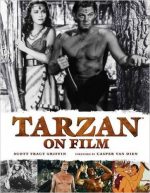
Tarzan on Film


By Scott Tracy Griffin (Titan Books)
ISBN: 978-0-85768-568-1

Soon after the publication of Tarzan of the Apes in 1912, the character – thanks in no small part to Edgar Rice Burroughs’ acumen as a self-promoter – became a multi-media sensation and global star.

Many sequels followed; a comic strip arrived in 1929, followed by a radio show in 1932 and the Ape-Man inevitably carved out a solid slice of the comicbook market too once the industry was firmly established. However, the earliest and most effective promotional tool – one which took on a life of its own – was Tarzan’s frequent forays into the world of celluloid.

This impressive coffee-table art-book, released to coincide with the latest long-awaited movie, offers an eye-popping blend of intimate background, biographies and a critical overview, supplanted by hundreds of production stills, candid photos and – most welcome to art lovers – movie posters and promotional artwork from each theatre release.

Compiled and written by author and historian Scott Tracy Griffin (Tarzan: The Centennial Celebration), the book catalogues the history of the filmic franchise by focusing on every film and each actor to play the Ape-Man and his mate Jane, as well as finding room to spotlight the most memorable villains, glamorous femme fatales, supporting characters and even that purely filmic innovation Cheetah.

Affording equal importance to the large and small screen iterations – live-action or animated – the history lesson begins after an Foreword from past-Tarzan Casper Van Dien and traces the iconic, world-famous Jungle Lord from Elmo Lincoln in 1918’s Tarzan of the Apes (one of the first six films ever to gross more than a million dollars) through to today’s The Legend of Tarzan, with Alexander SkarsgÃ¥rd delivering the “victory cry of the Great Bull-Ape”…

There’s even a tantalising section on the “Original Kids” CGI series Tarzan and Jane forthcoming from Netflix…

This magnificently monolithic epic (224 pages and 262 x 23 x 333 mm) hardback volume is liberally illustrated with photographic stills and promo art, and also includes examples of Bob Kline’s production art and storyboards, model sheets and stills from the glorious Filmation Tarzan, Lord of the Jungle Saturday morning cartoon show from 1976-1984.

For the technically-minded and those of a completist bent there’s also a full list of The Works of Edgar Rice Burroughs, including Tarzan Feature Films, Movie Serials, TV Movies and Series and thematically-linked Additional Films plus Acknowledgements and a copious catalogue of suggested Further Reading…

It seems that whatever your vintage, there’s a nostalgia-drenched Tarzan waiting (mine is Ron Ely who starred as both TV and movie Man-Ape from 1966-1970) to spark old memories and foster fresh thrills and this is just the book to get those primal juices flowing.

Tarzan on Film is both intriguing and pretty: enticing and genuinely informative enough to keep any fan happy. If it’s not too soon for the “C” word it might well be this years first suggestion for giant-sized end-of year stocking-stuffer…
Tarzan ® & © 2016 Edgar Rice Burroughs, Inc. All Rights Reserved. All images © 2016 Edgar Rice Burroughs Inc., Warner Bros, or Walt Disney Pictures. All Rights Reserved.

Dr. Who – The Eleventh Doctor volume 1: After Life


By Al Ewing, Rob Williams, Simon Fraser, Boo Cook & various (Titan Comics)
ISBN: 978-1-78276-385-7

Doctor Who was first seen on black-&-white TV screens on November 23rd 1963 in the first episode of ‘An Unearthly Child’. Less than a year later his decades-long run of adventures in TV Comic began with issue #674 and the premier instalment of ‘The Klepton Parasites’. Throughout the later Sixties and early 1970’s, strips appeared in Countdown (later re-titled TV Action) before shuttling back to TV Comic.

On 11th October 1979 (although adhering to the US off-sale cover-dating system so it says 17th) Marvel’s UK subsidiary launched Doctor Who Weekly, which evolved into a monthly magazine in 1980 and has been with us under various names ever since.

All of which only goes to prove that the Man from Gallifrey is a hero with an impressive pedigree and hard to kill in any medium…

In recent years the strip division of the Whovian mega-franchise has roamed far and wide and currently rests with British publisher Titan Comics who have sagely opted to run parallel series starring the Tenth, Eleventh, and Twelfth incarnations of the trickily turbulent Time Lord.

These tales starring the Matt Smith incarnation comprise the first five issues of the 2014 monthly comicbook; set just after the Time Lord restarted our imploding universe and saw his companions Amy Pond and Rory Williams married and settled down.

Naturally, the gregarious Galloping Gallifreyan is soon in the mood for a little company, as seen in ‘After Life’ scripted by Al Ewing (Captain America and the Mighty Avengers, Loki: Agent of Asgard) and Rob Williams (Cla$$war, Thanos) illustrated by Simon Fraser (Nikolai Dante, Lilly MacKenzie).

She wasn’t dead, but Alice Obiefune‘s life seemed to end after her mother passed way. Things started falling apart and Library Assistant Alice was drifting head-first into a bleak grey world of sucking depression.

Everything changed in an instant when a weird rainbow dog/dragon/thingie raced down the High Street, followed by a strange beanpole man in tweed jacket and bowtie. Barely pausing for breath, he somehow got her to help him chase it.

They would have caught it too, if he hadn’t seen something sinister at the edge of his vision and run into a lamppost…

He then vanished, leaving Alice breathless and bewildered, but popped back a little later when she was safely back in her memory-blighted house. He said she seemed sad and made tea…

Alice was suitably impressed by the incredible TARDIS, but couldn’t help thinking the strange self-confessed alien seemed lonely…

Eager to show off, The Doctor gave her the guided tour of his incredible ship, but Alice kept thinking about the rainbow critter and soon the Doctor was too. Kharitite Joy Beasts home in on negative emotion and bulk up on the mass and energy they generate. However it got there, a miserable, avaricious, angry place like London was no place to leave one wandering about…

The proof of that occurred when they tracked it to the Houses of Parliament in time to stop a riot becoming a bloodbath. Happily The Doctor had a rather good idea about how to calm down the overwhelmed Kharitite…

With new Companion firmly onboard, the roaming wonderment continues in a jaunt to Rokhandi. What was supposed to be a visit to the most beautiful planet in the universe is spoiled when the TARDIS materialises in a cheap and shoddy global theme park…

‘The Friendly Place’ (Ewing & Fraser) is crass, artificial and toxically anodyne but its not long before The Doctor and Alice uncover a sinister presence lobotomising troublemakers, vandals and people who refuse to be happy. With typical rebellious zeal the Time Lord and the Library Assistant challenge the massed delight of the customers and soon uncover a rapacious scheme by corporate powerhouse ServeYouInc…

Moreover – thanks to the oddities of temporal mechanics – they meet for the very first time an old enemy who despises them for all their past/future meddling…

Security Chief August Hart is happy to share the secret of the alien wish-granting thing they’ve used to pacify and lobotomise troublesome visitors, but when he makes it enter the Gallifreyan’s mind, the result is not what the moneymen were expecting…

In fact that brief cerebral contact will have repercussions up and down the timeline…

Blithely unaware, the time travellers think it’s “job done” and hurtle home. However, in 1930 Mississippi a most ominous Talent Scout is trading potential fame for relative inconsequentials. The wishes he grants are on behalf of ServeYouInc, but ‘What He Wants…’ (Williams & Fraser) is largely unknown.

He’ll probably get it though, since an ensorcelled Doctor has succumbed to the effects of the corporation’s wishing-entity and become just another of his beguiled slaves. Hopefully Alice and before-he-was-famous Rock Legend John Jones can help bluesman guitar god Robert Johnson work with the consciousness of the TARDIS to save the day and the world…

Some secrets of ServeYouInc and the initial clash with August Hart are then exposed in ‘Whodunnit?’ by Ewing & Boo (Elephantmen, Judge Dredd) Cook, as the charming chrononauts – sucked in by an impending paradox – accidentally arrive at a commercial alien science station in the far future where a years-long conspiracy has boiled over into tragedy…

Something has breached the station and is attacking the staff, plundering their minds and leaving them in comas…

Naturally, nothing is truly as it seems and despite the best efforts of jumped-up, gun-happy temporary Security Chief Hart, the shocking truth about what has been going on in the name of science and profit is exposed when The Doctor, Alice and Jones meet an incredible creature drawn to ‘The Sound of Our Voices’…

Smart, warm, edgy and subtly hilarious, this premier volume comes with loads of bonus material such as short comedy strips by AJ and David Leach, Marc Ellerby’s sitcom featuring assorted Pond Life, behind-the-scenes production photos and a vast gallery of alternate and variant covers (photographic, digitally manipulated, painted and/or drawn) by the likes of Fraser, Alice X. Zhang, Rob Farmer and Verity Glass.

If you’re a fan of the small screen Time Lord, this book might well make you an addict to both. After Life is a glorious treat for casual readers, a fine additional avenue for devotees of the TV show to explore and a perfect opportunity to cross-promote our art-form to anyone minded to give comics a proper go…
BBC, Doctor Who (word marks, logos and devices) and Tardis are trade marks of the British Broadcasting Corporation and are used under licence. BBC logo © BBC 1996. Doctor Who logo © BBC 2009. Tardis image © BBC 1963. First edition April 2015.