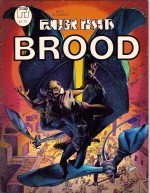

Jeremy Brood part 1: Relativity & Fantagor Presents Brood


By Richard Corben & Jan Strnad with additional designs by Stan Dresser (Fantagor Press/Longhorn Book Distribution)
ASIN: B0006F7UMU            ISBN: 978-0-96238-410-3

Richard Corben is one of America’s greatest proponents and pioneers of graphic narrative: a legendary animator, illustrator, publisher and cartoonist who surfed the tumultuous wave of independent counterculture commix of the 1960s and 1970s to become a major force in pictorial storytelling with his own unmistakable style and vision. Renowned for his mastery of airbrush and anatomical stylisation – producing works of captivatingly excessive overwhelming eroticism – and infamous for delightfully wicked, darkly comedic horror, fantasy and science fiction tales, Corben’s epic storytelling, violent, cathartically graphic and often blackly hilarious triumphs through the 1970s and 1980s were instrumental in making comics a mainstream medium and art form for mature readers.

Always garnering huge support and acclaim in Europe, he was regularly collected in luxurious albums even as he fell out of favour – and print – in his own country. Although most acclaimed for interpretations of classic horror literature, he is equally adept at capturing the alarming nuances of technological terror and cynical political intrigue in shocking science fiction tales such as the truncated epic spotlighted here.

In 1982 he began, with long-time collaborator Jan Strnad, a proposed series of European style square-bound albums starring a troubled star traveller, but it sadly fell victim to an economic downturn before it could find its feet. This taste of a tantalisingly uncompleted greater epic began in Jeremy Brood: Relativity and was brought to an abrupt finish in the magazine Fantagor Presents Brood (Fantagor #5, 1983). The tale has since been collected in a book in 1989 and subsequently re-released in 1998.

The original chronicle begins with a fascinating glimpse at the artist’s working process in his picture-packed ‘Illustrators Notes’ before the full Technicolor experience opens with spare-faring civil servant Brood and his horny but frustrated co-pilot Charlene receiving a sub-space transmission from Earth.

An agent on the planet Eden has sent a distress call and they are to divert there at top speed. Their civilisation is at a cultural crossroads and needs nudging in the right direction – or so planetary sociologist Bernard Finchley claims.

However due to the relativistic nature of near-light speeds, the message is three years old by the time it reaches them and their short trip to Eden will take two centuries in local time…

When they at last arrive, the promised paradise world is a hot, dry desert but, following protocol and armed with the latest tapes of the language, Brood dons a disguise and makes his way to the nearest city, leaving Char and the ship as back-up in case of trouble.

It finds him anyway and the Earthman is attacked by barbaric grotesques and has to get physical with the brutes…

In the intervening years Eden has fallen into religious fanaticism, and as Brood enters the devastated city he is found by an aged cleric who draws him towards a vast gathering. The worshippers are about to sacrifice another nubile virgin maid to Holobar – an increasingly rare occurrence as most girls wisely “disqualify” themselves at their very first opportunity – in the hope that the prophesied saviour will appear to deliver them from their oppressive all-conquering deity. As Jeremy watches in secure anonymous horror, his ancient guide Narrl hurls him into the middle of the ceremony and urges him to deflower the alien maiden or be torn apart by the mob…

Repressed WASP Brood used to have trouble getting sufficiently amorous even with his black girlfriend in the privacy of their spaceship – and she was actually the same species – so this horrific situation almost ends in disaster until the old wise man smashes the stone mask on a huge idol above the altar. Underneath, the monolith has Brood’s face…

Shocked, panicked and realising he’s been set up by a man dead for centuries, Brood at last accomplishes what he was dispatched for, encouraged in equal measure by the willing female under him and the screaming fanatics surrounding him.

Meanwhile miles distant, desert brigands mount a lethal assault on the grounded starship…

Safe for the present, Brood and his new bride Brynne are filled in by the devious alien Priest – who is also Narrl’s brother. The old connivers are the great grandsons of Finchley and a native girl, and their family has been working to build a counter-religion and messiah-cult based on Brood’s eventual arrival in the expectation that his Earth technology will allow them to overthrow the oppressive, draconian fundamentalist followers of Holobar …

Jeremy can’t think about his proposed role as rabble-rousing rebel: he’s lost radio contact with Char, and is forced to trek back to the ship. En route, however, Narrl tries to kill Brood, revealing himself to be a traitor seeking to destroy the saviour and crush the people’s hope of redemption forever. Eradiating his betrayer Brood pushes on, only to discover he is now the only Earthling on Eden…

Fantagor Presents Brood came out a year later: a special edition of Corben’s own occasional and self-published art magazine which ran a conclusion of sorts in full colour, supplemented by a black and white reprint and a new unconnected monochrome fantasy tale.

(In case you’re wondering the reprint was Razar the Unhero’ written in 1970 by Herb Arnold as “Starr Armitage”: a dark and sexily violent spoof with a deprecating edge, deliciously lampooning the Sword and Sorcery epics dominating paperback bookshelves of the day. The new tale was ‘Ogre II’, a tragic comic monster love story sequel to a yarn that ran in Warren Publishing’s 1984 #4.)

Jeremy Brood however starred in the rocket-paced all-action shocker ‘The Big Shriek!’ which picked up moments after Relativity ended…

As Jeremy buries what remains of Charlene, hordes of airborne dragon-riding Holobar zealots pass over his head heading towards the city and the (presumably) impregnated Edenite Madonna, determined to end the heretical resistance forever…

Soon the city is under shattering bombardment and all looks black until the infuriated Brood storms in, crashing his barely airworthy ship into the central square and briefly driving back in the attackers.

Retreating to the temple, Brood and Brynne prepare for their inevitable end, but the cunning far-seeing and ruthless Bernard Finchley and his devoted disciple Priest had arranged a last-ditch contingency plan, with no thought at the horrific cost their centuries-separated dupe Jeremy would be forced to pay…

Moody and trenchant, laced with sparkling irreverence and cynicism, this parable could and should have found time to fully flower but the times and trends were against it. However Corben and Strnad’s sublime acumen in depicting humanity’s primal drives and inescapable failings has never been better exemplified, and at least the 80 or so pages that were complete are still available in one single edition should you care to check out yet one more book no comics or fantasy fan should be without.
© 1982, 1983, 1989 Richard Corben and Jan Strnad. All rights reserved.
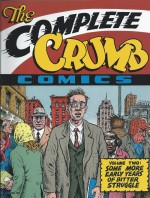

Complete Crumb Comics volume 2: Some More Early Years of Bitter Struggle – New Edition


By Robert Crumb & Charles Crumb, edited by Gary Groth with Robert Fiore (Fantagraphics Books)
ISBN: 978-0-93019-362-1

This book contains controversially clever ideas, outrageously rude drawings, intemperate language, positive drug references and allusions, godless questioning of authority and brilliantly witty, culture-reshaping, personal accounts and opinions.

If you – or those legally responsible for you – might have problems with any of that, please skip this review and don’t buy the book. I’m sure we’ll all know better next time…

Robert Crumb is a unique creative force in the world of cartooning with as many detractors as devotees. His uncompromising, excoriating, neurotically obsessive introspections, pictorial rants and invectives unceasingly picked away at society’s scabs and forever peeked behind forbidden curtains – and all apparently for his own benefit – but he has always happily invited us to share his unwholesome discoveries with anybody with the time and temperament to look…

Way back in 1987 Fantagraphics Books began the nigh-impossible task of collating, collecting and publishing the chronological totality of the tireless artist’s vast output and now, after far too long out-of-print, those engrossing cartoon compendia are being reissued. The earliest volumes have been constantly described as the least commercial but now, with Crumb at last an acknowledged global art-treasure, those volumes are back for your perusal…

The son of a career soldier, Robert Dennis Crumb was born in Philadelphia in 1943 into a functionally broken family. He was one of five kids who all found different ways to escape their parents’ shattering problems, and comics were always paramount amongst them.

As had his older brother Charles, Robert immersed himself in the strips and cartoons of the day; not simply reading but also feverishly, compulsively creating his own. Harvey Kurtzman, Carl Barks and John Stanley were particularly influential, as were newspaper artists like E.C. Segar, Gene Ahern, Rube Goldberg, Bud Fisher, Billy De Beck, George (Sad Sack) Baker and Sidney Smith as well as “straight” illustrators like C.E. Brock and the wildly imaginative, frantically surreal 1930’s Looney Tunes and Merrie Melodies animated shorts.

Defensive and introspective, the young Robert pursued art and torturous self-control through religion with equal desperation. His early spiritual repression and flagrant, hubristic celibacy constantly warred with his body’s urgently growing base needs and desires…

Escaping his stormy family, Crumb married young and began working in-house at the American Greeting Cards Company. He also found like minds in the growing hippie and counterculture movements where he discovered LSD. In 1967 he upped sticks to California to become an early star of the burgeoning Underground Commix scene. As such he found plenty of willing “hippie-chicks” eager to assuage his fevered mind and hormonal body whilst he gradually reinvented the very nature of cartooning with such creations as Mr. Natural, Fritz the Cat, Devil Girl and a host of others.

The rest is history – or perhaps, sociology…

The tortured formative years provided meat for the first collection (The Early Years of Bitter Struggle) and those revelations resume right here, right now as the second volume continues the odyssey to acceptance after ‘The Best Location in the Nation…’; a comprehensive reminiscence and introduction from lifelong confidante Marty Pahls who describes the swiftly maturing and deeply unsatisfied Crumb’s jump from unhappy home to the depressing, dispiriting world of work.

‘Little Billy Bean’ (April 1962) reprises the hapless, loveless nebbish of yore whilst ‘Fun with Jim and Mabel’ revisits Crumb’s first bulky, morally-challenged domestic amazon, after which the focus shifts to her diminutive and feeble companion ‘Jim’. Next, an almost fully-realised ‘Fritz the Cat’ finally gets it on in a triptych of saucy soft-core escapades from R. Crumb’s self-generated Arcade mini-comic project.

From this point onwards, the varied and exponentially impressive breadth of Crumb’s output becomes increasingly riddled with his often hard-to-embrace themes and declamatory, potentially offensive visual vocabulary as his strips grope towards the creator’s long-sought personal artistic apotheosis.

His most intimate and disturbing idiosyncrasies regarding sex, women, ethnicity, personal worth and self-expression all start to surface here…

Working in the production department of a vast greetings card company gave the insular Crumb access to new toys and new inspiration as seen in the collection of ‘Roberta Smith, Office Girl’ gag strips from American Greetings Corporation Late News Bulletins (November 1963-April 1964), followed here by another Fritz exploit enigmatically entitled ‘R. Crumb Comics and Stories’ which includes just a soupçon of raunchy cartoon incest, so keep the smelling salts handy…

A beautiful 10-page selection of sketchbook pages comes next and then a burst of black-&-white and full-colour covers: the satirical 1960 election duel of Kennedy and Nixon, an Arcade gag, 13 letters to Pahls and Mike Britt disguised as ‘Farb’ and ‘Note’ front images as well as a brace of Arcade covers and the portentously evocative front for R. Crumb’s Comics and Stories #1 from April 1964.

The rest of this pivotal collection is given over to 31 more superb pages culled from Crumb’s sketchbooks; a vast and varied compilation that ably displays the artist’s incredible virtuosity and proves that – if he had been able to suppress his creative questing – he could easily have settled for a lucrative career in any one of a number of graphic disciplines from illustrator to animator to jobbing comic book hack.

Crumb’s subtle mastery of his art-form and overwhelming drive to expose and reveal his most hidden depths and every perceived defect – in himself and the world around him – has always been an unquenchable fire of challenging comedy and riotous rumination, and this evocative tome is crucial to understand the creative causes, if not the artistic affectations, of this unique craftsman and auteur.

This superb series, charting the perplexing pen-and-ink pilgrim’s progress, is the perfect vehicle to introduce any (over 18) newcomers to the world of grown up comics, and if you need a way in yourself, seek out this and all the other books in this incomparable sequence as soon as conceivably possible…

Art and stories © 1969, 1974, 1988, 1996, 2013 Robert Crumb. All rights reserved. Introduction © 1988 Marty Pahls.

Madwoman of the Sacred Heart


By Jodorowsky & Moebius, translated by Natacha Ruck & Ken Grobe (Sloth Publishing)
ISBN: 978-1-908830-01-2

Here’s a modern masterpiece of comics creativity at last available to English-speaking audiences, one of the most intriguing and engaging works by two creative legends of sequential narrative. To some people, this superb piece of thought provoking fiction might be shocking or blasphemous however, so if you hold strong views on sex or religion – especially Christianity – stop right now, spare yourself some outrage and come back tomorrow.

Alejandro Jodorowsky Prullansky is a filmmaker, playwright, actor, author, comics writer, world traveller, philosopher and spiritual guru, born in Tocopilla, Chile in 1929. He is most widely known for his films Fando y Lis, El Topo, The Holy Mountain, Sante Sangre, The Rainbow Thief and others, as well as his vast comics output, such as Anibal 5, (created whilst living in Mexico) Le Lama blanc, Aliot, The Meta-Barons, Borgia and more, co-created with some of South America and Europe’s greatest artists. His nigh decade-long collaboration with Moebius on the Tarot-inspired adventure  The Incal (1981-1989) completely redefined and reinvented what comics could aspire to and achieve.

Best known for his violently surreal avant-garde films, loaded with highly-charged, inspird imagery blending mysticism and “religious provocation” and his spiritually informed fantasy and science fiction comics, Jodorowsky is also fascinated by the inner realms and has devised his own doctrine of therapeutic healing: Psychomagic, Psychogenealogy and Initiatic massage. He still remains fully engaged and active in all these creative areas today.

Jean Henri Gaston Giraud was born in the suburbs of Paris in 1938 and raised by his grandparents. In 1955 he attended the Institut des Arts Appliqués where he became friends with Jean-Claude Mézières who, at 17, was already selling strips and illustrations to magazines such as Coeurs Valliants, Fripounet et Marisette and Spirou. Giraud apparently spent most of his time drawing cowboy comics and left after a year.

In 1956 he travelled to Mexico, staying with his mother for eight months, before returning to France and a full-time career in comics, mostly westerns such as Frank et Jeremie for Far West and King of the Buffalo, A Giant with the Hurons and others for Coeurs Valliants in a style based on French comics legend Joseph “Jijé” Gillain.

Giraud spent his National Service in Algeria in 1959-1960, where he worked on military service magazine 5/5 Forces Françaises and, on returning to civilian life, became Jijé’s assistant in 1961, working on the master’s long-running (1954-1977) Western epic Jerry Spring. A year later, Giraud and Belgian writer Jean-Michel Charlier launched the serial ‘Fort Navajo’ in Pilote #210, and soon its disreputable, anti-hero lead character Lieutenant Blueberry became one of the most popular European strips of modern times. In 1963-1964, Giraud produced strips for satire periodical Hara-Kiri and, keen to distinguish and separate this material from his serious day job, first coined his pen-name “Moebius”.

He didn’t use it again until 1975 when he joined Bernard Farkas, Jean-Pierre Dionnet and Philippe Druillet – all rabid science fiction fans – to become the founders of a revolution in narrative graphic arts as “Les Humanoides Associes”. Their groundbreaking adult fantasy magazine Métal Hurlant utterly enraptured the comics-buying public and Giraud again wanted to utilise a discrete creative persona for the lyrical, experimental, soul-searching material he was producing: series such as The Airtight Garage, The Incal (with Alejandro Jodorosky) and the mystical, dream-world flights of sheer fantasy contained in Arzach…

To further separate his creative bipolarity, Giraud worked inks with a brush whilst the futurist Moebius rendered with pens. Both of him passed away on March 10th 2012.

Jodorowsky and Moebius’ second groundbreaking co-creation was originally released in three albums from Les Humanoïdes Associés as La Folle du Sacré CÅ“ur (1992), Le Piège de l’irrationnel (1993) and Le Fou de la Sorbonne (1998) before the saga was collected into one massive, ecstatic and revolutionary volume in 2004.

The company’s American arm Humanoids, Inc. translated it into English in 2006, which forms the basis for this comprehensive new edition from fledgling British publisher Sloth Comics.

Professor Alan Mangel is a world-renowned aesthete, deep thinker and chief lecturer at the celebrated Sorbonne. As such he is the focus of much student attention – particularly female – but none as fervent as that of the insular, fanatically bible-bashing Christian and deeply disturbed Elisabeth.

When the teacher’s shrewish wife Myra denounces, shames and impoverishes him at the moment of his greatest triumph, the arrogantly cerebral, proudly austere, violently chaste and determinedly sexually abstinent Mangel loses the awed respect of his once doting students and disciples who shun his once overcrowded classes and even mock and assault him.

Only Elisabeth remains devoted to him but she has designs both carnal and divine on the aging, flabby, secular, lapsed and born-again Jew. To make matters worse, when she throws herself at him and is repulsed, this awakens the philosopher’s own lustful youthful libido which takes form as a gadfly ghost constantly urging him to indulge in acts of vile debauchery and rampant lust.

Eventually the pressure is too great and Mangel agrees to meet Elisabeth at the Church of the Sacred Heart. The journey there is awful: even the universe seems set against him as rude taxi-drivers, a mad old lady tramp and even dogs further humiliate the broken old man.

In the holiest part of the church Elisabeth again attempts to seduce the long sterile and wilfully impotent Alan, explaining that her researches have revealed him to be the biblical Zacharias reborn, destined to impregnate her with a son: the Prophet John who would in turn herald the rebirth of Jesus…

Again the rational scientist baulks at her words but Elisabeth promises a miracle and when Mangel’s horny, ghostly other self “possesses” him the dotard loses control and finally gives the mad girl what she’s been begging for…

Plagued with shame and remorse, still tormented by his inner letch and broke, Mangel resumes lecturing and slowly rebuilds his reputation until one day Elisabeth returns, her nude body declaring her to be forever the property of Alan Zacharias Mangel. She is three months pregnant with the sterile man’s baby and has already recruited the St. Joseph who will help them fulfil their sacred mission…

The divinely-dispatched protector, a drug addict and petty criminal previously called Muhammad, already has a line on The Mary: she’s his girlfriend Rosaura, currently imprisoned in a secure mental hospital. She’s also in a coma…

Dragged against the will he no longer seems capable of exerting, Mangel experiences his latest ongoing tribulation when St. Joseph breaks The Mary out with the aid of a gun and his distressed guts give way to what will be, for all of the chosen ones, an uncomfortable and prolonged period of stress-related explosive diarrhoea…

Against all his rational protests and worries, things just seem to keep falling into place for the pilgrims. Rosura is no longer comatose, and they get away without a single problem – if you don’t count the olfactory punishment the Professor’s rebellious innards are repeatedly inflicting upon them all…

“Mary” is the most ravishing creature he has ever seen, but as crazy as her friends. When she cavorts naked in a field during a midnight thunderstorm, frantically imploring God to impregnate her with the second Jesus, Mangel’s lustful ghost again overtakes him and he surreptitiously copulates with the wildly bucking lascivious loon…

The next day reality hits hard when he reads of two nurses executed when the comatose daughter of an infamous Columbian drug baron was abducted from a certain institution…

The second chapter opens with the four fugitives hiding out in a lavish seaside house and Mangel – as always – arguing with both his priapic phantom and rationalist conscience. His so impossibly, imperturbably, persuasive companions are untroubled: they are simply passing the days until the birth of John the Baptist and the Second Coming of Christ…

The next crisis is pecuniary as the lavish spending of the trio soon exhausts the Professor’s funds and they are reduced to their last 100 franc note…

Elisabeth is unconcerned and simply places a bet with it. Operating under divine guidance the horse race wins the quartet three and half million Francs, but before the reeling rationalist can grasp that, there’s another insane development as Mary/Rosaura declares herself to be the Androgynous Christ – both male and female – reborn and made manifest to save us all.

She still looks devastatingly all-woman however, and when she kisses the old fool and sends him back to the Church of the Sacred Heart to “obtain” a vial of holy Baptismal oil, he goes despite himself, arguing all the way with his imaginary sex-obsessed younger self.

It’s another humiliating and deranged debacle. The famous house of worship is hosting an ecumenical convention of argumentative theologians of all religions and that self-same crazy woman is still there, claiming to be God and challenging them all.

After driving them away she even tries to have sex with the bewildered fallen philosopher who barely escapes with the stolen oil. The worst of it all is that, based on recent evidence, Mangel can’t even say with any certainty that the ill-smelling harridan isn’t telling the truth…

Driving back through the fleshpots of the city with his ghost tempting him every inch of the way, the weary savant is dragged back to appalling reality by a newspaper headline declaring that the police have a witness in the murder/abduction of Rosaura Molinares, daughter of the most wanted drug trafficker on Earth.

However, when the nigh-unhinged thinker reaches his sanctuary from reason, the true believers already know. They taped the TV news and show him the witness describing a completely different killer: El Perro, chief hitman of Pedro MolinaresMedellin Cartel…

With the last foundations of precious logic crumbling, Mangel reaches an emotional tipping point and when The Androgynous Christ demands he make love to her, the old fool submits to stress – and his ever-horny spectral alter ego – by surrendering to his lusts. Before long he is in the throes of a bizarre, eye-opening, life-altering four-way love session with all the mad people he has wronged in his head and heart…

The epiphanic moment is rather spoiled when the wall explodes and a cadre of mercenaries working for a rival cartel burst in, looking for Rosaura’s father. They’re followed by the Columbian Secret Service, also hunting the drug lord and quite prepared to kill everybody to find him.

…And they in turn are ambushed by American DEA agents who slaughter everybody in their sights in their desperation to capture Molinares’ daughter and her weirdo friends. The illegally operating Yanks drag their captives to a submarine waiting offshore just as French police hit the beach and El Perro attacks the sub, spectacularly rescuing the quartet and transporting them to safety by helicopter and cargo plane…

The concluding chapter opens with all of France astonished by the kidnapping of its most beloved thinker, even as in a Columbian Garden of Eden a newly-enlightened and happy Mangel and his heavily pregnant Elisabeth prepare for the birth of The Child.

The Androgynous Christ too has changed and grown, easily converting the hard-bitten drug gangsters into a holy army of believers in the redeemer Jesusa…

Top dog Pedro Molinares is dying from cancer and his devoted army are fully, fanatically in tune with Jesusa’s plans, especially after an impossible blood miracle seemingly proves their new leader’s earthbound divinity. Equally astounded, Mangel too reaches a spiritual crisis as he accompanies Elisabeth deep into the jungle to give birth.

Mangel’s journey and ultimate transformation at the hands of rainforest shaman Doña Paz then lead to even more astonishing revelations, changes and shocks that I’m just not prepared to spoil for you…

Controversial, shocking, challenging, fanciful, enchanting and incredibly funny, this a book you must read and will always remember.
™ Les Humanoïdes Associés, SAS, Paris. English version © 2011 Humanoids, Inc., Los Angeles. All rights reserved.

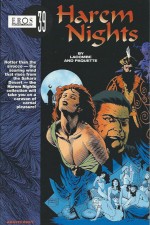
Harem Nights


By Michel Lacombe & Yanick Paquette (Eros Comics/Fantagraphics Books)
ISBN: 978-1-56097-354-6

This book contains stories and images of an extremely adult nature, specifically designed for the consumption of consenting adults. If reading about such things is likely to offend you, please stop now and go away. Why not come back tomorrow when I’ll uncover something different that will probably offend somebody else.

I’ll let you in on a little secret: if you do it right – and I know some people try really, really hard – sex is supposed to be fun.

Now we all know that in the real world nobody’s actually any good at nookie and there’s always someone trying to put a stop to it (hopefully not your own consenting, actively participating partner-of-choice) but fun-filled fictional fornication has usually sought to be a jolly, joyous affair – which is why so much pornography aspires to low comedy.

When esteemed champion of graphic diversity Fantagraphics jumped on the harmless smut bandwagon that proliferated in the American comics industry at the very end of the 1980s with their Eros Comics imprint, they initially gathered the most stylish of European and foreign adult material (such as Solano Lopez & Barreiro’s Young Witches – which is simply considered mere mature reading on the hang-up-free Continent) to complement quality home-grown creators such as Gilbert Hernandez, Bill Willingham and Ho Che Anderson (with Birdland, Ironwood and I Want to be Your Dog, respectively).

In such a creatively welcoming environment, might not such adults-only projects also attract horny young neophytes and talented newcomers with something fresh to say on the old-in-and-out?

One of the company’s all-new 4-issue miniseries for men – or at least folk with convincing fake IDs – was crafted by a couple of eager-beaver Canadians named Michel Lacombe & Yanick Paquette and offered a different twist on a positively ancient scenario beloved of lovers and romantics everywhere…

Following a wry comic strip introduction from pioneering cartoonist Jacques Boivin, the even-harder-after-midnight action begins in the ancient Middle Eastern city of Avalhad where unpopular but chosen-by-God Sultan Arful Al Hussaj lived a life of grotesquely hedonistic, shame-free excess. Although he was the most repulsive and stupid of men, his servants were devoted to his service and the many glorious women of his seraglio hungered for his attention.

That wasn’t surprising at all, for so ugly was Hussaj that the Court Wizard Ziebnad had placed a spell on all the nubile concubines. From sunset to sunrise all the harem girls were possessed by an insatiable hunger for man’s love: a fire that cruelly drove them all wild, long after the Sultan had made his nightly selection.

Those left unattended each evening writhed in desperate, agonising frustration, boiling with an unquenchable heat until the sun rose again and could even expire of unfulfilled arousal…

Neither the magus nor Hussaj cared: after all they were only women.

Tatia was one of those thus afflicted and although most of her sister courtesans were resigned to their nightly torture, she yearned to be free of it and her unwholesome master. Unhappy even in her daylight hours of sequestered opulence and indolence, her only companion and confidante was fellow concubine Bita – who secretly yearned for the blithely oblivious Tatia even when the sun was high in the sky and unseemly passions were not artificially enflamed…

Events came to head (yes I meant to say that) when Ziebnad finally convinced his master that for the sake of the kingdom he should stop screwing around and sire an heir.

Until then most of the Sultan’s predilections had taken him in other directions and down different avenues, but with his relatives now making openly seditious moves, caution dictated that Hussaj should ensure some dynastic continuity if he wanted to keep his head and the crown.

The Sultan reluctantly acquiesced but, rather than go to the trouble of finding a suitable wife, agreed to simply impregnate and wed one of the concubines he was already familiar with.

Whoever was picked that night would do…

As narrative would have it, Tatia got the nod and was brusquely married to the Sultan to legitimise the issue before the monster began to slake his nightly passions. Perhaps it was because everything started before sunset or perhaps the vile potentate was especially unwholesome this time, but as his own inner fires overwhelmed Hussaj, Tatia somehow rebelled and in disgust killed her new husband…

Fighting the withering power of the curse, she then fled the palace before she could be discovered and hid in the city: her ensorcelled libido making her a potential toy and victim of every man from merchant to beggar…

How the runaway bride escaped her pursuers, founds faithful allies, overthrew the corrupt regime, destroyed the wizard, freed herself and her fellow accursed concubines and eventually rode into the sunset with her hard-won true-love is an engaging if slight and lasciviously predictable tale that will amuse and delight open-minder lovers of erotica everywhere.

Of course in the end all of this is just an excuse to see naked people cavorting – and yippee! for all that – but there’s also a dark tale of oppression and hard-won liberation hiding under all that glistening skin and heaving flesh that successfully approaches that Holy Grail of Porn – a strong story that successfully holds together the bits between all the bonking…

Rude but not crude, naughty and nice, this is a great example of art for smut’s sake with no pretensions and a good deal to recommend it.
© 1994, 1995, 1999 Michel Lacombe & Yanick Paquette. All rights reserved.

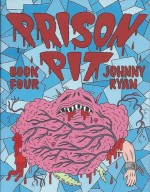
Prison Pit Book Four


By Johnny Ryan (Fantagraphics Books)
ISBN: 978-1-60699-591-4

Johnny Ryan is a comedian who uses comics as his most liberated medium of expression. Whether in his own Angry Youth Comix, or the many commissions for such varied clients as Nickelodeon, Hustler, Mad, LA Weekly and elsewhere, his job/mission is to create laughter. Depending on your point of view, he is either a filth-obsessed pervo smut-monger or a social iconoclast using the same tactics as Lenny Bruce or Bill Hicks to assault the worst and most hidebound aspects of society.

His wild, loose cartoon drawing style is deceptively engrossing, and his seeming pictorial Tourette’s Syndrome of strips and gags involving such grotesque signature characters as Boobs Pooter (world’s most disgusting stand-up comedian), Loady McGee, Sinus O’Gynus and especially the incredible Blecky Yuckeralla (originally weekly from 2003 in The Portland Mercury and Vice Magazine before switching to Ryan’s own on-line site) will, frankly, appal many readers, but as with most questions of censorship in a Free Society, they are completely at liberty to neither buy nor read the stuff.

Ryan dubs his stinging graphic assaults on American culture ‘misanthropic comics’ and one of the most effective and honestly engaging is a simple riff on kids and fighting…

Ryan is a cartoonist with an uncompromising vision and an insatiable desire to shock and revolt whenever he wants to. In his ongoing Prison Pit series he perpetually pushes the graphic narrative envelope and the outer limits of taste with a brutal, primitive cascade of casual violence that has sprung, fangs bared, claws extended and arcanely barbed genitalia fully brandished, from his apparent obsession with casual ultra-violence, social decay and the mythology of masked wrestling. He is also a delighted devotee of the “berserk” manga strips of Kentaro Miura…

In the first volume criminal grappler Cannibal F***face (my asterisks not his) was banished to an extra-dimensional purgatory where the most violent felons from all over creation were dumped to live or die by societies which had outgrown the need for them. This barren hell-scape was littered with grotesque monsters, vile organisms and the worst specimens of humanity ever captured by the forces of civilisation. The masked wrestler was dumped there to fight and die, but his indomitable spirit and brutally battered body became bonded to a ghastly parasite, and together they thrived by killing everyone – and thing – they encountered…

In this fourth fearsome monochrome tome – which opens with the eighth uncanny episode of the unflinching epic – C.F. and his savage, semi-sentient new left arm awake in a crystalline cell and are informed they are imprisoned within the psychic confines of the insidious Caligulon. When the parasite abandons and attacks the wrestler, the result is an even more horrific monster and a temporary alliance which sees the brutal end of the mental wizards who form the ‘Brain Bitch’.

After demolishing, destroying and even consuming their foes and then dealing so-very-harshly with still more perilously paranormal priapic horrors, C.F. and his erstwhile ally turn on each other in ‘Slugstaxx’. After a horrendous clash which sees the unruly parasite devolved and returned to his rightful left arm-stump, the mighty masked wrestler then totally – and literally – screws with the massive computer behind his latest trials and returns to the Hadean wilderness where he then meets a roving band of marauding killers and proves to their juggernaut leader ‘Undigestible Scrotum’ that he was nothing of the kind…

Suddenly a strange flying machine begins to rain down devastating terror from above…

To Be Continued – and you can’t stop it…

In this non-stop welter of exceedingly excessive force, vile excrescences, constant combat challenges, scatological salvoes and sheer unadulterated graphic carnage, the never-ending Darwinian struggle of C.F. – forever beyond the reach of hope or rescue but never, ever contemplating surrender – is a macabre yet beguiling, loathsomely intriguing miracle of cartoon exuberance.

Man’s oldest gynophobic horrors and most simplistic delight in sheer physical dominance are savagely delineated in this primitive, appalling, cathartic and blackly funny campaign of comic horror. Resplendent, triumphant juvenilia has been adroitly shoved beyond all ethical limits into the darkest depths of absurdist comedy. This is another non-stop rollercoaster of brain-blistering action, profound, profanity and pictorial Sturm und Drang at its most gorge-rising and compelling: a never-ending battle delivered in the raw, frenetically primitivist ink-stained stabbings of an impassioned, engrossed child…

Not for kids, the faint-hearted or weak-stomached, here is extreme cartooning at its most visceral and pure.

…And now that we’ve placated the intellectual/moral imperative inside us all, I’ll also confirm that this book is another, all-out, over the top, indisputably hilarious hoot. Buy it and see if you’re broad-minded, fundamentally honest and purely in need of ultra-adult silliness…
© 2012 Johnny Ryan. All rights reserved.

Kennedy – the President Must Die!


By artists unknown, cover by Prieto Muriana (Morcrim International Publications)
No ISBN: 84-400-2535-1

“Let every nation know, whether it wishes us well or ill, that we shall pay any price, bear any burden, meet any hardship, support any friend, oppose any foe to assure the survival and the success of liberty” – John Fitzgerald Kennedy

We couldn’t possibly do a week of political packages without dipping into a little sordid scandal or tawdry muckraking and with Kennedy – The President Must Die! I think we’ve found an indisputably appalling candidate…

In the 1970’s Mercocomics were a short-lived Spanish outfit (1977-1978) that produced a number of violent and titillating adult soft-core shockers which were translated into English and unleashed on the British public just as that dire decade was lurching to a close and Punk Rock could be heard echoing out of every Sixth Form Common Room. Amongst their some 117 published monochrome digest issues were such eye-catching titles as Hitler, Che, Sade, Lucrecia, Don Juan – Tenorio Garcia, El Socialista, Cronica Negra, Quixote ’78 , Mussolini and a 6-part sleazy fictionalised expose of the events of the Kennedy Assassination.

Much of the material was picked up from other Shlock publishers – particularly Italian horror comics – and made it into re-translations all over Europe. As far as I know, the Kennedy series only turned up in French and the English edition under review here, and I’m assuming from the quirky pacing, non-stop hops into salacious nudity and Carry-On Movie sex and anonymous art style that it too was Italian in origin…

This first gratuitous episode opens as a Texasmillionaire “patriot” hires ex-CIA operative and dirty tricks specialist Michael Fairchild for a very special freelance job that will save the nation from ruin. Meanwhile in Washington DC, JFK’s FBI procurer informs the leader of New Camelot that his latest assignation is naked, willing and hot to trot downstairs. Perfect wife Jackie is not fooled by her husband’s half-hearted excuses either…

In Dallas, minor crime-boss and nightclub proprietor Jack Ruby is auditioning new “hostesses” when old associate Fairchild turns up looking for a credible patsy. Ruby thinks he knows just the guy: a loser named Lee Harvey Oswald…

The dirty tricks master knows Oswald is a double agent – actually a CIA man on the skids and trapped in a dead end surveillance mission – but with what he’s planning, that just makes him an ideal scapegoat…

When he was stationed in Russia, Oswald married Marina Prussakova, but since coming to America she’s been neglecting him for the devious, deviant Mrs. Payne…

Preparations for the mission continue in secret. Out in the desert beyond Dallas, two snipers hone their skills in complete privacy, whilst in DC Robert Kennedy again warns his brother of the dangers of visiting that city at this time. Sadly the President is more concerned with his latest dalliances than the details of his trip, and soon even his perfect First Lady can’t take anymore …

The plot inexorably progresses and on November 22nd 1963 the conflicted and nonplussed Oswald somehow finds himself in an office of the Texas School Book Depository overlookingDealeyPlaza with the Presidential limousine in his sights. Trapped by his own insecurity and isolation from his Federal superiors, the undercover American agent is about to become the most reviled killer in US history.

Two shots ring out in rapid succession but Oswald’s finger is not on his rifle trigger…

Packed with actual historical personages and always skating perilously close to libel, this is indisputably a sleazy, unintentionally hilarious conspiracy thriller, yet somehow it all manages to pull together the mythology of assassination with surprising power and conviction. I’ve read far worse stories and dafter theories on the subject from legitimate experts, but frankly the art isn’t that great here and quite honestly the sheer volume of voluptuous, naked – and poorly drawn – jiggy bits is something of an unwelcome distraction.

So bad it’s good or simply unforgivable? …You decide, after all, it’s only your vote that counts…
© Mercocomic 1977-1978

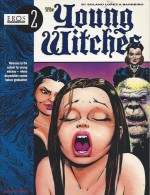
Young Witches


By Francisco Solano López &Barreiro (Eros Comic/Fantagraphics)
ISBN: 978-1-56097-202-0

This book is intended to excite adults whilst simultaneously making them laugh, think, and hopefully feel frisky. If the cover image hasn’t clued you in, please be warned that the book contains nudity, images of sexual intimacy but, oddly, not the sort of language commonly used in the privacy of the bedroom (and playgrounds whenever supervising adults aren’t present). If this sort of thing offends you, read no further and don’t buy the thing. The rest of us will just enjoy one of the best graphic novel experiences ever created without you.

Whilst prolific scripter Ricardo Barreiro prefers to quietly let his prodigious works speak for him, his inimitable partner in this and many other comics classics is an unmistakable part of three generations of kids’ lives.

For British and Commonwealth comics readers of a certain age, the unmistakable artistic style of Francisco Solano López always conjures up dark moods and atmospheric tension because he drew such ubiquitous boyhood classics as Janus Stark, Adam Eterno, Tri-Man, Galaxus: The Thing from Outer Space, Pete’s Pocket Army, Nipper, The Drowned World, Kelly’s Eye, Raven on the Wing, Master of the Marsh and a host of other stunning tales of mystery, imagination and adventure in the years he worked for Britain’s Fleetway Publications.

However the master of blackest brushwork was not merely a creator of children’s fiction. In his home country ofArgentinahe was adjudged a radical political cartoonist whose work eventually forced him to flee to more hospitable climes and far less dangerous times.

Francisco Solano López was born on October 26th 1928 in Buenos Aires, Argentina and began illustrating comics in 1953 with Perico y Guillerma for the publisher Columba. With journalist Héctor Germán Oesterheld (a prolific comics scripter “disappeared” by the Junta in 1976 and presumed killed the following year) Solano López produced Bull Rocket for Editorial Abril’s magazine Misterix.

After working on such landmark series as Pablo Maran, Uma-Uma, Rolo el marciano adoptivo and El Héroe, López joined Oesterheld’s publishing house Editorial Frontera and became a member of the influential Venice Group which included including Mario Faustinelli, Hugo Pratt, Ivo Pavone and Dino Battaglia.

López alternated with Pratt, Jorge Moliterni and José Muñoz on Oesterheld’s legendary Ernie Pike serial but their most significant collaboration was the explosively political and hugely popular allegorical science fiction thriller El Eternauta which began in 1957. By 1959 the series had come to the unwelcome attention of the authorities inArgentina andChile, forcing López to flee toSpain. Whilst an exile there he began working forUK publishing giant Fleetway fromMadrid andLondon.

In 1968 he returned to Argentinaand with Oesterheld started El Eternauta II for new publisher Editorial Records, produced sci-fi series Slot-Barr (written by Barreiro) and period cop drama Evaristo with kindred spirit Carlos Sampayo. In the mid-1970s López was once again compelled to flee his homeland, returning to Madrid where he organised the publication of El Eternauta and Slot-Barr with Italian magazines LancioStory & Skorpio.

He never stopped working, producing a stunning variety of assorted genre tales and mature-reader material and erotica such as El Instituto (the subject of this review under its American title Young Witches), El Prostíbulo del Terror (also by Barreiro) and full colour male-fantasy strip Sexy Symphonie.

More serious works included the bleak thrillers Ana and Historias Tristes with his son Gabriel and he also illustrated Jim Woodring’s adaptation of the cult movie Freaks. In recent times, safely home in Argentina he continued to work on El Eternauta with new writer Pablo “Pol” Maiztegui.

López even found time for more British comics with strips such as ‘Jimmy’, ‘The Louts of Liberty Hall’, ‘Ozzie the Loan Arranger’ in Hot-Shot and Eagle as well as ‘Nipper’ and ‘Dark Angels’ for Roy of the Rovers.

Francisco Solano López passed away in Buenos Aireson August 12th 2011.

Latterly his most famous English-language series (six volumes of stunning, shocking erotically charged graphic novels at the last count), The Young Witches debuted in the USA as a 4-issue miniseries from Fantagraphics’ Eros Comics imprint in 1990, the contents of which form the majority of this superbly seductive compilation.

In the winter of 1866, after a troubled labour which took her mother, Lillian Cunnington was born into a minor aristocratic house. When her father, barely married seven months, realised how he had been cuckolded and subsequently took his own life, the baby was sent to live with her maternal aunts Jessica and Agnes Moore inCoventry.

Lilian’s life was harsh and bizarre, growing up with the draconian spinsters who revelled in the era’s taste for corporal punishment and had an entirely unnatural and abiding affection for each other which they frequently indulged, uncaring if impressionable eyes were watching…

In the Spring of 1881 the wilful, self-reliant child was bundled off to a finishing school where she discovered the truth about her past and the secret history of the world…

The Institute was a forbidding edifice set in vast, isolated grounds that took only the most select young girls. After passing a terrifying and shockingly intrusive entrance exam, young Lilian discovered that the school was a haven and training ground for the last remnants of an ancient sub-race of humanity: women with astonishing supernatural abilities…

The other girls were alternately hungry to meet her and resentful – especially as her mother fled the order and abandoned their millennial principles – but when they forcibly subjected her to their own disturbing initiation rites Lilian repulsed them all with an explosive display of unsuspected arcane power…

In her decidedly unconventional classes she learned the history of her kind: how in time-lost Sumer the cult of Ishtar, the Female God was first born, a religion for women which bestowed great power and knowledge on its adherents.

As Aphrodite in Greece and Venus in Rome, the faith continued until the rise of monotheistic Male Christianity sought to enslave and humble women and wipe out the powerful, wanton deviants they termed witches…

Driven into hiding the witches were almost eradicated by the 18th century, when the solitary prophetess Diana had a revelation and began seeking out sister-survivors, believing them by the very fact of their continued existence to be superior beings, honed to a Darwinian fitness.

Drawing them together she devised a plan of conquest to take control of the world by manipulating men of power, wealth and influence, using their addiction to pleasure and the witches’ divine gifts. Through careful planning, judicious infiltration and sublime seduction, the women would subjugate their cruel oppressors…

The work of the institute was to train girls to be the perfect wives of the world’s rulers, using sex as a weapon and clandestinely controlling from the bedroom. Meanwhile the ultimate goal was to produce ever-more powerful witches by only breeding daughters. To accomplish their sacred plan however, the institute harboured two horrific secrets: a thriving trade in selling ideal brides to the debauched scions of theBritish Empire- and the lesser World – and a hideously inbred brood-male who covertly inseminated every girl before her wedding night, ensuring that wherever they ended up Ishtar’s bloodlines remained pure…

Lilian was a problem however. Although the daughter of a failed traitor to the cause, she was also the most powerful witch the school had ever encountered and her rebellious nature was seemingly impervious to reason, discipline or correction.

Moreover she was unwholesomely attracted to young men such as the gardener rather than her own sisters and kind, with no machinations the girls or their grotesquely conniving headmistress could devise able to dissuade her from her disobedient path…

Events came to a cataclysmic head when her rival and classmate Agatha was betrothed.

Ready to go forth and do the Cult’s bidding as bride of aged Lord Wellington, the dutiful disciple was appalled at her impregnation ceremony when confronted by the Institute’s shambling, brutish imbecilic stud male. Agatha baulked and broke down, refusing to commit the act and the enraged Headmistress compelled her with all the violence and brutality she has claimed to be the province of their male oppressors…

Lilian exploded in a display of outrage and indignation and with all the power of the elements the Young Witch lashed out against a lifetime of control, virtual slavery and injustice resulting in a deadly duel of magical will and an apocalyptic conflagration…

In the aftermath Lilian and Agatha fled the shattered Institute forever…

Let’s not stray from the point – these tales are primarily designed to honestly titillate and excite and there’s a huge amount of lavishly rendered nudity, love-making and fetishism on display here. However there is also a strong story, terrific suspense and a heartfelt attempt to say something about gender politics too, and all in a well-researched historical context.

In later tales Lilian and Agatha have encounters with iconic historical and literary figures including Robert Louis Stevenson, Sigmund Freud, Albert Einstein, Dr. Henry Jekyll (plus one), Jack the Ripper, Dorian Grey, Sherlock Holmes and others…

This deliciously saucy and salacious sex-and-horror yarn combines the bawdy, breezy, haunted ambiance of classic Hammer Films with sultry, lascivious supernatural suspense in a stunning black and white confection far more enchanting and compelling than any number of shades of grey, and this torrid tome also includes a luscious, full-colour extra erotic charge in the form of a silent, sexy Silly Symphony from Solano López…
© 1990, 1991, 1992Barreiroand F. Solano López. All rights reserved.

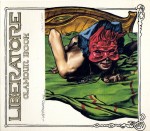
Liberatore Glamour Book


Edited by Vincenzo Mollica & Antonio Vianovi (Glamour International Productions)
No ISBN

A lot of people may find the graphic arts collections under review here to be shocking, unacceptably violent and even revolting or, worse yet, dirty.

If that’s you, please stop right here and come back tomorrow when there will something you’ll approve of but will almost certainly offend someone else.

Italy has a rich and varied comics culture with some highbrow classics and lots and lots of cheap, cheerful, cheesy and even sordid commercial filler – just like everywhere else. Italian illustration superstar Gaetano “Tanino” Liberatore, like most masters of the form, paid his dues and worked his way up the ranks until he eventually found stardom, infamy and his ideal working environment…

He was born in 1953 in Quadri in the province of Chieti. After the usual kind of artistic childhood the kid went to school in Pescara and studied architecture at the University of Rome before moving into the world of work as an advertising illustrator in 1975.

He first met his fellow philosophical seditionist and punk-soul brother (writer, artist and publisher) Stefano Tamburini in 1978 and, in conjunction with strident activist cartoonist Andrea Pazienza, they created ‘Rankxerox’ for the magazine Cannibale. The character evolved and moved to Il Male and eventually Frigidaire, fully realised now as the RanXerox we know today – every bit Libertore’s signature character the way Eisner has The Spirit, and Hergé Tintin…

Liberatore rapidly developed as both artist and writer, with strips ‘Bordello’ and ‘Client’ appearing in Il Male, but when the new, Tamburini-scripted, syndicated RanXerox became a star of French magazine L’Écho des Savanes in 1981, Tanino moved to Paris and began working simultaneously on tales for the more prestigious Gallic market in such magazines as Tranfert, Métal Hurlant, À Suivre and Chic.

A shocking hit in the US Heavy Metal magazine, RanXerox then led to Liberatore jumping the pond and producing material for Twisted Tales and men’s magazine Hustler.

When Tamburini died suddenly in 1986, Liberatore quit comics for nearly a decade. Returning to straight commercial illustration, he worked in movies and designed book and record covers. Eventually, comics captured his attention again, and he produced two new RanXerox tales in 1993 and 1996 (with Jean-Luc Fromental and Alain Chabat), and a piece in Batman Black and White, assorted covers, and illustrated Pierre Pelot and Yves Coppens’s mass-market paperback ‘Le Rêve de Lucy’. As the Nineties closed, he finally came storming back in stunning style with the brilliant, award-winning Lucy L’Espoir in 2007, in which he and writer Patrick Norbert freely adapted a life-story for the famous prehistoric humanoid Australopithecus Afarensis remains found by anthropologists Coppens, Donald Johanson and Maurice Taieb.

The early Liberatore is the unqualified master of shock tactics. His beautifully rendered work dwells with obsessive, aggressive fascination of the grotesque, both visually and thematically. Stylish elegance goes hand-in-hand with horrifying, blunt scarification, in-your-face casually acceptable deformity and abnormality as suave, raffish he-men readily range beside hideous human travesties, ugly children and wanton, fearsome under-age harlots and murderous junkies.

His worlds are not ones where anybody should feel safe or comfortable in visiting…

One fascinating fact often neglected is that the artist usually drew his stunning pages same-size or even smaller than the printed final work – a complete reversal of the regular way comics were produced – and used a huge variety of materials to achieve his artistic effects, from cheap felt pens to high quality pencils, paints or markers and even lipstick and found objects…

That spectacular facility for experimentation is perfectly displayed in the book under review here. In the early 1980s the Italian outfit which produced Popular Arts magazine Glamour Illustrated released a series of phenomenal art-books, collecting and cataloguing the extant works of many modern maestros of mature modern sequential narrative which had limited distribution in Britain – despite the best efforts of specialist importer Titan Distributors – and all those tomes are long past due for revision and reissuing…

This glorious collection of Liberatore’s early years, simultaneously transcribed in Italian, French and English, gathers hundreds of works and excerpts within its 204 pages (many of them full-colour high-gloss inserts), traces the artistic development and displays the incredible ability and versatility of this incomparable, iconoclastic stylist, divided as usual into early ‘Unpublished Works’, ‘Black and White’ – printed pieces and extracts ranging from comics pages and panels, pin-ups, ads, illustrations, posters and covers – and concluding extensive ‘Colour’ section.

The ‘Unpublished Works’ section here include masses of Liberatore’s superb pencil drawings and preliminary sketches, unfinished and self- rejected pages as well as commercial designs, calendars, and a ton of fanzine work dedicated to music sensations such as Frank Zappa, Paul McCartney, Grateful Dead and so on, choreographed fight scenes and designs for every aspect of his finished pieces and is capped by an extra ‘Donne’ chapter featuring a stunning sequence of pencil studies of women…

‘Black and White’ contains a wealth of work showing the artist’s fantastic versatility as seen in record jackets, magazine covers and illustration, satirical comics and cartoons plus loads of strips for publications as varied as Cannibale, Il Male, Frigidaire, Transfert, RanXerox and a host of others.

The ‘Colour’ section reveals, in a wealth of different hues and stylisations, his canon of covers for comics, magazines, books and records; posters, cartoons, works in progress, strips, stage art for theatrical performances, paintings, along with many pages and extracts from his strips produced in Italy and France, and American works for Hustler, Heavy Metal and Marvel’s Savage Sword of Conan.

The collection also contains impressively comprehensive checklists which detail in full Liberatore’s vast publication record to date in their ‘Chronology’ and ‘Bibliography’ sections.

As you would expect, there is a breathtaking amount of beautifully rendered flesh and deeply unsettling hyper-violence and subversive visual political polemic on display – and I’m sure I don’t know which is the most distressingly affecting – in an unrelenting series of lascivious situations and occasionally genuinely disturbing circumstances… and his brutally sly sense of humour.

Liberatore is another world-class storyteller English speakers have too long been deprived of, and books like this have never been more desperately in need of updating and re-release …
No copyright notice again so I’m assuming:
© 1972-1985 Gaetano Liberatore. All rights reserved. If anybody knows better please let me know and we’ll amend the entry.

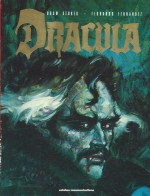
Bram Stoker’s Dracula


By Bram Stoker & Fernando Fernández (Catalan Communications/Del Rey Books)
DLB: 18118-1984 (Catalan)    ISBN: 978-0-34548-312-6 (Del Rey)

Multi-disciplinary Spanish artist Fernando Fernández began working to help support his family at age 13 whilst still at High School. He graduated in 1956 and immediately began working for British and French comics publishers. In 1958 his family relocated to Argentina and whilst there he added strips for El Gorrión, Tótem and Puño Fuerte to his ongoing European and British assignments for Valentina, Roxy and Marilyn.

In 1959 he returned to Spain and began a long association with Fleetway Publications in London, producing mostly war and girls’ romance stories.

During the mid-1960’s he began to experiment with painting and began selling book covers and illustrations to a number of clients, before again taking up comics work in 1970, creating a variety of strips (many of which found their way into US horror magazine Vampirella), the successful comedy feature ‘Mosca’ for Diario de Barcelona and educational strips for the publishing house Afha.

Becoming increasingly experimental as the decade passed, Fernández produced ‘Cuba, 1898’ and ‘Círculos’ before in 1980 beginning his science fiction spectacular ‘Zora y los Hibernautas’ for the Spanish iteration of fantasy magazine 1984 which was eventually seen in English in Heavy Metal magazine as Zora and the Hibernauts’.

He then adapted this moody, Hammer Films-influenced version of Bram Stoker’s Dracula for the Spanish iteration of Creepy, before (working with Carlos Trillo) moving on to mediaeval fantasy thriller ‘La Leyenda de las Cuatro Sombras’, after which he created ‘Argón, el Salvaje’ and a number of adaptations of Isaac Asimov tales in ‘Firmado por: Isaac Asimov’ and ‘Lucky Starr – Los Océanos de Venus’.

His last comics work was ‘Zodíaco’ begun in 1989, but his increasing heart problems soon curtailed the series and he returned to painting and illustration. He passed away in August 2010, aged 70.

For his interpretation of the gothic masterpiece under review here, Fernández sidelined the expansive, experimental layouts and lavish page design that worked so effectively in Zora and the Hibernauts for a moodily classical and oppressively claustrophobic, traditional page construction, trusting to his staggering mastery of colour and form to carry his luxuriously mesmeric message of mystery, seduction and terror.

The story is undoubtedly a familiar one and the set pieces are all executed with astounding skill and confident aplomb as in May 1897 English lawyer Jonathan Harker was lured to the wilds of Transylvania and horror beyond imagining as an ancient bloodsucking horror prepared to move to the pulsing heart of the modern world.

Leaving Harker to the tender mercies of his vampiric harem, Dracula travelled by schooner to England, slaughtering every seaman aboard the S.S. Demeter and unleashing a reign of terror on the sedate and complacent British countryside…

Meanwhile, in the seat of Empire, Harker’s fiancée Mina Murray found her flighty friend Lucy Westenra fading from troublesome dreams and an uncanny lethargy which none of her determined suitors, Dr. Jack Seward, Texan Quincy P. Morris and Arthur Holmwood, the future Lord Godalming, seemed capable of dispelling…

As Harker strove to survive lost in the Carpathians, in Britain, Seward’s deranged but impotent patient Renfield began to claim horrifying visions and became greatly agitated…

Dracula, although only freshly arrived in England, was already causing chaos and disaster, as well as constantly returning to the rapidly declining Lucy. His bestial bloodletting prompted her three beaux to summon famed Dutch physician Abraham Van Helsing to save her life and cure her increasing mania.

Harker survived his Transylvanian ordeal, and when nuns summoned Mina she rushed to Romania where she married him in a hasty ceremony to save his health and wits….

In London, Dracula renewed his assaults and Lucy died, only to be reborn as a predatory child-killing monster. After dispatching her to eternal rest, Van Helsing, Holmwood, Seward and Morris, joined by the recently returned and much altered Harker and his new bride, determined to hunt down and destroy the ancient evil in their midst after a chance encounter in a London street between the newlyweds and the astoundingly rejuvenated Count…

Dracula however, had incredible forces and centuries of experience on his side and tainted Mina with his blood-drinking curse, before fleeing back to his ancestral lands. Frantically the mortal champions gave chase, battling the elements, Dracula’s enslaved gypsy army and the monster’s horrific eldritch power in a race against time lest Mina finally succumb forever to his unholy influence…

Although the translation to English in the Catalan version is a little slapdash in places – a fact happily addressed in the 2005 re-release from Del Rey – the original does have the subtly enhanced benefit of richer colours, sturdier paper stock and a slightly larger page size (285 x 219mm as opposed to 274 x 211mm) which somehow makes the 1984 edition feel more substantial.

This breathtaking oft-retold yarn delivers fast paced, action-packed, staggeringly beautiful and astoundingly exciting thrills and chills in a most beguiling manner. Being Spanish, however, there’s perhaps the slightest hint of brooding machismo, if not subverted sexism, on display and – of course – there’s plenty of heaving, gauze-filtered female nudity which might challenge modern sensibilities, but what predominates in this Dracula is an overwhelming impression of unstoppable evil and impending doom.

There’s no sympathy for the devil here – this is a monster from Hell that all good men must oppose to their last breath and final drop of blood and sweat…

With an emphatic introduction (‘Dracula Lives!’) from noted comics historian Maurice Horn, this is a sublime treatment by a master craftsman that all dark-fearing, red- blooded fans will want to track down and savour.
© 1984, 2005 Fernando Fernández. All rights reserved.

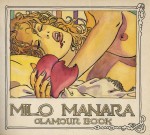
Milo Manara Glamour Books 1 & 2


Edited by Vincenzo Mollica & Antonio Vianovi (Glamour International Productions)
No ISBNs

For some folks the graphic arts collections under review here will be unacceptably violent and/or dirty. If that’s you, please stop here and come back tomorrow when there will something you’ll approve of but which will certainly offend somebody else.

Maurilio Manara was born on September 12th 1945 and grew into an intellectual, whimsical craftsman with a dazzling array of artistic skills ranging from architecture, product design, sumptuous painting and of course an elegant, refined, clear-clean line style with pen and ink. He is best known for his wry and always controversial sexually explicit material – although that’s more an indicator of our comics market and sad straitened society than any artistic obsession.

His training was in the classical arts of painting and architecture before succumbing to the lure of comics. In 1969, he started his career in sexy horror strips with the Fumetti Neri series Genius, worked on the magazine Terror and in 1971 began his adult career  illustrating Francisco Rubino’s Jolanda de Almaviva. In 1975 his first major work, a reworking of the Chinese tales of the Monkey King, was released as Lo Scimmiotto (The Ape).

By the end of the seventies he was working for Franco-Belgian markets as an A-list creator. It was while creating material for Charlie Mensuel, Pilote and L’Écho des savanes that he created his signature series HP and Giuseppe Bergman for A Suivre.

As the 80’s staggered to a close he wrote and drew, in his characteristic blend of bawdy burlesque and saucy slapstick, increasingly smart if eccentrically satirical and baroque tales during a devastatingly penetrating assault on modern media and bastardized popular culture; which were increasingly being used at that time to cloak capitalist intrusions and commercial seductions in the arts.

All of these periods are strongly represented in the books under review here. In 1984 and 1985 the Italian outfit which produced Popular Arts magazine Glamour Illustrated released a brace of fabulous art-books collecting and cataloguing the extant works of this maestro of mature modern sequential narrative (covering 1967 – 1985) which had limited distribution in Britain – despite the best efforts of specialist importer Titan Distributors – and these tomes are long past due for revision and reissuing…

These glorious compilations, 144 and 84 pages respectively (many of them full-colour high-gloss inserts), simultaneously transcribed in Italian, French and English, track the artistic development and display the incredible ability and versatility of an incomparable graphic stylist, with Milo Manara Glamour Book divided into early and ‘Unpublished Works’, ‘Black and White’ – printed pieces and extracts ranging from comics pages and panels, pin-ups, ads, illustrations, posters and covers – and concluding with erotic works dubbed ‘Nubinlove’.

The extensive central ‘Colour’ section reveals, in stunning glossy hues, his canon of covers for comics, magazines, books and records; posters, cartoons, animation model sheets and storyboards and paintings, plus many pages and extracts from his strips produced in Italy, France and America.

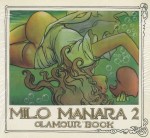
Milo Manara 2 Glamour Book was rushed out a year later due to immense public demand and, although finding a few delicious historical nuggets omitted from volume 1, concentrated on recently completed material, unseen sketches and draught drawings in its ‘Unpublished Works’ and ‘Black and White’ sections and included a ton of storyboards and design illustrations from the movie adaptation of his infamous sex-comedy ‘Le déclic’ both in monochrome and full colour, in a section which also displayed book, portfolio and magazine covers, calendar illustrations and advertising spreads.

Both collections also contain impressively comprehensive checklists which detail in full Manara’s vast publication record to date in their ‘Chronology’ and ‘Bibliography’ sections.

As you would expect there is a breathtaking amount of beautifully rendered flesh on display in an unrelenting series of lascivious situations but there is also a welcome glimpse into the scrupulous working practice of an artist equally renowned for his historical research and devotion to historical accuracy and authenticity… and his wickedly sly, dry sense of humour.

Milo Manara is a world class storyteller that English speakers have too long been deprived of and these beautiful books are desperately in need of updating and re-release, if only to supplement Dark Horse’s sterling efforts to popularise the Maestro through their Manara Library project…
No copyright notice so let’s assume © 1967-1986 Milo Manara. All Rights Reserved. If anybody knows better please let me know and we’ll amend the entry.