Walt Disney’s Mickey Mouse: The Greatest Adventures


By Floyd Gottfredson, with Walt Disney, Bill Walsh, Merrill de Maris, Bill Wright, Win Smith, Jack King, Roy Nelson, Hardie Gramatky, Ted Thwaites, Daan Jippes, David Gerstein & various (Fantagraphics Books)
ISBN: 978-1-68396-122-2 (HB) eISBN: 978-1-68396-225-0

Win’s Christmas Gift Recommendation: It Ain’t Christmas if it Ain’t Disney… 10/10

Created by Walt Disney and Ub Iwerks, Mickey Mouse was first seen – if not heard – in the silent cartoon Plane Crazy. The animated short fared poorly in a May 1928 test screening and was promptly shelved.

That’s why most people who care cite Steamboat Willie – the fourth completed Mickey feature – as the debut of the mascot mouse and his co-star and paramour Minnie Mouse since it was the first to be nationally distributed, as well as the first animated feature with synchronised sound. The film’s astounding success led to the subsequent rapid release of its fully completed predecessors Plane Crazy, The Gallopin’ Gaucho and The Barn Dance, once they too had been given new-fangled soundtracks.

From those timid beginnings grew an immense fantasy empire, but film was not the only way Disney conquered hearts and minds. With Mickey a certified solid gold sensation, the mighty mouse was considered a hot property and soon invaded America’s most powerful and pervasive entertainment medium: comic strips…

Floyd Gottfredson was a cartooning pathfinder who started out as just another warm body in the Disney Studio animation factory who slipped sideways into graphic narrative and evolved into a pictorial narrative ground-breaker as influential as George Herriman, Winsor McCay or Elzie Segar. Gottfredson’s Mickey Mouse entertained millions of eagerly enthralled readers and shaped the very way comics worked.

He took a wildly anarchic animated rodent from slapstick beginnings, via some of the earliest adventure continuities in comics history: transforming a feisty everyman underdog – or rather mouse – into a crimebuster, detective, explorer, lover, aviator or cowboy, the quintessential two-fisted hero whenever necessity demanded.

In later years, as tastes – and syndicate policy – changed, Gottfredson steered that self-same wandering warrior into a more sedate, gently suburbanised lifestyle via crafty sitcom gags suited to a newly middle-class America: a fifty-year career generating some of the most engrossing continuities the comics industry has ever enjoyed.

Arthur Floyd Gottfredson was born in 1905 in Kaysville, Utah, one of eight siblings born to a Mormon family of Danish extraction. Injured in a youthful hunting accident, Floyd whiled away a long recuperation drawing and studying cartoon correspondence courses, and by the 1920s had turned professional, selling cartoons and commercial art to local trade magazines and Big City newspaper the Salt Lake City Telegram.

In 1928 he and his wife moved to California and, after a shaky start, found work in April 1929 as an in-betweener at the burgeoning Walt Disney Studios. Just as the Great Depression hit, he was personally asked by Disney to take over the newborn yet ailing Mickey Mouse newspaper strip. Gottfredson would plot, draw and frequently script the strip for the next five decades: an incredible accomplishment by of one of comics’ most gifted exponents.

Veteran animator Ub Iwerks had initiated the print feature with Disney himself contributing, before artist Win Smith was brought in. The nascent strip was plagued with problems and young Gottfredson was only supposed to pitch in until a regular creator could be found.

Floyd’s first effort saw print on May 5th 1930 (his 25th birthday) and he just kept going: an uninterrupted run over the next half century.

On January 17th 1932, Gottfredson created the first colour Sunday page, which he also handled until retirement. In the beginning he did everything, but in 1934 Gottfredson relinquished the scripting, preferring plotting and illustrating adventures to playing about with dialogue. His eventual collaborating wordsmiths included Ted Osborne, Merrill De Maris, Dick Shaw, Bill Walsh, Roy Williams and Del Connell. At the start and in the manner of a filmic studio system, Floyd briefly used inkers such as Ted Thwaites, Earl Duvall and Al Taliaferro, but by 1943 had taken on full art chores.

This tremendous archival hardback compendium (185 x 282 mm but also available in digital editions) gathers and remasters in colour a superb selection of those daily delights, stuffed with thrills, spills and chills, whacky races, bizarre situations, fantastic fights and a glorious superabundance of rapid-fire sight-gags and verbal by-play: an unmissable journey of fabulous cartoon fun.

And I’m sure I don’t need to remind you that this stuff can be deemed “dated content”: created from times when cartoon violence, smoking, drinking and ethnic stereotyping were everyday occurrences, so please read this with that in mind or not at all…

The manner in which Mickey became a syndicated star is covered by editor, savant, truly dedicated, clearly devoted fan David Gerstein in bookend articles at the front and back of this sturdy tome, opening with Floyd Gottfredson: Walt Disney’s Mouse Man and ending with Mickey Mouse: The Hero before the comic capers commence with legendary yarn Mickey Mouse in Death Valley’ which ran from April 1st – September 22nd 1930.

Initially the strip was treated like an animated feature, with diverse hands working under a “director” and each day seen as a full gag with set-up, delivery and a punchline, usually all in service to an umbrella story or theme. Such was the format Gottfredson inherited from Walt Disney for his first full yarn.

The saga was further complicated by an urgent “request” from controlling syndicate King Features that the strip be immediately made more adventure-oriented to compete with the latest trend in comics: action-packed continuities…

Also roped in to provide additional art and inking to the raucous, rambunctious rambling saga were Win Smith, Jack King, Roy Nelson & Hardie Gramatky. The resulting saga – coloured by Scott Rockwell & Susan Daigle-Leach – involved a picaresque and frequently deadly journey way out west to save Minnie’s inheritance – a lost mine – from conniving lawyer Sylvester Shyster and his vile and violent crony Pegleg Pete, whom Mickey and his aggrieved companion chased across America by every conveyance imaginable, aided by masked mystery man The Fox while facing every possible peril as immortalised by silent movie westerns, melodramas and comedies…

With cameos throughout from Horace Horsecollar, Clarabelle Cow, goat-horned Mr. Butt and a prototype Goofy who used to answer – if he felt like it – to the moniker Dippy Dog, we pause to share specially commissioned Illustrations by Gottfredson – a promotional pic and photos of tough guy pal Butch – before moving on to ‘The Picnic’ (crafted by Gottfredson, Earl Duvall & Travis Seitler and coloured by Rick Keane; originally running from January 5th to 10th 1931): a hopefully bucolic moment plagued by natural catastrophe, after which bold deeds are required for exploring the ‘Island in the Sky’ (November 30th 1936 to April 3rd 1937 by Gottfredson, Ted Thwaites, Michel Nadorp, Erik Rosengarten, & Disney Italia).

Having secured a cash reward for capturing a band of smugglers, Mickey and Goofy buy an airplane and become aviators: a plot device that affords plenty of daily gags before one flight brings them into aerial contact with the flying automobile of a mystery scientist. After much detecting and pursuit, they find the floating fortress of reclusive super-genius Doctor Einmug

and soon learn that he’s also being approached – if not outright menaced – by villainous Pegleg Pete. The dyed-in-the-wool thug is acting as the agent of a foreign power, seeking the astonishing secret and unlimited power of “aligned atoms” that fuels Einmug’s aerial miracles, trying everything from bribery to coercion to feigned reformation and – when those fail – good old reliable theft and violence…

Naturally, none of that means anything to the indomitable Mouse…

Appended by Gottfredson’s painting Mickey Mouse on Sky Island and a mini-feature on personalised birthday and anniversary commissions, the cloud-busting crime-caper is followed by a baffling mystery as ‘The Gleam’ (January 19th – May 2nd, 1942 by Gottfredson, Merrill de Maris, Bill Wright, Daan Jippes, Seitler, Gerstein & Daigle-Leach) sees Mickey, Minnie and Goofy plagued by a diabolical hypnotist who plunders Mouseton High Society types at will, and even embroils Minnie’s unwelcome visiting parents in his crimes before our heroes finally bring him to justice. It’s followed by the cover of 1949’s Big Little Book #1464: a modified version of the tale behind a cover by an artist unknown.

Gottfredson, Bill Walsh, Wright, Gerstein & Disney Italia then detail a string of interlinked gags comprising a burst of DIY invention resulting in ‘Mickey Mouse and Goofy’s Rocket’ (September 9th – 21st 1946), before Gottfredson, Walsh, Pierre Nicolas, Gerstein & Digikore Studios resort to full on sci fi as ‘The Atombrella and the Rhyming Man’ (April 30thOctober 9th 1948) finds occasional visitor from 2447 AD Eega Beeva, popping back for fun and a spot of inventing. Most of his whacky gadgets are generally harmless, but when he tinkers up a handheld defence against physical attack which repels everything from pie to nuclear weapons, word gets around fast and some very shifty characters start inviting themselves in. When juvenile genius Dr. Koppenhooper, an unlovely femme fatale and a poetic superspy get involved, things go from bad to calamitous…

The friendly future-man appeared in many commercial commissions. After the brace of monochrome samples reprinted here – courtesy of  Gottfredson – the manic menu of Mouse Masterpieces concludes with ‘Mickey’s Dangerous Double’(March 2nd – June 20th 1953 by Gottfredson, Walsh, Jippes, Paul Baresh, Gerstein & Disney Italia) as a devious “evil twin” trashes his reputation and destroys all his friendships before scapegoating him for a string of crimes in a gleeful but paranoia-inducing tale. Of course, in the end the ingenuity of the original and genuine article wins through but only after a truly spectacular battle…

Gottfredson’s influence on not just the Disney canon but sequential graphic narrative itself is inestimable: he was among the first to produce long continuities and “straight” adventures; he pioneered team-ups and invented some of the first “super-villains” in the business.

Disney killed the continuities in 1955, dictating that henceforth strips would only contain one-off gag strips, and Gottfredson adapted seamlessly, working on until retirement in 1975. His last daily appeared on November 15th and the final Sunday strip on September 19th 1976.

Like all Disney creators Gottfredson worked in utter anonymity, but in the 1960s his identity was revealed and the voluble appreciation of his previously unsuspected horde of devotees led to interviews, overviews and public appearances, with effect that subsequent reprinting in books, comics and albums carried a credit for the quiet, reserved master. Floyd Gottfredson died in July 1986. Thankfully we have this wealth of his works to enjoy and inspire us and hopefully a whole new generation of inveterate tale-tellers…
Mickey Mouse: The Greatest Adventures © 2018 Disney Enterprises, Inc. All contents © 2018 Disney Enterprises, Inc. unless otherwise noted. “Floyd Gottfredson: Walt Disney’s Mouse Man” and “Mickey Mouse: The Hero” texts © 2018 David Gerstein. All rights reserved.
A Sea of Love


By Wilfrid Lupano & Grégory Panaccione (Lion Forge/The Magnetic Collection)
ISBN: 978-1-942367-45-1 (HB)

Win’s Christmas Gift Recommendation: Because Words Just Aren’t Enough… 10/10

The sheer breadth, variety and creative ambition of comics holds me breathless sometimes. It feels like there’s no subject or blend thereof; no tone or trope; no limits and absolutely no style or admixture that talented individuals can’t turn into heartrending, hilarious, thrilling, educational, evocative, uplifting and/or infuriating stories.

This completely silent saga from prolific French writer Wilfrid Lupano (Old Geezers; Azimut; Blanc Autour; Le Loup; Valerian spin-off Shingouzlooz Inc. and many more) and illustrator Grégory Panaccione (Someone to Talk To; Toby Mon Ami; Match; Âme perdue) somehow offers all of those in one delicious hardback or digital package.

Originally seen au continent as Un Océan d’amour in 2014, this wordless yet universally comprehensible pantomime is an unforgettable saga celebrating the timeless resilience of mature love. Here it is craftily concealed but constantly displayed in a tale of tetchy devotion between an aged diminutive fisherman and his quiet, timid, overly-flappable but formidably indomitable wife.

Every morning before the sun lights their rustic hovel, she makes him a wonderful breakfast before he heads out into the big ocean in his little boat. They have their fractious moments and he can be a trial sometimes, but their relationship is rock solid and never-ending.

This particular morning, however, the old coot finally falls foul of a changing world, when his little vessel is snagged in the nets of a vast trawler factory ship. Saving his idiot apprentice, the old git is soon swallowed up and gone…

At least, that’s what the sole survivor believes when he washes up ashore. However, the matronly fresh widow refuses to accept that and – disregarding decades of homey domestic programming – goes looking for him.

Oh, the incredible adventures she has and the people she meets…

He, meanwhile, is still very much alive. Stranded on his little tub, with nothing but tinned sardines and memories to sustain him, he is washed uncontrollably across the world. Befriended by a sardine-loving gull, he experiences first hand and close up the way we’ve befouled the seas and meets a wide variety of people he’s casually misjudged all his life, before eventually fighting his way back to his little cottage and the faithful one who’s waiting for him. At least, he complacently assumed she is…

Epic, hilarious, terrifying, shocking and sublimely satisfying, this is masterpiece of graphic narrative with so very much to say. Why not give your eyes a treat and have a good listen?
A Sea of Love © 2018 Editions Delcourt. All rights reserved.

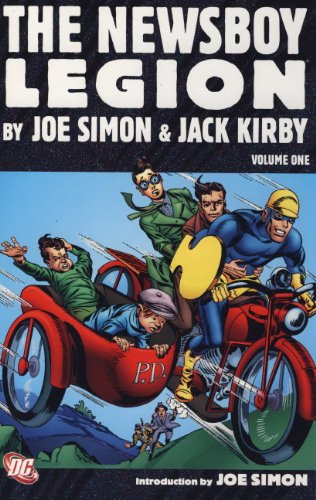
The Sandman by Joe Simon and Jack Kirby


By Joe Simon & Jack Kirby, with Mike Royer & others (DC Comics)
ISBN: 978-1-4012-2299-4 (HB)

In the early days of the American comicbook the fledgling industry was awash with chancers, double-dealers, slick operators and outright crooks. Many creative types fell foul of this publishing free-for-all but a rare few took to the cut and thrust and managed not only to survive but also to prosper.

Just as the Golden Age of comics was beginning, two young men with big hopes met up and began a decades-long association that was always intensely creative, immensely productive and spectacularly in tune with popular tastes. Joe Simon was a sharp-minded, talented young man with 5 years’ experience in “real” publishing, working from the bottom up to art director on a succession of small papers such as the Rochester Journal American, Syracuse Herald and Syracuse Journal American before moving to New York City and a life of freelancing as an art/photo retoucher and illustrator. Recommended by his boss, Simon joined Lloyd Jacquet’s pioneering Funnies Inc., a comics production “shop” generating strips and characters for a number of publishing houses eager to cash in on the success of Action Comics and its stellar attraction Superman.

Within days Simon created The Fiery Mask for Martin Goodman of Timely Comics (now Marvel) and met young Jacob Kurtzberg, a cartoonist and animator just hitting his stride with the Blue Beetle for the Fox Feature Syndicate.

Together Simon and Kurtzberg (who went through a legion of pen-names before settling on Jack Kirby) enjoyed a stunning creative empathy and synergy which galvanized an already electric neo-industry with a vast catalogue of features and even sub-genres. They produced the influential Blue Bolt, Captain Marvel Adventures (#1) and, when Martin Goodman made Simon the editor of Timely, created a host of iconic characters such as Red Raven, the first Marvel Boy, The Vision, Young Allies and of course million-selling mega-hit Captain America.

Famed for his larger than life characters and colossal cosmic imaginings, “King” Kirby was an astute, spiritual hard-working family man who lived through poverty, gangsterism, the Depression and World War II. He had seen Post-War optimism, Cold War paranoia, political cynicism and the birth and death of peace-seeking counter-cultures. He was open-minded, always saw the best in people and was utterly wedded to the making of comics stories on every imaginable subject.

When Goodman failed to make good on his financial obligations, Simon & Kirby jumped ship to National/DC, who welcomed them with open arms and a big chequebook. Initially an uncomfortable fit, bursting with ideas the company were not comfortable with, the pair were handed two strips languishing in the doldrums, to tide them over until they found their creative feet.

Settled and left to their own devices, they consolidated their “Kid Gang” genre innovation with The Newsboy Legion(and super-heroic mentor The Guardian) and a unique international army – The Boy Commandos – who shared the spotlight with Batman in Detective Comics (and whose own solo title became frequently the company’s third best seller).

Those moribund strips they were first unleashed upon were a big game hunter feature called Paul Kirk, Manhunter, which they overnight turned into a darkly manic, vengeful superhero strip, and one of comics’ first masked mystery-men – The Sandman.

This superb hardback collection – also available in digital editions – reprints all the S&K tales, including covers produced for issues they didn’t craft; lost art pages, original art reproductions as well as informative text articles from Kirby historian John Morrow and writer Mark Evanier. It even includes Simon & Kirby’s reunion reinvention of Sandman from 1974 (which in turn spawned one of Kirby’s last series for DC).

Created by Gardner Fox and first illustrated by Bert Christman, the Sandman premiered in either Adventure Comics#40 July 1939 (two months after Batman debuted in Detective Comics #27) or two weeks earlier in New York World’s Fair Comics 1939, depending on whether some rather spotty distribution records can be believed.

Face utterly obscured by a gasmask, caped and business-suited millionaire adventurer Wesley Dodds wielded a sleeping-gas gun to battle a string of crooks and spies, accompanied by his paramour Dian Belmont, before gradually losing the readers’ interest and slipping from cover-spot to last feature in Adventure Comics, just as the cloaked pulp-hero avengers he emulated slipped from popularity in favour of more flamboyant fictional fare.

Possessing a certain indefinable style, eerie charm but definitely no pizzazz, the feature was on the verge of being dropped when he abruptly switched to a skintight yellow and purple costume, complete with billowing cape. He also gained a teenaged sidekick in Sandy the Golden Boy (Adventure Comics #69, December 1941, by Mort Weisinger & Paul Norris), presumably to move closer to the overwhelmingly successful Batman model.

It didn’t help much.

So, when Simon & Kirby came aboard with #72, the little banner above the logo on the Jack Burnley Starman cover gave no hint of the pulse-pounding change that had occurred. ‘Riddle of the Slave Market’ saw a sleek, dynamic pair of gleaming golden lions explode across 11 pages of graphic fury as the Sandman – sans daft cape – crushed a white-collar criminal with a nasty line in illicit indentured servitude. Moreover, the character had overnight acquired his unique gimmick: Sandman’s crusades against crime were presaged by the perpetrator suffering nightmares of imminent retribution…

This semi-supernatural element and fascination with the world of dreams (revisited by S&K a decade later in their short-lived experimental suspense series The Strange World of Your Dreams) added a conceptual punch to equal the kinetic fury of their art, and when #73 (with S&K’s Manhunter now hogging the cover) Sandman strip ‘Bells of Madness!’ramped up the tension with another spectacular action epic wherein the Dream Warriors expose a cunning murder plot.

With Adventure #74 Sandman and Sandy took back the cover spot (only their third since #51), keeping it until the feature ended. Only once did Sandman not appear on the cover – #99: another S&K Manhunter classic. From #103 the magazine underwent a complete overhaul with new feature Superboy headlining established regulars Green Arrow, Aquaman, Shining Knight and Johnny Quick parachuted in from other magazines.

The story in #74 was an eerie instant classic: ‘The Man Who Knew All the Answers’ was a small-town professor who artificially increased his intellect – but not his ethics. When his perfectly planned crimes bring him into conflict with the heroes, it proves that his brain enhancer did nothing for common sense either.

‘The Villain From Valhalla!’ (Adventure Comics #75 June 1942) pits the galvanic heroes against a hammer-wielding Norse god in a cataclysmic Battle Royale, followed here by an equally astounding clash with sinister floral villain Nightshade. ‘The Adventure of the Magic Forest’ stemmed from World’s Finest Comics #6 (Summer 1942), one of two S&K exploits in that legendary anthology.

Sandman was also a founding member of the Justice Society of America, appearing in many issues of All-Star Comics. A number of the pertinent chapters were also generated by Joe & Jack, but are sadly not included in this otherwise comprehensive compendium: completists will need to track down the superb All-Star Archives (volumes 4 and 5) for those dynamic classics.

Adventure #76 again heavily emphasised foreboding oneiric elements in ‘Mr. Noah Raids the Town!’ as a soothsaying mastermind unleashes preposterously intelligent animals to steal and kill, whilst #77’s ‘Dreams of Doom!’ finds an innocent man plagued by nightmares and compelled to solicit the aid of the Master of Dreams… and only just in time!

A sinister Swami is exposed in ‘The Miracle Maker!’ before the final World’s Finest guest-shot (#7, Fall 1942) dips heavily into exotic fantasy for ‘A Modern Arabian Nightmare!’ Adventure #79 then bangs the patriotic drum in eerie temporal-trap mystery ‘Footprints in the Sands of Time!’

It’s back to thrill-a-minute manic crime mayhem in #80’s ‘The Man Who Couldn’t Sleep!’, but ‘A Drama in Dreams’presents a baffling conundrum for Sandy to solve alone, after which the creators indulge in some seasonal shocks in madcap Yule yarn ‘Santa Fronts for the Mob.’

Issue #83 led with a blockbusting boxing romance as the heroes aid ‘The Lady and the Champ!’ while including a gloriously over-the-top Boy Commandos ad featuring Hitler, Mussolini and Tojo as only Jack and Joe could defame them. Next comes a gloriously Grand Guignol saga – ‘Crime Carnival’ and delightfully wry romp ‘The Unholy Dreams of Gentleman Jack’, before S&K return to a favourite theme of childhood poverty in ‘The Boy Who Was Too Big for his Breeches.’

The war was progressing and soon both Joe and Jack would be full-time servicemen, so perhaps the increasingly humanistic tales of their latter run were only to be expected. The shift in emphasis certainly didn’t affect the quality of such gems as ‘I Hated the Sandman!’ from #87 wherein narcoleptic Silas Pettigrew learns a salutary lesson, or heartwarming, exuberant childhood fantasy ‘The Cruise of the Crescent’, whilst #89’s kidnap drama ‘Prisoner of his Dreams’ and the boisterous ‘Sleepy Time Crimes!’ proved that whatever else happened, action and excitement would always series watchwords.

In the months prior to their induction, Simon & Kirby went into overdrive, building up a vast reserve of inventory stories for their strip commitments, but even so relentless publishing deadlines soon ate them up. Adventure Comics #91 featured the last S&K yarn for a year and a half, long after Kirby had shipped out to fight in Europe and Simon had begun his service with the US Coast Guard.

‘Courage a La Carte’ has precious little – if indeed any – Kirby art in it, but is nonetheless a sterling saga of malice unmasked and justice triumphant, after which only the covers of Adventure #92-97 kept the artist’s light burning in the heart of fans.

The star creators returned for issue #100 (October/November 1945) with tempestuous crime caper ‘Sweets for Swag!’, the cover of #101and again inside #102 with swansong drama ‘The Dream of Peter Green!’, as Sandman and Sandy expose shoddy dealings in city contracting before ensuring ghetto kids had decent playgrounds to grow fit and healthy in.

National Comics was no longer a welcoming place for the reunited duo. By 1947 they formed their own studio, beginning a long and productive relationship with Harvey Comics (Stuntman, Boy’s Ranch, Captain 3-D, Lancelot Strong: The Shield, The Fly, The Three Rocketeers and others) and created a stunning variety of genre features for Crestwood/Pines (supplied by their Essankay/Mainline studio shop). These included Justice Traps the Guilty, Black Magic, Fighting American, Bullseye, Foxhole and landmark innovation Young Romance amongst many more (see the superb Best of Simon and Kirby for a salient selection of these classic creations).

As comics went through bad times the pair eventually went their separate ways but were reunited for one last hurrah in 1974 whilst both working once more for DC. The result was a re-imagined Sandman: now a fully fantastic scientific master of the metaphysical, policing the nightmares of humanity from a citadel deep in “The Dream-Stream.”

‘The Sandman’ (scripted by Joe, drawn/edited by Jack and inked by Mike Royer) is pure escapist delight, describing how young Jed Paulsen taps into the oneiric horrors of villainous cybrid General Electric as he attempts to conquer the World of Our Dreams. When all hope seems exhausted, Jed is rescued and befriended by the omniscient Lord of Sleep and his ghastly assistants Brute and Glob…

This rambunctious romp is a great place to end our volume but since six further adventures of this Weaver of Dreams were completed (albeit with no Simon and varying degrees of Kirby) perhaps one day they too will make the jump to graphic novel immortality…

After years of neglect the glorious wealth of Kirby material available these days is a true testament to his influence and legacy, so this magnificent collection of his collaborations with fellow pioneer Joe Simon is a gigantic box of delights perfectly illustrating the depth, scope and sheer thundering joy of the early days of comics: something no amount of corporate shoddy behaviour can ever diminish.
© 1942, 1943, 1944, 1945, 1946, 1974, 2009 DC Comics. All Rights Reserved.

Pep Digital #22: Arrrchie’s Buried Treasure


By George Gladir, Dan Parent, Fernando Ruiz, Kathleen Webb, Bob Bolling, Mike Pellowski, Angelo DeCesare,Rex Lindsey, Dan DeCarlo, Henry Scarpelli, Jeff Shultz, Dexter Taylor, Pat Kennedy & various (Archie Comics)
No ISBN: digital only

Since his debut in Pep Comics #22 (cover-dated December 1941) Archie Andrews has epitomised good, safe, wholesome cartoon fun, but the company that now bears his name has always been a deviously subversive one. Family-friendly iterations of superheroes, spooky chills, sci fi thrills, licensed properties and genre yarns of every stripe have always been as much a part of the publisher’s varied portfolio as the romantic comedy capers of America’s clean-cut teens.

As initially realised by John L. Goldwater and Bob Montana, the first escapade set the scene and ground rules for decades to come Archie has spent his entire existence chasing both the gloriously attainable Betty Cooper and wildly out-of-his-league debutante Veronica Lodge, whilst best friend Jughead Jones alternately mocked and abetted his romantic endeavours and class rival Reggie Mantle sought to scuttle every move…

Crafted over time by a veritable legion of writers and artists who’ve skilfully created the stories of teenage antics in and around the idyllic, utopian small town of Riverdale, these timeless tales of decent, upstanding, fun-loving kids have captivated successive generations of readers and entertained millions worldwide both on comic pages and in other media such as film, television, radio, newspaper strips, music and even fast food.

To keep all that accumulated attention riveted, the company has always capitalised on contemporary trends with which to expand upon their archetypal storytelling brief. In times past they have cross-fertilised their stable of stars through unlikely team-ups like Archie Vs. Predator, whilst every type of fashion fad and youth culture sensation has invariably been incorporated and explored within the pages of the regular titles. The gang has been reinvented and remodelled numerous times, even stepping outside the parameters of broad comedy to offer dramatic – albeit light-hearted – “real-world” iterations of the immortal cast of characters and clowns…

The company the idiot built is celebrating a major anniversary this December, so here’s a chance to revel in Archie’s unique madness with a bucket of yarns primarily sparked by the Pirates of the Caribbean franchise, but which also finds room for a few golden oldies and classic romps on the theme of Corsairs and Privateers. This lot are all electronically cached by pirates of the airwaves commandeering a little of your time and attention for a digital-only experience. Enjoy International Talk Like a Pirate Day 2021, me buckos…

The madness begins without fanfare as the gang all go Gung Ho for the latest movie fad: dressing up for film fun and daydreaming personal period peril in ‘Pirates Ahoy’ as originally seen in Archie & Friends #87 (February 2005) courtesy of George Gladir, Rex Lindsey & Rich Koslowski.

Veronica #171 (August 2006) featured ‘One Man’s Treasure’ by Dan Parent & Jim Amash, with the star stuck rich kid finding actual buried (and cursed) loot on a film shoot but caring only about impressing hot star Johnny Dredge. Boy, does she!

‘Treasure Quest’ comes from Tales of Riverdale Digest #9 (April 2006): an Archie & Friends charmer by Fernando Ruiz & Al Nickerson, with Archie and Reggie completely fooled by an advertising flyer that looks like a treasure map. Cue signature chaos and catastrophe…

‘Soul Mates’ from Betty & Veronica #151 (September 2000 by Kathleen Webb, Dan DeCarlo and Henry Scarpelli) then pictures the Caribbean-vacationing teens as freebooting female furies, but still unable to curtail their legendary rivalry.

The Adventures of Little Archie #21 (Winter 1961-1962) then stands and delivers a classic mystery yarn by the brilliant Bob Bolling as ‘Pirates’ sees the mischievous kid exposed to a strange gas carried by an old weirdo on a bus – yes; much, much simpler times – that somehow lands him a stagecoach en route to the 18th century and his own pressganging.

Condemned to be a cabin boy on Blackbeard‘s ship, he is present at the deadly sea battle between the wicked rogue and valiant naval hero Captain Morgan…

Crafted at a time when kids were considered smarter and not made of porcelain, this is a grand romp blending action, suspense and humour in perfect balance, followed by a more modern take as (sadly uncredited) Little Jughead vignette ‘The Mystery Treasure’ from Jughead’s Double Digest #152 (September 2009) sees Arch and his ever hungry pal uncover a haunted chest, whilst Archie Giant Series Magazine #583 (September 1988, by Bolling & Mike Esposito) pits the juvenile lead in solo action against time-travelling arch nemesis Mad Doctor Doom who seeks buried loot from 1743 in ‘Close Scrape in Barnacle Bay’…

‘Treasure Trove’ (Laugh #7, June 1988, by Gladir, Bolling & Esposito) then offers a fantasy lay with The Mighty Archie Art Players re-enacting an undying rivalry between righteous Cap’n Booty (Archie) and piratical Cap’n Skull (Reg) on the high(larious) seas, after which Veronica #180 (July 2007) refocused on romance in ‘An Old Story’ as Ronnie’s bookshop binge unearths a saucy bodice-ripper that sets her imagination racing before ‘Digging for Buried Treasure’ (Betty & Veronica #163, August 2001 by Gladir, DeCarlo & Alison Flood) sees the lasses reminiscing – and speculating – about their childhood games at the beach.

In Betty & Veronica Spectacular #55 (September 2002) Angelo DeCesare, Parent & Jon D’Agostino bring supernatural romance and comedy capers in two-parter ‘Teen Spirit’ as the girls become the obsession of a piratical spook who’s been a horny teen since his death centuries ago. Things turn ugly when he decides to get rid of rivals Archie and Reggie and drastic steps need to be taken…

Archie Comics Digest #235 (August 2007) revisited ‘Pirates Ahoy!’ courtesy of Pellowski, Scarpelli & D’Agostino as another movie (this one starring Jon E. Depth) provokes poolside nightmares for our red rascal, Ronnie enjoys a ‘Treasured Moment’ (Veronica #175, December 2006 by Pellowski, Parent & Amash) after pinch-hitting for Betty and reading pirate stories to little kids. one last brace of gold comes with ‘Festival Time’ (Betty & Veronica #256, December 2011 by Gladir, Jeff Shultz & Amash) as high school eco-club Green Girls organises a fundraiser celebrating women pirates like Annie Bonnie or Ching Shih, only to lose their men to thieving flirty rivals before we hit the far shore with ‘Scene in Public’ (Archie Comics Digest #259, January 2010 by Pellowski, Pat Kennedy & Amash) as Archie, Jughead and Reggie literally patronise a pirate-themed diner on their way to a sporting event in full supporters’ garb…

Daftly delightful, these arrr ideal example of classic comics fun: brilliant gems no Funnybook Fan or Crafty Corsair would care to share. Enjoy your spoils and bask in the knowledge that some treasures can really be yours alone.
© 2012 Archie Comic Publications, Inc. All rights reserved.

Desolation Jones: Made in England


By Warren Ellis & JH Williams III & various (WildStorm)
ISBN: 978-1-4012-1150-9 (TPB)

Los Angeles is a dump and a dumping ground. Personal opinions aside, that’s the premise of this deep, dark espionage thriller from comics wunderscribe Warren Ellis and graphic illuminator JH Williams III. When MI6 screw-up MichaelJones is no longer capable of doing his job, he’s offered a comfy testing role as his ticket out. No-one in their right mind should ever trust security service types, but that’s the point – the burnt out, alcoholic agent just isn’t all that anymore.

After years of unspeakable atrocities ostensibly intended to create better operatives – up to and including the bizarre and inexplicable Desolation Test, the ravaged remains of Michael Jones are consigned to the reservation provided by the West’s Intelligence Agencies for retired, rejected and discarded agents plus all the experiments that didn’t measure up: Los Angeles, USA.

There they can live out their lives as they see fit, but can never, EVER leave the city. There’s no pension scheme but the dregs can do whatever they need to make a living as long as it’s within city limits.

Jones is a mess, both physically and mentally. He can’t drink, won’t sleep and takes too many drugs. He avoids daylight, regularly hallucinates and is numb to all sensation and emotion. In “the Community” he freelances as a private eye/fixer: sorting out problems that can’t be resolved through legitimate methods.

In this first compilation (available in paperback and digital formats and collecting issues #1-6 of the WildStorm comic book) that problem is a retired NSA spook who’s being blackmailed by new members of the Community who have somehow stolen the Holy Grail of pornography. The ravaged Colonel Nigh wants Adolf Hitler‘s homemade porno back and will do anything to get it. Unfortunately, so will all the other filthy rich deviants who populate Tinseltown.

However, something just isn’t right. Jones may not feel, but something deeper is hiding behind all the subterfuge and depravity…

Sardonic and rather bleak, this caustic, tension-soaked, trauma-packed action caper dwells on the nasty side of the espionage genre: a thriller with plenty of twists and a solid mystery to intrigue the most jaded reader. The content is strictly adults only – and by that, I mean that the subtext of duty, love and honour are assaults on the traditions of the hero-spy in as brutal a manner as the sex and violence underscore the dark side of the American Dream-town.

This is a story for cynical adults, not horny kids with appropriate IDs. Great stuff beautifully conceived and magically limned.
© 2005, 2006 Warren Ellis & JH Williams III. All Rights Reserved.

Necromantic


By Lovern Kindzierski, David Ross, Geof Isherwood, Chris Chuckry & Taylor Esposito (Renegade Arts Entertainment)
ISBN: 978-1-98890-369-9 (TPB) eISBN: 978-1-98890-373-6

Real and fictionalised espionage tales are equally gripping when done well, and modern drama demands a healthy dose of genre cross-fertilisation. A perfect example catering to modern tastes is this opening salvo from Lovern Kindzierski (author of the Shame trilogies, Underworld, VMT and colourist of most of your favourite US superhero comics) and veteran illustrators David Ross (Star Wars; X-Men; Alpha Flight; Rai) and Geof Isherwood (Suicide Squad; Conan the Barbarian; Silver Surfer; Doctor Strange). In case you’re wondering, the crucial backroom boys here are Chris Chuckry on colours, and Taylor Esposito delivering calligraphic sound, captions and dialogue…

This rowdy, raunchy introductory action-fest reveals a critical turning point in the life of top-gun US Special Forces operative Jesse Harris whose latest successful mission in North Africa is forever blighted in ‘Love’s Labour’s Lost’ after she learns that her beloved Blake Williams has been killed in action.

Harris goes to pieces in ‘Much Ado About Nothing’: not simply from grief and anger, but also because she still sees him. It’s the kind of situation she has secretly endured and ignored since childhood, when she first discovered a facility for seeing and talking to people no one else can see…

Dragged out of shattering despondency by fellow ISA agent Rich Boon, she takes a “soft” mission in Afghanistan, only to find herself dragged to the edge of hell and a bittersweet reunion with Blake. In the course of her duties, she realises the local governor/warlord is a mortal agent of infernal demons pressganging recently deceased human souls into a legion intended to oust the devil, and install a new lord of the Damned. To aid the recruitment program, still-breathing Prince Minyar has bolstered his brutal living forces with rampaging zombies and ruthless killer ghosts only Jesse can perceive…

Facing modern arms and ancient devils revelling in another chance to spill blood, her team are swept away in ‘A Midsummer Night’s Dream’, but Harris gains valuable intel from the King’s vizier – an enslaved spirit determined to end the horrific recruitment program – and eventually a blessed ally when Blake escapes the Pit to render assistance and battle beside her to deliver earth and the afterlife from ‘The Tempest’…

Savage, fast-paced and strictly for adult eyes only, Necromantic is a blockbuster thrill-ride for the action-movie generation and a manic joy for those who still crave their cathartic release in print of digital comics form.
© Lovern Kindzierski and Renegade Arts Canmore Ltd. 2020

Showcase Presents Showcase


By Many and various (DC Comics)
ISBN: 978-1-78116-364-1 (TPB)

If you’re a book reviewer, Christmas often comes incredibly early. We received lots and lots of lovely new tomes in the last week and I’ve still not caught up yet, so in the meantime, I’m fobbing you all off with a reworked recommendation I was saving for our actual Christmas promotion season. It’s still a wonderful read criminally in need of re-release and a digital edition, but readily available – for now…

The review is incredibly long. If you want to skip it and just buy the book – because it’s truly brilliant – then please do. I won’t mind and you won’t regret it at all…

In almost every conceivable way, DC’s original “try-out title” Showcase created and dictated the form of the Silver Age of American comic books and is responsible for the multi-billion-dollar industry and art form we all enjoy today.

For many of us old lags, the Silver Age is the ideal era and a still-calling Promised Land of fun and thrills. Varnished by nostalgia (because it’s the era when most of us caught this crazy childhood bug), the clean-cut, unsophisticated optimism of the late 1950s and early 1960s produced captivating heroes and compelling villains who were still far less terrifying than the Cold War baddies then troubling the grown-ups. The sheer talent and unbridled professionalism of the creators working in that too-briefly revitalised comics world resulted in triumph after triumph and even inspired competitors to step up and excel: all of which brightened our young lives and still glow today with quality and achievement.

The principle was a sound one and graphically depicted in the very first issue: the Editors at National/DC were apparently bombarded with readers’ suggestions for new titles and concepts and the only possible way to feasibly prove which would be popular was to offer test runs and assess fan reactions – for which read Sales…

Firmly ensconced in the age of genre thrillers and human adventurers, this magnificent, monolithic monochrome tome covers the first 21 issues from that historic series, spanning March/April 1956 to July/August 1959, and starts the ball rolling with the first and last appearances of Fireman Farrell in a proposed series dubbed Fire Fighters.

Following the aforementioned short ‘The Story Behind Showcase’ by Jack Schiff & Win Mortimer, the human-scaled dramas begin in ‘The School for Smoke-Eaters’ by Schiff and the superb John Prentice (Rip Kirby), introducing trainee fireman Mike Farrell during the last days of his training and desperate to simultaneously live up to and escape his father’s fabulous record as a legendary “smoke-eater”.

The remaining stories, both scripted by Arnold Drake, deal with the job’s daily dilemmas: firstly in ‘Fire under the Big Top’ wherein an unscrupulous showman ignored Farrell’s Fire Inspection findings with tragic consequences, and in‘Fourth Alarm’ mixing an industrial dispute over fireman’s pay, a crooked factory owner and a waterfront blaze captured on live TV in a blisteringly authentic tale of human heroism.

Showcase #2 featured Kings of the Wild: tales of animal valour imaginatively related in three tales scripted by Robert Kanigher – who had thrived after the demise of superheroes with a range of fantastical genre adventures covering western, war, espionage and straight adventure. Stunningly illustrated by Joe Kubert, ‘Rider of the Winds’ tells of a Native American lad’s relationship with his totem spirit Eagle; ‘Outcast Heroes’ (Ross Andru & Mike Esposito) relates how an orphan boy’s loneliness ends after befriending a runaway mutt who eventually saves the town’s kids from a flood before ‘Runaway Bear’ – drawn by Russ Heath – uses broad comedy to describe how an escaped circus bruin battles all the horrors of the wilderness to get return to his comfortable, safe life under the Big Top.

Issue #3 debuted Kanigher & Heath’s The Frogmen in an extended single tale following candidates for a US Underwater Demolitions Team as they move from students to successful undersea warriors. Beginning with ‘The Making of a Frogman’ as the smallest diver – mocked and chided as a ‘Sardine’ by his fellows (especially ‘Shark’ and ‘Whale’) – perseveres and forges bonds until the trio are dumped into blazing Pacific action in ‘Flying Frogmen’, learning the worth of teamwork and sacrifice by destroying a Japanese Sub base in ‘Silent War’…

The feature returned as a semi-regular strip in All-American Men of War #44 (April #1957) amongst other Kanigher-edited war comics: making Frogmen the first but certainly not the last graduate of the try-out system. The next debut was to be the most successful but the cautious publishers took a long, long time to make it so…

No matter which way you look at it, the Silver Age officially arrived began with The Flash. It’s an unjust but true fact that being first is not enough; it also helps to be best and people have to notice. The Shield beat Captain America to the news-stands by over a year yet the former is all but forgotten today.

The industry had never really stopped trying to revive superheroes when Showcase #4 was released in late summer of 1956, with such precursors as The Avenger (February-September 1955); Captain Flash (November 1954-July 1955); Marvel’s Human Torch, Sub-Mariner and aforementioned Sentinel of Liberty (December 1953-October 1955) and even DC’s own Captain Comet (December 1953-October 1955) and Manhunter from Mars (November 1955 until the close of the 1960’s and almost the end of superheroes again!) still turning up in second-hand-stores and “Five-and-Dime” bargain bins. What made the new Fastest Man Alive stand out and stick was … well, everything!

Once DC’s powers-that-be decided to try superheroes once more, they moved pretty fast themselves. Editor Julie Schwartz asked office partner and Golden-Age Flash scripter Kanigher to recreate a speedster for the Space Age, aided and abetted by Carmine Infantino & Joe Kubert, who had also worked on the previous incarnation.

The new Flash was Barry Allen, a forensic scientist simultaneously struck by lightning and bathed in the exploding chemicals of his lab. Supercharged by the accident, Barry took his superhero identity from a comic book featuring his predecessor (scientist Jay Garrick, who was exposed to the mutagenic fumes of “Hard Water”). Designing a sleek, streamlined bodysuit (courtesy of Infantino – a major talent rapidly approaching his artistic and creative pinnacle), Barry Allen became the point man for the spectacular revival of a genre and the entire industry.

‘Mystery of the Human Thunderbolt’ (Kanigher) and ‘The Man Who Broke the Time Barrier’ (written by the superb John Broome) are polished, coolly sophisticated stories introducing the comfortingly suburban superhero and establishing the broad parameters of his universe. Whether defeating bizarre criminal masterminds such as The Turtle or returning criminal exile Mazdan to his own century, the new Flash was a protagonist of keen insight and sharp wits as well as overwhelming power. Nonetheless the concept was so controversial that despite phenomenal sales, rather than his own series the Fastest Man Alive was given a Showcase encore almost a year later…

Showcase #5 featured the last comics concept in years that didn’t actually develop into an ongoing series, but that’s certainly due to changing fashions of the times and not the quality of the work. The three crime yarns comprising cops-&-robbers anthology Manhunters, begin with ‘The Greatest Villain of all Time’ by Jack Miller & Mort Meskin, revealing how Hollywood screenwriter-turned-police detective Lt. Fowler is dogged by a madman playing for real all the fantastic bad guys the mystery author had once created, whilst ‘The Two Faces of Mr. X’ (Miller, Curt Swan & Sy Barry) finds a male model drafted by the FBI to replace a prominent mob-boss. Unfortunately, it’s the day before the gangster is scheduled for face-changing plastic surgery…

‘The Human Eel’ (Miller & Bill Ely) then pits a cop unable to endure heights against an international high-tech rogue who thinks he hold all the winning cards…

The next try-out was on far firmer fashion grounds and was the first feature to win two issues in a row.

The Challengers of the Unknown were a bridging concept. As the superhero genre was ever so cautiously alpha-tested in 1956 here was a super-team – the first new group-entry of this still-to-be codified era – but with no uncanny abilities or masks, the most basic and utilitarian of costumes, and the most dubious of motives: Suicide by Mystery…

If you wanted to play editorially safe you could argue that were simply another para-military band of adventurers like the long running Blackhawks… but they weren’t.

A huge early hit – winning their own title before The Flash (March 1959) and just two months after Lois Lane (March 1958, although she had been a star in comics since 1938 and even had TV, radio and movie recognition on her side) – the Challs struck a chord resonating for more than a decade before they finally died… only to rise again and yet again. The idea of them was stirring enough, but their initial execution made their success all but inevitable.

Jack Kirby was – and remains – the most important single influence in the history of American comics. There are quite rightly millions of words written about what the man has done and meant, and you should read those if you are at all interested in our medium. When the comic industry suffered a collapse in the mid 1950’s, Kirby briefly returned to DC, crafting genre mystery tales and revitalising the Green Arrow back-up strip whilst creating newspaper strip Sky Masters of the Space Force. He also re-packaged for Showcase an original super-team concept that had been kicking around in his head since he and long-time collaborator Joe Simon had closed their innovative but unfortunate Mainline Comics.

The Challengers of the Unknown were four extraordinary mortals; heroic adventurers and explorers brought together for a radio show who walked away unscathed from a terrible plane crash. Already obviously what we now call “adrenaline junkies”, they decided that since they were all living on borrowed time, they would dedicate what remained of their lives to testing themselves and fate. They would risk their lives for Knowledge and, of course, Justice.

Showcase #6, dated January/February 1957 – which meant it came out in time for Christmas 1956 – introduced pilot Ace Morgan, wrestler Rocky Davis, acrobat Red Ryan and scholarly marine explorer “Prof” Haley in a no-nonsense romp by Kirby, scripter Dave Wood, inkers Marvin Stein and Jack’s wife Roz, before devoting the rest of the issue to a spectacular epic with the doom-chasers hired by duplicitous magician Morelian to open an ancient casque holding otherworldly secrets and powers in ‘The Secrets of the Sorcerer’s Box!’

This story roars along with all the tension and wonder of the B-movie thrillers it emulates, and Kirby’s awesome drawing resonates with power and dynamism as the heroes tackle ancient horrors such as ‘Dragon Seed!’, ‘The Freezing Sun!’ and ‘The Whirling Weaver!’

The fantasy magic continued in the sequel: a science fiction crisis caused when an alliance of Nazi technologies with American criminality unleashes a robotic monster. Scripted by Kirby, ‘Ultivac is Loose!’ (Showcase #7, March/April 1957) introduces quietly capable boffin Dr. June Robbins, who becomes the fifth Challenger at a time when most comic females had returned to a subsidiary status in that so-conservative era.

As her computers predict ‘A Challenger Must Die!’, the lads nevertheless continue to hunt a telepathic, sentient super-robot who inadvertently terrorises ‘The Fearful Millions’ but soon find their sympathies with the tragic artificial intelligence after ‘The Fateful Prediction!’ is fulfilled…

Showcase #8 (June 1957) again featured the Flash, leading with another Kanigher tale – ‘The Secret of the Empty Box’. This perplexing but pedestrian mystery sees Frank Giacoia debut as inker, but the real landmark is Broome’s thriller ‘The Coldest Man on Earth’. With this yarn the author confirmed and consolidated the new phenomenon by introducing the first of a Rogues Gallery of outlandish super-villains. Unlike Golden Age stalwarts, new super-heroes would face predominantly costumed foes rather than thugs and spies. Henceforth, Bad Guys would be as visually arresting and memorable as the champions of justice. Captain Cold would return time and again as pre-eminent Flash Foe and Broome would go on to create every single member of Flash’s classic pantheon of super-villains.

Also included is filler reprint ‘The Race of Wheel and Keel’ by Gardner Fox, Gil Kane & Harry Lazarus, from All-Star Comics #53 (June/July 1950): a true story of how in 1858 a shipping magnate and stagecoach tycoon competed to prove which method of transportation was fastest…

When Lois Lane – arguably the oldest supporting character/star in the Superman mythology if not DC universe – finally received her own shot at a solo title, it was very much on the terms of the times.

I must shamefacedly admit to a deep, nostalgic affection for her bright, breezy, fantastically fun adventures, but as a free-thinking, (nominally) adult liberal of the 21st century I’m astounded now at the jolly, patronising, patriarchally misogynistic attitudes underpinning so many of the stories.

Yes, I’m fully aware that the series was intended for young readers at a time when “dizzy dames” like Lucille Ball or Doris Day played to a popular American stereotype of Woman as jealous minx, silly goose, diffident wife and brood-hungry nester, but asking kids to seriously accept that intelligent, courageous, ambitious, ethical and highly capable females would drop everything they’d worked hard for to lie, cheat, inveigle, manipulate and entrap a man just so that they could cook pot-roast and change super-diapers is just plain crazy and tantamount to child abuse.

I’m just saying…

Showcase #9 (cover-dated July/August 1957) featured Superman’s Girl Friend Lois Lane in three tales by Jerry Coleman, Ruben Moreira & Al Plastino; opening with seminal yarn ‘The Girl in Superman’s Past’ wherein Lois first meets red-headed hussy Lana Lang. The childhood sweetheart of Superboy seems to be a pushy conniving go-getter out to win Lois’ intended at all costs. Naturally Miss Lane invites Miss Lang to stay at her apartment and the grand rivalry is off and running…

‘The New Lois Lane’ aggravatingly saw Lois turn over a new leaf and stop attempting to uncover his secret identity just when Superman actually needs her to do so, and the premier concludes with concussion-induced day-dream ‘Mrs. Superman’ with Lois imagining a life of domestic super-bliss…

The next issue (September/October 1957) offered three more of the same, all illustrated by Wayne Boring & Stan Kaye, beginning with ‘The Jilting of Superman’ – scripted by Otto Binder – wherein the Man of Tomorrow almost falls for an ancient ploy as Lois pretends to marry another man to make the Kryptonian clod realise what she means to him…

‘The Sightless Lois Lane’ by Coleman reveals how a nuclear accident temporarily blinds the journalist, before her unexpected recovery almost exposes Clark Kent‘s secret when he callously changes to Superman in front of the blind girl. Binder delightfully closes the issue with ‘The Forbidden Box from Krypton’: a cache of devices dug up by a Smallville archaeologist originally packed by Jor-El to aid the infant superbaby on Earth. Of course, when Lois opens the chest all she sees is a way to become as powerful as the Man of Steel before becoming addicted to being a super-champion in her own right…

Superman’s Girlfriend Lois Lane launched into her own title scant months later, clearly exactly what the readers wanted…

Showcase #11 (November/December 1957) saw the Challengers return to combat an alien invasion on ‘The Day the Earth Blew Up’, with unique realist Bruno Premiani inking a taut doomsday chiller that keeps readers on the edge of their seats even today. Whilst searching for missing Antarctic explorers the Challs discover an under-ice base where double-brained aliens prepare to explosively alter the mass and gravity of Earth. Although intellectually superior, ‘The Tyrans’are no match for the indomitable human heroes and with their Plan A scotched, resort to brute force and ‘The Thing That Came out of the Sea’, even as Prof scuttles their aquatic ace in the hole with ‘One Minute to Doom’…

By the time of their final Showcase cases (#12, January/February 1958) they had already secured their own title. Here, though, ‘The Menace of the Ancient Vials’ is defused by the usual blend of daredevil heroics and ingenuity (with the wonderful inking of George Klein, not Wally Wood as credited here) as international spy and criminal Karnak steals a clutch of ancient chemical weapons which create giants and ‘The Fire Being!’, summon ‘The Demon from the Depths’and materialise ‘The Deadly Duplicates!’ before the pre-fantastic four put their enemy down.

Flash zipped back in Showcase #13 (March/April 1958) in a brace of tales pencilled by Infantino and inked by Joe Giella. Written by Kanigher, ‘Around the World in 80 Minutes’ follows the Scarlet Speedster as he tackles atomic blackmail in Paris, foils kidnappers and rebuilds a pyramid in Egypt; dismantles an avalanche in Tibet and scuttles a pirate submarine in the Pacific, before Broome’s ‘Master of the Elements’ introduces outlandish chemical criminal Al Desmond who ravages Central City as Mr. Element until the Flash outwits him.

One last try-out issue – inked by Giacoia – cemented the Flash’s future: Showcase #14 (May/June 1958) opens with Kanigher’s eerie ‘Giants of the Time-World!’ as the Fastest Man Alive smashes dimensional barriers to rescue his girlfriend Iris West from uncanny cosmic colossi and stamp out an alien invasion plan, after which Al Desmond returns with an altered M.O. and new identity. Doctor Alchemy‘s discovery of the mystic Philosopher’s Stone makes him ‘The Man who Changed the Earth!’: a stunning yarn and worthy effort to bow out on, but it was still nearly a year until the first issue of The Flash finally hit the stands.

To reiterate: Showcase was a try-out comic designed to launch new series and concepts with minimal commitment of publishing resources. If a new character sold well initially, a regular series would follow. The process had been proved with Frogmen, Lois Lane, Challengers of the Unknown and Flash, so Editorial Director Irwin Donenfeld now urged his two Showcase editors to create science fiction heroes to capitalise on the twin zeitgeists of the Space Race and the popular fascination with movie monsters and aliens. Jack Schiff came up with a “masked” crimefighter of the future – who featured in issues #15 and 16 – whilst Julie Schwartz concentrated on the now in the saga of a contemporary Earth explorer catapulted into the most uncharted territory yet imagined.

Showcase #15 (September/October 1958) commenced without fanfare – or origin – the ongoing adventures of Space Ranger – beginning in ‘The Great Plutonium Plot’ (plotted by Gardner Fox, scripted by pulp veteran Edmond Hamilton and illustrated by Bob Brown).

Their hero was in actuality Rick Starr, son of a wealthy interplanetary businessman who – thanks to incredible gadgets and the assistance of shape-shifting alien pal Cryll and capable Girl Friday Myra Mason – spent his free time battling evil and injustice. When Jarko the Jovian space pirate targets only ships carrying the trans-uranic element, Rick suspects a hidden motive. Donning his guise of the Space Ranger, he lays a cunning trap, exposing a hidden mastermind and a deadly ancient device endangering the entire solar system…

From his base in a hollow asteroid, Space Ranger ranges the universe and ‘The Robot Planet’ brings him and his team to Sirius after discovering a diabolical device designed to rip Sol’s planets out of their orbits. At the end of his voyage, Starr discovers a sublime civilisation reduced to cave-dwelling and a mighty computer intelligence intent on controlling the entire universe unless he can stop it…

Issue #16 opened with ‘The Secret of the Space Monster’ (plot by John Forte, scripted by Hamilton, illustrated by Brown) with Rick, Myra and Cryll investigating an impossible void creature and uncovering a band of alien revolutionaries testing novel super-weapons. ‘The Riddle of the Lost Race’ (Fox, Hamilton & Brown) then takes the team on a whistle-stop tour of the Solar system in pursuit of a vicious criminal and hidden treasures of a long-vanished civilisation.

A few months later Space Ranger was transported to science fiction anthology Tales of the Unexpected, beginning with issue #40 (August 1959) to hold the lead and cover spot for a 6-year run…

One of the most compelling and revered stars of those halcyon days was an ordinary Earthman who regularly travelled to another world for spectacular adventures, armed with nothing more than a ray-gun, a jetpack and his own ingenuity. His name was Adam Strange, and like so many of that era’s triumphs, he was the brainchild of Julius Schwartz and his close team of creative stars.

Showcase #17 (November/December 1958) proclaimed Adventures on Other Worlds, courtesy of Gardner Fox, Mike Sekowsky & Bernard Sachs, telling of an archaeologist who, whilst fleeing from enraged natives in Peru, jumps a 25-foot chasm only to be hit by a stray teleport beam from a planet orbiting Alpha Centauri. Rematerialising on another planet filled with giant plants and monsters, he is rescued by a beautiful woman named Alanna who teaches him her language via a cunning contrivance. ‘Secret of the Eternal City!’ reveals Rann is a world recovering from atomic war, and the beam Adam intercepted was in fact a simple flare, one of many sent in an attempt to communicate with other races.

In the four years (Speed of Light, right? As You Know, Bob – Alpha Centauri is about 4.3 light-years from Sol) the Zeta-Flare travelled through space, cosmic radiation converted it into a teleportation beam. Until the radiation drains from his body Strange is a most willing prisoner on a fantastic world of mystery, adventure and romance…

And an incredibly unlucky one apparently, as no sooner has Adam started acclimatising than an alien race The Eternalsinvades, seeking a mineral that grants them immortality. Strange’s courage and sharp wits enable him to defeat the invaders only to have the Zeta radiation finally fade, drawing him home before his adoring Alanna can administer a hero’s reward. Thus was established the principles of this beguiling series. Adam would intercept a Zeta-beam hoping for some time with his alien sweetheart, only to be confronted with a planet-menacing crisis.

The very next of these, ‘The Planet and the Pendulum’ sees him obtain the crimson-and-white spacesuit and weaponry that became his distinctive trademark in a tale of alien invaders attacking a lost colony of Rannians. They reside on planetary neighbour Anthorann – a fact that also introduces the major subplot of Rann’s still-warring city-states, all desperate to progress and all at different stages of recovery and development….

The next issue featured the self-explanatory ‘Invaders from the Atom Universe’ – with sub-atomic marauders displacing the native races until Adam unravels their nefarious plans – and ‘The Dozen Dooms of Adam Strange’, wherein our hero outfoxes the dictator of Dys who plans to invade Alanna’s home-city Rannagar.

With this last story, Sachs was replaced by Joe Giella as inker, although the former did ink Showcase #19’s stunning Gil Kane cover, (March/April 1959) which saw the unwieldy Adventures on Other Worlds title replaced with eponymous logo Adam Strange.

‘Challenge of the Star-Hunter’ and ‘Mystery of the Mental Menace’ are classic puzzle tales wherein the Earthman must outwit a shape-changing alien and an all-powerful energy-being. After so doing, Adam Strange took over the lead spot and cover of anthology comic Mystery in Space with the August issue.

Clearly on a creative high and riding a building wave, Showcase #20 (May/June 1959) introduced Rip Hunter… Time Master and his dauntless crew as Prisoners of 100 Million BC’ (by Jack Miller & Ruben Moreira) in a novel-length introductory escapade seeing the daredevil physicist, his engineer friend Jeff Smith, girlfriend Bonnie Baxter and her little brother Corky travel to the Mesozoic era, unaware they are carrying two criminal stowaways.

Once there, the thugs hi-jack the Time Sphere, holding it hostage until the explorers help them stock up with rare and precious minerals. Reduced to the status of castaways, Rip and his team become ‘The Modern-Day Cavemen’, but when an erupting volcano provokes ‘The Great Beast Stampede’, our dauntless chrononauts finally turn the tables on their abductors…

Miller was always careful to use the best research available, but never afraid to blend historical fact with bold fantasy for Hunter’s escapades, and this volume concludes with an epic follow-up. Illustrated by Sekowsky & Joe Giella, ‘The Secret of the Lost Continent’ (Showcase #21, July/August, 1959,) has the Time Masters jump progressively further back in time in search of Atlantis. Starting with a dramatic meeting with Alexander the Great in 331 BCE, the explorers follow the trail back centuries to ‘The Forbidden Island’ of Aeaea in 700 BCE and uncover the secret of the witch Circe before finally reaching 14,000 BCE and ‘The Doomed Continent’ only to find the legendary pinnacle of early human achievement to be a colony of stranded extraterrestrial refugees…

Rip Hunter would appear twice more in Showcase before winning his own comic. The succeeding months would see the Silver Age truly kick into High Gear with classic launches coming thick and fast…

These stories from a uniquely influential comic book determined the course of the entire American strip culture and for that alone they should be cherished, but the fact they are still some of the most timeless, accessible and entertaining graphic adventures ever produced is a gift that should be celebrated by every fan and casual reader.

Buy this for yourself, get it for your friends and get a spare just because you can…
© 1956, 1957, 1958, 1959, 2012 DC Comics. All Rights Reserved.

SAM volume 1: After Man


By Richard Marazano & Shang Xiao, translated by Jerome Saincantin (Cinebook)
ISBN: 978-1-84918-218-8 (Album PB)

Wow. People really love stories about robots. Well then, here’s another you might want to peruse…

Robots are a beloved theme of fiction, and many stories seem to work on the dichotomy of their innately innocent yet potentially deadly double nature. With elements of Terminator and A Boy and His Dog, here’s one that’s a cut above from French polymath (artist, critic, historian, astrophysicist, politician, and comics author) Richard Marazano (The Chimpanzee Complex; Cuervos; Zarathustra and much more) and Chinese artist, illustrator and animator Shang Xiao (Midsummer Park).

Told in four volumes, Après l’Homme details a heady tale of trust and survival between apparent natural enemies…

It’s just been the End of the World as We Know It, and in the scattered, shattered rubble of our technological advancements gangs of desperate kids forage for food, vitamins and ordnance to help them fend off the robots that have all but eradicated biological life.

Terse flashbacks reveal the armed rebellion of the mechanised realm and how the mostly subterranean youngsters scavenge and scrounge, with roaming mechs hunting them day and night. Tensions are high and emotions fraught, so if someone is a little bit different, negligent or disobedient – like dreamer Ian – it’s a problem for everybody…

Ella looks out for him as much as possible but Ian is destined for doom unless he shapes up…

Sadly, he instead takes a step in the other direction after one dusk raid to the surface sees him instants from annihilation when cornered by a towering killer robot.

Thankfully Russ disables it with his bazooka, but just for a moment there, Ian was sure he had experienced an emotional connection with the droid. It was like it chose not to kill him…

Increasingly obsessed, Ian cannot let the notion go and eventually breaks security to sneak out and examine the remains. They will be easy to find, with the letters SAM boldly painted on the carapace…

When he comes back, it’s all Ella can do to stop the others killing him. Ultimately, though, tempers subside, but Ian has not learned his lesson. After sharing his earliest memories of his father, fleeing and the lucky escape that saved him, the troubled boy seems to buckle down to the basics of survival, but he’s still gripped by crazy notions, like abandoning their tunnels and heading out to the fabled suburbs…

With defiance growing and rebellion brewing, the kids head out on another daylight hunt, but again Ian goes looking for “his” robot. When Ella catches him and starts yelling, they are both targeted by a roving mech, but inexplicably saved by another killer machine: “SAM”!

The victorious monster is badly damaged and as Ella watches in horror, Ian starts repairing it…

When the others find them, more arguing results in Ian getting a deadline: if he can’t make SAM fully operable in two days, he must let them destroy it. The frantic boy stives for the entire time and succeeds, only to pass out at the end. When he wakes and races to the site, the robot has vanished. Bereft and furious, Ian allows Ella to drag him away, but both are unaware that coldly-calculating optic systems are watching them from hiding…

Beguiling and powerfully engaging, this vivid take on an old plot is surprisingly compelling and promises a big payoff in volumes to come.
© Dargaud Paris 2011 by Marazano & Shang. All rights reserved. English translation © 2014 Cinebook Ltd.

Mega Robo Bros: Power Up and Mega Robo Bros: Double Threat


By Neill Cameron with Abby Bulmer & Lisa Murphy (David Fickling Books)
ISBNs: 978-1-78845-200-7 (Power Up PB) and 978-1-78845-232-8 (Double Threat PB)

Just like The Beano, Dandy and other perennial childhood treasures, weekly comic The Phoenix masterfully mixes hilarious comedy with enthralling adventure serials… sometimes in the same scintillating strip. Such I the case here, with the synthetic stars of these superbly remastered compilations: mega-magnificent sci fi frolics packed into full-colour volumes of high-octane comedy-action, with added activity pages to complete your entertainment experience. Everybody strapped in?

Plunging straight into the enchanting immersive experience, we open in a futuristic London on a Monday morning. Alexand his younger brother Freddie have missed the airbus for school and dad has to take them. It’s a uniquely Sharma-family catastrophe…

In most ways the boys are typical: boisterous, fractious kids, always arguing, but devoted to each other and not too bothered that they’re adopted. It’s also no big deal to them that they were created by the mysterious Dr. Roboticus before he vanished and are considered by those in the know as the most powerful robots on Earth.

For now, it’s enough that Mum and Dad love them, even though the Robo Bros are a bit more of a handful than most kids. They live as normal a life as possible; going to school, making friends, putting up with bullies and hating homework: it’s all part of their Mega Robo routine…

This week, though, things are a bit different. On Wednesday the lads meet Baroness Farooq of covert agency R.A.I.D. (Robotics Analysis Intelligence and Defence) who – despite being initially unimpressed – changes her mind after seeing what the lads do to her platoon of Destroyer Mechs – all while between singing rude songs, reading comics and squabbling with each other.

Thursday is even better. As a treat, the entire family goes to Robo World where Freddy rescues a trio of malfunctioning exhibits. The baby triceratops with dog-programming is ok, but the French-speaking deranged ape and gloomily existentialist penguin might be a handful in days to come. …and all because Mum was trying to explain how her sons’ sentience makes them different from other mechanoids…

Friday wasn’t so good. Alex had another one of his nightmares, of the time before they came to live with the Sharmas…

With the scene exquisitely set, the drama kicks into overdrive when a school visit to the museum offers a hidden menace constantly watching the boys an opportunity to create chaos by hacking all the exhibits. Even though Freddy and Alex use all their super-powers to set things right, it takes all of the Baroness’ astounding influence to hush up the incident. They are supposed to be getting as normal a childhood as possible, with friends and family aware that they’re artificial and sentient, but not that they are unstoppable weapons systems. Now some malign force seems determined to “out” the Robo Bros for unspecified but undoubtedly sinister purposes…

Even greater cloaking measures are necessary when the hidden enemy causes a sky-train crash. The boys very publicly prevent a disaster, but even they are starting to realise something big is up. It also confirms that and Mum is a bit extraordinary herself, even before Freddy overhears some disturbing news about another one of Dr. Roboticus’ other creations…

The crisis erupts after Gran takes Alex and Freddy to a Royal Street Party outside Buckingham Palace. When the hidden enemy hacks the giant robot guards and sets them loose on the Queen and her family, the wonder-bots have to save them on live TV beamed around the world. The secret is out…

With the entire world camped outside their quiet little house, Mum has R.A.I.D. restore the Mega Robo Status Quo by building a super-secret tunnel system in the cellar. It’s a big day all around: Farooq is finally convinced that Alex is at last ready to join the agency… after school and on weekends, of course…

Freddy is extremely peeved that that he’s not invited. The Baroness still considers him too young and immature. He soon proves it when Alex becomes a Mega Robo Secret Agent, compelling Freddy to at last confide in dad the real reason he’s acting up. He then has opportunity to redeem himself and save the day when their nemesis makes his move and Alex finds himself completely out of his depth. Then only Freddy can save the day… if anyone can…

Crafted by Neill Cameron (Tamsin of the Deep, How to Make Awesome Comics, Pirates of Pangea), this is an astonishingly engaging tale that rockets along, blending outrageous comedy with warmth, wit and incredible verve. This volume also includes copious files on all the characters and activity features ‘How to Draw Alex’ and ‘How to Draw Freddy’ plus hilarious strip-within-a-strip ‘The World According to Freddy!’.

Alex and Freddy are utterly authentic boys, irrespective of their artificial origins, and their exploits strike exactly the right balance of future shock, family fun and bombastic superhero action to capture readers’ hearts and minds. With the right budget and producer what a movie this would make!


With additional colouring by Abby Bulmer & Lisa Murphy, second volume Mega Robo Bros: Double Threat sees the marvellous metal (and plastic) paladins return to share more of their awesome adventures and growing pains!

It’s still the Future!

In a London much cooler than ours, boisterous, fractious, argumentative, more-or-less typical kids Alex and Freddie are still devoted to each other and not much bothered that they’re adopted, recently became super-secret agents and that almost the entire world knows…

When occasion demands, they undertake missions for Baroness Farooq. They think it’s because they are infinitely smarter and more powerful than the Destroyer Mechs and other man-made minions she employs…

Moreover, Dad might be just be an average old guy, but Mum is a bit extraordinary too…

Life in the Sharma household is pretty normal. Freddie is insufferably exuberant and over-confident whilst Alex is approaching the age when self-doubt and anxiety start kicking in, but mostly it’s their parents’ other robot rescues that are a bit of a trial.

Baby triceratops Trikey with his dog-programming is ok, but French-speaking loony ape Monsieur Gorilla can be mighty confusing. Gloomily annoying, existentialist aquatic fowl Stupid Philosophy Penguin constantly quotes dead philosophers and makes people rapidly consider self-harm or manic mayhem …

Alex is getting a hard time from classmates Mira and Taia. They used to be best friends, but with all his extra-curricular activities, the girls are feeling neglected. Alex’s guilt turns to something far worse on Monday after a heated football match leads bully Jamal to make a startling accusation. But actually, how do we know if Alex is a Boy or a Girl…?

Deeply shaken, the startled hero naturally asks Mum and she’s never been more grateful for a sudden sneaky Surprise Giant Robot Attack that interrupts her answer…

Alex and Freddie are then called in by the Baroness, before jetting over to Aldgate Tube Station to battle a colossal driller-droid. Further investigation leads the lads and a R.A.I.D. science team deep, deep, deep into the abandoned transport tunnels beneath the city….

Here they encounter an army of rejected, rebuilt robots undertaking the bizarre agenda of a crazy bag-lady calling herself The Caretaker. When she abruptly loses control of her precious charges, all Hell breaks loose. During a massive fight, she escapes to an even more secret lair: an ongoing repair project with hidden ramifications that will have dire consequences for the bombastic boys and the entire world…

Freddie experiences Mum’s stern side when she takes him – kicking and screaming – clothes shopping, after which shameful incident, further mortification and emotional distress arrives as the price of fame is fully paid when Prettiest Girl in School Jamila finally notices Alex.

With his shiny head all turned around, he’s in no mood for Freddie’s jealous response: candid home videos posted on VuTube. The elder sibling’s even less chuffed when those postings go mega-viral, drawing some cruel comfort when Freddie’s celebrity bubble inevitably implodes in a most unfortunate manner…

Wrapping up with a spectacular big finish, the kids – and their surprisingly famous mum – are star guests at the massive London Robo Expo. After taking down obnoxious, fame-craving mech-makers Team Robotix in a gladiatorial contest, the lads understandably think the action portion of the entertainment has ended, only to see the Caretaker’s darkest secret burst in with mass-murder in mind…

The huge rampaging robot quickly reinforces all humanity’s fears and anxieties about sentient mechanicals, but as the Mega Robo Bros drive the belligerent Wolfram off, Alex realises with alarm that Mum knows far more about the rogue – and her own “sons” – than she’s ever let on…

Augmented by more character info-files on the players involved; activity features (an extended) ‘How to Draw Freddy’and ‘How to Draw Stupid Philosophy Penguin’ plus even-more outrageous ‘The World According to Freddy!’ strips, this is another exceedingly engaging romp which rockets along like an anti-gravity rollercoaster, blending mirth with warmth, wit and incredible verve. These books offer unmissable excitement for kids of all ages and vintage, and are true “must-have” items.
Text and illustrations © Neill Cameron 2021. All rights reserved.

Both Mega Robo Bros collections will be released on August 5th 2021 and are available for pre-order now.

The Phantom: The Complete Newspaper Dailies volume 1 1936-1937


By Lee Falk & Ray Moore: introduction by Ron Goulart (Hermes Press)
ISBN: 978-1-932563-41-5 (HB)

There are plenty of comics-significant anniversaries this year, and this guy is probably right at the top of the birthday cake.

For such a long-lived, influential series, in terms of compendia or graphic novel collections, The Phantom has been very poorly served by the English language market (except in Australia where he has always been accorded the status of a pop culture god).

Numerous companies have sought to collect the strips – one of the longest continually running adventure serials in publishing history – but in no systematic or chronological order and never with any sustained success. At least the former issue began to be rectified with this initial curated collection from Archival specialists Hermes Press…

This particular edition is a lovely large hardback (albeit also available in digital formats), printed in landscape format, displaying two days strip per page in black and white with ancillary features and articles in dazzling colour where required.

Born Leon Harrison Gross, Lee Falk created the Jungle Avenger at the request of his King Features Syndicate employers who were already making history, public headway and loads of money with his first strip sensation Mandrake the Magician. Although technically not the first ever costumed champion in comics, The Phantom became the prototype paladin to wear a skin-tight body-stocking and the first to have a mask with opaque eye-slits…

The Ghost Who Walks debuted on February 17th 1936 in an extended sequence pitting him against an ancient global confederation of pirates. Falk wrote and drew the daily strip for the first two weeks before handing over illustration to artist Ray Moore. A spectacular and hugely influential Sunday feature began in May 1939.

In a text feature stuffed with sumptuous visual goodies like movie posters; covers for comics, Feature and Little Big Books plus merchandise, Ron Goulart’s eruditely enticing ‘Introduction: Enter the Ghost Who Walks’ tells all you need to know about the character’s creation before the vintage magic begins with ‘Chapter 1: The Singh Brotherhood’.

American adventurer Diane Palmer returns to the USA by sea, carrying a most valuable secret making her the target of mobsters, society ne’er-do-wells and exotic cultists. Thankfully, she seems to have an enigmatic guardian angel who calls himself  “the Phantom”…

As successive attacks and assaults endanger the dashing debutante, she learns that an ancient brotherhood of ruthless piratical thieves wants her secret, but that they have been opposed for centuries by one man…

Kidnapped and held hostage at the bottom of the sea, she is saved by the mystery man who falls in love and eventually shares his incredible history with her…

In the 17th century a British sailor survived an attack by pirates, and – washing ashore on the African coast – swore on the skull of his murdered father to dedicate his life and that of his descendants to destroying all pirates and criminals. The Phantom fights crime and injustice from a base deep in the jungles of Bengali, and throughout Africa is known as the “Ghost Who Walks”.

His unchanging appearance and unswerving war against injustice have led to him being considered an immortal avenger by the credulous and the wicked. Down the decades, one hero after another has fought and died in an unbroken family line, and the latest wearer of the mask, indistinguishable from the first, continues the never-ending battle. And he’s looking to propagate the line…

In the meantime, however, there’s the slight problem of Emperor of Evil Kabai Singh and his superstitious armies to deal with…

‘Chapter 2: The Sky Band’ (originally published from 9th November 1936 to April 10th 1937) finds the mystery avenger caught in love’s old game as a potential rival for Diana’s affections materialises in the rather stuffy form of career soldier Captain Meville Horton – an honourable man who sadly knows when he’s outmatched, unwanted and in the way. Mistakenly determined to do the right thing too, The Phantom concentrates on destroying a squadron of thieving aviators targeting the burgeoning sky clipper trade: airborne bandits raiding passenger planes and airships throughout the orient.

His initial efforts lead to the Phantom’s arrest: implicated in the sky pirates’ crimes, before escaping from police custody with the aid of his devoted pygmy witch doctor Guran and faithful Bandar tribe allies, he’s soon hot on the trail of the real mastermind…

On infiltrating their base, he discovers the airborne brigands are all women, and that his manly charms have driven a lethal wedge between the deadly commander and her ambitious second in command Sala…

A patient plaything of the manic Baroness, The Phantom eventually turns the tide not by force but by exerting his masculine wiles upon the hot-blooded – if psychopathic – harridan, unaware until too late that his own beloved, true-blue Diana is watching. When she sets a trap for the Sky Band, it triggers civil war in the gang, a brutal clash with the British military and the seemingly end of our hero, triggering Diana’s despondent decision to return alone to America…

‘Chapter 3: The Diamond Hunters’ opened on April 12th 1936 and revealed how the best laid plans can go awry…

In Llongo territory, white prospectors Smiley and Hill unearth rich diamond fields but cannot convince or induce local tribes to grant them mineral rights to the gems they consider worthless. Like most native Africans, they are content to live comfortably under the “Phantom’s Peace” and it takes all the miners’ guile – including kidnapping a neighbouring chief’s daughter and framing the Llongo; gunrunning and claiming the Ghost Who Walks has died – to set the natives at each other’s throats. Recovering from wounds, the Phantom is slow to act, but when he does his actions are decisive and unforgettable…

With the plot foiled and peace restored, Smiley flees, only to encounter a returned Diana who has acted on news that her man still lives. Seeing a chance for revenge and profit, Smiley kidnaps “the Phantom’s girl”; provoking his being shunned by all who live in the region, a deadly pursuit and a spectacular last-minute rescue. Smiley’s biggest and last mistake is reaching the coast and joining up with a band of seagoing pirates…

At least he is the catalyst for Diana and The Ghost finally addressing their romantic issues….

To Be Continued…

‘Afterword: For Those Who Came in Late…’ then sees editor Ed Rhoades offer his own thoughts on the strip’s achievements and accomplishments.

Stuffed with chases, assorted fights, torture, blood & thunder antics, daredevil stunts and many a misapprehension – police and government authorities clearly having a hard time believing a pistol-packing masked man with a pet wolf might not be a bad egg – this a pure gripping excitement that still packs a punch and quite a few sly laughs. …

© 2010 King Features Syndicate, Inc.: ® Hearst Holdings, Inc.; reprinted with permission. All rights reserved.