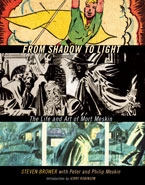
From Shadow to Light: The Life and Art of Mort Meskin


By Stephen Brower with Peter & Philip Meskin (Fantagraphics Books)
ISBN: 978-1-60699-358-3

Win’s Christmas Gift Recommendation: Perfect for art lovers, wannabe illustrators and lovers of pure comic magic  9/10

There’s currently a delightful abundance of beautiful coffee-table art-books/biographies celebrating the too-long ignored founding fathers and lost masters of American comic books, but few have been as well anticipated and hungered for as this magnificent tome highlighting the troubled life and stunning ability of Morton Meskin, one of the guiding spirits of the industry and a man clearly unaware or unwilling to admit just how influential he actually was.

Rather than waste your time being overly specific (just buy the book – it’s extremely informative and truly wonderful) let me just state that Meskin is the kind of creative force that no real fan of the medium can afford to be ignorant of. This lavishly illustrated, oversized tome traces his life and awesome body of work from school days and early career as a pulp magazine illustrator, through his pioneering superhero art for MLJ, DC, Standard and others through the leaner years and appalling treatment by editors in the 1960s through to the superb advertising art of his later life.

A quiet, diligent and incredibly prolific artist (the text contains numerous accounts of “races” with Jack Kirby, vying to see who could produce the most pages in a day!) Meskin’s manner and philosophical approach influenced dozens of major artists – as the testimonials from Kirby, Steve Ditko (a young student from Meskin’s days as a teacher), Jerry Robinson, Joe Kubert, Alex Toth, Carmine Infantino, George Roussos, Will Eisner and so many others attest over and over again.

Evocatively written by creative/art director, designer, educator and biographical author Stephen Brower, with dozens of first hand accounts from family, friends and contemporaries; the sad, unjust life of this major figure of popular art is fully explored and gloriously justified by every miraculous page of his work reproduced herein. As well as dozens of full colour reproductions from his breathtaking Sheena, Queen of the Jungle, Vigilante, Johnny Quick, Seven Soldiers of Victory, Wildcat, Starman, Fighting Yank, Black Terror and particularly Golden Lad and Tom Corbett, Space Cadet superhero action-adventure delights are lesser known gems of crime, horror, historical and mystery tales.

His prolific days at Simon & Kirby’s S&K Studios producing content for Headline, Crestwood and Prize Comics are well represented with many striking examples of his 1900 or so pages of mystery, psycho-drama, western and romance work, as well as Meskin’s latter days at DC, turning mediocre, fright-free mystery yarns and anodyne science fiction tales into stunning exercises of minimalist tension and drama.

Most importantly for collectors and art-fans there is a huge amount of space devoted here to the artist’s unique manner of working; from compelling page layouts and compositions to bold, vibrant inking, and for we comics cognoscenti, the visual El Dorado of never before seen unpublished pages.

There are dozens of penciled, inked and camera-ready art-boards – many shot from actual original artwork – including assorted genre-works (humour, horror, westerns, romances, covers), legendary features such as Boy’s Ranch, Fighting Yank, Black Terror and Captain 3-D) and even complete unpublished stories including a whole Golden Lad superhero romp, a nautical epic from colonial days starring Bill Blade, Midshipman and a positively electric gangland reworking of Macbeth.

Eventually Meskin left the industry, as so many unappreciated master artists did, for advertising work where he found appreciation, security and financial reward, if not creative contentment, and the latter portion of the scintillating tome is filled with not only an amazing selection of magnificent illustrations, sketches, ad layouts and storyboards but also the purely experimental art – painting, prints, collage and lots of lovely drawings in every medium possible – that clearly kept this obsessively questing artisan’s passions fully engaged..

Brilliant, captivating, utterly unforgettable and unknown, Meskin’s enforced anonymity is finally coming to an end and this magical chronicle is hopefully only the first step in rediscovering this major talent. Buy this book and lobby now for complete collected editions of Mark Merlin, Vigilante, Johnny Quick, Golden Lad and all the fabulous rest…

© 2010 Fantagraphics Books. Text © 2010 Stephen Brower. All art © its respective owners and holders. All rights reserved.
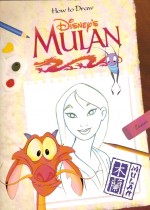
How to Draw Disney’s Mulan


By uncredited (Titan Books)
ISBN: 978-1-84023-038-3

I haven’t covered a “How To” book for ages and as this one’s entertaining, wonderfully fit for purpose and readily available it would well serve any budding artists and prospective animators to seek it out and absorb…

Following a brief précis of the story – involving a young girl who rose to prominence in the army of legendary Ancient China – the instructional portion begins with Equipment and Techniques, Designing Characters – animal and human, comedic, villainous and heroic. Costume Design, Staging the Action and Use of Props. This large scale, slim book concludes with a test – Creating a Scene: providing a chance to use the knowledge gained to have fun and practice.

Brilliantly colourful and with clear concise instructions covering the undeniable basics that every artist of any age needs to master, such as stylisation and basic anatomy, and including detailed step-by-step breakdowns and model sheet for every major character from the films this is an indispensable aid and a tremendously inspiring introduction for the aspiring Artist of Tomorrow.
© 1998 Disney Enterprises, Inc. All Rights Reserved.

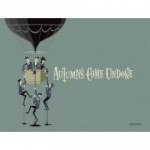
Autumn’s Come Undone


By Shag (SCB – Baby Tattoo Books)
ISBN: 978-0-9793307-3-5

A mystery-man of few words, Josh Agle, the artist currently known as “Shag”, has produced numerous collections of sleek and stylish paintings that are the very epitome of “retro”.

Considered a leading light of the American “Lowbrow” or “Pop Surrealism” art movement his mannered, maddeningly meticulous constructions of 1960s imagery and palettes are mind-warping and oddly comforting at the same time: stirringly reminiscent of the animated credits for TV shows like “Bewitched” and “I Dream of Jeannie” and films such as “The Pink Panther” and “Those Magnificent Men in Their Flying Machines”.

This latest memorable collection, full of doe-eyed, bouffant-ed beach cuties, slick, dark-suited men with horn-rim glasses and thin ties, whales and whalers, beasts, devils and Victoriana viewed through a Baby-boomer’s lens gathers works from his latest gallery tour and provides yet another peek into the mind of a true – if sardonic – cultural archeologist.

Accompanied by poetry and quotations this is an engrossing treat and, I’m sure the beginning of the art-poster and greetings card “next big thing.” Catch the wave before it catches you…
© 2009. All rights reserved.

Conceptual Realism in the Service of the Hypothetical


By Robt. Williams (Fantagraphics Books)
ISBN: 978-1-60699-299-9

Robert L. Williams II has been a rabble-rouser and cultural iconoclast since he first gained public attention with his outré celebrations of grotesque Hot Rod illustrations, and shocking underground comix work.

He was born on 2nd March 1943 in Albuquerque, New Mexico, and started his education at the Stark Military Academy. The boy spent his youth shuttling between New Mexico and Alabama, and was always painting and drawing. He became obsessed with car culture at an early age, and was purportedly given his first automobile at age 12. In his teen years he became a builder and driver of Hot Rods: pared down, souped-up vehicles customized for racing and display. Williams was apparently a difficult kid and always in trouble with local authorities.

In 1963 he moved to Los Angeles, attending City College, where he worked on the school’s paper The Collegiate before transferring to The Chouinard Art Institute, and quickly moving on into commercial art, working as an illustrator for cult car maven “Big Daddy” Roth and his brand/mascot Rat Fink.

By this time painting in oils for his own creative pleasure, Williams drifted into the Zap Collective: a loose-knit congregation of like-minded artists arguably the driving force behind the Underground Comix movement which revolutionised graphic narrative during the 1960s and 1970s which included R. Crumb, Gilbert Shelton, S. Clay Wilson, Rick Griffin, Victor Moscosco and Spain Rodriguez. In 1970 Williams published his signature anti-hero in the eponymous Cootchy Cooty Men’s Comics and Zap Comix #5, combining shocking, tasteless imagery of sex and violence to shake up the establishment. Cootchy Cooty still occasionally resurfaces in the artist’s paintings…

In 1979 many of his paintings were collected into a book that has become (utterly contrary to William’s explicit wishes) the name of the modern gallery-art movement dedicated to cultural examination through co-opted and re-found popular arts imagery. The Lowbrow Art of Robt. Williams was a groundbreaking book, at odds with the elitism and snobbery of “capital A art”, capable and prepared to back up its artistic arguments with keen intellectual vigour and insight.

He embraced the 1980s Punk movement (see his next book The Zombie Mystery Paintings) and as he followed his muse and formulated his creative philosophy he founded the art magazine Juxtapoz in the early 1990s (which has since launched the careers of many Pop Surrealist and Lowbrow artists). He has been controversial for decades due to his repeated use of sexual nudity, commercialism, ultra-violence and all manner of moral turpitude: a practice he explained (but felt no need to defend) in the book Visual Addiction, wherein his Rubberneck Manifesto declared “Something dead in the street commands more measured units of visual investigation than 100 Mona Lisas!”

Williams uses his classical painting skills and careful recapitulation of visual elements from our shared modern cultures to lure in the viewer, and to smash his point home with telling force. As with all “Lowbrow” artists he rejects in turn High Art’s rejection of skilled performance: restoring value to the mastery of techniques denigrated for decades as “mere craftsmanship” by critics and modernists. His pictures look like what they’re supposed to: it’s the motivation and message that are occluded, “all the better to bite you with…”

This spectacular oversized art book – a softcover edition of the incredible hardback released at the end of 2009 – collects recent works seen at his 2009 show Conceptual Realism: In the Service of the Hypothetical which toured California and New York, a delightful, magnificent package of social commentary, plaintive questing and mischievous mickey-taking encapsulated in 25 new paintings, and four fascinating sculptures (regrettably still works in progress at the time of going-to-press) each accompanied by revelatory essays, sketches, visual notes and underpaintings, and a another brief and challenging treatise from the artist himself: all preceded by a telling introduction from Tattoo artist and advocate Don Ed Hardy.

All art intends to make contact and connection: here is another powerful book from an unrepentant and unstoppable communicator – one whose works have always had the force and immediate influence of a swift smack in the mouth. Love it or leave it. You simply can’t ignore it.

© 2009 Robert Williams. This edition © 2009 Fantagraphics Books, Inc. All rights reserved.

Pim & Francie: the Golden Bear Days (Artifacts and Bone Fragments)


By Al Columbia (Fantagraphics Books)
ISBN: 9781-60699-304-0

Al Columbia is an incredibly innovative creator who has been pushing the boundaries of what we call narrative art since his earliest days in the industry, and one who has always seemed to generate the wrong kind of “press”. From the days when he assisted and then succeeded Bill Sienkiewicz on Alan Moore’s experimental and unfinished Big Numbers, through Doghead, From Beyonde and the astonishing The Biologic Show Columbia has sought out new ways to tell stories and never shied away from potentially controversial scenes, imagery and even styles of working; equally conversant with highly observed photorealism and the eccentric and economical symbolism of animated film. He has rather unfairly gained a reputation for not finishing what he’s started…

His later works, especially in this oddly disturbing hardback collection, are clearly based on the early cinematic imagery currently in vogue with the West Coast art movement known alternatively as Lowbrow or Pop Surrealism, but although the content may appear similar the intent is radically different. The line and design similarities to the landmark Fleischer Brothers cartoons here create a subtle sense of trusted familiarity that the antics and situations expressly and terrifyingly contradict and overwhelm.

Pim and Francie are pixy-ish waifs resident in a 1920s halcyon neverland, and first appeared in the chilling short story ‘Tar Frogs’ (originally published in Britain’s ’90’s lifestyle driven Deadline magazine and then retooled for The Biologic Show #0 in 1994). They resurfaced in the still uncompleted Peloria Part One (The Biologic Show #1 in 1995) and most recently in Mome #9 (Fall 2007).

In a collection that appears more sketchbook than story, and which calls itself a “broken jigsaw puzzle”, grisly, grotesque images and characters cavort and proceed through a familiar wonderland of fairytale Americana, but look more closely and you can see a story unfolding: a tale of two rascals and perils beyond imagining…

Columbia’s nightmarish, recondite scenario hints at a deeper profundity but his beautiful, clear, dark drawings are open, simple and fiendishly accessible to even the youngest reader so beware who you expose to these amazing astonishing adventures. Appetising, intriguing and addictively profane, this is a delightful excursion to a very wrong place.

See you there…
© 2009 Al Columbia. All Rights Reserved.

All and Sundry – Uncollected Work 2004-2009


By Paul Hornschemeier (Fantagraphics Books)
ISBN: 978-1-60699-285-2

In his relatively short artistic career Paul Hornschemeier has produced relatively little work, but all of it has been of phenomenal quality and boldly dedicated to deeper themes and compelling expansions of the medium of graphic narrative. Its also manages to be funny sad and pretty all at once. Don’t take my word for it: acquire The Collected Sequential, The Three Paradoxes. Let Us be Perfectly Clear and the incredible Mother, Come Home and see for yourself.

While you’re at it, the perfect accompaniment for that enviable investigation is this delicious collection of art and ideas ranging from the broadest sketches, prose and ideas to fully finished and coloured strips and stories gathered from such disparate sources as the experimental strip anthology Mome to the back up strips produced for Dark Horse’s comic interpretation of Michael Chabon’s brilliant novel The Escapist.

Also included are assorted commercial illustrations from magazines such as the Wall Street Journal, Frankfurter Allgemeine Sonntagszeitung and Nickelodeon Magazine, Penguin Books and many others, designs and typography for the numerous foreign editions of his creations and many other visual treats from this always enchanting and thought-provoking creator.

If you want – or need – a peek inside the head of a truly creative force, or just love great drawing and fine amusing, sad whimsy this is a book you must have.

© 2004, 2005, 2006, 2007, 2008, 2009 Paul Hornschemeier. All Rights Reserved. The Tick © & ™ Ben Edlund; The Worst Comic Book Heroes That Never Existed written by an © Michael Kupperman; The Escapist © & ™ Michael Chabon

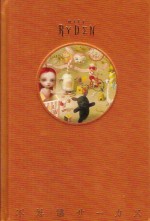
Fushigi Circus – the Art of Mark Ryden


By Mark Ryden (Last Gasp)
ISBN: 978-0-86719-720-4

Ever heard anybody say “That’s not art, it’s just a pile of…?”

Well, the Modern Art scene gets more interesting every day for adherents of narrative imagery and representationalism as craft, skill and imagination return to the forefront of bankable talents. Here’s another sumptuous collection from a well-respected artist whose particular contribution to the Lowbrow or Pop Surrealism movement centres on sumptuous, richly-hued paintings which blend the icons of childhood with startlingly disturbing, often sexually charged images of innocence and innocents: wide eyed, searching, ineffably sad or mysteriously resigned to a fate we can only suppose.

The visual components of each painting are carefully selected and positioned, but always with the intention of leaving the viewer unsettled…

Mark Ryden comes from a long line of artists and worked for the last decade as an illustrator, producing book covers for the likes of Stephen King and record covers for Ringo Starr, The Red Hot Chili Peppers and Michael Jackson. His work is reminiscent in style to classic Salvador Dali.

Ryden was educated at the Art Center College of Design, Pasadena, graduating in 1987 with a Batchelor’s Degree in Fine Art. And that’s where his first one man exhibition “The Meat Show” debuted in 1998.

He came to prominence with regular features in Lowbrow art magazines such as Juxtapoz and has exhibited in New York, Los Angeles and Santa Ana. Recent shows have included the retrospective “Wondertoonel” and the quirky tour de force “The Tree Show” – paintings and sculptures to 2007-2008.)

Like many contemporary artists Ryden works across many media, illustrating the guitar of Metallica front-man Kirk Hammett, producing tattoo art for Aerosmith’s “Pump” album and designing custom action-figures for Michael Leavitt’s the Art Army.

Ryden’s incredible virtuosity with pigments would have made him a star whatever he concentrated his efforts, but the eye-popping creepy explorations of beauty, childhood and popular culture which can be found in his book collections the Art of Mark Ryden: Anima Mundi (2001), Bunnies and Bees (2002), Wondertoonel Paintings (2004), Blood Show (2005), The Tree Show (2009) and this glorious high-end hardback have won him a devoted following among folk who respond well to fantasy and social enquiry: i.e. people like you…

Fushigi Circus was originally released in 2006 for the Japanese market and this beautiful Cloth-of-Bronze, bound hardback collects fifty five of his early works, featuring, of course, chilling, teary-eyed moppets, scary babies, fluffy cuddly monsters, Gothic horror spoofs and his series of brilliantly observed, witty celebrity paintings ranging from the most nightmarish Teletubbies ever envisioned through Sarah Michelle Geller and Leonardo DiCaprio to Björk and Jimi Hendrix.

Now released for the English speaking world – although sans English text and some of the pictures appear a mite small for my tired-yet-eager old eyes – this lovely volume is bound to win the creator many more fans – especially among the eccentric pool of addicts that make comics and cartoons their vice of choice.
© 2006 Mark Ryden/PIE BOOKS. US edition © 2009 Mark Ryden/Porterhouse. All Rights Reserved.

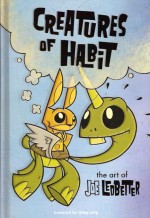
Creatures of Habit – the Art of Joe Ledbetter


By Joe Ledbetter (Last Gasp)
ISBN: 978-0-86719-718-1

When you were a kid watching cartoons did you ever imagine that one day you could justify your simple pleasures by telling the nay-sayers and terminally unhip that you were a student of serious, capital “A” Art?

It’s happened twice in my lifetime: first in the mid-1960s when Pop Art stormed the bastions of haughty institutionalised snobbery and Stan Lee briefly re-dubbed his fledgling House of Ideas “Marvel Pop Art Productions” and it’s happening again now with the West Coast-led “Lowbrow” or Pop Surrealist Movement.

This highly colourful, multi-media, exceedingly commercialised new trend (as well as the art itself, many creators sell Designer original art apparel and especially toys based on their creations) blends baby-boomer memories of cartoons, comics, television, toys, monster-movies and a million other empty, unforgettable delights into a high gloss, stunningly lavish exploration of modern culture.

A major exponent of the last few years is Joe Ledbetter.

In truth Ledbetter, although highly popular, prolific and much sought after, is only on the periphery of the movement, and a close examination of this beautiful hardback collection of his paintings from 2004-2008 will show why and how he usually follows his own instincts. Adopting the techniques, style and form of cute animal animation, Ledbetter is less interested in examining society and the nostalgia it has generated, and more with revisiting the themes that permeate his source material.

In cartoons kids see that looking distinctive, being mighty and constantly proving your mettle is all that counts. Ledbetter, with his highly stylised, recurring cast of characters; a big-eyed, floppy-eared, rainbow coloured, many-tentacled, fuzzy repertory company combines startling design and composition with a sly, wry inquiry that gently asks the observer to think while awash in a tide of practically tribal, if not heraldic, combative imagery.

Surreal, yes, Absurd, of course, and so very subtly Subversive: rendered with superlative craftsmanship and always at the intersection of graphic design and the elevated Gallery Culture of art, there’s a keen eye and a chiding questioning behind all these superbly punchy and dynamic images. Ledbetter is making the popular street iconography of the 21st century in just the same manner as Vaughn Bodé did with his comic strips in the latter half of the 20th.

It’s the art of the Everyman and you will be seeing it everywhere: when he’s Joe Public you’ll be glad you picked up this magical Ledbetter collection as the wave started to crest…
© 2009 Joe Ledbetter. All Rights Reserved.
To see more images go to joeledbetter.com

Arthur Spiderwick’s Field Guide to the Fantastical World Around You


By Tony DiTerlizzi & Holly Black (Simon & Shuster UK)
ISBN: 978-1-41690-136-5

One of the most charming and readable children’s stories of recent vintage (the first volume was published in 2003 and I’ll get to them one day…) recounts the adventures of three American kids who stumble into a forgotten and dangerous world of unseen Fairy Magic. The adventures of the Grace children even emerged relatively unscathed from the transition to the big screen in a winning adaptation entitled The Spiderwick Chronicles.

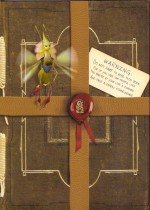
Modern marketing being what it is, a lot of peripheral material has been generated to accompany the books and it’s one of these I want to bring to your attention. Arthur Spiderwick’s Field Guide to the Fantastical World Around You is a fabulous confection, purporting to be the actual tome created by an inquisitive naturalist nearly a century ago, listing in magnificent taxonomical detail and gloriously illustrative manner all the unnatural and supernormal creatures that live beyond the range of normal human sight.

Although Tony DiTerlizzi and Holly Black are deliberately vague as to who does what to craft these tales the former is credited as illustrator, so I’m assuming the Manticore’s share of the superb paintings and drawings in this volume are his and the explanatory notes Ms Black’s – and frankly astonishing it all is.

Divided into Around the House and Yard, In Fields and Forests, In Lakes, Streams and the Sea, In the Hills and Mountains, In the Sky and Outside at Night this beautiful bestiary covers every invisible wonder from Banshees to Will-o’-the Wisps, Dragons to Unicorns and all European ethereals in between.

This is a book to inspire dreaming and creativity in kids of any age, produced with all the tricks and magic of 21st century printing and paper-technology. A true and total delight.
© 2005 Tony DiTerlizzi & Holly Black. All Rights Reserved.

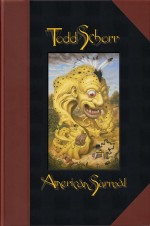
American Surreal


By Todd Schorr (Last Gasp)
ISBN: 978-0-86719-709-9

There’s an intriguing coagulation of populist imagery and the childhood iconography happening on the capital “A” art-scene which blends baby-boomer memories of cartoons, comics, television, toys, monster-movies and a million other empty, unforgettable delights into a high gloss, stunningly lavish exploration of modern culture.

These lush and lavish pictorial conglomerations assemble myriad nostalgia-drenched components into stunning investigations of modernity. Whimsical and sly yet searching they take as their starting point the hyper-realistic painterly techniques of early Salvador Dali and the master artists of the Renaissance. The movement is known as “Lowbrow” or Pop Surrealism and the supreme master of this visual sampling is Todd Schorr.

American Surreal collects his latest works (2003-2009) with many beautifully luxurious close-up and detail sections, explores his work philosophy and techniques and even examines his twin affinities: the Old Masters of the art world – particularly the narrative genius of Peter Bruegel and Hieronymus Bosch (imagine what they could have done with editorial independence and an exclusive contract with Vertigo Comics) – and the gestalt synthesis of childhood diversions that shaped his own life.

Wry and absurdist, these astonishingly compelling paintings are presented in a deluxe, wonderfully large format (38.6 x 25.7 x 1.8 cm) in eye-popping colour. This exquisite tome is a fabulous treat for anybody who’s ever regretted growing up, put away their toys a little too soon or recently felt the guilty pangs of pure, unadulterated nostalgia.

© 2009 Todd Schorr. Text © 2009 the respective authors. All rights reserved.