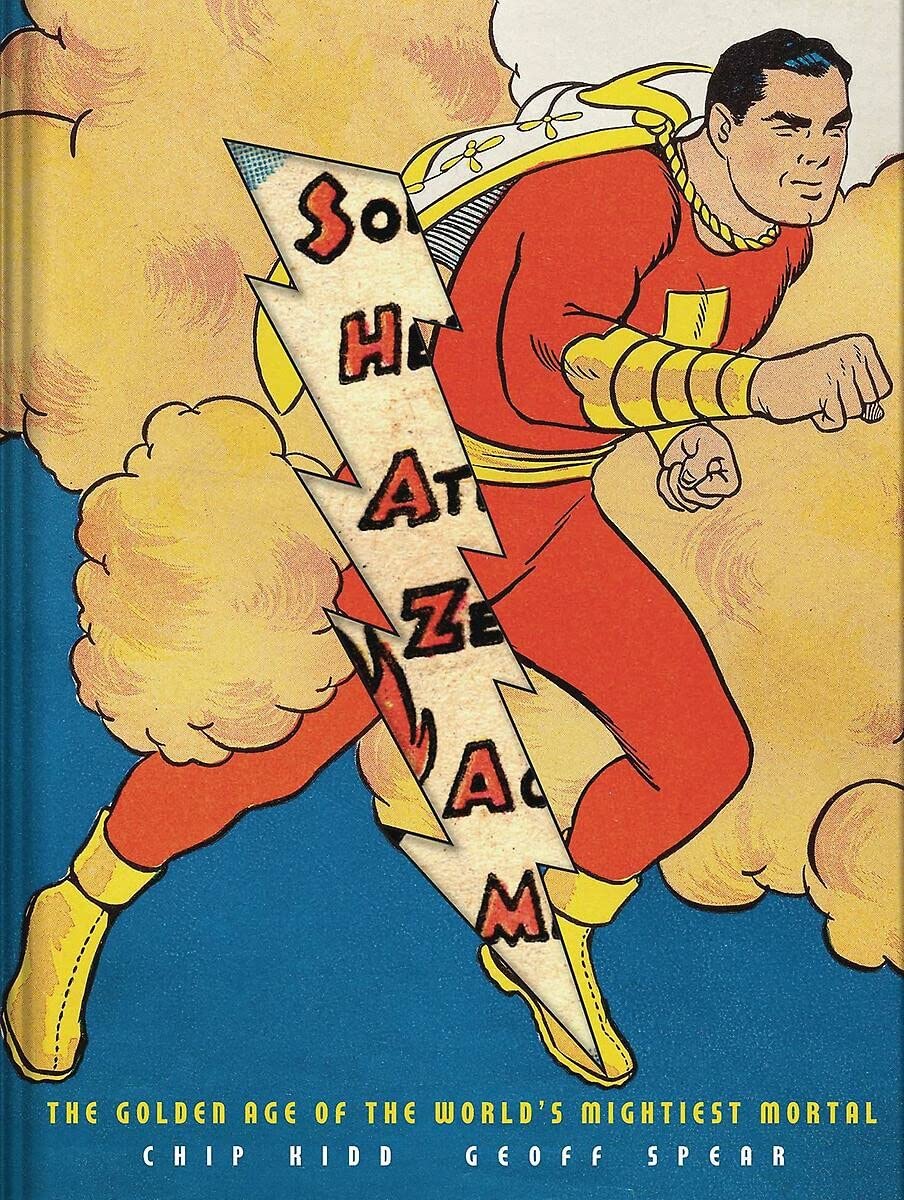
Shazam! The Golden Age of the World’s Mightiest Mortal


By Bill Parker & C.C. Beck, Roscoe Fawcett, Marcus Swayze, Pete Costanza, Otto Binder, Jack Binder, Mac Raboy, Joe Simon & Jack Kirby, Chad Grothkopf, Kurt Schaffenberger, and many & various: compiled & written by Chip Kidd and photographed by Geoff Spear (Abrams ComicArts/Harry N. Abrams, Inc.)
ISBN: 978-0-8109-9596-3 (2010 HB) 978-1-4197-3747-3 (2019 PB)

One of the most venerated and beloved characters in American comics was devised by Bill Parker & Charles Clarence Beck as part of a wave of opportunistic creativity following Superman’s debut in 1938. Although there were many similarities in the early years, the Fawcett Comics character moved swiftly and solidly into the realm of light entertainment -and even broad comedy – whilst, as the 1940s progressed the Man of Steel increasingly put whimsy aside in favour of action and drama.

Homeless orphan and thoroughly good kid Billy Batson was selected by an ancient wizard to battle injustice: granted the powers of six gods and mythical heroes. By speaking aloud the mage’s name – an acronym for the patrons Solomon, Hercules, Atlas, Zeus, Achilles and Mercury – Billy transformed from scrawny boy to brawny adult Captain Marvel.

At the height of his popularity, “the Big Red Cheese” significantly outsold The Man of Steel – published twice monthly and topping 14 million copies per month. Before eventually evolving his own affable personality the full-grown hero was a serious, bluff and rather characterless powerhouse, whilst alter ego Billy was the true star: a Horatio Alger archetype of impoverished, resourceful, boldly self-reliant youth overcoming impossible odds through gumption, grit and sheer determination…

However, as the decade moved on, tastes changed and sales slowed. A court case begun in 1941 by National Comics contesting copyright infringement was settled. Like many other superheroes, Cap disappeared, reduced to a fond memory for older fans. A big syndication success, he was missed all over the world…

In Britain, a reprint line had run for many years, so creator/publisher Mick Anglo had an avid audience and no product. His solution was to reimagine the franchise with atomic age hero Marvelman and Co. continuing to thrill readers well into the 1960s.

As America experienced another superhero boom-&-bust, the 1970s dawned with a shrinking industry and wide variety of comics genres servicing a base increasingly dependent on collectors and fans rather than casual or impulse buyers. DC needed sales and were prepared to look for them in unlikely places. Following a 1953 court settlement with Fawcett, DC ultimately secured the rights to Captain Marvel, his spun-off extended Family and attendant strips and characters.

Despite the actual name having been taken by Marvel Comics (via a circuitous route and quirky robotic hero published by Carl Burgos and M.F. Publications in 1967), the home of Superman opted for tapping into that discriminating, if aging, fanbase. In 1971, they licensed the dormant rights to the character stable (only fully buying them out in 1991) and two years later, riding a wave of national nostalgia on TV and in movies, DC resurrected and relaunched the entire beloved cast in their own kinder, weirder, completely segregated and separate universe.

To circumvent intellectual property clashes, they named the new/old title Shazam! (‘With One Magic Word…’): the unforgettable trigger phrase used by the majority of Marvels to transform to and from mortal form and a word that had entered the American language thanks to the success of the franchise (especially an excellent movie serial) the first time around.

Issue #1 carried a February 1973 cover-date and generated mixed reviews and unconvincing sales, but was pushed hard by DC. It even briefly scored the big prize in the publisher’s eyes. Adapted as live action Saturday morning TV series Shazam!, it ran three season (28 episodes) from 7th September 1974 to October 1976…

The comics are universally welcoming and wonderful and you should read them all, but we’re looking at a different aspect of the phenomenon here. Like any multi-media property, the Marvel Family franchise spawned tons of merchandise and this compendium sublimely showcases those tantalising collectables and examples of ephemera from the first 14 years – 1940-1953.

Most gems reproduced here come from the truly enviable personal collection of Harry Matesky as photographed by Geoff Spear (Batman Collected, The Peanuts Poster Collection, Mythology: The DC Art of Alex Ross). The multi-media melange is compiled, arranged and curated by frequent collaborator and acme and everyman of design fascinations and armchair indolences Chip Kidd (Cheese Monkeys, Batman: Death by Design, Only What’s Necessary: Charles M. Schulz and the Art of Peanuts, Go: A Kidd’s Guide to Graphic Design, Batmanga!: The Secret History of Batman in Japan, Jack Cole and Plastic Man: Forms Stretched to Their Limits).

This celebration of comics’ true magic was first released in 2010 as an epic oversized (235 x 310mm) hardback jam-packed with 3D cutaways, gatefolds and other print technology “bells & whistles”, and re-released in paperback (260 x 190mm) to tie-in with the first modern Shazam movie in 2019.

It’s a virtual wonderland for anyone who’s still a kid inside (AKA all men), overflowing with letters from the Captain Marvel Club, dynamic blow-ups of key characters such as Dr Thaddeus Bodog Sivana, classic covers, early toys, models, games, action figures and even candid shots of happy kids in their Captain and Mary Marvel costumes.

In its heyday, the Captain Marvel Club boasted a membership topping 400,000, serviced by a steady stream of priceless – and exclusive – tat to acquire: buttons, watches, key chains, paper rockets, tin toys, figurines, clothing, patches, transfers and more. Its inclusive and commercially canny model was repeated by later stars like Mary Marvel and others.

These feature amidst a wealth of mouth-watering displays of old comics, covers, original art, movie posters, apparel, toys, games and far rarer items – like Fawcett’s outreach material for potential manufacturers and merchandising partners and in-house writing guidelines.

Publishing house Fawcett first gained prominence through an immensely well-received light entertainment magazine for WWI veterans. From Captain Billy’s Whiz-Bang they branched out into books and general interest magazines. Most successful publication – at least until Batson hit his stride – was ubiquitous boy’s building/activity bible Mechanix Illustrated. As the 1940s unfolded, scientific and engineering discipline and can-do demeanour underpinning MI suffused and informed both art and plots of Marvel Family titles.

On show here are long-lost treats like the Captain Marvel Magic Whistle (complete with packaging), secret codes and decoders, the Captain Marvel Magic Membership Card, gewgaws and gimcracks, house ads, prize competitions and editorials, interspersed with a terse but informative history of the company, the creators, characters and entire beguiling phenomenon,

The star and his spin-offs sparked a huge campaign of coordinated ancillary merchandising, especially once the Big Red Cheese made a spectacular leap to the silver screen in 12-part chapter play The Adventures of Captain Marvel. That luminous landmark provides some rousing stills featuring star Tom Tyler as the Good Captain…

As detailed in ‘Hey Kids! See Capt. Marvel in the Movies’, in 1940 Republic Pictures reached out to Detective Comics Incorporated with the notion of turning Superman into a movie serial. No deal was struck and a year later Republic catapulted Fawcett’s big gun onto screens and into history. This essay is augmented by biographies, lobby cards, posters from many countries, contemporary ads and write-ups from magazines and comics of the period.

The only complete comics yarn included here is a corker. In the formative years as the feature rocketed to the first rank of superhero superstars, there was a scramble to fill pages. Following his Whiz Comics residency and epic one-shot Special Edition Comics, the indomitable innocent was promoted to his own solo title, but with Beck and his studio overstretched, Captain Marvel Adventures #1 (cover-dated March 1941, and on sale from January 17th) was farmed out to up-and-coming whiz-kids Joe Simon & Jack Kirby. With inker Dick Briefer they produced the entire issue in a hurry from Beck and Parker’s guides. Apparently they did it in two weeks whilst finalising the launch of Captain America

‘Captain Marvel versus Z’ remains a visually impressive action-drama with the irrepressible Sivana creating a hulking android brute designed to be the Captain’s equal. Despite numerous clashes and subsequent upgrades, after one last brutal knock-down, drag-out, Kirby-co-ordinated dust-up, it is apparent that Z isn’t…

The hero soon spawned sidekicks and assistants aplenty. The two most successful were Captain Marvel Junior and Mary Marvel who each have their own sections, replete with merch and memorabilia – both American made and from syndicating publishers who reprinted them around the world. There are also short sections devoted to other Fawcett stars Spy Smasher (who also had a Republic movie serial and club – the “Victory Battalion”) and Hoppy the Marvel Bunny.
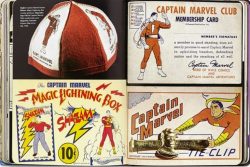
Toys, stationary, puzzles and games include Captain Marvel Lightning Racing Cars (glorious tin toys!), Captain and Mary Marvel Wristwatches (plus ads and packaging), keychains, a Captain Marvel Fun Kit, Helicopter and Power Siren (“world’s mightiest whistle!”). There are images of Captain Marvel’s Radar Racer, Rocket Raider and Magic Eyes (all with some assembly required); a compass-ring, Shazam board game, 3-D Magic Picture, a jigsaw, paper “punch-out book, and ceramic figurines ready to illuminate in the Captain Marvel Adventures in Paint set.

Throwable toy Hoppy the FLYING Marvel Bunny also needs assembling before launch, as does his Musical Evening Miracle Toy of Today, and there are examples of ultra-rare velveteen stuffed dolls of both the rabbit and his human inspiration…

As well as painting and colouring books, pencils, plastic statuettes, buzz bomb paper planes and Christmas tree decorations, are projects and covers from all across the globe, like lead figures and assorted Pre-Mick Anglo comics from Britain, plus a (gloriously painted) trading card set from Spain. There’s even a bootleg trading card album set from Havana, Cuba, based on the 1941 Republic serial.
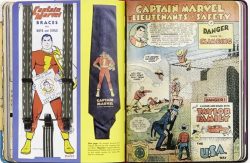
Ready to wear items include novelty shirts, braces, neckties and a cape; bean bags, tie-clips, beanie-hats, vinyl saddlebag, bike/wall pennants, “overseas style” hats and caps, skin tattoo and iron-on tee-shirt transfers, illustrated soap (!?), numerous Premium postcards, patches and badges with even Billy and Hoppy the Marvel Bunny proudly included amongst the regular costumed heroes…

Leasing his fame, the Captain appears in strip ads for Coola Cola and other salient sales points (illustrated by Costanza) and proudly confirms his patriotic zeal via many inspirational war-time covers and with the Comics Canteen! packs (comics distributed gratis by Fawcett to US servicemen in 1942).

The titanic tome terminates with an examination of the end as ‘Twilight of the Golden Age’ reveals details of the court settlement, and reviews extracts from trial transcripts.

All items cited here are merely the tip of an iceberg of fabulous stuff no fan could resist, and an evocation to the simple pleasure of youth, making this book an unparalleled package of pure weaponised nostalgia impossible to resist. So don’t…
© 2010, 2019 DC Comics. All rights reserved.

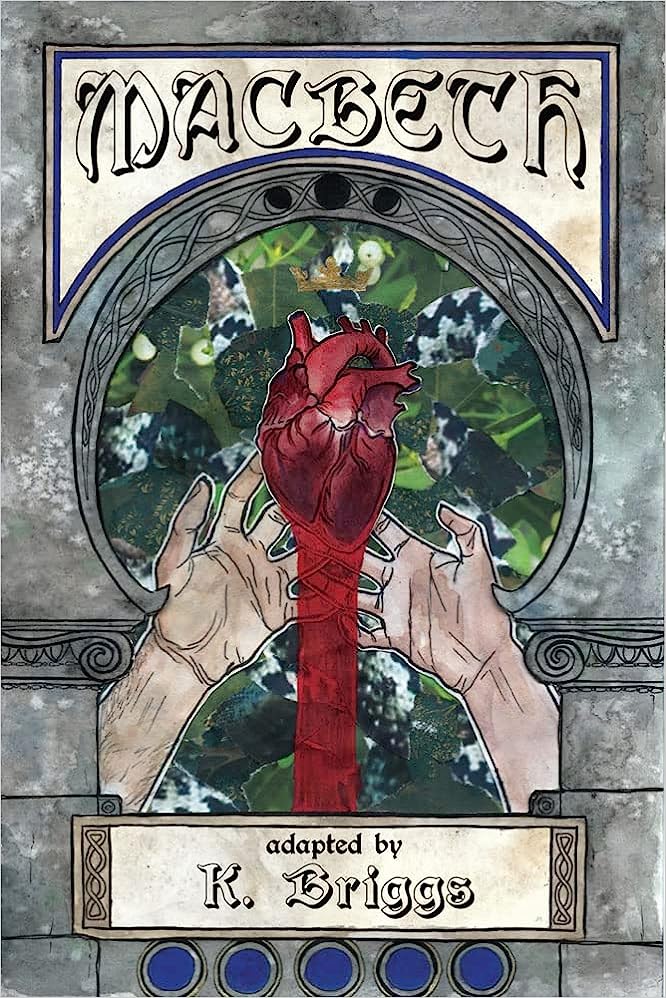
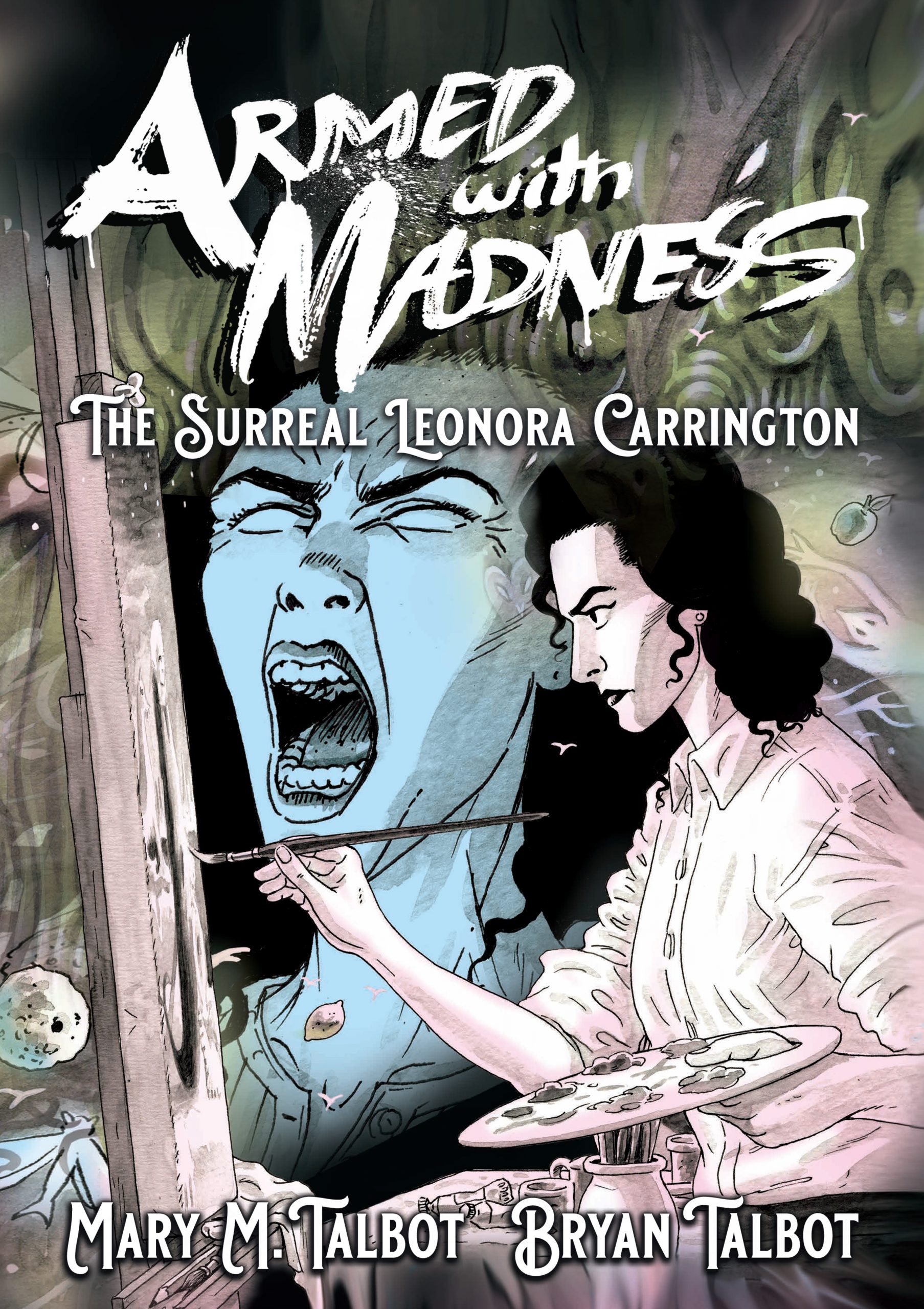
Armed With Madness – The Surreal Leonora Carrington


By Mary M. Talbot & Bryan Talbot (SelfMadeHero)
ISBN: 978-0-914224-12-6 (HB/Digital edition)

Mary Leonora Carrington overcame wealth, privilege, entrenched unwanted religion and the repressive straitjackets of her class and gender to follow a dream and be her own self. You may never have heard of her (but should have) and this sublime depiction exploration by Mary M. Talbot and spouse Bryan Talbot – focussing on her most troubled years and humanity’s darkest hours – offers compelling and beautiful arguments for why.

Dr. Mary is an academic, educator, linguist, social theoretician, author and specialist in Critical discourse analysis who in 2012 added graphic novelist to her portfolio of achievements: collaborating with her husband on Dotter of Her Father’s Eyes.

That award-winning memoir/biography of Lucia Joyce was followed by Sally Heathcote: Suffragette (drawn by Kate Charlesworth), The Red Virgin and the Vision of Utopia and Rain (both with Bryan), all supplementing a glittering educational career and such academic publications as Language and Gender: an Introduction and Fictions at Work: language and social practise in fiction. She is particularly drawn to true stories of gender bias and social injustice…

Bryan has been a fixture of the British comics scene since the late 1960s, moving from Tolkien-fandom to college strips, self-published underground classics like Brainstorm Comix (starring Chester P. Hackenbushthe Psychedelic Alchemist!), early Luther Arkwright and Frank Fazakerly, Space Ace of the Future to paid pro status with Nemesis The Warlock, Judge Dredd, Sláine, Ro-Busters and more in 2000 AD.

Inevitably headhunted by America, he worked on key mature-reading titles for DC Comics (Hellblazer, Shade the Changing Man, The Nazz, Batman: Legends of the Dark Knight, Fables, The Dead Boy Detectives and The Sandman) and was a key creative cog in short-lived shared-world project Tekno Comix, before settling into global acclaim via steady relationships with Dark Horse Comics and Jonathan Cape. These unions generated breakthrough masterpieces like The Tale of One Bad Rat and a remastered epic revival of The Adventures of Luther Arkwright.

Since then he’s been an independent Force To Be Reckoned With, doing just what he wants, promoting the art form in general and crafting a variety of fascinating and compelling works, from Alice in Sunderland and Cherubs! (with Mark Stafford), to Metronome (as Véronique Tanaka) and his fabulously wry, beguiling and gallic-ly anthropomorphic Grandville sequence, as well as his mostly biographical/historical collaborations with Mary…

In the interest of propriety, I must fully disclose that I’ve known him since the early 1980s, but other than that shameful lack of taste and judgement on his part, have no vested interest in confidently stating that he’s probably Britain’s greatest living graphic novelist…

Here their vast talents combine to capture and expose the early life of a woman driven by a need to create: a forgotten star who resisted powerful family pressure and rejected social conditioning to run away and become an artist. Her choices – or perhaps compulsion – led to pain, isolation, ostracization, desertion and mental illness, before her innate determination, tenacity and sheer will to overcome won her peace, security, success and the chance to make the world a different, better place for those that followed her…

Leonora Carrington was born on April 6th 1917, daughter of a wealthy northern textiles magnate who inherited control of ICI and moved in Royal circles. An imaginative, wilful child raised Roman Catholic, she loved animals, art and stories, particularly identifying with horses, and – when provoked – hyenas…

After continually frustrating her overbearing father (by – for example – sabotaging the local fox hunt), her education was shifted from private governesses to draconian Catholic boarding schools, two of which were compelled to expel despite all the cash Daddy lavished on them…

Her Irish mother was obsessed with introducing her at (Royal) Court, but Leonora wanted to make art and tell stories. Before long she was packed off to a Finishing School in Florence, affording the rebel with the unintended opportunity of seeing the landmarks of human artistic endeavour first hand.

Eventually, with mother playing peacemaker, Leonora was permitted to study painting, firstly at the Chelsea School of Art and then briefly with iconoclastic French modernist Amédée Ozenfant at his Ozenfant Academy of Fine Arts.

Wayward young Carrington had seen her first Surrealist painting in 1927 when she was only ten, and the event marked her deeply. Now able to access more of the works that set her soul afire, she put up with her mother’s ambitions for as long as possible before running away to Paris in 1937: beginning a turbulent affair with the leading light and conceptual leader of the movement. Max Ernest was old, fascinating, selfish, married and German…

Naturally, her father responded by cutting off if not outright disowning her, and an idyllic period – albeit punctuated by moments of violence and terror inflicted on Leonora by the frankly terrifying and justly furious Mrs Ernst – evolved into a retreat.

The “May/November” couple fled south to the rural solitude of Saint Martin d’Ardèche. Here, her writing and art grew wilder and more inspired, but also brought added tension and strain for both of them. Political infighting amongst the male-dominated Surrealist elite and increasing suspicion of the “kraut” Ernst by local neighbours ended the honeymoon period as clouds of war gathered over Europe.

Ultimately, he was arrested as an enemy alien. By the time his friends secured his release, the Nazis had invaded and Ernst was arrested again, this time by the Gestapo who targeted him for his “degenerate” art. On his second bout of freedom, Max bolted to America, supported by friends and eventual next wife millionairess Peggy Guggenheim

Always nervous, prone to anxiety and now under enormous pressure, Leonora Carrington’s stability took ever-increasing hits as she dwelt alone in her lonely, rustic hostile environment. Upon at last escaping to Madrid with her friend Catherine Yarrow, Leonora arrived in the throes of a full-blown psychotic break and was left to the tender mercies of an asylum.

Here she endured tedium, repression, a brutal drug regimen and electroconvulsive therapy as well as regular sexual assault from her minders. Again controlled by her parents, she was eventually released into the care of a “minder” (these scenes are particularly harrowing – so be warned) preparatory to being bundled off to a sanatorium in distant South Africa.

Instead, she escaped and went to Portugal, linking up with Mexican consular official Renato Leduc. He agreed to a marriage of convenience and – before divorcing her in 1943 – moved her to the safety of his homeland. She thereafter made Mexico home for most of her life.

Many other creative refugees from Europe – especially many old Surrealist friends – had also migrated there and over the succeeding years Leonora prospered, finding acceptance and a new cause. After years of independence and street level activism for gender equality and personal freedom, in the 1970 she co-founded Mexico’s Women’s Liberation Movement. She reunited with old friend and artistic soul mate Remedios Varo who introduced her to her second and last husband. Hungarian photographer/physician Emerico “Chiki” Weisz was her partner in art and practical jokes until his death in 1997.

They had two kids and Leonora grew in stature: making wild and marvellous paintings, murals and sculptures, publishing ten books, starring in numerous gallery and museum shows, confronting Mexico’s totalitarian rulers in the 1960s and always shaping thought and attitudes of, to and about women. She died on May 25th 2011 aged 94, another beloved and revered artistic icon of Mexico who lived life her own way on her own terms.

This epic of creative struggle comes with a full Bibliography and a scrupulously meticulous Notes section, explaining unfamiliar moments or terms and sharing times when the demands of drama superseded the tedious truth of simple documentary fact…

Compellingly scripted with a fine eye for elucidatory minutiae, visually Mary Talbot’s carefully overlaid, chronologically unmoored events ranging from gentle reportage of consensual reality to shocking interpretations of her delusions are realised in soft monochrome tones, interspersed with fiercely dynamic blasts of colour. The technique allows us to share her perpetually overlapping worlds, vacillating visions and hallucinations in a history drenched in narrative symbolism and – naturally – surreal visitations.

Powerful, enraging and uplifting, this mesmerising introduction to yet another forgotten woman of achievement is a sheer delight and will definitely compel all readers to look for more…
Text © 2023 Mary M Talbot. Illustrations © 2023 Bryan Talbot. All rights reserved.

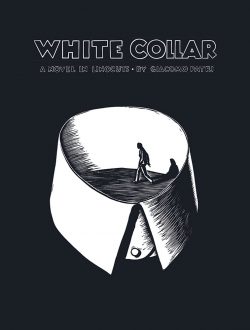
White Collar – a Novel in Linocuts


By Giacomo Patri (Dover Comics & Graphic Novels)
ISBN: 978-0-486-80591-7 (HB)

If you regularly access any kind of news in any format or platform, you won’t be at all in doubt or surprised by my calling this book to your attention now. As yet another western leader roils in yet another money/sleaze crisis (I’m not naming them, it will be someone just as guilty by the time you read this and they all have to go!) I’m reminded of the song published a dozen years after White Collar – Carl Sigman & Herb Magidson’s Enjoy Yourself (It’s Later than You Think)

We tend to think of graphic novels as being a late 20th century phenomenon – and one that had to fight long and hard for legitimacy and a sense of worth – but as this stunning over-sized (286 x 218 mm) two-colour hardback proves, the format and at form was known much earlier in the century… and utilised for the most solemn and serious of purposes.

White Collar was created by jobbing illustrator, artist, educator and activist Giacomo Patri in 1937: encapsulating the tenor of those times as America endured the Great Depression with a view to inspiring his fellow creatives…

Unable to find a publisher for his shocking and controversial pictorial polemic, Patri and his wife Stella self-published the first edition, and happily found publishers for subsequent releases, but not the huge, hungry, underprivileged and angry audience it deserved.

Patri (1898-1978) was born in Italy and raised in the USA. Living in San Francisco from 1916, he overcame the devastating handicap of polio and worked numerous menial jobs until his interest in art carried him through the California School of Fine Arts. Thereafter, he became an illustrator for the San Francisco Examiner, San Francisco Chronicle and other newspapers.

Patri had been interested in social justice and labour issues since the late 1920s, and – once the Depression hit – those beliefs only crystallised. Manual or “blue collar” workers had long organised and unionised to secure bargaining rights and fair wages, and Patri saw that office workers like himself were as in need of such power, autonomy and self-determination. The book was his way of convincing everyone else…

A compelling Introduction by his descendants Tito Patri & Georges Rey offers context, historical background and technical information on the production of linocut art as well as revealing how the creation of such cheap, language-transcending visual tracts became a commonplace method of dissemination.

For context, also included is the story of the artist/author’s troubles during the repressive, red-baiting Joe McCarthy years and beyond…

Following the salutary lesson is the Original Introduction by fellow artistic agitator and creative pioneer Rockwell Kent before Patri senior’s endeavours to enlighten his fellow illustrators and clerical staff begins. Unfolding over 128 bold images of stark metaphor and rousing symbology, the astounding visual record offers a clarion call to arms, tracing one family’s struggle between 1929 and 1933. It’s all delivered with beguiling subtlety and shocking, silent potency in plates of deepest black or startling orange.

This ‘Novel in Linocuts by Tito Patri’ is dedicated “To the great progressive Labor Movement, the Congress of Industrial Organisations” and remained both obscure and controversial for years. That wasn’t so much for its left leaning content as its uncompromising depiction of the abortion Catch-22: a truly heart-rending depiction of a family too poor to survive another mouth to feed but without the cash to pay a back street quack for an [illegal] termination. Maybe this book should be handed out free all over Middle America and the Christian South?

The world has moved on from replicating those dark days of Haves, Have-Nots and Why-Should-I-Cares? These days those with power actual police how The Poor and Godless use the bodies and wits they’ve generously been permitted. They can thus be guided into promoting National Growth and Prosperity… Thankfully this magnificent rediscovery remains a stirring, evocative and still movingly inspirational riposte, closing with a final assessment and plea from cartoonist, designer and contemporary activist Peter Kuper in his trenchant Afterword accompanying the Original Epilogue by John L. Lewis…

Inventive, ferocious in its dramatic effects, instantly engaging and enraging, this is a book every callous, indifferent “I’m All Right” Jackass and greedy, smug “Why Should I Pay For Your…” social misanthrope needs to see… or be struck repeatedly with.

© 1987 by Tamara Rey Patri. Introduction © 2016 by Tito Patri. Afterword © 2016 by Peter Kuper. All rights reserved.

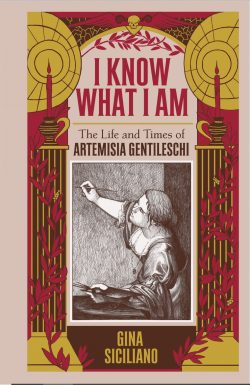
I Know What I Am: The Life and Times of Artemisia Gentileschi


By Gina Siciliano (Fantagraphics Books)
ISBN: ?978-1-68396-211-3 (HB/Digital edition)

A denizen of Seattle, Gina Siciliano studied at Pacific Northwest College of Art and has worked as a musician and bookseller whilst self-publishing highly personal comics such as Summertime. In 2019 she released her first graphic novel, a compelling and comprehensive pictorial biography and sociological reassessment of a figure who has become of late a hard-fought-over darling of art historians and feminists.

In recent years, Artemisia Gentileschi has become the desired property of many factions, all seeking to bend her life and mould her struggles and triumphs to fit their beliefs, opinions, and agendas, almost as much as kings, clerics and merchant princes sought to own her paintings whilst she was alive.

Monumental and scholarly, meticulously researched and refined from what is often too much conflicting information and assumptions, this utterly absorbing account successfully restores some humanity and a portion of muddled, day-by-day dancing to stay alive and ahead of the game desperation that must surely have preoccupied the gifted but generally powerless woman under all those layers of heaped-up symbolism…

I Know What I Am: The Life and Times of Artemisia Gentileschi is an earnest, incredibly engaging narrative built on (whenever possible) first hand quotes and primary sources, whilst also employing some reasonable speculation, extrapolation, and narrative dramatization, all delivered via ball-point pen illustration deriving from Artemisia’s own great works and other contemporary art sources.

Author’s Preface ‘Making New Worlds Out of Old Worlds’ shares Siciliano’s motivations which sparked the project whilst drawing appropriate parallels between creators as subjects of study and how renaissance Europe strangely resonates with modern #MeToo society. Think of it as “A girl artist in 21st century Seattle writes about a girl artist in 17th century Rome…”

The narrative tracks the life of professional artist Orazio Gentileschi and his extended family of jobbing artisans, paying particular – but not exclusive – attention to his daughter Artemisia. Here we see her immediate ancestors and influences: seeing her grow from anonymous assistant to celebrated painter in her own right in a society where women were property, sex objects, servants, bargaining chips or worthless.

As the 17th century opened, art – especially painting – had matchless force as currency and proof of power, with royalty and even Popes commissioning religious, classical and mythological works. There was an especial value to images incorporating beautiful – usually partially clothed – women. That Artemisia used herself as a model and sold many, many biblical scenes will provide a clue to the other recurring motif in her life; how so many men sought to possess her…

A story equal parts sordid, infuriating, shockingly unjust and ultimately just like so many others is shared in Parts I, II and III as the childhood, working life, constant betrayals and eventual passing of one of Europe’s greatest art makers is unpicked in forensic detail and with an empathy that is simply astounding. It’s not dry history here, it’s life in the raw…

Moreover, you’ll soon grasp how multifarious levels of politicking from family dynamics to the whims of kings shapes the lives of ordinary people, no matter how talented they are or of worth to the wealthy…

The compelling melodrama of Artemisia’s struggles are augmented by a ‘Reference section’ comprising a truly massive prose-&-picture section of ‘Notes’, offering context, commentary, specific factual detail plus clarification or speculation. It also expands on general points of detail brought up by the main illustrated narrative and provides candid guidance to Siciliano’s own interpretations of a life now fully co-opted by history-writers seeking to validate their own viewpoints.

Should you seek further fuel for discourse – and yes, I did deliberately avoid mentioning the infamous, attention-diverting rape (because everyone else hasn’t) – there’s a copious and colossal ‘Bibliography’ to work through on your own time.

Passionate, enlightening, emphatically empathetic and unforgettable, this is a book for all seasons and all humans wanting to learn from the past and form a fitter future.
All characters, stories, and artwork © 2019 Gina Siciliano. This edition of I Know What I Am © Fantagraphics Books, Inc. All rights reserved.

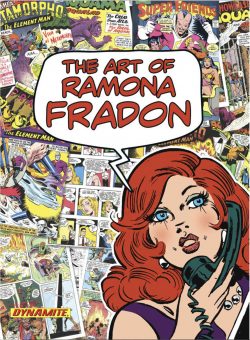
The Art of Ramona Fradon


By Ramona Fradon; interviewed by Howard Chaykin (Dynamite Entertainment)
ISBN: 978-1-60690-140-3 (HB/Digital edition)

Although present in comic books from the start, women – like so many other non-white male “minorities” – have been largely written out of history. One of the very few to have weathered that exclusion is Ramona Fradon. This excellent commemorative art collection celebrates not only her life and contribution, but thanks to its format – a free and unexpurgated extended interview with iconoclastic creator Howard Chaykin – offers the artist’s frank and forthright views on everything from work practise to the power of fans…

It all begins with an Introduction from Walt Simonson who proclaims ‘Meet your Idol… and discover They’re even Cooler than you Thought!’, before the early days are revealed in ‘Part One: Setting the Scene’ and ‘Part Two: In the Beginning’

Ramona Dom was born on October 2nd 1926 to an affluent Chicago family with many ties to commercial creative arts. Her father was a respected artisan, letterer and calligrapher who had designed the logos for Camel cigarettes, Elizabeth Arden and other major brands, and also formulated the fonts Dom Casual and Dom Bold. He had plans for his daughter, urging her to become a fashion designer…

The family moved to (outer) New York when Ramona was five., Ramona initially attended The Parsons School of Design, where she discovered she had absolutely no interest in creating clothes. Although she had never read comic books, she had been a voracious reader of illustrated books like the Raggedy Anne and Andy series by John Barton Gruelle, and a devoted fan of newspaper strips. Her favourites included Dick Tracy, Bringing Up Father, The Phantom, Alley Oop, Flash Gordon, Terry and the Pirates and Li’l Abner (all represented here by examples from the 1930s) and she transferred to the New York Art Students League, a hotbed of cartooning…

There she met and married Arthur Dana Fradon, who would become a prolific illustrator, author and cartoonist and a regular contributor to The New Yorker between 1948-1992. They wed in 1948 and he actively encouraged her to seek work in the still young funnybook biz.

‘Part Three: Gingerly Breaking into Comics’ reveals how her first forays at Timely Comics led to DC/National Comics and a Shining Knight story published in Adventure Comics #165 (cover-dated June 1951), ten months later taking over the long-running Aquaman feature in #167. Fradon was one of the first women to conspicuously and regularly illustrate comic books, drawing the strip throughout the 1950s and shepherding the sea king from B-lister to solo star and Saturday morning TV pioneer.

In the first of a series of incisive and informative mini biographies, ‘Sidebar: Murray Boltinoff’ reveals the influence of the much-neglected and under-appreciated editor. ‘Part Four: Queen of the Seven Seas’ and ‘Part Five: Man of 1000 Elements’ show how occasional stints on The Brave and the Bold team-ups led to her co-creation of Sixties sensation Metamorpho, the Element Man. However in 1965 – at the pinnacle of success – she abruptly retired to raise a daughter, only returning to the fold in 1972 for another stellar run of landmark work.

‘Sidebar: George Kashdan’ tells all about the multi-talented scripter before ‘Part Six: Ramona Returns to Comics… At Marvel???’ details how the House of Ideas lured the artist back to her board and highlights her difficulties working “Marvel-style” on assorted horror shorts, The Claws of the Cat and Fantastic Four, all presaging a return to DC…

‘Sidebar: Joseph Patterson’ looks into the astounding strip Svengali who green lit Dick Tracy, Little Orphan Annie, Gasoline Alley and more before ‘Part Seven: Back Home at DC Comics’ where she was busier than ever. As well as horror and humour shorts, Fradon drew a new Metamorpho try-out, superhero spinoff Freedom Fighters and her twin magnum opuses: revived comedy superhero Plastic Man and TV tie-in Super Friends. The revelations are bolstered by ‘Sidebar: E. Nelson Bridwell’, exploring the life of the man who knew everything about everything…

In 1980, Fradon took over Dale Messick’s long-running Brenda Starr newspaper strip, drawing it for 15 years. ‘Part Eight: Leaping From Books to Strips’ explores the painful and unpleasant chore in sharp detail, supplemented by ‘Sidebar: Brenda Starr’ outlining the feature’s history and reprinting those episodes when the ageless reporter met a certain cop, allowing Fradon to finally draw childhood idol Dick Tracy

The most fascinating stuff is left until last as ‘Part Nine: Ramona the Author’ discusses her career post-Brenda: drawing for Bart Simpson and Spongebob Squarepants comics, returning to higher education and writing a philosophical historical mystery novel – The Gnostic Faustus: The Secret Teachings Behind the Classic Text – as well as illustrated kids book The Dinosaur That Got Tired of Being Extinct.

Packed throughout with candid photos, and stunning pencil sketches, painted pictures and privately commissioned works of her stable of past assignments – like Aquaman, assorted Super Friends, Superman, Batman, Wonder Woman, Robin; the Metal Men, Aqualad, Brenda Starr, Black Canary, Shazam/Captain Marvel, Shining Knight, The Atom, The Spirit, Metamorpho and cast, Marvel Girl, Miss America, Power Girl, Catwoman, Hawkman, numerous illustrations from The Story of Superman book, and convention sketches, this celebration concludes with even more fabulous sleek super art images in ‘Part Nine: Ramona Today’ and ‘Part Eleven: Bibliography’

This is an amazing confirmation of an incredible career and any nostalgiac’s dream package. Amongst the gems unearthed here are complete Aquaman stories ‘The Kid from Atlantis!’ (Adventure Comics #269, 1960), ‘A World Without Water’ (Adventure Comics #251, 1958) and ‘How Aquaman Got his Powers!’ (Adventure Comics #260, 1959), plus tales from Star Spangled War Stories (#184, 1975) and ‘The Invisible Bank Robbers!’ from Gangbusters (#30, 1952).

Also on show are unpublished sample strips by Dana & Ramona Fradon and a monumental cover gallery depicting unforgettable images from Super Friends #3, 5-8, 10, 11, 13, 17, 19, 21, 22, 24-27, 31, 33, 36-39 & 41; Plastic Man #16-20; The Brave and the Bold #55, 57, 58, Showcase #30 & 33, Metamorpho, the Element Man #1-5, Namora #1 (2010), Fantastic Four #133 and Freedom Fighters #3.

These are supported by selected interior pages in full colour or monochrome from Star Spangled War Stories #8; Adventure Comics #190; Metamorpho, the Element Man #1; 1st Issue Special #3; Fantastic Four #133; The Brave and the Bold #57; House of Secrets #116 & 136; Secrets of Haunted House #3 & 14; House of Mystery #232 & 273; Plop! #5; Freedom Fighters #3 & 5; Plastic Man #14; Super Friends #6-8, 10, 13, 16, 19, 21, 23 & 25 and the Super DC Calendar 1977.

A truly definitive appreciation of the Comic Book Hall of Fame inductee 2006, this oversized (229 x 305 mm) hardback reproduces hundreds of pages and covers, plus a wealth of out-industry artwork and commissioned wonders, as accompaniment to an astonishingly forthright testament and career retrospective of a phenomenal and groundbreaking talent.

The Art of Ramona Fradon will delight everyone who wants to see a master in their element showing everybody how it should be done….

Marvel Characters © and ™ 1941-2013 Marvel Characters, Inc. DC Comics Characters © and ™ DC Comics. Brenda Starr™ © 2013 Tribune Media Services. All Rights Reserved

Frida Kahlo – Her Life, Her Work, Her Home


By Francisco de la Mora, translated by Lawrence Schimel (SelfMadeHero)
ISBN: 978-1-914224-10-2 (HB)

The creation and crafting of an image is infinitely variable and the response to it even more so: dependant entirely upon the mood, status, attitude and temperament of the viewer. Even that interaction is absolutely certain to shift and change from moment to moment.

The wedding of image to text is a venerable, potent and astoundingly evocative discipline that can simultaneously tickle like a feather, cut like a scalpel and hit like a steam-hammer. And again, repeated visits to a particular work will generate different reactions according to the recipient’s emotional and physical snapshot state.

The art of comics is a nigh-universal, overwhelmingly powerful medium lending itself to a host of topics and genres, but the area where it has always shone brightest is in its chimeric capacity for embracing incisive biography or autobiographical self-expression. Whether fictionalised narratives or scrupulously candid personal revelations, such forays inevitably forge the most impressive and moving connections between reader/viewer and author.

That alchemy is further enhanced when the subject under scrutiny is also fundamentally chimeric, fascinating, infinitely engaging and revelatory. Frida Kahlo was born in 1907 and died in 1954. In between those years, she lived an extraordinary life: one filled with pain, triumph, loss, silently-suffering endurance, astounding creativity and, always, passion.

She travelled the world many times over, yet barely escaped her bed for months at a time; joined with modern legends, and added immeasurably to the culture and beauty of existence. She is at once a modern deity and icon of her beloved Mexico and a universal example of the power and perseverance of female creativity and determination. Frida is an inspirational role model whose influence grows stronger every day…

Designated part of SelfMadeHero’s Art Masters imprint, Frida Kahlo – Her Life, Her Work, Her Home is a visually resplendent celebration of what made and shaped her, devised with great care by cartoonist Francisco de la Mora – who also gave the same treatment to her male counterpart and occasional husband in the award-winning companion volume Diego Rivera.

De la Mora’s other efforts include a regular monthly graphic residency in the Hackney Citizen, tales like El Infierno: Bienvenido Paisano and an 8-volume Brief History of Mexico

Here, the author uses Kahlo’s paintings as a springboard for leaping headlong into her momentous, contradictory life. Her images become a fulcrum balanced on her beloved family home Casa Azul (“the Blue House”) and her story is told in diary extracts and quotes from her biographers and the great and the good. Completed works and contemporary historical accounts reconstruct and demonstrate how a vivid and vivacious child at the centre of pivotal political events overcame a lifetime of hard knocks. Kahlo faced polio, life-altering crash injuries, untrustworthy, unfaithful men, miscarriage, constant gender iniquity and inequality, isolation and a life of constant unrelenting pain, reshaping the world of painting and restoring pride to and in her country…

Augmenting the visual odyssey is a forthright and effusive Foreword by Circe Henestrosa (Head of the School of Fashion, LaSalle College of the Arts, Singapore) preceding a range of added extras at the rear: a highly detailed and informative illustrated chronology of ‘Frida Kahlo (1907-1954)’, a full ‘Bibliography’, commentary ‘Notes’ on specifics images used in the text and a fulsome ‘Acknowledgements’ section.

Kahlo has become a household name since her death and her images and life have become common cultural currency and a symbolic especially amongst women, the socially disenfranchised, fringe dwellers, outsiders fighting against ingrained toxic masculinity and in fact anyone attuned to narratives of endurance, resistance, suffering, othering and simple common cruelty. Her life of pain has blossomed into a stunning lexicon of beauty that for many will begin by picking up this colourful but challenging chronicle of coping and comfort.
© 2023 Francisco de la Mora/Sara Afonso. Foreword © Circe Henestrosa. All rights reserved.

Frida Kahlo – Her Life, Her Work, Her Home is published on 16th March 2023 and available for pre-order now.

The Provocative Collette


By Annie Goetzinger, translated by Montana Kane (NBM)
ISBN: 978-1-68112-170-3 (HB)

Publisher NBM struck pure gold with their line of European-created contemporary arts histories and dramatized graphic biographies. This one is one of the very best but is tragically still only available in physical form. Hopefully that oversight will be addressed soon as it is a most enticing treat: diligently tracing the astoundingly unconventional early life of one of the most remarkable women of modern times.

Sidonie-Gabrielle Colette (January 28th 1873 – August 3rd 1954) escaped rural isolation and stagnation via an ill-considered marriage but, by sheer force of will and an astonishing gift for self-expression, rose to the first rank of French-language (and global) literature through her many novels and stories. The one you probably know best is Gigi, but you should really read a few more such as La Vagabonde or perhaps The Ripening Seed

For her efforts she was elected to the Belgian Royal Academy in 1935 and France’s Académie Goncourt a decade later. She became its President in 1949, the year after she was nominated for a Nobel Prize. Her grateful country also celebrated her as Chevalier (1920) and Grand Officer (1953) of the Légion d’honneur.

Colette’s relentless search for truths in the arena of human relationships – particularly in regard to women’s independence in a hostile and patronising patriarchal society – also led her to pursue freedom of expression through dance, drama, acting & mime, in film and as a journalist.

The fact that – for most of her early life – men controlled her money also prompted her far-reaching career path until she finally managed to win control of her own destiny and coffers…

Our drama unfolds in 1893 as 20-year-old Sidonie-Gabrielle readies herself for her wedding to prestigious and much older music journalist Henry Gauthier-Villars. The great man is celebrated nationally under his nom de plume “Willy”.

That’s also the name under which he will publish his wife’s first four, hugely successful Claudine novels whilst pocketing all the profits and attendant copyrights…

Eventually breaking free to live a life both sexually adventurous and utterly on her own terms, Colette never abandoned her trust in love or reliance on a fiercely independent spirit. And she shared what she believed about the cause of female liberty with the world through her books and her actions…

This bold, life-affirming chronicle was meticulously crafted by the superb and much-missed Annie Goetzinger (18th August1951 – 20th December 2017). Tragically it was her last in a truly stellar career. The award-winning cartoonist, designer and graphic novelist (The Girl in Dior, The Hardy Agency, Félina, Aurore, Marie Antoinette: Phantom Queen, Portraits souvenirs series) supplied here sumptuous illustration perfectly capturing the complexities and paradoxes of the Belle Epoque and the wars and social turmoil that followed. Her breezy, seductively alluring script brings to vivid life a wide variety of characters who could so easily be reduced to mere villains and martinets, but instead resonate as simply people with their own lives, desires and agendas…

The scandalous escapades are preceded by an adroit and incisive Preface from journalist and author Nathalie Crom: and bookended with informative extras such as ‘Literary References’, and full ‘Chronology’ of the author’s life, plus potted biographies of ‘Colette’s Entourage’: offering context and background on friends, family and the many notables inevitably gathered around her.

Additional material includes a suggested Further Reading and a Select Bibliography.

A minor masterpiece honouring a major force in the history and culture of our complex world, this book should be at the top of the reading list for anyone who’s thought “that’s not fair” and “why do I have to?”

The Provocative Colette is a forthright and beguiling exploration of humanity and one you should secure by any means necessary.
© DARGAUD 2017 by Goetzinger. All rights reserved. © 2018 NBM for the English translation.

The Art of Archie: The Covers


By various, edited by Victor Gorelick & Craig Yoe (Archie Books)
ISBN: 978-1-936975-79-2 (HB/Digital edition)

For most of us, comics mean buff men and women in capes and tights hitting each other, lobbing trees about, or stark, nihilistic genre thrillers aimed at an extremely mature and sophisticated readership of confirmed fans – and indeed that has been the prolific norm for nearly twenty years.

However, over the decades since 1933 when comic books were invented, other forms of sequential illustrated fiction genres have held their own. One that has maintained a unique position over the years – although almost now completely transferred to television – is the teen-comedy genre begun by and synonymous with a carrot topped, homely (at first just plain ugly) kid named Archie Andrews.

MLJ were a small outfit which jumped wholeheartedly onto the superhero bandwagon following the debut of Superman. In November 1939 they launched Blue Ribbon Comics, promptly following with Top-Notch and Pep Comics. The content was the accepted blend of costumed heroes, two-fisted adventure strips and one-off gags. Pep made history with its lead feature The Shield – the industry’s first superhero clad in the American flag – but generally MLJ were followers not innovators.

That all changed at the end of 1941. Even while profiting from the Fights ‘n’ Tights phalanx, Maurice Coyne, Louis Silberkleit and John Goldwater (hence MLJ) spotted a gap in their blossoming market and in December the action strips were joined by a wholesome, ordinary hero; an “average teen” who had invitingly human-scaled adventures that might happen to the readers, but with the laughs, good times, romance and slapstick heavily emphasised.

Pep Comics #22 introduced a gap-toothed, freckle-faced, red-headed goof showing off to the pretty blonde next door. Taking his lead from the popular Andy Hardy movies starring Mickey Rooney, Goldwater developed the concept of a youthful everyman, tasking writer Vic Bloom & artist Bob Montana with the job of making it work.

So effective and all-pervasive was the impact and comforting message the new kid offered to the boys “over there” and those left behind on the Home Front that Archie and the wholesome image of familiar, beloved, secure Americana he and the Riverdale gang represented, one could consider them the greatest and most effective Patriotic/Propaganda weapon in comics history…

It all started with an innocuous 6-page tale entitled ‘Archie’ which introduced the future star and pretty girl-next-door Betty Cooper. Archie’s unconventional best friend and confidante Forsythe P. “Jughead” Jones also debuted in that first story, as did the small-town utopia they lived in.

The premise was an instant and ever-growing hit. In 1942 the feature graduated to its own title. Archie Comics #1 was the company’s first non-anthology magazine and began an inexorable transformation of the entire company. With the introduction of rich, raven-haired Veronica Lodge, all the pieces were in play for the industry’s second Phenomenon (Superman being the first).

By May 1946 the kids had taken over and, retiring its costumed champions years before the end of the Golden Age, MLJ rebranded, renamed itself Archie Comics, and became to all intents and purposes a publisher of family comedies. This overwhelming success, like the Man of Tomorrow’s, forced a change in the content of every other publisher’s titles and led to a multi-media industry including a newspaper strip, TV, movies, pop-songs and even a chain of restaurants. Intermittently the costumed cut-ups have returned on occasion but Archie Comics now seems content to specialise in what they do uniquely best…

Our eponymous high-schooler is a good-hearted lad lacking common sense and Betty – pretty, sensible, devoted girl next door, with all that entails – loves the ridiculous redhead. Ronnie is spoiled, exotic and glamorous and only settles for our boy if there’s nobody better around. She might actually love him too, though. Archie, of course, can’t decide who or what he wants…

This never-tawdry eternal triangle has been the basis of seventy years of charmingly raucous, gently preposterous, frenetic, chiding and even heart-rending comedy encompassing everything from surreal wit to frantic slapstick, as the kids and an increasing cast of friends grew into an American institution.

Adapting seamlessly to every trend and fad, perfectly in tone with and mirroring the growth of teen culture, the host of writers and artists who have crafted the stories over the decades have made the archetypal characters of Riverdale a benchmark for youth and a visual barometer of growing up American.

Archie’s unconventional best friend Jughead is Mercutio to Archie’s Romeo: providing rationality and a reader’s voice, as well as being a powerful catalyst of events in his own right. There’s even a likeably reprehensible Tybalt figure in the crafty form of Reggie Mantle – who first popped up to cause mischief in Jackpot Comics #5 (Spring 1942).

This beguiling triangle edifice (plus annexe and outhouse) has been the rock-solid foundation for eight decades of comics magic. …and the concept seems eternally self-renewing and self-perpetuating…

Archie has thrived by constantly reinventing its core characters, seamlessly adapting to the changing world outside the bright, flimsy pages, shamelessly co-opting youth, pop culture and fashion trends into its infallible mix of slapstick and young romance.

Each and every social revolution has been painlessly assimilated into the mix with the editors tastefully confronting a number of social issues affecting the young in a manner both even-handed and tasteful over the years.

The cast is always growing and the constant addition of new characters such as African-American Chuck (an aspiring cartoonist), his girlfriend Nancy, fashion-diva Ginger, Hispanic couple Frankie & Maria and a host of others like spoiled wild-child home-wrecker-in-waiting Cheryl Blossom, and Kevin Keller, an openly gay young man and clear-headed advocate, capably tackling and dismantling the last major taboo in mainstream comics.

A major component of the company’s success has been the superbly enticing artwork and especially the unmistakable impact afforded via the assorted titles’ captivating covers.

This spectacular compilation (a companion and sequel to 2010s Betty & Veronica collection) traces the history and evolution of the wholesome phenomenon through many incredible examples from every decade. Augmented by scads of original art, fine art and commercial recreations, printer’s proofs and a host of other rare examples and graphic surprises no fan of the medium could possibly resist, this huge hardback (312 x 235mm) and digital delight re-presents hundreds of funny, charming, intriguing and occasionally controversial images as well as background and biographies on the many talented artists responsible for creating them.

Moreover, also included are many original artworks – gleaned from the private collections of fans – scripts, sketches, gag-roughs, production ephemera from the initial art-to-finished-cover process, plus an extensive, educational introductory commentary section stuffed with fascinating reminiscences and behind-the-scenes anecdotes.

The picture parade begins with some thoughts from the brains behind the fun as ‘It’s a Gift’ by Publisher/Co-CEO Jon Goldwater and ‘You Can Judge a Book by its Cover!’ by Editor-in-Chief/Co-President Victor Gorelick. Then ‘On the Covers’ issues guidance from cartoonist, Comics Historian and perpetrator Craig Yoe before taking us to the 1940s where ‘In the Beginning…’ details the story of Archie with relevant covers and the first of a recurring feature highlighting how later generations of artists have recycled and reinterpreted classic designs.

‘A Matchless Cover’ leads into the first Artist Profile – ‘Bob Montana’ – incorporating a wealth of cracking Golden Age images in ‘Who’s on First!’ before chapters dedicated to specific themes and motifs commence with a celebration of beach scenes ‘In the Swim’, after which artist ‘Bill Vigoda’ steps out from behind his easel and into the spotlight.

‘Deja Vu All Over Again’ further explores the recapitulation of certain cover ideas before ‘Rock ‘n’ Roll!’ examines decades of pop music and “guest” stars such as the Beatles, whilst ‘Archie’s Mechanically Inclined’ probes a short-lived dalliance with an early form of home DIY magazines.

The life of veteran illustrator ‘Al Fagaly’ leads into a selection of ‘Fan Faves’ ancient and modern before the biography of ‘Harry Sahle’ segues neatly into a selection of cheerleading covers in ‘Let’s Hear It for The Boy!’

It wasn’t long after the birth of modern pop music that the Riverdale gang formed their own band and ‘Ladies and Gentlemen, The Archies!’ focuses on those ever-evolving musical prodigies with scenes from the Swinging Sixties to the turbulent Rap-ridden 21st century, after which the history ‘Joe Edwards’ leads into a barrage of smoochy snogging scenes in ‘XOXOXO!’

Always a keen follower of fads and fashions. the Archie crowd embraced many popular trends and ‘Monster Bash!’ concentrates on kids’ love of horror and recurring periods of supernatural thrills, after which a bio of ‘Dan Parent’ leads unerringly to more ‘Celebrity Spotting!’ with covers featuring the likes of George Takei, Michael Jackson, Simon Cowell, J-Lo, Kiss, the casts of Glee and Twilight, and even President Barack Obama. all eagerly appearing amongst so very many others.

‘Art for Archie’s Sake’ dwells on the myriad expressions of junior painting and sculpture and, after the life story of the sublimely gifted ‘Harry Lucey’, ‘The Time Archie was Pinked Out!’ details the thinking behind the signature logo colour schemes used in the company’s pre-computer days.

‘Life with Archie’s a Beach!’ takes another look at the rise of teenage sand and surf culture through the medium of beautifully rendered, scantily clad boys and girls, whilst – after the lowdown on writer/artist ‘Fernando Ruiz’ ‘Dance! Dance! Dance!’ follows those crazy kids from Jitterbug to Frug, Twisting through Disco and ever onwards…

‘The Happiest of Holidays’ highlights the horde of magical Christmas covers Archie, Betty and Ronnie have starred on whilst ‘Rhyme Time’ reveals the odd tradition of poetry spouting sessions that have been used to get fans interested and keep them amused.

A history of the inimitable ‘Samm Schwartz’ precedes a look at classroom moments in ‘Readin’, Writin’, an’ Archie – with a separate section on organised games entitled ‘Good Sports!’ – after which the life of legendary art star ‘Dan DeCarlo’ neatly leads to another selection of fad-based fun as ‘That’s Just Super!’ recalls the Sixties costumed hero craze, as well as a few other forays into Fights ‘n’ Tights fantasy…

‘Let’s Get this Party Started’ features covers with strips rather than single images and is followed by a biography of ‘Bob Bolling’ before ‘A Little Goes a Long Way!’ concentrates on the assorted iterations of pre-teen Little Archie comics. This is then capped by the eye-popping enigma of teen taste as visualised in the many outfits over changing decades revealing ‘A Passion for Fashion’

‘Come as You Aren’t’ is devoted to the theme of fancy dress parties after which the modern appetite for variant covers is celebrated in ‘Alternate Realities’ (with stunning examples from Fiona Staples, Tim Seeley and Walter Simonson amongst others) all wrapped up by the gen on artistic mainstay ‘Bob White’.

The entire kit and caboodle then concludes with an assortment of surreal, mindblowing covers defying categorisation or explanation in ‘And Now, For Something Completely Different’, proving that comics are still the only true home of untrammelled imagination: featuring scenes that literally have to be seen to be believed…

Enchanting, breathtaking graphic wonderment, fun-fuelled family entertainment and enticing pop art masterpieces, these unforgettable cartoon confections truly express the joyous spirit of intoxicating youthful vitality which changed the comic industry forever and comprise an essential example of artistic excellence no lover of narrative art should miss.

Spanning the entire history of American comicbooks and featuring vintage images, landmark material and up-to-the-minute modern masterpieces, this is a terrific tome for anybody interested in the history of comics, eternally evergreen light laughs and the acceptable happy face of the American Dream.
™ & © 2013 Archie Comics Publications, Inc. All rights reserved. All covers previously published and copyrighted by Archie Comic Publication, Inc. (or its predecessors) in magazine form in 1941-2013.

Look and Learn Book 1964


By many & various (Fleetway)
ISBN10: 901267-49-X – ISBN13: 978-0-90126-749-8

One the most missed of publishing traditions in this country is the educational comic. From the fact features in the legendary weekly The Eagle to the small explosion of factual and socially responsible boys and girls papers in the late 1950s to the heady go-getting heydays of the 1960s and 1970s, Britain had a healthy sub-culture of comics that informed, instructed and revealed …and don’t even get me started on sports comics!

Amongst many others, Speed & Power, World of Wonder, Tell Me Why and the greatest of them all Look and Learn spent decades making things clear and bringing the marvels of the world to our childish but avid attentions. They always did so with taste. wit, style and – thanks to the quality of the illustrators involved – astonishing beauty.

Look and Learn launched on 20th January 1962, brainchild of Fleetway Publications Director of Juvenile Publications Leonard Matthews, and executed by Editor David Stone (almost instantly replaced by John Sanders), Sub-Editor Freddie Lidstone and Art Director Jack Parker.

For twenty years and 1049 issues, the shiny beautifully printed comic delighted children by bringing the marvels of the universe to their doors, and was one of the country’s most popular children’s publications. Naturally, there were many spin-off tomes such as The Look and Learn Book of 1001 Questions and Answers, Look and Learn Book of Wonders of Nature, Look and Learn Book of Pets and Look and Learn Young Scientist, as well as the totally engrossing Christmas treat The Look and Learn Book.

This volume was released for Christmas 1971 (as with almost all UK Annuals it was forward-dated) and is a prime example of a lost form. Within this 132 heavy-stock paged hard-back are 46 fascinating features on all aspects of human endeavour, history and natural wonders.

Technology always played a growing part in proceedings and – aided and abetted by printing advances photography – the ever innovative editors subdivided this volume into themed categories: opening naturally with a Science Section that includes – in drawn and painted but mostly photo – features Beneath the Waves – the Story of Submarines, A Jet in your garage?, Cities in the Sky, Our Polluted Planet (yep they were bloody warning us way back then!), Quiet Please! and Tested for Toughness.

To keep readers on their intellectual toes there are tests at the end of each course module and a Science Quiz ushers readers into the next phase – Our Wonderful World of History

Here – although photographs are increasingly used throughout – traditional illustrators still rule. Diagrams, cartoons, paintings and drawings were rendered by some of the world’s greatest commercial artists and might include such luminaries as Ron and Gerry Embleton, Helen Haywood, Ron Turner, Ken Evans, Angus McBride, Peter Jackson, “Pratt”, Fortunino Matania, John Millar Watt, John Worsley, Alberto “Albert” Breccia, Clive Upton, James E. McConnell, Ken Lilly, C.L. Doughty, Wilf Hardy, Dan Escott, R.B. Davis, Oliver Frey and many others, illuminating the articles and making these books (and the comics) an utter delight for hungry minds to devour whilst the Roast Beast and plum pudding slowly digested…

Right here back then that meant revealing such marvels as Conquerors of the Incas, The Heart of Sienna, When Horses Went to War, Are You Superstitious?, Signs of the Times, The First Americans, and Christmas Customs which comes with its own History Quiz and heralds a swift sojourn in the Wonderful World of Nature.

That means admiring and studying our native fauna in Their Home is the Highlands, Marine Marvels, The Grand Canyon, Winged Beauties (butterflies on stamps), Gems from the Ocean, Fish with a difference, When a Boar Goes to War, Creatures of the Night, Builders without hands, Puma – or Rumour?, Snakes Alive!, Fabulous Monsters and Birds of Prey and then taking the Nature Quiz

Our Wonderful World of Art injects some high culture to the mix, starting with The Artist at War – enhanced by famous contemporary images from G.H. Davis, Bruce Bairnsfather, Frank Wooton, Paul Nash and Dame Laura Knight – which is followed by facts, photos and paintings of Pompeii.

An examination of silent cinema comedies in The Banana Skin Boys, The Young Road to Fame (acting and actors) and exploration of Sir Arthur Conan Doyle in He Lived His Books covers more sedentary interests before Their Fathers Made Them Stars and The Revolutionary Genius (William Morris) segues into The Arts Quiz. That takes us to the end with a peek at Our Wonderful World

Here Round-the-World Sailors take the lead after which This town was… Buried for 1,500 Years (Herculaneum this time) offers more insights in lost worlds and Australia’s original inhabitants take centre stage in Corroboree! The Silent City explores Mdina in Malta before Ballooning over the Alps, The Making of a Sea, Ellan Vannin, Land of Music and Song and Under a Spanish Sky bring the session to a close – with its attendant Quiz – and of course all the answers…

With modern digital media I suppose this kind of book is unnecessary and irrelevant now, but nostalgia aside, the glorious art in these editions make them worth the effort of acquisition, and I defy anyone of any age to not be sucked into the magic of learning that looks this lovely…

© 1971 IPC Magazines, Ltd. All Rights Reserved.


The Great Treasury of Christmas Comic Book Stories


By John Stanley, Walt Kelly, Richard Scarry, Jack Bradbury, Klaus Nordling, Mike Sekowsky, Alberto Giolitti & various: edited and designed by Craig Yoe with Clizia Gussoni (IDW Publishing)
ISBN: 978-1-60010-773-3(HB); 978-1-68405-009-3(TPB); eISBN: 978-1-68406-352-9

Win’s Christmas Gift Recommendation: The Clue is in the Title… 10/10

Justifiably revered for brilliant, landmark newspaper strip Pogo, or perhaps his wonderful Our Gang tales, the incredible Walt Kelly also has a pretty strong claim to owning traditional western culture’s Christmas – at least in terms of childhood experience. From 1942 until he quit comic-books for newsprint, Kelly produced stories and magazines dedicated to the season of Good Will for publishing giant Dell.

Santa Claus Funnies and Christmas with Mother Goose were a Holidays institution in both their Four Color and Dell Giant incarnations, and the sheer beauty and charm of Kelly’s art defined what Christmas should be for generations. Kelly transferred his affinity for the best of all fantasy worlds to the immortal Pogo but still was especially associated with the Festive season. Many publications sought out his special touch. The Christmas 1955 edition of Newsweek even starred Kelly and Co on the cover.

Thanks to dedicated preserver of America’s Comics history Craig Yoe, we can add more great creators and stories to our communal archive of seasonal joy, with this cracking tome celebrating Yuletide comic classics.

Wrapped up here are old masters and vintage delights from Santa Claus Funnies # 61, 91,128, 175, 205, 302, 361, 867, 1154 & 1274 (spanning 1944-1962) plus 1962’s Santa Claus Funnies #1 and material from A Christmas Treasury #1 1954; Sleepy Santa (1948); Ha Ha Comics #49 (1947); Santa and the Pirates (1953); Here Comes Santa (1960); Christmas at the Rotunda, Giant Comics #3 (1957) and Christmas Carnival volume 1 #2 (1954). This superb funfest opens with a silent short by Kelly revealing the Big (in red) Man’s working practice, & Mo Gollub introducing ‘The Christmas Mouse’ (from Santa Clause Funnies #126 and #175) before we enjoy a Seasonal message (illustrated by Mel Millar) revealing ‘Hey Kids, Christmas Comics!’

‘How Santa Got his Red Suit’ is a superbly imaginative, gnome-stuffed origin fable by Kelly from Santa Claus Funnies # 61, after which H.R. Karp & Jack Bradbury reveal the salutary saga of ‘Blitzen, Jr.’ as first seen in Ha Ha Comics #49, whilst a tragically uncredited team disclose in prose-&-picture format the magical adventure of ‘Santa and the Pirates’, taken from a booklet Premium released by Promotional Publishing Co. NYC.

As rendered by the inimitable John Stanley, SCF #1154’s ‘Santa’s Problem’ explores the good intentions and bad habits of polar bears, before Mike Sekowsky contributes a concise, workmanlike adaptation of Charles Dickens’ ‘A Christmas Carol’ (from A Christmas Treasury #1) before Kelly returns with the heart-warming tale of ‘A Mouse in the House’ (SCF #128).

Stanley strikes again with ‘The Helpful Snowman’ (Here Comes Santa) offering aerial assistance to Kris Kringle whilst Christmas at the Rotunda offers a classy version of ‘The Shoemaker and the Elves’ courtesy of Elsa Jane Werner & Richard Scarry, after which cognoscenti can see potent prototypes for Pogo characters in 1945’s ‘Christmas Comes to the Woodland’ (SCF #91): another whimsical Kelly classic.

Imbecilic but well-meaning elf Scamper causes mayhem, prompting ‘Santa’s Return Trip’ in a wry delight from John Stanley & Irving Tripp (from SCF #1274), after which Stanley & Dan Gormley craft an epic voyage for determined rugrats Cathy and David as they deliver ‘A Letter for Santa’ (Santa Claus Funnies #1).

Another masterful Kelly prose-&-picture fable then recounts the sentimental journey of ‘Ticky Tack, the Littlest Reindeer’ (SCF #205) and the animal crackerz continue as a lost puppy finds friendship and a new home in ‘Sooky’s First Christmas’ (Stanley & Gormley from SCF #867)…

Charlton Comics were late to the party for X-mas strips, but their glorious Giant Comics #3 from 1957 provides here both Frank Johnson’s anarchic ‘Lil’ Tomboy in It Was the Day Before Christmas…’ and an extra-length action-packed romp for Al Fago to masterfully orchestrate in ‘Atomic Mouse in The Night before Christmas’. Separating those yarns is a deft updating of Clement Clark Moore’s ubiquitous ode in ‘The Night before Christmas’ by Dan Gormley from A Christmas Treasury #1…

In 1947, Kelly set his sights on consolidating a new Holiday mythology and succeeded with outrageous aplomb in ‘The Great Three-Flavoured Blizzard’ (Santa Claus Funnies #175) as an unseasonal warm spell precipitates a crisis and necessitates the making of a new kind of snow, before fabulous Klaus Nordling contributes a stylish comedy of errors with ‘Joe and Jennifer in the Wonderful Snowhouse’ from Christmas Carnival volume 1 #2.

Bringing things to a close Dan Noonan concocts a staffing crisis for Santa to solve with the aid of ‘Teddy Bear in Toyland’ (SCF #91, 1950) after which we enjoy a moment of sober reflection as ‘The Christmas Story’ – according to St. Matthew’s gospel and illuminated by Alberto Giolitti – (A Christmas Treasury #1) reminds us that for many people it’s not just about loot, excess and fantasy.

Kelly then ushers us out with a brace of end pieces encompassing a poetic hunt for the old boy and a silent silly symphony from ‘The Carollers’

It absolutely baffles me that Kelly and his peers’ unique and universally top-notch Christmas tales – and Batman’s too for that matter – are not re-released every November for the Yule spending spree. Christmas is all about nostalgia and good old days and there is no bigger sentimental sap on the planet than your average comics punter. And once these books are out there their supreme readability will quickly make converts of the rest of the world.

Just you wait and see…
The Great Treasury of Christmas Comic Book Stories © 2018 Gussoni-Yoe Studio, Inc. All Rights Reserved. Material reprinted: Sleepy Santa © 1948 Belda Record & Publishing Co. Ha Ha Comics #49 © Creston Publications Corporation. Santa and the Pirates © 1953 Promotional Publishing Co. NYC. Christmas at the Rotunda © 1955 Ford Motor Company and Artists and Writers Guild, Inc. Giant Comics #3 © 1957 Charlton Comics Group Christmas Carnival vol. 1 #2 St. John Publishing Corp. ©1954. © Western Printing & Lithographing Co. 1948, 1950, 1951, 1954, 1957, 1960, 1961, 1962. © 1944, 1945, 1946, 1947, Oscar Lebek/Dell Publishing, Western Printing & Lithographing Co.