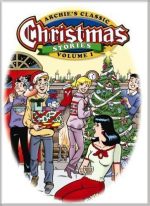
Archie Americana Series: The Best of the Seventies


By Frank Doyle, George Gladir, Dan DeCarlo, Samm Schwartz, Harry Lucey, Stan Goldberg & various (Archie Comics)
ISBN 978-1-87979-405-4

The monolith of wholesome fun that is Archie Comics had fully cemented its place in America’s popular culture scene by the 1960s. With the Youth Market an acknowledged commercial powerhouse, the red-haired archetype (and the company which created him) was known as much for animated TV shows, the pop single “Sugar, Sugar” and soon a chain of restaurants. Archie also totally dominated the comicbook humour market.

This volume – now also available as a digital download – collects a scant few of the stories from that decade; concentrating on fashions and fads such as Hot Pants, CB radio, Protest Movements, the Bicentennial, Disco, the advent of video games and even popular movie and TV sensations as well as the ever-widening divide between rebellious teens and oppressive adults.

It also delightfully shows the overwhelming power of good writing and brilliant art to captivate an audience of any age. Padding out this potently nostalgic package is a brace of House-ads from the period and a fulsome cover-gallery of iconic power and riotous wit.

The eternal verities are still in effect. Jughead Jones is still wise, weird and eternally hungry. The teachers at Riverdale High School are still hard-pressed and harassed. Archie Andrews is, as ever, that good-hearted, well-meaning boy lacking common sense. Betty Cooper is still the pretty, sensible girl next door, and glamorous Veronica Lodge is as rich, exotic and quixotic as ever, whilst the school and leisure antics of the broader cast are hip, engaging and hugely entertaining.

The eternal triangle and perfect laugh formula was first seen in 1941 and forms the basis of decades of charming, raucous, gentle, frenetic, chiding and even heart-rending comedy ranging from surreal wit to frantic slapstick, and has never been better depicted than here.

Following a poetic Introduction from actress Shirley Jones, the merriment kicks off with

‘Protest’ (Life with Archie #93, January 1970) by Frank Doyle & Samm Schwartz, seeing an ever-more frantic Archie desperate to join the national wave of teen rebellion but unable to find anything to dissent over or anyone angry enough to march with him…

George Gladir, Dan DeCarlo & Rudy Lapick regale us with Riverdale’s response to daring new fashion must-have ‘Hot Pants’ in a wry observation from Laugh #248 (November 1971) after which ‘Decisions, Decision’ (Archie #214, December 1971, by Doyle, Harry Lucey & Marty Epp) deliciously reveals how that Archie-Betty-Veronica quandary keeps going…

The anonymously crafted ‘Bubble Trouble’ (Everything’s Archie #21, April 1972, possibly Stan Goldberg pencilling?) then reveals how the garage band The Archies disprove media accusations that they are merely a bubblegum rock band with the help of a certain legendary star of Rock ‘n’ Roll…

From Archie #217 (April 1972) by Doyle, Lucey & Epp comes ‘The Late Archie Andrews!’ as desperate Principal Mr. Weatherbee goes to outrageous lengths to get the unlucky red-head to school on time, before a quartet of cool covers bridge the gap until the wackiness resumes.

‘Patch Match’ (Betty & Veronica #198, June 1972, Gladir & DeCarlo) details how Betty monopolises that Andrews boy by offering to sew onto his jacket all the cool badges he’s been collecting. Veronica of course responds with all the wealth in her arsenal but still comes out second-best…

‘Loyalville, USA’ (Archie at Riverdale High #12 December 1973, Doyle, DeCarlo & Lapick) sees Betty and Archie help out the town’s worst memorabilia vendor whilst Gladir, Goldberg & Jon D’Agostino prove there’s ‘No Fuel Like an Old Fuel’ (Pep #296, December 1974) by finding a way to save gas during an energy crisis that nevertheless lands Archie and Jughead in a storm of trouble…

Probably the most affecting tale in this collection, ‘You Came a Long Way, Baby’ (Betty & Veronica #233, May 1975, by Doyle, DeCarlo & Lapick) dramatically teaches the condescending girls how much progress in gender equality old maid Miss Grundy has been responsible for at Riverdale High. Then sadly uncredited ‘Bicentennial Banter’ (Archie’s TV Laughout #36 December 1975) sees those same lasses girls teach the boys about the female contributions and the decisive roles played by women during the American Revolution as they rehearse for a commemorative school play…

Archie’s eager fondness for CB radio is detailed in ‘Over and Out’ (Archie #256, September 1976: Doyle, Dan DeCarlo & Lapick) before more covers whet the palate for further fun which comes through an animal-free ‘Pet Parade’ (Everything’s Archie #57, June 1977).

Our gormless star naturally becomes ‘A Fool for Cool’ (Archie Giant Series/World of Archie #461 September 1977) after listening to bad advice and patterning his dating techniques on the Fonz from TV phenomenon Happy Days…

Betty & Veronica #263 (November 1977) was the original home for Gladir & DeCarlo’s ‘Video Vexation’, with the girls losing their place as the boys’ abiding passion once Pop Tate installs a computer arcade system, after which Star Wars gets thoroughly spoofed in ‘Costume Caper’ (Reggie & Me #104, April 1978) with Lapick adding his inking sheen to Gladir & DeCarlo’s smart rib-tickler.

‘Melvin’s Angels’ (Betty & Veronica #277, January 1979) by Doyle, DeCarlo & Lapick then sees Betty & Veronica undertaking a bruising mission for a mystery man on a speaker phone before the glitzy glamour-era comics celebration concludes with ‘Disco Dude’ (Laugh #343 October 1979) as a big food prize entices slovenly slowpoke Jughead to show off his amazing dance moves. Of course, his cunning plan goes disastrously awry…

These charming and comfortable yarns are a gentle delight and a much neglected area of cartoon and graphic narrative. It would benefit us all to take another long look at what they have to offer. If only to see how far fashion has not come…
© 1970-1979, 1998 Archie Publications Inc. All rights reserved.

Billy & Buddy volume 2: Bored Silly with Billy


By Jean Roba, translated by Luke Spear (Cinebook)
ISBN: 978-1-84918-049-8

Known as Boule et Bill on the Continent (or more accurately in the French speaking bits, as the Dutch and Flemish call them Bollie en Billie), this timeless and immensely popular cartoon story of a boy and his dog debuted in the Christmas 1959 edition of multinational, multilingual Spirou.

The perennially popular strip was the result of Belgian writer-artist Jean Roba (Spirou et Fantasio, La Ribambelle) putting his head together with the magazine’s Artistic Director/Ideas Man Maurice Rosy – who had also ghosted art and/or scripts on Jerry Spring, Tif et Tondu, Bobo and Attila during his decades-long, astoundingly productive career at the legendary periodical.

Intended as a European answer to Charles Schulz’s Peanuts, Boule et Bill would quickly go its own way and carve out a unique personality all its own, becoming Rosa’s main occupation for the next 45 years.

He tirelessly crafted more than a thousand pages of gag-strips in a beguiling, idealised domestic comedy about a little lad and his rather clever Cocker Spaniel before – in 2003 – surrendering the art-chores to his long-term assistant Laurent Verron.

The substitute subsequently took over the writing too after Roba died in 2006.

Jean Roba was born in Schaerbeek, Belgium on July 28th 1930 and grew up reading mostly American newspaper strip translations and reprints. He was particularly fond of Rudolph Dirks and Harold H. Knerr’s Katzenjammer Kids and after the War began working as a jobbing illustrator before adopting the loose, free-wheeling cartooning style known as the “Marcinelle School” and joining the Spirou crew.

He followed Uderzo on Sa majesté mon mari and perfected his craft under Franquin on Spirou et Fantasio before launching Boule et Bill as a mini-récit (a 32-page, half-sized freebie insert) in the December 24th 1959 Spirou.

Like our own Dennis the Menace in The Beano, the strip was incredibly popular from the start and for 25 years held the coveted and prestigious back-cover spot. Older British fanboys might also recognise the art as early episodes – wittily retitled It’s a Dog’s Life – ran in Fleetway’s Valiant from 1961 to 1965…

A cornerstone of European life, the strip has generated a live-action movie, animated TV series, computer games, permanent art gallery exhibitions, sculptures and even postage stamps. Like some select immortal Belgian comics stars, Bollie en Billie have a commemorative plaque and a street named after them in Brussels….

Large format album editions began immediately, totalling 21 volumes throughout the 1960s and 1970s. These were completely redesigned and re-released in the 1980s, supplemented by a range of early reader books for the very young. Comics collections have been translated into fourteen languages and sold in excess of 25 million copies of the 32 albums to date.

Renamed Billy and Buddy, the strip debuted en Angleterre in enticing Cinebook compilations from 2009 on: introducing a standard late 20th century sitcom nuclear family consisting of one bemused, long-suffering and short-tempered dad, a warm, compassionate but painfully flighty mum, a smart but mischievous son and his genius dog who has a penchant for finding bones, puddles and trouble…

Ras le Bill was the 19th collection in Europe, but here simply serves to further explore the timeless relationships for our delight and delectation.

Comprised of a constant stream of rapid-fire gags, quips and jests, the progress and behaviour of seven-year old Billy is measured by carefree romps with four-footed friend Buddy: dodging fractious magpies, avoiding baths, building up a treasure trove of bones, putting cats in their place, causing accidents, and costing money; with both kid and mutt equally adept at all of the above.

Buddy is the perfect pet for an imaginative boy, although he’s overly fond of bones and rather protective of them. He also does not understand why everyone is so keen to constantly plunge him into foul-tasting soapy water, but it’s just a sacrifice he’s prepared to make to be with Billy…

The dog also has a fondly paternal relationship with tortoise Caroline which is explored at length in this collection, and a suspicious knack for clearing off whenever dad has one of his increasingly common meltdowns over the cost of canine treats and repair bills. At least Buddy can make himself useful by helping mum in her self-indulgent fashion purchases…

Gently-paced and filled with wry wit and potent sentiment, these captivating gag-pages run the gamut from heart-warming to hilarious, silly to surreal: a charming tribute to and lasting argument for a child for every pet and vice versa. This is a splendidly enticing and rewarding family-oriented bunch of comics no one keen on introducing youngsters to the medium should be without.
Original edition © Studio Boule & Bill 2008 by Roba. English translation © 2010 Cinebook Ltd.

Archie’s Pal Kevin Keller


By Dan Parent, Rich Koslowski, Jack Morelli & Digikore Studios (Archie Comics)
ISBN: 978-1-87979-493-1 (HC)

Following the debut of Superman, MLJ were one of many publishers to jump on the “mystery-man” bandwagon, concocting their own small but inspired pantheon of gaudily clad crusaders. In November 1939 they launched Blue Ribbon Comics, promptly following up with Top-Notch and Pep Comics. The content was the standard mix of masked champions, two-fisted adventurers, prose pieces and gags.

Not long after, Maurice Coyne, Louis Silberkleit and John Goldwater (hence MLJ) saw a gap in the blossoming yet crowded market and in December 1941 the Fights ‘n’ Tights, He-Man crowd were gently nudged aside by a far less imposing hero; an ordinary teenager having ordinary adventures just like the readership, but with the laughs, good times, romance and slapstick emphasised.

Goldwater developed the youthful everyman protagonist concept and tasked writer Vic Bloom & artist Bob Montana with making it work. Inspired by and referencing the popular Andy Hardy movies starring Mickey Rooney, their new notion premiered in Pep Comics #22. The unlikely star was a gap-toothed, freckle-faced red-headed kid obsessed with impressing the pretty blonde next door.

A 6-page untitled tale introduced hapless boob Archie Andrews and wholesomely fetching Betty Cooper. The boy’s unconventional best friend and confidante Jughead Jones also debuted in that vignette, as did idyllic small-town utopia Riverdale. It was a huge hit and by the winter of 1942 the kid had won his own title.

Archie Comics #1 was MLJ’s first non-anthology magazine and with it began an inexorable transformation of the entire company. With the introduction of ultra-rich, raven-haired Veronica Lodge, all the pieces were in play for the industry’s second Genuine Phenomenon…

By 1946 the kids were in charge, and MLJ officially became Archie Comics, retiring most of its costumed characters years before the end of the Golden Age and becoming, to all intents and purposes, a publisher of family-friendly comedies. The hometown settings and perpetually fruitful premise of an Eternal Romantic Triangle – with girl-hating Jughead to assist or deter and scurrilous love-rat rival Reggie Mantle to test, duel and vex our boy in their own unique ways – the scenario was one that not only resonated with fans but was infinitely fresh…

Archie’s success, like Superman’s, forced a change in content at every other publisher (except Gilberton’s Classics Illustrated) and created a culture-shifting multi-media brand which encompassed TV, movies, newspaper strips, toys and merchandise, a chain of restaurants and, in the swinging sixties, a pop music sensation when Sugar, Sugar – from the animated TV cartoon – became a global summer smash hit.

Clean and decent garage band “The Archies” has been a fixture of the comics ever since…

The perennial eternal triangle has generated thousands of charming, raucous, gentle, frenetic, chiding and even heart-rending humorous dramas ranging from surreal wit to frantic slapstick, with the kids and a constantly expanding cast of friends (boy genius Dilton Doily, genial giant jock Big Moose and occasional guest Sabrina the Teenage Witch amongst many others), growing into an American institution and part of the American cultural landscape.

The feature has thrived by constantly refreshing its core archetypes; boldly and seamlessly adapting to the changing world outside its bright and cheerful pages, shamelessly co-opting youth, pop culture, fashion trends and even topical events into its infallible mix of slapstick and young romance.

Each and every social revolution has been painlessly assimilated into the mix and over the decades the company has confronted most social issues affecting youngsters in a manner both even-handed and tasteful.

Constant addition of new characters such as African-American Chuck and his girlfriend Nancy, fashion-diva Ginger, Hispanic couple Frankie and Maria and spoiled home-wrecker-in-waiting Cheryl Blossom all contributed to a wide and refreshingly broad-minded scenario, and in 2010 Archie jumped the final hurdle when openly gay student Kevin Keller became an admirable advocate capably tackling and dismantling the last major taboo in mainstream comics.

Created by writer/artist Dan Parent and inker Rich Koslowski (lettered by Jack Morelli and coloured by Digikore Studios), Kevin debuted in Veronica #202 (September 2010). It was the first comicbook in the company’s long history to go into a second printing…

Also collected in this landmark debut compendium is the sequel tale from Veronica #205 and the 4-issue Kevin Keller miniseries which cemented the new star’s popularity.

It begins with context-establishing essay ‘Get to Know Kevin Keller’ before comic introductions are made in ‘Isn’t it Bro-Mantic’ as Veronica encounters a charming, good-looking and exceeding together lad who utterly bowls her over.

She is totally smitten with him even though he can out-eat human dustbin Jughead and loves sports. Although he inexplicably loves hanging out with the ghastly Jones boy she is determined to make him exclusively hers. Jughead is truly cool with his new pal, and he soon sees a way to pay Ronnie back for many of the mean things she has said and done over the years…

When Kevin finally explains to Veronica why she is wasting her time, she takes it well and soon they are hanging out as best buds. After all they have so much in common: chatting, stylish clothes, shopping, boys…

Immensely popular from the outset, Kevin struck a chord with the readership and returned a few months later in ‘The Buddy System’, with Veronica’s bombastic dad giving the perfect new student the all-clear to monopolise his daughter’s time. The following fun-filled days do have one major downside however, as poor Betty is increasingly neglected.

You’d think Archie would be jealous too, but he’s just glad that someone safe is keeping other guys away from his Ronnie. It seems the perfect scenario for everyone but Betty, but then man-hunting rich and entitled princess Cheryl Blossom hits town and puts everything back into perspective…

The guest shots rapidly evolved into a miniseries, expanding Kevin’s role whilst answering many questions about his past. It started with ‘Meet Kevin Keller’ where we learned he was an army brat, born in Britain but raised all over the world, and now lived in Riverdale with his dad (retired and invalided army colonel) Thomas, mum Kathy and feisty sisters Denise and Patty.

It also revealed he loved practical jokes as much as food and sports…

Whilst sharing these facts with Betty and Ronnie he also let slip some less impressive details: how he was a nerdy, braces-wearing late developer who was frequently the target of bullies…

‘The Write Stuff’ is set during the build-up to his father’s surprise birthday party and discloses how Kevin plans to serve in the army before becoming a journalist, whilst also showing the gentle hero’s darker side after he is compelled to intervene and stop the persecution of a young Riverdale student by bullies…

In ‘Let’s Get it Started’ the newcomer is ambushed and pressganged by his new friends into participating in a scholastic TV quiz show where his nerves almost get the better of him. Happily, Ronnie inadvertently breaks his paralysing stage-fright with a humiliating gaffe, but that’s just a palate cleanser for a potent object lesson in the concluding chapter…

As Kevin steps in to shelter and help one of the kids who used to torment him long ago, ‘Taking the Lead!’ also finds him reluctantly running for Class President at the insistent urging of Ronnie and the gang.

It’s not that he wants the position particularly, but when bigoted jock and star quarterback David Perkins starts a campaign based on intolerance, innuendo and intimidation, Kevin feels someone has to confront the smugly-macho, “real man” most popular boy in school…

And despite a smear campaign and dirty tactics any Presidential candidate would be proud of, truth, justice and decency win out…

This breezy and engaging collection concludes with ‘An Interview with Kevin Keller’ offering further background direct from the horse’s mouth and also includes a host of covers, variants and remastered classic Archie images retrofitted to suit our 21st century star.

Archie’s Pal Kevin Keller is a superb, hilarious and magically inclusive collection for you, your kids and grandparents to enjoy over and over again.
© 2012 Archie Comics Publications, Inc. All rights reserved.

Jinx


By J. Torres, Rick Burchett & Terry Austin (Archie Comics)
ISBN: 978-1-93697-500-6 (HC)        : 978-1-87979-491-7 (PB)

Despite tremendous advances in the last decade or so, for most people, when we say comicbooks, thoughts either turn to outrageously buff men and women in garish tights or leather hitting each other and lobbing cars about, or stark, nihilistic crime, horror or science fiction sagas aimed at an extremely mature and sophisticated readership of already-confirmed fans.

For American comics these days that is indeed the norm. Over the years though (and throughout the rest of the world still), other forms and genres have continued to wax and wane.

One US company which has steadfastly held its ground against the tide over the decades – supported by a thriving spin-off TV and movie franchise – is a teen-comedy powerhouse which created a genre through the exploits of carrot-topped Archie Andrews and the two girls he could never choose between – Betty Cooper and Veronica Lodge.

For far too many years, other companies largely ignored the fact that girls read comics too and, in their frantic, slavish pursuit of the spandex dollar, lost half their potential audience. Girls simply found other ways to amuse themselves until, in the 1990s, the rise of manga painfully proved to comics publishers what Archie Comics had always known.

Ever since that pivotal moment Editors have attempted to recapture that vast missing market: creating worthy titles and imprints dedicated to material for the teen/young adult audience (since not all boys thrive on a steady diet of cosmic punch-ups and vengeful vigilantes) which had embraced European classics like Tintin and Asterix, manga material, momentous comics epics like Maus and Persepolis or the abundant and prolific prose serials which produced such pop phenomena as Twilight, The Hunger Games and Harry Potter.

Archie thrived by never abandoning its female readership and by constant reinvention of its core characters, seamlessly adapting to the changing world outside its bright, flimsy pages: shamelessly co-opting pop music, youth culture and fashion trends into its infallible mix of slapstick and romance.

Each and every social revolution has been painlessly assimilated into the mix (the company has managed to confront a number of major issues affecting the young in a manner both even-handed and tasteful over the years), and the constant addition of timely characters such as African-American Chuck and his girlfriend Nancy, fashion-diva Ginger, Hispanic couple Frankie and Maria and a host of others – such as spoiled home-wrecker-in-waiting Cheryl Blossom – all contributed to a broad and refreshingly broad-minded scenario.

There are non-sensationalised interracial romances, and in 2010 Archie jumped the final hurdle for a family-entertainment medium with the rapturously well-received introduction of Kevin Keller; an openly gay and proud young man who was a clear-headed advocate capably tackling and dismantling the last major taboo in mainstream kids’ comics.

Where once cheap, prolific and ubiquitous, comics magazines in the 21st century are extremely cost-intensive and manufactured for a highly specific – and dwindling – niche market. Moreover the improbably beguiling and bombastic genres that originally fed and nurtured comicbooks are increasingly being supplanted by TV, movies and assorted interactive games media.

Happily, old-school prose publishers and the graphic novel industry have a different business model and far more sustainable long-term goals, so the magazine makers’ surrender has been turned into a burgeoning victory, as solid and reassuringly sturdy Comics-as-Books increasingly buck the slowly perishing pamphlet/papers trend.

Publishers like Archie…

Jinx was another barely-noticed landmark which saw one of the company’s venerable and long-lived child-stars given a stunning makeover and refit courtesy of a multi award-winning creative team.

Writer J. Torres (Teen Titans Go!, Degrassi: the Next Generation, Alison Dare, Days Like This, Lola – a Ghost Story and others) in conjunction with celebrated artists Rick Burchett (Batman Adventures, American Flagg!, Blackhawk, Black Hood) & Terry Austin (X-Men, Superman, Batman, Cloak and Dagger) are responsible for turning adorable six-year old tomboy Li’l Jinx into a genuine icon of, if not role-model for, modern teenaged girls in a style and manner at once astonishingly accessible and classically captivating.

If you qualify as an Ancient One like me, you might be familiar with precocious, feisty Li’l Jinx who debuted in Pep Comics #62 (cover-dated July 1947). Created by Joe Edwards, she debuted as the publisher began dropping superheroes such as the Shield and Black Hood to specialise in kid-friendly humour features. Over the coming decades she appeared in her own title, as well as Li’l Jinx Giant Laugh-Out and assorted anthologies such as Pep and Archie Giant Series Magazine.

Like Edwards’ own son, her birthday was on Halloween and the writer/artist put much of himself into the strip. A boisterous, basically decent, sports-loving, mischievous tyke (in the manner of our Minnie the Minx), when not romping, cavorting and tussling with other kid pals Gigi, Greg, Charley Hawse, Russ, Roz and Mort the Worry Wart, Jinx almost exclusively interacted with her long-suffering dad Hap Holliday.

Her mother was seldom seen. The kid’s Christian name is lost to history: apparently so screamingly embarrassing that to utter it was to invite battered ear drums and mangled limbs…

Li’l Jinx faded away gradually during the 1980s as fashionista-teenagers and Mutant Turtles supplanted the pesky kid characters in Archie’s increasingly “young adult” oriented stable.

Jinx Holliday was revived and given a thorough 21st century upgrade for a new serial in Life With Archie (#7-11, March-June 2011); a growing girl just starting big school. The former tomboy hadn’t lost all her rough edges though…

This volume collects the serialised story of her beginning the inescapable if deplorable process of becoming responsible – with all the scary changes that entails…

After a handy ‘Cast of Jinx’ page, the dramatic comedy (available in both paperback and hardcover editions) opens with 4-part tale ‘Little Jinx Grows up’ – as serialised in Life With Archie – with the nervous Californian 14-year old starting at Rose Valley High School where she immediately falls foul of draconian martinet Principal Mr. Vernon.

At least many of her oldest friends are starting too, but they all seem so changed and grown up since summer vacation…

As they settle in, Jinx is oblivious to the fact that more than one of the boys she used to wrestle and play football with now treat her differently…

She’s just starting to hate the place and its stupid rules when Greg points out the final straw: Freshman Baseball – in fact all her favourite sports – are for boys only. Former child model Gigi is typically smug about it, hinting again that it’s time Jinx began acting like a girl, but that only provokes the incensed tomboy to break another rule…

Everybody is talking about Jinx after she extremely publicly signs up for Football Tryouts, and neither a barracking from Mr. Vernon or some heavy-handed bullying of Greg by the senior Football squad can change her mind.

The Principal thinks he has the final word after making Jinx take a permission slip home to her dad, but after Hap Holliday absolutely refuses to let his little girl get crippled by teenaged Neanderthals, Jinx simple forges his signature…

The tryouts are a disaster, but at least Greg is honestly trying to help her. Surly Charley, however, delivers a tackle that results in her being stretchered off, and when dad is called to school all hell breaks loose…

While she’s grounded and recovering, BFF Roz starts dropping hints about Greg and romance, promptly going into snoopy overdrive when a mystery caller leaves a large bouquet of flowers…

For the first time Jinx realises High School is just one big stew of frustrated hormones which only adds to her worries. So preoccupied is she that, when Greg timidly asks her to a dance, she doesn’t realise what he’s saying and shoots him down without even noticing. The mystery flower-sender – covertly watching – does, however, and seethes…

Flustered, confused and determined to end the turmoil in her head, Jinx then ambushes and pre-emptively kisses Greg, but the result is something neither of them nor their secret stalker expected…

The grand gesture completely destabilises Jinx who goes into a spiral of angry depression and tetchy acting-up. Baffled Hap is hopeless to cope, and, with Halloween approaching, throws himself into organising her birthday costume party: a tradition they’ve enjoyed since she was a toddler. He has no idea how much his little girl has changed and that the prospect of a party sounds like torture to her…

And thus the scene is set for a showdown nobody will ever forget…

All dramatic foreboding aside, this clever, warm tale ends well and promises much more for the future. Smart, witty and intoxicatingly engaging, Jinx is a superb example of what can be accomplished in comics if you’re prepared to portray modern kids on their terms and address their issues and concerns.

Without ever resorting to overblown soap melodrama or angst-ridden teen clichés, Torres has delivered a believable cast of young friends who aren’t stupid or selfish, but simply trying to find their own tentative ways to maturity. The art by Burchett and Austin is semi-realistic and mesmerisingly effective.

This terrific turbulent tome includes many bonus features such as a ‘Football Pinup’, J. Torres’ thoughts and commentary on the story as described in ‘The Voice of Jinx’ and a fascinating, picture-packed peek behind the scenes in ‘The Concept Art of Jinx’.

More production secrets are revealed by Editor Suzannah Rowntree, describing how the project was conceived and created in ‘The Story of Teen Jinx’ and there’s even a smart selection of one-page Short Comics treats to wrap up the fun.

‘Fitting In’, ‘It’s Complicated’, ‘Frenemy of the State’, ‘The Dating Game’ and ‘Chat Fight’ all combine to prove that although they might be growing up, the cast are still kids at heart…

Compellingly funny, gently heart-warming and totally absorbingly, this book will resonate with kids and parents, offering genuine human interactions rather than repetitively manufactured atom-powered fistfights to hold your attention. It especially gives women a solid reason to give comics another try.

Sheer exuberant fun; perfectly crafted and utterly irresistible…
© 2012 Archie Comics Publications, Inc. All rights reserved.
Plastic Man Archives volume 5


By Jack Cole & various (DC Comics)
ISBN: 978-1-4012-0154-8

Jack Cole was one of the most uniquely gifted talents of America’s Golden Age of Comics. Before moving into mature magazine and gag markets he originated landmark tales in horror, true crime, war, adventure and especially superhero comicbooks, and his incredible humour-hero Plastic Man remains an unsurpassed benchmark of screwball costumed hi-jinks: frequently copied but never equalled. It was a glittering career of distinction which Cole was clearly embarrassed by and unhappy with.

In 1954 he quit comics for the lucrative and prestigious field of magazine cartooning, swiftly becoming a household name when his brilliant watercolour gags and stunningly saucy pictures began regularly running in Playboy from the fifth issue.

Cole eventually moved into the lofty realms of newspaper strips and, in May 1958, achieved his life-long ambition by launching a syndicated newspaper strip, the domestic comedy Betsy and Me.

On August 13th 1958, at the peak of his greatest success, he took his own life. The reasons remain unknown.

Without doubt – and despite his other triumphal comicbook innovations such as Silver Streak, Daredevil, The Claw, Death Patrol, Midnight, Quicksilver, The Barker, The Comet and a uniquely twisted and phenomenally popular take on the crime and horror genres – Cole’s greatest creation and contribution was the zany Malleable Marvel who quickly grew from a minor back-up character into one of the most memorable and popular heroes of the era. “Plas” was the wondrously perfect fantastic embodiment of the sheer energy, verve and creativity of an era when anything went and comics-makers were prepared to try out every outlandish idea…

Eel O’Brian was a brilliant career criminal wounded during a factory robbery, soaked by a vat of spilled acid and callously abandoned by his thieving buddies. Left for dead, he was saved by a monk who nursed him back to health and proved to the hardened thug that the world was not just filled with brutes and vicious chisellers after a fast buck.

His entire outlook altered and now blessed with incredible elasticity, Eel resolved to put his new powers to good use: cleaning up the scum he used to run with.

Creating a costumed alter ego he began a stormy association with the New York City cops before being recruited as a most special agent of the FBI…

He soon picked up the most unforgettable comedy sidekick in comics history. Woozy Winks was a dopey, indolent slob and utterly amoral pickpocket who accidentally saved a wizard’s life and was blessed in return with a gift of invulnerability: all the forces of nature would henceforth protect him from injury or death – if said forces felt like it.

After failing to halt the unlikely superman’s determined crime spree, Plas appealed to the scoundrel’s sentimentality and, once Woozy tearfully repented, was compelled to keep him around in case he strayed again. The oaf was slavishly loyal but perpetually back-sliding into pernicious old habits…

Equal parts Artful Dodger and Mr Micawber, with the verbal skills and intellect of Lou Costello’s screen persona or the over-filled potato sack he resembled, Winks was the perfect foil for Plastic Man: a lazy, greedy, morally bankrupt reprobate with perennially sticky fingers who got all the best lines, possessed an inexplicable charm and had a habit of finding trouble. It was the ideal marriage of inconvenience…

This fifth full-colour hardback exposes more eccentrically exaggerated exploits of the elastic eidolon from Police Comics #50-58 and Plastic Man #4 (stretching from January to September 1946), and opens here with an appreciation of Cole and his craft by Bill Schelly in the Foreword before a bizarre mystery confounds the populace as ‘Plastic Man Protects Crookdom’.

When a celebrated astrologer is murdered, his dying prediction seems to confirm that the chameleonic crimebuster is cursed to save his killers from the law… but they haven’t heard the victim’s entire utterance…

Police #51 then details how twisted, frustrated love turns a gorgeous but frog-throated operatic chanteuse into a deadly, rock-fisted killer dubbed ‘The Granite Lady’. Even after her mad scientist paramour returns her to flesh-&-blood, her heart remains stony cold…

‘Crime without Criminals’ sees the city devoid of all underworld activity thanks to the efforts of Plas and Woozy. However, nature abhors a vacuum and this time it’s filled by an unlikely new crew of bandits, just in time to take the edge off our heroes’ mounting boredom…

Cole always had a grand line on mad scientists and in ‘The Evil Genius of Dr. Erudite’, came up with a classic loon like no other. This passionate maniac had so many great crime ideas he had no time to implement them. Realising the only solution was to replicate himself, he began an anarchic spree but was surprised by two unforeseen factors: Plastic Man’s determination to stop him and his own duplicate’s rebellious nature…

Cerebral conundra continued to vex our heroes in Police #54 as a moronic sneak thief became a lethal menace to America after swiping ‘The Thinking Machine’. Thankfully Plastic Man was on hand to fight and Woozy to balance the scales of natural imbecility…

Issue #55 revealed the genesis and just deserts of ‘Sleepy Eyes’ as a cheap crook realises he has the power to plunge folk into unshakeable comas…

Cole’s constant and still-growing pressure to fill pages led to the hiring of numerous artists to draw his madcap scripts. This is clearly seen in Plastic Man #4 (Summer 1946) which opens with ‘The Purple Viking’ (illustrated by Bart Tumey), wherein a longboat full of ancient Norse reivers invades a quiet seaside hamlet, just as Plas and Woozy check in for a quiet weekend. How odd that the beach town is trashed by invaders just as a developer is checking out prospective new resort sites…

A crooked political-boss trying to set up his own country inside America is no match for the Pliable Paladin in ‘King Lughead the First’ (art by John Spranger). Not only are all his larcenous efforts to fill the Treasury foiled, but new Prime Minister Mr. Winks is so dumb he might as well be working for the other side…

The stooge once more becomes the star as Woozy stumbles into ‘The Lollypop Caper’ (Tumey again), chasing gem-filled candy sought by rival mobs and a rather dangerous toddler…

Plastic Man’s uncanny deductive abilities are then propounded in prose short ‘Plas’ to Meet You’ before the capture of arch-thug ‘The Lobster’ leads to Woozy being adopted and Plas stumbling into a cunning conspiracy…

Plastic Man #56 then dabbled with childish whimsy as ‘Overworked Genie’ (art by Andre Leblanc) sees the stretchable sleuth take a day off to spend his time granting wishes to a little kid. However, crime never sleeps and all too soon greedy thugs are trying to steal Mickey’s lamp. Big mistake…

A growing public fascination with and appetite for flying saucer stories informs ‘Mars – Keep Away’ (Spranger art) as the mysterious Mr. Misfit inserts his diminutive self into Plas and Woozy’s hunt for stolen atomic fuel and a flamboyantly crackpot rocketry loon dubbed Professor MacGhoul, after which this slice of vintage class concludes with a deadly duel against murderously marauding vegetable villain ‘The Green Terror’ (illustrated by Alex Kotsky)…

Augmented by all the astoundingly ingenious covers, this is a true gem of funnybook virtuosity: still exciting, breathtakingly original, thrilling, witty, scary, visually outrageous and pictorially intoxicating more than seventy years after Jack Cole first put pen to paper.

Plastic Man is a unique creation and this is a magical experience comics fans would be nuts to miss.
© 1946, 2003 DC Comics. All Rights Reserved.

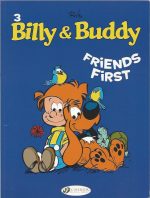
Billy & Buddy volume 1: Remember This, Buddy?


By Jean Roba, translated by Luke Spear (Cinebook)
ISBN: 978-1-905460-91-5

Known as Boule et Bill on the Continent (or more accurately in the French speaking bits, as the Dutch and Flemish call them Bollie en Billie), this timeless and immensely popular cartoon story of a boy and his dog debuted in the Christmas 1959 edition of multinational Spirou.

It was the result of Belgian writer-artist Jean Roba (Spirou et Fantasio, La Ribambelle) putting his head together with the magazine’s Artistic Director/Ideas Man Maurice Rosy – who had also ghosted art and/or scripts on Jerry Spring, Tif et Tondu, Bobo and Attila during his decades long, productive career with the legendary periodical.

Intended as a European answer to Charles Schulz’s Peanuts, Boule et Bill would quickly go its own way and carve out a unique personality all its own, becoming Rosa’s main occupation for the next 45 years.

He tirelessly crafted more than a thousand pages of gag-strips in a beguiling idealised domestic comedy about a little lad and his rather clever Cocker Spaniel before – in 2003 – handing the art-chores over to his long-term assistant Laurent Verron. The substitute subsequently took over the writing too after the originator died in 2006.

Jean Roba was born in Schaerbeek, Belgium on July 28th 1930 and grew up reading primarily American reprint strips. He was particularly fond of Rudolph Dirks and Harold H. Knerr’s Katzenjammer Kids. After the War he began working as a jobbing illustrator before adopting the loose, free-wheeling cartooning style known as the “Marcinelle School” and joining the Spirou crew.

He followed Uderzo on Sa majesté mon mari and perfected his comics craft under Franquin on Spirou et Fantasio before launching Boule et Bill as a mini-récit (a 32-page, half-sized freebie insert) in the December 24th 1959 Spirou.

Like our own Dennis the Menace in The Beano, the strip was incredibly popular from the start and for 25 years held the coveted and prestigious back-cover spot. Older British fanboys might also recognise the art as early episodes – retitled It’s a Dog’s Life – ran in Fleetway’s Valiant from 1961 to 1965…

A cornerstone of European life, the strip has generated a live-action movie, animated TV series, computer games, permanent art gallery exhibitions, sculptures and even postage stamps. Like some select immortal Belgian comics stars, Bollie en Billie have a commemorative plaque and a street named after them in Brussels….

Large format album editions began immediately, totalling 21 volumes throughout the 1960s and 1970s. These were completely redesigned and re-released in 1980s, supplemented by a range of early reader books for the very young. Comics collections have been translated into fourteen languages and sold in excess of 25 million copies of the 32 albums to date.

Renamed Billy and Buddy, the strip debuted en Angleterre in enticing Cinebook compilations from 2009 on: introducing a standard sitcom nuclear family consisting of one bemused and long-suffering father, a warm, compassionate but painfully ditzy mother, a smart son and his genius dog which has a penchant for finding bones, puddles and trouble…

The majority of this book – Tu te rappelles, Bill? – was originally the sixth collection before being cut down and reissued as volume 17 in Europe, but here acts as the ideal vehicle to set up the characters and settings for our delight and delectation.

Inside you’ll see a non-stop parade of quick-fire quips and jests as seven-year old Billy enjoys carefree romps with four-footed friend Buddy: digging up treasure on the beach, chasing cats, learning tricks to be useful around the house and generally baffling and annoying grown-ups.

Buddy is the perfect pet for an imaginative boy, although he’s overly fond of bones and rather protective of them. He also does not understand why everyone is so keen to constantly plunge him into foul-tasting soapy water, but it’s just a sacrifice he’s prepared to make to be with Billy…

Gently-paced and filled with wry wit and potent sentiment, these captivating vignettes range from heart-warming to hilarious: a charming tribute to and argument for a child for every pet and vice versa. This is a solid, family-oriented collection of comics no one trying to introduce youngsters to the medium should be without.
Original edition © Studio Boule & Bill 2008 by Roba. English translation © 2009 Cinebook Ltd.

Death Sentence: London


By Montynero & Martin Simmonds with John Pearson & Jimmy Betancourt (Titan Comics)
ISBN: 978-1-78276-507-3

For most of us Sex Sells. If that’s not you and you’re easily shocked or offended, stop Right Here, Right Now and come back for a less grown-up review tomorrow.

As for the salacious, tawdry, vulgar majority of humanity, however, fornication is a force that will not be resisted and we’re always gagging for it.

One outrageous potential result of that inescapable biological imperative was recently explored in a dark, decadent fable from writer, artist and games designer Montynero who, with illustrator Mike Dowling, crafted a ferociously effective satire on modern attitudes in Death Sentence.

After an initial and truncated appearance in Clint Magazine in 2012 the sexily sordid saga was retooled as a breakthrough 6-issue miniseries which took the comics world by storm when released in 2013.

Something that good was bound to be tried again and a series followed, of which Death Sentence: London – illustrated now by Martin Simmonds – is but the first compulsive compilation…

In the World That’s Coming a sexually transmitted disease known as G+ is spreading rapidly through the population. It is invariably fatal and kills in six months. For that length of time, however, the victim “suffers” from increased vigour, stamina, sex drive and even develops super powers…

The true extent of the threat only became apparent to the public after media darling, affirmed libertine and proud G-Plus carrier David “Monty” Montgomery used his exponentially-expanding psychic powers to kill Britain’s government, royal family and one million Londoners.

Having crowned himself King of Britain, Monty was only stopped by two other critically enhanced G-Plus sufferers: frustrated artist Verity Fette and shambolic fading rock star Daniel Waissel AKA Weasel.

More through luck than effort – and despite the interference of a UN Taskforce, covert US super-weapon deployment and best attempts of the British military – the wonder kids narrowly managed to kill Monty in a blockbusting super-battle televised around the world. The conflagration especially terrified the assorted world governments who collectively feared their days of ruling the masses were over…

Britain’s bosses had been aware of the growing crisis for ages and had already tasked its shadowy Department of National Security to deal with it. The usual tactics of murder, blackmail, disinformation and cover-ups proved ineffective, however, and soon something else was being considered.

At least Verity died in the final battle and what’s left of the UK’s Powers-That-Be now only have sybaritic, self-destructive Weasel to manage until the disease finally kills him…

In the meantime, on a remote Scottish island, a very nice old lady runs a vast secret base beneath the heather where she and her team toil away with no sense of scientific niceties – or ethics – as they strive to find a cure for G+…

Dr. Lunn had been helping sufferers for quite a while. She crash-trained Verity and Weasel in the use of their abilities (also providing space, time, tuition and medical-grade drugs) before siccing them on the out-of-control Monty…

Following handy recap ‘Previously in Death Sentence’ the story resumes with ‘“A” Bomb on Wardour Street’ as Weasel is riotously fêted by the metropolitan populace whilst über-ambitious Old Etonian London Mayor Tony Bronson seethes and schemes. There’s a power-vacuum in the country at this moment and he’ll be buggered if he lets anyone else fill it… especially some oikish, pox-ridden musical miscreant…

An ocean away, undercover Fed Jeb Mulgrew is closing his latest case when everything goes tits-up after his targets display out of control super-powers. Luckily his keenly-observing back-up team are equipped with the latest horrific innovation in anti-G-Plus ordnance…

At City Hall, Tony’s latest opportunistic sound-bite does nothing to slow the looting tearing up the remainder of London; much of it seemingly orchestrated by new dissident movement the Invaders. The spreading violence even reaches a nearly deserted fast-food franchise where an armed robbery is foiled, giving first notice that Verity might not be dead after all…

As Jeb tries to reconnect with his wife and home in Texas, London sees another bloody crime stopped by the enigmatic Artgirl and Tony snaps, declaring martial law in His city…

Each episode is followed by a carefully-tailored supplemental feature and here ‘The Age of the Super G’ exposes the Americans’ thermonuclear contribution to Monty’s demise before the comics saga continues with ‘Uprising’ as Weasel attends a rally in Brixton. The borough is in the process of declaring its independence and seceding from Tory-infested London and big-business corrupted Britain…

Bronson’s response is uniquely typical: ramping up military action, closing down social media and arresting G+ carriers whilst ordering the public to stop having sex until a cure is found.

When tanks roll up during a memorial service, Weasel is just in the mood to share the misery he’s been feeling since Monty killed his little boy, but in the victorious aftermath it’s the anonymous mask-wearing Invaders who are making converts and dictating policy on the streets of Brixton…

In Texas, things just aren’t working out for Jeb so when his bosses ask him to infiltrate British intelligence and steal their potential cure for the super-sex plague, he can’t wait to start…

After a faux magazine feature on Creighton Baines and how his alien-masked Invaders haunt protest sites and agitate for social change, the story starts again in ‘Eton Rifles’ as dedicated journalist Fincham is handed a certain dossier by a mole with suspicious intent. Soon the Chronicle‘s top scribe is making things hot for golden gibbon-esque, sexually-deviant Tony…

As tensions escalate everywhere, Verity assuages her own through increasingly bawdy encounters as she drifts ever closer to isolated, segregated, curfew-enduring Brixton. She has no idea that she’s been targeted for immediate assassination, but then again, her would-be executioners have no idea how powerful she now is…

Preceded by excerpts from reputable rag The Chimes – detailing the rise of international angst and the stalling of the World Powers debating a space-based weapons ban – ‘Sitting Here’ sees a turf war brewing between local gangster Retch and weed-dealing newcomer Roots. Both have their supporters and both are high-functioning G-Plus victims, with all the deadly benefits that condition brings…

As Tony’s Territorials rumble into Brixton savage violence erupts, but he’s elsewhere, busily indulging his nasty copulatory habits. Fincham, meanwhile, is tracking a rumour about a Scottish Island and a woman who might have a cure, even as Retch and Roots clash for control of their streets…

Following snippets from The Chronicle News – revealing the not-so-quiet war for dominance between power-hungry Mayor Bronson and top surviving aspirant Party-leader Michael DeGraves – the Mayor gets a rude and ribald awakening as the winner of the Brixton gang rumble exposes the hypocrite’s nasty upper-class peccadilloes in ‘Burn’. Across town, Verity gives doggedly determined Fincham an exclusive, comprehensive interview which will never see print…

Later, as Bronson strives frantically to keep ahead of the political game, an intimate well-wisher makes a big mistake by approaching G+ sufferers in tune with the old guard and hereditary rulers. They can be of immense service to this Sceptr’d Isle… after they pass a training course at a facility on a certain Scottish island…

An excerpt from Creative Review debating ‘Artgirl: High Art of Graffiti?’ leads the tale to a temporary halt in ‘Kill at Will’ as Dr. Lunn welcomes a new bioanalyst – who looks remarkably like American Jeb Mulgrew – to her little secret empire. In Brixton, meanwhile, the military are moving in to wipe out all resistance but are totally unprepared for the unlikely, unstable convergence of all London’s omega-level G-Plus super-beings waiting for them…

And then long-range telemetry shows that Verity’s condition has taken a terrifying and impossible turn nobody could have predicted…

To Be Continued…

Packed with plenty of bonus features including a breathtaking covers and variants selection by Montynero, Death Sentence: London is an uproarious adult fairytale blending superhero tropes with outrageous cheek, deliriously shocking situations and in-your-face irreverence.

Buy it, read it and spread it around to anyone you fancy… and maybe some you don’t…
Death Sentence ™ and © 2014 Montynero, Mike Dowling and Titan Comics. All rights reserved.

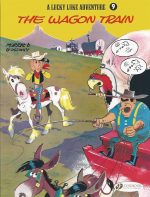
Lucky Luke Volume 8 Calamity Jane


By Morris & Goscinny, translated by Pablo Vela (Cinebook)
ISBN: 978-1-905460-25-0

Lucky Luke is seventy years old this year: a rangy, good-natured, lightning-fast quick-draw cowboy who roams the fabulously mythic Old West on his super-smart and stingingly sarcastic horse Jolly Jumper, having light-hearted adventures and interacting with a host of historical and legendary figures of the genre.

He’s probably the most popular Western star in the world today. His unbroken string of laugh-loaded exploits has made him one of the best-selling comic characters in Europe (82 albums selling in excess of 300 million copies in 30 languages at the last count), with spin-off toys, computer games, assorted merchandise, animated cartoons and even a passel of TV shows and live-action movies.

He was created in 1946 by Belgian animator, illustrator and cartoonist Maurice de Bévère (“Morris”) for L’Almanach Spirou 1947 of Le Journal de Spirou (the Christmas Annual), before springing into his first weekly adventure ‘Arizona 1880’ on December 7th 1946.

Prior to that, Morris had met future comics super-stars Franquin and Peyo while working at the CBA (Compagnie Belge d’Actualitiés) cartoon studio and contributing caricatures to weekly magazine Le Moustique. He quickly became one of “la Bande des quatre” (Gang of Four) comprising creators Jijé, Will and Franquin: all leading proponents of the loose, free-wheeling art-style dubbed the “Marcinelle School” which dominated Spirou in aesthetic contention with the “Ligne Claire” style used by Hergé, EP Jacobs and other artists in rival magazine Tintin.

In 1948 said Gang (all but Will) visited America, meeting US creators and sightseeing. Morris stayed for six years, meeting fellow tourist René Goscinny, scoring some work from newly-formed EC sensation Mad whilst making copious notes and sketches of the swiftly vanishing Old West.

That research resonates on every page of his life’s work.

A solo act until 1955, Morris produced another nine albums worth of affectionate parody before formally partnering with Goscinny, who became his regular wordsmith. Lucky Luke rapidly attained the dizzying heights of superstardom, commencing with ‘Des rails sur la Prairie’ (Rails on the Prairie), which began serialisation in Spirou with the August 25th of 1955. In 1967 the six-gun straight-shooter changed horses in midstream, transferring to Goscinny’s own magazine Pilote with ‘La Diligence’ (The Stagecoach).

Goscinny & Morris produced 45 albums together before the author’s death in 1977, after which Morris continued both singly and with fresh collaborators. Morris passed away in 2001, having drawn fully 70 adventures, plus beginning spin-off adventures for Rantanplan (“dumbest dog in the West” and a charming spoof of cinema canine Rin-Tin-Tin).

The immortal franchise was left to fresh hands, beginning with Achdé, Laurent Gerra, Benacquista & Pennac who have produced another ten tales to date.

Curiously, apart from the initial adventure, Lucky (to appropriate a quote applied to the thematically simpatico Alias Smith and Jones) “in all that time… never shot or killed anyone”. He did however smoke, like all the cool cowboys did…

Lucky Luke was first seen in Britain syndicated to weekly comic anthology Film Fun, then reappeared in 1967 in Giggle, renamed Buck Bingo. In all these venues – as well as the numerous attempts to follow the English-language successes of Tintin and Asterix albums from Brockhampton and Knight Books – Luke had a trademark cigarette hanging insouciantly from his lip, but in 1983 Morris, no doubt amidst both pained howls and muted mutterings of “political correctness gone mad”, substituted a piece of straw for the much-travelled dog-end, which garnered him an official tip of the hat from the World Health Organization.

Unquestionably, the most successful attempt at bringing Lucky Luke to our shores and shelves is the current incarnation. Cinebook (who have rightly restored the foul weed to his lips on the interior pages, if not the covers…) have translated 58 albums thus far. Calamity Jane was their eighth, still readily available both on paper and as an e-book edition.

It was first published Continentally in 1967: the 30th European offering and Goscinny’s twenty-first collaboration with Morris. It’s also one of the team’s better tales, blending historical personages with the wandering hero’s action-comedy exploits and as such it’s a slice of Horrible Histories-tinged Americana you can’t afford to miss.

It all begins with our hero taking a welcome bath in a quiet river, only to be ambushed by a band of Apaches spoiling for a fight. Their murderous plans are ruined by a bombastic lone rider who explosively drives off the raiders in a hail of gunfire before stopping to laugh at the embarrassed Luke. His cool, confidant rescuer is tough, bellicose, foul-mouthed, tobacco-chewing and infamous: although born Martha Jane Cannery most folk just call her Calamity Jane…

She’s becomes more amenable after learning who Luke is and over coffee and a scratch meal, mutual respect develops into real friendship. Recounting her (remarkably well-researched) history she learns in return why Luke is in the region: someone has been supplying the Indians with guns just like the ones that almost killed him earlier…

Keen to help, Calamity joins Lucky and they ride into frontier town El Plomo and another little crisis. The saloon prefers not to serve ladies… until Jane convinces them to change the policy in her own unique manner.

The glitzy dive is owned and operated by unctuous, sleazily sinister August Oyster who instantly suspects that legendary lawman Luke is there because of his own underhand, under-the-counter activities…

As the cowboy heads off to check in with the sheriff, Calamity gets into games of chance and skill with the sleazy Oyster and his hulking henchman Baby Sam, swiftly causing an upset by winning his hotel and saloon. Happily, Lucky is back on the scene by the time the grudging grouse has to officially hand over his money-making venture.

Flushed with success, the new proprietor starts making changes and no man cares to object to the Calamity Jane Saloon and Tearoom (Reserved for Ladies). They’ll happily buy her beer and whiskey too, but not even at gunpoint will they eat her crumpets…

Oyster and Baby Sam are frantic, however: the saloon was crucial to their side business selling guns to renegade Apaches and they have to get it back before increasingly impatient Chief Gomino takes matters into his own bloodstained hands…

Still hunting for the gunrunners and pretty certain who’s behind the scheme, Luke is constantly distracted by the petty acts of sabotage and even arson plaguing Calamity, but even as he finds his first piece of concrete proof, Oyster instigates his greatest distraction yet: organising the haughtily strait-laced Ladies Guild of El Plomo to close down the insalubrious saloon and run its new owner out of town…

Never daunted, Luke calms his tack-spitting pal down and deftly counterattacks by sending for an etiquette teacher to polish rough diamond Jane enough to be accepted by the ferocious and militant guildswomen. It is the greatest challenge urbane and effete Professor Robert Gainsborough (an outrageously slick caricature of British superstar actor David Niven) has undertaken and his eventual (partial) success leaves him a changed and broken man…

Stymied at every turn, the panicking August Oyster is soon caught red-handed by the vigilant vigilante, but it is too late. Frustrated and impatient, Gomino has decided to raid the town in broad daylight and seize his long-promised guns and ammo from their hiding place.

The terrifying marauders however have not reckoned on the steely fighting prowess of Lucky Luke and the devil woman they superstitiously call “Bang! Bang!”…

Cleverly barbed, wickedly witty and spectacularly playing with the key tropes of classic sagebrush sagas, this raucous romp is another grand escapade in the comedic tradition of Destry Rides Again and Support Your Local Sheriff, superbly executed by master storytellers as a wonderful introduction to a venerable genre for today’s kids who might well have missed the romantic allure of an all-pervasive Wild West that never was…

Also included here is a photo pin-up of the actual Martha Jane Cannery in her gun-toting prime and, in case you’re worried, even though the interior art still has our hero drawin’ on that ol’ nicotine stick, trust me, there’s very little chance of any reader craving a quick snout (or crumpets wild west style), but quite a strong likelihood that they’ll be addicted to Lucky Luke albums…
© Dargaud Editeur Paris 1971 by Goscinny & Morris. © Lucky Comics.

Arctic Comics


By Nicholas Burns, Jose Kusugak, Michael Kusugak, Germaine Arnaktauyok, George Freeman, Susan Shirley & various (Renegade Arts Entertainment)
ISBN: 978-1-98782-503-9

According to the Introduction by project instigator Nicholas Burns, this edition of Arctic Comics has been a long time coming. Springing out of his 1986 prototype comics anthology – created for the World Exposition of that year – the work here was originally intended for its 1992 sequel. Thanks to life and an astounding number of other worthy and worthwhile endeavours, that book now materialises as this superb oversized full-colour hardback album.

It certainly hasn’t suffered for the wait…

Offering a clutch of tales by creators from the far north – most of them of Inuit heritage – this Arctic Comics is a magnificent melange of mirth, murder, mythology, merriment and adventure that feels authentically hale, hearty and welcoming: gathering yarns and entertainments from a land and culture which values the power of stories…

Setting the ball rolling is a smart silent-gag strip starring Sheldon the Sled Dog who endures his own frustrating ‘Hunger Games’ courtesy of Burns before revered author, advocate, scholar and cultural proponent Jose Kusugak unites with noted Inuit printmaker Germaine Arnaktauyok to share their retelling of an Inuit creation myth when ‘Kiviuq meets Big Bee’.

Long ago in the time when men and animals were one, both could change shape and one could never be sure what you were dealing with. Kiviuq was the first man and one day he became circumstantially embroiled in the death of an able man and good provider. The dead man’s grandmother Angakkuq held Kiviuq and all the other village men equally responsible and used her magic to punish them all, luring them out to sea on a seal hunt and smashing them with a storm…

Kiviuq knew many things and survived the assault but it took many years to find his home again. Moreover, every landfall was fraught with peril such as this encounter with the eyelid-stealing woman known as Iguptarjuaq or Big Bee…

That mythological Arctic odyssey is followed by ‘On Waiting’: a poetic paean to childhood at the top of the world from author Michael Kusugak (Baseball Bats for Christmas, The Shaman) and celebrated landscape artist Susan Thurston Shirley. A moving celebration of a childhood packed with everyday delights – hunting, warm clothes, playing soccer under the illumination of the Northern Lights – is coloured with simple acceptance and edged with the pain of early loss…

Sled Dog Sheldon hilariously pops back on a snowy night – aren’t they all? – looking for ‘Any Port in a Storm’, after which Burns displays his pictorial versatility to detail romantic entanglements and sporting pride at war in ‘The Great Softball Massacre’.

Originally entitled ‘The Great Slo-Pitch Massacre’ this mini soap-opera is splendidly reminiscent of cult comedy movie classic Men with Brooms: a tale of young love gone wrong during a municipal slo-pitch tournament between deadly rivals.

In case you’re wondering, slo-pitch is like Softball or Rounders – except in the ways it differs – and is championed by beer leagues and other manful aggregations of inebriates across North America too far gone to indulge in the rigours and dangers of a real sport. It’s not Life and Death: it’s far more serious that that….

Slipping back into his Ligne Clair-informed Hergé style, Burns then introduces RCMP sleuth Constable Puqittuq and her Loyal Sled Dog Vincent in ‘Film Nord’ where the canny Inuk investigator uncovers skulduggery on a tundra movie location. Clearly shot through with weirdoes and probable perps, the long list of suspects dwindles and before long the sagacious peacekeeper discovers the victim’s death is the result of a most uncanny act…

Wrapping up the excitement is a dark and sinister eco-thriller by Burns and Winnipeg-based comicbook veteran George Freeman (Captain Canuck, Batman, Jack of Hearts, Elric: Weird of the White Wolf). ‘Blizzard House: a Future Arctic Adventure’ finds a couple of horny teenagers trapped in a prototype passive-energy wonder-house of tomorrow, even as a murderous energy baron attempts to sabotage and destroy the looming threat to his corporate cash cow…

Enthralling, astounding and beguilingly exotic, this collection of comics treasures offers tantalisingly different visions and voices that will appeal to every funnybook fan who thinks they’ve already seen everything under the sun…
Arctic Comics, the stories, characters, world and designs are copyright their respective writers and artists. This edition © Renegade Arts Canmore Ltd. 2016.

This book is available in English, Inuktitut and French editions.

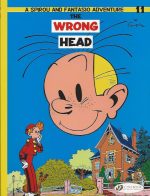
Spirou & Fantasio volume 10: Virus


By Tome & Janry, translated by Jerome Saincantin (Cinebook)
ISBN: 978-1-84918-297-3

Spirou (which translates as both “squirrel” and “mischievous” in the Walloon language) was created by French cartoonist François Robert Velter under his nom-de-plume Rob-Vel. The inspirational invention at the request of Belgian publisher Éditions Dupuis in direct response to the phenomenal success of Hergé’s Tintin for competing outfit Casterman.

Not long after, soon-to-be legendary weekly comic Spirou launched (on April 21st 1938) with Rob-Vel’s red-headed rascal as the lead of the anthology which bears his name to this day.

The eponymous star was originally a plucky bellboy/lift operator employed by the Moustique Hotel (a wry reference to the publisher’s premier periodical Le Moustique) whose improbable adventures with pet squirrel Spip gradually grew into high-flying, far-reaching and surreal action-comedy dramas.

Spirou and his chums have spearheaded the magazine for most of its life, with a phalanx of truly impressive creators carrying on Velter’s work, beginning with his wife Blanche “Davine” Dumoulin who took over the strip when her husband enlisted in 1939. She was assisted by Belgian artist Luc Lafnet until 1943 when Dupuis purchased all rights to the property, after which comic-strip prodigy Joseph Gillain (“Jijé”) took the helm.

In 1946 Jijé’s assistant André Franquin assumed the creative reins, gradually sidelining the long-established brief, complete gag-vignettes in favour of epic adventure serials, introducing a wide and engaging cast of regulars and eventually creating phenomenally popular magic animal the Marsupilami to the mix.

Franquin continued crafting increasingly fantastic Spirou sagas until his abrupt resignation in 1969 and his tenure is remembered for the wealth of weird and wonderful players and villains he added to the cast. As well as comrade, rival and co-star Fantasio and perennial exotic arch-enemies such as Zorglub and Fantasio’s unsavoury cousin Zantafio, a particular useful favourite was crackpot inventor and modern-day Merlin of mushroom mechanics Pacôme Hégésippe Adélard Ladislas, the Count of Champignac (and sly tribute to an immortal be-whiskered druid dubbed Getafix…)

Franquin was succeeded by Jean-Claude Fournier who updated the feature over the course of nine stirring yarns tapping into the rebellious, relevant zeitgeist of the times: tales of environmental concern, nuclear energy, drug cartels and repressive regimes.

However, by the 1980s the series was looking a tad outdated and directionless. Three different creative teams then alternated on the feature, until it was at last revitalised by Philippe Vandevelde – writing as Tome – and artist Jean-Richard Geurts AKA Janry, who adapted, referenced and in all the best ways returned to the beloved Franquin era.

Their sterling efforts began with the tale under review here and quickly revived the floundering feature’s fortunes. They contributed thirteen more wonderful albums to the canon between 1984 and 1998, and allowed the venerable strip to diversify into parallel strands (Spirou’s Childhood/Little Spirou and guest-creator specials A Spirou Story By…).

Tome & Janry were followed on the core feature by Jean-David Morvan & José-Luis Munuera, and in 2010 Yoann & Vehlmann took over the never-ending procession of astounding escapades…

Cinebook have been publishing Spirou & Fantasio‘s exploits since 2009, alternating between Tome & Janry’s superb reinterpretations of Franquin and earlier triumphs by the great man himself. This tenth release is officially the cartoon crimebusters’ 33rd collected caper.

Originally serialised in Spirou #2305-2321 in 1982 and subsequently released as an album in 1984, this epic episode begins as a shady figure cases an icebreaker just back from the Antarctic. For some reason the HK Glacier has been placed in stringent quarantine and the observer – soon revealed as enquiring reporter Fantasio – discovers why as he trips over a very sick-looking mariner sneaking off the vessel.

It is old enemy and unscrupulous pirate John Helena – AKA “the Moray” – and he has been infected with a highly contagious disease…

In fact, it’s so virulent anyone in close proximity suffers from allergic attacks, even without contracting the primary sickness…

Knowing he’s on to something big, Fantasio rings partner-in-peril Spirou and has his comrade bring down a van to sneak Helena through the cordon of armed government troops. Safely ensconced in a chapel, the Moray tells them of Isola Red, a top-secret lab in the polar wastes where scientists are working with thousands of different viruses and exactly how he got infected with one of them. He completes his tale of woe by demanding that they take him to Count Champignac – the only man alive who can save him… and the world…

The fungal phenomenon is naturally up to the task but his proposed remedy is both complex and risky and involves the dauntless duo infiltrating Isola Red to use the cached toxins there as part of the cure. What the valiant adventurers don’t know is that the chateau is already under covert observation by a thoroughly shady-looking third-party…

Moreover and meanwhile, in a prestigious government building the mastermind behind everything is dispatching his own clean-up team to make the growing problem go away entirely…

Soon Spirou and Fantasio – with the rapidly declining Helena in tow in a hazmat suit – are touching down at Russian base Mirnov-Skaya. Spip is with them but also has to wear an isolation outfit since the vindictive little tyke couldn’t resist taking a bit of the Moray…

The camp is the last official outpost of civilisation and its gregarious commander Captain Sergeiev is delighted to offer every assistance to reach the secret base somewhere deep in the icy interior. After all, the polar explorer is an old friend of the well-travelled inventor Count Champignac…

After a few embarrassing moments of hilarity, the heroes set off as an official rescue party in borrowed snow-cats, with the camp doctor Placebov, hulking guide/driver Nadia Tovarich and even Sergeiev’s action-loving pet seal Vasily along for the ride. The desperate first-responders are sadly unaware that their unknown adversary’s money has bought a traitor who now rides along with them…

Things seem completely hopeless when the mastermind’s clean-up squad explosively ambush the convoy but the killers too are in the dark: they have been followed by yet another interested party…

Although the assassins are soon driven off, it seems they have done enough: the partial cure Spirou was carrying is wrecked and Helena’s suit is breached. They are all now probably exposed to the virus’s full effects…

Back in Europe, Champignac has been making some waves and his efforts, combined with certain journalistic endeavours, have brought low the hidden mastermind and a government official running a clandestine biological weapons plant at the bottom of the world. With the news still breaking, the Count, a military taskforce and a horde of reporters all set off for Antarctica…

In the meantime the doomed heroes have pushed on to Isola Red, in a hopeless attempt to find some miracle cure. What they encounter is truly shocking but does point the way to a solution to all their problems.

Unless of course, the freshly-reinforced mercenary clean-up squad kills them all first…

Blending rambunctious slapstick, riotous chases and gallons of gags with thrills, spills and – wait for it – chills; this is a terrific tale packed with laughs and superb action, deftly wielding a potently satirical anti-war, anti-capitalist message.

Fast-paced and exuberant, Virus is a joyous yet suspenseful romp happily accessible to readers of all ages and drawn with beguiling style and seductively wholesome élan. Catch it if you can…
Original edition © Dupuis, 1984 by Tome & Janry. All rights reserved. English translation 2016 © Cinebook Ltd.