The Best of Neat Stuff


By Peter Bagge (Fantagraphics Books)
ISBN: 0-930193-53-9

Having had such a great time reading Other Stuff the other day I’ve decided to finally spotlight an old and cruelly out of print tome from 1987 that I’ve been meaning to rave about for simply ages: one packed with the superb but far too seldom seen formative appearances of such landmarks of pop culture as Buddy Bradley, Junior and Studs Kirby…

Peter Bagge is prominent these days as a fiery, laser-mouthed, superbly acerbic and well-established, award-winning cartoonist, animator and musician, responsible for incredibly addictive, sharply satirical strips examining contemporary American life, but once upon a time he was just another strident, gifted jobbing cartoonist trying to make a living.

Born in Peekskill, Westchester County, New York on 11th December 1957, he was one of four kids in a ferociously Catholic military family. Like esteemed colleague Robert Crumb a generation earlier, Bagge escaped that emotionally toxic, fight-filled environment as soon as possible, moving to New York City in the mid-1970s to study at the celebrated School of Visual Arts.

He soon dropped out, however, and began working in the vibrant alternative publishing field, producing strips and panels for Punk Magazine, Screw, High Times, East Village Eye (where the first Junior strip debuted), World War Three and others.

Meeting like-minded artists he began self and co-publishing comics and when Crumb saw copies of Comical Funnies – produced with new friend John Holstrom – Bagge was offered space in and eventually the Editorship of the seminal magazine Weirdo in 1983.

He augmented his 3-year tenure there with various paying gigs at Screw, Swank, Video X, Video Games Magazine, The Rocket, Bad News and elsewhere.

In 1984 Bagge relocated to Seattle, Washington State and began his association with alternative/Independent publisher Fantagraphics. The following year his spectacularly idiosyncratic cartoon magazine Neat Stuff launched as a thrice-yearly vehicle of outrageous personal expression and societal observation. His stark, manic, topically surreal strips starring old creations like Studs Kirby, Junior, Buddy Bradleys and Girly Girl soon made him a darling of the emerging West Coast Grunge scene.

Neat Stuff – and its eventual successor Hate – quickly made Bagge a household name… at least in more progressive households…

Neat Stuff ran from 1985-1989 and was a perfect pioneering vehicle for the burgeoning graphic novel market. This early compilation came half-way through the run, dazzled for a little while and then disappeared. Even though much of the anthologised material has since been reprinted in solo editions dedicated to specific members of the eclectic cast, I for one would dearly love to see the series revived, revised and released in some sort of definitive edition…

This glorious monochrome, album-sized compendium of seldom-seen strips is stuffed with deliciously fluid drawings and razor-edged, broadly baroque comedically absurdist observations with incisive, deeply intimate questioning quandaries and observations on living. Don’t panic though: it’s much more fun than it sounds, and the constant confrontations with a changing world everybody was – and still is – increasingly out of step with make for terrifically mature reading fun…

Following Robert Crumb’s informative Introduction ‘Peter Bagge – The R. Crumb of the Eighties’, the crazed cartography begins with a selection of Studs Kirby strips starting with ‘A Few Words from Studs Kirby’, after which philosophical diatribe the quintessential Reagan-Era Oaf establishes his credentials in ‘Studs Kirby Gets Drunk by Himself’ before being sucked whole into a changing consumer society when ‘Studs Kirby Gets Cable TV’…

Girly Girl may be the little lass next door, but that’s simply one more reason to move house. The hyper-active, impulse-control challenged tyke debuted in appalling style with pals Chuckie Boy and the Goon on the Moon in ‘Uh Oh, Here Comes Girly Girl’, before springing back undaunted to take on the rise in civilian journalism (or is it just spying on people) in ‘Candid-Camera-Star-Search-Solid-Gold-This-Is-Your-Life-Lip-Sync-Contest-In-Reverse’ and then proved once and for all just why she will never be ‘Little Miss Popularity’…

Bagge’s greatest hit was always the horrifically dysfunctional traditional values family The Bradleys and these painfully hilarious early forays prove why as ‘Ye Gads, It’s The Bradleys!’ introduces drunken ogre Dad, shrewish Mom and their ghastly progeny Buddy, Babs and Butch who quickly show their true worth as ‘Mother’s Little Helpers’…

Buddy and his shiftless pal Tom take centre stage in ‘Rock ‘n’ Roll Refuge’ when the worthless firstborn goes looking for old LPs at a second-hand record shop, before little Butch passes on the cruel life-coping skills he leaned from his big brother in ‘The Trickle Down Theory’

There then follows a joyously eccentric interlude as we happily focus on sheer exuberant graphic madness with a page of nine ‘Neat Stuff Trading Cards’.

Sheltered Momma’s boy Junior finally leaves the happy maternal nest – although hardly from choice – to find shelter in a far-from-innocuous boarding house in ‘The Cabbage’, where he swiftly packs in a lot of insalubrious second-hand living whilst under the scurvy wing of landlord Mr. Frank.

However ‘The Road to Manhood’ is perilous and soon Junior is going backwards not forward…

Chet and Bunny Leeway debuted in Bad News and eventually became the family stars of Adobe’s Website (see Other Stuff for details), but in the first two untitled strips here those ordinary suburbanites merely discuss domestic matters in their usual manner (kids; never, never, never try this at home – yours or anybody else’s) and assess each other’s musical gifts before Chet discovers the allure of Malls in ‘Life’s A Bitch And Then You Die’.

There’s also a selection of Miscellaneous strips included here beginning with the darkly obsessive ‘Sometimes I Feel Like I’m Going Crazy’, after which ‘Bang the Head that Does Not Bang’ discloses the truth about dads and the teens they ferry to rock concerts, and ‘Minimum Wage Love’ offers insights into mating rituals and first jobs.

It isn’t pretty and the Bitter to Sweet ratio is heavily disproportionate…

There’s more magnificently liberating graphic license on show in ‘Wheeeeee! Whoaa! Woops!!’ whilst dark meta-real revelations abound in the too-true-to-be-factual story of school pressure in ‘The Reject’ – a strip first seen in Weirdo…

Also on show: a fulsome and fascinating background feature – complete with early illustrations – in Origins – an Explanation of the Characters in Neat Stuff, as well as a peachy keen sketch and Bagge Biography to slavishly enjoy in the concluding About the Author featurette…

Bagge has always been about skewering stupidity, spotlighting pomposity and generally exposing the day-to-day aggravations and institutionalized insanities of modern life, and these strips offer a beguiling peek into his formative process: a treat no cartoon-loving shibboleth-tipping rebel should miss…
© 1987 Peter Bagge. Introduction © 1987 R. Crumb. All rights reserved.

Peter Bagge’s Other Stuff


By Peter Bagge with R. Crumb, Alan Moore, Adrian Tomine, Dan Clowes, Johnny Ryan, Danny Hellman, Gilbert & Jaime Hernadez, Joanne Bagge & various (Fantagraphics Books)
ISBN: 978-1-60699-622-5

You probably know Peter Bagge as the fiery, wise-mouthed, superbly acerbic cartoonist responsible for incredibly addictive, sharply satirical strips about American life that featured in such wonderful magazines as Neat Stuff and Hate, his superbly strident Buddy Bradley stories or even his forays into the more-or-less comics mainstream with such works as DC’s Yeah!

But the graphic ridiculist also has a commercial impetus, whimsical nature, politically active side (as cartoonist and societal commentator for the Libertarian publication Reason) and a secret life outside comics.

Thus this glorious compendium of seldom-seen strips from a variety of publications has been compiled by Fantagraphics, in a (mostly) full-colour softcover collection stuffed with deliciously fluid drawings and razor-sharp polemic, broadly comedic or surreal observations and, as ever, sharply incisive, highly rational and deeply intimate questioning quandaries and observations.

Bagge’s oeuvre is skewering stupidity, spotlighting pomposity and generally exposing the day-to-day aggravations and institutionalized insanities of modern urban life and these strips, from such diverse sources as his own Hate Annuals, Hate Jamboree, Weirdo, El Rios, newspapers such as The Stranger and LA Times as well as publications like Magnet Magazine, Spin, Razor, Discover, Details, Toro, Vice and software company Adobe’s website from the 1980s to the present, offer a fascinating insight into his world, working as they do under the constraints of a client’s prerequisites…

They’re still all outrageously hilarious and powerfully effective though, even when filtered through the lens of cartoon collaborators such as the sparkling pantheon featured here…

Following an extensive, detail-packed explanatory Introduction, the madness begins to unfold in a section collecting all the adventures of classy, racily moderne young broad Lovey (first seen in Hate Annual #1, 2, 4 and 5 and The Stranger from 2000-2004) beginning with ‘Gender-Bending Hyjinx’ progressing to the gloriously distasteful ‘The Gaggle and the Gimp!’ before revealing ‘The Real André’ and indulging in ‘A Party to Forget’…

The music scene gets a wry shellacking in Rock ‘n’ Roll – covering material from 1995-2012 – which opens with a string of ‘Musical Urban Legends Presents’ single-pagers from Magnet including ‘Gnomes are Real’, ‘A Winning Formula’, ‘Dinner with Brian (Part One)’, ‘The Stuff of Genius’, ‘What Price Love?’, ‘Dinner with Brian (Wilson, that is) Part 2’, ‘Little Richard in “Ménage a Whah?!”’, ‘Kiss my Baby’ and ‘Start Spreadin’ the News’ whilst ‘Man with a Vision’ lampoons youthful ambition in a smart strip which originally debuted in Spin.

The chapter then closes with a trio of Beach Boys-themed bad vibrations as ‘Murry Wilson: Rock ‘n’ Roll Dad’ appals in ‘Turn Back the Hands of Time’ (co-created with Dana Gould), meets Charles Manson in ‘Helter Skelter, My Ass’ and treats his son ‘The Meal Ticket’ just as you always suspected he did…

The promised Collaborations cover the period 1996-2002 and mostly come from Hate, finding Bagge working in various roles such as scripter of ‘Me’ illustrated by Gilbert Hernandez, and illustrator of ‘Go Ask Alice’, written by Alice Cooper and appearing in Spin.

‘Shamrock Squid: Autobiographical Cartoonist!’ was drawn by Adrian Tomine, ‘The Hasty Smear of my Smile…’ exposing the sordid life of the Kool-Aid Man was written by Alan Moore & inked by Eric Reynolds, whilst ‘Life in these United States’ was rendered by Daniel Clowes and debuted in Weirdo.

Iconoclastic Johnny Ryan drew ‘Dildobert Joins the Al-Qaeda’, the autobiographical delight ‘What’s in a Name?‘ was illustrated by Danny Hellman, sordid strip spoof ‘Caffy’ was drawn by R. Crumb, ‘Shamrock Squid in Up the Irish!’ was inked by Eric Reynolds and the hilarious ‘The Action Suits Story’ was illustrated by Jaime Hernandez.

There are a number of strips throughout the volume gleefully dissing long-time inker and collaborator Jim Blanchard in such cruel and revelatory epics as ‘Backyard Funnies’ written & pencilled by Reynolds, ‘Don’t Knock It If You Haven’t Tried It’ (written & drawn by Pat Moriarty), ‘Bleachy Blanchard’ written & drawn by Kevin Scalzo, and ‘Harassed Citizen’ written & drawn by Rick Altergott. There’s also the scathing solo effort ‘That Darn Blanchard’ in the introduction pages too…

“True” Facts covers educational (sort of) features such as biographies of scientists from Discover Magazine in 2009. These highlight Robert Brown in ‘I’ll Second That Motion’, Wallace “Gloomy Gus” Carothers in ‘It’s a Wonderful Legacy’, reveal what ‘Mendeleyev Predicts!’, heralds Joseph Priestly as ‘Phlogiston’s Last Champion!’, details Major Walter Reed’s ghastly experiments in ‘Yellow Fever Fever!’ and celebrates ancient Moslem savant Taqi al-Din in ‘Oh, What a Spin I’m In!’

From 1998 ‘So Much Comedy, So Little Time’ (from Details) exposes the festival circuit whilst the autobiographical ‘East Coast, West Coast, Blah, Blah, Blah…’ came from Road Strips in 2005 and ‘Partying with the “Dickster”‘ revealed a truth about Vice President Cheney in a 2007 strip from the LA Times… as did radio expose ‘At the End of the Day…’

‘Stuff I Know about Belgium, by Some Dumb American’, which originated in El Rios in 2010, the savagely self-excoriating ‘What Was Wrong With Us?’ from 2002, the incisive ‘Game Day with the Quarterback’s Wife’ (Toro, 2004) and ‘The Expert’ (Vice, 2006) all explore humanity’s foible-besmirched mundanity, and this collection more or less concludes with a series originally shown as entertainment content on Adobe’s homepage in 2000 before being reprinted in Hate Annual #6.

Restored and re-coloured by Bagge’s most consistent collaborator – his wife Joanne –

The Shut-Ins follows the slow seduction and fall of computer illiterates Chet and Bunny in ‘Meet the Shut-Ins’, ‘Meet Santiago’, ‘Pretty Flowers’, ‘Make the World Go Away’, ‘The Great Indoors’, ‘Withdrawal Symptoms’, ‘Life Among the Earthlings’, ‘A Short-Lived Recovery’, ‘Our Babies’, ‘Irrigation Blues’, ‘The Funeral’, ‘No Good for the ‘Hood”, ‘The Meg Ryan Factor’, ‘Oh, What a Night!’, ‘Taking Stock’, ‘Slowly He Turned’, ‘Rich, Rich, Rich!’, ‘Dot Com Casualties’ and ‘Can I Interest You in Some Fairy Dust?’

Even after all that the cartoon craziness goes on as the designers squeeze in two more lost classics –‘Crazy Exes’ from Spanish GQ in 2000 and, on the back cover, ‘Good Ol’ Posterity’ from Artforum…

Challenging, hilarious, wonderfully shocking and always thought-provoking, Other Stuff in another superbly engaging and entertaining book from a brilliantly inspired social commentator and inquisitor; impassioned, deeply involved and never afraid to admit when he’s confused, angry or just plain wrong. This wonderful use of heart, smarts and ink is one more reason why cartooning is the most potent mode of expression we possess.
© 2013 Peter Bagge, except as noted on the strips themselves. All rights reserved.

Star Wars: Darth Vader and Son


By Jeffrey Brown (Lucas Books/Chronicle Books)
ISBN: 978-1-4521-0655-7

It’s never too late to find a treasure or have a good time. Cartoonist Jeffrey Brown certainly knows that, as a glance at any of his painfully incisive autobiographical mini-comics, quirky literary graphic novels and hilarious all-ages comedy cartoons will show.

Born in Grand Rapids, Michigan in 1975, Brown studied Fine Art at the Chicago Art Institute but abandoned painting to concentrate on comics.

His painfully intense, bizarrely funny observational strips soon garnered him fans amongst in-the-know consumers and fellow creators alike: all finding something to love in such varied fare as Every Girl Is The End of the World For Me, Cat Getting Out of a Bag and Other Observations, Little Things or current on-going series Sulk.

Happily, unlike so many creators with such an eclectic oeuvre, Brown has also achieved a measure of mainstream success thanks to his keen artistic sense and a lifelong love affair with the most significant popular arts phenomenon of the last 35 years.

In 2012 Brown created a breakout and mainstream best-seller with his hilarious spin on the soft and nurturing side of the Dark Lord of the Sith: exploring what might have been, had the most dangerous man (more or less) in the Empire had the opportunity to spend a little quality time with his missing son and heir…

The hilarious pre (Jedi) school experiences of Star Wars – Episode Three and a Half: Darth Vader and Son features deliriously daft and telling snatches of Skywalker domesticity highlighting such memorable moments as baseball practise with light sabre, a day at the beach (on Tatooine), budding sibling rivalry with a stupid-head sister, having “the talk” about babies, Trick or Treating with dad in tow, playing in Trash (compactors), finding a babysitter for a precocious kid, shovelling snow on Hoth, playing with that Solo kid and the joy of that first (Speeder) bike as well as a host of other awkward, touching warm moments in the otherwise drab life of a galactic nemesis.

No fan of the all-conquering franchise could possibly do without this deliciously sweet and still readily available hardcover hit – or its recent sequel Vader’s Little Princess – and these superbly subversive cartoon treats could easily make converts of the hardest hearted, fun-starved rationalist or clone.

Gloriously daft and entrancingly fun, this is a superb treat for fans and unbelievers alike and there’s even the promise of a third volume in the pipeline…

© 2012 by Lucasfilm Ltd & ® or ™ where indicated. All rights reserved.

The Collected Fat Freddy’s Cat volumes One and Two


By Gilbert Shelton with Dave Sheridan & Lieuen Adkins (Knockabout)
ISBN: 0-86166-055-2 & 0-86166-056-0   Omnibus 978-0-86166-161-9

The Fabulous Furry Freak Brothers shambled out of the Underground Commix counter-culture wave in 1968; initially appearing in Berkeley Print Mint’s Feds ‘n’ Heads, and in Underground newspapers before creator Gilbert Shelton and a few like-minded friends founded their own San Francisco based Rip Off Press in 1969.

This effective collective continued to maximise the madness as the hilarious antics of the “Freaks” (contemporary term for lazy, dirty, drug-taking hippy folk) captured the imagination of the more open-minded portions of America and the world (not to mention their kids)…

In 1971 Rip Off published the first compilation: The Collected Adventures of the Fabulous Furry Freak Brothers – which has been in print all around the planet ever since – and soon assorted underground magazines and college newspapers were joined by the heady likes of Rip Off Comix, High Times, Playboy and numerous foreign periodicals in featuring the addictive adventures of Freewheelin’ Franklin, Phineas T. Freakears and Fat Freddy Freekowtski (and his quintessentially idealised cat): simpatico metaphorical siblings struggling day-to-day with their selected life style of sybaritic self-indulgence.

In the grand tradition of early newspaper “Funnies” sections, the original strips were often accompanied by “topper” or “footer” strips – separate mini adventures which accompanied the main story – designed to fill any odd spaces on the various syndicated pages.

Most of these micro strips supplementing the Freaks’ antics starred Fat Freddy’s Cat who rapidly became an offensively anarchic star in his own right. Eventually those 5 or 6 panel gags became complete single pages which bloomed during the 1970s into full-blown extended exploits of the canny, cynical feline reprobate in his own series of digest-sized comicbooks entitled, unsurprisingly, The Adventures of Fat Freddy’s CAT…

Much of the material consisted of untitled quickies and short sequences concocted by Shelton (with assistance from Dave Sheridan, Paul Mavrides and Lieuen Adkins) and eventually, inevitably, those little yarns were collected by UK Publisher Knockabout as a brace of oversized  297x212mm  black and white albums and, as here, two mass-market b-format paperbacks in the company’s Crack Editions imprint.

In 2009 the entire canon was finally collected in one arm-busting tome as The Fat Freddy’s CAT Omnibus.

These tales are wicked, degenerate, surreal, hilariously cynical, scatologically vulgar and relentlessly drenched in daft pre-stoner “Dude, Where’s my Litterbox…” drug culture idiom; sublimely smutty and brilliantly funny in any format but with their raw, anarchic, arch-hysteria perhaps best enjoyed in the fabulous jacket-pocket-concealable editions I’m highlighting today.

Book One opens with the hilariously whacky epic ‘Chariot of the Globs’ (written by Adkins with art by Shelton & Sheridan) revealing how the imperturbable, insouciant puss saved alien explorers from a hideous fate on our backward planet, followed by 38 short, sharp shockers covering every topic from mating to feeding, the joy of bathing cats to the things they’ll put in their cute little mouths, and the equally voluble creatures such as the Massed Cockroach Army under Freddy’s fridge…

Other pant-wetting topics covered include talking to humans, the war between felines and electrical appliances, how chickens think, kittens, travelling in Mexico, why you should never have uncaged moggies in your van and especially how cats inflict revenge…

The next extended saga is the devious and satirical 1973 spy-spoof ‘I Led Nine Lives!’ recounting the days when the fabulous feline worked undercover for the FBI. This is followed by 31 more mirthful manic gag strips about eating, excreting, clawing, dancing, grooming and meeting fellow felines. Shelton and Sheridan then disclose the horrors of ‘Animal Camp’ wherein the irrepressible feline was dumped by Fat Freddy in a Boarding Kennel run by Nazi war criminals where pets were converted into clothing and pet food or else used in arcane genetic experiments!

Naturally the brainy beast had to lead a rebellion… leading to the last 15 gag strips and ending with a big song and dance number in the Ballad of Fat Freddy’s Cat…


Volume Two begins with the lengthy and uproarious epic ‘The Sacred Sands of Pootweet… or the Mayor’s Meower’ from 1980, a splendidly raucous political satire based on the tale of Dick Whittington.

When a religious hard-liner overthrows the oil-rich nation and former US satellite of Pootweet, Fat Freddy attempts to scam religious dictator the Supreme Hoochy-Coochy by using the cat to clean up kingdom’s rodent problem. Only trouble is that the pious and poor Pootweet populace have no vermin problem (even after Freddy industriously attempts to import and manufacture one); only sacred, unblemished, un-desecrated shining serene sands which the cat – in dire need of a potty-break – heads straight for…

Then 39 more unforgettable side-splitting shorts investigate food, weather, diets for cats,  communication, feline entertainments, food, Christmas, mice, cat mimes and food, and ‘Fat Freddy’s CAT in the Burning of Hollywood’ from 1978 wherein the sublimely smug and sanguine survivor of a million hairy moments regales his ever-burgeoning brood of impressionable kittens with how he and his imbecilic human spectacularly flamed out in the movie biz: a truly salutary tale for all fans and readers…

This second tome then descend into catty chaos with 66 more solo strips covering and comprising talking cockroaches, drug-fuelled excess, toilet training (and imbibing), fighting, mating, outsmarting humans, outsmarting Freddy (not the same thing), begging, playing, healing and getting lost and being found – in fact all those things which make pet ownership such an untrammelled delight, and possibly explain the rise of recreational substance abuse since the 1970s….

Despite the hippy-dippy antecedents and stoner presentiments, Gilbert Shelton is always a consummate comedy professional. His ideas are enchantingly fresh yet timeless, the dialogue is permanently spot-on, and his pacing perfect. The stories, whether half-page quickies, short vignettes or full blown sagas, start strong and relentlessly build to spectacular – and often wildly outrageous, hallucinogenic yet story-appropriate – climaxes. Moreover, blessed by his superbly skewed view, these scurrilous, scandalous and supremely hilarious examples of the cartoonists’ skill are comics classics to be read and re-read ad infinitum.

Anarchically sardonic and splendidly ludicrous, the madcap slapstick and sly satire of Gilbert Shelton is always an irresistible, riotously innocent tonic for the blues and these tales should be a compulsory experience for any fan of the comics medium.
© 1987 Gilbert Shelton. All rights reserved.

Asterix and the Great Crossing, Obelix and Co., Asterix in Belgium


By Goscinny & Uderzo, translated by Anthea Bell & Derek Hockridge (Orion Books and others)
ISBNs: 978-0-75286-648-2, 978-0-75286-652-9-and 978-0-75286-650-5-

One of the most popular comics features on Earth, the collected chronicles of Asterix the Gaul have been translated into more than 100 languages since his debut in 1959, with twelve animated and live-action movies, TV series, assorted games, toys, merchandise and even a theme park outside Paris (Parc Astérix, unsurprisingly…); all stemming from his glorious exploits.

More than 325 million copies of 34 Asterix books have sold worldwide, making his joint creators France’s best-selling international authors. There is even the tantalising yet frightening promise of a new volume sometime this year by a substitute creative team: Jean-Yves Ferri and Didier Conrad…

The diminutive, doughty, potion-powered paragon of Gallic Pride was created by two of the industry’s greatest masters, René Goscinny & Albert Uderzo, as a weekly strip in Pilote, swiftly becoming a national success and symbol. Although their inspirational collaborations ended in 1977 with the death of the prolific scripter, the creative wonderment continued until 2010 from Uderzo and assistants – albeit at a slightly reduced rate.

After nearly 15 years as a comic strip subsequently collected into compilations, in 1974 the 21st tale (Asterix and Caesar’s Gift) was the first to be published as a complete original album before being serialised. Thereafter each new release was a long anticipated, eagerly awaited treat for the strip’s millions of fans…

The comics magic operates on multiple levels: ostensibly, younger readers revel in the action-packed, lavishly illustrated comedic romps where sneaky, bullying baddies get their just deserts, whilst we more worldly readers enthuse over the dry, pun-filled, sly satire, especially as enhanced for English speakers by the brilliantly light touch of translators Anthea Bell & Derek Hockridge, who played no small part in making the indomitable Gaul and his gallant companions so palatable to the Anglo-Saxon world. (Pour Moi, though, a perfectly produced physically poetic “Paf!” to the phizzog is as welcome and wondrous as any painfully potent procession of puns or sardonic satirical sideswipes…)

More than half of the canon occurs on Uderzo’s beloved Brittany coast, where, circa 50 B.C., a small village of cantankerous, proudly defiant warriors and their families resisted every effort of the Roman Empire to complete the conquest of Gaul. The land had been divided by the conquerors into the provinces of Celtica, Aquitania and Amorica, but the very tip of the latter just refused to be pacified…

The remaining epics occur in various locales throughout the Ancient World, as the Garrulous Gallic Gentlemen visited all the fantastic lands and corners of civilisations of the era…

When the heroes were playing at home, the Romans, unable to defeat the last bastion of Gallic insouciance, futilely resorted to a policy of absolute containment. Thus the little seaside hamlet was permanently hemmed in by the heavily fortified garrisons of Totorum, Aquarium, Laudanum and Compendium.

The Gauls don’t care: daily defying the world’s greatest military machine simply by going about their everyday affairs, protected by the magic potion of resident druid Getafix and the shrewd wits of the diminutive dynamo and his simplistic, supercharged best friend…

Firmly established as a global brand and premium French export by the mid-1960s, Asterix the Gaul continued to grow in quality as Goscinny & Uderzo toiled ever onward, crafting further fabulous sagas; building a stunning legacy of graphic excellence and storytelling gold. Moreover, following the civil unrest and nigh-revolution in French society following the Paris riots of 1968, the tales took on an increasingly acerbic tang of trenchant satire and pithy socio-political commentary…

Asterix and the Great Crossing was the 22nd saga and second original book release in France, premiering in 1975, with a British hardcover edition the following year.

It begins with the usual village kerfuffle as to the true and relative vintage of Unhygienix the fishmonger’s wares and descends into the standard brawl. However, the situation is rather more serious this time as Druid Getafix needs really fresh fish for the magic potion that keeps them all free of Rome…

A merchant but not a fisherman, Unhygienix refuses to catch his own stock and Asterix and Obelix volunteer take to sea in old Geriatrix’ dilapidated skiff to replenish the wizard’s stores even tough a big storm is brewing. Sadly they aren’t fishermen either, and after losing the nets are blown far from home…

Lost at sea and starving they encounter their old pals the Pirates, but Obelix eats all their provisions in one go and soon the mismatched mariners – and faithful mutt Dogmatix – are in even direr straits as another storm blows them ever further westward.

Just as death seems inevitable, the Gauls wash up on an island of the Empire they have never seen before. In this strange outpost the Romans have red skins, paint their faces and wear feathers in their hair. Terrifyingly, there are no wild boar to eat, only big ugly birds that go “gobble, gobble”…

After the usual two-fisted diplomacy with the “Iberians, or perhaps Thracians”, Asterix and Obelix settle down comfortably enough, but things change when the chief decides the big pale face is going to marry his daughter. Desperately the Gauls steal a canoe one night and strike out across the Big Water towards home but only get as far as a little islet where they’re picked up by Viking explorers Herendethelessen, Steptøånssen, NøgøødreÃ¥ssen, HÃ¥rÃ¥ldwilssen and their Great Dane HuntingseÃ¥ssen, who are looking for unmapped continents…

Convinced their odd discoveries are natives of this strange New World, the Danes try to entice the oddly eager indigenes to come home with them as proof of Herendethelessen’s incredible discovery. Braving icy Atlantic seas the dragon ship is soon back in cold, mist-enshrouded Scandinavia where gruff, dismissive Chief Ødiuscomparissen is amazed…

However when Gaulish slave Catastrofix reveals they are from his European homeland, tempers get heated and another big fight breaks out.

Taking advantage of the commotion, Asterix, Obelix and Catastrofix – a fisherman by trade – steal a boat and head at last for home, picking up some piscine presents for Getafix en route…

This is a delightfully arch but wittily straightforward yarn, big on action and thrills, packed with knowing in-jokes and sly references to other French Western strips such as Lucky Luke and Ompa-pa (Oumpah-pah in French) as well as Shakespeare’s Hamlet, and formed the basis of the animated feature film Asterix Conquers America.


Strong, stinging satire was the foundation of the next saga. Obelix and Co. debuted in 1976 with the English-language hardcover launching in 1978 and again saw the frustration-wracked Julius Caesar attempting to end the aggravating resistance of the indomitable Gauls.

To that effect the most powerful man in the world dispatches a bold, brash go-getter from the Latin School of Economics to destroy their unity forever. Financial whiz-kid Preposterus has a plan that simply can’t fail and will pay huge dividends to the Empire.

Meanwhile, the replacing of the Totorum Garrison with fresh troops has allowed the Gauls to give Obelix a truly inspired birthday gift. After beating up the entire contingent on his own and without having to share the soldiers, the delighted big man goes back to carving and delivering Menhirs and meets a strange young Roman.

Preposterus (a cruelly effective caricature of France’s then Prime Minister Jacques Chirac) intends to destroy the villagers by making them as greedy, lazy and corrupt as any Roman Patrician through the introduction of Capitalism and Market Forces.

To that end he pretends to be a Menhir buyer, willing to pay any amount for the giant stone obelisks (which have no appreciable use or worth and were usually swapped for small treats or favours) telling the big gullible oaf that money makes men important and powerful.

Without really understanding, gullible Obelix begins accepting ever-larger sums for each stone, forcing himself to work harder and never stop. He doesn’t know what to do with the money but is caught up in an ever-hastening spiral of production.

Too busy to have fun hunting wild boars or play with Dogmatix, he begins hiring his equally gullible friends and neighbours: first to hunt for him and later to help sculpt Menhirs. All does is work and spend his growing mountain of cash on increasingly daft fancy clothes as he drives himself to miserable exhaustion.

Soon most of the village is caught in the spiral, except wily Asterix, who attempts to bring his old pal to his senses by suggesting to his friends that they set up as rival Menhir manufacturers. He’s inadvertently helped in this by the status-obsessed village wives who push their men to become as “successful and influential” as the fat oaf…

In Totorum, the megaliths are beginning to pile up as Preposterus proceeds to exhaust all Rome’s funds purchasing Menhirs. Centurion Ignoramus is happy the plan to destroy the Gauls through cutthroat competition is working, but wants the mountain of shaped stones out of his camp, so Preposterous has them shipped back to Rome and starts selling them to rich trendies as indispensable fashion accessories.

The whiz-kid had nearly emptied Caesar’s coffers but his swish and intensive advertising campaign looks sets to recoup the losses with a folk art sales boom… until Italian entrepreneur Meretricius starts selling cut-rate Rome produced Menhirs and the Boom leads to a ruthless price war and inevitable Bust which almost topples the Empire…

Success has not made Obelix happy and he’s thinking of quitting, just as the desperate Preposterous returns and inconsiderately, immediately stops buying Menhirs. Of course being simple peasants the Gauls don’t understand supply and demand or the finer principles of a free market: they’re just really annoyed and frustrated. Luckily there’s lots of Romans around to help deal with their pent-up tensions…

Soon the air is cleared and the villagers have returned to their old-fashioned ways and Asterix and Getafix can laugh at news of the financial crisis wracking Rome…

This hilarious anti-Capitalist tract and telling parody shows Goscinny & Uderzo at their absolute, satirical best, riffing on modern ideologies and dogmas whilst spoofing and lampooning the habits and tactics of greedy bosses and intransigent workers alike. Many politicians and economists have cited this tale which is again stuffed with cameos and in-joke guest shots. I’m told that the beautiful page 36, which featured Preposterus explaining his ad campaign, was also the 1000th page of Asterix since his debut in 1959.


Asterix travel epics are always packed with captivating historical titbits, soupcons of healthy cynicism, singularly surreal situations and amazingly addictive but generally consequence-free action, always illustrated in a magically enticing manner. Such was certainly the case with Asterix in Belgium, the 24th adventure and Goscinny’s last. The indefatigable writer passed away in 1977 just as the book was nearing completion.

The story is a grand old romp of friendly rivalries and begins when a relief troop takes over the garrison of Laudanum. These soldiers are delighted to be in Amorica, because it means they are no longer fighting the Belgians. Those barbarians are even worse than the indomitable villagers in Amorica and Caesar himself has called them “the bravest of all the Gaulish Peoples”…

Perplexed by the laid-back attitude of the new occupiers, who consider their new posting a “rest cure”, Asterix and Obelix question one of the new Romans. They report his unbelievable news to Chief Vitalstatistix, who is beside himself with indignation. Most of the others don’t really care, but when the furious Chief storms off for the border to see for himself, the old pals follow to keep him out of trouble…

Soon they have crossed the border and encounter the fabled warriors, led by their chiefs Beefix and Brawnix. They are indeed mighty fighters but arrogant too, and soon Vitalstatistix has become so incensed with their boasting that he proposes a competition to see who can bash the most Romans and prove just who are the Bravest Gauls.

Obelix doesn’t mind: the Belgians are just like him. The only thing they like more than hitting Romans is eating and they seem to do the latter all day long…

Before long however there are no more Roman forts in the vicinity and the matter of honour is still unsettled. What they need is an unbiased umpire to judge who is the greatest and luckily Julius Caesar, moved to action by the terrible news from Belgium and rumours that the Amoricans (three of them at least) are also rising in revolt, has rushed to the frontier with the massed armies of the Empire…

Against such a force the squabbling cousins can only unite to force Caesar to admit who’s best…

Stuffed with sly pokes and good-natured joshing over perceived national characteristics and celebrating the spectacular illustrative ability of Uderzo, this raucous, bombastic, bellicose delight delivers splendid hi-jinks and fast-paced action, and is perhaps the most jolly and accessible of these magical all-ages entertainments.
© 1975-1979 Goscinny/Uderzo. Revised English translation © 2005 Hachette. All rights reserved.

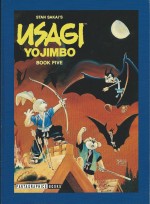
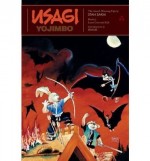
Usagi Yojimbo book 2: Samurai


By Stan Sakai (Fantagraphics)
ISBN: 978-0-93019-338-1

Usagi Yojimbo (which translates as “rabbit bodyguard”) first appeared as a background character in Stan Sakai’s anthropomorphic comedy The Adventures of Nilson Groundthumper and Hermy, which launched in furry ‘n’ fuzzy folk anthology Albedo Anthropomorphics #1 (1984), subsequently appearing there on his own terms as well as in Critters, Amazing Heroes, Furrlough and the Munden’s Bar back-up in Grimjack.

Sakai was born in 1953 in Kyoto, Japan before the family emigrated to Hawaii in 1955. He attended the University of Hawaii, graduating with a BA in Fine Arts, and pursued further studies at Pasadena’s Art Center College of Design after landing in California.

His early forays into comics were as a letterer, most famously for the inimitable Groo the Wanderer, before his nimble pens and brushes, coupled with a love of Japanese history and legend and hearty interest in the filmic works of Akira Kurosawa and his peers, all combined to turn a proposed story about a human historical hero into one of the most enticing and impressive fantasy sagas of all time.

And it’s still more educational, informative and authentic than any dozen Samurai sagas you can name…

The deliriously peripatetic and expansive period epic is nominally set in a world of sentient animals (with a few unobtrusive human characters scattered about) and specifically references the Edo Period of Feudal Japan: the early 17th century of our reckoning.

It simultaneously samples classic contemporary cultural icons from sources as varied as Lone Wolf and Cub, Zatoichi and even Godzilla whilst specifically recounting the life of Miyamoto Usagi, a Ronin or masterless wandering Samurai, eking out an honourable living as a Yojimbo or bodyguard-for-hire.

As such, his fate is to be drawn constantly into a plethora of incredible situations.

And yes, he’s a rabbit – a brave, sentimental, gentle, artistic, empathetic long-suffering, conscientious and heroic everyman bunny who just can’t turn down any request for help or ignore the slightest evidence of injustice…

This sublime second monochrome compilation (which originally appeared in Fantagraphics’ Usagi Yojimbo volume 1, #1-6, from 1989), begins with an effulgent Introduction from fellow legendary Groo-grifter Mark Evanier before the comedic adventure seamlessly transformed into epic drama, in an ambitious 9-chapter serial which solidly set the scene for decades to come.

‘Samurai!’ started with the Ronin again meeting money-mad bounty-hunter Gennosuké after a deadly duel of honour left a warrior named Gunichi a bloody corpse at the Yojimbo’s feet. Pressed by the newly-arrived and curious Gen, the moodily moved and uncharacteristically loquacious rabbit began sharing some of the events of his boyhood…

Once, Miyamoto Usagi was simply the son of a small-town magistrate, dispatched with his friend Kenichi to train at the prestigious DogoraFencingSchool in Sendai.

As the boys made their journey they encountered a lone, aged warrior beset by a pack of bullies from that self-same school, determined to prove their institution’s martial superiority. Despite all efforts to placate the hotheads old Katsuichi was eventually forced to reluctantly slay the toughs. The stunned witnesses began to bicker. Whilst Kenichi wanted to follow orders and go on to the – clearly honourless – DogoraSchool, little Usagi chose to seek out the old man and make him his Sensei…

The old man was finished with teaching but eventually saw something in the defiant, determined little rabbit and grudgingly accepted his exceptional young charge…

Usagi spent years learning the Way of Bushido from his stern, leonine master: not just superior technique and tactics, but also a philosophy of justice and restraint that would serve him all his life…

The revelations of Usagi’s boyhood training continue in short, revelatory vignettes as the elder Yojimbo and his surly companion continue towards shelter, highlighting the peculiar relationship of Sensei and Student. At the disciple’s first tournament the scurrilous, vengeful Dogora adherents plan to “accidentally” cripple the boy and thus humiliate his teacher, but don’t reckon on his innate ability.

After besting the entire FencingSchool contingent in duels with wooden swords – or Bokken – the boy at last faces his old friend Kenichi and triumphs.

His prize is a Wakizashi “Young Willow” and Katana “Willow Branch”. The short and long swords are the soul of a samurai, marking his graduation to martial maturity, but Usagi is blithely unaware of what his victory has cost his childhood companion…

Mere months later, the graduate warrior was challenged by a masterful, mysterious swordsman who was a bodyguard to the Great Lord MifunÄ—. Their duel was interrupted when a band of Dogora assassins attacked, determined to avenge their school’s humiliation by a single stick-wielding student. The cowards were no match for the steel of Usagi and the mighty Gunichi, and the victors parted as friends, with the bodyguard promising to recommend the rabbit for future service to his Lord.

Still assessing his options the young Samurai then encountered Kenichi once more. The disgraced youth had left the DogoraSchool and was trying to drink himself to death, but when he and Usagi heard that their home village was threatened by bandits the former friends reunited to save their loved ones…

By holding Usagi’s childhood love Mariko hostage, the brigands had successfully neutralised his magistrate father and were stripping the hamlet of all its provisions and meagre treasures when Usagi and Kenichi challenged them.

None of the villains survived the vengeance of the outraged villagers.

In the aftermath although Mariko clearly wanted Usagi to stay, she said nothing and the Samurai left to join Lord MifunÄ—’s service. Kenichi stayed…

The young warrior rose quickly as MifunÄ—’s vassal and was soon a trusted bodyguard, serving beside the indomitable Gunichi. It was a time of great unrest and war was brewing. In his third year of service the Lord’s castle was attacked by Neko Ninja assassins. Although the doughty warriors managed to save their master, his wife Kazumi and heir Tsuruichi were murdered. Realising ambitious rival Lord Hikiji was responsible, MifunÄ— declared war…

The struggle ended on the great Adachigahara plain when MifunÄ—’s general Todo switched sides and the Great Lord fell. At the crucial moment Gunichi also broke, fleeing to save his own skin and leaving the helpless Usagi to preserve the fallen Lord’s head – and Honour – from shameful desecration…

The story came full circle now, when after two years as a purposeless, masterless Ronin, the wandering Yojimbo met Gunichi again…

After that epic origin yarn, Sakai returned to short, pithy vignettes to cleanse the dramatic palate, beginning with a delicious traditional horror story. In ‘Kappa’ the wanderer encounters a deadly marsh troll at dusk and barely escapes with his life by offering the foul beast some wild cucumbers he has picked. Exhausted, the Ronin finds shelter with an old woman for the night, but when she hears of his adventure she becomes hysterical.

The cucumbers were planted so that her own son – returning that night – would have something to buy off the voracious Kappa…

Horrified by his inadvertent error, Usagi dashes back to the marsh to save the son, but even after overcoming the monster shockingly learns of one final sting in this tale…

Soaking a sore back in a hot spring the wanderer befriends a newly hatched tokagé lizard (ubiquitous, omnivorous reptiles that populate the anthropomorphic world, replacing scavenger species like rats, cats and dogs in the fictitious ecosystem), but is caught off guard and ambushed by bandits. Luckily the uniquely fire-breathing ‘Zylla’ comes to his assistance, prompting the wary warrior to wonder if the lizard might be a minor deity…

This second monochrome compilation concludes at the ‘Silk Fair’ where the wanderer saves a silk-worker from marauding bandits and stays to liberate all his oppressed fellows from a miserly merchant ruthlessly exploiting them…

The Lethal Lepus has changed publishers a few times but has been in continuous publication since 1987 – with over 29 graphic novel collections and books to date. He has also guest-starred in many other series (such as Teenage Mutant Ninja Turtles and its TV incarnation) and even almost made it into his own small-screen show but there’s still time yet and fashions can revive as quickly as they die out. There are high-end collectibles, art prints, computer games and RPGs, a spin-off sci-fi comics serial and lots of toys. Sakai and his creation have won numerous awards both within the Comics community and amongst the greater reading public.

Fast-paced yet lyrical, funny, thrilling and simply bursting with veracity and verve, Usagi Yojimbo is a monolithic magical saga of irresistible appeal that will delight devotees and make converts of the most hardened hater of “funny animal” stories.

Sheer comicbook poetry by a Comicbook Sensei…

Text and illustrations © 1987, 1989, 2005 Stan Sakai. Book editions © 1989, 2002 Fantagraphics books. All rights reserved.

What’s He Like in Bed? – A Rough Guide to the Bedside Manners of the Human Male


By Marcel Feigel & Brian Heaton (Arrow Books)
ISBN: 978-0-09-944660-X

Warning: this book is rude and a bit nude, so if you’re of a sensitive nature and don’t think sex is funny it could all be a bit of a shock and potentially lead to the sundering of your dreams and life-long disillusionment.

As Winter Part III (This Time it’s Personal!!!) settles in around my oversized, sun-deprived ears, I again turn to an old cartoon book to inculcate a little warmth and cheer to my gloomy days. Here’s another little known collection of cartoons about British bedtime habits to tide us all over: at least if we have to submerge ourselves in duvets and cocoa we might as well have a giggle at the same time…

Of course it’s all really just one more excuse to bemoan the loss of those once-ubiquitous cheap ‘n’ cheerful cartoon-packed paperbacks which are now all-but-forgotten fossils of a once mighty industry; fast fading as the more palatable sounding Graphic Novels and Trade Collections carve a niche in our psyches and on our bookshelves.

What’s He Like in Bed? is a solid example of a lost art form: saucily-themed gag-books which were the last commercial gasp in a tradition of pictorial entertainments that began with Punch and evolved into a racy standby of British life for nearly a century before fading away to loiter around bargain bins, Jumble sales and junk shops…

This particular raucous, ribald and hilariously risqué treatise catalogues the ploys and peregrinations of that forgotten popular hero “The Guy Who Gets All the Girls” and thus contains lots of wickedly naked people making a mess, scandalising the neighbours, and generally letting the side down more than just a bit…

Masquerading as invaluable tips and hints, the assorted chapters fully expose the tactics and foibles of ‘The Truck Driver’, ‘The Customs Man’ and even ‘Country and Western’ fans before breaking for the first of a recurring exploration of inflatable friend aficionados, after which ‘The Translator’ and the ‘Stone Mason’ both fail to live up to the modern girl’s exorbitant and exaggerated expectations.

‘The Estate Agent’ soon gives way to ‘Inflatable Doll #1’ and ‘The Librarian’ to ‘Inflatable Doll #2’ before the urbane legends of ‘The Milkman’ and ‘The Footballer’ are finally tackled…

‘Inflatable Doll #3’ leads to a fully extended chapter on ‘The Macho Man’ (including especially some handy hints on ‘The Condom Moment’, ‘The Importance of Momentum’ and those all-important ‘Orgasm Restrain-Postponement Techniques’), before a brief interlude with ‘Inflatable Doll #4’ gives us all a moment to catch our breaths (big ones too)…

There’s an educational advantage to be had in dealing with ‘The Don’ (Oxbridge not Corleone) and the full SP on ‘The Jockey’, whilst ‘The Detective’ and ‘The Barrister’ reveal facets of human nature best left vague, whilst both ‘The Dentist’ and ‘The Airline Pilot’ act just as you’d suspect – even if ‘The Bishop’ doesn’t.

Also on show are the habits of ‘The Farmer’, ‘Inflatable Doll #5’, stage magician ‘The Great Popoff’, the secrets of ‘Corporate Life’ in the Post Room, for Middle Management and even under the Chairman but as always ‘The Actor’, ‘The Policeman’ and the truly disturbing sight of glamour icon Margaret Thatcher as ‘Inflatable Doll #6’ act as sure signs that those so-different times are gone forever.

Still with secrets to conceal are ‘The Taxi Driver’, ‘The Accountant’, ‘The Athlete’, ‘The Computer Man’, ‘Frenchmen’ in general, ‘The Vicar’, ‘The Disc Jockey’ and ‘The Photographer’, but eventually even modern men need a bit of a rest and the lecture concludes with ‘The Revenge of the Inflatable Doll’…

Dedicated to the certain premise that (other) people’s sexual exploits are simultaneously better than yours and still truly hilarious, this snappy little monochrome tome is a cut above much of the era’s rather tawdry treatment of the subject, superbly rendered and still marvellously entertaining even in these liberally licentious times – and for a change, this one is still readily available from a range of internet retailers…

British cartooning has been magnificently served over the centuries by masters of form, line, wash and most importantly smart ideas, repeatedly poking our funny bones, pricking our pomposities, stroking our happy places and feeding our fascinations, and this sort of thing used to be bread ‘n’ butter in our game. We’re all going to really miss them if they do disappear forever, so why not find a shy, alluring little bookshelf and start filling it with mucky material like this…
Heaton is a competent artist in the modern style and the gags range from contrived to fiendishly clever, all delivered with easy charm and utterly without text – never an easy job in cartooning. If you find this book or anything similar give it a try, as you really will miss them once they disappear forever.
© 1992 Brian Howard Heaton. All Rights Reserved.

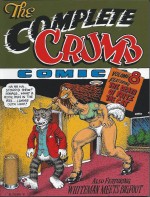
Complete Crumb Comics volume 2: Some More Early Years of Bitter Struggle – New Edition


By Robert Crumb & Charles Crumb, edited by Gary Groth with Robert Fiore (Fantagraphics Books)
ISBN: 978-0-93019-362-1

This book contains controversially clever ideas, outrageously rude drawings, intemperate language, positive drug references and allusions, godless questioning of authority and brilliantly witty, culture-reshaping, personal accounts and opinions.

If you – or those legally responsible for you – might have problems with any of that, please skip this review and don’t buy the book. I’m sure we’ll all know better next time…

Robert Crumb is a unique creative force in the world of cartooning with as many detractors as devotees. His uncompromising, excoriating, neurotically obsessive introspections, pictorial rants and invectives unceasingly picked away at society’s scabs and forever peeked behind forbidden curtains – and all apparently for his own benefit – but he has always happily invited us to share his unwholesome discoveries with anybody with the time and temperament to look…

Way back in 1987 Fantagraphics Books began the nigh-impossible task of collating, collecting and publishing the chronological totality of the tireless artist’s vast output and now, after far too long out-of-print, those engrossing cartoon compendia are being reissued. The earliest volumes have been constantly described as the least commercial but now, with Crumb at last an acknowledged global art-treasure, those volumes are back for your perusal…

The son of a career soldier, Robert Dennis Crumb was born in Philadelphia in 1943 into a functionally broken family. He was one of five kids who all found different ways to escape their parents’ shattering problems, and comics were always paramount amongst them.

As had his older brother Charles, Robert immersed himself in the strips and cartoons of the day; not simply reading but also feverishly, compulsively creating his own. Harvey Kurtzman, Carl Barks and John Stanley were particularly influential, as were newspaper artists like E.C. Segar, Gene Ahern, Rube Goldberg, Bud Fisher, Billy De Beck, George (Sad Sack) Baker and Sidney Smith as well as “straight” illustrators like C.E. Brock and the wildly imaginative, frantically surreal 1930’s Looney Tunes and Merrie Melodies animated shorts.

Defensive and introspective, the young Robert pursued art and torturous self-control through religion with equal desperation. His early spiritual repression and flagrant, hubristic celibacy constantly warred with his body’s urgently growing base needs and desires…

Escaping his stormy family, Crumb married young and began working in-house at the American Greeting Cards Company. He also found like minds in the growing hippie and counterculture movements where he discovered LSD. In 1967 he upped sticks to California to become an early star of the burgeoning Underground Commix scene. As such he found plenty of willing “hippie-chicks” eager to assuage his fevered mind and hormonal body whilst he gradually reinvented the very nature of cartooning with such creations as Mr. Natural, Fritz the Cat, Devil Girl and a host of others.

The rest is history – or perhaps, sociology…

The tortured formative years provided meat for the first collection (The Early Years of Bitter Struggle) and those revelations resume right here, right now as the second volume continues the odyssey to acceptance after ‘The Best Location in the Nation…’; a comprehensive reminiscence and introduction from lifelong confidante Marty Pahls who describes the swiftly maturing and deeply unsatisfied Crumb’s jump from unhappy home to the depressing, dispiriting world of work.

‘Little Billy Bean’ (April 1962) reprises the hapless, loveless nebbish of yore whilst ‘Fun with Jim and Mabel’ revisits Crumb’s first bulky, morally-challenged domestic amazon, after which the focus shifts to her diminutive and feeble companion ‘Jim’. Next, an almost fully-realised ‘Fritz the Cat’ finally gets it on in a triptych of saucy soft-core escapades from R. Crumb’s self-generated Arcade mini-comic project.

From this point onwards, the varied and exponentially impressive breadth of Crumb’s output becomes increasingly riddled with his often hard-to-embrace themes and declamatory, potentially offensive visual vocabulary as his strips grope towards the creator’s long-sought personal artistic apotheosis.

His most intimate and disturbing idiosyncrasies regarding sex, women, ethnicity, personal worth and self-expression all start to surface here…

Working in the production department of a vast greetings card company gave the insular Crumb access to new toys and new inspiration as seen in the collection of ‘Roberta Smith, Office Girl’ gag strips from American Greetings Corporation Late News Bulletins (November 1963-April 1964), followed here by another Fritz exploit enigmatically entitled ‘R. Crumb Comics and Stories’ which includes just a soupçon of raunchy cartoon incest, so keep the smelling salts handy…

A beautiful 10-page selection of sketchbook pages comes next and then a burst of black-&-white and full-colour covers: the satirical 1960 election duel of Kennedy and Nixon, an Arcade gag, 13 letters to Pahls and Mike Britt disguised as ‘Farb’ and ‘Note’ front images as well as a brace of Arcade covers and the portentously evocative front for R. Crumb’s Comics and Stories #1 from April 1964.

The rest of this pivotal collection is given over to 31 more superb pages culled from Crumb’s sketchbooks; a vast and varied compilation that ably displays the artist’s incredible virtuosity and proves that – if he had been able to suppress his creative questing – he could easily have settled for a lucrative career in any one of a number of graphic disciplines from illustrator to animator to jobbing comic book hack.

Crumb’s subtle mastery of his art-form and overwhelming drive to expose and reveal his most hidden depths and every perceived defect – in himself and the world around him – has always been an unquenchable fire of challenging comedy and riotous rumination, and this evocative tome is crucial to understand the creative causes, if not the artistic affectations, of this unique craftsman and auteur.

This superb series, charting the perplexing pen-and-ink pilgrim’s progress, is the perfect vehicle to introduce any (over 18) newcomers to the world of grown up comics, and if you need a way in yourself, seek out this and all the other books in this incomparable sequence as soon as conceivably possible…

Art and stories © 1969, 1974, 1988, 1996, 2013 Robert Crumb. All rights reserved. Introduction © 1988 Marty Pahls.

Golden Age Sandman Archives volume 1

Sandman Arc front
By Bert Christman, Gardner F. Fox, Creig Flessel, Chad Grothkopf, Ogden Whitney & various (DC Comics)
ISBN: 978-1-4012-0155-5

Probably created by and originally illustrated and scripted by multi-talented all-rounder Bert Christman (with the assistance of young scripting star Gardner Fox), The Sandman premiered in either Adventure Comics #40 July 1939 (two months after Batman debuted in Detective Comics #27) or two weeks earlier in New York World’s Fair Comics 1939, depending on which distribution records you choose to believe.

Intriguingly, the Dark Knight didn’t make the cut for the legendary commemorative comicbook and only appeared in New York World’s Fair Comics #2 in Summer 1940…

Head utterly obscured by a gas-mask and slouch hat; caped, business-suited millionaire adventurer Wesley Dodds was cut from the radio drama and pulp fiction mystery-man mould that had made The Shadow, Green Hornet, The Lone Ranger, Phantom Detective, Black Bat, Spider, Avenger and so many more household names big hits of early mass-entertainment and periodical publication.

Wielding a sleeping-gas gun and haunting the night to hunt a host of killers, crooks and spies, he was eventually joined and accompanied by plucky paramour Dian Belmont, before gradually losing the readers’ interest and slipping from cover-spot to last feature in Adventure Comics, just as the shadowy, morally ambiguous avengers he emulated slipped from popularity in favour of more flamboyant and true-blue fictional fare.

This splendidly sturdy, moodily atmospheric Archive edition re-presents the landmark early appearances from both New York World’s Fair Comics, (1939 and 1940) and the rip-roaring exploits from Adventure Comics #40-59 – July 1939-February 1941 – a period when Detective Comics Incorporated frantically sought to follow up Superman and Batman with the Next Big Thing in Comicbooks…

Following an erudite appreciation from historian and comics all-star Jim Amash, the adventure begins here with the fast-paced thriller from the groundbreaking, pioneering comics premium New York World’s Fair Comics #1 as Christman & Fox introduced ‘Sandman at the World’s Fair’…

In those long-lost days, origins and back story were not nearly as important as action and spectacle so we’re quickly plunged into a fast-paced yarn as wealthy, rugged playboy scientist Dodds visits the global festival with the plans for a new ray-gun and encounters spies and a traitor within his own company. Already active as The Sandman -and sought by the cops for it – the vigilante quickly and beguilingly tracked down and dealt with the pre-war enemies of America…

Over in Adventure Comics #40, at about the same time, the cover-featured crusader was on hand to save kidnapped actress Vivian Dale when ‘The Tarantula Strikes’ (Christman & Fox) in a rousing romp reminiscent of the High Society hi-jinks of movie marvels the Saint, Falcon or Lone Wolf; prowling allies and rooftops, breaking into criminals’ lairs, rifling safes and dealing as much death as dream gas. He also had a unique calling card: sprinkled sand to proclaim and terrify wherever he had silently been and gone…

Christman wrote and drew many of the early thrillers such as #41’s ‘On the Waterfront’ wherein plucky reporter Janice Blue inadvertently stumbled into a dockside narcotics ring just as murderous seadog Captain Wing made a fateful takeover bid. Luckily for her the stealthy Sandman was already on the case…

Adventure #42 highlighted Christman’s love of aviation in ‘The Three Sandmen’ as Wes Dodds met up with a couple of his old Navy Flying Corps buddies to solve a string of murders. Somebody was rubbing out all the members of the old squadron…

Allen Bert Christman first came to public attention by following the near-mythic Noel Sickles on seminal newspaper strip Scorchy Smith. A dedicated patriot and flyer, Christman entered the Naval Air School in 1940 and joined Claire Lee Chennault’s 1st American Volunteer Group, known as the legendary fighter squadron the Flying Tigers.

These volunteers began fighting the Japanese in China long before America officially entered WWII on December 8th 1941, and Christman – officially designated a Colonel in the Chinese Air Force – used his artistic talents to personalise and decorate many of the  planes in his Flight.  He was shot down and died in horrific circumstances on January 23rd 1942.

Issue #43 featured his last official story as Dodds went on a South Seas flying vacation and became embroiled in an ‘Island Uprising’, spectacularly saving embattled white pearl hunters from natives enraged to fury by latter-day pirate Red Hatch…

In Adventure #44 (November 1939), Fox & Creig Flessel stepped into the breach left by Christman as ‘The Sandman Meets the Face’ found the playboy back in civilisation and aiding a down-and-out old friend against a mercurial disguise artist and mob boss terrorising the city. This splendid blood-&-thunder caper also saw the feature’s page count rise from six to ten as the Sandman finally found his lurking, moody metier…

‘The Golden Gusher’ (#45 by Fox & Flessel) was nightclub singer Gloria Gordon, threatened with kidnap or worse until the Master of Sleep intervened, whilst #46 ‘The Sandman Meets with Murder’ saw rising talent Ogden Whitney step into the artistic hot seat when the slaying of an old Dodds pal led into a deliciously convoluted murder-mystery involving beautiful twins, counterfeiting and a macabre cross-dressing killer…

A huge step in continuity occurred in #47 as District Attorney Belmont agreed to an unofficial truce with the Sandman following the assassination of a prominent banker. Simultaneously, Wesley Dodds caught a wily thief trying to crack his safe and became unwilling partner to the ‘Lady in Evening Clothes’ (Fox & Whitney) after she discovered his secret identity.

A celebrated cat-burglar, the sophisticated she-devil was plagued by not knowing who her parents were but happily went straight(ish) in return for Dodd’s pledge to help her…

Revealed as long-lost Dian Belmont she became a regular cast addition in #48 as ‘Death to the D.A.’ found her newly-restored father under threat from gangsters and far less obvious killers on a palatial island retreat after which ‘Common Cold – Uncommon Crime’ (#49 by Fox, Flessel & perhaps Chad Grothkopf on inks) found the mystery-man tracking killers who were eradicating the scientists who refused to hand over their cure for one of our most unforgiving ailments.

With a year gone by and global war looming, the “World of Tomorrow” exhibition was slowly closing but there was still time for New York World’s Fair Comics #2, where this time ‘Sandman Goes to the World’s Fair’ (by Fox & Grothkopf on pencils and inks) delivered a blistering crime caper wherein Wesley and Dian got stuck babysitting her maiden Aunt Agatha around the fair and were targeted by ambitious but exceedingly unwise kidnapper Slugger Slade…

In Adventure Comics #50 ‘Tuffy and Limpy’s Revenge Plot’, by Fox & Flessel, covered similar ground as a murderous campaign of apparently unrelated deaths eventually pointed to another scheme to get rid of the dauntless DA and led Sandman and Dian into a blockbusting battle against ruthless rogues, whilst in #51 (June 1940, by Fox & Flessel and previously reprinted elsewhere as ‘The Pawn Broker’) ‘The Van Leew Emeralds’ provided a fascinating detective mystery romp for the romantically inclined crimebusters to solve in fine style and double-quick time…

A burglary at the Belmont residence only netted a pair of gloves in #52’s ‘Wanted! Dead or Alive’ but inexorably led to a perplexing scavenger hunt with sinister overtones and a deadly pay-off when scandalous Claudia Norgan tried to frame her best gal-pal Dian for the Amber Apple Gang‘s crimes, after which in #53 ‘The Loan Sharks’ unwisely aroused the ire of the dynamic dream-maker when they graduated from simple leg-breaking to murder to enforce their demands. They almost ended the Sandman too before he finally got the better of them…

In issue #54 ‘The Case of the Kidnapped Heiress’ found Wes and Dian witnesses to a bold snatch-and-grab but their frenzied pursuit only resulted in both the DA’s daughter and millionairess Nana Martin being abducted together. Fury-filled and frantic, the Sandman tracked down the ransoming rogues only to find himself in the unexpected role of Cupid.

When the legendary jewel ‘The Star of Singapore’ was stolen in #55, the trail led to a ever increasing spiral of death and destruction until the Man of Dreams finally recovered it, whilst in the next issue ‘The Crook Who Knew the Sandman’s Identity’ (Fox, Flessel & Grothkopf) learned to his eternal regret that it just wasn’t so, thanks to some delightfully imaginative improvisation from Dian…

The mystery and general skulduggery gave way to world-threatening science fiction in #57 when the Sandman battled a mad scientist who had devised a deadly atom-smasher for blackmail and ‘To Hammer the Earth’, after which some macabre murders pointed the dream-team towards spies and killers profiting from ‘Orchids of Doom’, before this stylish selection of outré crime-thrillers concludes with Adventure #59’s ‘The Story of the Flaming Ruby’ as a cursed gem enabled a hypnotic horror to turn honest men into thieves and Dian into a mindless assassin…

Possessing a certain indefinable style and charm but definitely dwindling pizzazz, the feature was on the verge of being dropped when The Sandman abruptly switched to a skin-tight yellow-and-purple costume – complete with billowing cape for two issues – and gained a boy-sidekick, Sandy the Golden Boy (in Adventure Comics #69, December 1941, courtesy of Mort Weisinger & Paul Norris), presumably to emulate the overwhelmingly successful Batman and Captain America models currently reaping such big dividends. It didn’t help much at first but when Joe Simon & Jack Kirby came aboard with #72 that all spectacularly changed.

A semi-supernatural element and fascination with the world of dreams (revisited by S&K a decade later in their short-lived experimental suspense series The Strange World of Your Dreams) added a moody conceptual punch to equal the kinetic fury of their art, as Sandman and Sandy became literally the stuff of nightmares to the bizarre bandits and murderous mugs they stalked. Those spectacular but decidedly different adventures can be found in The Sandman by Joe Simon & Jack Kirby if you dare…

With covers by Sheldon Mayer, Jack Burnley and Flessel, these raw, wild and excessively engaging comics capers are actually some of the best but most neglected thrillers of the halcyon Golden Age. Modern tastes too have moved on and these yarns are probably far more in tune with contemporary mores, making this a truly unmissable treat for fans of mystery, murder and stylish intrigue…
© 1939, 1940, 1941, 2004 DC Comics. All Rights Reserved.

Bone: Stupid, Stupid Rat-Tails – the Adventures of Big Johnson Bone, Frontier Hero


By Jeff Smith, Tim Sniegoski & Stan Sakai (Cartoon Books)
ISBN: 978-1-88896-306-9

Jeff Smith burst out of relative obscurity in 1991 and changed the comics-reading landscape with his captivating all-ages comicbook Bone. The compelling black and white saga intoxicated the market and prospered at a time when an endless procession of angst-ridden, steroid-breathed super-vigilantes and implausibly clad “Bad-Grrls” came and went with machine-gun rapidity.

Born in Pennsylvania and raised in Ohio, Smith avidly absorbed the works of Carl Barks, Charles Schultz and especially Walt Kelly from an early age, and purportedly first began producing the adventures of his Boneville creations at age ten.

Whilst attending OhioStateUniversity he created a prototype strip for the College newspaper: ‘Thorn’ was another early incarnation of his personal universe and a valuable proving ground for many characters that would eventually appear in Bone. A high school classmate became a Disney animator and Smith subsequently gravitated to the field before striking out on his own, having mastered the graceful gentle slapstick timing and high finish style which typifies his art style.

He founded Cartoon Books to self-publish 55 delightful black and white issues: a fantasy-quest yarn that owed as much to Tex Avery as J.R.R. Tolkien, as well as his personal holy trinity, Barks, Schultz & Kelly. The thrilling and fantastically funny saga progressed at its own unique pace between 1991 and 2004 and since then has been collected into nine volumes from Cartoon Books (with two further collections of prequels and side tales), reissued in colour by Scholastic Books and even reprinted in Disney Adventures magazine.

Fone Bone is the strange, amorphous, affably decent little hero, a thematic blend of Mickey Mouse and Asterix, who had been run out of the town of Boneville along with his tall, not-so-bright cousin Smiley due to the financial and political irregularities, misdemeanours and malfeasances of their dastardly, swindling relative Phoncible P. “Phoney” Bone…

After an incredibly journey the trio ended up in LostValley: an oasis of pastoral beauty hidden from the rest of the world. Along the way Bone was adopted by a dragon he doesn’t believe in, stalked by ghastly rat monsters and befriended by many talking animals and people…

At series’ end, Smith issued a monumental one volume compilation (more than 1300 black and white pages) which Time magazine dubbed “the best all-ages graphic novel yet published” and one of the “Top Ten Graphic Novels of All Time.”

Smith has won many awards including 11 Harveys and 10 Eisners. In 2011, a spectacular 20th anniversary full-colour edition of the Brobdingnagian single volume was released, stuffed with extras and premiums. If you’ve got the dough, that’s the book to shoot for…

The core series also spawned a few prequel series such as dark origin tale Rose and this far-lighter yarn introducing the Bone cousins’ pioneering ancestor: a rootin’ tootin’ rip-snorter of a trapper and loud-mouthed, itinerant Frontier Scout named Big Johnson Bone who found and saved an idyllic valley from an all-consuming threat and made the place safe from marauding monsters. Since there are plenty of versions to opt for, purist that I am, I’ve again plumped for an original monochrome Cartoon Books collection.

Originally appearing as back-ups in the original comicbook and the one-shot Stupid, Stupid Rat-Tails between 1998 and 1999. these tremendously intoxicating tall tales were first gathered together in 2000 and remain one of the best and most entertaining all-ages comics sagas of the modern age.

Once upon a time a distant land was filled with huge, scary, fiercely rapacious rat creatures with magnificent tails…

Scripted by Tom Sniegoski and illustrated by Smith, the eponymous 3-part epic ‘Stupid, Stupid Rat-Tails: the Adventures of Big Johnson Bone, Frontier Hero’ opens with the boastful lone scout – except for his mule Blossom and Mr. Pip, a dolorous, depressive, nagging monkey he won in a card game – getting snatched up in a real rip-roarer of a twister and whirled across the landscape to be unceremoniously dumped in a beautiful, unspoiled valley…

Actually it’s not completely perfect: there are a vast number of stupid but rapacious monsters eating all the local fauna. After giving two of the surly critters a sound drubbing, Johnson finds the last few animal kids still unconsumed by the long-tailed, giant ratty beasts. Lily the bearcub, Pete the Porcupine, Ramona the fox kitten and Porter the turtle then ask the big-hearted little guy for help in getting their mummies and daddies back…

The kits, cubs, pups and tads already have a protector of sorts but Stillman is a very little dragon, lacking in size, power and confidence as he can’t breathe flame because it gives him indigestion and makes him puke. He’s a dab hand at throwing rocks though…

Stillman says that a proper protector from the High Council of Dragons is on the way, but has no idea how soon the saviour will arrive.

Some distance away Maud, queen of the rat creatures, has problems of her own. It’s really hard to stay happy and well-groomed when your son is as big as a mountain, dumb as a rock and hungrier than all the rest of her stupid, stupid subjects combined. The big darling might be a hundred feet tall, but he has such a sensitive tummy and is a martyr to bilious attacks. With a kid like Prince Tyson it’s no wonder she has to kill so often.

If you’ve ever heard the phrase “mad as a bag of rats”? Maud is the bag they were taking about.

When she hears from her chastened subjects of tough, two-fisted mammals falling from the sky, stopping her subjects from rightfully expanding her territory and just plain refusing to be eaten, she decides to send a party to capture them – which coincidentally is just what Johnson Bone has decided to do to her…

The rat things attack first however but only get another fierce trouncing for their troubles. In fact the old scout might well have ended it all then and there had not Stillman joined in with an extremely poorly thrown stone…

Taking advantage of Bone’s temporarily stunned state, the rats scoop up Lily and Pete and amscray pronto, leaving the slowly recovering trapper with but one thought… those giant varmint pelts would be worth a fortune back home…

As soon as his head clears Johnson is off in pursuit, tracking the rat things to Maud’s cave, where the accounts of what the sky-dropped mammal does to rat beast tails has the entire tribe in a tizzy. In a fit of regal rage Maud sends everybody to kill the invaders…

When the opposing forces clash, despite routing the ordinary man-sized rodent rogues, even the dapper trapper is daunted when Tyson snatches up him and Ramona and swallows them whole…

Left behind, Blossom and snooty Mr. Pip are in a world of trouble until the wily monkey tries to romance Maud, whilst inside the cavernous Tyson Bone is still alive and kicking and he’s even found most of the animal kids’ missing parents alive and as yet undigested. Elsewhere Stillman has discovered his inner firedrake – much to the rat creatures’ dismay… and that’s when the wily explorer in Tyson’s tum gets a hankering for a good old hootenanny and roaring bonfire barbeque…

A stunning blend of slapstick and wry laughs for young and old alike, this gloriously over-the-top, tall tales prequel and modern “Just So” story is a pure cartoon delight of all-ages action and comedy adventure, but this terrific tome has even more fun in store.

Again scripted by Sniegoski, Riblet introduces a real problem child to the valley’s animal population in a fabulously arch yarn illustrated by the amazing Stan Sakai.

The other cubs and kits don’t like hanging out with Riblet. The baby boar is a bully: mean, rough and developmentally challenged, he just doesn’t play well – or safely – with the other kids. So when a couple of starving rat creatures capture him, thinking ‘A Little Pork Would be Lovely’ they have no idea of the trouble they’ve made for themselves…

In ‘Bringing Home the Bacon’, the suddenly liberated kids celebrate their good fortune and nobody tries that hard to get him back even as Riblet begins working his unique charms on his unlucky abductors, revelling in his favourite ‘Fun & Games’ even as the hungry horrors learn the logic of ‘Losing One’s Appetite’ and resort to ‘Something Drastic’ even as the kids begin to feel the tiniest pangs of conscience…

Fast-paced, trenchant and wickedly uproarious, Riblet is a smart, beguiling counterpoint to the sometime saccharine sweetness of the Valley Forest’s frolicsome animal kids and a sheer ribald riot in its own right.

Bone is a truly perfect cartoon tale and one that appeals with utterly universal appeal. Already it is in the rarefied ranks of Tintin, Pogo, Rupert Bear, Little Nemo and the cherished works of Schultz, Kelly and Barks, and it’s only a matter of time before it breaks out of the comic club completely and becomes kin to the likes of The Wind in the Willows, Alice in Wonderland, the Moomins and Oz.

If you have kids or can still think and feel like one you must have these books…
© 1998, 1999 and 2000 Jeff Smith. All rights reserved.