Showcase Presents The Witching Hour volume 1


By Alex Toth & various (DC Comics)
ISBN: 978-0-85768-196-6

American comicbooks started slowly until the creation of superheroes unleashed a torrent of creative imitation and invented a new genre. Implacably vested in the Second World War, the Overman swept all before him (and the far too occasional her) until the troops came home and more traditional genres supplanted the Fights ‘n’ Tights crowd.

Although new kids kept up the buying, much of the previous generation also retained their four-colour habit but increasingly sought older themes in the reading matter. The war years altered the psychology of the world, and as a more world-weary, cynical young public came to see that all the fighting and dying hadn’t really changed anything, their chosen forms of entertainment (film and prose as well as comics) reflected this. As well as Western, War and Crime comics, madcap escapist comedy and anthropomorphic funny animal features were immediately resurgent, but gradually another periodic revival of spiritualism and interest in the supernatural led to a wave of increasingly impressive, evocative and even shocking horror comics.

There had been grisly, gory and supernatural stars before, including a pantheon of ghosts, monsters and wizards draped in mystery-man garb and trappings (The Spectre, Mr. Justice, Sgt. Spook, Frankenstein, The Heap, Dr. Fate and dozens of others), but these had been victims of circumstance: the unknown as a power source for super-heroics. Now the focus shifted to ordinary mortals thrown into a world beyond their ken or control with the intention of unsettling, not vicariously empowering the reader.

Almost every publisher jumped on the increasingly popular bandwagon, with B & I (which became the magical one-man-band Richard E. Hughes’ American Comics Group) launching the first regularly published horror comic in the Autumn of 1948, although Adventures Into the Unknown was technically pipped by Avon who had released an impressive single issue entitled Eerie in January 1947 before launching a regular series in 1951, by which time Classics Illustrated had already long milked the literary end of the medium with adaptations of the Headless Horseman, Dr. Jekyll and Mr. Hyde (both 1943), The Hunchback of Notre Dame (1944) and Frankenstein (1945) among others.

If we’re keeping score this was also the period in which Joe Simon and Jack Kirby identified another “mature market” gap and invented the Romance comic (Young Romance #1, September 1947) but they too saw the sales potential for spooky material, resulting in the seminal Black Magic (launched in 1950) and boldly obscure psychological drama anthology Strange World of Your Dreams (1952).

The company that would become DC Comics bowed to the inevitable and launched a comparatively straight-laced anthology that nevertheless became one of their longest-running and most influential titles with the December 1951/January 1952 launch of The House of Mystery.

When the hysterical censorship scandal which led to witch-hunting hearings (feel free to type Senate Subcommittee on Juvenile Delinquency, April-June 1954 into your search engine at any time… you can do that because it’s notionally a free country now) was curtailed by the industry adopting a castrating straitjacket of self regulatory rules.

HoM and its sister title House of Secrets were dialled back into rationalistic, fantasy adventure vehicles, which dominated the market until the 1960s when super-heroes (which had started to creep back after Julius Schwartz began the Silver Age of comics by reintroducing the Flash in Showcase #4, 1956) finally overtook them. Green Lantern, Hawkman, the Atom and a slew of other costumed cavorters generated a gaudy global bubble of masked mavens which even forced the dedicated anthology suspense titles to transform into super-character split-books.

However nothing combats censorship better than falling profits and at the end of the 1960s the Silver Age superhero boom stalled and crashed, leading to the surviving publishers of the field agreeing to loosen their self-imposed restraints against crime and horror comics. Nobody much cared about gangster titles at that time but as the liberalisation coincided with another bump in global interest in all aspects of the supernatural, the resurrection of scary stories was a foregone conclusion and obvious “no-brainer.” Even the ultra wholesome Archie comics re-entered the field with their rather tasty line of Red Circle thrillers…

With Tales of the Unexpected from #105 and House of Mystery #174 the company switched to anthology horror material before creating an all-new title to further exploit the morbid fascination with the fearsome and spooky (they even resurrected the cancelled House of Secrets in late 1969) for those heady days when it was okay – and profitable – to scare the heck out of little kids by making them laugh.

Edited until #14 by Dick Giordano, The Witching Hour first struck at the end of 1968 (with a February/March 1969 cover-date). From the outset it was an extremely experimental and intriguing beast and this amazingly economical Showcase Presents collection reprints the first 19 issues, completely covering the first three years as the fear fad grew to become the backbone of DC’s sales. It is perhaps the most talent-stuffed title of that entire period.

Here the usual cool and creepy horror hosts who introduced the tales were three witches – based as much on Macbeth as the ancient concept of Maiden, Mother and Crone – a torrid trio who constantly battled to outdo or out-gross each other in the telling of terror tales. Moreover, Cynthia, Mildred and Mordred – as well as shy monster man-servant Egor – were designed and usually drawn by master artist Alex Toth; making the framing sequences between yarns as good as and sometimes better than the stories they brazenly bracketed.

One minor quibble: records from the period are not complete and occasionally a creator is unknown, but this volume also sadly misattributes the artist too. I’ve attempted to correct the mistakes when I’m certain, but please be warned and beware – I’m not always right either…

Following a stunning Nick Cardy cover, Toth starts the ball rolling by introducing the sinister sisters and their ongoing contest before Dennis O’Neil & Pat Boyette relate the story of a time-travelling tap-dancer in ‘Save the Last Dance For Me’, after which Toth writes and illustrates a compelling period piece of peril in ‘Eternal Hour!’ and Jack Sparling relates the eerie fate of wave-obsessed Stanley’s search for ‘The Perfect Surf’. Toth’s scary sisters then close out the premier issue (with, I suspect, additional inks from Neal Adams), but still find room for ‘Silk Gauze’, an informational page by persons unknown which first appeared in Tales Unexpected #126.

Although attributed to Toth, #2’s introductory episode is by his old Standard Comics stable-mate Mike Sekowsky (inked by Giordano) and leads into Sparling’s dream-chiller ‘Scream!’, after which young José Delbo delineates a shocking period tale of slavery and vengeance ‘The Trip of Fools!’ before Sid Greene’s short ghost story ‘The Beat Goes On!’ and Sparling’s ‘Once Upon a Surprise Ending!’ end an issue regrettably short on writer credits.

Following another Sekowsky/Giordano intro, Toth & Vince Colletta illustrated Don Arneson’s medieval mood masterpiece ‘The Turn of the Wheel!’, whilst Alan Riefe & Sparling told a decidedly different ghost-story in ‘The Death Watch’, after which Steve Skeates & Bernie Wrightson revealed a very alterative fantasy hero in ‘…And in a Far-Off Land!’, followed by the first of a series of short prose vignettes: an anonymous fright-comedy entitled ‘Potion of Love’.

Toth illustrated the sisters’ ‘Witching Hour Welcome Wagon’ (a useful identifying rule of thumb for the uninitiated is that the master usually signed his work – and was allowed too…) after which new kid Gerard Conway spectrally scripted ‘A Matter of Conscience’ for art veterans Sparling & George Roussos. Another anonymous prose piece ‘If You Have Ghosts’ preceded a smashing yarn entitled ‘Disaster in a Jar’ by Riefe & Boyette and Conway scripted the period witchfinder thriller ‘A Fistful of Fire’ for Delbo – a vastly underrated artist who was on the best form of his career at this time.

Toth’s Weird Sisters closed out that issue and eerily, hilariously opened #5 before Wrightson lavishly embellished a nifty but uncredited (as is every script in this one) nautical nightmare ‘The Sole Survivor!’, followed by text-teaser ‘The Non-Believer!’ and Boyette’s stunning, clownish creep-feature ‘A Guy Can Die Laughing!’, whilst Stanley Pitt & Giordano’s dating dilemma ‘The Computer Game’ was one of the first to explore that now-hoary plot. After Toth signs off the witches, there’s an added one-page black-comedy bonus from Sid Greene with ‘My! How You’ve Grown!’

Sekowsky & Giordano limned Dave Kaler’s take on the sisters’ intro for The Witching Hour #6 after which a far darker horror debuted in ‘A Face in the Crowd!’ by Conway, Mike Roy & Mike Peppe, as a Nazi war criminal and a concentration camp survivor met in an American street; Marv Wolfman & Delbo described a tale of neighbourly intolerance in ‘The Doll Man!’ and ‘Treasure Hunt’ by Skeates, John Celardo & Giordano showed why greed isn’t always good. Also included were Conway’s prose tale ‘Train to Doom’, ‘Mad Menace’ – a half-page gag strip by John Costanza – and ‘Distortion!’ another Greene-limned one-pager.

Toth & Mike Friedrich were on spectacular form for #7’s introduction and bridging sequences, and Bill Draut was compulsively effective in prison manhunt saga ‘The Big Break!’ whose scripter Steve Skeates also wrote modern-art murder-mystery ‘The Captive!’ for Roussos, after which Friedrich & Jack Abel advised a most individual baby to ‘Look Homeward, Angelo!’. Text piece ‘Who Believes Ouija?’ and Jack Miller & Michael Wm. Kaluta’s gothically lovely ‘Trick or Treat’ round out the sinister sights in this issue.

Sergio Aragonés & Neal Adams provided the witch-bits for #8, bracketing their own satanically sardonic ‘Above and Beyond the Call of Duty!’, as well as ‘Three Day Home Trial!’ (Aragonés & Cardy) and the staggeringly inventive ‘Computerr’ by that man again and Toth. ‘The Career Man’ was a witty but anonymous prose piece and the issue closed with a Twice Told Tale by Ron Whyte & Sparling, as an urban myth was revealed in ‘The Sign of the Hook!’

Toth & Draut began #9, after which Bob Brown & Murphy Anderson illustrated ghostly tale ‘The Long Road Home!’ and, after text story ‘The Dark Well’, the peripatetic, post-apocalyptic, ironic occasional series ‘The Day after Doomsday’ by Len Wein & Sparling made a welcome appearance. Delbo delightfully delineated a terrifying tale of Old China in ‘The Last Straw’ and, after George Tuska took over the Weird Sisters linking-segments, a doomsday debacle closed the dramas with a ‘Trumpet Perilous!’ drawn by Sparling & Abel.

The witches’ opening issue #10 were once more by Toth & Draut, promptly followed by a magnificent illustration job by the great Gray Morrow on the regrettably uncredited ‘A Warp in Time… Loses Everything!’ – work inestimably improved by being seen in monochrome – after which the all-word ‘I’ll See You in My Dreams’ preceded Conway & Toth’s superb forbidden romance ‘Hold Softly, Hand of Death!’. Tuska handles the Sisters before Sparling’s faux-fact page ‘Realm of the Mystics’ ends this excursion into the dark.

Toth drew the intro and Jack Oleck’s ‘The Mark of the Witch’ (inked by Draut) in #11, whilst – after text-tale ‘Retired Undefeated!’ – Tuska inspirationally illustrated the creepy chronal conundrum ‘The Sands of Time, the Snows of Death!’, and The Witching Hour #12 was similarly blessed, as after a sinisterly sexy Skeates/Toth intro the devilish duo then described an horrific ‘Double Edge’ battle between witch-queens and valiant mortals, followed by a Machiavellian actor’s ‘Double Take’ (Skeates & Tuska) and a demonic duel and ‘Double Cross!’ by Skeates & Gil Kane. The ever-anonymous prose piece was the mordantly merry ‘The Dead Can’t Talk But…’

Giordano’s last issue was editor was #13, which opened in grand style as fellow comicbook hosts Cain, Abel and the Mad Mod Witch (from Houses of Mystery and Secrets and The Unexpected respectively) attended ‘New Year’s Eve at the Witching Hour’ (illustrated by Neal Adams) followed by a marvellously experimental and effective psycho-thriller by Alan Gold & Gray Morrow entitled ‘The Maze’, a far more traditional but no less scary story ‘The Accursed Clay!’ (Miller, Sparling & Frank Giacoia) and the just plain strange tale of ‘The Rush-Hour Ride of Abner Pringle!’, by Wein & Delbo. As an added treat the text token was ‘The Witching Hour Mistree’ by that shy but not retiring rogue Egor…

When veteran editor Murray Boltinoff assumed the reins with #14 (April-May 1971) an element of experimentalism was surrendered but the more conventional material was no less welcomed by the horror-hungry readership: more proof, if any were needed, that artistic endeavour and envelope-pushing aren’t to everybody’s taste. George Tuska replaced Toth as regular illustrator of the introductory and bridging sections, but otherwise most fright-seeking kids could hardly tell the difference.

The all-science fiction issue’s terror-tales began with a beautiful but oddly stilted yarn from Conway and Jeff Jones who explored the solitary burdens of ‘Fourteen Months’ in deep space, whilst ‘Which Witch is Which?’, by Kaler, drawn by Stanley & Reg Pitt, related the comeuppance of an intergalactic Lothario. As “Al Case”, Editor Boltinoff provided the text feature ‘Dead Letter Office’ and the issued ended on a classic visual high note with ‘The Haunted House in Space!’ illustrated by the dream team of Al Williamson & Carlos Garzon.

After the usual ghastly graphic girl talk TWH #15 started with a murder masterpiece from George Kashdan & Wally Wood revealing that ‘Freddy is Another Name For Fear!’, after which Al Case scripted ‘End of a World’ before Phil Seuling & Gray Morrow stole the show with the fearsome fable of the ‘Bayou Witch’ and Case & Art Saaf rang down the curtain with ‘I Married a Witch!’

Issue #16 saw House of Mystery expand from 32 to 52 pages – as did all DC titles for the next couple of years, opening the doors for a superb period of new material and the best of the company’s prodigious archives to an appreciative, impressionable audience. The mysterious magic began after Tuska’s punchy prelude with the cautionary ‘Never Kill a Witch!’ by Carl Wessler, John Calnan & Bernie Case, after which Boltinoff – as Bill Dennehy – provided a slick and edgy reinterpretation of a classic fairytale for Morrow to lavishly limn in ‘The Spell of Sinner Ella!’ before switching back to his Case persona for the Tony DeZuniga illustrated duelling drama ‘You Can’t Hide From Death’. The classic reprints began with ‘The Wondrous Witch’s Cauldron’ (drawn by the legendary Lee Elias from House of Secrets #58), followed by a Joe Orlando illustrated, Charles King scripted text piece ‘Last Meal’ and Howie Post and Draut’s ghoulish period parable ‘The Curse of the Cat’ which both first saw print in House of Mystery #177.

Kashdan & Heck opened #17 with a modern magic myth in ‘This Little Witch Went to College’ after which a classic 1950’s fear-feature from Sensation Mystery Comics #109 saw Carmine Infantino & Joe Giella devastatingly depict the ‘Fingers of Fear!’ whilst from House of Secrets #46, Howard Sherman delineated ‘The Second Life of Simon Steele’. Dennehy, Calnan & Colletta provided a new yarn with an old moral in ‘The Corpse who Carried Cash!’ before Wessler & mood-master Jerry Grandenetti fantastically finished the fear-fest with ‘The Man in the Cellar’.

The same team opened #18 with ‘The Worm that Turned to Terror’, a schizophrenic slice of domestic hell followed by ‘The Diggers!’ a nasty, vengeful yarn from Bobs Haney and Brown with Giacoia inks that encompassed half a century of French war and regret. Tales of the Unexpected #13 was the original source of both the Ed Herron/Jack Kirby conundrum ‘The Face Behind the Mask’ and the Herron/Cardy creepy-crime caper ‘I Was a Prisoner of the Supernatural’, after which modernity returned with Jim Aparo’s ‘Hypnotic Eye’ and the Kashdan, Calnan & Colletta cautionary tale ‘When Satan Comes Calling!’

The final issue in this superbly spooky compendium is The Witching Hour #19, which, after the customary Tuska drawn kaffeeklatsch with Mordred, Mildred and Cynthia, commences in a stylish, sparkling Jack Phillips & Grandenetti chiller ‘A Tomb for the Winning!’, swiftly followed by ‘The Four Threads of Doom’ (by anonymous & Cardy from Tales of the Unexpected #12) after which a different anonymous and Tuska provided a fresh new thriller in ‘Stop Beating, Heart! You’re Killing Me!’. One final Cardy reprint ‘The Lamp That Changed People!’ (House of Mystery #20) follows before this wonderful debut volume of witchly wonderment concludes with the Kashdan/Elias shocker ‘What Evil Haunts This House?’

These terror-tales captivated the reading public and critics alike when they first appeared and it’s likely the supernatural sector saved DC during one of the toughest downturns in comics publishing history. Now their blend of garish mordant mirth, classic horror scenarios and suspense set-pieces can most familiarly be seen in such children’s series as Goosebumps, Horrible Histories and their many imitators.

If you crave beautifully realised, tastefully gore-free sagas of tension and imagination, not to mention a huge supply of bad-taste, kid-friendly cartoon chaos, stay up past The Witching Hour as long and as often as you possibly can…

© 1969, 1970, 1971, 1972, 2011 DC Comics. All Rights Reserved.

Asterix and the Cauldron, Asterix in Spain & Asterix and the Roman Agent


By Goscinny & Uderzo, translated by Anthea Bell & Derek Hockridge (Orion Books)
ISBNs: 978-075286-628-4, 978-0-75286-630-7 and 978-0-75286-632-1

One of the most-read comics series in the world, the collected chronicles of Asterix the Gaul have been translated into more than 100 languages since his debut in 1959, with animated and live-action movies, TV series, assorted games, toys and even a theme park outside Paris (Parc Astérix, if you’re planning a trip…) spinning off from his hilarious exploits.

More than 325 million copies of 34 Asterix books have sold worldwide, making his joint creators France’s bestselling international authors.

The diminutive, doughty potion-powered champion of Gallic Pride was created by two of the art-form’s greatest proponents, writer René Goscinny & illustrator Albert Uderzo and although their inspirational collaborations ended in 1977 with the death of the prolific scripter, the creative wonderment still continued until relatively recently from Uderzo and assistants – albeit at a slightly reduced rate.

The wonderment works on multiple levels: ostensibly, younger readers revel in the action-packed, lavishly illustrated comedic romps where sneaky, bullying baddies get their just deserts whilst we more worldly readers enthuse over the dry, pun-filled, sly satire, especially as enhanced for English speakers by the brilliantly light touch of translators Anthea Bell & Derek Hockridge, who played no small part in making the indomitable Gaul and his gallant companions so palatable to the Anglo-Saxon world. (Me, I still admire a divinely delivered “Paff!” as much as any painfully potent pun or dry cutting jibe…)

The stories were set on Uderzo’s beloved Brittany coast, where a small village of warriors and their families resisted every effort of the Roman Empire to complete the conquest of Gaul, or alternately, anywhere in the Ancient World, circa 50BC, as the Gallic Gentlemen wandered the fantastic lands of the Empire and beyond…

When the heroes were playing at home, the Romans, unable to defeat this last bastion of Gallic insouciance, resorted to a policy of containment. Thus the little seaside hamlet is permanently hemmed in by the heavily fortified garrisons of Totorum, Aquarium, Laudanum and Compendium.

The Gauls don’t care: they daily defy the world’s greatest military machine simply by going about their everyday affairs, protected by the magic potion of resident druid Getafix and the shrewd wits of the rather diminutive dynamo and his simplistic, supercharged best friend…

Firmly established as a global brand and premium French export by the mid-1960s, Asterix the Gaul continued to grow in quality as Goscinny & Uderzo toiled ever onward, crafting further fabulous sagas; building a stunning legacy of graphic excellence and storytelling gold.

Asterix and the Cauldron was the thirteenth saga, originally running in Pilote #469-491, throughout 1968 and first translated into English in 1976.

The tale is one of treachery, felony and dishonour as fellow Gaulish chieftain Whosemoralsarelastix – a cunning and conniving Roman collaborator – convinces the reluctant but big-hearted Vitalstatistix to guard the occupied cliff-top community’s treasury from Imperial tax collectors.

Despite knowing how untrustworthy the scoundrel is, Gaul must help Gaul and the rogue’s huge onion-soup cauldron, stuffed with his people’s golden Sestertii, is placed under the stewardship of the village’s greatest hero and most trustworthy warrior: Asterix.

However, that night, as a great inter-village feast is consumed, somebody cuts their way into the guard hut and steals the glittering contents of that mighty tureen. Naturally Whosemoralsarelastix wants his money back and the noble Vitalstatistix is honour bound to replace the stolen horde, Disgraced, Asterix is banished until he can refill the empty cauldron with gold…

Trusty Obelix refuses to turn away from his friend and joins the quest, which first takes them to the garrison of Compendium, where the wily warrior intends to refill the empty churn with some of the gold the occupiers have been regularly collecting from Gauls.

Unfortunately, Caesar has been experiencing some cash-flow problems and not only has he been rushing the takings to Rome, he hasn’t even paid his soldiers for months.

With disharmony, mutiny and strike action imminent among the legions Asterix and Obelix realise they must look elsewhere for their loot.

Even their old acquaintances the pirates are cash-strapped – and soon traditionally thrashed – so the doughty duo must seek their fortune at the grand market in Condatum, briefly and disastrously becoming Boar merchants, paid street boxers, actors and charioteers, before turning to crime and planning a bank robbery…

Even here our two just men fare badly. In desperation, they decide to rob Caesar’s tax collector, but Asterix discovers a strange thing. Not only has the destitute Whosemoralsarelastix somehow paid his taxes, but the coins smell of onion soup…

With realisation dawning Asterix visits the cliff-dwelling villagers for a little chat and a mighty reckoning…

Rich with slapstick action and cutting commercial satire (for example the tax collector was a caricature of France’s then Finance Minister Valéry Giscard d’Estaing), this hilarious crime caper is a glorious example of dry yet riotous adventure comedy.


Asterix in Spain promptly followed during 1969 (Pilote #498-519) in France and Astérix en Hispanie was translated into English two years later, recounting how a valiant group of Iberian warriors were similarly holding-out against Caesar’s total conquest of that proud nation.

Chief Huevos Y Bacon was the noble warrior leading the resistance but when his haughty son Pepe was captured all seemed lost. Fearing reprisal or rescue the Romans hastily despatched the hostage lad to the garrison at Totorum, under the command of brutish Spurius Brontosaurus, who has no idea what the “pacified” Gauls of the area are like and has his hands more than full contending with the appallingly behaved and inspirationally vicious young prince.

When his guards encounter Gauls in the great forest they are easily overwhelmed by playful Obelix. Asterix takes Pepe back to the village where, after an ill-advised and painful attempt by Brontosaurus and the legion to reclaim him, the heroes decide to return him to his father. Most pertinent in this decision is the spoiled brat’s obnoxious behaviour…

Brontosaurus has pragmatically decided the kid is perfectly safe with the Gauls and unaware of their planned jaunt to Hispania, smugly returns to his post. Meanwhile, after their mandatory encounter with pirates, Asterix, Obelix and faithful mutt Dogmatix make their leisurely way through the scenic countryside (offering many trenchant asides regarding the modern French passion for Spanish touring holidays) until a chance encounter in an inn reveals to the General how close they are to undoing all his plans.

Venal but no coward the Roman joins their excursion party, captures Asterix and steals the Gaul’s magic potion and plans to destroy Huevos Y Bacon’s resistance forever. However Obelix, Pepe – and Dogmatix – have a plan to spectacularly save the day…

Full of good-natured nationalistic pokes and trans-national teasing, liberally served up with raucous hi-jinks and fast-paced action, this is another magical titbit of all-ages entertainment.


Asterix and the Roman Agent was first seen 1970 in Pilote #531-552, making the jump to English in 1972, and once more featured homeland insecurity as Caesar, under attack by the Roman Senate over the indomitable, unconquerable Gauls, deploys his greatest weapon: a double-edged sword named Tortuous Convolvulus, whose every word and gesture seems to stir ill-feeling and conflict in all who meet him.

Where Force of Arms has failed perhaps this living agent of dissent might forever fracture the Gauls’ unshakable comradeship and solidarity with dose of Roman entente dis-cordiale…

On the crossing, just two minutes with the conniving Convolvulus has the brotherhood of pirates at each other’s throats, and even while discussing the plan with Aquarium’s commander Felix Platypus, the agent’s unique gift sows discord and violence, so when he finally enters the village it’s not long before the high-spirited and fractious Gauls are at war with each other…

The women are cattily sniping at each other, the traders are trading blows and even Asterix and Obelix are on the outs. But that’s not the worst of it: somehow the idea has gotten around that their sharp little champion has sold out to the Romans…

With discord rife the Romans soon have the secret of the magic potion too – or do they? -but the ingenious Convolvulus hasn’t reckoned on two things: the sheer dimness of Imperial troops and the invaluable power of true friendship, leaving Asterix and Obelix a way to overcome their differences, turn the tables and once more save the day.

At last, the agent provocateur is forced to realise that sometimes one can be too smart for one’s own good…

Brittle, barbed and devilishly sharp, this yarn was reputedly based on lingering ill-feeling following an internal power-struggle at Pilote which almost cost editor Goscinny his job. The original title for the tale was La Zizanie – “The Ill-feeling” or “The Dissension”. Seen through the lens of forty years of distance, however, all that can be seen now is stinging, clever, witty observational comedy and magnificently engaging adventure, and surely that’s what matters most?

Asterix sagas are always stuffed with captivating historical titbits, soupcons of healthy cynicism, singularly surreal situations and amazingly addictive action, illustrated in a magically enticing manner. These are perfect comics that everyone should read over and over again.

© 1968-1970 Goscinny/Uderzo. Revised English translation © 2004 Hachette. All rights reserved.

Nuts


By Gahan Wilson (Fantagraphics Books)
ISBN: 978-1-60699-454-2

Mordant cartoonist Gahan Wilson has been tickling funnybones and twanging tense nerves with his darkly dry concoctions since the 1960s; contributing sparklingly horrific and satirically suspenseful drawings and strips to Playboy, Collier’s, The New Yorker and other magazines as well as writing science fiction, criticism, book and film reviews for Again Dangerous Visions, The Magazine of Fantasy & Science Fiction, The Twilight Zone Magazine and Realms of Fantasy.

In his broad and long career he has worn many creative hats, even creating his own supernatural computer game, Gahan Wilson’s the Ultimate Haunted House, with Byron Preiss.

In April 1970, when National Lampoon first began its devastatingly hilarious all-out attack on the American Dream, Wilson was invited to contribute a regular strip to the comics section. Nuts began in 1972 and ran until 1981, generally a single-page complete graphic epigram “starring” a grotty little chubby homunculus dubbed The Kid. This fabulous monochrome (with occasional colour) collection gathers that complete serial for collectors and potential addicts in a perfect hardback package that readers will dip into over and over again.

Taking his lead from popular sickly-sweet strips about or starring little children and the brilliant but definitely not jejune Peanuts (which was populated, to all intents and purposes, with teeny-weeny neurotic middle-aged midgets), Wilson sought to do the exact opposite and attempt to access the fear, frustration, confusion and unalloyed joy of being a young, impressionable, powerless, curious and demanding…

…and magnificently succeeded.

Dense, claustrophobic, intense and trenchantly funny, the self-contained strips ranged from satire to slapstick to agonising irony, linking up over the years to form a fascinating catalogue of growing older in the USA: a fearfully faithful alternate view of childhood and most importantly, of how we adults choose to recall those distant days…

Each strip begins with the question “Remember how…” or “One of the…” or some equally folksy enquiry before unveiling bafflement, bewilderment, night-terrors or a deeply-scarring embarrassment which haunts us till doomsday, all wrapped in a comradely band-of-brothers, shared-coping-mechanism whimsy that is both moving and quintessentially nostalgic.

Topics include the unremitting horror of germs, sudden death, being ill, inappropriate movies, forced visits, grandparents, things adults do that they don’t want you to see, unexplained noises, the butcher’s shop, accidents and rusty nails, things in closets, doctors and needles, dying pets, Santa Claus, seasonal disappointments, summer camp, sleep, bodily functions, school and lessons (two completely different things), fungus, bikes and toys, haircuts, comicbooks, deaths of relatives, hot weather, candy, overhearing things you shouldn’t, stranger danger, hobby-kits and glue, daydreaming, babies and so many other incomprehensible daily pitfalls on the path to maturity…

Peppered also with full page, hilariously annotated diagrams of such places of enduring childhood fascination as ‘The Alley’, ‘The Kit for Camp Tall Lone Tree’, ‘Mr. Schultz’s Cigar Store’, ‘The Movie Theater Seat’, ‘Table Set Up For Making Models’, ‘The Doctor’s Waiting Room’, ‘The Closet’, ‘The Sick Bed’ and ‘The Private Drawer’, this glorious procession also covers occasions of heartbreaking poignancy and those stunning, blue moon moments of serendipity and triumph when everything is oh-so-briefly perfect…

Complete with a 3-D strip and ‘Nuts to You’, a comprehensive appreciation and history by Gary Groth, this funny, sad, chilling and sublimely true picture-passport to growing up is unmissable cartoon gold.

© Fantagraphics Books. All Nuts strips © 2011 Gahan Wilson. All rights reserved.

The Hidden


By Richard Sala (Fantagraphics Books)
ISBN: 978-160699-385-6

Richard Sala is a deserving Darling of the Literary Comics movement (if such a thing exists) blending beloved pop culture artefacts and conventions – particularly old horror films – with a soberly effective ability to tell a graphic tale.

He grew up in Chicago and Arizona before earning a Masters in Fine Arts, and after beginning a career as an illustrator rediscovered his love of comicbooks. The potentially metafictional self-published Night Drive in 1984 led to appearances in legendary 1980s anthologies Raw and Blab! and animated adaptations of the series on Liquid Television.

His work is welcomingly atmospheric, dryly ironic, wittily quirky and mordantly funny; indulgently celebrating childhood terrors, gangsters, bizarre events and manic mysteries, with girl sleuth Judy Drood and the glorious trenchant storybook investigator Peculia the most well known characters in his gratifyingly large back catalogue.

Sala’s art is a jolting joy to behold and has graced many outside-industry projects such as work with Lemony Snickett, the Resident and even – posthumously – Jack Kerouac; illustrating the author’s outrageous Doctor Sax and The Great World Snake.

His latest appetising shocker The Hidden returns to the seamy, scary underbelly of un-life with an enigmatic quest tale following the few “lucky” survivors who wake up one morning to discover civilisation has succumbed to an inexplicable global Armageddon, with no power, practically no people and ravening monsters roaming everywhere.

Trapped on in the fog on a mountain, Colleen and Tom emerge into the world of death and destruction before promptly fleeing back to the wilderness. As they run they find an amnesiac bum, who uncomprehendingly leads them to other young survivors with their own tale of terror, a place of sanctuary in the desert and the shocking true secret of the disaster…

Clever, compelling and staggeringly engaging, this fabulous full-colour hardback is a wonderfully nostalgic escape hatch back to those days when unruly children scared themselves silly under the bedcovers at night and will therefore make an ideal gift for the big kid in your life – whether he/she’s just you, imaginary or even relatively real…

© 2011 Richard Sala. All rights reserved.

The Desert Peach – Politics, Pilots and Puppies


By Donna Barr (Mu Press)
No ISBN, ASIN: B0006DK6PA

Donna Barr is one of the comic world’s most singular graphic raconteurs. She always constructs impeccable, fully realised worldscapes to house her stories and tells them with a style and voice that are definitely one-of-a-kind. Her most perfect creations are Stinz Löwhard, the Half-Horse and The Desert Peach, the outrageously “out”, homosexual brother of legendary Ideal German soldier “the Desert Fox” and the star of this effervescent assemblage of sly, dry wit, raucous drollery and way out military madness.

Set in World War II Africa and effortlessly combining hilarity, absurdity, profound sensitivity and glittering spontaneity, the stories describe the daily grind of Oberst Manfred Pfirsich Marie Rommel; a dutiful if unwilling part of the German invasion force of 1940-1943. However, although as capable as elder sibling Field Marshal Erwin Rommel, the gracious and convivial Peach was a man who loathed harming anybody physically or emotionally and thus spent his days with the ever-so-motley crew of the 469th Halftrack, Gravedigging & Support Unit of the Afrika Korps, trying to remain stylish, elegant and non-threatening to the men under his command.

He applies the same genteel courtesies to the sundry natives inhabiting the area and the rather tiresome British – not all of whom are party to a clandestine non-aggression pact Pfirsich has in place with his opposite numbers in the amassed Allied Forces…

The romantic fool is also wildly in love with and engaged to Rosen Kavalier: handsome Aryan warrior and manly Luftwaffe ace…

The Desert Peach ran for 32 intermittent issues via a number of publishers and subsequently collected as eight graphic novel collections between 1988-2005. A prose novel – Bread and Swans – and a musical and an invitational collection by other artists entitled Ersatz Peach were also created during the strip’s heyday. A larger compendium, Seven Peaches, collects issues #1-7 and Pfirsich’s further exploits continue as part of the Modern Tales webcomics collective…

Perhaps the real star of these fabulous comedy epics is the Peach’s long-suffering, unkempt, crafty, ill-mannered, bilious and lazily scrofulous orderly Udo Schmidt, whose one redeeming virtue is his uncompromising loyalty and devotion to the only decent officer in the entire army.

This criminally rare second softcover collection reprints issues #4-6, opening with ‘Is There a Nazi in the House?‘ wherein maniacally patriotic, self-appointed political officer Leutnant Kjars Winzig is once more trying to get Udo – or indeed anybody in the mangy collection of rejects comprising the 469th – to read his beloved Führer’s bible of hate Mein Kampf…

Pfirsich steps in before calamity and carnage breaks out but the entire camp is thrown into an even greater tizzy when official notice arrives that a party from Berlin is en route to inspect the Battalion and meet all the devout, card-carrying members of the Nazi Party. It doesn’t take a genius to work out that the vile inner-circle elite are looking for a way to embarrass the Peach’s brother: the Fox is an outspoken and vociferous critic of Hitler’s vile crew of toadies and backstabbers…

It seems the Nazi bigwigs have planned well; Pfirsich can’t find a single Party member in the entire camp… even the fanatical Winzig wasn’t dedicated enough to spring for the membership dues…

Last minute salvation comes from a most unlikely source as the least likely individual in Africa admits his shameful secret and impresses the jodhpurred pants off the visiting dignitaries… it appears he joined the Nazi Party in its earliest hours when recruiters were buying beer for anybody who would listen…

This hilarious comedy of errors is followed by the supremely delightful, action-packed ‘Flight of Fancy’ wherein Pfirsich’s personal pilot Von Drachenberg gets in big trouble for secretly re-arming our hero’s peach-coloured reconnaissance plane – the junior Rommel doesn’t approve of guns…

Nevertheless he concedes they have their uses when the plane is involved in a uniquely absurd and breathtaking aerial dogfight with a less than sporting Englishman in a Spitfire. Of course, he far less happy about having to refit the machinegun in mid-flight, thousands of feet above the desert with British bullets whistling about his well-formed pearl-bedecked ears…

Luckily the Peach’s beloved fiancé Rosen Kavalier is also prowling the war-torn skies and this magnificently clever yarn still has plenty of controversy and surprises in store…

‘A Day Like any Other’ concludes the comicbook reprints with a powerfully intriguing moral dilemma for the German misfits when a British sniper takes up lethal residence and begins shooting Pfirsich’s men in disdainful contravention of the non-aggression agreement. Soon the 469th are starting to remember that they are – ostensibly, at least – soldiers with a duty to kill Germany’s enemies and this unwelcome situation is further exacerbated by the arrival of abrasive, militant new medical officer Oberstabsartzt Viktor Eddsel, dumped with the Battalion of Battlefield Embarrassments because he is a specialist in the banned “Jewish science” of psychiatry…

The procession of baroque, bizarre characters and incomprehensible relationships he observes in his first few hours has Eddsel reaching for extra case-history notebooks and good, stiff drinks before the urbane Oberst Rommel takes him tellingly to task…

Also included in this enchanting monochrome compendium is a spectacular new adventure ‘Outfoxed’ relating some character-building episodes in the life of Perfect Warrior Erwin Rommel; such as the momentous day he taught his very young son Manfred how to ride a horse, jump off the high-diving board and dismantle a motorcycle.

Of course, it might have better for all concerned if all these lessons hadn’t been specifically against his beloved Frau Rommel’s orders and objections…

This captivating compendium is completed by another cut-out paper-doll page starring Pfirsich’s airborne inamorata Rosen Kavalier and his assorted uniforms…

Referencing the same vast story potential as Sgt. Bilko, Hogan’s Heroes, Oh, What a Lovely War! and Catch 22, the Desert Peach is bawdy, raucous, clever, authentically madcap and immensely engaging. These fabulous combat fruit cocktails were some of the very best comics of the 1990s and still pack the comedic kick of an embroidered landmine, liberally leavened with situational jocularity, accent humour and lots of footnoted Deutsche cuss-words for the kids to learn.

Illustrated in Barr’s fluidly seductive wood-cut and loose-line style, this book is a must-have for any history-loving, war-hating fun seeker. All the Desert Peach books are pretty hard to find these days but if you have a Kindle, Robot Comics have just begun to release individual comicbook issues for anybody who can get the hang of all this verdammte  science stuff…
© 1990-1991, 1992 Donna Barr. Introduction © 1992 D. Daniel Pinkwater. All rights reserved.

The Desert Peach Collection book 1: Beginnings


By Donna Barr (Mu-Aeon/Atlantic Books)
Aeon no ISBN, Atlantic ISBN: 978-1-88384-713-5

In Acknowledgement of the upcoming Comics in Conflict event at the Imperial War Museum this weekend – see our Noticeboard for details – I’m going to be reviewing a few intriguing and hopefully pertinent classics beginning with this criminally neglected comics gem…

Donna Barr is one of the comic world’s most unique talents. She has constructed a fully realised fantasyscape to house her stories and tells them with a style and voice that are definitely one-of-a-kind.

Her most well known creations are Stinz Löwhard, the Half-Horse and the star of this particular volume, Pfirsich Rommel the outrageously out, homosexual brother of the legendary perfect German soldier dubbed “The Desert Fox”.

The stories are set in World War II Africa and effortlessly combine hilarity, surreality profound sensitivity and glittering spontaneity.

Oberst Manfred Pfirsich Marie Rommel, like his Field Marshal brother Erwin, was part of the German invasion force in from 1940-1943. However, although as capable as his elder sibling, the gracious and convivial Desert Peach was a man who loathed harming anybody physically or emotionally and thus spent his days with the ever-so-motley crew of the 469th Halftrack, Gravedigging & Support Unit of the Afrika Korps. trying to remain stylish, elegant and non-threatening to the men under his command, the natives and the rather trying British – not all of whom were party to the clandestine non-aggression pact he had made with his opposite numbers in the amassed Allied Forces…

Pfirsich was also wildly in love with Rosen Kavalier: manly Luftwaffe ace and the Peach’s fiancé…

The Desert Peach ran for 32 intermittent issues from a number of publishers and was subsequently collected as eight graphic novel collections between 1988-2005, with a prose novel – Bread and Swans, a musical and an invitational collection by other artists entitled Ersatz Peach. A larger compendium, Seven Peaches, collects issues #1-7 and Pfirsich’s further exploits continue as part of the Modern Tales webcomics collective…

However, this hard-to-find first softcover collection reprints issues #1-3, opening with ‘Who is This Man?‘ as Pfirsich inspects his tiresomely peculiar band of maverick military men (the 469th is where the real army transfers its problem cases) prior to losing a map crucial to the German army’s advance. Not that the Peach is particularly upset over the military ramifications… he just doesn’t want to get his beloved brother into trouble…

And of course that’s the very moment Erwin pops over for a visit…

The real star of these fabulous comedy epics is the Peach’s long-suffering, unkempt, crafty, ill-mannered, bilious and lazily scrofulous orderly Udo Schmidt, whose one redeeming virtue is his uncompromising loyalty and devotion to the only decent officer in the army. As the broad and cunning farce unfolds the lost map leads inevitably to a confrontation with a bunch of British soldiers unaware of the unofficial truce, who then make the inexcusable gaffe of opening fire on Pfirsich and his desperately distressed subordinates.

Big mistake…

This first captivating excursion is capped off with a magical extra: cut-out paper-dolls of Pfirsich’s personal pilot von Drachenberg (whose plane is not, Not, NOT painted Pink, but actually a delightful shade of Peach) and his assorted uniform clothes…

In #2 after a gloriously experimental fourth-wall busting scratchboard sequence the military merriment continues unabated in ‘The Bar Fight’ as the urbane and generally peaceable Peach is provoked beyond all human endurance by a homosexual-hating Russian at the enlisted men’s unsanctioned watering hole…

Barr herself is ex-military and a devoted researcher in love with the often paradoxical minutiae of the martial life, so her scripts are rife with daft but true facts and circumstances, all utilised to enhance her brilliant tales, such as the knowledge that anti-communist Don Cossacks were allies of the Wehrmacht. One such, ultra-macho Semyon Bryonovich Givsonov, learns here to his temporary regret and eternal gratitude that some “fancy-boys” have a temper when pushed too far…

This spectacular boozy, bottle-busting battle yarn is followed by an utterly off-the-wall and indescribable exploit which nevertheless hangs together perfectly as Pfirsich commandeers Brother Erwin’s search for Allied submarines off the African coast to teach the Desert Fox the finer points of surfing in ‘A Day at the Beach’.

It doesn’t start too well but things quickly shape up once the work-shy Udo accidentally captures an American soldier from Hawaii who is convinced to give the gathered troops a few tips…

One note of warning for the usually squeamish hetero male readership: bathing suits were not standard issue for German soldiers during WWII so if exposed – but historically accurate – military buttockry is apt to unsettle, you might want to turn these pages carefully – although bluff old straight me personally found the Peach’s non-regulation swimsuit of svelte diaphanous pink (sorry, peach) ruffles a far more distracting notion…

Barr’s work is distinctive and honest but not to everybody’s taste, which is a shame as she has lots to say and a truly wondrous way of saying it.

Referencing the same vast story potential as Sgt. Bilko, Hogan’s Heroes, Oh, What a Lovely War! and even a little bit of Catch 22, the Desert Peach is bawdy, raucous, clever, authentically madcap and immensely engaging. These first tentative tastes of the fruits of combat were some of the very best comic tales of the 1980s and 1990s and still pack the comedic punch of a chartreuse howitzer, liberally leavened with situational jocularity, accent humour and lots of footnoted Deutsche cuss-words for the kids to learn.

Illustrated in Barr’s fluidly seductive wood-cut and loose-line style this book is a must-have for any history-loving, war-hating fun seeker and comes with an added attraction.

‘Ratzen’, scripted and drawn by Chuck Melville, is a clever vignette in which the assorted vermin of the 469th fall out over the definition of what is and isn’t a pet…

Beginnings and the 1998 reissue are pretty scarce these days but if you have a Kindle Robot Comics have just begun to release the individual comicbook issues for anybody who can get the hang of all this verfluchte new technology…
© 1988-1989, 1995 Donna Barr. Introduction © 1995 D. Aviva Rothschild. “Ratzen” © 1995 Chuck Melville. All rights reserved.

Commies From Mars the Red Planet: the Collected Works


By Tim Boxell, Hunt Emerson, Peter Kuper & various (Last Gasp)
ISBN: 978-0-86719-343-5

When political debate in America was less strident and a little more reasoned (let’s call it 1972) a bunch of filthy anarchist pinko hippy satirists recruited by the traitorously seditionist Tim Boxell began contributing raw, rude and utterly hilarious skits, sketches and spoofs on the social and cultural scene to a sporadically published underground comics anthology called Commies From Mars.

Taking their lead from the turbulent but well-informed political climate and deeply influenced by both EC horror and science fiction publications of the 1950s and the classic 1962 Wally Wood Mars Attacks trading cards, contributing artists took cartoon pot-shots at God, Mother and Country in brilliant pastiches ranging from graphic ultra-violence and outrageous interplanetary, inter-species sex-shockers to surreal adventure and outright polemical diatribes. The overriding premise if you’re still not following me was: Communism is Evil; Martians want to conquer us and steal our women. Ergo Martians must be Commies…

Or maybe the cartoonists were just being “clever”…

Six issues were published between 1972 and 1987 and at the end of 1986 Last Gasp publisher Ron Turner released a black and white compilation of (most of) the first four to commemorate the imminent release of #5. That supremely subversive tome is still available if you look hard and surely the time is long overdue for an updated, revised and complete edition…

Following a Foreword from Jerry (Grateful Dead) Garcia, ‘A Warning From the Editor’, ‘Excerpts From the Journal of Billy “Rage” Riley’ and the cover to issue #1, the graphic assault begins with ‘In our midst… Commies From Mars!’ which sets the scene and the scenario with a gritty story of rural resistance from Boxell, after which John Pound’s cover for #2 and more ‘Excerpts From the Journal of Billy “Rage” Riley’ precede a stunning Boxell fantasy-fest ‘Snak?’, a wry and grimly grotesque conversation with Martian Comrade Colonel Bemovitch in ‘The Treaty!’ courtesy of (Comrade) Rich Larson, and Hunt Emerson relates the astounding extra-terrestrial ‘Adventures of Alan Rabbit’.

Greg Irons revealed ‘Gregor’s 115th Wet Dream’ and Capitalism, Interplanetary Communism and nasty fast food collided at Boxell’s ‘Commies From Mars Café’ before #2 closed with the charmingly dark ‘Man on the Moon’ by Shawn Kerri.

Pound’s arresting cover for #3 and another “Rage” Riley page are followed by an untitled Checkered Demon/Commies From Mars team-up by S. Clay Wilson and a superb Kerri anthropomorphic exploit ‘Life on the New Martian Earth’, before Boxell waxes cataclysmically philosophical in ‘Washed Up’.

Ripp (Larry Rippee) plugged ‘Tourism on the Red Planet’ and a young Peter Kuper revealed a recurring nightmare in ‘Shiver and Twitch’ whilst Irons contributed a socially inclusive argument for welcoming the invaders in an impressive double-page spread. Boxell’s ‘Stoned Wolf’ went on a ‘Crash Diet’ after which Ian (Jim Schumeister) James & Jon Rich got shockingly dramatic with ‘Prayers from a Closet’ and Revilo drew up a fabulous integration questionnaire in ‘A Comic’.

Following the usual cover and “Rage” piece for #4 Shawn Kerri explains ‘The Communist Way’, Tom Cheney describes ‘Life on the Planet Floyd’ and Larson explicitly defines ‘Making Loveski’.

Chad Draper outlines ‘Mixed Marriage’ and Revilo expands the romantic theme in harrowing detail with another ‘A Comic’, after which Kuper also gets in on the unnatural act with ‘True Martian Romance’. Larson & Boxell contribute a brace of ‘False Views’ after which ‘Bye Bye Baby’ explains a few new facts of life.

Melinda Gebbie & Adam Cornford promote the social graces in ‘Hall Monitors from Mars’ and Kenneth Huey explores the political effects of the military industrial complex in ‘Dictation: Tales from the Apocalypse’, after which Mr. Rippee returns with ‘A Marriage Made in Heaven’ and Boxell punches the action button in the X-rated ‘Under His Hat?’

Hunt Emerson details romance in a Martian Socialist State with ‘The Date’ and Spain Rodrigues provides a graphic tribute to Godfather of the series Wally Wood, after which Boxell & Grisly went all-out weird and nasty with ‘The Swap’ to close the story portion of this outrageous entertainment.

Absolutely packed with pin-ups, supplementary art and prose pages, a selection of astoundingly intriguing house ads and with an extensive biographies dossier on the Underground greats and cartooning luminaries who contributed to this Big Red Scare, this delicious tome is still a marvellous example of un-Realpolitik as only cartoonists could conceive it.

Next time you feel the need to stretch your boundaries in a mature manner, why not try this never-more-contemporary tome. Just think “Fundie” or “Repug” and you’ll see what I mean…
©1985 Tim Boxell and contributing artists. All rights reserved.

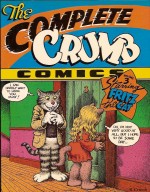
The Complete Crumb Comics volume 13: the Season of the Snoid


By Robert Crumb and others (Fantagraphics Books)
ISBN: 978-1-56097-296-9

Like crisps, chocolate and bad puns; once you get the taste of Robert Crumb on your palate, it’s almost impossible to shift the craving for more. Here’s another re-released edition from the superb and multi-award winning Complete Crumb Comics series that will tickle the bad-taste-buds of discerning comics cognoscenti and is bound to make a whole new generation of fans among the cool kids who will take my usual disclaimer in the full spirit which it is intended.

This book contains really clever and outrageously dirty pictures, rude words, non-condemnatory drug references and allusions, godless questioning of authority and brilliantly illustrated. highly moving personal accounts and opinions. If you – or those legally responsible for you – have a problem with that, please skip this review and don’t buy the book. That will certainly teach us…

Robert Crumb is a unique creative force in the world of comics and cartooning with as many detractors as devotees. His uncompromising, excoriating, neurotic introspections, his pictorial rants and invectives, unceasingly picked away at societal scabs and peeked behind forbidden curtains for his own benefit, but he has always happily shared his unwholesome discoveries with anybody who takes the time to look… In 1987 Fantagraphics Books began the nigh-impossible task of collating, collecting and publishing the chronological totality of the artist’s vast output and those mesmeric volumes are now being reissued.

The son of a career soldier, Robert Dennis Crumb was born in Philadelphia in 1943, into a functionally broken family. He was one of five kids who all found different ways to escape their parents’ highly volatile problems and comic strips were paramount among them.

As had his older brother Charles, Robert immersed himself in the comics and cartoons of the day; not just reading but creating his own. Harvey Kurtzman, Carl Barks and John Stanley were particularly influential, but also strip artists such as E.C. Segar, Gene Ahern, Rube Goldberg, Bud (Mutt and Jeff) Fisher, Billy (Barney Google), De Beck, George (Sad Sack) Baker and Sidney (The Gumps) Smith as well as illustrators like C.E. Brock and the wildly imaginative and surreal 1930’s Looney Tunes and Merrie Melodies animated shorts.

Defensive and introspective, young Robert pursued art and self-control through religion with equal desperation. His early spiritual repression and flagrant, hubristic celibacy warred with his body’s growing needs…

Escaping his stormy early life, he married young and began working in-house at the American Greeting Cards Company. He discovered like minds in the growing counterculture movement and discovered LSD. In 1967 Crumb relocated to California and became an early star of Underground Commix. As such he found plenty of willing hippie chicks to assuage his fevered mind and hormonal body whilst reinventing the very nature of cartooning with such creations as Mr. Natural, Fritz the Cat, Devil Girl and a host of others.

He worked on in what was essentially a creative utopia throughout the early 1970’s but the alternative lifestyle of the Underground was already dying. Soon it would disappear: dissipated, disillusioned, dropped back “in” or demised. A few truly dedicated publishers and artists stayed the course, publishing on a far more businesslike footing as Crumb carried on creating, splitting his time between personal material and commercial art projects whilst incessantly probing deeper into his turbulent inner world.

After an introduction from his brother Maxon Crumb, this re-issued 13th tome opens with ‘Treasure Island Days’ an autobiographical junket of the young Crumb boys from Lemme Outa Here in 1978, produced in collaboration with brother Charles, after which come the nigh-legendary pieces produced for CoEvolution Quarterly #23-26 in 1979-1980, still powerfully impressive after all these years.

The gently biting ‘A Short History of America’, the subversively salacious ‘Bearzie Wearzies’ as well as the stunning black, white and yellow covers to #24, the wildly manic ‘Bop It Out’ (with a canny cameo from the amazing “No-Shit Sherlock”) and the gloriously dry and acerbic fable ‘Adventures of Onionhead’, is followed by the first of a clutch of fabulous American Splendor collaborations with uniquely Ordinary Hero Harvey Pekar in ‘Excerpt’ (from Cleveland Magazine 1980). ‘Me and My Sweetie’ (Portfolio of Underground Art) and the superbly expressionistic cover to Tele Times (vol. 2 #21) end the initial black and white section of the book.

The middle section is full colour and comprises covers and album art; beginning with Bizarre Sex, #8, American Splendor #24 and Snoid Comics, before presenting the rarer (for comics readers at least) material: Blind Boy Fuller: Truckin’ My Blues Away, Banana in Your Fruit Basket, Cheap Suit Serenaders (Crumb’s own Swing nostalgia band), Cheap Suit Party Record, Memphis Jug Band, Yazoo’s History of Jazz, Wild Family Orchestra, a selection of record labels designed by Crumb and Eddie Lange: Jazz Guitar Virtuoso. In addition to these magical concoctions there are also four superb pages of Heroes of the Blues Trading Cards and an Early Jazz Greats poster ad.

The comics section resumes with Crumb’s crudest, most abrasive, confrontational and possibly most cathartic creation: an arrogant, abusive, sex-crazed little homunculus called Mr. Snoid.

Unpleasant and usually unwelcome, Snoid was utterly self-obsessed; a rampaging animate artistic impulse which nevertheless managed to sway or bully those around him into complying with whatever gratuitous flight of the Id he might contemplate or require instant gratification for…

Always his own harshest critic and ever-searching for artistic perfection, it was still hard for even his biggest fans to look at Crumb-the-creator in the same way after the Snoid hit town.

The character debuted in 1980 in – what else – Snoid Comics , grabbing the spotlight from panel one of ‘This Cartooning is Tricky Business’ before declaring his unpleasant manifesto and attitude on everything from art to women in ‘The Snoid Goes Bohemian.’ The most unsavoury origin in comics followed in ‘How Snoids are Born’ after which ‘One Foot to Heaven’ finds the little stinker looking for a little action and ‘Mr. Snoid Among His Fellow Humans’ gives a final insight into his obscenely unique philosophy of life.

As liberating, challenging and guiltily, wrongly funny as Snoid was, his creation – or perhaps escape – certainly reinvigorated Crumb creative juices, both as auteur and artistic collaborator.

‘Freddy Visits for the Weekend’ and the two strips that comprise ‘Vox Populi’ (drawn for Harvey Pekar’s American Splendor #5) resonate with new vehemence and understated tension, whilst the illustrations for Michael Bloomfield’s ‘Me and Big Joe’ from High Times #64 sparkle with affection and warmth.

‘Hospital Fun’ #1-2, scripted by Pekar, first appeared in Village Voice #25, after which Crumb’s next breakthrough series began in Zap #10, 1982, as the introspective, retrospective autobiographical ‘My Troubles With Women’ shockingly and hilariously opened more doors into Crumb’s troubled soul for us all to peer uncomfortably at…

This incautiously appealing edition ends with a selection of covers, ads and illustrations by Crumb from the ecologically proactive (we would now call it “Green”) Californian magazine Winds of Change (volume 2, #1-9 from 1980-1981) and includes articles by wife Aline Kominsky-Crumb and five of their collaborative strips ‘Everyday Funnies’ before this 13th chronicle closes with a typically effective (unpublished) book cover for ‘King of the Freaks’.

None of these collections is free of potentially offensive material and Crumb’s work is riddled with his often hard-to-embrace obsessive self-exploratory concerns. As always his work gouges out the creator’s most intimate and disturbing idiosyncrasies about women, sex, racial stereotypes, unchecked social change and a million other daily beefs and niggles. But there’s no disparagement intended or harm meant – except perhaps to himself – and his staggering honesty, incisive inquisitiveness and neurotic, intimate over-sharing is always leavened with a devastatingly ironic wit and rendered in imagery too powerful to ignore. Be warned but please don’t misunderstand what you’re looking at…

Crumb’s sublime cartooning has brought cachet and serious critical thought to our once ghettoised art form and, love or loathe him, no one can diminish his contribution to the broad world of graphic narrative. These superb books are the perfect introduction to any (definitively over 18) newcomers unaware of grown up comics… so if you are intrigued snatch up this book and all the others as soon as conceivably possible…

All material from American Splendor © 1980, 1998 Harvey Pekar & R.Crumb. All other material © 1976, 1978, 1979, 1980, 1981, 1998, 2011 R. Crumb. All rights reserved.

The Complete Crumb Comics volume 15: Featuring Mode O’Day and Her Pals


By Robert Crumb and others (Fantagraphics Books)
ISBN: 978-1-56097-413-0

Robert Crumb is a unique creative force in the world of comics and cartooning with as many foes as fans, but his idiosyncratic, unflinching, uncompromising, controversial and always bewitching work is impossible to ignore.

Therefore if intemperate language, putative blasphemy, artfully grotesque cartoon nudity, fetishism and comedic fornication are liable to upset you, stop reading this review and don’t buy the book. Stop reading now, check out an old, archived review instead or just come back tomorrow…

In 1987 Fantagraphics began the almost impossible task of collating, collecting and publishing the chronological totality of the artist’s output.

Son of a career soldier, Robert Dennis Crumb was born in Philadelphia in 1943 to a large and troubled family. After a tempestuous early life, he began working as an in-house art-drone at the American Greeting Cards Company and trading card giant Topps Publishing, married early and briefly before “dropping out” and joining the Counterculture movement, where he changed the nature of cartooning with such creations as Mr. Natural, Fritz the Cat, Devil Girl and a host of others.

Within a decade the explosively reactive underground movement was gone; dissipated, disillusioned, dropped back “in” or dead, with only a few notable independent and truly dedicated publishers staying the course. Always his own harshest critic and ever-searching for artistic perfection, in 1981 Crumb convinced Ron Turner of Last Gasp to publish a new anthology of underground/alternative/cutting edge commix in a new anthology.

Weirdo – with Crumb as editor and major contributor until 1983 when he handed over the editor’s role to his “discovery” Peter Bagge (who provides a fascinating introduction and overview for the tome under review here) – was, for many of us, the last bastion of a real gone world.

With the onus of deadlines and responsibility of magazine production removed Crumb resumed his quixotic search for artistic satisfaction…

Recently re-released, this 15th softcover volume (originally published in 2001) collects Crumb’s comic strips from Weirdo #9-15, assorted gags, private commissions, freelance illustration work, album covers and other pictorial ephemera plus strips from American Splendor and Zap Comix, covering the hedonistic, greed-soaked early 1980s which were such a painful anathema to someone of the Artist’s socialist/liberal leanings.

After Bagge’s aforementioned text recollections the graphic magic begins with the Crumb contributions in Weirdo #9 (Winter 1983-1984), a stunning and meticulous frontispiece, ‘Arline ‘n’ Bob and that Thing in the Back Bedroom’ – an autobiographical account of the “joys” of parenthood crafted in collaboration with second wife Aline Kominsky-Crumb plus the first snide and sardonic appearance of Reagan-era, appalling and avaricious anti-icon ‘Mode O’Day and Her Pals’ in a barbed observation of fame-hungry wannabes and the pathetic, empty gullibility of the nouveau-riche.

More of Mode (dabbling with the chic of being a benefactor and coffee-magnate of the so-troubled Nicaraguans) and nothing else appeared in Weirdo #10 in Summer 1984 whilst #11 featured a stark and salutary updating of an old favourite in ‘Goldilocks and the Three Bears’ and a magical selection of single panel cartoons declaring ‘Love’s Like That!’

Mode stalked and blagged her way into the good graces of an ugly plutocrat with her usual lack of success or happiness in #12, but Weirdo #13 (Summer 1985) was given over to Crumb’s stunning ‘Psychopathia Sexualis’ wherein the case histories of a number of “deviants” were brought to incredible grimy, sordid, evocative life as Crumb sampled the truly bizarre nature of humanity described by giant of psychology Richard Freiherr von KrafftEbing.

Issue #14 featured the far lighter and whimsically bombastic anti-pop (or is it simply anti-maximum decibels?) inquiry ‘Where Has It Gone, All the Beautiful Music of Our Grandparents?’ and the marvellously introspective yet light ‘Life Certainly Is Existential!’, whilst #15 opened with the surreal domesticity of ‘Comics from Other Planets Dept’, slipped comfortably into two pages of splendid ‘Gags’ and closed with a captivating ad parody.

The covers of Weirdo #9-15 (including a heartfelt ‘Parting Shot‘ at Ayn Rand), lead off the expansive central, full-colour section, which continues with record and book covers for The Klezmorim’s Streets of Gold, The Otis Brothers, Charles Bukowski’s Bring Me Your Love and There’s No Business Like Show Business, novel covers Texas Crude and The Monkey Wrench Gang; a Louis Bluie poster plus incidental illustrations and sticker art.

Back in black and white there’s a page of miscellaneous ads and illustrations from 1983, after which ‘Hypothetical Quandry’ (written by Harvey Pekar for his magnificent American Splendor on-going graphic autobiography: issue #9, if you’re keeping count) appears, showcasing Crumb’s far bolder and more liberated big-black-brush art style.

Crumb’s long creative association with author Charles Bukowski produced phenomenal results, and here, after a portrait of the writer and promotional art, follows a sequence of illustrations from Bring Me Your Love and There’s No Business Like Show Business, as well as Ken Weaver’s Texas Crude. More miscellaneous illustration art for Pepper & Stern Rare Books, The Magazine, Co-Education Quarterly and seven pages of vignettes and cameos from The Monkey Wrench Gang round out this section.

‘Constipated Chaos Consortium’ is a mind-bending jam-collaboration with fellow underground luminaries Spain Rodriguez, Bosirus Eerie, Victor Moscoso, S. Clay Wilson and Robert Williams and the first of three contributions to Zap #11 from 1985: the other two being ‘Jesus People USA’ (a hypothetical interview between a fundamentalist Christian reporter and ‘R. Crumb, Underground Pornographer and All-Around Lost Soul’) and the powerful and engaging biography of lost Blues legend (Charley) ‘Patton’.

This sublime – and key – transitional tome in the development of one of the art form’s greatest living proponents concludes with another section of miscellaneous illustrations including collaborations with wife and daughter Aline and Sophie and a poster with Dan O’Neill, Victor Moscoso and Bob Crabb.

As always this varied and impressive selection of Crumb’s craft is riddled with his often hard-to-embrace themes and emblematic declamatory and potentially offensive visual vocabulary: as always the work touches on the creator’s most intimate and disturbing idiosyncrasies regarding sex and women, both in the unsettling Abstract and the painful, side-splitting, lustful, painful and loving Concrete and, as always, the reader’s response can only be Love or Loathe…

Crumb’s subtle mastery of his art-form and obsessive need to reveal his most hidden depths and every perceived defect – in himself and the world around him – has always been a unquenchable wellspring of challenging comedy and riotous rumination. This superb series charting the perplexing pen-and-ink pilgrim’s progress is the perfect vehicle to introduce any (definitively over 18) newcomers of your acquaintance to the world of grown up comics. And if you need a way in yourself, snatch up this book and the other sixteen as soon as conceivably possible…

All material © 2011 R. Crumb and its respective owners or co-owners. All other material © 1978, 1979, 1981, 1982, 1983, 1984, 1985, 2001, 2011 R. Crumb. All rights reserved.

Asterix the Legionary, Asterix and The Chieftain’s Shield & Asterix at The Olympic Games


By Goscinny and Uderzo, translated by Anthea Bell & Derek Hockridge (Orion Books)
ISBNs: 978-0-7528-6621-5, 978-0-7528-6625-3 and 978-0-7528-6626-0

One of the most-read comics in the world, the chronicles of Asterix the Gaul have been translated into more than 100 languages; with animated and  live-action movies, TV series, assorted games and even a theme park (Parc Astérix, near Paris). More than 325 million copies of 34 Asterix books have sold worldwide, making Goscinny & Uderzo France’s bestselling international authors.

The diminutive, doughty hero was created in 1959 by two of the art-form’s greatest proponents, René Goscinny & Albert Uderzo; masters of the form at the peak of their creative powers. Although their perfect partnership ended in 1977 with the death of prolific scripter Goscinny, the creative wonderment still continues – albeit at a slightly reduced rate of rapidity as Uderzo continues to produce new works.

Like everything good, the premise works on multiple levels: ostensibly, younger readers enjoy the action-packed, lavishly illustrated comedic romps where sneaky, bullying baddies get their just deserts whilst more worldly readers enthuse over the dry, pun-filled, sly, witty satire, enhanced for English speakers by the brilliantly light touch of translators Anthea Bell & Derek Hockridge who played no small part in making the indomitable Gaul so palatable to the Anglo-Saxon world. (Personally I still thrill to a perfectly delivered punch in the bracket as much as a painfully swingeing string of bad puns and dry cutting jibes…)

Asterix the Gaul is a cunning underdog who resists the iniquities, experiences the absurdities and observes the myriad wonders of Julius Caesar’s Roman Empire with brains, bravery and a magic potion.

The stories were alternately set on the tip of Uderzo’s beloved Brittany coast, where a small village of redoubtable warriors and their families resisted every effort of the Roman Empire to complete their conquest of Gau,l and throughout the expansive Ancient World circa 50BC.

Unable to defeat this last bastion of Gallic insouciance the mostly victorious invaders resorted to a policy of containment. Thus the little seaside hamlet is permanently hemmed in by the heavily fortified garrisons of Totorum, Aquarium, Laudanum and Compendium.

The Gauls don’t care: they daily defy the world’s greatest military machine by just going about their everyday affairs, protected by the magic potion of resident druid Getafix and the shrewd wits of a rather diminutive dynamo and his simplistic best friend…

Firmly established as a global brand and premium French comics export by the mid-1960s, Asterix the Gaul continued to grow in quality as Goscinny & Uderzo toiled ever onward, crafting further fabulous sagas; building a stunning legacy of graphic excellence and storytelling gold.

In late 1966 they began Asterix the Legionary (running in Pilote #368-389), which was later adapted as half of the plot for the movie Asterix Vs Caesar (the other album incorporated into the animated epic being Asterix the Gladiator).

This clever romp introduced the destabilising concept of true romance to the doughty hero and his prodigious pal Obelix as, whilst boar hunting in the great forest around their still-unconquered village, they encountered the fabulously beautiful Panacea picking mushrooms.

The little darling had freshly returned to the village after years away in Condatum and the sheltered Obelix was instantly smitten. Dazed and confused by the only force that could ever affect him, the gentle giant was teased by Asterix and Getafix, but undaunted, Obelix began bringing the oblivious lass a succession of inappropriate presents.

However, when the befuddled buffoon found Panacea crying he dashingly volunteered to mend her woes. Tragically for him the problem was a boyfriend named Tragicomix, who had been pressed into military service with the Roman Army…

Where other men would take advantage of the hopeless situation, Obelix, afflicted with a True Crush, determined to make Panacea happy and rushed off to rescue her lost love. Ever faithful, Asterix and little Dogmatix accompany him to keep him out of trouble.

In Condatum they discovered that Tragicomic had already been shipped out to Africa where Caesar was battling fellow Roman Scipio in a clandestine Civil War and Asterix realised the only way to find Tragicomix was to enlist in the Roman Army…

In Basic Training they met a motley assortment of fellow recruits – all national stereotypes – allowing for a broad bombardment of gentle ethnic comedy and graphic accent humour. There was Neveratalos the Greek, Goths Allegoric and Hemispheric, Gastronomix from Belgium, Selectivemploymentax the Briton and poor Ptenisnet the Egyptian, who didn’t know the language and thought he was on a holiday package tour…

After lashings of their unique brand of anarchy disrupting regulation army life, Asterix, Obelix and crew shipped out to Africa. When they arrived the war was going badly for Caesar, but more importantly, Tragicomix was missing and believed captured by Scipio’s forces…

With magic potion in hand Asterix, Obelix and Dogmatix decided to take matters in hand…

A hilariously engaging yarn with delicious overtones of the iconic British comedy Carry On Sergeant, this is an action-packed farce big on laughs but with a bittersweet core that will tug at the heartstrings of young and old alike…

Asterix and the Chieftain’s Shield (originally entitled Le bouclier arverne) was the eleventh epic outing for the Greatest French Hero of Them All; debuting in Pilote #399 and running until #421 in 1967. it acted as a kind of tongue in cheek patriotic history lesson and began years before the usual setting of Asterix tales when Gaulish over-chief Vercingetorix surrendered to Caesar at the Battle of Alesia by throwing down his weapons and armour at the Conqueror’s feet.

Such was the shame of the defeated Gauls that the location of the clash was deliberately excised from their memories. Now, nobody remembers where Alesia was…

After the battle the accoutrements lay where they fell until a greedy Legionary stole the Great Shield, subsequently losing it in a game of dice. From there the legendary buckler passed through many scurrilous hands before fading into legend…

Jumping to “modern” times, in the village of indomitable Gauls Chief Vitalstatistix is terribly ill: a sedentary life of over-indulgence has ruined his liver and since Getafix’s druidic potions can’t help him, he has to go to the spa town of Aqua Calidae (Arverne) for a rest-cure and diet.

It isn’t all bad though since his forthright wife Impedimenta has to stay behind….

As a chief he needs an honour guard and Asterix, Obelix and Dogmatix are happy to accompany him, especially as the chief uses the journey to test all the inns and taverns en route. Once there though, the warriors’ robust consumption – and boisterous high jinks – appals all the dieting dignitaries and impatient patients so Asterix and Obelix are summarily kicked out of the Health Resort.

Footloose and fancy-free the boys tour the local countryside of Gergovia idly trying to find the lost site of Alesia until they encounter Roman envoy Noxius Vapus and his cohort. After indulging in their favourite sport of Roman-bashing the lads befriend local merchant Winesandspirix – a veteran of Alesia – while Noxius hightails it to Rome and tells Caesar the Gauls are revolting…

({      } this space provided for you to fill in your own joke)

Set on putting the Gauls in their place and reminding them who’s boss, Caesar determines to hold a Roman Triumph with the shield of Vercingetorix as the centrepiece.

He’s none to happy when he discovers it’s been missing for years…

And thus begins the second stage of this hilariously thrilling detective mystery as the Romans frantically hunt for the missing artefact and Asterix and Obelix set out to thwart them at every turn…

No prizes for guessing which faction succeeds and who scurries home in defeat and disgust in this marvellously slapstick saga with a delightfully daft twist ending…

Asterix at the Olympic Games first appeared weekly in Pilote #434-455, serialised in 1968 to coincide with and capitalise upon the Mexico City Games. The translated British album was released four years later, just before the 1972 Munich Olympiad.

The Romans of Aquarium garrison are in an ebullient mood. Their comrade Gluteus Maximus has been selected to represent Rome at the Greeks’ Great Games in Olympia. Centurion Gaius Veriambitius is happy too, because he knows if Gluteus wins they can both write their ticket in Rome…

It all starts to go horribly wrong when the Roman superman is bested and humiliated by Asterix and Obelix whilst training in the Great Forest. His confidence shattered, Gluteus returns to Aquarium and only regains a modicum of his old form when Veriambitius reminds him that the potion-fuelled Gauls won’t be at the Games…

Meanwhile the men of the village have decided to go to Olympia en masses and have a go themselves…

There follows a uproarious and nigh-scandalous sequence of events as the unbeatable Greeks try to placate their Roman overlords; the Latin competitors undergo the tortures of the arrogant damned to cheat, wheedle and somehow exclude the all-conquering Gauls whilst the basically honest and honourable Asterix devises a cunning yet fair way to beat the politically motivated, greed-inspired “sportsmen” and uphold the best traditions and ideals of the Olympic Games.

Guess who wins…

Spoofing package tours, obnoxious tourists, self-serving sports authorities and doping scandals in equal proportion, this sparkling escapade features some of Uderzo’s most inspired art as he recreates the grandeur and glory of the Ancient World whilst simultaneously graphically lampooning the haughty elites of the Sporting World, the Military and Politics. A genuine classic which should be given to every competitor at London 2012 and especially the organising committees…

Asterix volumes are always stuffed with captivating historical titbits, soupcons of healthy cynicism, singularly surreal action and splendidly addictive adventure, illustrated in a magically enticing manner. These are perfect comics that every one should read over and over again.
© 1967-1969 Goscinny/Uderzo. Revised English translation © 2004 Hachette. All rights reserved.