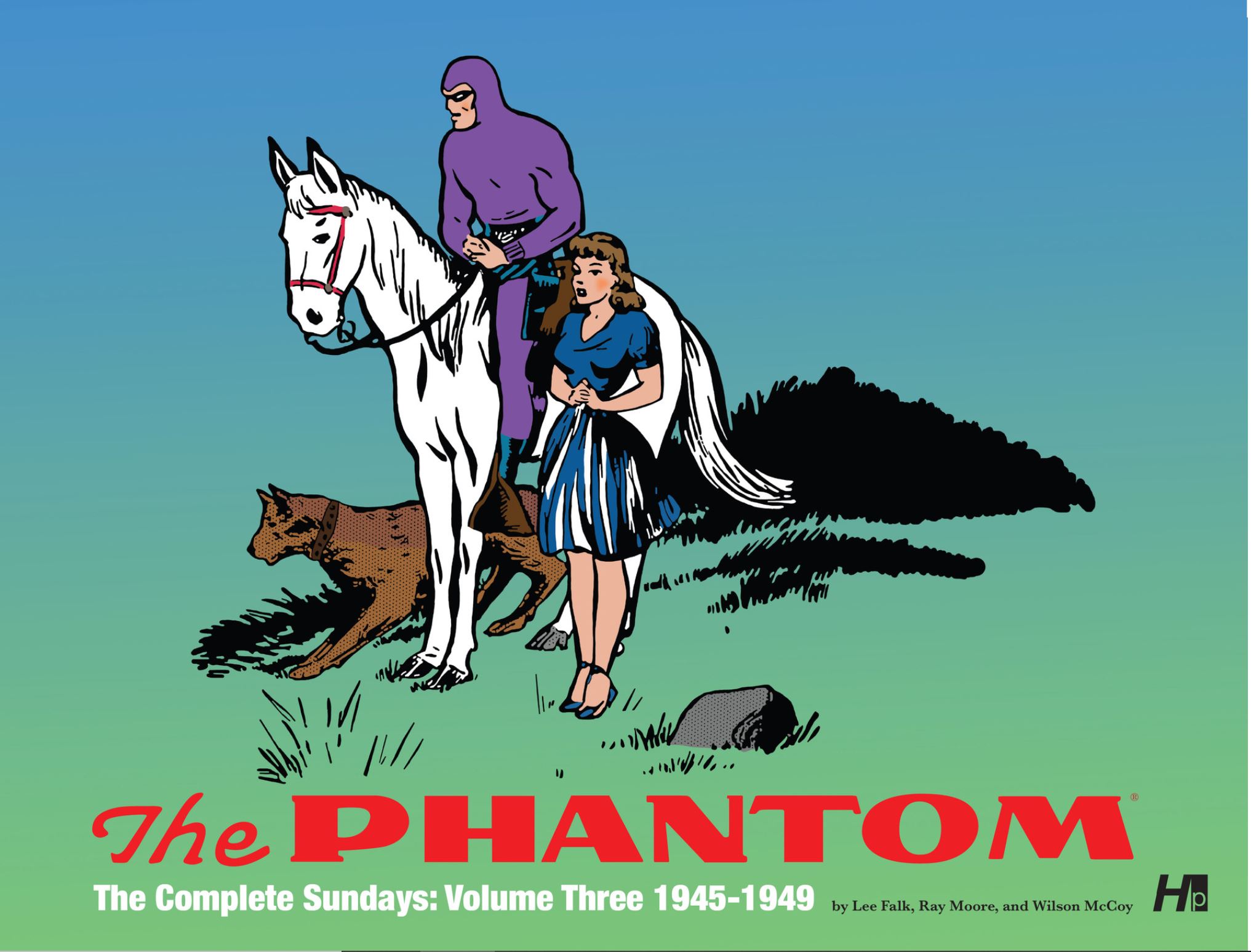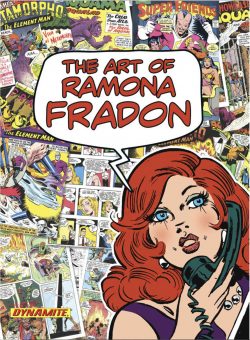
Frank Robbins’ Johnny Hazard: Volume One – the Newspaper Dailies 1944-1946


By Frank Robbins with an introduction by Daniel Herman (Hermes Press)
ISBN: 978-1-61345-004-8 (HB/Digital edition)

Johnny Hazard was a newspaper strip created in the style and manner of Terry and the Pirates, but in many ways this steely-eyed hero most resembles – and indeed predates – Milton Caniff’s second masterwork Steve Canyon. Unbelievably, until 2011 this stunningly impressive, enthralling adventure strip had never been comprehensively collected in archival volumes – at least not in English – although selected highlights had appeared in magazines like Pioneer Comics, Dragon Lady Press Presents and the Pacific Comic Club.

Boston born, Franklin Robbins (9th September 1917 – 28th November 1994) was an artistic prodigy who shone from early on. At age nine he was awarded a scholarship to the Boston Museum of Fine Arts and at 15, moved to New York City to attend the National Academy of Design on a Rockefeller grant. Skilled, inventive and prolific as both painter and graphic artist, he freelanced continually, even working with Edward Trumbull on the legendary murals for the NBC building and Radio City Music Hall.

Robbins created graphics for RKO Pictures, worked in advertising and magazine illustrations but never stopped painting, with work shown at the Whitney Museum of American Art, Metropolitan Museum of Art, The Corcoran Gallery of Art and Walker Art Gallery, although he found his perfect medium of expression when invited to take over a top comic strip…

Even whilst relentlessly creating a full seven days of newspaper strips, he exhibited work at the Whitney Museum of American Art’s Annual show and – after ending his comics career – retired to Mexico to end his days with a brush in his hand.

The truth is that comics changed Robbins’ life. He was a brilliant natural cartoonist whose unique artistic and lettering styles lent themselves equally to adventure, comedy and super-heroic tales, whilst his expansive raconteur’s gifts made him one of the best writers over three generations.

He first found popular fame in 1939 by taking over aviation strip Scorchy Smith from Bert (The Sandman) Christman, who had left America to fight with the Flying Tigers in China. Robbins thrived in the role and created a Sunday page for the feature in 1940.

The groundbreaking feature had been originated by John Terry before the astounding Noel Sickles replaced him: revolutionising it and – with Milton Caniff – inventing a new impressionistic style of narrative art to reshape the way comics were drawn and perceived .

Robbins remained until 1944 and was then offered high-profile Secret Agent X-9. Instead, he devised his own lantern-jawed, steely-eyed man of action.

A tireless and prolific worker, even whilst producing the daily and Sunday Hazard (with a separate storyline for each), Robbins continued freelancing as an illustrator for The Saturday Evening Post, Look, Life and a host of other mainstream magazines. He also tried comic books for the first time when Johnny Hazard won his own title in 1948-1949, just as superheroes began being supplanted by he-men, gangsters and monsters…

Robbins tried again in 1968: quickly becoming a key contributor as both artist and writer on Superboy, The Flash and The Atom, as well as a regular contributor to humour mag Plop! and DC’s mystery and war anthologies. He particularly excelled on Batman, Batgirl and Detective Comics where, with Neal Adams, he created Man-Bat, before following Michael Kaluta as artist on The Shadow.

Moving to Marvel in the 1970s, Robbins concentrated on drawing a variety of titles including Captain America, Daredevil, Ghost Rider, Morbius, The Man from Atlantis, Human Fly, Power Man and The Invaders – which he co-created with Roy Thomas.

When Johnny Hazard launched on Monday June 5th 1944, he was an aviator in the US Army Air Corps. When hostilities ceased, he briefly became a freelance charter pilot and spy before settling into the of a globe-girdling, troubleshooting mystery-solver: a modern day Knight Errant. The strip ended in 1977: one more victim of diminishing panel-sizes and the move towards simplified, thrill-free, family-friendly gag-a-day graphic fodder to frame small-ads. In its time it was syndicated in nine different languages in thousands of newspapers across the world, and even scored a residency in 1950s British weekly Rocket.

This fabulous hardcover/digital series – reproduced from original King Features proofs – at long last re-presents the definitive magnum opus in fitting form: a monochrome, landscape format archival collection of the first 2 years (covering June 5th 1944 to November 11th 1945), resurrecting the Amazing Aviator in followers’ hearts and hopefully finding new fans.

The action begins with a selection of those 1948 comic book covers and an informative ‘Introduction: Frank Robbins and Johnny Hazard’ by Daniel Herman before we meet the man himself in ‘The Escape’.

Here, the reader meets coolly capable flyer Lt. Johnny Hazard and his pals Loopy and Scotty as – having escaped from a German POW camp – they break into a Nazi air field to steal a bomber and fly home. Fast-paced, sharp-tongued and utterly gung-ho, the yarn introduces a cunning, charming, happy-go-lucky lout, insouciantly ruthless and prepared at every stage to risk his own freedom and life if it means killing a few more of the enemy and sabotaging the German war effort.

His saga truly begins with the 5th July episode as the liberated and again ready-for-duty airman touches base with friendly civilians only to meet feisty, headstrong and dedicated war photographer ‘Brandy’ during an air raid. All sorts of sparks fly as a series of spectacular events continually push them together and ultimately passionate fury and disgust on both sides turns to something else amidst all the deadly missions and flaming firepower.

The romantic turning point comes when Brandy impetuously parachutes into occupied territory to get a perfect shot and Hazard – hating himself every moment – goes after her…

The strip could not keep up with the fast-moving events after D-Day (the real world Allies invaded “Fortress Europa” the day after Johnny Hazard debuted) and third story arc ‘Sun Tan and General Mariwana’ – opening on September 11th 1944 – saw the hero’s squadron transferred to the Pacific Theatre of Operations to reinforce the battle against Japan. Through ingenious means Brandy inveigles herself into the picture as recently promoted Captain Hazard and his crew undertake a top-secret mission couriering a Chinese resistance leader back to her people.

Enigmatic Sun Tan is both staggeringly beautiful and lethally dangerous… and the Japanese Secret Service’s top target. Her leaked intentions spark a byzantine assassination plot wherein an experimental tracking device is hidden in Brandy’s camera gear during a refuelling stopover in Iran…

The architect of the plot is Colonel Mariwana: a pilot disfigured in a previous clash with the freedom fighter. His maniacally relentless pursuit costs him his command but does succeed in bringing down Hazard’s plane in the Himalayas. Ultimately, the grim episode of revenge leads to mass-murder and desecration of temples before honour is avenged. The mission is completed, but at a punishing cost…

A new year reinforced the darker tone as January 31st 1945 opened the saga of ‘Colonel Kiri’, as Hazard sets up shop on an embattled army air base under constant assault by Japanese forces on the front line of occupied China. It also introduces ace wingman Captain “The Admiral” Slocum: last in an unbroken line of valiant patriotic mariners, but reduced to defending his country in the skies since his debilitating sea sickness prevents him from serving afloat like a true warrior…

The Americans are hard-pressed, targeted by a secret Japanese installation decimating the region. When Brandy is shot down while helping to evacuate Chinese refugees, she is sheltered by farmers who disguise her as one of them. She meets malign war criminal Kiri when he claims her as a “comfort woman” and triggers his fate by freeing recently captured Hazard and Slocum, who spectacularly sabotage the ghost base. In the chaos, carnage and confusion, the Americans steal a Japanese tank and head for their own lines…

The closing chapter here is a deft and delicious tribute to the characters of Damon Runyon, embodied in displaced, pool-addicted, New York gunsel ‘Side-Pocket Sam’ (August 13th to November 11th 1945).

As our heroes enjoy the destructive capabilities of their new ride they almost accidentally capture a major prize. High command officer General Ishigaki and his glamorous French “assistant” Mademoiselle Touché aren’t quick or smart enough to escape the fleeing Yanks, and none of them are able to avoid the army of Chinese bandits who scoop them up and deliver them to their slick Yankee boss.

Side-Pocket Sam is debonair, charming but utterly amoral. He knows one of his “guests” carries Japan’s failsafe game plan for World War III and – once it’s his – plans to make the deal of his life…

Tragically, he’s underestimated his enemies and his friends, enabling Johnny, Brandy and the Admiral to save the day and head for safety…

Sharp, snappy and devilishly funny repartee in the style of movies like Howard Hawks’ His Girl Friday and Frank Capra’s It Happened One Night is a hallmark of these rapid fire yarns, some of the greatest comic strips in history, and that in itself can present a few problems for modern readers.

Contemporary attitudes to sexuality, gender and particularly race are far from what we find acceptable – or should even tolerate – today. That situation is further compounded by an understandably fervent patriotic tone: equal parts pure jingoism and government-sponsored morale boosting.

Every contemporary-based feature of the era participated in the war effort by shaping its content accordingly, and terms like “Jap”, “Nip”, “Kraut” and many different forms of “othering” were common parlance in both movies and comics – the two main forms of popular entertainment. These slurs became a character-defining shorthand, used without consideration and thus an indelible facet of national speech and behaviour for decades to follow.

We know better now – at least most of us do – but must accept and understand that hurtful and unjust as such terms are, they did exist and we’re doing history and our society a huge and dangerous disservice by ignoring, downplaying or worst of all self-censoring those terms and the attitudes that fed them.

In truth, Johnny Hazard was far less egregious than most: Robbins may have made Kiri and Mariwana contemptible villains, but the Japanese army (who had committed many verified real world atrocities) were given fair play and did not unnecessarily suffer from the worst propagandist nonsense used by the Allies to bolster a united war spirit.

Other ethnicities – like Chinese, Iranian, Tibetans and Italians – are treated with the full dignity of different but equal cultures and depicted as competent comrades in arms, not ignorant primitives in need of a white man’s saving graces. However, arch comedian Robbins clearly couldn’t resist playing mischievous games with accents, names and speech patterns that would do Benny Hill, Hogan’s Heroes or Charlie Chan (the opposite of) proud, so if you don’t think you’re capable of remaining historically detached, best to forgo those delights that have transcended time…

To be continued…

These exotic action-romances perfectly capture the mood and magic of a distant but incredibly familiar time; with cool heroes, hot dames and exceedingly intemperate bad-guys encountering exotic locales and stunning scenarios, all peppered with blistering tension, slyly mature humour and vivid, visceral excitement.

Johnny Hazard is a brilliant two-fisted thriller-strip too long forgotten, and this is your chance to remedy that.
© 2011 King Features Syndicate, Inc. ® Hearst Holdings Inc. All rights reserved.

One Beautiful Spring Day


By Jim Woodring (Fantagraphics Books)
ISBN: 978-1-68396-555-8 (TPB/Digital edition) 978-1-68396-588-6 (slipcased HB)

There have always been uniquely gifted, driven comics creators who defy categorisation… or even description. My picks for that elite pantheon of artisans includes Kirby, Ditko, Segar, Hergé, Herriman, Will Eisner, Osamu Tezuka, Robert Crumb, Daniel Clowes, Franquin, Frank Bellamy, Basil Wolverton, Mort Meskin, Kim Deitch, Joe Kubert, Carmine Infantino, Eric Bradbury, Frank Hampson, Tony Millionaire, Alex Niño, Neal Adams, Richard Corben, Wally Wood and a few others who all brought something utterly personal and universally influential to their work just beyond the reviewer’s skills (mine certainly) to elucidate, encapsulate or convey.

They are all perfect in their own way and so emphatically wonderful that no collection of praise or analysis can do them justice. You just have to read their stuff for yourself.

Arguably at the top of that distinguished heap of graphic glitterati sits Jim Woodring. It’s a position he has maintained for years and appears capable of holding for generations to come.

Woodring’s work has always been challenging, funny, spiritual, grotesque, philosophical, heartbreaking, beautiful and extremely scary. Moreover, even after reading and believing that sentence you will still be absolutely unprepared for what awaits the first time you encounter any of his books – and even more so if you’ve already seen everything he’s created.

Celebrated as a cartoonist, animator, fine artist, toy-maker and artistic Renaissance man, Woodring’s eccentric output has delighted far too small and select an audience since 1980 and his official mini-comics forays. Born in Los Angeles in 1952, Woodring suffered delusions and hallucinations as a child and regularly believed his parents wanted to kill him.

These traumas seemingly sensitized and attuned him to symbolism and pictorial expression as well as opening him to assorted philosophies and belief systems. The young lad managed his “apparitions” by drawing them as strips in the waking world where he had control of them. Overcoming problems with school, drugs and alcohol, Woodring was eventually diagnosed with autism and prosopagnosia, but by then he had a discovered the power of Art.

He turned his life around through his own determination and by the inspiration of comics masters like Kirby, Ernie Bushmiller, Gil Kane and Crumb, classical fantasists such as Pieter Brueghel, Hieronymus Bosch and particularly Salvador Dali, and the animations of the Fleischer Brothers, Tex Avery and Walt Disney.

Woodring found surcease from a lifetime of punishing dreams by pictorializing nightmares and through following Buddhism, Taoism and the Hindu philosophy of Vedanta. After working as a farm labourer, garbageman and TV cartoon animator – with occasional comics side jobs like colouring the Roy Thomas/Gil Kane adaptation of the Ring of the Nibelungs, illustrating 1997’s Smokey the Bear, Friend of the Forest, and scripting stints on Aliens and Star Wars – Woodring began fully sharing the messages from his subconscious. He had begun self-publishing his autobiographical, “autojournal” comics in 1980, and seven years later was picked up by Fantagraphics Comics and thereafter all of us…

Readers who avidly adored his groundbreaking, oneirically autobiographical magazine Jim and its notional spin-off series Frank (with graphic novel Weathercraft winning The Stranger 2010 Genius Award for Literature) were joined by fans of Tantalizing Stories, Seeing Things or more mainstream features like his Star Wars and Aliens tales for Dark Horse Comics but, always, there was the promise of greater surprises in his next story…

An accomplished storytelling technician these days, Woodring grows rather than constructs solidly surreal, abstractly authentic, wildly rational, primal cartoon universes, wherein his meticulous, clean-lined, sturdily ethereal, mannered blend of woodblock prints, R. Crumb landscapes, expressionist dreamscapes, religious art and monstrous phantasmagoria all live and play …and far too often, eat each other.

His stories follow a logical, progressional proto-narrative – often a surging, non-stop chase from one insane invention to the next – layered with multiple levels of meaning yet totally devoid of speech or words, boldly assuming the intense involvement of the reader will complete the creative circuit.

This compelling collection is available digitally but works best as the spiffy vellum-cased archival paperback or limited edition boxed hardback: each iteration a superbly recomposed compilation combining earlier segments of his constantly unfolding and refolding saga, now justifiably treated as a treasured artefact… and ideal gift…

Gathered – or maybe corralled – here are the previously-published contents of Congress of the Animals, Fran and Poochytown, all deftly rearranged and supplemented by a hundred pages of new and previously unseen material.

Set in the general environs of Woodring’s wickedly warped other place – “The Unifactor” – here is a wild, weird and welcome return to a land of constant change and intense self-examination, where all motives are suspect and all rewards should be regarded as a trap. And here cheerfully upbeat Frank goes for another exceptionally eventful walk in the sunshine…

Laminating this vertiginous vehicle with an even crueller patina is lovelorn tragedy and loss as Fran adds to the ongoing tribulations of dog-faced Frank: her own perilous perambulations of innocence lost displays pride, arrogance, casual self-deceit, smug self-absorption and inflated ego as big as her former beau’s and leads to a shattering downfall just as punishing.

Put bluntly, Fran was Frank’s wonderful girlfriend and through mishap, misunderstanding, anger and intolerance he lost her. Now, no matter what he does or wheresoever he wanders with his faithful sidekicks at his side, poor Frank just can’t make things right and perfect and good again. Through madcap chases, introspective exploration and the inevitable direly dreadful meetings and menacings in innumerable alternate dimensions, True Love takes a kicking …and all without a single word of dialogue or description.

Here, the drawn image is always king, even if the queen has gone forever – or is it just a day?

Many Woodring regulars return, as both Krazy Kat-like ingénues work things out on the run through a myriad of strange uncanny places. There are absolute mountains of bizarre, devilish household appliances, writhy clawing things, toothy tentacle things and the unspeakable Thingy-things inhabiting the distressingly logical traumic universe.

Jim Woodring’s work is not to everyone’s taste or sensibilities – otherwise why would I need to plug his work so earnestly? – and, as ever, these drawings have the perilous propensity to repeat like cucumber and make one jump long after the book has been put away, but he is an undisputed master of graphic narrative and affirmed innovator, always making new art to challenge us and himself. His is a dreamscape of affable terror and he is can make us love it and leave us hungry for more.

Are you feeling peckish yet…?
© 2022 Jim Woodring. This edition © 2022 Fantagraphics Books. All rights reserved.

Hal Foster’s Prince Valiant volume 14: 1963-1964


By Hal Foster (Fantagraphics Books)
ISBN: 978-1-60699-970-7 (HB)

Prince Valiant in the Days of King Arthur premiered on Sunday February 13th 1937: a fabulous rainbow-colour weekly peek into a world where history met myth to produce something greater than both. Pioneering creator Hal Foster developed the feature after a groundbreaking and astoundingly popular run on the Tarzan of the Apes comic strip.

Prince Valiant offered action, adventure, exoticism, romance and a surprisingly high quota of laughs in its engrossing depiction of noble knights and wicked barbarians played out against a glamorised, dramatized Dark Ages backdrop. The never-ending story follows a refugee lad of royal blood, driven from ancestral Scandinavian homeland Thule who grows up to roam the world, attaining a paramount position amongst the fabled heroes of Camelot.

Foster wove his complex epic romance over decades, tracing the progress of a feral wild boy who became a paragon of chivalric virtue: knight, warrior, saviour, avenger and ultimately family patriarch through a constant storm of wild, robust and joyously witty wonderment. The restless champion visited many far-flung lands, siring a dynasty of equally puissant heroes, enchanting generations of readers and thousands of creative types in all the arts.

The glorious epic spawned films, an animated series and all manner of toys, games, books and collections. Prince Valiant was – and remains – one of the few adventure strips to have run continuously from the thunderous 1930s to the present day (well north of 4000 episodes and still going strong) – and, even here at the end-times of newspaper strips as an art form, it continues in more than 300 American papers and via the internet.

Foster soloed on the feature until 1971 when John Cullen Murphy (Big Ben Bolt) succeeded him as illustrator whilst the originator remained as writer and designer. That ended in 1980, when he finally retired and Cullen Murphy’s daughter Mairead took over colouring and lettering whilst her brother John assumed the writer’s role.

In 2004 the senior Cullen Murphy also retired, since when the strip has soldiered on under the auspices of other extremely talented artists such as Gary Gianni, Scott Roberts and latterly Thomas Yeates & Mark Schultz.

This luxuriously oversized (362 x 264 mm) full-colour hardback (tragically, the series is still unavailable digitally) re-presents pages spanning January 6th 1963 to December 27th 1964, (individual Strips #1352 to 1455) and comes with all the regular bonus trimmings.

Comics scripting A-Lister Roger Stern (Superman; Avengers; Spider-Man; Doctor Strange; Incredible Hulk; Captain America) discusses and critically appraises the influential force of the newspaper strip on comic books in a picture packed Foreword ‘Swiping Mr. Foster: A Legacy in Four Colors’, offering many potent comparisons and shameless swipes, after which Brian M. Kane expands the argument about Valiant’s lasting influence in ‘Might for Right: A Code of Honor for Sentinels of Liberty’.

The erudite scholar returns at this tome’s close: spotlighting the glorious range of the master story teller in closing article ‘Land and Sea: Hal Foster’s Fine Art Paintings’ in a select gallery of land-and-seascapes, nature studies and illustrative tableau. Captivating as they are though, the real wonderment is, as ever, the unfolding epic that precedes them…

What Has Gone Before: following a failed and ruinous quest for the Holy Grail by the Round Table Knights, Valiant has compelled their return to Camelot and courtly duties. In the months that followed he visited the Great Tor at Glastonbury, met St Patrick and assisted a Papal mission from Rome building a cathedral there. Wars erupted and plots were foiled, and an extended familial rift with long-suffering wife Aleta was healed. A visit to Valiant’s homeland of Thule brought more combat and death and personal injury. With son Arn in tow, recuperation was concluded during a visit of the entire clan to Aleta’s ancestral kingdom in the Misty Isles, with Viking reiver Boltar escorting them to counter Mediterranean pirates and brigands…

At their destination, the family defeated a colonising invasion by rival ruler Thrasos during which the queen delivered twin daughters, to make Valiant a proud father of four. His peace was shattered when fleeing prisoners of war abducted Arn and his commoner pals Paul and Diane, forcing Valiant and Viking shipwright Gundar Harl, into frantic pursuit to prevent their being sold as slaves. By the time they caught up, Arn had already dealt with the problem…

Even with the crisis averted peace was impossible to find. When pilgrims bound for the Holy Land were shipwrecked on the Misty Isles, Val felt duty-bound to offer aid, and used his presence as escort to found a trade mission promoting the produce and wares of his island home. He also brought Arn, whose days of childhood indolence gave way to learning his place in the world…

Many rousing exploits marked their trail from Jaffa to the Dead Sea, Damascus to Baghdad before the pilgrimage ends in Aleppo where Boltar waits to ferry father and son back to a recovered and much wealthier Aleta. However, a brief period of glorious relaxation ends when King Arthur summons them to save Gaul from invading Goth hordes. With safe passage across Europe ended, England’s ruler needed his greatest hero carry a message to the Pope…

As Aleta’s forces secured a sea route to Albion, Valiant and Arn’s perilously mission drew much action but ultimately no satisfaction from the embattled Pontiff.  Undaunted, Valiant devised an alternative trade route between the Holy Father and still-imperilled Christian Britain: visiting what become Spain and France, encountering a lost land where monks were guarded by monsters, dodging Goths and ousting a usurper whilst reinstating the true ruler…

By the time the scattered family are reunited in England, the country endures a new kind of assault, as a charismatic priest is manipulated by scurrilous scholar attendants/business managers to foment a religious revolution…

After cleverly ending the near-insurrection, Val rejoined his family at the site of a church under construction near the fens where he grew up. The lure of his sire’s past beguiles Arn, who explored the boggy waterways and was soon hopelessly lost. Over tense weeks, he experienced the same privations his father had, before being rescued.

Carrying huge wealth destined for Arthur’s coffers, the family thankfully took ship for Camelot, unaware that greedy, ambitious eyes were watching…

The illuminating wonders here resume with those eyes fatally blinking. Opportunistic fellow voyager Ethwald abducts Arn by subterfuge and holds him to ransom for the treasure Valiant is safeguarding for the king. Ethwald fears the knight’s prowess but feels assured a father will do nothing to endanger his heir. He grievously underestimates the murderous wiles of enraged mother Aleta…

The majority part of this two-year tome deals with the anticipation and results of a mass invasion by Angles and Saxons, but the slowly-building saga is comprised of many shorter episodes – adventures both tragic and even broadly comedic – in its ever-expanding tapestry.

After returning to Camelot, the family are feted until Valiant is again called to defend the realm. Arn meanwhile steadily advances from Page to Novice and begins official combat training. Soon he is made a Batchelor-at-Arms and, when the vassal king of Wales dies, is drawn into war.

The former Prince Cidwic hungers for fame, glory and riches, and – deploying his Welshmen and a mercenary Pictish and Caledonian warband – besieges Carlisle in an attempt to annexe Scottish territories. The city is defended by a small contingent of cavalry and engineers led by Sir Kay, but as Arthur prepares a rescue fleet to aid them, Valiant forms and leads a unit of swift-riding messengers from the Novices and Batchelors to keep lines of communication open. The youngest recruit is Arn…

When Cidwic regroups and fortifies his position, the boy plays a crucial role in supporting Kay’s forces and the would-be conqueror’s eventual downfall. As diplomacy and reconciliation take over, Arthur rewards the lad with more responsibility: befriending new King Cuddock, Cidwic’s 12-year old son. As they bond and duty grows into true friendship, the king’s uncle Ruddah seeks to frame Arn for murdering the boy king, and learns to his eternal regret that youth does not equate to stupidity…

The plot foiled, Valiant and Arn make their slow way back to Court, partaking of the many local jousts and tourneys that filled the autumn season and served to keep fighting men in peak form. As they compete they encounter a pair of impoverished, less than noble knights whose response to defeat leaves much to be desired and exposes the sordid underbelly of professional jousting…

Upon reaching Camelot, a joyous family reunion almost ends in shame and bloodshed when cunning schemer Modred attempts to traduce Aleta’s honour and reputation by trapping her and Launcelot in a compromising situation. His vile scheme exposed, the villain flees and encounters a Saxon war party infiltrating the region around the Vale of the White Horse. The long dreaded war with the invaders is starting to happen…

War-wise Arthur deems them to be scouting the land and sends his best men to observe them, with Arn and other knights-in-training as messengers. Sadly, Owen is still starry-eyed and vainglorious, and his inexperience leads to Arn’s capture. Thankfully he is sharp-witted and well-disguised: convincing the Saxons he is a son of infamous pirate Boltar, while turning his situation to England’s advantage by learning the plans of the vast invasion force marshalling overseas. Of course his actions suggest to the keenly watching rescue party that the son of valiant has turned traitor before the boy orchestrates his escape and reports back to Arthur…

Although moving to a war footing, life at Court continues largely as before and leads to personal crisis when a grand tournament intended to hone the fighting spirit of the nation’s champions sparks intrigue, and murder…

Visiting his kinsman Launcelot, Count Brecey of Brittany finds Aleta most pleasing and determines to make her his. That she is a queen with four children he can profitably marry off when he marries her is a huge additional benefit. Used to taking whatever he wants, the overprivileged coward operates through his assassin Hugo, but that deadly killer proves no match for Valiant and his mighty warhorse Arvak, and as a web of sinister schemes unravels, Brecey is forced to abduct Aleta and run for the coast. Thanks to the efforts of his victim and her hotly-pursuing spouse and first son, the Count doesn’t get far and – when caught – compounds his villainy with the worst kind of cowardice…

As summer approaches, Arthur’s preparations intensify, and the entire Court awaits news of a vast fleet of Angles, Jutes, Danes and Saxons. Tensions mount as word comes of established colonies previously defeated by and sworn to Arthur, recant their oaths of allegiance and pick up the swords they had abandoned for peace and acceptance. The lure of imminent plunder is everywhere and the King is forced to remind is noble subjects of their promises to supply fighting men when the nation needs them.

Valiant and Gawain are despatched to Cornwall where three local kings are at war with each other and “unable” to honour their word, whilst Arn travels to North Wales where his friend Cuddock is genuinely embattled, plagued by raids of marauding Scotti. He will soon discover, the raiders are sponsored by the Saxon overlord as a distracting diversion…

Whilst one Cornish ruler is steadfast and readily provides promised forces for the army, weak, ambitious and greedy Kings Grundemede and Alrick-the-Fat need a sharp lesson in realpolitik and practical conjuring (learned long ago when young Valiant was attached to the wizard Merlin) before they grudgingly comply…

Their missions successful both the Cornish and Welsh embassages return with their new reinforcements to Camelot to make final preparations for the encroaching Saxon invasion. Thanks to Arn’s prior intelligence warlord’s colonising raiders head for Badon Hill, the perfect site for Arthur’s stout defence…

This astounding clash takes seven weeks to tell, but at the end England is barred to them for generations and the victorious armies return to their own lands. Switching from epic action to wry romantic comedy, Foster then plays with his stars as Aleta and the visiting queen of Alrick-the-Fat indulge in combat matchmaking; each seeking to wed heroic Sir Charles of Cornwall to their respective noblewoman protégés. However, their escalating wiles and schemes make a catastrophic impression on Aleta’s twins Karen and Valeta, who apply what they’ve seen to their own relentless pursuit of boy-king Cuddock, recuperating from nobly-earned wounds and far too naive to endure being the subject of the girls’ first crush…

Employing the clever conceit of lost historical scrolls, the narrative jumps forward some months and resumes with Valiant’s entire family en route to the ancestral kingdom of Thule with bombastic brigand Boltar. The voyage is interrupted by news of marauders assembled by Skogul Oderson, who has united many tribes into a formidable force to ravage Thule.

As the year ends, the far northern chieftain is spectacularly beaten. He never counted on Valiant and wilderness scout Garm organising the scattered selfish homesteaders into a lethally effective guerrilla force who slowly whittle away the raider’s numerical advantage through guile, lethally inventive use of terrain and psychological warfare…

The final instalment here presages even greater adventure as Boltar’s son and Arn discuss a return to the lost continent they had visited: a land latterly dubbed “the New World.”

To Be Continued…

A mind-blowing panorama of visual passion and precision, Prince Valiant is a tremendous procession of boisterous action, exotic adventure and grand romance; blending epic fantasy with dry wit and broad humour, soap opera melodrama with dark violence. Lush, lavish and captivating lovely, it is an indisputable landmark of comics fiction and something no true fan should miss.
All comics © 2015 King Features Syndicate. All other content and properties © 2016 their respective creators or holders. This edition © 2016 Fantagraphics Books. All rights reserved.

Buz Sawyer volume 4: Zazarof’s Revenge


By Roy Crane, with Henry G. “Hank” Schlensker & Edwin Granberry (Fantagraphics Books)
ISBN: 978-1-60699-975-2 (HB)

Modern comics evolved from newspaper strips: pictorial features that were, until relatively recently, utterly ubiquitous. Hugely popular with the public and highly valued by publishers who used them as a weapon to secure sales and increase circulation, strips seemed to find their only opposition in blinkered local editors who often resented the low brow art form, which cut into potential ad space and regularly drew complaint letters from cranks…

It’s virtually impossible for us today to understand the overwhelming allure and power of the comic strip – especially from the Great Depression to the end of the 1950s. With limited television, broadcast radio far from universal and movie shows at best a weekly treat for most folk, household entertainment was mostly derived from the comics sections of daily and especially Sunday Newspapers. “The Funnies” were universally enjoyed recreation for millions who were well served by a fantastic variety and incredible quality of graphic sagas and humorous episodes.

From the start comedy was king; hence our terms “Funnies” and “Comics”. From these jest and stunt beginnings – blending silent movie slapstick, outrageous fantasy and vaudeville antics – came an entertaining mutant hybrid: Roy Crane’s Wash Tubbs.

Debuting in April 1924, Washington Tubbs II was a comedic, gag-a-day strip which evolved into a globe-girdling adventure serial. For years, Crane spun addictive high-quality pictorial yarns – until his introduction of moody swashbuckler Captain Easy ushered in the age of adventure strips with the landmark episode for 6th May, 1929.

This led to a Sunday colour page which was possibly the most compelling and visually imaginative of the entire Golden Age of Newspaper strips (see Roy Crane’s Captain Easy, Soldier of Fortune: The Complete Sunday Newspaper Strips volumes 1-4). Improving almost minute by minute, it benefited from Crane’s relentless quest for perfection. His fabulously imaginative compositional masterpieces attained a timeless immediacy that made each page a unified piece of sequential art. The influence of his pages can be seen in the works of near-contemporaries like Hergé, giants-in-waiting such as Charles Schulz or comic book masters Alex Toth, John Severin and many more.

The material was obviously as much fun to make as to read. In fact, Crane’s cited reason for surrendering the Sunday strip to his assistant Les Turner in 1937 was NEA/United Features Syndicate’s abrupt and arbitrary diktat that all strips would henceforward be produced in a rigid panel-structure to facilitate their being cut up and re-pasted as local editors dictated.

They just didn’t lift the artist any more so he stopped making them. At the height of his powers, Crane walked away from the astounding Captain Easy Sunday page; concentrating on the daily feature until his contract expired in 1943 whereupon he left United Features: lured away by that grandee of strip poachers William Randolph Hearst.

The result was an aviator strip set in then-ongoing World War II: Buz Sawyer.

Where Wash Tubbs was a brave but largely comedic Lothario and his pal Easy a surly, tight-lipped he-man, John Singer “Buz” Sawyer was a joyous amalgam of both: a handsome, big-hearted, affable country-boy who went to war because his country needed him…

Buz was a fun-loving, skirt-chasing, musically-inclined pilot daily risking his life with his devoted gunner Rosco Sweeney: a bluff, brave ordinary Joe – and one of the most effective comedy foils ever created.

The wartime strip was – and remains – a marvel of authenticity: portraying not just action and drama of the locale and situation but crucially also capturing the quiet, dull hours of training, routine and desperate larks between the serious business of killing and staying alive. When the war ended the action-loving duo – plus fellow pilot/girl-chasing competitor Chili Harrison – all went looking for work that satisfied their thirst for action and adventure…

Crane had mastered popular entertainment tastes, blending adventure with drama and sophisticated soap opera, all leavened with raucous comedy in a seamless procession of unmissable daily episodes. He and his team of assistants – which over decades comprised co-writers Ed “Doc” Granberry, Clark Haas and Al Wenzel, and artists Hank Schlensker, Joel King, Ralph Lane, Dan Heilman, Hi Mankin & Bill Wright – soldiered on under relentless deadline pressure, producing an authentic and exotic funny romantic thriller rendered in his stark signature style as well as a prerequisite full-colour Sunday page.

This fourth stout and sturdy hardcover edition is a mostly monochrome tome re-presenting more magnificent strip shenanigans starring a dynamic All-American good guy, but now Buz is just another fading war hero: albeit admittedly a globetrotting, troubleshooting one and a newlywed husband to boot.

Having – after much kerfuffle, procrastination, intrigue, bloodshed, sexy skulduggery and delay – finally married extremely understanding childhood sweetheart Christy Jameson, our clean-cut boy-next-door then dragged her into his regularly perilous and frequently lethal working world as prime problem-solver for Frontier Oil: a company with fingers in many international pies and one most modern readers will find hard to consider “the Good Guys”…

These strips – made in collaboration with Granberry & Hank Schlensker – cover the societally turbulent period spanning July 1949 to June 1952, as America leaned hard into its dreams of Exceptionalism and enjoyed domestic boom times while embracing it’s self-appointed role as the World’s Policeman. Crane and his creative laboured long, hard, often acrimonious hours to produce each daily strip; all beguilingly rendered in black-&-white through Crane’s masterly techniques employing line art and craftint (a tricky mechanical monochrome patterning effect which added greys and halftones to produce miraculous depths and moods to the superb base drawing) but the toll was heavy on personnel and feelings.

Before the ten self-contained tales here kick off, heavily-illustrated preliminary prose piece ‘The Three of Us are a Team’ (‘remarks at the New York Banshee Society’ from transcripts donated to Syracuse University) revisits Crane’s acceptance speech on winning the 1961 Silver Lady Award as determined by a collation of contemporary communications executives. Effusive and reminiscent, it sees him give his partners all the credit for the hard work in crafting the feature…

Buz Sawyer began on November 1st 1943 and ran until 1989. Crane officially retired with the April 21st 1977 episode (dying on July 7th) while it continued under Granberry, Schlensker, Haas, Wenzel and John Celardo until cancelation on October 7th 1989.

The story resumes with an example of contemporary trends…

Chimpanzees were becoming a popular story addition for most media as the 1940s ended (just look at movies or comic books) and ‘Monkey Business’ finds our happy couple back in the USA after an African honeymoon (of sorts) which left the them owners of a young chimp named Junior…

Anticipating decades of future sitcoms, the tale details how Junior plays up during a critical dinner party/holiday weekend held by Sawyer’s boss Colonel Harrison but the resulting debacle at a swish soiree on Harrison’s palatial estate fails to impress potential business partner Mr Tidley Bragg. A cheeky excuse for manic screwball comedy and social gaffes, the chaos generates explosive hilarity, humiliation and Buz’s sacking before fate intervenes to show everyone that Junior was a boisterous blessing in disguise…

Swiftly rehired, Buz heads south, encountering ‘Revolution’ (September 19th 1949 – January 18th 1950) in a Central American republic. Frontier Oil was seeking an oil concession, but apparently their agent – Barstain – had played a double game. Before long, Buz is using his war experiences to lead a counter revolution to save democracy…

January 20th- June 17th offers a grimly chilling change of pace as ‘Buz Alone’ sees Christy and her husband on a well-earned vacation at a Florida honeymoon cottage. Tragically, danger is never far from them, and the brief idyll is shattered after a nature-watching boat trip leaves them stranded on a sandbar with no food, water, shelter or prospect of rescue.

A true champion, Buz survives a gruelling swim to the mainland and returns in a seaplane only to find three men on the sandbar and no trace of Christy. When he gets agitated, he’s accused of making it all up and – if she ever existed – doing away with the woman…

Beaten up when he tries to search their boat, Buz is left to pick up the pieces and track down Christy. In his hunger for clues, he is manipulated by a woman seeking a new husband – and someone to remove her current one – before eventually clashing with vengeful old enemy Harry Sparrow. At no time does he ever get near his missing better half…

While he flounders, a comely, capable lady with no memory is picked up on the mainland before losing herself amidst the sleazy local underworld. With the police now assisting, Buz sets out on the fresh trail, aided by trusty pal Sweeney. After more trauma and tribulation, Christy is found, but it’s not the girl Buz married yet – not by a long shot…

A return to lighter intrigue and enterprise comes when spoiled debutante ‘Diana’ (June 19th – November 24th) makes Daddy find her a job. Unluckily for Buz, Remington Chase is a bigwig at Frontier and his bored hellion of a daughter likes the idea of being Sawyer’s secretary – or at least the idea of Sawyer…

Even debonair Chili Harrison can’t sway her aim and when Buz “escapes” into work – despatched to Iron Curtain nation Sovmania just when he and Christy began looking at homes to buy – Miss Chase infuriatingly follows. Negotiating with the Soviets is tricky enough, but when it’s a US corporation demanding the communists hand back wells and refineries they illegally annexed and expropriated, Sawyer knows he can’t win and may end up mysteriously deceased. It’s no surprise to find Diana draws attention and danger like a magnet, but her response when the oppressors decide to arrest them is a life-changing revelation.

Spectacular spy games give way to a lighter interlude when Buz reunites with Christy and they babysit a parrot named ‘William Shakespeare’ (November 24th 1950-January 6th 1951). The beloved baby of a poetry professor, with an astounding talent for repeating what he hears, the bird proves to be even more trouble that their chimp was…

Clearly qualified in policing difficult customers, Buz is then assigned to locate a wandering landowner with 6,000 prime acres to lease. ‘Wish Jones’ (January 8th to April 19th) is old, homely, rich, romantic, suggestible and (suddenly) married to exotic dancer Taffy Fawn. However, he hasn’t signed the contracts Frontier needs, leaving Buz playing catch across all the love nests of the South Pacific. The fixer’s greatest asset is Taffy herself, who never thought wedded bliss and matchless wealth included so much sand, birds or bugs. His biggest problem is that even desert island paradises have crooks, radios and newspapers…

Another episode of animal husbandry catastrophes – this time a dachshund and a voracious baby heron – leads implausibly to a sojourn in ‘Alaska’ (26th April – August 22nd) with Sawyer undercover as John Singer.

While seeking a geologist’s killers, he’s also acting as courier for the Government in a serious and solid spy escapade worthy of Alfred Hitchcock with abductions, misreported deaths, murderous sailors, devious twins, fake relatives and hidden uranium reserves all in play, with Buz’s survival skills pushed to the limit before his mission is accomplished.

In dire need of relaxation, the reunited Mr & Mrs Sawyer trust to fate and pluck a name out of an atlas for a vacation. They land in a lakeside resort boasting peace and quiet but dreary ‘Doldrums’ (August 23rd – September 29th) is soon a pandemonium of envy and excitement as bored couples seek to spice up their passionless lives by emulating the infamous, glamorous newcomers…

Eponymous epic ‘Zazarof’s Revenge’ spans October 1st 1951-January 10th 1952, opening with a global sabotage campaign against Frontier, leading Buz to Switzerland where there’s no doubt of mystery man Igor Zazarof‘s guilt, but apparently no way to find or face him.

Ultimately, persistence and charm break down the villain’s obvious pawn Neri, whilst all attempts to bribe, frame, frighten or kill the American fail, leading to an extended and brutal duel to the death on a mountain peak as the only way to deal with Sawyer…

We conclude for now with home-grown bad men ‘The Hawks Boys’ (January 10th – June 19th) terrorising and sabotaging a Frontier installation in Utah. As assault escalates to murder, Buz discovers why the Hawks’ – already well-paid for the oil rights to their land – are doing everything they can to force the company to pull out. What could be worth more than oil and what won’t they do to keep their secret?

Completing this vivid vintage venture is a wry glimpse of Crane’s early days. With text written by Jeet Heer, ‘A Cartoonist’s Travels’ offers a brief gallery of cartoons about bums, hoboes, tramps and voyagers, with the artist drawing upon his own youthful experiences as an itinerant bindlestiff and drifter…

This a sublime slice of compelling comics wonder is an ideal way to discover or reconnect with Crane’s second magnum opus. Bold, daring, funny and astonishingly enthralling, these episodic exploits influenced generations of modern cartoonists, illustrators, comics creators and storytellers. The series ranks amongst the very greatest strip cartoon features ever created: always delivering comics tale-telling unforgettable, unmissable and utterly irresistible. Try it and see for yourself.
Buz Sawyer: Zazarof’s Revenge © 2016 Fantagraphics Books. All Buz Sawyer strips © 2016 King Features Syndicate, Inc. All other material © the respective copyright holders. All rights reserved.

The Cisco Kid™ 


By Rod Reed & José Luis Salinas (Ken Pierce Books) 

ISBN: 0-912277-00-9 (PB) 

As with so many classic mass-media heroes, The Cisco Kid began as charismatic villain. Created by O. Henry for short prose tale “The Caballero’s Way”, he first appeared in Everybody’s Magazine in July 1907, and was included in the author’s anthological collection Heart of the West, which was published in the same year. 

Gone but not forgotten, The Kid returned and was gradually rehabilitated via a series of 27 films spanning 1914-1950; a radio serial running from 1942-1956; a one shot comic book in 1944 and – most crucially – a TV series (the first ever shot in colour) comprising 156 episodes, which spanned 1950-1956. Those latter media milestones in particular spawned a Dell Comics series (41 issues from 1950-1958) and informed a spectacular and beautiful comic strip licensed by King Features Syndicate which ran in numerous newspapers and across the world from 1951 to 1968. 

The hero is a dashing Mexican roaming the American west like the Lone Ranger, righting wrongs for no appreciable reason or reward. His comedy sidekick Pancho is fat, jolly, and eternally anxious, but also smart, deceptively brave and extremely capable: a rare example of positive depictions of Latino characters at that time or even by most modern examples… 

In the end, every effort of so many creators across the mass-communications divide couldn’t much help as increasingly polarized views about minorities pretty much cemented a certain view of Mexican characters in American public opinion in the 1960s and 1970, but at least our guys always were heroes, not low-grade villains, and lazy language stereotyping was kept to an absolute minimum.  

Cisco and Pancho spoke floridly, but never like Speedy Gonzales…  

This strip feature, like so many beautiful examples of western adventuring, has been all but forgotten today, but holds up remarkably well in terms of modern sensibilities …and as I’ve indicated, it is so very, very beautifully drawn.  

This impossible-to-find collection comes courtesy of pioneering comics archivist Ken Pierce, whose one-man campaign to preserve the best of newspaper strips throughout the 1970 and 1980s (Abbie an’ Slats; Axa; Danielle; Fred Kida’s Valkyrie) resulted this slim single volume of monochrome daily episodes, fronted by writer Rod Reed’s evocative Introduction. Reed was a veteran golden age scripter whose best work was for Fawcett and Quality Comics, and in the five stories re-presented here (covering January 17th to May 4th 1950), he ingeniously blends traditional family entertainment/action with wry wit and a devilishly wicked sense of the absurd… 

The writing is top notch but the true joy comes from the stunning draughtsmanship and graphic empathy of the illustrator. José Luis Salinas (February 11, 1908-January10, 1985) was Argentinian, beginning as an advertising artist before moving into comics El Tony and Paginas de Columba. In 1936 he created his first strip. Hernán el Corsario in Patoruzu was followed by many more classic adventure escapades. In 1949, he began working for American enterprise King Features Syndicate, who eventually partnered him with Reed. Their partnership – and the strip – lasted eighteen years, and apparently they never ever met or even corresponded even once… 

Individual storylines very much mirror TV episodes of any western of the era – like Hopalong Cassidy, Champion the Wonder Horse; Gunsmoke, Bonanza or the aforementioned Lone Ranger and all the usual tropes are in play, but thanks to Reed’s deft touches and Salinas’ skill, what might to us seem cliched, still sparkles with verve and vivacity… 

The dramas launches with ‘The First Story’ as the heroes help feisty rancher Lucy Baker uncover a swindle perpetrated by the local judge. His malfeasance is initially uncovered because he won’t allow “the wimmen-folk” vote on his new dam project, but all too soon it devolves into murder plots, frantic horse-chases and plenty of gunplay… 

‘The Deadly Stage Ride’ then sees the nomads save a failing stage coach company by replacing the driver and shotgun guard. Even if they had known sinister mastermind The Jagged Dagger was behind the campaign of sabotage and robbery, it would not have stopped them doing the right thing…  

Humour is paramount in ‘The Artist’ as French painter François Palette arrives, determined to capture the action and glamour of the Wild West and its great heroes – like Wyatt Earp, Bat Masterson, and The Cisco Kid – only to become the target of a fugitive Barbary Bill: a bullying thug who didn’t like his portrait… 

The Latin Lawgivers stumble across a dying man and carry out his deathbed wish to save an innocent man from execution in ‘The Harmonica Mistake’ before this delicious but dated delight closes down with a heartwarming mystery as Cisco and Pancho aid a poor widow and her son when outlaws kidnap the family pet. It seems there’s lost loot somewhere which old Spot can track in ‘Treasure Dog’…    

Swashbuckling thrills in the flamboyant style of Errol Flynn and Gene Kelly, combining the character dynamics of Don Quixote (& Sancho Panza ) with Holmes & Watson and Batman and Robin, these merry light-adventure yarns are so very moreish, and it’s well past time one of the specialist archival outfits like Hermes Press or IDW brought them all back to us… 

The Cisco Kid™ © 1983 Doubleday & Company. Editorial content and arrangement © 1983 Rod Reed. All rights reserved.

Manhunter – The Deluxe Edition 


By Archie Goodwin & Walter Simonson & various John Workman (DC Comics) 
ISBN: 978-1-77950-751-8 (HB/Digital edition) 

One of the most celebrated superhero series in comics history, Manhunter catapulted young Walt Simonson to the front ranks of creators, revolutionised the way dramatic adventures were told and still remains the most lauded back-up strip ever produced. Concocted by genial genius Archie Goodwin as a supporting back-up strip in Detective Comics (#437-443, October-November 1973 to October-November 1974) the seven episodes – a mere 68 pages – garnered six Academy of Comic Book Arts Awards during its far too brief run. 

In case you’re wondering they were: Best Writer of the Year 1973 – Archie Goodwin; Best Short Story of the Year 1973 for ‘The Himalayan Incident’; Outstanding New Talent of the Year 1973 – Walter Simonson; Best Short Story of the Year 1974 for ‘Cathedral Perilous’; Best Feature Length Story of the Year 1974 for the conclusion ‘Götterdämmerung’ and Best Writer of the Year 1974 – Archie Goodwin. 

Paul Kirk was a big game hunter and part-time costumed mystery man before and during World War II. Becoming a dirty jobs specialist for the Allies, he lost all love of life and died in a hunting accident in 1946. Decades later, he seemingly resurfaced, coming to the attention of Interpol agent Christine St. Clair. Thinking him no more than an identity thief, she soon uncovered an incredible plot by a cadre of the World’s greatest scientists who had combined over decades into an organisation to assume control of the planet once they realised that man now had the means to destroy it. 

Since the end of the WWII The Council had infiltrated all corridors of power, making huge technological advances (such as stealing the hero’s individuality by cloning him into an army of superior, rapid-healing soldiers), slowly achieving their goals with no-one the wiser. The returned Paul Kirk, however, had upset their plans and was intent on thwarting their ultimate goals… 

This slim tome reprints the much-missed Mr. Goodwin’s foreword from the 1979 black-&-white album Manhunter: the Complete Saga before gathering in one sublime collection Kirk’s entire tragic quest to regain his humanity and dignity.  

Coloured by Klaus Janson and lettered by Ben Oda, Joe Letterese, Alan Kupperberg & Annette Kawecki, it tells of St. Clair and Kirk’s first meeting in ‘The Himalayan Incident’, her realisation that all is not as it seems in ‘The Manhunter File’ and their revelatory alliance beginning with ‘The Resurrection of Paul Kirk.’ 

Now fully a part of Kirk’s crusade Christine discovered just how wide and deep the Council’s influence ran in ‘Rebellion!’ before beginning the end-game in the incredible ‘Cathedral Perilous’ and gathering one last ally in ‘To Duel the Master’… 

With all the pieces in play for a cataclysmic confrontation, events take a strange misstep as Batman stumbles into the plot, inadvertently threatening to hand the Council ultimate victory. ‘Götterdämmerung’ fully lived up to its title and wrapped up the saga of Paul Kirk with consummate flair and high emotion. It was a superb triumph and perplexing conundrum for decades to come… 

In an industry notorious for putting profit before aesthetics, the pressure to revive such a well-beloved character was enormous, but Goodwin & Simonson were adamant that unless they could come up with an idea that remained true to the spirit and conclusion of the original, Manhunter would not be seen again. 

Although the creators were as good as their word DC did weaken a few times. Kirk clones featured in the Secret Society of Super-Villains and The Power Company, but they were mere shabby exploitations of the original. Eventually, however, an idea occurred and the old conspirators concocted something feasible and didn’t debase the original conclusion. Archie provided a plot, and Walter began to prepare the strip. 

After years of valiant struggle the master plotter finally succumbed to the cancer that had been killing him. Anybody who had ever met Archie Goodwin will understand the void his death created. He was irreplaceable. 

Without a script the project seemed doomed until Simonson’s wife Louise suggested that it be drawn and run without words: a silent tribute and last hurrah for a true hero. Manhunter: the Final Chapter reunites the characters and brings the masterpiece to a solid, sound resolution. Now it really is all over… 

This Deluxe Edition offers a touching afterword – with some extremely early character sketches – by Walter and a gallery of further art treats: the cover and a pin-up from Detective Comics #443; covers from reprint editions Manhunter Special #1 (May 1984), Manhunter: The Special Edition (1999), Tales of The Batman: Archie Goodwin (2013), Manhunter: the Complete Saga (1979) and the Manhunter entry from Who’s Who #14. 

This book represents a perfect moment of creative brilliance and an undisputed zenith in comics storytelling. This is a tale no comic fan can afford to be without. 
© 1973, 1974, 1999, 2013, 2020 DC Comics. All Rights Reserved. 

Barnaby volume 3 


By Crockett Johnson with Ted Ferro & Jack Morley (Fantagraphics Books) 
ISBN: 978-1-60699-823-6 (HB/Digital editions) 

This is one of those rare books worthy of two reviews. So, if you’re in a hurry… 

Buy Barnaby volume 3 – and all the rest – right now. It’s one of the five best newspaper comic strips of all time and this lavish hardcover/digital compilation has lots of fascinating extras. If you harbour any yearnings for the lost joys of childish wonder and the suspicious glee in catching out adults trying to pull a fast one, you would be crazy to miss this book… 

However, if you’re still here and need a little more time to decide… 

The once-huge range and breadth of newspaper strips – continuity drama, adventure strips or informational/sports inspired – has all but faded away as the 21st century proceeds. Cartoon strips aren’t a dying art form though: merely moved on to less valuable property in cyber-space. Check out the magnificent and resurgent return of Berke Breathed’s Bloom County – as released whenever he wants on Facebook…  

Back in the tangible world of typesetting, if a paper actually still runs any strips – as opposed to editorial cartoons – chances are they will be of the episodic variety typified by reprints of Charles Shultz’s Peanuts or the latest hot movie/media spin-off rather than series like Doonesbury or Prince Valiant which demand a little conspicuous consistency and regular attendance from the readership.  

You can describe the most popular strips such as Garfield or Hagar the Horrible as single-idea pieces with a set-up, delivery and punch-line, all rendered in a sparse, pared-down-to-basics drawing style. In that they’re nothing new and there’s nothing wrong any of that ilk on their own terms. 

Narrative impetus comes from the unchanging characters themselves, and a building of gag-upon-gag in extended themes. The advantage to the newspaper was always obvious. If you like a strip it encourages you to buy the paper. If you miss a day or two, you can return fresh at any time having, in real terms, missed nothing. 

Such was not always the case. Once upon a time the daily “funny” – comedic or otherwise – was a crucial circulation preserver and builder, with lush, lavish and magnificently rendered fantasies or romances rubbing shoulders with thrilling, moody masterpieces of crime, war, sci-fi and everyday melodrama, and the always-unmissable delights of legion of humour strips which maintained and sustained an avid, devoted following. 

And eventually came Barnaby, which in many ways bridged the gap between then and now. 

On April 20th 1942, with America at war for the second time in 25 years, liberal New York tabloid PM began running a kids’ strip which was simultaneously the most whimsically addicting, socially seditious and ferociously smart satire since Al Capp’s Li’l Abner – another utter innocent left to the mercy of scurrilous worldly influences. 

Crockett Johnson’s outlandish 4-panel daily was the product of a perfectionist who didn’t particularly care for comics, but who – according to celebrated strip historian Ron Goulart – just wanted steady employment… 

David Johnson Leisk (October 20th 1906-July 11th 1975) was an ardent socialist, passionate anti-fascist, gifted artisan and brilliant designer who had spent much of his working life as a commercial artist, Editor and Art Director. Born in New York City and raised in the outer wilds of Queens when it was still semi-rural (in Flushing Meadows near the slag heaps which would eventually house two New York World’s Fairs), “Dave” studied art at Cooper Union (for the Advancement of Science and Art) and New York University before leaving early to support his widowed mother.  

This entailed embarking upon a hand-to-mouth career drawing and constructing department-store advertising. He supplemented his income with occasional cartoons to magazines like Collier’s before becoming an Art Editor for magazine publisher McGraw-Hill. He also started a moderately successful, “silent” strip called The Little Man with the Eyes. 

Johnson divorced his first wife in 1939 and moved out of the city to Connecticut, to share an ocean-side home with student (and eventual bride) Ruth Krauss. Ceaselessly looking to create that steady something, almost by accident he devised a masterpiece of comics narrative… 

However, if friend Charles Martin hadn’t seen a prototype Barnaby half-page lying around the house, it might never have existed. Thankfully, Martin hijacked the sample, parlaying it into a regular feature in prestigious highbrow leftist PM simply by showing the scrap to the paper’s Comics Editor Hannah Baker. Among her other notable finds was a strip by Theodor (“Dr.”) Seuss Geisel which would run contiguously in the same periodical. Despite Johnson’s initial reticence, within a year Barnaby was the new darling of the intelligentsia… 

Soon came book collections, talk of a Radio show (in 1946 it was adapted as a stage play), a quarterly magazine and rave reviews in Time, Newsweek and Life. A small but rabid fan-base ranged from politicians and smart set paragons like President and First Lady Roosevelt, Vice-President Henry Wallace, Rockwell Kent, William Rose Benet and Lois Untermeyer to ultra-cool celebrities such as Duke Ellington, Dorothy Parker, W. C. Fields and legendary New York Mayor Fiorello La Guardia. Of course, the last two might only have checking the paper because the undisputed, unsavoury star of the strip was a scurrilous if fanciful amalgam of them both… 

Not since George Herriman’s Krazy Kat had popular culture so infiltrated the halls of the mighty, whilst largely passing way over the heads of the masses or without troubling the Funnies sections of mass-circulation papers. Over its 10-year run (April 1942 to February 1952), Barnaby was only syndicated to 64 papers nationally – a combined circulation of just over five and a half million – but it kept Crockett (a childhood nickname) and Ruth in relative comfort whilst America’s Great & Good constantly agitated on the kid’s behalf. 

What more do you need to know?  

One dark night, during an air raid drill, a little boy wished for a Fairy Godmother and something strange and disreputable fell in through his window… 

Barnaby Baxter is a smart, ingenuous and scrupulously honest pre-schooler and his ardent wish was to be an Air Raid Warden like his dad. Instead he was “adopted” by a short, portly, pompous, distinctly unsavoury and wholly discreditable windbag with pink pixie wings. 

Installing himself as the lad’s “Fairy Godfather”, Jackeen J. O’Malley was a card carrying-member of the Elves, Gnomes, Leprechauns and Little Men’s Chowder and Marching Society – although he hadn’t paid dues in years. A lazier, more self-aggrandizing, mooching old glutton and probable soak could not be found anywhere. To be fair, although he certainly frequented taverns, he only ever raided the Baxter’s icebox, pantry and humidor, never their drinks cabinet…  

Due more to intransigence than evidence – there’s always plenty of physical proof, debris and fallout whenever O’Malley has been around – Barnaby’s parents adamantly refuse to believe in an ungainly, insalubrious sprite, whose continued presence hopelessly complicates the sweet boy’s life. Their abiding fear is that Barnaby was cursed with Too Much Imagination… 

In earlier episodes, O’Malley became implausibly – and almost overnight – an unseen and reclusive public Man of the Hour, preposterously translating that dubious cachet into a political career by accidentally becoming a patsy for a corrupt political machine. In even more unlikely circumstances O’Malley was elected to Congress… 

This strand gave staunchly socialist cynic Johnson ample opportunity to lampoon the electoral system, pundits and public. As usual, Barnaby’s folks perpetually overruled their boy: assertively assuring him the O’Malley grown-ups had elected was not a little man with pink wings… 

Despite looking like a fraud – he’s almost never seen using his magic and always has one of Dad’s stolen panatela cigars as a substitute wand – J. J. O’Malley is the real deal: he’s just incredibly lazy, greedy, arrogant and inept. He does – sort of – grant Barnaby’s wishes… but never in ways that might be anticipated… 

Once O’Malley got his foot in the door – or through the bedroom window – a succession of bizarre characters also turned up to baffle and bewilder poor Barnaby and Jane Shultz, the sensible little girl next door who was also privileged to perceive the pompous pixie.  

Even Barnaby’s new dog Gorgon was an oddity. The pooch could talk – but never when adults were around, and only with such staggering dullness that everyone listening wished him as mute as other mutts. More mythical oddballs and irregulars included timid ghost Gus; Atlas the Giant (a 2-foot tall, pint-sized colossus unimpressive until he got out his slide-rule to demonstrate that he was, in fact, a Mental Giant); Gridley the Salamander (a “Fire Pixey” who couldn’t raise a spark even if supplied with matches and gasoline); water hating sea god Davey Jones and puny Puritan pixie Cousin Myles O’Malley.  

The greatest of these wry creations was Launcelot McSnoyd: invisible Leprechaun and O’Malley’s personal gadfly, persistently proffering harsh, ribald counterpoints and home truths to the Godfather’s self-laudatory pronouncements… 

Johnson continually expanded his bizarre cast of gremlins, ogres, ghosts, policemen, bankers, crooks, financiers and stranger personages – all of whom could see O’Malley – while the unyieldingly faithful lad’s parents were always too busy and obdurately certain the Fairy and all his ilk were unhealthy, unwanted, juvenile fabrications. 

The officious elf’s schemes grew evermore fanciful. He was a boxing impresario, attempted to have constructed two utterly unnecessary hydroelectric dams, wrote the definitive text on Pixie Anthropology and usurped running the factory managed by Barnaby’s father. After that O’Malley campaigned in the then-ongoing Presidential Election, tried crime-busting and even took a turn as a most improbable Wall Street wizard and publishing mogul.  

This third tipsy-turvy treasury opens with hearty appreciation from award-winning cartoonist Jeff Smith in the Foreword before Nathalie op de Beeck’s ‘Notes on a Haunted Childhood’ details the relationship of the author to his signature character, after which the whimsical wonderment resumes with the strips spanning January 1st 1946 to December 31st 1947. The serialised silliness opens with a delicious and delirious assault on the growing phenomenon of radio quiz shows as ‘Our Next Contestant, Mr. O’Malley’ (January 2nd -February 2nd). Seeking finance for making his prospective movie masterpiece the overconfident oaf inveigles his way onto the “Detect and Collect Show” but things don’t go quite his way… 

His overall scheme remains becoming ‘J. Darryl O’Malley, Movie Mogul’ (February 4th – March 16th) but when a suitable text for his magnum opus cannot be found he opts to pen his own bestselling book first. However, since he’s such a busy magnate, he eventually gets Gus to ghost-write for him while he secures stars. A simple phone call to Hollywood creates a storm of chaos in the glitzy land where Dreams Come True, scripts are judged by weight and page count and a confidant lie is the ultimate weapon… 

As sparks fly in Hollywood, the elf has already moved on. Taking umbrage at the senior Baxter’s perpetual rubbishing of his very existence ‘Professor O’Malley’ (March 16th – April 4th) seeks to prove his bona fides through atomic age Science and arranges a lecture on mythological folk, inviting Gridley, McSnoyd, Atlas, Gus and more. Tragically, a mix-up in scheduling venues soon scuppers the plan… 

As a result of the confusion, the Baxter and Schultz pantries and iceboxes took particularly significant hits and the astounded, anxious parents call in the police to track down ‘The Refrigerator Bandit’ (April 5th – May 11th). Filled with civic outrage, O’Malley joins the hunt, even organising a unique posse of his comrades, but somehow that only leads to greater atrocities on already abused larders… and now extends to cigar humidors…  

Midsummer madness is sparked when Mr. Baxter is cajoled into joining the office baseball team and the ever-helpful Fairy Godfather decides to offer the benefits of his vast coaching experience in ‘O’Malley at the Bat’ (May 13th – June 22nd). Although dad is unaware, the pixey and his team are in there, pitching for him… 

When Gorgon begins feeling enclosed and claustrophobic, hungry for a place of his own, the sensible suggestion of a dog house rapidly escalates into another major human headache and the absolutely unnecessary solution of ‘The J. J. O’Malley Housing Project’ (June 24th – August 24th). At a time when America faced an accommodation crisis, the Pixie’s posturing and proposal of “the Baxter Plan” soon triggers a land rush and city scandal with a totally bewildered Pa Baxter suddenly seconded to the City School Board. What a surprise then, when the always unseen winged wonder decides to open ‘The O’Malley School’ (August 26th – November 2nd) and radically reform the way teaching works… 

If you’re of an historical mien, during this strip, Johnson’s assistants Ted Ferro and Jack Morley began signing strips even as the teaching tale migrated into a canny poke at progressive methodology and bean-counting civic administrators seeking to save cash and instigate cut-rate education… 

Trend-based commerce and rampant consumerism fell under the satirical spotlight next as, in the last days of post-war shortages and rationing, Mr. Baxter applied for a new car. His chances seem slim but O’Malley has a plan – involving raffle tickets – and soon ‘The New Packomobile’ (November 4th – December 14th) arrives, albeit as the result of skulduggery, subterfuge and venal opportunism on the part of an automobile manufacturer. Of course, it doesn’t actually reach the perplexed parent the way any human intended…  

With Christmas bearing down on everyone, a discussion of seasonal demands on limited finances neatly segues – via a chemistry set gift – into an exploration of ‘The Atomic Age’ (December 16th 1946 – March 1st 1947). It’s triggered  by the Pixie noticing a marked lack of that most modern element Uranium in the toy box. His subsequent search almost creates as much carnage and catastrophe as an actual thermonuclear detonation, particularly after he finds a mallet perfect for splitting atoms…. 

Th mayhem magnifies when – despite all the Fairy Godfather’s efforts to avoid him – his disreputable reprobate “black sheep” brother ‘Orville O’Malley’ (March 3rd – May 24th) hits town and pays a visit. He seems very interested in stock market investments and the family finances… 

‘Top Dog’ (May 26th – June 28th) then focusses on Gorgon’s aspirations as the mouthy mutt refuses to enter a local kids’ pet show after which the absentee O’Malley returns just in time for the Baxter’s annual seaside excursion, and a brush with nervous teen lovers Bob and Angelica who need the assistance of an unseen coach to confirm their passion. Happily there’s ‘The Mysterious Troubadour’ (June 30th – August 23rd) and his bizarre backing band of spooks, fairies and kibitzers. Romantic melodies carry, however, and soon the Godfather is engaged himself…   

On the group’s return the chastened, still single sprite delves into domesticity, remodelling the Baxter abode and descending inevitably to the disaster via ‘Mr. O’Malley’s Book of Household Management’ (August 25th – September 13th) before being drawn back onto the world stage as humans pollute the sacred dell that is the nation home of all the assorted creatures of fancy and provoking a declaration of war against mankind… 

Lacking a sense of reason or proportion the inexorable march to conflict is exacerbated by the little Peoples’ quest for ‘Sylvania’s Secret Weapon’ (September 15th – December 23rd) as the year closes, storm clouds gather and talks cease. It’s a cliffhanging pause to ponder as ‘Sylvania Vs The United Nations’ (December 24th – 31st) barely begins before the comics time runs out. Don’t fret though: everything will continue and conclude in the next book…  

More elucidatory content follows in education scholar and Professor of English Philip Nel’s fact-filled, scene-setting, picture-packed Afterword essay ‘Escape Artist?’ which explores how and why Johnson turned the feature over to Ferro and Morley whilst deconstructing the series included is Coulton Waugh’s contemporary treatise ‘In Every Sense a Major Creation’ excerpted from The Comics (1947) before Nel returns with strip commentary, context and background in ‘The Elves, Leprechauns, Gnomes, and Little Men’s Chowder & Marching Society: a Handy Pocket Guide’… 

Intellectually raucous, riotous, sublimely surreal and adorably absurd, the razor-sharp whimsy of the strip is instantly captivating, and the laconic charm of its writing is irresistible, but the lasting legacy of this ground-breaking strip is the sparse line-work that reduces images to near-technical drawings, unwavering line-weights and solid swathes of black that define space and depth by practically eliminating it, without ever obscuring the fluid warmth and humanity of the characters. Almost every modern strip cartoon follows the principles laid down here by a man who purportedly disliked the medium… 

The major difference between then and now should also be noted, however. Johnson despised doing shoddy work, or short-changing his audience. His strips – always self-contained – built on the previous episode without needing to re-reference it, and contained three to four times as much text as its contemporaries. It’s a sign of the author’s ability that the extra wordage was never unnecessary, and uniquely readable, blending storybook clarity, the snappy pace of “Screwball” comedy films and the contemporary rhythms and idiom of authors like Damon Runyan or Dashiel Hammett. 

Johnson managed this miracle by type-setting the dialogue and pasting up the strips himself – primarily in Futura Medium Italic but with effective forays into other fonts for dramatic or comedic effect. No educational vigilante could claim Barnaby harmed children’s reading abilities by confusing the tykes with non-standard letter-forms (a charge levelled at comics as late as the turn of this century), and the device also allowed him to maintain an easy, elegant, effective balance of black and white rendering the deliciously diagrammatic art light, airy, fresh and accessible. 

During 1946-1947, Johnson surrendered the strip to pursue a career illustrating children’s book such as Constance J. Foster’s This Rich World: The Story of Money, but eventually he returned, crafting more magic before permanently retiring Barnaby in 1952 to concentrate on his books. When Ruth graduated she became a successful children’s writer and they collaborated on four tomes, The Carrot Seed (1945), How to Make an Earthquake, Is This You? and The Happy Egg.  

These days Johnson is best known for his seven Harold books which began in 1955 with Harold and the Purple Crayon. 

During a global conflagration and the ideological Cold War that followed, with heroes and villains aplenty, where no comic page could top the daily headlines for thrills, drama and heartbreak, Barnaby was an absolute panacea to the horrors without ever ignoring or escaping them. The entire glorious confection that is Barnaby is all about our relationship with imagination. This is not a strip about childhood fantasy. The theme here, beloved by both parents and children alike, is that grown-ups don’t listen to kids enough, and that they certainly don’t know everything. 

For far too long Barnaby was a lost masterpiece. It is influential, ground-breaking and a shining classic of the form. You are all the poorer for not knowing it, and should move mountains to change that situation. I’m not kidding. 

Liberally illustrated throughout with sketches, roughs, photos and advertising materials as well as Credits, Thank Yous and more, this big hardback book of joy is a welcome addition to 21st century bookshelves – most especially yours… 
Barnaby volume 3 and all Barnaby images © 2016 the Estate of Ruth Krauss. The Foreword is © 2016 Jeff Smith. “Notes on a Haunted Childhood” © 2016 Nathalie op de Beeck. The Afterword and Handy Pocket Guide are © 2016 Philip Nel

Green Eggs and Maakies


By Tony Millionaire (Fantagraphics Books)
ISBN: 978-1-60699-618-8 (HB/Digital edition)

As a career and lifestyle, cartooning has far more than its share of individuals with a unique perspective on life. Ronald Searle, Charles Addams, George Herriman, Gerald Scarfe, Rick Geary, Steve Bell, Berke Breathed, Ralph Steadman, Bill Watterson, Matt Groening, Gary Larson – the list is potentially endless.

Perhaps it’s the power to create entire carefully curated and scrupulously sculptured worlds coupled with the constant catharsis of vented spleen that so colours their work – whether they paint or draw – or maybe it’s simply the crucible of constant deadlines that makes their efforts so addictive and effective.

Tony Millionaire loves to draw and does it very, very well: referencing classical art, vintage children’s book illustration and an eclectic mix of pioneering comic strip draughtsmen like George McManus, Rudolph Dirks, Cliff Sterrett, Frank Willard, Harold Gray, Elzie Segar and that George Herriman guy. These influences, styles and sensibilities he seamlessly blends with the vision of European engravings masters from the “legitimate” side of the pictorial storytelling racket. The result is eye-popping…

Born Scott Richardson, he especially cites Johnny (Raggedy Ann and Andy) Gruelle and English illustrator Ernest H. Shepard (The Wind in the Willows, Winnie the Pooh) as formative influences.

He has a variety of graphical strings to his bow – such as his own coterie of books for children like the superbly stirring Billy Hazelnuts and Sock Monkey series; animation triumphs and the brilliant if disturbing weekly strip Maakies – which recounts the riotously vulgar and absurdly surreal adventures of Irish monkey Uncle Gabby and fellow dissolute über-alcoholic/nautical adventurer Drinky Crow.

They are abetted but never aided by a peculiarly twisted, off-kilter cast of reprobates, antagonists and confrontational well-wishers such as Drunken Cop, old Wachtel, The Captain’s Daughter and avian Aunt Phoebe whilst constantly opposed by nefarious Gallic crocodile The Frenchman. Or not. Sometimes. It depends…

Launching in February 1994 in The New York Press, the strip is now widely syndicated in US alternative newspapers such as LA Weekly and The Stranger and globally in comics magazines like Linus and Rocky. There was even an animated series on Adult Swim.

Since continuity usually plays second fiddle to the avalanche of inventive ideas and outré action the strips can be read in almost any order, and the debauched drunkenness, manic ultra-violence in the manner of the best Tom & Jerry or Itchy & Scratchy cartoons, acerbic view of sexuality and deep core of existentialist angst still finds a welcome with Slackers, Laggards, the un-Christian and all those scurrilous lost Generations since X… and everyone addicted to bad taste tomfoolery. This lovely lush landscape collection from 2013 compiles two years of impossibly wonderful weirdness and plumbs new depths of daft depravity proving clearly time cannot wither his infinitely grotesque variety one little bit…

In the grand tradition of the earliest US newspaper cartoon features, each episode comes with a linked mini-strip running across the foot of the strip – although often that link is quite hard to ascertain. Nominally and notionally based in a naval setting of rousing rip-roaring 19th century sea-faring situations, replete with maritime monsters and stunning vistas, the dark-and-bitter comical instalments vary from staggeringly rude and crude through absolutely hysterical to conceptually impenetrable.

Be warned: Millionaire’s gags are utterly unfettered by bounds of taste or simplistic acquiescence to wholesome fun-squelching decency.

He often promotes his other creative endeavours on Maakies pages and digresses into autobiography and personal rants, brings in guest creators to mess with his toys and even invites the readership to contribute: ideas, pictures, objects of communal interest – especially any tattoos his dedicated readership can be enticed/bothered to submit. This penetratingly incisive, witty and often poignant cartoon arena is his playground and if you don’t like it, leave… but quietly please, ’cause there’s a hangover going on here most days…

Green Eggs and Maakies offers, in starkly indisputable monochrome, more of the wonderful same with such spit-take, eye-watering, drinks-coming-out-of-your-nose moments as how mermaids and ugly fish are created, fun with snakes, the thoughts of ‘Real Ladies of the Dog Park’; arguably the best Superman fart joke ever, and so much more, scraped like barnacles from the edges of all time and space and history.

Moreover, in a positive frenzy of public-spirited beneficence, this book features ‘Maakies Womb Portraits’; returning visits of ‘Dr. Dubel, Helicopter Faith Healer’; easily absorbed lessons on ‘How to Drink’; scatological marriage proposals, a running commentary on ‘Married Days’ and general sex advice; revelations of ‘The Accidental Sobrietist’; secrets of such self-surgical procedures as removing impacted belly hair or how to conduct an auto-splenectomy; an ode to ‘The Robust Human Liver’ and more bright ideas from ‘The Universal Moon Genius’.

All the timeless favourite themes Millionaire specialises in are on show, and the usual variations of sordid sexual encounters, ghastly interspecies progeny, assorted single entendres, bodily function faux pas and gory death-scenes share space with some of literature’s greatest poets and sots – who never knew what hit them…

There are even a few continued tales starring ‘Noah’s Ark’, barbarian dwarf ‘Klaus Santa, son of Kleas, son of Wachtel’ and two sets of cut-out, colour-and-keep Christmas tree ornaments to make any seasonal pine a domestic no-go zone…

If you’re not easily upset this is a spectacularly funny and rewarding strip, one of the most constantly creative and entertaining in existence today, and if you can thrive on gorge-rousing gags and mind-bending rumination this is an experience you simply cannot deny yourself.

If you’re still not a fan, Green Eggs and Maakies is the perfect opportunity to become one, and if you’re already converted it’s an ideal gift for them that isn’t…
© 2013 Tony Millionaire. All rights reserved.

Popeye volume 1: Olive Oyl & Her Sweety (The E.C. Segar Popeye Sundays


By Elzie Crisler Segar with Sergio Ponchione, Cathy Malkasian & various(Fantagraphics Books)
ISBN: 978-1- 68396-462-9 (PB/digital edition)

Popeye popped up in the Thimble Theatre comic strip for January 17th 1929. The strip was an unassuming feature that debuted on 19th December 1919: one of many newspaper cartoon funnies to parody, burlesque and mimic the era’s silent  movies serials. Its more successful forebears included C.W. Kahles’ Hairbreadth Harry and Ed Wheelan’s Midget Movies / Minute Movies .

These all used a repertory company of characters to play out generic adventures firmly based on those expressive cinema antics. Thimble Theatre‘s cast included Nana and Cole Oyl, their gawky daughter Olive, diminutive-but-pushy son Castor, and Horace Hamgravy, Olive’s sappy, would-be beau.

The series ticked along for a decade, competent and unassuming, with Castor and Ham Gravy (as he became) tumbling through get-rich-quick schemes, fear-free adventures and simple gag situations until September 10th 1928, when explorer uncle Lubry Kent Oyl gave Castor a present from his latest exploration of Africa: a hand-reared Whiffle Hen – most fabulous of all birds. It was the start of something groundbreaking.

Whiffle Hens are troublesome, incredibly rare and possessed of fantastic powers, but after months of inspired hokum and slapsick shenanigans, Castor was resigned to Bernice – for that was the hen’s name – when a series of increasingly peculiar circumstances brought him into contention with the ruthless Mr. Fadewell, world’s greatest gambler and king of the gaming resort of ‘Dice Island’.

Bernice clearly affected writer/artist E.C. Segar, because his strip increasingly became a playground of frantic, compelling action and comedy during this period…

When Castor and Ham discovered that everybody wanted the Whiffle Hen because she could bestow infallible good luck, they sailed for Dice Island to win every penny from its lavish casinos. Sister Olive wanted to come along but the boys planned to leave her behind once their vessel was ready to sail. It was 16th January 1929…

The next day, in the 108th instalment of the saga, a bluff, irascible, ignorant, itinerant and exceeding ugly one-eyed old sailor was hired by the pair to man the boat they had rented, and the world was introduced to one of the most iconic and memorable characters ever conceived. By sheer, surly willpower, Popeye won the hearts and minds of readers: his no-nonsense, grumbling simplicity and dubious appeal enchanting the public until by the end of the tale, the walk-on had taken up full residency. He would eventually make the strip his own…

The Sailor Man even affably bulldozed his way onto the full-colour Sunday Pages which form the main course of this curated collection spanning 2nd March 1930 through February 28th  1932.

This paperback is the first of four that will contain the entire Segar Sunday canon and is designed to be stored in a forthcoming slipcase. Spiffy as that sounds, the wondrous stories are also available in digital editions if you want to think of ecology or mitigate age and muscle strain in your spinach-deprived muskles…

Since many papers only carried dailies or Sundays, not necessarily both, a system of differentiated storylines developed early in American publishing, and when Popeye finally made his belated appearance, he was already a fairly well-developed character.

Thus, Segar concentrated on more family-friendly gags – and eventually continued mini-sagas – and it was here that the Popeye/Olive Oyl modern romance began: a series of encounters full of bile, intransigence, repressed hostility, jealousy, mind games and passion which usually ended in raised voices and scintillating cartoon violence – and they are still as riotously funny now as then. Olive was well ahead of her time: the serendipitous stick insect knew her mind and always gave better than she got…

Preceding the vintage treats, this tome also offers some modern and very lovely laudatory comic strips in Sergio (DKW; Grotesque; Memorabilia) Ponchione’s ‘Have a Segar’ and Cathy (Percy Gloom; Eartha) Malkasian’s ‘Oomph – A Popeye Short’: each offering their unique interpretations of Segar’s now meta-real cast and how they changed the world…

When the wondrous weekly full-page instalments start we see Castor Oyl heading home at the heart of the Depression accompanied by Ham Gravy who is appalled to find a ghastly sailor man pitching woo at his (presumed) sweet patootie. When the rival suitors clash, it’s Olive who has the final word …and throws the last punch!

From there onwards, in done-in-one gag instalments an unlikely but enduring romance blossomed (withered, bloomed, withered some more, hit cold snaps and early harvests – you get the idea…) as Olive pursued her man and Popeye vacillated between ignoring her and moving mountains to impress her. As she always kept her options open, he spent a lot of time fighting off – literally – her other gentlemen callers…

A mercurial creature, the maiden miss Oyl spent a lot of her time trying to stop her beau’s battles – tricky, as he spent his time ashore as an extremely successful “sprize fighter” – but would batter mercilessly any floozy who cast cow eyes at the devil-may-care matelot…

In these early formative Sundays, we see how Castor becomes Popeye’s manager and how originally-philanthropic millionaire Mr. Kilph moves from eager backer to demented arch enemy, willing to pay any price to see Popeye pummelled. Opponents include husky two-fisted guys with names like Bearcat, Mr. Spar, Kid Sledge, Joe Barnacle, Kid Smack, Kid Jolt, The Bullet, Johnny Brawn, an actual giant dubbed Tinearo and even a trained gorilla (Kid Klutch), but none ever win and Kilph goes crazier and crazier…

Among many timeless supporting characters, mega moocher J. Wellington Wimpy debuts here as a lazy and corrupt ring referee in extended, trenchant and scathingly witty sequences about boxing. Rowdy, slapstick cartoon violence is at a premium – family values were different then – but Segar’s worldly, probing satire and Popeye’s beguiling (but relative) innocence and lack of experience keeps the entire affair in hilarious perspective whilst making him an unlikely and lovable waif, albeit one eternally at odds with cops and rich folk…

We see softer sides of the sailor-man as he repeatedly gives away multiple purses – and even houses – to widows and “orphinks”, and his rebellious core with numerous jail sentences self-commuted. Popeye always escapes, but – being scrupulously fair-minded – never fails to turn himself in when his latest escapade ends.

After a riot of fun, bonkers pugilism and mad love, this initial outing closes with the Sailor Man’s bold disclosure that the secret of his strength is spinach. Cue a riot at Rough-House‘s seedy diner…

Segar famously considered himself an inferior draughtsman – most of the world disagreed and still does – but his ability to weave a yarn was unquestioned, and grew to astounding and epic proportions in these strips.

Week after week he was creating the syllabary and graphic lexicon of a brand-new art-form: inventing narrative tricks and beats that generations of artists and writers would use in their own cartoon creations.

Popeye is fast approaching his centenary and well deserves his place as a world icon. How many comics characters are still enjoying new adventures 93 years after their first? These volumes are the perfect way to celebrate the genius and mastery of E.C. Segar and his brilliantly flawed superman. These are books that belong in every home and library.
This edition of Popeye Volume 1: Olive Oyl and Her Sweety is © 2021 Fantagraphics Books Inc. All Segar comics and drawings © 2021 King Features Syndicate. Inc./ ™Hearst Holdings, Inc. Strips provided by Bill Blackbeard and his San Francisco Academy of Comic Art, “Have a Segar!” © Sergio Ponchione. Translation © Jamie Richards. “Oomph” © Cathy Malkasian. All rights reserved.

E.C. Segar’s Popeye volume 1: “I Yam What I Yam!”


By Elzie Crisler Segar (Fantagraphics Books)
ISBN: 978-1-56097-779-7 (HB)

HAPPY BIRTHDAY POPEYE!

The incredible Sailor-Man first shumbled onto the world stage in comic strip Thimble Theatre on January 17th 1929. Even though last year Fantagraphics began rereleasing this material in smaller less copious volumes – which I’ll also be reviewing – this initial colossal collection is probably my favourite vintage book ever and I mourn much that it’s out of print and unavailable digitally. I live in hope though…

Thimble Theatre was an unassuming comic strip which began on 19th December 1919; one of many newspaper features that parodied/burlesqued/mimicked the era’s (silent) movies. Its more successful forebears included C.W. Kahles’ Hairbreadth Harry and Ed Wheelan’s Midget Movies (later renamed Minute Movies).

These all used a repertory company of characters to play out generic adventures firmly based on those expressive cinema antics. Thimble Theatre‘s cast included Nana and Cole Oyl, their gawky daughter Olive, diminutive-but-pushy son Castor, and Horace Hamgravy, Olive’s sappy would-be beau.

The series ticked along for a decade, competent and unassuming, with Castor and Ham Gravy, as he became, tumbling through get-rich-quick schemes, gentle adventures and simple gag situations until September 10th 1928 (the first strip reprinted in this astonishingly lavish and beautiful collection), when explorer uncle Lubry Kent Oyl gave Castor a present from his latest exploration of Africa: a hand-reared Whiffle Hen – most fabulous of all birds. It was the start of something groundbreaking.

As eny fule kno Whiffle Hens are troublesome, incredibly rare and possessed of fantastic powers, but after months of inspired hokum and slapsick shenanigans, Castor was resigned to Bernice – for that was the hen’s name – when a series of increasingly peculiar circumstances brought him into contention with the ruthless Mr. Fadewell, world’s greatest gambler and king of the gaming resort of ‘Dice Island’.

Bernice clearly affected writer/artist E.C. Segar, because his strip increasingly became a playground of frantic, compelling action and comedy during this period…

When Castor and Ham discovered that everybody wanted the Whiffle Hen because she could bestow infallible good luck, they sailed for Dice Island to win every penny from its lavish casinos. Sister Olive wanted to come along but the boys planned to leave her behind once their vessel was ready to sail. It was 16th January 1929…

The next day, in the 108th instalment of the saga, a bluff, irascible, ignorant, itinerant and exceeding ugly one-eyed old sailor was hired by the pair to man the boat they had rented, and the world was introduced to one of the most iconic and memorable characters ever conceived. By sheer, surly willpower, Popeye won the hearts and minds of readers: his no-nonsense, grumbling simplicity and dubious appeal enchanting the public until by the end of the tale, the walk-on had taken up full residency. He would eventually make the strip his own…

The journey to Dice Island was a terrible one: Olive had stowed away, and Popeye – already doing the work of twelve men – did not like her. After many travails the power of Bernice succeeded and Castor bankrupted Dice Island, but as they sailed for home with their millions Fadewell and his murderous associate Snork hunted them across the oceans. Before long, Popeye settled their hash too, almost at the cost of his life…

Once home, their newfound wealth quickly led Castor, Ham and Olive into more trouble, with carpetbaggers, conmen and ne’er-do-wells constantly circling, and before long they lost all their money (a common occurrence for them), but one they thing they couldn’t lose was their sea-dog tag-along. The public – and Segar himself – were besotted with the unlovable, belligerent old goat. After an absence of 32 episodes Popeye shambled back on stage, and he stayed for good.

Although not yet the paramour of Olive, Popeye increasingly took Ham’s place as a foil for sharp-talking, pompous Castor Oyl, and before long they were all having adventures together. After escaping jail at the start of ‘The Black Barnacle’ (December 11th 1929) they found themselves aboard an empty ship and at the start of a golden age of comic strip magic…

Segar famously considered himself an inferior draughtsman – most of the world disagreed and still does – but his ability to weave a yarn was unquestioned, and it grew to astounding and epic proportions in these strips.

Day by day he was creating the syllabary and graphic lexicon of a brand-new art-form, inventing narrative tricks and beats that a generation of artists and writers would use in their own works, and he did it while being scary, thrilling and funny all at once.

‘The Black Barnacle’ introduced the dire menace of the hideous Sea-Hag – one of the greatest villains in fiction – and the scenes of her advancing in misty darkness upon our sleeping heroes are still the most effective I’ve seen in all my years…

This incredible tale leads seamlessly into diamond-stealing, kidnappings, spurned loves, an African excursion and the introduction of wealthy Mr. Kilph, whose do-gooding propensities lead Castor and Popeye into plenty of trouble, beginning with the eerie science fiction thriller ‘The Mystery of Brownstone Hill’ and the return of the nefarious Snork, who almost murders the salty old seadog a second time…

The black and white dailies section ends with ‘The Wilson Mystery’ as Castor and Popeye set up their own detective agency – something that would become a common strip convention and the perfect maguffin to keep adventurers tumbling along. Even Mickey Mouse donned metaphoric deerstalker and magnifying glass for much of his own strip service…

These superb and colossal hardcover albums (200 pages and 368 mm by 268 mm) are augmented with fascinating articles and essays; including testimonial remembrances from famous cartoonists – Jules Feiffer in this first volume – and accompanied by the relevant full colour Sunday pages from the same period.

Here then are the more gag-oriented complete tales from 2nd March 1930 through February 22nd 1931, including the “topper” Sappo.

A topper was a small mini-strip that was run above the main feature on a Sunday page. Some were connected to the main strip, but many were just extraneous filler. They were used so that individual editors could remove them if their particular periodical had non-standard page requirements. Originally entitled The 5:15, Sappo was a surreal domestic comedy gag strip created by Segar in 1924 which became peculiarly entwined with the Sunday Thimble Theatre as the 1930s unfolded – and it’s a strip long overdue for consideration on its own unique merits….

Since many papers only carried dailies or Sundays, not necessarily both, a system of differentiated storylines developed early in American publishing, and when Popeye finally made his belated appearance, he was already a fairly well-developed character. Thus, Segar concentrated on more family-friendly gags – and eventually continued mini-sagas – and it was here that the Popeye/Olive Oyl modern romance began: a series of encounters full of bile, intransigence, repressed hostility, jealousy and passion which usually ended in raised voices and scintillating cartoon violence – and they are still as riotously funny now as then.

We saw softer sides of the sailor-man and, when Castor and Mr. Kilph realised how good Popeye was at boxing, an extended, trenchant and scathingly witty sequence about the sport of prize-fighting began. Again, cartoon violence was at a premium – family values were different then – but Segar’s worldly, probing satire and Popeye’s beguiling (but relative) innocence and lack of experience kept the entire affair in hilarious perspective whilst making him an unlikely and lovable waif.

Popeye is fast approaching his centenary and still deserves his place as a world icon. How many comics characters are still enjoying new adventures 93 years after their first? These magnificent volumes are the perfect way to celebrate the genius and mastery of EC Segar and his brilliantly imperfect superman. These are books that every home and library should have.

© 2006 Fantagraphics Books Inc. All comics and drawings © 2006 King Features Inc. All rights reserved.