Growing Old with B.C. – A 50 Year Celebration


By Johnny Hart (Checker BPG)
ISBN: 978-1-905239-63-4 (HB)                    978-1-933160-68-9 (PB)

John Lewis Hart was born in Endicott, New York in 1931, and his first published cartoons appeared in military newspaper Stars and Stripes while he served with the US Air Force during the Korean War. On returning to Civvy Street in 1953, he sold a few gags to The Saturday Evening Post, Colliers Weekly and elsewhere, but had to earn a living as a general designer.

In 1958, for some inexplicable reason, caveman jokes were everywhere in magazines and comics (even latterly creeping onto TV and into movies). Despite all the dawn-age foofaraw, General Electric draughtsman and still-wannabe cartoonist Johnny Hart hadn’t sold a single one. He also desperately wanted to create a syndicated newspaper strip but couldn’t think of an idea.

And then one of his co-workers said why not do a strip feature one about Cavemen? Just like Alley Oop, but different…

Hart took a good look at the state of the world, and especially the people around him and the wryly outrageous social commentarians supporting and harassing hapless nebbish lead B.C. quickly took shape…

The concept sold instantly to the New York Herald-Tribune Syndicate and the strip rapidly became a global hit, with the first of 41 collected editions (Hey! B.C.) released in 1959.

In 1964 Hart started collaborating with fellow cartoonist Brant Parker on a new strip. The Wizard of Id also became a monster hit. The features won Hart an astounding host of awards over the years: making him one of only 4 American cartoonists to produce two strips appearing contiguously in more than 1000 newspapers.

Hart died of a stroke on April 7th 2007. He was working at his drawing board. Brant Parker passed away eight days later.

Hart became a devout Christian during the mid-1980s – something which increasingly and controversially manifested in later strips – but his urgent need to preach and share took a long time to impact the trenchant, whimsically surreal wit and primal by-play of his primordial playpen…

B.C. is a modern everyday kind of guy: a general slob just getting by, but he has some odd and interesting friends breaking up the monotony of the pre-civilised world. These include self-proclaimed genius Peter, superstitious misogynist Wiley, proto-prime nerd Clumsy Carp, pre-human missing-link Grog, uber-sarcastic Curls and rakish lady-killer Thor.

Apparently, all of them are based on actual people – life-long friends of Hart’s – and their candid reminiscences provide a charming and poignant insight into the life of one of the most revered and successful cartoonists of modern times.

Other materialised regulars include a variety of talking beasts and inanimate objects: chatty, snappy dinosaurs, ants and ant-eaters, clams, snakes, turtles, birds and an apteryx – but I’m guessing they never had analogues with day-jobs in Eisenhower’s America…

This magnificent tome – available in hardcover, paperback and digital editions – offers a decade-by-decade selection of the best and most memorable B.C. strips, supplemented by a listing of its many awards, and comes stuffed with photographs and observations. This is a delightful commemoration of a truly great and very funny strip.

Hart died during the finishing stages of this book’s creation, making this the best way to celebrate his achievements. His legacy of brain-tickling, absurdist lunacy will never date, and creative anachronism has never been better used to raise a smile or an eyebrow in this lush collection of timely and timeless fun.
B.C. © 2007 Creators Syndicate Inc. B.C.© 1958-2006 John L. Hart Family Limited Partnership.

Corpse on the Imjin! and Other Stories by Harvey Kurtzman


By Harvey Kurtzman with Alex Toth, John Severin, Joe Kubert, Russ Heath, Dave Berg, Ric Estrada, Gene Colan, Johnny Craig others (Fantagraphics Books)
ISBN: 978-1-60699-545-7

The legendary EC Comics began in 1944 when comicbook pioneer Max Gaines sold the superhero properties of his All-American Comics company to half-sister National/DC, retaining only Pictures Stories from the Bible.

His plan was to produce a line of Educational Comics with schools and church groups as the major target market and he augmented his core title with Picture Stories from American History, Picture Stories from Science and Picture Stories from World History. Sadly, the worthy project was already struggling badly when he died in a boating accident in 1947.

As detailed in the final comprehensive essay in this superb graphic collection – available as a sturdily spiffy hardcover or in various eBook formats – his son William was dragged into the family business and, with much support and encouragement from unsung hero Sol Cohen (who held the company together until the initially unwilling Bill Gaines abandoned his dreams of a career in chemistry) transformed the ailing enterprise into Entertaining Comics…

After a few tentative false starts and abortive experiments, Gaines and his multi-talented associate Al Feldstein settled into a bold and impressive publishing strategy, utilising the most gifted illustrators in the field to tell a “New Trend” of stories aimed at an older and more discerning readership.

From 1950-1954 EC was the most innovative and influential publisher in America, dominating the genres of crime, horror, war and science fiction and, under the auspices of writer, artist and editor Harvey Kurtzman, the inventor of an entirely new beast: the satirical comicbook…

Kurtzman was hired to supplement the workforce on the horror titles but wasn’t keen on the genre and instead suggested a new action-adventure title. The result was Two-Fisted Tales which began with issue #18 at the end of 1959 as an anthology of rip-snorting, he-man suspense dramas. However, with America embroiled in a military “police action” in Korea, the title soon became primarily a war comic and was rapidly augmented by another.

Frontline Combat was also written and edited by Kurtzman, who assiduously laid-out and meticulously designed every story. It made for great entertainment and a unifying authorial voice but was frequently a cause of friction with many artists…

In keeping with the New Trend spirit, these war stories were not bombastic, jingoistic fantasies for glory-hungry little boys, but rather subtly subversive examinations of the cost of conflict which highlighted the madness, futility and senseless, pointless waste of it all…

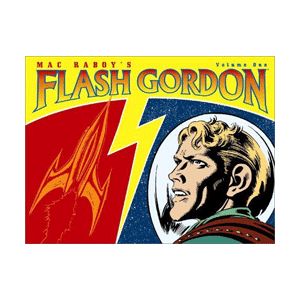
Kurtzman was a cartoon genius and probably the most important cartoonist of the last half of the 20th century. His early triumphs in the fledgling field of comicbooks (especially the groundbreaking Mad magazine) would be enough for most creators to lean back on but Kurtzman was a force in newspaper strips (See Flash Gordon Complete Daily Strips 1951-1953) and restless innovator. As a commentator and social explorer, he just kept on looking at folk and their doings: a man with exacting standards who just couldn’t stop creating.

Kurtzman invented a whole new format and gave America Popular Satire by converting his highly successful full-colour baby Mad into a monochrome magazine, safely distancing the outrageously brilliant comedic publication from the fall-out caused by the 1950s socio-political witch-hunt which eventually killed all EC’s other titles.

He pursued his unique brand of thoughtfully outré comedy and social satire further with the magazines Trump, Humbug and Help!, all the while still conceiving challenging and powerfully effective funny strips such as Little Annie Fannie (for Playboy), The Jungle Book, Nutz, Goodman Beaver, Betsy and her Buddies and many more. He died far too young in 1993.

This first volume of the Fantagraphics EC Library gathers a stunning selection of Kurtzman stories in a lavish monochrome hardcover edition, packed with supplementary interviews, features and dissertations, and opens with ‘The Truth’ by cartoonist and historian R.C. Harvey, describing in stark detail the history of Kurtzman’s EC days.

Then follows a raft of stirring sagas solely from the master’s hand, beginning with ‘Conquest’ from Two-Fisted Tales #18, which with acerbic aplomb relates the rise and fall of Spanish conquistador Juan Alvorado whose rapacious hunger for Aztec gold led inexorably to the downfall and doom of his entire expedition.

‘Jivaro Death’ (#19) deals with modern-day greed as two duplicitous Yankees search for diamonds in the heart of the Amazon jungle whilst T-FT #20 detailed the fate of an amnesiac buccaneer who returned from certain death to obsessively reclaim his ‘Pirate Gold’ from the men who betrayed him…

From issue #21 comes ‘Search!’ which ironically combines an Italian-American’s search for family with the devastating US assault on Anzio in 1943, after which the first selection from Frontline Combat provides an uncharacteristically patriotic clash with the North Korean aggressors in ‘Contact!’ (#2, September 1951).

‘Kill’ from T-FT #23 also takes place in Korea, relating a squalid encounter between a blood-thirsty knife-wielding G.I. psycho and his soulless Commie antithesis, whilst ‘Prisoner of War!’ (FC #3) highlights the numbing, inhuman brutality of combat when American POWs attempt an escape…

‘Rubble!’ (T-FT #24) boldly steps into “enemy” shoes by highlighting the war’s casual cost to simple Korean civilians whilst ‘Air Burst!’ in FC #4 goes even further by voicing the Communist soldiers’ side of the conflict.

The eponymous ‘Corpse on the Imjin!’ (T-FT #25) is one of the most memorable, moving and respected tales of the genre: a genuine anti-war story which elegiacally traces a floating body’s motion down the river to expose the ruminations of the doomed observers who see it.

The sentiment is further explored in ‘Big ‘If’!’ (FC #5) as G.I. Paul Maynard sits in a shell hole and ponders what might have been…

Kurtzman’s unique display of cartooning and craftsmanship is followed by the essay ‘Combat Duty’ wherein Jared Gardner discusses the background and usage of the other artists who worked on the author’s Two-Fisted Tales and Frontline Combat scripts, before ‘Marines Retreat!’ – drawn by John Severin and inked by Kurtzman from FC #1 (July/August 1951) – describes in microcosm the shocking American forced withdrawal from the Changjin Reservoir in December 1950. The event stunned and terrified the folks at home and shook forever the cherished belief in the US Marines’ invincibility, and this is all told through the eyes of a soldier who understands too late the values he was supposed to be fighting for…

Kurtzman’s relationship with his artists could be fraught. Alex Toth, a tempestuous individualist who only drew three tales from his editor’s incredibly detailed lay-outs, famously produced some of his very best work at EC under such creative duress. The first and least was ‘Dying City!’ (T-FT #22) which found an aged Korean grandfather berating his dying descendent for the death and destruction he had brought upon his family and nation,

‘O.P.!’ was drawn by hyper-realist Russ Heath (FC #1) and once more ladled on the bleak, black irony during an annihilating trench encounter during WWI, after which Toth’s astounding aerial imagination produced in ‘Thunderjet!’ (FC #8) one of the most thrilling and evocative dogfight dramas in comics history.

This tale alone is worth the price of admission and was an alarm-call to complacent America as a US pilot is forced to concede that his winged weapon is technologically inferior to the ever-present Communist MIGs…

‘Fire Mission!’ (T-FT #29) was drawn by Dave Berg – an artist far better regarded for his comedy work – who lent his facility with expressions to a rather standard tale of courage discovered under fire in Korea, after which Gene Colan delineated the rift between military and civilians in the hours before the attack on Pearl Harbor in ‘Wake!’ from T-FT #30.

From the same issue ‘Bunker!’ was the first strip illustrated by Ric Estrada, describing rivalry and tension between American units during a Korean offensive. Oddly enough for the times, the fact that one faction was comprised of Negro soldiers was not mentioned at all…

The Cuban artist then drew a chillingly macabre tale of Teddy Roosevelt and the Spanish American war of 1898 in ‘Rough Riders!’ (FC #11) before master of comics noir Johnny Craig detailed the fate of a ‘Lost Battalion!’ in WWI (T-FT #32, March/April 1953).

From the same issue, ‘Tide!’ was an EC debut tale for the already-legendary Joe Kubert depicting a D-Day debacle and its insignificance in the grand scheme of things, whilst Toth’s magnificent Kurtzman-scripted swansong ‘F-86 Sabre Jet!’ (FC #12) revisited and even surpassed his Thunderjet job with a potent and beguiling reductionist minimalism that perfectly captured the disorienting hell of war in the air.

Due to illness and the increasing workload caused by Mad, Kurtzman’s involvement with war titles gradually dwindled. Frontline Combat #14, (October 1953) provided his last collaboration with Kubert in ‘Bonhomme Richard!’: a shocking, personalised account of American nautical legend John Paul Jones’ devastating duel with the British warship Serapis – as told by one of the hundreds of ordinary sailors who didn’t survive…

This masterclass in sequential excellence concludes with a salutary tale from the Civil War Special, Two-Fisted Tales #35 (October 1953). Illustrated by Reed Crandall, ‘Memphis!’ blends the destructive horror of the Union’s River Fleet of Ironclads as they inexorably take control of the Mississippi with the irrepressible excitement of Southern kids who simply could not understand what was happening to their parents and families…

Even with the comics extravaganza ended, there’s still more to enjoy as underground cartooning legend Frank Stack discusses the techniques and impact of Kurtzman’s astonishing covers for Two-Fisted Tales and Frontline Combat in ‘Respect for Simplicity – the War Covers of Harvey Kurtzman’; superbly supplemented by a full-colour section representing all of them, even the seldom-seen Two-Fisted Annual 1952.

Also adding to the value is ‘A Conversation with Harvey Kurtzman’ by John Benson, E.B. Boatner & Jay Kinney, which transcribes two interviews from 1979 and 1982, as well as a full appreciation of the great man’s career in ‘Harvey Kurtzman’ by S.C. Ringgenberg.

Rounding everything off is ‘Behind the Panels: Creator Biographies’ a comprehensive run-down of all involved by Bill Mason and others, plus a general heads-up on the entire EC phenomenon in ‘The Ups and Downs of EC Comics: A Short History’ by author, editor, critic and comics fan Ted White.

The short, sweet but severely limited output of EC has been reprinted ad infinitum in the decades since the company died. These astounding stories and art have changed not just comics but also infected the larger world through film and television and via the millions of dedicated devotees still addicted to New Trend tales.

However, as far as I can recall nobody has produced collections faithfully focussing on the contributions of individual creators, and even though fuddy-duddies like me know these timeless classics intimately, this simple innovation has somehow added a new dimension to the readers’ enjoyment.

I strongly suggest that whether you are an aged EC Fan-Addict or nervous newbie, this is a book no comics aficionado can afford to miss…
This edition © 2012 Fantagraphics Books, Inc. All comics stories © 2012 William M. Gaines Agent, Inc., reprinted with permission. All other material © 2012 the respective creators and owners.

The Nostalgia Collection: A Dog Called Bonzo


By George Studdy, with an introduction by Mary Cadogan (Hawk Books)
ISBN: 978-0-94824-852-8

The history of popular culture is studded with anthropomorphic animals that have achieved legendary, almost talismanic status. Mickey Mouse, Tiger Tim, Garfield, Smokey (the) Bear, Bonzo…

If that latter causes a puzzled frown that’s a shame because for a while this playful, charming dog-of-dubious-pedigree was a wholly British animorph to rival Disney’s mouse and duck combined.

Only the artistic integrity and creative drive of his creator George Earnest Studdy – always cautious where and how he allowed his canine star to shine – prevented the marvellous mutt from attaining the global domination (and subsequent tawdry commercialisation) of the Disney duo.

In 1878 Studdy was born in Devon to a military family, but a childhood injury prevented him from following that proud path, whilst his prodigious artistic talent moved him to an unsatisfactory position as an engineer before he eventually found his true niche as an illustrator and animator.

Studdy’s first artistic success was a series of Boer War pictures of the Royal Artillery, soon followed by cartoons and illustrations for such comics as Big Budget, Funny Pips, Jester and Wonder and others. He also regularly contributed to papers and magazines including The Graphic, The Humorist, Little Folks, London Magazine, Punch, Windsor Magazine, The Tatler, The Bystander, Illustrated London News, The Field and especially The Sketch.

A superb general stylist, Studdy was most widely known for his animals although he was an early and memorably effective proponent of science fiction themes as well. Naturally, he worked extensively in the budding field of advertising…

Deemed unfit to fight in the Great War, he pioneered animation propaganda films that are still acclaimed for their quality and effectiveness. He first began producing pictures of a homely, engaging dog for The Sketch in the early 1920s, which were immensely popular. Eventually “the Studdy dog” became a permanent fixture and was christened Bonzo in the November 8th issue of 1922.

His luxuriously painted or drawn single panels gradually evolved into fully-sequenced gag-strips with the talking dog and his long-suffering lady-friend Chee-Kee captivating young and old alike with their playful yet slyly mature antics.

Despite Studdy’s decorum, Bonzo became a merchandising miracle of his time, lending his likeness and personality to many games and puzzles, toys of all types, figurines, china and dinnerware, cups, cruet sets and host of other household objects and all manner of advertising campaigns. He even had his very own neon sign in Piccadilly Circus.

Although Studdy voluntarily moved on from his creation to create many other pictorial marvels and to serve his country again in WWII as a draughtsman for the Royal Navy, the delightful dog continued under diverse hands in strips syndicated worldwide by King Features as well as in a series of wonderful books and annuals.

These began in 1935 and continued until 1952, with translations into many foreign editions. For a spectacular view of these you should see the superb websites at Studdying with Bonzo and Bonzo and George Studdy as well as this magical and far too short commemorative edition produced by Mike Higgs under his much-missed Hawk Books imprint. Thankfully this terrific tome is still readily available…

Funny, charming, sublimely illustrated, overwhelmingly successful and still every bit as entertaining today as it always was, the Bonzo experience is long overdue for an extensive repackaging job. Until such a happy event this little gem must act as a tantalising taster…

Go on, Fetch!
© 1990 the Estate of George Studdy. All Rights Reserved.

The Boondocks: Fresh for ’01… You Suckas!


By Aaron McGruder (Andrews McMeel)
ISBN: 978-0-7407-1395-8

Unlike editorial cartooning, newspaper comic strips generally prosper by avoiding controversy. Other than a few notable exceptions – such as the mighty Doonesbury – daily and Sunday gag continuities aim to keep their readers amused, complacent and mostly uncomplaining.

Such was not the case with Aaron McGruder’s brilliant and much missed The Boondocks.

The strip ran from February 8th 1996 and ended – despite promises of a swift return – with the February 28th 2006 instalment. You might have seen the adapted and animated version on Cartoon Network’s Adult Swim a few years ago…

The feature was created for pioneer online music website Hitlist.com and quickly began a print incarnation in Hip-Hop magazine The Source. On 3rd December, the strip started appearing in national periodical The Diamondback before, following an editorial bust-up, McGruder pulled the strip in March 1997.

Nevertheless, it thrived after it was picked up by the Universal Press Syndicate. Re-launched nationally, The Boondocks had over 300 client subscribers, reaching – and regularly offending – millions of readers every day. Such was the content and set-up that the strip was constantly dropped by editors, and complaints from readers were pretty much perpetual.

What could possibly make a cartoon continuity such a lightning rod yet still have publishers so eager to keep it amongst their ever-dwindling stable of strip stars?

The Boondocks was always fast, funny, thought-provoking, funny, ferociously socially aware and perfectly honed for a modern black readership.

And it was Funny. Very, very Funny.

Most amazingly, after all these years, it still is, even though – not so shockingly – the social ills regularly highlighted in its panels remain undiminished to bedevil the Land of the Free and Home of the Brave…

The series never sugar-coated anything – except intemperate language – whilst bringing contemporary issues of race to the table every day. This was a strip many African American readers always wanted to read… even if they didn’t necessarily agree with what was being said and seen…

The narrative premise is deceptively, deliciously sitcom-simple, yet conceals a potent surprise in its delivery. Huey Freeman is an incredibly smart, well-informed black youngster who spent his formative years on Chicago’s South Side, immersed in black history, the philosophy of power, radical and alternative politics and most importantly The Streets.

His little brother Riley is mired in Hip-Hop and the trappings of Gangsta Rap. Yet suddenly one day they are both uprooted and whisked out of their comfort zone as their grandfather Robert assumes custody of them and moves the entire family to the whiter-than-white suburb of Woodcrest in semi-rural Maryland.

It’s mutual culture shock of epic proportions on all sides…

Huey (proudly boasting that he’s named for Black Panther co-founder Dr Huey Percy Newton) perpetually expounds his strident brand of radical rhetoric and pointedly calls out hypocrisy from the well-meaning but inherently patronising all-Caucasian township, but also finds equal amounts of hilarious disgust and venomous opprobrium for those overbearing, overhyped aspects of modern Black Culture our young rebel deems stupid, demeaning or self-serving…

Riley mostly likes scaring the oh-so-polite white folks and dreaming of the days he’s gonna have fast cars and shiny guns…

The Norman Rockwell picture-postcard setup really freaks them out: the air is clean, there are no tagged walls or take-out stores and old white people keep coming up to say hello…

The first recognizable semblance of normality occurs after another new family moves in next door. Thomas and Sarah Dubois are dyed-in-the-wool woolly liberals: yuppies, lawyers and Woodcrest’s first interracial couple.

Moreover, – and although she doesn’t understand any of the stuff Huey taunts her with – their daughter Jazmine is the suburb’s third black child… like, ever…

Even though Jazmine never thought of herself as any colour, Huey is determined to raise her consciousness… when he’s not taking her establishment-conditioned black dad to task on what colour his soul actually is…

Huey’s far less keen on the stalker-like attentions of Cindy McPhearson: a girl from school who has fallen under the mesmerising spell of network TV’s version of Black Culture. She wants to meet – or actually be – Snoop Doggy Dogg. Cindy hasn’t heard the term “Wigga” yet and Huey ain’t doing nothing but avoiding her: a tricky proposition since she sits behind him in class asking ever-dumber questions.

The boys’ enrolment at Edgar J. Hoover Elementary School caused many sleepless nights for Principal Williams but he cleverly borrowed a few videos (Menace II Society; Shaft’s Big Score) to get him up to speed on the special needs of “inner city ghetto youth” and is now assured that his terrified teachers can handle any possible hurdles the vast variance in backgrounds might cause…

In this second monochrome paperback (or eBook) collection, the class, race and generational conflict resumes with Huey and Grandpa squaring off over beloved cultural icons such as Otis Redding against Whitney Houston and Bobby Brown, before a new school year and an imminent Presidential Election throw a whole new swathe of injustices and potential disaster in Huey’s face…

However, the media’s dumbing-down of all important issues, the cultural atrocities playing on the radio from Woodcrest’s “only black station” or the excruciating embarrassment of poor Mr. Petto negotiating the hurdles of trying to teach Black History Month classes are as nothing compared to Cindy’s latest obsession: dreary, corporate music sell-out Sean Puffy Puff Daddy Combs…

Huey’s trenchant, non-stop spleen and ire eventually find suitable outlet after he creates his own newspaper – The Free Huey World Report – but just as the saccharine oppression seems most potent: when Huey and Riley have apparently assimilated as much as they’re ever going to in whiter-than-white Woodcrest, another black kid transfers to the school and tips the balance of power again.

Michael Caesar is from Brooklyn and brings his own unique attitudes to the ever-destabilised status quo and is more than happy to spend some time working to bring about The Revolution…

Peppered with hilarious and outrageous commentary on the many forgettable candidates in the 2000 election (anybody remember Alan Keyes or Ralph Nader?), highlights here include Huey agreeing to teach clueless Thomas Dubois to access in his inner blackness, Riley’s constant applications to join the NRA (because they can probably get him guns) and Huey exposing subliminal messages in candidate George W. Bush’s campaign ads…

And then Grandpa Robert sells out: beginning a part-time job with the Census Bureau, taking names and spying on the people as an agent of the counter-revolutionary, pro-establishment forces of oppression…

Don’t go away with the misapprehension that The Boondocks is a declamatory polemical diatribe, drowning in its own message. First and foremost, this is a strip about kids growing up, just like Bloom County or Calvin and Hobbes. Some of the most memorable riffs come from the boys’ reactions to the ongoing travesties of the revived Star Wars franchise or black actors in superhero movies; Cindy’s wholehearted adoption of television advertising tropes and sacrosanct cultural touchstone “The Blues” and Huey’s procrastinating war with himself over mowing the lawn…

Bonkers, hilariously sharp, charmingly addictive and still with a vast amount to say, The Boondocks is a strip you need to see if you cherish speaking Wit as well as Truth to Power…
The Boondocks © 2001 by Universal Press Syndicate. All rights reserved.

Krazy & Ignatz 1935-1936: “A Wild Warmth of Chromatic Gravy”


By George Herriman, edited by Bill Blackbeard (Fantagraphics Books)
ISBN: 978-1-56097-690-5

The Krazy Kat cartoon strip is, for many of us, the pinnacle of graphic narrative innovation; a singular and hugely influential body of work which shaped the early comics industry to become an undisputed treasure of world literature. It’s 105 years old and should be known and loved by far more folk than it is. Also worth remarking is that it may be the strangest and most authentic love story in comics history…

Krazy and Ignatz, as Fantagraphics designated its sequence of glorious archival tomes, is a creation which must be appreciated on its own terms. The feature evolved a unique language – at once both visual and verbal – to deal with the immeasurable variety of human experience, foibles and peccadilloes with unfaltering warmth and understanding without ever offending anybody.

Sadly, however, it baffled far more than a few…

Never a strip for dull or unimaginative people who simply won’t or can’t appreciate the complex multi-layered verbal and pictorial whimsy, absurdist philosophy or the seamless blending of sardonic slapstick with arcane joshing, it’s still the closest thing to pure poesy narrative art has ever produced.

George Herriman was already a successful cartoonist and journalist in 1913 when the cat and mouse who had been cropping up in his ever-evolving, outrageous domestic comedy strip The Dingbat Family/The Family Upstairs graduated to their own feature.

Krazy Kat debuted in William Randolph Hearst’s New York Evening Journal on Oct 28th 1913 and – largely by dint of the publishing magnate’s overpowering direct influence and hands-on interference – gradually spread throughout his vast stable of papers.

Although Hearst and a host of the period’s artistic and literary intelligentsia (such as e.e. Cummings, Frank Capra, John Alden Carpenter, Gilbert Seldes, Willem de Kooning, H.L. Mencken and others) all adored the strip, most local and regional editors did not; many taking every potentially career-ending opportunity to drop it from the comics section whenever they could.

Eventually the Kat found a home and safe haven in the Arts and Drama section of Hearst’s papers. Protected there by Hearst’s heavy-handed patronage, Krazy flourished, unharmed by editorial interference and fashion. One way or another and by hook or by crook Krazy ran – generally unmolested – until Herriman’s death in April 1944.

The core premise is simple: Krazy Kat is an effeminate, dreamy, sensitive and romantic feline of indeterminate gender hopelessly in love with rude, crude, brutal, mendacious, thoroughly scurrilous Ignatz Mouse.

Ignatz is a truly unreconstructed and probably irredeemable male; drinking, stealing, fighting, conniving, constantly neglecting his wife and children and always abusively responding to Krazy’s genteel advances by clobbering the Kat with a well-aimed brick (obtained singly or in bulk from noted local brick-maker Kolin Kelly). The smitten kitten invariably misidentifies these assaults as tokens of equally recondite affection.

The third crucial element completing an anthropomorphic eternal triangle is local cop Offissa Bull Pupp; a figure of honesty and stolid duty completely besotted with Krazy. Ever vigilant, he is professionally aware of the Mouse’s true nature, yet hamstrung – by his own amorous timidity and sense of honour – from permanently removing his devilish rival for the foolish feline’s affections.

Krazy is, of course, blithely oblivious to Pupp’s dilemma and has cast him eternally into what we now call the “Friend Zone”…

Crowding out the ever-mutable stage are a stunning supporting cast of inspired bit players such as Joe Stork (dreaded deliverer of unplanned, and generally unwanted, babies); hobo Bum Bill Bee; unsavoury conman trickster Don Kiyoti; self-aggrandizing Walter Cephus Austridge; fussbudget busybody Pauline Parrot, inscrutable, barely intelligible Chinese mallard Mokk Dukk; dozy Joe Turtil and a host of other audacious animal krackers, all equally capable of stealing the limelight or even supporting their own strip features.

The exotic, quixotic episodes occur in and around the Painted Desert environs of Coconino (based on the artist’s Coconino County, Arizona vacation retreat) where absurdly surreal playfulness and the fluid ambiguity of both flora and landscape are perhaps the most important member of the cast.

The strips are a masterful mélange of unique experimental art: wildly expressionistic and strongly referencing Navajo and Mexican art forms whilst graphically utilising sheer unbridled imagination and delightfully evocative lettering and language.

Those bizarre balloons and chaotic captions are crammed with florid verbiage: alliterative, phonetically and even onomatopoeically joyous with a compelling musical force (“l’il dahlink”, “You is inwited to a ketnip potty or “so genteel, so riffime, so soba”)…

Yet for all that, these adventures are lyrical, satirical, timely, timeless, bittersweet, self-referential, fourth-wall bending, eerily idiosyncratic, astonishingly hilarious escapades encompassing all aspects of humour from painfully punning shaggy dog stories to riotous, violent slapstick.

Sometimes Herriman even eschewed his mystical mumblings and arcane argots for the simply sublime grace of a supremely entertaining silent gag in the manner of his beloved Keystone Cops and other stars of silent slapstick comedies…

Krazy Kat‘s resurgence started in the late 1970s when the strip was rediscovered by a better-educated, open-minded and far more accepting generation. This top notch tinted tome – offering material from 1935-1936 – luxuriates in the switch to full colour (after decades of monochrome mirth and madness) under the sheltered safe-haven of a nationally-controlled Hearst comics insert package and manifests as a comfortably tactile paperback or eBook edition.

It was the first collection “Coalescing the Complete Full-Page Comics Strips, with the usual extra Rarities” such as candid photographs, contemporary press articles, toys, merchandise and even a 1916 original Krazy Kat page sublimely hand-tinted by Herriman to open this volume…

The precarious history of how these ultra-rare later strips were preserved and returned to print once more are detailed in Bill Blackbeard’s Introduction ‘Autumn Leaves: Herriman’s Klosing Kat Pages Revel in Fine Syndicate Kolur (But with a Briefly Blue Ignatz)’: supplemented by an examination of Herriman’s unclear – if not positively murky – past, potential ethnicity and the strip’s treatment of race issues in Jeet Heer’s article ‘The Kolors of Krazy Kat’.

Augmenting the journalism and sociology are a number of early strips plus a few magnificent painted pieces from the maestro, as well as a selection of merchandising treasures to ogle over and lust after…

The actual strip pages resume with June 1st 1935 – the colour provided by professional separators rather than Herriman – and pretty much pick up where the black and white feature left off.

We do, however, meet some new characters: perambulating elephants; an entrepreneurial cow; a Mocking Bird called Moggin Boid; doleful doggie and tax-dodging calf L’il Thinn Dyme and dismal dodo Dough Dough amongst others.

The most significant debuting presence is a thoroughly brutal bad guy dubbed “the Growler”. This deplorable mutt adds a frisson of dangerous gangsterism to the aura of domestic dispute and romantic disharmony. Although the surly bandit easily outmatches and cows Offisa Pupp, he is clearly no match for the tangled trio working what we’ll kindly designate as “together”…

Despite having to split his time between watching the mouse, confronting the Growler, administrating tax and dole crises and freeing the county of generalised sin and depravity, the lawdog soon settles into a comfortable pattern of wishful monitoring in these strips as Ignatz and Krazy perpetuate their bizarre romantic ritual. The Mouse constantly innovates in his obsessive desire to bean the Kat’s bonce: generally ending up in the cells whether successful or otherwise.

The Kat kontinues to await bad love’s brainbusting kiss, joyous of every kontusion and konkussion and deflated and woeful every time fate, cruel misfortune or the konstabulary aborts that longed for high-velocity assignation…

Pupp still proactively stalks and thwarts Ignatz, but as always, the mouse’s continual search for his ammunition of choice and the perfect ambush spot hogs most pages, leading to many brick-based gags and increasing frustration amongst all involved.

The county lock-up remains a key component as escalating slapstick silliness frequently concludes with Ignatz in the dog’s “house”. Naturally, that just means the malign Mus Musculus maximising his malevolent efforts; regularly taking to the air or adopting uncanny disguises to achieve his aims…

New topics of interest and comedic provenance include the arrival of novel and challenging foodstuffs to the region – tortillas, water-melons and an assortment of fast foods. Also numbering amongst new arrivals and fresh phenomena are a film crew lensing authentic and reasonable romantic encounters, ghost sightings, unoccupied top hats, overly-effective hair restorers, a smoking ban, trick photography, beauty salons for pelt/skin tone reassignment procedures, boomerangs and strange lights in the sky…

Worst of all, with 1936 a Leap Year, the populace all seem to lose their bearings and become marriage mad even as Joe Stork – whose delivery of unexpected babies still brings dread responsibility and smug schadenfreude in equal amounts to all – expands his remit by becoming a self-appointed truant officer to Ignatz’ many progeny …

The region abounds with a copious coterie of confidence tricksters – a scurrilous sub-population which seems to grow weekly – but a new addition is a clique of nouveau riche billionaires and trillionaires seeking to increase their short-term assets before the year ends with a nasty outbreak of election fever and bogus prognostication…

As always there is a solid dependence on the strange landscapes and eccentric flora – especially the viciously ferocious coconuts and various cacti – for humorous inspiration, and bizarre weather plays a greater part in inducing anxiety and bewilderment. Strip humour was never more eclectic or indefinable…

Supplementing the cartoon gold and ending this slim tome is another erudite and instructional ‘Ignatz Mouse Debaffler Page’, providing pertinent facts, snippets of contextual history and necessary notes for the young and potentially perplexed before the collection closes with a fabulous photo feature on possibly the very first Krazy Kat stuffed toy and a selection of pinback buttons (we Brits call them badges) from the 1910s-1930s.

Herriman’s epochal classic is a phenomenal achievement: in all the arenas of Art and Literature nothing has been seen like these comics which shaped our industry and creators: inspiring auteurs in fields as disparate as prose fiction, film, dance, animation and music, all whilst delivering delight and delectation to generations of wonder-starved fans on a daily and weekly basis.

If, however, you’re one of Them and not Us, or if you yet haven’t experienced this gleeful graphic assault on the sensorium, mental equilibrium and emotional lexicon concocted by George Herriman from the dawn of the 20th century until the dog days of World War II, this astounding compendium is a supremely effective and accessible way to do so.
© 2005 Fantagraphics Books. All rights reserved.
Garth: The Women of Galba


By Jim Edgar & Frank Bellamy (Titan Books)
ISBN: 978-0-90761-049-6

It’s a big anniversary for Britain’s greatest comic strip adventurer this summer, but other than a few old collections and the online reprints, nobody seems much moved to celebrate the event or revive a genuine original of cartoon entertainment. Here however, with our eyes firmly set on great comics of every era and at least one and a half feet firmly planted in the past, we’re not going to let him slip by without any fanfare at all…

Garth was created in response to America’s publishing phenomenon Superman and debuted in the Daily Mirror on Saturday, July 24th 1943, the creation of Steve Dowling and BBC producer Gordon Boshell. His comic strip page mates at that time were regular features Buck Ryan, Belinda Blue Eyes, Just Jake and the irrepressible, morale-boosting glamour-puss Jane.

A blond giant and physical marvel, Garth washed up on an island shore and into the arms of a pretty girl, Gala, with no memory of who he was, just in time to save the entire populace from a tyrant. Boshell never actually wrote the series, so Dowling, who was also producing the successful family strip The Ruggles, scripted Garth until a writer could be found.

Successful candidate Don Freeman dumped the amnesia plot in ‘The Seven Ages of Garth’ (which ran from September 18th 1944 to January 20th 1946); introducing studious jack-of-all-scientific trades Professor Lumiere whose psychological experiments regressed the hero back through his past lives.

In sequel tale ‘The Saga of Garth’ (January 22nd 1946-July 20th 1946) his origin was finally revealed. Found floating in a coracle off the Shetlands, baby Garth was adopted by a kindly old couple and grew to vigorous manhood. On reaching maturity he returned to the seas as a Navy Captain until he was torpedoed off Tibet in 1943.

Freeman continued as writer until 1952 and was briefly replaced by script editor Hugh McClelland until Peter O’Donnell took over in 1953. O’Donnell wrote 28 adventures before resigning in 1966 to devote more time to his own Modesty Blaise feature. His place was taken by Jim Edgar; who also scripted western strips Matt Marriott, Wes Slade and Gun Law.

In 1968 Dowling retired and his assistant John Allard took over the drawing until a permanent artist could be found. Allard had completed ten tales when Frank Bellamy came on board with the 13th daily episode of ‘Sundance’ (reprinted in Garth: The Cloud of Balthus). Allard remained as background artist and general assistant until Bellamy took full control during ‘The Orb of Trimandias’.

Professor Lumiere had discovered something about his patient which gave this strip its unique and distinctive appeal – even before the fantastic artwork of Bellamy elevated it to dizzying heights of graphic brilliance: Garth was blessed – or cursed – with an involuntary ability to travel through time and experience past and future lives.

This concept gave the strip infinite potential for exotic storylines and fantastic exploits, pushing it beyond its humble origins as a US mystery-man knock-off.

This second (1985) Titan Books collection of the Frank Bellamy era spans the period from 7th September 1972 to 25th October 1973 with the artist at the absolute peak of his powers. It opens here with eerie chiller ‘The People of the Abyss’ wherein Garth and sub-sea explorer Ed Neilson are captured by staggeringly beautiful naked women who drag their bathyscaphe to a city at the bottom of the Pacific. These undersea houris are at war with horrendous aquatic monstrosities and urgently need outside assistance, but even that incredible situation is merely the prelude to a tragic love affair with Cold War implications…

Next up is eponymous space-opera romp ‘The Women of Galba’ wherein an alien tyrant learns to rue the day he abducted a giant Earthman to fight and die as a gladiator. Exotic locations, spectacular action and oodles more astonishingly beautiful females make this an unforgettable adventure…

‘Ghost Town’ is a western tale, and a very special one. When Garth, vacationing in Colorado, rides into abandoned mining outpost “Gopherville”, he is irresistibly drawn back to a past life as Marshal Tom Barratt who lived, loved and died when the town was a hotspot of vice and easily purloined money. When Bellamy died suddenly in 1976 this tale – long acknowledged as his personal favourite – was rerun until Martin Asbury was ready to take over the strip.

The final adventure re-presented here – ‘The Mask of Atacama’ – sees Garth and Lumiere in Mexico City. Whilst sleeping the blonde colossus is visited by the spirit of beautiful Princess Atacama who escorts him through time to the vanished Aztec city of Tenochtitlan where, as the Sun God Axatl, Garth attempts to save their civilisation from the voraciously marauding Conquistadores of Hernan Cortés. Tragically, neither he nor the Princess have reckoned on the jealousy of the Sun Priests and their High Priestess Tiahuaca…

Adding extra value to this volume are a draft synopsis and actual scripts for ‘The Women of Galba’, liberally illustrated, of course. There has never been a better comic adventure strip than Garth as drawn by Bellamy, combining action, suspense, glamour, mystery and the uncanny in a seamless blend of graphic wonderment. In recent years, Titan Books has published a superb line of classic British strips and comics and I’m praying that with Modesty Blaise and James Bond now completed, they’ll return to Garth (and while I’m dreaming, Jeff Hawke too) on the understanding that it’s up to us to make sure that this time the books find a grateful, appreciative and vast audience…
© 1985 Mirror Group Newspapers/Syndication International. All Rights Reserved.

Krazy & Ignatz 1933-1934: “Necromancy by the Blue Bean Bush”


By George Herriman, edited by Bill Blackbeard & Derya Ataker (Fantagraphics Books)
ISBN: 978-1-56097-620-2

The Krazy Kat cartoon strip is arguably the pinnacle of graphic narrative innovation; a singular and hugely influential body of work which shaped the early days of the comics industry and became an undisputed treasure of world literature.

Krazy and Ignatz, as it is now dubbed for these glorious commemorative tomes from Fantagraphics, is a creation which must be appreciated on its own terms. The strip developed a unique language – at once both visual and verbal – and dealt with the immeasurable variety of human experience, foibles and peccadilloes with unfaltering warmth and understanding without ever offending anybody.

Sadly, however, it baffled far more than a few…

It was never a strip for dull, slow or unimaginative people who simply won’t or can’t appreciate the complex multi-layered verbal and pictorial whimsy, absurdist philosophy or seamless blending of sardonic slapstick with arcane joshing. It is still the closest thing to pure poesy that narrative art has ever produced.

Herriman was already a successful cartoonist and journalist in 1913 when a cat and mouse who had been cropping up in his ever-evolving, outrageous domestic comedy strip The Dingbat Family/The Family Upstairs graduated to their own feature. Krazy Kat debuted in William Randolph Hearst’s New York Evening Journal on Oct 28th 1913 and – largely by dint of the publishing magnate’s overpowering direct influence and interference – gradually spread throughout his vast stable of papers.

Although Hearst and a host of the period’s artistic and literary intelligentsia (notably – but not exclusively – e.e. Cummings, Frank Capra, John Alden Carpenter, Gilbert Seldes, Willem de Kooning, H.L. Mencken and – latterly – Jack Kerouac) all adored the strip, many local and regional editors did not; taking every potentially career-ending opportunity to drop it from the comics section.

Eventually the feature found a home and safe haven in the Arts and Drama section of Hearst’s papers. Protected there by Hearst’s heavy-handed patronage, the Kat flourished unharmed by editorial interference and fashion, running generally unmolested until Herriman’s death in April 1944.

The basic premise is simple: Krazy is an effeminate, dreamy, sensitive and romantic feline of indeterminate gender hopelessly in love with Ignatz Mouse: rude crude, brutal, mendacious and thoroughly scurrilous.

Ignatz is a true unreconstructed male; drinking, stealing, fighting, conniving, constantly neglecting his wife and children and always responding to Krazy’s genteel advances by clobbering the Kat with a well-aimed brick (obtained singly or in bulk from noted local brick-maker Kolin Kelly) which the smitten kitten invariably misidentifies as tokens of equally recondite affection.

The third crucial element completing an anthropomorphic eternal triangle is lawman Offissa Bull Pupp, a figure of honesty and stolid duty completely besotted with Krazy, professionally aware of the Mouse’s true nature, yet hamstrung – by his own amorous timidity and sense of honour – from permanently removing his devilish rival for the foolish feline’s affections.

Krazy is, of course, blithely oblivious to Pupp’s dilemma…

Also populating the ever-mutable stage are a stunning supporting cast of inspired bit players such as Joe Stork, dreaded deliverer of unplanned, and generally unwanted, babies; hobo Bum Bill Bee, unsavoury conman and trickster Don Kiyoti, self-aggrandizing Walter Cephus Austridge, busybody Pauline Parrot, inscrutable, barely intelligible Chinese mallard Mock Duck, dozy Joe Turtil and a host of other audacious characters, all equally capable of stealing the limelight or even supporting their own strip features.

The exotic, quixotic episodes occur in and around the Painted Desert environs of Coconino (based on the artist’s vacation retreat in Coconino County, Arizona) where absurdly surreal playfulness and the fluid ambiguity of the flora and landscape are perhaps the most important member of the cast.

The strips are a masterful mélange of unique experimental art, wildly expressionistic and strongly referencing Navajo art forms whilst graphically utilising sheer unbridled imagination and delightfully evocative lettering and language: alliterative, phonetically and even onomatopoeically joyous with a compelling musical force (“Mitt me at the Musharoon”, “l’il dahlink” or “Ignatz, ware four is thou at Ignatz??”).

Yet for all that, the adventures are poetic, satirical, timely, timeless, bittersweet, self-referential, fourth-wall bending, eerily idiosyncratic, astonishingly hilarious escapades encompassing every aspect of humour from painfully punning shaggy dog stories to riotous, violent slapstick.

Sometimes Herriman even eschewed his mystical mumblings and arcane argots for the simply sublime grace of a supremely entertaining silent gag in the manner of his beloved Keystone Cops and other stars of silent slapstick comedies…

The wealth of Krazy Kat collections started in the late 1970s when the strip was first rediscovered by a better-educated, open-minded and far more accepting generation. This delirious tome, covering the last of the full-page black-&-white Sunday Page material from 1933-1934 – prior to a switch to full colour and a sheltered safe-haven in a sheltered Hearst comics insert package – comes in a comfortably hefty (231 x 305 mm) softcover or eBook edition: one last monochrome masterpiece expansively “Compounding the Complete Full-Page Comics Strips, with some extra Rarities”…

The machinations that brought about that transformation and an account describing the herculean efforts involved in finding and restoring those final strips can be found in Bill Blackbeard’s Introduction ‘No Kidding… We’ve Run Out of Kats!’, supplemented by examples of another Herriman lost treasure – ‘Mary’s Home From College’ – plus contemporary photo-material from King Features promotional magazine Circulation, and additional strip examples such as Dempsey Under Wraps and beguiling hand drawn postcard by the master himself.

Extra treats manifest in a selection of Herriman’s Krazy Kat Daily strips hilariously discussing the gender-confabulation of the mixed-up moggy and lost strips and gag-panels are uncovered with samples of ‘The Amours of Marie Anne Magee’, ‘Embarrassing Moments’, ‘Darktown Aristocracy Caught in the Swirl’ and ‘Baron Bean’ plus pertinent newspaper clippings featuring the artist from a time when cartoonists were actual celebrities…

On to the strips then: within this compelling compendium of incessant passions thwarted in another land and time, the torrid triangular drama dwindles and expires in the middle of 1934 in preparation for later, greater full-colour glories but never ceases to revel in the wild wonders of blithe whimsy as winningly as ever, but with the old familiar faces popping up to contribute to the insular insanity and well-cloaked social satire…

One thing to note: during this period local editors who actually ran the strip usually had the manically expressive layouts reformatted to standard tiers – and the Fantagraphics staff are to be praised eternally for their efforts to restore the original designs…

We open on January 1st 1933 with the tangled trio greeting another year with the same heartworn and forlorn shenanigans, although Offisa Pupp is now pressing his attentive suit with more desperate forcefulness…

A spate of strips sees the lawdog proactively stalking and thwarting Ignatz, but as always, the mouse’s continual search for his ammunition of choice and the perfect ambush spot predominate, leading to many brick-based gags and increasing frustration.

One happy circumstance is the growing use of the county lock-up as the escalating slapstick silliness frequently concludes with Ignatz incarcerated. Naturally that just means the malign Mus Musculus (look it up if you must) magnifying his malevolent efforts; even regularly taking to the air in a series of aeronautical escapades…

In response, Coconino’s (occasionally “Kokonino”) Finest has taken to hurling missiles of his own in retaliation and – on the rare but exceeding satisfactory occasion – Pretaliation…

Of course, the mouse is a macho jerk who enjoys revenge served hot, cold or late…

The region still abounds with a copious coterie of confidence tricksters – a scurrilous sub-population which seems to grow weekly – but a new addition is a perennial reoccurring abundance of giant fungi, adding confusion, bewilderment and visual zest to proceedings …

Amongst the new arrivals is a colony of extremely bellicose kingfishers and a helpful sawfish and greater use of inspired comedy trigger Joe Stork, whose delivery of unexpected babies still brings dread responsibility and smug schadenfreude in equal amounts to all denizens of the county and the introduction of enhanced aerial bombardment courtesy of an actual flying carpet…

As ever there is a solid dependence on the strange landscapes and eccentric flora – especially the viciously ferocious coconuts – for humorous inspiration, and bizarre weather plays a greater part in inducing anxiety and bewilderment. Strip humour never got more eclectic or off-kilter…

Supplementing the cartoon gold and ending this slim tome is another erudite and instructional ‘Ignatz Mouse Debaffler Page’, providing ‘Komments on Mysteries of the Master’s Drawing Mesa’ through pertinent facts, snippets of contextual history and necessary notes for the young and potentially perplexed.

Herriman’s epochal classic is a phenomenal achievement: in all the arenas of Art and Literature there has never been anything like these comic strips which have shaped our industry and creators, and inspired auteurs in fields as disparate as prose fiction, film, dance, animation and music, whilst delivering delight and delectation to generations of wonder-starved fans.

If, however, you are one of Them and not Us, or if you actually haven’t experienced the gleeful graphic assault on the sensorium, mental equilibrium and emotional lexicon carefully thrown together by George Herriman from the dawn of the 20th century until the dog days of World War II, this astounding compendium is a most accessible way to do so.
© 2004, 2015 Fantagraphics Books. All rights reserved.

Oor Wullie & The Broons: Cooking Up Laughs!


By Robert Duncan Low, Dudley D. Watkins, Ken H. Harrison & various (DC Thomson)
ISBN: 978-0-84535-614-9

Win’s Christmas Gift Recommendation: Evergreen Fun and an Ideal Last-Minute Gift… 10/10

We always get a wee bit Caledonian come Christmas in Win Wonderworld, so here’s another loving look at a matched pair of Scotland’s greatest exports whilst simultaneously revelling in the Good Old Days of comics…

If you’re too busy to read yet more of my lecturing, hectoring blather, please feel free to skip the review… just as long as you buy these books for yourself or someone in severe need of a good cheering up and infectious laugh…

Published eternally in perfect tandem, The Broons and Oor Wullie are two of the longest-running newspaper strips in British history, having appeared continuously in the Scottish Sunday Post since their dual debuts in the March 8th 1936 edition.

Both the boisterous boy and the gregariously engaging inner city clan were co-created by writer and Editor Robert Duncan Low (1895-1980) in conjunction with Dudley D. Watkins (1907-1969); DC Thomson’s greatest – and signature – artist.

Three years later the strips were collected in reprint editions as Seasonal Annuals; alternating stars and years right up to the present day and remaining best-sellers every single time.

The shape and structure of British kids cartoon reading owes a huge debt to Robert Duncan Low who was probably DC Thomson’s greatest creative find.

He started at the Scottish publishing monolith as a journalist, rising to the post of Managing Editor of Children’s Publications where – between 1921 and 1933 – he conceived and launched the company’s “Big Five” story-papers for boys. Those rip-roaring illustrated prose periodicals comprised Adventure, The Rover, The Wizard, The Skipper and The Hotspur.

In 1936 his next brilliant idea resulted in The Fun Section: an 8-page pull-out supplement for Scottish national newspaper The Sunday Post consisting primarily of comic strips. The illustrated accessory premiered on 8th March and from the very outset The Broons and Oor Wullie – both rendered by the incomparable Watkins – were its indisputable stars…

Low’s shrewdest move was to devise both strips as domestic comedies played out in the charismatic Scottish idiom and broad unforgettable vernacular. Ably supported by features such as Auchentogle by Chic Gordon, Allan Morley’s Nero and Zero, Nosey Parker and other strips, they laid the groundwork for the company’s next great leap.

That came in December 1937 when Low launched DC Thomson’s first weekly pictorial comic. The Dandy was followed by The Beano in 1938 (Happy Anniversary, guys!) and early-reading title The Magic Comic the year after that.

War-time paper shortages and rationing sadly curtailed this strip periodical revolution, and it was 1953 before the next wave of cartoon caper picture-papers. To supplement Beano and Dandy, the ball started rolling again with The Topper, closely followed by a host of new titles such as Beezer and Sparky.

Low’s greatest advantage was always his prolific illustrator Dudley Dexter Watkins, whose style, more than any other, shaped the look of DC Thompson’s comics output until the bombastic advent of Leo Baxendale shook things up in the mid-1950s.

Hailing from Manchester and Nottingham, Watkins was an artistic prodigy. He entered Glasgow College of Art in 1924 and before long was advised to get a job at Dundee-based DCT, where a 6-month trial illustrating boys’ stories led to comic strip specials and some original cartoon creations.

Percy Vere and His Trying Tricks and Wandering Willie, The Wily Explorer made him a dead cert for both lead strips in the proposed Fun Section and, without missing a beat, Watkins added The Dandy‘s Desperate Dan to his weekly workload in 1937, and The Beano‘s placidly and seditiously outrageous Lord Snooty seven months later.

Watkins soldiered on in unassailable magnificence for decades, drawing some of the most lavishly lifelike and winningly hilarious strips in illustration history. He died at his drawing board on August 20th 1969. For all those astonishingly productive years he had unflaggingly drawn a full captivating page each of Oor Wullie and The Broons every week.

His loss was a colossal blow to the company and DC Thomson’s top brass preferred to reprint old Watkins episodes in both the newspaper and the Annuals for seven long years before replacement artists were agreed upon. The Dandy reran his old Desperate Dan stories for twice that length of time.

An undeniable, rock-solid facet of Scots popular culture from the very start, the first Broons Annual (technically Bi-Annual) appeared in 1939, alternating with the first Oor Wullie book a year later (thanks to wartime paper restrictions, no annuals at all were published between 1943 and 1946) and for millions of readers no year can truly end without them.

Every kid who grew up reading comics has their own personal nostalgia-filled nirvana, and DC Thomson have always sagely left that choice to us whilst striving to keep all eras alive with carefully-tooled collectors’ albums like this substantial (225 x 300 mm) hardback Gift Book.

Bright and breezy, the compilation focuses on the characters’ relationship with food – particularly Scotland’s unique and evocative cuisine – through festive occasions, seasonal celebrations and in everyday contexts: especially in comedic situations as comfort or consolation or even hard-won prizes. It’s also jam-packed with some of the best-written and most impressively drawn strips ever conceived: superbly timeless examples of cartoon storytelling at its best…

Moreover, rather than a chronological arc tracing from particularly bleak and fraught beginnings in British history through years of growth, exploration and cultural change, we’re treated to a splendid pick-&-mix protocol: a surprise on every turn of a page with Low and Watkins ably succeeded by Tom Lavery, Peter Davidson, Robert Nixon, Ken H. Harrison, Iain Reid, Tom Morton, Dave Donaldson, Morris Heggie and more.

So What’s the Set Up?: the Brown family dwell together in a tenement flat at 10 Glebe Street in timelessly metafictional Scottish industrial everytown Auchentogle (sometimes known as Auchenshoogle and based on the working class Auchenshuggle district of Glasgow).

As such it’s an ideal setting in which to tell gags, relate events and fossilise the deepest and most reassuring cultural archetypes for sentimental Scots wherever in the world they might actually be residing. And naturally, such a region was the perfect sounding board to portray all the social, cultural and economic changes that came after the war…

The adamant, unswerving cornerstone of the family feature is long-suffering, ever-understanding culinary commander-in-chief Maw, who puts up with cantankerous, cheap, know-it-all Paw and their battalion of stay-at-home kids. These comprise hunky Joe, freakishly tall Hen (Henry), sturdy Daphne, gorgeous Maggie, brainy Horace, mischievous twins Eck and the unnamed “ither ane” plus a wee toddling lassie referred to only as “The Bairn”.

Not officially in residence yet always hanging around is sly, patriarchal buffoon Granpaw – a comedic gadfly who spends more time at Glebe Street than his own cottage and constantly tries to impart his decades of out-of-date, hard-earned experience to the kids… but do they listen?

Offering regular breaks from inner-city turmoil and a chance to simultaneously sentimentalise, spoof and memorialise more traditional times, the family frequently repair to their But ‘n’ Ben (a dilapidated rustic cottage in the Highlands) to fall foul of the weather, the countryside and all its denizens: fish, fowl, farm-grown, temporary and touristic…

As previously stated, Oor Wullie also launched on March 8th 1936 with his own collected Annual compilations subsequently and unfailingly appearing in the even years.

The premise is sublimely simply and eternally fresh: an overly-imaginative, impetuous scruff with a weakness for mischief, talent for finding trouble and no hope of ever avoiding parental or adult retribution when appropriate…

Wullie – AKA William MacCallum – is an archetypal good-hearted rascal with too much time on his hands who can usually be found sitting on an upturned bucket at the start and finish of his page-a-week exploits.

His regular supporting cast includes Ma and Pa, local beat-Bobby P.C. Murdoch, assorted teachers and other interfering adults who either lavish gifts or inflict opprobrium upon the little pest and his pals Fat Boab, Soapy Joe Soutar, Wee Eck and others. As a grudging sign of changing times, in later years he’s been caught in the company of sensible schoolgirls like Rosie and Elizabeth…

A compilation in monochrome – with some full-colour pages – Cooking Up Laughs! was released in 2016 as part of the admirable drive to keep early material available to fans: a lavishly sturdy hardback (still readily available through internet vendors) offering a tasty and tantalising selection curated with an emphasis on the eating habits of the stars.

Eating has always been a perennial and fundamental aspect of both strips (don’t get me started on the sociological value and importance of food in a communal or tribal setting: I’ve been to college twice and did all the reading they told me to!), and the topic has even generated a spin-off line of Maw Broon Cook Books…

Divided by colour cover or title-pages from previous Annuals, the endless escapades of the strip stars comprise the happily standard fare: kids outsmarting older folk to score sweets and prohibited provender; pompous male adults making galling goofs and gaffes when cooking; family frolics and festival events: rules of rationing and home-grown garden gifts; etiquette outrages: the penalties of gorging; stolen candies, Christmas revels, how to drink Tea and even some full-colour puzzle pages to digest…

Also on show are Scots-specific treats and techniques such as Clootie Dumpling disasters; the mysteries of Fruit; the makings of “a Piece”; Fish Suppers and the miracle of Cheps; how to present Crofter’s Porridge; the marvel of Mince ‘n’ Tatties; better things to do with Neeps; dieting dos and don’ts and every manner of sweet and savoury sampling of succulence and sinfulness…

With snobs to deflate, bullies to crush, duels to fight, chips to scoff, games to win and rowdy animals (from cats to cows) to escape, the eternally affable humour and gently self-deprecating, inclusive frolics make these superbly crafted strips an endlessly entertaining, superbly nostalgic treat.

Packed with all-ages fun, rambunctious homespun hilarity and deliriously domestic warmth, these examples of comedic certainty and convivial celebration are a sure cure for post-modern glums… and you can’t really have a happy holiday without that, can you?

© D.C. Thomson & Co., Ltd. 2016.

Edgar Rice Burroughs’ Tarzan: The Jesse Marsh Years Omnibus volume 1


By Gaylord DuBois & Jesse Marsh with Robert P. Thompson (Dark Horse Books)
ISBN: 978-1-50670-224-7                  eISBN: 978-1-63008-760-9

Win’s Christmas Gift Recommendation: Epic, Eternal Adventure… 9/10

I don’t know an awful lot about Jesse Marsh, other than that he was born on 27th July 1907 and died far too young: on April 28th 1966 from diabetic complications at the height of a TV Tarzan revival he was in some part responsible for. What I do know, however, is that to my unformed, pre-fanboy, kid’s mentality, his drawings were somehow better than most of the other artists and that every other kid who read comics in my school disagreed with me.

There’s a phrase we used to use at 2000AD that summed it up: “Artist’s artist”, which usually meant someone whose fan-mail divided equally into fanatical raves and bile-filled hate-mail. It seems there are some makers of comic strips that many readers simply don’t get.

It isn’t about the basic principles or artistic quality or even anything tangible – although you’ll hear some cracking justifications: “I don’t like his feet” (presumably the way he draws them) and “it just creeps me out” being my two favourites…

I simply got Jesse Marsh.

He was another Disney animator (beginning in 1939) who in 1945 moved sideways to become a full-time comics illustrator for the studio’s comicbook licensee Whitman Publishing. He never looked back and became the go-to guy for other ERB adaptations such as John Carter of Mars.

Situated on the West Coast, their Dell and Gold Key imprints rivalled DC and Marvel at the height of their powers, and they famously never capitulated to the wave of anti-comics hysteria that resulted in the crippling self-censorship of the 1950s. No Dell Comics ever displayed a Comics Code Authority symbol on the cover – they never needed to…

Marsh jobbed around the adapted movie properties – mostly on westerns like Gene Autry – until 1948 when Dell introduced the first all-new Tarzan comicbook. A newspaper strip had run since 1929 and all previous funnybook releases had featured expurgated reprints of those adventures. This changed with Dell Four Color Comic #134 (February 1947) which featured a lengthy, captivating tale of the Ape-Man scripted by Robert P. Thompson, who wrote both the Tarzan radio show and the aforementioned syndicated strip.

‘Tarzan and the Devil Ogre’ is very much in the Burroughs tradition: the sometime John Clayton AKA Lord Greystoke and his friend Paul D’Arnot aid a young woman in rescuing her lost father from a hidden tribe ruled over by a monster, an engrossing yarn made magical by the simple, underplayed magic of a heavy brush line and absolutely unmatched design sense.

Marsh was unique in the way he positioned characters in space, using primitivist forms and hidden shapes to augment his backgrounds, and as the man was a fanatical researcher, his trees, rocks, and constructions were 100% accurate. His animals and natives, especially the children and women, were all distinct and recognisable – not the blacked-up stock figures in grass skirts even the greatest artists too often resorted to.

He also knew when to draw big and draw small: the internal dynamism of his work is spellbinding.

His Africa became mine, and of course the try-out comicbook was an instant hit. Marsh and Thompson’s Tarzan returned with two tales in Dell Four Color Comic #161, cover-dated August 1947. This was a remarkable feat: Four Colour was a catch-all title showcasing in rotation literally hundreds of different licensed properties, often as many as ten separate issues per month. So rapid a return engagement meant pretty solid sales figures…

In ‘The Fires of Tohr’ (adapted by Thompson from an unsold radio script), Tarzan and D’Arnot rescue a stranded professor and his niece as they search for a fabulous lost city, only to fall foul of the crazed queen of that ancient race, whilst in follow-up tale ‘Tarzan and the Black Panther’ the Lord of the Jungle crushes a modern slave trader who thinks himself beyond the reach of justice.

Within six months the bimonthly Tarzan #1 was released (January-February 1948), a swan-song for Thompson, but another unforgettable classic for Marsh – and the first of an unbroken run that would last until 1965: over 150 consecutive issues. In ‘Tarzan and the White Savages of Vari’ Greystoke rescued a lost prospector from a mountain kingdom of Neanderthals and the issue also featured the first of many pictorial glossaries, Tarzan’s Ape-English Dictionary, giving generations of youngsters another language to keep secrets in…

‘Tarzan and the Captives of Thunder Valley’ (Tarzan #2, March-April 1948) introduced a few more recurring characters such as Manu the monkey and noble great ape Gufta in the first of many tales written by Gaylord DuBois.

The Editor and prolific scripter (Lone Ranger, Lost in Space, Turok, Son of Stone, Brothers of the Spear and many more) would be Marsh’s creative collaborator for the next 19 years.

The story detailed how the Lord of the Jungle goes to the aid of an English boy searching for his father, a scientist specialising in radioactive ores. A sinister plot is duly uncovered that threatens to destabilise the entire world and concludes in a spectacular climax worthy of a Bond movie.

Issue #3 introduces Greystoke’s African family. In ‘Tarzan and the Dwarfs of Didona’ Jane is left to mind the store when Boy – later called Korak – plays with baboons and gets lost on an island in the Great Lake. Threatened with blood sacrifice by aggressive white pygmies, the dauntless lad can only wait for rescue – and a severe chastising…

In issue #4, (July-August 1948), ‘Tarzan and the Lone Hunter’ plunges the reader deeply into the fantastic worlds of Edgar Rice Burroughs as old friend Om-At the cat man from the lost land of Pal-Ul-Don (introduced in 8th novel Tarzan the Terrible) comes looking for his stolen mate and accidentally embroils the Ape-Man and his brood in a deadly battle with a megalomaniacal witch-doctor…

Two months later ‘Tarzan and the Men of Greed’ clashes in #5, as American gangsters unite with Arab slaver Hassan to steal Atlantean gold hidden in the vaults of the lost city of Opar. Their first move is to take Jane and Boy hostage, but they quickly learn that Clayton’s greatest asset is not his mighty limbs or bestial allies, but a cunning, devious brain…

Issue #6 returns to the primeval region of dinosaurs in ‘Tarzan and the Outlaws of Pal-Ul-Don’. The Jungle Lord and Boy are drawn beyond the Great Thorn Desert after beast-men abduct Jane and their quest soon sees Tarzan embroiled in a brutal civil war shaking that savage land…

More dinosaur delights are on offer in ‘Tarzan in the Valley of Monsters’ (#7) which sees an unsanctioned hot air balloon excursion dump Boy and his Waziri playmate Dombie in a secret valley infested with giant lizards and other antediluvian menaces. When Tarzan and Dombie’s dad Muviro fly after them in a plane, catastrophe ensues and the humans are forced into an arduous trek home across terrifying vistas and through lethal natural hazards…

Morris Gollub began illuminating the covers with #8 as ‘Tarzan and the White Pygmies’ finds the Greystoke, Muviro, Boy and Dombie still stranded far from home. As they laboriously traverse an immense mountain range, they are befriended by diminutive albino warriors and save their undiscovered city of Lipona from an invasion of predatory vultures…

In #9 our heroes resurface in Pal-Ul-Don where ‘Tarzan and the Men of A-Lur’ unite to save a bastion of civilisation from brutal insurrection whereas issue #10 provides two shorter, complete tales. Safely back in his home range ‘Tarzan and the Treasure of the Bolgani’ finds the erstwhile English Lord aiding Muviro after a band of city-dwelling gorillas abduct his fellow tribesmen. Then, Boy ignores adult warnings to mind his manners with the volatile monkeys and ends up in painful distress as ‘The Baboon’s King’…

The Ape-Man makes new friends in #11 as ‘Tarzan and the Sable Lion’ sees him domesticate a magnificent feline predator before joining wandering warrior Buto in saving his captured tribe from the marauding slavers of Abou Ben Ephraim. ‘Tarzan and the Price of Peace’ in #12 then relates how the displaced English peer plays matchmaker, helping lovesick Kolu secure a bride-price for his beloved Leelah. Of course, the rich chief she was promised to has objections and many armed servants determined to make trouble…

Tarzan #13 (January-February 1950) opens a new era as a run of photo-covers – starring then-current movie Ape-Man Lex Barker – begins. Inside, ‘Tarzan and the Knight of Lyonesse’ has the heroic stalwart ally with Hal Hogarth, a knight errant of lost Crusader colony Carmel, founded 900 years previously by the followers of Richard the Lionheart.

The man out of time is on a quest to beard the Saracens for the honour of a fair lady and needs all the help he can get when the beastly revenants of Opar ambush him…

Balancing the high drama ‘Tarzan and the Ape-Hunter’ sees Greystoke dealing harshly with a ruthless trapper attempting to capture specimens of rare wildlife, whilst in #14 a return to the Valley of Monsters leads to another encounter with living history with ‘Tarzan and the Lost Legion’ detailing the discovery of an unknown Roman outpost, complete with its own power-crazed Imperator…

Backing up the epic ‘Tarzan and the Flying Chief’ adds light humour as a bullying native headman absconds with a small plane he cannot pilot and learns a most life-altering lesson…

‘Tarzan and the Cave Men’ is the lead in #15, revealing how a leisurely trip to Opar drops Tarzan into a plot by gigantic troglodytes to kidnap sublime Queen La, supplemented by ‘Tarzan and the Hunter’s Reward’ in which the Jungle Lord comes to the aid of another maiden being sold off in unwanted marriage.

This stunning paperback (and digital) compilation concludes with #16 (July-August 1950) ‘Tarzan and the Beasts in Armor’ as the wandering Lord revisits old ally Om-At and teaches Boy the finer points of training a triceratops, just as white outworlders attempt to conquer the primeval region. Then the marvels draw to a close as the indefatigable adventurer adds a colossal antelope to his collection of livestock and ends a nasty outbreak of human sacrifice in ‘Tarzan and the Giant Eland’.

Scattered throughout the fantastic fiction are educational features, back-cover pin-ups and information pages such as ‘Tarzan’s Friends’, ‘Jungle Animals’, ‘Tarzan’s Ape-English Dictionary’ and ‘Jungle World’, offering charming sidebars into the world of Edgar Rice Burroughs’ greatest creation.

Although these are tales from a far-off, simpler time they have lost none of their passion, inclusivity and charm, whilst the artistic virtuosity of Jesse Marsh looks better than ever. Perhaps this time a few more people will “get” him…
Edgar Rice Burroughs® Tarzan®: The Jesse Marsh Years Omnibus volume 1 © 1947, 1948, 1949, 1950, 2009 2017, Edgar Rice Burroughs Inc. Tarzan ® Edgar Rice Burroughs Inc. All rights reserved.

Steve Ditko Archives volume 2: Unexplored Worlds


By Steve Ditko & various, edited by Blake Bell (Fantagraphics Books)
ISBN: 978-1-60699-289-0

Win’s Christmas Gift Recommendation: Immaculate Yule Yarn-Spinning… 9/10

Once upon a time the anthological title of short stand-alone stories was the sole staple of the comicbook profession, where the plan was to deliver as much variety as possible to the reader. Sadly, that particular vehicle of expression seems all but lost to us today…

Steve Ditko is one of our industry’s greatest talents and one of America’s least lauded. His fervent desire to just get on with his job and to tell stories the best way he can – whilst the noblest of aspirations – has always been a minor consideration or even stumbling block for the commercial interests which for so long controlled all comics production and still exert an overwhelming influence upon the mainstream bulk of comicbook output.

Before his time at Marvel, young Ditko perfected his craft creating short sharp yarns for a variety of companies and it’s an undeniable joy today to be able to look at this work from such an innocent time when he was just breaking into the industry: tirelessly honing his craft with genre tales for whichever publisher would have him, utterly free from the interference of intrusive editors.

This superb full-colour series of hardback collections (also available as digital editions) has reprinted those early efforts (all of them here are from 1956-1957) with material produced after the draconian, self-inflicted Comics Code Authority sanitised the industry following Senate Hearings and a public witch-hunt.

Most are wonderfully baroque and bizarre supernatural or science fantasy stories, but there are also examples of Westerns, Crime and Humour: cunningly presented in the order he completed and sold them rather than the more logical but far-less-revealing chronological release dates. Moreover, they are all helpfully annotated with a purchase number to indicate approximately when they were actually drawn – even the brace of tales done for Stan Lee’s pre-Marvel Atlas company.

Sadly, there’s no indication of how many (if any) were actually written by the moody master…

This second sublime selection reprints another heaping helping of his ever-more impressive works: most of it courtesy of the surprisingly liberal (at least in its trust of its employees’ creative instincts) sweat-shop publisher Charlton Comics.

And whilst we’re being technically accurate, it’s also important to reiterate that the cited publication dates of these stories have very little to do with when Ditko crafted them: as Charlton paid so little, the cheap, anthologically astute outfit had no problem in buying material it could leave on a shelf for months – if not years – until the right moment arrived to print. The work is assembled and runs here in the order Ditko submitted it, rather than when it reached the grubby sweaty paws of us readers…

Following an historically informative Introduction and passionate advocacy by Blake Bell, concentrating on Ditko’s near-death experience in 1954 (when the artist contracted tuberculosis) and subsequent absence and recovery, the evocatively eccentric excursions open with a monochrome meander into the realms of satire with the faux fable – we’d call it a mockumentary – ‘Starlight Starbright’ as first seen in From Here to Insanity (volume 3 #1 April 1956) before normal service resumes with financial fable ‘They’ll Be Some Changes Made’ (scripted by Carl Wessler from Atlas’ Journey Into Mystery #33, April 1956) wherein a petty-minded pauper builds a time machine to steal the fortune his ancestors squandered, whilst a crook seeking to exploit a mystic pool finds himself the victim of fate’s justice in ‘Those Who Vanish’ (Journey Into Mystery #38, September 1956 and again scripted by Wessler).

Almost – if not all – the Charlton material was scripted by the astoundingly fast and prolific Joe Gill at this time, and records are spotty at best so let’s assume his collaboration on all the material here beginning with ‘The Man Who Could Never Be Killed’ from Strange Suspense Stories #31, published in February 1957. This tale of a circus performer with an incredible ethereal secret segues into ‘Adrift in Space’ (Mysteries of Unexplored Worlds #8 June 1958) wherein a veteran starship captain pushes his weary crew over the edge whereas ‘The King of Planetoid X’ – from the previous MoUW (February) details a crisis of conscience for a benevolent and ultimately wise potentate…

The cover of Strange Suspense Stories #31 (February 1957) leads into ‘The Gloomy One’ as a misery-loving alien intruder is destroyed by simple human joy before the cover to Out of This World #5 September 1957 heralds that issue’s ‘The Man Who Stepped Out of a Cloud’ and an alien whose abduction plans only seem sinister in intent…

Mysteries of Unexplored Worlds #5 (October 1957) tells the story of a young ‘Stowaway’ who finds fulfilment aboard a harshly-run space ship after which the cover for Out of This World #3 (March 1957) leads to an apparent extraterrestrial paradise for weary star-men in ‘What Happened?’

Next up is a tale from one of Charlton’s earliest star characters. The title came from a radio show that Charlton licensed the rights to, with the lead/host/narrator acting more as voyeur than active participant. “The Mysterious Traveler” spoke directly to camera, asking readers for opinion and judgement as he shared a selection of funny, sad, scary and wondrous human-interest yarns, all tinged with a hint of the weird or supernatural. When rendered by Ditko, whose storytelling mastery, page design and full, lavish brushwork were just beginning to come into its mature full range, the contents of Tales of the Mysterious Traveler were always exotic and esoteric and utterly mesmerising…

From issue #2, February 1957, ‘What Wilbur Saw’ reveals the reward bestowed on a poverty-stricken country bumpkin who witnessed a modern-day miracle after which Out of This World #3 provides a cautionary tale of atomic mutation in ‘The Supermen’…

The eerie cover to Out of This World #4 (June 1957) leads to a chilling encounter for two stranded sailors who briefly board the ‘Flying Dutchman’ and Strange Suspense Stories #32’s cover (May 1957) dabbles in magic art when a collector is victimised by a thief who foolishly stumbles into ‘A World of His Own’. From the same issue comes a salutary parable concerning a rich practical joker who goes too far before succumbing to ‘The Last Laugh’, after which ‘Mystery Planet’ (Strange Suspense Stories #36, March 1958) offers a dash of interplanetary derring-do as a valiant agent Bryan Bodine and his comely associate Nedra confounds an intergalactic pirate piloting a planet-eating weapon against Earth!

A similarly bold defender then saves ‘The Conquered Earth’ from alien subjugation (Out of This World #4, June 1957) whilst in ‘Assignment Treason’ (Outer Space #18. August 1958) the clean-cut hero goes undercover to save earth from the predatory Master of Space whilst in Out of This World #8 (May 1958) ‘The Secret of Capt. X’ reveals that the inimical alien tyrant threatening humanity is not what he seems to be…

The cover to Mysteries of Unexplored Worlds #3 (April 1957) gives way to a trio of fantastic thrillers beginning with ‘The Strange Guests of Tsaurus’ as an alien paradise proves to be anything but and ‘A World Where I Was King’ sees a clumsy janitor catapulted into a wondrous realm where he wins a kingdom he doesn’t want. Diverting slightly, Fightin’ Army #20 (May 1957) provides a comedic interlude as a civil war soldier finds himself constantly indebted to ‘Gavin’s Stupid Mule’ before ‘A Forgotten World’ wraps up the MoUW #3 contributions with a scary tale of invasion from the Earth’s core…

‘The Cheapest Steak in Nome’ turns out to be defrosted from something that died millions of years ago in a light-hearted yarn from Mysteries of Unexplored Worlds #7 (February 1958) after which the cover to MoUW #4 (July 1957) precedes more icy antediluvian preservations found in the ‘Valley in the Mist’ whilst the cover to Strange Suspense Stories #33 (August 1957) leads into a bizarre corporate outreach project as the ‘Director of the Board’ attempts to go where no other exploitative capitalist has gone before…

It’s back to Mysteries of Unexplored Worlds #3 for a brush with the mythological in ‘They Didn’t Believe Him’ before ‘Forever and Ever’ (Strange Suspense Stories #33) reveals an unforeseen downside to immortality and Out of This World #3 sees a stranger share ‘My Secret’ with ordinary folk despite – or because – of a scurrilous blackmailer…

cover Mysteries of Unexplored Worlds #5 October 1957

‘A Dreamer’s World’ from Mysteries of Unexplored Worlds #5 (October 1957) follows the chilling cover thereof as a test pilot hits his aerial limit and discovers a whole new existence, before Unusual Tales #7 (May 1957) traces the tragic path of ‘The Man Who Could See Tomorrow’ whilst the cover of Tales of the Mysterious Traveler #4 (August 1957) opens a mini-feast of the voyeur’s voyages beginning with that issue’s ‘The Desert’ a saga of polar privation and survival.

Tales of the Mysterious Traveler #3 (May 1957) offers the appropriate cover and a ‘Secret Mission’ for a spy parachuted into Prague after which TotMT #4 offers ‘Escape’ for an unemployed pilot dragged into a gun-running scam in a south American lost world; ‘Test of a Man’ sees a cruel animal trainer receive his just deserts and ‘Operation Blacksnake’ grittily reveals American venality in the ever-expanding Arabian oil trade…

Returning to Mysteries of Unexplored Worlds #5, ‘The Mirage’ torments an escaped convict who thinks he’s escaped his fate whilst Texas Rangers in Action #8 (July 1957) sees a ruthless rancher crushed by the weight of his own wicked actions in ‘The Only One’, after which the stunning covers to Unusual Tales #6 and 7 (February and May 1957) lead into our final vignette ‘The Man Who Painted on Air’: exposing and thwarting a unique talent to preserve humanity and make a few bucks on the side…

This sturdily capacious volume has episodes that terrify, amaze, amuse and enthral: utter delights of fantasy fiction with lean, plots and stripped-down dialogue that let the art set the tone, push the emotions and tell the tale, from times when a story could end sadly as well as happily and only wonderment was on the agenda, hidden or otherwise.

These stories display the sharp wit and contained comedic energy which made so many Spider-Man/J. Jonah Jameson confrontations an unforgettable treat half a decade later, and this is another cracking collection not only superb in its own right but as a telling tribute to the genius of one of the art-form’s greatest stylists.

This is something every serious comics fans would happily kill or die or be lost in time for…
Unexplored Worlds: The Steve Ditko Archive Vol. 2. This edition © 2010 Fantagraphics Books. Introduction © 2010 Blake Bell. All rights reserved.