Roy Crane’s Captain Easy, Soldier of Fortune: The Complete Sunday Newspaper Strips volume 4 1941-1942


By Roy Crane with Leslie Turner (Fantagraphics Books)
ISBN: 978-1-60699-677-5

Last Minute Christmas Treat: For anyone who loves the magic of comics…10/10

Just in time to be this year’s ultimate Christmas extravaganza, the fourth and final collection of Roy Crane’s groundbreaking, trailblazing Sunday strip completes a quartet of comics compilations no lover of high adventure, action comedy and visual narrative excellence should be without.

Our industry evolved from the monolithic popular newspaper strips of the first four decades of the 20th century: incredibly powerful circulation-boosting features which could, until relatively recently, dictate success or failure in America’s cutthroat newspaper business.

The daily cartoon stories were immensely addictive for readers and thus regarded as invaluable by publishers who used them as a powerful sales weapon to ensure consumer loyalty, increase sales and maximise profits. Many a pen-pushing scribbler became a millionaire thanks to their ability to draw pictures and spin a yarn…

With hundreds of 24 hour channels of TV, games, apps and streamed entertainment available now, it’s impossible for us to grasp the overwhelming allure of the comic strip in America and the wider world.

From the Great Depression to the end of World War II, with no domestic television, radio coverage far from comprehensive and movie-shows a weekly treat at best for most people, domestic entertainment was generally garnered from the ubiquitous comic sections of newspapers whose Funny Pages became a universally shared, communal recreation for millions of people. Entire families were well-served by an astounding variety of features of spectacular graphic and narrative quality.

From the outset humour was paramount – that’s why they’re called “Comics” – but eventually the anarchic baggy-pants clowning, cruelly raucous, racially stereotyped accent humour and gag-&-stunt cartoons palled, evolving into a thoroughly unique entertainment hybrid that was all about the dynamics of panels and pages.

At the forefront of the transformation was Roy Crane’s Wash Tubbs which utilised a blend of silent movie slapstick, outrageous movie serial antics, fabulous fantasy and old fashioned vaudeville shtick, but also added compellingly witty and authentically true dialogue and a breathtaking sense of day-to-day progression – in short, serial continuity.

What separated him from his contemporaries and competitors – who were making similar advancements in the new art form – was that Crane was blending the fun with stirring, contemporary rollercoaster, implausible heroic action …

Washington Tubbs II began as a typical gag-a-day strip on April 21st 1924, bearing marked similarities to confirmed family favourite Harold Teen (by Crane’s friend and contemporary Carl Ed). Young Wash was a short, feisty and ambitious shop clerk permanently on the lookout for fortune and fame, but cursed with an eye to the ladies.

Gradually his peripatetic wanderings moved from embarrassing gaffes towards mock-heroics, into full-blown – but light-hearted – action and even rip-roaring, decidedly dangerous hazardous trials, ordeals and exploits.

This graphic evolution eventually demanded the introduction of a he-man sidekick to handle the fights the kid was getting into but seldom won. Thus enter moody, swashbuckling heroic prototype Captain Easy in the landmark episode for May 6th 1929…

Slap-bang in the middle of a European war, fast-talking, garrulous Tubbs saved a taciturn, down-on-his-luck, enigmatic fellow American from a cell and a perfect partnership was formed. They became inseparable: comrades-in-arms, roving the globe in search of treasure, fighting thugs and rescuing a stunning procession of lovely ladies in assorted modes of distress…

The edgily capable, utterly dependable “Southern Gen’leman” was something previously unseen in the Funnies: a raw, square-jawed hunk played dead straight rather than as the mock-heroic buffoon and music hall foil who cluttered strips like Hairsbreadth Harry or Desperate Desmond.

Moreover Crane’s seductively simple blend of cartoon exuberance combining faux-straight illustration with “bigfoot” cartooning (here carefully mimicked and even surpassed by his assistant and creative successor Leslie Turner) was a far more accessible and powerful medium for fast-paced adventure story-telling than the beautiful but stagy style favoured by artists like Hal Foster on Tarzan or Prince Valiant and Alex Raymond with Flash Gordon and Jungle Jim.

Tubbs & Easy were much closer to the surreal, absurdly action-packed Popeye or V. T. Hamlin’s comedy Caveman Alley Oop: full of vim, vigour and vinegar and never sombre or serious for long…

The overall effect was electrifying – and a host of young cartoonists used the strip as their bellwether: Floyd Gottfredson, Milton Caniff, Jack Kirby, Will Eisner and especially an impressionably admiring Joe Shuster…

After several abortive attempts at a Sunday feature starring his little warrior, Crane eventually settled on the burly sidekick as the potential star and Captain Easy launched on July 30th 1933. The content was unflinching exotic action: blistering two-fisted yarns set before the two buddies’ first meeting.

This fourth and final fabulous volume covers December 22nd 1940 to July 11th 1943, bringing to a close Crane’s association with the strip.

He had abandoned the feature to NEA, joining William Randolph Hearst’s King Features to produce Buz Sawyer – a strip he would own and have creative control over. Turner would now continue both the daily Wash Tubbs and Sunday Captain Easy (with his own assistants) until his retirement in 1969.

This blockbuster collection opens with an Introduction from Michael H. Price tracing potential candidates for the surly Southerner in ‘Roy Crane and the Man Who was Easy’ before the increasingly eccentric and comedic final pages, a goodly proportion of which were produced during the critical period just before America finally entered WWII.

The material is significant for one salient point – Tubbs and especially Easy are scarcely seen after hostilities commenced. The reason was obvious: all true patriots wanted to defend their country and the heroes enlisted…

The hilarious action begins with the reintroduction of comedy foil Lulu Belle: a homely, cigar-chomping hillbilly lady who had been a circus strongwoman and undisputed Female boxing champion for fifteen years.

She had married serial bigamist and all-round bounder C. Hollis Wallis before going home heartbroken to her family, but as they just saw her as meal ticket too she was overjoyed when Tubbs and Easy wandered by the old homestead.

Soon she was accompanying them to Guatemala following an out-of-date advert for workers at a wildcat oil field. Arriving eight years too late the trio are tricked into joining a bandit gang run by the savage and sultry Teresa Grande; a Latin spitfire who’s the most dangerous killer in the country.

She, however, is smitten with Easy’s manly charms, and redeems herself at terrible cost when her gang try to steal sacred relics from a remote village and its ancient temple. Homeless and broke as usual, the plucky Americans then walk to the coast and find passage on a ship run an eccentric who keeps pet tigers. The voyage goes as you’d expect and the trio end up shipwrecked somewhere off Cuba only to be stalked by a wild Wolf Girl: a lost child marooned and grown wild as she matured in the jungle…

After numerous close shaves and hilarious escapades, Easy captures and partially tames the bestial lass, entrusting her to the care of a vacationing American psychologist, whilst Lulu Belle secures a job as cook in a dingy waterfront dive. It’s there that she meets and is romanced by Easy’s brutal arch-enemy Bull Dawson, and inadvertently lures Wash and the Captain aboard the rogue’s ship.

Brokering a tenuous peace, she convinces her friend to work on the “reformed” Dawson’s new job: a jungle reclamation project near the Panama Canal. It’s all a big con, though. The traitorous pirate is actually building a secret landing-field for agents of a certain foreign power and when Wash and Easy uncover the truth the fists and fireworks fly…

Returned to the USA, the heartbroken and lovelorn Lulu is taken in by the ambitious schemes of a millionaire who somehow finds the unprepossessing lady irresistible. Of course Akron O. Spratly also has plans to extract much-needed rubber for the war-effort from frogs…

After much outrageous flummery and hilarious misadventure Lulu is left even sadder, if no wiser, just as the now partially civilised Wolf Girl returns. She has escaped her collegiate captors and is running wild in the big city: her immense physical strength and speed causing much unladylike chaos in Gentlemen’s clubs, the circus, sports fields and the Zoo. She also displays an amazing talent for acquiring pretty sparkly items like watches and jewellery…

A very different type of girl appears next as obnoxious ten-time married billionaire Horatio Boardman swears off women again and hires Easy to make sure the pledge sticks. Unfortunately, local mobsters are determined to introduce the World’s Eighth Richest Man to Baby Doll, a sexily appealing ingénue with the rapacious heart of a viper…

That screwball set-up was good for three months worth of laughs before Lulu again takes centre stage as a boastful beautician is suckered into a bet that he can make any woman so lovely that she will be photographed in the newspapers…

Reduced to simple straight man by Lulu, Easy soon took third place as the boxing lady accidentally acquired a manic and capacious ostrich named Lucille. The big bird’s astounding appetite led to Lulu becoming the indentured slave of a shady farmer who first had her work off the giant’s gannet’s destructive binges and then sold his guilt-wracked toiler on to other men in need of fields ploughed, clothes washed and chores done… until the outraged Easy came back…

Stony broke but free again, Lulu then roped Easy in to a culinary affair as she opened a diner in the worst place possible, just as her ne’er-do-well family palmed off a young cousin onto her. Augustus Mervin Gasby was a locust in human form, and his astonishing appetite seemed fit to bust the desperate pair until the former-soldier-of-fortune found something that the shambling oaf could do really well…

A panoply of ludicrous sporting endeavours eventually lead Gus into the Navy whilst on the Home Front Easy and Lulu went fishing and subsequently exposed a huge dope-smuggling ring in one of the last rousing adventure episodes, after which the tone switched back to screwball comedy with the re-emergence of C. Hollis Wallis who weaselled into town in search of another woman to marry and fleece.

He wasn’t particularly picky and despite Lulu keeping a weather eye – and occasionally a couple of clenched fists – on him he breezed through a few options before settling upon one eminent prospect who lived in a mansion with many oil-wells attached…

He had no idea she was only the cook…

A secondary lot began mid-stream as a Zoot-suit gangster William “Trigger Boy” Scramooch got out of the State Pen and moved into Lulu’s boarding house. Ever prey to poor judgement she took a shine to him whereas for Easy it was disgust at first sight…

Horning in on Wallis’ potential windfall, Trigger Boy planned a kidnap and tricked Lulu into doing his dirty work. Big mistake…

More single page gags followed including a clever patriotic sequence where Lulu buys a big gas-guzzling automobile and leads the nation by her sacrificial example after which Easy makes his last appearance (28th February 1943) serving to reintroduce another old pal.

Magician, ventriloquist and escapologist Lonny “the Great” Plunkett pops up again, pranking the cops and again becoming the target of some crooks in dire need of illicit safecracking expertise. Lulu is a natural partner for the sharp guy and together they scotch the hoods’ plan, after which romance blooms again when 600-pound gorilla Roy Boy decides only she can be his ideal mate. When he’s frustrated in his amorous endeavours he smashes out of his cage and rampages like a hairy tornado through town…

The comic capers conclude on a high humour note with a return to C. Hollis Wallis’ ongoing marital scam, which escalates into brilliant farce before the loathsome little Lothario gets what’s coming to him…

Ending this final titanic (with pages 380mm high  x 270mm wide) luxury hardback tome is a full-colour correction from volume 3, another hand-painted colour-guide strip by Crane and ‘Transition’ by Rick Norwood: an illustrated article explaining just where Tubbs and Easy went when the faded from the pages of Turner’s Sunday pages…

Roy Crane’s Captain Easy, Soldier of Fortune: The Complete Sunday Newspaper Strips is a magnificent undertaking: collecting in a wonderfully accessible form one of the most impressive, funny, exciting and influential comic strips of all time in books that cannot help but inspire awe and affection.

Captain Easy is perhaps the most unsung of all great pulp heroes and his spectacular, rip-snorting, pulse-pounding, exotically racy adventures should be just as familiar to lovers of classic adventure as Tintin, Doc Savage, H. Rider Haggard’s Allan Quatermain, Carl Bark’s Scrooge McDuck (Tales) or (yes kids) even Indiana Jones.

These astounding masterpieces are quite unforgettable: fanciful, entertaining and utterly irresistible. How can you possibly resist a chance to experience the stories that inspired the giants of action adventure?
Captain Easy strips © 2013 United Feature Syndicate, Inc. This edition © 2013 Fantagraphics Books, all other material © the respective copyright holders. All rights reserved.

Roy Crane’s Captain Easy, Soldier of Fortune: The Complete Sunday Newspaper Strips volume 3 1938-1940


By Roy Crane with Leslie Turner (Fantagraphics Books)
ISBN: 978-1-60699-529-7

The comics industry evolved from newspaper strips and those impossibly successful, circulation-boosting pictorial features were, until relatively recently, utterly ubiquitous, hugely popular with the readers and thus regarded as invaluable by publishers who used them as a powerful sales weapon to guarantee consumer loyalty, increase sales and  ensure profits. Many a pen-pushing scribbler became a millionaire thanks to their ability to draw pictures and spin a yarn…

It’s virtually inconceivable for us today to grasp the overwhelming power of the comic strip in America (and the wider world) from the Great Depression to the end of World War II. Before domestic television, with broadcast radio far from universal and movie-shows at best a weekly treat for most folks, entertainment was mostly derived from comic sections of daily and especially Sunday Newspapers. The Funny Pages were a universally shared recreation for millions; who were well-served by an astounding variety of features of spectacular graphic and narrative quality.

From the outset humour was paramount – that’s why they’re called “Funnies” and “Comics”. Soon the gag-&-stunt beginnings – a blend of silent movie slapstick, outrageous movie serial antics, fabulous fantasy and old fashioned vaudeville shtick – evolved into a thoroughly unique entertainment hybrid.

Roy Crane’s Wash Tubbs combined all of the above with sharp witty dialogue and a breathtaking sense of day-to-day progression, in short serial continuity. What lifted him above all his contemporaries – who were making similar advancements in the new art form – was that Crane was blending the comedy with rousing, rollercoaster action and riotous adventure…

Debuting on April 21st 1924, Washington Tubbs II began as a typical gag-a-day strip not entirely dissimilar from confirmed family favourite Harold Teen (produced by Crane’s friend and contemporary Carl Ed). Wash was a diminutive but eagerly ambitious young shop clerk, in search of a fortune and with an eye to the ladies.

Gradually, however, he moved into mock-heroics, then through harm-free action into full-blown – but still light-hearted – rip-roaring and decidedly dangerous hazardous trials, ordeals and exploits. This evolution culminated in the savvy introduction of pioneering he-man, moody swashbuckling prototype Captain Easy in the landmark episode for May 6th 1929.

With his daily continuities increasingly more exotic and thrill-drenched every week, the globe-trotting tiny titan clearly needed a companion who could believably handle the rough stuff, and thus in the middle of a ferocious and crazy European war Tubbs liberated a taciturn and enigmatic fellow American from a jail cell and history was made. Before long the odd couple were inseparable comrades travelling the world: hunting treasure, fighting thugs and rescuing a procession of startlingly attractive damsels in distress…

The bluff, two-fisted, edgily capable and utterly dependable down-on-his-luck “Southern Gen’leman” was something previously unseen in the Funnies: a raw, square-jawed hunk played dead straight rather than the mere buffoon or music hall foil of such classic comics as Hairsbreadth Harry or Desperate Desmond.

Moreover Crane’s seductively simple blend of comic exuberance and compelling semi-serious “bigfoot” cartooning was a far more accessible and powerful medium for action story-telling than the gorgeous yet static illustrative tableaux style favoured by artists like Hal Foster (who was just starting to draw attention on the new Tarzan Sunday page).

Tubbs & Easy were every bit as exotic and thrilling as the Ape Man but calamitously rattled along like the tumultuous, tempestuous fantastical Popeye: full of vim, vigour and vinegar.

The overall effect was electrifying – as attested to by a close look at the early works of the young cartoonists who followed the strip with avid intensity: Floyd Gottfredson, Milton Caniff, Jack Kirby, Will Eisner and especially an impressionably admiring Joe Shuster…

After a couple of abortive attempts starring his little hero, Crane eventually bowed to the inevitable and created a long-awaited full colour Sunday page dedicated to his increasingly popular vagabond paladin. Captain Easy debuted on July 30th 1933, in madcap, two-fisted exploits (originally) set prior to his fateful meeting with Tubbs but eventually coalescing with the Monday to Saturday feature.

The third terrific tome in this stupendous 4-volume set covers May 22nd 1938 to December 15th 1940 and opens with a Foreword by Rick Norwood which contrasts the storylines in Daily and Sunday iterations whilst re-presenting a number of artist Crane’s illustrated articles on life in Mexico, after which R.C. Harvey’s Introduction provides some historical context and speculates on a potential real-life inspiration for the enigmatic Captain.

There’s also a long-overdue appreciation of the artist’s friend, silent partner and eventual successor in ‘Easy Does it…And So does Leslie Turner’. Turner, at first hired to provide Crane some time and breathing room from the punishing seven day a week deadlines, increasingly took responsibility for the Sunday strip from 1937 when the Newspaper Enterprise Association syndicate ordered Crane to drop his beloved experimental full-page designs.

When he first began the Sunday page in 1933 Crane’s creativity went into overdrive: an entire page and sharp vibrant colours to play with had clearly stirred his imagination. The results were wild visual concoctions which achieved a timeless immediacy and made each instalment a unified piece of sequential art. The effect of the pages can be seen in so many comic and strips since – even in the works of such near-contemporaries as Hergé and giants-in-waiting like Charles Schulz.

The pages were a clearly as much of joy to create as to read but the commercial argument ran that the company couldn’t sell a feature which client periodicals were unable to cut-up and reformat to suit their own needs…

In 1943 the former assistant subsequently inherited the black-&-white Dailies after Crane quit NEA to produce his creator-owned Buz Sawyer strip for William Randolph Hearst’s King Features syndicate.

Once Crane was gone, Turner took Wash and Easy into ever more comedic regions, crafting the strip until his retirement in 1969 after which other writers and artists carried the Captain until the feature was ended in 1988.

But that’s largely immaterial as here the superb high-adventuring is seen in its absolute prime…

As seen in Roy Crane’s Captain Easy, Soldier of Fortune: The Complete Sunday Newspaper Strips volume 2, after a spectacular string of solo adventures the solitary soldier of fortune at last met Tubbs whilst stuck in a jail cell in a Ruritanian European kingdom. He had been framed in an espionage plot…

Risking life and diminutive limb to save his pal, Wash also rescued sultry spitfire Ruby Dallas who promptly entangled them in her own unfortunate tale of woe. Witness to a murder in America, she had been on the run ever since because the killer was a prominent millionaire with too much to lose…

Once the trio had escaped murderous cutthroats, slavers and assassins they soon settled his hash and the story picks up here with the boys again looking for a job and passage home. Opportunity knocks in the form of an animal collector in need of a crew, but when his tiger gets loose on the boat everybody jumps overboard.

The lads wash up on the isolated island of Koolyhow where an American entomologist and his female assistant are hunting the legendary doodle-bug. Signing on as helpers they become embroiled in the burgeoning madness gripping local governor Sergeant Major Gaspe Shalayli, and further complicating matters is a lost temple full of ancient treasures and a cute furry creature called a Swink.

The gluttonous little ant-eater has taken a shine to Wash and has a capacity for finding trouble or creating chaos exponentially greater than his new owner’s…

With bugs and Swink – christened “Bennie” – the triumphant Americans reach Singapore only to be targeted by grifters Sadie and Dipper who believe their latest marks have kept the temple jewels (actually confiscated by the local government). Tricking their way onto the flying boat carrying Wash and Easy home, they cause a crash which leaves Sadie and our heroes stranded on a desolate island inhabited by the extremely civilised descendents of piratical bandits.

The place is a utopian paradise with only one rule: nobody ever leaves…

Of course Easy, Wash and Bennie do: in a stolen sail boat which promptly starts sinking, leaving the voyagers in dire straits. They’re almost saved by a passing vessel but the pirates aboard the Typhoon gleefully ignore their plight and sail on…

Frantically bailing, they reach land just as Cap’n Robbins sinks and plunders a trading ship. Again in hot water, Wash and Easy rescue Mona Milson – stranded survivor of a previous shipwrecking – and return her to her grateful father on yet another Pacific paradise, only to find the furious Robbins waiting for them.

He’s just agreed to transport the old gent, his family and, most importantly, his life savings to Honolulu…

Unable to dissuade old man Milson, the boys book passage with him and Mona and, after days of outrageous hijinks as the voracious and disaster-prone Bennie makes life hell for the pirates, expose and capture the villains.

With reward money in their pockets Wash and Easy (and the Swink) finally get back to America and begin a search for gainful employment which highlights a return to gag-filled short stories.

The ever-hungry Swink is a popular sensation, prompting his owners to buy a travelling medicine show truck, and whilst touring the country they discover that the elixir they’re peddling has genuine restorative powers as they encounter a succession of conmen, women, thieves, scheming women, bandits and determinedly marriage-minded women – some of whom even steal the fabulous, potentially valuable Bennie. A Martyr to crazy, hungry critters Wash improbably inherits a hippo named Kittie.

It’s just one disaster after another…

Feeling they’ve outlived their welcome Wash and Easy decide to go adventuring again, accidentally ending up in Peru, where dauntless Mary Lancaster is searching for her lost father. She enlists their help to enter the forbidden Lost Canyon region where they discover not only the missing archaeologist but a lost race of Indians who still practise human sacrifice…

The humans only escape by trading their lives for Bennie, but as they make their forlorn way back to civilisation the indomitable Swink catches up to them, having proved too smart for the Andean natives…

Packing the Lancasters off home, but too short of funds to accompany them, our heroes are soon clapped in jail for vagrancy where they meet magician, ventriloquist and escapologist “the Great Plunkett”: an inveterate prankster who joins them as stowaways on a steamer back to the USA.

Once there, Plunkett’s gift for opening safes makes him a target for opportunistic mobsters – until his new friends step in…

Big changes were underway at this time and Turner was increasingly yielding the focus on his titular stars to explore an array of new and returning supporting characters – presumably to allow Crane more leeway, if not exclusivity – on Tubbs and Easy. However with the instalment for 21st January 1940, the boys were back, as Easy became a freelance spy-hunter and crimebuster in a nation progressively, inevitably marching towards war. The tone was still light and humorous, but the writing was on the wall…

After stopping spies he tracked down escaped convict Killer Beck, exposed the murder of a Chinese servant and captured America’s Most Wanted female-impersonating conman.

That led to his being hired to safeguard a new aviation weapon from a veritable army of foreign agents and the diabolical Mata Hari Z-1.

Defeating her led to Easy and Wash being marooned in a vast jungle of cactus in the Western American desert where they stumbled onto a gang of ruthless counterfeiters before tackling train-stealing gunrunners in Mexico.

More short yarns bracket a concerted re-lightening of mood as the lads are hired by arrogant, flighty heiress Honey Darling – who wants to be a movie star – and uses them to stage dangerous, headline-grabbing stunts, before the boys are hired to recover a yacht and rescue the passengers after he Captain loses control of it in a rigged card game…

The mission goes slightly awry and leaves the boys, heiress Ginger Nelson, her chaperone aunt and some of the more nefarious crew members shipwrecked. Amongst the saved luggage is the 12th biggest diamond in the world.

…And then the murders start happening…

Nevertheless Easy and Tubbs save the day again, but when they return stateside the surly Soldier of Fortune is made the basis of a bet between two wealthy men. One is wagering that any man can be made afraid and the other believes Easy disproves the notion.

Of course neither has asked him to participate, and after the hero is tricked into a haunted house the trouble really begins as the mountaintop dwelling is invaded by bandits wanting their perfect hideout back…

After discovering the only thing that frightens Easy, this compelling cartoon carnival ends with the heartwarming tale of newsboy Buddie Burns who turns his passion for detecting into a successful anti-crime campaign… with a little help from a certain Southern Gen’leman…

Also included are many examples of original artwork and this colossal luxury hardback compilation (pages 380 x 270mm) even includes an extra colour tear-sheet plus a full hand-coloured page by Crane, used as a guide by the print processors to produce the final flat-hued instalments

This volume heralds the irrepressible humour which Turner would increasing bring into the feature and the stories – although still action adventures – abound with breezy, light-hearted banter, outrageous situations, hilarious slapstick and outright farce – a sure-fire formula modern cinema directors still plunder to this day.

Captain Easy was the grandfather of Indiana Jones, Flynn (the Librarian) Carsen and Jack (Romancing the Stone) Cotton and clearly set the benchmark for all of them. Happily Crane’s rip-snorting, pulse-pounding, exotically racy adventure trailblazer fell into hands every bit as talented and the huge pages in this stupendous chronicle, crackling with fun and excitement, provide the perfect stage from which to absorb and enjoy the classic tale-telling of another sublime master raconteur.

This is storytelling of impeccable quality: unforgettable, spectacular and utterly irresistible. These tales rank alongside the best of Hergé, Tezuka, Toth and Kirby and unarguably fed the imaginations of them all as they still should for today’s comics creators. Now that you have the chance to experience the strips that inspired the giants of our art form, how can you possibly resist?
Captain Easy strips © 2012 United Feature Syndicate, Inc. This edition © 2012 Fantagraphics Books, all other material © the respective copyright holders. All rights reserved.

The Broons Annual 2014


By Morris Heggie & Peter Davidson (DC Thomson)
ISBN: 978-1-84535-506-7

Last-Minute Christmas Dilemmas Solved: How the Holidays Have To Be celebrated… 10/10

The Broons is one of the longest running newspaper strips in British history, having run almost continuously in Scottish newspaper The Sunday Post since its first amazing appearance in the March 8th 1936 edition: the same issue which launched mischievous wee laddie Oor Wullie.

Both the boisterous boy and the copiously populated, engaging working class family comedy under discussion here were created by journalist, writer and Editor Robert Duncan Low with DC Thomson’s greatest artist Dudley D. Watkins and, once the strips began to be collected in reprint editions as Seasonal annuals, those books alternated stars and years right up to the present day.

This Christmas it’s a Broons year and the latest compilation is just as packed with all-ages fun, rambunctious slapstick hilarity and comfortably gentle domestic warmth, courtesy of current custodians of mirth Morris Heggie & Peter Davison, scrupulously continuing the tradition of inviting, resplendent and amusing Scots cultural domination…

Low (1895-1980) began at DC Thomson as a journalist, rising to the position of Managing Editor of Children’s Publication and launching, between 1921 and 1933, the company’s “Big Five” story papers for boys: Adventure, The Rover, The Wizard, The Skipper and The Hotspur.

In 1936 his next bright idea was the “Fun Section”: an 8-page pull-out comicstrip supplement for the Sunday Post.

The clear stars were The Broons and Oor Wullie and Low’s most brilliant notion was to devise both as comedies in the charismatic Scottish idiom and broad unforgettable vernacular where, supported by features such as Auchentogle by Chic Gordon, Allan Morley‘s Nero and Zero, Nosey Parker and other strips, they laid the groundwork for the publisher’s next great leap.

In December 1937 Low launched the first DC Thomson comic weekly. The Dandy was followed by The Beano in 1938 and early-reading title The Magic Comic in 1939. War-time paper shortages and rationing curtailed the strip periodical revolution, and it was 1953 before the next wave of cartoon capers releases. The Topper started the ball rolling again in the same year that Low & Ken Reid created Roger the Dodger for The Beano…

Low’s greatest advantage was his prolific illustrator Dudley Dexter Watkins, whose style – more than any other – shaped the look of DC Thompson’s comics until the bombastic advent of Leo Baxendale shook things up in the mid-1950s.

Watkins (1907-1969) had started life in Manchester and Nottingham as a genuine artistic prodigy before entering Glasgow College of Art in 1924. It wasn’t long before he was advised to get a job at burgeoning, Dundee-based DCT, where a 6-month trial illustrating boys’ stories led to comic strip specials and some original cartoon creations.

Percy Vere and His Trying Tricks and Wandering Willie The Wily Explorer made him a dead cert for both lead strips in the Sunday Post‘s new Fun Section and, without missing a beat, Watkins later added The Dandy‘s Desperate Dan to his workload in 1937 and The Beano‘s placidly outrageous Lord Snooty seven months later.

Watkins soldiered on for decades, drawing some of the most lavishly lifelike and winningly hilarious strips in comics history. He died at his drawing board on August 20th 1969.

For all those astonishingly productive years he had unflaggingly drawn a full captivating page each of Oor Wullie and The Broons every week, so his loss was a colossal blow to the company. DC Thomson reprinted old episodes of both strips in The Sunday Post and the Annuals for seven years before a replacement was found whilst The Dandy reran Watkins’ Desperate Dan stories for twice that length of time.

Instantly an undeniable, rock solid facet of Scots popular culture, the first Broons Annual (technically Bi-Annual) appeared in 1939, alternating with Oor Wullie right up to the present day, and for millions of readers the year doesn’t end well without them.

What’s the Set Up?: the multigenerational Broon family inhabit a tenement flat at 10 Glebe Street, in the timelessly metafictional Scottish industrial everytown of Auchentogle (or sometimes Auchenshoogle): based in large part on the working class Glasgow district of Auchenshuggle and an ideal location in which to tell gags and relate events to sentimental Scots wherever they might actually be residing.

As is always the case the adamant, unswerving cornerstone of the feature is long-suffering, understanding Maw, who puts up with cantankerous, cheap know-it-all Paw, and a battalion of stay-at-home kids comprising hunky Joe, freakishly tall Hen (Henry), sturdy Daphne, pretty Maggie, brainy Horace, mischievous twins Eck and the unnamed “ither ane” plus the wee toddler referred to only as “The Bairn”.

Not generally in residence but always hanging around is gruffly patriarchal buffoon Granpaw – a constant addition and comedic gadfly who spends more time at Glebe Street than his own cottage and constantly tries to impart his decades of out-of-date, hard-earned experience to the kids… but do they listen…?

Offering regular breaks from the inner city turmoil and a chance to simultaneously sentimentalise, spoof and memorialise more traditional times, the family frequently repair to their But ‘n’ Ben (a dilapidated rustic cottage in the Highlands) to fall foul of the countryside and its denizens, fish, fowl and farm-grown…

Although there’s still a wealth of older editions still available and many great spin-offs and merchandise such as The Broons Days Oot Travel Guide or Maw Broon’s Cookbook, there’s no lack of quality in modern annuals and always something worth seeing in these grand tomes.

This year’s model (by Heggie & Davidson) comprises a softcover monochrome collection featuring 96 pages of gentle gags, family frolics and gloriously slapstick shenanigans including plumbing disasters, fireplace fiascos, food foolishness, dating dilemmas, appliance atrocities, fashion freak-outs, exercise exploits and childish pranks by young and old alike…

In the town there’s a wealth of traditional problems like getting girls into Burns Night suppers, sporting specialities, pimples and plooks, grievances and dalliances with good friends, nosy neighbours and total strangers, confrontations with the constabulary and shopping shocks.

Moreover in the two years worth of strips included here all the usual holidays are honoured: Valentine’s Day, Easter, Christmas and Hogmanay. Musical moments and pet perils abound and there are even a few landmark developments such as Grandpaw’s secret lady-friend Annie…

And whilst in the country the hunt for cheap Christmas trees cause grief, hiking gets heavy, lost strangers are welcomed, family members are temporarily mislaid, animals uproariously intrude, gardens are tended – and abused – and the legendary Scottish weather takes full advantage of the timorous mortals subjected to it…

This comfortable, nigh-unchanging bastion of happy certainty and convivial celebration of a mythic (almost) lost life and time persists in these pages despite the grudging, sneaky infiltration of such hedonistic, technological and sociological interlopers as flat-screen TVs, mobile phones, dating websites and Winnebagoes, but at least you can be certain that whenever the tawdry present does intrude on proceedings, the happy multitude of the Clan Broon can be relied upon to break, lose or rubbish the offending article…

These books are timeless examples of perfect cartoon magic and you can’t really have a happy holiday without at least one of them in your life…

© 2013 DC Thompson & Co. Ltd. All rights reserved.

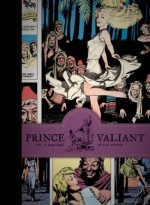
Hal Foster’s Prince Valiant volume 1: 1937-1938


By Hal Foster (Fantagraphics Books)
ISBN: 978-1-60699-141-1

Win’s Christmas Gift Recommendation: Ideal for anybody who ever dreamed or wondered… 10/10

Rightly reckoned one of the greatest comic strips of all time, the nigh-mythical saga of a king-in-exile who became one of the greatest warriors in an age of unparalleled heroes is at once fantastically realistic and beautifully, perfectly abstracted – an indisputable paradigm of adventure fiction where anything is possible and justice will always prevail. It is the epic we all want to live in…

On one thing let us be perfectly clear: Hal Foster’s Prince Valiant is not historical. It is far better and more real than that.

Possibly the most successful and evergreen fantasy creation ever conceived, Prince Valiant in the Days of King Arthur launched on Sunday 13th February 1937, a glorious weekly, full-colour window not onto the past but rather onto a world that should have been. It followed the tempestuous life of a refugee boy driven by invaders from his ancestral homeland of faraway Thule who persevered and, through tenacity, imagination and sheer grit, rose to become one of the mightiest heroes of the age of Camelot.

As depicted by the incredibly gifted Foster, this noble scion would, over the years, grow to mighty manhood amidst a heady sea of wonderment; roaming the globe and siring a dynasty of equally puissant heroes whilst captivating and influencing generations of readers and thousands of creative types in all the arts.

There have been films, cartoon series and all manner of toys, games and collections based on the feature – one of the few newspaper strips to have lasted from the thunderous 1930s to the present day (over 4000 episodes and counting) and even in these declining days of newspaper cartooning it still claims over 300 American papers as its home.

Foster produced the strip, one spectacular page a week until 1971, when, after auditioning such notables as Wally Wood and Gray Morrow, Big Ben Bolt artist John Cullen Murphy was selected to draw the feature. Foster carried on as writer and designer until 1980, after which he fully retired and Murphy’s son took over scripting duties.

In 2004 Cullen Murphy also retired (he died a month later on July 2nd) and the strip soldiered on under the extremely talented auspices of artist Gary Gianni and writer Mark Schultz and latterly Thomas Yeates, conquering one more exotic land by making it onto various web locations.

This exquisite oversized hardback volume (362 x 268mm), reprints in glorious colour – spectacularly restored from Foster’s original Printer’s Proofs – the princely pristine Sunday pages from February 1937 to December 25th 1938: those formative forays of an already impressive tale which promised much and delivered far more than anybody might have suspected during those dim and distant days…

Before the drama begins, however, Brian M. Kane offers an informative picture and photo-packed potted history of ‘Harold Rudolf Foster: 1892-1982’ after which Fred Schreiber conducts ‘An Interview with Hal Foster’ – first seen in Nemo: The Classic Comics Magazine in 1984.

Moreover, after the superb Arthurian epic exploits of the quintessential swashbuckling hero which follows, this initial collection is rounded off by Kim Thompson’s discourse on the many iterations of reprints over the years and around the world in ‘A History of Valiants’…

The actual action-packed drama commences in distant Scandinavia as the King of Thule, his family and a few faithful retainers dash for a fishing boat, intent only on escaping the murderous intentions of a usurper’s army.

Their voyage carries them to the barbarous coast of Britain where they battle bands of wild men before securing a safe retreat in the gloomy fens of East Anglia. After many hard battles they reach an uneasy détente with the locals and settle into a harsh life as regal exiles…

The young Prince Valiant was but five years old when they arrived and his growing years in a hostile environment toughen the boy, sharpen his wits and give him an insatiable taste for mischief and adventure.

He befriends a local shepherd boy and together their escapades include challenging the marauding ancient dinosaurs which infest the swamp, battling a hulking man-brute and bedevilling a local witch. In retaliation the hag Horrit predicts that Val’s life would be long and packed with incredible feats but always tainted by great sorrow.

All that, plus the constant regimen of knightly training and scholarly tuition befitting an exile learning how to reclaim his stolen kingdom, make the lad a veritable hellion, but everything changes when his mother passes away. After a further year of intense schooling in the arts of battle, Valiant decides to leave the Fens and make his way in the dangerous lands beyond…

Whilst sparring with his boyhood companion, Val unsuspectingly insults Sir Launcelot who is fortuitously passing by. Although the hero is sanguine about the cheeky lad’s big mouth, his affronted squire attempts to administer a stern punishment but is rewarded with a thorough drubbing. Indeed, Launcelot has to stop the Scion of Thule from slitting the battered and defeated man’s throat.

Although he has no arms, armour, steed or money, Valiant swears that he will become a Knight…

Luck is with the Pauper Prince. After spectacularly catching and taming a wild stallion his journey is interrupted by the gregarious paladin Sir Gawain, who shares a meal and regales the boy with tales of chivalry and heroism. When their alfresco repast is spoiled by robber knight Sir Negarth who unfairly strikes the champion of Camelot, Val charges in and Gawain regains consciousness to find the threat ended, Negarth hogtied and his accomplice skewered…

Taking Val under his wing, wounded Gawain escorts the boy and his prisoner to Camelot but their journey is delayed by a gigantic dragon. Val kills it too – with the assistance of Negarth – and spends the rest of the trip arguing that the rogue should be freed for his gallantry…

He is still stoutly defending the scoundrel at his trial before King Arthur, and is rewarded by being appointed Gawain’s squire. Unfortunately Val responds badly to being teased by the other knights-in-training and finds himself locked in a dungeon whilst his tormentors heal and the Knights of the Round Table ride out to deal with an invasion of Northmen…

Whilst the flowers of chivalry are away, a plot is hatched by scheming Sir Osmond and Baron Baldon. To recoup gambling debts they intend to capture and ransom Gawain, but have not reckoned on the dauntless devotion and ruthless ingenuity of his semi-feral squire.

Easily infiltrating the bleak fortress imprisoning the hero, Val liberates his mentor through astounding feats of daring and brings the grievously wounded knight to Winchester Heath and Arthur…

As Gawain recuperates, he is approached by a young maiden. Ilene is in need of a champion and, over his squire’s protests, the still gravely unfit knight dutifully complies. Val’s protests might have been better expressed had he not been so tongue-tied by the most beautiful girl he has ever seen…

The quest to rescue Ilene’s parents is delayed when an unscrupulous warrior in scarlet challenges them, intent on possessing the lovely maiden. Correctly assessing Gawain to be no threat, the Red Knight did not live long enough to revise his opinion of the wild-eyed boy who then attacked him…

Leaving Ilene and the re-injured Gawain with a hermit, Valiant continues on alone to Branwyn Castle, recently captured by an “Ogre” who is terrorising the countryside. Through guile, force of arms and devilish tactics he then ends the threat forever.

This is an astonishing tour de force of graphic bravura that no fan could ever forget. Aspiring cartoonist Jack Kirby certainly didn’t: he recycled Val’s outlandish outfit used to terrorise the Ogre’s soldiers as the visual basis for his 1970s horror-hero Etrigan the Demon…

Having successfully routed the invaders and freed Ilene’s family, Val began earnestly courting the grateful girl. His prophecy of lifelong misery seemed assured however, when her father had to regretfully inform him that she was promised to Arn, son and heir of the King of Ord…

Even before that shock could sink in, Valiant was called away again. Ailing Gawain had been abducted by the sorceress Morgan le Fey, who was enamoured of the knight’s manly charms…

When Val confronts her she drugs him with a potion and he endures uncounted ages in her dungeon before affecting his escape. Weak and desperate, the lad makes his way to Camelot and enlists Merlin in a last-ditch ploy to defeat the witch and save his adored mentor…

In the meantime events have progressed and Val’s bold plans to win Ilene are upset when invitations to her wedding arrive at Camelot. Initially crushed, the resilient youth determines to travel to Ord and challenge Prince Arn for her hand.

Their meeting is nothing like Val imagined but, after much annoying interference, he and the rather admirable Arn finally begin their oft-delayed death-duel only to be again distracted when news comes that Ilene has been taken by Viking raiders…

What follows is another unparalleled moment of comics magnificence as Valiant sacrifices everything for honour, gloriously falls to superior forces, wins possession of Flamberge (the legendary Singing Sword which is brother to Excalibur) and is captured and reunited with Ilene… only to lose her again to the cruellest of fates…

After escaping from the Vikings and covering himself with glory at the Lists in Camelot – although he doesn’t realise it – the heartsick, weary Prince returns to his father in the melancholy Anglian fens, again encountering ghastly Horrit and nearly succumbing to fever.

When he recovers months later he has a new purpose: he and his faithful countrymen will travel to Thule and rescue the nation from the cruel grip of the usurper Sligon.  Unfortunately during the preparations Valiant discovers the countryside has been invaded by Saxons and is compelled by his honour to race to Camelot and warn Arthur…

To Be Continued…

Prince Valiant is a hurtling juggernaut of action and romance, blending hyper-realistic fantasy with sardonic wit, and broad humour with unbelievably stirring violence, all rendered in an incomprehensibly lovely panorama of glowing art.

Beautiful, captivating and utterly awe-inspiring, Foster’s magnum opus is a World Classic of storytelling, and this magnificent deluxe edition is something no fan can afford to be without.

If you have never experienced the majesty and grandeur of the strip, this breathtaking premium collection is the best possible way to start and will be your gateway to a staggering world of wonder and imagination…

All comics material © 2009 King Features Syndicate except Tarzan page, © 2009 ERB Inc. All other content and properties © 2009 their respective creators or holders. All rights reserved.

Treasury of Mini Comics volume 1


By many and various, edited by Michael Dowers (Fantagraphics Books)
ISBN: 978-1-60699-657-7

The act of stringing pictures and/or words together is something almost everybody has done at some stage of their lives. It’s a key step in the cognitive path of children and, for an increasing number of us, that compulsive, absorbing euphoria never goes away. Whilst many millions acquiesce to the crushing weight of a world which stifles the liberation of creation, turning makers into consumers, a privileged, determined few carry on: drawing, exploring, and in some cases, with technology’s help, producing and sharing.

Michael Dowers loves the concept of crafting and disseminating Mini Comics and his last book Newave!- The Underground Mini Comix of the 1980’s described and reproduced hundreds of examples: spotlighting with enticing, encouraging exuberance those driven artisans who came out of the “anything goes” 1960s and 1970s Underground Commix movement still craving a vehicle of personal expression.

These creators aren’t in it for the money and, in the era before computers, they found enough time to write, draw and compile artwork (small press people are notoriously generous, contributing work at the drop of a hat) before laboriously photocopying, cutting, folding, stapling and then distributing the miniscule marvellous results.

Just by way of definition: most mini comics were home-produced pamphlets using borrowed – or when necessary paid for – print processes. The most popular format was an 8½ x 11inch sheet, folded twice, and printed at local copy-shops (or clandestinely churned out on school/work repro systems like early Xerox, Photostat, Mimeo or Spirit Banda machines) on letter – or any other sized – paper.

Because they weren’t big, they were called “mini commix”. Inspired, no?

Now this superb sequel tome – another massive brick of fun (8500 monochrome pages, 178x127mm) – offers another trip through forty years of free-thinking, self-determined free expression and technological developments. Many of the key figures in the creation and steady proliferation of this uniquely eloquent people’s medium are included here, not only through examples of their groundbreaking work, but also through statements, interviews and fond reminiscences.

Nobody who wanted to and had access to any kind of reproductive technology ever resisted making their own comics, and content comes from all over the North American continent, covering everything from superhero spoofs, monster-mashes, autobiography, recreational drug, religious, spiritual and philosophical diatribes and polemics, surreal experimental design and just plain fun stories, chatter and gags: all as sexually explicit, violent, political or personally intimate as their creators wanted them to be…

It all starts with Michael Dowers, himself the force behind not only this compilation but also Brownfieldpress and Starhead Comix, whose Introduction leads into ‘The Story of Quoz in Leonard Rifas’s Own Words’ after which the breakthrough Quoz #1 (1969) is reprinted in its quirky absurdist entirety.

Justin Green lays claim to having created the winning format of mini comics in his reprinted blog ‘Statement…’ before his groundbreaking Spare Comic? and inspirational Underground Cartooning Course (both from 1972) show us all how it should still be done…

Gary Arlington is highlighted firstly through an interview he gave to Comics Journal (#264) reporter Patrick Rosenkranz and his uplifting Awake! mini from 1972, followed by the delightfully morose adventure of Johnny Hangdog in Useless (1980) by Jim Siergey, and Larry Rippee’s comically macabre Skeletoons #18 from 1979.

Dowers’ interview of Richard Krauss (midnightfiction.com) is followed by the latter’s first self-publication Bar Fly Theater from 1979 and Bug Infested Comics: a 2008 collaboration with Bob Vojtko, after which Dickhead #1 by Clark Dissmeyer & Par Holman (1982) elaborates on the tricky life of a blue-collar talking penis…

Tales from the Inside was inmate Macedonio M. Garcia’s description of a convict’s existence, tellingly realised here in issues #1 and 3 from 1981 and 1982 (assisted by a script from inmate Melander), after which minor legend Matt Feazell of Not Available Comics describes his prolific career and re-presents The Amazing Cynicalman and Board of Superheroes #1 (1981 & 1994).

Another major player who crossed over into mainstream funnybooks was Matt Howarth whose beguiling The League of Mikes from 1983 took the lid off the collectors’ mentality and still rings true today, Steven L. Willis’ Brave New Nazis of the Inland Empire (1985) savages fascists with excoriating mirth, whilst Nukemare by Donald Russell Roach (1983) combines Cold War paranoia with glittery science fiction hope.

‘The Story of Outside In’ details an extensive collaborative effort which spanned 1983-2003 as a succession of editors and publishers shepherded an ambitious idea and made a little history.

As described in ‘Outside In Introduction‘ by Rick Bradford, Steve Willis conceived and produced issues #1-14 of a invitational mini which sought to print self-portraits by the movement’s many artisans (further described herein with a canny, funny strip of the book’s early days by Willis) before Dowers, Edd Vick & Hall Hargit and Bruce Chrislip recount their own tenures at the top.

A complete Outside In contributor list covering #1-50 follows, plus Hargitt’s primer Outside In-formation, before Brad W. Johnson’s Wurst Funnies (1986) returns us to strip sampling with a selection of sausage-inspired cartoon capers.

Dowers then interviews Tim Corrigan of C&T Graphics, after which Serious Comics #14 and 15 (1985) highlights the nigh legendary Mightyguy (a long-running minor success of the mid-1980s “Black & White Explosion”) and, from the same year, David Miller’s No More Bottled Milk! explores less commonplace comicbook themes…

Break out mini comics star Colin Upton reveals all to Dowers before his Self-Indulgent Comics #10 and 2008 Diabetes Funnies leads into Acid Man Society (1989) by Robert Pasternak, whilst Glenn & David Lee Ingersoll’s The Davey Thunder Jack Lightning Show: The Ugly Dog of Heaven is followed by Roberta Gregory’s Devolution.

A John Porcellino Interview is augmented by a selection of his short works spanning 1983-1993, comprising ‘I Wrote My Own Pink Slip!!’, ‘Smells Like Teen Bullshit’, ‘In der Nacht die welt dreht sich das Oberste zuunterst’ and ‘Night Time’, after which a heartfelt commemoration of the life, works and contribution of Dylan Williams (1970-2011) is delivered by Tom Spurgeon.

This tribute to mini comics’ “great synthesizer”, a major publishing force and founder of Puppy Toss and Sparkplug Comics, is followed by his own stunning Horse #1 and an assortment of other strips.

Eric Reynolds contributes Broken Picture Tube Theatre  (1994), featuring ‘The Brady Lush’, ‘Barry Williams is Johnny Bravo‘ and other TV-triggered spoofs, whilst the bawdy Zelda Zonk’s Hyper Revue Folies Album (1993) comes courtesy of Quimby World Head Quarters and Molly Kiely, and is followed by the shockingly sordid Asphalt Aneurism #21 by Blair Wilson from 1994.

The mammary madness of Jim Blanchard’s Teat Warp #1 from the same year is counterpoised by 1995’s Moldy Fig (and other Sufi stories) by C. Cilla, whilst Jim Woodring & David Lasky’s sublime Jesus Delivers offers some sage advice to the overly zealous spiritual seekers to end this section.

Dowers’ Marc Bell Interview is followed by the beguiling sci-fi fable ArbeiteesEiner Industrium Dokument den Marc Bell ut Rupert Bottenberg (1996) and the documentary Yeast #6 by Ronald J.M. Regé Jr., before a Leela Corman Interview segues into her mordant 1997 Valentine and Karl Wills’ paean to childhood perversity Jessica of the Schoolyard in “Jessica’s Good Deed”.

Further of the period’s exemplars include Onsmith’s The Rouge Knuckle Gang, Cowboys Getting Racked by Travis Millard, the dark yet anthropomorphically lovely Kids These Days by M. Campos, Nate Beaty’s Mixtape (2006), I’m the Devil by Peter Thompson from 2007 and Fiona Smyth’s The Wilding from 2008…

The Carrie McNinch Interview by Dowers is backed up by her graphic journal You Don’t Get There From Here (#11, spanning December 15th 2008-March 23rd 2009) after which the Funchicken.com duo Mark Todd & Esther Pearl Watson are both interviewed,  prior to his Bad Ass booklet and her Bike Repair Kit which portray the infinite variety of American person-hood. Then after fantastical Rudy, Vasilios Billy Mavreas’s Year in a Cone explores the graphic outer limits of imagination whilst No Exit by Andy Singer offers a humorous glimpse at Yankee obsessions such as sport, pets and the justice system…

#Noah van Scriver’s autobiographical Complaints (2010) descibes his own painfully restricted life and Sadist Science Teacher (Kelly Froh, 2010) continues in a similar journalistic vein, whilst the anonymous members of gimmeshelterpress reveal the build up of Bad Energy (2010), before Max Clotfelter’s Hole Show #1 and Marc Palm’s Hole Show #2 opt for a science fictional setting for their round-robin exercise in graphic collaboration to end the immense collected display of narrative virtuosity.

However this massive monochrome collection still holds a few more delights and, after the list of Artist Website Addresses, a full colour section reprints David Heatley’s Yesterday comic strip diary (from 5/11 to 6/10 2003), Night Terrors by Laura Wady, Fiona Smyth’s The Parkdale Gyre and a selection of equally enhanced full-hued covers by Krauss, Vojtko, Beaty & Rippee for Bug Infested Comics, Mixtape and Skeletoons.

The pioneering craftsmen who simultaneous started a self-printing movement and – now – tradition led inexorably to today’s thriving Alternative/Small Press publishing industry as well as the current internet comics phenomenon, and thus this book has incredible appeal on an historical basis.

However, that’s really not the point: the real draw of this compilation is that creativity is addictive, good work never pales or grows stale and the great stories and art here will make you keen to have a go too.

I’ve done it myself, for fun – even once or twice for actual profit – and it’s an incredible buzz (I should note that I am still married to a wife not only tolerant but far more skilled and speedy in the actual “photocopy, cut, fold, staple” bit of the process and willing, if not keen, to join in just so she might occasionally be with the compulsive dingbat she married…)

The sheer boundless enthusiasm and feelgood reward of making comics celebrated in this astoundingly vast, incredibly heavy and yet still pocket-sized hardback is a pure galvanic joy that will enchant and impel every fan of the art-form: as long as they’re big enough to hold a pencil, old enough to vote, and strong enough to lift this book.
Treasury of Mini Comics volume 1 © 2013 Michael Dowers and Fantagraphics Books. All contents © 2013 their respective creators or authors. All rights reserved.

Thunderbirds – the Comic Collection


By Alan Fennell, Scott Goodall, Frank Bellamy, John Cooper, Eric Eden, Graham Bleathman & various (Egmont)
ISBN: 978-1-4052-6836-3

Win’s Christmas Gift Recommendation: 10/10 because it just is.

Stand By For Frothing!
Growing up in 1960’s England was the best of all possible worlds for a comic lover. As well as US imports you were treated to some frankly incredible weekly publications, and market bookstalls sold second-hand comics for at least a third of their cover price. We also had some of the greatest artists in the world working on some of the best licensed properties around. A perfect example is the TV – primarily Gerry Anderson – anthology comic TV Century 21.

For British kids of a certain vintage – it varies from eighty to four and three quarters – the Anderson experience is a large and critical component of the DNA of childhood. The TV episodes, toys, bubblegum cards, movies and especially the comic strips all irresistibly evoke and re-manifest the thrill and fevered anticipation of juvenile ecstasy in the millions of kids who enjoyed the weekly rush of mind-boggling, mouth-watering adventure – even decades after the initial hit.

Thus this latest glossy compilation, collecting some of the greatest strips in comics history is probably going to leave a lot of people gurgling in delight as they revisit or – if they’re incredibly lucky – see for the first time a spectacular panorama of futuristic fantasy thrills, spills and chills.

TV Century 21 (the unwieldy “Century” was eventually dropped) was patterned after a newspaper – albeit from 100 years into the future – and this shared conceit carried avid readers into a multimedia wonderland as television and comics fed off each other.

The incredible illustrated adventures were often supplemented with colour stills taken from the shows and photos also graced all text features and fillers which added to the unity of one of the industry’s first “Shared Universe” products. Even the BBC’s TV “tomorrows” were represented in a full-colour strip starring The Daleks.

The first issue launched on January 23rd 1965, instantly capturing the hearts and minds of millions of children and further proving to British comics editors the unfailingly profitable relationship between TV shows and healthy sales.

Filled with high quality art and features, printed in gleaming photogravure, TV21 featured such strips as Fireball XL5, Supercar and Stingray as well as a strange series about a posh future lady spy and her burglar chauffeur.

In an attempt to be topical, the allegorically Soviet and terribly totalitarian state of Bereznik was used in many strips, acting as an overarching, continuity-providing bad guy. Behind numerous plots and outrages, the TomorrowTerrorState constantly schemed against the World Government (for which read “The West”) in an eerily advanced Cold War espionage scenario which augmented the aliens, aquatic civilizations, common crooks and cataclysmic disasters that threatened the general well-being of the populace.

Although Thunderbirds did not premiere on TV until September of that year (with Frank Bellamy’s incredible strip joining the comic’s line-up in January 1966 with #52) Lady Penelope and Parker (subtitled as and promising “Elegance, Charm and Deadly Danger”) had been running since issue #1.

The aristocratic super-spy was promoted to her own spin-off, top-class photogravure publication in January 1966 – just as Anderson’s newest creations launched into super-marionated life: their comics exploits becoming the big draw in the already unmissable TV21.

All that is further explained in an expansive ‘Introduction’ before the procession of weekly wonderment – two staggeringly intoxicating pages every seven days! – begins in this massive (290 pages, 297x222mm) full-colour luxury hardback.

It all begins with the thirteenth adventure, which ran from #141-146 (30th September to November 4th 1967, scripted by Scott Goodall and illustrated by Frank Bellamy) and details how an avaricious madman intends splitting Persia in two with ‘The Earthquake Maker’.

The unforgettable alien invader story ‘Visitor from Space’ (#147-154) follows, with one of the most memorable monsters in comics history stealing the show on every page, after which ‘The Antarctic Menace’ (6th January-17th February 1968, #155 to 161) begins a brand new year with the same tried and true thrills as the Tracy boys are called in to save the day after the Australia-Antarctica highway is sabotaged!

‘Brains is Dead’ (#162-169, running until 13th April) features the skulduggery of the sinister Hood in a deadly game of industrial espionage, after which artist Graham Bleathman provides a captivating glimpse at those longed-for technical details with double-page cutaway spreads and single page strip sequences ‘Thunderbird 1 Technical Data’, ‘Launch Sequence: Thunderbird 1’, ‘Launch Sequence: Thunderbird 2’ and ‘Thunderbird 2 Technical Data’.

The suspenseful strip stories resume with ‘The Space Cannon’ (Goodall & Bellamy, from TV21 #170-172 April 20th to May 4th 1968) as the team have to stop a continually firing neutron cannon that’s crashed into the Thames, whilst follow-up yarn ‘The Olympic Plot’ by Howard Elson & Bellamy (#173-178) finds the great games – held in the crater of Vesuvius – disrupted not only by a lake of fire but also a madman digging up a pirate treasure hidden since the 17th century…

TV21 #184-187 (27th July-17th August 1968) offered ‘Devil’s Crag’ (Goodall & Bellamy) and saw International Rescue save a lost schoolboy; a spectacular visual extravaganza that belies its deceptively simple plot, after which ‘The Eiffel Tower Demolition’ (#188-191) goes dreadfully wrong and Scott and Virgil find themselves endangered by thieves and saboteurs…

Bleathman returns with more pictorial top secrets in ‘Specifications of Thunderbird 3’, ‘Launch Sequence: Thunderbird 3’, ‘Launch Sequence: Thunderbird 4’ and ‘Specifications of Thunderbird 4’ after which Goodall & Bellamy expose ‘The Nuclear Threat’ (TV21 #192-196, 21st September-19th October 1968) of an out-of-control drone ferrying atomic weapons to their intended deep sea dumping ground, whilst the ‘Hawaiian Lobster Menace’ (#197-202) outrageously reveals a plot to turn tasty crustacean treats into explosive anti-personnel weapons…

‘The Time Machine’ (December 7th 1968 to January 11th 1969) used by Jeff and Scott Tracy malfunctioned in a most unfortunate manner, whilst from #209-217 a more domestic disaster saw ‘The Zoo Ship’ which foundered off Tracy Island lead to crewmen trapped aboard ship and savage beasts loose on shore with our harried heroes trying to save lives whilst keeping their secrets safe from the ever insidious Hood…

Bleathman has more artistic innovations to display in ‘Specifications of Thunderbird 5’, ‘The Construction of Thunderbird 5′, ‘This is Tracy Island’ and ‘Tracy Island’ giving us all the detail and data we desire before ‘City of Doom’ (Goodall as “Spencer Howard” & Bellamy from #218-226, 22nd March to May 17th) finds a top secret, ultra-futuristic Andean science metropolis endangered by a wild nuclear reaction…

Scripted by Goodall or (perhaps John W. Jennison?), ‘Chain Reaction’ ran in TV21 and TV Tornado #227-234, May 24th-12th July 2069) wherein the Tracy team had to stop an out of control 50,000-ton space freighter from impacting in the middle of San Francisco – and that’s just the start of an epic calamity which threatened to destroy the entire Pacific Rim…

There’s a big jump here to October 1968 for ‘The Big Bang’ by Geoff Cowan & John Cooper, possibly explained by the fact that once Bellamy left the strip, his cruelly underrated replacement rendered the strip in black and white. When Fleetway revived the Anderson franchise in the early 1990s the comics featured artwork from TV21 supplemented with new original material from another generation of fans and creators, but as Thunderbirds was far and away the biggest hit, some of Cooper’s strips were reprinted with the artist at last getting the chance to colour his efforts.

Thus this, his second original yarn from TV21 & Joe 90 #5-8 (25th October-15th November 1969), involving smuggled diamonds and a boy trapped on a building both sinking and about to explode…

The endeavours of the Tracy clan then conclude with ‘The Mini Moon’ (Richard O’Neill & Cooper (TV21 & Joe 90 #22-28, 21st February to April 4th 1970) as a roving planetoid menaces Earth and Brains, Alan and Gordon have to blow it up while it’s still far enough away to pose no extinction-level threat…

Happily there’s still plenty for fans to enjoy as, after Bleathman’s revelatory ‘The Secrets of FAB 1’ and Creighton-Ward Stately Home’, the adventures of Lady Penelope and her invaluable manservant Parker begin with ‘Mr. Steelman’ by Alan Fennell & Eric Eden. Originally seen in TV Century 21 #1-11, January 23rd to April 3rd 1965, this is a complex thriller involving espionage and a deadly robot, after which Bellamy handles ‘The Isle of Arran Riddle’ (#35-43, September 18th to November 13th 1965) wherein the Honourable Lady Creighton-Ward attempts to solve an ancient puzzle and inherit a fabulous ruby.

Eden returned for ‘The Vanishing Ray’ (#44-51) as the stately spy was mysteriously sent a torch that turned objects transparent, unaware that the wicked Hood was hot on its trail.

The deadly games end with ‘The Enemy Spy’, illustrated by the legendary Frank Hampson from the July 1965 Lady Penelope Summer Extra, wherein an idle glance at the TV news sets Her Ladyship on the trail of Bereznik’s top assassin…

But of course the real treasure is the phenomenal and unparalleled work of Frank Bellamy, whose fantastic design, drawing and painted colour (which holds up rather well here, despite the limitations of modern print technology to accommodate the subtleties of the photogravure process) steals the show – and usually one’s breath away!

The work of Bellamy and his successors are a cherished highpoint of British comic-making. Crisp, imaginative writing, great characters and some of the very best science-fiction art of all time make this a must-have book for just about anybody with a sense of adventure and love of comics. It doesn’t get better than this.
Thunderbirds ™ and © ITC Entertainment Group Limited 1964, 1999, 2013. Licensed by ITV Ventures Limited. All rights reserved.

Heroic Tales: The Bill Everett Archives volume 2


By Bill Everett and others, edited and complied by Blake Bell (Fantagraphics Books)
ISBN: 978-1-60699-600-3

Thanks to modern technology there is a superabundance of collections featuring the works of too-long ignored founding fathers and lost masters of American comic books. A magnificent case in point is this second superb chronicle revisiting the incredible gifts of one of the greatest draughtsmen and yarn-spinners the industry has ever seen.

You could save some time and trouble by simply buying the book now rather than waste your valuable off-hours reading my blather, but since I’m keen to carp on anyway feel free to accompany me as I delineate just why this tome needs to join the books on your “favourites” shelf.

He was a direct descendent and namesake of iconoclastic poet and artist William Blake. His tragic life and awe-inspiring body of work – Bill was possibly the most technically accomplished artist in US comicbook industry – reveals how a man of privilege and astonishing pedigree was wracked by illness, an addictive personality (especially alcoholism) and sheer bad luck, nevertheless shaped an art-form and left twin legacies: an incredible body of superlative stories and art, and, more importantly, saved many broken lives saved by becoming a dedicated mentor for Alcoholics Anonymous in his later years.

William Blake Everett was born in 1917 into a wealthy and prestigious New England family. Bright and precocious, he contracted Tuberculosis when he was twelve and was dispatched to arid Arizona to recuperate.

Thus began a life-long affair with the cowboy lifestyle: a hard-drinking, smoking, tall-tale telling breed locked in a war against self-destruction, described in the fact-filled, picture-packed Introduction by Blake Bell which covers ‘The Early Years of Comics: 1938-1942’, ‘The Birth of Marvel Comics’ and ‘The Comic Book Production System’, before ‘The Heroes’ precedes a full-colour selection of incredible prototypical adventure champions with a brief essay on the set-up of Centaur Comics, Novelty Press, Eastern Color Printing, Hillman and Lev Gleason Publications…

Accompanied by the covers for Amazing Mystery Funnies volume 2 #3, 5 and 6 (March, May & June 1939, Centaur) are three outer space exploits of futuristic trouble shooter Skyrocket Steele, whilst Tibetan-trained superhero Amazing-Man offers a transformative triptych of titanic tales spanning war-torn Europe, augmented by the covers to Amazing-Man Comics #9-11 February-April 1940.

Everett’s deeply held western dreams are covered next with a brace of rootin’ tootin’ yarns starring Bull’s-Eye Bill from Novelty Press’ Target Comics #3-4 (April & May 1940) whilst from #7-9 (August-October 1940), the author smoothly switched to sophisticated suspense with master of disguise The Chameleon crushing contemporary criminals in scintillating escapades from Target Comics’ answer to The Saint, the Falcon and the Lone Wolf.

Thanks to his breakthrough Sub-Mariner sagas Everett was inextricably linked to water-based action, and Eastern Comics hired him to create human waterspout Bob Blake, Hydroman for the bimonthly Reg’lar Fellers Heroic Comics. Here, spanning issues # 6-9 (May-November 1941, with the covers for #6 and 7), are four spectacular, eerie, offbeat exploits, covering an extended battle against foreign spies and American Fifth Columnists, after which Red Reed in the Americas! (created by Bob Davis & Fitz) offers the first two chapters in a political thriller wherein a college student and his pals head South of the Border to fight Nazi-backed sedition and tyranny in a stunning tour de force first seen in Lev Gleason’s Silver Streak Comics #20 & 21 (April & May 1942).

A section of Miscellaneous and text illustrations follows, blending Western spot drawings with the eye-catching covers from Amazing Mystery Funnies volume 2 #18, Target Comics #5 and 6, Blue Bolt (vol. 1 #11, vol. 2 #1, 2 and 3) and Famous Funnies #85.

The Humorous and More describes Everett’s forays into other markets: niche sectors such as licensed comics, comedy and romance, and even returns to pulp and magazine illustration as he strove to stay one step ahead of a constantly shifting market and his own growing reputation for binges and unreliability.

‘What’s With the Crosbys?’ is a superbly rendered gossip strip from Famous Stars #2 (1950, Ziff-Davis) whilst a stunning monochrome girly-pin-up of ‘Snafu’s Lovely Ladies’ (from Snafu #3 Marvel, March 1956), and the cover of Adventures of the Big Boy #1 (also Marvel, from the same month) lead into the Back Cover of Cracked #6 (December 1958, Major Magazines) and other visual features from the Mad imitator as well as the colour cover to less successful rip-off Zany (#3, from March 1959).

Everett’s staggering ability to draw beautiful women plays well in the complete romance strip ‘Love Knows No Rules’ (Personal Love #24, November 1953 Eastern Color), and this section concludes with a gritty black and white title page piece from combat pulp War Stories #1, courtesy of Marvel’s parent company Magazine Management, September 1952.

The Horror concentrates on the post-superhero passion for scary stories: an arena where Bill Everett absolutely shone like a diamond. For over a decade he brought a sheen of irresistible quality to the generally second-rate chillers Timely/Atlas/Marvel generated in competition with genre front-runners EC Comics. It’s easy to see how they could compete and even outlive their gritty, gore-soaked competitor, with such lush and lurid examples of covers and chillingly beautiful interior pages…

Following a third informative background essay detailing his life until its cruelly early end in 1973, a choice selection of his least known and celebrated efforts opens with tale of terror ‘Hangman’s House’ (Suspense #5, November, 1950): a grim confrontation with Satanic evil, followed by futuristic Cold War shocker ‘I Deal With Murder!’ and a visit to a dark carnival of purely human wickedness in ‘Felix the Great’ (both culled from Suspense #6, January 1951).

Adventures into Weird Worlds #4 (Spring 1952) offered a laconic, sardonic glimpse into ‘The Face of Death’, whilst from the next issue (April 1952) ‘Don’t Bury Me Deep’ tapped untold depths of tension in a moodily mordant exploration of fear and premature burial. Hard on the heels of the cover to Journey Into Unknown Worlds #14 (December 1952) comes one of its interior shockers as ‘The Scarecrow’ helped an aged couple solve their mortgage problems in a most unusual manner.

The Marvel madness then concludes with a cautionary tale of ‘That Crazy Car’ from Journey into Mystery #20, December 1954, concluding a far too brief sojourn amidst arguably Everest’s most accomplished works and most professionally adept period.

This magnificent collection ends with a gallery of pages and one complete tale from the end of his career; selected from an even more uninhibited publisher attempting to cash in on the adult horror market opened by Warren Publishing with Eerie, Creepy and Vampirella.

Skywald was formed by industry veteran Israel Waldman and Everett’s old friend Sol Brodsky, tapping into the burgeoning black and white market with mature-reader and supernatural magazines Hell-Rider, Crime Machine, Nightmare, Psycho and Scream. Offered an “in” Everett produced incredible pin-ups (included here are three from Nightmare (#1, 2 & 4, December 1970-June 1971), ‘A Psycho Scene’ (Psycho #5, November, 1971) a stunning werewolf pin-up from Psycho #6 and one of revived Golden Age monstrosity ‘The Heap’ from Psycho #4.

Most welcome, however, is a magnificent 10-page monochrome masterpiece of gothic mystery ‘The Man Who Stole Eternity’ from Psycho #3, May, 1971.

Although telling, even revelatory and concluding in a happy ending of sorts, what this book really celebrates is not the life but the astounding versatility of Bill Everett. A gifted, driven man, he was a born storyteller with the unparalleled ability to make all his imaginary worlds hyper-real; and for nearly five decades his incredible art and wondrous stories enthralled and enchanted everybody lucky enough to read them.

© 2013 Fantagraphics Books. Text © 2013 Blake Bell. All art © its respective owners and holders. All rights reserved.
Win’s Christmas Gift Recommendation: Perfect for art lovers, Marvel Zombies and addicts of pure comics magic… 9/10

Hal Foster’s Prince Valiant volume 7: 1949-1950


By Hal Foster (Fantagraphics Books)
ISBN: 978-1-60699-645-4

Arguably the most successful comic strip fantasy ever conceived, Prince Valiant in the Days of King Arthur launched as a Sunday page feature on February 13th 1937, a luscious full-colour weekly window onto a perfect realm of perfect adventure and romance.

The strip followed the life and exploits of a refugee boy driven by invaders from his ancestral homeland in Scandinavian Thule who grew up to roam the world and rose to a paramount position amongst the mightiest heroes of fabled Camelot.

Written and drawn by sublime master draftsman and storyteller Harold “Hal” Foster, the epic followed the little princeling through decades of thrilling exploits as he matured into a clean-limbed warrior and eventually family patriarch through a heady sea of wonderment, visiting far-flung lands and siring a dynasty of equally puissant heroes whilst captivating and influencing generations of readers and thousands of creative types in all the arts.

There have been films, animated series and all manner of toys, games and collections based on the strip – one of the few to have lasted from the thunderous 1930s to the present day (over 3900 episodes and counting) – and even in these declining days of the newspaper narrative strip as a viable medium, it still claims over 300 American papers as its home. It has even made it into the very ether with an online edition.

Foster ceaselessly produced the strip, one enchanting page per week until 1971 when, after auditioning such notables as Wally Wood and Gray Morrow, Big Ben Bolt illustrator John Cullen Murphy was chosen to succeed him as illustrator. Foster continued as writer and designer until 1980, after which he retired and Cullen Murphy’s daughter Mairead took over colouring and lettering whilst her brother John assumed the writer’s role.

In 2004 the senior Cullen Murphy also retired (he died a month later on July 2nd) and the strip has since soldiered on under the extremely talented auspices of artists Gary Gianni and latterly Thomas Yeates, with Mark Schultz scripting.

Restored from Foster’s original Printer’s Proofs, this seventh spectacularly luxurious oversized (362 x 264mm) full-colour hardback volume reprints the pages from January 2nd 1949 to 31st December 1950 (#621 to 725 if you’re counting).

What has Gone Before: after an extended sojourn in an incredible New World, Valiant and Aleta have brought their newborn son back to Britain and sought out the warrior’s old comrade Prince Arn to be the child’s Godfather. Val is astounded that the bluff solitary hero is also a husband and currently searching for Godparents for his own newborn son and heir…

Before the Dark Ages delights resume, latest illuminator Thomas Yeates delivers a remarkable introductory essay discussing ‘The Long Shadow of Hal Foster’ and the innumerable artists who owe him a creative debt, after which the never-ending saga picks up with the Princes and their families travelling back to fabled Camelot for a double Christening, presided over by King Arthur himself…

Soon however duty calls again and Valiant, Sir Gawain and hapless, bumbling hedge-wizard Oom Fooyat are dispatched to the wilds of Wales to investigate a nest of vile black magic. Seamlessly blending thrills and grandeur with broad comedy, Foster delivers an enchanting light-hearted romantic romp wherein level-headed Val exposes the macabre happenings at Illwynde Castle and plays matchmaker to more than one of his faithful retinue…

Job done and the fief secure, Gawain and the Prince of Thule return to Camelot, picking up en route a boy with chivalric intentions and the determined courage of a lion. The enigmatic Geoffrey is desperate to win his spurs, but when Valiant introduces the lad to Aleta, the prospective page boy is gripped by a ferocious, life-changing, all consuming crush…

Whilst the well-meaning kid perpetually embarrasses himself in his drive to impress his master’s wife, Arthur despatches Valiant and a small band of knights to Scotland to inspect the wall which keeps the northern savages at bay. Aleta then attempts to keep Geoffrey out of trouble by ordering the puppy to follow and keep her husband safe…

It’s an unlucky decision: as Valiant and his inspection force discover when they see that Hadrian’s Wall has been breached and hundreds of Picts are ravening southward…

Confronted with an impossible situation the Prince again resorts to unconventional tactics and traps the huge barbarian army on the English side whilst sending Geoffrey back to Camelot with a message for Arthur… and to save the hero-struck boy from dying in the unwinnable battle to come…

Breaking all the rules of knighthood for the noblest of reasons, Geoffrey speedily delivers his message and is astounded when Aleta rushes off to join Valiant in Scotland. Again disregarding consequences and probably relinquishing forever his dream of knighthood, the boy follows her northwards…

Their arrival precipitates an unexpected and nigh-miraculous end to the war, but Valiant is close to death. After tending his hurts Aleta decides that she will take her husband back to his Scandinavian homeland, and dispatches the now-exhausted Geoffrey back to Camelot to inform her handmaiden Katwin and nurse Tillicum to obtain a ship and meet her with baby Arn at the village of Newcastle…

Despite dreading the judgement awaiting him at Court, the boy thunders back and, after arranging for his wounded master’s (wonderful wife’s) wishes to be carried out, surrenders himself to his fate…

Of course the King is no fool and a great respecter of honour and courage. He summarily condemns the boy to banishment: for a year and a day Geoffrey must not set foot on English soil…

Mind in a whirl the redoubtable boy is taken to a barge secured by Katwin and sails to Caledonia with the family party to a reunion with Valiant and Aleta…

Soon the group are headed to Thule, bolstered by the bombastic reappearance to boisterous far-larger-than-life Viking Boltar: a Falstaff-like rogue and “honest pirate” not seen since volume 3…

The excitable old rogue ferries the extended family to Val’s cold homeland – with a few unplanned, profitable but dangerous stops along the way – but soon finds himself smitten by the love bug too…

One mystery has been solved, however, as a chance meeting with an old cleric discloses the faithful squire to be actually called Arf, forced from his home when his father Sir Hugo Geoffrey took a new young bride who didn’t want an annoying stepson underfoot. Now she is gone and the boy can return home if he wishes…

Eventually the expanded party reaches the chilly castle of King Aguar and settles in to a long period of snowbound rest and recuperation – until boisterous Jarl Egil makes an inappropriate advance on Aleta and hotheaded Arf dashes to her defence…

Soon the encounter has escalated and Valiant is forced into an utterly unnecessary duel of honour which can only end in pointless tragedy…

Happily the repentant Arf finds a way to satisfy honour all around but the King is plagued by a knotty problem wit cannot solve. Aguar has been seriously considering converting his Norse realm to Christianity, but the many devout missionaries roaming the land are cantankerous idiots all preaching their own particular brand of faith – when not actively fighting each other.

Thus in Spring, he tasks the fully fit Valiant with an embassage to Rome to ask the Pope to send priests and teachers who actually carry the true and official Word of God. Restless and eager Val promptly sets out, accompanied by Arf, the doughty Rufus Regan and new comrade Egil. Their mission coincides with the planting season when Aguar’s men return to their homes to sow the crops for the coming year…

No sooner have they departed however than vassal king Hap-Atla, seething from an old slight delivered to his deceased sire, rebels and besieges Arguar’s castle. With manpower dangerously depleted the situation looks grim until wily Aleta takes control of the situation and scores a devastating victory that contravenes all the rules of manly warfare.

Unseen for three months, Valiant and his companions at last reappear as they land in Rouen to begin the arduous overland trek to the HolyCity. The journey is full of short bursts of violence and outrageous incidents as, since Rome fell to the Vandals, Europe has become a seething mass of lawless principalities.

Most of these improvised kingdoms are run by brigands or worse, all seeking to fill their coffers at any unwary traveller’s expense…

In one unhappy demesne the quartet dethrone a robber baron and nearly end up married to his daughters (young Arf particularly caught the imagination of the decidedly dangerous and ambitious teenager Ollie), whilst in another Val gets hold of an alchemist ruler’s horrific black powder and is almost blown to smithereens.

Eventually however they arrive at the castle of welcoming noble Ruy Foulke and enjoy a pleasant night’s rest – only to awaken and find the place under attack by heinous villain Black Robert and his savagely competent forces…

To Be Continued…

Also included in this striking compendium is an intoxicating glimpse at the author’s virtuosity in ‘“See America First”: Hal Foster’s Union Pacific Paintings’, a series of painted advertising landscapes compiled and discussed by Brian M. Kane.

Rendered in a simply stunning panorama of glowing visual passion and precision, Prince Valiant is a non-stop rollercoaster of boisterous action, exotic adventure and grand romance; blending human-scaled fantasy with dry wit and broad humour, soap opera melodrama with shatteringly dark violence.

Beautiful, captivating and utterly awe-inspiring, the strip is a World Classic of fiction and something no fan can afford to miss. If you have never experienced the intoxicating grandeur of Foster’s magnum opus these magnificent, lavishly substantial deluxe editions are the best way possible to do so and will be your gateway to an eye-opening world of wonder and imagination…

Prince Valiant © 2013 King Features Syndicate. All other content and properties © 2013 their respective creators or holders. All rights reserved.

Win’s Christmas Gift Recommendation: Ideal for anybody who ever strived or dreamed or wished… 10/10 

The Daniel Clowes Reader: A Critical Edition of Ghost World and Other Stories, with Essays, Interviews and Annotations


By Daniel Clowes, with Ken Parille & various (Fantagraphics Books)
ISBN: 978-1-60699-589-1

One of the greatest assets of the comics medium is the ostensibly straightforward nature of its storytelling. With pictures wedded to text, what you see is so clearly what you get. So whenever a master creator regularly, consciously and deliberately subverts that implicit convention the result might be occasionally obscure or confusing, but always utterly engrossing.

At the forefront of comics storytelling for nearly three decades, Daniel Clowes is, for many, an acquired taste. However, once he’s in your brain there’s certainly no shaking the things he can do with pen and ink, motive, character and the special kind of targeted situational magic that inhabits the world of pictures and words in static harmony.

Born in Chicago in 1961, Clowes began his career as a cartoonist with humour magazine Cracked before creating uniquely skewed short comic tales for Fantagraphics. His first piece debuted in Love and Rockets # 13 (September 1985), an introductory prelude to his retro-chic detective magazine Lloyd Llewellyn which launched soon after, running in various incarnations for three years.

In 1989 he created personal anthology vehicle Eightball and began producing a variety of tales – short and serial-length – spanning a range of topics and styles investigating all aspects of cartoon narrative from autobiography to social satire, nostalgic absurdist media-fuelled yarns to surreal, penetrating human dramas, all viewed through the lens of iconic popular cultures and social motifs.

All that material has since been collected in assorted albums with two, Ghost World and Art School Confidential, successfully adapted into critically acclaimed feature films.

His experiences in Hollywood combined with deep-seated childhood influences of noir movies and comicbooks combined and resulted in David Boring – another powerful literary comics statement.

The author is rightly renowned as a founding force in Graphic Novel publishing (a term he actually despises); instrumental in breaking the ghetto walls which had constrained the medium in English-speaking countries since the inception of the comicbook industry by creating popular stories of interest to a general audience of adults and helping the art become a recognised art form.

Now The Daniel Clowes Reader cements that idea by presenting a large body of selected classic works augmented with a profusion of scholarly articles and features, both as salute to Clowes’ achievements and an inexpensive introduction to many of the creator’s most impressive tales.

Subtitled Ghost World, Nine Short Stories and Critical Materials – Comics About Art, Life, Adolescence and Real Life, the book is compiled and edited by Literature Professor and reviewer Ken Parille, with contributions from a host of industry journalists and scholars.

The volume, packed with heavily illustrated text features, opens with an Introduction section offering thoughts and quotes from a multitude of sources in ‘Daniel Clowes on…’, followed by ‘An Aesthetic Biography of Daniel Clowes’ and a formal, informative ‘Introduction to the Daniel Clowes Reader’.

Section I: Ghost World, Girls and Adolescence offers ‘Daniel Clowes’ Introduction from Ghost World Special Edition’ before the entire tale is reproduced cover-to-cover.

In an uncanny comics-style coincidence, I was actually  in the process of completing a much-postponed review of Ghost World when this new edition arrived so, in the interests of brevity and the certain assurance that it needs a fuller appreciation, I’m breaking my own rules by not properly covering the astonishing breakthrough novel here and now.

Come back in a couple of weeks for the full Monty, but for the present just be aware that the story concerns two young slackers Enid and Rebecca who shamble through and survive a climactic change in their lives and circumstances – after which hanging out, talking music, making fanzines and being generally post-ironic no longer grip their attentions quite so forcefully…

Following the two-tone tale is a host of thoughtful and impressive essays and features on it, opening with comprehensive ‘Annotations for Ghost World’ compiled by the author and Parille, after which a full Ghost World Index precedes ‘An Interview with Daniel Clowes’ by Joshua Glenn from 1990.

Adele Melander-Dayton reveals ‘How Ghost World Made Me Brave’, Pamela Thurschwell examines ‘The Ghost Worlds in Modern Adolescence’ through the lens of the tale and Parille conducts a panel-specific literary dissection in ‘Close Reading Clowes’ Dialogue: “You’ve grown into a very beautiful young woman.”’

Kaya Oakes looks at a peculiar 1990s fad in ‘Literature at the Xerox Machine: The Rise of the Zine’ and small-press mogul Gilmore Tamny recalls the story of ‘Wiglet: An Introduction and Excerpts’ in a nostalgia-filled fillip…

The iconic lead character is expanded and probed via ‘Enid’s Bookshelf: Ghost World and Its Precursors with Poems by Russell Edson and Cartoons by Ann Roy’ and ‘Enid’s Record Player: Patience and Prudence and The Ramones’ before ‘Where Are They Now?: An Afterlife for Enid and Rebecca…’ returns a decade later in a fourth-wall bending brace of obfuscatory full-colour strips created for the Ghost World Special Edition in 2008.

This opening sally then closes with a great big ‘Cartooning Glossary for Ghost World and Other Comics’.

Section II:  Short Stories, Boys and (Post) Adolescence marries a number of pivotal Clowes’ quasi-autobiographical tales with more searching literary inquisitions. “Blue Italian Shit” and “Like a Weed, Joe”: The Inner Life of Young Clowes sets up the illuminating monochrome strips – both starring official Clowes stand-in Rodger Young.

Over many years the artist has frequently adopted all manner of cartoon glove-puppets and dummies to act as spokesmodel and mouthpiece for satire, observation and reflection…

‘Blue Italian Shit’ (from Eightball #13, 1994) is narrated by Rodger the old social misfit, recalling his life as an 18-year old virgin in 1979, whilst ‘Like a Weed, Joe’ (Eightball #16, 1995) finds a younger Young in 1974, suffering from what might be first love and simultaneously hanging out with bad influence/white trash Bemis, a best friend he has no affection for but who is at least more fun than his dementia-challenged, daily diminishing grandparent and guardians…

Both episodes are fully annotated and followed by ‘Clowes on Rodger Young, Gender and Autobiography: Excerpts from Five Interviews’ and Scott Saul’s “Etc., Etc.”: the Post-Punk Ballad of Rodger Young (the name was appropriated from a song about a real WWII war-hero who was killed in 1943), before another article by Pirelle introduces the next two strips in this section.

‘“The Party” and “Buddy Bradley in Who Would You Rather Fuck: Ginger or Mary Ann?”: Daniel Clowes vs. The Ironic Hipster’ concentrate on more contemporary sallies.

Rendered in full colour, ‘The Party’ (Eightball #11, 1993) is again cruelly, destructively autobiographical: revealing a harshly self-castigating inner monologue during a celebration both unwanted and unwelcome, whilst in monochrome one-pager ‘Buddy Bradley in Who Would You Rather Fuck: Ginger or Mary Ann?’ (Eightball #13, 1994), Clowes borrows characters from colleague cartoonist Peter Bagge to lampoon commercialism in the “Slacker Generation” with devastating effect.

This is followed by a generalised discussion of Clowes’ unique viewpoint in Against Groovy by Joshua Glenn, further thoughts on commercialism in society in “Me Worry?”/“U Buy”: Clowes and Advertising in the 1990s, before ‘“Black Nylon”: Super-Beings and Psychic Battles’ discusses the artist’s most impenetrable yarn (reproduced in full from Eightball #18 (1995).

‘Black Nylon’ is a dreamy, scary, laconic, terse superhero/noir/psychodrama that should be read not debated, but is followed by a six-stage argument ‘Decoding “Black Nylon”’ and extensive scene-by-scene commentary by Parille.

Section III: Comics, Artists and Audiences develops ideas on the interdependent relationships that inform the creator’s efforts and rewards, and opens with ‘“Daniel G. Clowes®™ in Just Another Day”: Truth, Lies and Autobiography’ before the eponymous strip (from Eightball #5 (1991) mercilessly skewers the 1990s fad for introspective self-expression and, following more annotations, preloads the next strip with the brief discourse ‘“Introduction”: Superheroes, Satire and Sympathy’.

The cartoon tale ‘Introduction’ (from a revised collected edition of the graphic novel Pussey! in 2006) traces Clowes’ career trajectory through comics reader to art-school and beyond, in one of his most forthright and direct autobiographical strips, fully annotated by Parille.

The cartoonist’s unhappy relationship with vocational art training and his days at Pratt Institute is further dissected in ‘“Art School Confidential”: The Cartoonist as Undercover Cop’ before all the horrors and parasites are hilariously, graphically exposed in the full-colour Mad magazine inspired ‘Art School Confidential’ (Eightball #7, November 1991).

‘Changing Faces’ is a packed page tracking the evolution and constant revision of the artist’s past works after which ‘“Ugly Girls”: Looking at Ugly to Find Beauty’ discusses Clowes’ antipathy to manufactured, commercial, cosmeticised, socially-acceptable standards of beauty, before the stunning monochromatic – and annotated – cartoon diatribe ‘Ugly Girls’ (Eightball #8 1992) leads into a lengthy and far-reaching discussion by Anne Mallory and Parille regarding ‘Urban Romanticism, Mad Magazine and the Aesthetics of Ugly (1986-1998)’

‘Six Comic Strips about the “Artistic Triangle: Artist, Art and Audience’ precedes and deconstructs the following short pieces ‘King Ego’ (Eightball #12 1993), ‘Man-Child’, ‘Tom Pudd’, ‘Wallace Wood’ and ‘You’ (all from Twentieth Century Eightball 2002) whilst the extended ‘Justin M. Damiano’ (The Book of Other People, 2008) excoriates the isolating role of critic/reviewer…

‘Modern Cartoonist’ (originally an insert pamphlet from Eightball #18 1997), is Clowes’ manifesto – don’t call it a mission statement – a powerful pictorial/typographic polemic preceded here by the illuminating Modern Cartoonist: The Truth about Comics (again copiously annotated) and leads quite naturally into large tell-all feature Worlds on Paper: An Interview with Daniel Clowes on His Creative Process by Darcy Sullivan as well as A Daniel Clowes Chronology and a list For Further Reading…

This is another of those too-rare productions that shouldn’t really be reviewed, just read, with themes of adolescence, maturity, the quest for self and the impending end of life delivered via a landscape of comics, film noir, mock-heroics – and the irreducible knowledge that families make individuals – resulting in a truly personal experience for every reader.

It’s also a solid acknowledgement that only kids’ comics are for kids these days, and confirmation that the medium of cartooning in the English language has at last reached the lofty pinnacle of music, literature and film: popular commercial fields and forms of expression which can encompass and generate, trash, mediocrity and pure capital A Art…

All images and materials © 2013, Daniel Clowes, except where otherwise expressly held by individual copyright holders and used here by permission. The Daniel Clowes Reader: A Critical Edition of Ghost World and Other Stories, with Essays, Interviews and Annotations is © 2013 Ken Parille. This edition © 2013 Fantagraphics Books, Inc. All rights reserved.

Zippy: the Dingburg Diaries – June 2010-January 2013 (Zippy Annual volume 11)


By Bill Griffiths (Fantagraphics Books)
ISBN: 978-1-60699-641-6

Starting life as a subversive and broadly comedic underground cartoon in 1971, Bill Griffith’s absurdist commentary on American society has since grown into such a prodigious and pervasive counter-culture landmark that it’s almost a bastion of the civilisation it constantly scrutinises and castigates.

Almost: there’s still a lot of Americans who don’t like and certainly don’t get Zippy the Pinhead…

Legendarily based on the microcephalic Schlitzie from Tod Browning’s controversial 1932 film “Freaks” and P.T. Barnum’s carnival attraction Zip the Pinhead, Griffith’s Muu-Muu clad genial simpleton first appeared in Real Pulp Comix #1 (March 1971) and other scurrilous home-made counter-culture pamphlet publications before winning a regular slot in the prominent youth culture newspaper The Berkley Barb in 1976.

Soon picking up syndication across America and the world, Zippy “dropped in” during the ultra-conservative Reagan years when, in 1985, King Features began syndicating the strip, launching it in the San Francisco Examiner.

Zippy’s ruminations and Dadaist anti-exploits have expanded over the years to include his own nuclear family and cat, and a peculiar cast of iconic regulars such as embodiment of rampant callous Capitalism Mr. The Toad, the star’s antithetical brother Lippy (conceptual and ideological opposite in the grand tradition of Happy Hooligan‘s sibling Gloomy Gus, and thus the epitome of the average mainstream US citizen), tired, ink-fingered Griffy – analogue of the cartoonist and even God the creator him/her/them/itself…

The strip follows few conventions although it is staggeringly well-rendered in a bewildering variety of styles. Plot-lines and narratives, even day-to-day traditional gags are usually eschewed in favour of declamatory statements of bizarre, quasi-philosophical and often surreal concept-strings that resemble word (and occasionally picture) association or automatic writing, all highlighting the ongoing tsunami of globalisation as experienced by every acme of our modern culture.

Be it the latest fad in consumer electronics or celebrity fashion and “newsfotainment” the brightly caparisoned denizens of Dingburg USA – an entire town of quaint, genteel, broadly identical like-minded complacent pinheads and happily American consumers – simply lap it all up …

The strip is the home of the damning non-sequitur and has added to the global lexicon such phrases as “Yow!” and “Are we having fun yet?” as the Dingburgers go about their appointed courses, following fads, consuming junk food and drinking Valvoline (kids – do not try this at home or anywhere else!)

Being free of logical constraint and internal consistency, Zippy’s Daily and Sunday forays against The Norm can encompass everything from time travel, talking objects, shopping lists, radical philosophy, caricature, majorly dead minor celebrities, packaging ingredients, political, social and metaphysical ponderings, toy crazes, vintage TV show memories and even purely visual or calligraphic episodes. It is weird and wonderful and not everybody gets it – even those of us who been friends of Zippy’s for years…

This latest volume – featuring material published between June 2010 and January 2013 – is broken into chaptered segments beginning with Dingburg: a free-associating batch of stand-alone instalments acting as travelogue and extended tour of the odd old home town and reintroducing the everyday folk who live there through such appealing situations as ‘Dingamajig’, ‘Dancing with the Czars’, ‘Totally Zygomatic’ or ‘Kitty, Kitty Bang-Bang’…

This is followed by a selection of skits and sketches dealing with the community’s Big Issues such as Beatniks, Bowling, Laundry & Food. Here ‘Like, The End’, ‘Bongos!!’, ‘Come Loaf with Me…’ and ‘Crossing the Fowl Line’ inevitably lead to ‘Percolating’, ‘Downers’ and ‘Cracking the Zip Code’ for ‘Persons of Pinterest’ after which follows a number of vignettes delineating the low character of that Bachtrian Bounder Mr. The Toad via such revelatory episodes as ‘Oversaxed’, ‘A Jab at Rehab’, ‘And He Really Memes It’, ‘Banana Oil Well’ and ‘Living the Toad Code’.

As you might suspect, Sunday Color highlights the bigger, bolder, un-monochromed escapades and focuses far more on Zippy and his immediate family. Nonetheless even you won’t be expecting such intriguing experiences as ‘Let a Smile be your Umbrella’, ‘Zippy Receives a Fraudulent Email’ or ‘Zippy’s Three States of Grace…’ Mister, Miss or Mrs. Smartypants…!

More astute readers might gain a smidgen of insight into our dullard star in Zippy Solowith more brief but illuminating strips such as ‘Hook, Line and Thinker’, ‘High Wired’, ‘Goretex Happens’, ‘Backpacking in Bushmillerland’ or ‘Up Stares, Down Stares’ and glean the making of the man from tales of the pinhead as a boy in the pastiche-frenzied Little Zippy with ‘Does Cute Commute?’, ‘Learn, Zippy, Learn’, ‘No Adult Supervision’, ‘Pre-Pubescent Pugilist’ and ‘Science Infliction’…

Art, Music & Comics concentrates on the finer things of Dingburg life with glimpses into and instruction on ‘Schnozznostication’, ‘Paleosputnik’, ‘Artache’, ‘Zippy Tone’, ‘Cartoona Obscura’ and playing ‘Peace Accordion’ ‘With a Song in my Brain’ as well a revealing the results of the Annual Best Currently Unpublished Daily Comic Strip of the Past Award…

Zerbina & Other Relationships explores the private life of that very public woman who is Zippy’s good lady wife via ‘No Semolina’, ‘A Whiter Shade of Newsprint’, ‘Crossing the Borderline Personality’ and ‘Love in the Time of Flatulence’ amongst other kiss-and-tell moments.

Roadside devotes time and space to the eponymous protagonist’s peregrinations the length and breadth and especially width of America, fixating briefly upon ‘Square Root Beer’, ‘Breakfast with Mr. Johnson’ and ‘Love in the Outback’…

God is always there and this section recounts some of His revelatory interactions with Dingburg regulars ‘Per Diem’. ‘His Favorite Band? Genesis’. He likes ‘Playing Canasta with the Universe’, debating ‘Religious Thimbleism’ and performing tricks like ‘Abracadingburg’.

This massive manic missive from the edge ends with some longer, continued Stories such as an octet of awesomeness entitled ‘The Eightest Stories Ever Told’ before tracing the history of Dingburg from 1840 (‘The Pedantic Era’) to 1958 (‘Before Youtube’), learning Zippy’s automotives tastes in ‘Car Toon’ 1 through 5 and closing with the gritty saga of the Dingburg Normalium “where misfits and difficult citizens are kept”…

Existential ripostes, spiritual revelations, social gaffes and cultural belly-flops are a daily occurrence in Zippy town where the collected musings of America’s most engaging Idiot-Savant are incontrovertibly the perfect cult-strip for jaded smart folks. This latest volume finds cretin and creator on absolute top form and if you like this sort of stuff you’ll adore another heaping helping of it.

Aren’t you having Fun Yet?
© 2010, 2011, 2012, 2013 Bill Griffith. All rights reserved.