Walt Disney’s Donald Duck Adventures: Voodoo Hoodoo


By Carl Barks (Gladstone Comic Album #16)

ISBN: 0-944599-15-X

Carl Barks was the greatest armchair (and drawing board) adventurer of his generation. A dedicated and voracious researcher who loved exploration and thrived on local colour and detail in his work, he seamlessly blended history, geography and the natural world into his rollicking rip-roaring light-thrillers. All Barks’ spectacular yarns were screened through a mesmerising lens of wonder and excitement and executed with riotous bursts of outrageous comedy that appealed to fun-starved fans of all ages. They still do.

From the 1940’s to the1960s Barks worked in seclusion, concocting a timeless treasure trove of golden myths and fables (ostensibly) for kids; forging a cohesive Duck Universe stuffed with memorable and highly bankable characters such as Uncle Scrooge McDuck, Gladstone Gander, the Beagle Boys, Gyro Gearloose, and Magica De Spell to augment the stable of cartoon actors from the Disney Studio, but his most exciting work always involved the rowdy, know-it-all nephews Huey, Dewey and Louie and their irascible, excitable, indomitable “unca” Donald Duck.

The boys’ assigned roles were as sensible, precocious and just-a-little-bit snotty counterfoils to their guardian whose intemperate nature caused him to act like an overgrown brat most of the time, but they often fell prey to a perpetual and natural temptation to raise a ruckus as well: clearly something in the genes…

West Coast publishing giant Dell/Gold Key held the license to produce comic-books based on Disney properties from the 1940s, generating a vast treasure-trove of graphic wonderment before grinding to a close in the early 1980s. Fan-based publishers Gladstone began re-releasing Barks material and a selection of other Disney comics classics at the end of the decade and this album is one of the best.

Whilst producing all that landmark material Barks considered himself just a working guy, drawing eye-catching covers, illustrating other people’s scripts to order yet still setting the bar for his compatriots with utterly perfect tales that added to the burgeoning canon of Donald Duck and other Disney properties. His output was incredible in terms of quantity and especially in its unfailingly high quality.

Printed in the large European oversized format (278mm x 223mm) this chilling departure into the realms of the unknown reprints one of his eeriest masterpieces with the lead tale from Dell Four Color Comics #238 (August 1949) and sees the author once more accessing darker themes via the sinister delights of horror movies – albeit seductively tempered with Barks’ winningly absurd humour (for more of the same see also Donald Duck Adventures: Ancient Persia).

Duckburg is all in a tizzy when a hulking undead brute begins loitering around town. Eventually Bombie the Zombie delivers a poisoned devil-doll to Donald which apparently makes him start to shrink. Zombies aren’t particularly smart and he/it had been trying for years to deliver the potent vengeance of his witch-doctor master Foola Zoola to the duck that swindled him … and unfortunately Donald looks a lot like Scrooge McDuck did seventy years ago!

Not believing in curses Uncle Scrooge is less than sympathetic but after experiencing the pester-power of Donald and the nephews he grudgingly funds an expedition to Africa to set things right. And only then do their troubles really begin…

Wacky and deeply satirical this tale was the subject of some controversy after it was first published, with Barks’ evolving drawing style skirting jarringly close to some pretty prejudicial and unwholesome racial stereotypes of the time, and considering the target audience it is a pretty scary story in a lot of places, but as ever, the wildly over-the-top madcap humour keeps everything addictively comforting and compelling.

Filling out this volume is another spooky fantasy fable starring Donald and the boys with a far more prominent role for their Bajillionaire relative as the entire family check out his latest acquisition. Scrooge has bought a castle in Scotland because a legendary treasure is hidden within it, but ‘McMerganser Macabre’ (from Donald Duck #26 November 1952) proves the old adage “buyer beware” as the old pile also seems to have an extremely agitated ghost as an unwelcome squatter…

However even when running for their lives and dodging certain death Huey, Dewey and Louie are pretty sure all is not as it seems…

Breathtaking and supremely hilarious this is a sheer graphic treat for fans of comics in their purest and most enticing form and still readily available from a number of online retailers, but even if you can’t find this specific volume most of Barks’ work is readily accessible through a number of publications and outlets.

As everything he’s ever done is well worth reading, no matter what your age or temperament, you’ve nothing to lose and all to gain by tracking down Barks’ captivating creations; so please do do – or experience the repercussions of the Voodoo Hoodoo…
© 1989, 1949 The Walt Disney Company. All Rights Reserved.

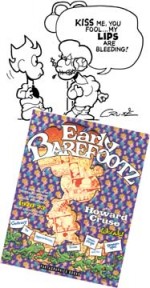
Early Barefootz


By Howard Cruse (Fantagraphics Books)
ISBN: 978-1-56097-052-1

Howard Cruse’s remarkable cartooning career has spanned decades and encompassed a number of key moments in American history and social advancement.

Beginning as a Hippy-trippy, counter-culture, Underground Comix star with beautifully drawn, witty, funny (not always the same thing in those days – or these, come to think of it) strips, evolving over the years into a powerful voice for change in both sexual and race politics through such superb features as Wendel culminating in his masterful Stuck Rubber Baby – an examination of oppression, tolerance and freedom in 1950s America. Since then he has worked on other writer’s work, illustrating an adaptation of Jeanne E. Shaffer’s The Swimmer With a Rope In His Teeth.

Born in 1944 the son of a Baptist Minister in Birmingham, Alabama, Cruse grew up amid the smouldering intolerance of the region’s segregationist regime, an atmosphere that affected him on a primal level. He escaped to Birmingham-Southern College to study Drama in the late ’60s, graduating and winning a Shubert Playwriting Fellowship to Penn State University.

Campus life there never really suited him and he dropped out in 1969. Returning to the South he joined a loose crowd of fellow Birmingham Bohemians which allowed him to blossom as a creator and by 1971 was drawing a spectacular procession of strips for an increasingly hungry and growing crowd of eager admirers.

Whilst working for a local TV station as both designer and children’s show performer he created a kid’s newspaper strip about talking squirrels, Tops & Button, still finding time to craft the utterly whimsical and bizarre tales of a romantic quadrangle starring a very nice young man and his troublesome friends for the more discerning college crowd he still mingled with. The strips appeared in a variety of college newspapers and periodicals

He was “discovered” by publishing impresario Denis Kitchen in 1972 who began presenting Barefootz to a far broader audience in such Underground publications as Snarf, Bizarre Sex, Dope Comix and Commies From Mars from his Kitchen Sink Enterprises outfit.

Kitchen also hired Cruse to work on an ambitious co-production with rising powerhouse Marvel Comics, attempting to bring a bowdlerised version of the counter-culture’s cartoon stars and sensibilities to the mainstream via the Comix Book – a newsstand magazine. It only ran to a half-dozen issues and although deemed a failure it provided the notionally more wholesome and genteel Barefootz with a larger audience and yet more avid fans…

As well as an actor, designer, art-director and teacher, Cruse’s work has appeared in Playboy, The Village Voice, Heavy Metal, Artforum International, The Advocate and Starlog among countless others, and the tireless storyman found the time and resources to self-publish Barefootz Funnies, two comic collections of his addictively whimsical strip in 1973.

Here in this fascinatingly written memoir of those salad days Cruse movingly recounts those early triumphs and re-presents the strips that began it all, covering 1970-73, and although he has moved on to weightier material since (especially on Gay and Race issues) these splendidly whacky and deliriously charming adventures still stand among his most evergreen creations.

So here, for your consideration and delectation are the gathered exploits and ruminations of thoughtful, Nice Young Man Barefootz, his way-out friend and confidante Headrack, sexually aggressive and very forceful gal-pal Dolly and Glory: the frog-manifesting “Thing Under the Bed”, aided and abetted by an ever-changing cast of erudite cockroaches who share his apartment.

As well as the history and Cruse’s reflections, this terrific compilation includes in stunning and meticulous monochrome a selection of Tops & Button gag-panels, ‘The Head Strip’, early strips from campus journal The Crimson-White and The Alternate, syndicated Barefootz from Service Strips, Kitchen Sink single-pagers and the longer stories, ‘Tussy Come Back’, ‘Hint and Run’, ‘Cream of the Genes’, ‘It All Fits’, ‘Suffering Celeste’, the Paperman strips and ‘The Eclipse’, – a classic and unflinchingly engaging treat for any comics fan and grown-up dreamer.

For further information check out Howardcruse.com and track down this and all his other brilliant creations – before Glory turns you into a frog…
© 1970, 1971, 1972, 1973, 1974, 1977 & 1987, 1990 Howard Cruse. All rights reserved.

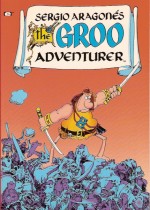
The Groo Adventurer


By Sergio Aragonés, Mark Evanier & Stan Sakai (Epic/Marvel)
ISBN: 978-0-87135-703-8

Both in comic narrative and the infinitely more strenuous field of gag-cartooning Sergio Aragonés has produced vast volumes of excellent work. His darkly skewed sensibilities and grasp of the cosmically absurd, wedded to a totally unique drawing style and frankly terrifying professional discipline have made his (usually) silent doodles a vibrant proof of the maxims that laughter is universal and a picture is worth a thousand words.

After working for years for Mad Magazine and DC’s horror titles on gag features and the occasional full comic strip in 1981, with writer and associate Mark Evanier, Aragonés produced a madcap four-page parody of the Sword-and-Sorcery genre as a contribution to the Creators Rights benefit comicbook Destroyer Duck published by Eclipse Comics.

Following a second outing in Mike Grell’s Starslayer (#5) Pacific Comics launched Groo the Wanderer in his own title. After 8 issues (December 1982-April 1984) the troubled company folded but the unsinkable barbarian (that’s a joke I’ll explain later) resurfaced in the Groo Special one-shot from Eclipse (October 1984), before finding a home at Epic Comics: Archie Goodwin’s creator-owned corner of the Marvel Universe.

Aragonés had first created his witless warrior in the 1970s but no publisher would take on the property unless he sold all rights – an almost universal situation in the industry until the advent of the Direct Sales market transferred power from companies and distributors to creators and consumers.

This volume collects the first four (of 120) issues from the Epic incarnation (March-April 1985) and reintroduces readers to the smelliest, ugliest, stupidest itinerant mercenary in the world. Luckily he’s also the best swordsman in creation and too thick to be harmed. The unstoppable brain-donor has since moved on to Image and Dark Horse Comics, but they haven’t completely gone belly-up yet…

Groo is always hungry and wanders because most places he stops at burn down, wash away or crash into rubble soon after he gets there. He loves to fight and the entire world trembles at the mention of his name. They do the same when they smell him too…

Produced in unique fashion by Aragonés, wordsmith Evanier, letterer Stan Sakai (creator of Usagi Yojimbo) and colourist Tom Luth, the idiot’s adventures form one of the longest running humour comicbook series in America and this volume is merely one of 27 to date.

Beginning with ‘The Song of Groo’ which introduces a wandering minstrel to the insane cast of a mediaeval wonderland of kingdoms, villages and provinces roughly mirroring Earth circa 1000AD, wherein the peripatetic poltroon botches a simple guard’s job and precipitates an international war, whilst ‘Dragon Killer’ allows him the opportunity to slay a beast, wipe out a paradise and blow up an entire country.

‘The Medallion’ is a safe-passage token that proves to be the most fray-provoking, schism-inducing peace symbol in the world and this chronicle concludes with ‘World Without Women!’ as the ever-eager hero-in-his-own-mind rescues helpless wives and maidens from zeppelin-riding pirates who keep them in utter luxury, returning the frail, fragile creatures to their rightful lives of dirt, drudgery and husbandly domination…

A magically cynical and silly comedy of errors Groo is the comic that people who hate comics read: brilliantly tongue-in-cheek, sharply sarcastic and devastatingly self-deprecating. An irresistible humour tour-de-force astoundingly scribed and illustrated by jesters who don’t know when – or how – to stop. New readers can start practically anywhere – and still be none the wiser…

Oh yeah, that sinking thing: among his other lack of abilities Groo cannot travel by ship. He’s not sea-sick or anything – it’s just that his mere presence on a maritime vessel causes it to sink…
© 1985, 1990 Sergio Aragonés. All Rights Reserved.

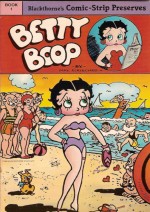
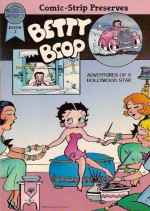
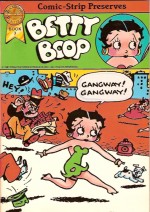
Betty Boop volumes 1-3


By Bud Counihan (Blackthorne Publishing/Comic Strip Preserves)
ISBNs: 0-932629-33-4, 0-932629-47-4 and 0-932629-69-5

Betty Boop is one of the most famous and long-lived fictional media icons on the planet and probably the one who has generated the least amount of narrative creative material – as opposed to simply merchandise – per year since invented.

She was created at the Fleischer Cartoon Studios either by Max Fleischer himself or cartoonist and animator Grim Natwick – depending on whoever you’ve just read – and debuted in the monochrome animated short feature ‘Dizzy Dishes’ the sixth “Talkartoon” release from the studio, screening for the first time on August 9th 1930.

A deliberately racy sex-symbol from the start she was based on silent movie star Clara Bow, “the It-Girl” (as in “she’s got…”) albeit anthropomorphosised into a sexy French Poodle; voiced in those pioneering days of “the talkies” by a succession of actresses including Margie Hines, Kate Wright, Ann Rothschild and Mae Questel who all mimicked Bow’s soft and seductive (no, really!) Brooklyn accent.

Betty had become a fully human if wickedly distorted human girl by 1932’s ‘Any Rags’ and had co-opted and monopolised the remaining Talkartoons, graduated to the ‘Screen Songs’ feature and then won her own animated cartoon series, becoming “The Queen of the Animated Screen” until the end of the decade.

A Jazz Age flapper in the Depression Era, the delectable Miss Boop was probably the first sex-charged teen-rebel of the 20th Century yet remained winningly innocent and knowledgably chaste throughout her career. Thus she became astoundingly, incredibly popular – although her appeal diminished appreciably when the censorious Hayes Production Code cleaned up all the smut and fun coming out of Hollywood in 1934 – even though the Fleisher Studio was New York born and bred…

Saucy singer Helen Kane, who had performed in a sexy “Bow-esque” Brooklyn accent throughout the 1920s and was billed as “The Boop-Oop-A-Doop Girl” famously sued for “deliberate caricature” in 1932, ultimately failing in her suit, but even Betty couldn’t withstand a prolonged assault by the National Legion of Decency and the Hayes Code myrmidons. With all innuendo removed, salacious movements restricted and wearing much longer skirts Betty gained a boyfriend and family whilst the scripting consciously targeted a younger audience. Her last animated cartoon stories were released in 1939.

The one advantage to Betty’s screen neutering and new wholesome image was that she suddenly became eligible for inclusion on the Funnies pages of family newspapers, alongside the likes of Popeye and Mickey Mouse, and in 1934 King Features Syndicate launched a daily and Sunday newspaper strip drawn by Bud Counihan, a veteran ink-slinger who had created the ‘Little Napoleon’ strip in the 1920s before becoming Chic Young’s assistant on Blondie.

The Betty Boop strip never really caught on and folded early in 1937, which leaves us with these three rather charming and wistfully engaging volumes collected and edited by comics aficionado and historian Shel Dorf as part of Blackthorne’s low-budget 1980s reprint program, alongside other hard-to-find classics like Tales of the Green Berets and Star Hawks, and one possibly never to be collected elsewhere…

There was a brief flurry of renewed activity during the 1980s, which led to a couple of TV specials, a comic-book from First Comics ‘Betty Boop’s Big Break’ (1990) and another newspaper strip ‘Betty Boop and Felix’ by Brian Walker (son of Beetle Bailey and Hi & Lois creator Mort Walker) which she shared with fellow King Features nostalgia icon Felix the Cat (see Nine Lives to Live: a Classic Felix Celebration) which ran from 1984-1988 but that’s still a pretty meagre complete canon for a lady of Betty’s longevity and pedigree.

As stated, the collected strips in these Blackthorne editions feature the freshly-sanitised, family-oriented heroine of the later 1930s, but for devotees of the era and comics fans in general the strip still retains a unique and abiding charm, and to be honest, Counihan’s Betty is still oddly, innocently coquettish: a saucy thing with too-short skirts and skimpy apparel (some of the outfits – especially bathing costumes – would raise eyebrows even now), and although the bald innuendo that made her a star is absent, these tales of a street-wise young thing trying to “make it” as a Hollywood starlet are plenty racy enough when viewed through the knowing and sexually adroit eyes of 21st century readers…

Book 1 of this cheap ‘n’ cheerful black-and-white series opens with an extended sequence of gag-a-day instalments that combine into a epic comedy-of-errors as Betty’s lawyers do litigious battle with movie directors and producers to arrive at the perfect contract for all parties – clearly a war that rages to this day in Tinseltown – whilst labouring under the cost restrictions of what was still, after all, The Great Depression.

The full page Sunday strips are presented in a separate section but even with twice the panel-count the material was still broadly slapstick, cunning wordplay, single joke stories, but one of these does introduce the first of an extended cast, Betty’s streetwise baby brother “Bubby” a rapscallion to act as a chaotic foil to the star’s affably sweet, knowingly dim complacency.

There’s a succession of romantic leading men (usually called “Van” something-or-other) but none stick around for long as Betty builds her career, and eventually the scenario changes to a western setting as cast and crew begin making Cowboy Pictures, leading to many weeks’ worth of “Injun Jokes”, but ones working delightfully counter to old and unpleasant stereotypes, and the first collection concludes with the introduction of fearsome lower-class virago Aunt Tillie; chaperone, bouncer and sometime comedy movie extra…

Book 2 (Adventures of a Hollywood Star) continues in the same vein with lawyers, entourage and extras providing the bulk of the humour and Betty increasingly becoming the Straight Man in her own strip except in a recurring gag about losing weight to honour her contract (which stipulates she cannot be filmed weighing more than 100 pounds! Geez! Her head alone has got to weigh at least… sorry, I know… just a comic, …).

Like many modern stars Betty had a dual career and there’s a lot of recording industry and song jokes before the Native Americans return to steal the show some more. Book 3 continues in what is now a clear and unflinching formula, but with Bubby, Aunt Tillie and her diminutive new beau ‘Hunky Dory’ increasingly edging Betty out of the spotlight and even occasionally off the page entirely…

By no means a major effort of “the Golden Age of Comics Strips” Counihan’s Betty Boop (like most licensed syndicated features the strip was “signed” by the copyright holder, in this case Max Fleischer) is still a hugely effective, engaging and entertaining work, splendidly executed and well worthy of a comprehensive and complete compilation.

With the huge merchandising empire built around the effervescent little cartoon Gamin/Houri, (everything from apparel to wallpaper, clocks and blankets) surely it isn’t too much to expect a proper home for all the wicked little japes, jests and junkets of her sojourn in sequential art?

Additionally the second and third books also contain a selection of Paper Doll Bettys with outfits to cut out and colour, designed by Barb Rausch (Neil the Horse, Katy Keene, Barbie, Disney’s Beauty and the Beast among many others) a traditional “added-value” feature of the earliest comic strips that still finds irresistible resonance with much of today’s audience. Just remember, now we can make copies without cutting up those precious originals…
© 1986, 1987 King Features Syndicate. All rights reserved.

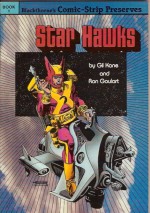
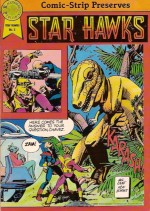
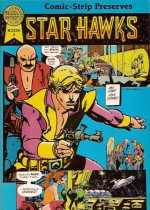
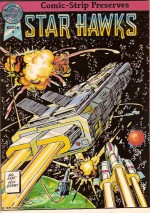
Star Hawks volumes 1-4


By Ron Goulart & Gil Kane, with Archie Goodwin and various (Blackthorne)
ISBN’s: 0-932629-21-0, 0-932629-46-6, 0-932629-55-5, 0-932629-80-6

By the 1970s the era of the adventure comic strip in newspapers was all but over, but there were still a few dynamic holdouts, and even a new masterpiece or two still to come. One such was this unbelievably addictive space opera/cop procedural which debuted on October 3rd 1977.

Created by novelist, comics scripter and strip historian Ron Goulart (and later carried on by the legendary Archie Goodwin who sewed up the sci-fi strip genre by also writing the Star Wars newspaper serial which premiered in 1979) the feature was blessed with the overwhelmingly dynamic art of Gil Kane and an innovative format for strips: a double tier layout that allowed far bigger, bolder graphics than the traditional single bank of frames.

The premise is magically simple: in our future man has spread throughout the galaxy and inhabits many worlds, moons and satellites. And wherever man goes there’s a need for policemen and peacekeepers…

As Goulart explains in his introductory notes the working title was “Space Cops” but that was eventually replaced with the more dashingly euphonious Star Hawks. In 2004 a wonderful collectors edition of this last great adventure strip was released, but is now, naturally, out-of-print and hard to acquire, so I’m concentrating here on the much more accessible four paperback collections published by Blackthorne in the mid 1980s, and which neatly cover Goulart’s tenure.

If you can’t find or afford the classy Hermes Press edition, these cheap and cheerful volumes are almost as good, and, who knows, perhaps somebody will re-release the complete volume sooner rather than later…

Book 1 steams straight in by introducing the villainous Raker and his sultry, sinister boss Ilka, hunting through the slums and ruins of alien world Esmeralda for a desperate girl plagued by dark, dangerous visions…

Enter Rex Jaxan and the ladykiller Latino Chavez, two-fisted Star Hawks on the lookout for trouble, who save the lass from slavers only to become embroiled in a dastardly plot to overthrow the local Emperor by scurrilous arms merchants. Also debuting in that initial tale is the cops’ sexy boss Alice K. Benyon (far more than just a romantic foil for the He-Hunk Jaxan), the floating space station “Hoosegow” and Sniffer, the snarkiest, sulkiest, snappiest robo-dog in the galaxy. The mechanical mutt gets all the best lines…

Barely pausing for breath the star-born Starsky and Hutch (that’s Goulart’s take on them, not mine) are in pursuit of an appalling new weapons system developed to topple the military dictatorship of Empire 13 – the “Dustman” process. Before long however the search for the illegal WMD develops into a full-on involvement in what should have stayed a local matter – civil war…

Book 2 finds the pair investigating stupendous resort satellite Hotel Maximus, with Alice K. along to bolster their undercover image. On Maximus every floor holds a different daring delight – from dancing to dinosaur wrangling to Alpine adventure – but the return of the malevolent Raker heralds a whole new type of trouble as he is revealed to be an agent of a pan-galactic cartel of criminals: The Brotherhood.

Moreover, the Maximus is the site of their greatest coup – a plot to mind-control the universe’s richest and most powerful citizens. So pernicious are these villains that the Brotherhood can even infiltrate and assault Hoosegow itself…

Foiling the raiders the Star Hawks quickly go on the offensive, hunting the organisation to the pesthole planet Selva, a degraded world of warring tribes and monstrous mutations, where new recruit Kass distinguishes himself, but the Brotherhood is deadly and persistent and new leader Master Jigsaw has a plan to destroy the Star Hawks from within…

With Book 3 Kane took on some impressive, if uncredited, assistants to help with the punishing deadlines of what was basically two strips per day and a Sunday supplement every week. The incarcerated Raker escapes, to be hunted by both cops and robbers, and even after he dies he has no peace since, with his memories transferred into a robot head by the science wizard Doc Ajax (a delightful rogue based on Isaac Asimov), the deceased arch-villain is more dangerous than ever…

As brainwashed Star Hawk agents sabotage the Hoosegow, Raker’s new brain is purloined, sparking a hunt across a dozen systems and leading at last to the hellish planet Empire 99: lawless refuge of criminals and monsters. Allying themselves with the super-powered mutants known as the Kwark Clan, Jaxan and Chavez are nearly overmatched until a ghastly, tragic rad-beast proves that looks can be deceiving…

Returning to Hoosegow the Star Hawks are greeted with another mystery: Doc Ajax has vanished, but at least as this volume ends on a cliffhanger, fans can revel in the unsung assistance of artists Howard Chaykin and Ernie Colon working their individualistic magic over Kane’s pencils…

The final volume of this series opens with Colon and Chaykin still adding their distinctive inks to the saga as Rex and Chavez return to planet Esmeralda hunting the missing Doc Ajax, finding him in the less-than-tender clutches of the deadly Ilka, who has forced him to build a new body for Raker. A deadly duel in arctic climes ensues but at its end a far greater threat materialises in the portly form of pencil-pushing Superior Agent Stamms; an imperious, officious Star Hawk auditor come to investigate improprieties and lapses in protocol. He’s come to take names and tick boxes and isn’t the sort of problem a swift punch can resolve…

Next is Goulart’s final yarn; an unsavoury investigation into Star Hawk legend Miles Hardway, friend and mentor to our indomitable space cops. Is he just past his prime, corrupt or crazy? Or perhaps it’s something far, far worse…

This book ends with an uncompleted tale that begins to explore Jaxan’s chequered past, as Archie Goodwin assumes the writer’s reins. A cryptic message at last reaches Rex, relayed from a distant, off-limits and almost forgotten planet: a world called “Earth” – the lost world upon which Rex Jaxan grew to manhood and where somebody waits to kill or be killed by him …

Regrettably you will need the aforementioned special edition to see how that epic ends… Star Hawks ran until 1981, garnering a huge and devoted audience, critical acclaim and a National Cartoonists Society Award for Kane (Story Comic Strip Award for 1977). It is, quite simply one of the most visually exciting, rip-roaring, all-out fabulous sci-fi sagas in comics history and should be part of every fan’s permanent collection. In whatever format you can find this is a “must-have” item.
© 1977, 1978, 1979, 1986, 1987 NEA, Newspaper Enterprise Association. All rights reserved.

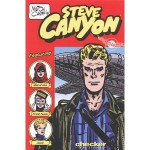
Milton Caniff’s Steve Canyon 1948


By Milton Caniff (Checker Book Publishing Group)
ISBN: 978-0-97416-641-4

By the second year of his new strip Milton Caniff was already working at the top of his game, producing material both exotic and familiar, and once again dead on the money in terms of the public zeitgeist and taste. After defeating the wily Herr Splitz, ex-war-hero and charter pilot Steve Canyon is asked to ferry Dr. Deen Wilderness to the Middle East, to set up Health Centres for American enclaves, where business interests were busy establishing themselves and becoming the multinational Corporations of today.

Back then, of course, Caniff was merely being contemporary, but he was savvy enough to realise that with the Cold War beginning any Yankee was going to be seen as a spy in such climes, so he made that a part of the narrative. Canyon was unofficially asked to “keep his eyes open” by the US Navy. When his team land (Happy Easter and Fireball Feeney tagging along for dramatic and comedic purpose), they were immediately embroiled in an espionage plot to enflame the indigenous population.

Caniff never bracketed his tales, preferring to simply keep the action rolling ever on, but for convenience the publishers have broken the saga into discrete units. ‘Medical Sabotage’ ran from November 25th 1947 to March 27th 1948 and described how the mission became the subject of competing propaganda machines and murderous skulduggery by a Communist spymaster using the pseudonym “Chief Izm”.  The climactic battle between Canyon and Izm left Steve and Happy stranded in mountain country, at the mercy of attacking nomad bandits.

Which is where the second adventure begins: ‘The Nine Maid’ started on Sunday the 28th of March, and ran until May 23rd, an exotic piece of froth with the guys trying to stay alive as captives of a mysterious masked woman playing Joan of Arc for the mountain tribes. Claiming to be descended from survivors of the Ninth Crusade the sultry, charismatic freedom fighter eventually enlisted our heroes’ aid in her struggle.

‘Operation Convoy’ began on Sunday May 24th, and saw Steve, Happy and the Nine Maid trapped in a city, futilely evading their foes and the Communist agitators who pay them. When they’re captured, a little Arab girl calling herself “Convoy” offered to free them if Canyon would marry her! Their escape was fraught and frantic but only led to more trouble when they were all picked up by the unconventional Soviet Submarine commander Captain Akoola – “the Shark”. Akoola was a beautiful and doctrinaire woman who gradually thawed not because of Canyon’s virile yumminess, but because she responded to Convoy’s orphan plight. Taking a lead from the Count of Monte Cristo, the two females conspire to liberate the Americans by dumping their supposed corpses overboard…

Adrift at sea Steve and Happy washed onto the Burma Coast for ‘Plantation Sabotage’ (September 4th – November 3rd) wherein raunchy widow Miss Fancy and the brutal, jealous ‘Rak’ – whose attempts to get rid of Canyon were prompted by a much more personal type of intrigue – interfered with the smooth running of plantation life. But even here a shadowy agitator was enflaming the native croppers, with the profiteering Rak’s tacit approval. The tense drama promptly resulted in ‘Puppy Love’ (November 4th 1948 to January 8th 1949) when Rak’s son Reed Kimberley joined the story and the extended cast.

Reaching Rangoon Steve and Happy were unaware that the boy would do anything to avoid returning to America. Reed becomes enmeshed in the snares of native bargirl and teen hellion “Cheetah” whose depredations led to a mid-air hostage crisis which ends this second collection on a tragic cliffhanger…

What Milton Caniff was developing in those post-war years is indistinguishable from the glossy, exotic soap operas and dramas that are the back-bone of modern commercial television. Fast-paced, constantly evolving dramas fed by sub-plots, charismatic characters, exotic locales, non-stop action, and even political intrigue, all wrapped up in a heady mix of sexual tension and sharply observed humour. It seems that we can reproduce the techniques but have lost most of the charm, wit and sheer élan…

Steve Canyon is comic storytelling at its best. Beautifully illustrated, mesmerising black and white, sagas of war, espionage, romance, terror, justice and cynical reality: a masterpiece of graphic narrative every serious fan and story-lover should experience.

© 2003, Checker Book Publishing Group, an authorized collection of works
© Ester Parsons Caniff Estate 1947, 1948, 1949.All characters and distinctive likenesses thereof are trademarks of the Ester Parsons Caniff Estate. All Rights Reserved.

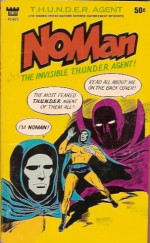
NoMan


By various (Tower Books)
ISBN: 42-672

I’ve often harped on about the mini-revolution in the “Camp-superhero” crazed 1960s that saw four-colour comicbook classics migrate briefly from flimsy pamphlet to the stiffened covers and relative respectability of the paperback bookshelves, and the nostalgic wonderments these mostly forgotten fancies still afford (to me at least), but here’s one that I picked up years later as a marginally mature grown man.

Although the double-sized colour comics T.H.U.N.D.E.R. Agents, its spin-offs Undersea Agent, Dynamo, NoMan and the magnificent war-comic Fight the Enemy were all distributed in Britain (but not, I think their youth-comedy title Tippy Teen) these monochrome, re-sized book editions, to the best of my knowledge, were not.

It doesn’t matter: to my delight, it seems that even today the format and not the glow of childhood days recalled is enough to spark that frisson of proprietary glee that apparently only comic fans (and Dinky Toy collectors) are preciously prone to.

Of course it doesn’t hurt when the material is as magnificent as this…

The history of Wally Wood’s immortal spies-in-tights masterpiece is convoluted, and once the mayfly-like lifetime of the Tower Comics line ended, not especially pretty: bogged down in legal wrangling and petty back-biting, but that doesn’t diminish the fact that the far-too brief careers of The Higher United Nations Defense Enforcement Reserves was a benchmark of quality and sheer bravura fun for fans of both the reawakening superhero genre and the 1960s spy-chic obsession.

In the early 1960s the Bond movie franchise went from strength to strength, with action and glamour utterly transforming the formerly understated espionage vehicle. The buzz was infectious: soon Men like Flint and Matt Helm were carving out their own piece of the action as television shanghaied the entire bandwagon with the irresistible Man From U.N.C.L.E. (beginning in September 1964), bringing the whole genre inescapably into living rooms across the world.

Creative maverick Wally Wood was approached by veteran MLJ/Archie Comics editor Harry Shorten to create a line of characters for a new distribution-chain funded publishing outfit – Tower Comics. Woody called on many of the industry’s biggest names to produce material for the broad range of genres the company envisioned: Samm Schwartz and Dan DeCarlo handled Tippy Teen – which outlasted all the others – whilst Wood, Larry Ivie, Len Brown, Bill Pearson, Steve Skeates, Dan Adkins, Russ Jones Gil Kane and Ralph Reese all contributed to the adventure series.

With a ravenous public appetite for super-spies and costumed heroes exponentially growing the idea of blending the two concepts seems a no-brainer now, but those were far more conservative times, so when T.H.U.N.D.E.R. Agents #1 appeared with no fanfare or pre-publicity on newsstands in August 1965 (with a cover off-sale date of November) thrill-hungry readers like little me were blown away. It didn’t hurt either that all Tower titles were in the beloved-but-rarely-seen 80 Page Giant format: there was a huge amount to read in every issue!

All that being said the tales would not be so revered if they hadn’t been so superbly crafted. As well as Wood, the art accompanying the compelling, rather more mature stories was by some of the greatest talents in the business: Reed Crandall, Gil Kane, George Tuska, Mike Sekowsky, Dick Ayers, Joe Orlando, Frank Giacoia, John Giunta, Steve Ditko and others.

This slim, seductive digest stars the UN Agency’s number two troubleshooter (after the iconic Dynamo) in four stirring spy thrillers featuring a winning combination of cloak-and-dagger danger, science fiction shocks and stirring super-heroics. Although UN commandos failed to save brilliant Professor Jennings from the mysterious Warlord, they rescued some of the scientist’s greatest inventions, including a belt that could increase the density of the wearer’s body, a brain-amplifier helmet and a cloak of invisibility.

These prototypes were divided between several agents, creating a unit of superior fighting men to counter the increasingly bold attacks of global terror threats such as the aforementioned Warlord.

Inexplicably, the origin tale ‘T.H.U.N.D.E.R. Agent NoMan’ which told how aged Dr. Anthony Dunn had his mind transferred into an artificial android body equipped with the invisibility cape is not included here, but the book’s back cover features a Wood pin-up “file page” which distils the powers and background into a handy recap. In those long-ago days kids didn’t much care for long-winded and endless reworkings of past detail: origins just weren’t as important as beating bad-guys….

Incredibly strong, swift and durable, NoMan had one final advantage: if his artificial body was destroyed his consciousness could transfer to another android body. As long as he had a spare ready, he could never die.

The action starts with ‘In the Warlord’s Power’ (by Bill Pearson, Dick Ayers, Joe Orlando and Wood) as the artificial agent has to defend an entire Missile Base from an assault by an army of Zombie-men, swiftly followed by ‘NoMan Faces the Threat of the Amazing Vibraman’ (Pearson, John Giunta, Wood & Tony Coleman) wherein the threat was far les esoteric but no less deadly: a freelance villain who used devastating sound weapons.

Next the Invisible Agent tackled a fiendish Mastermind equipped with his own android army in ‘The Synthetic Stand-Ins’ by Steve Skeates, Mike Sekowsky & Frank Giacoia, and the explosive adventures rush to a classy climax in ‘The Caverns of Demo’ (astoundingly illustrated by Gil Kane, Wood and Dan Adkins) wherein NoMan faced an entire island of Neanderthal Beast-Men controlled by an arch criminal who had stolen his cloak of invisibility! Sheer magic!

Supplemented by an exciting ‘NoMan in Action’ fact-feature this is a book that would have completely blown away pre-teen me and still has all the impact of a blockbuster bomb. These are truly timeless comic tales that improve with every reading and there’s precious few things you can say that about…
© 1966 Tower Comics, Inc. All rights reserved.

Dame Darcy’s Meat Cake


By Dame Darcy (Fantagraphics Books)
ISBN: 978-1-60699-346-0

Since 1993 Dame Darcy has been building a weird, wistful and Gothically girlish fantasy

universe in her oddly enchanting comicbook Meat Cake, as well as the occasional graphic novel and collection such as Frightful Fairytales, The Illustrated Jane Eyre, Dollerium, Comic Book Tattoo, Gasoline and others. Now an affordable black and white paperback reprinting the best moody marvels from the first eleven issues is available and keenly awaits your effulgent appreciation.

Darcy Megan Stanger is a prolific and restless artist, musician, animator, dollmaker, interior designer, fashion model, art teacher and reality TCV star – one of those ever-so-likable, infuriating do-it-alls modern society is increasingly populated by.

For some her darkly comic, magic-infested, mock-Victorian realm of slender, ethereal, hauntingly lovely gamins and ghastly side-show freaks might be a step too far. This is a stark place with no room for dull, fat people or the plain visaged…

Certainly this collection is best read in measured instalments, lest the girly-girl blend of Edwardian emo-fashion, Jazz-age make up, tragic love-stories, sinister childhoods, ghostly interventions, maids behaving badly and “fractured fairy-tale” moral instruction lose its power to affect, but the sensibilities of modern female characters thriving in a gloomy imaginative otherplace is one that is rich with entertainment potential especially when scripted with the deliciously scandalous wit of la Dama.

Although some few non-related snippets are included, the major portion of the book concerns the tribulations of a rather distinctive cast of self-absorbed, grotesque and genteel ladies of varied means and character. There’s shrinking violet Friend The Girl, the abrasive Richard Dirt, the constantly bickering conjoined twins Hindrance and Perfidia, seductive, bitchy mermaid Effluvia, Strega Pez, who communicates through a livid gash in her throat, the talkative crustacean Scampi the Shellfish, the utterly bonkers wise woman Granny, Igpay and undead, monstrous token male Wax Wolf, all living in a world at once similar and wondrously ancient and removed.

In sultry, sinister or just plain strange tales like ‘Laughing All the Way to the Bank’, ‘Shrimpboats is A-Comin”, ‘Employ Ahoy!’, ‘Bus-Ted’, ‘Hookie Lau Breakfast Special’, ‘The Hitch-Hiker’, ‘Grave Concerns’, ‘Happy Hi-Jinx’, ‘Lessons on the Principles of Magnetism’, ‘Honey’, ‘Dirty Rich’, ‘Demon Drink’, ‘Silver Lining’ and ‘Fruit Bat‘ the extended eccentric cast live their odd and abstracted lives for us whilst in longer fables such as ‘The Juicer and the Cake Walk’, ‘The Next Holy Virgin’, ‘For Whom the Bell Tolls’, ‘Stained Glass’, ‘The Ghost Filly’, ‘Sweet William and Lady Margaret’, ‘EZ Bake Coven’ and ‘Latch Key Kids Cookbook‘ Darcy demonstrates her love and tacit understanding of classical storytelling and particularly Gothic Romance fantasies.

Amidst the assorted unaligned graphical gags and oddments are such brief gems as ‘Ruby Rack! Ruby Rack!’, ‘The Wishing Star’, ‘Existence Forgets’, ‘Spontaneous Generation’, ‘Puppet Show’ (an homage to cartoon pioneer Gustave Verbeek), and an acerbic assemblage of actively skewed ‘Old Nursery Rhymes’ as well as some decidedly quirky autobiographical incidents like ‘Double Trouble or Freaky Friday’, ‘Paper Doll Fun!’, ‘Your Diary’, ‘My Patron’ and ‘Show Me My Hand’ but the absolute show-stealer is her baroque, wilfully whimsical satire-fest with Alan Moore who scripted the marvellously captivating ‘Hungry is the Heart’: a spectacular expose of the extraordinary life and times of turn of the century Society Maverick, Wild-Woman and Button Magnate Wellington Woolenboy AKA Jumbalor – “Damp String Woman”.

Macabre, hilarious and addictively odd, Meat Cake satisfies appetites you can’t believe you have. This is a book for girls that every comicbook guy really needs to see…

© 2010 Dame Darcy. All rights reserved.

The Book of Mr. Natural (Profane Tales of that Old Mystic Madcap)


By Robert Crumb (Fantagraphics Books)
ISBN: 978-1-60699-352-1

Robert Crumb is a unique force in the world of comics and cartooning with as many foes as fans, but his idiosyncratic, unflinching, controversial but always enchanting work is impossible to ignore. This beautiful black and white hardback collects a varied and impressive selection of strips starring his most famous character produced between 1967 and 1995 and as always touches on the creator’s most intimate and disturbing idiosyncrasies regarding sex and women, both in the unsettling Abstract and the painful, side-splitting, lustful, painful and loving Concrete.

Therefore if harsh language, mild blasphemy, artfully grotesque cartoon nudity and comedic fornication are liable to upset you, stop reading this review and don’t buy the book.

For the rest of us; here’s a quick rundown of what’s in store…

Mr. Natural is a short, balding, bewhiskered, be-robed guru and engagingly vulgar huckster who began selling enlightenment and simple living in the May 5th 1967 issue of counter-culture paper Yarrowstalks. His assaults on the vapidity and venality of the modern world were reproduced and absorbed by an astoundingly broad variety of truth-seekers and laugh lovers who followed the succession of strips in an incomprehensible number of places.

The little wise guy had genuine insight and even greater powers, but peddled his wisdom for crass, material cash or other, less transferable favours. Obviously, and lucky for us all, he’s the only Holy Man or preacher ever to do such a reprehensible, unspiritual thing…

Of the twenty-seven tales gathered here, ranging from single-page strips to the epic 40 page ‘Mr. Natural and Devil Girl’ there are a number of classic yarns that seemingly everyone has seen or heard of but also one or two genuinely rare experiences -  particularly the wonderfully dense and informative ‘Origins of Mr. Natural’.

A less charitable reviewer might suspect that this book has been padded out with older material simply to give the legendary Devil Girl saga – originally serialised in Hup and never before collected into book form – a more accessible and commercially appetising home… and if so I applaud the move as that 1991 tale is one of the most wonderfully jolly and unsettling pieces of work Crumb has yet produced.

Flakey Foont was the foil of many of the earlier strips and a handy barometer of Everyman America. Over the decades the ex-disciple who was beguiled, reviled and defiled by “The Natch” eventually Turned Off, Tuned Out and Dropped back “In”, but found himself losing all self-control when confronted in his happily middle-class suburban family paradise by the returned Sage and the raw, lustful female animal that was both antithetical enemy and willing slave…

Other notable gems include Mr. Natural in Death Valley’, Mr. Natural Visits the City’, ‘It’s Workaday World’, Mr. Natural Goes to a Meeting of the Minds’, ‘Sunny Side Up’ ‘Om Sweet Om’, ‘Mr. Natural Stops Talking’, ‘A Girl in Hotpants, ‘The Girlfriend’ and the utterly perfect and fully zeitgeisted Mr. Natural’s 719th Meditation’, a plethora of revelation and confrontation that still provides merriment and queasy shock in equal proportion.

Crumb’s subtle mastery of his art-form and compulsive, uncompromising need to reveal his most hidden depths and perceived defects – in himself and the world around him – has always been a unquenchable wellspring of challenging comedy and riotous rumination. This magical, mystical tome is an ideal dipping book for occasional slices of his raucous wit and the perfect vehicle to introduce any (definitively over 18) newcomers of your acquaintance to the world of grown up comics.

© 1967, 1968, 1970, 1971, 1972, 1973, 1974, 1986, 1987, 1989, 1991, 1995, 2010 R. Crumb. All Rights Reserved. Edition © 2010 Fantagraphics Books, Inc.

Bad Habits


By Norman Dog (Last Gasp)
ISBN: 0-86719-329-8/ ISBN-13: 978-0867193299

I haven’t reviewed a straight cartoon book in a dog’s age, so here’s a rare but still readily acquirable item from an outrageous comedy original and pen-pushing veteran who’s still making America laugh-out-loud – the cooler bits anyway – with his sly, cynical and fabulously skewed outlook and observations on the Human Condition and the Things We Don’t Know Yet..

Cultural commentator Norman Dog may or may not be Raymond Larrett (it’s complicated – that’s why better carbon-based life forms than you or I invented search engines). A West Coast cartoonist whose legendary – he would say “interminable” – strip has run in the East Bay Express since 1981, Dog has been capturing with laconic brilliance the bizarre panorama of modern life for all to see and disagree with…

Describing his slick, modern and excessively hip observations on Real Americans as “Comication”, Dog has been making us foreigners, Pinko Subversive Intellectuals and other weirdoes giggle and think with every exposed home secret or shared cultural reference and seems determined not to stop.

This early volume, collecting the budding best of the strip includes ‘Let’s all go… Dance Crazy!’, ‘I Was Satan’s Plaything!’, ‘The Enchanted Toothbrush’, ‘Celebrity Breakfasts!’, ‘Suicide Hotline’, ‘The Missing Father’, ‘Hey, Stupid!’, ‘Curse of the Mysterious Horror!’, ‘A Perfectly Typical Tuesday Evening at Home With Jane and Walter’, ‘Hints for Aliens’, ‘The Punk Romance’, ‘Giant Crawling Brain!’, ‘Modern Physics for Morons’, ‘Space Sluts’ amongst literally some others and delivers high-octane, occasionally lowbrow doses of premeditated mirth in devastating, delicious, full-page monochrome pastiches of a dozen different graphic styles.

Dog/Larrett, whose work has appeared in Raw Magazine, Spin, Nickelodeon Magazine, Weirdo, Anarchy Comics, The Nation and even some other places and publications, is long overdue for a big, bold book collection, but until then, converts can catch his latest full-colour efforts in the elucidatory The 37 Cartoons You Should Read Before You Die if they so wish.

Enough Soft-Sell: go read something funny…
© 1983, 1984, 1990 Norman Dog. All rights reserved.