Amazing Spider-Man Epic Collection volumes 9: Spider-Man or Spider-Clone? 1975-1977


By Gerry Conway, Len Wein, Archie Goodwin, Ross Andru, Gil Kane, Sal Buscema, Mike Esposito, Frank Giacoia, Dave Hunt, John Romita & various (MARVEL)
ISBN: 978-1-3029-4874-0 (TPB/Digital edition)

Amazing Spider-Man was a comic book that matured with – or perhaps just slightly ahead of – its fan-base. This epic compendium of chronological webspinning wonderment sees the World’s Most Misunderstood Hero facing even greater and evermore complex challenges as he slowly recovers from the trauma of losing his true love and greatest enemy in the same horrific debacle. Here you will see all that slow recovery comes unstuck.

Once co-creator Stan Lee replaced himself with young Gerry Conway, the scripts acquired a far more contemporary tone (but feeling quite outdated from here in the 21st century): purportedly more in tune with the times whilst the emphatic use of soap opera subplots kept older readers glued to the series even when bombastic battle sequences didn’t. Moreover, as a sign of those times, a hint of cynical surrealism also began creeping in…

For newcomers – or those just visiting thanks to Spider-Man movies: super smart-yet-ultra-alienated orphan Peter Parker was bitten by a radioactive spider during a school outing. Discovering strange superhuman abilities which he augmented with his own natural chemistry, physics and engineering genius, the kid did what any lonely, geeky nerd would do with such newfound prowess: he tried to cash in for girls, fame and money. Making a costume to hide his identity in case he made a fool of himself, Parker became a minor media celebrity – and a criminally vainglorious one. To his eternal regret, when a thief fled past him one night he didn’t lift a finger to stop him, only to find when he returned home that his guardian uncle Ben Parker had been murdered.

Crazed and vengeful, Peter hunted the assailant who’d made his beloved Aunt May a widow and killed the only father he had ever known. He discovered to his horror it was the self-same felon he had neglected to stop. His irresponsibility resulted in the death of the man who raised him, and the traumatised boy swore to forevermore use his powers to help others. Since that night, the wallcrawler tirelessly battled miscreants, monsters and madmen with a fickle, ungrateful public usually baying for his blood even as he perpetually saves them.

The high school nerd grew up and went to college. Because of his guilt-fuelled double-life he struggles there too but found abiding love with cop’s daughter Gwen Stacy… until she was murdered by the Green Goblin. Now Parker must pick up the pieces of his life…

This compelling compilation reprints Amazing Spider-Man #143-164 and Annual #10: collectively covering cover-dates April 1975 to January 1977, and confirming an era of astounding introspective drama and captivating creativity wedded to growing science fictional thinking. Stan Lee’s hand-picked successor Gerry Conway moved on after reaching a creative plateau, giving way to fresh authorial guide Len Wein.  Thematically, tales moved away from sordid street crime as outlandish villains and monsters took centre stage, but the most sensational advance was an insidious scheme which would reshape the nature of the web-spinner’s adventures to this day.

For all that, the wallcrawler was still indisputably mainstream comics’ voice of youth, defining being a teen for young readers of the 1970s, tackling incredible hardships, fantastic foes and the most pedestrian and debilitating of frustrations. Now its later and still-grieving Parker is trying to move on as we open with Amazing Spider-Man #143 (by Conway, Ross Andru, Frank Giacoia & Dave Hunt) in ‘…And the Wind Cries: Cyclone!’ Peter is in Paris to deliver a ransom and save kidnapped publisher J. Jonah Jameson but resorts to his arachnid alter ego to deal with a hyper-fast French supervillain. The run-of-the-mill tale’s real kicker comes from an overly-fond farewell expressed by “casual chum” Mary Jane Watson: a kiss that finally shifts traumatised Peter’s thoughts from his recently murdered beloved.

The creative team capitalised on the situation after Spider-Man saves Jonah and clobbers the kidnappers before Pete returns to New York and his usual daily travails as #144 launches a shocking new worry. ‘The Delusion Conspiracy’ (ASM #145) builds the tension and focuses on a baffled girl’s confusion and terror at everyone’s reactions when she comes home and the entire world screams ‘Gwen Stacy is Alive… and, Well…?!’

With Gwen somehow resurrected and Peter on the edge of a mental breakdown, Aunt May is hospitalised just in time for another old foe to strike again in ‘Scorpion… Where is Thy Sting?’, but the real kick in the tale is irrefutable scientific and medical reports proving the increasingly bewildered Miss Stacy is not an impostor but the genuine article…

In Spider-Man #147 Peter finds some answers as further tests prove Gwen is actually a true human clone (remember, this was new, cutting-edge stuff in 1975) but all too soon he’s distracted by another bad-guy with a grudge and hungry to prove ‘The Tarantula is a Very Deadly Beast’ (inked by Mike Esposito & Dave Hunt). It’s all part of a convoluted, utterly byzantine revenge scheme conceived by a malign enemy. When the hero is ambushed by a mesmerised Gwen at the behest of the archfiend, ‘Jackal, Jackal, Who’s Got the Jackal?’ at last discloses shocking truths about one of Peter’s most trusted friends prior to the Delusion Conspiracy explosively concluding in #149’s ‘Even if I Live, I Die!’ (Andru & Esposito art).

Learning he and Gwen had been covertly cloned by their biology teacher Miles Warren, the Amazing Arachnid must defeat his alchemical double in a grim, no-holds-barred identity-duel, with neither sure who’s the real McCoy. The battle eventually results in the copy’s death. Maybe. Perhaps. Probably…

The moment of unshakeable doubt over who actually fell informs anniversary issue Amazing Spider-Man #150, with Archie Goodwin, Gil Kane, Esposito & Giacoia taking the hero down memory lane and up against a brigade of old antagonists to decide whether ‘Spider-Man… or Spider-Clone?’ survived that furious final fight, before debuting regular scripter Len Wein joins Andru & John Romita Sr. to launch a new era of adventure…

After disposing of his duplicate’s corpse in an incineration plant, Spider-Man finds time to let Peter reconnect with his long-neglected friends. However, a jolly party is soon disrupted as blackouts triggered by a super-menace lead the wallcrawler into the sewers for a ‘Skirmish Beneath the Streets!’ It results in his almost drowning and nearly being ‘Shattered by the Shocker!’ (Esposito & Giacoia inks) in a conclusive and decisive return engagement before a moving change-of-pace tale sees a blackmailed former football star giving his all to save a child in ‘The Longest Hundred Yards!’ (Andru & Esposito).

However, it’s left to Spider-Man to make the true computer-crook culprits pay, after which #154 reveals ‘The Sandman Always Strikes Twice!’ (with art by Sal Buscema & Esposito) – albeit with little lasting effect – until devious murder-mystery ‘Whodunnit!’ (Buscema & Esposito) cunningly links three seemingly unconnected cases in a masterful “Big Reveal”…

A long-running romance-thread culminates in the oft-delayed wedding of Pete’s old flame Betty Brant to reporter Ned Leeds, but the nuptials are sadly interrupted by a new costumed crook in ‘On a Clear Day, You Can See… the Mirage!’ (Wein, Andru & Esposito), even as a sinister hobo who was haunting the last few yarns strode fully into the spotlight…

In the past, a protracted struggle for control of New York between Dr Octopus and cyborg gangster Hammerhead escalated into a full-on gang war and small-scale nuclear near-disaster, with Spidey and his aunt caught in the middle. The devilish duel concluded with an atomic explosion and the seeming end of two major antagonists. However, #157 exposed ‘The Ghost Who Haunted Octopus!’ as the long-limbed loon turns again to May Parker for salvation.

With Peter in attendance, the many-handed menace seeks to escape a brutal ghostly stalker tormenting him, but their unified actions actually liberate a pitiless killer from inter-dimensional limbo in ‘Hammerhead is Out!’, leading to a savage three-way showdown with Spidey ‘Arm-in-Arm-in-Arm-in-Arm-in-Arm-in-Arm with Doctor Octopus!’ to save the horrified Widow Parker.

Courtesy of plotter Wein, scripter Bill Mantlo and Kane, Esposito & Giacoia, a new insectoid archfoe debuted in Amazing Spider-Man Annual #10, where ‘Step Into My Parlor…’ depicts obsessed Spider-hater J. Jonah Jameson hiring outcast, exceedingly fringe-science biologist Harlan Stilwell  to create yet another tailor-made nemesis to destroy the webslinger.

Meanwhile, the detested hero is ending a vicious hostage situation manufactured by psychotic Rick Deacon, but when the killer escapes and breaks into a certain lab he’s transformed into a winged wonder hungry for payback on the webspinner in ‘…Said the Spider to the Fly!’

In the monthly mag Wein, Andru & Esposito fired the opening shot of an extended epic as a criminal inventor – and one of the wallcrawler’s oldest enemies – recovers Spidey’s long-ditched, satisfactorily drowned “Spider-Mobile”, tricking it out to hunt down its original owner in #160’s ‘My Killer the Car!’

Having narrowly escaped doom and debacle in equal measure Spidey met a new friend and clashed with an old one, although rising star Frank Castle was reduced to a bit-player in Amazing Spider-Man #161-162 (October & November 1976), as the All-Newly-Reformed X-Men were sales-boosted via a guest-clash in ‘…And the Nightcrawler Came Prowling, Prowling’, wherein the Amazing Arachnid jumps to a completely wrong conclusion after a sniper shoots a reveller at Coney Island. By the time moody mutant Nightcrawler explains himself – in tried-&-true Marvel manner by fighting the webspinner to a standstill – old skull-shirt has turned up to take them both on before mutual foe Jigsaw is exposed as the real assassin in concluding episode ‘Let the Punisher Fit the Crime!’

The mystery villain behind much of Spider-Man’s recent woes is at last exposed in ‘All the Kingpin’s Men!’ as a string of audacious tech-robberies lead the hero to another confrontation with the deadly crime lord. This time, however, the Machiavellian mobster is playing for personal stakes. His son has been on the verge of death for months and his remedy is to electronically transfer the Spider-Man’s life force into the ailing patient. Discarded after the process, Peter Parker’s impending ‘Deadline!’ is extended by old friend Curt Connors until they can explosively set things right…

To Be Continued…

As always the narrative delights are supplemented by added extras which this go-round include contemporary house ads, Romita & Joe Sinnott’s cover/back cover, frontispiece, contents page and double-page cast pin-up from 1975 tabloid edition Marvel Special Edition #1: The Spectacular Spider-Man, and the Andru- & Esposito-rendered entry for The Mighty Marvel Bicentennial Calendar 1976 (June) and Ronn Sutton’s cover for George Olshevsky’s 1982 The Marvel Comics Index: The Amazing Spider-Man and the 1985 Frontispiece by John Allison. Also on view are Andru’s prankish private joke pencils for the big reveal in ASM #144, editorial ‘Of Jackals and Juxtaposition’ from The Spider’s Web column in #153, and original art pages by Punisher design sketch by Romita and original art pages by Kane, Romita Andru & Esposito.

Blending cultural veracity with superb art, and making a dramatic virtue of the awkwardness, confusion and imputed powerlessness most of the readership experienced daily resulted in an irresistibly intoxicating read, especially when delivered in addictive soap-styled instalments, but none of that would be relevant if Spider-Man’s stories weren’t so utterly entertaining. This action-packed collection relives many momentous and crucial periods in the wallcrawler’s astounding life and is one all Fights ‘n’ Tights fanatics must see…
© 2023 MARVEL.

Showcase Presents Batman volume 1


By John Broome, Gardner Fox, Ed Herron, Bill Finger, Carmine Infantino, Bob Kane, Sheldon Moldoff, Joe Giella, Sid Greene & various (DC Comics)
ISBN: 978-1-4012-1086-1 (TPB)

Although cover-dated May 1939, Detective Comics #27 was on sale from March 30th. Happy Anniversary, Dark Knight! Because we like being us, let’s look at a perennial comics incarnation too long overdue for re-evaluation and re-inclusion in the greater Batty-verse…

I’m assuming everybody here loves comics and that we’ve all had the same trying experience of attempting to justify that passion to somebody not genned up or tuned in. Excluding your partner (who is actually right – the living room floor is not the place to leave your D*&$£! funnybooks), many people STILL have an entrenched and erroneous view of narrative strip art, resulting in a frustrating and futile time as you seek to dissuade them from that opinion.

If so, this collection might be the book you want next time that confrontation occurs. Collected here in stark and stunning monochrome are tales which reshaped the Dynamic Duo and set them up for global Stardom – and subsequent fearful castigation from fans – as the template for the Batman TV show of the 1960s. It must be noted, however, that the canny producers and researchers of that landmark derived their creative impetus from stories and especially movie serials of the era preceding the “New Look Batman”, as well as the prevailing tone of those socially changeable times…

So what’s going on here?

By the end of 1963, editor Julius Schwartz had revived much of DC’s science fiction and fantasy line – and the entire industry – with his deft reinterpretation and modernization of the Superhero. He was then asked to work his magic with the creatively stalled, nigh-moribund Caped Crusader franchise of titles. Bringing his usual team of top-notch creators with him, Schwartz stripped down the core-concept, downplaying aliens, outlandish villains and daft transformation tales, to bring a cool modern take to the pursuit and capture of criminals, and even overseeing a streamlining rationalisation of the art style itself.

The most apparent change readers was a yellow circle around the Bat-symbol on his chest, but far more importantly, the stories also changed. A subtle aura of genuine menace re-entered the comfortable, absurdly abstract world of Gotham City….

This initial Showcase Presents Batman compendium collects all the Bat-Sagas (STILL the only place to find them reprinted in full and in chronological order) as seen in Detective Comics #327-342 and Batman #164-174: 38 stunning stories that reshaped a legend and spanning cover-dates May 1964 to September 1965. The revolution began with the lead yarn in Detective #327, written by John Broome and illustrated by Carmine Infantino & Joe Giella at the very peak of their creative powers and collaborative partnership, before the Big Change was fully formalised with two tales from Batman #164.

‘The Mystery of the Menacing Mask! was a cunning “Howdunnit?” long on action and peril, as hints of a criminal “underground railroad” led the Dynamic Duo to a common thug seemingly able to control the heroes with his thoughts. The venerable title was clearly refocusing on its descriptive, evocative title for the foreseeable future, and to ram the point home, a new back-up feature was introduced – “Stretchable Sleuth” The Elongated Man. This comic book was to be a suspenseful brain-teaser from now on…

In the eponymous Batman title, action and adventure became paramount. Two-Way Gem Caper!’ pitted Batman & Robin against slick criminal Dabblo, but the thief wasn’t the true star of this tale. Almost as an aside, a new Batcave and refashioned Wayne Manor were introduced, plus a sleek, compact new Batmobile – more sports-car than super-tank. This story was written by Ed “France” Herron and drawn by “Bob Kane”. Veteran inker Giella was tasked with finishing the contents of both Bat-books in a bid to generate uniformity in all stories. The inker would ultimately perform the same role when the Batman syndicated newspaper strip was revived, beginning on May 29th 1966…

A new semi-regular feature debuted in that issue. “The Mystery Analysts of Gotham City” was a private club of detectives, criminologists and crime-writers who met to discuss their cases. Somehow the meetings always resulted in an adventure such as ‘Batman’s Great Face-Saving Feat!’ (Herron & Kane), wherein eager applicant Hugh Rankin applied his Private Eye talents to discovering the Gotham Gangbuster’s true identity in an effort to win a seat at the sleuths’ table. Suffice it to say, he had to reapply…

‘Gotham Gang Line-Up!’ completed the transformation of Batman. Written by original co-creator Bill Finger and pencilled by Kane, this rather mediocre crime-caper from Detective #328 is most remarkable for the plot-twist wherein long-serving butler Alfred sacrificed his life to save the heroes, prompting Dick Grayson’s Aunt Harriet to move into Wayne Manor.

From this point, the process fell into a pattern of top-of-the-line tales punctuated by utterly exceptional occasional epics of drama, mystery and action. These would continue until the infamous TV show’s success became so great it actually began to inform – or taint – the style of story in the comics. And while I’m into editorial asides: whenever the credits read “Bob Kane” the artist usually doing the drawing was unsung hero Sheldon Moldoff.

Written by Broome and pencilled by Infantino, Detective #329’s ‘Castle with Wall-To-Wall Danger!’ was a captivating international thriller seeing the heroes braving deadly death-traps in Swinging England whilst pursuing a dastardly thief, before eerie science fiction saga ‘Man Who Quit the Human Race!’ (Gardner Fox, Kane & Giella) led in Batman #165 finding fantastic fantasy still had a place in the Gotham Guardian’s new world. A potential new love-interest debuted in back-up tale ‘The Dilemma of the Detective’s Daughter!’, courtesy of Herron & Kane, as student policewoman Patricia Powell left cop-college for the mean streets of the city.

Over in Detective #330, Broome & Kane detailed a new kind of crime in ‘The Fallen Idol of Gotham City!’, wherein a mysterious phenomenon turned ordinary citizens into blood-hungry mobs on command. In Batman #166, ‘Two-Way Deathtrap!’ sees a pair of petty thugs set up the perfect ambush after finding a pipeline into the Batcave whilst, ‘A Rendezvous with Robbery!’ pictured a return engagement for Pat Powell during a frantic crime caper with both tales by Herron & Kane. A rare full-length story in Detective #331 guest-starred Elongated Man as the ‘Museum of Mixed-Up Men’ (Broome & Infantino) united costumed sleuths against a super-scientific felon, after which a Rogues Gallery super-villain finally appeared in #332’s ‘The Joker’s Last Laugh’ (Broome & Kane), set on switching places with the Caped Crimebusters in his own manic manner…

In Batman #167 Finger & Kane declared ‘Zero Hour for Earth!’ as international espionage pulled the Titanic Team from Gotham into a global manhunt for secret society Hydra prior to Detective #333 pitting the heroes against a faux goddess and real telepaths in the ‘Hunters of the Elephants’ Graveyard!’, courtesy of Fox & Infantino. Then ‘The Fight That Jolted Gotham City!’ opened Batman #168 with a blockbusting battle between the Masked Manhunter and temporarily deranged circus strongman Mr. Muscles after which the Mystery Analysts resurfaced to close the book, explaining ‘How to Solve the Perfect Crime… in Reverse!’ (both tales by Herron & Moldoff).

The opening shot in an extended war against an incredible new foe dubbed The Outsider came with Detective #334 and the introduction of Grasshopper‘The Man Who Stole from Batman!’ (Fox & Moldoff), whilst Fox & Infantino’s ‘Trail of the Talking Mask!’ in #335 gave the Caped Crimebusters opportunity to reinforce their sci-fi credentials in a classy high-tech thriller guest starring PI Hugh Rankin.

Wily, bird-themed badman The Penguin popped up in Batman#169 (Herron & Moldoff), making the heroes his unwilling ‘Partners in Plunder!’, after which inker Sid Greene made his debut delineating ‘A Bad Day for Batman!’, wherein he overcomes many vicissitudes of cruel coincidence to nab a determined thief. Detective #336 (Fox, Moldoff & Giella) featured ‘Batman’s Bewitched Nightmare’ as a broom-riding crone attacks the Dynamic Duo at the Outsider’s behest. In later months the witch was revealed to be sultry sorceress Zatanna, but most comics cognoscenti agree this was not the original plan, but rather cannily back-written during the frantic months of “Batmania” that followed the debut of the TV show (for a fuller explanation see JLA: Zatanna’s Search).

An intriguing new foe made his modest mark in Batman #170 with highly professional thief Roy Reynolds running rings around the Gotham Gangbusters – at least initially – as the ‘Genius of the Getaway Gimmicks!’ (Fox & Moldoff) with Finger providing a captivating, human-scaled drama in ‘The Puzzle of the Perilous Prizes!’ enabling Giella to show off his pencilling as well as inking skills. ‘The Deep-Freeze Menace!’ (Detective #337, Fox & Infantino) focuses on captivating fantasy, pitting Batman against a super-powered caveman encased in ice for 50,000 years, before the caped crimebuster gains his own uncanny advantage in #338 as a chemical accident renders ‘Batman’s Power-Packed Punch!’ too dangerous to be near…

After an absence of decades, ‘Remarkable Ruse of The Riddler!’ reintroduced the Prince of Puzzlers in Batman # 171: a clever book-length mystery from Fox & Moldoff which did much to catapult the previously forgotten villain to the first rank of Bat-Baddies, after which DC’s inexplicable (but deeply cool) long-running love-affair with gorillas resulted in a cracking doom-fable as ‘Batman Battles the Living Beast-Bomb!’ (Fox & Infantino in Detective #339) highlighting the hero’s physical prowess in a duel of wits and muscles against a sinister super-intelligent simian. Broome came back to script the eerie conundrum drawn by Moldoff which opened Batman #172. ‘Attack of the Invisible Knights!’ proved to be wicked science not ancient magic, whilst Batman’s own technological advances played a major role part in backup ‘Robin’s Unassisted Triple Play!’ (Fox, Moldoff & Greene), giving the Boy Wonder plenty of scope to show his own skills against a gang of murderous bandits.

Detective #340 saw the war against Batman escalate when ‘The Outsider Strikes Again!’ (Fox & Moldoff), offering further clues to the hidden foe’s incredible abilities by animating everyday objects – and the Batmobile – to attack the Caped Champions, before Broome & Infantino detailed a cinema-inspired catastrophic campaign in #341’s ‘The Joker’s Comedy Capers!’ Criminal mastermind/blackmailer Mr. Incognito then offered ‘Secret Identities For Sale’ in Batman #173’s lead tale and Broome, Moldoff and inker Sid Greene depicted ‘Walk Batman – To Your Doom!’: a sinister psychological murder-plot years ahead of its time.

Broome & Moldoff’s ‘The Midnight Raid of the Robin Gang!’ (Detective #342) hinted at the burgeoning generational unrest of the 1960s as the faithful Boy Wonder seemingly sabotaged his mentor before signing up with costumed juvenile delinquents, before this collection of Caped Crusader Chronicles concludes with Fox & Moldoff’s Batman #174: a brace of blockbusters comprising a brutal story of street-fighting as the Gotham Guardian is ambushed and becomes The Human Punching Bag!’ before the Mystery Analysts find themselves the intended victims of a “Ten Little Indians” murder-scheme in ‘The Off-Again, On-Again Lightbulbs!’ (inked by Greene).

No matter how much we might squeal and foam about it, to a large portion of the world Batman will always be the “Zap! Biff! Pow!”, affably lovable, caped buffoon of that 1960s television show. It really was that popular. Whether you tend towards the anodyne light-heartedness of then, commercially acceptable psychopathy of the current day or actually just like the comic book character in all eras, if you sit down, shut up and actually read these wonderful adventures for all (reasonable) ages, you will find the old adage “Quality will out” still holds true. And if you’re actually a fan who hasn’t read this classic stuff, you have an absolute treat in store…
© 1964, 1965, 2006 DC Comics. All Rights Reserved.
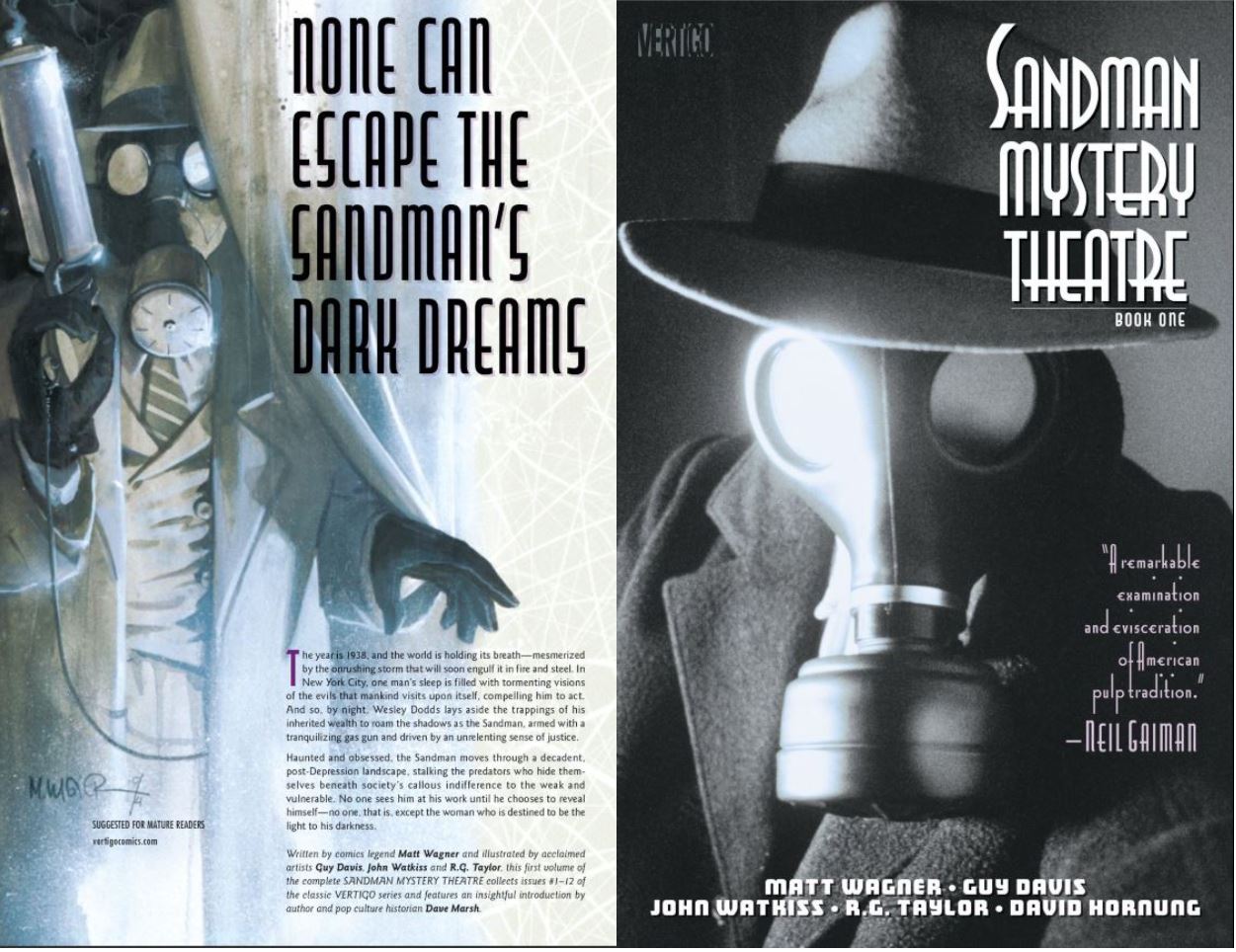
Batman: Detective No. 27


By Michael Uslan & Peter Snejbjerg with Lee Loughridge (DC Comics)
ISBN: 978-1-4012-0185-2 (HB) 978-1401-2010-74 (TPB)

Although cover-dated May 1939, according to most scholars Detective Comics #27 was on sale from March 30th. That makes today the actual anniversary date of the Dark Knight. Because we like to be unpredictable here, let’s look at an intriguing offshoot and permutation of the now-mythic inspirational lawman by one of the most important but least-appreciated creators in his history.

Not so long ago and for a brief while, DC’s experimental Elseworlds imprint – where famous & familiar characters and accepted consensual continuity were radically or subtly reimagined – was a regular hive of productivity and generated some wonderful – and quite a few ridiculous – stories.

By using what readers thought they knew as a springboard, the result – usually constricted into a disciplined single story – had a solid and resolute immediacy that was too often diluted in regular periodical publications where an illusion of constant change always trumps actual innovation in long-running characters… unless they are about to be cancelled…

No chance of that with this property and franchise figure, but still a fine example of that process is this intriguing pulp mystery and generational drama blending the lineage of the Gotham City Waynes with covert societies and secret history of the United States of America.

Oh, in case you were wondering: after a couple of fallow decades, DC reinstated most of those Elseworlds experiments as part of a greater multiverse, so they all turned out to “real” too, somewhere in time and space…

April 1865, Washington DC: President Abraham Lincoln overrides the objections of Allan Pinkerton (who had created the Secret Service to protect him) and goes to see popular play Our American Cousin at Ford’s Theatre. The resultant assassination prompts the infuriated and humiliated security genius to create a dedicated clandestine force beyond the reach of everything but their mission and their own consciences…

April 1929, Gotham City: a doctor, his wife and their young son exit a movie theatre where they have thrilled to the exploits of Douglas Fairbanks as Zorro. Suddenly, sneak thieves confront them and in the struggle Thomas & Martha Wayne are gunned down, leaving a grieving boy kneeling over their bloody corpses. Family butler Alfred packs the coldly resolute boy off on a decade-long world tour to study with masters of criminology around the globe…

Lincoln’s murder was planned by a cabal of Confederate plotters: the Knights of the Golden Circle. Their leader, an early eugenics-inspired geneticist named Josiah Carr, outlines a Doomsday vengeance plot that will take decades to complete…

January 1st 1939: Bruce Wayne finally returns to Gotham, ready to begin his life’s mission, but is diverted when crusading newspaperman Lee Travis (DC’s first costumed mystery man shamus The Crimson Avenger in mainstream continuity) reveals the existence of the Secret Society of Detectives and invites the young man to become their 27th operative since Pinkerton.

Charming and relentlessly compelling, this superbly pacy thriller follows two time-lines as the founding Detective hunts the Golden Circle through the years, enlisting the covert aid of many historical figures such as Kate Warne (the USA’s first official female detective), journalist and President-to-be Teddy Roosevelt and biologist/monk Gregor Mendel whilst Wayne closes in on the long-awaited climax of the Doomsday plot with the aid of Babe Ruth and Dr. Sigmund Freud. He even confronts cunningly-customised versions of such classic Bat-foes as Catwoman, Scarecrow, Hugo Strange and The Joker.

Best of all, there’s a deliciously wry cameo from the Golden Age Superman as well as a magnificent surprise ending to this two-fisted tribute to the “Thud-and-Blunder” era of the 1930s pulps that spawned Batman and all those like him.

This is a conspiracy thriller stuffed to overflowing with in-jokes, referential asides, pop culture clues and universal icons that make The Da Vinci Code and its legion of even more tedious knock-offs look like dry words on dusty paper. The only flaw is that writer Uslan -lawyer, author, educator, producer and über Bat-fan and the man who brought the Gotham Gangbuster back to cinema screens in 1989 – with illustrator Peter Snejbjerg (The Books of Magic, Abe Sapien, Starman) & colourist Lee Loughridge (Saucer Country, The Batamn Adventures, Stumptown) were never able to create a sequel…

And just in case you need a really big clue: the comic book Detective Comics #27 featured the very first appearance of a certain Dark Knight…
© 2003 DC Comics. All Rights Reserved.
Steed & Mrs Peel: Golden Game


By Grant Morrison, Anne Caulfield, Ian Gibson, Ellie De Ville & various (Boom Studios)
ISBN: 978-1-60886-285-6 (TPB/Digital edition)

The (British) Avengers was an astoundingly stylish, globally adored TV show glamorously blending espionage with arch comedy and deadly danger with technological extrapolation, running from the Swinging Sixties through to the end of the decade. A phenomenal cult hit, it and sequel The New Avengers still summons up pangs of Cool Britannia style, cheeky action-adventure, kinky quirkiness, mad gadgetry, dashing heroics, bizarrely British fetish attire, surreal suspense and the wholly appropriate descriptive phrase “Spy Fi”….

Enormously popular everywhere, the light-hearted show evolved from 1961’s gritty crime drama Police Surgeon into a paragon of witty, thrillingly sophisticated espionage adventure lampoonery with suavely urbane British Agent John Steed and dazzlingly talented amateur sleuth Mrs. Emma Peel battling spies, robots, criminals, secret societies, monsters and even “aliens” with tongues very much in cheeks and always under the strictest determination to remain calm, dashingly composed and exceedingly eccentric…

As played by Patrick Macnee, Steed was a nigh-effete dandy and wry caricature of an English Gentleman-spy, counterbalanced by a succession of prodigiously competent woman as partners and foils. The format was pure gold, with second sidekick Peel (as played by Dame Diana Rigg) becoming the most popular right from her October 1965 debut. Rigg was hired to replace Honor Blackman – landmark character Dr. Cathy Gale – the first full-on, smartly decisive fighting female on British Television.

Blackman left to play the female lead in Bond movie Goldfinger – allowing her replacement to take the TV show to even greater heights of global success – as she became a style icon of the era. Her trademark Op art “Emmapeeler” catsuits and miniskirts (designed by series costumiers John Bates and Alun Hughes) were sold across the country and the world…

Emma Peel’s connection with viewers cemented into communal consciousness and the world’s psyche the feminist archetype of a powerful, clever, competent and always-stylishly-clad woman: largely banishing screaming, eye-candy girly-victims to the dustbin of popular fiction. Rigg left in 1967 – also for an 007 role (Tracy Bond in On Her Majesty’s Secret Service) – and was followed by Linda Thorson as Tara King: another potent woman who carried the series to its demise in 1969. Continued popularity in more than 90 countries led to a revival in the late 1970s as The New Avengers saw posh glamor-puss Purdey (Joanna Lumley) and manly Gambit (Gareth Hunt) as assistants to the apparently ageless, debonair and deadly Steed…

The show remains an enduring cult icon, with all the spin-off that entails. During its run and beyond, The Avengers spawned toys, games, collector models, a pop single and stage show, radio series, audio adventures, posters, books, a modish line of “Avengerswear” fashion apparel for women and all the other myriad merchandising strands that inevitably accompany a media sensation.

The one we care most about is comics and, naturally, the popular British Television program was no stranger there either. Following an introductory strip starring Steed & Dr. Gale in listings magazines Look Westward and The Viewer – plus The Manchester Evening News – (September 1963 to the end of 1964), legendary children’s staple TV Comic launched its own Avengers strip in #720 (October 2nd 1965) with Emma Peel firmly ensconced as co-lead. This series ran until #771 (September 24th 1966) with the dashing duo also appearing in TV Comic Holiday Special, whilst a series of young Emma Peel adventures featured in June & Schoolfriend, before transferring to DC Thomson’s Diana until 1968 whereupon it returned to TV Comic from #877, depicting Steed and Tara King until 1972 and #1077.

In 1966 Mick Anglo Studios produced a one-off, large-sized UK comic book, and two years later America’s Gold Key’s Four-Color series published their own try-out book utilising recycled UK material. It was called John Steed/Emma Peel since some outfit called Marvel had secured an American trademark for comics called “The Avengers”. There were of course wonderful, sturdily steadfast hardback annuals for the British Festive Season trade, starting with 1962’s TV Crimebusters Annual and thereafter pertinent TV Comic Annuals before a run of solo editions graced Christmas stockings from 1967 to 1969: later supplemented by a brace of New Avengers editions for 1977 and 1978.

Between 1990 and 1992 Eclipse Comics/ACME Press produced a trans-Atlantic prestige comic book miniseries. Steed & Mrs. Peel was crafted by Grant Morrison & Ian Gibson with a second exploit scripted by Anne Caulfield, and that entire affair was reprinted in 2012 by media-savvy publishers Boom! Studios as a soft pilot for their own iteration which you’ll find reviewed here.

The original 90s comics tales are whimsically playful and diabolically clever but perhaps require a little backstory. When Emma Peel joined the TV show, she was a new bride, recent widow and old acquaintance of Steed’s. The motivation for bereaved martial artist/genius level chemist Emma Knight’s call to action was that her brand new husband (dashing test pilot Peter Peel) had been lost over the Amazon jungles and his loss impelled her into a life of (secret) service. The amateur adventurer’s second career ended in-world when hubby was found alive and she returned to him and the Amazonian Leopard-People he had discovered, leaving Steed to muddle along with fully trained professional British agent Tara King…

Here that marital reunion informs Morrison (Animal Man, Zenith) & Ian Gibson’s ‘The Golden Game’: a 4-act chapterplay serially comprising ‘Crown & Anchor’, ‘Hare & Hounds’, ‘Fox & Geese’ and concluding instalment ‘Hangman’. It opens six months later with Mrs Peel’s abrupt recall to duty after Miss King goes missing whilst investigating leaks at the Admiralty and suspicious doings at elite games fraternity The Palamedes Club.

When the disappearance is linked to the truly baroque murder of puzzle-obsessed founding member and key military strategist Admiral “Foggy” Fanshawe, Steed’s handler “Mother” insists he investigate but trust no one, which the super-agent imputes to mean no one currently active in the agency…

With willing and able Emma Peel back from South America, he traces a string of excessively imaginative card and boardgame-themed slayings to an old school chum who really can carry a grudge and knows how to implement stolen nuclear launch codes to a wild and weird climax with Peel ultimately saving the day and the world…

Anne Caulfield scripted fantasy-fuelled follow-up ‘Deadly Rainbow’ as Mr and Mrs Peel reunite in the scenic English village of Pringle-on-Sea – where they had their honeymoon – only to find the laws of science and nature being warped by what appear to be the Leopard People Peter had befriended in the Amazon…

With minds clouded, telepathy and prophecy running riot, zombies marching and entire bodies (not just heads) being shrunken amidst scenes of bucolic domesticity, Peter soon goes missing again. When exploitative American resource plunderers who have been deforesting the tribe’s hidden home, it’s not long before Steed comes to Emma’s call…

The breezy satire, edgy social commentary and especially the pure peril-embedded nonsense of the original shows is perfectly captured by much-missed, recently departed pioneering 2000 AD stalwart Ian (Ballad of Halo Jones, Robo-Hunter) Gibson (February 20th 1946 – December 11th 2023) who especially goes to town on the weird events of the second saga and also contributes a variant cover gallery featuring 11 playfully suspenseful images.

Emma Peel may have been a style icon of the sixties, but she was also (and still is) a fierce, potent, overwhelming example and role model for girls. Her cool intellect, varied skills and accomplishments and smooth confidence inspired – as much as action contemporary Modesty Blaise – a host of fictive imitators whilst opening up new vistas and career paths for suppressed millions of prospective and downhearted future underpaid secretaries, nurses, shopgirls and teachers and frustrated wives. Peel’s influence even briefly reshaped the most powerful symbol of female empowerment in the world as her crimebusting detective troubleshooter alternate lifestyle became the model for sales-impoverished Wonder Woman who in the late 1960s ditched powers and costumes for bullets and boutiques…

Thrilling, funny, and eternally fabulous, Emma Peel is a woman to be reckoned with and these are tales you need to read…
© 2012 StudioCanal S.A. All Rights Reserved. The Avengers and Steed & Mrs Peel are trademarks of StudioCanal S.A. All Rights Reserved.

Harlem


By Mikaël, translated by Tom Imber (NBM)
ISBN: 978-1-68112-328-8 (HB) eISBN: 978-1-68112-329-5

Certain eras and locales perennially resonate with both entertainment consumers and story makers. The Wild West, Victorian London, the trenches of the Somme, and so many more quasi-mythological locales instantly evoke images of drama and tension, and prompt tales just begging to be told. In these modern times of environmental doom, global brush wars and economic privation, one of the most evocative is Depression-era America’s “Big City”.

Perhaps because it feels so tantalisingly within living memory, or maybe thanks to its cachet as the purported land of promises and untapped opportunity, America has always fascinated storytellers – especially comics creators – from the “Old World” of Europe. This inclination has birthed many potent and rewarding stories, and none more so than this continentally-published yarn from multi-disciplinary, multi-award-winning French-born, Quebeçois auteur and autodidact Mikaël (Giant; Bootblack, Junior l’Aventurier; Rapa Nui, Promise), who has been creating comics wonders since 2001.

First published in Europe in 2018, Giant told linked stories of little people – many of them newcomers to America – who built the Empire State Building in 1932, lensed through the interplay between immigrants and the underworld that offered so many their only chance to survive and thrive. Mikaël returned to the milieu with Bootblack, which originated as twin albums before being released as a brace of English-language digital tomes courtesy of Europe Comics. It finally found a worthy home as an oversized (229 x 305mm) resoundingly resilient hardback edition from NBM that got the entire story done-in-one. Now designated “The New York Trilogy”, the evocative venture concludes in a powerful fictionalised account of a minor but ferociously real celebrity of that faraway era…

Originally released au Continent as two tomes in January 2022 and August 2023, Harlem unfolds as a complex sequence of overlapping flashbacks, telling (part of) the story of crime boss, shady entrepreneur and unlikely civil rights crusader Stéphanie St. Clair (December 24th 1897 – December 1969). Regarded as a French migrant, she was actually born in Martinique (West Indies) before becoming a domestic servant in Quebec and moving to New York in 1912. From then she went by many names but most notably Queenie

By 1931 the infamous elegant mobster, popularly adored social climber and “richest black woman in the country” had instituted and was running Harlem’s numbers racket. Other people’s penny bets made her rich, lifting her above and beyond alleys and gutters via a meticulously organised, savagely administered – by poet turned enforcer/lover Ellsworth “Bumpy” Johnson and slick white lawyer Mr. Mahoney – (generally) harmless gambling enterprise that provided work for hundreds of poor black residents…

As the drama shows, Queenie has a man who supports her every decision and a close circle of women friends who enable her to occasionally drop her austere and steely public façade. Cushioning glamourous notoriety allows her to live away from sordid poverty in a posh enclave of wealthy and influential “negro intelligentsia” – at 409 Edgecomb Avenue: the palatial apartment building on “Sugar Hill”…

Everything starts to collapse when her activities increasingly chafe with cops who take her bribes whilst despising her skin colour, intelligence and “uppity” attitudes, just as ruthless outsiders Lucky Luciano and Dutch Schultz – deprived of their former revenue streams by the repeal of Prohibition – turn envious eyes on the district north of 110th Street – the no-go region for decent folk commonly called Harlem…

The actual trigger is well-meaning white reporter Robert Bishop whose love for the glitz of the Harlem Renaissance and a “miscegenating” dalliance with Queenie’s pal Tillie Douglas brings him to a jazz nightclub on the night “The Dutchman” tries to seize Queenie’s territory by force, only to be humiliatingly faced down by the proud celebrity. Outraged by her usual treatment from Irish cops led by corrupt racist Captain McCann, Madame St Claire starts writing opinion pieces denouncing police corruption and Mafia encroachment, also advocating militant change and offering legal advice for the disenfranchised. These she forces local paper New York Amsterdam News to publish. She soon hires Bishop to proofread and edit them, but when his close access turns into his subsequent articles in support of black advancement in white newspapers, it augurs disaster and the beginning of the end…

As a battle for turf collides with the deepening Great Depression, socialist agitation in the streets, an influx of Mafia drug pushers and murder pushes the district into chaos. With Shultz and McCann closing in and Queenie’s old allies and even friends turning against her, St Claire makes a bold and unpredictable move, retaliating in the only way she can…

Intercut with nightmarish scenes of her childhood, island life and gradual move to America, Queenie’s rise and fall occurs in a cultural melting pot of oppressed peoples just starting to feel the faint stirrings of equal treatment. Everything about this stylish drama is potently mythic and tragically foredoomed in a sincerely Shakespearean manner as it completes the auteur’s epic and ambitious New York Trilogy. Packed with period detail and skilfully tapping into the abundance of powerful, socially-aware novels, plays and movies which immortalised pre-WWII America, this tale is all the more enticing for what it doesn’t reveal… the truly remarkable turns Stéphanie St. Clair’s life took after this story ends. Hopefully there’s someone ready to translate the latterday activist’s exploits after WWII into graphic immortality…

This book includes poems by Langston Hughes – Harlem and I, Too – and dozens of stunning pencil studies of key locations and characters at the back. Moreover, if you’re sharp, you can find the Easter eggs throughout the text where this tale intersects with and overlaps the previous parts of the trilogy…

Harlem is moving, memorable and momentous, a graphic narrative triumph you must not miss.
Harlem volumes 1 & 2 © DARGAUD BENELUX (DARGAUD-LOMBARD S.A.) 2022 – 2033 by Mikaël.

Harlem is scheduled for UK release 16th April 2024 and available for pre-order now.

Most NBM books are also available in digital formats. For more information and other great reads go to NBM Publishing at nbmpub.com.

Modesty Blaise: The Green Eyed Monster


By Peter O’Donnell & Enrique “Enric” Badía Romero (Titan Books)
ISBN: 978-1840238662 (Album PB)

Spanish artist Romero was a familiar presence for generations of British comics and newspaper strip readers. He died on February 15th this year with most of his work out of print and nigh forgotten. Here are two reasons why that’s not right and should be rectified as soon as possible.

Infallible super-criminals Modesty Blaise and her lethally charming, compulsively platonic, equally adept partner Willie Garvin gained fearsome reputations whilst heading underworld gang The Network. At the height of their power, they retired young, rich and still healthy. With honour intact and hands relatively clean, they cut themselves off completely from careers where they made all the money they would ever need and far too many enemies: a situation exacerbated by their heartfelt and – for their calling – controversial conviction that killing was only ever to be used as a last resort.

When devious British Spymaster Sir Gerald Tarrant sought them out, they were slowly dying of boredom in England. That wily old bird offered them a chance to get back into harness, have fun and do some good in the world. They jumped at his offer and began cleaning up society’s dregs in their own unique manner. That self-appointed crusade took decades…

From that tenuous beginning the dynamite duo went on to crush the world’s vilest villains and most macabre monsters in a succession of tensely suspenseful, inspirational action thrillers over more than half a century. The inseparable associates debuted in The Evening Standard on 13th May 1963 and, over passing decades, starred in some of the world’s most memorable crime fiction, in approximately three panels a day.

Creators Peter O’Donnell & Jim Holdaway (who previously collaborated on Romeo Brown – another lost strip classic equally as deserving of its own archive albums) crafted a timeless treasure trove of potent pictorial escapades until the illustrator’s tragic early death in 1970, whereupon Spanish artist Enrique “Enric” Badía Romero (and also occasionally John Burns, Neville Colvin & Pat Wright) assumed art duties, taking the partners-in-peril to even greater heights.

The series was syndicated world-wide and Modesty starred in prose novels and short-story collections, several films, a TV pilot, radio play, original American graphic novel from DC, an audio serial on BBC Radio 4 as well as nearly 100 comic adventures. The strip’s conclusion came on 11th April 2001 in The Evening Standard. Many papers around the world immediately began running reprints and further new cases were conceived, but British newspaper readers never saw them. We’re still waiting…

The pair’s astounding exploits comprise a broad blend of hip adventuring, glamorous lifestyle and cool capers: a melange of international espionage, crime and even plausibly intriguing sci fi/supernaturally-tinged horror fare, with ever-unflappable Modesty & Willie canny, deadly, yet all-too-fallibly-human defenders of the helpless and avengers of the wronged…

We have Titan Books to thank for collecting the saga of Britain’s Greatest Action Hero (Women’s Division), although they haven’t done so for a while now…

This volume was the first to feature Romero as sole artistic hand, following the unexpected death of Holdaway partway through ‘The Warlords of Phoenix’. To ease him into the job author O’Donnell was asked to write a lighter tale to follow up the epic. ‘Willie the Djinn’ plays well to the new artist’s strengths, and although there are echoes of a previous O’Donnell &Holdaway Romeo Brown romp, this tale of kidnapped dancing girls, oil sheikhs and military coups is a short, sweet treat, and change of pace to the usual storm of murder, intrigue and revenge.

Those elements return in ‘Green-Eyed Monster’ as the spoiled and obnoxious daughter of a British ambassador is kidnapped by South American rebels. Modesty & Willie must use all their skills to get her out of the terrorists’ clutches, escape deadly jungles and resist the overwhelming temptation to kill her themselves….

‘Death of a Jester’ closes out the volume as our antiheroes stumble across a bizarre murder that leads to another job for British spymaster Sir Gerald Tarrant. A man in Jester’s garb is impaled by a knight’s lance and thrown to lions in a caper revolving around Mediaeval Re-enactments, a band of bored and dangerous British ex-commandos and the impossible theft of the Navy’s latest super torpedo.

The infectious whimsy of the early 1970s was becoming increasingly present but under the strictly controlled conditions of prolific, ingenious O’Donnell and sleek slick Romero, Blaise & Garvin grew in stature and accomplishments to carve out a well-deserved reputation for excellence in these magnificent tales of modern adventure. Certified Gold. So bring them back please…
© 2005 Associated Newspapers/Solo Syndication.

The Cabbie volume 1


By Marti, with an introduction by Art Spiegelman (Fantagraphics Books)
ISBN: 978-1-60699-4504 (HB/Fantagraphics) 978-0874160420 (Album PB Catalan Communications)

Although out of print since 1987, in 2011 Fantagraphics rescued from relative obscurity one of the darkest yet most grimly illuminating classics of European cartooning in this remastered and augmented reissue of The Cabbie: a stylish, nightmarish psycho-sexual noir thriller that has as much seedy kick now as it had when first translated by Catalan Communications…

Now as the macabre maestro has died, my conscience prompts me to pay for neglecting such wonderful comics and it’s only right we should pause to revisit his greatest achievement. Maybe some publisher will endeavour to bring some of his other dark wonders – like Doctor Vertigo, Propaganda Moderna, crime fantasy-thriller Calvario Hills, Cien dibujos por la libertad de Prensa or Terrorista – to a wider international audience.

Marti Riera Ferrer (1955 – 19th January 2024) was born in Barcelona during the heyday of fascist rule. He studied at the Massana School of Arts and Crafts where his efforts coincided with the Generalissimo’s death, and from 1975 to 1979 a liberalisation saw “Marti” creating comics for alterative magazines like Rock COMIC and Star.

From its launch in 1979 he also began contributing to apocalyptic iconoclast El Vibora: short stories and series such as Tony Nuevaola and – with Rodolfo – Lola Lista contra los Nada. These efforts brought international interest and Marti began appearing in Raw and Drawn & Quarterly. Il TaxistaThe Cabbie – began in 1982 and he episodically added to the canon over succeeding years, and although semi-retired from the early Nineties he continued generating other material at his own pace for the magazine Makoki and Tobalina. These tales varied from erotic fiction to general illustrated fare.

Dick Tracy is one of the most well-known strips on Earth and the super-cop’s contributions to the art form are many and indisputable. They occurred over many decades and the medium of graphic narrative grew up with it. Imagine the effect instant exposure – or overexposure – to such an uncompromising, bombastic, iconic property on the artists of a nation where free-expression and creative autonomy was suppressed for generations. That’s what happened when the death of General Franco (who had held Spain in a fascistic time-warp from his victory in April 1939 until his death in November 1975) opened up and liberalised all aspects of Spanish life. When Marti saw the strip he was changed for life…

As Art Spiegelman says in his introduction, “decades of political and social repression gave way to a glorious eruption of creativity that allowed a full-fledged counterculture to come to life at just about the same time that America’s “Love Generation” gave way to what Tom Wolfe labelled the “Me Generation.””

How odd yet fitting then that an American symbol of “The Establishment” so enchanted and captivated young cartoonist Marti Riera that he assimilated every line and nuance to create a bleak, stripped-down and extremely angry homage detailing the tribulations of a seedy, desperate taxi-driver trapped in an abruptly vanished past and prey to a world at once free and dangerous, ungoverned and chaotic…

Driving around the seediest part of town our hero picks up a high-rolling gambler who’s just won big, but the driver’s night goes horribly wrong when a knife-wielding thief hijacks the cab and robs his passenger. Luckily, the Cabbie can handle himself and he quickly, brutally subdues the thug.

Our protagonist is a decent, hard-working man who lives with his ailing mother, humouring her talk of a mysterious inheritance, and allowing her to keep the embalmed cadaver of his father in the spare bedroom, but he’s tragically unaware that his citizen’s arrest will have terrible repercussions for them both. When the son of the thief he captured is released from prison, the ingrate immediately begins a grim campaign of retribution against the Cabbie that creates a maelstrom of tragedy, degradation and despair.

This is a harsh, uncompromising tale of escalating crime and uncaring punishments: blackly cynical, existentially scary and populated with a cast of battered, desolate characters of increasingly degenerate desperation. Even the monsters are victims, but for all that The Cabbie is an incredibly compelling drama with strong allegorical overtones and brutally mesmerizing visuals.

Any mature devotee of comics should be conversant with Marti’s superb work, and with a second volume out there and the hope of digital editions (One bloody Day!), hopefully we soon all will be…
The Cabbie (Taxista) © 2011 Marti. Introduction © 2011 Art Spiegelman. This edition © 2011 Fantagraphics Books.

The Art of Ramona Fradon


By Ramona Fradon; interviewed by Howard Chaykin (Dynamite Entertainment)
ISBN: 978-1-60690-140-3 (HB/Digital edition)

In a matter of mere weeks that have taken many accomplished, acclaimed and beloved comics luminaries (including Paul Neary, Enrique Badía Romero, José Delbo, Marti (Riera), John G. Miller and Keith Giffen) – we are particularly saddened to learn that pioneering cartoonist Ramona Fradon died on February 24th. At the age of 97 she had only just officially retired a month previously. Her incomparable works will keep her with us through characters and titles such as Super Friends, Aquaman and Metamorpho (slated to appear in the next Superman film). Until then, here’s another tome you should own…

Although present in comic books from the start, women – like so many other non-white/male “minorities” – have been largely written out of history. One of the very few to have weathered that inexplicable exclusion was Ramona Fradon. This excellent commemorative art collection celebrates not only her life and contribution, but thanks to its format – a free, unexpurgated extended interview with iconoclastic creator Howard Chaykin – shares the artist’s frank and forthright views on everything from work practise to the power of fans…

It begins with an Introduction from Walt Simonson who proclaims ‘Meet your Idol… and discover They’re even Cooler than you Thought!’, before early days are revealed in ‘Part One: Setting the Scene’ and ‘Part Two: In the Beginning’

Ramona Dom was born on October 2nd 1926 to an affluent Chicago family with many ties to commercial creative arts. Her father was a respected artisan, letterer and calligrapher who had designed the logos for Camel cigarettes, Elizabeth Arden and other major brands, and also formulated the fonts Dom Casual and Dom Bold. He had plans for his daughter, urging her to become a fashion designer…

The family moved to (outer) New York when Ramona was five. Ramona initially attended The Parsons School of Design, and discovered she had absolutely no interest in creating clothes. Although she’d never read comic books, she had voraciously read illustrated books like John Barton Gruelle’s Raggedy Anne and Andy series, and was a devoted fan of newspaper strips. Favourites included Dick Tracy, Bringing Up Father, The Phantom, Alley Oop, Flash Gordon, Terry and the Pirates and Li’l Abner (all herein represented by 1930s examples).

Ramona soon transferred to the New York Art Students League – a hotbed of cartooning – where she met and married Arthur Dana Fradon. He became a prolific illustrator, author and cartoonist and a regular contributor to The New Yorker between 1948-1992. They wed in 1948 and he actively encouraged her to seek work in the still young funnybook biz…

‘Part Three: Gingerly Breaking into Comics’ reveals how her first forays at Timely Comics led to DC/National Comics and a Shining Knight yarn published in Adventure Comics #165 (cover-dated June 1951), 10 months later taking over the veteran Aquaman feature in #167. Fradon was one of the first women to conspicuously and regularly illustrate comic books, drawing the strip throughout the 1950s and shepherding the Sea King from B-lister to solo star and Saturday morning TV pioneer.

In the first of a series of incisive, informative mini biographies, ‘Sidebar: Murray Boltinoff’ reveals the influence of that much-neglected and under-appreciated editor. ‘Part Four: Queen of the Seven Seas’ and ‘Part Five: Man of 1000 Elements’ show how occasional stints on The Brave and the Bold team-ups led to her co-creation of Sixties sensation Metamorpho, the Element Man. However in 1965 – at the pinnacle of success – she abruptly retired to raise a daughter, only returning to comics in 1972 for another stellar run of landmark work.

‘Sidebar: George Kashdan’ tells all about the multi-talented scripter before ‘Part Six: Ramona Returns to Comics… At Marvel???’ details how the House of Ideas lured the artist back to her board and highlights her difficulties working “Marvel-style” on assorted horror shorts, The Claws of the Cat and Fantastic Four, all presaging a return to DC…

‘Sidebar: Joseph Patterson’ looks into the astounding strip Svengali who green lit Dick Tracy, Little Orphan Annie, Gasoline Alley and more before ‘Part Seven: Back Home at DC Comics’ where she was busier than ever. As well as horror and humour shorts, Fradon drew a new Metamorpho try-out, superhero spinoff Freedom Fighters and her twin magnum opuses: revived comedy superhero Plastic Man and TV sensation Super Friends. These revelations are bolstered by ‘Sidebar: E. Nelson Bridwell’, exploring the life of the man who knew everything about everything…

In 1980, Fradon took over Dale Messick’s long-running newspaper strip Brenda Starr, drawing it for 15 years. ‘Part Eight: Leaping From Books to Strips’ explores that painful and unpleasant chore in sharp detail, supplemented by ‘Sidebar: Brenda Starr’ outlining the feature’s history and reprinting those episodes when the ageless reporter met a certain cop, allowing Fradon to finally draw childhood idol Dick Tracy

The most fascinating stuff is left until last as ‘Part Nine: Ramona the Author’ discusses her career post-Brenda: drawing for Bart Simpson and Spongebob Squarepants comics, returning to higher education and writing a philosophical historical mystery novel – The Gnostic Faustus: The Secret Teachings Behind the Classic Text – as well as illustrated kids book The Dinosaur That Got Tired of Being Extinct.

Packed throughout with candid photos, and stunning pencil sketches, painted pictures and privately commissioned works – like Aquaman, assorted Super Friends, Superman, Batman, Wonder Woman, Robin; Metal Men, Aqualad, Brenda Starr, Black Canary, Shazam/Captain Marvel, Shining Knight, The Atom, The Spirit, Metamorpho & cast, Marvel Girl, Miss America, Power Girl, Catwoman, Hawkman, numerous illustrations from The Story of Superman book plus convention sketches, this celebration concludes with even more fabulous sleek super art images in ‘Part Nine: Ramona Today’ and ‘Part Eleven: Bibliography’

This is an amazing confirmation of an incredible career and any fan’s dream package. Amongst gems unearthed here are complete Aquaman stories ‘The Kid from Atlantis!’ (Adventure Comics #269, 1960), ‘A World Without Water’ (Adventure#251, 1958) and ‘How Aquaman Got his Powers!’ (Adventure #260, 1959), plus tales from Star Spangled War Stories (#184, 1975) and ‘The Invisible Bank Robbers!’ (Gangbusters #30, 1952).

Also on show are unpublished sample strips by Dana & Ramona Fradon and a monumental cover gallery of unforgettable images from Super Friends #3, 5-8, 10, 11, 13, 17, 19, 21, 22, 24-27, 31, 33, 36-39 & 41; Plastic Man #16-20; The Brave and the Bold #55, 57, 58, Showcase #30 & 33, Metamorpho, the Element Man #1-5, Namora #1 (2010), Fantastic Four #133 and Freedom Fighters #3.

These are supported by selected interior pages in full colour or monochrome from Star Spangled War Stories #8; Adventure Comics #190; Metamorpho, the Element Man #1; 1st Issue Special #3; Fantastic Four #133; The Brave and the Bold #57; House of Secrets #116 & 136; Secrets of Haunted House #3 & 14; House of Mystery #232 & 273; Plop! #5; Freedom Fighters #3 & 5; Plastic Man #14; Super Friends #6-8, 10, 13, 16, 19, 21, 23 & 25 and the Super DC Calendar 1977.

A truly definitive appreciation of the Comic Book Hall of Fame inductee 2006, this oversized (229 x 305 mm) hardback reproduces hundreds of pages and covers, plus a wealth of out-industry artwork and commissioned wonders, as accompaniment to an astonishingly forthright testament and career retrospective of a phenomenal and groundbreaking talent.

The Art of Ramona Fradon will delight everyone by showing everybody how comics should be done….
Marvel Characters © and ™ 1941-2013 Marvel Characters, Inc. DC Comics Characters © and ™ DC Comics. Brenda Starr™ © 2013 Tribune Media Services. All Rights Reserved.

Shaft volume 2: Imitation of Life


By David F. Walker, Dietrich Smith & various (Dynamite Entertainment)
ISBN: 978-1-52410-260-9 (TPB/Digital edition)

For most of modern history black consumers of popular entertainments in what used to be called the “Free West” have found far too few fictive role models. In the English-speaking world that began changing in the turbulent 1960s as America’s Civil Rights Movement gained traction and truly took hold during the decade that followed. Many characters stemming from those days come from a commercially-led cultural phenomenon called Blaxploitation.

Although criticised for seedy antecedents, stereotypical situations and extreme violence, the films, books, music and art were the first mass-market examples of minority characters in charge and in leading roles, rather than as fodder, flunkies or flamboyant villains. One of the earliest movie icons of the genre was the man called Shaft. His filmic debut in 1971 was scripted by journalist and screenwriter Ernest Tidyman (The French Connection; High Plains Drifter; A Force of One) adapting his own 1970 novel. Tidyman authored six more between 1972 and 1975, with his urbane urban warrior simultaneously starring in numerous films and a (far, far tamer) TV series. He even had in his own retro-themed, adults-only comic book.

An eighth prose novel – Shaft’s Revenge – was released in 2016, written by David F. Walker. Amongst his many talents – you should hunt down his online culture-crunching ’zine BadAzzMoFo and you won’t be sorry – Walker numbers writing intriguing, hard-edged comics (Occupy Avengers, Cyborg, Red Sonja, Tarzan on the Planet of the Apes and many more), so in 2014 it was probably inevitable he be invited to write that long-overdue comics iteration…

Blockbusting premier miniseries Shaft: A Complicated Man – relating the lone wolf’s origins – led to this sequel, illustrated by Dietrich Smith and coloured by Alex Guimarães, with Walker himself lettering the series. Whereas that comic book took its look, settings and tone from the novels more than the Richard Roundtree (whom we tragically lost in October last year) films, this one carefully refocuses and aims for a satisfactory blending of prose and film iterations.

Originally released as a 4-issue miniseries, Imitation of Life finds the detective ‘Before and After’, regretting his life choices, successes and recent notoriety as the highly publicised rescue of an abducted girl suddenly make him a famous – if not actually notorious – man. It’s nothing he wanted: Shaft was literally forced to take the job by a major mobster no one in their right mind ever refuses, and now, after sorting the problem in his inimitably pitiless manner, the gumshoe is slowly drinking himself to death on the huge fee he also couldn’t safely turn down…

Eventually guilt and boredom compel him to get back in the game and, free of money worries, he can pick and choose from a big list of inquiries. That said, Shaft can’t explain just why he takes on the pointless problems of the Prossers: a hick white couple desperate to find their son. Mike is 18; a good-looking homosexual kid (we say “gay” today, apparently) swallowed up by the sleaze-peddlers of 1970s Times Square. The kid’s legal and not even a real missing person, but there’s something Shaft can’t get out of his head about this particular runaway…

Convinced it’s all pointless, Big John hits appropriate bars and clubs but no one knows anything: they never do. And then a kid named Tito recognizes him and just like that, the violence starts coming.

Surviving a homophobic attack – and teaching a few bigots the cost of intolerance – Shaft finds his case abruptly stalled just as shady wannabe filmmakers seeks to hire him to consult on their new (blaxsploitation) flick “The Black Dick”. It promises to be an easy gig, but they never are…

Before long, Shaft is writhing in discomfort as the script ludicrously bastardises his career and reputation, but when Tito turns up and bamboozles the detective into facing off with a Mafia pornographer just as the secret moneyman behind his own filmic fiasco starts demanding an early return on his investment, it all stops being a laugh and becomes deadly serious again. Once more, he remembers there’s no such thing as ‘Easy Money’

As fictional and real worlds increasingly intersect, Vice cops contact Shaft and he sees that somehow all his irons seem to be stacked in the same fire. When the ludicrous leading man is abducted and troublemaking Tito pops up again with some very perilous photographs from his own incessant snooping, Shaft discovers in penultimate chapter ‘Love & Loss’ just what happened to Mike Prosser before tooling up to rescue one bad actor while invading a film set where pornos and snuff films are the preferred hot product…

The strands all pull together in a typically cathartic climax as ‘All the World’s a Stage’ sees order restored, bad guys righteously dealt with and even sets up a delicious funny ending to usher us out…

Revisiting a legendarily foetid cesspool of civic corruption, warring mobsters and get-rich-quick chancers, this tour of a mythic milieu is another wry and intoxicating crime thriller no fan of the genre should miss.
Shaft is ™ & © 2016 Ernest Tidyman. All rights reserved.

Incognegro: A Graphic Mystery (10th Anniversary edition)


By Mat Johnson & Warren Pleece, with Clem Robbins (Berger Books/Dark Horse)
ISBN: 978-1-50670-564-4 (HB) eISBN: 978-1-50670-591-0

What’s prejudice? How does bigotry and unthinking fear and hatred of otherness work? What happens when haters can’t tell the difference between “us” and “them”?

Those are frankly disturbing and astonishing questions first asked in 2008 in an Original Graphic Novel released by DC’s Vertigo imprint which made a lot of noise and changed some lives. The book won acclaim and awards and its subject matter started conversations in exactly the right places: classrooms where it became a selected text for high schools and colleges. The questions have not gone away and the issues have not been resolved but the book and its sequel remain to carry on asking them.

This 10th Anniversary edition reprints the original tale in all its moody monochrome glory, backed up by a contextualising Author’s Note (‘I grew up a black boy who looked white’) and Afterword plus a copious sketchbook section featuring designs by Warren Pleece and ‘Reading Group Guide/Questions & Topics for Discussion’.

The tale itself is set in the segregationist South of the early 1930s and opens at a social gathering in Tuscaloosa with families all cheerfully gathering to see a black boy strung up. As the attendees patiently queue for a picture with the “strange fruit”, a newcomer takes their names and addresses. It’s only when the commemorational photographer denies hiring him that Zane Pinchback of (New York City’s African American newspaper) The New Holland Herald realises that he’s pushed his luck and needs to run for his life now.

Sadly, however, not before a visiting bigwig from the Ku Klux Klan gets a good look at him and starts wondering…

Safely back north of the Mason-Dixon Line, Pinchback’s latest headline grabber upsets liberals and shames the perpetrators, but the journalist is still unhappy. His exposés change nothing and he feels a fraud: a proud black man who makes a living pretending to be white. He can’t even use his own name – hence his byline “Incognegro” – or face on his widely syndicated columns: that would instantly negate the genetic advantage of a negro who can “pass” for white. Things are liberal enough in Manhattan that he and his debonair wastrel pal Carl can intermingle with most folk and go drinking in swish clubs, but Zane knows things can go bad easily enough and resolves to quit and go legit…

His editor staunchly refuses to accept, instead offering him a deal: one more undercover assignment. He’s certain Zane will accept. The negro jailed in Tupelo, Mississippi accused of killing a white woman is someone he’s known his entire life. Heading off in a hurry and readying himself to play the high stakes game of his life, Zane has no idea how complex and convoluted this job will be, or that blithely incautious Carl has invited himself along to a place where his kind of playful idiocy has lethal consequences…

Author Mat Johnson took inspiration from his own childhood and exploits and activities of Walter White (ultimately Chief Exec of the National Association for the Advancement of Colored People) who began his career investigating lynchings because of the same genetic quirk as Zane Pinchback.

Still available in hardcover, trade paperback, digital editions and even in the original DC/Vertigo edition, Incognegro is smart, funny where it can be and devastatingly effective whenever it needs to be. As well as the racial injustice so savagely skewered here, this is a cunning and engrossing murder mystery with plenty of twists, which even finds room to have a stab at the still largely unaddressed problems of women’s independence and transgender acceptance. If you love great storytelling underpinned by real-world issues, this is something you must see.
Incognegro ™ & © 2008, 2018 Mat Johnson and Warren Pleece. All rights reserved.