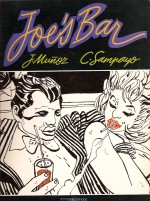
Joe’s Bar


By José Muñoz & Carlos Sampayo, translated by Jeff Lisle (Titan Books)
ISBN: 978-1-85286035-6

Argentinian José Antonio Muñoz was born on July 10th 1942 in Buenos Aires and studied at the prestigious Escuela Panamericana de Arte de Buenos Aires under comics geniuses Hugo Pratt and Alberto Breccia before joining the prolific Francisco Solano Lopez studio at the age of 18. Soon his work was appearing in Hora Cero and Frontera Extra and he was ghosting episodes of the legendary serial Ernie Pike for his old tutor Pratt.

Through the Argentine-based Solano Lopez outfit, he began working on material for British publishing giant Amalgamated Press/IPC, but had no real feeling for the material he was producing. Moreover, like so many others, he was increasingly uncomfortable in his homeland and was compelled to leave Argentina in December 1972 as the military junta tightened its totalitarian grip on the country and increasingly clamped down on free expression and the arts, as well as all forms of overt or covert dissent.

Moving to England, Spain and later Italy, Muñoz met again fellow émigré and creative soul-mate Carlos Sampayo in Barcelona in 1974 and convinced the poet, music critic, copywriter and author to try his hand at comics. The result was the stunning noir Private Eye expressionistic masterpiece of loss and regret Alack Sinner…

The poet Sampayo, born in 1943, grew up with all the same formative experiences as his artistic comrade and, after a similar dispiriting start (he had tried writing and being a literary editor before resigning himself to work in advertising), had moved to Spain in 1972.

The pair had first briefly met in 1971 when mutual friend Oscar Zarate (who wrote one of the two introductions in this collection) left Argentina in the forefront of the creative exodus sparked by the rise of “the Colonels”…

Urged by old mentor Hugo Pratt to “do something of your own” the pair began producing the adventures of an ex-New York cop turned Shamus, haunting the shadows of the world’s greatest, darkest city, encountering the bleak underbelly of the metropolis and all the outcasts, exiles and scum thrown together at its margins. The series debuted in experimental Italian anthology Alter Linus, then was picked up by Belgian giant Casterman for (A Suivre) and compiled in a number of albums.

Inexplicably there have been no English-language collections of the stunningly superb saga since a proposed 12-issue series from Fantagraphics was curtailed and cancelled after 5 volumes in the late 1980s, although a couple of short stories also appeared in anthology magazines Prime Cuts and Raw.

All that necessary preamble at last leads us to Joe’s Bar – which appeared as a dingy watering hole in the very first Alack Sinner story ‘The Webster Case’ – and soon began running as a parallel, occasional series featuring and indeed often debuting characters who would spring into stories and series of their own. In 1988 Titan Books released a British edition of Catalan Communications’ single volume of short stories from the place where nobody wants to know your name, and it remains one of the very best noir graphic novels ever released in English… and is similarly absent from modern publishing schedules.

The bar is situated in a multi-ethnic melting pot that covers the worst part of the city and acts as a crossroads and crucible for a vast cast of lost, lonely and desperate characters just trying to get by one night at a time and, following that aforementioned ‘Muñoz & Sampayo: a Profile’ by Zarate and an introduction from British comics historian Paul Gravett, the horror and heartache begins with a taciturn young man who earns his living cooking and cleaning in the greasy dive.

‘Pepe, the Architect’ is an illegal immigrant caught in the Green Card trap – no work without the card, no card without a job. Only Joe knows his secret, even the desperate lad’s girlfriend has no idea of his shameful status, but when the assassination of a foreign ambassador uptown sends hordes of cops into the teeming Diaspora district, Pepe sees himself inevitably exposed, captured and deported to the land where torturers eagerly await him…

Imagining hunters at every corner, the lad is picked up by a woman hungry for any kind of warmth but Pepe’s paranoia overwhelms his lust and he attacks her, leaving her for dead before heading back to the Bar. Unable to work, swiftly getting far too drunk, the fugitive architect shares his story with an old black man who’s seen far too much misery, unaware that the night holds more grief in store…

‘Rusty Stories’ opens as broken-down, punch-drunk old fighter Moses Man shambles through the grimy the streets, until he’s recognised by current wrestling champ Tigran Pacha. The latest hotshot offers the shattered legend a big purse for an “exhibition match” – grappler versus boxer – simultaneously wondering how such a legend could fall so low. With Man cleaning up for his big comeback, the memories return and, with visions of gamblers and gangsters, mad hubris and the wrong kind of woman boiling in his battered brain, when he finally gets back in the ring he ignores the fix and things get far too serious…

Muñoz & Sampayo brilliantly rewrote the rules that make comics work with their stark, vivid, ugly pictures describing deep, often elliptical personal journeys of complex characters with no beginning and often no appreciable end. Moreover individual tales frequently intersected and overlapped, as with the meat of the next piece.

‘Ella’ is a photographer. She’s often taken candid shots of that P.I. Sinner, Pepe the dishwasher, the bum Moses Man and all the other hopeless characters at the Bar, but now she’s the one in the depths. Convinced she is dying, she constantly re-examines her brief passionate affair with that mysterious black guy and wonders if race really does matter. Why did he leave her that way? What was going on? And then, on the bustling street she sees him and everything becomes clear…

The drama ends with the tragic ‘Fifth Story’ wherein a guy in prison shares his story with a cellmate…

Everything was going okay for young Mike Weiss. The store was doing fine and he’d finally blundered into asking that Feldman girl out – over ice cream and in the bar, yet. Of course she eventually had to take the initiative but that was fine too. Then his beloved old man got the cancer and started wasting way. As his father shrivelled Mike retreated into food, gorging himself into a stupor as his father dwindled into a dry husk filled with pain.

Even Rosa couldn’t reach him then. All he wanted was bad food and release from his father’s ghastly, continual pleas. Anyway, what kind of parent begs a loving son to kill him?

When life couldn’t get any worse, Mike was jumped by thugs in the street who dealt him another shattering blow which galvanised the poor schmuck into finally ending his dad’s pain. But even in jail poor Mike’s woes hadn’t quite ended…

Whilst the plots are deliberately generic, pimping starting points from a hundred pulp stories and noirish B-movies, the choice, fresh meat of the stories comes from the spotlight shining on those grotesque, useless inconsequential strangers and bystanders left behind once the flawed, noble heroes and glittering sultry sirens have moved on, especially once Muñoz casts his highly stylised, excoriatingly expressionistic vision upon them and their harsh, uncompromising, inescapable world.

Concentrating on the peripheral shadows and unturned corners of that grim shared universe where Raymond Chandler, Mickey Spillane, Jim Thompson, James M. Cain and the rest ply their trade, Muñoz & Sampayo have created a fierce and unforgettable environment that is truly and uniquely pure comics.

Dark, bleak, sordid and tawdry, the lives coinciding and congealing at Joe’s Bar offer a truly astonishing view of the other side of the world, one that no lover of truly mature fiction could bear to tear appalled yet fascinated eyes away from.
© 1987 Carlos Sampayo & José Muñoz. Introductions © Oscar Zarate, Paul Gravett & Art Spiegelman.
Operative: Scorpio


By Jack Herman, Dan Tolentino & Danny Taver (Blackthorne Publishing)
ISBN: 0-932629-15-6

Sometimes I just get a devil in me…

Although I review a broad spectrum of illustrated narratives and comics related books, I generally stick to the rule of thumb that the selection has to have some intrinsic quality or merit. Occasionally however there comes an item that I just can’t rationally recommend but still just… sends me…

As the first contraction of the 1980s independent comics boom began to cut down the plethora of small publishers, Blackthorne moved from canny licensed properties such as California Raisins and Rocky and Bullwinkle, 3-D titles and classic reprints like Tarzan, Dick Tracy and Betty Boop into a line of all-new characters, which might well have hastened their demise.

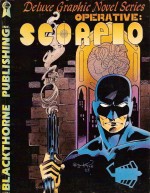
They also brought out many early graphic novels and Operative: Scorpio might well rank amongst their oddest.

In blocky black and white the confused but compellingly enthusiastic caper details the story of ambitious young thug Carl Manara who takes sole proprietorship of PMD, a new super-addictive drug hitting the streets of a peculiarly Latino Los Angeles, consequently falling foul of the criminal overlord Monticello, whose cabal Blackleague runs the entire country’s illegal enterprises.

Monticello has other problems; specifically a crazy masked martial artist roaming the streets and hitting all his organisations rackets. Scorpio’s campaign is costing him money and the cops – bought or honest – can’t catch the mysterious vigilante…

‘Breaking and Entering’ introduces Police Detective Morgan Pierce, tasked with stopping Manara’s super-drug from causing a bloody turf war. He has no interest in catching Scorpio: in fact he thinks the guy’s a hoax or urban legend…

Pierce has some odd friends he seems embarrassed by: fly-by-night playboy nightclub owner Aristotle, whose clientele ranges from the social elite to the dregs of the city, and disgraced competition martial artist Jay-Daniel Cobra, who only seem to meet with him at the oddest times – whenever no body’s watching…

After some beat cops are killed and civilians come under fire Scorpio gets involved, but Manara has a secret weapon. The designer of the new drug is a highly respected college professor and the only one who knows the formula, protected by a lethal hand-to-hand fighter. When the masked man raids the chemist’s fortress home Scorpio barely survives the encounter.

With war brewing between Manara and Monticello, the upstart’s gang begins selling the new dope out of their car and soon civilians are caught in gang crossfires. The cops won’t touch the dealers – after all they are Homicide Detectives too…

And that’s when the enigmatic Scorpio decides on drastic action: all three of him…

Muddled, manic and utterly mad, this yarn is full of brutal, pell-mell action and short on characterisation but that really doesn’t matter as the drama barrels along, reaching a climax but no real conclusion.

Clearly the opening shot in a longer epic, this dark yarn, with echoes of 1970’s exploitation cinema and Grindhouse movies, was written by Jack Herman, with art by the clearly Latin American or Filipino team of Dan Tolentino & Danny Taver – possibly pseudonyms for three or four different artists in a shared studio.

Even in 1989 the book looked and felt a decade older and I have a sneaking suspicion that it might even be a Mexican digest-comics story surreptitiously picked up and translated: no proof to support the idea but it just has that unshakeable feel to it…

Inexplicably compelling and splendidly fun, this is another guilty pleasure retro-read, best absorbed whilst listening to “Sabotage” by the Beastie Boys… but only at maximum volume.
© 1988 Blackthorne Publishing, Inc. All rights reserved.

The Drowned Girl


By Jon Hammer (Piranha Press/DC)
No ISBN:

During the anything goes 1980s the field of comics publishing expanded exponentially with new companies offering a vast range of fresh titles and ideas. To combat this upstart expansion, Marvel and DC also instigated and created innovative material for those freshly growing markets with the latter cartoon colossus especially targeting readers for whom old-fashioned comicbooks were anathema …or at least a long-abandoned dalliance.

DC created a number of new, more mature-oriented imprints such as Vertigo and Helix, but some of the most intriguing projects came out of their Piranha Press sub-division, formed in 1989 and re-designated Paradox Press in 1993.

When DC founded this adult special projects imprint, the resulting publications and reader’s reaction to them were mixed. It had long been a Holy Grail of the business to produce comics for people who don’t read comics and, despite the inherent logical flaw, that’s a pretty sound and sensible plan.

However, the delivery of such is always problematic. Is the problem resistance to the medium?

Then try radical art and narrative styles, unusual typography and talent from outside the medium to tell your stories: you get some intriguing results but risk still not reaching a new audience whilst alienating the readers already on board…

This eclectic and overwhelmingly effective tome was one of the best and simultaneously one of the least appreciated…

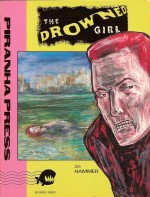
Dick Shamus lives in New York City. Not necessarily the one you know but one equally composed of snippets of books, flickers of films and TV titbits all filtered through the fried brains of an incorrigible addict who’s been off his prescription Lithium for far too long now…

Dick Shamus is a Private Eye. If he says so then it’s got to be true, right?

On one night so much like every other, Dick, bombed out of his gourd on his tipple of choice – embalmers’ formaldehyde with a chocolate drink chaser – picks up a useful tip about a Nazi weight-lifting club from one of his usual sources: few of them credible and none of them real…

The drink might be the secret CIA vaccine to prevent AIDS but it sure plays hob with the deductive faculties…

The side of the city only he can see tells the weary, ravaged gumshoe that there’s a connection between the Fascist health fanatics, India and the Drowned Girl – whoever she is – and as his personal reality intercepts and continually collides with the equally outrageous consensus reality the rest of us are stuck with, Dick is carried by events to a tragic and disturbing rendezvous.

If only he could recall who the client was…

Raw and savagely beguiling, the one night’s odyssey of the perceptually challenged Shamus as he weaves between rich bastards, gutter-scum, gullible art-trendoids, yuppie-gentrifiers and armchair anarchists, affable protester-bashing cops and a hundred other “normal” folks in search of his dimly perceived targets…

This disturbing, hard-luck pilgrim’s progress is as truly thought-provoking, hard-bitten, revelatory and socially castigating as the works of Dashiell Hammett, William Burroughs, Hunter S. Thompson, Raymond Chandler or Gabriel García Márquez, whilst the brutally unrefined and intoxicatingly vibrant painting of author Jon Hammer makes this perhaps the very best psycho-detective graphic novel you’ve never read.

But all that could change if and when you too track down The Drowned Girl…
© 1990 Jon Hammer. All rights reserved.

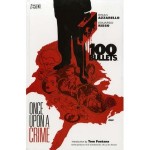
100 Bullets: Once Upon a Crime


By Brian Azzarello & Eduardo Risso (Vertigo)
ISBN: 978-1-84576-594-X

Originating as merely the best crime comic in decades, 100 Bullets grew into a terrifyingly imaginative conspiracy thriller of vast scope and intricate, intimate detail. With this eleventh volume (collecting issues #76-83 of the breathtakingly adult comic book) creators Azzarello & Risso apparently had all their ducks in position and began to earnestly reveal a few long-hidden secrets as they counted down to the inevitable big finish.

However, as always there’s far, far more going on than you might think, and there are still a few surprise twists in store…

Not long after Columbus landed in America, thirteen ancient European crime-families migrated to the New World and clandestinely carved up the continent in perpetuity between them. As the country grew cultured and a new nation was born The Trust embedded itself within every aspect.

To prevent their own greed and ambition from destroying the sweetest deal in history, the Families created an extraordinary police force to mediate and act when any Trust member or faction acted against the unity and best interests of the whole.

They were called the Minutemen and were always led by the kind of peacekeeper needed to keep them honest and actively cooperating – a man uniquely honest, dedicated, smart and remorseless.

Not too long ago though, some of The Trust’s current leaders decided they no longer needed overseers and acted with characteristic ruthlessness to remove them.

Minutemen leader Agent Graves didn’t take this lying down and has been gradually enacting a plan to rectify that casual injustice. For years he has been appearing to various betrayed and defeated people as a “Court of Last Resort” offering answers, secrets, an untraceable handgun and 100 Bullets …

Some of those tragic beneficiaries have been revealed as Minutemen with their personalities hypnotically submerged in cover identities to hide and protect them from The Trust. Reawakened by Graves as he confidently proceeds with his long range strategy no-one really knows what the end-game and ultimate goals are…

Now the situation has spun completely out of control. Trust Fix-it man Mr. Shepherd is dead, killed by his most trusted agent Dizzy Cordova and the Minutemen are as divided, confused and fractionated as their erstwhile employers.

Moreover, Dizzy might have been the gun but it was Graves who pulled the trigger…

As always, pay attention when perusing: the uncompromising co-creators have never sugar-coated their work nor spoon-fed their audience and these stories need to be carefully studied: both the hypnotically spartan story and stunningly stylish visuals…

After an introduction and appreciation from groundbreaking TV innovator Tom Fontana the complex psycho-drama resumes with ‘Punch Line’ as Mr. Branch and Wylie Times baby-sit Dizzy and errant Trust heir Benito Medici in the desert whilst new Trust warlord Lono, prison buddy Loop Hughes and Minuteman Victor Ray decompress in typically sordid and anti-social style…

Graves keeps his distance and his plans from those most loyal to him but Remi Rome and Cole Burns know something is breaking when Wylie informs Graves that he will keep Dizzy from returning to him at all costs.

Wylie’s next call is to barely under control psychotic Lono, an angry man hungry to kill Graves and get his hands on the bitch who shot his buddy Shepherd…

With all factions on a collision course, mercenary bandit Coochie and his gang pick exactly the wrong moment to try and impress Graves by “rescuing” Dizzy and when Victor apparently switches to Wylie’s team the stage is set for the brutal removal of one more major player…

‘Split Decision’ records yet another shifting of alliances as, after still more mayhem and Machiavellian machinations, Dizzy returns to Grave’s team with everybody aware that she’s only there to kill the man who messed up her life and her mind…

The book concludes with ‘Tarantula’ as, thousands of miles away, the mysterious painting “La Morte dil Cesar” – which has tantalised and tempted assorted antagonists since The Counterfifth Detective – rises to prominence again when Remi’s brother Ronnie is dispatched to Rome to obtain it for Graves.

Once there the retired mob leg-breaker is swiftly enveloped in a tangled web of sex, double-crosses, murder, sex, art-fraud, triple-crosses and sex with deadly wild card Echo Memoria, who has been playing her own game at the edges of the action since she first seduced the hapless Mr. Branch in A Foregone Tomorrow, thereby setting up a catastrophic confrontation in the days to come.

This final story-arc blends the contemporary tale of Ronnie’s Roman holiday with Graves’ intimate revelations to Dizzy of how he first recruited Shepherd to his squad and the lousy reason his own mentor, veteran Minuteman Curtis Hughes, never got to lead the peacekeeping cadre…

Laced with telling flashbacks to the days when Graves’ team still acted for The Trust and packed with the kind of gratuitous smut and atrocity that we’ve come to expect and adore, Once Upon a Crime cranks up the action and tension to an almost unbearable degree as the grand denouement looms large.

Over months and years Azzarello & Risso painstakingly planted many seeds which grew into a tangle of shoots simultaneously entwining and growing off at tangents before coming together into a perfect mosaic of magnificent power and intensity.

These are some of the very best graphic novels ever crafted and demand your utmost attention. You need them all and the very best is still to come…
© 2006, 2007 Brian Azzarello, Eduardo Risso & DC Comics. All Rights Reserved.

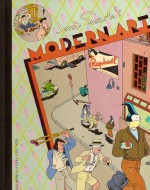
Joost Swarte’s Modern Art


By Joost Swarte, translated by Martin Beumer (Real Free Press Int. Foundation)
No ISBN:

Joost Swarte is national treasure of the Netherlands: a Dutch New Master whose too-rare forays into comic art have always produced challenging and stunning work which manage to be simultaneously forward looking and aggressively retro and nostalgic.

He has won awards and acclaim as a writer, artist, illustrator, printmaker, graphic designer, stained glass and mural creator and furniture/architectural designer.

Born on Christmas Eve 1947, Swarte grew up in Heemstede in North Holland Province, before studying Industrial Design at the Academy for Design in Eindhoven. He gravitated to the comics field in the late 1960s, becoming adept in the classical ligne laire style of illustration favoured by Belgian star artists such as Hergé, “Bob” (Robert Frans Marie) De Moor and E.P. (Edgard Félix Pierre) Jacobs, producing children’s strips for magazines such as Tante Leny Presenteert and Jippo whilst also working as a newspaper illustrator.

In 1971 he began his own magazine Modern Papier and over the years created many evocative, stylish and memorable series such as Jopo de Pojo, Katoen en Pinbal, Anton Makassar, Dr. Ben Cine, ‘De Blauwe Berbers’, ‘Caesar Soda’, ‘Toon en Toos Brodeloos’ and Niet Zo, Maar ZoPassi, Messa.

With his works translated into many foreign languages, including storming appearances in Art Spiegelman’s seminal Raw magazine, Swarte formed his own publishing house Oog & Blik in 1985 (a distinguished and prominent source of many superb books and albums) and in 1992 was the co-founder of the Haarlem Stripdagen, Holland’s International Comics Convention. In 2004 he was knighted by Queen Beatrix of the Netherlands.

He first gained international prominence in 1980 when he was a guest at the prestigious Salon International de la Bande Dessinée in Angoulême, France and from that year comes this superb celebratory collection of translated past works in a full-colour, board-backed signed and numbered edition which is as much objet d’art artefact as book.

From 1973 and scripted by “Willem”, ‘Enslaved by the Needle’ is a dark, extremely adult and fantastic Art Deco tribute to American gangster movies set in the metafictional 1930s wherein dissolute Parisian thug Fred Fallo becomes accidentally involved with the deadly Mr. Skunk – a Yankee criminal so crazy-dangerous that all the other mobs pay him to stay out of America.

Soon however, the lethal gang-lord has manipulated Fallo into sneaking him back into the USA, where the deranged mastermind begins a campaign of terror by flooding the streets with a horrifying new narcotic. As the city reels, Skunk then turns on his own confederates…

Unique style icon and bored hard-luck kid Jopo de Pojo stars in ‘Imago Moderna’ (1974, and with a clever cameo from Anton Makassar); pestered by ennui, a street missionary, subversive organisations and wicked women before being sucked into a madly paranoid midnight world whilst ‘A Second Babel’ from 1976 focuses on Nazis in Paris and a fantastic plan to build a colossal tower under the city…

Jopo de Pojo returned in ‘Une Chance sur cent Mille’ (A Chance in a Million from 1975), falling ignominiously and ineffectively into a bizarre kidnap plot whilst ‘Goodbye’ from 1977 finds inept detective Tony Priggles in well over his head investigating a string of seriously ludicrous suicides after which this beguiling tome ends with unconventional scholar Anton Makassar similarly all at sea as he tries to make his mark in the uncompromising arena of ‘Modern Art’ (1978)…

These captivatingly dark, deceptively witty and staggeringly beautiful yarns are magnificent examples of a master storyteller at his playful best and even if this particular volume is hard to find – but still well worth every effort – Joost Swarte’s work is something every mature art-lover should see.

Lucky for you then that a few other collections have been released in the last few years…
© 1973, 1974, 1975, 1976, 1978, 1980 Joost Swarte. This edition © 1980 Real Free Press Foundation. All rights reserved.

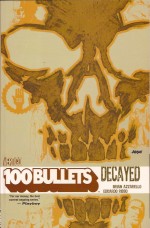
100 Bullets: Decayed


By Brian Azzarello & Eduardo Risso (Vertigo)
ISBN: 978-1-84576-384-8

Not long after Columbus landed in America, thirteen ancient European crime-families migrated to the New World and clandestinely carved up the continent in perpetuity between them. As the country grew cultured and a new nation was born the Trust embedded itself within every aspect of it.

To prevent their own greed and ambition from destroying the sweetest deal in history the Families created an extraordinary police force to mediate and act when any Trust member or faction acted against the unity and best interests of the whole. They were called the Minutemen and were always led by the kind of peacekeeper needed to keep them honest and actively cooperating – a man uniquely honest, dedicated, smart and remorseless.

Not too long ago though, some of The Trust’s current leaders decided they no longer needed overseers and acted with characteristic ruthlessness to remove them.

Betrayed Minutemen captain Agent Graves didn’t take his dismissal well and has been slowly enacting a plan to rectify that casual injustice. For years he has been appearing to various betrayed and defeated people as a “Court of Last Resort” offering answers, secrets, an untraceable handgun and 100 Bullets …

Some of those tragic beneficiaries have been revealed as Minutemen with their personalities hypnotically submerged in cover identities to hide and protect them from the Trust. Gradually they have been reawakened by Graves as he confidentially proceeds with his long range strategy… although no-one really knows what the end-game and ultimate goals are.

With this tenth volume (collecting issues #68-75 of the Vertigo comicbook and the three quarter mark of the stunning adult saga) comes another stunning ratcheting-up of suspense as even more players are removed from the game and the increasingly wary survivors consolidate their positions for the fast approaching apocalyptic finale.

Pay attention when perusing: the uncompromising co-creators have never been accused of underestimating their audience’s intelligence – or appetite for blood, sex, intrigue and ultra-violent action – and these stories need to be carefully studied: both the delightfully sparse words and the shockingly slick pictures…

After an introduction from Darwyn Cooke the ongoing drama re-opens with ‘Sleep, Walker’ and a flashback to 1962 as Axel, leader of House Nagel, is informed by young Augustus Medici that the Minuteman leader Neil Walker has died…

To replace him Medici and Javier Vasco favour the coolly capable Philip Graves, but the junior Minuteman is not so certain he will win the position or the Trust’s full acceptance…

In the present Nagel is a tired old man carried along on Medici’s ambitions and sadly realising his own time has, at last, run out…

As new Trust Warlord Lono targets death-obsessed street-fighter Jack Daw and finally reactivates the next hidden sleeper agent by almost beating him to death, another flashback reveals that some Trust members fear Graves’ Holy Grail has always been a House of his own…

The extended saga ‘A Wake’ reintroduces another capable and nefarious character as low-level enforcer Ronnie Rome hunts for the suicidal mook crazy enough to steal from his gangster boss Mimo. If only all the evidence didn’t point to Ronnie’s wild younger brother Remi…

Meanwhile Axel’s funeral points out a minor problem: as the nine remaining Trust Families swear new allegiance and solidarity to each other a contentious point of order crops up.

Lars and Anna, twins with an unhealthy affection for each other, are the heirs to House Nagel, but since there can be only one undisputed head and the twins are reluctant to choose they must be prodded at all costs into making an irrevocable decision…

Elsewhere, with all the angles weighed, Ronnie readies himself to settle with Remi, but the snotty sibling has found the case, gun and 100 bullets Graves left with the older leg-breaker…

Things turn very nasty when the real thieves are exposed, but the horrific bloodbath that results there is as nothing compared to what happens after one of the Rome boys is revealed as another dormant Minuteman…

And at the highest level of society, Lono works things out with the two potential heirs of Axel Nagel. When he’s done there’s one less House in the Trust…

This volume ends with ‘Amorality Play’ as Graves plays his game in San Francisco, offering young grill-chef and washed-up medical student Dustin his usual deal and briefcase while Lono revels in his growing clout with the Trust and messes with assorted street-punks, predators and lowlifes – just to keep his hand in and to prove what really makes humanity tick…

Wicked, clever, blackly funny and gloriously, gratuitously vicarious, this ultra-violent, sex-stuffed, profanity-packed, utterly addictive thrill ride always delivers maximum punch and every beautiful panel on every thrilling page might hold the final clue  to the grand saga unfolding before your eyes. Moreover even whilst playing scrupulously fair the creators are doing their best to shock, mislead and set you up….

Beginning as one of the best crime-comics ever produced, the series developed into a staggeringly plausible and painfully visceral conspiracy thriller of vast scope and dazzling, intricate detail. Over the months and years Brian Azzarello & Eduardo Risso slowly and carefully planted many seeds which grew into a tangle of disparate shoots simultaneously entwining and growing off at tangents before coming together into a perfect mosaic of mood, mayhem and murder.

If there are still any of you rush-starved story fans – grown-up, paid-up, immured to harsh language and unshaken by nudity, rudity and very violent behaviour – who haven’t seen this compulsive classic yet, get out there and grab every one of these graphic novels at all costs! You need them all and the very best is yet to come…
© 2006 Brian Azzarello, Eduardo Risso & DC Comics. All Rights Reserved.

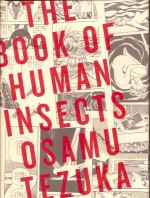
The Book of Human Insects


By Osamu Tezuka translated by Mari Morimoto (Vertical)
ISBN: 978-1-935654-20-9

Win’s Christmas Gift Recommendation: an ideal chiller for those dark nights… 8/10

There aren’t many Names in comics. Lots of creators; multi-disciplined or single focussed, who have contributed to the body of the art form, but we don’t have many Global Presences whose contributions have affected generations of readers and aspirants all over the World, like a Mozart or Michelangelo or Shakespeare. There’s just Hergé and Jack Kirby and Osamu Tezuka.

Tezuka was born in Osaka Prefecture on 3rd November 1928 and as a child suffered from a severe illness which made his arms swell. The doctor who cured him inspired him to study medicine, and although Osamu began his professional drawing career while at university, he persevered with his studies and qualified as a doctor too. Facing a career crossroads, his mother advised him to do the thing that made him happiest. He never practiced as a healer but the world was gifted with such classic cartoon masterpieces as Tetsuwan Atomu (Astro-boy), Kimba the White Lion, Buddha, Adolf and literally hundreds of other graphic narratives. Along the way Tezuka incidentally pioneered, if not created, the Japanese anime industry.

Able to speak to the hearts and minds of children and adults equally, Tezuka’s works range from the childishly charming to the disturbing – and even terrifying. In 1970-1971 he produced the stark and moody psycho-thriller Ningen Konchuuki for Akita Shonen’s Play Comic, detailing the inexorable rise of a truly different kind of monster for the burgeoning audiences who were growing up and demanding more mature manga fare.

This superb black and white 364 page hardback opens with ‘Spring Cicada’ as failed and broken designer Ryotaro Mizuno ponders the incredible success of golden girl Toshiko Tomura; a bright young thing who has just scooped a major literary prize for her first novel.

Across town a broken-down derelict also toasts her success whilst in a lonely garret a girl hangs from the end of a noose…

Mizuno confronts Toshiko in her moment of triumph, telling her failed author Kageri Usuba has committed suicide. Their tense exchange is observed by muck-raking journalist Aokusa…

Convinced he’s on to something the reporter perseveres and discovers that Toshiko is a modern renaissance woman: emerging from obscurity to become a celebrated actress while still in her teens, she graduated to directing before becoming an award-winning designer. Abruptly she metamorphosed again, writing the stunning novel The Book of Human Insects. Still in her twenties, there seems to be nothing the angelic girl cannot do…

Further enquiry leads the newsman to her desolate rural home where the uncanny genius presents an entirely different, almost wanton aspect. Moreover she keeps there a very creepy waxwork of her dead mother…

Toshiko catches the professional voyeur and agrees to an interview, but before that meeting Aokusa is accosted by shambling drop-out Hyoroku Hachisuka, a once-prominent stage-director who imparts the true story of Toshiko’s resplendent rise to fame and fortune.

Once, the universally approved-of, wholesome girl was a small, timid creature who inveigled her way into his theatre company. Once there she attached herself like a leech to the star, learning her ways and mannerisms. A perfect mimic, Toshiko not only acquired the actress’s skills but also seemed to suck out her talent and inspiration. When the former star quit Toshiko replaced her…

She performed that same slow consumption of the entire company and then turned her attentions to the director…

Moreover, the seemingly helpless waif was utterly amoral, using sex, slander and perhaps even murder to achieve her ends, which were always short-term: she had no goals or life ambitions, but merely flitted from victim to victim like a wasp seeking its next meal…

Ignoring the warning Aosuka persists and discovers that promising writer Usuba once had a room-mate named Toshiko whom she accused of plagiarising her novel…

Intriguingly, the lonely writer’s recent suicide occurred in extremely suspicious circumstances…

During a TV interview Toshiko accidentally meets Mizuno again. Revealed as one of her earliest victims, can he possibly be the only man she ever loved?

In ‘Leafhopper’ Aosuka uncovers another of Toshiko’s secrets when he meets for the first and last time her shady associate Arikawa – a murderous anarchist who cleans ups the lovely mimic’s potential embarrassments – just as she tries to renew her relationship with the bitter and far wiser Mizuno.

Toshiko also meets war criminal and right-wing “businessman” Sesson Kabuto who immediately discerns her true nature and keeps a fascinated but wary professional distance from her…

Toshiko operates almost instinctively and according to immediate desire, but she has a terrifying capacity to clean up any potentially damaging loose-ends. After seducing Arikawa she spectacularly removes him during a political assassination and uses the affair to promote her next book…

Meanwhile Mizuno spirals further into despondency until he meets a prostitute who looks like Toshiko and finally finds redeeming true love – of a sort…

Toshiko almost overreaches her abilities when she is arrested by South Korean security forces in ‘Longhorn Beetle’ but is rescued and forced into marriage by a man every inch her ruthless, remorseless equal, compelling her to even more inspired acts of perversion and survival – which consequentially endangers the wellbeing of everybody in Japan – before ‘Katydid’ brings the unique drama to a shocking, bloody, poignant and utterly unexpected conclusion…

Murder-mystery, Greek Tragedy, trenchant melodrama, serial-killer horror story and much more, this supremely adult tale has hardly dated at all since its release and offers a chilling image of those hidden invisible predators who have supplanted vampires, witches and werewolves in the dark corners of our communal consciousness.

The beautiful maiden as lure and amoral predator possibly began with this truly disturbing tale and the story is one which will stay with readers long after the final page is turned…

“God of Manga” Osamu Tezuka died in 1989 but with ever more of his copious canon at last being released in English there’s plenty of brilliant material for all ages, intellects and inclinations to admire and adore, so why not start right here, right now.

Accept no imitations…

© 2011 by Tezuka Productions. Translation © 2011 by Mari Morimoto and Vertical, Inc. All rights reserved.

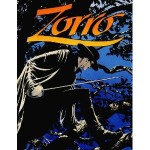
Zorro in Old California


By Nedaud & Carlo Marcello (Eclipse Books)
ISBN: 978-1-89172-920-1 hardcover,   978-0-91303-512-2 paperback

One the earliest masked heroes and still phenomenally popular throughout the world is perennial film favourite “El Zorro, The Fox”, originally created by jobbing writer Johnston McCulley in 1919 in a five part serial entitled ‘The Curse of Capistrano’ and debuting in All-Story Weekly from August 6th to 6th September. The tale was subsequently published by Grossett & Dunlap in 1924 as The Mark of Zorro and further reissued in 1959 and 1998 by MacDonald & Co. and Tor respectively.

Famously Hollywood royalty Douglas Fairbanks and Mary Pickford read the ‘The Curse of Capistrano’ in All-Story Weekly on their honeymoon and immediately optioned the adventure to be the first film release from their new production company/studio United Artists.

The Mark of Zorro was a global movie sensation in 1920 and for years after, and New York based McCulley re-tailored his creation to match the extremely different filmic incarnation. The Caped Crusader aptly fitted the burgeoning genre that would soon be people by the likes of The Shadow, Doc Savage and the Spider.

Rouben Mamoulian’s filmic remake of The Mark of Zorro further ingrained the Fox into the World’s psyche, and as the prose exploits continued in a variety of publications Dell began a comicbook version in 1949. When Walt Disney began a hugely popular Zorro TV show in 1957 the comics series was redesigned to capitalise on it and the entertainment corporation began a decades-long strip incarnation of “their” version of the character in various areas of the world. This classy tome collects half of the dozen stories produced for a French iteration which originally ran in Le Journal de Mickey, by veteran Italian artist Raphaël Carlo Marcello and relative enigma Nedaud, of whom I sadly know very little.

The celebrated and supremely stylish Marcello (1929-2007) moved to Paris in 1948 and began his long and prestigious career drawing Loana et le Masque Chinois in Aventures de Paris-Jeunes and Nick Silver for Collection Victoire before switching to newspaper strips for Opera Mundi in 1950, illustrating La Découverte du Monde and L’Histoire de Paris before adapting Ben Hur, Jane Eyre and the Bible.

In 1952, he joined Héroic, working on Oliver Twist, Gil Blas and Bug Jargal, then began a 15-year run on Le Cavalier Inconnu (1955-1970) in Pépito. His maintained ties to newspapers throughout and continued general interest literary adaptations for Mondial-Presse.

In 1956, he contributed Bob Franck to Bugs Bunny magazine and numerous strips to Lisette, Monty, Mireille, L’Intrépide/Hurrah and Rintintin. He moved to Pif Gadget in 1970, collaborating on his signature series Docteur Justice with prolific scenarist/writer Jean Ollivier as well as Amicalement Vôtre (a TV adaptation scripted Spanish by the legendary Victor Mora), Taranis (scripts by Ollivier & Mora), Tarao (by Roger Lécureux) and La Guerre du Feu.

Never stopping for breath Marcello illustrated John Parade, Patrouilleur de l’Espace, in Le Journal des Pieds Nickelés, the Larousse series L’Histoire de France en Bandes Dessinées, La Découverte du Mond and L’Histoire du Far West until 1985 when he joined Le Journal de Mickey to create Le Regard du Tigre, Le Club des Cinq and the subject of this collection.

Solidly based on the 1950s TV series Zorro ran for a year (1985-1986): 12 stirring fast-paced, swashbuckling romps, the first half of which are collected in this slim, full colour European-format album. After these thundering epics Marcello carried on improving, drawing sci fi extravaganza Cristal, epigrammatic short stories Voulez-vous de Nos Nouvelles?, Michael Jackson, Wayne Thunder, L’Épopée du Paris Saint-Germain and mature-reader series Nuit Barbare and Amok. In 1991 he returned to his hometown of Vintimille where he ended his days drawing episodes of iconic Italian series’ Tex and Zagor for Il Giornalino and Bonelli publishing.

Don Diego de la Vega is the foppish son of a noble house in old California when it was a Spanish Possession, who used the masked persona of Zorro the Fox to right wrongs, defend the weak and oppressed – particularly the pitifully maltreated natives and Indians – and thwart the schemes of Capitan Monastario, his bumbling sergeant Garcia and the despicable Governor determined to milk the populace for all they had. In his crusade Diego was aided by Bernardo (the deaf-mute manservant retained for the assorted TV and movies) and the good-will of the oppressed and overtaxed people of Los Angeles.

Whenever Zorro appeared he left his mark – a bold letter “Z” – carved into walls, doors, curtains, but never, ever faces…

Written for an all-ages audience these stories, each around ten pages long, play out an exotic eternal, riotous game of tag, beginning with ‘Wanted!’ as a huge reward galvanises the town to hunt the Fox, until Zorro turns the tables by capturing the Capitan and ransoming him back, thereby emptying the military coffers…

Next, in ‘The Assassins’ bandits posing as patriotic rebels capture the masked hero as part of their plan to murder the Governor and loot the ever-growing township, whilst ‘Double Agent’ sees Monastario blackmail a girl into betraying the wily avenger, but again misjudges Zorro’s ability to connect with the downtrodden Californians…

‘The Scarecrow’ finds the hero thwart a plot to discredit the reputation of Zorro when the unscrupulous Capitan employs a murderous masked impostor, after which ‘Tight as a Noose’ sees Monastario arrest Diego’s father Don Alejandro for treason to entrap the mysterious vigilante, and this rip-roaring rollercoaster ride concludes with ‘The Winds of Rebellion’ as the latest illegal tax rouses the town council against the Capitan and Zorro gets involved to prevent bloodshed…

Full-bodied, all-action and beautifully realised these classy adventures of a global icon are long overdue for a comprehensive and complete re-release, but until then at least this terrific tome is still readily available in both hardback and softcover through many online retailers.
® and © 1986 Zorro Productions, Inc. All Rights Reserved.

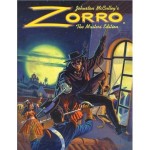
Zorro – the Masters Edition volume 1


By Johnston McCulley (Pulp Adventures Inc.)
ISBN: 978-1-89172-920-1

One the earliest masked heroes and still phenomenally popular throughout the world is perennial film favourite “El Zorro, The Fox”, originally created by jobbing writer Johnston McCulley in 1919 in a five part serial entitled ‘The Curse of Capistrano’ and launched in prose magazine All-Story Weekly beginning in with the August 6th edition and concluding with 6th September).

The tale was subsequently collected as a novella and published by Grossett & Dunlap in 1924 as The Mark of Zorro and further reissued in 1959 and 1998 by MacDonald & Co. and Tor respectively.

Famously Hollywood royalty Douglas Fairbanks and Mary Pickford read the ‘The Curse of Capistrano’ in All-Story Weekly whilst on their honeymoon and immediately optioned the rights for the first film release from their new production company/studio United Artists.

The Mark of Zorro movie was a global sensation in 1920 and for years after, so a second prose serial was understandably commissioned from McCulley. ‘The Further Adventures of Zorro’ ran in All-Story Weekly from May 6th to June 10th 1922, but the magic thunderbolt didn’t strike twice and the Swashbuckling Señor wasn’t seen again until revived in the 1930’s pulps as part of a boom in extraordinary, more-than-merely-mortal adventures.

New York based McCulley was clearly no fool and had re-tailored his creation to match the extremely different filmic incarnation, making Zorro more a prototypical superhero than the broad Scarlet Pimpernel knock-off he had begun as (although many fictive historians prefer the idea that the character was based on real-life bandit Joaquin Murrieta, the “Mexican/Chilean Robin Hood”, whose life was fictionalized by John Rollin Ridge in 1854), so the Caped Crusader aptly fitted the burgeoning genre that would soon be peopled by the likes of The Shadow, Doc Savage and the Spider.

Weekly Argosy Magazine featured the four-chapter serial ‘Zorro Rides Again’ from October 3rd – 24th 1931 and a year later began a succession of complete novellas which ran between 1932 and 1935 and these are all reprinted in this glorious, album-sized volume.

McCulley produced a further chapter-novel ‘The Sign of Zorro’ for Argosy in 1941 (following the 1940 Rouben Mamoulian movie The Mark of Zorro) before switching to the monthly West Magazine in 1944. The first two of the 52 short stories produced between then and 1951 are also included, closing out this initial collection.

The author wrote two further stories ‘Zorro Rides the Trail’ for the May 1954 Max Brand Western Magazine and another, different version of ‘The Mark of Zorro’ which was published in Short Story Magazine in April 1959, the year after McCulley’s death and just as Disney’s epochal Zorro TV show was ending its three year run..

This wonderful monochrome celebration opens with an introduction from Don McGregor, who scripted comicbooks and a newspaper strip about the character, after which the stirring prose exploits begin…

For the uninitiated: Don Diego de la Vega was the foppish son of a grand house in old California when it was a Spanish Possession, who used the masked persona of Señor Zorro (the Fox) to right wrongs, defend the weak and oppressed – particularly the pitifully maltreated natives and Indians – and thwart the schemes of a succession of military leaders and the colonial Governor determined to milk the populace for all they had.

Whenever Zorro struck he left his mark – a letter “Z” carved into walls, doors, faces…

By the time of ‘Zorro Saves a Friend’ (Argosy November 12th 1932) he had become simply Don Diego Vega, and had a whole support structure in place. His stiff-necked Hildalgo father knew his secret, as did his two assistants Bernardo (the deaf-mute manservant retained for the assorted TV and movies) and Jose of the Cocopahs – a native chief who often acted as stableman, decoy and body-double for the Masked Avenger. Diego also employed a retired, reformed one-eyed pirate named Bardoso to act as his spy amongst townsfolk and outlaws…

It is the pirate who warns the seemingly effete nobleman that his young comrade Don Carlos Cassara, amongst others, has been especially targeted by military overseer Capitán Torello. That cunning strategist had hired a professional gambler and card-sharp to ruin the wealthy grandees who constantly resist the Governor’s political schemes, intending to humiliate or even cause the suicide of a generation of rich men…

Forewarned, The Fox took action as only he could…

‘Zorro Hunts a Jackal’ first appeared in April 1933, and detailed in stirring fashion how Torello hires a horse-breaker to abuse and cheat the natives in a plot to draw out Zorro and expose him as Don Diego. However, the mercenary has a darker secret of his own, but all his machinations are as nothing against the wiles of The Fox…

New Army chief Marcos Lopez was an even more cunning opponent. In ‘Zorro Deals With Treason’ (August 1934) the Capitán employed an impostor Zorro to foment rebellion among the Indians, but was soon made painfully aware of the regard and trust they placed in the genuine masked marvel…

The lengthy novelette which follows was first published in two parts in the Argosy issues for September 21st and 28th 1935, and is here presented as an interrupted saga of grand romance and spectacular action as Don Diego and Bernardo travelled to distant San Diego de Alcála to escort his father’s greatest friend, his entire wealth and his beautiful daughter Carmelita to a new life in Reina de Los Angeles.

Major headaches along the way include astute new military commander Capitán Carlos Gonzales, assorted bandits, murderous rogues Pedro Pico and Valentino Vargas and an enigmatic mastermind building a criminals’ army known only as the ‘Mysterious Don Miguel’…

The last two tales come from West Magazine: a brace of short stories from July and September 1944. The first ‘Zorro Draws His Blade’ finds Don Diego contacted by the Friars of the local Mission – who also aware of his other identity – to clear the name and save the life of a peasant who has been framed for murdering a landowner. Of course the task is accomplished with cunning and devastating panache before the adventure concludes with ‘Zorro Upsets a Plot’ as the dashing Night-rider is forced to clear his name and confound another military frame-up when a masked and cloaked figure boldly and conspicuously abducts a beautiful maiden…

These are classic Blood-and-Thunder tales chock-full of fights and midnight chases, with scurvy blackguards maimed or slaughtered according to their crimes and station in life and dastardly plots unravelled with great style.

The more observant will note that as the years went by the rate of wounding decreased whilst the body-count steadily rose: a sure sign of the changing times and one which was repeated decades later in the superhero comics this series is such a clear template for…

The volume also contains a complete checklist of the prose canon and is liberally sprinkled with spot illustrations and full-page plates by Joel F. Naprestek, Franklyn E. Hamilton, Glen Ostrander, Mark Bloodworth and Randy Zimmerman as well as all the (sadly unattributed) illustrations which accompanied the original incarnations, as well as the painted magazine covers of those issues.

This edition and its successors apparently retail for staggering prices, but since there’s only one Rights owner and the character is so unbelievably popular, surely there’s a publisher out there willing and able to produce decent new collectors editions of these timeless tales along the sturdy, standard B-format paperback lines of Doc Savage, Sherlock Holmes or The Casebook of Sexton Blake?

I want more and surely there are hordes of others ready and eager to spend £s and $s for more “Z”s?
Zorro ® and © Zorro Productions. All Rights Reserved. This edition © 2000 Pulp Adventures, Inc. All rights reserved.

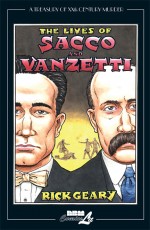
The Lives of Sacco and Vanzetti – A Treasury of XXth Century Murder


By Rick Geary (NBM/Comics Lit)
ISBN: 978-1-56163-605-1

Master cartoon criminologist Rick Geary returns with another compelling carnival of corruption from his series of graphic novel true-murder mystery reconstructions, combining a superlative talent for laconic prose, incisive observation and forensically detailed pictorial extrapolation with his formidable fascination for the darker aspects of human history.

Geary’s unblinking eye periodically scours the last hundred years or so for his Treasury of XXth Century Murder series, and here exposes one of the greatest and most painful travesties of American justice – a case which took the entire world by storm.

In 1920 a payroll robbery and double homicide in Eastern Massachusetts led to the arrest of two Italian anarchists who were either cunning, ruthless enemies of society, haplessly innocent victims of political scaremongering and judicial bigotry or – just maybe – a little of both….

Another superb black and white hardcover thriller, this captivating capsule history opens as always with a selection of detailed maps of pertinent locales before ‘The Crime’ details how a bloody wages snatch in South Braintree, Massachusetts took place on April 15th 1920. The events are dissected with meticulous care, rich in enticing extra data the local police ignored when picking up two ideal suspects: immigrant left wing activists Bartolomeo Vanzetti and Nicola Sacco.

‘The Accused’ details their personal histories, involvement with Anarchist and Socialist groups and their version of the events which led to their arrest on May 5th after which their deeply flawed trial is deconstructed in ‘The Case For the Commonwealth’: paying particular attention to the illegal manner in which the jury was convened, the nature of the witnesses and the prejudices of presiding judge and prominent anti-immigrant advocate Webster Thayer, who declared before, during and after the trial how he was going to “get those Bolshevicki bastards good and proper” and “get those guys hanged”…

The farcical days in court, in which the defendants found themselves as much at the mercy of their own lawyer’s political agenda as the prosecution’s and public’s assumptions and fabrications, is detailed in ‘The Case For the Defense’ and inevitably led to a guilty verdict and death sentences for both on July 14th 1921.

‘The Legal Jungle’ follows the numerous appeals, delays, public campaigns for clemency and stays of execution – paying particularly mordant attention to the unfortunate and peculiar legal procedure of Massachusetts Law which dictated that all appeals in a case must be heard by the judge in the original case – meaning that Web Thayer was “compelled” to rule on his own judgements and directions in the case. Not surprisingly, all appeals were over-ruled…

He even threw out a confession by a professional gangster who came forward and admitted to committing the crime, calling him a “robber, crook, liar and thief” with no credibility whatsoever…

The account closes with ‘A Global Cause’ as the case caught world attention, sparking a massive movement to re-examine the case; its subsequent co-opting as a cause celebre by both fascist and communist national leaders and violent anti-American protest, even riots and bombings in the streets of many countries.

Sacco and Vanzetti, who had always proclaimed their total innocence, were executed on August 23rd 1927, and this stirring chronicle concludes with the events, further facts and arguments that have continued to surface to this day regarding what is still a huge unfinished drama…

Geary presents facts and theories with chilling pictorial precision, captivating clarity and devastating wit and this still broadly unresolved mystery is every bit as compelling as his other homicidal forays: a perfect example of how graphic narrative can be so much more than simple fantasy entertainment. This merrily morbid series of murder masterpieces should be mandatory reading for all comic fans, mystery addicts and crime collectors.

© 2011 Rick Geary. All Rights Reserved.