100 Bullets: Strychnine Lives


By Brian Azzarello & Eduardo Risso (Vertigo)
ISBN: 978-1-84576-252-5

Beginning as one of the best crime-comics ever produced, 100 Bullets developed into a staggeringly plausible and painfully visceral conspiracy thriller of vast scope and dazzling, intricate detail. Starting from the superb premise “what if you were given an untraceable gun, one hundred bullets and a damned good reason?”, Brian Azzarello & Eduardo Risso carefully planted seeds which grew into a tangle of disparate shoots simultaneously entwining and growing off at tangents before coming together into a perfect mosaic of mood, mayhem and murder.

What we know so far…

Soon after Columbus stumbled upon America, thirteen European crime-families migrated to his New World and carved up the continent between them. Establishing themselves in all aspects of the chaotic influx, they swiftly disappeared into the burgeoning masses flocking to the New World. When the new nation was born The Trust was embedded into the roots of everything and secretly controlled all the decision-makers…

To forestall their own greed and ambition screwing up the sweetest deal in history, The Families created an extraordinary taskforce to mediate and police any Trust members or splinter factions acting against the best interests of the whole. “The Minutemen” were always led by the only kind of peacekeeper capable of enforcing the rule of law on men of infinite power and unsurpassed ambition – a man uniquely honest, dedicated, smart and remorseless.

Some years ago Trust leaders decided they no longer needed overseers and acted with characteristic ruthlessness to remove them at a stroke. Betrayed Minutemen commander Agent Graves didn’t take his dismissal lying down and has been manipulating events and people to rectify that injustice ever since.

For years he has been appearing to various betrayed and defeated people as a “Court of Last Resort” offering answers, proofs, an untraceable handgun and 100 Bullets…

More recently The Trust has come under sustained attack from within and without. House leaders have been assassinated and as surviving members and newly promoted house-heads constantly politic to rewrite their 400 year old accord, scattered members of Graves’ old team gather in the wings.

But even the returned Minutemen all seem to have their own agendas now… or is Graves simply a far more subtle Machiavelli than anybody ever suspected?

With this ninth volume (collecting issues #59- 67of the 100 Bullets comicbook) comes a stunning ramping-up of suspense as even more players are removed from the game and the wary survivors consolidate their positions for the fast approaching apocalyptic finale. Pay attention: Azzarello & Risso have never been accused of underestimating their audience’s intelligence – or appetite for blood, sex, intrigue and ultra-violent action – and these stories need to be carefully studied: both the delightfully sparse words and the shockingly slick pictures…

The cataclysmic carnage and torturous tension begins with ‘The Calm’ as maniac former-Minuteman Lono and his jail-bird apprentice Loop Hughes (see 100 Bullets: Hang Up on the Hang Low and 100 Bullets: Samurai) meet up with Victor Ray, first member of the old crew to be reactivated by Graves and off the grid for a suspiciously long time. In that time Victor has been lying low with Christine, but now her abandoned, lovesick husband has tracked them down…

Meanwhile in ‘Staring At the Son’ recently ascended House-leader Megan Dietrich pays a visit to de facto Trust leader Augustus Medici – himself only recently reconciled with his out-of-control heir Benito – to discuss new alliances, but she is, as usual, playing her own game. Why else would she compel terrified rogue reporter Mr. Branch to return to America for a clandestine conference decades after he first uncovered the secret of The Trust and went on the run?

At the same glitzy hotel where Megan is confronted by cool killer Cole Burns, bellboy Tino makes the wrong connection and becomes embroiled in a drug-fuelled domestic tragedy provoked by an insane misunderstanding between major bad-ass gang-bosses Spain and Bosco.

As Graves and Augustus thrash out a few differences, Cole and Branch discover they have somebody else in common; sexy, enigmatic Echo Memoria – who seems to be playing all sides in the ongoing struggle – and has stolen a painting crucial to the very survival of the Trust. Everybody wants that damn picture and now Cole expects the ineffectual Branch to track down both her and it…

‘The Dive’ sees Graves further provoke recovering addict Jack Daw – now devolved into a troubled street-fighting brute immune to pain but wracked by indecision – who tries to make the manipulative Minuteman take back his untraceable briefcase of ordnance and tainted promise – with typical lack of success. As Victor Ray points Loop towards some unwholesome facts of his new life, Lono auditions for the role of Trust facilitator by making a stomach-churning example of one of Augustus Medici’s last rivals and the psychotic force of nature reveals the calibre of tactical brain hiding beneath his brutish sadistic exterior in ‘New Tricks’…

With another major player falling to a Minuteman-engineered hit – but perpetrated by which faction of the relentlessly shifting rogue team? – this captivating chronicle concludes with an apparent sidebar tale when ‘Love Let Her’ finds Benito Medici, Mr. Branch and conflicted Minuteman Wylie Times stumbling all over each other in the Mexican desert whilst searching for freshly de-programmed – or is she? – Dizzy Cordova, Graves’ prime agent and secret weapon. Trading booze, bon mots and bullets the situation looks bad for all concerned…

But we won’t know until the next volume…

Everybody lies and everyone has their own goals in this complex and impossibly clever yarn, so the magical skill shown in presenting these characters in their immediate actions and long-term machinations is dazzling to behold. This madly mature epic is a masterpiece of craft, with layers of incidental stories counter-pointing the major narrative thrust… but in which even the least depicted cameo of the most minor bit-player might be of crucial importance to the final denouement…

If there are still any thrill-starved readers – grown-up, paid-up, immured to harsh language and unshaken by rude, nude and very violent behaviour – who aren’t addicted to this astounding epic thriller yet, for Pete’s sake go out and grab every one of these graphic novels at all costs! You need them all and the very best is still to come…
© 2005, 2006 Brian Azzarello, Eduardo Risso & DC Comics. All Rights Reserved.


Evaristo: Deep City


By F. Solano Lopez & Carlos Sampayo (Catalan Communications)
ISBN: 978-0874160345

For British and Commonwealth comics readers of a certain age, the unmistakable artistic style of Francisco Solano Lopez always conjures up dark moods and atmospheric tension because he drew such ubiquitous boyhood classics as Janus Stark, Adam Eterno, Tri-Man, Galaxus: The Thing from Outer Space, Pete’s Pocket Army, Nipper, The Drowned World, Kelly’s Eye, Raven on the Wing, Master of the Marsh and a host of other stunning tales of mystery, imagination and adventure in the years he worked for Britain’s Fleetway Publications.

However the master of blackest brushwork was not merely a creator of children’s fiction. In his home country of Argentina he was considered a radical political cartoonist whose work eventually forced him to flee to more hospitable climes.

Francisco Solano López was born on October 26th 1928 in Buenos Aires and began illustrating comics in 1953 with Perico y Guillerma for the publisher Columba. With journalist Héctor Germán Oesterheld (a prolific comics scripter “disappeared” by the Junta in 1976 and presumed killed the following year) Solano López produced Bull Rocket for Editorial Abril’s magazine Misterix.

After working on such landmark series as Pablo Maran, Uma-Uma, Rolo el marciano adoptivo and El Héroe, López joined Oesterheld’s publishing house Editorial Frontera and became a member of the influential Venice Group which included including Mario Faustinelli, Hugo Pratt, Ivo Pavone and Dino Battaglia.

López alternated with Pratt, Jorge Moliterni and José Muñoz on Oesterheld’s legendary Ernie Pike serial but their most significant collaboration was the explosively political and hugely popular allegorical science fiction thriller El Eternauta which began in 1957. By 1959 the series had come to the unwelcome attention of the authorities in Argentina and Chile, forcing López to flee to Spain. Whilst an exile there he began working for UK publishing giant Fleetway from Madrid and London.

In 1968 he returned to Argentina and with Oesterheld started El Eternauta II for new publisher Editorial Records, produced sci-fi series Slot-Barr (written by Ricardo Barreiro) and period cop drama Evaristo with kindred spirit Carlos Sampayo. In the mid-1970s López was once again compelled to flee his homeland, returning to Madrid where he organised the publication of El Eternauta and Slot-Barr with Italian magazines LancioStory & Skorpio.

He never stopped working, producing a stunning variety of assorted genre tales and mature-reader material and erotica such as El Instituto (printed by Eros as Young Witches), El Prostíbulo del Terror (story by Barreiro) and Sexy Symphonies: the bleak thrillers Ana and Historias Tristes with his son Gabriel, illustrated Jim Woodring’s adaptation of the cult movie Freaks. In recent times, safely home in Argentina he continued to work on El Eternauta with new writer Pablo “Pol” Maiztegui.

López even found time for more British comics with strips such as ‘Jimmy’, ‘The Louts of Liberty Hall’, ‘Ozzie the Loan Arranger’ and ‘Dark Angels’ in Roy of the Rovers, Hot-Shot and Eagle.

Francisco Solano López passed away in Buenos Aires on August 12th 2011.

Poet, critic and author Carlos Sampayo is most well-known for his grimly powerful comics collaborations with José Muñoz on Joe’s Bar and Alack Sinner (both long overdue for a review here) as well as other contemporary classics like ‘Jeu de Lumières’, ‘Sophie’, ‘Billie Holiday’ and ‘Sudor Sudaca’.

Born in 1943 Sampayo was another outspoken creative Argentinean forced to flee the Junta in the early 1970s. Travelling to Europe he found a home for his desolate, gritty and passionately evocative stories in France and Italy, working with Julio Schiaffino, Jorge Zentner and Oscar Zarate before settling in Spain where he and fellow expatriate Solano López produced the compelling anti-hero Evaristo in 1985.

The long-running serial featured a seemingly brutish ex-boxer who had risen to the rank of Police Commissioner in late 1950s Buenos Aires – a debased and corrupt city of wealth and prestige cheek-by-jowl with appalling poverty and desperate degradation, and after a compelling introduction by Xavier Coma the graphic odyssey begins with ‘Breaking the Ties’ as a bank hostage crisis devolves into a long-postponed grudge match as Commissioner Evaristo is confronted by old Boxing ring-rival Fournier who has returned to finally settle an old score. As is so often the case in such long-lived hatreds, there’s a woman at the heart of it…

‘The Famous Lubitsch Case’ finds the grizzled morally ambivalent veteran pushed by his bosses to locate a missing heiress who has either been abducted or eloped with a notorious gangster and womaniser. Unfortunately, for reasons even he can’t fathom, Evaristo seems determined to discover the truth rather than follow the “clues” his bosses have directed him to find…

In ‘The Herman Operation’ secretive guys with German accents and connections to the Argentinean military keep disappearing and the Commissioner is no use at all. It’s like he isn’t even trying…

The hunt for a cop-killing bandit takes a long look at the Commissioner’s sordid past and some dubious child-care practises by the local clergy in ‘The Crazy Grandson’ whilst ‘Shanty Town’ sees the cops looking for a serial killer whilst a corrupt minister causes a devastating water-shortage – and riots – in the slums. As usual Evaristo ignores his bosses and keeps looking for the “wrong” people…

As a hit-squad tasked with assassinating the troublesome cop uses what seems to be perfect leverage by kidnapping a kid claiming to be his son, Evaristo seems more concerned with an escaped lion causing ‘Terror in the Streets’ and this superb noir mini-masterpiece concludes with ‘Legend of a Wounded Gunman’ as a case from the Commissioner’s early days eerily replays itself – but this time the ending will be different…

Released in America as Deep City this first oversized (277 x 206mm), 112 page monochrome collection depicts the compelling solutions found by a cop who bends all the rules just to win a modicum of justice in an utterly corrupt society: a powerfully cynical and shockingly effective series of vignettes examining freedom and equality in a totally repressive time and place devoid of hope. However at no time does the ideology overwhelm the artistry of the narrative or distract from the sheer power of the art.

This magnificent book and all the other Evaristo tales are long overdue for another shot at the big time…
© 1986 F. Solano López, Carlos Sampayo & Xavier Coma. English language edition © 1986 Catalan Communications. All rights reserved.

Modesty Blaise: Million Dollar Game


By Peter O’Donnell & Enric Badia Romero (Titan Books)
ISBN: 978-1-84856-675-0

Titan Books’ marvellous serial re-presentation of the classic British newspaper heroine continues as Enric Badia Romero returned to the strip after his years away drawing the controversial and racy science fiction serial Axa for The Sun, replacing permanently the subtly effective Neville Colvin…

Modesty and devoted platonic partner Willie Garvin are ex-criminals who retired young, rich and healthy from a career where they made far too many enemies. They were slowly dying of boredom in England when British Spymaster Sir Gerald Tarrant offered them a chance to have fun, get back into harness and do a bit of good in the world. Accepting, they have never looked back…

This volume begins with a classy modern western and mystery pastiche as Modesty and Willie vacation in cowboy country, intending to visit an old ghost town only to find Cordite City has been renovated into a top tourist trap. Getting ready to mosey on the pair spot that the tea-time re-enactment gunfight is actually lethally authentic…

Saving the life of one of the actors draws them into a crafty criminal scheme wherein a pretty young thing is menaced by the ghosts of infamous dead outlaws, an ancient Shoshone warrior holds the secret to a vast fortune and sneaky owlhoots are ruthlessly  attempting to pull off a very contemporary land grab in ‘Butch Cassidy Rides Again…’

The eponymous ‘Million Dollar Game’ (which originally ran in the London Evening Standard from 13th February-8th July 1987) delves into a long-hidden secret vice of World’s Greatest Adventure Heroine before coming bang up-to-date when an old friend asks for Modesty’s assistance in documenting the extent of ivory poaching in East Africa for the World Wildlife Fund.

However the vast profits generated by the vile trade tempts even the most trustworthy men and when Modesty and companion are shot down in the Bush Willies must rush to find them before the heavily-armed poachers do…

The volume concludes with another devilishly tongue-in-cheek taste of the not-so-supernatural in ‘The Vampire of Malvescu’ (July 9th – December 3rd 1987) as one of Willie and Modesty’s periodic extreme challenges leads the dynamic duo into a sinister plot and terrifying danger in the darkest heart of Transylvania, Women may be turning up naked and drained of blood but can it be Nosferatu?

Moreover, what possible part can Modesty’s old technical armourer and his pregnant young bride play in the unfolding nightmare?

Originally the heroine of a newspaper strip created by Peter O’Donnell and drawn by the brilliant Jim Holdaway, Modesty Blaise – and her ubiquitous, charismatic partner in crime and crime-busting Willie Garvin – has also starred in 13 prose novels and short-story collections, several films, a TV pilot, a radio play and nearly one hundred comic strip adventures between 1963 and the strip’s conclusion in 2002. She has been syndicated world-wide, and Holdaway’s version has been cited as an artistic influence by many major comic artists.

As always this volume contains detailed story introductions (here from Blaise historian Lawrence Blackmore) and a complete checklist of adventures and creator credits.

These are unforgettable stories from a brilliant writer at the peak of his powers revelling in the majesty of his greatest creation; timeless action romps and tales of sexy dry wit, more enthralling now than ever, which never fail to deliver maximum impact and total enjoyment. It’s never too late to find your Modesty…

© 2011 Associated Newspapers/Solo Syndication.

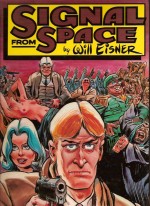
Signal From Space


By Will Eisner with Andre LeBlanc (Kitchen Sink Press)
ISBN: 0-87816-014-0

Here’s another classy contemporary cartooning classic which although readily available in a number of formats is still seen best in first release. Ambitious and deliberately targeting an adult book-reading rather than comics audience, this initial collection of Will Eisner’s trenchant political thriller-cum-social commentary proves once more that sometimes the medium really is the message…

It is pretty much accepted today that Eisner was one of the pivotal creators who shaped the American comicbook industry, with most of his works more or less permanently in print – as they should be.

From 1936 to 1938 William Erwin Eisner worked as a jobbing cartoonist in the comics production hothouse known as the Eisner-Eiger Shop, creating strips for both domestic US and foreign markets. Using the pen-name Willis B. Rensie he created and drew opening instalments for a huge variety of characters ranging from funny animal to historical sagas,

Westerns, Detectives, aviation action thrillers… and superheroes – lots of superheroes …

In 1940 Everett “Busy” Arnold, head honcho of the superbly impressive Quality Comics outfit, invited Eisner to take on a new challenge. The Register-Tribune newspaper syndicate wanted a 16-page weekly comicbook insert for the Sunday editions and Eisner jumped at the opportunity, creating three series which would initially be handled by him before two of them were delegated to supremely talented assistants. Bob Powell inherited Mr. Mystic and distaff detective Lady Luck fell into the capable hands of Nick Cardy (then still Nicholas Viscardi) and later the inimitable Klaus Nordling.

Eisner kept the lead feature for his own and over the next twelve years The Spirit became the most impressive, innovative, imitated and talked-about strip in the business. However, by 1952 he had more or less abandoned it for more challenging and certainly more profitable commercial, instructional and educational strips, working extensively for the US military in manuals and magazines like P*S, the Preventative Maintenance Monthly and generally leaving comics books behind.

After too long away from his natural story-telling arena Eisner creatively returned to the ghettos of Brooklyn where he was born on March 6th 1906. After years spent inventing much of the visual semantics, semiotics and syllabary of the medium he dubbed “Sequential Art” in strips, comicbooks, newspaper premiums and instructional comics he capped that glittering career by inventing the mainstream graphic novel, bringing maturity, acceptability and public recognition to English language comics.

In 1978 a collection of four original short stories in strip form were released as a single book, A Contract With God and Other Tenement Stories. All the tales centred around 55 Dropsie Avenue, a 1930’s Bronx tenement, housing poor Jewish and immigrant families. It changed the American perception of cartoon strips forever. Eisner wrote and drew a further 20 further masterpieces opening the door for all other comics creators to escape the funnybook and anodyne strip ghettos of superheroes, funny animals, juvenilia and “family-friendly” entertainment. At one stroke comics grew up.

Eisner was constantly pushing the boundaries of his craft, honing his skills not just on the Spirit but with years of educational and promotional material. In A Contract With God he moved into unexplored territory with truly sophisticated, mature themes worthy of Steinbeck and F. Scott Fitzgerald, using pictorial fiction as documentary exploration of social experience.

One of the few genres where Eisner never really excelled was science fiction – and arguably he doesn’t in this tale either as, in Signal From Space, the big discovery is just a plot maguffin to explore politics, social interactions and greed – all premium Eisner meat…

The material in this collection was originally serialised in as eight 16 page episodes in Will Eisner’s Spirit Magazine as ‘Life On Another Planet’ from October 1978 to December 1980, rendered in toned black and white (a format adhered to and title revived in subsequent Kitchen Sink, DC and W.W. Norton collections). However for this luscious hardback the artist and long-time confederate Andre LeBlanc fully-painted the entire saga using evocative tones and hues to subtly enhanced the sinister, cynical proceedings.

One night lonely radio astronomer Mark Argano, based at a New Mexico observatory, picks up ‘The Signal’ a mathematical formula which originated from Barnard’s Star – proof positive of extraterrestrial intelligence…

One of his colleagues wants to inform the public immediately but Argano is adamant that they go slowly as he harbours schemes to somehow “cash in”. Unfortunately the other scientist he shares the secret with is a Soviet sleeper agent…

Almost immediately the first murder in a long and bloody succession is committed as various parties seek to use the incredible revelation to their own advantage. World-weary science advisor and maverick astrophysicist James Bludd is dispatched by the CIA to verify and control the situation, but he walks straight into a KGB ambush and narrowly escapes with his life…

There’s now a deadly Cold War race to control contact with the mysterious signallers and ‘The 1st Empire’ follows recovering addict Marco as he turns his life around and uses the now public sensation to create a personality cult dedicated to leaving Earth and joining the aliens. Whilst Marco’s Star People grab all the headlines ruthless plutocrat Mr. MacRedy uses his monolithic Multinational Corporation to manipulate Russia and America, intending to be the only one to ultimately capitalise on any mission to Barnard’s Star.

Since travel to far space is still impossible for humans MacRedy sanctions the unethical and illegal creation of a human/plant hybrid and starts looking for volunteers to experiment on in ‘A New Form of Life’ whilst Bludd accepts another undercover assignment – now more reluctant spy than dedicated scientist. Casualties moral, ethical and corporeal mount in ‘Pre-Launch’ whilst in distressed African nation Sidiami, a desperate despot declares his nation a colony of Barnard’s Star to avoid UN sanctions and having to pay back his national debt to Earthly banks…

Soon he’s offering a base to Multinational for their own launch site and sanctuary to those Star People anxious to emigrate…

In ‘Bludd’ the scientist and his sultry KGB counterpart find themselves odd-bedfellows and the Mafia get involved in the crisis – for both personal and pecuniary reasons – whilst in America MacRedy prepares to install his own President…

Now determined to take matters into his own hands and screw all governments and interests, Bludd is caught up in an unstoppable, uncontrollable maelstrom of events in ‘Abort’ and after the American President has a fatal accident in ‘The Big Hit’ MacRedy thinks he’s finally won, but is utterly unprepared for Bludd’s unpredictable masterstroke in ‘The Last Chapter’…

A Signal From Space is a dark and nasty espionage drama as well as a powerfully intriguing ethical parable: a Petrie dish for ethical dilemmas where Eisner masterfully manipulates his vast cast to display human foible and eventually a glimmer of aspirational virtue. This is a hugely underrated tale from a master of mature comics guaranteed to become an instant favourite. And it’s even better in this sumptuous oversized edition which is well worth every effort to hunt it down.

After all, Per Ardua ad Astra…
© 1978, 1979, 1980, 1983 Will Eisner.All rights reserved.

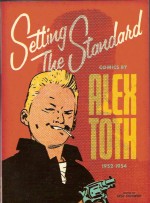
Setting the Standard: Comics by Alex Toth 1952-1954


By Alex Toth, Mike Peppe & various (Fantagraphics Books)
ISBN: 978-1-60699-408-5

Alex Toth was a master of graphic communication who shaped two different art-forms and is largely unknown in both of them.

Born in New York in 1928, the son of Hungarian immigrants with a dynamic interest in the arts, Toth was something of a prodigy and after enrolling in the High School of Industrial Arts doggedly went about improving his skills as a cartoonist. His earliest dreams were of a strip like Milton Caniff’s Terry and the Pirates, but his uncompromising devotion to the highest standards soon soured him on newspaper strip work when he discovered how hidebound and innovation-resistant the family-values based industry had become whilst he was growing up.

At age 15 he sold his first comicbook works to Heroic Comics and after graduating in 1947 worked for All American/National Periodical Publications (who would amalgamate and evolve into DC Comics) on Dr. Mid-Nite, All Star Comics, the Atom, Green Lantern, Johnny Thunder, Sierra Smith, Johnny Peril, Danger Trail and a host of other features. On the way he dabbled with newspaper strips (see Casey Ruggles: the Hard Times of Pancho and Pecos) and found nothing had changed…

Continually trying to improve his own work he never had time for fools or formula-hungry editors who wouldn’t take artistic risks. In 1952 Toth quit DC to work for “Thrilling” Pulps publisher Ned Pines who was retooling his prolific Better/Nedor/Pines comics companies (Thrilling Comics, Fighting Yank, Doc Strange, Black Terror and many more) into Standard Comics: a comics house targeting older readers with sophisticated, genre-based titles.

Beside fellow graphic masters Nick Cardy, Mike Sekowsky, Art Saaf, John Celardo, George Tuska, Ross Andru and Mike Esposito and particularly favourite inker Mike Peppe, Toth set the bar high for a new kind of story-telling: wry, restrained and thoroughly mature; in short-lived titles dedicated to War, Crime, Horror, Science Fiction and especially Romance.

After Simon and Kirby invented love comics, Standard, through artists like Cardy and Toth and writers like the amazing and unsung Kim Aamodt, polished and honed the genre, regularly turning out clever, witty, evocative and yet tasteful melodramas and heart-tuggers both men and women could enjoy.

Before going into the military, where he still found time to create a strip (Jon Fury for the US army’s Tokyo Quartermaster newspaper The Depot’s Diary) he illustrated 60 glorious tales for Standard; as well as a few pieces for EC and others. On his return to a different industry – and one he didn’t much like – Toth split his time between Western/Dell/Gold Key (Zorro and many movie/TV adaptations) and National (assorted short pieces, Hot Wheels and Eclipso): doing work he increasingly found uninspired, moribund and creatively cowardly. Soon he moved primarily into TV animation, designing for shows such as Space Ghost, Herculoids, Birdman, Shazzan!, Scooby-Doo, Where Are You? and Super Friends among many others.

He returned sporadically to comics, setting the style and tone for DC’s late 1960’s horror line in House of Mystery, House of Secrets and especially The Witching Hour and illustrating more adult fare for Warren’s Creepy, Eerie and The Rook. He redesigned The Fox for Red Circle/Archie, produced stunning one-offs for Archie Goodwin’s Batman or war comics (whenever they offered him a “good script”) and contributed to landmark or anniversary projects such as Batman: Black and White.

His later, personal works included Torpedo and the magnificently audacious Bravo for Adventure!

Alex Toth died of a heart attack at his drawing board on May 27th 2006.

After reprinting an extensive interview with the artist from Graphic Story Magazine conducted by Vincent Davis, Richard Kyle and Bill Spicer in 1968, this fabulous full colour chronicle reprints every scrap of Toth’s superb Standard fare beginning with impressive melodrama in ‘My Stolen Kisses’ from Best Romance #5 (February 1952), after which light-hearted combat star Joe Yank nearly lost everything toBlack Market Mary’ in the debut issue of his own title (#5 March 1952).

Perhaps a word of explanation is warranted here: due to truly Byzantine commercial considerations all Standard Comics started with issue #5, although the incredibly successful Romance comics were carried over from their earlier Better Comics incarnations such as New Romances #10 (March 1952) for which Toth illustrated the touching ‘Be Mine Alone’ or the parable of empty jealousy ‘My Empty Promise’ from #11.

The hilarious ‘Bacon and Bullets’ offered a different kind of love in Joe Yank #6 (May) – a very pretty pig named Clementine – after which witty 3 pager ‘Appointment with Love’ (Today’s Romance #6 May) provides a charming palate cleanser before the hard-bitten ‘Terror of the Tank Men’ from Battlefront #5 (June 1952) offers a more traditional view of the then raging Korean War.

‘Shattered Dream!’ (My Real Love #5 June) is an ordinary romance well told whilst ‘The Blood Money of Galloping Chad Burgess’ (The Unseen #5 June 1952) reveals the sheer quality of Standard’s horror stories and ‘The Shoremouth Horror’ (Out of the Shadows #5) that same month proved Toth to be an absolute master of terror.

‘Show Them How to Die’ (This is War #5 July) is a superbly gung-ho combat classic whilst the eerie ‘Murder Mansion’ and ‘The Phantom Hounds of Castle Eyne’ both from Adventures into Darkness #5 (August) once more demonstrate the artist’s uncanny flair for building suspense.

The single page ‘Peg Powler’ (The Unseen #6 September) is reprinted beside the original artwork – which makes me wish the entire collection was available in black and white – after which the experimental ‘Five State Police Alarm’ (Crime Files #5) displays the artist’s amazing facility with duo-tone and craft-tint techniques before the salutary ‘I Married in Haste’ (Intimate Love #19, September) takes a remarkably modern view of relationships.

Science Fiction was the metier of Fantastic Worlds #5 which provided both the contemporary ‘Triumph over Terror’ and futuristic fable ‘The Invaders’ to finish off Toth’s September chores after which ‘Routine Patrol’ and ‘Too Many Cooks’ offered two-fisted thrills from This is War #6 (October).

‘The Phantom Ship’ is a much reprinted classic chiller from Out of the Shadows #6 and October also offered the extremely unsettling ‘Alice in Terrorland’ in Lost Worlds #5. Toth only produced four covers for Standard, and the first two, Joe Yank #8 and Fantastic Worlds #6 precede ‘The Boy who Saved the World’ from the latter (November 1952) after which service rivalry informed ‘The Egg-Beater’ from Jet Fighters #5.

The cover of Lost Worlds #6 (December) perfectly introduces the featured ‘Outlaws of Space’ after which the single-page ‘Smart Talk’ (New Romance #14) perfectly closes the first year and sets up 1953 which opens strongly with ‘Blinded by Love’ from Popular Romance #22 January) in which the classic love triangle has never looked better…

This was clearly Toth’s ideal year as ‘The Crushed Gardenia’ from Who is Next? #5 shows his incredible skills to their utmost in one of the best crime stories of all time. ‘Undecided Heart’ (Intimate Love #21 February) is a delightful comedy of errors whilst both ‘The House That Jackdaw Built’ and ‘The Twisted Hands’ from Adventures into Darkness #8 perfectly reveal the artist’s uncanny facility for building tension and anxiety.

The cover to Joe Yank #10 is followed by the splendid aviation yarn ‘Seeley’s Saucer’ from the March Jet Fighters (#7) whilst the clever and racy ‘Free My Heart’ from Popular Romance #23 (April) adds new depth to the term sophisticated and ‘The Hands of Don José’ (Adventures into Darkness #9) is just plain nasty in the manner horror fans adore…

‘No Retreat’ (This is War #9 May) offers more patriotic combat, but ‘I Want Him Back’ (Intimate Love #22) depicts a far softer and more personal duel and ‘Geronimo Joe’ (Exciting War #8 May) proves that in combat there’s no room for rivalry.

Toth was rapidly reaching the peak of his design genius as ‘Man of My Heart’ (New Romances #16 June), ‘I Fooled My Heart’ (Popular Romance #24 July, and reprinted in full as original art in the notes section) and both ‘Stars in my Eyes’ and ‘Uncertain Heart’ from New Romances #17 (August) saw him develop a visual vocabulary that cleanly imparted plot and characterisation simultaneously.

He often stated that he preferred these mature and well-written romance stories for the room they gave him to experiment and expand his craft and these later efforts prove him right: especially in the moving ‘Heart Divided’ (Thrilling Romances #22) and compelling ‘I Need You’ from the September Popular Romances (#25).

‘The Corpse That Lived’ was a historically based tale of grave-robbing from Out of the Shadows #10, whilst the deeply affecting ‘Chance for Happiness’ (Thrilling Romances #23 October) is as powerful today as it ever was. ‘My Dream is You!’ (New Romances #18) offered a fresh look at the old dilemma of career or husband whilst a far darker love was displayed in ‘Grip on Life’ (The Unseen #12 November), but true love actually triumphed in ‘Guilty Heart’ from Popular Romance #26.

Another ‘Smart Talk’ advice page ends 1953 (New Romances #19 December) and neatly precedes an edgy affair in ‘Ring on Her Finger’ (Thrilling Romances #24 January 1954), after which ‘Frankly Speaking’ from the same issue leads to a terrifying historical horror in ‘The Mask of Graffenwehr’ (Out of the Shadows #11).

February produced a fine crop of Toth tales beginning with charming medical drama ‘Heartbreak Moon’ (Popular Romance #27), spooky mining mystery ‘The Hole of Hell’ (The Unseen #13), one-page amorous advisory ‘Long on Love’ (Popular Romance #27), the lesson in obsession ‘Lonesome for Kisses’ and two further advice pages ‘If You’re New in Town’ and ‘Those Drug Store Romeos’ all from Intimate Love #26.

These last stories were eked out in the months after Toth had left, drafted and posted to Japan. However, even though he had presumably rushed them out whilst preparing for the biggest change in his young life there was no loss but a further jump in artistic quality.

One final relationship ‘Smart Talk’ page (New Romances #20 March 1954) precedes a brace of classic mystery masterpieces from Out of the Shadows #12: ‘The Man Who Was Always on Time’ (also reproduced in original art form in the ‘Notes’ section at the back of this book) and the graphic wonderment regrettably concludes with the cynically spooky ‘Images of Sand’ – a sinister cautionary tale of tomb-robbing…

After all this the last 28 pages of this compendium comprise a thorough and informative section of story annotations, illustrations and a wealth of original art reproductions to top off this sublime collection in perfect style.

Alex Toth was a tale-teller and a master of erudite refinement, his avowed mission to pare away every unnecessary line and element in life and in work. His dream was to make perfect graphic stories. He was eternally searching for “how to tell a story, to the exclusion of all else.”

This long-awaited collection shows how talent, imagination and dedication to that ideal can elevate even the most genre-locked episode into a masterpiece the form and a comicbook into art.

All stories in this book are in the public domain but the specific restored images and design are © 2011 Fantagraphics Books. Notes are © 2011 Greg Sadowski and the Graphic Story Magazine interview is © 2011 Bill Spicer. All rights reserved.

Desperation Row


By Denis Mérezette & Jean-François di Giorgio (Editions Michel Deligne)
ISBN: 2-87135-019-1

Even in these cosmopolitan times of easy access and no borders a truly monolithic amount of world comics still languishes untranslated and thus unappreciated by a vast pool of potential fans. It’s certainly not the Japanese or Europeans’ fault. Over the decades many publishers, Eastern and Occidental, have tried to crack the American market (let’s be honest here; Britain alone is certainly too small for the effort to mean anything or be cost effective) with usual painful and costly results.

However it does mean that circulating out there are many intriguing lost gems of graphic narrative such as this dark and moody adult thriller that came and went largely unremarked in 1985 but is certainly worthy of a second look and a larger audience in these more cosmopolitan times.

Desperation Row (or more accurately ‘Street of Shadows’) was the debut pairing of Mérezette & di Giorgio, appearing on a few British bookshelves in 1986, a year after publisher De Ligne launched it in France as ‘Rue Des Ombres’ – a terse and intriguingly intense period crime drama set in the mythical, movie-immortalised gutters and slums of New York’s Hell’s Kitchen.

Artist Denis Mérézette’s first published work was ‘Le Berger’ (written by Sédille), released in 1981. He went on to illustrate Duménil’s ‘Algérie Française!’ before joining with Jean-François di Giorgio on ‘Rue des Ombres’ in 1985 and ‘Julie Julie’ in 1986. In 1988 he produced ‘Hank Wetter – Les Carnassiers’ with Philippe Illien, for Magic Strip and adapted, with author De la Royère, B. Clavel’s epic ‘Harricana – Le Royaume du Nord’ in 1992.

Di Giorgio moved from editorial to authorial creativity with his debut albums ‘Rue des Ombres’ and ‘Julie Julie’ after which he began the serial ‘Munro’ (illustrated by Griffo and André Taymans for Spirou) as well as novel adaptations of novels such as Le Pays Perdus and many other strips like ‘Fous de Monk’, ‘Sam Griffith’, ‘Les Aventures de Bouchon le Petit Cochon’, medieval blockbuster ‘Shane’ (with Paul Teng), ‘Le Culte des Ténèbres’ and ‘Mygala’… all stuff I’d love to see make the jump to English.

This bleak noir homage pushes all the visual, tonal and narrative buttons of mythic 20th century America as it follows the foredoomed path of burned-out Parisian Paparazzo Paul; moving through the mean streets of the Bowery and immigrant districts, capturing the sordid glamour of America’s underbelly for the bored readers of Europe.

Tracking an unexplained spate of suicides Paul spots a high roller slumming on skid row and gets far too close to a big story…

Inexplicably ignoring the tawdry instincts of a lifetime, Paul sells wealthy Mr. Ofield the undeveloped film-roll of his Bowery escapade and in return the millionaire offers him a high-paying gig… obtaining compromising and legally airtight photos of his cheating spouse.

Paul succeeds and things start to get really messy: his apartment is searched, thugs beat him up, terrorise his hooker girlfriend and then his building – and the ones either side – are torched. As his fellow news-photographers happily snap away at the maimed and homeless survivors of the conflagration, Paul reaches an epiphany and realises he’s no longer one of their conscienceless fraternity… and that’s when the cheating wife he so recently exposed confronts him and the photographer begins to regret keeping those negatives….

It would seem Mr. Ofield never intended to divorce his wandering wife and now Paul is fatally involved in a deadly, devious war between rival gangsters and an equal ruthless government agency. Paul trades his camera for a hastily purchased gun, but when his old pal and street tipster Shorty is brutally murdered by the beggars who run the Bowery Paul finds himself remorselessly pulled between, honour, ambition and survival and having to decide if he’s a recorder of or participant in life…

Cunningly twisted and nihilistically bleak, this grim thriller suffers somewhat from a mediocre translation, but the plot and art are fearfully engaging and this moving, stylish adult yarn is long overdue for a more sensitive interpretation and new English edition.
© 1985 Editions Michel Deligne S.A., and Mérezette & Giorgio Productions. All rights reserved.

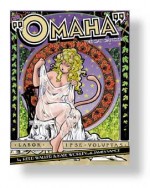
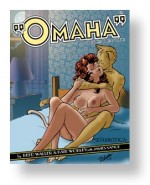
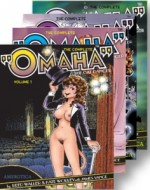
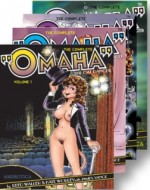
Omaha the Cat Dancer Complete Set (part 2)


By Reed Waller & Kate Worley with James M. Vance (NBM/Amerotic)
Set ISBN: 978-1-56163-601-3
Vol. 4 ISBN: 978-1-56163-451-4, vol. 5 ISBN: 978-1-56163-451-4, vol. 6 ISBN: 978-1-56163-451-4, vol. 7 ISBN: 978-1-56163-451-4

These books are intended to make adults laugh and think and occasionally feel frisky. If the cover images haven’t clued you in, please be warned that these items contain nudity, images of sexual intimacy – both hetero and homosexual – and language commonly used in the privacy of the bedroom and probably school playgrounds whenever supervising adults aren’t present.

If that sort of thing offends you, read no further and don’t buy these books. The rest of us will just enjoy one of the best graphic novel experiences ever created without you.

Omaha the Cat Dancer began during the 1970s as an “underground” venture and over slow torturous decades grew into a brilliant but controversial drama of human fallibility were all the actors just happened to be ordinary people with animal characteristics. What most people noticed was the matter-of-fact and constant inclusion of graphic sex acts, extremely well rendered.

As there’s only so much a man of my hard-lived years can endure and certainly only so much me you can stand, I’ve divides this graphic novels review of the series and specifically the glorious seven-volume complete set that prompted it in two (see yesterday’s post for the rest). The entire supremely economical shrink-wrapped gift set is available for your reading pleasure and you’d be bonkers not to not take advantage of the fact, but if you are of a cautious nature most individual editions can still be obtained through internet retailers.

The stunning, addictive saga of the erotic dancer, her bone-headed boyfriend and the anthropomorphic extended ensemble cast takes a dark and dreadful turn with Volume 4 (re-presenting the Kitchen Sink Omaha issues #10-13 and the one-page gag strip ‘Alterations’ from Fire Sale #11988-1989) as the mysterious death of Charles Tabey Sr., the increasing violence and oppression of the Campaign for Decency and a seemingly constant stream of personal revelations strain Omaha and Chuck’s relationship to the breaking point.

The Story resumes after an introduction from writer James Vance (who married Kate Worley after she split up with Waller and worked with the artist to finish the saga from her notes after her untimely death in 2004), before the tense drama kicks into high gear as Chuck comes to terms with the shocking knowledge that his mother didn’t die decades ago. The pressure seems to be affecting him badly – or perhaps the thought of all the wealth and responsibility – and the decent young man is becoming as exploitative, abusive and creepy as his manic dad was, but even though he’s acting paranoid, it doesn’t mean he’s hasn’t got real and deadly enemies. The situation isn’t helped by learning that somewhere his beloved Omaha has a husband she hasn’t quite divorced and never ever mentioned…

The sinister Senator Bonner is ratchetting up the pressure of his anti-smut campaign and even close ally Jerry is working to his own agenda, with the assistance of avaricious partner Althea. Confused, lonely and neglected, Omaha devotes her energies to dancing for the upcoming video for Shawn’s band, and Rob confronts Shelley whom he believes ordered the attempt on his life and torching of his studio…

At long last the will is read and Chuck does indeed inherit the bulk of his father’s holdings and, apparently, many of Tabey Sr.’s deranged obsessions. The far more intriguing than she appears Shelley acts on Rob’s misperceived accusations whilst her lover/carer Kurt Huddle finds part-time employment with the mysterious Mr. Lopez – the last major player in an increasingly complex game. Meanwhile high-powered call-girl, blackmailer and keeper of Secrets Joanne re-insinuates herself with Jerry and Chuck and Bonner in a terrifying confrontation threatens to destroy Omaha and Chuck in his own blackmail scheme…

During the video shoot Omaha and Joanne compare notes on Bonner, after which the capable call-girl enlists Rob’s photographic aid in a scheme to get the goods on the hypocritical Senator – with whom she shares a highly secret and extremely specialised professional relationship…

Whilst both Joanne and Rob are practising their unique skills the senator is murdered in the most compromising of all positions and the story moves effortlessly from human drama to dark murder mystery. Abandoned, bewildered, angry and very hurt, Omaha leaves town unaware that both she and Joanne are suspects in the Bonner murder case…

As she heads for a new life in rural Wisconsin, Chuck is learning some long-forgotten personal history from his mother, but no matter how she disguises her appearance that increasingly popular video means the cat dancer will never be truly safe or unseen…

Volume 5 is introduced by Neil Gaiman, after which issues #14-17 (1990-1992) find the lovers painfully adapting to life apart, with all of Omaha’s old friends wondering where she’s gone. Meanwhile in Lawrenceville, Wisconsin, after an abortive stab at office work for an all-too-typical, male-dominated factory, “Susan Johnson” goes back to honest work dancing in the town’s only strip joint, making some reliable new friends and meeting a young man who will become far more…

In Mipple City, Joanne and her lawyer finally clear her of suspicion in Bonner’s murder, Jerry is planning to reopen infamous bordello The Underground as a legitimate nightclub, and Chuck is making new friends and intimate acquaintances whilst spending his days trying to save the Bohemian A Block district from redevelopment, inadvertently getting far closer to the heart of all the various intrigues that threaten the players in the drama, and Jerry’s business partner Althea reveals her true colours and allies. At Senator Bonner’s funeral Lopez reveals an unsuspected connection to the venomous politician…

Shelley has made new friends too (in a scathing and utterly delightful episode exposing unexpected biases in certain sorts of feminists and do-gooders), Joanne is increasingly at odds with Rob regarding the films of Bonner’s last moments and when Jerry invites Chuck to become a partner in his new nightclub Althea tries to secure the deal by offering herself as sweetener… or does she actually have another reason for her bold advances?

Kurt and Shelley’s relationship begins to show signs of strain but in Lawrenceville “Susan” is relaxed and happy, with the strength to contact the friends she ran out on.

In Mipple, the cops are slowly uncovering some uncomfortable facts about everybody in the Bonner case when the Senator’s private secretary comes forward with new information, whilst Joanne is finally securing her final weapon necessary to expedite her plans…

The final Kitchen Sink issues (#18-20, 1993-1994) comprise the major part of the sixth volume, and follow an introduction from Terry Moore, a brief discourse on the cat dancer cast’s other appearances and a few shorts pieces from diverse places.

First there’s a delightful humorous foray into mainstream comics from Munden’s Bar Annual #2 in 1991. ‘A Strip in Time’, wherein the exotic kitty pops up in the legendary pan-dimensional hostelry, after which two short and sexy vignettes originally produced for The Erotic Art of Reed Waller , one untitled and the other graced with the subtly informative designation ‘Waking Up Under a Tent’, act to somewhat offset the angst and drama of the main event.

Rob learns what Shelley’s actual role was in the arson attack on his shop, Joanne takes a live-in position with Mr Lopez and after many abortive attempts Chuck and Omaha finally speak. As Thanksgiving dawns many of Omaha’s friends gather for a momentous dinner, things start to unravel for the bad-guys trying to destroy A Block and in Wisconsin, just as she is becoming reconciled with Chuck, the cat dancer’s fling with appreciative punter Jack intensifies to a crisis point. Meanwhile elsewhere, somebody with an intimate knowledge of her recognises the hot dancer in a rock video and begins making fevered inquiries…

When Shawn’s touring band reaches Lawrenceville and discover “Susie” is Omaha, the scene is set for her return to Mipple City, where, after being arrested in connection with Bonner’s murder, Chuck’s mother reveals the whole story of her past and the sordid truth of Calvin Bonner’s obsessive depravity and Charles Tabey’s bi-polar affliction. In light of the horrific revelations Chuck seems to go completely off the deep end and, far too late, his friends and family realise that money and looks might not be the only things the son inherited from the father…

Next, just a smidge out of chronological order, comes ‘Tales of Mipple City: Rob Steps Out’ a charming first date tale which first appeared in the anthology series Gay Comics #22 (1994) after which the tension and revelations resume as the cops release Maria Elandos Tabey, whilst her son is sectioned. In Lawrenceville, Susie gets an unforgettable farewell from Jack after which she returns to her true love who has never needed her more…

The final volume in this magnificent series features the last four issues published by Fantagraphics as Omaha the Cat Dancer volume 2, #1-4 (1994-1995). The series has at times seemed cursed: plagued by illness and creative problems which have taken its toll on all the creators. The creators ended their relationship in spectacular fashion at this time and only began working together again in 2002. Soon after Kate Worley died from cancer and it seemed the saga was destined to remain an unfinished masterpiece, but in 2006 Waller and Worley’s husband James Vance began to finish the job from her notes, with the concluding chapters serialised in the magazine Sizzle. When those final instalments are finally collected the completed Omaha the Cat Dancer will be possibly the finest adult comics tale in history…

For now however the brilliant yarn reaches a kind of conclusion here as after an introduction from honorary Mipple City resident Denis Kitchen, and a stunning cartoon recap Omaha and Chuck renew their relationship, Jerry and Shelley and Rob and Joanne reach workable détente agreements and that missing husband tracks the cat dancer to her new home. Set over the Christmas/New Year period, all the various plot threads come together during an unforgettable party at Chuck’s palatial new house, although the hung-over aftermath promises that there are still stories to be told and loose ends to be knotted off once and for all.

Even if the saga stopped here, Omaha the Cat Dancer would be an incredible narrative achievement and groundbreaking landmark of comics creation, but with the promise of a final resolution still to come, it looks set to become an icon of our industry, celebrated forever for moving beyond simple titillation and happy, innocent prurience to become a fully matured work of Art.

Captivating, intense, deeply moving and addictively engrossing, Omaha never forgets to be also be fun and fabulous and utterly inclusive: full of astonishingly well drawn, folk (admittedly largely furry or feathered folk) happily naked and joyously guilt – free… at least about sex…

No cats, dogs, birds or ferrets were harmed, abused, distressed or disagreeably surprised in the making of these lovely, lovely books, so if you’re open-minded, fun-loving and ready for the perfect grown-up adventure please take advantage of this unmissable opportunity. You won’t regret it….

© 1987-1996 Reed Waller & Kate Worley. Contents of these editions © 2005-2008 NBM. All Rights Reserved.

Omaha the Cat Dancer Complete Set (part I)


By Reed Waller & Kate Worley with James M. Vance (NBM/Amerotic)
Set ISBN: 978-1-56163-601-3
Vol. 1 ISBN: 978-1-56163-451-4, vol. 2 ISBN: 978-1-56163-457-3, vol. 3 ISBN: 978-1-56163-474-3

These books are intended to make adults laugh and think and occasionally feel frisky. If the cover images haven’t clued you in, please be warned that these items contain nudity, images of sexual intimacy – both hetero and homosexual – and language commonly used in the privacy of the bedroom and probably school playgrounds whenever supervising adults aren’t present.

If that sort of thing offends you, read no further and don’t buy these books. The rest of us will just enjoy one of the best graphic novel experiences ever created without you.

Omaha the Cat Dancer began during the 1970s as an “underground” venture and over the torturous decades grew into a brilliant but controversial drama of human fallibility with all the characters played by funny animals. What most people noticed was the matter-of-fact and constant inclusion of graphic sex acts.

The series was subject to many obscenity seizures by various muddle-headed stickybeaks over the years, inspiring the formation of the Comic Book Legal Defense Fund. One classic case apparently involved the local defenders of morality raiding a comics store because Omaha promoted Bestiality!

As there’s only so much excitement a man of my advanced years and proclivities can endure (and probably only so much me you can stand) I’ll be to reviewing these seven tomes in two batches rather than in totality but I will remind you each time that the whole saucy saga is available in a supremely economical shrink-wrapped gift set that you’d be crazy to not take advantage of.

After an introduction by late-coming co-scripter James Vance and Reed Waller’s original intro from the 1987 collected edition, The Complete Omaha the Cat Dancer volume 1 gathers the short story appearances from a number of Counter-culture Commix as well as some out-of-continuity infilling short pieces so readers can enjoy what can best be described as the official Directors Cut of the tale.

The wicked wonderment begins with the very first ‘Adventures of Omaha’ from Vootie in 1978. Vootie began in 1976 as a self-published fanzine founded by Reed Waller and like-minded artistic friends who bemoaned the loss of anthropomorphic comics – once a mainstay of US comicbooks.

When contributors also griped that there wasn’t much sex in comics either, Waller, taking inspiration from R. Crumb’s Fritz the Cat and responding to an intensification of local Blue Laws, created the evocative, erotic dancer and compared her free and easy life-style against a typical, un-elected, interfering know-it-all moral guardian busybody. Blue Laws are particularly odious anti-fun statutes – usually instigated by religious factions – designed to keep the Sabbath holy by dictating shop-opening hours and generally limit or ban adult entertainments like clubs and pubs, and their repressive use (in fact and fiction) became a major narrative engine for the series.

‘Why they Call Her Omaha’ introduces young stripper Susie Jensen who hits the metropolis of Mipple City, Minnesota (a thinly concealed Minneapolis) and signs up with a modelling agency where she meets fellow dancer Shelley Hine. Over lunch they bond and pick a better stage name for the gorgeous but naive newcomer, whilst ‘Kitten of the Month’ and ‘Omaha centrefold’ reveal the first glorious results of her managements efforts. No-holds barred sexual action returns in ‘Shelley and Omaha’ with the girls, now popular erotic dancers, meeting some guys who will play a big part in the unfolding drama to come.

In ‘Chuck and Omaha’, which officially heralded the beginning of scripter Kate Worley’s stunning contribution to the series, Jerry – one those aforementioned pick-up guys – introduces Omaha to Chuck Katt, a shy artist who will become the great love of the sexy kitty’s life. ‘Adventures of Omaha’ sees the budding relationship progress whilst ‘Tip of the Iceberg’ moves the grander story arc along when Mipple bans nipples in the opening shot of a political power-grab using Christian and Family-morality pressure groups as unwitting, if fervent, patsies…

Although it comprises less than 50 pages the preceding material took nearly fifteen years to produce. For years Omaha had no fixed abode; peripatetically wandering from magazine to Indie book and even guest-shots in the occasional mainstream publication. From Kitchen Sink’s Bizarre Sex #9-10 in 1981-2, a pastiche page in E-Man (in 1983 and included in volume 2), Dope Comix #5 (1984), she even starred in a story from Munden’s Bar Annual #2 in 1991. Often stalled for creative, not censorship, reasons Omaha finally won her own title in 1984 from SteelDragon Press, but vanished again until 1986 when Kitchen Sink Press finally took over publication. For further details I strongly advise checking the lovely official website at www.omahathecatdancer.com.

Volume 1 switches to high gear and addictive narrative mode with the 40 page ‘Omaha #0’: a single page recap followed by a powerfully compelling yarn wherein the forces of decency make life increasingly difficult for the adult entertainment industry. With stripper bars closing Omaha is recruited to dance for “The Underground”: an exclusive, ultra-secret, high-class bordello that caters to the darkest desires of America’s ultra-elite of: businessmen and politicians many of whom are actively leading the Decency campaign…

Shelley is involved too, recruiting contacts from her old profession for more hands-on roles. Meanwhile Chuck has reapplied for his old advertising job where his old girlfriend Joanne makes life uncomfortable. However she has other problems as powerful forces are drawing Omaha and Chuck into a far-reaching and sinister scheme…

On opening night all the elements for disaster converge as the “Movers and Shakers” get more debauchery than even they can handle: someone has doped the entire proceedings leading to a violent, destructive orgy and set up cameras to record the whole event for blackmail purposes. As they flee the club hitmen try to kill Chuck but shoot Shelley instead. Believing her dead, Omaha and Chuck run for their lives. Heading for Joanne’s house Chuck reveals that he is the son of Charles Tabey: monomaniacal millionaire businessman, undisputed ruler of Mipple City and the probable target of the assassination…

Narrowly escaping another murder attempt they find Tabey and Joanne are intimately involved and are horrified to find that the millionaire was behind the whole thing, intending to mould Chuck into the kind of son he needs. The man is also clearly raving mad…

The traumatised, terrified young lovers jump into their car and head for California in the short ‘Adventures of Omaha’ vignette and the first volume concludes with the contents of ‘Omaha #1‘ as they reach San Francisco tired, hungry and broke.

Grateful for the kindness of strangers, they soon discover Joanne waiting for them and find that Tabey is not their only persecutor. During a drunken three-way another hired killer almost ends them all…

From a well-intentioned, joyous celebration of open living free-loving modernity Omaha had evolved into a captivating adult soap opera and conspiracy thriller of mesmerising intensity and complexity…

Volume 2, with a reprinted introduction by Kate Worley, eases into the enticing adult entertainment with the aforementioned ‘Hotziss Twonkies’ parody from First Comics’ E-Man #5 before issues #2-5 enlarge the sinister saga. In the aftermath of their latest close shave, Chuck and Joanne antagonistically spar whilst the increasingly traumatised cat dancer wanders the streets of San Francisco. When she is abducted by Tabey, who is moving against all his old enemies, Chuck and Joanne fall into bed…

Meanwhile Jerry, who also works for Tabey, is busying sorting the fallout from the club riot and shooting. In a secluded palatial beach-house Omaha discovers that Chuck’s dad has been watching over them for some time and soon discovers another shocking secret….

Omaha was utterly groundbreaking in its mature treatment of gay and disabled relationships; offering the sound and common sense opinion that this is what all people think and do and after all, “it’s just sex”…

Paralysed but not deceased Shelley is also sequestered in the house. She is a long-term Tabey employee and slowly developing a relationship with her nurse Kurt Huddle, and the manic tycoon has convinced Omaha to stay and help care for her. Back in Frisco Chuck has rekindled his old relationship with Joanne, utterly unaware that she has the films and photos taken at the club on that terrible night.

Rob Shaw, gay photographer, enters the picture, as developer and guardian of the contentious materials and old friend of Joanne. Chuck misses Omaha and the tension leads to him splitting with Joanne and moving in with Rob. The cat dancer too is lonely and finds unsatisfactory solace with Jerry again, but when Tabey goes off his meds Jerry arranges for Chuck and Omaha to reunite, leading to a dreadful confrontation between father and long-estranged son, as an apparent result of which the millionaire takes his own life…

Together again at last, Omaha and Chuck comfort each other as the repercussions of Charles Tabey Sr.’s demise shake the country and the cast. The close-knit group endure loss, guilt and outrageous press scrutiny as the matter of inheritance crops up. Against his wishes, Chuck might be incredibly rich and saddled with unwanted responsibilities but there are some unspecified problems with the will.

The plots thicken when Joanne and Rob have a falling out and as all this is going on, back in Mipple City a powerful new threat makes his move. Senator Bonner was one of the patrons at the Underground that fateful night but now he’s making a move for total power, stirring up a wave of fundamentalist hatred and anti-smut indignation with his “Crusade for Decency”…

Volume 3 (covering issues #6-9 and with an introduction by Trina Robbins) follows the action back to Minnesota, but things are difficult for Chuck and Omaha who can’t seem to re-establish their earlier, innocent rapport. They go house-hunting, whilst in San Francisco Rob Shaw is visited by thugs after the photos of the riot at The Underground. His shop destroyed, the photographer narrowly escapes burning with it…

Mipple City’s Blue Laws are more draconian than ever. When Omaha and Shelley, who has moved into the ground floor of the Cat dancer’s new house, visit their old workplace the Kitty Korner, they discovers that the performers now have to dance behind plate glass – which makes tucking punter’s tips into g-strings really tricky…

When old friend Shawn turns up he tells Chuck and Omaha of the plan to redevelop A Block – that part of town where all the artists, musicians and strip clubs are. Something needs to be done to stop it – and now, Chuck might just be the richest, most influential degenerate in town…

As the lovers go furniture shopping Shelley and Kurt look for a suitable physical therapy clinic – preferably a non-religious, non-judgemental un-condescending one – and later whilst Omaha helps Shelley move in, Chuck and Jerry make plans to fight the destruction of A Block, but as ever, there is far more going on than the lovers can imagine…

Omaha wants to get back into dancing and as Chuck becomes increasingly mired in the running of his father’s many businesses, Kurt learns some of Shelley’s murky history and Joanne and Jerry compare notes and make plans.

Rob turns up in Mipple after more attempts on his life, convinced that he needs to find his attackers’ boss before his luck runs out and the book ends on a shocking note for Chuck when he discovers that long-dead mother isn’t…

All these volumes, printed in black and white and at 8½ inches by 11, much larger than the original comicbooks, also contain many full page illustrations (many from the delightful art-book The Erotic Art of Reed Waller). This saga is one of the turning points of comics history – a moment when we could all provably say “this is socially relevant, capital “A” Art” – as viable and important as the best play or film or symphony: don’t miss this opportunity to make the whole marvellous classic yours forever…

© 1978, 1981, 1982, 1984, 1985, 1986, 1987-1996 Reed Waller & Kate Worley. Contents of these editions © 2005-2007 NBM. All Rights Reserved

R.I.P. Best of 1984-2004


By Thomas Ott and friends (Fantagraphics Books)
ISBN: 987-1-60699-417-7

Being an old geezer but unreconstructed punk at heart I can firmly attest and confirm that the teen-years urge to shock and addiction to loud, fast, shouty-boy music never goes away. The same holds true for in-your-face comic strips…

Thomas Ott is a Swiss cartoonist, musician, satirist and film-maker (born in Berne in June 1966) who has, since the mid-1980s, been producing stunning strips and pastiches for commercial publications such as Ahai, Okay Erotik Magazin, Strapazin, Süddeutsche Zeitung, El Vibora, Libération, L’Echo des Savanes and a host of others whilst pursuing his own uniquely meticulous trash-culture visions in self-published monochrome anthological albums such as Tales of Error, Dead End, and Greetings from Hellville.

Now this retrospective compendium from Fantagraphics presents 19 of the very best (seven never before seen) spanning two decades of shocking horror, crime noir, mordant, nihilistic love, juicy revenge, surreal justice and bleak, black irony all delivered in Ott’s signature and obsessively meticulous scratchboard style, with gleaming white narrative emerging from ebon pages, sans dialogue but occasionally boasting impressive and imaginative typography.

Beginning with raw and raucous EC comics homages ‘The Hero’, ‘Clean Up!’, ‘A Wrinkled Tragedy’ and ‘Headbanger’; gradually building up to longer – and far shorter – pieces such as ’10 Ways to Kill Your Husband’, ‘Massacre Melodies Presents Buddy Butcher in “Buddy Goes Bloody”’, ‘G.O.D.’, ‘Goodbye!’, ‘The Job’,  ’10’ and ‘Alice in Wonderland’.

Hardbitten mystery and sardonic imagination begin to predominate with ‘Breakdown’, ‘The Millionairs’ and ‘Washing Day’ but there’s still room for a laugh in ‘Dawn of the Dead’ and ‘The Clown’ or a disturbing chill in ‘La Fiancée du Lapin’ (written by David B) and sheer exuberance in ‘Recuerdos de Mexico’ before ending in classic droll darkness with ‘The Hook’.

Ott’s psychobilly sensibilities litter his narrative world with pimps, thugs and geeks; desperate chancers, deadly beloveds and down and outs on the edge of reality as well as society, so if jaded comics fans might feel they’ve been here before, the wider world are still only curious first-timers into a dismal dimension of vice, spice and bad advice…

Graphic, violent funny and unforgettable this is a special treat for thrill-starved adults in search of something a little beyond the norm…

© 2010 Verlag bbb Edition Moderne AG Switzerland except “La Fiancée du Lapin” © 1996 David B and Thomas Ott. All rights reserved.

King of the Flies Volume 2: The Origin of the World


By Mezzo & Pirrus, translated by Helge Dascher with Dag Dascher & Kim Thompson (Fantagraphics)
ISBN: 978-1-60699-390-3

Scary stories are everywhere, even in the most ordinary of suburban paradises: when DC Comics started calling Alan Moore’s Swamp Thing stories “Sophisticated Suspense” in the 1980s, to differentiate them from the formulaic “Set ’em up and then go Boo!” traditions of the horror comics medium, this kind of subtle, disorienting, creeping disturbia is exactly what they were aspiring to. Cleverly constructed, laconically laid out in the classic nine-panel-grid picture structure and rendered in comfortingly mundane style a la Charles Burns, King of the Flies is a landmark in metafictional mystery tales.

In volume 1, noted crime comics creators Pascal (Mezzo) Mesenburg and Michel Pirus introduced readers to the community of Hallorave and the eponymous Eric, a very troubled young man with a predilection for donning a gigantic Fly mask. A budding sociopath, the lad is into drugs, sex (consenting and otherwise), booze, introspection and instant gratification… but in that he’s not much different from the other residents of this little slice of Heaven. He also sees dead people occasionally – and again, he’s not the only one.

The book unfolded in seemingly unconnected vignettes narrated in the first person by a broad cast of unhappy campers and this second volume of three continues the tradition, but with the disparate threads increasingly overlapping and interlocking: the inevitable denouement seemingly inescapable and darkly bloody…

‘The Origin of the Species’ opens with Eric idly daydreaming of killing his mom’s new man Francis before heading out for Marie’s place. She isn’t Eric’s girlfriend really but she is sweet and easy and despises her parents too. Things kick off when gangster reprobate Ringo shows up and tells them to look after a bag he’s carrying.

Eric is cool but Marie takes a peek, finding bundles of cash and a bowling pin inside. Later that day Eric saves an old guy from drowning because he fancied the geezers young girlfriend Karine: once again his uncontrolled desires are screwing up his life…

‘Departures/Arrivals’ follows Karine, showing her dysfunctional relationship with her bitch of a mother and how her aged lover Becker dies of a heart attack in an airport. Karine is pregnant and Eric sees opportunity…

In ‘Come Back’ we see that Damien has no luck. Not only is he killed by a genuinely remorseful drunk driver, but his last mortal sight is the three thugs who chased him to his demise and his girl screwing his best friend Eric. He’s far more mellow as a ghost though, pitying his killer and hanging out with Becker, just as dead but far less sanguine about Eric, who’s now moved on to Karine… Damien’s ex-girl Sal was always wild and she too is making use of Eric’s hound-dog ways…

‘Flesh Safari’ returns the spotlight to Eric. His stepdad is wise to him but Marie’s father still trusts him to look after his little girl. When the youngsters go to a rich kid’s party at Coralie’s place, Fly boy is set up and humiliated, but does meet a new friend in the outcast intellectual David, before spitefully punishing Marie by sleeping with his host’s mother…

‘Maternal Damage’ shows the turmoil afflicting Marie’s mother and just how close to the breaking point she is, whilst ‘Superhero’ follows Eric as Sal leads him into trouble and somebody administers a particularly efficient punishment beating. Moreover, even though Eric has done with Marie he can’t bear her seeing a new guy and inflicts some rough injustice of his own.

We learn some intriguing and unsavoury insights about David in ‘Robin Redux’ before the focus switches to Ringo: a full-throttle psychopath who isn’t happy at all when he asks for his bag back and Eric discovers somebody’s taken it…

Ringo sees ghosts too, but they are no help when his Boss Ramos gets heavy. Eric and Marie are in deep trouble until somebody intercedes from ambush and there’s one more phantom in the cast…

‘Crazy Horse’ finds Eric still haunting Karine until he has a strange and disturbing encounter with Marie’s dad and this intermediate book ends on a foreboding spiritual high note with ‘2,969 Light Years From Earth’ as Damien takes steps to protect his loved ones from an angry spirit and each other. Meanwhile, the bag thief is revealed and the repercussions of all the messed up crap the residents have been inflicting on each other is coming to a head. The doorbell rings…

…And readers will have to wait for the concluding book to discover how this stunning, mesmerising amalgam of Twin Peaks, Desert Palms, Peyton Place, The Omen and Blue Velvet plays out. A stylish and magical portmanteau saga of a community cursed with an excess of human frailty – lust, rage, greed, despair and especially shallow selfishness – this is a story that will surprise, compel, distress and haunt anybody with even half an imagination.

Darkly addictive, casually violent and graphically sexual, King of the Flies is “adults only” and well worth waiting until you’re 18 for…
© 2005 Glenat Editions/Drugstore. This edition © 2010 Fantagraphics Books. All rights reserved.