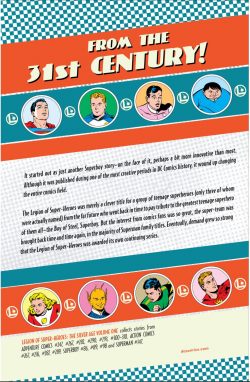
Legion of Super-Heroes: The Silver Age volume 1


By Otto Binder, Jerry Siegel, Edmond Hamilton, Robert Bernstein, Al Plastino, George Papp, Jim Mooney, Curt Swan, John Forte & various (DC Comics)
ISBN: 978-1-4012-8157-1 (TPB/Digital edition)

Once upon a time, in the far future, a super-powered kids from dozens of alien civilisations took inspiration from the greatest legend of all time and formed a club of heroes. One day those Children of Tomorrow came back in time and invited that legend to join them…

And thus began the vast and epic saga of the Legion of Super-Heroes, as first envisioned by writer Otto Binder & artist Al Plastino in early 1958, just as the revived comic book genre of superheroes was gathering an inexorable head of steam. Since that time the fortunes and popularity of the Legion have perpetually waxed and waned, with their future history tweaked and rebooted, retconned and overwritten again and again to comply with editorial diktat and popular whim.

This glorious, far-and-wide ranging collection assembles the numerous preliminary appearances of the valiant Tomorrow People and their inevitable progress towards and attainment of their own feature. It includes all pertinent material from Adventure Comics #247, 267, 282, 290, 293, and 300-310, Action Comics #267, 276, 287, 289, Superboy #86, 89, 98 and Superman #147, cumulatively spanning April 1958 through July 1963.

Happy anniversary!

The many-handed mob of juvenile universe-savers eponymously premiered in Adventure Comics #247 (cover-dated April 1958) in Superboy tale ‘The Legion of Super-Heroes!’ wherein three mysterious kids invited the Boy of Steel to the 30th century to join a club of metahuman champions inspired by his life.

Devised by Otto Binder & Al Plastino, the throwaway concept gripped public imagination and, after frequent further appearances throughout Superman Family titles, the LSH eventually took over the Boy of Steel’s lead spot in Adventure for their own far-flung, quirky escapades, with the Caped Kid Kryptonian reduced to merely “one of the in-crowd”…

However, here the excitement is still gradually building as the kids return 18 months later in Adventure #267 (December 1959) for Jerry Siegel & George Papp to play with. In ‘Prisoner of the Super-Heroes!’ the teen wonders attack and incarcerate the Boy of Steel because of a misunderstood ancient record they have uncovered…

The following summer Supergirl met the Legion in Action Comics #267 (August 1960, by Siegel & Jim Mooney) as Lightning Lad, Saturn Girl and Cosmic Boy secretly travel to “modern day” America and invite the Maid of Might to join the team, in a repetition of their offer to Superboy 15 years previously (in nit-picking fact they claimed to be the children of the original team – a fact glossed over and forgotten these days: don’t time-travel stories make your head hurt?).

Due to a dubious technicality, young and overeager Kara Zor-El fails her initiation task at the hands of ‘The Three Super-Heroes’ and is asked to reapply later – but at least we get to meet a few more Legionnaires, including Chameleon Boy, Invisible Kid and Colossal Boy

With editors still cautiously testing the waters, it was Superboy #86 (cover-dated January 1961 but on sale in November 1960) before ‘The Army of Living Kryptonite Men!’ (by Siegel & Papp) turned the LSH into a last-minute Deus ex Machina to save the Smallville Sentinel from juvenile delinquent Lex Luthor’s most insidious assault.

Two months later in Adventure #282, Binder & Papp introduced Star Boy as a romantic rival for the Krypton Kid in ‘Lana Lang and the Legion of Super-Heroes!’

For Action #276 (May 1961) Siegel & Mooney debuted ‘Supergirl’s Three Super Girl-Friends’, which finally saw her crack the plasti-glass ceiling and join the team, sponsored by Saturn Girl, Phantom Girl and Triplicate Girl. We also met for the first time Bouncing Boy, Shrinking Violet, Sun Boy and potential bad-boy love-interest Brainiac 5 (well, at least his distant ancestor Brainiac was a very bad boy…)

Next comes a pivotal tale as ‘Superboy’s Big Brother’ (by Robert Bernstein & Papp from Superboy #89, June 1961) reveals how an amnesiac, super-powered space traveller crashes in Smallville, speaking Kryptonese and carrying star-maps written by the Boy of Steel’s long-dead father…

Jubilant, baffled and suspicious in equal amounts, Superboy eventually, tragically discovers ‘The Secret of Mon-El’ after accidentally exposing the stranger to a lingering, inexorable death, before providing critical life-support by desperately depositing the dying alien in the timeless Phantom Zone until a cure can be found…

With an August 1961 cover-date Superman #147 unleashed ‘The Legion of Super-Villains!’ (Siegel, Curt Swan & Sheldon Moldoff): a stand-out thriller featuring the adult Luthor and correspondingly mature wicked future bad guys coming far too close to destroying the Action Ace …until the temporal cavalry arrives…

Bernstein & Papp seemingly give Sun Boy a starring role in ‘The Secret of the Seventh Super-Hero!’ (Adventure #290, November 1961), followed by a clever tale of redemptive second chances followed in #293 (February 1962) in a gripping thriller from Siegel, Swan & George Klein. ‘The Legion of Super-Traitors’ posits the future heroes turning evil, prompting Saturn Girl to recruit a Legion of Super-Pets including Krypto, Streaky the Super Cat, Beppo, the monkey from Krypton and magical Superhorse Comet to save the world…

Siegel & Mooney set ‘Supergirl’s Greatest Challenge!’ in Action #287 (April 1962) seeing her visit the Legion (quibblers be warned: for some reason it was mis-determined as the 21st century in this story) to save future Earth from invasion. She also met a telepathic descendent of her cat Streaky. His name was Whizzy (I could have omitted that fact but chose not to – once again for smug, comedic effect and in sympathetic solidarity with cat owners everywhere…)

Action #289 originally hosted ‘Superman’s Super-Courtship!’ wherein the Girl of Steel scours the universe for an ideal mate for her cousin. One highly possible candidate is the adult Saturn Woman, but for some reason her husband Lightning Man objects…

Modern sensibilities might quail at the conclusion but at that time his obvious perfect match was a doppelganger of Supergirl herself… albeit thankfully a little bit older…

By the release of Superboy #98 (July 1962), the decision had been made. The buying public wanted more Legion stories and after ‘The Boy with Ultra-Powers’ (Siegel, Swan & Klein) introduced a mysterious lad with greater powers than the Boy of Steel, focus shifted to Adventure Comics where #300 (cover-dated September 1962) proudly saw the futuristic super-squad finally land their own gig: even occasionally taking an alternating cover-spot from the still top-featured Boy of Steel.

Tales of the Legion of Super-Heroes opened its stellar run with ‘The Face Behind the Lead Mask!’ by Siegel, John Forte & Plastino: a fast-paced premier pitting Superboy and the 30th century champions against an impossibly unbeatable foe until Mon-El, long-trapped in the Phantom Zone, briefly escapes a millennium of confinement to save the day…

In those halcyon days humour was as important as action, imagination and drama, so many early exploits were light-hearted and moralistic. Adventure #301 offered hope to fat kids everywhere with ‘The Secret Origin of Bouncing Boy!’ by regular creative team Siegel & Forte, wherein the process of open auditions was instigated.

These provided fans with dozens of truly bizarre and memorable applicants over the years but here allows the rebounding human rotunda to deliver a salutary pep talk and inspirational account of heroism persevering to triumph over adversity.

Adventure #302 featured ‘Sun Boy’s Lost Power!’ with the golden boy forced to resign until fortune and boldness restore his abilities, after which ‘The Fantastic Spy!’ in #303 sparks a tense tale of espionage and potential betrayal by new member Matter-Eater Lad.

The happy readership was stunned by the events of #304 when Saturn Girl engineered ‘The Stolen Super-Powers!’ to make herself a one-woman Legion. Of course, it was for the best possible reasons, but still didn’t prevent the shocking murder of Lightning Lad…

As a result she was elected Legion leader – at that time the first female to ever lead a comic book team.

With comfortable complacency utterly destroyed, #305 further shook everything up with ‘The Secret of the Mystery Legionnaire!’ who turns out to be long-suffering Mon-El, finally cured and freed from his Phantom Zone prison.

Normally I’d try to be more obscure about story details – after all my intention is to get new people reading old comics – but these “spoiler” revelations are crucial to further understanding here and besides you all know these characters are still around, don’t you?

Pulp sci fi author Edmond Hamilton took over the major scripting role with Adventure #306, introducing ‘The Legion of Substitute Heroes!’ (still quirkily, perfectly illustrated by John Forte): a group of rejected audition applicants selflessly banding together and clandestinely assisting the champions who had spurned them, after which transmuting orphan Element Lad joins the big league.

He seeks vengeance upon the space pirates who had wiped out his entire species in ‘The Secret Power of the Mystery Super-Hero!’ whilst in #308 readers seemingly saw ‘The Return of Lightning Lad!’

Actual Spoiler Warning: skip to the next paragraph NOW!!!

Otherwise you’ll find out it was actually his similarly empowered sister who – once unmasked and unmanned – took her brother’s place as Lightning Lass

Penultimate escapade ‘The Legion of Super-Monsters!’ was a straightforward clash with embittered applicant Jungle King who took his rejection far too personally and gathered a deadly clutch of space beasts to wreak havoc and vengeance, after which the future tension temporarily subsides with ‘The Doom of the Super-Heroes!’ from #310: a frantic battle for survival against an impossible foe

The Legion is undoubtedly one of the most beloved and bewildering creations in American comic book history and largely responsible for the growth of the groundswell movement that became Comics Fandom.

Moreover, these sparkling, simplistic and devastatingly addictive stories, as much as the legendary Julie Schwartz Justice League, fired up the interest and imaginations of a generation of young readers and built the industry we all know today.

These naive, silly, joyous, stirring and utterly compelling yarns are precious and fun beyond any ability to explain – even if we old lags gently mock them to ourselves and one another. If you love comics and haven’t read this stuff, you are the poorer for it and need to enrich your future life as soon as possible.
© 1958-1963, 2018 DC Comics. All Rights Reserved.

Wonder Woman: The Golden Age volume 1


By William Moulton Marston & Harry G. Peter & various (DC Comics)
ISBN: 978-1-4012-7444-3 (TPB/Digital edition)

We can’t get too far into a month of comics by and/or about women without acknowledging the greatest role model of all time…

Wonder Woman was famously created by polygraph pioneer William Moulton Marston – apparently at the behest of his formidable wife Elizabeth – and illustrated by Harry G. Peter in a well-intentioned attempt to offer girls a positive and forceful role model. Her spectacular launch and preview (that’s the comic book superstar, not Mrs. Marston) came in one of the company’s most popular publications: an extra feature inside All Star Comics #8, home of the immortal Justice Society of America.

One month later the Perfect Princess gained her own series – including the cover-spot – in new anthology title Sensation Comics, and was a huge and instant hit. She won her own eponymous title in late Spring of that year (cover-dated Summer 1942).

Using the nom de plume Charles Moulton, Marston scripted all the Amazing Amazon’s many and miraculous adventures until his death in 1947, whereupon Robert Kanigher took over the writer’s role. Venerable co-creator H.G. Peter illustrated almost every WW tale until his own death in 1958.

Spanning December 1941 – February/March 1943, this superb full-colour compilation (also collects that seminal debut from All Star Comics #8, and her every iconic adventure from Sensation Comics #1-14 and Wonder Woman #1-3, plus the first outing in anthological book of (All) Stars Comics Cavalcade.#1

Naturally, we begin with ‘Introducing Wonder Woman’

On a hidden island of immortal super-women, an American aviator crashes to Earth. Near death, US Army Intelligence Captain Steve Trevor is nursed back to health by young Princess Diana. Fearing her growing obsession with the man, her mother Queen Hippolyte reveals the hidden history of the Amazons to the child. Diana learns how her people were seduced and betrayed by men but rescued by the goddess Aphrodite on condition that they thenceforward isolate themselves from the rest of the world and devote their eternal lives to becoming ideal, perfect creatures.

However, after Trevor explains the perfidious spy plot which accidentally brought him to the Island enclave, divine Athena and Aphrodite appear, ordering Hippolyte to assign an Amazon warrior to return with the American to fight for freedom and liberty.

Hippolyte diplomatically and democratically declares an open contest to determine the best candidate and, despite being forbidden to participate, Diana enters and wins. Accepting the will of the gods, the worried mother outfits her in the guise of Wonder Woman and sends her out to Man’s World…

A month later the story continued where the introduction had left off. Sensation Comics #1 declares ‘Wonder Woman Comes to America’, seeing the eager immigrant returning the recuperating Trevor to the modern World. She also trounces a gang of bank robbers and falls in with a show business swindler…

One major innovation here is the newcomer buying a secret identity: that of lovelorn Army nurse Diana Prince, elegantly allowing the Amazon to be close to Steve whilst enabling the heartsick medic to join her own fiancé in South America…

Even with all that going on, there was still room for Wonder Woman and Captain Trevor to bust up a spy ring attempting to use poison gas on a Draft induction centre, before Steve breaks a leg and ends up in hospital again, where “Nurse Prince” is assigned to tend him…

Sensation #2 introduced deadly enemy agent ‘Dr. Poison’ in a cannily crafted tale which also debuted the most radical comedy sidekicks of the era…

The plucky fun-loving gals of the Holliday College for Women and their chubby, chocolate-gorging Beeta Lamda sorority-chief Etta Candy would get into trouble and save the day in equal proportions for years to come: constantly demonstrating Diana’s – and Marston’s – philosophical contention that girls, with correct encouragement, could accomplish anything that men could…

With War raging and in a military setting, espionage and sabotage were inescapable plot devices. ‘A Spy at the Office’ finds Diana arranging a transfer to the office of General Darnell as his secretary so that she can keep a closer eye on the finally fit Steve. She isn’t there five minutes before uncovering a ring of undercover infiltrators amongst the typing pool and saving her man from assassination.

Unlike most comics of the period, Wonder Woman employed tight continuity. ‘School for Spies’ in #4 sees some of those fallen girls murdered by way of introducing inventive genius and Nazi master manipulator Baroness Paula von Gunther. She employs psychological tricks to enslave girls to her will and sets otherwise decent Americans against their homeland.

Even Diana succumbs to her machinations… until Steve and the Holliday Girls crash in…

America’s newest submarine is saved from destruction and cunning terrorists brought to justice in ‘Wonder Woman versus the Saboteurs’ before issue #6 has the Amazing Amazon accepting a ‘Summons to Paradise’ to battle her immortal sisters in Kanga-riding duels before receiving her greatest weapon: an unbreakable Lasso of Truth which compels and controls anyone who falls within its golden coils.

It proves quite handy when Paula escapes prison and uses an invisibility formula to wreak havoc on American coastal defences…

‘The Milk Swindle’ is pure 1940s social advocacy drama, with homegrown racketeers and Nazi von Gunther joining forces to seize control of America’s milk supply with the incredibly long-sighted intention of weakening the bones of the country’s next generation of soldiers.

Closely following in Sensation #8 is ‘Department Store Perfidy’ wherein the Amazon goes undercover in the monolithic Bullfinch emporium to win better working conditions and fair pay for the girls employed there.

There was a plethora of surprises in #9 with ‘The Return of Diana Prince’ from South America. Now Mrs Diana White, the young mother needs her job and identity back until her inventor husband can sell his latest invention to the US army. Luckily, Wonder Woman and an obliging gang of saboteurs help to expedite matters…

The next major landmark was the launch of the Amazon’s own solo title. The first quarterly opens here a text feature on the Amazon’s pantheon of godly patrons in ‘Who is Wonder Woman?’ after which comic action commences with a greatly expanded revision of her first appearance in ‘A History of the Amazons: The Origin of Wonder Woman’. This precedes a beguiling mystery tale as ‘Wonder Woman Goes to the Circus’ wherein Diana solves the bizarre serial murders of the show’s elephants before Paula von Gunther rears her shapely head again in ‘Wonder Woman versus the Spy Ring’ wherein the loss of the Golden Lasso almost causes her demise and ultimate defeat of the American Army…

The issue ends with ‘The Greatest Feat of Daring in Human History’ as Diana and Etta head for Texas, only to become embroiled in a sinister scheme involving Latin Lotharios, lady bullfighters, lethal spies and a Nazi attempt to conquer Mexico…

Back in Sensation Comics #10 (October 1942) ‘The Railroad Plot’ celebrates Steve and Wonder Woman’s first anniversary by exposing a sinister plan devised by Japanese and German agents to blow up New York using the labyrinth of subway tunnels under the city, whilst ‘Mission to Planet Eros’ debuts the Princess’ long line of cosmic fantasy exploits. The Queen of Venus requests Diana’s aid in saving an entire planetary civilisation from gender inequality and total breakdown, before ‘America’s Guardian Angel’ – from Sensation #12 – sees the Warrior Princess accepting an offer to play herself in a patriotic Hollywood movie, only to find the production infiltrated by the insidious Paula and her gang of slave-girls…

Preceded by an illustrated prose piece about ‘The God of War’, Wonder Woman #2 comprises a 4-part epic introducing the Astounding Amazon’s greatest enemy in ‘Mars, God of War’. He apparently instigated a World War from his HQ on the distant red planet but chafes at the lack of progress since Wonder Woman entered the fray on the side of the peace-loving allies. He now opts for direct action, no longer trusting his earthly pawns Hitler, Mussolini and Hirohito

When Steve goes missing, Diana allows herself to be captured and ferried to Mars. Here she starts disrupting the efficient working of the war-god’s regime and fomenting unrest amongst the slave population, before rescuing Steve and heading home to Earth. ‘The Earl of Greed’, one of Mars’ trio of trusted subordinates, takes centre stage for the second chapter, with orders to recapture Steve and Diana at all costs.

As the duo attempt to infiltrate Berlin, Greed uses his influence on Hitler to surreptitiously redirect the German war effort, using Gestapo forces to steal all the USA’s gold reserves…

With Steve gravely injured, the Amazon returns to America and whilst her paramour heals, uncovers and foils the Ethereal Earl’s machinations to prevent much-needed operating funds from reaching Holliday College, where young girls learn to be independent free-thinkers…

With Greed thwarted, Mars dispatches ‘The Duke of Deception’ to Earth, where the spindly phantom impersonates Wonder Woman and frames her for murder.

Easily escaping from prison, the Princess of Power not only clears her name but also finds time to foil a Deception-inspired invasion of Hawaii, leaving only ‘The Count of Conquest’ free to carry out Mars’ orders.

His scheme is simple: through personal puppet Mussolini, the Count tries to physically overpower the Amazing Amazon with a brutal giant boxing champion, even as Italian Lothario Count Crafti attempts to woo, seduce and suborn her. The latter’s wiles actually worked, too, but capturing and keeping her are two different things entirely and after breaking free on the Red Planet, Diana delivers a devastating blow to the war-machine of Mars…

This issue ends with a sparkling double page patriotic plea when ‘Wonder Woman Campaigns for War Bonds’

Sensation Comics #13 (January 1943) claims ‘Wonder Woman is Dead’ when a corpse wearing her uniform is discovered, and the astounded Diana Prince discovers her alter ego’s clothes and the irreplaceable magic lasso are missing…

The trail leads to a diabolical spy-ring working out of Darnell’s office and an explosive confrontation in a bowling alley, whilst ‘The Story of Fir Balsam’ in #14 presents a seasonal tale concerning lost children, an abused mother and escaped German aviators. All was happily resolved around a lonely pine tree, after which the Immortal Warrior celebrated her next publishing milestone…

The 1938 debut of Superman propelled National Comics to the forefront of their fledgling industry and a year later the company was licensed to produce a commemorative comicbook celebrating the opening of the New York World’s Fair.

The Man of Tomorrow prominently featured on the appropriately titled New York World’s Fair Comics among such four-colour stars as Zatara, Butch the Pup, Gingersnap and The Sandman. In 1940 another abundant premium emerged with Batman and Robin added to the roster, and the publishers felt they had an item and format worth pursuing commercially.

The spectacular card-cover 96-page anthologies had been a huge hit: convincing editors that an over-sized anthology of their pantheon of characters, with Superman and Batman prominently featured, would be a worthwhile proposition. Thus, the format was retained for a wholly company-owned, quarterly high-end package, retailing for the then-hefty price of 15¢.

Launching as World’s Best Comics #1 in Spring 1941, the book morphed into World’s Finest Comics from #2, beginning a stellar 45-year run which only ended as part of the massive clear-out and decluttering exercise that was  Crisis on Infinite Earths. During the Golden Age, however, it remained a big blockbuster bonanza of strips to entice and delight readers…

At this time National/DC was in an editorially-independent business relationship with Max Gaines that involved shared and cross promotion and distribution for the comicbooks released by his own outfit All-American Publications. Although technically competitors if not quite rivals, the deal included shared logos and advertising and even combining both companies’ top characters in the groundbreaking All Star Comics as the Justice Society of America.

However, by 1942 relations between the companies were increasingly strained – and would culminate in 1946 with DC buying out Gaines, who used the money to start EC Comics.

All-American thus decided to create its own analogue to World’s Finest, featuring only AA characters. The outsized result was Comics Cavalcade

Cover-dated December 1942-January 1943 – and following Frank Harry’s gloriously star-studded cover to Comic Cavalcade #1 – Wonder Woman’s fourth regular star slot began with the company superstar solving the ‘Mystery of the House of the Seven Gables’ (as ever the fruits of Marston & Peter’s fevered imaginations) wherein Diana Prince stumbles upon a band of Nazi spies. All too soon, the Amazing Amazon needs the help of some plucky youngsters to quash the submarine-sabotaging brutes…

Wonder Woman #3 then dedicates its entirety to the return of an old foe; commencing with ‘A Spy on Paradise Island’ as the undergrads of Holliday College for Women – and Etta Candy – are initiated into some pretty wild Amazon rites on Paradise Island. Sadly, the revels inadvertently allow an infiltrator to gain access and pave the way for an invasion by Japanese troops…

Naturally Wonder Woman and the Amazons prevail on the day but the sinister mastermind behind it all is exposed and strikes back in ‘The Devilish Devices of Baroness Paula von Gunther’.

Whilst the on-guard Amazons build a women’s prison that will be known as “Reform Island”, Wonder Woman – acting upon information received by the new inmates – trails Paula and is in time to crush her latest scientific terror: an invisibility ray…

‘The Secret of Baroness von Gunther’ offers a rare peek at a villain’s motivation when the captured super-spy reveals how her little daughter Gerta has been a hostage of the Nazis for years and remains a goad to ensure the genius’ total dedication to the German cause… Naturally, the Amazing Amazon instantly determines to reunite mother and child at all costs after which ‘Ordeal by Fire’ confirms the Baroness aiding Diana and Steve in dismantling the spy network and slave-ring the Nazis had spent so long building in America… but only at great personal and physical cost to the repentant Paula…

Much has been posited about subtexts of bondage and subjugation in Marston’s tales – and, to be frank, there really are lots of scenes with girls tied up, chained or about to be whipped – but I just don’t care what his intentions (subconscious or otherwise) might have been: I’m more impressed with the skilful drama and incredible fantasy elements that are always wonderfully, intriguingly present: I mean, just where does the concept of giant war-kangaroos come from?

Exotic, baroque, beguiling and uniquely exciting, these Golden Age tales of the World’s Most Famous female superhero are timeless, pivotal classics in the development of comic books and still provide lashings of fun and thrills for anyone looking for a great nostalgic read. If that’s you, you know what you need to do…
© 1941, 1942, 1943, 2017 DC Comics. All Rights Reserved.

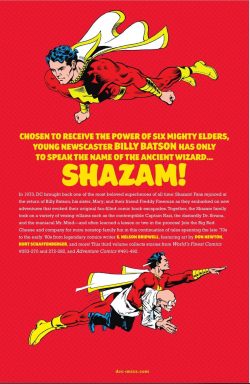
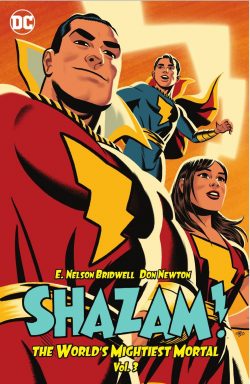
Shazam!: The World’s Mightiest Mortal volume 3


By E. Nelson Bridwell & Don Newton, with Gil Kane, Kurt Schaffenberger, Dave Hunt, Joe Giella ,Bob Smith, Steve Mitchell, Frank Chiaramonte, Dan Adkins, Larry Mahlstedt, John Calnan & various (DC Comics)
ISBN: 978-1-7795-0946-8 (HB/Digital edition)

One of the most venerated and beloved characters in American comics was devised by Bill Parker & Charles Clarence Beck as part of the wave of opportunistic creativity that followed the debut of Superman in 1938. Although there were many similarities in the early years, the Fawcett Comics character moved swiftly and solidly into the realm of light entertainment – and even broad comedy – whilst, as the 1940s progressed the Man of Steel increasingly left whimsy behind in favour of action and drama.

Homeless orphan and thoroughly good kid Billy Batson was selected by an ancient wizard to battle injustice: granted the powers of six gods and mythical heroes. By speaking aloud the mage’s name – an acronym for the six patrons Solomon, Hercules, Atlas, Zeus, Achilles and Mercury – Billy transformed from scrawny boy to brawny adult Captain Marvel.

At the height of his popularity, “the Big Red Cheese” significantly outsold Superman – even being published twice a month. However, as the decade progressed tastes changed and sales slowed. An infamous court case begun in 1941 by National Comics contesting copyright infringement was settled. Like many other superheroes, Cap disappeared, becoming a fond memory for older fans. A big syndication success, he was missed all over the world…

In Britain, where an English reprint line had run for many years, creator/publisher Mick Anglo had an avid audience and no product, and so reimagined the Captain Marvel franchise into atomic age hero Marvelman and Co., continuing to thrill readers well into the 1960s.

Then, as America lived through another superhero boom-&-bust, the 1970s dawned with a shrinking industry and wide variety of comics genres servicing a base that was increasingly founded on collectors and fans rather than casual or impulse buyers. DC Comics needed sales and were prepared to look for them in unlikely places.

Following a 1953 court settlement with Fawcett, DC ultimately secured the rights to Captain Marvel, his spun-off extended Family and attendant strips and characters. Despite the actual name having been taken by Marvel Comics (via a circuitous route and quirky robotic hero published by Carl Burgos and M.F. Publications in 1967), the monolithic publishing home of Superman opted for tapping into that discriminating, if aging, fanbase.

In 1971, they licensed the dormant rights to the character stable (only fully buying them out in 1991) and two years later, riding a wave of national nostalgia on TV and in movies, DC resurrected and relaunched the entire beloved cast in their own kinder, weirder, completely segregated and separate universe.

To circumvent intellectual property clashes, they named the new/old title Shazam! (‘With One Magic Word…’): the unforgettable trigger phrase used by the majority of Marvels to transform to and from mortal form and a word that had entered the American language thanks to the success of the franchise (especially an excellent movie serial) the first time around.

Issue #1 carried a February 1973 cover- date and featured ‘In the Beginning’: relating, in a wittily engaging, grand old self-referential style, the classic origin, after which ‘The World’s Wickedest Plan’ related how the Captain, his super-powered family and all the supporting cast had been trapped in a timeless state for 20 years by the invidious Sivana Family… who had subsequently been trapped in their own Suspendium device too.

I can’t think of any better reason for you to grab the first volume of this series, or the second for that matter…

The series received mixed reviews and unconvincing sales results, but was pushed hard by DC. It even briefly scored the big prize in the publisher’s eyes: being adapted to television as live action Saturday morning series Shazam!, which ran for three season (28 episodes) from September 7th 1974 to October 16th 1976…

The comic book continued until #35, June 1978 before commercial pressures killed it – and many other DC titles. Happily, the series had enough fans – in the marketplace and amongst creators and editors – to be thrown a lifeline…

The stories and milieu had already begun course correction by then. Radical change and darker, “more realistic” adventures had started in Shazam! #33, and more mainstream artists heralded a metamorphosis via action and drama-heavy battles against Nuclear robotic menace Mister Atom, sadistic super-fascist Captain Nazi, murderous primordial “Beastman” King Kull and infernal foe Sabbac…

This third stylish compendium spans cover-dates November 1978 to October 1982, collecting material from World’s Finest Comics #253-270 and 272-282, plus one final fling from Adventure Comics #491-492. Mostly unseen since first release, all the stories were ritten by unsung legend E. Nelson Bridwell, and mostly pencilled by supremely gifted, gone-far-too-soon Don Newton. The latter was born in 1934 and came up through the burgeoning fan press of the 1960s and 1970s. In his too-short career, Newton distinguished himself on The Phantom, The Avengers, The New Gods, Star Hunters, Aquaman and especially Batman, but was clearly at his happiest with Fawcett’s Captain Marvel Family – now and forevermore grouped under the electrical umbrella of Shazam!

Newton was a huge fan of the Captain and his clan, having studied under originator C.C. Beck. The gifted prodigy had been drawing Batman since 1978 and his version was well on the way to being the definitive 1980s look, but Newton’s tragically early death by heart attack in 1984 cut short what would surely have been a superlative and stellar career.

Author Bridwell (Super Friends; Secret Six; Inferior Five; Batman; Superman; The Flash; Legion of Super-Heroes and fill-ins absolutely everywhere) was another devout Captain Marvel acolyte. His day job and secret identity was as editorial assistant/continuity coordinator at DC, where – thanks to an astoundingly encyclopaedic knowledge of publishing minutiae and almost every aspect of history, myth, popular trends and general knowledge plus the ability to instantly recall every damn thing! – he was justly famed as Keeper of Lore and top Continuity Cop.

Bridwell & Newton had just begun collaborating on their dream project when the title was cancelled. Happily, the Shazam Family were moved lock, stock and barrel to experimental giant-sized anthology World’s Finest Comics just as tone and content seamlessly shifted from whimsy to harder-edged contemporary superhero stories.

The wonderment resumes here moments after that final Shazam! issue, wherein King Kull tried to reverse history and re-establish his extinct race and empire. In the rubble-strewn aftermath, WFC #253 opens with ‘The Captain and the King!’ wherein Bridwell, Newton & inker Kurt Schaffenberger recount how Billy, his sister Mary Marvel and their teenage ally Freddy Freeman – AKA Captain Marvel Junior – set off after the brute, blithely unaware that an alliance of the Sivana family and Captain Nazi has faltered.

Despite the fascist now acting on his own, he had inadvertently – and unsuspectedly – gained the power of mind control, and accidentally defeated himself by having the Marvels, science-hero Bulletman and villainous Kull and Sivana attack him…

Meanwhile, wicked Ebeneezer Batson (who had embezzled Billy and Mary’s inheritance) had his soul claimed by Satan, prompting an heroic rescue mission to Hell in #254’s ‘The Devil and Capt. Marvel’, after which Mary takes centre stage as the boys and Bulletman join the enslaved army of irresistible sorcerous seductress ‘Dreamdancer’, leaving only his wife Bulletgirl and the Shazam sister to save the city…

A wry change of pace tinged WFC #256 as the Marvels foil the schemes of a time-travelling swindler in ‘The Gamester’s Death Wager!’, before Billy employs the wisdom of Solomon to defeat ‘The Invincible Man’ threatening Earth – and foiling the masterplan of wicked worm Mister Mind – before backing up Junior when he goes after his Aryan archnemesis.

It’s an extremely personal and delicate case since the lovesick monster has abducted Beautia Sivana (a family black sheep who isn’t evil!): subjecting her to ‘The Courtship of Captain Nazi’. Frankly, she really doesn’t need any help stopping the lech, and the beating CM Junior delivers is just an afterthought…

In these yarns Bridwell assiduously filled in backstory and origins of a world largely unfamiliar to new and younger readers, and for WFC #259 focused on the urbane talking tiger who is the Family’s great ally as a scientist solves ‘The Secret of Mr. Tawny’ and derives an evolutionary process to become futurised, enhanced, all-conquering dictator The Superior …until the Captain and the big cat strike back…

Inked by Dave Hunt, ‘There Goes the Neighborhood!’ deposits a delicious dose of whimsy and contemporary politicking as citizens furiously protest weird strangers moving into their area. The immigrant newcomers are mythologicals – satyrs, centaurs, siren, lamia and mermaids – but even Captain Marvel can’t fight human prejudice and nimbyism …until a geological crisis makes allies of everyone…

Mary flies solo in #261, defeating an old foe by solving ‘The Case of the Runaway Sculpture’, before Billy enjoys a revelatory history lesson after meeting ‘The Captain Marvel of 7,000 B.C.’ and helping set the universe on its true cosmic course whilst Freddy again faces octogenarian outlaws when ‘The Greybeard Gang’ unleash a taste of the bad old days…

Fawcett invented big fight stories and multi-part serial epics at the dawn of the Golden Age and for World’s Finest Comics #264 Bridwell, Newton & Hunt celebrated the tradition with Mister Mind getting his old gang back together. ‘The Monster Society Strikes Back!’ sees the alien worm, Sivana, Mr. Atom, King Kull, IBAC (combining the awesome “Evil” of Ivan the Terrible, Borgia, Attila and Caligula in one weedy nerd with his own acronymic magic word), Oggar (“World’s Mightiest Immortal”) and evil antithesis Black Adam united in a scheme to kill the hero kids and conquer everything.

First to strike are Oggar and Adam, but their resurrected Egyptian armies are no match for Mary and Billy, and the focus falls on the human-hating beastman and atomic automaton who trigger ‘The Plot Against the Human Race’ (inked by Frank Chiaramonte) but just can’t outsmart Billy and Freddy…

Joe Giella applied his classical inking to WFC #266’s as murderous mystic malcontent IBAC joins ‘Sivana’s Space Armada’, recruiting aliens from everywhere to attack Earth, yet once again failing to get past mighty Captain Marvel. Bob Smith then inked #267’s concluding chapter as the ghastly gang regroup to perpetrate an ‘Assault on the Rock of Eternity!’, sparking the return of part-timers The Three Lieutenant Marvels to help save creation…

Like Philip Jose Farmer, Bridwell was one of those creators who always sought links between heroes and villains, and he indulged himself via a trick of fortuitous continuity in #268’s ‘A Sleep and the Deep’ (Steve Mitchell inks) as Freddy Freeman’s origins were re-examined via some very nasty nightmares…

In brief: Captain Marvel Jr. and his originating antithesis Captain Nazi sprang out of a crossover experiment in 1942, starting in the Bulletman feature of Master Comics. The Ballistic Wonder was undoubtedly Fawcett’s runner-up attraction: hogging the cover spot there and even winning his own solo comic book. That all changed with #21 and Captain Nazi. Hitler’s unholy Übermensch made manifest, the monstrous villain was despatched to America to spread terror and destruction and kill all its superheroes.

Nazi stormed in, battling Bulletman and Captain Marvel, who naturally united to stop the Fascist Fiend razing New York City. The clash ended inconclusively and restarted in the Captain Marvel portion of Whiz Comics #25 with the Nazi trying to wreck a hydroelectric dam. Foiled again, he sought to smash a fighter plane prototype.

Captain Marvel countered him, but was not quick enough to prevent the Hun killing an old man and brutally crushing the young boy beside him. Freddy Freeman seemed destined to follow his grandfather into eternity, but guilt-plagued Billy brought the dying lad to Shazam and the wizard saved his life by granting him access to the power of the ancient gods and heroes. Physically cured – except for a permanently maimed leg – the process generated a secondary effect: whenever he uttered the phrase “Captain Marvel” Freeman transformed into a super-powered version of his mortal self.

The epic concluded in Master Comics #22 when the teen titan joined the Bullets in stopping Captain Nazi, victoriously concluding with a bold announcement that from the very next issue he would be starring in his own solo adventures…

In our modern age, the net result was that Freddy experienced a portentous dread that the seas which had taken all his family had not done with him and something evil was coming…

Before that though, Bridwell, Newton & Dan Adkins reveal how composite demon host Timothy Karnes (carrying infernal icons Satan, Any, Belial, Beelzebub, Asmodeus & Craeteis) is revealed as the cruel cause of those nightmares in #269’s ‘SABBAC Strikes Back!’ but is unable to survive when CMJ deduces the plot and turns the tables…

It’s smiles all around – eventually – when Billy’s alter ego convinces hideous extraterrestrials to take back their well-meaning gift of transforming his landlady’s offspring into ‘Our Son, the Monster!’ (Larry Mahlstedt inks) whilst Mary Marvel confronts a deadly new foe in #272. As inked by Mitchell, ‘Chain Lightning’ can divert and absorb the magic bolts that bestow godlike power, but she can’t think as quickly as the Shazam girl…

Adkins returned for #273 as the World’s Wickedest Scientist writhes in shame after being awarded ‘Sivana’s Nobel!’ for the discarded and despised benevolent devices he invented before turning evil. To restore his own pride, the batty boffin tries to trigger World War III, but thanks to Captain Marvel only makes himself eligible for next year’s Peace Prize…

Billy Batson steals the show next, solving a baffling murder mystery in the Mahlstedt inked ‘Silence, Please’ and Adkins embellishes a compelling kidnap drama as the Marvel family seek a temporary replacement following ‘The Snatching of Billy Batson!’

Inked by Chiaramonte, weird war and magical mystery inform WFC’s #276 pan-dimensional invasion saga, but the last stand of ‘Magicians and Mercenaries’ – and the Marvel Family – proves but a simple prelude to Junior tackling ‘The Menace of the Moon-Tree!’ when fairy tales come true and magic beans link Earth to Luna…

A glimmer of understanding comes in #278 as satanist Dora Keane accepts ‘The Power of Darkness!’ from Satan, and as Darkling defeats the Shazam- powered champions. Saved by another enigmatic magical manifestation, the heroes are set on the trail of an unknown operator acting anonymously from the shadows…

His identity is revealed in #279 as a ruthless plutocrat blackmails the world into finding a cure for his fatal illness, or else ‘When Bancroft Fisher Dies, Everybody Dies!

As the Marvels race to find the global boobytrap endangering life on Earth, they are assisted by beings impossible to believe or comprehend and a boy Freddy recognises…

The truth emerges in ‘The Secret of the Freeman Brothers!’ and the return of Kid Eternity

Way back in Shazam! #27, Bridwell had revived a Quality Comics character DC had also acquired when the Golden Age ended. The ghostly child and his spiritual advisor (that’s a pun, sons & daughters) fitted perfectly into what Silver Age fans dubbed Earth-S continuity, despite previously only being seen in reprint tales…

Devised by Otto Binder & Sheldon Moldoff, the Kid had debuted in Hit Comics #25 (cover-dated December 1942): an innocent boy machine-gunned by Nazis on a U-Boat, and taken to the heavenly realm of Eternity by a hapless soul collector years before his actual due date. Bureaucracy being the ultimate force of Creation, the lad was unable to simply return to life, but was granted compensation in the ability to temporarily walk the Earth, and power to summon any person, myth or legend from literature or history.

Aided by bumbling but beneficent spirit Mr. Keeper, the Kid fought crime and injustice until all the really good Golden-Age comic books were cancelled, but now was revealed as Freddy’s brother Christopher “Kit” Freeman, who had died on the same day Freddy had been attacked by Captain Nazi and both grandfathers had been killed…

As the boys compare origins it’s revealed that Mr. Keeper’s original mistake was taking Kit instead of Freddy and that the wizard was deeply involved in setting the situation right…

Having at last made contact with his sibling and saving Earth from mystic menaces, Kid and Junior are at the forefront of the next crisis as Mister Mind steals ultimate power in #281 to become ‘The One-Worm Monster Society!’ (John Calnan inks). Once that catastrophe cataclysmically concluded, the spooks silently stuck around, helping scupper the schemes of con artists Silk and Her Highness in the final World’s Finest outing.

Illustrated by Gil Kane, ‘Charity Begins…’ (#282 August 1982) was set in a circus and featured everyone – even charismatic charlatan/honorary Marvel Uncle Dudley – but was not the intended last hurrah. That had been delayed and only appeared in DC Digest-series Adventure Comics #491 & 492 (September and October 1982, illustrated by Newton, Chiaramonte & Calnan).

It began with ‘The Confederation of Hell’ as Satan assembled former failed agents IBAC, Darkling, SABBAC and old Kid Eternity enemy Master Man who attacked the heroes in their human forms, and unleashed primordial deities to do their dirty work. However, with Kit and Keeper turning the tide the Marvels easily won their ‘Battle with the Gods!’ to fade safely into comics limbo until the next reboot…

Although still controversial amongst older fans like me, the 1970’s incarnation of Captain Marvel/Shazam! has a tremendous amount going for it. Gloriously free of breast-beating angst and agony (even at the end) these adventures are beautifully, compellingly illustrated and charmingly scripted: clever, rewarding, funny and wholesome superhero yarns to appeal to any child and positively promote a love of graphic narrative. There’s a horrible dearth of exuberant superhero adventure these days, so isn’t it great that there is still somewhere to go for a little light action?

Just say the word…
© 1978, 1979, 1980, 1981, 1982, 2021 DC Comics. All Rights Reserved.

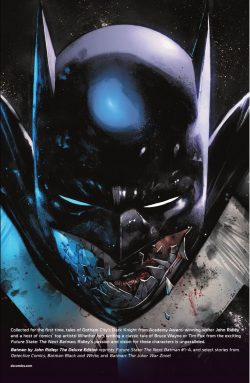
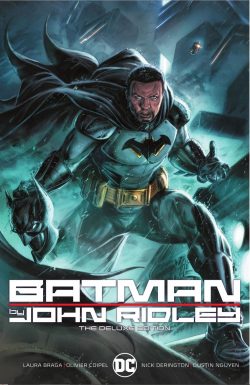
Batman by John Ridley: The Deluxe Edition


By John Ridley, Laura Braga, Olivier Coipel, Nick Derington, Dustin Nguyen & various (DC Comics)
ISBN: 978-1779511263 (HB/Digital)

Like his immediate progenitor Superman, the Dark Knight has transcended lowly populist origins to join a metafictional literary landscape populated by the likes of Tarzan, Romeo and Juliet and Sherlock Holmes, as well as similar graphic upstarts including Mickey Mouse and Popeye. As such, his universal recognition factor outside our industry means he gets to work in places and scenarios that don’t always appeal to traditional funnybook audiences.

That means everyone thinks they know Batman and has their own story to tell about him…

It’s a propensity of the property that DC has always been willing to push to that fact. Probing the many, many worlds of Batman has always paid off for the publishers (and games-makers/movie and TV producers/toy vendors, et al) who have all in their own ways expanded Bob Kane & Bill Finger’s original concept since 1939. Just check out The Dark Knight Returns, Batman Beyond or Gotham By Gaslight to see how he inhabits many worlds and how powerfully successful the process can be…

Of course, the prime culprit and beneficiary of this plasticity will always be the comics makers themselves. Over decades, DC has constantly delivered an infinite variety of Gotham Guardian, in wild new worlds or fanciful locales not so different from mainstream continuity or what we consensually accept as the “real world”…

Following mega-event Dark Nights: Death Metal, all previous aspects of DC comics continuity were reactivated (re-legitimised?) after years of adulteration, alteration and revision. It resulted in a vast, multiversal repository of story potential, with one future-set sector designated the Future State.

An editorial pause, palate-cleanse and fresh jumping-on point, the project delivered stories of apparently-familiar characters and properties in near or distant settings, subdivided into already-proven divisions such as Future State: Wonder Woman, Future State: Justice League and Future State: Gotham…

Meanwhile…

The evolution and assimilation of non-white, non-standard characters – defined and othered by skin colour, religion, ethnicity and who loves whom – into most regions of mass media had been described as “measured progressiveness” by author and screenwriter John Ridley. You might know him from novels like Stray Dogs, The Drift and What Fire Cannot Burn; screen works as varied as Fresh Prince of Bel-Air, Cold Around the Heart, U Turn, Three Kings, Static Shock, Third Watch, Undercover Brother, American Crime or 12 Years a Slave and comics such as The American Way, The Other History of the DC Universe, Superman Red & Blue and Black Panther.

His premise is especially true and effective in comics, where incremental firsts have always been applauded and encouraged – and rightly so, as the industry was traditionally aimed at kids and has always been at the forefront of progressive thinking and action. However, it has also suffered from a tickbox mentality where true change has been slow to materialise and hard to sustain.

We can say “first black superhero”, “first gay hero”, “first interracial marriage” or “first same-sex kiss”, but other than offering a glimmer of acceptance, and recognition, what has really changed?

It’s certainly better than an all-white, all-male milieu where “different” equates to “lesser than”, where more than 50% of the populace – and who knows how much of the readership – doesn’t conform to supposed “norms” and are so often reduced to eye-candy, or plot props, and relegated to useless bystanders, victims or bodycount fodder, but so seldom even competent villains, who at least have some agency…

For the longest time those attitudes were tacitly enshrined on funnybook pages – and not even for sinister reasons – but what appears to simply be an unconscious acceptance of an unchallenged status quo…

Nevertheless, incremental progress did happen – in comics at least – and after assorted dalliances with Dark Knights of color, in 2020 Future State: The Next Batman picked up mainstream Bat-lore, gave it a shake and twist and sparked an ongoing divergent scenario where black characters inherited the whole spotlight to further the legend…

Originally released as Future State: The Next Batman #1-4, the experiment became as self-sustaining as comics can get. This deluxe edition gathers that initial storyline, augmented by follow-up material from Batman Black & White #3, Batman: The Joker War Zone #1. There’s also a new story…

It begins a few years from now. Bruce Wayne is dead, his armourer/advisor Lucius Fox has inherited all his money and sits precariously at the top end of a stratified and dystopian city. The beleaguered GCPD are reluctantly and unwillingly bolstered by the Mayor’s private security forces. The Magistrate is a paramilitary force of “Peacekeepers” with only one job: killing on sight anybody wearing a mask…

Directly answerable to Mayor Nakano, the hunters are absolutely no help against escaped inmates of Arkham or the usual criminals infesting the city: expending their energies in pursuit of an apparent resurrected legend and inflicting immeasurable collateral carnage. Despite all this, the night still belongs to a punishingly combative “Bat”, who saves who he can despite the forces aligned against him…

The Fox family have recently reunited, with patriarch Lucius (CEO of Wayne Enterprises and now the most powerful employer in the city) struggling to adapt as his wife Tanya uses all her legal acumen to back and legitimise the Mayor’s stance on vigilantes. She cannot get past the injuries her eldest daughter Tam suffered at the hands of Gotham’s bad people: a situation echoed in son Luke (former superhero Batwing) and youngest daughter Tiffany.

Especially adding to the tension, prodigal son Tim has recently returned from a life no one knows of. He has changed very much and even abandoned his own name: only answering to “Jace” now. No one really knows yet if he’s welcome, or what he really wants…

Written by Ridley and illustrated by Nick Derington and Laura Braga, with colours from Tamra Bonvillain & Arif Prianto, the saga follows a new Dark Knight as he spectacularly battles street-gang proliferation, rapists, outraged vengeance-takers, child-killers, run-of-the-mill murderers and ruthlessly ungovernable law-enforcers.

In his wake, ordinary cops like Renee Montoya and Adriana Chubb struggle to square the circle of duty vs orders vs the apparently obsolete concept of justice in a Gotham so far beyond what qualifies as a “Police State” that it’s impossible to know who to trust …unless it’s an outlaw in a mask…

Morally ambiguous and emotionally complex, but with a strong element of human heart at its core, the saga of a fresh force for Reason and Right in a very nasty place caught on: spawning an extended epic (we’ll get to Future State: The Next Joker, Gotham, Second Son, I Am Batman and the rest in the fullness of time) to score the big prize – an alternate incarnation able to stand on its own spiky, combat-booted feet…

That success is confirmed here by a selection of short pieces beginning with wry romp ‘The Cavalry’ as Ridley and illustrator Olivier Coipel see the new guy survive a bad situation thanks to the late arrival of a masked teen assistant in the grand manner, as seen in Batman Black & White #3.

Never pausing until it’s over, Coipel & Matt Hollingsworth & Bennett unpick ‘Family Ties’: painfully probing the trigger event that changed Lucius Fox after he was tortured by psychopathic sidekick Punchline and rescued by Batwing in Batman: The Joker War Zone #1, before a Coipel pin-up from Detective Comics #1027 (November 2020) escorts us to a new “old” vignette.

Set years ago when Robin was a white boy just starting out – and courtesy of Ridley, Dustin Nguyen, John Kalisz & letterer Tom Napolitano – ‘3 Minutes’ details a moment of scary clarity and responsibility accepted when Lucius Fox first helps Alfred Pennyworth save a hero…

With covers by Doug Braithwaite, Ladronn, Coipel, Tomeo Morey and Ben Oliver, Batman by John Ridley offers thrills, chills, challenges, revelations and all the surprises you’d expect from a tale of the Dark Knight: any and all of them…
© 2020, 2021 DC Comics, All Rights Reserved.

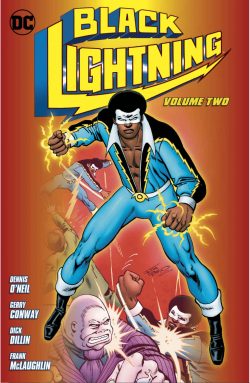
Black Lightning


By Dennis O’Neil, Gerry Conway, J.M. DeMatteis, Martin Pasko, Paul Kupperberg, Dick Dillin, George Tuska, Rich Buckler, Marshall Rogers, Mike Netzer/Nasser, Romeo Tanghal, Joe Staton, Pat Broderick, Dick Giordano, Gerald Forton & various (DC Comics)
ISBN: 978-1-4012-7546-4 (TPB/Digital edition)

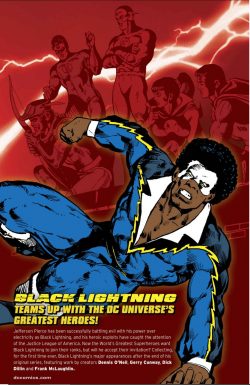
Black Lightning was the first African American superhero to have his own solo DC title. It launched in 1977 and ran for 11 issues.

When former Olympic decathlete Jefferson Pierce returned to the streets of Metropolis’ Suicide Slum to teach at inner city Garfield High School, he was determined to make a real difference to the disadvantaged and often troubled kids he used to be numbered amongst. However, when he interrupted a drug buy on school grounds and sent the dealer packing, he opened everyone around him to mob vengeance and personal tragedy…

When the ruling racketeers – an organised syndicate dubbed The 100 – came seeking retaliation, one of Pierce’s students paid the ultimate price. The traumatised teacher realised he needed the shield of anonymity if he was to win justice and safety for his beleaguered home and charges…

Happily, tailor Peter Gambi – who had raised Jefferson and taken care of his mother after the elder Pierce was murdered – had some useful ideas and inexplicable access to some pretty far-out technology. Soon, equipped with a strength-&-speed-enhancing forcefield belt and costume, plus a mask and wig that completely changed his appearance, a fierce new vigilante stalked the streets of Metropolis…

This second outing gathers a flurry of back-up and guest appearances from May 1979 to October 1980, garnered from various titles the urban avenger prowled in after his solo title folded. They cumulatively comprise World’s Finest Comics #256-259 and #261, DC Comics Presents #16, Justice League of America #173-174, Detective Comics #490-491, 495-495 and The Brave and the Bold #163 plus pertinent material from Who’s Who: The Definitive Directory of the DC Universe #3 (1985) and Who’s Who in the DC Universe #16 (1992).

Following an informative Introduction by character originator Tony Isabella reprising Black Lightning: The In-Between Years, the (relatively) down-to-earth superhero antics recommence in ‘Encounter with a Dark Avenger!’ (courtesy of Denny O’Neil, Dick Dillin & Frank Chiaramonte, as seen in World’s Finest Comics #256).

Here the electric warrior is manipulated into a potentially fatal confrontation with equally fervent urban vigilante Green Arrow. As the heroes clash, neither is aware the 100’s ousted boss Tobias Whale is behind their mutual woes…

That short yarn saw Black Lightning as GA’s guest star and served as a prelude to ‘Death Ransom!’ (WFC #257), beginning Pierce’s second (strictly backup) series. Crafted by O’Neil, George Tuska & Bob Smith, it sees a fateful, brutal clash with The Whale, resulting in a wary ceasefire for the archenemies as they unite to destroy a swiftly rebuilding 100 cartel…

Of course, a scorpion’s gotta sting and the alliance only lasts one issue before Whale betrays Lightning’s trust and another innocent dies in ‘The Blood of the Lamb!’ (O’Neil, Rich Buckler & Romeo Tanghal, from World’s Finest #258)…

Issue #259 offers a labyrinthine conundrum as the hero and a horde of gunmen act on a deathbed tip-off, converging on a seedy welfare hotel that might be ‘The Last Hideout’ (O’Neil, Marshall Rogers, Michael Nasser/Netzer & Vince Colletta) of a legendary criminal and his ill-gotten gains. Sadly, only the masked vigilante cares about collateral casualties…

‘Return of the River Rat!’ (O’Neil, Tanghal & Colletta, WFC #261) ends this back-up run on a mediocre note as school chaperone Jefferson Pierce is fortuitously on hand for a river cruise party, just as an exiled mobster attempts to sneak back into the USA by submarine…

A co-starring role in DC Comics Presents #16 (December 1979) finds the street-smart urban avenger and Superman facing a heartsick, violently despondent alien trapped on Earth for millennia in ‘The De-volver!’ (O’Neil, Joe Staton & Frank Chiaramonte) after which the loner gets a nod of approval from Superhero Big Guns…

Justice League of America #173-174 (December 1979 and January 1980) sees a smart 2-parter with a twist ending as the League seek to induct the mysterious, unvetted vigilante.

After much fervent, self-righteous and smugly privileged debate, they decide to set their still-unsuspecting candidate a little problem to prove his worth.

However, as a vermin-controlling maniac unleashes terror upon Metropolis, the ‘Testing of a Hero’ and ‘A Plague of Monsters’ (Gerry Conway, Dillin & Frank McLaughlin) takes the old recruitment drive in a very fresh direction and delivers disappointment all around…

Still Not Quite Popular Enough, the hero was found tenure in the more moody but grounded Detective Comics, beginning with #490 (May 1980).

Here Martin Pasko, Pat Broderick & McLaughlin reveal how ‘Lightning Strikes Twice Out!’ as a protracted clash with a ruthless Haitian gang led by Mama Mambu leads to Pierce’s kidnap and loss of his powers and gimmicks in concluding chapter ‘Short-Circuit’ (Detective #491).

A corrupt Senator stealing oil shipments to finance a private army and planned takeover of America is foiled in separate-but-convergent investigations conducted by Black Lightning and Batman in ‘Oil, Oil… Nowhere’ (Paul Kupperberg & Dick Giordano from The Brave and The Bold #163, June 1980) after which J.M. DeMatteis & Gerald Forton assume creative control of the Lightning’s path in Detective Comics #494…

‘Explosion of the Soul’ (cover-dated September 1980) sees the streets haunted by a murderous junkie-killing vigilante, with all Pierce’s investigations leading inexorably back to one of his students…

Ending on a dark note of tragedy, ‘Animals’ (DeMatteis & Forton, Detective #494) then sees the Suicide Slum School Olympics turned into a charnel house when a juvenile street gang seizes the girls’ hockey team and demands safe passage and new lives in Switzerland. When Black Lightning intercedes, events escalate and not everyone gets out alive…

Supplemented with a cover gallery by Ross Andru, Giordano, Jim Aparo, Neal Adams & Dillin, with fact-packed background and data pages about ‘Black Lightning’ from Who’s Who: The Definitive Directory of the DC Universe #3 (1985) and an updated entry from Who’s Who in the DC Universe #16 (1992), this is a potent package of fast-paced Fights ‘n’ Tights thrillers no thriller fan could resist.
© 1979, 1980, 2018 DC Comics. All Rights Reserved.
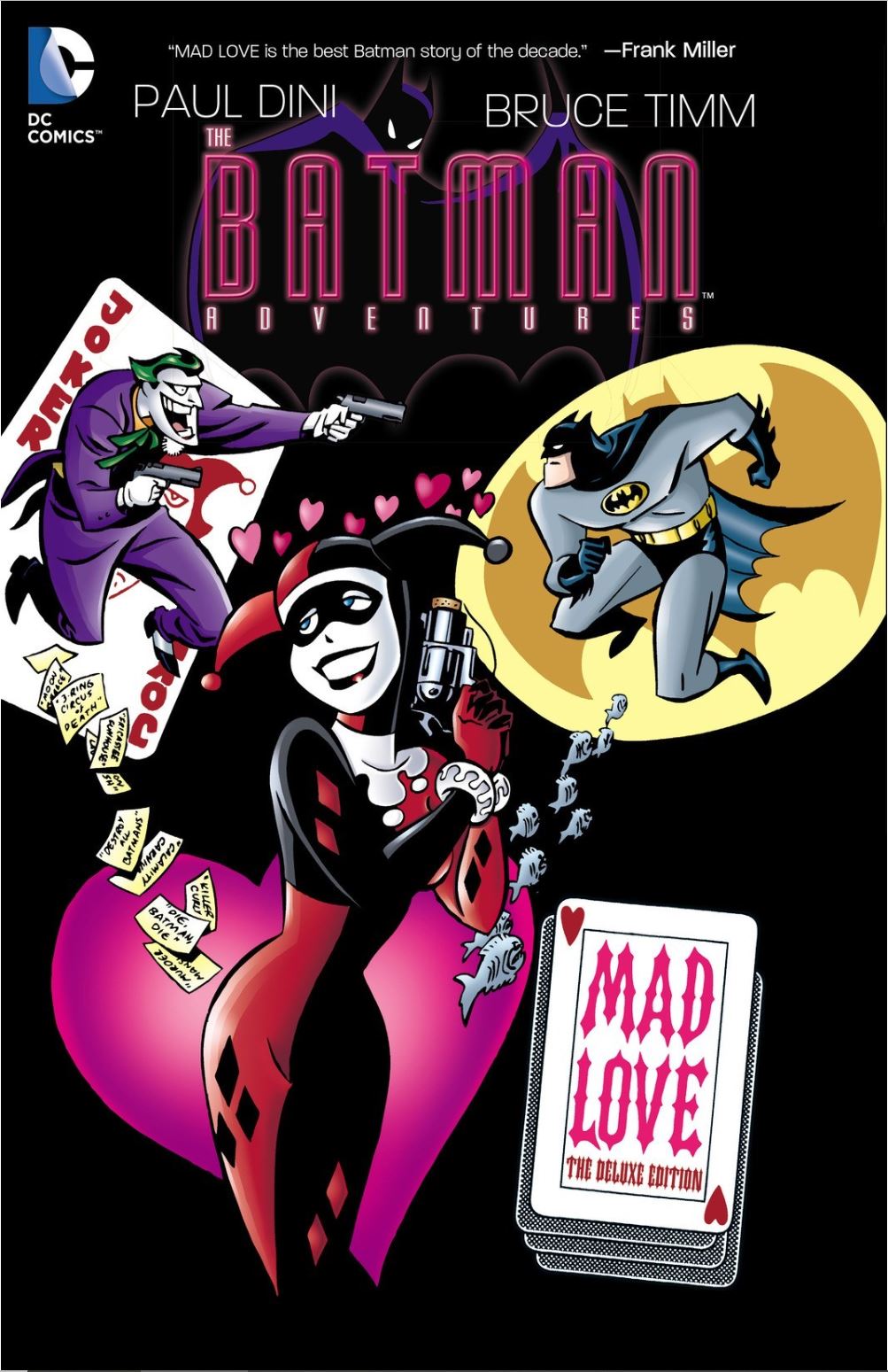
The Batman Adventures: Mad Love Deluxe Edition


By Paul Dini & Bruce Timm, with Rick Taylor, Tim Harkins & various (DC Comics)
ISBN: 978-1-4012-5512-1 (HB/Digital edition)

Harley Quinn wasn’t supposed to be a star… or even an actual comic book character. As soon became apparent, however, the manic minx always has her own astoundingly askew and off-kilter ideas on the matter… and any other topic you could name: ethics, friendship, ordnance, true love…

Created by Paul Dini & Bruce Timm, Batman: The Animated Series aired in the US from September 5th 1992 to September 15th 1995. Ostensibly for kids, the breakthrough television cartoon revolutionised everybody’s image of the Dark Knight and immediately began feeding back into the print iteration, leading to some of the absolute best comic book yarns in the hero’s many decades of existence.

Employing a timeless, all-embracing visual style dubbed “Dark Deco”, the show mixed elements from all iterations of the character and, without diluting the power, tone or mood of the premise, reshaped the grim avenger and the extended team around him into a wholly accessible, thematically memorable form that the youngest of readers could enjoy, whilst adding shades of exuberance and panache only most devout and obsessive Batmaniac could possibly object to…

Harley was first seen as the Clown Prince of Crime’s slavishly adoring, extreme abuse-enduring assistant in Joker’s Favor, which aired on September 11th 1992. She instantly captured the hearts and minds of millions of viewers.

From then on she began popping up in the incredibly successful licensed comic book and – always stealing the show – soon graduated into mainstream DC continuity.

After a period bopping around the DCU, she was re-imagined as part of the company’s vast post-Flashpoint major makeover: regularly appearing as part of a new, gritty-but-still-crazy iteration of the Suicide Squad. However, at heart she’s always been a cartoon glamour-puss, with big, bold, primal emotions and only the merest acknowledgement of how reality works…

Re-presenting the 1994 one-shot Batman Adventures: Mad Love, this slight and breezy hardcover is made up of mostly recycled material – including writer Paul Dini’s comfortably inviting Foreword and co-plotter/illustrator Bruce Timm’s effusive and candidly informative ‘Mad Love Afterword’.

However, a truly unmissable bonus treat for art-lovers and all those seeking technical insight (perhaps with a view to making comics or animation their day job) is the illustrator’s full monochrome ‘Original Layouts for The Batman Adventures: Mad Love’: displaying how the story materialised page by page. There’s even previous and variant covers to earlier editions and unused painted back cover art plus highly detailed, fully-annotated colour guides for the complete story, offering a perfect “How To”  lesson for aspiring creators…

All that being said though, what we want most is a great story, and that magnificently madcap mayhem commences after Police Commissioner James Gordon heads to the dentist. When Batman easily foils the Joker’s latest manic murder attempt, the mountebank of Mirth pettishly realises he’s lost his inspirational spark.

He’s therefore in no mood for lasciviously whining lapdog Harley’s words of comfort or flirtatious pep talks…

As the Dark Knight reviews his files on the Joker’s girlfriend and ponders on how Harleen Frances Quinzel breezed through college and came away with a psychology degree that bought her a staff position at Arkham Asylum, in the now, the larcenous lady in question has gone too far in the Joker’s lair. The trigger is comforting sympathy and telling her “precious pudden” how his baroque murder schemes could be improved…

Kicked out and almost killed (again), Harleen harks back to her first meeting with the devilishly desirable crazy clown and how they instantly clicked. She fondly recalls how her original plan to psychoanalyse the Joker and write a profitable tell-all book was forgotten the moment she fell under his malign spell. In that moment she became his adoring, willing and despised slave…

She also realises that Batman too-quickly scotched their budding eternal love by capturing the grinning psycho-killer she secretly aided and abetted, both before and after she created her own costumed alter ego…

In fact, Batman always spoils her dreams and brutalises her adored “Mistah J”. It’s long past time she took care of him once and for all…

Driven by desperation and fuelled by passion, Harley Quinn appropriates one of the Joker’s abortive schemes and tweaks it.

Before long, the Gotham Gangbuster is duped, doped, bound and destined for certain doom. Sadly, the triumphant Little Woman hasn’t reckoned on how her barmy beloved will react to learning she has done in mere hours what he’s failed to accomplish over many bitter years…

Coloured by Rick Taylor and lettered by Tim Harkins, the classy, classically staged main feature plays very much like a 1940s noir blend of morbid melodrama and cunning crime caper – albeit with outrageous over-the-top gags, sharply biting lines of dialogue and a blend of black humour and bombastic action. This story easily qualifies as one of the top five bat-tales of all time.

A frantic, laugh-packed, action-driven hoot that manages to be daring, deranged and demure by turns, Mad Love is an absolute delight, well worth the price of admission and an irresistible treasure to be enjoyed over and over again.
© 1994, 2015 DC Comics. All Rights Reserved.
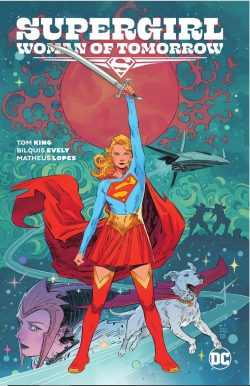
A Very DC Valentine’s Day


By Cecil Castellucci, Amanda Conner, Andy Diggle, Paul Dini, Ray Fawkes, Phil Hester, Kyle Higgins, Collin Kelly, Alisa Quitney, Jackson Lanzing, Peter Milligan, Ann Nocenti, Steve Orlando, Jimmy Palmiotti, James Robinson, Mark Russell, Mairghread Scott, Tim Seeley, Simon Bisley, Ben Caldwell, Aaron Campbell, Giuseppe Camuncoli, Mirko Colak, Andrew Currie, Javier Fernandez, Julio Ferreira, Julius Gopez, Sanford Greene, Stephanie Hans, Bryan Hitch, Frazer Irving, Kelley Jones, Nic Klein, Emanuela Lupacchino, Guillem March, John McCrea, Jaime Mendoza, Inaki Miranda, Robson Rocha, Thony Silas, Cam Smith, John Timms & various (DC Comics)
ISBN: 978-1401287665 (TPB/Digital edition)

After generations of incorporating seasonal occasions, milestones and themes into their regular chronology, in recent years comics publishers have started releasing special issues and compilations to single out those sale-enhancing moments. For DC, that process really began during their New 52 reboot…

Regrettably eschewing their own vast back catalogue of magnificently-limned genre romance material (still… maybe one day, hey?) the home of Batman, Superman and Wonder Woman released all-new anthologies exploring the many roads to and ways of loving.

In 2018, three one-shots – Young Monsters in Love #1, Young Romance: The New 52 Valentine’s Day Special #1 and Harley Quinn Valentine’s Day Special #1 – were tangled together as a celebratory tome which might entice less traditional fans…

We begin with Young Monsters in Love #1, which hit stores on February 7th 2018 carrying an April cover-date. It opens with a tale of Man-Bat wherein Kyle Higgins, Kelley Jones & colourist Michelle Madsen expose the bestial inner monologue of Kirk Langstrom’s “Nocturnal Animal”’ as the self-mutated science renegade seeks to rekindle his romantic relationship with ex-wife Francine

Tim Seeley, Giuseppe Camuncoli & Cam Smith also explore that theme of stability lost as Frankenstein, Agent of S.H.A.D.E. reviews his centuries-long relationship with “The Bride” in ‘Pieces of Me’ whilst Clark Kent and his son Jon learn a few hard truths about love and loss in ‘Buried on Sunday’. It’s a potentially shattering lesson for the Man of Steel and Superboy who seek to ensure that Solomon Grundy does not wallow in the eternal despair of bereavement as sensitively detailed by Mairghread Scott, Bryan Hitch & Andrew Currie…

Disgruntled Teen Titan/peripatetic ghost buster Raven discovers ‘The Dead Can Dance’ on a long-deferred Prom Night(mare) by Collin Kelly, Jackson Lanzing & Javier Fernandez, after which Paul Dini & Guillem March expose the cruel traumas of elementary school bullying when Deadman saves a lonely boy crushed and nearly killed by the annual purgatory of card-giving in ‘Be My Valentine’

Swamp Thing loves and loses another frail and fragile human contact in the beautifully eerie ‘Heart-Shaped Box’ by Mark Russell & Frazer Irving, before Steve Orlando & Nic Klein push the parameters of amour and self-sacrifice when queer cop Maggie Sawyer seeks to stop a potential bloodbath as Monsieur Mallah & The Brain (of the Brotherhood of Evil) seek a way to further their impossibly complex relationship by looking backwards in ‘Visibility’

Andrew Bennet (I, Vampire, by Alisa Quitney & Stephanie Hans) then experiences painful revelation when forced to accept a new role for his ever-maturing disciple in ‘The Turning of Deborah Dancer’, whereas EtriganThe Demon – brutally challenges the entire infernal host to reach Jason Blood’s lost love in ‘To Hell and Gone’ by Phil Hester &Mirko Colak.

Amidst the madness of WWII, the warped wooing closes with a distressing brush-off letter to the Creature Commandos’ man-made vampire in ‘Dear Velcoro’, by James Robinson & John McCrea.

Heralding a shift from dark dilemmas to costumed courting – courtesy of the contents of Young Romance: The New 52 Valentine’s Day Special #1 (originally cover-dated April 2013) – our soap-opera sagas start with Catwoman reminiscing over her first meeting and troubled history with Batman in Ann Nocenti, Emanuela Lupacchino & Jaime Mendoza’s ‘Think it Through’

Aquaman & Mera uncover unrequited love and reunite unquiet separated spirits in ‘The Lighthouse’ (by Cecil Castellucci & Inaki Miranda) before Batgirl Babs Gordon lets her guard down with a certified bad boy in Ray Fawkes & Julius Gopez’s ‘Dreamer’.

Superhero teammates Apollo & Midnighter revisit their first “ mad moment” mid-mission in ‘Seoul Brothers’ by Peter Milligan & Simon Bisley, whilst paragon legacy hero Nightwing makes all his old mistakes again with new foe/ally/love interest Ursa in ‘Another Saturday Night’ by Kyle Higgins & Sanford Greene…

One of the biggest and most touted draws of the New 52 was the sidelining of Lois Lane and shocking romantic entanglement of Superman and Wonder Woman. Here, Andy Diggle, Robson Rocha & Julio Ferreira depict the ultimate power couple in the early, exploratory stages of that relationship and learning via a shocking game of ‘Truth or Dare’ …until spiteful sirens and a possessed god of love violently object…

The final third of this torrid tome sees lunatic love bandit Harleen Quinzel hog the limelight and steal the show with an extended epic from the Harley Quinn Valentine’s Day Special #1: released on February 11th 2015 and once again cover-dated for the month of All Fools…

Written by Amanda Conner & Jimmy Palmiotti, and collaboratively illustrated by John Timms, Ben Caldwell, Aaron Campbell, Thony Silas and colourists Paul Mounts & Hi-Fi, ‘Just Batty Over You’ offers an hallucinogenic rollercoaster ride of passions and perplexing playfulness as The Joker’s former main squeeze espies and is enthralled by super-sexy Bruce Wayne who is a prize in a charity dating auction…

She determines to make him hers and the abduction part goes off pretty much as required. However, complicating the scheme is Harley’s own meandering grip on reality, Bruce’s many jobs and secrets, so very much over-applied and shared narcotic inducement, hench-folk who can only see the billionaire’s vast dollar-value and the perpetual interference of briny costumes activists The Carp and Sea Robin, who really want everybody to heed their message of marine environmental crisis…

Daft, delightful and delivered with perfect timing and elan, this lustful lark caps a supremely frothy and inconsequential diversion to charm casual and fully committed thrill seekers in equal amounts.
© 2013, 2015, 2018 DC Comics. All Rights Reserved.
Billy Batson and the Magic of Shazam!: Family Affair


By Mike Kunkel, Art Baltazar, Franco, Byron Vaughns, Ken Branch & Stephen DeStefano & various (DC Comics)
ISBN: 978-1-49650-290-2 (HB/Digital edition)

After the runaway success of Jeff Smith’s magnificent reinvention of the original Captain Marvel (Shazam! The Monster Society of Evil ) it was simply a matter of time before that iteration won its own title in the monthly marketplace. What was a stroke of sheer genius was to place the new Billy Batson and the Magic of Shazam! under the bright and shiny aegis of the company’s young reader imprint – in what used to be the Cartoon Network spin-off section.

This collection re-presents the first dozen issues, spanning cover-dates September 2008 through March 2010 and opens on a most familiar world, slightly askew of the mainstream DC Universe. These frantically ebullient and utterly contagious tales of the orphan Batson and his obnoxious, hyperactive little sister Mary – both gifted by an ancient mage with the powers of the gods – could play out in wild and woolly semi-isolation hampered by nothing except page count…

Billy Batson is a homeless kid with a murky past and a glorious destiny. One night he followed a mysterious figure into an abandoned subway station and met the wizard Shazam. The ancient guardian of good granted him the ability to turn into an adult superhero called Captain Marvel.

Gifted with the wisdom of Solomon, strength of Hercules, stamina of Atlas, power of Zeus, courage of Achilles and speed of Mercury, the lad was despatched into the world to do good: a noble if perhaps immature boy in a super man’s body.

Accompanied by talking tiger-spirit Mr. Tawky Tawny, Billy tracked down his missing little sister, but whilst battling evil genius Dr. Sivana (US Attorney General and would-be ruler of the universe) he impetuously caused a ripple in the world’s magical fabric through which monsters and ancient perils now occasionally slip through. Currently, the reunited orphans are trying to live relatively normal lives, but finding the going a little tough…

Firstly, without adults around, Billy often has to masquerade as his own dad and when he’s not at school he’s the breadwinner, earning a living as a boy-reporter at radio/TV station WHIZ. Moreover, little Mary also has access to (most of) the Power of Shazam, and she’s a lot smarter than he is in using it… as well as a real pain in Billy’s neck.

Animator and storyteller Mike Kunkel, inspired creator of the simply lovely Herobear and the Kid, leads off this collection: writing, drawing and colouring a breakneck, riotous romp over the first four issues reintroducing the new Marvel Family to any new readers and, by virtue of that pesky rift in the cosmic curtain, recreating the Captain’s greatest foe: Black Adam. In case you’re wondering, Steve Wands did the lettering…

The villain was once the mightiest man alive but was banished for abusing Shazam’s gift. However, after the damage to reality Billy caused, he’s back but nowhere near the Man he was…

This time the evil predecessor of the World’s Mightiest Mortal is a powerless but truly vile brat: a schoolboy bully who returns to Earth after millennia in limbo, ready to cause great mischief – but he cannot remember the magic word that activates his evil adult self…

This hilarious tale has just the right amount of dark underpinning, as the atrocious little thug stalks Billy and Mary, trying to wheedle and eventually torture the secret syllables from them. When – inevitably – Black Adam regains his mystic might and subsequently liberates the petrified Seven Deadly Evils of Mankind from their imprisonment on the wizard’s Rock of Eternity, the stage is set for a classic confrontation.

Along the way to that climactic clash there’s oodles of sheer hilarity as Billy’s troubles are magnified by increasing demands on his time by overzealous teachers and Principal Strikta wanting to conference with his “dad”, whilst his journalistic partner and mentor Ms. Fidelity seems romantically attracted to his older body – which is still piloted by Billy’s pre-teen mind…

It’s no comfort at all that Mary is still thinking up better and cleverer ways to use the powers they share and that she might be the Wizard’s favourite, but the real problem is Theo Adam

The returned terror might be stuck in his child form, but when he joins Billy in class, it soon becomes clear that the bully is sticking painfully close just in case one of the emergencies he’s orchestrated allows him to overhear Billy shouting out that word…

Inevitably all Billy’s worries come true and Black Adam regains his powers, leading the resurrected Seven Deadly Evils against humanity. Happily, although outpowered, out-fought and at his lowest moment, Billy comes up with a plan…

Pitched perfectly at the young reader, with equal parts danger, comedy, sibling rivalry and the regular outwitting of adults, this first storyline screams along with a brilliantly clever feel-good finish, perfectly setting up the next all-action comedic challenge…

From issue #5 (September 2009) writing team Art Baltazar & Franco (Franco Aureliani) – collectively responsible for the incomparably compulsive madness of Tiny Titans and Superman Family – took over the legend-spinning, and artists Byron Vaughns & Ken Branch limn the first bombastic tale as convict Doctor Sivana unleashes a stolen atomic automaton against the two kids he hates most in the world in ‘Mr Who? Mr. Atom!’.

The destructive giant robot rampage was simply a ploy to cover his escape from prison. Although the mighty marvels overcome the onslaught thanks to input from its creator, Billy has a bigger problem to solve. He has a tremendous crush on Ms. Fidelity but she barely notices him whenever his heroic alter ego is around and even when he’s not…

‘To Be King’ then pits the champions of Fawcett City against primordial super-caveman King Kull: a physical and mental giant trying to reconquer the planet he ruled in millennia past. Older fans of gentle fantasy will be enthralled and delighted here by the singular art of Stephen DeStefano, who won hearts and minds with his illustration of Bob Rozakis’ seminal series Hero Hotline and ’Mazing Man – both painfully, criminally overdue for graphic novel collections of their own…

The King’s defeat is singular and shocking, but the young warriors are unaware that Sivana has again benefitted from their actions and is now weaponizing Kull’s remains…

Encroaching disaster is everywhere. At the Rock of Eternity, Shazam is helpless to prevent the Seven Evils from slowly awakening again and senses another hidden enemy in play. Calling on long-sidelined shapeshifting tiger totem Mr. Tawky Tawny, he inadvertently tips off evil genius Sivana and leads him to the Batson’s home. The wicked misfit even captures the tiger-man and uses him to power a newer, deadlier Mr. Atom in the Byron Vaughns illustrated ‘Deception Reception’

With (the original) Captain Marvel on the ropes, ‘Come Together!’ sees Sivana press his attack, deploying enslaved Kull to back up his killer bot, before being again outsmarted by Mary Marvel whose grasp of physics saves the day and the tiger…

Another classic villain is revived as Shazam’s observations of Earth hone in on a deadly arsonist just as Billy begins acting strangely …like a jerk or perhaps pubescent schoolboy…

As Mary talks things over with recuperating houseguest Tawky-Tawny, they realise they haven’t seen Billy for some time, only his increasingly obnoxious adult alter ego. The crisis comes to head in ‘Fire Fire Everywhere!’ as the hero appallingly overreacts to the firebug, employing excessive force and accidentally creating an Arson Fiend

‘The Legacy of Mr. Banjo!’ also channels a Golden Age bad guy as Billy and Mary stumble into a bank robbery perpetrated by Axe, the teenage son of the Axis agent and using his mystic music to mesmerise mortals into parting with their money. Although Billy is wilful enough to shrug off the spell it takes a pep talk from Ms. Fidelity to give him the edge needed to free Mary and stop Axe…

One good thing about the clash is that Billy is clearheaded now and realises he must not say his magic word ever again…

With Mary and Tawky-Tawny in tow, Billy heads for Shazam’s citadel and  proper diagnosis. The result is the freeing of an evil duplicate in ‘Mirror Mirror’, but the stupendous battle between hero and reflection is just a prelude to the final clash as the fight exposes the long-hidden secret villain in ‘Mr. Mind Over Matter!’ and Billy and his sister must stop both the wicked worm and its Monster Society of Evil with brains not brawn…

Billy Batson and the Magic of Shazam!: Family Affair is ideal for bringing kids into comics: funny, thrilling, stylishly illustrated and perfectly in tune with what young minds want to see. Moreover, with another major motion picture adaptation set to premiere in March, it’s a timely moment to get reacquainted with the Big Red Cheese …and the Little Babybel…

Incorporating a full cover gallery and a Kunkel variant, plus a key code for those pages written in the ‘Monster Society of Evil Code’ this is an addictive treat for all readers who can still revel in the power of pure wonderment and still glory in an unbridled capacity for joy.
© 2008, 2009, 2020 DC Comics. All Rights Reserved.
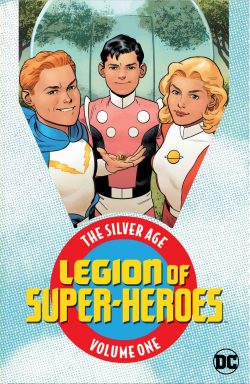
Tales of the Batman: Carmine Infantino


By Carmine Infantino, Gardner Fox, John Broome, Cary Bates, Gerry Conway, Don Kraar, Mike Barr, Geoff Johns & various (DC Comics)
ISBN: 978-1-4012-4755-3 (HB/Digital edition)

Born on May 24th 1925, Carmine Michael Infantino was one of the greatest comic artists America ever produced: a multi-award-winning innovator who was there when comic books were born, reshaped the industry in the Silver Age and was still making fans when he died in 2013.

As an illustrator he co-created and initially visualised Black Canary, Detective Chimp, Pow-Wow Smith, the Silver Age Flash, Elongated Man, Deadman, Batgirl, Dial H for Hero and Human Target and revitalised characters such as Adam Strange and Batman. He worked for numerous companies, and at Marvel ushered in a new age by illustrating the licensed Star Wars comic book whilst working on titles and characters such as The Avengers, Daredevil, Ms. Marvel, Nova, Star-Lord and Spider-Woman

His work on two separate iterations of the Batman newspaper strip is fondly remembered and whilst acting as Art Director and Publisher of National DC, he oversaw the most critically acclaimed period in the company’s history, ushering in the “relevancy” era and poaching Jack Kirby from Marvel to create the Fourth World, Kamandi, The Demon and others…

Very much – and repeatedly – the right man at the right time and place, Infantino shaped American comic book history like few others, and this bumper compendium comprehensively covers his contributions to the lore of Batman: collecting the stunning covers from Detective Comics #327-347, 349, 351-371, 500 and Batman #166-175, 181, 183-185, 188-192, 194-199 plus the Bat-Saga stories he drew for Detective #327, 329, 331, 333, 335, 337, 339, 341, 343, 345, 347, 349, 351, 353, 357, 359, 361, 363, 366-367, 369, and 500.

Also included are the contents of The Brave and the Bold #172, 183, 190, 194 and DC Comics Presents: Batman #1: an artistic association cumulatively spanning May 1964 to September 2004.

I’m assuming everybody here loves comics and that we’ve all had the same unpleasant experience of trying to justify that passion to somebody. Excluding your partner (who is actually right – the living room floor is not the place to leave your $£#!D*&$£! funnybooks) even today, many people have an entrenched and erroneous view of strip art, resulting in a frustrating and futile time as you tried to dissuade them from that opinion.

If so, this collection might be the book you want next time that confrontation occurs. It offers breathtaking examples of the prolific association of one the industry’s greatest illustrators with possibly the artform’s greatest creation.

Many of these “Light Knight” sagas stem from a period which saw the Dynamic Duo deftly reshaped for global Stardom – and subsequent fearful castigation from fans – as the template for the Batman TV show of the 1960s. It should be noted, however, that the producers and researchers took their creative impetus from stories of the era preceding the “New Look Batman” – as well as the original l940s movie serial…

So, what happened?

By the end of 1963, editor Julius Schwartz had spectacularly revived much of National/DC’s line – and the entire industry – with his modernisation of the superhero, and was then asked to work his magic with the creatively stalled and nigh-moribund Caped Crusaders.

Bringing his usual team of top-notch creators with him, Schwartz stripped down and back to the core-concept, downplaying aliens, outlandish villains and daft transformation tales to bring a cool modern take on combatting criminals. He even oversaw a streamlining and rationalisation of the art style itself.

The most apparent innovation was a yellow circle around the Bat-symbol, but far more importantly, the stories also changed. A subtle aura of genuine menace re-entered the comfortable and absurdly abstract world of Gotham City.

Infantino was key to the changeover that reshaped a legend – but this was while still pencilling Silver Age superstar The Flash – so, despite generating the majority of covers, Infantino’s interior art was limited to alternate issues of Detective Comics with the lion’s share of narrative handled by Bob Kane’s then-uncredited deputies Sheldon Moldoff, Joe Giella, Chic Stone & others, plus occasional guest artists such as Gil Kane…

Punctuated throughout by his chronologically sequenced covers, Infantino’s part in the storytelling revolution began then and kicks off here with Detective #327 – written by John Broome and inked by Joe Giella at the very peak of their own creative powers.

‘The Mystery of the Menacing Mask!’ is a cunning “Howdunnit?”, long on action and moody peril, as discovery of a criminal “underground railroad” leads Gotham Gangbusters Batman and Robin to a common thug seemingly able to control them with his thoughts…

‘Castle with Wall-To-Wall Danger!’ (Detective #329 with Broome and Giella in their respective roles) follows: a captivating international thriller with the heroes braving a deadly death-trap in Swinging England in pursuit of a dastardly thief.

A rare full-length story in #331 co-starred Elongated Man Ralph Dibny. He was Detective Comics’ new back-up feature: a costumed sleuth blending the charm of Nick (The Thin Man) Charles with the outré heroic antics of Plastic Man.

The ‘Museum of Mixed-Up Men’ (Broome & Infantino) united the eclectic enigma-solvers against a super-scientific felon, whilst in #333 Batman & Robin fought a faux goddess and genuine telepaths in the ‘Hunters of the Elephants’ Graveyard!’, written by Gardner Fox and inked by Giella.

The same team revealed the ‘Trail of the Talking Mask!’ in #335, giving the Dynamic Duo an opportunity to reinforce their sci-fi credentials in a classy high-tech thriller guest-starring private detective Hugh Rankin (of “Mystery Analysts of Gotham City” fame) before ‘The Deep-Freeze Menace!’ (Detective #337 delivered a fearsome fantasy chiller pitting Batman against a super-powered caveman encased in ice for 50,000 years…

DC’s inexplicable (but deeply cool) long-running love-affair with gorillas resulted in a cracking doom-fable as ‘Batman Battles the Living Beast-Bomb!’ (#339) highlighted the hero’s physical prowess in a duel of wits and muscles against a sinister, super-intelligent simian.

Up until this time the New Look Batman was forging his more realistic path, as the TV series was still in pre-production. The Batman TV show (premiering on January 12th 1966 and running for three seasons of 120 episodes in total) aired twice weekly for its first two seasons, resulting in vast amount of Bat-awareness, no end of spin-offs and merchandise – including a movie – and the overkill phenomenon of “Batmania”.

No matter how much we might squeal and foam about it, a huge portion of this planet’s population Batman will always regard that “Zap! Biff! Pow!”  buffoonish costumed boy scout as The Real Deal…

Regrettably this means that the comic stories published during that period have been similarly excoriated and maligned by most Bat-fans ever since. It is true that some tales were crafted with overtones of the “camp” comedy fad – presumably to accommodate newer readers seduced by the arch silliness and coy irony of the show – but no editor of Schwartz’s calibre would ever deviate far from the characterisation that had sustained Batman for nearly 30 years, or the then-recent re-launch which had revitalised the character sufficiently for television to take an interest at all.

Nor would such brilliant writers as John Broome, Bill Finger, Gardner Fox and Robert Kanigher ever produce work which didn’t resonate on all the Batman’s intricate levels just for a quick laugh or cheap thrill. The artists tasked with sustaining the visual intensity included Infantino, Moldoff, Stone, Giella, Murphy Anderson and Sid Greene, with covers from Gil Kane and Joe Kubert supplementing Infantino’s stunning, trend-setting, fine-line masterpieces.

Most of the tales here reflect those gentler times and editorial policy of focusing on Batman’s reputation as “The World’s Greatest Detective”, so colourful, psychotic costumed super-villains are in a minority, but there are first appearances for a number of exotic foes who would become regular menaces for the Dynamic Duo in years to come.

Broome & Infantino detailed the screen-inspired, comedically-catastrophic campaign of ‘The Joker’s Comedy Capers!’ in #341, with the mayhem and mystery continuing in Detective Comics #343 (September 1965) with ‘The Secret War of the Phantom General!’: a tense thriller pitting our hard-pressed heroes against a hidden army of gangsters and Nazi war criminals.

Detective #345 brought forth a terrifying and tragic new villain in ‘The Blockbuster Invasion of Gotham City!’ (scripted by Fox), as a monstrous giant with the mind of a child and the raw, physical power of a tank is driven to destructive madness at sight of Batman and only placated by the sight of Bruce Wayne

‘The Strange Death of Batman!’ (Fox, in Detective #347) fired the opening shot of habitual B-list villain the Bouncer in a bizarre experimental yarn which has to be seen to be believed, whereas it’s business as usual when monstrous, microcephalic man-brute returns in ‘The Blockbuster Breaks Loose!’: a blistering, action-fuelled thriller from Fox, Infantino & Giella first seen in Detective #349. This tale sports a cover by Infantino’s colleague Joe Kubert whilst also hinting at the return of a long-forgotten foe…

Detective #351 premiered game-show host turned felonious impresario Arthur Brown in a twisty, puzzle-packed battle of wits detailing ‘The Cluemaster’s Topsy-Turvy Crimes!’ (Fox, Infantino & Sid Greene) after which the action accelerates as ‘The Weather Wizard’s Triple-Treasure Thefts!’ (Fox/Giella in #353) bring a torrent of trouble to Gotham and the Dynamic Duo battle in spectacular opposition to the Flash’s meteorological arch-enemy. This was one of the earliest times a Silver Age DC villain moved out of his usual haunts…

Detective #357 then delivers a clever secret identity saving puzzler when – apparently – ‘Bruce Wayne Unmasks Batman!’ (Broome, Infantino & Giella) as a prelude to big changes in the Batman mythos…

After three seasons (perhaps two and a half would be more accurate) the Batman show ended in March, 1968. It had clocked up 120 episodes since the US premiere. The era ended but the series had instilled an undeniable effect on the world, the comics industry and – crucially – on the characters and history of its four-colour inspiration. Most notable was a whole new caped crusader who would become an integral part of the DC universe.

The comic book premiere of that aforementioned character came in ‘The Million Dollar Debut of Batgirl’ (Detective Comics#359, cover-dated January 1967). Fox provided art team supreme Infantino & Greene a ripping yarn to introduce Barbara Gordon (mousy librarian and daughter of the Police Commissioner) into the superhero limelight. Thus, by the time the third season began on September 14th, 1967, she was well-established among comics fans at least…

A different Batgirl – Betty Kane (teenaged niece of the 1950s Batwoman) – was already a nearly-forgotten comics fixture, but for reasons far too complex and irrelevant to mention, she was conveniently ignored to make room for a new, empowered woman in the fresh and fashionable tradition of Emma Peel, Honey West and the Girl From U.N.C.L.E.

“Babs” was considered pretty hot too, which is always a plus for television…

Whereas she fought The Penguin on the small screen, her print origin features the no less ludicrous but at least visually forbidding Killer Moth in a clever yarn that still stands up today.

Editor Schwartz always preferred to play-up mysteries and crime conundrums in Detective Comics and #361’s ‘The Dynamic Duo’s Double-Deathtrap!’ was one of Fox’s best, especially as drawn by the now increasingly over-stretched Infantino & Greene. The plot involves Cold War spies and a maker of theatrical and stage paraphernalia; I shall reveal no more to keep you guessing when you read it…

Detective #363 was a full co-starring vehicle as the Dynamic Duo challenged the new Batgirl to deduce Batman’s secret identity whilst tracking down enigmatic Mr. Brains in ‘The True-False Face of Batman!’, leading to a taut suspense thriller stretching across Detective #366 & 367 – an almost unheard-of event in those cautiously reader-friendly days…

As devised by Fox, Infantino & Greene, ‘The Round Robin Death Threats’ involves a diabolical murder-plot threatening to destroy Gotham’s worthiest citizens, with the tension peaking and drama concluding in high style with ‘Where There’s a Will… There’s a Slay!’: a dark and deadly denouement barely marred by that dreadful title…

It was just a symptom of the times – as is Detective #369 (November 1967) – which somewhat reinforces boyhood prejudices about icky girls in otherwise classy thriller ‘Batgirl Breaks Up the Dynamic Duo!’

Here, Robin seemingly abandons Batman for a vivaciously curvaceous new partner, and the best of clandestine reasons, ignominiously signalling – other than for the occasional cover – the end of Infantino’s tenure as a bat-illustrator.

His next Bat-contribution came in anniversary landmark Detective Comics #500 (March 1981): part of a huge creative jam-session specifically examining the legend of the immortal hero in ‘What Happens When a Batman Dies?’

Scripted by Cary Bates and inked by Bob Smith, this extracted chapter from a greater saga co-stars restless revenant Deadman as the Gotham Guardian hovers in a coma between this world and the next, yet still manages to find a way to save himself…

The cover is another collaborative effort with Dick Giordano, José Luis García-López, Joe Kubert & Tom Yeates all joining forces.

What follows is a quartet of tales from The Brave and the Bold, with Jim Aparo providing covers whilst Infantino handled interior art. Issue #172 (March 1981, inked by Steve Mitchell) paired the Caped Crimebuster with Firestorm in Gerry Conway scripted ‘Darkness and Dark Fire’, with the World’s Greatest Detective seeking to solve the mystery of the Nuclear Man’s periodic mental blackouts, after which #183 (February 1982, written by Don Krarr and inked by Mike DeCarlo) sees the crimebuster allied with The Riddler to prevent ‘The Death of Batman!’

Scripter Mike Barr & inker Sal Trapani worked with Infantino on B&B #190 (September 1982) and #194, January 1993), respectively challenging the Dark Knight to visit planet Rann and find ‘Who Killed Adam Strange?’ before subsequently working with the Flash against Doctor Double-X and the Rainbow Raider when they ‘Trade Heroes – And Win!’

One final Infantino fling comes from DC Comics Presents: Batman #1 (September 2004), courtesy of writer Geoff Johns, with inks by Giella and a retro cover from Ryan Hughes, as ‘Batman of Two Worlds’ gets real metaphysical with narrative boundaries as the modern Batman and Robin investigate murder on the set of the 1960s Batman TV show in a bizarrely engaging romp with a mystery villain to expose…

The visual cavalcade then ends on a nostalgic high with ‘Batman and Robin Retail poster’ – AKA the front cover of this titanic tome – possibly the most iconic bat-image of the entire era.

Whether you tend towards the anodyne light-heartedness of Then, the socially acceptable psychopathy of assorted movie franchises or actually just like the comic book character, if you can make a potential convert sit down, shut up and actually read these wonderful adventures for all (reasonable) ages, you might find that the old adage “Quality will out” still holds true. And if you’re actually a fan who hasn’t read this classic stuff and revelled in the astounding timeless art, you have an absolute treat in store…
© 1964, 1965, 1966, 1967, 1981, 1982, 1983, 2004, 2014 DC Comics. All Rights Reserved.
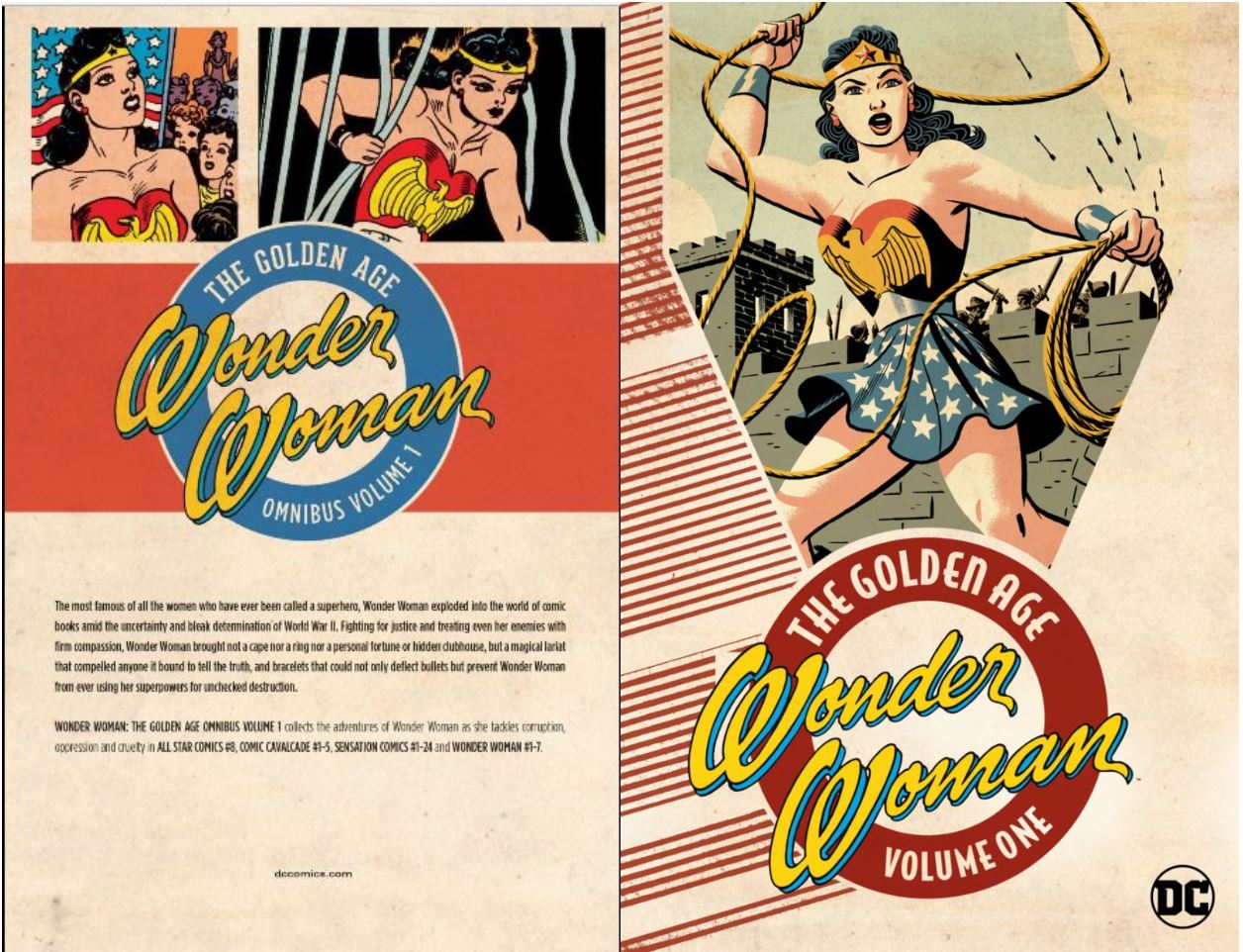
The All-New Atom volumes 3 & 4: The Hunt for Ray Palmer & Small Wonder


By Gail Simone, Rick Remender, Mike Norton, Pat Oliffe, Dan Green & Trevor Scott & various (DC Comics)
ISBN: 978-1-4012-1782-2 (TPB Hunt) 978-1-4012-1996-3 (TPB Wonder)

After the events of Identity Crisis and 52, superhero physicist Professor Ray Palmer disappeared, leaving his world behind him. But life goes on, and his teaching chair at Ivy University was offered to a young prodigy from Hong Kong. The neophyte just happened to be Palmer’s pen-friend and confidante: privy to his predecessor’s secrets ever since he was a child.

Dr. Ryan Choi unwillingly inherited his predecessor’s super-hero career as well – under some rather suspicious circumstances – battling super-villains, monsters and seemingly random chronal catastrophes that are making Ivy Town a viper’s nest of bizarre occurrences.

With this third volume (collecting issues #12-16 of All-New Atom) the so-likable legacy hero joins an eccentric team of heroes to track down his missing mentor in a story-arc that coincided with events of unfolding mega-crossover Countdown to Final Crisis

Written by the brilliant Gail Simone and illustrated by Mike Norton, Dan Green & Trevor Scott, the The Hunt for Ray Palmer starts with ‘Never Too Small to Hit the Big Time’ as size-shifting homicidal maniac Dwarfstar returns, swiftly followed by a procession of Palmer’s oddly unique Rogues’ Gallery.

Temporal anomalies are devastating the city and Choi’s only chance to sort it all is the creepily coincidental alliance offered by infamous “time-thief” Chronos

‘Second Genesis’ finds Choi and the wily villain lost in the South American jungles, encountering the tiny alien barbarians Palmer once lived with (see Sword of the Atom link please) before the new Tiny Titan links up with Donna Troy, Jason Todd and the Monitor – all major protagonists in the aforementioned Countdown to Final Crisis.

Choi joins forces in their search of the entire multiverse, with a first stop in ‘Heavens to Bitsy’ taking them from the super-scientific civilisation located on the bottom of Choi’s pet dog (not his underside, but the bit by the tail…) and from there to the post-existence paradise where all dead superheroes go. The manic manoeuvring features classy and clever cameos from a host of departed DC stars…

However, nothing is as it seems and by the time the new “challengers of the unknown” reach neutral ground and a rendezvous with Green Lantern Kyle Rayner, it’s clear that something or someone is sabotaging them. ‘Loss Leader’ sees Choi abruptly yanked from the quest and returned to Earth to save Ivy Town from the effects of the swifty escalating and accelerating time-storm one: of the funniest and grossest hero exploits ever recorded – or as Choi puts it, Ewwww’

The book concludes on a hilariously action-packed high note with ‘Forward! Into the Past!’ as further hints on the identity of the mastermind behind the All-New Atom’s troubles are revealed when Ivy Town takes a reality-warping, mind-bending trip back into the Summer of Love.

Ghosts, aliens, monsters, naff villains and Hippies abound, and there’s a guest-shot for those clearly inadequate guardians of the Time Stream, the Linear Men

This fun-filled frantic frolic is a joyous return to clever, light-hearted adventure of the Good Old days (whenever they were) and these collected tales are everything a jaded superhero fan needs to clear the palate and revive flagging interests.


The All-New Atom volume 4: Small Wonder sees the adventures of the legacy Tiny Titan come to an abrupt halt with this final collection of mind-bending, time-busting yarns, collecting issues #17, 18 and 20-25 but sadly and inexplicably omitting #19 – a rather tasty subterranean thriller fill-in from Keith Champagne & Jerry Ordway.

Whether the switch from gleefully, wistfully whimsical scripter Gail Simone to darker, more hard-edged Rick Remender indicated the series was failing or perhaps actually caused its eventual demise is a matter of speculation – but it was probably neither and just another example of rapidly changing popular taste shredding sales below a viable cut off point…

Following the events of publishing events Identity Crisis and 52, size-changing part-time superhero Professor Ray Palmer vanished, leaving his world behind him. But life went on regardless, and his position at Ivy University was offered to a young prodigy from Hong Kong: Palmer’s confidante and someone privy to his predecessor’s secrets since childhood. Ryan Choi inherited his Palmer’s super-hero identity too – under rather suspicious circumstances.

The kid battled super-villains, monsters and seemingly random chronal catastrophes that were making Ivy Town a viper’s nest of bizarre occurrences and nexus of improbability.

Gail Simone started proceedings with 2-parter ‘The Atom and the Amazon’ illustrated by Mike Norton, Andy Smith, Trevor Scott & Keith Champagne: a bravura blend of action, adventure and surreal comedy wherein expanding villainess Giganta sexually harasses the junior professor into a date whilst the mysterious forces and agencies infesting Ivy Town jockey for position before an impending emergent crisis…

Things come to a head when Federal Department of Metahuman Affairs agent Diana Prince steps in and asks Choi to wear a wire on his assignation…

When a creep with a detachable brain provokes a confrontation, Wonder Woman steps in and events spiral out of control until Ryan uses a brilliant seldom-seen ploy to calm things down. Sadly, the pacification is only temporary, as the brain-thing incites the entire city to attack the heroes, before The Atom saves the day …and is rewarded by the most outrageous offer he has ever heard…

Simone ended her run with ‘A Few Small Affairs’ wherein the sinister mastermind behind so many of Choi’s problems traps the diminishing hero in a perfect prison: a paradisiacal hallucination…

Meanwhile in consensus reality, demons, monsters and aliens rampage through Ivy Town…

To see how he stops that mess you’ll need to get this book, but that’s not the end of the affair. That comes in epic encounter ‘Inside Out’ by Rick Remender, Pat Olliffe & John Stanisci, pitting the out-of-his-depth Tiny Titan against truly horrendous odds and seemingly insurmountable hazards.

In ‘The Positive Aspects of Negative Thinking’, Choi learns that his explorations of the micro-cosmos have infected him with a virus and unleashed a monstrous carnivore on the city that only he can deal with. ‘How to Disappear Completely’ then leaves him shocked and reeling when the beast devours his best friend Panda.

Consumed with a need to make amends, Choi is utterly unaware that arch-enemies Chronos and Dwarfstar are preparing to attack, and is horrified and derailed to discover that the micro-monster has since disintegrated dozens of citizens. Meanwhile, his bodily infection is causing him to uncontrollably shrink in violently painful spasms…

Donning a high-tech containment suit, Choi struggles on in ‘Strange New World’: becoming lost in the Microverse before joyfully discovering that the townsfolk “consumed” by the monster were in fact simply reduced to sub-atomic proportions and entrapped in an extremely hostile new universe.

That elation is tempered however when he realises that time passes much faster there, and if the horrors inhabiting the place don’t eat them first, they will all die of old age before he can save them…

Guest-starring time-displaced hero Booster Gold, ‘Forecast Fascist Future’ focuses on Chronos and his partner in time-crime, a mysterious lady from Choi’s past, before the myriad plot-threads of the series converge and Ray Palmer returns to save the day: revealing some shocking truths to – and about – his successor in ‘Time’, a gripping conclusion to a bold epic and conclusive proof that the Tiny Titans should have been awarded more time to continue their adventures…

Alas they didn’t and the series passed away, but at least lovers of fun, fantastic fantasy Fights ‘n’ Tights fiction have these volumes to enjoy, if they can find them. Let’s all hope that DC get around to rereleasing all of them digitally ASAP…
© 2007, 2008 DC Comics. All Rights Reserved.