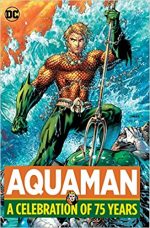
Aquaman: A Celebration of 75 Years


By Mort Weisinger, Joe Samachson, Jack Miller, George Kashdan, Robert Bernstein, Steve Skeates, Gerry Conway, Paul Levitz, Peter David, David Michelinie, Rick Veitch, Geoff Johns, Cullen Bunn, Paul Norris, Louis Cazeneuve, Ramona Fradon, Nick Cardy, Jim Aparo, Dick Giordano, Martin Egeland, Jim Calafiore, Yvel Guichet, Ivan Reis, Trevor McCarthy & others (DC Comics)
ISBN: 978-1-4012-6446-8

Aquaman is that oddest of comicbook phenomena: a timeless survivor. One of the few superheroes to carry on in unbroken exploits since the Golden Age, the King of the Seas has endured endless cancellations, reboots and makeovers in the name of trendy relevance and fickle fashion but somehow has always rapidly recovered to come back fresher, stronger and more reinvigorated.

He’s also one of the earliest cartoon champions to make the jump to television…

Where many stronger features foundered – and although strictly a second stringer for most of his career – Aquaman nevertheless soldiered on long after the Golden Age ended: a rather nondescript and generally bland looking chap who solved maritime crimes, rescuing fish and people from sub-sea disaster.

This stunning compilation – part of a dedicated series introducing and exploiting the comics pedigree of veteran DC icons and concepts is available in hardback and digital formats, offering an all-too-brief but astoundingly enticing sequence of tantalising snapshots detailing how Aquaman has changed like the tides yet remains as constant as the endless seas.

Collecting material from More Fun Comics #73, 89, Adventure Comics #120, 174, 220, 260, 266, 269, 444, 452, 475, Aquaman volume 1 #1, 18, 40, Justice League of America Annual #2, Aquaman volume 2 #3, Aquaman volume 4 #2, 34, Aquaman volume 5 #4, 17, Aquaman volume 6 #1, 43, cumulatively covering April 1941 to October 2015.

These groundbreaking appearances are divided into specific eras, each preceded by brief critical analyses of the significant stages in his development, beginning with Part I 1941-1961: Making a Splash…

As previously stated, Aquaman was one of the handful of costumed adventurers to survive the superhero collapse at the end of the Golden Age. He was created by Mort Weisinger and Paul Norris in the wake of and in response to Timely Comics’ Sub-Mariner, debuting in More Fun Comics #73 (November 1941) with an untitled tale latterly designated ‘The Submarine Strikes’ for this edition.

This salty sea saga sees survivors in lifeboats being rescued – and the brutal U-Boat commander responsible for their plight swiftly brought to justice – by a mysterious stranger who converses with porpoises. The golden saviour then reveals that he was made into a subsea superman by his scientist father; an explorer who had discovered all the secrets of lost, long-dead Atlantis…

Records are incomplete, sadly, so often we don’t know who wrote what, but for More Fun Comics #89 (March 1943), Louis Cazeneuve limns the marine marvel’s heated and ruthless battle against modern pirate Black Jack and ‘The Streamlined Buccaneers’, with Aquaman now commanding an army of varied sea creatures whilst ‘Aquaman Goes to College’ (Adventure Comics #120, September 1947 by Joe Samachson & Cazeneuve) sees the sea king sagaciously seeking to expand his knowledge of marine life only to become embroiled in collegiate sporting scandals…

By 1954 young Ramona Fradon (Metamorpho; Brenda Starr) had assumed the art chores, by which time Aquaman was settled like a barnacle in a regular Adventure Comics back-up slot offering slick, smart and extremely genteel aquatic action. She was to draw every single adventure until 1960, making the feature one of the best looking if only mildly thrilling hero strips of the era.

A fine example is ‘The Whale That Was Wanted for Murder’ (Adventure Comics #174, March 1952, and scripted by George Kashdan) wherein the hunt for a seemingly rogue cetacean leads our hero to a conniving smuggler…

Cover-dated January 1956, Adventure Comics #220, revealed how Aquaman saved the reputation of a disgraced naval aviator in ‘The Coward and the Hero’ (Jack Miller & Fradon) after which the Silver Age revival of superheroes caught up to the Sea King and led to a canny reboot in issue #260 (May 1959).

In 1956, Showcase #4 rekindled the public’s imagination and zest for costumed crime-fighters with a new iteration of the Flash. Enjoying a heated fan response, the editors sanctioned other re-imaginings of many departed Golden Age stalwarts, and also updated and remastered its isolated survivors, especially Wonder Woman, Green Arrow and Aquaman.

Thus, ‘How Aquaman Got His Powers’ by Robert Bernstein & Fradon, which retconned previous origins for a new tale of the offspring of a lighthouse keeper and exiled refugee from the undersea (and fully populated) city of Atlantis. Eventually all the trappings of the modern superhero followed: Themed hideout, sidekick, super-villains and even a civilian name – Arthur Curry!

Moreover, greater attention was paid to continuity and the concept of a shared universe…

In Adventure Comics #266, (November 1959) Bernstein & Fradon detailed how ‘Aquaman Meets Aquagirl!’: giving a little more information about fabled modern Atlantis whilst testing the waters (sorry!) for a possible sidekick – after all, the Sea King spent most of his time expositorially dialoguing with an octopus!

With #269, Adventure Comics #269, (February 1960) Bernstein & Fradon completed the formula by introducing permanent sidekick Aqualad. ‘The Kid from Atlantis!’ was a young, purple-eyed outcast from the mysterious city possessing the same powers as Aquaman but terrified of fish… at least until the Sea King applies a little firm but kindly psychology.

By the end of the tale the little guy has happily adapted and would help patrol the endless oceans – and add a child’s awestruck perspective to the mix – for nearly a decade thereafter.

The Sea King’s rise is charted in Part II 1962-19: The Sovereign of the Sea.

As the sixties unfolded, Aquaman was appearing as a back-up feature in Detective and World’s Finest Comics (until 1964); teamed up with Hawkman in Brave and the Bold # 51 and – following a try-out season in Showcase#30-33 – made the big jump. After two decades of continuous adventuring the marine marvel finally got his own comicbook.

Cover-dated January-February 1962, Aquaman #1 is a 25-page fantasy thriller introducing one of the most controversial supporting characters in comics lore. Pixie-like Water-Sprite Quisp was part of a strange trend for cute imps and elves that attached themselves to far too many heroes of the time, but his contributions in ‘The Invasion of the Fire-Trolls’ (by Miller & Nick Cardy) and succeeding issues were numerous and obviously calculated.

Now with his own title and soon a to be featured in the popular, groundbreaking cartoon show Superman/Aquaman Hour of Adventure, the Finned Fury seemed destined for super-stardom. Moreover, the writers and editors were happy to embrace evolution and change…

Mere months after Aquaman met extradimensional princess Mera, she became ‘The Wife of Aquaman’ (by Miller & Cardy in Aquaman #18, December 1964): one of the first superhero weddings of the Silver Age and only possible after our hero defeats her obsessive, super-powered stalker Oceanus and frees Atlantis from his despotic grip. Talk about instant responsibilities…

A few years later scripter Steve Skeates and new illustrator Jim Aparo began an epic extended tale as the Sea Lord abandoned all kingly duties to hunt for Mera after she was abducted. The lengthy quest began with her being whisked away, leaving Aquaman and Aqualad to voyage to strange, distant undersea realms and here encountering ‘Sorcerers of the Sea’ (Aquaman #40, August 1968). The saga was a compelling one but frustratingly does not continue or conclude here…

As the decade closed superhero sales tanked in favour of other genres. The Sea King was again reduced to back-up duties in other titles, but the quality of his stories remained high.

‘And Death Before Dishonor’ by Paul Levitz, Gerry Conway & Aparo comes from Adventure Comics #444 (April 1976): the first chapter in another multi-part blockbuster with Aquaman forced to abdicate the rulership of Atlantis due to a conspiracy hatched by his half-brother Orm, the Ocean Master and a mysterious political player named Karshon who replaced him as King of Atlantis. The newcomer naturally had a horrific secret to conceal, but you won’t learn it here as we skip (following a brief feature on ‘The Aquafamily’) straight to Adventure Comics #452, (August 1977) where David Michelinie & Aparo orchestrate the darkest day in Aquaman’s life as ‘Dark Destiny, Deadly Dreams’ finds him fighting both his friends and greatest foe Black Manta. Tragically, despite his greatest efforts, he fails to save the one life that means most to him…

Time and tides passed before Adventure Comics #475 (September 1980) found J.M. DeMatteis & Dick Giordano detail how the newly-reconciled Aquaman and Mera forcibly separated yet again in ‘Scavenger Hunt!’ after a subsea tech and treasure hunter attacks…

Like many good superheroes, Aquaman always maintained a strong presence in a super-team throughout all his troubles, and when they went through their own sales and popularity crisis, stepped in to guide them to calmer waters…

‘…The End of the Justice League’ (Justice League of America Annual #2, October 1984; by Conway, Chuck Patton & Dave Hunt) reveals how an attack by Martian invaders almost wrecked the World because the big gun superheroes were all occupied elsewhere. Vowing never to let it happen again, Arthur disbands the old league and goes about recruiting a new, dedicated and ever-ready team.

With the king in command, established heroes J’onn J’onzz, Zatanna, Vixen and Elongated Man relocate to Detroit picking up trainee titans Steel, Vibe and Gypsy to fill out a street-level roster short on power but packed with potential…

Part III 1986-2010: The Return of the King covers a period of almost constant change and revision with the backstory of Atlantis and the Sea King regularly tweaked in search of a winning formula. In truth, the creators frequently succeeded but could never maintain the high sales each reboot started with, even after Crisis on Infinite Earths cleared away much of the five decades of accumulated backstory…

Aquaman volume 2 was a 4-issue miniseries redefining the relationship of Arthur and his half-brother Orm, as well as solidly embedding magic as a key component of previously super-rationalist Atlantis. Sporting a new costume, Aquaman endured a revised origin in #3, (April 1986 by Neal Pozner, Craig Hamilton & Steve Montana) whilst trying to stop Ocean Master subjugating Earth with lost Atlantean necromancy…

In Aquaman volume 4 #2, (September 1994) Peter David, Martin Egeland & Brad Vancata took drastic steps to make readers notice the Sea Lord and his new paramour Dolphin, as ‘Single Wet Female’ revealed the hero’s defeat of super-psychos Scylla and Charybdis and the awful cost… his left hand…

Soldiering on with a fancy multi-purpose prosthetic against ever-more incredible adversaries, Arthur faces next ‘One on One’ (by David, Jim Calafiore & Peter Palmiotti from Aquaman volume 4 #34, July 1997) jealous junior sea god Triton who learns not to take out his daddy issues against the superhero…

A new millennium and another spin as Rick Veitch, Yvel Guichet, Josh Hood, Mark Propst & Sean Parsons indulge the exiled Sea King’s mythical side as the legendary Lady of the Lake replaces that prosthetic hand with an appendage grown from magic water and tasks this King Arthur with protecting the life-sustaining Secret Sea from human exploitation and demonic contamination in ‘The Sorcerer’s Apprentice’ (Aquaman volume 5 #4, May 2003).

Still looking for a solid subsea scenario for the unflinching hero, Will Pfeifer, Patrick Gleason & Christian Alamy then return to strict scientific methodology for Aquaman volume 5 #17 (June 2004) as ‘American Tidal Part Three’ finds Arthur helping the citizens of a Californian city suddenly turned into water-breathers by a mystery maniac who also explosively submerged their homes to create Sub Diego. Helping him solve the mystery whilst adapting to her own status as the newly-minted Aquagirl is feisty millennial teen Lorena…

Wrapping up the superhero salvage voyage is Part IV 2011-2015: Twenty-First Century Aquaman concentrating on a back-to-basics Sea Sovereign and Atlantean Overlord created in the wake of the Flashpoint publishing event and DC’s company-wide reboot The New 52.

Crafted by Geoff Johns, Ivan Reis & Joe Prado, Aquaman volume 6 #1 (November 2011) saw Aquaman and Mera attempting to reconcile their status as second-string heroes on the surface world and unwelcome rulers of a belligerent Atlantis eager to wipe out air-breathing humanity. However, those petty tensions were about to be sidelined as unknown deep-sea horrors attack above and below the waves; consuming everything in their path in ‘The Trench Part One’…

As the New 52 reboot staggered to an ignominious early close, the fresh, amped-up Aquaman underwent another retrofit and re-imagining, emerging with a new costume to oppose an invasion from another reality even as his beloved Mera turned on him. Leading an army of fantastic monsters, the Sea King battled to thwart a ‘Gospel of Destruction’ (Aquaman volume 6 #43, October 2015 by Cullen Bunn, Trevor McCarthy & Jesus Merino) with the only certainty being another company wide root-&-branch retrenchment. DC Rebirth was in the offing…

Supplemented with a cover gallery by Cardy, Aparo, Brian Bolland, Craig Hamilton & P. Craig Russell, Martin Egeland & Brad Vancata, Jim Calafiore & Mark McKenna, Yvel Guichet & Mark Propst, Alan Davis & Mark Farmer, Ivan Reis & Joe Prado and Trevor McCarthy, this peek at the perpetually renewable Marine Monarch is a book of many flavours and textures.

DC has a long, comforting history of genteel, innocuous yarn-spinning delivered with quality artwork. The pre-Crisis Aquaman was a trusty champion and family friendly average guy, who became an earnest, unsure and strident wanderer in the latter part of the 20th century. In recent years he operated as a bombastic, bludgeoning brute with a chip on his shoulder and plenty to prove: proving that the Sea King is certainly a man for all generations, eras and seasons.

What is most clear however, is that his past adventures are all worthy of far more attention than they’ve received of late. It is a total pleasure to find just how readable they still are. With tumultuous sea-changes always in store for Aquaman, the comics industry and America itself, this monolithic testament to the inestimable value of a good bad-guy is a true delight for fans of all ages and vintage.
© 1941, 1943, 1947, 1952, 1956, 1959, 1960, 1962, 1964, 1968, 1976, 1977, 1980, 1984, 1986, 1994, 1997, 2003, 2004, 2011, 2015, 2016 DC Comics. All Rights Reserved.
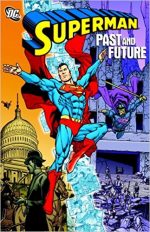
Superman: Past and Future


By Jerry Seigel, Bill Finger, Edmond Hamilton, Leo Dorfman, Jim Shooter, Elliot Maggin, Cary Bates, George Papp, John Sikela, Wayne Boring, Al Plastino, Curt Swan, Kurt Schaffenberger, Keith Pollard & various (DC Comics)
ISBN: 978-1-4012-1934-5                  978-1-84856-074-1 (Titan Books UK Edition)

In the aftermath of Crisis on Infinite Earths and its reconstructed DC Universe, time travel – at last for a while – became a Really Big Deal. So, when the Metropolis Marvel did eventually break the fourth dimension, as in the superb Superman: Time and Time Again, the gimmick became as important as the plot and immensely difficult to achieve. But there was an era when all of history and so many implausible futures were just a short and simple spin away…

Superman is the comicbook crusader who started the whole comicbook genre of indomitable costumed champions and, in the eight decades since his debut in June 1938, has probably undertaken every kind of adventure imaginable. With this in mind it’s tempting and very rewarding to gather up whole swathes of his inventory and periodically re-present them in specific themed collections, such as this compelling confection of chronal escapades from a host of superb writers and artists who have contributed to his canon over the years.

The fun begins with a tale from Superboy #85 (December 1960) which reiterated an iron-clad cosmic law of the Silver Age: “History Cannot Be Changed”,

Nevertheless, the Smallville Sensation tragically undertook ‘The Impossible Mission!’ (by Jerry Siegel & George Papp) when he travelled to 1865 to prevent the assassination of Abraham Lincoln, but fate constantly conspired to make events unfold along a predestined course…

A different theory was in play back in September 1947 when the adult Action Ace broke the time barrier for the first time to collect famous signatures for an ailing boy in ‘Autograph, Please!’ (Superman #48, by Siegel & John Sikela), whilst in ‘Rip Van Superman’ (Superman #107, August 1956 by Bill Finger, Wayne Boring & Stan Kaye) an accident placed the hero in a coma, trapping him in a future where he was redundant…

The 1960s were the pinnacle of temporal travel tales with the Man of Tomorrow and his friends nipping forward and back the way you or I (well me, anyway) would pop to the pub. In the brilliantly ingenious ‘Superman Under the Red Sun!’ (Action Comics #300, May 1963 by Edmond Hamilton & Al Plastino) our hero is dispatched to the far, far future where the sun has cooled, and undergoes incredible hardship before brilliantly figuring out a way home.

In ‘Jimmy’s D-Day Adventure!’, the courageous cub reporter ranged back to World War II in search of a bizarre mystery only to end up a trusted member of Hitler’s inner circle, (Superman’s Pal Jimmy Olsen #86 (July 1965, Leo Dorfman, Curt Swan & George Klein) before his Daily Planet colleague almost ripped apart the fabric of reality by nearly becoming Superman’s mum when ‘Lois Lane’s Romance with Jor-El!’ (Superman’s Girlfriend Lois Lane #59; August 1965, by Hamilton & Kurt Schaffenberger) resulted from an ill-considered jaunt to pre-cataclysm Krypton…

One of the boldest experiments of the decade occurred when Hamilton, Swan & Klein introduced us to ‘The Superman of 2965!’ (Superman #181, November 1965) for the first of a series of adventures starring the Man of Steel’s distant descendent. A two-part sequel appeared the following summer in Action Comics #338-339, (June and July 1966) ‘Muto… Monarch of Menace!’ and ‘Muto Versus the Man of Tomorrow!’ and a postscript tale appeared in World’s Finest Comics #166 entitled ‘The Danger of the Deadly Duo!’ teaming that era’s Batman and Superman against Muto and the latest in a long line of Jokers (May 1967 by Jim Shooter, Swan & Klein).

For Superman #295, Elliot Maggin, Curt Swan & Bob Oksner produced ‘Costume, Costume – Who’s got the Costume?’ (January 1976): a neat piece of cross-continuity clean-up that featured a few DC parallel worlds including those of Kamandi (Last Boy on Earth) and the Legion of Super-Heroes.

From June of that same year ‘Superman, 2001!’ – by Maggin, Cary Bates, Swan & Oksner – was an Imaginary Story (a tale removed from regular continuity) featured in the anniversary issue Superman #300, which posited what would have happened if baby Kal-El‘s rocket had landed in the Cold War era of 1976 – an intriguing premise then which looks uncomfortably like the TV series Smallville to my jaded 21st century eyes…

This fascinating collection concludes with ‘The Last Secret Identity’ (from 1983’s DC Comics Presents Annual #2, by Maggin, Keith Pollard, Mike DeCarlo and Tod Smith), which introduced the first incarnation of Superwoman, with a time-travelling historian landing in Metropolis only to become the subject of her own research…

These tales are clever, plot-driven romps far removed from today’s angst-heavy psycho-dramas and unrelentingly oppressive epics. If you’re after some clean-cut, wittily gentle adventure there’s no better place to go – or time…
© 1947, 1956, 1960, 1963, 1965, 1966, 1967, 1976, 1983, 2008 DC Comics. All Rights Reserved.
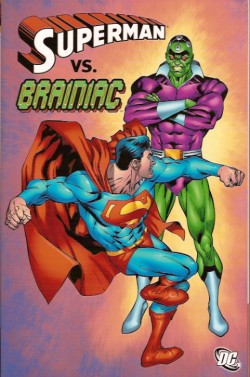
Superman Vs. Brainiac


By Otto Binder, Jerry Seigel, Edmund Hamilton, Cary Bates, Marv Wolfman, John Byrne, Jerry Ordway, Roger Stern, Joe Kelly, Al Plastino, Curt Swan, Kurt Schaffenberger, Gil Kane, George Pérez, Kerry Gammill, German Garcia, Kano & various (DC Comics)
ISBN: 978-1-4012-1940-6

Superman is the comicbook crusader who started the whole masked marvel genre and, in the decades since his debut in 1938, has probably undertaken every species of adventure imaginable. With this in mind it’s inevitable and constantly rewarding to gather up whole swathes of his inventory and periodically re-present them in specific themed collections, such as this calculated confection of cosmic clashes with alien arch-foe Brainiac.

Since his first appearance in Action Comics #242, the alien marauder has been a perennial favourite foe of the Man of Steel, and has remained so even after being subsequently upgraded and retooled many times. Brilliant and relentless, he has been continually refitted over the decades until he now stands as the ultimate artificial nemesis, a chilling remorseless thing of cogs, clockwork and undying computer code.

This superb collection represents appearances both landmark and rare from the many brilliant writers and artists who have contributed to the Kryptonian canon over the years, and with faultless logic opens with that aforementioned and extremely impressive introductory saga.

‘The Super-Duel in Space’ was crafted by Otto Binder & Al Plastino (Action #242, July, 1958) and details how an evil alien scientist attempts to add Metropolis to his collection of miniaturised cities in bottles.

As well as a titanic tussle in its own right, this tale utterly altered the mythology of the Man of Steel by introducing Kandor, an entire city full of Kryptonians who had escaped the planet’s destruction when Brainiac captured and bottled them as part of his vivarium of cultures and civilisations.

Although Superman rescued his fellow survivors, the villain escaped to strike again, and it would be years before the hero could restore his fellow Kryptonian survivors to their true size.

Next is a delicious sharp yarn from Superman’s Girl Friend, Lois Lane#17 (May 1960), scripted by Jerry Siegel and illustrated by the sublime art team of Curt Swan & George Klein. ‘Lana Lang, Superwoman’ has the Man of Tomorrow temporarily imbue both Lana and Lois with superpowers to foil a blackmail/murder plot by the viridian villain, after which novel-length saga ‘The Team of Luthor and Brainiac’ (by Edmund Hamilton, Swan & Klein from Superman #167, February 1964) not only teams the hero’s greatest foes in an uneasy alliance but also reveals for the first time that the alien interloper is actually a malevolent mechanism in humanoid form, designed by the fearsome Computer-Tyrants of planet Colu to infiltrate and all destroy organic races across the universe.

Then there’s a big jump to the end of the 1970s for the next story, an epic 3-part clash which originally appeared in Action Comics #489-491 (November 1978-January 1979), scripted by the hugely undervalued Cary Bates and illustrated by Swan & Frank Chiaramonte.

‘Krypton Dies Again’ finds Superman once more battling Brainiac when the light from the decades-gone explosion of his homeworld finally reaches Earth. The resultant flash supercharges his Kryptonian cells leaving the Man of Steel helpless. ‘No Tomorrow for Superman!’ then sees an increasingly berserk hero unable to cope until joined by Hawkman to finally resolve ‘A Matter of Light and Death!’

In Action Comics #544 (June 1983) both Lex Luthor and Brainiac were given radical makeovers to transform them more apposite menaces for the World’s Greatest Superhero. Marv Wolfman & Gil Kane amped up the computer conqueror’s threat-level with ‘Rebirth!’ as uncanny cosmic forces reshape the humanoid horror into a mechanistic angel of death…

When DC Comics decided to rationalise and reconstruct their continuity with Crisis on Infinite Earths in 1985 they also used the event to regenerate their key properties at the same time. The biggest gun they had was Superman and it’s hard to argue that the change was not before time. The new, back-to-basics Man of Steel was a sensation and members of his decades-old rogues’ gallery were suitably reimagined to match the new, grittier sensibility.

In this continuity ‘The Amazing Brainiac’ (Adventures of Superman #438, March 1988, written by John Byrne & Jerry Ordway, illustrated by Ordway & John Beatty) was Vril Dox: a monolithic disembodied intellect from the planet Colu who slowly inhabits and transmogrifies the body of showbiz mentalist Milton Moses Fine. Eventually, it grows beyond human physical limits in ‘Man and Machine’ (Action Comics #649, January 1990, by Roger Stern, George Pérez, Kerry Gammill & Brett Breeding) to eventually become a time-travelling ball of malignant computer code, reconstructing or co-opting ever-more formidable physical forms in its self-appointed mission to eradicate Superman…

By the time of ‘Sacrifice for Tomorrow’ (Action Comics #763; March 2000, and realised by Joe Kelly, German Garcia, Kano & Mario Alquiza), the fiend has transformed into its 13th iteration and converted Metropolis into an automated City of the Future.

The malware warlord has also learned how to possess human infants – including Lana Lang’s newborn son and Luthor’s daughter Lena…

With a pin-up page of Brainiac 13 by Scott Beatty, Steve Kim & Tommy Yune (culled from Superman: Metropolis Secret Files #1, March 2000) this comprehensive collection of cyber-chillers offers the merest a taste of the monstrous horror Brainiac is capable of but remains a compelling introduction and overview of the undying enemy alien and a superb treat for fans of every vintage.
© 1958, 1960, 1964, 1978, 1979, 1983, 1988, 1990, 2000, 2008 DC Comics. All Rights Reserved.
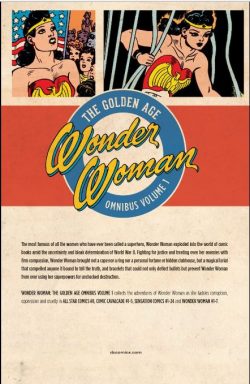
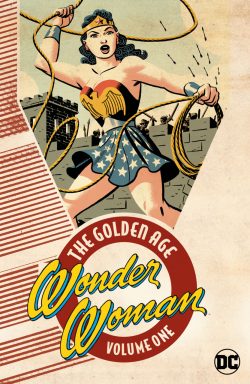
Wonder Woman: The Golden Age Volume One


By William Moulton Marston & Harry G. Peter & various
ISBN: 978-1-4012-7444-3

Wonder Woman was famously created by polygraph pioneer William Moulton Marston – apparently at the behest of his formidable wife Elizabeth – and illustrated by Harry G. Peter in a well-intentioned attempt to offer girls a positive and forceful role model.

Her spectacular launch and preview (that’s the comicbook heroine, not Mrs. Marston) came in an extra feature inside All Star Comics #8, home of the immortal Justice Society of America and one of the company’s most popular publications.

The Perfect Princess gained her own series and the cover-spot in new anthology title Sensation Comics launching a month later and was a huge and instant hit. She won her own eponymous title in late Spring of that year (cover-dated Summer 1942).

Using the nom de plume Charles Moulton, Marston scripted all the Amazing Amazon’s many and miraculous adventures until his death in 1947, whereupon Robert Kanigher took over the writer’s role. Venerable co-creator H.G. Peter illustrated almost every WW tale until his own death in 1958.

Spanning December 1941 – February/March 1943, this superb full-colour deluxe softcover compilation (also available as an eBook edition) collects that seminal debut from All Star Comics #8, and her every iconic adventure from Sensation Comics #1-14, Wonder Woman #1-3 plus the first adventure from anthological book of (All) Stars Comics Cavalcade #1 and begins with ‘Introducing Wonder Woman’…

On a hidden island of immortal super-women, an American aviator crashes to Earth. Near death, Captain Steve Trevor of US Army Intelligence is nursed back to health by young Princess Diana. Fearing her growing obsession with the man, her mother Queen Hippolyte reveals the hidden history of the Amazons: how they were seduced and betrayed by men but rescued by the goddess Aphrodite on condition that they thenceforward isolate themselves from the rest of the world and devote their eternal lives to becoming ideal, perfect creatures.

However, after Trevor explains the perfidious spy plot which accidentally brought him to the Island enclave, divine Athena and Aphrodite appear and order Hippolyte to assign an Amazon warrior to return with the American to fight for freedom and liberty.

Hippolyte diplomatically and democratically declares an open contest to find the best candidate and, despite being forbidden to participate, young Diana enters and wins. Accepting the will of the gods, the worried mother outfits Diana in the guise of Wonder Woman and sends her out to Man’s World…

A month later the story continued where the introduction had left off. Sensation Comics #1 declares ‘Wonder Woman Comes to America’: revealing the eager immigrant returning the recuperating Trevor to the modern World before trouncing a gang of bank robbers and falling in with a show business swindler. The major innovation here is the newcomer buying the identity of lovelorn Army nurse Diana Prince; elegantly allowing the Amazon to be close to Steve whilst enabling the heartsick medic to join her own fiancé in South America…

Even with all that going on, there was still room for Wonder Woman and Captain Trevor to bust up a spy ring attempting to use poison gas on a Draft induction centre before Steve breaks his leg and ends up in hospital again, where “Nurse Prince” is assigned to look after him…

Sensation #2 introduced deadly enemy agent ‘Dr. Poison’ in a cannily crafted tale which also debuted the most radical comedy sidekicks of the era…

The plucky fun-loving gals of the Holliday College for Women and their chubby, chocolate-gorging Beeta Lamda sorority-chief Etta Candy would get into trouble and save the day in equal proportions for years to come, constantly demonstrating Diana’s – and Marston’s – philosophical contention that girls, with the correct encouragement, could accomplish anything that men could …

With the War raging and in a military setting, espionage and sabotage were inescapable plot devices. ‘A Spy at the Office’ finds Diana arranging a transfer to the office of General Darnell as his secretary so that she can keep a closer eye on the finally fit Steve. She isn’t there five minutes before uncovering a ring of undercover infiltrators amongst the typing pool and saving her man from assassination.

Unlike most comics of the period, Wonder Woman followed a tight continuity. ‘School for Spies’ in #4 sees some of those fallen girls murdered by way of introducing inventive genius and Nazi master manipulator Baroness Paula von Gunther who employs psychological tricks to enslave girls to her will and set otherwise decent Americans against their homeland.

Even Diana succumbs to her deadly machinations until Steve and the Holliday Girls crash in…

America’s newest submarine is saved from destruction and a cunning gang of terrorists brought to justice in ‘Wonder Woman versus the Saboteurs’ before issue #6 has the Amazing Amazon accepting a ‘Summons to Paradise’ to battle her immortal sisters in Kanga-riding duels before receiving her greatest weapon: an unbreakable Lasso of Truth which can compel and control anybody who falls within its golden coils.

It proves very handy when Paula escapes prison and uses her invisibility formula to wreak havoc on American coastal defences…

‘The Milk Swindle’ is a pure piece of 1940s social advocacy drama with homegrown racketeers and Nazi von Gunther joining forces to seize control of America’s milk supply with the incredibly long-sighted intention of weakening the bones of the country’s next generation of soldiers.

Closely following in Sensation #8 is ‘Department Store Perfidy’ wherein the Amazon goes undercover in the monolithic Bullfinch emporium to win better working conditions and fair pay for the girls employed there.

There was a plethora of surprises in #9 with ‘The Return of Diana Prince’ from South America. Now Mrs Diana White, the young mother needs her job and identity back until her inventor husband can sell his latest invention to the US army. Luckily, Wonder Woman and an obliging gang of saboteurs help to expedite matters…

The next major landmark was the launch of the Amazon’s own solo title. The first quarterly opens here a text feature on the Amazon’s pantheon of godly patrons in ‘Who is Wonder Woman?’ after which comic action commences with a greatly expanded revision of her first appearance in ‘A History of the Amazons: The Origin of Wonder Woman’. This is swiftly followed by the beguiling mystery tale ‘Wonder Woman Goes to the Circus’ wherein Diana had to solve the bizarre serial murders of the show’s elephants and Paula von Gunther again rears her shapely head in ‘Wonder Woman versus the Spy Ring’ wherein the loss of the Golden Lasso almost causes the heroine’s demise and ultimate defeat of the American Army…

The issue ends with ‘The Greatest Feat of Daring in Human History’ as Diana and Etta head for Texas, only to become embroiled in a sinister scheme involving Latin Lotharios, lady bullfighters, lethal spies and a Nazi attempt to conquer Mexico…

Back in Sensation Comics #10 (October 1942) ‘The Railroad Plot’ celebrates Steve and Wonder Woman’s first anniversary by exposing a sinister plan devised by Japanese and German agents to blow up New York using the labyrinth of subway tunnels under the city, whilst ‘Mission to Planet Eros’ debuts the Princess’ long line of cosmic fantasy exploits as the Queen of Venus requests Diana’s aid in saving an entire planetary civilisation from gender inequality and total breakdown, before ‘America’s Guardian Angel’ – from Sensation #12 – finds the Warrior Princess accepting an offer to play herself in a patriotic Hollywood movie, only to find the production had been infiltrated by the insidious Paula and her gang of slave-girls…

Preceded by an illustrated prose piece about ‘The God of War’, Wonder Woman #2 comprises a four-part epic introducing the Astounding Amazon’s greatest enemy in ‘Mars, God of War’. He apparently instigated the World War from his HQ on the distant red planet but chafes at the lack of progress since Wonder Woman entered the fray on the side of the peace-loving allies. He now opts for direct action rather than trust his earthly pawns Hitler, Mussolini and Hirohito…

When Steve goes missing, Diana allows herself to be captured and ferried to Mars. Here she starts disrupting the efficient working of the war-god’s regime and fomenting unrest amongst the slave population, before rescuing Steve and heading home to Earth. ‘The Earl of Greed’, one of Mars’ trio of trusted subordinates, takes centre stage in the second chapter with orders to recapture Steve and Diana at all costs.

As the bold duo attempt to infiltrate Berlin, Greed uses his influence on Hitler to surreptitiously redirect the German war effort, using Gestapo forces to steal all the USA’s gold reserves…

With Steve gravely injured, the Amazon returns to America and whilst her paramour recuperates, uncovers and foils the Ethereal Earl’s machinations to prevent much-needed operating funds from reaching Holliday College where young girls learn to be independent free-thinkers…

With Greed thwarted, Mars next dispatches ‘The Duke of Deception’ to Earth where the spindly phantom impersonates Wonder Woman and frames her for murder. Easily escaping from prison, the Princess of Power not only clears her name but also finds time to foil a Deception-inspired invasion of Hawaii, leaving only ‘The Count of Conquest’ free to carry out Mars’ orders.

His scheme is simple: through his personal puppet Mussolini, the Count tries to physically overpower the Hellenic Heroine with a brutal giant boxing champion even as Italian Lothario Count Crafti attempts to woo and seduce her. The latter’s wiles actually worked too, but capturing and keeping the Amazing Amazon were two different things entirely and after breaking free on the Red Planet, Diana delivers a devastating blow to the war-machine of Mars…

This issue then ends with a sparkling double page patriotic plea when ‘Wonder Woman Campaigns for War Bonds’…

Sensation Comics #13 (January 1943) follows with ‘Wonder Woman is Dead’ as a corpse wearing the Amazon’s uniform is found and the astounded Diana Prince discovers her alter ego’s clothes and the irreplaceable magic lasso are missing…

The trail leads to a diabolical spy-ring working out of General Darnell’s office and an explosive confrontation in a bowling alley, whilst ‘The Story of Fir Balsam’ in Sensation #14 offered a seasonal tale concerning lost children, an abused mother and escaped German aviators which was all happily resolved around a lonely pine tree, after which the Immortal Warrior celebrated her next publishing milestone…

The 1938 debut of Superman propelled National Comics to the forefront of their fledgling industry and a year later the company was licensed to produce a commemorative comicbook celebrating the opening of the New York World’s Fair.

The Man of Tomorrow prominently featured on the appropriately titled New York World’s Fair Comics among such four-colour stars as Zatara, Butch the Pup, Gingersnap and The Sandman. In 1940 another abundant premium emerged with Batman added to the roster, and the publishers felt they had an item and format worth pursuing commercially.

The spectacular card-cover 96-page anthologies had been a huge hit: convincing the editors that an over-sized anthology of their pantheon of characters, with Superman and Batman prominently featured, would be a worthwhile proposition. Thus, the format was retained for a wholly company-owned, quarterly high-end package, retailing for the then-hefty price of 15¢.

Launching as World’s Best Comics #1 in Spring 1941, the book transformed into World’s Finest Comics from #2, beginning a stellar 45-year run which only ended as part of the massive clear-out and decluttering exercise that was Crisis on Infinite Earths. During the Golden Age however, it remained a big blockbuster bonanza of strips to entice and delight readers…

At this time National/DC was in an editorially-independent business relationship with Max Gaines that involved shared and cross promotion and distribution for the comicbooks released by his own outfit All-American Publications. Although technically competitors if not rivals, the deal included shared logos and advertising and even combining both companies’ top characters in the groundbreaking All Star Comics as the Justice Society of America.

However, by 1942 relations between the companies were increasingly strained – and would culminate in 1946 with DC buying out Gaines, who used the money to start EC Comics.

All-American thus decided to create its own analogue to World’s Finest, featuring only AA characters. The outsized result was Comics Cavalcade…

Cover-dated December 1942-January 1943 – and following Frank Harry’s gloriously star-studded cover to Comic Cavalcade #1 – Wonder Woman’s fourth regular star slot began with the company superstar solving the Mystery of the House of the Seven Gables (as ever the fruits of Marston & Peter’s fevered imaginations) wherein Diana Prince stumbles upon a band of Nazi spies. All too soon the Amazing Amazon needs the help of some plucky youngsters to quash the submarine-sabotaging brutes…

Wonder Woman #3 then dedicates its entirety to the return of an old foe; commencing with ‘A Spy on Paradise Island’ as the undergrads of Holliday College for Women girls – and Etta Candy – are initiated into some pretty wild Amazon rites on Paradise Island.

Sadly the revels inadvertently allow an infiltrator to gain access and pave the way for an invasion by Japanese troops…

Naturally Wonder Woman and the Amazon prevail on the day but the sinister mastermind behind it all is revealed and quickly strikes back in ‘The Devilish Devices of Baroness Paula von Gunther.’

Whilst the on-guard Amazons build a women’s prison that will be known as “Reform Island”, Wonder Woman – acting on information received by the new inmates – trails Paula and is in time to crush her latest scientific terror: an invisibility ray…

‘The Secret of Baroness von Gunther’ offers a rare peek at a villain’s motivation when the captured super-spy reveals how her little daughter Gerta has been a hostage of the Nazis for years and remains a goad to ensure the genius’ total dedication to the German cause… Naturally, the Amazing Amazon instantly determines to reunite mother and child at all costs after which ‘Ordeal by Fire’ confirms the Baroness aiding Diana and Steve in dismantling the spy network and slave-ring the Nazis had spent so long building in America… but only at great personal and physical cost to the repentant Paula…

Much has been posited about subtexts of bondage and subjugation in Marston’s tales – and, to be frank, there really are lots of scenes with girls tied up, chained or about to be whipped – but I just don’t care what his intentions (subconscious or otherwise) might have been: I’m more impressed with the skilful drama and incredible fantasy elements that are always wonderfully, intriguingly present: I mean, just where does the concept of giant war-kangaroos come from?

Exotic, baroque, beguiling and uniquely exciting, these Golden Age adventures of the World’s Most Famous female superhero are timeless, pivotal classics in the development of comicbooks and still provide lashings of fun and thrills for anyone looking for a great nostalgic read. If that’s you, you know what you need to do…
© 1941, 1942, 1943, 2017 DC Comics. All Rights Reserved.
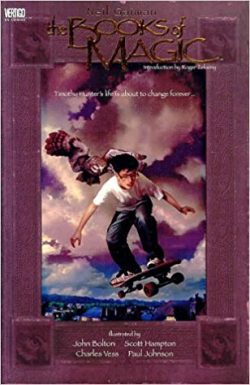
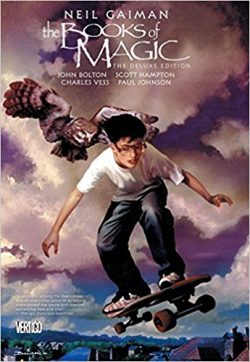
The Books of Magic


By Neil Gaiman, John Bolton, Scott Hampton, Charles Vess & Paul Johnson (DC/Vertigo)
ISBN: 978-1-4012-3781-3 (HB)                :978-1-4012-4686-0 (PB)
:978-1-85286-470-5 (Titan Books Edition)

Way back when Neil Gaiman was just making a name for himself at DC, he was asked to consolidate and rationalise the role of magic in that expansive shared universe. Over the course of four Prestige Format issues a quartet of mystical champions (thereinafter known as “the Trenchcoat Brigade”) took a supposedly typical London schoolboy on a Cook’s Tour of Time, Space and Infinite Dimensions in preparation for his long-anticipated ascendancy. This meant becoming the most powerful wizard of the 21st Century, and an overwhelming force for either Light or Darkness.

Shy, bespectacled Timothy Hunter is an inoffensive lad unaware of his incredible potential for Good or Evil (and yes, I know who he looks like but this series came out eight years before anybody had ever heard of Hogwarts, so get over it).

In an attempt to keep him righteous, the self-appointed mystic guides provide him and – through literary extension – us, with a full and dangerously immersive tutorial in the history and state of play of “The Art” and its major practitioners and adepts.

However, although the four guardians are not unanimous or even united in their plans and hopes for the boy, the “other side” certainly are. If Hunter cannot be turned to the Dark, he has to die…

Thus, following an Introduction by master fantasist Roger Zelazny, the thaumaturgical thrills begin in Book I, painted by John Bolton.

Here the Phantom Stranger conducts his youthful charge on a trip through ‘The Invisible Labyrinth’ revealing to Tim the history of magic with introductions to Lucifer, Atlantis, and other Ancient Empires, Jason Blood and the boy Merlin as well as mid-20th century crime-busting mystics Zatara and Sargon the Sorcerer.

Scott Hampton picks up the brushes for the second chapter, wherein irrepressible urban trickster-wizard John Constantine hosts a trip to ‘the Shadow World’ of the then-established DCU: introducing the wide-eyed lad to contemporary paranormal players such as Deadman, Madame Xanadu, the Spectre, Doctor Fate, Baron Winter (of Night Force fame), Dr. Terry Thirteen (AKA the Ghost-Breaker) and mystic super-hero Zatanna, who boldly organises a trip to a mage’s bar where the likes of Tala, Queen of Darkness and the diabolical opportunist Tannarak attempt to take matters – and Tim – into their own wicked hands…

For his third work-experience trip, Dr. Occult (created by Jerry Siegel & Joe Shuster years before Superman debuted) escorts the messianic boy on a voyage to the outer lands and Realms of Faerie, courtesy of Charles Vess in ‘The Land of Summer’s Twilight’. This ethereal, beautifully evocative segment would inform much of Timothy Hunter’s later life in the Vertigo comicbook series and graphic collections that inevitably spun off from this saga. Cameos here include Warlord/Travis Morgan, Nightmaster, Amethyst and Gemworld, Etrigan the Demon, Cain, Abel and the (Gaiman-originated) Sandman Morpheus.

Bringing the initial educational experience to a close, ‘The Road to Nowhere’ is painted by Paul Johnson and concludes the peregrinations as ruthlessly fanatical zealot Mister E whisks our astounded boy to the end of time, where the sightless fanatic attempts to twist Tim to his own bleak, black agenda. Beyond Darkseid and the climactic battles and crises of our time; progressing even forward past the Legion of Super Heroes, to the end of Order and Chaos, unto the moment Sandman’s siblings Destiny and Death switch off the dying universe, Tim sees how everything ends before returning to make his choice: Good or Evil; Magic or mundane?

Books of Magic still stands a worthy primer for newcomers who need a little help with decades of back-story which cling to so many DC tales, even today. Despite an “everything and the kitchen sink” tone, this is still a cracking good yarn (available in hardback, trade paperback, eBook and even a British edition from Titan Books), offers useful grounding for all things supernaturally DC and still has overwhelming relevance to today’s much rebooted continuity.

© 1990, 1991, 1993, 2014 DC Comics. All Rights Reserved.
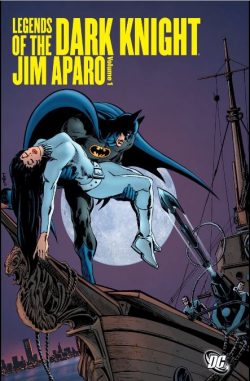
Legends of the Dark Knight: Jim Aparo volume 1


By Jim Aparo, Bob Haney & various (DC Comics)
ISBN: 978-1-4012-3375-4

After periods as a historical adventure and try-out vehicle, The Brave and the Bold proceeded to win critical as well as commercial acclaim through team-ups. Pairing regular writer Bob Haney with the best artists available, a succession of DC stars joined forces before the comicbook hit its winning formula.

The winning format – featuring media superstar Batman with other rotating, luminaries of the DC universe in complete stand-alone stories – paid big dividends, especially after the feature finally found a permanent artist to follow a variety of illustrators including Ramona Fradon, Neal Adams, Ross Andru & Mike Esposito, Irv Novick, Nick Cardy, Bob Brown and others…

At this time editors favoured regular if not permanent creative teams, feeling that a sense of visual and even narrative continuity would avoid confusion amongst younger readers and the slickly versatile Jim Aparo was a perfect match for a drawing brief that could encompass the entire DC pantheon and all of time, space and relative dimensions in any single season…

James N. Aparo (August 24, 1932 – July 19, 2005) was a true quiet giant of comicbooks. Self-taught, he grew up in New Britain Connecticut, and after failing to join EC Comics whilst in his 20s, slipped easily into advertising, newspaper and fashion illustration. Even after finally becoming a comics artist he assiduously maintained his links with his first career.

For most of his career Aparo was a triple-threat, pencilling, inking and lettering his pages. In 1963 he began drawing Ralph Kanna’s newspaper strip Stern Wheeler, and three years later began working on a wide range of features for go-getting visionary editor Dick Giordano at Charlton Comics. Aparo especially shone on the minor company’s licensed big gun The Phantom…

When Giordano was lured away to National/DC in 1968 he brought his top stars (primarily Steve Ditko, Steve Skeates and Aparo) with him. Aparo began his lengthy, life-long association with DC illustrating and reinvigorating moribund title Aquaman – although he continued with The Phantom until his duties increased with the addition of numerous short stories for the monolith’s burgeoning horror anthologies and revived 1950s supernatural hero The Phantom Stranger…

Aparo went on to become an award-winning mainstay of DC’s artistic arsenal, with stellar runs on The Spectre, The Outsiders and Green Arrow but his star was always linked to Batman’s…

Scripted throughout by Bob Haney and reprinting B&B #98, 101-102 and 104-122 (spanning October/November 1971 through October 1975) in a sturdy hardback and/or eBook compilation, this fabulous celebration opens without preamble in debut tale ‘The Mansion of the Misbegotten!’, as the aforementioned Phantom Stranger guests in a truly sinister tale of suburban devil-worship which sees Batman thoroughly out of his depth when his godson seemingly becomes a receptacle for Satan on Earth…

Aparo returned for the anniversary 100th issue as Green Lantern, Green Arrow and Black Canary substituted for a gunshot-riddled Batman on the verge of death and trapped as ‘The Warrior in a Wheel-Chair’ and settled in for outrageous murder-mystery ‘Cold-Blood, Hot Gun’ in the next issue wherein Metamorpho, the Element Man assisted the Caped Crusader in foiling the world’s deadliest hitman.

Brave and the Bold #102 featured a true rarity. The Teen Titans featured in an angry tale of the generation gap ‘Commune of Defiance’ which began as an Aparo job, but in a bizarre turnabout Neal Adams – an artist legendary for blowing deadlines – was called in to finish the story, contributing the last nine pages of the tension-packed thriller of political hardball and civic corruption.

Jim Aparo began an unbroken run of enticing epics with B&B #104 (October/November 1972): deftly picturing a poignant story of love from beyond the grave in ‘Second Chance for a Deadman?’ after which a depowered Wonder Woman returned after a long absence in gripping revolutionary epic ‘Play Now… Die Later!’, wherein martial artist Diana Prince and Batman become pawns in a bloody South American feud exported to the streets of Gotham.

The next issue saw Green Arrow sucked into a murderous get-rich-quick con in ‘Double Your Money… and Die’, featuring a surprise star villain…

Black Canary then popped back in a clever take on the headline-grabbing – and still unsolved – D.B. Cooper hijacking of an airliner in ‘The 3-Million Dollar Sky’ from B&B #107 (June-July 1973. BTW: Inflation sucks. The man known as “Cooper” only got $200,000 when he jumped out of that Boeing 727 in November 1971, never to be see again…

A wonderfully chilling tale of obsession follows as semi-retired war hero Sgt. Rock tries once more to catch the greatest monster in history on ‘The Night Batman Sold his Soul!’

Spooky supernatural shocks were very much the tone of the times as ‘Gotham Bay Be My Grave!’ paired the Caped Crusader and Jack Kirby’s then-latest sensation Etrigan the Demon in battle against an unquiet spirit determined to avenge his own execution after nearly a century. It was followed by a canny Cold War adventure starring semi-regular Wildcat in his civilian guise as Ted Grant, retired heavyweight boxing champion of the world.

Although the veteran Justice Society hero was usually stationed on the alternate Earth 2 at this time, no explanation was ever given for his presence on “our” planet. Haney always chose great plots and stories over choking details and canonical quibbles. It used to drive continuity-conscious fans utterly nuts…

Issue #111 boasted “the strangest team-up in history” as Batman joined forces with his greatest enemy, the Joker, for a brilliantly complex tale of cross and double cross in ‘Death has the Last Laugh!’ – which possibly led to the Harlequin of Hate’s own short-run series a year later.

With the next bimonthly issue B&B became a 100-Page Super Spectacular title: a much missed high-value experiment which offered an expanded page count of new material supplemented by classic reprints that turned many contemporary purchasers into avid fans of “the good old days”.

First to co-star in this new format was Kirby’s super escape artist Mister Miracle who joins the Gotham Guardian (himself regarded as the world’s greatest escapologist until the introduction of Jolly Jack’s Fourth World) in a tale of aliens and ancient Egyptians entitled ‘The Impossible Escape!’ whilst #113 sees the return of robotic misfits the Metal Men in a tense siege situation as the heroes must rescue the population of a hostage skyscraper in ‘The 50-Story Killer!’ before Aquaman helps save Gotham City from atomic annihilation in the gripping terrorist saga ‘Last Jet to Gotham’ in #114.

‘The Corpse that wouldn’t Die!’ is a decidedly different kind of drama as Batman is declared brain-dead after an assault, with size-shifting superhero the Atom compelled to occupy his brain to complete the Caped Crusader’s “last case”.

Needless to say, the Gotham Gangbuster recovers in time for another continuity-crunching supernatural team-up with the Spectre in #116’s ‘Grasp of the Killer Cult’ before embarking on a ‘Nightmare Without End’: a brilliant espionage thriller guest-starring aging World War II legend Sgt. Rock and the survivors of Easy Company, and a fitting end to the 100-page experiment.

The Brave and the Bold#118 returned to standard comic book format, if not content, as both Wildcat and the Joker join Batman in the rugged fight-game drama ‘May the Best Man Die!’. Sometime-villain Man-Bat also had his own short-lived series at his time and he impressively guests in #119’s exotic tale of despots and bounty-hunters ‘Bring Back Killer Krag’.

Possibly the most remarkable, if not uncomfortable, pairing in this volume comes from B&B #120.

Jack Kirby’s biggest hit at DC in the 1970s was Kamandi, Last Boy on Earth. Set in a post-disaster world where animals talk and hunt dumb human brutes, it proved the perfect vehicle for the King’s uncanny imagination, and ‘This Earth is Mine!’ uncomfortably finds Batman mystically sucked into that bestial dystopia to save a band of still-sentient human shamans in a tale more akin to the filmic “Planet of the Apes” franchise than anything found in funnybooks.

The Metal Men bounced back in #121’s heist-on-rails thriller ‘The Doomsday Express’, an early and moving advocacy of Native American rights with as much mayhem as message to it, before this first volume concludes with awesome spectacle as ‘The Hour of the Beast’ depicts Swamp Thing‘s return to Gotham City to save it from a monstrous vegetable infestation.

By taking his cues from news headlines, popular films and proven genre-sources, Bob Haney continually produced gripping adventures that thrilled and enticed with no need for more than a cursory nod to an ever-more onerous continuity. Anybody could pick up an issue and be sucked into a world of wonder, and no matter what his scripts demanded Aparo staged and depicted it with veracity, verve and unassailable potency.

Consequently, these tales are just as fresh and welcoming today, their themes and premises are just as immediate now as then and Jim Aparo’s magnificent art is still as compelling and engrossing as it always was. This is a Bat-book literally everybody can enjoy.

These are some of the best and most entertainingly varied yarns from a period of magnificent creativity in the American comics industry. Aimed at a general readership, gloriously free of heavy, cloying continuity baggage and brought to stirring action-packed life by one of the greatest artists in the business, this is a Batman for all seasons and reasons with the added bonus of some of the most fabulous and engaging co-stars a fan could imagine. How could anybody resist? Seriously: can you…?
©1972,1973, 1974, 1975, 2012, 2017 DC Comics. All Rights Reserved.
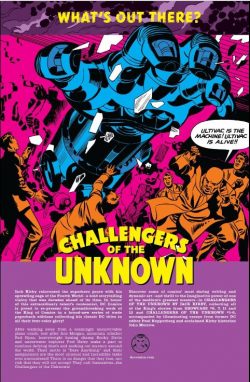
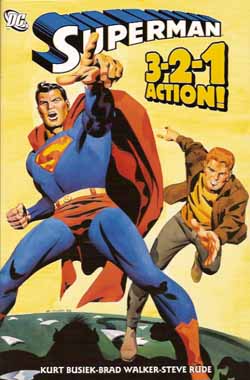
Superman: 3-2-1 Action!


By Kurt Busiek, Mark Evanier, Rick Leonardi, Brad Walker, Steve Rude & various (DC Comics)
ISBN: 978-1-4012-1680-1

There are a number of big cartoon and comics anniversaries this year and probably none bigger than Seigel and Shuster’s magnificent Man of Tomorrow! Here then is a splendid sample of sheer excellence and bucket of fun for Fights ‘n’ Tights fans that spun out of DC’s epic Countdown publishing event. Although nominally another collection of the Action Ace’s adventures, the actual star of the book is Superman’s Pal, Jimmy Olsen with the main body of the volume reprinting Action Comics #852-854 (September-October 2007), which examines the cub reporter’s trials and travails as the effects of the Reality-rending Countdown reach Metropolis.

Without wanting to give too much away (Countdown is collected, readily available and should be read and enjoyed on its own merits) a massive Crisis is affecting all 52 Earths of the newly-reminted DC multiverse.

One inexplicable side-effect of the cosmic kerfuffle is the “fight-or flight” super-power that suddenly afflicts James Bartholomew Olsen, reporter-at-large.

Whenever his life is endangered, sudden inexplicable transformations wrack the kid’s body (and older fans will no doubt be delighted to see the not-so-subtle tributes to such classics of the silver Age as Turtle Boy Olsen, Jimmy the Werewolf, Elastic Lad and The Human Porcupine). This engaging sidebar to Countdown’s Main Event – crafted by scripter Kurt Busiek, penciller Brad Walker and inker John Livesay – also features yet another new take on Titano the Super-Ape, and the return of both superdog Krypto and the Kryptonite Man.

This is preceded by a marvellous updating of Olsen’s “origin” by Busiek, Rick Leonardi & Ande Parks, originally published in Superman #665 (September 2007).

‘Jimmy’ is a charming and adventure-drenched character piece which updates the lad for the millennial generation, whilst still keeping the vitality, verve and pluckiness that carried the boy reporter through seven decades and hundreds of his own adventures within the DCU.

Without doubt though, the absolute prize and gem of this collection comes from the fabulous and much-missed Legends of the DC Universe comicbook of the late 1990s.

Issue #14 to be precise; 55 glorious pages of wonderment from Marv Evanier, Steve Rude & Bill Reinhold from March 1999, presenting a new story crafted from an unused plot Jack Kirby worked up during his tempestuous tenure as Writer-Artist on Superman’s Pal, Jimmy Olsen in the early 1970s.

This story features the hordes of Apokolips, The Evil Factory, The Golden Guardian and enough fun and thrills to take decades off the most jaded fan as investigative journalist Olsen uncovers an Apokolyptian scheme to de-evolve the inhabitants of Metropolis and takes action to thwart the impending catastrophe…

In 1970 Kirby’s run on what had become DC’s most moribund title utterly revolutionised the entire DC universe, introducing Darkseid, the Fourth World, Intergang, The Project (later known as Cadmus) and so much more. Nothing on Earth can induce me to reveal any details of this lost epic (sadly only still available in paperback, and not as an eBook yet) but if you can’t have prime, fresh Kirby, this loving and beautiful addendum to his work is the Very Next Best Thing.

I’m going to be recommending a whole lot of Superman stuff this year and this relatively modern collection is right at the top of that list. Track it down now and learn why you really must…!
© 1999, 2007 DC Comics. All Rights Reserved.
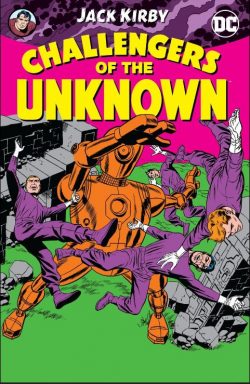
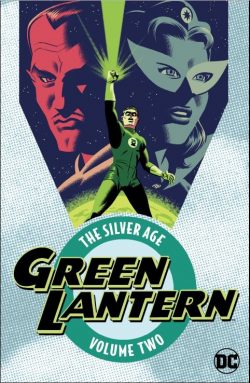
Green Lantern: The Silver Age volume two


By John Broome, Gardner Fox, Gil Kane, Mike Sekowsky & various (DE Comics)
ISBN: 978-1-4012-6-7107-7

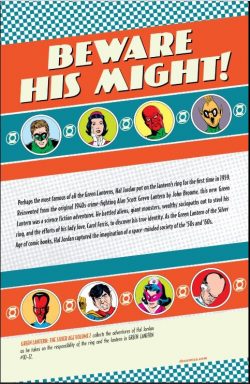
After their hugely successful revival and reworking of The Flash, DC (or National Comics as they were) were keen to build on the resurgent superhero trend. Showcase #22 hit the stands at the same time as the fourth issue of the new Flash comicbook – #108 – and once again the guiding lights were Editor Julie Schwartz and writer John Broome. Assigned as illustrator was action ace Gil Kane, generally inked by Joe Giella.

Hal Jordan was a brash young test pilot in California when an alien policeman crashed his spaceship on Earth. Mortally wounded, Abin Sur commanded his ring – a device which could materialise thoughts – to seek out a replacement officer, honest and without fear.

Scanning the planet, it selected Jordan and brought him to the crash-site. The dying alien bequeathed his ring, the lantern-shaped Battery of Power and his profession to the astonished Earthman.

In six pages ‘S.O.S Green Lantern’ established characters, scenario and narrative thrust of a series that would increasingly become the spine of DC continuity. Now that the concept of the superhero was swiftly being re-established among the buying public, there was no shortage of gaudily clad competition.

The better books survived by having something a little “extra”. With Green Lantern that was primarily the superb scripts of John Broome and Gardner Fox and the astounding drawing of Gil Kane – ably abetted by inker Joe Giella – whose dynamic anatomy and deft page design was maturing with every page he drew, but the concept itself was also a provider of boundless opportunity.

Other heroes had extraterrestrial, other-dimensional and even trans-temporal adventures, but the valiant champion of this series was also a cop: a lawman working for the biggest police force in the entire universe. As such his support team was necessarily composed of some of the brightest talents in American comics.

This fabulous paperback compilation gathers Green Lantern #10-22 (January 1962-July 1963) and reveals how a Space Age reconfiguration of the Golden-Age superhero with a magic ring replaced mysticism with super-science and opens with ‘Prisoner of the Power Ring!’ as the hero responds to a distress call from inside his own emerald wonder-weapon.

Blending Atomic Cold War anxiety with the rescue of a scientist’s family from subatomic exile, GL saves the refugees from their own folly before back up yarn ‘The Origin of Green Lantern’s Oath’ reviews three of the hero’s earliest exploits.

These cases led to him constructing the piece of doggerel he uses to time his ring’s recharging period…

Although neither tale is a blockbuster, the increasingly loose and expressive artwork of Kane, especially on the latter (with Murphy Anderson on inks) are an unalloyed delight of easy grace and power.

The readers were constantly clamouring for more on the alien Corps Jordan had joined and ‘The Strange Trial of Green Lantern’ introduced another half-dozen or so simply to court-martial Hal for dereliction of duty in a saga of cataclysmic proportions, whereas ‘The Trail of the Missing Power Ring!’ focuses on drama of a more human scale when a young boy finds the power ring Hal has foolishly lost.

Issue #12 returned GL to 5700AD as brainwashed Solar Director Pol Manning to thwart an interplanetary coup in ‘Green Lantern’s Statue goes to War’ engineered by an envious magician…

A balance between cosmic and candidly personal stories was developing in those issues sporting two stories, and ‘Zero Hour in the Silent City!’ highlights engineer/grease-monkey Tom Kalmaku‘s close friendship with Hal against the backdrop of bank robbers with a super scientific gimmick.

Green Lantern #13 was a true landmark as an interdimensional invasion led to a team-up and lifelong friendship between our hero and fellow Showcase alumnus the Flash. Controversial for the time, ‘The Duel of the Super-Heroes!’ sees them share each other’s secret identities; a rarity then even among the close comrades of the Justice League of America.

This full-length thriller was followed in #14 by the introduction of Balkan ultra-nationalist super-villain Sonar as ‘The Man Who Conquered Sound!’: a traditional frantic fist-fest complemented by the return of Jim Jordan and snoopy girl reporter Sue Williams.

In the frothy romp ‘My Brother, Green Lantern!’ it’s revealed that she’s now romantically involved with the youngest Jordan sibling and – due to a slight mishap with the boy’s fraternity rings – more certain than ever that her intended is the dashing Emerald Gladiator.

Sinestro once more escapes the justice of the Guardians of the Universe to return in #15’s ‘Peril of the Yellow World!’ a cosmic duel testing GL’s bravery and fortitude as much as Space Race thriller ‘Zero Hour at Rocket City!’ tests his wits. The next issue took the Hal Jordan/Green Lantern/Carol Ferris romantic triangle to a new level. ‘The Secret Life of Star Sapphire!’ introduces the alien women of Zamaron.

Readers of contemporary comics will be aware of their awesome heritage but for the sake of this review and new readers let’s keep that to ourselves. These questing females select Carol as their new queen and give her a gem as versatile and formidable as a power ring, and a brainwash make-over too.

Programmed to destroy the man she loves, Star Sapphire would become another recurring foe, but one with a telling advantage. The second story then solves a puzzle that had baffled readers since the very first appearance of the Emerald Crusader.

Gardner Fox contributes his first tale in ‘Earth’s First Green Lantern’ as Hal finally learns why his predecessor Abin Sur crashed to Earth in a spaceship when all GLs can fly through hyperspace and the interstellar voids on ring power alone. A stirring tale of triumph and tragedy, this short yarn is one of GL’s very best.

Also written by Fox, ‘The Spy-Eye that Doomed Green Lantern!’ again revolves around test pilot Jordan’s personal involvement in the US/Soviet race to the stars, and is a fine example of a lost type of tale. In those long-ago days costumed villains were always third choice in a writer’s armoury: clever bad-guys and aliens always seemed more believable to the creators back then. If you were doing something naughty would you want to call attention to yourself? Nowadays the visual impact of buff men in tights dictates the type of foe more than the crimes committed, which is why these glorious adventures of simpler yet somehow better days are such an unalloyed delight.

Green Lantern #18 (January 1963) led with ‘The World of Perilous Traps!’ by Broome, regular penciller Gil Kane and inker Giella who teamed to produce another cracking, fast paced thriller featuring the renegade GL Sinestro, whilst Mike Sekowsky penciled the end of the intriguing ‘Green Lantern Vs. Power Ring’ wherein Broome engineered a startling duel after larcenous hobo Bill Baggett takes control of the green ring, necessitating a literal battle of wills for its power.

Green Lantern #19 saw the return of radical nationalist Sonar in ‘The Defeat of Green Lantern!’ (Broome, Kane & Giella) a high-energy super-powered duel nicely counter-pointed by the whimsical crime-caper ‘The Trail of the Horse-and-Buggy Bandits!’ by the same team, wherein a little old lady’s crossed phone line led the Emerald Gladiator into conflict with a passel of crafty crooks. Issue #20’s ‘Parasite Planet Peril!’ by Broome, Kane & Anderson then triumphantly reunites GL with the Flash in a full-length epic to foil a plot to kidnap human geniuses.

One of the DCU’s greatest menaces debuted in #21’s ‘The Man Who Mastered Magnetism’. Broome created a world-beater in the dual-personality villain Doctor Polaris for Kane & Giella to limn, whilst ‘Hal Jordan Betrays Green Lantern!’ is the kind of action-packed, cleverly baffling puzzle-yarn Gardner Fox always excelled at, especially with Anderson’s stellar inks to lift the art to a delightful high.

Fox also scripted the return of diabolical futurist villain Hector Hammond in ‘Master of the Power Ring!’ (Giella inks) before Broome turns his hand to a human-interest story with the Anderson-inked ‘Dual Masquerade of the Jordan Brothers!’, with GL playing matchmaker, trying to convince his future sister-in-law that her intended is in fact Green Lantern!

These costumed drama romps are in themselves a great read for most ages, but when also considered as the building blocks of all DC continuity they become vital fare for any fan keen to make sense of the modern superhero experience.

Judged solely on their own merit, these are snappy, awe-inspiring, beautifully illustrated captivatingly clever thrillers that amuse, amaze and enthral both new readers and old devotees. This lovely collection is a must-read item for anybody in love with our art-form and especially for anyone just now encountering the hero for the first time through his movie incarnations.
© 1962, 1963, 2017 DC Comics. All Rights Reserved.
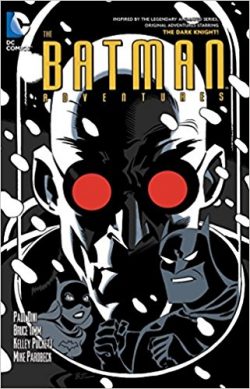
Challengers of the Unknown by Jack Kirby


By Jack Kirby, France “Ed” Herron, Dave Wood, Roz Kirby, George Klein, Bruno Premiani, Marvin Stein & Wally Wood (DC Comics)
ISBN: 978-1-4012-7719-2

The Challengers of the Unknown were a bridging concept between the fashionably all-American human trouble-shooters who monopolised comicbooks for most of the 1950s and the costumed mystery men who would soon return to take over the industry.

As superheroes began to return in 1956 here was a super-team – the first of the Silver Age – with no powers, the most basic and utilitarian of uniforms and the most dubious of motives… Suicide by Mystery.

Yet they were a huge hit and struck a chord that lasted for more than a decade before they finally died… only to rise again and yet again. The idea of them was stirring enough, but their initial execution made their success all but inevitable.

Jack Kirby was – and remains – the most important single influence in the history of American comics. There are quite rightly millions of words written (such as Paul Kupperberg’s enthusiastic Introduction and John Morrow’s pithy Afterword in this superb Trade Paperback and eBook compilation) about what the man has done and meant, and you should read those if you are at all interested in our medium.

I’m going to add a few words to that superabundance in this review of one of his best and most influential projects which, like so many others, he perfectly constructed before moving on, leaving highly competent but never quite as inspired talents to build upon.

When the comics industry suffered a witch-hunt-caused collapse in the mid-50’s, Kirby returned briefly to DC Comics where he produced tales of suspense and science fiction for the company’s line of mystery anthologies and revitalised Green Arrow (then simply a back-up strip in Adventure Comics) whilst creating the newspaper strip Sky Masters of the Space Force.

He also re-packaged for Showcase (a try-out title that launched the careers of many DC mainstays) an original super-team concept that had been kicking around in his head since he and long-time collaborator Joe Simon had closed their innovative but unfortunately ill-timed Prize/Essankay/Mainline Comics ventures.

After years of working for others Simon & Kirby had finally established their own publishing company, producing comics with a much more sophisticated audience in mind, only to find themselves in a sales downturn and awash in public hysteria generated by an anti-comicbook pogrom spearheaded by US Senator Estes Kefauver and pop psychologist Dr. Frederic Wertham.

Simon quit the business for advertising, but Kirby soldiered on, taking his skills and ideas to a number of safer, if more conservative and less experimental, companies.

The Challengers were four ordinary mortals; explorers and adventurers who walked away unscathed from a terrible plane crash. Already obviously what we’d now call “adrenaline junkies”, pilot Ace Morgan, diver Prof Haley, acrobat and mountaineer Red Ryan and wrestler Rocky Davis summarily decided that since they were all living on borrowed time, they would dedicate what remained of their lives to testing themselves and fate. They would risk their lives for Knowledge and, naturally, Justice.

The series launched with ‘The Secrets of the Sorcerer’s Box!’ in Showcase #6 (cover-dated January/February 1957 – so it was on spinner-racks and news-stands in time for Christmas 1956).

Kirby and scripter Dave Wood, plus inkers Marvin Stein and Jack’s wife Roz, crafted a creepily spectacular epic wherein the freshly introduced doom-chasers were hired by the duplicitous magician Morelian to open an ancient container holding otherworldly secrets and powers.

This initial story roars along with all the tension and wonder of the B-movie thrillers it emulates and Jack’s awesome drawing resonates with power and dynamism, which grew even greater for the sequel: a science fiction drama instigated after an alliance of leftover Nazi technologists and contemporary American criminality unleashes a terrible robotic monster.

‘Ultivac is Loose!’ (Showcase #7, March/April 1957) introduced a necessary standard appendage of the times and the B-movie genre in the form of brave, capable, brilliant and beautiful-when-she-took-her-labcoat-off boffin Dr. June Robbins, who became the no-nonsense, ultra-capable (if unofficial) fifth Challenger at a time when most funnybook females had returned to a subsidiary status in that so-conventional, repressive era.

The uncanny exploits then paused for a sales audit and the team didn’t reappear until Showcase #11 (November/December 1957) as The Flash and Lois Lane got their respective shots at the big time. When the Challengers returned it was in alien invasion epic ‘The Day the Earth Blew Up’.

Uniquely engaging comics realist Bruno Premiani (a former associate and employee from Kirby’s Prize Comics days) came aboard to ink a taut doomsday chiller that keeps readers on the edge of their seats even today, and by the time of their last Showcase issue (#12, January /February 1958) the Questing Quartet were preparing to move into their own title.

‘The Menace of the Ancient Vials’ was defused by the usual blend of daredevil heroics and inspired ingenuity (with the wonderful inking of George Klein adding subtle clarity to the tale of an international criminal who steals an ancient weapons cache that threatens the entire world if misused), but the biggest buzz would come two months later with the first issue of their own magazine.

Challengers of the Unknown #1 (May 1958) was written and drawn by Kirby, with Stein on inks and presented two complete stories plus an iconic introductory page that would become almost a signature logo for the team. ‘The Man Who Tampered with Infinity’ pitted the heroes against a renegade scientist whose cavalier dabbling loosed dreadful monsters from the beyond onto our defenceless planet, before the team were actually abducted by aliens in ‘The Human Pets’ and had to win their freedom and a rapid rocket-ship (sphere actually) ride home…

The same creators were responsible for both stories in the second issue. ‘The Traitorous Challenger’ is a monster mystery, with June returning to sabotage a mission in the Australian Outback for the very best reasons, after which ‘The Monster Maker’ finds the team seemingly helpless against super-criminal Roc who can conjure and animate solid objects out of his thoughts.

Issue #3 features ‘Secret of the Sorcerer’s Mirror’ with Roz Kirby & Marvin Stein again inking The King’s mesmerising pencils, as the fantastic foursome pursue a band of criminals whose magic looking-glass can locate deadly ancient weapons, but undoubtedly the most intriguing tale for fans and historians of the medium is ‘The Menace of the Invincible Challenger’ wherein team strongman Rocky Davis is rocketed into space only to crash back to Earth with strange, uncanny powers.

For years the obvious similarities of this group – and especially this adventure – to the origin of Marvel’s Fantastic Four (#1 was released in November 1961) have fuelled fan speculation. In all honesty I simply don’t care. They’re both similar but different and equally enjoyable so read both. In fact, read them all.

With #4 the series became artistically immaculate as the sheer brilliance of Wally Wood’s inking elevated the illustration to unparalleled heights. The scintillant sheen and limpid depth of Woody’s brushwork fostered an abiding authenticity in even the most outrageous of Kirby’s designs and the result is – even now – simply breathtaking.

‘The Wizard of Time’ is a full-length masterpiece of the art form and opens with a series of bizarre robberies that lead the team to a scientist with a time-machine. By visiting oracles of the past rogue researcher Darius Tiko has divined a path to the far future. When he gets there, he intends to rob it blind, but the Challengers deftly find a way to follow and foil him…

‘The Riddle of the Star-Stone’ (#5) is a full-length contemporary thriller, wherein an archaeologist’s assistant uncovers an alien tablet bestowing various super-powers when different gems are inserted into it. The exotic locales and non-stop action are intoxicating, but Kirby’s solid characterisation and ingenious writing are what make this such a compelling read.

Scripter Dave Wood returned for #6’s first story. ‘Captives of the Space Circus’ sees the boys shanghied from Earth to perform in a interplanetary travelling carnival, but the evil ringmaster is promptly outfoxed and the team returns for France “Ed” Herron’s mystic saga ‘The Sorceress of Forbidden Valley’, wherein June becomes an amnesiac puppet in a power struggle between a fugitive gangster and a ruthless feudal potentate.

Issue #7 is another daring double-feature both scripted by Herron. First up is relatively straightforward alien-safari tale ‘The Beasts from Planet 9’, but it’s followed by a much more intriguing yarn on the ‘Isle of No Return’ as the lads face a super-scientific bandit whose shrinking ray leaves them all mouse-sized.

Concluding Kirby issue #8 (July 1959) offers a magnificent finale to a superb run as The King & Wally Wood went out in stunning style with a brace of gripping thrillers – both of which introduced menaces who would return to bedevil the team in future tales.

‘The Man Who Stole the Future’ by Dave Wood, Kirby and the unrelated Wally Wood, introduces Drabny – an evil mastermind who steals mystic artefacts and conquers a small nation before the team dethrones him. Although this is a tale of spectacular battles and uncharacteristic, if welcome, comedy, the real gem here is space opera tour-de-force ‘Prisoners of the Robot Planet’, (probably) written by Kirby & Herron. Petitioned by a desperate alien, the Challs travel to his distant world to liberate the population from bondage to their own robotic servants, who have risen in revolt under the command of the fearsome autonomous automaton, Kra…

These are classic adventures, told in a classical manner. Kirby developed a brilliantly feasible concept with which to work and heroically archetypical characters. He then tapped into an astounding blend of genres to display their talents and courage in unforgettable exploits that informed and affected every team comic that followed – and certainly influenced his successive landmark triumphs with Stan Lee.

But then Jack was gone…

The Challengers would follow the Kirby model until cancellation in 1970, but due to a dispute with Editor Jack Schiff the writer/artist resigned at the height of his powers. The Kirby magic was impossible to match, but as with all The King’s creations, every element was in place for the successors to run with. Challengers of the Unknown #9 (September 1959) saw an increase in the fantasy elements favoured by Schiff, and perhaps an easing of the subtle tension that marked previous issues (Comics Historians take note: the Challs were bitching, bickering and snarling at each other years before Marvel’s Cosmic Quartet ever boarded that fateful rocket-ship).

But that’s meat for another book and review…

Challengers of the Unknown is sheer escapist wonderment, and no fan of the medium should miss the graphic exploits of these perfect adventurers in that ideal setting of not-so-long-ago in a simpler, better galaxy than ours.
© 1957, 1958, 1959, 2003, 2017 DC Comics. All Rights Reserved

Batman Adventures volume 4


By Paul Dini, Bruce Timm, Kelley Puckett, Alan Grant, Dan Raspler, Ty Templeton, Ronnie Del Carmen, Mike Parobeck, Rick Burchett, Dev Madan, Glen Murakami, Dan Riba, Kevin Altieri, Butch Lukic & various (DC Comics)
ISBN: 978-1-4012-6061-3

Win’s Christmas Gift Recommendation: An Ideal Gift for Young, Old and Especially Yourself… 10/10

The brainchild of Paul Dini and Bruce Timm, Batman: The Animated Series aired in the US from September 5th 1992 to September 15th 1995. The TV cartoon – ostensibly for kids – revolutionised everybody’s image of the Dark Knight and inevitably fed back into the printed iterations, leading to some of the absolute best comicbook tales in the hero’s many decades of existence.

Employing a timeless visual style dubbed “Dark Deco”, the show mixed elements from all eras of the character and, without diluting the power, tone or mood of the premise, re-honed the grim avenger and his team into a wholly accessible, thematically memorable form.

It entranced young fans whilst adding shades of exuberance and panache that only the most devout and obsessive Batmaniac could possibly object to.

A faithful comicbook translation was prime material for collection in the newly-emergent trade paperback market but only the first year was ever released, plus miniseries such as Batman: Gotham Adventures and Batman Adventures: The Lost Years. Nowadays, however, we’re much more evolved and reprint collections have established a solid niche amongst the cognoscenti and younger readers…

This fourth, final and Seasonally sensitive compendium gathers issues #28-36 of The Batman Adventures (originally published from January-October 1995) plus The Batman Adventures Holiday Special #1 and The Batman Adventures Annual #2: a scintillating, no-nonsense frenzy of family-friendly Fights ‘n’ Tights fantasy that celebrates traditional values such as gift-giving, crime-crushing, mistletoe-related smooching, world conquest, forgiveness, and all out action in uncanny and outlandish places…

The merriment and mayhem open with the varied contents of The Batman Adventures Holiday Special #1: and a moody ‘Intro’ from Dini & Dan Riba before grossly uncivilised cop Harvey Bullock and his so very long-suffering partner Renee Montoya go undercover as Department Store Santa and Elf in ‘Jolly Old St. Nicholas’ (Dini & Timm).

The apparently invisible thief plundering the store was expecting cops – but not Batgirl – but the assembled embarrassed heroes never contemplated having to battle a seriously-slumming super-villain exposed by the police action…

Next shiny bauble is ‘The Harley and the Ivy’ wherein Dini & Ronnie Del Carmen depict the larcenous ladies going on an illicit shopping spree after kidnapping Bruce Wayne, thanks to a dose of Ivy’s mind-warping kisses…

Slightly darker and far colder, ‘White Christmas’ by Dini & Glen Murakami then pits Batman against the increasing bereft and deranged Mr. Freeze who tries to turn Gotham City into a vast snow-globe as a tribute to his dead wife before The Joker enquires ‘What Are You Doing New Year’s Eve?’ (Dini & Timm, Kevin Altieri & Butch Lukic) whilst attempting to kill every reveller in Gotham Square at the stroke of midnight…

Having saved the city yet again old comrades Batman and Jim Gordon then get together for a spot of breakfast and moment of quiet contemplation in ‘Should Old Acquaintance Be Forgot’ (Dini & Riba) to wrap up this potent parcel of Christmas cheer.

Like the show, most Batman Adventures stories were crafted as 3-act plays and the conceit resumes here with issue #28 (January 1995) as Kelly Puckett, Mike Parobeck & Rick Burchett celebrate the holidays with ‘Twelve Days of Madness’ It opens with ‘What Child is This?’ as escaped loon Harley Quinn misses her Mistah J and drops him a note in Arkham Asylum.

As a strange outbreak of lunacy suddenly grips the city, ‘God Rest Ye Psycho Councilmen’ finds esteemed psychologist Dr. Heimlich visit the institution and recommending making the Joker direct a little Christmas theatre for the inmates…

Happily, the Dark Knight is on hand to expose shocking charlatanry and handle the ‘Asylum Fideles’ threatening to upset he mental applecart…

Batman Adventures #29 finds Bruce Wayne again hunting Ra’s Al Ghul as ‘Demonseed’ (Dev Madan & Burchett), opens with ‘Secret Hopes, Secret Fears’ and the in-mufti manhunter trailing a deadly Tesla Device aLl over the world, with former beloved Talia trying to kill him at every opportunity.

‘Wayne: Bruce Wayne’ sees the ex-lovers reunited to stop a third party purloining the menacing mechanism before facing inevitable and ultimate betrayal in ‘Till Death Do You Part’…

It’s a spotlight on bad guys as Puckett, Burchett & Murakami reveal the story of a ‘Natural Born Loser’ in #30.

In-joke Triumvirate of Terror Mastermind, Mr. Nice and The Perfesser (who bear litigiously remarkable resemblances to DC editors Mike Carlin, Archie Goodwin and Dennis O’Neil) return in a tryptic of origin tales beginning with ‘Waiting for the Dough’ as yet another criminal mastermind breaks into their prison in search of a treasure map.

Sadly, those individual confrontations – continued in ‘The Dark Nice Returns’ and concluding with ‘It’s a Mad, Mad, Mad, Mad Pearl’ – only prove that the top dog in Gotham is actually the Bat…

Alan Grant scripts #31 for Madan & Burchett to illustrate as youthful ideologue ‘Anarky’ convenes ‘The People’s Court’ to judge rich businessmen such as Bruce Wayne for their money-grubbing acts. With his mentor captured, teen wonder Robin becomes the key ‘Witness for the Defense’ and combines ‘The Gentle Art of Philosophy’ with his usual derring-do to win the argument and save the day

Dan Raspler, Parobeck & Burchett reveal ‘A Soldier’s Story’ in #32 as ‘Into the Valley of Death’ sees criminals wage war in Gotham dressed as rival armies from history. Crazed rival millionaires playing games from their childhood have sponsored this chaotic ‘War and Remembrance’ but it’s Batman who wins ‘The Last Battle’…

Batman Adventures #33 covers ‘Just Another Night’ (Ty Templeton, Madan & Burchett) as a movie night with single mum Veronica Thomas and her son Justin spirals into terror when they are mugged by a gunman on the way home. Paralysed by traumatic ‘Deja Vu’, Bruce goes on a maddened rampage of childish revenge leading to a justice and a ‘Dark Victory’ of sorts, but ‘At What Cost…’?

The first volume of the series wraps up with a 3-issue epic starring one of the Dark Knight’s most insidious enemies. It begins with ‘In Memoriam’ (#34 by Puckett, Parobeck & Burchett) as deranged psychologist Hugo Strange pays ‘Charons Fee’ to exact his vengeful schemes. Later, as Batman pursues super-thief Catwoman, he realises some of his memories have been erased. However, by deductively ‘Filling in the Gaps’ the Caped Crimebuster only allows Strange ‘Total Recall’ to Bruce Wayne’s past…

In #35 ‘The Book of Memory’ (Puckett, Templeton, Parobeck & Burchett) heralds ‘Strange Days’ as Catwoman turns a mindwiped Batman into her perfect acrobatic accomplice. With Gotham’s guardian missing Robin consults Commissioner Gordon and soon ‘The Trap is Set…’.

Elsewhere, as Hugo Strange spirals into breakdown, ‘Uptown, Saturday Night’ reveals how Batman is captured and cured. Or so it seems…

‘The Last Batman Adventure’ appears in #36 as Templeton, Parobeck & Burchett depict Robin and his junior partner, ‘Batman, The Boy Wonder’, still searching for Bruce’s purloined past. Afflicted with the mentality of a child, the hero convinces Catwoman to help him ensure ‘Batman, The Dark Knight Returns’, but they are almost too late to prevent ‘The Unusual Fate of Hugo Strange’ after the tragic madman goes after the true author of all his woes…

This spectacular softcover selection (also available as an eBook) concludes with a high-octane occult romp by Dini, Murakami & Timm first published in The Batman Adventures Annual #2.

‘Demons’ sees Ra’s Al Ghul blow up parts of Gotham to secure a long-lost mystic tablet and win a rare victory over the late-arriving Dark Knight. Overpowered and outgunned, Batman contacts consultant supernatural specialist Jason Blood and discovers the demonologist and the “Demon’s Head” are ancient adversaries…

Surviving drug-induced magical dreams, Batman realises that Al Ghul plans to invoke a demonic entity Haahk in his city and scourge humanity from the Earth. Nevertheless, he heads for a showdown he knows he cannot win, but Blood has one more secret to reveal: his longevity is caused by a demon imprisoned in his body…

Etrigan dwells inside Jason, lives to fight and is ferociously eager to settle score with Ra’s and Haahk…

Epic and electrifying, this rocket-paced tribute to Jack Kirby crackles with kinetic energy and moody menace: a perfect point to end on and one that promises more and greater thrills to come…

Breathtakingly written and iconically illustrated, these stripped-down rollercoaster-romps are pure, irresistible Bat-magic and this is a compendium every fan of any age and vintage will adore.
© 1995, 2016 DC Comics. All Rights Reserved.