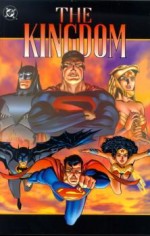
The Kingdom


By Mark Waid & various (DC)
ISBN: 978-1-56389-567-6   Titan Books edition 978-1-84023-122-9

After the staggering success of the 1996 miniseries Kingdom Come a sequel was utterly inevitable, but things didn’t exactly go according to plan and it was three years before a 2-issue return to that intriguing “Elseworld” was released; book-ending 6 individual one-shots, all set in the aftermath of the epochal epic which saw Superman return from a self-imposed exile to once more save the world.

Before all that though a prologue was released in Gog (Villains) #1, which segued into The Kingdom #1 and continued in an interwoven mosaic progression through spin-offs The Kingdom: Son of the Bat, The Kingdom: Nightstar, The Kingdom: Offspring, The Kingdom: Kid Flash and The Kingdom: Planet Krypton before concluding in The Kingdom #2.

This second “what if?” saga boldly managed to connect the once-separate continuity to the mainstream DC universe and introduced another bridging concept that opened the way for all the storylines and history eradicated in Crisis on Infinite Earths to once more be “real and true”.

Illustrated by Jerry Ordway & Dennis Janke, ‘The Road to Hell’ opens in the devastated fallout zone of Kansas where the returned Superman rescues a little boy – sole survivor of a holocaust caused by warring superheroes. Decades later that boy has grown into Minister William: a beneficent Samaritan and religious zealot who literally worships the Man of Steel as a redeeming God – until the hero painfully and finally disabuses him of the notion.

With his world torn apart for a second time William is given the true history of the universe by the Phantom Stranger and the broken preacher is reborn as Gog, a being of vast power able to manipulate events and change history.

The Stranger is part of a Cosmic alliance called the Quintessence and believes he is creating a force for good, tasked with undoing great tragedy; but the deranged Gog has another idea and promptly murders Superman – the destroyer of his faith and thus the maniac’s personal anti-Christ…. Moreover, the psychotic William begins to travel back in time intending to jump-start the Kansas Incident. On the way he will stop every 24 hours and kill Superman again: every day of his evil alien life and one day at a time… Most terrifying of all is the fact that the Quintessence are quite happy with Gog’s horrifying scheme…

Kingdom Come #1 (art by Ariel Olivetti) recapitulates the ‘Never Ending Slaughter’ as spectral adventurer Deadman gathers all of Superman’s ghosts slain since August 11th 2040 in an unending variety of gruesomely imaginative ways, victims of Gog’s reality-rupturing mania.

The resultant time-disruption energises Chronal guardians The Linear Men, but before they can act to protect the Space-Time Continuum one of their number betrays them and sets out to tackle the crisis his own way.

A year after the events of Kingdome Come Wonder Woman is giving birth to the son she and Superman conceived when Gog arrives to once more kill the Man of Tomorrow. Driven off by that era’s massed superhero population Gog escapes into the timestream taken the newborn child with him to 1998 where he will raise it as his disciple Magog.

With all of existence liable to vanish at any second the renegade Linear Man invites Superman, Wonder Woman and Batman to accompany him on a last-ditch mission to stop the maniac and save Kansas.

But now, whatever happens, the entire timeline and everybody in it will alter and might even never have existed…

As the World’s Greatest heroes vanish into the past they leave behind a shell-shocked band of new warriors desperately making their peace with imminent, inescapable and irreversible doom…

The Kingdom: Son of the Bat introduces Ibn al Xu’ffasch, heir of both Batman and Ra’s al Ghul, who uses his incredible intellect and astounding resources to resurrect the world’s greatest villains in hope of forestalling the apocalypse in ‘Convergence’, illustrated by Brian Apthorp & Mark Farmer, whilst The Kingdom: Nightstar finds the daughter of Nightwing and Starfire going ‘Not So Gently’ (art by Matt Haley & Tom Simmons) as one of her closest metahuman friends cracks under the pressure of impending non-existence and attempts to end it all quickly and cleanly by destroying the satellite which provides most of Earth’s food. Both these tales conclude with a time-bending stranger offering a way to fight back against the impossible situation…

‘Flexibility’ from The Kingdom: Offspring – superbly rendered by Frank Quitely – takes a softer approach by examining a unique father and son relationship as the clownish heir of Plastic Man tries to mend a few fences and have one last fling before the end, whilst The Kingdom: Kid Flash presents a ‘Quick Fix’ (Mark Pajarillo & Walden Wong) as the over-achieving daughter of the Fastest Man Alive attempts to live up to an impossible standard before the individual interludes end with The Kingdom: Planet Krypton wherein ordinary waitress Rose D’Angelo spends her last day working at the same hero-themed fast food restaurant she always has. Of course the place is ‘Haunted’ by ghosts only she can see – ephemeral, impossible alternate versions of costumed champions that never existed… or did they?

The Barry Kitson limned mystery leads directly into the concluding issue of The Kingdom, illustrated by Mike Zeck & John Beatty. ‘Mighty Rivers’ sees Magog reach the present in the mainstream DC universe and open his campaign to nuke Kansas. The current Superman is unable to defeat him until the time-travelling trinity of older heroes arrive, precipitating a calamitous battle and a technological Deus ex Machina wherein the imperilled champions of the doomed tomorrow save themselves and their still-potential reality thanks to the convenient miracle of Hypertime – where all things are possible…

Despite being all-but impenetrable to casual readers this climactic costumed caper is visually impressive and tremendously clever – if you’re au fait with the details of the DC canon – and much of the meat of this saga has since permeated such series as Justice Society of America and other titles, with wary readers continuing to wonder which of these “imaginary” characters will eventually manifest in the “real” world of DC Comics…

A definite fun-fest for DC devotees but perhaps a trifle over-focused for the casual consumer…
© 1999 DC Comics. All Rights Reserved.
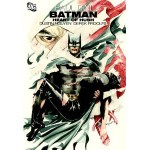
Batman: Heart of Hush


By Paul Dini, Dustin Nguyen & Derek Fridolfs (DC Comics)
ISBN: 978-1-4012-2123-2, softcover 978-1-84856-214-1

Paul Dini once more proved himself the very best of contemporary Batman writers with this chilling, suspenseful epic of love and obsession featuring Bruce Wayne’s ultimate adversary Tommy Elliot, a boyhood friend as twisted by his own mother’s malign influence as the boy Bruce was transformed by the murder of his parents Thomas and Martha Wayne.

Eminent surgeon Elliot became the sadistic and obsessive Hush to obtain vengeance on Bruce Wayne; his boyhood friend and companion but one who had been perpetually held up to him as a perfect example of a son by Elliot’s disabled and deranged mother. Now in this intriguing and affecting collection, reprinting Detective Comics #846-850 we gain a deeper insight into Batman’s dark doppelganger and the succession of tragedies that made him.

The stunning saga opens with ‘First Families of Gotham’ with occasional allies Catwoman and Batman tackling theme villain Doctor Aesop, unaware that the malignant, murderously patient Elliot is watching their every move. As telling slices of his ghastly childhood are presented the crazed doctor concludes the final preparations for his greatest scheme of vengeance…

In ‘The Last Good Day’ more memories of Elliot’s school days with young Bruce Wayne counterpoint the targeting of Robin, Zatanna and Nightwing as the entire Batman Family come under Hush’s meticulous and malicious gaze and the villain prepares a perfect trap for Batman with the terrifying assistance of Dr. Jonathan Crane – the Scarecrow…

Batman is forced to confront the greatest chink in his heroic armour in  ‘Heartstrings’ and Catwoman is struck down and made the ultimate hostage via a grotesque surgical strike, pushing the Dark Knight to the edge of reason and brink of death in ‘Scars’…

When the finally part of the plan culminates in Tommy Elliot becoming Bruce Wayne the scene is set for a spectacular confrontation with neither combatant quite sure who is the hero and who ‘The Demon in the Mirror’…

With a vast assembly of guest-stars and visiting villains, Heart of Hush finally elevated the previously over-hyped and uninspiring Tommy Elliot to the first rank of Batman’s Rogues Gallery. Fast, furious, genuinely scary and powerfully this is a masterful tale of suspense that no fan should miss… and since it’s available in both handsome hardback and scintillating softcover editions, you don’t have to..
© 2008, 2009 DC Comics. All Rights Reserved.

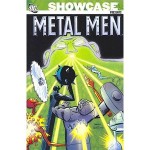
Showcase Presents Metal Men volume 2


By Robert Kanigher, Mike Sekowsky, Ross Andru, Mike Esposito & various (DC Comics)
ISBN: 978-1-4012-1559-0

The Metal Men first appeared in four consecutive issues of National/DC’s try-out title Showcase: legendarily created over a weekend by Kanigher – after an intended feature blew its press deadline – and rapidly rendered by the art-team of Ross Andru and Mike Esposito. This last-minute filler attracted a large readership’s eager attention and within months of their fourth and final adventure the gleaming gladiatorial gadgets were stars of their own title.

This second sterling black and white chronicle collects the solid gold stories from Metal Men #16-35 and the second of their nine team-up appearances in Brave and the Bold; in this case #66.

Brilliant young Einstein Will Magnus constructed a doomsday squad of self-regulating, intelligent automatons, governed by micro-supercomputers dubbed “Responsometers”.

These miracles of micro-engineering not only simulate – or perhaps create – thought processes and emotional character for the robots but constantly reprograms the base form – allowing them to change their shapes.

Magnus patterned his handmade heroes on pure metals, with Gold as leader of a tight knit team consisting of Iron, Lead, Mercury, Platinum and Tin warriors. Thanks to their responsometers, each robot specialised in physical changes based on its elemental properties but due to some quirk of programming the robots developed personality traits mimicking the metaphorical attributes of their base metal.

This compendium takes the high tech team through the best and worst of the 1960s “Camp Craze” and solidly into the bizarrely experimental phase that presaged the temporary decline of costumed heroes and rise of mystery and supernatural comics.

Metal Men #16 (October-November 1966) opens the proceedings as creative team Robert Kanigher, Ross Andru & Mike Esposito pulled out all the stops for the spectacularly whacky ‘Robots for Sale!’

Platinum or “Tina” always believed herself passionately in love with Magnus and his constant rebuffs regularly drove her crazy. Here his latest rejection made her so mad she fled into space and when the rest of the Metal Men chased her they all ended up reduced to doll size on a derelict planet where ravenous mechanical termites had almost destroyed the native wooden robots that lived there.

Issue #17 depicted Tina’s worst nightmare as Magnus and his motley metal crew investigated cosmic cobwebs which fell to Earth and the inventor was bewitched by a horrifying mechanical Black Widow in ‘I Married a Robot!’, whilst the team tackled a terrifying technological Tyrannosaur in #18’s ‘The Dinosaur Who Stayed for Dinner!’

‘The Man-Horse of Hades!’ featured a supernatural and mythic menace who had waited centuries for his true love to return before mistaking Tina for his missing “centaurette”, after which the Alloyed Avengers met Metamorpho, the Element Man in Brave and the Bold #66 (June-July 1966).

‘Wreck the Renegade Robots’ by Bob Haney & Mike Sekowsky saw the freakish hero turn to Doc Magnus to remedy his unwelcome elemental condition just as utterly mad scientist Kurt Borian resurfaced with his own Metal Men, extremely distressed that somebody else had patented the idea first.

Tragically, the only way to stop Borian’s rampage involved reversing Metamorpho’s cure…

‘Birthday Cake for a Cannibal Robot!’ featured a second appearance for Robert Kanigher’s craziest creation. Egg Fu was a colossal ovoid Chinese Communist robot determined to “Destloy Amelica” (I know, I know: different times OK?). The mechanical mastermind had first battled Wonder Woman, but resurfaced here to crush the West’s greatest artificial heroes with a giant automaton of his own, whilst ‘The Metal Men vs the Plastic Perils!’ played it all slightly more seriously in a guest-star stuffed romp (Batman, Robin, Wonder Woman and Flash) pitting the team against criminal genius Professor Bravo and his synthetic stalwarts Ethylene, Styrene, Polythene, Silicone and Methacrylate…

Soviet scientist Professor Snakelocks unleashed an unpredictable synthetic life-form against the heroes in #22’s ‘Attack of the Sizzler!’ before launching an invasion of America and, although they could handle hordes of mechanical Cossacks, they were completely outgunned when the sparkling synthezoid transformed Doc into a robot and the Metal Men into humans…

Issue #23 saw the robots restored but Doc still steel-shod as they faced ‘The Rage of the Lizard!’ – another sinister spy attacking the Free World – but before the inevitable end, Magnus too had regained his mortal form. Unfortunately Tina and Sizzler had become rivals for his attentions…

Metal Men #24 pitted the expanded team against a monstrous marauding inflatable alien in ‘The Balloon Man Hangs High!’ after which the ‘Return of Chemo…the Chemical Menace!’ saw tragedy strike as the Sizzler was destroyed and Doc grievously injured just before the toxic terror attacked. Mercifully the Shiny Sentinels proved equal to the task even without their mentor-inventor and it was back to regular zaniness for #26’s ‘Menace of the Metal Mods!’ wherein mechanical fashion icons went on a robbing rampage. ‘The Startling Origin of the Metal Men!’ rehashed their first mission as a modern Mongol Genghis Khan launched an anti-American assault.

‘You Can’t Trust a Robot!’ saw a fugitive gang-boss take control of the Metal Men’s spare bodies, resulting in a spectacular “evil-twin” battle between good and bad mechanoids, after which it was back into outer space to battle ‘The Robot Eater of Metalas 5!’ and his resource hungry masters – a staggeringly spectacular romp which marked an end for the Kanigher, Andru &Esposito team’s connection with the series.

Metal Men #30 (February-March 1968) featured the first of two fill-in issues by Otto Binder and Gil Kane – with Esposito hanging on to provide inks – after which a whole new and highly radical retooling was undertaken.

In ‘Terrors of the Forbidden Dimension!’ the Handmade Heroes were forced to travel to other realms in search of a cure when Magnus fell into a coma after a lab accident. No sooner did they defeat a host of hazards to fix him than he insulted them by building another team! Issue #31’s ‘The Amazing School for Robots!’ introduced Silver, Cobalt, Osmium, Gallium, Zinc and Iridium – although she preferred “Iridia”…

It was all barely manageable until disembodied alien intelligence Darzz the Dictator possessed the newcomers and civil war broke out…

By1968 superhero comics were in steep and rapid decline. Panicked publishers sought new ways to keep audiences as tastes changed and back then, the entire industry depended on newsstand sales, so if you weren’t popular, you died.

Editors Jack Miller and George Kashdan tapped veteran Mike Sekowsky to stop the metal fatigue and he had a radical solution: the same nuts and bolts overhaul he was simultaneously spearheading with Denny O’Neil on the de-powered Diana Prince: Wonder Woman.

The enchantingly eccentric art of Sekowsky had been a DC mainstay for decades and his unique take on the Justice League of America had cemented its overwhelming success. He had also scored big with Gold Key’s Man from Uncle and Tower Comics’ T.H.U.N.D.E.R. Agents and Fight The Enemy!

Now he was creatively stretching himself with a number of experimental, youth-targeted projects; tapping into the teen zeitgeist with the Easy Rider-like drama Jason’s Quest, new sci-fi project Manhunter 2070, the hopelessly moribund Amazon and eventually Supergirl.

Sekowsky began conservatively enough in #32 and Binder scripted ‘The Metal Women Blues!’ wherein Doc built counterparts and companions for his valiant crew with disastrous results, after which the new “relevancy” direction debuted in The New Hunted Metal Men #33 (August-September 1968).

Kanigher returned as scripter as Sekowsky & George Roussos crafted a darker paranoic tone for ‘Recipe to Kill a Robot!’ wherein the once celebrated team went on the run from humanity. The problems started when Doc increased their power exponentially, causing them to constantly endanger the very people they were trying to help and were compounded when their creator was injured and plunged into another coma.

Pilloried by an unforgiving public and only stopping briefly to defeat an invasion by voracious giant alien insects, the misunderstood mechanoids fled, finding sanctuary with Doc’s brother David – a high ranking military spook.

Issue #33 ‘Death Comes Calling!’ had them encounter a ghastly extraterrestrial force which murderously animated America’s shop manikins after Tina rejected its amorous advances. The carnage and highly visible collateral damage was exacerbated in #35 – the last tale in this masterful monochrome tome – and added to humanity’s collective woes when a vast and love-hungry Volcano Man joined the chase in ‘Danger… Doom Dummies!’

Kanigher’s masterful ability for dreaming up outlandish visual situations and bizarre emotive twists might have dropped out of vogue, but this simply opened the door for more evocative and viscerally emotive content more in keeping with the series’ now teen-aged audience and the best was still to come…

But that’s the stuff of another volume – and ASAP, please!

© 1965-1969, 2008 DC Comics. All Rights Reserved.

Green Lantern/Green Arrow volume 1


By Denny O’Neil, Neal Adams, Frank Giacoia, Dick Giordano, Dan Adkins & Berni Wrightson (DC Comics)
ISBN: 978-1-4012-0224-8

After nearly a decade of earthly crime-busting, interstellar intrigue and spectacular science fiction shenanigans the Silver Age Green Lantern was swiftly becoming one of the earliest big-name casualties of the downturn in superhero sales in 1969 and Editor Julie Schwartz knew something extraordinary was needed to save the series.

The result was a bold experiment that created a fad for socially relevant, ecologically aware, more mature stories which spread throughout DC costumed hero comics that totally revolutionised the industry and nigh-radicalised the readers.

Tapping superstars-in-waiting Denny O’Neil and Neal Adams to produce the revolutionary fare, Schwartz watched in fascinated disbelief as the resultant thirteen groundbreaking, landmark tales – the first seven of which are reprinted in this superb colour collection – captured the tone of the times, garnered critical praise and awards within the industry and desperately valuable publicity from the real world outside, whilst simultaneously registering such poor sales that the series was finally cancelled anyway, with the heroes unceremoniously packed off to the back of marginally less endangered comicbook The Flash.

Once safely established and doubling up the die-hard fan-base, the stories resumed their traditional themes – crime, adventure and space opera – and Green Lantern gradually grew popular enough for his own solo title once more….

By the end of the 1960s America was a bubbling cauldron of social turmoil and experimentation. Everything was challenged on principle and with issue #76 of Green Lantern (April 1970 and the first issue of the new decade) O’Neil and comics iconoclast Neal Adams utterly redefined superheroism with their “Issues”-driven stories; transforming complacent establishment masked boy-scouts into uncertain, questioning champions and strident explorers of the enigma of America.

When these stories first appeared DC was a company in transition – just like America itself – with new ideas (which, in comic-book terms meant “young writers”) being given much leeway: a veritable wave of fresh, raw talent akin to the very start of the industry, when excitable young creators ran wild with imagination. Their cause wasn’t hurt by the industry’s swingeing commercial decline: costs were up and the kids just weren’t buying funnybooks in the quantities they used to…

O’ Neil, in tight collaboration with hyper-realistic artist Adams, assaulted all the traditional monoliths of contemporary costumed dramas with tightly targeted, protest- driven stories. The comicbook had been re-designated Green Lantern/Green Arrow with Emerald Archer Oliver Queen constantly mouthing off as a hot-headed, liberal sounding-board and platform for a generation-in-crisis whilst staid, quasi-reactionary GL Hal Jordan played the part of the oblivious but well-meaning old guard. At least the Ring-Slinger was able to perceive his faults and more or less willing to listen to new ideas…

‘No Evil Shall Escape My Sight!’ (inked by Frank Giacoia) is a true landmark of the medium, utterly reinventing the concept of the costumed crusader as newly-minted, freshly bankrupted millionaire Oliver (Green Arrow) Queen challenged his Justice League comrade’s cosy worldview when the lofty space-cop painfully discovered real villains wore business suits, had expense accounts, hurt people just because of skin colour and would happily poison their own nests for short-term gain…

The specific villain du jour was a wealthy landlord whose treatment of his poverty-stricken tenants wasn’t necessarily illegal but certainly was wickedly immoral… Of course, the fact that this yarn is also a brilliantly devious crime-thriller with science-fiction overtones doesn’t exactly hurt either…

‘Journey to Desolation’ in #77 was every bit as groundbreaking.

At the conclusion of the #76 an immortal Guardian of the Universe – known as “the Old Timer” was assigned to accompany the Emerald Duo on a voyage to “discover America”: a soul-searching social exploration into the dichotomies which divided the nation – and a tremendously popular pastime for the nation’s disaffected citizens back then.

The first stop brought the trio to a poverty-stricken mining town run as a private kingdom by a ruthless entrepreneur happy to use agent-provocateurs and Nazi war criminals to keep his wage slaves in line. When a young protest singer looked likely to become the next Bob Dylan and draw unwelcome publicity, he had to be eliminated – as did the three strangers who drove into town at just the wrong moment…

Although the heroes provided temporary solutions and put away viciously human criminals, these tales were always carefully heavy-handed in exposing bigger ills and issues which couldn’t be fixed with a wave of a Green Ring; invoking an aura of helplessness that was metaphorically emphasised during this story when Hal was summarily stripped of much of his power for no longer being the willing, unquestioning stooge of his officious, high-and-mighty alien masters…

The confused and merely-mortal Green Lantern discovered another unpalatable aspect of human nature in ‘A Kind of Loving, a Way of Death!’ when Black Canary joined the peripatetic cast. Seeking to renew her stalled relationship with Green Arrow, she was waylaid by bikers, grievously injured and taken in by a charismatic hippy guru. Sadly Joshua was more Manson than Messiah and his brand of Peace and Love only extended to white people: everybody else was simply target practise…

The continuing plight of Native Americans was stunningly highlighted in ‘Ulysses Star is Still Alive!’ as corporate logging interests attempted to deprive a mountain tribe of their very last scraps of heritage, once more causing the Green Knights to take extraordinarily differing courses of action to help, whilst #80 added a science fiction gloss to a tale of judicial malfeasance in ‘Even an Immortal Can Die!’ (inked by Dick Giordano).

When the Old Timer used his powers to save Green Lantern rather than prevent a pollution catastrophe in the Pacific Northwest, he was chastised by his fellow Guardians and dispatched to the planet Gallo for judgement by the supreme arbiters of Law in the universe. His earthly friends accompanied him and found a disturbing new administration with a decidedly off-kilter view of justice…

Adams’ staggering facility for capturing likenesses added extra-piquancy to this yarn that we’re just not equipped to grasp four decades later, with the usurping, overbearing villain derived from the Judge of the infamous trial of anti-war protesters “The Chicago Eight”.

Insight into the Guardians’ history underpinned ‘Death Be My Destiny!’ when Lantern, Arrow and Canary travelled with the now-sentenced Old Timer to the ancient world of Maltus and found a world literally choking on its own out-of-control population. The uncanny cause cast unlovely light on the perceived role and worth of women in modern society…

Ending this first of a two-set volume on a more traditional note, Green Lantern/Green Arrow #82 enquired ‘How do you Fight a Nightmare?’ (with additional inks from Berni Wrightson) as Green Lantern’s greatest foe unleashed Harpies, Amazons and all manner of female furies on the hapless hero before Black Canary and Green Arrow could turn the tide, whilst asking a few more pertinent questions about women’s rights…

As well as these magnificent still-challenging epics superbly re-coloured by Cory Adams and Jack Adler this chronicle also reprints O’Neil’s effusive introduction from the hardbound. slip-cased turn-of-this-century ‘Hard-Travelling Heroes‘ edition, creator biographies and a illustrated feature ‘Legacy in Print’ which pictorially examines the multifarious collected formats in which these timeless tales have been collected.

© 1970, 1971, 1992, 1977, 2000, 2004 DC Comics. All Rights Reserved.

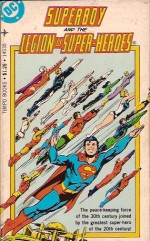
Superboy and the Legion of Super-Heroes


By various (Tempo Books/Grosset & Dunlap)
ISBN: 0-448-14535-9

Here’s another early attempt to catapult comics off the spinner racks and onto proper bookshelves; this time from 1977, coinciding with and celebrating one of the periodic surges in popularity of the venerable Legion of Super-Heroes.

The many-handed mob of juvenile universe-savers debuted in Adventure Comics #247 (April 1958) in a Superboy tale wherein three mysterious kids invited the Boy of Steel to the future to join a team of metahuman champions inspired by his historic feats. Created by Otto Binder & Al Plastino, the throwaway concept inflamed public imagination and after a slew of further appearances throughout Superman Family titles, the LSH eventually took over Superboy’s lead spot in Adventure for their own far-flung, quirky escapades, with the Caped Kryptonian reduced to “one of the in-crowd”…

This terrific little black and white tome, part of National Periodical Publications’ on-going efforts to reach wider reading audiences – which began during the “Camp” craze of the 1960s with reformatted Superman and Batman pocket paperbacks and intermittently continued for the next twenty years – is particularly appealing as it leads off with a straight Superboy solo story.

The exploits of the Kid Kryptonian were always problematic. Since his inception (More Fun Comics #101 January/February 1945) the character had been perennially set in the past, “the adventures of Superman when he was a boy”. He was always popular and a solid seller, but as the world and the readership grew increasingly more complex in the late 1960s, the vague, timeless “about twenty years ago” settings grew ever-harder to reconcile with the uniform continuity being formed within the cohesively congealing DC universe.

For long term readers, the tales were seen to have occurred anytime between 1929-1957 and eventually DC (as NPP became) simply gave up the ghost and simply told fans to subtract 12-20 years from whatever the date was in Superman. More succinctly: “deal with it, it’s only a comicbook…”

When the Legion were revived after a nearly two years in limbo, they moved briefly into the back of Superboy before taking over the title (Déjà vu, much?). Thereafter all the Boy of Steel’s adventures took place in the future, not the past…

Tragically, however, that relegated a huge amount of superb comics stories to oblivion: not acknowledged and never included in those reprint collections increasingly targeting the mainstream fan-base. Mercifully, one of those lost tales – from a brilliant run by scripter Frank Robbins and artists Bob Brown & Wally Wood – found its way into this collection for a wider and less picky audience…

‘Superboy’s Darkest Secret!’ (from Superboy #158, July 1969) is a powerful and moving epic which fits nowhere in accepted continuity. In this beautifully rendered tragedy the Boy of Steel discovers his birth parents had actually – and unwillingly – escaped Krypton and now lay interred in a life-pod deep inside a debris field of Kryptonite and space mines. Moreover, the only person who could reunite him with them was the kindly Kryptonian savant who had murdered them and was now determined to resurrect them…!

The Heroes of Tomorrow finally show up in ‘The Six-Legged Legionnaire!’ (Adventure Comics #355, April 1967 by Otto Binder, Curt Swan & George Klein) as Superboy brings his High School sweetie Lana Lang to the 30th century, where she joins in a mission against a science-tyrant as the shape changing Insect Queen. Disaster strikes when she loses the alien ring that enables her to resume her human form…

‘Curse of the Blood-Crystals!’ by Cary Bates, Dave Cockrum & Murphy Anderson comes from Superboy #188 (July 1972); the sixth stunning back-up tale of the unstoppable Legion revival that would eventually lead to the team taking over the title. This clever yarn of cross-and-double-cross finds a Legionnaire possessed by a magical booby-trap and forced to murder Superboy – but which hero is actually the prospective killer…?

This nifty nostalgic nugget ends with a rather strange but genuinely intriguing choice.

By 1970 the team’s popularity was on the wane. They had lost their Adventure Comics spot to Supergirl and become a back-up feature in Action Comics. Moreover, the masterful penciller Curt Swan had left to devote himself fully to Superman…

The shorter stories were bolder and more entertaining than ever, but too many casual readers had moved on. ‘The Legionnaires Who Never Were!’ (Action #392, September 1970, by Bates, Winslow Mortimer & Jack Abel) was their last adventure until popping up in Superboy and presents a brilliant psychological thriller/mystery romp as Saturn Girl and Princess Projectra return to Earth and discover that they no longer exist…. Of course, there’s a sound reason why all their old comrades are trying to kill them…

The Legion of Super-Heroes has long been graced with the most faithful and determined hard-core fans in comics history. Once the graphic novel market was established all of their old adventures became readily available in many different formats, so for most readers and collectors the true value of this scarce back-pocket item probably lies in that solo Superboy treat.

I’ve always harboured a secret delight in these paperback pioneers of the comics biz; however, and if you’re in any way of similar mien, I can thoroughly recommend the sheer tactile and olfactory buzz that only comes from holding such an item in your own two hands…

Wipe them first, though, right…?
© 1966, 1969, 1970, 1972, 1977 DC Comics Inc. All Rights Reserved.

Superman: The Doomsday Wars


By Dan Jurgens & Norm Rapmund (DC Comics)
ISBN: 978-1-84023-124-3

Although largely out of favour these days as all the myriad decades of Superman mythology are gradually reassimilated into DC continuity, the stripped down, gritty post-Crisis on Infinite Earths Man of Steel devised by John Byrne and marvellously built upon by a succession of gifted comics craftsman produced some genuine classics.

This isn’t one of them, but Superman: the Doomsday Wars is a supremely enjoyable and thrilling Fights ‘n’ Tights diversion that should delight anybody in need of a solid piece of mature graphic novel entertainment.

Originally released as a three-part Prestige Format miniseries in 1998, this story blends spectacular blockbuster action and plenty of guest stars with skilful soap opera sub-plots; focussing on the birth of Pete Ross and Lana Lang’s first child just as the greatest physical threat Superman ever faced returned yet again…

Lana, Pete and Clark Kent grew up together in Smallville and shared a lifelong bond, but it was stretched to the breaking point when a present-day battle with Brainiac was curtailed so the Man of Steel could rush back to his hometown for a family emergency.

Lana had just given birth months prematurely and the cottage hospital was not equipped to handle a “premie” with Baby Ross’ massive complications.

Lana was Clark’s first love and knew about his heroic alter-ego. Her oblivious husband Pete was Clark’s best friend but still jumped to all the wrong conclusions when his wife began demanding to see the Metropolis newsman…

Even as Lana begged Superman to take her baby any place where his too-early life could be preserved, the Justice League were being decimated by the devastating Doomsday. As the Metropolis Marvel began cautiously transporting the most precious and fragile thing he had ever held across America to the world’s most advanced Natal care centre in Atlanta he was unaware that his personal Bête Noir was unerringly heading there too, leaving a swathe of carnage in his mindless wake…

Except that Doomsday wasn’t mindless anymore…

By incredible, time-bending means Brainiac had taken over the living engine of destruction, but Doomsday’s pure, unrelenting rage was expelling the master villain’s consciousness. So, in need of a new body, Brainiac took baby Ross (later, unwisely christened “Clark”), determined to remake the infant into a perfect, permanent home for his insidious intellect…

Moving, tragic and revealing many intriguingly insightful moments which shaped the nature and personality of the World’s Greatest Hero, The Doomsday Wars is not merely a power-packed punch-fest – although there is an abundance of action too – but a magically affecting melodrama about choices and repercussions interspersed with a chilling remembrance of the ghastly consequences that followed the last time Clark Kent made the Expedient rather than Right choice…

If you love the genre but need a little more depth in your Costumed Dramas this is a lost gem you’ll be glad you tracked down.
© 1998, 1999 DC Comics. All Rights Reserved.
Showcase Presents Batman volume 2

New revised review

By Gardner Fox, John Broome, Robert Kanigher, Sheldon Moldoff, Carmine Infantino & various (DC Comics)
ISBN 978-1-84576-661-0

This volume from the wonderfully cheap and cheerful Showcase Presents… imprint serves up all thirty-six new Batman stories from September 1965 to December 1966 (which originally appeared in Batman #175-188 and Detective Comics #343-358 – excluding Batman’s #176, 182, 185 & 187 which were all-reprint 80-Page Giants) in beautiful, crisp black and white. They were produced in the months leading up to the launch of and throughout the first year of the blockbuster Batman television show (premiering on January 12th 1966 and running for three seasons of 120 episodes in total).

The show aired twice weekly for its first two seasons, resulting in vast amount of Bat-awareness, no end of spin-offs and merchandise – including a movie – and the overkill phenomenon of “Batmania”. No matter how much we might squeal and foam about it, to a huge portion of this planet’s population Batman is always going to be that “Zap! Biff! Pow!” buffoonish costumed Boy Scout…

Regrettably this means that the comic stories published during that period have been similarly excoriated and maligned by most Bat-fans ever since. It is true that some tales were crafted with overtones of the “camp” fad, presumably to accommodate newer readers seduced by the arch silliness and coy irony of the show, but no editor of Julius Schwartz’s calibre would ever deviate far from the characterisation that had sustained Batman for nearly thirty years, or the then-recent re-launch which had revitalised the character sufficiently for television to take an interest at all.

Nor would such brilliant writers as John Broome, Bill Finger, Gardner Fox and Robert Kanigher ever produce work which didn’t resonate on all the Batman’s intricate levels just for a quick laugh and a cheap thrill. The artists tasked with sustaining the visual intensity included such greats as Carmine Infantino, Sheldon Moldoff, Chic Stone, Joe Giella, Murphy Anderson and Sid Greene, with covers from Gil Kane and Joe Kubert supplementing the stunning and trend-setting, fine-line Infantino masterpieces.

Most of the stories in this compendium reflect those gentler times and editorial policy of focusing on Batman’s reputation as “The World’s Greatest Detective”, so the colourful, psychotic veteran costumed super-villains are still in a minority here, but there are first appearances for a number of exotic foes who would become regular menaces for the Dynamic Duo in years to come.

The mayhem and mystery begin with a book-length epic from Detective Comics #343 (September 1965) by John Broome, Carmine Infantino & Joe Giella, incorporating back up feature Elongated Man (a costumed sleuth who blended the charm of Nick “Thin Man” Charles with the outré heroic antics of Plastic Man) in ‘The Secret War of the Phantom General!’

This tense thriller pitted the hard-pressed heroes against a hidden army of gangsters and Nazi war criminals, whilst #344 introduced intellectual bandit Johnny Witts, ‘The Crime-Boss who was Always One Step Ahead of Batman!’ in a sharp duel of mentalities from Gardner Fox, Sheldon Moldoff & Giella.

The same creative team produced the epic shocker ‘The Decline and Fall of Batman’ in the 175th issue of his own titular magazine wherein fringe scientist Eddie Repp almost ended the Caped Crusaders’ careers by assaulting them with electronic ghosts, after which Detective #345 introduced a terrifying, tragic new villain in ‘The Blockbuster Invasion of Gotham City!’ (Fox, Infantino & Giella) as a monstrous giant with the mind of a child and the raw, physical power of a tank was constantly driven to madness at sight of Batman and only placated by the sight of Bruce Wayne…

Batman #177 opened with a Bill Finger, Moldoff & Giella puzzler, ‘Two Batmen Too Many’ complete with a pair of superhero guest-stars, after which ‘The Art Gallery of Rogues!’ by Broome, Moldoff & Sid Greene combined good-natured matchmaking with murderous burglary whilst ‘Batman’s Inescapable Doom-Trap!’ (Detective #346, Broome, Moldoff & Giella) highlighted the Caped Crimebuster’s escapology skills when a magician-turned-thief alpha-tested his latest stunt on the unwilling, unwitting hero.

‘The Strange Death of Batman!’ by Fox, Infantino & Giella in Detective # 347 saw the debut of habitual B-list villain the Bouncer in a bizarre experimental yarn which has to seen to be believed, whereas it was business as usual in the all-action Batman #178 where the ‘Raid of the Rocketeers!’ (Robert Kanigher, Moldoff & Giella) set the Gotham Gangbusters on the trail of jet-packed super-thugs whilst Broome, Moldoff & Greene began referencing the tone of the TV series in the light-hearted crime-caper ‘The Loan Shark’s Hidden Horde!’

Whilst ‘The Birdmaster of Bedlam!’, who hatched his first sinister scheme in Detective #349 (Kanigher, Moldoff & Giella) proved ultimately incapable of containing the Caped Crusaders, Batman #179 provided more of a challenge with ‘Clay Pigeon for a Killer!’ (Kanigher, Moldoff & Greene – erroneously credited as Giella here) finding Batman using a television “Most Wanted” show to trap a murderer beyond the reach of the law and ‘The Riddle-less Robberies of the Riddler!’ by Broome Moldoff & Giella, fully recreating the modern Prince of Puzzlers. The felon discovered he could not escape or defy the obsessive psychological compulsion which prevented him from committing crimes unless he sent clues to Batman, but sadly even when Eddie Nigma cheated, the Masked Manhunter kept solving the riddles…

The microcephalic man-brute who hated Batman returned when ‘The Blockbuster Breaks Loose!’ in a blistering, action-fuelled thriller by Fox, Infantino & Giella (Detective #349) which also hinted at the return of a long-forgotten foe, whilst ‘The Monarch of Menace!’ from #350 (Kanigher, Moldoff & Giella), introduced the greatest criminal in the world, who started well but inevitably fell to the Gotham Gangbuster’s indomitable persistence.

Batman #180 introduced the uncanny Death-Man in ‘Death Knocks Three Times!’ Kanigher’s best tale of this era and an early indication of the Caped Crusaders eerie potential (illustrated by Moldoff & Giella) after which Detective #351 premiered game-show host turned felonious impresario Arthur Brown in ‘The Cluemaster’s Topsy-Turvy Crimes!’ by Fox, Infantino & Greene.

‘Beware of… Poison Ivy!’ in Batman #181 introduced the deadly damsel to the Caped Crusader’s Rogues Gallery, but in this tale she was a mere criminal boss using sex as her weapon to split up the Dynamic Duo and defeat rival villainess in a sly tale from Kanigher, Moldoff & Giella. Following a spiffy, iconic pin-up courtesy of Infantino & Murphy Anderson comes a superb Mystery Analysts of Gotham City shocker ‘The Perfect Crime… Slightly Imperfect!’, by Fox, Moldoff & Greene whilst Detective #352 featured Broome, Moldoff & Giella’s ‘Batman’s Crime Hunt A-Go-Go!’, wherein the Gotham Guardian hit an incredible hot-streak, repeatedly catching criminals in the act with incredible lucky hunches. Of course, there’s no such thing as luck and sinister stage mentalist Mr. Esper was manipulating the crime-busting campaign for his own sinister ends…

After another stunning Infantino & Anderson Batman pin-up the action continues with ‘The Weather Wizard’s Triple-Treasure Thefts!’ (Fox, Infantino & Giella) in #353 which pitted the Dynamic Duo in spectacular opposition to the Flash’s arch enemy: one of the first times a DC villain moved out of his usually stamping grounds. Batman #183 opened with ‘A Touch of Poison Ivy‘ (Kanigher, Moldoff & Giella) as the seductive siren tried once again to turn the Caped Crusader’s head before the excellent “fair-play” mystery ‘Batman’s Baffling Turnabout!’ saw Gardner Fox challenge the readers to deduce what could turn the hero against a bewildered Boy Wonder…

‘No Exit for Batman’ (Detective #354, by Broome Moldoff & Giella) introduced bloodthirsty oriental fiend Dr. Tzin-Tzin in a bruising all-action tale, before Fox’s ‘Mystery of the Missing Manhunters!’ generated one of the most memorable covers of the decade for Batman #184 and the back-up Robin solo tale ‘The Boy Wonder’s Boo-Boo Patrol!’ (Fox, Chic Stone & Sid Greene) showed the lad’s sheer potential in a clever tale of thespian skulduggery and smart conundrum solving.

Detective #355 once more highlighted our hero’s physical prowess as well as deductive capabilities in the blistering ‘Hate of the Hooded Hangman!’ (Broome, Infantino & Giella), after which the extended duel with a mutant mastermind culminated in ‘The Inside story of the Outsider!’ and the resurrection of faithful retainer Alfred in a classic confrontation by Fox, Moldoff & Giella from Detective Comics #356.

Batman #186 featured the Clown Prince of Crime in possibly his most innocuous exploit ‘The Joker’s Original Robberies’ as Broome, Moldoff & Giella, tried to out-Camp the TV show, but ‘Commissioner Gordon’s Death-Threat!’ (written by Fox) put the artists’ talents to far better use in a terse and compelling kidnap thriller. Broome redeemed himself in Detective #357 with the clever secret identity saving puzzler ‘Bruce Wayne Unmasks Batman!’ (Infantino & Giella).

Batman #188 featured ‘The Eraser Who Tried to Rub Out Batman!’ (Broome, Moldoff & Giella) and the decidedly sharper and less silly murder-mystery ‘The Ten Best-Dressed Corpses in Gotham City!’ by Fox, Moldoff & Greene after which this collection concludes on a note of psychological intrigue as Detective #358 described ‘The Circle of Terror’ (Broome, Moldoff & Giella) wherein the Masked Manhunter was progressively driven to the edge of madness by Op Art maestro the Spellbinder.

With covers by Infantino, Gil Kane, Murphy Anderson and Joe Kubert, pin-up extras, frequent reprint compendiums and lots of cross-pollination with the TV series, DC were pulling out all the stops to capitalise on the screen exposure and ensure the comic buying public got their 12¢ worth, but the most effective tool in the arsenal was always the sheer variety of the stories.

The bulk of the yarns reprinted here are thefts, capers and sinister schemes by heist men, murderers, would-be world-conquerors and mad scientists and I must say it is a joy to see these once-common staples of comic books in action again. You can have too much psycho-killing, I say, and just how many alien races really and truly can be bothered with our poxy planet – or our women?

And yes, there are one or two utterly daft escapades included here, but overall this book is a magical window onto a simpler time but not burdened by simpler fare. These Batman adventures are tense, thrilling, engrossing, engaging and even amusing and I’d have no qualms giving them to my niece or my granny.

Tune and become a proper Bat-fan.

© 1965, 1966, 2007 DC Comics. All Rights Reserved.
The Flash: Blood Will Run


By Geoff Johns, Scott Kolins, Doug Hazlewood, Ethan Van Sciver & various (DC Comics)
ISBN: 978-1-4012-1647-4

There are many super-speedsters in the DCU and most of them congregate around the conjoined mid-western metropolis of Keystone and Central City. Wally West, third incarnation of The Flash, lives there with his new wife Linda Park, his aunt Iris and fellow Vizier of Velocity Jay Garrick.

Impulse, a juvenile speedster from the future and his mentor/keeper Max Mercury – the Zen Master of hyper-velocity – live in Alabama but often visit as they only live picoseconds away and other recipients of the incredible Speed Force such as Jesse Quick are also frequent visitors.

It sounds pretty idyllic but there are constants threats to counteract the cosy friends and family atmosphere…

Created by Gardner Fox and Harry Lampert, Garrick debuted as the very first Scarlet Speedster in Flash Comics #1 (January 1940). “The Fastest Man Alive” wowed readers for over a decade before changing tastes benched him in 1951. The concept of speedsters and superheroes in general was successfully revived in 1956 by Julie Schwartz in Showcase #4 when police scientist Barry Allen became the second hero to run with the concept.

The Silver Age Flash, whose creation ushered in a new and seemingly unstoppable era of costumed crusaders, died heroically during Crisis on Infinite Earths (1985-1986) and was promptly succeeded by his sidekick Kid Flash. Of course Allen later returned from the dead – but then again, doesn’t everyone?

Initially Wally struggled to fill the boots of his predecessor, both in sheer ability and, more tellingly, in confidence. Feeling a fraud, he nonetheless persevered and eventually overcame, becoming the greatest to carry the name.

Following on from the astonishing and brutally game-changing events of The Flash: Wonderland, Geoff Johns’ continued his reinvention of the third Scarlet Speedster with new artist-team Scott Kolins, Doug Hazlewood and especially colourist James Sinclair, whose muted palette imbued the increasingly dark and edgy stories with a uniquely bright and airily destabilising counterpoint. There’s even a gallery of Brian Bolland’s eye-popping covers to gloat over.

This volume collects issues #170-176 of the Wally West Flash Run, the lead story from Flash: Secret Files #3 and the dark and nasty Iron Heights one-shot, leading off with the eponymous four-part ‘Blood Will Run’ as in ‘Breaking the Foundation’ a sports-mad Linda Park-West has her day off ruined when Wally is dragged out of an ice-hockey match to tackle a hostage crisis. Unfortunately the situation goes bad when Flash’s crazy ex-girlfriend Frankie Kane shows up and inadvertently exposes a cult which has been methodically murdering all the people Wally had saved during his career…

Now calling herself Magenta, Frankie eventually suppresses her magnetic powers and lets the police arrest her, but Wally is pretty rattled.

He’s even more shocked to see police officer Julie Jackham, another one of his old romantic mistakes and one he’ll regret forever since she’s the next victim of the cult in ‘The Harvest’, leaving behind her a furious mentor in uncompromising cop Fred Chyre, a deeply guilt-wracked Scarlet Speedster and a baby who leaks lightning…

Detective Jared Morillo is the one who first noticed Flash’s connection to the wave of serial killings, but as Wally reels at the enormity of the campaign of death, elsewhere in the city ex-super-villain Goldface is slowly signing up the metropolis’ entire blue collar workforce to his insidious labour union whilst Flash’s old friend and reformed meta-bandit Pied Piper is bracing for an unwelcome reunion with his estranged parents…

In ‘Close to Home’ the increasingly unstable Magenta busts out of custody and joins the cult, capturing Wally in the process. Horrified, the Monarch of Motion meets the demented Cicada who has been siphoning life force the hundreds of victims in the hopes of resurrecting the wife he murdered. It’s not just deranged delusion either as the madman’s blade rips a hole in the Flash through which Speed Force energy begins to leak…

In ‘Uneasy Idol’ Linda narrowly escapes being murdered and Morillo is wounded by Cicada’s life-transferring dagger before Flash spectacularly wraps up the case, but it’s clear that the madness is only beginning, not ending…

‘Moving Right Along’ finds Wally and Linda relocating back to the heart of Keystone from the suburbs and tackling a new super threat in the plasmorphic Tar Pit rather than spend an evening with the in-laws, after which the Pied Piper is accused of murdering his parents and the secret of Jackie’s baby is revealed in the blisteringly engrossing ‘Birthright’ beginning with ‘Eye of the Storm’, in which old Rogue Weather Wizard returns as an uncharacteristically adept and capable foe, determined to steal the child and dissect him for the secret of his power, culminating in a devastating duel in ‘The Rainmaker’.

Throughout all these tales a sinister subplot detailed how a number of Flash Foes were uniting under a deadly new leader, but before all was revealed ‘Iron Heights’, illustrated by Ethan Van Sciver & Prentis Rollins introduced the harshest prison in the DC universe, where draconian warden Gregory Wolfe relished every opportunity to break his metahuman inmates and where horrific serial killer Murmur was attempting to murder the entire prison population with a virus manufactured from his own toxic blood.

When Wally and the Piper infiltrated the locked-down penitentiary on a mission of mercy, they discovered a litany of horrors that would eventually cause even more trouble for the Flash and his twinned hometown…

This superb compendium concludes with yet another introduction as FBI profiler of metahuman threats Hunter Zoloman joined the Keystone cops in ‘Rogues’ (with art by Kolins & José Marzán Jr. from Flash: Secret Files #3), an action-packed prelude to an all out super-war with the Speedster’s most vicious foes united against him…

But that’s the raw meat of another book…

Fast, furious and fantastic, The Flash has always epitomised the very best of Fight ‘n’ Tights fiction and these tales are the cream of that crop . The Geoff Johns years are slick and absolutely addictive: engrossing, rapid-paced, classily violent and often genuinely scary. If you haven’t seen them yet, run – don’t walk – to your nearest emporium or vendor-site and catch all the breathless action you can handle, quick as you can!
© 2000, 2001, 2007 DC Comics. All Rights Reserved.
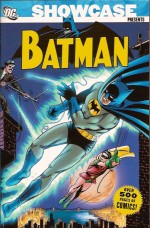
Showcase Presents Batman volume 1

New revised Review

By John Broome, Gardner Fox, Ed Herron, Carmine Infantino, Sheldon Moldoff Joe Giella & various (DC Comics)
ISBN13: 978-1-4012-1086-1

I’m assuming everybody here loves comics and that we’ve all had the same unpleasant experience of trying to justify that passion to somebody. Excluding your partner (who is actually right – the living room floor is not the place to leave your D*&$£! funny-books) many people still have an entrenched and erroneous view of strip art, resulting in a frustrating and futile time as you tried to dissuade them from that opinion.

If so, this collection might be the book you want next time that confrontation occurs. Collected here in incontrovertible black-and-white are tales which reshaped the Dynamic Duo and set them up for global Stardom – and subsequent fearful castigation from fans – as the template for the Batman TV show of the 1960s. It should be noted, however, that the producers and researchers got their creative impetus from the stories of the era preceding the “New Look Batman” as well as the original movie serial of the 1940s…

So what have we here?

By the end of 1963, Julius Schwartz had revived much of DC’s line – and the entire industry – with his modernization of the Superhero, and was asked to work his magic with the creatively stalled and nigh-moribund Caped Crusader. Bringing his usual team of top-notch creators with him, Schwartz stripped down the core-concept, downplaying all the aliens, outlandish villains and daft transformation tales, bringing a cool modern take to the capture of criminals and even overseeing a streamlining rationalisation of the art style itself.

The most apparent change to us kids was a yellow circle around the Bat-symbol, but far more importantly, the stories also changed. A subtle aura of genuine menace had re-entered the comfortable and absurdly abstract world of Gotham City. This initial cheap ‘n’ cheerful Showcase Presents… compendium collects the Bat-Sagas from Detective Comics #327-342 (cover-dated May 1964 to August 1965) and Batman #164-174 (June 1964-September 1965) – 38 stunning stories that reshaped a legend.

The revolution began with the lead yarn in Detective #327, written by John Broome, illustrated by Carmine Infantino and Joe Giella at the very peak of their creative powers, before being fully formalised in two tales in Batman #164.

‘The Mystery of the Menacing Mask! was a cunning “Howdunnit?” that was long on action and peril, as a criminal “underground railroad” led the Caped Crusaders to a common thug who seemed able to control the heroes with his thoughts. The venerable title was clearly refocusing on its descriptive, evocative title for the foreseeable future and to ram the point home a new back-up feature was introduced, “The Stretchable Sleuth” Elongated Man. This comicbook was to be a brain-teaser from now on…

In Batman, action and adventure were paramount. ‘Two-Way Gem Caper!‘ pitted Batman and Robin against a slick criminal named Dabblo, but the villain wasn’t the star of this tale. Almost as an aside, a new Batcave and refashioned Wayne Manor were introduced, as well as a sleek, compact new Batmobile; more sports-car than super-tank.

This story was written by Ed “France” Herron and drawn by “Bob Kane”. Veteran inker Giella was tasked with finishing the contents of all Bat-books in a bid to generate a recognisable uniformity in the stories.

A new semi-regular feature also debuted in that issue. The Mystery Analysts of Gotham City was a club of Detectives and crime-writers who met to talk about their cases. It always resulted in an adventure like ‘Batman’s Great Face-Saving Feat!’ (Herron & Kane) wherein eager applicant Hugh Rankin applied his Private Eye talents to discovering the Gotham Gangbuster’s true identity to win a seat at the sleuths’ table. Suffice it to say he had to reapply…

‘Gotham Gang Line-Up!’ completed the transformation of Batman. Written by original co-creator Bill Finger and pencilled by Kane, this mediocre crime-caper from Detective #328 is most remarkable for the plot-twist wherein long-serving butler Alfred sacrificed his life to save the heroes; prompting Dick Grayson’s Aunt Harriet to move into Wayne Mansor.

From this point the adventures fell into a pattern of top-of-the-line tales punctuated by utterly exceptional occasional epics of drama, mystery and action. These would continue until the infamous TV show’s success became so great that it actually began to inform – or taint – the kind of story in the comics themselves. And while I’m into editorial asides: whenever the credits read “Bob Kane” the artist usually doing the drawing was unsung hero Sheldon Moldoff…

‘Castle with Wall-To-Wall Danger!’ (Detective #329), written by Broome and pencilled by Infantino, was a captivating international thriller which found the heroes braving a deadly death-trap in Swinging England in pursuit of a dastardly thief, whilst eerie science fiction saga ‘Man Who Quit the Human Race!’ (Gardner Fox, Kane & Giella) which led in Batman #165 proved that fantastic fantasy still had a place in the Gotham Guardian’s world.

A potential new love-interest was introduced in the back-up tale, ‘The Dilemma of the Detective’s Daughter!’, courtesy of Herron & Kane, as student police women Patricia Powell left cop-college and hit the mean streets of the city. Over in Detective #330, Broome & “Kane” detailed a new kind of crime in ‘The Fallen Idol of Gotham City!’ wherein a mysterious phenomenon turned ordinary citizens into blood-hungry mobs on command. In Batman #166, ‘Two-Way Deathtrap!’ saw a couple of petty thugs set up the perfect ambush after finding a pipeline into the Batcave whilst ‘A Rendezvous with Robbery!’ featured a return engagement for Pat Powell during a frantic crime caper: both tales from Herron & Kane.

A rare full-length story in Detective #331 guest-starred Elongated Man as the ‘Museum of Mixed-Up Men’ (Broome & Infantino) teamed the Costumed Sleuths against a super-scientific felon, after which a Rogues Gallery super-villain finally appeared in ‘The Joker’s Last Laugh’ (Broome & “Kane”) in #332, utterly set on switching places with the Caped Crimebusters in his own manic manner…

Batman #167 presaged a ‘Zero Hour for Earth!’ (Finger & Kane) as international espionage pulled the Dynamic Duo from Gotham into a global manhunt for secret society Hydra whilst Detective #333 pitted the heroes against a faux goddess and real telepaths in the‘Hunters of the Elephants’ Graveyard!’, written by Fox and illustrated by Infantino.

‘The Fight That Jolted Gotham City! opened Batman #168 with a blockbusting battle between the Masked Manhunter and temporarily deranged circus strongman Mr. Muscles and the Mystery Analysts resurfaced to close the book by explaining ‘How to Solve the Perfect Crime… in Reverse!’ (both tales by Herron & Moldoff).

The opening shot in an extended war against an incredible new foe dubbed The Outsider began in Detective #334 with the introduction of Grasshopper… ‘The Man Who Stole from Batman!’ (Fox & Moldoff), whilst ‘Trail of the Talking Mask!’ by Fox & Infantino in #335 gave the Dynamic Due an opportunity to reinforce their sci-fi credentials in a classy high-tech thriller guest starring PI Hugh Rankin.

Wily, bird-themed bad-man The Penguin returned in Batman #169 to make the Caped Crusaders his unwilling ‘Partners in Plunder!’ (Herron & Moldoff) after which inker Sid Greene made his debut delineating ‘A Bad Day for Batman!’, in which our hero overcame many vicissitudes of cruel coincidence to nab a determined thief.

Detective #336 (Fox, Moldoff & Giella) featured ‘Batman’s Bewitched Nightmare’ and found a broom-riding crone attacking the Dynamic Duo at the Outsider’s behest. In later months the witch was revealed to be sultry sorceress Zatanna, but most comics cognoscenti agree this was not the original plan, but rather cannily back-written during the frantic months of “Batmania” that followed the debut of the TV show (for a fuller explanation check out JLA: Zatanna’s Search).

An intriguing new foe made his mark in Batman #170 when highly professional thief Roy Reynolds ran rings around the Gotham Gangbusters – at least at first – as the ‘Genius of the Getaway Gimmicks!’ (Fox & Moldoff) and Bill Finger provided a captivating, human-scaled drama in ‘The Puzzle of the Perilous Prizes!’ which enabled Joe Giella to show off his pencilling as well as inking skills.

‘The Deep-Freeze Menace!’ (Detective #337 by Fox & Infantino) was a captivating fantasy chiller pitting Batman against a super-powered caveman encased in ice for 50,000 years, whilst the caped crime-buster gained his own uncanny advantage in #338 after a chemical accident threatened to make ‘Batman’s Power-Packed Punch!’ too dangerous to be near…

After an absence of decades ‘Remarkable Ruse of The Riddler!’ reintroduced the Prince of Puzzlers in Batman # 171; a clever book-length mystery from Fox & Moldoff which did much to catapult the previously forgotten villain to the first rank of Bat-Baddies, after which DC’s inexplicable (but deeply cool) long-running love-affair with gorillas resulted in a cracking doom-fable as ‘Batman Battles the Living Beast-Bomb!’ (Fox & Infantino in Detective #339) highlighted the hero’s physical prowess in a duel of wits and muscles against a sinister super-intelligent simian.

Broome returned to script the eerie conundrum drawn by Moldoff which led in Batman #172. ‘Attack of the Invisible Knights!’ proved to be wicked science not ancient magic, whilst Batman’s own technological advances played a big part in the backup ‘Robin’s Unassisted Triple Play!’ (Fox, Moldoff & Greene), which gave the Boy Wonder plenty of scope to show off his own crime-busting skills against a murderous gang of bandits.

Detective #340 saw the long-running war against Batman escalate when ‘The Outsider Strikes Again!’ (Fox & Moldoff), giving further clues to the hidden foe’s incredible abilities by animating everyday objects – and even the Batmobile – to attack the Caped Crusaders, after which Broome & Infantino detailed the cinema-inspired, catastrophic campaign of ‘The Joker’s Comedy Capers!’ in #341.

Criminal mastermind and blackmailer Mr. Incognito offered ‘Secret Identities For Sale’ in the first tale of Batman #173, after which creators Broome and Moldoff were joined by inker Sid Greene for ‘Walk Batman – To Your Doom!’; a sinister psychological murder-plot years ahead of its time.

‘The Midnight Raid of the Robin Gang!’ (Broome & Moldoff) in Detective #342, hinted at the burgeoning generational unrest of the 1960s as the faithful Boy Wonder seemed to sabotage his mentor before signing up with a pack of costumed juvenile delinquents, and this first collection of Caped Crusader Chronicles concludes with the all Fox & Moldoff Batman #174: starting with a brutal story of street-fighting as the Gotham Guardian was ambushed and became ‘The Human Punching Bag!’ before the Mystery Analysts found themselves the intended victims of a “Ten Little Indians” murder-scheme in ‘The Off-Again, On-Again Lightbulbs!’ (inked by Greene).

No matter how much we might squeal and foam about it, to a large portion of the world Batman is always going to be the “Zap! Biff! Pow!”, affably lovable, caped buffoon of that 1960s television show. It really was that popular.

But whether you tend towards the anodyne light-heartedness of then, the socially acceptable psychopathy of the current movie franchise or actually just like the comicbook character, if you can make a potential convert sit-down, shut up and actually read these wonderful adventures for all (reasonable) ages, you might find that the old adage “Quality will out” still holds true. And if you’re actually a fan who hasn’t read this classic stuff, you have an absolute treat in store…
© 1964, 1965, 2006 DC Comics. All Rights Reserved.

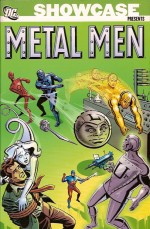
Showcase Presents Metal Men volume 1


By Robert Kanigher, Ross Andru, Mike Esposito & various (DC Comics)
ISBN: 978-1-4012-1559-0

In contrast to his gritty war and adventure scripts Robert Kanigher usually kept his fantasy and superhero comicbook tales light, visually intriguing and often extremely outlandish… and that’s certainly the case with these eccentric artificial heroes who briefly caught the early 1960’s zeitgeist for bizarre and outrageous light-hearted adventure.

The Metal Men first appeared in four consecutive issues of National/DC’s try-out title Showcase: legendarily created over a weekend by Kanigher after an intended feature blew its press deadline and rapidly rendered by the art-team of Ross Andru and Mike Esposito. This last-minute filler attracted a large readership’s eager attention and within months of their fourth and final adventure the gleaming gladiatorial gadgets were stars of their own title.

This first cheap and cheerful monochrome compendium collects the electrifying contents of Showcase #37-40, Metal Men #1-15 and the first of their nine team-up appearances in Brave and the Bold; specifically #55.

The alchemical excitement began in Showcase #37 (March-April 1962) with ‘The Flaming Doom!’ as an horrific radioactive antediluvian beast flew out of a melting polar glacier and began devastating humanity’s great cities. Helpless to stop the creature the American military desperately approached brilliant young technologist Dr. Will Magnus for a solution. He rapidly constructed a doomsday squad of self-regulating, highly intelligent automatons, patterned after Tina, a prototype sexy robot constructed from platinum and malleable memory ceramic, governed by a micro-supercomputer dubbed a “Responsometer”.

This miracle of micro-engineering not only simulates – or perhaps creates – thought processes and emotional character for the robots but constantly reprograms the base form – allowing the mechanoids to change and alter their shapes.

Magnus patterned his handmade heroes on pure metals, with Gold as leader of a tight knit team consisting of Iron, Lead, Mercury and Tin warriors. Thanks to their responsometers, each robot specialised in physical changes based on its elemental properties but due to some quirk of programming the robots also developed personality traits mimicking the metaphorical attributes of their base metal.

Tina is especially intransigent, believing herself passionately in love with her dashing creator…

As soon as they’ve introduced themselves, the shining squad sets off to confront the deadly monster in their flying rocket-saucer and after a terrible battle, succeed at the cost of their own brief lives…

In Showcase #38 a very public campaign to reconstruct the Metal Men resulted in Magnus building them anew. However their unique characters were gone and they promptly failed in battle against a Soviet backed Nazi scientist’s robotic marauder until the desperate Yankee inventor managed to recover their original responsometers in ‘The Nightmare Menace!’

‘The Deathless Doom!’ pitted the malleable machines against an animated glassine tank used to store toxic residues from failed experiments by genius chemist Professor Norton. The intermingled waste products combined to create a deadly new life form named Chemo who (which?) would become one of the greatest menaces of the DC universe…

The Showcase run concluded with ‘The Day the Metal Men Melted!’ (September-October 1962) when Chemo returned just as Magnus’ previous exposure to the Toxic Terror coincidentally transformed the inventor into a radioactive metallic giant. Acutely aware of his dangerous condition Magnus exiled himself to deep space and managed to take Chemo with him, where, luckily, the outer limits provided the valiant scientist with an unexpected cure…

Whereas the first three tales were relatively straight dramas, with this yarn rational physics began giving way to fantastic fringe science and the comedic elements began to proliferate. By increasingly capitalising on the Metal’s Men quirky characters, successive stories became as much fantasy as drama.

Metal Men #1 launched with an April-May 1963 cover-date and detailed the astonishing ‘Rain of the Missile Men’ in which alien robot Z-1 fell in love with Tina from astronomically afar and built innumerable hordes of duplicates of himself to taker for his prize. When his automaton army invaded Earth only Tina survived to the end of the issue…

At this Magnus was becoming increasingly schizophrenic about the desperately lovesick and fiercely jealous Tina, alternately berating her impossible emotions then moping and missing her after he’d donated the troublesome toy to a museum… Huh! Robot Women: can’t live with them, can’t…

Kanigher’s greatest ability was his knack for dreaming up outlandish visual situations and bizarre emotive twists. ‘Robots of Terror’ described how the frustrated Tina built her own mechanical Doc Magnus which turned evil and developed an equally iniquitous team of elemental warriors – Barium, Aluminium, Calcium, Zirconium, Sodium and Plutonium – to battle the recently reconstructed Metal Men, whilst #3’s ‘The Moon’s Mechanical Army!’ saw the team undertake a lunar search for the Platinum Bombshell after she sacrificed herself to save them all. In the process they inadvertently brought an uncontrollable amoebic monster back to Earth…

Tin was the meekest Metal and most lacking in confidence, but in ‘The Bracelet of Doomed Heroes!’ an Giant-Alien-Robot-Amazon-Queen took a shine to the timid tyke and abducted him to her distant world. When his alchemical comrades came to the rescue they were trapped and enslaved until Tin turned the tide in the concluding ‘Menace of the Mammoth Robots!’

Back on Earth the Metal Men battled a Gas Gang (Oxygen, Helium, Chloroform Carbon Monoxide and Carbon Dioxide) of evil mechanical marauders after cosmic rays made Magnus evil and electronic on ‘The Day Doc Turned Robot!’ after which ‘The Living Gun!’ found a fully restored team facing a colossal monster formed from a runaway solar prominence.

Metal Men #8 had the team take a little blind boy on a jaunt to another world only to become trapped by extraterrestrial robots in ‘The Playground of Terror!’ before young Billy saved the day in the concluding battle with ‘The Robot Juggernaut!’

‘Revolt of the Gas Gang!’ found Doc forced to revive the vaporous mechanical villains when the Metal Men were accidentally merged into a monolithic menace, after which the tightly continuous sagas briefly halt here to include a team-up tale from Brave and the Bold #55 (August September 1965) in which writer Bob Haney and illustrators Ramona Fradon & Charles Paris detail the ‘Revenge of the Robot Reject’.

When a series of suspicious lab accidents destroyed the Heavy Metal Heroes, distraught Doc Magnus was menaced by rogue robot Uranium and its silver metal lover Agantha until size-changing champion Professor Ray Palmer intervened as the all-conquering Atom, after which the scrap-heap scrappers were once more resurrected to end the evil automaton’s nuclear threat forever.

Meanwhile, back in Metal Men #11, by the usual suspects of Kanigher, Andru & Esposito, ‘The Floating Furies!’ found the resourceful robots both upon and beneath the briny seas battling intelligent mines, giant crustaceans and even King Neptune, before Z-1’s inexhaustible horde of Missile Men returned to ‘Shake the Stars!’ after which the ‘Raid of the Skyscraper Robot’ introduced a new Metal Man… of sorts. When lonely Tin built himself a girlfriend from a toy kit, neither was able to withstand the mockery of fellow metal Mercury. The automatic lovers fled Earth only to encounter a devastated mobile planet of monolithic mechanical monsters which followed them back here – only to face final defeat at the gleaming hands of the reunited team.

Chemo returned to disable but never defeat the Metal Men in #14’s ‘The Headless Robots!’ and this initial instalment of elemental epics concludes with ‘The Revenge of the Rebel Robots!’ in which the fad for acronymic spy stories pitched the Sterling Squad into combat with a giant spy machine from the subversive secret society B.O.L.T.S.! (…and no, I don’t know what it stands for…)

Wildly imaginative, weirdly enthralling and brilliantly daft, these full-on, frantic fantasies are a superb slice of the nostalgic good old days, when every day lasted a week and the world was stuffed to bursting with dinosaurs, robots and monsters. Sometimes, if you buy the right book, you can still get all those thrills at once…
© 1962-1965, 2007 DC Comics. All Rights Reserved.