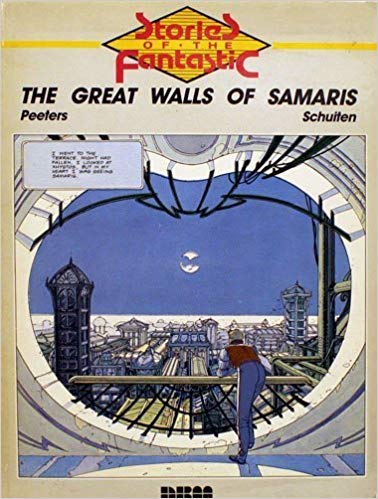
The Great Walls of Samaris


By Benoit Peeters &Francois Schuiten (NBM)
ISBN:978-0-918348-36-4

The European manner of graphic storytelling places great emphasis on mood and style, with a much larger range of interests and themes than the English language mainstream. It is also, perforce, staggeringly accomplished in its artistic visions.

This brief (48 page) album, the first in an occasional series entitled Cities of the Fantastic, tells the bleak, fantastic tale of Franz, a young civic official of the city state Xhystos, who accepts a diplomatic mission to assess the condition of sister city Samaris.

Located far, far away, there has been no communication with the walled metropolis for a decade and all agents dispatched there have vanished with trace. The grim, arduous journey, however, is as nothing compared to the beguiling mystery Franz uncovers when he finally reaches the incredible and seductive city…

Eerie and paranoid, with architecture and design the most important characters in the tale, The Great Walls of Samaris presents a wholly believable world of familiarity and alienation, underscored with an almost Kafkaesque perversity. The aura of menace is palpable, but with only the merest hint of danger. Minds and souls are at risk here, not mere flesh and blood.

The astonishing artwork of Schuiten is entrancing, perfectly capturing – if not actually inventing – the creative anachronism of Steampunk, but with the glistening veneer of fin de siècle pomp and the foredoomed glitter of the Belle Époque concealing the bitter content with a sheen of fragile beauty.

This is an incredibly stylish, unforgettable visual experience and a damned fine classical horror story, too. Long overdue for revival and the proper respect it deserves, this is a book you’ll love if comics mean anything at all to you.
© 1984 Casterman, Paris-Tournai. All Rights Reserved. English translation ©1987 NBM.

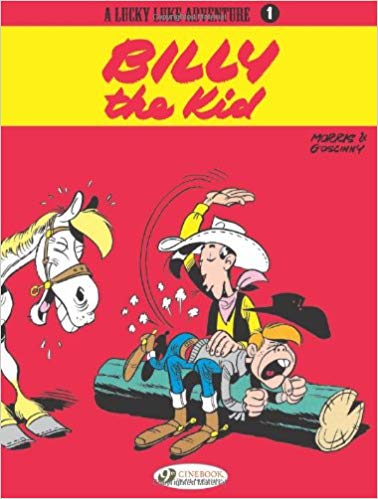
Lucky Luke volume 1: Billy the Kid


By Morris & Goscinny, translated by Luke Spear (CineBook)
ISBN: 978-1-905460-11-3

It’s hard to think of one of Europe’s most beloved and long-running comics characters being in any way controversial, but when the changing times caught up with the fastest gun in the West (“so fast he can outdraw his own shadow”) and the hero moved with them, it made the news headlines all over the world.

Lucky Luke is a rangy, laconic, good, natured cowboy endlessly roaming the fabulously mythic Old West, having light-hearted adventures with his whip-smart horse Jolly Jumper and Rantanplan (the “dumbest dog in the West” and a charming spoof of cinema canine Rin-Tin-Tin), interacting with a host of historical and legendary figures of the genre.

His continued exploits over more than 70 years have filled 95 albums to date and made him the best-selling comic character in Europe (countless millions of albums in more than 30 languages thus far), with spin-off games, computer games, animated cartoons and even live-action movies.

He was created by Belgian animator, illustrator and cartoonist Maurice de Bévère – who signed himself Morris – for the 1947 Annual (L’Almanach Spirou 1947) of Le Journal de Spirou, subsequently launching into his first adventure ‘Arizona 1880’ on December 7th 1946.

Before then, while working at the CBA (Compagnie Belge d’Actualitiés) cartoon studio, Morris met future comics super-stars Franquin and Peyo, and worked for weekly magazine Le Moustique as a caricaturist (to my eyes, Lucky looks uncannily like the young Robert Mitchum who graced so many mid-1940s B-movie Westerns).

Morris was one of “la Bande des quatre” or Gang of Four, which comprised creators Jijé, Will and old comrade Franquin: leading proponents of the loose and free-wheeling artistic style known as the “Marcinelle School” which dominated Spirou in aesthetic contention with the “Ligne Claire” style used by Hergé, E P. Jacobs and other artists in Le Journal de Tintin.

In 1948 the Gang (all but Will) visited America, meeting US creators and sightseeing. Morris stayed for six years, meeting René Goscinny, scoring some work from the newly-formed EC sensation, Mad, and making copious notes and sketches of the swiftly disappearing Old West. His research henceforward resonated on every page of his life’s work…

Morris was a one-man band producing nine albums worth of affectionate sagebrush parody until 1955 when he reunited with Goscinny who took over the scripts. Working in perfect unison, they steered Luke to dizzying heights of superstardom, commencing with Des rails sur la Prairie (Rails on the Prairie), which began in Spirou on August 25th 1955.

In 1967 the straight-shooter switched teams, leaving Spirou for Goscinny’s magazine Pilote with La Diligence (the Stagecoach).

Goscinny produced 45 albums with Morris before his death, from when Morris continued both alone and with other collaborators. Morris died in 2001 having drawn fully 70 yarns, plus spin-off adventures of Rantanplan, with the team of Achdé & Laurent Gerra taking over. In a most peculiar aside I feel I must mention that Morris was apparently voted the “79th Greatest Belgian” in the 2005 Walloon election of De Grootste Belg. If so, I demand a recount…

Lucky Luke first appeared in Britain in the early 1960s, syndicated in weekly comic Film Fun and again in 1967 in Giggle where he was renamed Buck Bingo. In all these venues as well as the numerous attempts to follow the English-language successes of Tintin and Asterix albums from Brockhampton and Knight Books, Luke had a trademark cigarette hanging insouciantly from his lip, but in 1983 Morris – no doubt amidst both pained howls and muted mutterings of “political correctness gone mad” – substituted a piece of straw for the much-traveled dog-end, which garnered him an official tip of the hat from the World Health Organization.

The most successful attempt to bring Lucky Luke to our shores and shelves comes from Cinebook: the first album (available in paperback and eBook formats) is Billy the Kid, Morris and Goscinny’s eleventh collaboration.

As Luke rides into the troubled town of Fort Weakling, he finds the populace cowed and broken by the vile depredations of the infamous William Bonney. The desperado robs the bank every couple of days, and the stagecoach every time it leaves town, helps himself to caramels without paying, and won’t let the saloon serve anything but drinking chocolate.

His deadly aptitude with a six-gun means that no one will swear out a complaint, let alone testify against the vicious little bully…

When Luke accepts the job of sheriff, it takes brains and cunning rather than his legendary skill with a shooting iron to free the town from the tiny grip of the world’s meanest 12-year old…

Although the dialogue is a trifle stiff in places, this is a grand old hoot in the tradition of Destry Rides again and Support Your Local Sheriff, superbly executed by master storytellers, and a wonderful introduction to a unique genre for kids of all ages.

And in case you’re worried, even though the interior art still has our hero chawin’ on that ol’ nicotine stick, trust me, there’s very little chance of anyone craving a quick snout, but quite a high probability that they’ll want more Lucky Luke Albums…
© Dargaud Editeur Paris 1971 by Goscinny & Morris. © Lucky Comics. English translation © Cinebook Ltd.

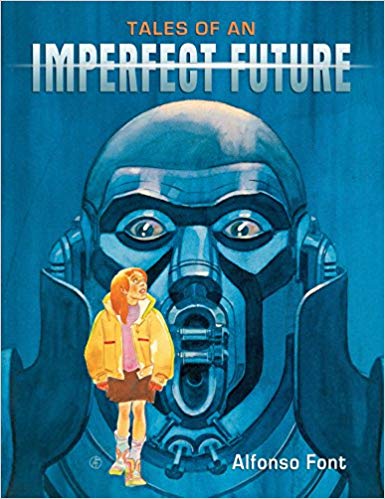
Tales of an Imperfect Future


By Alfonso Font (Dark Horse Books)
ISBN: 978-1-61655-494-1

As the end of March turgidly approaches and I confront the prospect of having my European citizenship stripped from me I’m feeling a mite confused, upset and just a bit passive aggressive (surprisingly that’s a term the Germans don’t have a word for…). Thus, I’m reliving a few of the best comics our Continental comrades have crafted and shared with the ungrateful Anglo-Saxon world…

Barcelona-born creator Alfonso Font Carrera was born on August 28th 1946. He studied Fine Arts and worked as an illustrator before slipping into comics in the 1960s with western tales in Hazañas del Oeste and Sioux for Ediciones Toray.

He quickly graduated to horror stories and historical crime dramas about infamous criminals for the Selecciones Illustradas Agency and, in 1970, began contributing material to British publisher Fleetway on strips such as Black Max in Thunder and Lion. Soon he gravitated to America with work for mature magazine publishers Warren and Skywald.

With writer Carlos Echevarría, he created ‘Géminis’ (AKA Phil Jackson) before moving to Paris in 1975 to work for major comics magazine Pif Gadget, devising ‘Sandberg, Père et Fils’ with Patrick Cothias and ‘Les Dossiers Mystère’ (written by Solet, and sharing art chores with Carlos Giménez and Adolfo Usero) as well as the Roger Lécureux-scripted ‘Les Robinsons de la Terre’.

From 1976-1982 he also freelanced for Scoop, Tousse Bourin and Super-As. Incensed by publishers reprinting his work without permission or payment, he became active in Creators Rights issues and worked with Giménez, Victor Mora and Usero as the “Workshop Premia” seeking to create a union for comics professionals.

In the mid-1980s, Font returned to Spain, contributing to new, home-grown publications like Cimoc, À Tope, and Circus whilst creating (with Mora) ‘Sylvestre’ and ‘Tequila Bang’.

For the Spanish iteration of 1984 he created signature sci fi gadabouts Clarke & Kubrick – who subsequently appeared in Cimoc and Rambla – and began a series of self-scripted, mordantly cynical, sardonic science fiction tales under the umbrella title ‘Cuentos de un futuro imperfecto’ which we see here as Tales of an Imperfect Future…

Seemingly never sleeping, Font went on to create parody-laced aviation hero ‘Frederico Mendelssohn Bartholdy’, ‘El Prisionero de las Estrellas’, and classical adventure serial ‘Jann Polynésia’ – which evolved into the iconic ‘John Rohner’ for Cimoc and ‘Carmen Bond’ for À Tope.

In 1987 he started a fruitful association with French publications Pilote and Charlie Mensuel with his series ‘Taxi’ and, after a brace of independent albums for Planeta publishers, revived John Rohner at Norma publishers.

Always occupied, he went on to create ‘Privado’ and medieval warrior ‘Bri D’Alban’ for Cimoc, whilst collaborating on cop series ‘Negras tormentas’ (‘Black Storms’) with writer Juan Antonio De Blas. Font even began occasionally illustrating Italy’s venerable western superstar Tex for Bonelli. In 1996, he returned to American pages with his erotic series ‘Dra, Dare’ for Penthouse Comix.

A major force in European graphic storytelling, Font has won numerous awards including The Grand Prize at Comic Barcelona and a Haxtur prize.

His artwork is loose, fluid, intricate and utterly electrifying: and Dark Horse’s translation of original European collection of Tales of an Imperfect Future into this stunning oversized (287x224mm) monochrome hardback edition is a sheer delight for fans of grittily fantastic fiction.

Any Brit who grew up reading the short complete sagas exemplified and perfected in 2000AD‘s Tharg’s Future Shocks, Pulp Sci-Fi or Tales from Beyond Science will be right at home – unless casual (human and robot) nudity is a problem…

Written and illustrated by Font throughout, the anthological nature of the tales is linked by the simple bridging device of a grotesque alien directly telling us that humanity is simultaneously a threat and embarrassment to the universe. No argument here, mate…

However, rather than go to the time and expense of eliminating us, the Great Powers are offering us one last chance to change our ways and, by way of inducement, have provided some stories taken from our most probable futures to illustrate just why we’re so much of a problem…

The hard science hagiography commences with ‘Tanatos-1 Comes Home’ as the smug hierarchal rulers of Earth gloat over the news that the AI super-weapon they created to destroy the alien fleets of Kloron has spectacularly succeeded.

As boffin Commander Grenh describes to the xenophobic top Bankers, Clerics and Military leaders how his programming compels the indestructible Tanatos-1 to unceasingly and implacably seek out all life in the universe and eradicate it, veteran General Alto Kervis asks himself why it has turned around and now nears Earth…

‘Rain’ introduces hard-working, long suffering blue-collar spacers Stanley Kubrick and Arthur C. Clarke, stuck on a sodden world, going slowly mad…

When the incessant deluge apparently causes a malfunction, hated computer Hal 2001 insists they go outside to fix the problem, but Stanley is convinced the useless metal martinet is trying to kill its human masters…

Barbed satirical humour gives way to barbarian fantasy in ‘Day of Glory’ as valiant John Smith battles devils and monsters to save his princess and his people. Tragically, the wonder warrior is in for disappointment and shock once he impossibly defeats the sinister Overlord of Klaarn…

Cracks appear in the foundations of the Military-Industrial complex when a vile capitalist proves to the government why the war they’re fighting must never end in ‘Stocks’, whilst

‘The Hunt’ prophetically takes the Hunger Games trope and ongoing war between “One-Percenters” and the rest of us to its logical conclusion…

Originally crafted in the mid-1980s, it follows two super-rich brats who stalk each other with lethal weapons through the dystopian wastelands inhabited by the poor. Of course, even when they’re killing each other for sport on a reality show, the oligarchs still find a way to bloodily exploit the despised discarded millions…

‘“Like a Plague”’ then offers an excoriating morality tale about our suicidal ecological irresponsibility before Stanley and Arthur return in ‘Cyberratic’.

Having finally escaped the rain-drenched hellhole and creepily disturbing electronic taskmaster, our unlikely heroes hit the Welcome Satellite for some R&R but stumble into a major mechanical malfunction on the totally-automated resort.

Luckily a small droid keeps pulling their fat out of the robotic fire, but you’d think such passionate machine-haters would stop for a moment to ask why and how their little saviour escaped the malfunction plague…

‘The Final Enemy’ affords a bleak glimpse at the thinking behind the soldiers who will fight in the final atomic Armageddon, whilst black humour informs a tale of Earth explorers who land on paradise and destroy it forever with ‘The Kiss’…

Similar silliness informs the trash-inundated post-apocalyptic world of ‘The Cleaner’ when humanity’s last survivors activate a miraculous device to get rid of the cause and effects of the pollution which destroyed the world…

Although meant as a comedic interlude, the next vignette sadly comes across as dated and just a touch homophobic by today’s elevated standards, detailing the shock and peril a solitary explorer endures when he discovers his government-mandated and supplied robotic sexual companion is not a “Betty” but an over-zealous ‘Valentino’…

Far more safe and salutary territory finds ‘Earth Control at Your Service, Sir’ addressing a version of the The Cold Equations quandary as two astronauts bringing an end to global famine realise that they won’t reach Earth if both men keep breathing the rapidly diminishing oxygen supply.

As they struggle to make an impossible decision, they have no inkling that the authorities on a starving world have their own ideas…

‘The Siege’ bloodily traces the rampage of a merciless murderous maniac as a fractured city endures police martial law and the ceaseless hunt for society’s greatest menace before the tormented tomorrows tumble to a close with a bleak sad tale of a doomed and dying spacer’s escape into fantasy and one last passionate rendezvous with beloved ‘Green Eyes’…

Scary, topically pointed, suspenseful and superbly intoxicating, Tales of an Imperfect Future offers a potent panoply of graphic pleasures for every lover of comics adventure and science fiction wonders from a master of art long overdue for fame in the English-speaking world.
Tales of an Imperfect Future © 2014 SAF Comics, www.safcomics.com. All rights reserved.

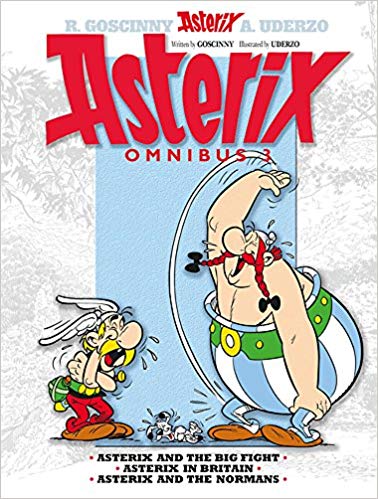
Asterix Omnibus volume 3: Asterix and the Big Fight; Asterix in Britain; Asterix and the Normans


By René Goscinny & Albert Uderzo, translated by Anthea Bell & Derek Hockridge (Orion)
ISBN: 978-1-44400-427-4 (HB)                    978-1-44400-475-5 (PB)

Asterix the Gaul is one of Europe’s – more specifically France’s – most exciting and rewarding contributions to global culture: a cunning little paragon of the underdog spirit who resists the iniquities, experiences the absurdities and observes the myriad wonders of Julius Caesar’s Roman Empire with brains, bravery and a magic potion bestowing incredible strength, speed and vitality. The savvy smarts are all his own…

One of the most-read comics in the world, his chronicles have been translated into more than 100 languages (including Latin and ancient Greek for educational purposes); with 14 live-action and animated movies, 55 board and video games and even into his own theme park (Parc Astérix, near Paris).

More than 370 million copies of 37 Asterix books have sold worldwide, making Goscinny & Uderzo France’s bestselling international authors.

The diminutive, doughty hero was created by two of the art-form’s greatest masters, René Goscinny & Albert Uderzo who were already masters of the form and at the peak of their creative powers. Although their perfect partnership ended in 1977 with the death of the terrifying prolific scripter Goscinny, the creative wonderment still continues – albeit at a slightly reduced rate of rapidity.

Asterix launched in 1959 in the very first issue of Pilote (with a teaser premiere page appearing a week earlier in a promotional issue #0). The feature was a massive hit from the start. Initially Uderzo continued working with Charlier on Michel Tanguy, (Les Aventures de Tanguy et Laverdure), but soon after the first epic escapade was collected as Astérix le gaulois in 1961, it became clear that the series would demand most of his time – especially as the incredible Goscinny never seemed to require rest or run out of ideas (after the writer’s death the publication rate dropped from two books per year to one volume every three to five).

By 1967 the strip occupied all Uderzo’s time and attention. In 1974 the partners formed Idéfix Studios to fully exploit their inimitable creation and when Goscinny passed away three years later Uderzo was, after much effort, convinced to continue the adventures as writer and artist, producing a further ten volumes.

Like all great literary classics, the premise works on two levels: younger readers enjoy an action-packed, lavishly illustrated comedic romp of sneaky, bullying baddies getting their just deserts whilst crustier readers enthuse over the dry, pun-filled, sly and witty satire, enhanced for English speakers by the brilliantly light and innovative touch of master translators Anthea Bell & Derek Hockridge who played no small part in making the indomitable Gaul so palatable to the Anglo-Saxon world.

The stories were set on the tip of Uderzo’s beloved Brittany coast in the year 50 BCE, where a small village of redoubtable warriors and their families resist all efforts of the Roman Empire to complete their conquest of Gaul. Unable to defeat these Horatian hold-outs, the Empire resorts to a policy of containment and the little seaside hamlet is perpetually hemmed in by the heavily fortified garrisons of Totorum, Aquarium, Laudanum and Compendium.

The Gauls don’t care: they daily defy the world’s greatest military machine by just going about their everyday affairs, protected by a magic potion provided by the resident druid and the shrewd wits of a rather diminutive dynamo and his simplistic best friend…

By the time Asterix and the Big Fight first ran in Pilote #261-302 in 1964 (originally entitled Le Combat des chefs or ‘The Battle of the Chiefs’) the feature was a fixture in millions of lives.

Here another Roman scheme to overwhelm the hirsute hold-outs begins when Totorum’s commander Centurion Nebulus Nimbus and his aide-de-camp Felonius Caucus try using an old Gaulish tradition to rid themselves of the rebels.

The Big Fight is a hand-to-hand duel between chiefs, with the winner becoming ruler of the loser’s tribe. All the Romans have to do is find a puppet, have him defeat fat, old Vitalstatistix and their perennial problem goes away for good. Luckily, just such a man is Cassius Ceramix: chief of Linoleum, a hulking brute and, most importantly, a keen lover of all things Roman…

Even such a cunning plan is doomed to failure whilst Vitalstatistix uses magic potion to increase his strength, but what if the Druid Getafix is taken out first?

When the Romans attempt to abduct the old mage, Obelix (who fell into a vat of potion as a baby and grew into a genial, permanently superhuman, eternally hungry goliath) accidentally bounces a large menhir off the druid’s bonce, causing amnesia and a touch of insanity…

Although not quite what they intended, the incapacitation of Getafix emboldens the plotters and the Gallo-Roman Ceramix’s challenge is quickly delivered and reluctantly accepted. With no magic potion, honour at stake and the entire village endangered, desperate measures are called for. Asterix and Obelix consult the unconventional sage (even for druids) Psychoanalytix – who specialises in mental disorders – and Vitalstatistix is forced to diet and begin hard physical training!

Unfortunately, when Obelix shows Psychoanalytix how Getafix sustained his injury the net result is two crazy druids, who promptly begin a bizarre bout of magical one-upmanship. As the crucial combat begins and Vitalstatistix valiantly battles his hulking, traitorous nemesis, Getafix accidentally cures himself, which is lucky as the treacherous Nebulus Nimbus and Felonius Caucus have no intention of losing and have perspicaciously brought along their much-abused Legions to crush the potion-less Gauls, should Ceramix let them down…

Manic and deviously cutting in its jibes at the psychiatric profession, this wildly slapstick romp is genuinely laugh-a-minute and one of the very best Goscinny tales.

Following the established pattern, after a “home” adventure our heroes went globe-trotting in their next exploit -although not very far…

Asterix in Britain originated in 1965 (Pilote#307-334) and followed Caesar’s conquest of our quirky country. It was never a fair fight: Britons always stopped in the afternoon for a cup of hot water and a dash of milk and never at the weekend, so those were the only times the Romans attacked…

Just so’s you know: by this time the Gallic wonders were already fairly well known on our foggy shores. The strips had been appearing in UK weekly anthology Valiant since November 1963, graduating to Ranger (1965-66) and Look & Learn (1966). Set in Britain circa 43 AD and entitled Little Fred and Big Ed, Little Fred, the Ancient Brit with Bags of Grit, Beric the Bold, Britons Never, Never, Never Shall Be Slaves! and In the Days of Good Queen Cleo. The first true Asterix album was subsequently released in 1969 by Brockhampton Press, with all names and locations just as we know them today.

After the conquest, in Cantium (Kent) one village of embattled Britons hold out against the invaders and they send Anticlimax to Gaul where his cousin Asterix has successfully resisted the Romans for absolutely ages. Always happy to oblige, the Gauls whip up a barrel of magic potion and the wily warrior and Obelix accompany Anticlimax on the return trip. Unfortunately, during a brief brouhaha with a Roman galley in the channel, the invaders discover the mission and begin a massive hunt for the rebels and their precious cargo…

As the trio make their perilous way to Cantium, the entire army of occupation is hard on their heels and it isn’t long before the barrel goes missing…

Simply stuffed with good natured jibes about British cooking, fog, the Tower of Londinium, warm beer, council estates, the still un-dug Channel tunnel, boozing, the Beatles (it was the swinging Sixties, after all), sport, fishing and our national beverage, this action-packed, wild frenetic chase yarn is possibly the funniest of all the Asterix books… if you’re British and possess our rather unique sense of humour, eh, wot…?

Asterix and the Normans debuted in Pilote #340-361 (1966) and showed how Vikings (who would eventually colonise parts of France as Northmen or “Normans”) first encountered our heroic Gauls and learned some valuable lessons…

The action opens with Chief Vitalstatistix reluctantly taking charge of his spoiled teenaged nephew Justforkix, intending to make a man of the flashy brat from Lutetia (Paris). The country girls go for his style and modern music (spoofing Elvis Presley in the original and the Rolling Stones in the English translation) and the lad’s glib tongue even convinces the Bard Cacofonix that his “unique” musical talent would be properly appreciated in the big city…

Meanwhile, a shipload of Vikings have fetched up on the beach, looking for the answer to a knotty question.

Rough, tough and fierce, the Scandinavians have no concept of fear, but since they have heard that the emotion can make people fly, they’re determined not to leave until they have experienced terror first hand…

They’ve met their match in the Gaulish villagers, but Justforkix is a different matter. The once-cool lad is a big ball of cowardy-custardness when confronted by the Normans, so the burly barbarians promptly snatch him, insisting he teach them all about that incomprehensible emotion…

Canny Asterix knows fighting Normans is a waste of time, but reasons the only way to get rid of them is to teach them what fear is like. If violence won’t work then what’s needed is something truly horrible… but Cacofonix and his assorted musical instruments are already on their way to fame and fortune in Lutetia. If only Obelix and Dogmatix can find him and save the day…

Daft and delicious, this superbly silly tale abounds with comedy combat and confusion; a perfect mix of gentle generational jibing and slaphappy slapstick with a twist ending to boot…

Outrageously fast-paced, funny and magnificently illustrated by a supreme artist at the very peak of his form, these historical high jinks cemented Asterix’s growing reputation as a world treasure and as these albums are available in a wealth of differing formats and editions – all readily available from a variety of retail and internet vendors or even your local charity shop – there’s no reason why should miss out on all the fun.

Asterix is sublime comics storytelling and if you’re still not au fait with these Village People you must be as Crazy as the Romans ever were…
© 1964-1965 Goscinny/Uderzo. Revised English translation © 2004 Hachette. All rights reserved.

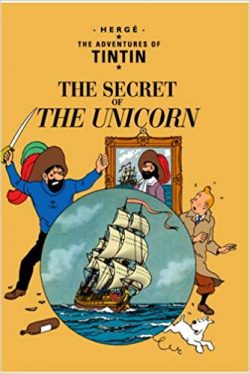
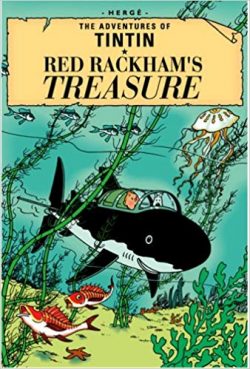
Adventures of Tintin: The Secret of the Unicorn and Red Rackham’s Treasure


By Hergé & various; translated by Leslie Lonsdale-Cooper & Michael Turner (Egmont)
ISBN: 978-1-40520-810-9 (HB Unicorn) 978-1-40520-622-8 (PB Unicorn)
ISBN: 978-1-40520-811-6 (HB Rackham) 978-1-40520-623-5 (PB Rackham)

Georges Prosper Remi – AKA Hergé – created a true masterpiece of graphic literature with his astounding yarns tales of a plucky boy reporter and his entourage of iconic associates. Singly, and later with assistants including Edgar P. Jacobs, Bob de Moor and the Hergé Studio, Remi completed 23 splendid volumes (originally produced in brief instalments for a variety of periodicals) that have grown beyond their popular culture roots and attained the status of High Art.

It’s only fair, though, to ascribe a substantial proportion of credit to the many translators whose diligent contributions have enabled the series to be understood and beloved in 38 languages. The subtle, canny, witty and slyly funny English versions are the work of Leslie Lonsdale-Cooper & Michael Turner.

On leaving school in 1925, Remi worked for Catholic newspaper Le Vingtiéme Siécle where he fell under the influence of its Svengali-like editor Abbot Norbert Wallez. The following year, the young artist – a passionate and dedicated boy scout produced his first series: The Adventures of Totor for monthly Boy Scouts of Belgium magazine.

By 1928 Remi was in charge of producing the contents of the parent paper’s children’s weekly supplement Le Petit Vingtiéme and unhappily illustrating The Adventures of Flup, Nénesse, Poussette and Cochonette when Abbot Wallez urged the artist to create an adventure series. Perhaps a young reporter who would travel the world, doing good whilst displaying solid Catholic values and virtues?

And also, perhaps, highlight and expose some the Faith’s greatest enemies and threats…?

Having recently discovered the word balloon in imported newspaper strips, Remi decided to incorporate this simple yet effective innovation into his own work. He would produce a strip both modernistic and action-packed.

Beginning in early January 1929, Tintin in the Land of the Soviets appeared in weekly instalments, running until May 8th 1930. Accompanied by his garrulous dog Milou (Snowy to us Brits), the clean-cut, no-nonsense boy-hero – a combination of Ideal Good Scout and Remi’s own brother Paul (a soldier in the Belgian Army) – would report back all the inequities of the world, since the strip’s prime conceit was that Tintin was an actual foreign correspondent for Le Petit Vingtiéme…

The odyssey was a huge success, assuring further – albeit less politically-charged and controversial – exploits to follow. At least that was the plan…

During the Nazi Occupation of Belgium, Le Petit Vingtiéme was closed down and Hergé was compelled to move the popular strip to the occupiers’ preferred daily newspaper Le Soir. He diligently continued producing stories for the duration, but in the period following Belgium’s liberation was accused of being a collaborator and even a Nazi sympathiser.

It took the intervention of Resistance hero Raymond Leblanc to dispel the cloud over Hergé, which he did by simply vouching for the cartoonist and by providing the cash to create a new magazine – Le Journal de Tintin – which Leblanc published and managed. The anthology comic swiftly achieved a weekly circulation in the hundreds of thousands.

These adventures come from the Golden Age of an iconic creator’s work. Despite being produced whilst Belgium was under the control of Nazi Occupation Forces during World War II, the qualitative leap in all aspects of Hergé’s creativity is potent and remarkable.

After his homeland fell to the invaders in 1940, Georges Remi’s brief military career was over. He was a reserve Lieutenant, working on The Land of Black Gold when called up, but the collapse of Belgium meant that he was back at his drawing board before year’s end, albeit working for a new paper on a brand-new adventure. He would not return to Black Gold, with its highly anti-fascistic subtext, until 1949.

Le Secret de La Licorne ran from June 11th 1942 to January 14th 1943: a rip-roaring adventure mystery of light-hearted, escapist thrills, to create a haven of delight from the daily horrors of everyday life. It and its continuation remain a legacy of joyous adventure to this day. It’s also the first co-created with cartoonist, journalist and full-time ghost writer Jacques Van Melkebeke (AKA George Jacquet) who silently collaborated on Blake & Mortimer, Hassan et Kaddour, Corentin, Les Farces de l’Empereur and many others.

On completion it was collected as a full-colour book in 1943, re-mastered in 1946 and serialised in French newspaper Coeurs Vaillants from Mach 19th 1944.

After the dramatic and fanciful far-fetched exploits of The Shooting Star, Hergé returned to less fantastical fare with The Secret of the Unicorn which begins as Tintin buys an antique model galleon at a street market. He intends presenting it to Captain Haddock, but even before he can pay for it an increasingly desperate number of people try to buy, and even steal it from him.

Resisting all efforts and entreaties, he tells his effulgent friend of the purchase, ‘though not that a minor accident has broken one of the masts. The Captain is flabbergasted to hear of the model! He has a portrait of his ancestor Sir Francis Haddock, painted in the reign of King Charles II, in which the exact same ship features!

On returning home Tintin finds the model has been stolen, but on visiting the first and most strident of the collectors who tried to buy it from him finds that the man already has an exact duplicate of the missing model.

After much hurly-burly Tintin and Haddock discover that Sir Francis was once a prisoner of infamous pirate Red Rackham, but escaped with the location of the villain’s treasure horde. Subsequently making three models of his vessel “The Unicorn”, the sea dog placed part of a map in each and gave them to his three sons…

Someone else obviously has divined the secret of the ships and that mysterious mastermind becomes ever more devious and ruthless in his attempts to obtain the complete map. Events come to a head when Tintin is kidnapped, which is a big mistake, as the intrepid lad brilliantly turns the tables on his abductors and solves the mystery. With the adventure suitably concluded, the volume ends with our heroes ready to embark on the no-doubt perilous voyage to recover Red Rackham’s Treasure…

For which we must turn to the next volume in this glorious repackaging of one of the World’s greatest comic strip treasures… Hergé’s Adventures of Tintin!
The Secret of the Unicorn: artwork © 1946, 1974 Editions Casterman, Paris & Tournai.
Text © 1959 Egmont UK Limited. All Rights Reserved.

The concluding tome of an epic saga, Le Trésor de Rackham le Rouge ran in Le Soir from February 9th to September 23rd 1943 and topped that thrilling mystery chase to secure three sections of a pirate map with a glorious all-out, all-action romp in search of the loot itself. During that period the artist met Edgar P. Jacobs, who became his assistant on the daily strip…

Tintin and Haddock are quietly assembling the requirements for their proposed treasure hunt. However, when a loose-lipped sailor is overheard by an enterprising reporter, the endeavour becomes a cause celebré with a horde of opportunists claiming descent from Red Rackham.

A more persistent but innocently intentioned distraction is a deaf and daffy Professor named Cuthbert Calculus who wants to use the expedition to test his new invention. He continually accosts Tintin and Haddock. Although his offer is rejected the Professor is not a man to be easily dissuaded. Mostly because he can’t hear the word “no” – or any others…

With the detectives Thompson and Thomson aboard (in case of criminal activity) the small team sets sail on their grand adventure…

This is a rich and absorbing yarn in the classic manner, full of exotic islands, nautical drama, mystery and travail, brilliantly timed comedy pieces and even a surprise ending. The restrictions of Belgium’s occupation necessitated Hergé’s curtailment of political commentary and satire in his work, but it apparently freed his Sense of Wonder to explore classic adventure themes with spectacular and memorable results. Although not the greatest of stand-alone Tintin tales, in conjunction with The Secret of the Unicorn this story becomes one of the best action sagas in the entire Hergé canon.

These ripping yarns for all ages are an unparalleled highpoint in the history of graphic narrative. Their unflagging popularity proves them to be a worthy addition to the list of world classics of literature, and stories you and your entire clan should know.
Red Rackham’s Treasure: artwork © 1945, 1973 Editions Casterman, Paris & Tournai.
Text © 1975 Egmont UK Limited. All Rights Reserved.

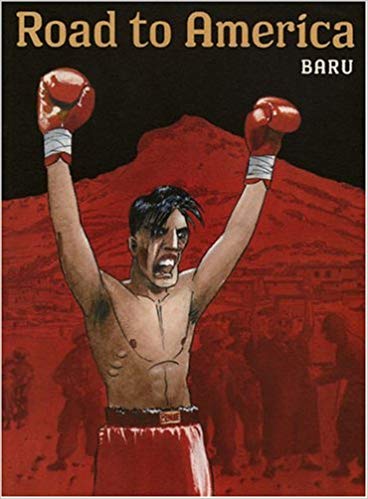
Road to America


By Baru, with colour by Daniel Ledran (Drawn & Quarterly Publications)
ISBN: 978-1-89659-752-2

We privileged ones live in a world where gratification – if not instant – is far from arduous to attain or hard to enjoy. For us the only struggle is choosing how best to indulge ourselves and, if you’re a comics nut like me, the biggest mystery in a hedonistic existence is why so many truly superb artistic efforts get sidelined or forgotten, when relative immortality is merely a matter of scanning and publishing/posting.

Here’s a lost treasure that proves my point. I’ve got this in its paperback form, but I’d happily pay again to get it digitally. That won’t feed one single starving kid, but reading it in a freely accessible form might inspire them…

Sport, despite being a world obsession, has oddly dropped out of the remit of most comics storytellers these days which is both odd and a shame. The Road to America, by Baru, uses the fervour of the immigrant’s dream and the fierce metaphor of struggle as depicted in the boxing ring to create a compelling tale of adversity against a true historical backdrop.

Set in Algeria in the 1950s – when the country was struggling to achieve independence from France – it’s the story of the bloody rise of impoverished street urchin, Said Boudiaf. Becoming a boxer, he literally smashes his way out of the slums to the glittering lights of Paris, even as his less utilisable brother turns to bombs and a more permanent form of bloodletting as a freedom fighter determined to overthrow French Colonial rule.

Said is an unstoppable force in the ring, and becomes a sporting hero, but in the real world he’s a leaf in the wind. Civilised, cultured (white) French citizens despise his ethnicity whilst capitalising on his achievements, and he’s regarded as a puppet by the Algerian resistance forces. Nevertheless, both sides want him for his propaganda value….

Said wants nothing more than personal freedom. His fights are non-political, as is all sport, but when his successes mount, and his unstoppable rise culminates in him winning the French Championship, politics claims him anyway as a race-riot between native Algerian and French spectators erupts in the stadium.

The tragic culmination occurs when Said makes it to America, and qualifies for the World title, but on returning to Paris to train for the bout he is sucked into the events of October 17th 1961 – the day when a protest march against anti-Algerian policies and heavy-handed police suppression leads to a bloody riot and a terrible massacre…

This beautifully executed tale is both blunt and subtle: weaving threads of ambition, morality, freedom, sacrifice and prejudice, both personal and social, into a compelling if sometimes chaotic narrative that is a joy to behold but often a bitter pill to swallow.

Doesn’t that sound like something we should all be reading in the current world climate?
© 2002 Baru. All rights reserved.

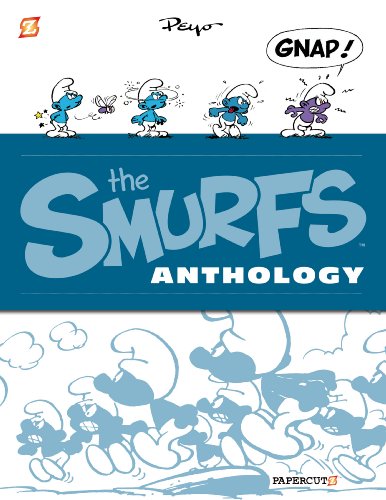
The Smurfs Anthology volume 1


By Yvan Delporte & Peyo, smurflated by Joe Johnson (Papercutz/NBM)
ISBN: 978-1-59707-417-9

Pierre Culliford was born in Belgium in 1928 to a family of British origin living in the Schaerbeek district of Brussels. An admirer of the works of Hergé and American comics in Mickey, Robinson and Hurrah!, he developed his own artistic skills but the war and family bereavement forced him to forgo further education and find work.

After toiling as a cinema projectionist, in 1945 the eager teen joined C.B.A. animation studios, where he met André Franquin, Morris and Eddy Paape. When the studio closed, Pierre briefly studied at the Brussels Academy of Fine Arts before moving full-time into graphic advertising.

In his off hours he began submitting comic strips to the burgeoning post-war comics publishers. His first sale was in April 1946: Pied-Tendre, a tale of American Indians in Riquet, the comics supplement to the daily L’Occident newspaper. Further sales to other venues followed and in 1952 his bold young knight Johan found a permanent spot in Le Journal de Spirou. Retitled Johan et Pirlouit – after the inclusion of a scene-stealing comedy foil – the strip prospered and, in 1958 introduced a strange bunch of blue woodland gnomes called Les Schtroumpfs.

Culliford – now using the childhood nom de plume Peyo – would gradually succumb to popular demand and turn those adorable little mites (known to us and most of the world as The Smurfs) into an all-encompassing global empire, but before being sucked onto that relentless treadmill, he still found time to create a few other noteworthy strips such as titanic tyke Benoît Brisefer (translated recently as Benny Breakiron), and also stuck with Johan until 1977 (13 albums-full) when the pressure of creating more Smurf stuff grew too much. Even then his son Thierry with artist Alain Maury revived the series, bring the count to 17 albums

Yvan Delporte (24th June 1928-5th March 2007) was a Belgian comics writer whose greatest gift was an invisible one. He was editor of Le Journal de Spirou between 1955 and 1968: shaping strips and creator’s during Europe’s golden age of excellence. One feature he did script was Peyo’s spin-off fantasy Les Schtroumpfs, and he also found a bit of time to write René Follet’s Steve Severin and co-create Franquin’s Gaston Lagaffe and Idées noires.

We English-speakers mostly have visions of the Smurfs fostered and shaped by the animated shows, films and toys, but the comics – although aimed at an all-ages audience – were packed with social commentary and sly satire that can still take the breath away if you’re a parent reared on anodyne censored US cartoon fodder.

Thanks to the efforts of US publisher Papercutz, those gloriously outrageous medieval masterworks are available to discerning fans, both as individual albums and in superb, anthologically robust, full-colour hardback (and eBook) compilations, kitted out and filled with little extras such historical essays and all presented in the original publication order Peyo dictated. A huge bonus as far as I’m concerned is the inclusion of original artwork and (French) covers of the period…

First album ‘The Purple Smurfs’ comes with a comprehensive Introduction by Smurfologist Matt. Murray explaining the tone of those distant times and how we post-PC patrons got here from original 1959 solo saga ‘Les Schtroumpfs noirs‘…

Full of fun, action, slapstick and frenetic thrills, the eponymous lead tale – by Delporte & Peyo; as are all the entries here – reveals how the idyllic hidden mushroom-styled village of the little blue folk falls to a rapidly-spreading plague. The horrific ailment is transmitted by irresistible biting and characterised by a radical shift in colouration and behaviour. Soon, only wise wizardly patriarch Papa Smurf is left to combat the Smurfie Apocalypse, and he’s running out of options…

Two shorter yarns follow as ‘The Flying Smurf’ finds one little slacker absconding from walnut-gathering duties to pursue ever more complex and obsessive ways to soar like a bird in the sky after which ‘The Smurfnapper’ finds archenemy sorcerer Gargamel and his cat Azrael hunting for the last crucial ingredient to create a Philosopher’s stone. It’s a Smurf, of course, but catching and keeping one of the little blue perishers are two entirely different things…

The second album is quite infamous in certain circles and very much a product of its era: one generation since WWII ended and right in the midst of escalating Cold War tensions. Following another Matt. Murray Introduction, discussing the heavy political and social implications of Le Schtroumpfissime, ‘The Smurf King’ details how, when Papa Smurf goes on an extended provisions hunt, his decision not to leave anyone in charge leads to rapid and radical political unrest. A half-assed and wholly inept attempt to elect a new boss goes typically awry until one bright spark realizes he can get others to vote for him by lying, making promises he can’t keep and applying heavy doses of flattery.

Soon, he’s living in a palace built by the suckers and indulging in all the perks of totalitarianism, but some Smurfs are muttering discontent and forming a rebel army…

Social satire gives way to surreal whimsy ‘The Smurfony’ then details the formation of an orchestra. One poor Smurf though has plenty of enthusiasm but no talent and his efforts make him extremely unwelcome… until Gargamel returns with soporific sound sorcery and only a bit of discord can save the day…

As previously stated, the Smurfs debuted in La Flûte à six trous, a 1958 tale of feudal comedy-adventurers Johan and Peewit. The little guys were phenomenally popular and reappeared many times before winning their own series, and when that finally happened the origin tale was rushed into album form as the third Schtroumpfs book release, suitably reimagined as La Flûte à six Schtroumpfs.

In ‘The Smurfs and the Magic Flute’ court jester Peewit – another would-be musician whose melodies induce pain and hysteria – gets hold of a flute with six holes that forces all who hear it to dance uncontrollably until they pass out. His pranks are disruptive enough but the instrument is then stolen by vile villain Matthew Oilycreep, who goes on a plundering spree, amassing stolen wealth to buy an army of mercenaries to take over the kingdom.

Young knight Johan and Peewit re at a loss to stop the usurper until they are approached by little blue men who tell them an incredible tale and invite them back to their mystical home.

They have all the answers and a plan but there’s no time to waste if disaster is to be avoided…

Wrapping up with ‘The Aftersmurf’ from Papercutz Smurf-in-Chief Jim Salicrup, this stunning collection of fun and fantasy is a magnificent example of all-ages comics wonderment no serious aficionado could do without.

Go on, You Smurf you want to…
© Peyoâ„¢ 2013 – licensed through Lafig Belgium. English translation © 2013 by Papercutz. All rights reserved.

Philip K. Dick – A Comics Biography


By Laurent Queyssi & Mauro Marchesi, translated by Edward Gauvin (NBM)
ISBN: 978-1-68112-170-3

Publisher NBM expand their fabulous line of European-created dramatized graphic biographies with this latest gem originally released as PHIL: Une vie de Philip K. Dick.

This compelling luxury hardcover (also available in digital formats) investigates one of the most intriguing characters of the 20th century: a man who could arguably be thought of as the John the Baptist of modern existential civilisation and a futurist seer of human interaction and competition.

Philip Kindred Dick (16th December 1928 – 2nd March 1982) explored political, social and philosophical themes through science fiction stories created during the most innovative period of the genre’s entire history. Despite personal feelings of failure, his genre work -incorporating and predicting monopolistic corporate capitalism, alternate realities, the blurry edges of artificial intelligence and altered states of consciousness – changed the way the world thinks and provided road maps for how we meat-minds think in an increasingly digital age.

However, as this superb graphic treatise shows, although he was driven to excel in its creation, he had no respect for his own “non-literary” canon and never realised he was the right man at just the right time…

Dick was demon-driven, charismatic, paranoid, inspired, drug-and-approval dependent, a serial lothario and usually deeply unhappy. Hardly a likable or even sympathetic character -even as seen through the lens of author, screenwriter and translator Laurent Queyssi (Neurotwistin’, Allison, Blackline) who clearly adores his subject’s oeuvre – this is nevertheless an incredibly enticing peek into the world of the legend, deftly and seductively pieced together in moving morsels of emotional highs and lows.

Much of the success must be attributed to artist, illustrator and educator Mauro Marchesi (enerazione M, Magico Mondiale, Mamba) whose graceful, understated art beguiles the reader every step of the way. I’m loathe to froth – or use made-up words I haven’t actually coined myself – but this book was literally unputdownable. I started late on the night my review copy arrived, intending to scan the opening and get a feel for it, and the next thing I know it’s 02:30 and I’m wondering why the house is so dark and quiet…

Accompanied by an adroit and incisive Postscript from the author and a fulsome Biography, this is another visual masterpiece honouring a major force in the history and culture of our complex world, and one you should track down as soon as you can, if not sooner …
© Blue Lotus Prod. Paris, 2017 by Goetzinger. © 2018 NBM for the English translation.

Philip K. Dick – A Comics Biography is scheduled for release January 30th, 2019 and is available for pre-order now.
For more information and other great reads go to NBM Publishing.

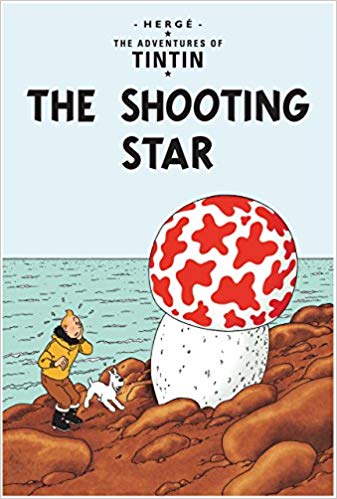
Adventures of Tintin: The Shooting Star


By Hergé & various; translated by Leslie Lonsdale-Cooper & Michael Turner (Egmont)
ISBN: 978-1-40520-621-1 (PB)

Georges Prosper Remi – AKA Hergé – created a true masterpiece of graphic literature with his astounding yarns tales of a plucky boy reporter and his entourage of iconic associates. Singly, and later with assistants including Edgar P. Jacobs, Bob de Moor and the Hergé Studio, Remi completed 23 splendid volumes (originally produced in brief instalments for a variety of periodicals) that have grown beyond their popular culture roots and attained the status of High Art.

It’s only fair, though, to ascribe a substantial proportion of credit to the many translators whose diligent contributions have enabled the series to be understood and beloved in 38 languages. The subtle, canny, witty and slyly funny English versions are the work of Leslie Lonsdale-Cooper & Michael Turner.

On leaving school in 1925, Remi worked for Catholic newspaper Le Vingtiéme Siécle where he fell under the influence of its Svengali-like editor Abbot Norbert Wallez. The following year, the young artist – a passionate and dedicated boy scout – produced his first series: The Adventures of Totor for monthly Boy Scouts of Belgium magazine.

By 1928 Remi was in charge of producing the contents of the parent paper’s children’s weekly supplement Le Petit Vingtiéme and unhappily illustrating The Adventures of Flup, Nénesse, Poussette and Cochonette when Abbot Wallez urged the artist to create an adventure series. Perhaps a young reporter who would travel the world, doing good whilst displaying solid Catholic values and virtues?

And also, perhaps, highlight and expose some the Faith’s greatest enemies and threats…?

Having recently discovered the word balloon in imported newspaper strips, Remi decided to incorporate this simple yet effective innovation into his own work. He would produce a strip both modernistic and action-packed.

Beginning January 10th 1929, Tintin in the Land of the Soviets appeared in weekly instalments, running until May 8th 1930.

Accompanied by his garrulous dog Milou (Snowy to us Brits), the clean-cut, no-nonsense boy-hero – a combination of Ideal Good Scout and Remi’s own brother Paul (a soldier in the Belgian Army) – would report back all the inequities of the world, since the strip’s prime conceit was that Tintin was an actual foreign correspondent for Le Petit Vingtiéme…

The odyssey was a huge success, assuring further – albeit less politically-charged and controversial – exploits to follow. At least that was the plan…

During the Nazi Occupation of Belgium, Le Petit Vingtiéme was closed down and Hergé was compelled to move the popular strip to the occupiers’ preferred daily newspaper Le Soir. He diligently continued producing strips for the duration, but in the period following Belgium’s liberation was accused of being a collaborator and even a Nazi sympathiser.

It took the intervention of Resistance hero Raymond Leblanc to dispel the cloud over Hergé, which he did by simply vouching for the cartoonist and by providing the cash to create a new magazine – Le Journal de Tintin – which Leblanc published and managed. The anthology comic swiftly achieved a weekly circulation in the hundreds of thousands.

With this tale we enter the Golden Age of an iconic creator’s work. Despite being produced whilst Belgium was under the control of Nazi Occupation Forces during World War II, the qualitative leap in all aspects of Hergé’s creativity is potent and remarkable.

After his homeland fell to the invaders in 1940, Georges Remi’s brief military career was over. He was a reserve Lieutenant, working on The Land of Black Gold when called up, but the swift fall of Belgium meant that he was back at his drawing board before year’s end, albeit working for a new paper on a brand-new adventure. He would not return to the unfinished Black Gold, with its highly anti-fascistic subtext, until 1949.

L’Étoile mystérieuse ran in Le Soir (the little nation’s premiere French-language newspaper and a crucial tool for the Germans to control minds, if not hearts) from October 20th 1941 to May 21st 1942: the second of six extraordinary tales of light-hearted, escapist thrills, blending strong plots and deep characterisation to create a haven of delight from the daily horrors of everyday life then and remain a legacy of joyous adventure to this day.

On completion it was collected as a full-colour book in 1942 and later serialised in French newspaper Coeurs Vaillants (from June 6th 1943). It was among a flurry of reissues of earlier albums – all but Tintin in America and The Black Island, both set in countries Germany was still at war with…

In 1954 it was remastered by Studio Hergé, to remove certain anti-Semitic and anti-American passages and imagery he had been forced to include by the paper’s controllers, and comes to us as a stunning piece of apocalyptic, sci-fi flavoured adventure…

The remastered edition of The Shooting Star was one of the first tales re-issued after World War II, due no doubt to its relatively escapist plot… it’s practically an old-fashioned pulp thriller.

It begins with the world gripped in terror as a fiery meteor is detected hurtling towards Earth. The end times are narrowly averted only by the sheerest chance, as the heavenly body narrowly misses our frail planet, although when a relatively small chunk breaks off, scientists find that it contains an unknown metal of immense potential value. And so begins a fantastic race to find and claim the fallen meteorite…

A party of European scientists charters the survey ship “Aurora”, with boozy stalwart Captain Haddock commanding and Tintin aboard as official Press representative. Frantically sailing north to the Pole, they discover that they are in competition with the unscrupulous forces of the evil capitalists of the Bohlwinkel Bank, whose rival expedition uses every dirty trick imaginable to sabotage or delay the scientists.

After a truly Herculean effort and by sheer dint of willpower – not to say spectacular bravery – Tintin is the first to claim their floating prize and successfully defends it from the villainous Bohlwinkel crew, but the fallen star itself is a far greater menace, as its mysterious and exotic composition induces monstrous gigantism in earthly organisms. Tintin and Snowy must survive assaults by mutated insects and plants before the breathtaking conclusion of this splendid tale.

Manifestly as the world experienced a new Dark Age, Hergé was concentrating on the next -Golden – one…

These ripping yarns for all ages are an unparalleled highpoint in the history of graphic narrative. Their unflagging popularity proves them to be a worthy addition to the list of world classics of literature, and stories you and your entire clan should know.
The Shooting Star: artwork © 1946, 1974 Editions Casterman, Paris & Tournai. Text © 1961 Egmont UK Limited. All rights reserved.

Spirou and Fantasia volume 1: Adventure Down Under


By Tome & Janry, translated by Jerome Saincantin (Cinebook)
ISBN: 978-1-84918-011-5

For most English-speaking comic fans and collectors Le Journal de Spirou is probably Europe’s biggest secret. The character is a rough contemporary – and bald commercial response – to Hergé’s iconic superstar Tintin, whilst the comic he has headlined for decades is only beaten in sheer longevity and creativity by our own Beano and Dandy.

First conceived at Belgian Printing House by Jean Dupuis in 1936, a magazine targeting a juvenile audience debuted on April 21st 1938 (three and a bit months before DC Thomson’s Beano, but still beaten by The Dandy which launched on December 4th 1937). It was edited by Charles Dupuis (a mere tadpole, only 19 years old himself) and took its name from the lead feature, which recounted the improbable adventures of a plucky bellboy/lift operator employed by the Moustique Hotel: a reference to the publisher’s leading magazine, Le Moustique.

With his pet squirrel, Spip (who joined the cast on June 8th 1939; he’s the longest running character in the strip after Spirou himself, so happy 80th anniversary, little dude!) the plucky kid was the idea of French artist Robert Velter, who signed himself Rob-Vel.

A Dutch language edition – Robbedoes – debuted a few weeks later and ran more-or-less in tandem with the French parent comic until it’s cancellation in 2005.

Although some home-grown product crept in, the bulk of the comic was taken up with cheap American reprint imports: Red Ryder by Fred Harman, William Ritt & Clarence Gray’s Brick Bradford and Siegel & Shuster’s landmark creation Superman. Most prominent were ‘Tif et Tondu’ by Fernand Dineur (which ran until the1990s) and ‘L’Epervier Blue’ by Sirius (Max Mayeu), and they were soon supplemented by comic-strip wunderkind Joseph Gillain – “Jije”. During World War II Jije legendarily drew the entire comic by himself, continuations of the banned US imports included, as well as assuming production of the Spirou strip where he created the current co-star Fantasio.

Except for a brief period when the Nazis closed the comic down (September 1943 to October 1944 when the Allies liberated Belgium) Spirou and its boyish star – now a globe-trotting reporter – have continued their weekly exploits in unbroken four-colour glory.

Among the other myriad major features that began within those pages are ‘Jean Valhardi’ (Jean Doisy & Jije), ‘Blondin et Cirage’ (Victor Hubinon), Buck Danny, ‘Jerry Spring’, ‘Les Schtroumpfs’ (AKA the Smurfs), Gaston Lagaffe (here seen as Gomer Goof) and a certain laconic cowboy named Lucky Luke.

Spirou the character (the name translates as both “squirrel” and “mischievous”) has starred in the magazine for most of its life, evolving – under a succession of creators – into a simultaneously urbane yet raucous fantasy/adventure hero with the accent heavily on light humour.

With comrade and rival Fantasio and crackpot inventor the Count of Champignac, Spirou travels to exotic places, uncovering crimes, revealing the fantastic and garnering a coterie of exotic arch-enemies.

During the War, when Velter went off to fight, his wife Blanche Dumoulin took over the strip using the name Davine, assisted by Luc Lafnet. Dupuis assumed control of and rights to the strip in 1943, assigning it to Jije who handed it to his assistant André Franquin in 1946. It was the start of a golden age.

Among Franquin’s innovations were villains Zorglub and Zantafio, Champignac and one of the first strong female characters in European comics, rival journalist Seccotine (renamed Cellophine in this current English translation), but his greatest creation – one he retained on his departure in 1969 – was the incredible magic animal Marsupilami (first seen in Spirou et les héritiers in 1952). The little perisher is now a star of screen, plush toy store, console and albums all his own.

From 1959 writer Greg and background artist Jidéhem assisted Franquin, but by 1969 the artist had reached his Spirou limit and resigned, taking his mystic yellow monkey with him. He was succeeded by Jean-Claude Fournier who updated the feature over the course of nine stirring adventures that tapped into the rebellious, relevant zeitgeist of the times with tales of environmental concern, nuclear energy, drug cartels and repressive regimes.

As the series entered the 1980s Spirou seemed to stall: three discrete creative teams alternated on the serial: Raoul Cauvin & Nic Broca, Yves Chaland and the creators of the graphic novel under review here: Philippe Vandevelde writing as Tome and artist Jean-Richard Geurts AKA Janry.

These last adapted and referenced the beloved Franquin era and revived the feature’s fortunes, producing 14 wonderful albums between 1984 and 1998. This one, Spirou et Fantasio 34 – Aventure en Australie from 1985, was their second.

Since their departure Lewis Trondheim, and the teams of Jean-Davide Morvan & Jose-Luis Munuera and Yoann & Vehlmann, have brought the official album count to 55 (there also are a bunch of specials, spin-offs and one-shots, official and otherwise)…

Without further ado we plunge straight into the bizarre, treasure-hunting drama as dire doings Down Under segue into Spirou and Fantasio arriving home exhausted from their latest assignment. They are intercepted by Cellophine at the airport: odd things are occurring in the depths of the Outback and the always-newsworthy Count of Champignac is right at the heart of it. Instantly awake again, all three jet out to Australia where nefarious deeds are occurring at the desolate Albuh Opal Mine.

The crazy inventor is there on the verge of a fabulous and incredible discovery far more precious than jewels, but the ruthless miners don’t seem that impressed, although they are worried by disappearing diggers, inexplicable accidents, men driven crazy and, if some observers are to be believed, levitating aborigines…

This classy blend of thrilling mystery, weird science, light adventure and broad slapstick remains a pure refreshing joy in a market far too full of adults-only carnage and testosterone-fuelled breast-beating. Easily accessible to readers of all ages drawn with all the welcoming style and panache that makes Asterix, Lucky Luke and Iznogoud so compelling and readily available in both paperback album and eBook formats, this is a cracking read and the start of a long line of translated epics that should be as much a household name as those series – and even Tintin himself…
Original edition © Dupuis, 1985 by Tome & Janry. All rights reserved. English translation 2009 © Cinebook Ltd.