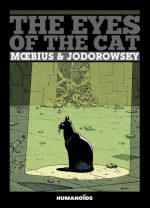

The Eyes of the Cat


By Moebius & Jodorowsky (Humanoids)
ISBN: 978-1-59465-032-1                  978-1594650420 (Yellow Edition)

Some of the world’s greatest comics exponents are cruelly neglected these days. It’s not because they are out of vogue or forgotten, it’s simply that so much of their greatest material lies temporarily out of print. This little gem is one of the few exceptions…

Born in Tocopilla, Chile in 1929, Alejandro Jodorowsky Prullansky is a filmmaker, playwright, actor, author, world traveller, philosopher, spiritual guru and comics writer.

The modern polymath is most widely known for such films as Fando y Lis, El Topo, The Holy Mountain, Sante Sangre, The Rainbow Thief, The Dance of Reality and others, plus a vast and influential comics output, including Anibal 5 (created whilst living in Mexico), Le Lama blanc, Aliot, The Meta-Barons, Borgia, Madwoman of the Sacred Heart and so many more, created with some of South America and Europe’s greatest artists.

His decade-long collaboration with Moebius on the Tarot-inspired adventure The Incal (1981-1989) completely redefined and reinvented what comics could aspire to and achieve.

Most widely regarded for his violently surreal avant-garde films, loaded with highly-charged, inspired imagery – blending mysticism and what he terms “religious provocation” – and his spiritually-informed fantasy and science fiction comics tales, Jodorowsky is also fascinated by humanity’s inner realms and has devised his own doctrine of therapeutic healing: Psychomagic, Psychogenealogy and Initiatic massage.

He still remains fully engaged and active in all these creative areas to this day.

He has never stopped creating and most of his lifelong themes and obsessions are seamlessly wedded together in this glorious re-release of his first comics collaboration with the creator most inextricably associated with him.

Jean Henri Gaston Giraud was born in the suburbs of Paris on May 8th 1938 and raised by his grandparents after his mother and father divorced in 1941.

In 1955, he attended the Institut des Arts Appliqués where he became friends with Jean-Claude Mézières who, at 17, was already selling strips and illustrations to magazines such as Coeurs Valliants, Fripounet et Marisette and Spirou. Giraud apparently spent most of his college time drawing cowboy comics and left after a year.

In 1956 he travelled to Mexico, staying with his mother for eight months, before returning to France and a full-time career drawing comics, mostly westerns such as Frank et Jeremie for Far West and King of the Buffalo, A Giant with the Hurons and others for Coeurs Valliants in a style based on French comics legend Joseph Gillain AKA “Jijé”.

Giraud spent his National Service in Algeria in 1959-1960, where he worked on military service magazine 5/5 Forces Françaises and on returning to civilian life became Jijé’s assistant in 1961, working on the master’s long-running (1954-1977) Western epic Jerry Spring.

A year later, Giraud and Belgian writer Jean-Michel Charlier launched the serial Fort Navajo in Pilote #210, and soon its disreputable, anti-hero lead character Lieutenant Blueberry became one of the most popular European strips of modern times. In 1963-1964, Giraud produced a number of strips for satire periodical Hara-Kiri and, keen to distinguish and separate the material from his serious day job, first coined his pen-name “Moebius”.

He didn’t use it again until 1975 when he joined Bernard Farkas, Jean-Pierre Dionnet and Philippe Druillet – all inspired science fiction fans – as the founders of a revolution in narrative graphic arts created by “Les Humanoides Associes”. Their groundbreaking adult fantasy magazine Métal Hurlant utterly enraptured the comics-buying public and Giraud again wanted to utilise a discreet creative persona for the lyrical, experimental, soul-searching material he was increasingly driven to produce: series such as The Airtight Garage, The Incal and the mystical, dreamy flights of sheer fantasy contained in Arzach…

To further separate his creative twins, Giraud worked inks with a brush whilst the futurist Moebius rendered with pens…

After a truly stellar career which saw him become a household name, both Giraud and Moebius passed away in March 2012.

As explained in Jodorowsky’s Foreword, this magnificently macabre minimalist monument to imagination came about as brief tale in a free, promotional premium “Mistral Edition” of Métal Hurlant constituted their very first collaboration – outside the creative furnace that was the pre-production phase of the aborted movie Dune where they first met (also included in that imaginative dream-team was Dan O’Bannon, Douglas Trumbull, H.R. Giger and Chris Foss) and secrets of that time are also shared here).

Les Yeux du chat was realised between 1977 and 1979: a dark fable that is sheer beauty and pure nightmare, rendered in stark monochrome and florid expansive grey-tones. Text is spartan and understated: more poetic goad than descriptive excess or expositional in-filling.

There’s a city, a boy at a window, an eagle and a cat. When their lives intersect, shock and horror are the result…

Available in a number of formats since 2011, this is a visual masterpiece no connoisseur of comics can afford to miss.
© 2013 Humanoids, Inc. All rights reserved.
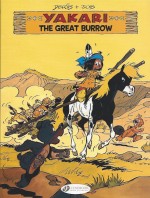
Yakari and the Great Burrow


By Derib & Job, coloured by Dominque and translated by Jerome Saincantin (Cinebook)
ISBN: 978-1-84918-272-0

Children’s magazine Le Crapaud à lunettes was founded in 1964 by Swiss journalist André Jobin who then wrote for it under the pseudonym Job. Three years later he hired fellow French-Swiss artist Claude de Ribaupierre who chose the working name “Derib”. He had begun his own career as an assistant at Studio Peyo (home of Les Schtroumpfs), working on Smurfs strips for venerable weekly Spirou. Together they created the splendid Adventures of the Owl Pythagore before striking pure comics gold a couple of years later with their next collaboration.

Launching in 1969, Yakari detailed the life of a young Sioux boy on the Great Plains; sometime after the introduction of horses by the Conquistadores and before the coming of the modern White Man.

Overflowing with gentle whimsy, the beguiling strip explores a sublimely bucolic existence at one with nature and generally free from strife. For the sake of our entertainment however the seasons are punctuated with the odd crisis, generally resolved without fame or fanfare by a little lad who is smart, compassionate, brave… and can converse with all animals…

Derib – equally excellent in both enticing, comically dynamic “Marcinelle” cartoon style yarns and with devastatingly compelling meta-realistic action illustrated action epics – went on to become one of the Continent’s most prolific and revered creators. It’s a crime that such groundbreaking strips as Celui-qui-est-né-deux-fois, Jo (the first comic on AIDS ever published), Pour toi, Sandra and La Grande Saga Indienne) haven’t been translated into English yet, but we wait in hope and anticipation…

Many of his stunning works over the decades feature his beloved Western themes, magnificent geographical backdrops and epic landscapes and Yakari is considered by most fans and critics to be the feature which catapulted him to deserved mega-stardom.

Originally released in 1984, Le Grand Terrier was the tenth European album and recently became Cinebook’s lucky 13th, but chronology and continuity addicts won’t suffer unless they are of a superstitious turn of mind since this tale is both stunningly simple and effectively timeless; offering certain enjoyment from a minimum of foreknowledge…

It all begins one bright sunny morning as the boy brave boldly follows a succession of strange arrows in the grass: a unique trail designed to lure him into a cunning mystery.

Riding four-legged friend Little Thunder, Yakari treks far across the prairie but only finds a taunting voice challenging him to return tomorrow if he thinks he’s a “real Sioux”…

The next day, as he enters a wooded area he’s pelted with little stones and furiously chases two bear cubs into a deep tunnel in the earth. It’s merely the start of a vast network of tunnels and dead-ends: an underground maze which seems to promise a slow doom. Lost and despondent, when things look their very bleakest, Yakari learns the truth when his animal friends Linden Tree the beaver, Black Mask the raccoon and little bears Huckle and Berry erupt into the subterranean chamber. The fun-loving youngsters have turned an old hibernation hole into a terrific den for adventures and prank-playing…

With Yakari a willing partner, the assorted cubs then collaborate to drive the bears’ parents crazy. It works far too well, however, and when the ponderous hairy heavyweights collide in a frenzy of frustrated pursuit, their terrific impact shakes the earth and collapses the kids’ escape tunnels…

Bolting sunwards in panic, the youngsters head for the surface… but only three of them make it…

Now it’s a frantic race against time as Yakari assembles all his beastly buddies in a mammoth rescue attempt before time and air run out…

Always visually spectacular, seductively smart and happily heart-warming, Job’s smart yet spartan script again affords Derib a splendid opportunity to go wild with the illustrations; crating a momentous, claustrophobic scenario which only makes the eventual happy ending even more unlikely until it actually happens…

The exploits of this valiant little voyager who speaks to animals and enjoys a unique place in an exotic world is a decades-long celebration of joyously gentle, marvellously moving and enticingly entertaining adventure, honouring and eulogising an iconic culture with grace, wit, wonder and especially humour.

These seductive sagas are true landmarks of comics and Yakari is a strip no fan of graphic entertainment should ignore.
Original edition © 1984 Derib + Job – Editions du Lombard (Dargaud- Lombard s.a.) English translation 2015 © Cinebook Ltd.

Iznogoud’s Fairy Tale


By Goscinny & Tabary, translated by Jerome Saincantin (Cinebook)
ISBN: 978-1-84918-260-7

For the greater part of his far-too-short lifetime René Goscinny (1926-1977) was one of the world’s most prolific and widely-read writers of comic strips.

He still is.

Amongst his most popular and enduring comic collaborations are Lucky Luke, Le Petit Nicolas, Signor Spaghetti and, of course, Asterix the Gaul, but there were so many others, such as the despicably dark deeds of a dastardly usurper whose dreams of diabolical domination perpetually proved to be ultimately no more than castles in the sand…

In the rueful aftermath of the Suez crisis, the French returned – by way of comics, at least – to the hotly contested Arabian deserts as Goscinny teamed with hugely gifted Swedish émigré Jean Tabary (1930-2011) – who numbered Richard et Charlie, Grabadu et Gabaliouchtou, Totoche, Corinne et Jeannot and Valentin le Vagabond amongst his other hit strips – to deliriously detail the innocuous history of imbecilic Arabian (im)potentate Haroun el-Poussah.

However, as is so often the case, it was the strip’s villainous foil – power-hungry vizier Iznogoud – who stole the show… possibly the conniving little blackguard’s only successful coup.

The first kernel of inspiration came as a piece of background shtick in early 1960s kids’ cartoon book Les Vacances du Petit Nicholas (which we all saw as Nicholas on Holiday). A fuller formation and development came with Les Aventures du Calife Haroun el Poussah, created for Record: debuting in the January 15th issue of 1962.

A petite hit, the feature subsequently jumped ship to Pilote – a new comic created and edited by Goscinny – where it was artfully refashioned into a starring vehicle for the unpleasant little upstart who had been hogging all the laughs and limelight.

The Vile Vizier went from strength to strength. According to the brief introduction in this volume, the unwieldy catchphrase “I want to be Caliph instead of the Caliph!” quickly became part of casual French idiom and, in October 1974, the wee rascal won his own socio-political commentary column in newspaper Journal du Dimanche.

Insidious Iznogoud is Grand Vizier to Haroun Al Plassid, the affable, easy-going Caliph of Ancient Baghdad, but the sneaky little second-in-command has loftier ambitions, or as he is always declaiming “I want to be…”

The retooled rapscallion resurfaced in Pilote in 1968, quickly becoming a massive hit, resulting in 29 albums to date (17 by dream team Goscinny & Tabary), his own solo comic, a computer game, animated film, TV cartoon show and even a live-action movie.

Like all great storytelling, Iznogoud works on two levels: for youngsters it’s a comedic romp with adorably wicked baddies invariably hoisted on their own petards and coming a-cropper, whilst older, wiser heads can revel in pun-filled, witty satires and superbly surreal antics.

Following Goscinny’s death in 1977, Tabary began scripting tales, switching to book-length complete adventures rather than the short, snappy vignettes which typified his collaborations. Upon his own passing, Tabary’s children Stéphane, Muriel and Nicolas took over the franchise.

The deliciously malicious whimsy is resplendent in its manic absurdity, cleverly contemporary cultural critiques, brilliantly delivered creative anachronisms and fourth-wall busting outrages which serve to keep the assorted escapades bizarrely fresh and hilariously inventive.

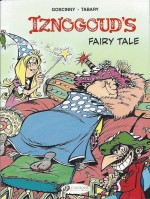
Le conte de fée d’Iznogoud (Iznogoud’s Fairy Tale) was originally released in 1976; wracking up an even dozen deliciously daft album compilations, and proffering a potent remarkable quartet of trend-setting tales with our ambitious autocrat as ever scheming to seize power from his good but gullible Lord and Master.

Following the aforementioned Introduction and a preface page reintroducing our constant cast, the merry madness kicks off with ‘Fairy Tale’ as extremely inept Fairy Godmother Blunderbell – in search of an impoverished princess to assist – lands instead in the truculent toad’s lap.

Once she’s convinced him that even if her spells don’t go exactly to plan, the recipient of her magic experiences astounding transformations, it’s not long before she’s gulled into making him the Caliph instead of the Caliph.

…At least that was the plan: have we mentioned that Blunderbell’s not the most accurate spell-caster in the world?

Mystic mayhem also abounds in ‘Mirror Image’ as, on the eve of the ten-yearly vote to reaffirm the Caliph as supreme ruler, Iznogoud is accosted by Al Hiss the Genie from the other side of his looking glass. The fantastic land is completely the same as but exactly reversed from home, and Iznogoud’s shenanigans actually succeed in fixing this election. However although the little schemer actually ousts the Caliph, he has forgotten one crucial factor…

Newly arrive tradesman Tremolo has a strong line in enchanted furnishings. After an astonishingly annoying bout of window shopping the Vizier and his foolish flunky Wa’at Alahf take possession of a fearsomely final divan of despatch dubbed ‘The Send-Away Bed’…

Whoever lies in it vanishes forever, but thanks to visiting dignitaries and the world’s worst case of coffee-nerves, the machinations needed to get the normally sleep-loving Caliph to try it out are doomed to failure… as is Iznogoud…

All the rules and much of the internal logic are thrown away for the closing, epic length saga of ‘The Magic Minarets’ as the strips disgruntled fans rise up in revolt, demanding a proper resolution to the Vizier’s schemes.

What they actually get is a madcap metaphysical odyssey as Iznogoud is sucked into a fantastic realm where he must competitively quest for ten wizardly ideals whilst his moral fibre is tested. The prize for success is the granting of his greatest desire…

However, even after cheating his way to victory, fate has a way of upsetting his game…

Such convoluted witty, fast-paced hi-jinks and craftily crafted comedy set pieces have made this addictive series a household name in France where “Iznogoud” is also common parlance for a certain kind of politician: over-ambitious, unscrupulous – and frequently insufficient in inches (or should that be centimetres?).

Desiring to become “Caliph in the Caliph’s place” is a popular condemnation in French, targeting those perceived as overly-ambitious, and, since 1992 the Prix Iznogoud is awarded annually to “a personality who failed to take the Caliph’s place”.

Nominees are chosen from prominent French figures who have endured spectacular defeats in any one year and been given to the likes of Édouard Balladur (1995) and Nicolas Sarkozy (1999). The jury panel is headed by politician André Santini, who gave himself one after failing to become president of Île-de-France in regional elections in 2004.

When first released in Britain during the late 1970s and 1980s (and latterly in 1996 as a periodical comicbook) these tales made little impression on British audiences, but at last this wonderfully beguiling strip has deservedly found an appreciative audience among today’s more internationally aware, politically jaded comics-and-cartoon savvy connoisseurs…
Original edition © 2012 IMAV éditions by Goscinny & Tabary. All rights reserved. English translation © 2015 Cinebook Ltd.

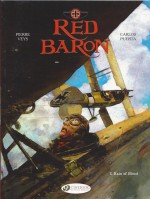
Red Baron volume 2: Rain of Blood


By Pierre Veys & Carlos Puerta, translated by Mark Bence (Cinebook)
ISBN: 978-1-84918-211-9

The sublimely illustrated, chillingly conceived fictionalised re-imagination of legendary German Air Ace Manfred von Richthofen continues in stunningly scary form with this second no-nonsense instalment from Pierre Veys & Carlos Puerta. Baron rouge: Pluie de sang debuted Continentally in 2013 and here resumes its fascinating, faux-autobiographic course as notionally described by the titular flier…

Scripted with great style and Spartan simplicity by prolific bande dessinée writer Pierre Veys (Achille Talon, Adamson, Baker Street, Boule et Bill, les Chevaliers du Fiel), the drama is stunningly illustrated by advertising artist and veteran comics painter Carlos Puerta (Los Archivos de Hazel Loch, Aeróstatas, Tierra de Nadie, Eustaquio, Les Contes de la Perdition) in a staggeringly potent photo-realistic style.

In the first volume we saw how young military student Manfred discovered he had an uncanny psychic gift: when endangered he could read his opponents intentions and counteract every attack. Immediate peril seemed to trigger his gift and he subsequently tested the theory by heading for the worst part of town to provoke the peasants and rabble. He never questioned how or why the savage exercise of brutal violence – especially killing – made him feel indescribably happy…

As a cavalry officer when the Great War began, Manfred found further proof of his talent when he casually acted on a vague impulse and avoided a lethal shelling from a threat he could neither see nor anticipate…

He could never convince his only friend Willy of this strange gift, even after he transferred to the Fliegertruppen (Imperial German Flying Corps) as gunner in a two-man reconnaissance craft …

The saga recommences here as Von Richthofen barely survives his first taste of sky-borne dogfighting and instantly resolves to learn how to fly. Never again will he trust his life to someone else’s piloting skills…

Sadly he is far from a natural pilot and only hard work and persistence allow him to qualify as a flier. Even after his first kill, he still can’t stop his elite comrades laughing at his pitiful landings…

Things begin to change after he modifies his two-man Albatross C.111 so that he can fire in the direction of his flight rather than just behind or to the sides. Now a self-propelled machine-gun, Von Richthofen takes to the skies and scores a delicious hit on a hapless British pilot…

Days later his joy increases when Willy is assigned to his squadron.

Sharing the spoils of occupation life, Von Richthofen relates his earliest war exploits as a cavalryman pushing east into Russia. A grisly escapade with a single Uhlan against a company of Cossacks is again greeted with tolerant disbelief and Willy is only mildly surprised by the callous indifference Manfred displays when recalling how he hanged some monks whilst moving through Belgium to the Western Front.

The affronted boaster is determined to prove his powers are real. The opportunity comes when they come across enlisted men indulging in a boxing match. Lieutenant Von Richthofen orders them to let him join in: facing down hulking brute Stoph, who was German national champion before hostilities started.

As Willy watches his slightly-built school chum easily avoid every lethal blow before slowly and methodically taking his opponent apart, he finally believes. He also begins to fear…

To Be Concluded…

A sharp mix of shocking beauty and distressingly visceral violence, Rain of Blood blends epic combat action with grimly beguiling suspense. The idea of the semi-mythical knight of the clouds as a psychic psycho-killer is not one many purists will be happy with, but the exercise is executed with mesmerising veracity and Puerta’s illustration is both astoundingly authentic and gloriously enthralling.

A decidedly different combat concoction: one jaded war lovers should definitely try.
Original edition © Zephyr Editions 2012 by Veys & Puerta. All rights reserved. English translation 2014 © Cinebook Ltd.

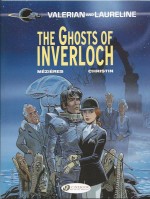
Valerian and Laureline volume 11: the Ghosts of Inverloch


By Méziéres & Christin, with colours by E. Tranlé; translated by Jerome Saincantin (Cinebook)
ISBN: 978-1-84918-263-8

Valérian: Spatio-Temporal Agent debuted in weekly Pilote #420 (9th November 1967) and was an instant smash-hit. The feature soon became Valérian and Laureline as his feisty distaff sidekick quickly developed into an equal partner – if not scene-stealing star – through a string of fabulously fantastical, winningly sly and light-hearted time-travelling, space-warping romps.

Packed with cunningly satirical humanist action, challenging philosophy and astute political commentary, the stellar yarns struck a chord with the public and especially other creators who have been swiping, “homaging” and riffing off the series ever since.

Initially Valerian was an affably capable yet unimaginatively by-the-book space cop tasked with protecting the official universal chronology (at least as it affects humankind) by counteracting and correcting paradoxes caused by incautious time-travellers.

When he travelled to 11th century France in debut tale Les Mauvais Rêves (Bad Dreams and still not yet translated into English), he was rescued from doom by a tempestuously formidable young woman named Laureline whom he had no choice but to bring back with him to Galaxity: the 28th century super-citadel and administrative capital of the Terran Empire.

The indomitable female firebrand crash-trained as an operative and accompanied him on subsequent missions – a beguiling succession of breezy, space-warping, social conscience-building epics. This so-sophisticated series always had room to propound a satirical, liberal ideology and agenda (best summed up as “why can’t we all just get along?”), constantly launching telling fusillades of commentary-by-example to underpin an astounding cascade of visually appealing, visionary space operas.

This eleventh Cinebook translation – beginning another multi-album epic – is especially significant. Each Valérian adventure was first serialised in Pilote before being collected in book editions, but after this adventure – which concluded in The Rage of Hypsis (January 1st – September 1st 1985) the publishing world shifted gears. From the next tale and every one thereafter, the mind-bending sagas were released as all-new graphic novels. The switch in dissemination affected all popular French comics characters and almost spelled the end of periodical comics publication on the continent…

(One clarifying note: in the canon, “Hypsis” is counted as the twelfth tale, due to the collected albums being numbered from The City of Shifting Waters: the second actual story but the first to be compiled in book form. When Bad Dreams was finally released as a European album in 1983, it was given the number #0.)

Les Spectres d’Inverloch originally appeared in then-monthly Pilote (#M110-117, spanning July 1983 to February 1984) and opens here as Laureline enjoys the comforts of a palatial manor in Scotland, somewhere at the tail end of the 20th century. Unflappable dowager Lady Charlotte is the most gracious host and is happy to share all the benefits of life in Clan McCullough, even though her young charge can’t help but wonder why she has to cool her heels with the old biddy in this odd time and place…

Once again the Spatio-Temporal partners-in-peril are separated by eons and light years. Valerian is at the other end of everything: impatiently stuck on water-world Glapum’t, trying to capture a hulking aquatic beast who easily defies his every stratagem. Finally, once brute, force, commando tactics and super-science have all proved ineffectual, the frustrated agent tries bribery. Naturally, the tasty morsels he offers are heavily drugged…

However, as he carries the second phase of his orders, a real problem crops up. Valerian can’t establish contact with Galaxity…

Far ago and elsewhere, London is enduring a paralysing wave of industrial actions. The strikes are particularly galling to volubly affable, infuriatingly unrushed and always tardy Mr. Albert. Galaxity’s 20th century information gatherer/sleeper operative is trying to get to Scotland, but wonders if he’s ever going to get out of the English capital…

On far-flung Rubanis, dictatorial secret police chief Colonel Tlocq is having a duel of wits with the engagingly ruthless data-brokers known as the Shingouz. Naturally, the spymaster is utterly outmanoeuvred by the devious little reptiles who gleefully take off with the secret they required. All-in-all, they are rather enjoying working for Earth…

Way back in West Virginia, Lady Charlotte’s husband Lord Seal is consulting with the CIA. The dapper Briton is a past master of “tradecraft” and remains unperturbed even after reviewing the terrifying situation facing both the Communist Bloc and Free World. Something is making all persons in charge of nuclear weapons – politicians and military alike – go mad. There have been numerous near-misses and even a couple of swiftly hushed-up actual disasters on both sides of the Iron Curtain. Moreover, the Americans have got hold of strange little devices used to cause the insanity. Somebody is deliberately trying to spark atomic Armageddon…

Only the veteran spy’s swift actions prevent the entire assembly going the same way, when a concealed insanity-gadget goes off during their top-secret meeting…

As Seal jets off home, the scene switches to Galaxity. The super-city, impregnable bastion of human dominance, is deserted. Only its supreme master remains, and as the fortress and Terran empire start dissolving into nothingness he makes a desperate jump into time…

On a clear autumn afternoon, Lady Charlotte and Laureline are enjoying the view from Castle Inverloch’s rear windows when the immaculate, lovingly-manicured-for-centuries lawns are wrecked by the crash-landing of a Shingouz shuttle. Naturally, the visitors are granted every gracious vestige of hospitality, even after Lord Seal arrives in flamboyantly bombastic fashion and sees his beloved grass…

Aplomb and grace under pressure alone cannot account for the elderly couple’s acceptance, and when Albert pops in and Valerian shows up – much to the detriment of what remains of the lawns – it becomes clear that the elderly gentry know much more about the workings of the universe than everybody else in this century…

Even the previously-captive Glapumtian – who likes to be called “Ralph” – has a part to play in the baffling, pre-ordained proceedings.

What exactly that means starts to become clear after Lord and Lady Seal introduce their outré guests to the legendary ghost of Inverloch. Valerian usually just calls him “boss”…

Soon the Spatio-Temporal Agents are being made painfully aware of a monumental threat to the universe which has already unmade the events leading to the birth of Galaxity and the Terran Empire and which now poses a threat to all that is…

To Be Concluded…

Smart, subtle, complex and frequently hilarious, this sharp trans-time tale beguilingly lays the groundwork for an epic escapade. This is one of the most memorable romps Méziéres & Christin ever concocted, and heralded the start of a whole new way to enjoy the future…
© Dargaud Paris, 1983 Christin, Méziéres & Tran-Lệ. All rights reserved. English translation © 2016 Cinebook Ltd.

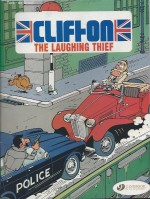
Clifton volume 2: The Laughing Thief


By De Groot & Turk, translated by Luke Spear (Cinebook)
ISBN: 978-1-905460-07-4

For some inexplicable reason most of Europe’s comics cognoscenti – most especially the French and Belgians – seem fascinated with us Brits. Maybe it’s our shared heritage of Empires lost and cultures in transition? An earlier age would have claimed it’s simply a case of “Know your Enemy”…

Whether we look at Anglo air ace Biggles, indomitable adventurers Blake and Mortimer, the Machiavellian machinations of Green Manor or even the further travails of Long John Silver, the serried stalwarts of our Scepter’d Isles cut a dashing swathe through the pages of the Continent’s assorted magazines and albums.

And then there’s Clifton…

Originally devised by child-friendly strip genius Raymond Macherot (Chaminou, Les croquillards, Chlorophylle, Sibylline) for iconic Tintin Magazine, the doughty True Brit troubleshooter first appeared in December 1959. After three albums worth of material – compiled and released between 1959 and 1960 – Macherot left Tintin for arch-rival Spirou and his eccentric comedy crime-fighter sadly floundered until Tintin brought him back at the height of the Swinging London scene, courtesy of Jo-El Azaza & Greg (Michel Régnier).

These strips were subsequently collected as Les lutins diaboliques in French and De duivelse dwergen for Dutch-speakers in 1969.

Then it was back into retirement until the early 1970s when writer Bob De Groot and illustrator Philippe “Turk” Liegeois revived Clifton for the long haul, producing ten tales of which this – Le voleur qui rit – Clifton from 1973 – was their second collaboration.

Thereafter, from 1984 on, artist Bernard Dumont – AKA Bédu – limned De Groot’s scripts before eventually assuming the writing chores as well, until the series ended in 1995. In keeping with its rather haphazard nature and typically undying nature, the Clifton experience resumed once again in 2003, crafted by De Groot and Michel Rodrigue in four further adventures; a grand total of 25 to date.

The setup is deliciously simple: pompous and irascible Colonel Sir Harold Wilberforce Clifton, ex-RAF, former Metropolitan police Constabulary and recently retired from MI5, has a great deal of difficulty dealing with being put out to pasture in rural Puddington. He thus takes every opportunity to get back in the saddle, occasionally assisting the Government or needy individuals as an amateur sleuth.

Sadly for Clifton – as with that other much-underappreciated national treasure Captain Mainwaring in Dad’s Army – he is too keenly aware that he is usually the only truly competent man in a world full of blithering idiots…

In this second translated album – first seen in 2005 – the Gentleman Detective is embroiled in not one but two uncanny incidences, beginning with eponymous epic ‘The Laughing Thief’ wherein the still much-missed lawman rather forcefully inserts himself into a current case baffling Scotland Yard.

London is being wracked by devilishly clever crimes executed with infallible precision by a crack crew of blaggers, but the profits of each caper seem far below what such expert criminals should be bothering with. Moreover, each perfectly executed heist is preceded by a telephone warning from a braying braggart with the most annoying and distinctive laugh imaginable…

The crooks are incredibly bold and arrogant. Even after Clifton intervenes in the second robbery, the scoundrels easily outwit him, leave the dapper sleuth unconscious with dozens of other peculiarly proud and strangely supportive victims…

Moreover, although police “higher-ups” welcome Clifton’s help, officer-in-charge Lieutenant Hardfeeling doesn’t want the show-stealer around and is doing all he can to impede the Colonel’s investigations, despite the protests of his senior colleagues and the bobbies on the beat…

Nevertheless, persistence is its own reward, and when Clifton finally deduces the true reasons for the publicity-seeking crime-spree the resultant confrontation is both spectacularly satisfying and hilariously rewarding…

Being British and an ex-spy, Clifton has hung on to the odd gadget or two, such as an amazingly tricked out umbrella which plays a major part in this volume’s second tale ‘The Mystery of the Running Voice’. A suspenseful spooky yarn, it begins when the unhappy retiree meets old comrade Donald McDonald Muckyduck, who appears to have worn out every vestige of verve and is on the verge of a nervous breakdown…

Close consultation reveals that the former police Inspector is being haunted by a robber ghost; one that has already claimed six victims. However upon viewing the crime scene photos Clifton gains an inkling into how the trick is done and temporarily moves to bucolic village Flatfish-on-Apron, setting himself up as bait for a diabolical genius with a penchant for clever gimmicks…

Visually spoofing Swinging Sixties London and staidly stuffy English Manners with wicked effect, these gentle thrillers are big on laughs but also pack a lot of consequence-free action into their eclectic mix. Delightfully surreal, instantly accessible and doused with daft slapstick à la Jacques Tati and intrigue like Margaret Rutherford as Miss Marple, this brace of romps rattle along in the grand old tradition of Will Hay, Terry-Thomas and Alistair Sim – or Wallace and Gromit if you’re a callow yoof – offering readers a splendid treat and loads of timeless laughs.
Original edition © 1973 Le Lombard (Dargaud-Lombard S. A.) 1988 by De Groot & Turk. English translation © 2005 Cinebook Ltd.

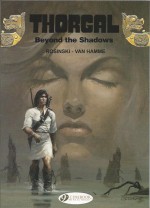
Thorgal volume 3: Beyond the Shadows


By Rosiński & Van Hamme, translated by Luke Spear (Cinebook)
ISBN: 978-1-905460-45-8

One of the best and most celebrated adventure series of all time, Thorgal achieves the seemingly impossible, pleasing critics and selling in vast quantities. The prototypical Game of Thrones debuted in iconic weekly Tintin in 1977 with album compilations beginning three years later.

A far-reaching and expansive generational saga, it has won a monolithic international following in fourteen languages and dozens of countries, generating numerous spin-off series, and thus naturally offers a strong presence in the field of global gaming.

In story-terms, the series offers the best of all weird worlds with an ostensibly historical milieu of bold Viking adventure seamlessly incorporating science fiction elements, horrendous beasts, social satire, political intrigue, soap opera, Atlantean mystique and mythically mystical literary standbys such as gods, monsters and devils.

Created by Belgian writer Jean Van Hamme (Domino, XIII, Largo Winch, Blake and Mortimer) and Polish illustrator Grzegorz Rosiński (Kapitan Żbik, Pilot Śmigłowca, Hans, The Revenge of Count Skarbek), the feature grew unstoppably over decades with the creative duo completing 29 albums between 1980 and 2006 when Van Hamme moved on. Thereafter the scripting duties fell to Yves Sente who has collaborated on a further five collections to date.

By the time Van Hamme departed, the canon had grown to cover not only the life of the titular hero and his son Jolan but also other indomitable family members through a number of spin-off series (Kriss de Valnor, Louve, La Jeunesse de Thorgal) under the umbrella title Les Mondes de Thorgal – with all eventually winning their own series of solo albums.

In 1985 American publisher Donning released a superb series of oversized hardcover book translations but Thorgal never really found an English-speaking audience until Cinebook began its own iteration in 2007.

The original French series wanders back and forth through the hero’s life but here, for the present, continuity reigns as Cinebook’s this third double-album edition (comprising 5th & 6th collections Au-delà des ombres and La Chute de Brek Zarith from 1983 and 1984 respectively) leads directly on from the last book wherein Thorgal Aegirsson lost everything that made him human…

The hero was recovered as a baby from a ferocious storm and raised by Northern Viking chief Leif Haraldson. Nobody could possibly know the fortunate foundling had survived a stellar incident which destroyed a starship full of super-scientific aliens. Growing to manhood, the strange boy was eventually forced out of his adopted land by ambitious Gandalf the Mad who feared the young warrior threatened his own claim to the throne.

For all his childhood Thorgal had been inseparable from Gandalf’s daughter Aaricia and, as soon as they were able, they fled together from the poisonous atmosphere to live free from her father’s lethal jealousy and obsessive terror of losing his throne…

Some time later, they were enjoying the hard but gratifying life of simple peasants in a village of serfs. Thorgal was a happy, industrious farm-worker, with solid dependable friends and a wife mere weeks away from birthing her first child. The only problem in their idyllic life was the obsessive love headman’s teenage daughter Shaniah had developed for the glamorous Viking…

Her lies at a harvest feast resulted in Thorgal being implicated in a plot against the land’s overlord Shardar the Powerful, King of Brek Zarith. A suspect inquisition saw Thorgal humiliate arrogant, decadent Prince Veronar. Shardar’s forces were actually in the region seeking information on the whereabouts of fugitive rebel Galathorn, and Thorgal was sentenced to join other captives at the oars. Even here, his indomitable spirit made enemies amongst the slave-masters and new friends of his fellow captives…

Sometime later turncoat Jarl Ewing tried to recruit the Viking to his cause – seizing Shardar’s throne. Veronar overheard and sentenced both warriors to a painful death but as sentence was being carried out their Black Galley was attacked by a small fleet of Viking drakkars (raiding ships). In the chaos Thorgal escaped, freed the oar slaves and dealt permanently with Veronar…

The raiders were old friends. Thorgal reunited with hulking Jorund the Bull and learned that Gandalf had died. His banishment ended, the exile was invited to return home with the Northern Vikings, but refused. All he needed was Aaricia and his coming child.

However, when he reached the village all he found was ash, corpses and Jarl Ewing. The traitor had hired mercenaries to await Thorgal’s return, intending to use Aaricia as a hostage to ensure her husband’s cooperation. She chose death and drowned herself, refusing to be a weapon aimed at her man’s heart…

The debacle sparked a disaster. The mercenaries went wild and pillaged the hamlet, but after taking his revenge Thorgal was left bereft and broken…

The saga resumes a year later in ‘Beyond the Shadows’ as gaunt shaman Wargan wanders into a vile tavern in a sordid settlement in search of noble warrior Thorgal Aegirsson. He quickly stirs up a hornet’s nest of trouble amongst the brutal warriors polluting the hamlet.

After a macabre magical death and violent chase, the wizard drags a stinking, shambling shell-shocked derelict and a sad, over-protective girl named Shaniah to a strange plain of bizarre stone structures where they meet the rebel Galathorn. The Prince still wants to reclaim Brek Zarith from Shardar, but for that he needs Thorgal restored to vital, vibrant humanity…

The task is simpler than the plotters expected. When the Viking hears that Aaricia still lives, his wits return instantly, and when he further learns that she is dying he instantly agrees to travel into the Second World and beyond to save her. The epic path leads to duels with supernatural creatures, a reunion with a notionally friendly goddess and confrontation with the one who weaves life’s threads and cuts them. Although Thorgal convinces the uncanny reaper to restore his beloved wife to health and vigour, there is a frightful cost…

The chilling and spectacular odyssey through the underworld is followed by a far darker and more visceral adventure in ‘The Fall of Brek Zarith’ as deranged potentate Shardar hunkers down in his lavish but unassailable coastal citadel.

When he’s not playfully slaughtering his obsequious, treacherous barons, Shardar spends all his time with Aaricia and her son Jolan. His mages have divined incredible power within the boy and the aging usurper wants it.

He doesn’t seem to care that Galathorn and Thorgal have raised a rebel army which has taken back almost the entire country, nor that their ally Jorund the Bull is leading a fleet of forty berserker-packed drakkars against the sea coast, fuelled with the promise of first pick of Brek Zarith’s treasure vaults…

With the Vikings in clear sight and Galathorn’s forces a day away, Shardar seems remarkably unperturbed. A partial answer to his sanguine mood comes after his soldiers and wizards unleash a devastating secret weapon which routs Jorund’s ships…

Smugly content, the madman resumes his attempts to turn Aaricia to his cause. His courtiers descend into a mad bacchanal that night and are blissfully unaware that a lone scout has penetrated the impregnable keep. Nothing could keep Thorgal away with his wife and son so close and in such peril…

What the warrior finds stuns him: proof positive that Shardar is completely insane or, worse yet, utterly evil beyond human comprehension…

What follows is an astounding battle of wills as the warrior relentlessly pursues the diabolical dictators, escaping an unceasing barrage of deadly traps and devilish devices. However, what neither hunter nor prey is prepared for is the uncanny power of seeming-innocent Jolan or the ferocious devotion of his traumatised, single-minded mother…

Fierce, fantastic and phenomenally gripping, this magnificently illustrated, astonishingly addictive tale offers a multitude of enchanting wonders. Thorgal is every fantasy fan’s ideal dream of unending adventure. How can you possibly resist?
Original editions © Rosiński & Van Hamme 1983-1984 Les Editions du Lombard (Dargaud- Lombard). English translation © 2007 Cinebook Ltd.

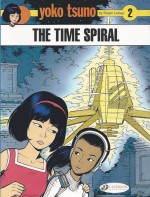
Yoko Tsuno Volume 2: The Time Spiral


By Roger Leloup translated by Luke Spear (Cinebook)
ISBN: 978-1-905460-43-4

Arch-adventuress and scientific investigator Yoko Tsuno debuted in Spirou in September 1970 and is still going strong. As detailed by Roger Leloup, the astounding, all-action, uncannily edgy, excessively accessible exploits of the slim, slight Japanese techno-hero are amongst the most intoxicating, absorbing and broad-ranging comics thrillers ever created.

Leloup’s brainchild is an expansively globe-girdling, space-&-time-spanning series devised by the monumentally talented Belgian maestro after finishing his time as a studio assistant on Herge’s The Adventures of Tintin. Compellingly told, superbly imaginative but always solidly grounded in hyper-realistic settings underpinned by authentic, unshakably believable technology and scientific principles, his illustrated epics were the forefront of a wave of strips changing the face of European comics in the mid-1970s.

They all featured competent, clever and brave female protagonists, revolutionising Continental comics and they are as timelessly engaging and potently empowering now as they ever were.

The very first stories ‘Hold-up en hi-fi’, ‘La belle et la bête’ and ‘Cap 351’ were brief introductory – and possibly beta-testing – vignettes before the superbly capable Miss Tsuno and her valiant but less able male comrades Pol Paris and Vic Van Steen properly hit their stride with premier full-length saga Le trio de l’étrange which began in Spirou‘s May 13th 1971 issue…

In the original European serialisations, Yoko’s exploits alternated between explosive escapades in exotic corners of our world and sinister deep-space sagas with the secretive, disaster-prone alien colonists from Vinea but, for the majority of the English translations thus far, the extraterrestrial endeavours have been mostly sidelined in favour of epically intriguing Earthly exploits. That changes with this particular tale as a new thematic strand of classic sci fi endeavour is convincingly introduced…

There have been 27 European albums to date and this one was first serialised in 1980 (Spirou #2189-2210 before being released the following year as compellingly gripping thriller album La Spirale du temps. It was chronologically the 11th album, yet due to the quirks of publishing reached us Brits as Yoko’s second Cinebook outing, offering enigma and mystery and three shots of global Armageddon…

Yoko is visiting a cousin and enjoying old childhood haunts in Borneo, with Vic and Pol along for the ride and – as ever – scouting film footage for another of their documentary projects. As the boys take to the skies in a helicopter their companion is befriending elephants and exploring an ancient, ramshackle and beloved temple. She is particularly taken with the bas-relief of a beautiful dancer on the wall of the crumbling edifice which has fascinated her since her earliest years…

This night, however, her bucolic routine is shattered by a strange sequence of events. Staying out later than usual, Yoko observes a bizarre machine appear out of thin air near the temple. As a young girl steps out of the contraption she is barracked by two men, one of whom then shoots her.

Instantly Yoko intervenes but when she decks the shooter he vanishes in an explosive swirl of light. Incredible explanations follow as the girl introduces herself as Monya, a time traveller from the 39th century. It’s hard to believe but she does have a gadget which closes and repairs her wound in seconds…

Monya has come back in time to prevent a scientific experiment currently running in the area which will result in Earth’s destruction in her era. In fact, the voyager from 3872 saw her father die and the planet turn to a cinder relative moments before arriving. Now she is intent on finding scientist Stephen Webbs and stopping his imminent test of an antimatter bomb…

Taking Monya to cousin Izumi‘s home, Yoko confers with Vic and Pol, who listen with astonishment to her story of future war, a devastated ecology and the planet’s destruction and how the fourteen year old has been tasked with ensuring that her reality never comes to pass. Monya’s attacker had been a man named Stamford: a fellow time-traveller who had gone off-mission and died because of it. Chrononauts cannot exist outside their own time without biological regulators to attune them to foreign times, and he must have damaged his when he tried to kill her…

A lucky chance then points them to a remote area where an Australian named Webbs has set up a site for an international telecomms company. The next morning our heroes are heading for the Dragon Mountain in two helicopters, although they are not sure what they will do when they get there: certainly not kill Webbs as Stamford wanted…

Bluffing their way in, Yoko and Monya leave the boys in the air as back-up and quickly discover the site has precious little to do with radio communications. It’s an old Japanese fortress from WWII, reconditioned to be utterly impregnable and manned by a private army. They even have a particle accelerator…

Whatever the researchers are up to, they don’t discount Monya’s story. Too many strange things have happened lately. Webbs was acquainted with Stamford; another colleague – Leyton – has gone missing and a rash of strange events has plagued the project. Before suspicious Webbs can explain further, and as if to underscore the point, a massive piece of machinery flies across the room and almost kills the girls…

Webbs is at his wits end, but Monya’s futuristic tech detects a strange energy field and leads Yoko to another fantastic discovery. On a tunnel wall sealed for decades she reads a military warning inscription. It is signed by her uncle, Toshio Ishida. An engineer and part of the occupation forces, he stayed and married a local after the war. Yoko is staying in his home with the colonel’s son Izumi…

Webbs is desperate to talk. Taking the girls aside he reveals what Monya already knows: he has isolated antimatter. What she didn’t know, however, is that the revelation was given to him by some unknown manipulator and only he can handle the material. Everybody else is held back by the kind of force that is causing objects to fly about and explode. Most terrifying of all, Webbs has uncovered evidence that the Japanese also had antimatter. If so, why didn’t they win the war…?

With no other option available Yoko decides she and Monya must travel back to 1943 to solve the mystery…

What they discover is a viper’s nest of criminality and intrigue, a scheme to unleash hell on Japan’s democratic enemies and an arcane horror which tests Yoko’s guts and ingenuity to the limit. Moreover, even after spectacularly defeating the threat in 1943, the alien menace remembers its enemies once they return to the present…

Complex, devious and superbly fast-paced, this mesmerising thriller is an onion-skinned marvel of clever plotting: a fabulous monster-hunting yarn which reveals more of Yoko’s past as she tackles a threat to today and saves a distant tomorrow.

Building to a thundering climax and uplifting conclusion, it again confirms Yoko Tsuno as an ultimate hero, at home in all manner of scenarios and easily able to hold her own against the likes of James Bond, Modesty Blaise, Tintin or other genre-busting super-stars: as triumphantly capable facing spies and madmen as alien invaders, weird science or unchecked forces of nature…

As always the most effective asset in these breathtaking tales is the astonishingly authentic and staggeringly detailed draughtsmanship and storytelling, which superbly benefits from Leloup’s diligent research and meticulous attention to detail.

The Time Spiral is a magnificently wide-screen thriller, tense and satisfying, which will appeal to any fan of blockbuster action fantasy or devious derring-do.
Original edition © Dupuis, 1981 by Roger Leloup. All rights reserved. English translation 2007 © Cinebook Ltd.

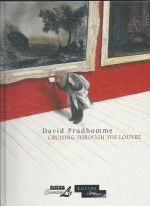
The Louvre Collection: Cruising Through the Louvre


By David Prudhomme translated by Joe Johnson (NBM ComicsLit/Louvre: Musée du Louvre Éditions)
ISBN: 978-1-56163-841-3

Some years ago the Louvre Museum in Paris began an intriguing and immensely rewarding collaboration with the world of comics, and their latest beguiling translated bande dessinée is now available in English, courtesy of those fine folks at NBM.

Cruising Through the Louvre is a multimedia paean to the art of drawing; a beautiful, oversized hardback graphic art narrative which follows the artist on a bewildering tour of the galleries as he searches for his beloved Jeanne.

As he searches for her, he realises that the pictures on the walls, the statues in the halls and the mementoes of world history all form a perfect sequential narrative like his own comics works.

…And then he grasps how the art and the observers are all locked in a mirror-clear relationship feeding off and entertaining each other…

Author/artist Davis Prudhomme was born in Tours in 1969 and, after studying at the École de l’Image in Angoulême, began his cartooning career with Ninon Secrète in 1992, collaborating with Patrick Cothias. Whilst producing that series he worked on solo projects ‘La Tour des Miracles’ (adapted from George Brassens’ book), ‘L’Oisiveraie’, ‘Voyage aux Pays des Serbes’ and ‘Port Nawak’.

Amongst his most notable award-winning efforts are La Marie en plastique, Rébétiko and this fabulous graphic rumination of the creation and situation of art, which first debuted in 2012 as La Traversée du Louvre.

The book in question, which manages to be beguiling, expansive and charmingly funny by turn, is produced in close collaboration with the forward-looking authorities of the Musée du Louvre, but this is no gosh-wow “Night-at-the-Museum” thinly-concealed catalogue of contents from a stuffy edifice of public culture. Rather, here is a sedately seductive, introspectively loving examination of the power of art and history to move the masses and especially the creatively inclined…

Supplementing the voyage of narrative interaction is a fact-packed data-file section detailing the accoutrements and educational and scientific achievements of the institution (how many other art museums have their own functioning particle accelerator?), subdivided into mind-boggling details about ‘The Building’, ‘The Works’, ‘The Visitors’ and ‘The Agents’, plus all the traditional Additional Information and dedication addenda you’d expect and hope to see.

This is another astounding and marvellously magical comics experience no art lover or devotee of the visual narrative medium can afford to miss…
© Futuropolis/Musée du Louvre Éditions 2012. © NBM 2016 for the English translation.

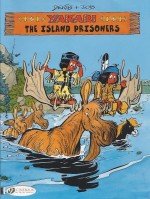
Yakari: the Island Prisoners


By Derib & Job translated by Erica Jeffrey (Cinebook)
ISBN: 978-1-84918-010-8

Children’s magazine Le Crapaud à lunettes was founded in 1964 by Swiss journalist André Jobin who then wrote for it under the pseudonym Job. Three years later he hired fellow French-Swiss artist Claude de Ribaupierre who chose the working name “Derib”. He had begun his own career as an assistant at Studio Peyo (home of Les Schtroumpfs), working on Smurfs strips for venerable weekly Spirou. Together they created the splendid Adventures of the Owl Pythagore before striking pure comics gold a couple of years later with their next collaboration.

Premiering in 1969, Yakari detailed the life of a little Sioux boy on the Great Plains; sometime between the Conquistadors’ introduction of horses and the coming of modern White Men.

Stuffed with bucolic whimsy, the beguiling series celebrates the generally simple and joyous existence of noble nomads in tune with nature and free from strife. The daily toil is occasionally punctuated with the odd crisis but these are usually resolved without fame or fanfare – usually by a little lad who is smart, compassionate and valiant.

He can also converse with all animals…

Derib – equally excellent in both enticing, comically dynamic “Marcinelle” cartoon style yarns and with devastatingly compelling meta-realistic action illustrated action epics – went on to become one of the Continent’s most prolific and revered creators. It’s incomprehensible to me that such groundbreaking strips as Celui-qui-est-né-deux-fois, Jo (the first comic on AIDS ever published), Pour toi, Sandra and La Grande Saga Indienne) haven’t been translated into English yet.

Many of his stunning works over the fruitful decades featured his beloved Western themes, built on magnificent geographical backdrops and epic landscapes, with Yakari considered by fans and critics alike as the feature which primed the gun.

Released in 1983, Les Prisonniers de I’Ile was the ninth European album (and, in 2008, Cinebook’s seventh British Yakari release): as always, a splendidly stand-alone mini-epic devoid of convoluted continuity. These heart-warming adventures work perfectly read in isolation: easily accessible for young kids and/or their adult minders meeting the bold little Brave for the first time…

The suspenseful saga begins with the boy marvel, his wonder horse Little Thunder and their friend Rainbow joyously playing on a beautiful promontory cutting into a lake. When a sudden storm erupts they take refuge in a cave and are stuck there for two terrifying days.

When the lightning and rain finally subside they emerge to find the spit of land is now and island. They – and many other animals – are trapped…

As the resourceful humans gather wood to make a signal fire they discover two elk with a big problem. Their calf is stuck under a fallen tree, but the Indians and their pony horse soon devise a way to free little Birch Shoot. Then the real problems start…

After the boy and girl splint the yearling’s broken leg and construct a branch bivouac to shelter him, searchers from the tribe come looking for them in a canoe. Yakari and Rainbow opt to hide, however, determined to stay and nurse the calf back to health…

That night Yakari’s totem Great Eagle visits for a chat and warns that the boy’s instincts were good, but further conversation is curtailed when worried father Proud Antlers realises that a hungry wolverine is on the island with them. He has past experience of how the wily hunters pick off the weak or wounded members of a herd…

Yakari has never heard of or seen such a creature and the elk’s tales are truly terrifying. Nevertheless, the little Brave appoints himself the family’s bodyguard, following them everywhere

His eager vigilance almost leads to catastrophe when he accidentally crowns old beaver pal Double-Tooth after the mighty swimmer ambles onto the islet in search of rare woods to carve. Soon however with his carpentry aid they have built a stout stockade around Birch-Shoot’s shelter.

Sadly, they have all severely underestimated the predator’s cunning and the wolverine simply proceeds to build devilish traps of his own. All he needs is the right moment to strike and feast…

Gripping with just the right amount of tension, this is a compelling yarn with a deliciously apt yet unforced denouement, one that will keep everybody sweet yet still delivers a satisfying kick for happy ending addicts…

This is one of Yakari’s most rewarding exploits, showing his warm benevolence, staunch determination and total commitment to his friends of variable leg-counts; a broad, bold romp no kid of any age could resist…

The evergreen exploits of the valiant little voyager who speaks with animals and enjoys a unique place in an exotic environment is an unmissable celebration of marvellously moving and enticingly entertaining adventure, honouring and eulogising an iconic culture with grace, wit, wonder and especially warmth. These gentle sagas are true landmarks of comics literature and Yakari is a strip no fan of graphic entertainment should ignore.
Original edition © LE LOMBARD (Dargaud- Lombard s.a.) 1983, by Derib + Job. English translation 2009 © Cinebook Ltd.