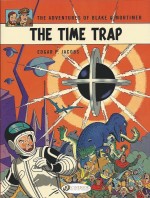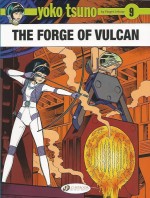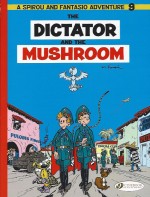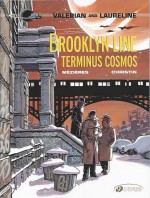
Spirou and Fantasio volume 9: The Dictator and the Mushroom


By André Franquin, translated by Jerome Saincantin (Cinebook)
ISBN: 978-1-84918-267-6

Win’s Christmas Gift Recommendation: Mirth and madcap melodrama in a true comics classic… 9/10

Spirou (which translates as both “squirrel” and “mischievous” in the Walloon language) was created by French cartoonist François Robert Velter using his pen-name Rob-Vel for Belgian publisher Éditions Dupuis in direct response to the phenomenal success of Hergé’s Tintin for rival outfit Casterman.

Thus, a soon-to-be legendary weekly comic entitled Spirou launched on April 21st 1938 with a rival red-headed lad as the lead of an anthology which bears his name to this day.

The eponymous lead character was originally a plucky bellboy/lift operator employed by the Moustique Hotel (a sly reference to the publisher’s premier periodical Le Moustique) whose improbable adventures with pet squirrel Spip gradually grew into high-flying, far-reaching and surreal comedy dramas.

Spirou and his chums have spearheaded the magazine for most of its life, with a phalanx of truly impressive creators carrying on Velter’s work, beginning with his wife Blanche “Davine” Dumoulin who took over the strip when her husband enlisted in 1939. She was assisted by Belgian artist Luc Lafnet until 1943 when Dupuis purchased all rights to the property, after which comic-strip prodigy Joseph Gillain (“Jijé”) took the helm.

In 1946 Jijé‘s assistant André Franquin assumed the creative reins, gradually sidelining the well-established short gag-like vignettes in favour of epic adventure serials, introducing a wide and engaging cast of regulars and eventually creating phenomenally popular magic animal the Marsupilami to the mix (first seen in Spirou et les héritiers in 1952 and eventually a spin-off star of screen, plush toy store, console games and albums in his own right). Franquin continued crafting increasingly fantastic tales and absorbing Spirou sagas until his resignation in 1969.

He was followed by Jean-Claude Fournier who updated the feature over the course of nine stirring adventures which tapped into the rebellious, relevant zeitgeist of the times with tales of environmental concern, nuclear energy, drug cartels and repressive regimes.

By the 1980s the series seemed outdated and without direction: three different creative teams alternated on the feature, until it was at last revitalised by Philippe Vandevelde – writing as Tome – and artist Jean-Richard Geurts AKA Janry, who adapted, referenced and in many ways returned to the beloved Franquin era.

Their sterling efforts revived the floundering feature’s fortunes and resulted in fourteen wonderful albums between 1984 and 1998. As the strip diversified into parallel strands (Spirou’s Childhood/Little Spirou and guest-creator Specials A Spirou Story By…) the team on the core feature were succeeded by Jean-David Morvan & José-Luis Munuera, and in 2010 Yoann & Vehlmann took over the never-ending procession of amazing adventures…

Cinebook have been publishing Spirou & Fantasio’s exploits since 2009, alternating between Tome & Janry’s superb reinterpretations of Franquin and earlier efforts from the great man himself.

André Franquin was born in Etterbeek, Belgium on January 3rd 1924. Drawing from an early age, the lad only began formal art training at École Saint-Luc in 1943 and when the war forced the school’s closure a year later, he found work at Compagnie Belge d’Animation in Brussels where he met Maurice de Bévère (AKA Lucky Luke creator “Morris”), Pierre Culliford (Peyo, creator of The Smurfs) and Eddy Paape (Valhardi, Luc Orient).

In 1945 all but Peyo signed on with Dupuis and Franquin began his career as a jobbing cartoonist/illustrator, producing covers for Le Moustique and scouting magazine Plein Jeu. During those early days Franquin and Morris were being tutored by Jijé, who was the main illustrator at Spirou. He turned the youngsters and fellow neophyte Willy Maltaite AKA Will (Tif et Tondu, Isabelle, Le jardin des désirs) into a smooth creative bullpen known as the La bande des quatre or “Gang of Four”.

They later reshaped and revolutionised Belgian comics with their prolific and engaging “Marcinelle school” style of graphic storytelling…

Jijé handed Franquin all responsibilities for the flagship strip part-way through Spirou et la maison préfabriquée, (Spirou #427, June 20th 1946) and he ran with it for two decades; enlarging the scope and horizons until it became purely his own. Almost every week fans would meet startling new characters such as comrade/rival Fantasio or crackpot inventor and Merlin of mushroom mechanics the Count of Champignac.

Spirou and Fantasio became globe-trotting journalists, travelling to exotic places, uncovering crimes, exploring the fantastic and clashing with a coterie of exotic arch-enemies such as Zorglub and Fantasio’s unsavoury cousin Zantafio.

Incidentally, The Dictator and the Mushroom features the second appearances of Zantafio and strong, capable, female (!) rival journalist Seccotine (renamed Cellophine for these English translations)…

In a splendid example of good practise, Franquin mentored his own band of apprentice cartoonists during the 1950s. These included Jean Roba (La Ribambelle, Boule et Bill), Jidéhem (Sophie, Starter, Gaston Lagaffe) and Greg (Bruno Brazil, Bernard Prince, Achille Talon, Zig et Puce), who all worked with him on Spirou et Fantasio over the years.

In 1955 contractual conflicts with Dupuis droved Franquin to sign up with rival outfit Casterman on Tintin. Here he collaborated with René Goscinny and old pal Peyo whilst creating the raucous gag strip Modeste et Pompon. Although he soon patched things up with Dupuis and returned to Spirou – subsequently co-creating Gaston Lagaffe in 1957 – Franquin was now contractually obliged to carry on his Tintin work too…

From 1959 on, co-writer Greg and background artist Jidéhem increasingly assisted Franquin but by 1969 the artist had reached his Spirou limit and resigned.

His later creations include fantasy series Isabelle, illustration sequence Monsters and bleak adult conceptual series Idées Noires, but his greatest creation – and one he retained all rights to upon his departure – is Marsupilami.

Franquin, plagued in later life by bouts of depression, passed away on January 5th 1997 but his legacy remains; a vast body of work which reshaped the landscape of European comics.

Originally serialised in Spirou #801-838, between 1953 and 1954 and subsequently released on the continent in 1956 as hardcover album Spirou et Fantasio 7 – Le Dictateur et Le Champignon, this epic episode begins as globe-trotting troubleshooter Spirou and his short-tempered pal Fantasio approach the isolated home of eccentric inventor Count Champignac, resolved to return the mischievous Marsupilami to its natural habitat in the jungles of Palombia…

Whilst they discuss their plan with the elderly savant, however, the mischievous monkey he’s been safeguarding has swiped the inventor’s latest mycoprotein marvel and headed for town…

Champignac calls the gaseous form of his newest mushroom extract “metalsoft” and that’s exactly what the stuff does: reduce the solidity of iron, brass, bronze, tin or whatever to the consistency of hot wax. By the time the prankish primate has finished innocently playing with the pump dispenser, the locals are in uproar and their village is practically a puddle…

With nobody in Europe objecting, the lads book passage on a South America-bound cruise ship, where once again the elastic-tailed terror causes a cacophony of comedic chaos. Eventually though, the increasingly irate and exhausted adventurers at last head in-country towards sleepy Palombia where a big surprise is waiting for them…

Thanks to Marsupilami, they are forced to travel the last ten miles to capital city Chiquito on foot and are astonished to observe the sheer number of military vehicles which constantly overtake them. In the city, an altercation with soldiers then leads to their arrest and interview with new supreme dictator General Zantas. The meeting is both a huge shock and unhappy reunion…

Fantasio’s cousin Zantafio had been only a little mean and perhaps misguided when they were all first hunting for the Marsupilami, but since then he has reinvented himself and graduated into a full-blown murderous megalomaniac: a cheap thug in a flashy uniform determined to carve himself a bloody empire and vast wealth through the conquest of his national neighbours.

Moreover, Zantafio/Zantas wants his countrymen to join him in the campaign of conquest, a horrific demand the reporters initially refuse.

Locked in jail, Spirou and Fantasio ponder how to stop the murderous scheme and realise the perfect counter to Zantas’ burgeoning war machine is Champignac’s Metalsoft. All they have to do is get a message to the inventor and have him send enough of the wonder stuff to destroy the ever-growing army…

Thus they apparently switch sides and are promptly installed as high ranking officers, but Zantafio is no fool and sets his most cunning spy to watch them; just waiting for the moment when they betray themselves.

Of course it’s not our heroes’ first rodeo either and, aware of their shadow, the lads engage in a prolonged and hilarious game of cat-&-mouse with the spook, all the while fretting that D-Day is approaching and still they have not been able to smuggle a message out…

A solution presents itself when go-getting journalist Cellophine makes contact. She’s been secretly covering the crisis for ages – without being caught like her mere male rivals – and offers to get the request for Metalsoft to Champignac ASAP…

Things aren’t all going Zantafio’s way. Even though weapons dealers are frantically auditioning their death-dealing wares for the General, Colonels Spirou and Fantasio are especially diligent and somehow able to find dangerous faults in everything on offer…

And then one night Cellophine sneaks back into Palombia with the secret weapon which will end Zantas’ dreams of empire…

Following a fantastical fight with the mushroom gas-wielding trio battling an entire modern military and a tense yet inconclusive showdown with Zantafio, peace and democracy breaks out and the boys finally complete their original mission.

Having at last safely returned the Marsupilami to his natural wilderness, Spirou and Fantasio wearily head back to civilisation, content in the knowledge that the lovable little perisher is back where he belongs.

Of course, the pestilential primate has his own ideas on the matter…

Stuffed with superb slapstick situations, riotous chases and gallons of gags, but barely concealing a strongly satirical anti-war message, this exuberant yarn is a joyous example of angst-free action, thrills and spills. Easily accessible to readers of all ages and drawn with beguiling style and seductively wholesome élan, this is another enduring comics treat from a long line of superb exploits, certain to be as much a household name as that other kid reporter and his dog…
Original edition © Dupuis, 1956 by Franquin. All rights reserved. English translation 2015 © Cinebook Ltd.

Valerian and Laureline book 10: Brooklyn Line Terminus Cosmos


By Méziéres & Christin, with colours by E. Tranlé; translated by Jerome Saincantin (Cinebook)
ISBN: 978-1-84918-263-8

Valérian: Spatio-Temporal Agent debuted in continental weekly Pilote #420 (November 9th 1967) and was an instant hit. It became Valérian and Laureline as his feisty distaff sidekick quickly developed into an equal partner – if not scene-stealing star – through a string of light-hearted, fantastic time-travelling, space-warping romps packed with cunningly satirical humanist action, challenging philosophy and astute political commentary.

At the start Valerian was an affably capable yet unimaginative by-the-book space cop tasked with protecting the official universal chronology (at least as it affects humankind) by counteracting and correcting paradoxes caused by incautious time-travellers.

When he travelled to 11th century France in debut tale ‘Les Mauvais Rêves (‘Bad Dreams’ and still not translated into English yet), he was rescued from doom by a tempestuously formidable young woman named Laureline whom he had no choice but to bring back with him to the 28th century super-citadel/administrative capital of the Terran Empire, Galaxity.

The indomitable female firebrand then crash-trained as an operative and accompanied him on subsequent missions – a beguiling succession of light-hearted, space-warping, social-conscience building epics.

The so-sophisticated series always had room to propound a satirical, liberal ideology and agenda (best summed up as “why can’t we all just get along?”), constantly launching telling fusillades of commentary-by-example to underpin an astounding cascade of visually appealing, visionary space operas.

The tenth Cinebook translation – and conclusion of the series’ first extended saga Brooklyn Line Terminus Cosmos was originally serialised in the monthly Pilote #M70 – M73 from March to June 1980 before being released as an album. The time bending, space-warping saga had begun with the partners-in-peril separated by centuries and light years: Laureline dispatched to the vast Cassiopeia system, whilst her partner was deposited in Paris in 1980 in search of astounding and seemingly mystical threats.

Although acting apart, Laureline and Valerian are still “enjoying” intimate contact, thanks to Terran ingenuity and recent neurosurgeries. Being telepathically linked and sharing information on the mission has its own intrinsic problems however…

Valerian feels like a fish out of water, constantly reminded how little he knows or understands the people and history of his birthworld. His guide, the volubly affable, infuriatingly unrushed and always tardy Mr. Albert seems unsuited to the work: investigating, sifting and collating incalculable amounts of data on everything fringe, strange or whacky that occurs in the 20th century he has adopted as his home-away-from-home, but without the dash and verve a real hero needs…

Monstrous manifestations have been menacing the city and its environs: horrific creatures which appear to be demonic iterations of ancient elemental forces Fire, Water and Earth but there’s also an as-yet unexplained connection to two rival mega-corporations: W.A.A.M (World American Advanced Machines) and its equally unscrupulous competitor Bellson & Gambler.

Laureline is meanwhile scouring the colossal Cassiopeia system alone: following barely tangible leads regarding the classical concept of the Four Elements through a number of weird worlds, she eventually arrives at vast interplanetary dumping planet Zomuk where, after an epic struggle against ghastly odds, she enters a hidden shrine to gaze upon fantastic representations of the very Elemental Forces which underpin the universe and are threatening 20th century Earth…

Back in Paris, her psychic contact with Valerian is broken when he storms out into the Parisian night, utterly oblivious to the fact that he’s being followed by enigmatic figures in an expensive automobile. And then he accepts a lift from a pretty girl in a sports-car…

After a full recap the story resumes here some relative hours later as Laureline finally wakes her slumbering, cosmically distant partner. She is psychically aware of the woman sleeping beside him and takes great pleasure in razzing him on his conquest “in the line of duty”…

Fun over, Laureline imparts crucial information: the puissant yet debased ancients of Zomuk now seemingly worship two strange new godlike beings and are sharing with them the awesome power of Elemental artefacts they have preserved for centuries. Sadly she suspects the lordly strangers are far from divine and have extremely venal if not outright criminal motives for their attentiveness.

Moreover, when the deities started squabbling over the potent offerings, the native Zoms start to smell a rat too…

Now with Laureline tracking the impostors deep into a region dominated by astral pirates and fugitives, Valerian returns to his new companion, suspicious that she also is not what she seems…

He’s not wrong. The highly competent Miss Cynthia Westerly is highly placed in one of the corporations pursuing the uncanny phenomena plaguing Paris, but is oblivious to the fact that the big oaf she thought she safely seduced and left is actually following when she heads for the Pompidou Centre to try and capture the next Elemental manifestation…

As he trails her, however, Valerian becomes aware that her rivals are in pursuit and plays a very deft trick to throw them all off guard…

Rendezvousing with Albert, the Spatio-Temporal Agent manages to get his hands on the surprisingly compact “Creature of Air and Dreams” before anybody else but the brief contact leaves him changed and damaged…

As Albert hustles him away, Valerian slips into tenuous contact with Laureline but the communication is oddly garbled, since his consciousness is simultaneously wandering the timelines: glimpsing events from his past and many which have yet to occur…

His bewildering loss of temporal continuity continues even as Albert drags his dazed presence onto a jet, heading for a final confrontation with the warring corporate cliques. The entire journey is punctuated with bizarre visions which Laureline cannot help but share and on arrival in New York Albert takes the debilitated agent to see an old friend: aged Kabbalah scholar Schlomo Meilsheim who has a few ideas on a remedy for the increasingly escalating condition…

The situation has not gone unnoticed by the voracious corporations either. With their grand schemes of and profitable new proprietary energy sources threatened they have instigated a mass convocation of every fringe scientist, modern mystic, seer, religious nut and new age quack in the country: a last ditch attempt to regain control of the elemental forces currently tormenting Valerian…

Naturally Schlomo is invited too and he brings his friends along to the desolate, snow-swept reaches of Brooklyn. When Val wanders off, terse communication with Laureline reveals the truth about his latest visions and the dangers she’s been battling single-handed in pursuit of the faux gods.

Now as Elementals catastrophically manifest amongst the massed mystics, she enacts a bold plan to cut off the problem at source; severing the uncanny connection between devastating forces devised by the Zoms and its unfortunate link to unwary, unhappy 20th century Earth…

Sly, subtle, brilliantly mind-boggling and moodily mysterious, this sharp saga is a trans-time tale of subtle power, dripping with devilish wit, but no matter how trenchant, barbed, culturally aware or ethically crusading, Valerian and Laureline yarns never allow message to overshadow excitement or entertainment. This is one of the most memorable romps Méziéres & Christin ever concocted, and heralded the start of even greater epics to come …
© Dargaud Paris, 1981 Christin, Méziéres & Tran-Lệ. All rights reserved. English translation © 2015 Cinebook Ltd.

Zombillenium volume 3: Control Freaks


By Arthur de Pins (NBM)
ISBN: 978-1-56163-956-4

Arthur de Pins is a British-born French filmmaker, commercial artist and Bande Dessinées creator whose strips – such as adult comedy Peccadilloes (AKA Cute Sins) and On the Crab – have appeared in Fluide Glacial and Max.

In recent years his superbly arch and beautifully illustrated supernatural horror-comedy Zombillénium has become his greatest success (keep your eyes peeled for the upcoming movie!): a truly addictive comics cult classic which began in 2009 (serialised in Spirou from #3698 on) and has now filled three albums released in English thanks to Canadian publisher NBM.

Rendered with beguiling style and sleek, easy confidence, the unfolding saga details the odd goings-on in a horror theme park run by real monsters and operated by capitalistically-inclined infernal powers and, with this latest volume, we finally get to peek behind the curtain a little to see who – and what – is pulling the strings…

Zombillenium is a truly magical entertainment experience celebrating all aspects of the spooky and supernatural, where (human) families can enjoy a happy day out rubbing shoulders with werewolves and witches and all breeds of bogeyman. Of course, those enthralled visitors customers might not laugh so hard if they knew all the monsters were real, usually hungry and didn’t much like humans … except in a culinary fashion…

The inaugural volume introduced hard-working, humane Director/vampire Francis Von Bloodt, newly-reborn Aurelian Zahner (a pathetically inept thief until he expired at the park and returned transformed into a demonic indentured employee of the business) and quirky British Witch Gretchen: a young newcomer interning at the park whilst secretly advancing her own agenda.

As they individually toiled away at the vast entertainment enterprise its true nature was slowly revealed: for unwary, unlucky mortals the site is a conduit to the domain of the damned and its devilish overlord Behemoth: an intolerant horror ever-hungry for fresh souls…

For the uncanny undead workers in Zombillenium, conditions of employment worsen every day: it is one of the least profitable holiday destinations on Earth and The Board are always threatening to make sweeping changes…

Despite the incredible bargaining power of the many monster Trade Unions, the only way out of a Zombillenium contract is the True Death and a final transition to Hell; yet for some reason the shop-stewards prefer to blame Aurelian for all their woes and seem determined to drive him out.

Stuck between a rock and a hot place, Zahner gradually adapts to his new (un)life of constant sorrow and grows closer to Gretchen after she shares with him her own life-story; revealing what he has become whilst disclosing what she’s really doing at the Park. The big boob has no idea how much she left out…

The saga moves into apocalyptic high gear with Control Freaks as Gretchen’s private plot gathers pace after she makes contact with a loved one currently confined in Hell. The bold sorceress promises a seemingly impossible liberation before sneaking out, whilst in the mortal world a long-dreaded day dawns and all the arcane artisans and supernatural staff quail at some really Big News…

A Consultant has been despatched to “observe” how the park is run but everybody from Von Bloodt to the Shop-Stewards know that elite vampire Bohémond Jaggar de Rochambeau is actually here to take the business by the throat and shake things up. They have no idea just how much everything is about to change…

One of the most unfortunate aspects of the fearsome funfair is that any human who dies on Zombillenium property is instantly reborn as a monster, owned by Behemoth and compelled to work eternally in the theme park until the master takes them below. Under Francis’ governance that’s been wisely offset by a set of stringent rules, the first of which states that no employee is ever allowed to attack a human…

Jaggar has other ideas. Before long he has impetuously killed a little girl and delivered in no uncertain terms the new working time directives to Francis and the astounded staff. The Park is a pump designed to generate money for the shareholders and a steady supply of souls to Behemoth. Now the old, timid tolerant ways championed by Von Bloodt have been superseded by more robust policies which demand bigger returns on both sides of the investment…

The news is met with mixed feelings by the workforce: most are scared, appalled and resistant. For some however it’s the opportunity they’ve long argued for: a chance to feed and feast and hunt all those obnoxious yet tasty human morsels…

With isolated attacks reported all over the park Aurelian suddenly goes into a rage-fuelled meltdown and Gretchen uses his colossal rampage to trigger an evacuation of Zombillenium. Casualties are kept to a minimum even though Jaggar is openly egging on the demonically transcendent Zahner to cut loose. With the park emptied by panic, however, the cutthroat Consultant is temporarily stymied…

Unfortunately, his new business model very much piques the greedy interest of the Board and before long Francis is out and Jaggar is Director; actively encouraging the killing of unattached or unaccompanied humans, who now come in droves to the most exciting entertainment experience in the world.

It’s all too much for ambulatory Egyptian Mummy Aton who enlists the aid of change-resistant union boss Sirius Jefferson to orchestrate an inspired industrial action which closes the Park. Management’s retaliation is swift, decisive and infernally effective and, as Gretchen and Aurelian get a message from an ally in Hell, in Jaggar’s Zombillenium irrevocable lines are drawn for a final battle to win the stilled hearts and captive souls of the enslaved employees…

To Be Continued…

One of the most engaging candidates in a burgeoning category of seditiously mature and subversively ironic horror-comedies, this superb and deliciously arch tale combines pop-cultural archetypes with smart and sassy contemporary insouciance and a solid reliance on the verities of Nature, Human and not…

Sly, smart, sexy and scarily hilarious, Zombillenium achieves that spectacular trick of marrying slapstick with satire in a manner reminiscent of Asterix and Cerebus the Aardvark, whilst easily treading its own path. You’ll curse yourself for missing out and if you don’t there are things out there which will. © Dupuis 2013 by De Pins. All rights reserved.

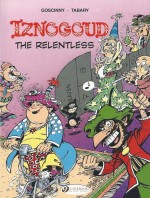
The Grand Vizier Iznogoud


By Goscinny and Tabary, translated by Jerome Saincantin (Cinebook)
ISBN: 978-1-84918-131-0

For the greater part of his far-too-short lifetime (1926-1977), René Goscinny was one of the most prolific and most-read writers of comic strips the world has ever seen. He still is.

Amongst his most popular and enduring comic collaborations are Lucky Luke, Le Petit Nicolas, Signor Spaghetti and, of course, Asterix the Gaul, but there were so many others, such as the despicably dark deeds of a dastardly usurper whose dreams of diabolical skulduggery perpetually proved to be ultimately no more than castles in the sand…

In the wake of the Suez crisis, the French returned – at least in cartoon form – to the hotly contested deserts when Goscinny teamed with sublimely gifted Swedish émigré Jean Tabary (1930-2011) – who numbered Richard et Charlie, Grabadu et Gabaliouchtou, Totoche, Corinne et Jeannot and Valentin le Vagabond amongst his other hit strips – to detail the innocuous history of imbecilic Arabian (im)potentate Haroun el-Poussah.

However as is so often the case, it was the strip’s villainous foil, power-hungry vizier Iznogoud who stole the show… possibly the conniving little blackguard’s only successful insurrection.

Les Aventures du Calife Haroun el Poussah was created for Record; the first episode appearing in the January 15th issue of 1962. A minor hit, the feature subsequently jumped ship to Pilote – a new comics magazine created and edited by Goscinny – where it was artfully refashioned into a starring vehicle for the devious little Tuareg toe-rag who had increasingly been hogging all the laughs and limelight.

Like all great storytelling, Iznogoud works on two levels: for the youngsters it’s a comedic romp with adorably wicked baddies invariably hoisted on their own petards and coming a-cropper, whilst older, wiser heads can revel in pun-filled, witty satires and marvellously surreal antics.

This same magic formula made its more famous cousin Asterix a monolithic global phenomenon and, just like the saga of that indomitable Gaul, the appallingly addictive Arabian Nit was first adapted into English by master translators Anthea Bell & Derek Hockridge who made those Franco-Roman Follies so very palatable to British tastes.

In 1977 after Goscinny’s death, Tabary began scripting his own superbly stylish tales, switching to book-length complete adventures, rather than compilations of short, punchy vignettes which typified his collaborations.

As always the deliciously malicious whimsy is heavily dosed with manic absurdity, cleverly contemporary cultural critiques and brilliantly delivered creative anachronisms which serve to keep the assorted escapades bizarrely fresh and hilariously inventive.

Insidious anti-hero Iznogoud is Grand Vizier to affable, easy-going Caliph of Ancient Baghdad Haroun Al Plassid, but the sneaky little second-in-command has loftier ambitions, or as he is always declaiming “I want to be Caliph instead of the Caliph!”…

The retooled rapscallion re-debuted in Pilote in 1968, quickly becoming a massive European hit, with 29 albums to date (carried on by Tabary’s children Stéphane, Muriel and Nicolas), his own solo comic, a computer game, animated film, TV cartoon show and even a live-action movie.

Les grand Vizier Iznogoud was originally released in 1966, the very first of Dargaud’s album compilations, but here it’s the ninth exotically outrageous Cinebook tome, offering a fistful of trend-setting tales as the ambitious autocrat schemes to seize power from his gentle – but far from wise – sublimely oblivious Lord and Master.

Following the traditional introductory page introducing the regulars the devious deceptions resume with the Caliph planning a party, inspiring Iznogoud to visit a Magical Item Merchant in search of mystic booby-traps to get rid of the roadblock to his domination of Baghdad. What he finds is ‘The Genie’ inhabiting a pair of slippers and, convinced his mundane life as a minion is finally ended, the putrid plotter brings the fantastic footwear back to the palace.

Unfortunately the Genie is brutally literal and extremely quick off the mark, so when the slippers are lost amidst the hundreds of pairs already in situ, chaos and calamity ensue…

The next opportunity to overthrow his rightful master occurs when an invitation arrives from a neighbouring nabob: the incredible short-tempered and excessively violent Sultan Pullmankar…

That terrifying tyrant wants the Caliph to come visit on an ‘Official Trip’ and Iznogoud sneakily senses how little it would take to make the petrifying Pullmankar blow his top and topple Haroun.

The scheme is wickedly simple: by taking charge of the visit, the vile Vizier can easily orchestrate an unforgivable gaffe for which the Sultan will destroy Al Plassid, leaving his deputy to take over.

Typically however each carefully organised act of sabotage goes awry and before long Iznogoud’s short temper and quick mouth makes him the Sultan’s preferred object of retribution…

Throughout all his Machiavellian machinations the Vizier is assisted (let’s be charitable and call it that…) by his bumbling, brutish flunky crony Wa’at Alahf, but when that hulking worthy takes his annual vacation the contemptible Caliph-in-waiting finds himself in need of truly thuggish assistance and hires ‘The Strong-Arm Men’ to kidnap Haroun Al Plassid.

Sadly the nature of basic skulduggery doesn’t attract too many smart men – just single-minded, greedy ones – and a frustrating comedy of errors soon devolves into life or death for the wily weasel who thought he was in charge…

Broad slapstick gives way to pun-filled pandemonium when ‘The Horde’ of fearsome, all-conquering Genghis Khan fetches up at the border and triggers a wave of panic. Intrigued by the urban unrest that results the Vizier, through nefarious means, raises the greatest army in Baghdad’s history – with the intention of instantly surrendering rather than fighting – and letting the conqueror take the Caliph away in chains…

This plan would certainly have succeeded if only his opposite number Blujin (who wanted to be Khan instead of the Khan) hadn’t had the same idea…

Another normal day with Iznogoud petulantly plotting suddenly perks up when long-suffering Wa’at Alahf ushers in ‘A Lookalike’ of the despised Caliph. Merchant Aristides Kingsizos is the spitting image of Baghdad’s boss – except for a black eye – and food and money soon convince him to stick around until that heals and he can (albeit temporarily) replace the sublime ruler.

Cue a succession of appearance-altering manic mishaps which have the plotters playing frantic physiological catch-up whilst Haroun’s litany of ailments take their toll on the health and patience of the increasingly unhappy doppelganger…

These ancient antics conclude with a fantastic nautical voyage as the Vile Vizier meets mad mariner Cymbal the Sailor and learns of a terrifying destination that would truly be the answer to all his problems. It all seems perfect and just for once the Caliph is even eager to join him on a quiet fishing trip, utterly unaware that his faithful servants Iznogoud and Wa’at Alahf plan to maroon him on ‘The Giants’ Island’…

Of course it ends badly with all of them stuck in the forbidding monsters’ paradise but the fabled colossi are not quite what one would expect and harbour very different intentions for the schemers and the Caliph…

Such witty, fast-paced hi-jinks and craftily crafted comedy set pieces have made this addictive series a household name in France where “Iznogoud” is common parlance for a certain kind of politician: over-ambitious, unscrupulous – and frequently insufficient in inches (or should that be centimetres?).

Desiring to become “Caliph in the Caliph’s place” is a popular condemnation in French, targeting those perceived as overly-ambitious, and since 1992 the Prix Iznogoud is awarded annually to “a personality who failed to take the Caliph’s place”.

Nominees are chosen from prominent French figures who have endured spectacular failures in any one year and been given to the likes of Édouard Balladur (1995) and Nicolas Sarkozy (1999). The jury panel is headed by politician André Santini, who gave himself one after failing to become president of Île-de-France in regional elections in 2004.

When first released in Britain during the late 1970s and 1980s (and again in 1996 as a periodical comicbook) these tales made little impression, but at last this wonderfully beguiling strip has deservedly found an appreciative audience among today’s more internationally aware, politically jaded comics-and-cartoon savvy connoisseurs…
Original edition © Dargaud Editeur Paris, 1966 by Goscinny & Tabary. All rights reserved. This edition published 2012 by Cinebook Ltd.

If You Steal


By Jason (Fantagraphics Books)
ISBN: 978-1-60699-854-0

Christmas Gift Recommendation: A comics lover’s dream made real… 9/10

Jason is secretly John Arne Saeterrøy: born in Molde, Norway in 1965 and an overnight international cartoon superstar since 1995 when his first graphic novel Lomma full ay regn (Pocket Full of Rain) won that year’s Sproing Award (Norway’s biggest comics prize). He won another Sproing in 2001 for the series Mjau Mjau and in 2002 turned almost exclusively to producing graphic novels.

A global star among the cartoon cognoscenti, he has won many major awards from all over the planet. Jason’s work always jumps directly into the reader’s brain and heart, utilising the beastly and unnatural to gently pose eternal questions about basic human needs in a soft but relentless quest for answers. That you don’t ever notice the deep stuff because of the clever gags and safe, familiar “funny-animal” characters should indicate just how good a cartoonist he is…

The stylised artwork is delivered in formalised page layouts rendered in a minimalist evolution of Hergé’s Claire Ligne style, solid blacks, thick outlines and settings of seductive simplicity – augmented by a deft and subtle use of flat colour which enhances his hard, moody, suspenseful and utterly engrossing Cinema-inspired world.

The superbly understated art acts in concert with his dead-on, deadpan pastiche repertoire of scenarios which dredge deep from our shared experience of old film noir classics, horror and sci fi B-movies and other visual motifs which transcend time and culture, and the result is narrative dynamite.

This latest hardback compilation collects eleven new short yarns and opens with the eponymous and eerie ‘If You Steal’, wherein cheap thug Paul perpetually risks everything and the one person who keeps him feeling alive in search of quick cash, only to lose it all in the end after which ‘Karma Chameleon’ finds a small desert community dealing with the discovery of a giant, carnivorous and extremely predatory lizard which nobody seems able to see. Good thing masturbation-obsessed boffin Dr. Howard Jones and his long-suffering daughter Julia are in town…

The deliciously wry and whimsically absurdist Samuel Beckett spoof ‘Waiting for Bardot’ then segues neatly into a dashing mystery of masked derring-do as ‘Lorena Velazquez’ eventually tires of waiting for her ideal man to finish off a necessarily interminable and horrific army of villains prior to doling out a maiden’s traditional rewards whilst a fugitive murderer narrates his own paranoia-fuelled downfall after his ‘New Face’ briefly tempts him with love and the never-to-be-achieved promise of peace and safety…

A series of six faux horror comics covers combines to relate the trials of chilling romances in ‘Moondance’ and the classic fear theme extends into a rip-roaring battle against the undead in ‘Night of the Vampire Hunter’ and ‘Polly Wants a Cracker’ follows the other unique career path of artistic legend/assassin-for-hire Frida Kahlo whilst a junkie musician pushes his luck against some very bad guys because ‘The Thrill is Gone’ before ‘Ask Not’ takes a trawl through history from Stonehenge in 2583 BC to Salon de Provence in 1554 AD (courtesy of Nostradamus) to 1960s Cuba, revealing the truth behind the assassination of JFK and Abraham Lincoln and what parts Lee Harvey Oswald and Jack Ruby actually played in that millennial plot: a parallel worlds yarn like no other…

The book ends with a stunning, deeply moving graphic examination of dementia which is both chilling and oddly-heart-warming as aging Emma deals with the scary creatures who keep taking away the names of things in ‘Nothing’, proving once more that behind the innocuous-seeming cartoons and contemporary fairy tale trappings Jason’s work is loaded with potent questions…

If You Steal resonates with Jason’s favourite themes and shines with his visual dexterity, and skewed sensibilities. disclosing a decidedly different slant on secrets and obsessions. Primal art supplemented by sparse and spartan “Private Eye” dialogue, enhanced to a macabre degree by solid cartooning and skilled use of silence and moment, all utilised with devastating economy, affords the same quality of cold, bleak yet perfectly harnessed stillness which makes Scandinavian crime dramas such compelling, addictive fare.

These comic tales are strictly for adults yet allow us all to look at the world through wide-open young eyes. They never, however, sugar-coat what’s there to see…
If You Steal is © 2015 Jason. All rights reserved.

Lucky Luke volume 6: Ma Dalton


By Morris & Goscinny, translated by Frederick W. Nolan (Cinebook)
ISBN: 978-1-905460-14-4

It’s hard to think of one of Europe’s most beloved and evergreen comics characters being in any way controversial, but when changing times caught up with the fastest gun in the West (“so fast he can outdraw his own shadow”) and the planet’s most laconic cowboy moved with them, the news made headlines all over the world.

Lucky Luke is a rangy, good-natured, lightning-fast cowboy who roams the fabulously mythic Old West, having light-hearted adventures with his sarcastic horse Jolly Jumper and interacting with a host of historical and legendary figures. His continued exploits over nearly seventy years have made him one of the best-selling comic characters in Europe (over 80 collected books and more than 300 million albums in 30 languages thus far), with the usual spin-off toys, computer games, animated cartoons and a plethora of TV shows and live-action movies.

He was created in 1946 by Belgian animator, illustrator and cartoonist Maurice de Bévère (“Morris”) and was first seen the 1947 Annual (L’Almanach Spirou 1947) of Le Journal de Spirou, before launching into his first weekly adventure ‘Arizona 1880’ on December 7th 1946.

Prior to that, while working at the CBA (Compagnie Belge d’Actualitiés) cartoon studio, Morris met future comics superstars Franquin and Peyo, and joined weekly magazine Le Moustique as a caricaturist – which is probably why (to my eyes at least) his lone star hero looks uncannily like the young Robert Mitchum who graced so many memorable mid-1940s B-movie Westerns.

Morris quickly became one of la Bande des quatre or “The Gang of Four” comprising Jijé, Will and his old comrade Franquin: the leading proponents of the loose, free-wheeling artistic style known as the “Marcinelle School” which predominated in Spirou in aesthetic contention with the “Ligne Claire” style used by Hergé, EP Jacobs and other artists on Tintin Magazine.

In 1948 said Gang (all but Will) visited the USA, meeting American comics creators and sightseeing. Morris stayed for six years, linking up with fellow traveller René Goscinny, scoring some work from the newly-formed EC sensation Mad and making copious notes and sketches of the swiftly vanishing Old West.

That research would resonate on every page of his life’s work.

Working solo until 1955, Morris produced another nine albums worth of affectionate sagebrush spoofery before reuniting with Goscinny, who became the regular wordsmith as Luke attained the dizzying heights of superstardom, commencing with ‘Des rails sur la Prairie’ (Rails on the Prairie), which began in Spirou on August 25th 1955.

In 1967 the six-gun straight-shooter switched sides, transferring to Goscinny’s own magazine Pilote with ‘La Diligence’ (The Stagecoach). Goscinny eventually produced 45 albums with Morris before his untimely death, from whence Morris continued both singly and with fresh collaborators.

Morris himself died in 2001 having drawn fully 70 adventures, plus some spin-off sagas crafted with Achdé, Laurent Gerra, Benacquista & Pennac, Xavier Fauche, Jean Léturgie, Jacques Pessis and others all taking a crack at the venerable franchise…

Moreover, apart from that very first adventure, Lucky (to appropriate a quote applied to the thematically simpatico TV classic Alias Smith and Jones) “in all that time… never shot or killed anyone”…

Lucky Luke first appeared in Britain syndicated to weekly comic Film Fun during the late 1950s and once again in 1967 in Giggle where he was renamed Buck Bingo. In all these venues – as well as the numerous attempts to follow the English-language successes of Tintin and Asterix albums – Luke had a trademark cigarette hanging insouciantly from his lip. However in 1983 Morris, no doubt amidst both pained howls and muted mutterings of “political correctness gone mad”, deftly substituted a piece of straw for the much-travelled dog-end, which garnered him an official tip of the hat from the World Health Organization.

The most recent and successful attempt to bring Lucky Luke to our shores and shelves comes from Cinebook (who have rightly restored the foul weed to his lips on the interior pages, if not the covers…) and Ma Dalton was the sixth of their 54 (and counting) albums, now available both on paper and as e-books.

Chronologically it was the cowboy’s 38th chronicle and Goscinny’s 29th collaboration with Morris, offering an engagingly riotous romp and a stupendously shocking showdown situation wherein all the laconic lawman’s legendary speed proved as nothing when facing a foe he could not draw against…

It all begins after another suitably heroic escapade with our hero is relaxing in boisterous Cactus Junction when he stumbles upon the strangest hold-up he’s ever seen, as a little old lady holds up the local butcher at gunpoint and gets away with a steak and some scraps for her cat. Baffled, he tracks her to the store next door where a similar scenario occurs.

On questioning the shopkeepers Luke is informed that proud old Ma Dalton has fallen on hard times and the sympathetic merchants have all agreed – even though her creaky old six-gun doesn’t work – to let her “rob” them whenever she runs out of the necessities of life such as tea, soap, food and scraps for her horrible cat “Sweetie”…

And yes, the engaging old biddy is indeed the mother of Luke’s intolerable arch-enemies: those vile owlhoot miscreants Averell, Jack, William and their devious, slyly psychotic, overly-bossy shorter brother Joe…

Sadly, Ma isn’t as sweet as everybody thinks. She knows full well what the infamous Dalton Gang are all about. Her lads are still in jail after the last time the tall busybody put them there, but as she writes them a letter they are again making a break for it. It’s easier than usual this time since the prison is a multi-story affair made mostly from wood…

As it burns to the ground the warden thinks he’s pretty smart chaining Joe to faithful prison hound Rin Tin Can but has forgotten that the vain, friendly and exceedingly dim pooch is utterly loyal to absolutely everybody.

The outraged authoritarian only realises his mistake when the boys abscond, taking the deliriously unresisting mutt with them…

After his introduction in 1962’s Sur la piste des Dalton, (On the Daltons’ Trail) Rantanplan – “dumbest dog in the West” and a wicked parody of cinema canine Rin-Tin-Tin – became an irregular feature in Luke’s adventures before eventually landing his own spin-off series title. The moronic mutt earns his spurs here, being a literal drag on the villains’ progress until he tries chasing Sweetie after the boys sneak home. Ma however is a stern and commanding pet owner who paralyses the pooch with one curt command…

As they lay low, old family pressures build again at the Dalton shack. Dim, sneaky Averell was always Ma’s favourite and as he again sops up all her attention Joe, Jack and William settle upon a scheme to make some cash whilst they’re hiding out. It revolves around the fact that Daltons all look remarkably similar and, once the moustaches are off and they’re wearing her old dresses, the boys can pass for their mum in any shop or bank in the region with Lucky Luke none the wiser…

However when Averell starts joining in and queering the guileful gig, the “old dear” is seen in stores miles apart in Alfalfa City and Tumbleweed Town, swiping cash and guns rather than vegetables and soap, and the canny cowboy quickly puts two and two together…

Soon the infamous family are on the run with Lucky and Jolly Jumper hard on their heels. But it’s guile and not gunplay that will win the day since nobody expects the gangling gunfighter to draw down on a little old lady. She just might end up as “the one who got away”…

Fast-paced, seductive slapstick and wry cynical humour colour this splendidly mad ride: another grand old hoot in the tradition of Destry Rides Again and Cat Ballou, superbly executed by master storytellers and providing a wonderful introduction to a unique genre for today’s kids who might well have missed the romantic allure of an all-pervasive Wild West that never was…
© Dargaud Editeur Paris 1971 by Goscinny & Morris. © Lucky Comics.

Zombillenium: Volume 1: Human Resources


By Arthur de Pins (NBM)
ISBN: 978-1-56163-850-5

Arthur de Pins is a British-born French filmmaker, commercial artist and Bande Dessinées creator whose strips – like adult comedy Peccadilloes (AKA Cute Sins) and On the Crab – have appeared in Fluide Glacial and Max. His beautifully illustrated Zombillénium began serialisation in Spirou #3698 (2009) and has filled three albums to date which are being released in English thanks to Canadian publisher NBM.

Rendered in a beguiling animated cartoon style, the saga features stories set in a theme park, run by the revived dead and operated for unspecified reasons by nebulous demonic powers.

Zombillenium is a truly magical entertainment experience celebrating all aspects of horror and the supernatural, where families can enjoy a happy day out rubbing shoulders with werewolves and witches and all manner of bogeymen. Of course, the customers might not laugh so much if they knew all those monsters were real, usually hungry and didn’t much like humans … except in a culinary fashion…

The first volume introduced Director Francis Von Bloodt, newly-created monster Aurelian Zahner (a former human and pathetically inept thief) and oddly secretive young British Witch Gretchen – who is “only” an intern at the park – all toiling away at a place which reeks of inhospitable working conditions.

The employees are literally little more than slaves and conditions continually threaten to get worse: Zombillenium is one of the least-profitable holiday destinations on Earth and “the Board” are always threatening to make draconian changes…

Despite the incredible power of the Zombie Trade Union, the only way out of a Zombillenium contract is the True Death and for some reason the shop-stewards blame Aurelian for all their woes and are determined to drive him out.

As Zahner adapted to his new indentured (un)life, Gretchen once shared a strict confidence with him, relating her life-story, revealing what he has actually become and explaining what she is really doing at the Park. The big boob has no idea what and how much she left out…

Human Resources begins amidst seething and escalating local troubles even as an obnoxious family find their day-trip to the park plagued by minor mishaps, missed turns and lost opportunities until they come across Aurelian out jogging. He graciously offers to guide them through the ever-shifting roads to their destination…

Little Tim’s “present” has already driven mum and dad back into their old, well-practised arguments but the lad is too busy being fabulously spooked and enthralled by the ever-so-convincing “performer” sitting beside him in the back. They’re all equally unaware of the tensions mounting in the human town just beyond the attraction.

In this region unemployment is 25% but the only even-remotely thriving concern refuses to hire anyone local. Animosity and suspicion has led to vandalism and worse, but would the ill-informed protestors even apply for jobs if they were offered? After all, the primary qualification for employment at the park is a total lack of all medically-recognised life-functions…

As Aurelian gives Tim the VIP tour, Gretchen passes by and is shocked to realise that the kid’s mum is not all she seems to be. When the surly and abrasive visitor then attacks one of the smaller employees and is taken into custody, Von Bloodt too is taken aback: he knows the bullying, bossy virago from somewhere long ago…

There’s not really time however to solve her baffling mystery though, since a fresh crisis is brewing. A few hours earlier animated skeleton Sirius Jefferson went for a bike ride and was abducted by disgruntled, unemployed skinheads. Using portions of his dismantled anatomy they have since surreptitiously invaded the complex workings under Zombillenium carrying explosives and determined to wreak havoc.

Most critical of all is that little Tim has gone missing. Despite a big search by all the staff not engaged in tracking down the saboteurs, the kid just can’t be found. Then, in a moment of aghast clarity, the Vampire-In-Charge realises exactly who his mother is and why the boy must never, ever meet radical young demon Astaroth: the prime advocate and most strident supporter the sport of human hunting, who bears an uncanny but horrifyingly explicable resemblance to the missing child…

From this point on things can only go badly, and not all Gretchen, Aurelian and Von Bloodt’s efforts might be enough to prevent chaos turning into bloody Pandemonium…

One of the most engaging candidates in a burgeoning category of seditiously mature and subversively ironic horror-comedies, this superb and deliciously arch tale will appeal to fans of such films as Hotel Transylvania and Igor and such graphic narrative classics as Boneyard, Rip M.D. and especially Melusine or The Littlest Pirate King, all of which combine pop-cultural archetypes with smart and sassy contemporary insouciance.

Sly, smart, sexy and scarily hilarious, Zombillenium achieves that spectacular trick of marrying slapstick with satire in a manner reminiscent of Asterix and Cerebus the Aardvark, whilst easily treading its own path. You’ll curse yourself for missing out and if you don’t there are things out there which will.
© Dupuis 2011. © NBM, 2014 for the English translation.

Yakari and Nanabozho


By Derib & Job, coloured by Dominque and translated by Jerome Saincantin (Cinebook)
ISBN: 978-1-84918-177-8

Children’s magazine Le Crapaud à lunettes was founded in 1964 by Swiss journalist André Jobin who began writing stories for it under the pseudonym Job. Three years later he hired fellow French-Swiss artist Claude de Ribaupierre who had begun his own career as an assistant at Studio Peyo (home of Les Schtroumpfs), working on Smurfs strips for venerable weekly Spirou. Together they created the well-received Adventures of the Owl Pythagore and two years later struck pure gold with their next collaboration.

Launching in 1969, Yakari detailed the life of a young Sioux boy on the Great Plains; sometime after the introduction of horses by the Conquistadores and before the coming of the modern White Man.

Overflowing with gentle whimsy, the beguiling strip celebrates a bucolic existence in tune with nature and free of strife, punctuated with the odd crisis generally resolved without fame or fanfare by a little lad who is smart, compassionate, brave… and can converse with all animals…

As “Derib”, de Ribaupierre – equally excellent in both the enticing, comically dynamic “Marcinelle” cartoon style and a devastatingly compelling meta-realistic action illustration form – went on to become one of the Continent’s most prolific, celebrated and beloved creators through such groundbreaking strips as Celui-qui-est-né-deux-fois, Jo (the first comic on AIDS ever published), Pour toi, Sandra and La Grande Saga Indienne).

Many of his stunning works over the decades feature his beloved Western themes, magnificent geographical backdrops and epic landscapes and Yakari is considered by most fans and critics to be the feature which catapulted him to deserved mega-stardom.

First serialised in 1978, Yakari et Nanabozo was the forth European album – released as the strip transferred to prestigious Tintin magazine – but was only translated by Cinebook in 2013, making it officially the 11th UK album.

That’s not going to be a problem for chronology or continuity addicts as the tale is both stunningly simple and effectively timeless…

It all begins one bright sunny day as the little wonder wanders out to the Rock of the Bear to meet his friend Rainbow. When he arrives there’s no sign of her but he does meet a gigantic and extremely voluble desert hare claiming to be Trickster Spirit Nanabozho – a statement he proves by making some astounding adjustments to the little lad’s own height.

The Great Rabbit claims to be Rainbow’s totem animal, much like Great Eagle watches over and protects Yakari, and the loopy lepine wants the boy to accompany him on a quest. Ever since a travelling tale-teller arrived in camp, recounting shocking stories of the far north where it’s so cold the bears are snowy white, headstrong Rainbow has wanted to see the amazing creatures for herself and, eager to please his protégé, the Brobdingnagian bunny agreed to help her, even supplying magic walking moccasins to reduce the hardships of the journey.

Unfortunately the impatient tyke couldn’t wait for the Trickster and Yakari to join her and has put them on unsupervised. Unable to resist the enchanted slippers, Rainbow has started her trek not knowing where she’s going or how to stop…

Now with boy and bunny transforming into giants and tiny mites as circumstances demand, they set out to catch their impetuous friend, following the path of a magic talisman dubbed ‘the Straight Arrow’ and assisted by such beneficial creatures as a night moose.

And when they at last find Rainbow, the travellers decide that as they’ve come so far, they might as well complete the journey to the Land of the White Bears, aided by a fabulous flying canoe…

Always visually spectacular, seductively smart and happily heart-warming, Job’s sparse plot here affords Derib an unmissable opportunity to go wild with the illustrations; creating a lush, lavish and eye-popping fantasy wonderland which is breathtaking to behold.

Really Big Sky storytelling with a delicious twist in its colossal fluffy tail…

The exploits of the valiant little voyager who speaks to animals and enjoys a unique place in an exotic world is a decades-long celebration of joyously gentle, marvellously moving and enticingly entertaining adventure, honouring and eulogising an iconic culture with grace, wit, wonder and especially humour.

These gentle sagas are true landmarks of comics literature and Yakari is a strip no fan of graphic entertainment should ignore.
Original edition © 1978 Le Lombard/Dargaud by Derib & Job. English translation 2013 © Cinebook Ltd.

Yoko Tsuno volume 8: The Devil’s Organ


By Roger Leloup (Cinebook)
ISBN: 978-1-84918-1

The edgy yet uncannily accessible European exploits of Japanese scientific adventurer Yoko Tsuno began gracing the pages of Spirou from September 1970 and are still going strong.

The engaging, eye-popping, expansively globe-girdling multi-award winning series was created by Belgian Roger Leloup, a man of many talents born in 1933 who worked as one of Herge’s meticulous researchers and background assistants on the Adventures of Tintin strip before striking out on his own.

Compellingly told, superbly imaginative but always solidly placed in hyper-realistic settings sporting utterly authentic and unshakably believable technology, these illustrated epics were at the forefront of a wave of strips featuring competent, brave and immensely successful female protagonists which revolutionised European comics from the 1970s onwards and are as potently empowering now as they ever were.

The first Spirou stories ‘Hold-up en hi-fi’, ‘La belle et la bête’ and ‘Cap 351’ were all short introductory vignettes before the formidable Miss Tsuno and her always awestruck and overwhelmed male comrades truly hit their stride with premier extended saga Le trio de l’étrange which began serialisation with the May 13th 1971 issue.

That epic of extraterrestrial intrigue was the first of 26 European albums, promptly followed here with a more down-to-earth but equally breathtaking contemporary thriller set in the heart of Germany against a merely mortal menace who was every inch her match…

Serialised in Spirou #1767-1793 (in 1972 as L’orgue du diable) the suspenseful thriller reaches us as eighth translated Cinebook chronicle The Devil’s Organ and begins when young TV mogul Vic Van Steen and frivolous cameraman pal Pol Paris take their new chum – sleekly capable freelance Japanese electrical engineer Yoko Tsuno – with them up the so-scenic Rhine to shoot a travel documentary.

What the working tourists don’t realise is that the epic views and beautiful castles were recently the scene of a bizarre duel which left one man dead whilst his improbably garbed, demonic murderer escaped without anyone knowing a crime had been committed…

Now a week later Pol is not so subtly ogling (and filming) a comely fraulein on the top deck of the stately and palatial riverboat when the subject of his attentions falls into the chilly waters.

Yoko is only seconds behind him as the cameraman hits the water trying to save the girl and when they are all hauled back aboard the Japanese adventurer discovers the nearly drowned victim has been drugged…

Ingrid Hallberg is one of Germany’s most promising young classical organists and she has made the trip to the idyllic, fairytale region to see where her father committed suicide a week previously. However, when Pol’s voyeuristic photos are developed they reveal a strange man injecting her with something before pushing her into the river and Yoko begins to suspect that the senior Hallberg’s death might not be all it appears either. Adding to the mystery is a strange tape he sent Ingrid which she was intending to play once she arrived at his now deserted home in Sankt Goar…

As always the most potent asset of these edgy dramas is the astonishingly authentic and hyper-realistic settings, which benefit from Leloup’s diligent research and meticulous attention to detail. Tourists could use these pages as an A-Z and never get lost, except in rapturous wonder…

As they accompany the damp damsel Yoko discovers the girl has been electronically bugged and urges all haste, with the party arriving just as a masked man flees the house with the tape. Giving chase Yoko finds herself facing no ordinary foe and despite all her martial arts skills is near death by the time her friends catch up. The mystery man gets away but not with all of the tape…

The fragment that remains lead the baffled, battered heroes to buried copper artefacts which were part of an incredible restoration project. Werner Hallberg, being an expert in church music and instruments, was apparently contracted to restore a sixteenth century device for an anonymous millionaire. The colossal ancient device was known as The Devil’s Organ and from what the modern tech team can discern it was a sonic weapon of devastating power…

Tracking down the original location of the device at the world-famous Katz fortress, the self-appointed detectives settle on its current occupier Otto Meyer as the likely wealthy patron who hired Werner and, determined to get to the bottom of the criminal conundrum, barge in on him, only to be attacked by his misanthropic and overprotective nephew Karl. Over the young man’s strenuous objections the elder Meyer surprisingly invites the wary intruders to stay and look around all they want.

Cautiously accepting they continue their enquiries in plain sight but are all too soon the latest targets in the mysterious murderer’s sights…

It takes all Yoko’s considerable ingenuity and boldness to stay one step ahead of the hidden killer but when she finally unmasks the true villain and learns his sordid reasons for the deaths it is almost too late: the Organ from Hell is ready to sound and nothing can prevent it from unleashing a horrific wave of destruction.

…But that doesn’t stop Yoko Tsuno from giving it one final mighty try…

Absorbing, compelling and blending tense suspense with blistering adventure, this is another superbly rationalist mystery and fantastic exploit of the most unsung of all female action heroes: one you’ve waited far too long to meet…
Original edition © Dupuis, 1973 by Roger Leloup. All rights reserved. English translation 2013 © Cinebook Ltd.

Canardo, Private Eye: Blue Angel


By Benoít Sokal (Xpresso Books/Fleetway)
ISBN: 978-1-85386-267-0

Artist, writer and games designer Benoít Sokal (Sanguine, Syberia, Amerzone, Kraa) was born in Brussels in 1954. He studied at the École Supérieure des Arts Saint-Luc De Bruxells, the prestigious art school where legendary creator Claude Renard (Belles Histoires de l’Oncle Paul, Aux Médianes de Cymbiola, Le Rail, Ivan Casablanca) taught and nurtured many students who would become Belgium’s modern masters of comics.

Sokal joined that select band of professionals in 1978, selling humorous strips and characters to À Suivre and striking gold early. He had been producing short, blackly comedic tales featuring anthropomorphic animals living in a world of contemporary humanity. Amongst the vast cast was a tawdry, unscrupulous, hard-drinking private detective named Inspector Canardo. Although never a true protagonist in those days, the dour duck was always around when events inevitably spiralled out of control…

The occasional series struck a chord with European audiences and soon Canardo was headlining his own series of albums. The first, in 1979, gathered those early shorts into an “Album #0” entitled Premières enquêtes and was followed by 22 more to date: the latest, Le vieux canard et la mer being released in 2013.

Dividing his time between his mallard megastar and more realistic dramas such as police thriller Silence, on Tue! (with François Rivière) and Le Vieil homme qui n’écrivait plus, by the end of the 1990s Sokal had made the sideways jump from comics to videogames creation, leaving artist Pascal Regnauld to handle most of the illustration for his foul-feathered fowl.

The series toys with the internal consistency of storytelling: Canardo and other cast regulars have died several times, timescales are largely irrelevant, early tales have humans, anthropomorphic animals and regular critters cautiously coexisting side by side, science and magic happily co-mingle with the seedily traditional elements of sex, violence, depression and existential isolation and some of the players occasionally refer to themselves inhabiting a comics story.

Although a huge hit on the continent, Canardo struggled to find a place amongst English-speaking audiences. Sporadically released in translation between 1989 and 1991 by Rijperman and NBM for the American continent and through Fleetway’s Xpresso books in the UK, Sokal’s patently adults-only, philosophically nihilistic and bleakly moody homage to film noir came and went largely unnoticed and it’s high time some savvy publisher took another shot…

The third collected volume, La Mort Douce (literally The Suave Death, released in 1981), became Canardo: The Blue Angel – the second British release from Xpresso, the experimental division of publishing monolith Fleetway – when the home of Judge Dredd, Charlie’s War, Johnny Red and Roy of the Rovers sought to catch a pan-Atlantic wave of interest in comics for grown-ups.

Sampling and deliciously channelling the brittle hopelessness of Weimar Germany the tale opens in a bar as singer Lili Niagara – a chanteuse with a life-ending-illness – takes her final job at seedy dive Freddo’s Bar.

Wry drama stoops to the level of Shakespearean tragedy when the duck in the trenchcoat wets his whistle there just as hulking addle-witted bear Bronx wanders in. The loathsome patrons quickly indulge in another bout of savagely teasing and abusing the seemingly oblivious, emotionally unreachable simpleton, but when the far-from-divine Miss Niagara begins singing Lili Marlene (in the original German) the placid victim suddenly turns into a raging terror and kills his chief tormentor.

As previously mentioned, in the earliest escapades the dowdy duck dick is little more than a disinterested spectator; an éminence grise perfectly capable of shaping events and preventing tragedies but always unwilling to get involved unless there’s a direct benefit for him. That starts to change with this cruel investigation into exploitation, greed and past sins paid for at the last…

Whilst Canardo dickers with the owner over a fee for piling in, manic Bronx snatches up the startled singer in one hairy paw before vanishing into the wasteland beyond town. Finally settling upon a month’s free whisky to return the disappeared Diva, the PI slouches off next morning and fruitlessly interviews the aged gypsy crone the bear usually lives with.

His quarry meanwhile has returned to his usual dormant state, and doesn’t notice when his captive sneaks off only to land in real trouble, stumbling into a pack of riverside-dwelling degenerates who want more than just a tune from the ailing performer. They do begin her abuse by making her sing first though, but as the strains of Lili Marlene leak out of their grimy shack, Bronx, once more gripped by a psychotic rage, comes crashing through the wall.

As the singer gratefully thanks her again quiescent rescuer they are approached by sleazy fight-promoter Wes Disposal who wants to make the bear a superstar and before long the big brute is facing off against a true mauler in a makeshift arena.

Sadly no amount of punishment can make Bronx respond and the big lug is being cruelly, savagely taken apart when Canardo steps out of the shadows, advising Lili to sing a certain song. When she grudgingly complies she at last comprehends the cause-and-effect at work as Bronx ends the one-sided bout with horrific efficiency…

The singer is in a bad way. Illness is ravaging her and Lili is prepared to do anything and use anyone to get the “medicine” that eases her agonising symptoms, but the shabby sleuth seems more interested in the pitiful war stories of an old soldier propping up the bar. The bedraggled veteran’s sodden antics are hilarious but a terrified clarity enters his rheumy eyes when he overhears the duck ruminating on why hearing Lili Marlene turns Bronx into a berserker…

When Wes tries to abscond with the bear and all the winnings he meets the fate of all cheating chiselers, and as day breaks Canardo and the concerned-despite-herself Lili are heading deep into a swampy wasteland in search of the blood-stained innocent.

What they find is a troop of old soldiers hidden for decades who share responsibility for the hideous crimes and atrocities which created Bronx and who have been waiting ever since for their deserved doom to return and claim them…

The finale is spectacularly operatic in nature: one of those grim Russian ones where everybody dies…

Stark, wry, bleak, outrageously amusing and almost Brechtian in tone and execution, the saga of Carnardo is a powerful antidote to traditional adventure paladins and a supreme example of the antihero taken to its ultimate extreme. It’s also beguilingly lovely to look upon in a grim, traffic accident, bunny-in-the-headlights manner.

Let’s hope some publisher with a little vision agrees…
La Mort Douce © 1981 Casterman. English Translation and UK edition © 1991 Xpresso Books. All rights reserved.