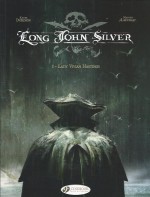
Long John Silver volume 1: Lady Vivian Hastings


By Xavier Dorison & Mathieu Lauffray, translated by Jerome Saincantin (Cinebook)
ISBN: 978-1-84918-062-7

British and European comics have always been much more comfortable and imaginative with period piece strips than our American cousins and far more comfortable when reinterpreting classical fiction for jaded comicbook audiences. The happy combination of familiar exoticism, past lives and world-changing events blended with drama, action and, most frequently, broad comedy has resulted in a uniquely narrative art form suited to beguiling readers of all ages and tastes.

Our Franco-Belgian brethren in particular have made an astonishing success out of repackaging days gone by and this particularly enchanting older-readers yarn forgoes the laughs whilst extending the adventures of literature’s greatest rogue into a particularly engaging realm of globe-girdling thriller.

Robert Louis Stevenson’s Treasure Island was originally serialised from 1881-1882 in Young Folks magazine as Treasure Island or, the mutiny of the Hispaniola, written by the pseudonymous Captain George North.

It was collected and published as a novel on May 23rd 1883 and has never been out of print since. A landmark of world storytelling it has been dramatised innumerable times and adapted into all forms of art. Most significantly the book created a metafictional megastar – albeit at best an anti-hero – as immortal as King Arthur, Sherlock Holmes, Tarzan or Superman.

Almost everything the public “knows” about pirates devolves out the book and its unforgettable, show-stealing star Long John Silver…

Writer Xavier Dorison (Le Troisième Testament, Prophet, Sanctuaire, W.E.S.T.) was born in Paris in 1970 and graduated business school before moving into storytelling. He works as author, film writer, lecturer and movie script doctor. He began the award-winning Long John Silver in conjunction with Prophet collaborator Mathieu Lauffay (Oath of Amber, Axis Mundi) in 2006, with the fourth volume released in 2013.

Lauffay is also a Parisian born in 1970. He spends his days illustrating, drawing comics, crafting RPGs and working as a concept designer for movies. His art has graced such international items as Dark Horse Comics’ Star Wars franchise, games like Alone in the Dark, the album Lyrics Verdun, February 21, 1916 – December 18, 1916, Tarzan and much more…

Their continuation of the piratical prince is a foray into much darker, more mature fare which begins some years after the affair of the Hispaniola; opening in 1785 in the vast inner recesses of the Amazon.

Far upriver, the expedition of treasure-hunting Lord Byron Hastings appears to have finally foundered after years searching for the lost city of Guiana-Capac at the very moment of his greatest triumph.

Meanwhile in England, Hastings’ profligate and wanton wife Lady Vivian is pondering the shameful, daily growing evidence of her dalliance with wealthy and so-very-generous neighbour Lord Prisham. With a baby in her belly and a husband gone for three years, she is considering having Byron declared dead and a hasty remarriage…

Suddenly shattering all her plans is her despised brother-in-law who turns up at the door with an old native named Moxtechica bearing a message – and a map – apparently from her long-lost husband.

Prudish Royal Naval officer Edward Hastings delights in telling the scheming strumpet he abhors that his brother has succeeded but now needs more funds. She is to sell everything – including all the treasured family possessions, manor house and lands she brought to the marriage – to raise £100,000.

To ensure this the absentee Lord has named Edward as sole Proxy and the martinet delights in giving the high-born trollop her marching orders. He strongly urges her to confine herself to a convent and save them all further shame and disgrace…

Raging in front of her conniving maid Elsie, Lady Vivian considers a number of retaliatory tactics before settling upon the most bold and dangerous. After announcing to the stunned Edward that she will accompany him to South America and reunite with her beloved husband, the fallen noblewoman seeks out a doctor to take care of the “problem” she is – for the moment, still secretly – carrying…

Dr. Livesay is a decent god-fearing soul who has led a quiet, prosperous life since his adventures on Treasure Island. However it is not her current condition which has brought Vivian to the learned man’s door, but rather persistent tales of his scurrilous former acquaintance: a formidable, peg-legged rogue with a reputation for making life’s difficulties disappear…

Against his better judgement, Livesay capitulates to the Lady’s urgings and takes her to Bristol to meet retired sea-cook and owner of the Spy Glass tavern, John Silver.

Amidst the (alleged) former pirate’s inner circle of scary-looking confederates she relates the story of the Spaniard Pizarro‘s discovery of a City of Gold and how, centuries later, her husband has found it.

The rest of her sorry tale tumbles out and her plans to travel there with a few capable men – and the far from willing Elsie – to make the riches her own…

All she needs is for Silver and his colleagues to infiltrate Edward’s crew, seize the ship he intends to charter and complete the voyage under her command…

Livesay is outraged but, unable to convince Vivian to desist or Silver to reject her offer, the chivalrous sage joins them in a vain hope that he can keep the debased woman from mortal harm.

Edward has meanwhile commissioned a ship from the unsavoury Samir Razil. “The Ottoman” has his own plans in play but old associate Silver soon bloodily scuppers them. The sea-cook has never had any time or pity for slavers – even in the debilitated condition he strives so desperately to conceal from everyone around him…

With the Neptune now secretly under his control and having forced Lady Vivian to sign a sacrosanct Pirates Contract, the sinister scheme and the ramshackle vessel get underway with Captain Edward Hastings none the wiser. Livesay is increasingly concerned about Vivian’s pregnancy but the savage Moxtechica seems able to help her with strange brews that he concocts…

With all the players in place the Good Ship Neptune casts off into the icy channel under stormy skies, setting sail for the doom-laden Americas…

To Be Continued…

Moody, suspenseful and startlingly gripping, the further exploits of Long John Silver are a masterpiece of adventure fiction worthy of Stevenson’s masterpiece and might even convince a few more folks to actually read the original novel.
© Darguad, Paris, 2007 by Dorison & Lauffray. All rights reserved. English translation © 2010 Cinebook Ltd.

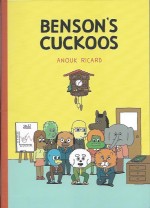
Benson’s Cuckoos


By Anouk Ricard, translated by Helge Dascher (Drawn & Quarterly)
ISBN: 978-1-77046-138-3

Here’s another superb example of sophisticated yet simple Euro-cartooning designed to charm and challenge in equal amounts.

Couched in British TV terms, this beautifully bonkers animorphic fable of modern life is akin to watching David Brent guest star in Little Britain whilst apparently coming down off a mixed selection of unsanctioned recreational pharmaceuticals, but for those with better things to do than stay glued to the goggle box, here’s a more informative, longer-winded appreciation…

Anouk Ricard is an extremely gifted storyteller, author, artist and animator who hails from Istres in the South of France. Her creative output ranges from puzzles to films, book and magazine illustration to science tracts and much, much more.

Her comic albums – both for children and adult audiences – have garnered many awards and nominations, with the all-ages Anna and Froga series (2004) and Galaxy Darling (2009, with Hugo Piette in Spirou) particularly popular amongst critics and the public.

She was born in 1970 and graduated from the Arts décoratifs de Strasbourg in 1995 before beginning her multi-directional career. Now based in Lyon, 2012 saw Ricard win a raft of awards and honours for Coucous Bouzon, a wryly surreal anthropomorphic satirical parody on modern day office practice and politics.

The disturbing and hilarious lampoon, delivered as a calculatedly naïve, faux juvenile soap opera melodrama, is now available in English and will presumably be racking up a few more gongs and trophies…

Benson’s Cuckoos produces and distributes those bird-themed clocks loved and loathed in equal amounts by holidaygoers everywhere, and our cautionary tale begins when highly strung Richard (he’s the blue duck on the cover) goes for an interview for an office position which has suddenly and mysteriously become vacant.

The encounter is a nightmare. Mr. Benson is erratic, unfocused and quite emotionally detached – and possibly completely mad. Told to turn up on Monday, Richard leaves the interview unsure whether he has got the job or not…

His first day is even stranger. For starters he has to provide his own computer and the first colleague he meets threatens him sexually…

Dragged into a staff meeting within minutes of setting up, he meets receptionist Sophie who tells him how George – the person he’s replacing – simply vanished one day. She seems nice but won’t let him sit in George’s chair…

The day goes downhill from there and the job appears less and less appealing as the hours pass. Almost everybody is terse and self-absorbed when not outright hostile and Benson roams around wearing strange hats and alternately threatening to fire everybody and over-sharing uncomfortable personal observations.

The next day, pressured for a progress report, Richard opens a fresh can of worms when he innocently asks to see George’s old files. Amidst an aura of sullen intractability, Sophie takes pity on him and passes on an old one but it mysteriously vanishes from his desk before he can read it…

Feeling disturbed he stops in for a session with his analyst but the self-absorbed charlatan just fobs him off with a fresh prescription for antidepressants.

Desperate for a little respite when he arrives home, Richard collapses on the couch and turns on the TV.

There’s a Crimewatch style show on. Lost and Found is featuring the case of a wife whose husband never came home from work. His name was George McCall and he was the Accounts Manager at Benson’s Cuckoos…

The next day the film crew turns up at work and all too soon Richard and Sophie are exposed to the harsh and unjust scrutiny of trial by media…

From there the strange tale inescapably escalates into a bizarre and paranoiac crime-caper punctuated by a succession of further odd events and mysterious disappearances which inexorably reduce our reluctant hero to the status of an alienated, disoriented and powerless player in a grand conspiracy.

Moreover, for Richard and Sophie the course of true love runs anything but smooth before the hyper-surreal and increasingly absurdist drama is concluded…

Moody, calculatedly deranged and feeling like Kafka seen through rainbow-tinted spectacles, Benson’s Cuckoos is a sublime psychological fantasy, an enticingly funny comic treatise on the hidden perils of being a grown up and a grand old-fashioned mystery thriller that will delight any reader smart enough to realise that ducks don’t use computers but can always find some way to get into trouble…

© 2014 Anouk Ricard. Translation © 2014 Helge Dascher. All rights reserved.

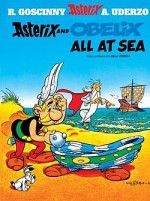
Asterix and the Secret Weapon


By Uderzo, translated by Anthea Bell & Derek Hockridge (Orion Books)
ISBN: 978-0-75284-716-0

The son of Italian immigrants, Alberto Aleandro Uderzo was born on April 25th 1927, in Fismes, on the Marne. As a child reading Mickey Mouse in Le Pétit Parisien he showed artistic flair from an early age but dreamed of becoming an aircraft mechanic. Albert became a French citizen when he was seven and found employment at 13, apprenticed to the Paris Publishing Society, where he learned design, typography, calligraphy and photo retouching.

When World War II broke out he spent time with farming relatives in Brittany and joined his father’s furniture-making business. Brittany beguiled and fascinated Uderzo: when a location for Asterix‘s idyllic village was being mooted, the region was the only choice.

In the post-war rebuilding of France, Uderzo returned to Paris and became a successful artist in the recovering nation’s burgeoning comics industry.

His first published work, a pastiche of Aesop’s Fables, appeared in Junior and in 1945 he was introduced to industry giant Edmond-François Calvo (whose own masterpiece The Beast is Dead is far too long overdue for a commemorative reissue…).

The tireless Uderzo’s subsequent creations included the indomitable eccentric Clopinard, Belloy, l’Invulnérable, Prince Rollin and Arys Buck. He illustrated Em-Ré-Vil’s novel Flamberge, worked in animation, as a journalist and illustrator for France Dimanche, and created the vertical comicstrip ‘Le Crime ne Paie pas’ for France-Soir.

In 1950 he illustrated a few episodes of the franchised European version of Fawcett’s Captain Marvel Jr. for Bravo!

An inveterate traveller, the artistic prodigy met Rene Goscinny in 1951. Soon becoming fast friends, they decided to work together at the new Paris office of Belgian Publishing giant World Press. Their first collaboration was in November of that year; a feature piece on savoir vivre (how to live right or gracious living) for women’s weekly Bonnes Soirée, following which an avalanche of splendid strips and serials poured forth.

Jehan Pistolet and Luc Junior were created for La Libre Junior and they resulted in a western starring a “Red Indian” who eventually evolved into the delightfully infamous Oumpah-Pah. In 1955, with the formation of Édifrance/Édipresse, Uderzo drew Bill Blanchart for La Libre Junior, replaced Christian Godard on Benjamin et Benjamine and in 1957 added Charlier’s Clairette to his portfolio.

The following year, he made his debut in Tintin, as Oumpah-Pah finally found a home and a rapturous audience. Uderzo also drew Poussin et Poussif, La Famille Moutonet and La Famille Cokalane.

When Pilote launched in 1959 Uderzo was a major creative force for the new magazine collaborating with Charlier on Tanguy et Laverdure and launching – with Goscinny – a little something called Asterix…

Although the gallant Gaul was a massive hit from the start, Uderzo continued working on Les Aventures de Tanguy et Laverdure, but once the first hilarious historical romp was collected in an album as Astérix le gaulois in 1961 it became clear that the series would demand most of his time – especially since the incredible Goscinny never seemed to require rest or run out of ideas.

By 1967 Asterix occupied all Uderzo’s time and attention, so in 1974 the partners formed Idéfix Studios to fully exploit their inimitable creation. When Goscinny passed away three years later, Uderzo had to be convinced to continue the adventures as writer and artist, producing a further ten volumes until 2010 when he retired.

After nearly 15 years as a weekly comic serial subsequently collected into book-length compilations, in 1974 the 21st (Asterix and Caesar’s Gift) was the first to be published as a complete original album before serialisation. Thereafter each new release was an eagerly anticipated, impatiently awaited treat for the strip’s millions of fans…

More than 325 million copies of 35 Asterix books have sold worldwide, making his joint creators France’s best-selling international authors, and now that torch has been passed and new sagas of the indomitable are being created by Jean-Yves Ferri and Didier Conrad…

One of the most popular comics features on Earth, the collected chronicles of Asterix the Gaul have been translated into more than 100 languages since his debut, with twelve animated and live-action movies, TV series, assorted games, toys, merchandise and even a theme park outside Paris (Parc Astérix, naturellement)…

Like all the best stories the narrative premise works on more than one level: read it as an action-packed comedic romp of sneaky and bullying baddies coming a-cropper if you want or as a punfully sly and witty satire for older, wiser heads. We Brits are further blessed by the brilliantly light touch of master translators Anthea Bell & Derek Hockridge who played no small part in making the indomitable little Gaul so very palatable to English tongues.

Many of the intoxicating epics are set in various exotic locales throughout the Ancient World, with the Garrulous Gallic Gentlemen reduced to quizzical tourists and bemused commentators in every fantastic land and corner of the civilisations that proliferated in that fabled era. The rest – more than half of the canon – take place in Uderzo’s beloved Brittany, where, circa 50 B.C., a little hamlet of cantankerous, proudly defiant warriors and their families resisted every effort of the mighty Roman Empire to complete the conquest of Gaul.

The land is divided by the notional conquerors into provinces of Celtica, Aquitania and Amorica, but the very tip of the last just refuses to be pacified…

Whenever the heroes were playing at home, the Romans, unable to defeat the last bastion of Gallic insouciance, futilely resorted to a policy of absolute containment. Thus the little seaside hamlet was permanently hemmed in by the heavily fortified garrisons of Totorum, Aquarium, Laudanum and Compendium.

The Gauls couldn’t care less, daily defying and frustrating the world’s greatest military machine simply by going about their everyday affairs, protected by the miraculous magic potion of resident druid Getafix and the shrewd wits of the diminutive dynamo and his simplistic, supercharged best friend Obelix…

Firmly established as a global brand and premium French export by the mid-1960s, Asterix the Gaul continued to grow in quality as Goscinny and latterly Uderzo toiled ever onward, crafting further fabulous sagas and building a stunning legacy of graphic excellence and storytelling gold.

The 29th volume was Asterix and the Secret Weapon (originally titled Astérix: La Rose et le Glaive); released in 1991 and Uderzo’s fifth as a solo creator. It began in the boisterous and far from idyllic little hamlet with a multi-generational battle of the sexes in full swing…

The perpetual jockeying for position between males and females comes to a head when Chief’s wife Impedimenta and the village matrons fire the Bard Cacofonix from his role as teacher of the children and bring in a new educator more to their liking.

The Bard Bravura is a woman – and someone who knows how to get things done properly. With the village men reluctant to get involved Cacofonix has no choice but to resign in high dudgeon and go live in the forest…

The situation worsens when the mothers demand a party to welcome their new Bard and Chief Vitalstatistix is bullied into arranging it. At the feast Bravura sings and is discovered to be just slightly less awful than Cacofonix ever was. At least her bellowing doesn’t result in instant thunderstorms…

Meanwhile in Rome Julius Caesar is listening to another bright spark with an idea to defeat and destroy the Gallic Gadflies who won’t admit they are part of his empire. Wily Manlius Claphamomnibus however is convinced he has discovered a fatal chink in the rebels’ indomitable armour…

Bravura is rapidly becoming unwelcome to at least half the village: enflaming the women with her talk of “masculine tyranny”, and aggravating the men by singing every morning before the sun comes up. She even manages to offend easygoing Obelix by refusing to let him bring canine wonder Dogmatix to the kindergarten class he attends every day…

Most shocking of all, the Bard has convinced the women to wear trousers rather than skirts and Impedimenta has taken to being carried around on a shield just like a proper Chief…

With the situation rapidly becoming intolerable, outraged Vitalstatistix orders his top troubleshooter to sort it out but Bravura won’t listen to the diminutive warrior. She thinks Asterix is an adorable little man and bamboozles him into giving her his hut.

… And at sea a band of phenomenally unlucky pirates attack a Roman ship filled with Claphamomnibus’ secret weapons and quickly wish it had been the Gauls who usually thrash and sink them instead of these monsters sending them to the bottom of the sea…

Relations have completely broken down in the village. The Bard’s suggestion that Impedimenta should be chief has resulted in a massive spat and Vitalstatistix too has repaired to the forest for the foreseeable future. It’s not long before every man in town has joined him…

In an effort to calm the seething waters Druid Getafix had organised a referendum to decide who should rule, but whilst all the women naturally voted for Impedimenta, no men except Asterix and Obelix dared to vote for Vitalstatistix. After all, they weren’t married…

When the little warrior confronts Bravura she again belittles him and even suggests that if they get together they could rule the village jointly. Incensed beyond endurance the furious hero slaps her when she kisses him and immediately crumbles in shock and horror.

He has committed the unpardonable sin. The Gaulish Code utterly forbids warriors to harm women or maltreat guests and in his rage he has betrayed his most sacred principles…

He’s still in shock when Getafix defends him at a trial where Bravura even angers the wise old sage to the point that he also storms off to join Cacofonix and Vitalstatistix…

Before day’s end the entire male contingent – overcome by a wave of masculine solidarity and “Sod This-ery” – is living a life of carefree joy under the stars and Impedimenta is rightly concerned with how they village can be defended without the Druid’s magic potions.

Bravura has an answer to that too: an infallible peace plan to present to the besieging Romans…

Meanwhile on the dock at Aquarium, the Secret Weapons are disembarking to the amusement and – quite quickly – sheer terror and consternation of the weary garrison. From the safety of some bushes Asterix and Obelix watch in astonishment as an army of ferocious women – a female Legion of lethal warriors – take over the running of the fort and prepare for total war….

Extremely worried the spies quickly report back to the men in the trees. The situation is truly dire for no honourable Gaul could possibly fight a woman. Despite the ongoing domestic situation Vitalstatistix decides the women of the village must be warned and despatches the horrified Asterix and still-bewildered Obelix to carry the message.

Worried and nervous at their potential reception the unlikely lads wander into a rather embarrassing fashion show and are greeted with a wave of questions from the women who are missing their men more that they realised…

Bravura arrogantly refuses the offer to provide the women with their own magic potion, confident in her peace plan, but when she meets with Claphamomnibus she is beaten, abused and humiliated by the cocky Roman but finds a sympathetic ear and keen collaborator in Asterix who has a scheme to take vengeance and send the notionally irresistible female furies packing…

It will, of course, mean the men and women of the village working closely together…

Although quite heavy-handed by today’s standards, this is at its core a superb topical lampooning of the endlessly entertaining “Battle of the Sexes”, combining swingeing satire, broad slapstick and surreal comedy in a delicious confection of sexual frisson and eternally evergreen “The Wife…” jokes.

Bravura is one of Uderzo’s most enigmatic caricatures, bearing resemblances to a number of high profile female public figures of the time, including then French Prime Minister Edith Cresson, Belgian tele-journalist Christine Ockrent and even German operatic star Diana Damrau, but the grievances of both male and female combatants are as unchanging and perennial as the characters here who enact and – for a short time at least – embody them…

Stuffed with light-hearted action, good-natured joshing, raucous, bombastic, bellicose hi-jinks and a torrent of punishing puns to astound and bemuse youngsters of all ages, this tale again celebrates the spectacular illustrative ability of Uderzo and proves that the potion-powered paragon of Gallic Pride will never lose its potent punch.
© 1991 Les Editions Albert René, Goscinny/Uderzo. Revised English translations © 1991, 2002 Les Editions Albert René, Goscinny/Uderzo. All rights reserved.

Papyrus volume 4: The Evil Mummies


By Lucien De Geiter, coloured by Georges Vloeberghs & translated by Luke Spear (Cinebook)
ISBN: 978-1- 905460-84-000000

Papyrus is the masterfully evocative magnum opus of Belgian cartoonist Lucien de Gieter. It premiered in 1974 in legendary weekly Spirou, running to more than 30 albums, consequently spawning a wealth of merchandise, a television cartoon show and a video game.

De Gieter was born in 1932 and studied at Saint-Luc Art Institute in Brussels before going into industrial design and interior decorating. He made the jump into sequential narrative in 1961, first through ‘mini-récits’ (fold-in, half-sized booklets) inserts for Spirou, starring his jovial little cowboy ‘Pony’, and later by writing for art-star regulars such as Kiko, Jem, Eddy Ryssack and Francis.

He later joined Peyo’s studio as inker on ‘Les Schtroumpfs’ (The Smurfs) and took over the long-running newspaper strip ‘Poussy’.

In the 1960s De Gieter launched South Seas mermaid fantasy ‘Tôôôt et Puit’ whilst Pony was promoted to the full-sized pages of Spirou, deep-sixing the Smurfs gig to expand his horizons working for Tintin and Le Journal de Mickey.

From 1972-1974 he assisted cartooning legend Berck on ‘Mischa’ for Germany’s Primo, whilst applying the finishing touches to his latest project: a historical confection which would occupy his full attention and delight millions of fervent fans for the next forty years.

The annals of Papyrus encompass a huge range of themes and milieux, blending Boy’s Own adventure with historical fiction and interventionist mythology: the epic yarns gradually evolving from traditionally appealing “Bigfoot” cartoon style and content towards a more realistic, dramatic and authentic iteration, through means of light fantasy romps always leavened and flavoured with the latest historical theories and discoveries.

The named star is a fearlessly forthright peasant boy (more accurately a fisherman) favoured by the gods who rose to become a hero of Egypt and friend to Pharaohs.

As a youngster the plucky Fellah was blessed by the gods and given a magic sword courtesy of the daughter of crocodile-headed Sobek. The lad’s first task was to free supreme god Horus from imprisonment in the Black Pyramid of Ombos thereby restoring peace to the Double Kingdom, but his most difficult and seemingly never-ending duty was to protecting Pharaoh’s wilful, high-handed and insanely danger-seeking daughter Theti-Cheri – a princess with an unparalleled gift for seeking out trouble…

The Evil Mummies is the fourth Cinebook translation (19th album in the run and originally released in 1996 as Les Momies maléfiques); a riotous rollercoaster of all-action fearsome fantasy which begins in the rocky fastnesses of the deep sands where Pharaoh’s headstrong daughter impatiently leads an expedition to retrieve the revered mummies of the fabled Ten Archers of Sekenenre Taa from the lost Hammamat mines where they fell defending the nation from the invading Hyksos.

The bodies are to be returned in honour and interred in Thebes, but first they have to find them…

Amongst Theti-Cheri, her protector Papyrus and all the assorted, hurrying specialists is sometime court jester Puin in charge of the precious pack animals – although it would be more accurate to say that his phenomenally intelligent donkey Khamelot is actually guiding all those reins…

In their haste to finish the mission the party are shamefully negligent and forget to make proper obeisance to divine Seth, Master of the Desert Wastes. Soon a furious cloud image warns of the dark overlord’s wrath. Nervously shrugging it off, the expedition prepares for sleep but is suddenly devastated by a terrifying flash-flood which manifests from nowhere to scatter the impious intruders.

Papyrus awakes battered and bruised over a lofty precipice. He has been saved from crushing doom by a great silver falcon, favoured beast of mighty Horus…

In trying to retrieve his magic sword the boy-hero triggers a flaming omen which points him a certain direction. Setting off into the scorching desert he slowly follows a treacherous trail and with the falcon’s timely aid uncovers a deep crevice and shaft into a deep, long-forgotten mine.

In a chamber far within the abandoned workings is a golden statue of Seth and ten roughly hewn coffins in a makeshift temple…

Curiosity overcoming caution, Papyrus uncovers a ghastly, poorly preserved mummy in one but the second – already opened – box holds Theti-Cheri herself: alive but bound and gagged.

When he cuts her loose she descends into utter panic, frantically warning that she had been captured by walking corpses: the angry archers of Sekenenre Taa…

He is suddenly saved from a lethal arrow by the ever-present falcon but in his panicked flight is separated from the princess, before plunging into open air and landing in the mine’s ancient water-filled well.

Recovering his wits, he trails Theti and finds her on and the bird on a rooftop. She claims to have been saved by Horus himself.

Sadly the awakened mummies are determined and unstoppable. With his magic sword useless against the already dead, the boy is about to be crushed by the restless revenants and is only rescued when the princess plunges one of the monsters’ own arrows into a dusty body…

Before long though, the buried temple is crawling with revived and raging mummy murderers and the terrified youths are again racing in panic…

Spotting a trickle of water on a stony rock face Papyrus smites the wall with his sword and a watery tumult catapults them to relative safety in the well.

With the water flooding away, however, the pair can see two huge golden statues of Horus at the bottom and reason that they must restore them to the temple to quiet the still marauding mummies…

Seth unleashes more magical mischief to deter the already overwhelmed children, but Papyrus’ defiance and the lucky appearance of Khamelot quickly turn the tables. The unthinking dead things mistake the donkey for their own ghastly long-eared, long-nosed dark lord and rapidly retreat…

With aid from the faithfully following pack animals the Horus statues are quickly restored to their rightful stations but Theti insists that the now-dormant archer mummies must be respectfully gathered up and transported to their to proper resting place in Thebes as per her father’s plans…

As the bizarre entourage makes its laborious way back across the burning sands, a number of further strange encounters plunges both princess and protector into another hidden tomb. This one holds the real, sacredly interred Ten Archers of Sekenenre Taa. But if that’s the case, who or what then have they been shipping back at such tremendous, exhausting effort?

Solving that enigma, the pair still have to defeat an army of bandits and pillagers but the battle leads them to the impossible plain where the lost members of the original expedition have been enduring the slow punishment of Seth…

Epic, funny, enthralling and masterfully fast-paced, this is another amazing adventure to thrill and beguile lovers of wonder from nine to ninety-nine, again proving Papyrus to be a sublime addition to the family-friendly pantheon of continental champions who wed heroism and humour with wit and charm, and anybody who has worn out those Tintin and Asterix albums would be wise beyond their years to seek out all these classic chronicles.
© Dupuis, 1996 by De Gieter. All rights reserved. English translation © 2010 Cinebook Ltd.

Iznogoud volume 5: A Carrot for Iznogoud


By Goscinny & Tabary,translated by Anthea Bell & Derek Hockridge (Cinebook)
ISBN: 978-1-84918-021-4

For the greater part of his too-short lifetime (1926-1977) René Goscinny was one of the most prolific and most-read writers of comic strips the world has ever seen. Incredibly, he still is.

Among his most popular comic collaborations are Lucky Luke, Le Petit Nicolas and, of course Asterix the Gaul, but there were so many others, such as the dazzling, dark deeds of a dastardly usurper whose dreams of diabolical skulduggery all proved to be ultimately no more than castles in the sand…

Scant years after the Suez crisis, the French returned to the hotly contested deserts when Goscinny teamed with sublimely gifted Swedish émigré Jean Tabary (1930-2011) – who numbered Richard et Charlie, Grabadu et Gabaliouchtou, Totoche, Corinne et Jeannot and Valentin le Vagabond amongst his other hit strips – to concoct the innocuous history of imbecilic Arabian (im)potentate Haroun el-Poussah.

However it was the strip’s villainous foil, power-hungry vizier Iznogoud, who stole the show – possibly the conniving little imp’s only successful coup.

Les Aventures du Calife Haroun el Poussah was created for Record; the first episode appearing in the January 15th issue in 1962. A minor hit, it subsequently jumped ship to Pilote – a comics magazine created and edited by Goscinny – where it was refashioned into a starring vehicle for the devious little rat-bag who had increasingly been hogging all the laughs and limelight.

Like all the best storytelling, Iznogoud works on two levels: as a comedic romp with sneaky baddies invariably hoisted on their own petards and coming a cropper for younger readers, whilst older, wiser heads revelled in the pun-filled, witty satire: the same magic formula which made its more famous cousin Asterix such a global success.

…And just like the saga of the indomitable little Gaul, this irresistibly addictive Arabian nonsense is adapted here by master translators Anthea Bell & Derek Hockridge who made those Roman Follies so very palatable to the English tongue.

Moreover the deliciously malicious whimsy is always heavily laden with manic absurdity and brilliantly applied creative anachronism to keep the plots bizarrely fresh and inventive.

Insidious anti-hero Iznogoud is Grand Vizier to affable, easy-going Haroun Al Plassid, Caliph of Ancient Baghdad, but the sneaky little toad has loftier ambitions, or as he is always shouting “I want to be Caliph instead of the Caliph!”

The revamped series launched in Pilote in 1968, quickly becoming a massive European hit, with 29 albums to date (carried on by Tabary’s children Stéphane, Muriel and Nicolas), his own solo comic, a computer game, animated film, TV cartoon show and even a live action movie.

When Goscinny died in 1977 Tabary added the scripting to his sublimely stylish illustration (from the 13th album onwards), moving to book-length complete tales, rather than the compilations of short punchy stories that typified the collaborations.

This fifth Cinebook album was actually the seventh French album (released in 1971 as Une carotte pour Iznogoud) with the lead tale an exceptional, extended epic comprising half the book, bolstered by a triumvirate of shorter yarns and prefaced as ever with a handy catch-up profile page of the usual suspects…

The eponymous A Carrot for Iznogoud’, is a rare bird indeed as the verminous Vizier is all but absent from proceedings which commence when gentle, isolated and very dim Haroun Al Plassid finally gets an inkling of what his trusted deputy is truly like…

Stealing out into Baghdad disguised as an insurance salesman, the Caliph finally gets the message that his beloved people fear, despise and revile his precious Iznogoud. Shocked and dismayed he ponders what to do before – politely – accidentally aiding an ancient wizard (or perhaps crazy old coot…).

In gratitude the dotard tells him of a fabled vegetable that makes people nice. Desperately keen to redeem and “cure” his advisor, the Caliph instantly dashes off on a monumental solo voyage of discovery to secure some of the legendary “Carrot”.

The logic is simple: if eating carrots makes you nice all he has to do is find a place where people are pleasant, kind, honest and generous. The deed is nowhere near as simple as the thought – or indeed, the Caliph…

After exhausting and enraging the grocers and market sellers of his own lands, the search takes the determined Haroun Al Plassid to neighbouring kingdoms, across deserts and even oceans (where he encounters a certain band of pirates moonlighting from their damp and dangerous day jobs in Asterix), but everywhere all he finds are conmen, chancers, rude brutes and impatient surly types just like the ones at home in Baghdad.

He is almost ready to give up when he is sold as a slave to lordly Rhu’Barbfoul in distant Lastyearatmarienbad and sent to the kitchens to grate carrots for soup.

Excited beyond belief he begs his master to give him a carrot and release him, which after hearing the tale of woe and (perhaps) thanks to the steady diet of nice-making veg, the nervous lord does…

The journey home is no less dramatic or magical, though fraught with painful ironies, but even after the Caliph reclaims his vacated throne, the ameliorating herb he fought so hard to secure does not at the last find its way to its intended target…

Wry and deliciously surreal, the epic is an especial change of pace as the evil architect of all woes only appears in two panels over the 19 hilarious pages…

He is completely present for the three venal vignettes which follow, beginning with an outrageously bizarre close encounter in the desert entitled ‘Magic-Fiction’.

When Iznogoud and bumbling, long-suffering crony Wa’at Alahf are taking a break from the sorcery-besotted city of Baghdad they stumble across a couple of Martian explorers. The curious, affable alien explorers want facts and data for their records but, after seeing the power of their Spatial-Temporaliser ray-guns, all the Vizier can envisage is the effect the weapons would have on the royal simpleton he wants to replace: an indolent oaf who couldn’t answer a straight question if his dinner depended on it…

Sadly, after sneaking the E.T.’s back to the palace, Iznogoud’s intemperate temperament gets the better of him before his plan can succeed…

Baghdad is a city that suffers with an excess of heat but in ‘Iznogoud on Thin Ice’the vile vizier hears tell of a drinks seller whose wares are always freezing cold. Ever inquisitive and always looking for an angle he investigates and discovers that the unfortunate lady in charge is so unseemly that anyone who glimpses her face is frozen solid with shock. She just stacks the chilled out victims in her cellar and stores her drinks beside them…

The infernal imp’s heart soars! All he has to do is get the Caliph to peek under the appalling and enigmatic Gehtorehd‘s ever-present veil and the throne is his…

Sadly her gift doesn’t work on anyone with an elevated temperature, so even after getting the gorgon into the palace Iznogoud has to wait for the doctors to cure the Caliph who has a touch of fever, All he has to do is wait a while, but Iznogoud is a very impatient potentate-in-waiting…

There’s more direct skulduggery afoot in ‘Tried and Tsetsed’ which closes this compilation of crazy criminality. When bribe-taking Iznogoud officially greets an embassage from Africa he is given the most dangerous beast they know as a placating present by the chief ambassador who came ill-prepared to grease palms.

He is less than impressed until he is advised that the dread Tsetse Fly can put victims into a permanent slumber with one little bite. Now seeing his dreams falling into place at last, the Vizier lays his plans to introduce the bug to his boss, but is distracted by his idiot servant Wa’at Alahf and releases the flying terror in the wrong room…

Snappy, fast-paced hi-jinks and abundantly stocked with gloriously agonising pun-ishments (see what I did there?), this mirthfully infectious series is a household name in France where “Iznogoud” is common parlance for a certain type of politician: over-ambitious, unscrupulous – and frequently not that tall.

When first released in Britain in the 1970s, these tales made little impression, but hopefully this snappy, wonderfully moreish strip will finally find an appreciative audience among today’s more internationally aware, politically jaded comics-and-cartoon savvy Kids Of All Ages…
© 1971 Dargaud Editeur Paris by Goscinny & Tabary. All rights reserved.

Glacial Period


By Nicolas De Crécy translated by Joe Johnson (NBM ComicsLit/Louvre: Musée du Louvre Éditions)
ISBN: 978-1-56163-855-0

In 2005 one of the greatest museums in the world began an intriguing ongoing project with the upstart art form of comics; inviting some of the world’s most accomplished masters of graphic narrative to create new works in response to the centuries of acquired treasures residing within the grand repository of arts, history and culture.

The tales are produced in close collaboration with the forward-looking authorities of the Louvre, and always push the envelope of what can be accomplished by master craftsman inspired by their creative antecedents and forebears. These are no thinly-concealed catalogues of exhibition contents gift-wrapped in cartoon terms to gull potential visitors off their couches and into a stuffy edifice of public culture, but vibrant and challenging comics events calculated to make you think again about what creativity and history mean…

The first of those stellar tomes, originally released as Période glaciaire, has been recently repackaged as a deluxe and lavish oversized (286 x 222mm) hardback edition by NBM giving a readers that rarest of things – a second bite of the cherry…

Born in Lyon in September 1966 into a large family of artistic overachievers,Nicolas de Crécy was, in 1987, part of the first graduating class of students from de l’école de Bande dessinée des Beaux-Arts d’Angoulême.

After working at Studios Disney at Montreuil, he published his first album Foligatto in 1991. Since then he has produced more than thirty albums; both one-off books such as Journal d’un fantôme, Escales, Plaisir de myope and La Nuit du grand méchant loup and series/serials such as Léon la came, Monsieur Fruit and Salvatore.

He is justly considered a wünderkind of French comics and his unique take on the role of the Louvre is – typically – boldly off-kilter, ingeniously amusing and fantastically sardonic…

Thousands of years from now Earth is a frozen dustheap. Scrabbling through its barren remains one day comes a turbulent group of scientists and archaeologists. The humans are a tendentious bunch, constantly bickering and pontificating on what the civilisation they are obsessed with understanding was like. Most have their own theories and perhaps only looking for finds to validate their views.

Far more open and philosophical are the tubby talking dogs who act as frontrunners; their hyper-keen noses sniffing out areas where potential finds are buried. Especially sensitive – in every meaning of the term – is Hulk.

The rotund canine rogue can feel the tension in the party and when he sleeps (as often as possible) he has strange dreams and visions of beautiful old things…

When he and official expedition leader Juliette are briefly separated from the group in a storm the ensuing calm reveals an ancient structure freshly uncovered. Soon the humans are all over the “temple” and making grand plans, but the irascible mutt knows this find is mere dross and rubbish…

Another angry discussion results in top historian Paul being left behind to research and catalogue the temple whilst the others press on to uncover the fabled lost metropolis buried somewhere in this desolate region…

Hulk isn’t fooled: he sees that imperious alpha male Gregor has designs on Juliette and is slowly isolating her from the others. After she ignores the canny canine’s warnings, Hulk wanders off into the cold night and next morning impatient Gregor convinces the party to go on without him.

Alone and no longer distracted, Hulk’s incredible faculties detects a faint scent and he begins to dig down. Before long he has broken into a stone vault filled with fascinating artefacts and, as ever, following his nose discovers a mesmerising maze of corridors, revealing incredible facts about the lost civilisation…

Under the cold light skies above, Juliette and Gregor clash over who is truly in charge and poor studious Joseph suffers for his chivalry when he intervenes. Further interpersonal violence is only prevented when the treacherously unstable landscape shifts and from the icy crust an ancient structure begins to inexorably rise.

Hysterically elated, Gregor drags the stunned archaeologists into the fabled metropolis and all are stunned by the images and artefacts they find. Soon they are frantically hypothesising, guessing and just plain spitballing as they plunge deeper and deeper into the still shaky and shifting edifice. Entranced and intoxicated by the panoply of pictures and statues, the humans’ imaginations are running amok…

Soon from outside Esteban calls out to them – he has spotted another glistening building forcing its way out of the snows…

The treasure trove seems unending: a final repository of ancient magnificence that leads them ever inward as the monumental mausoleum inexorably pushes upwards into the dying sunlight.

Elsewhere, deep below them, Hulk is making his own explorations and encounters something uncanny and bizarre. Soon he is conversing with the oldest statues and objet d’art in the vaults of history. The relics know that the Louvre is in its tectonic death throes and need his help to save all the wonderful “living” treasures which have waited here for patient millennia…

Sharing with him the true stories, mistakes and triumphs of the past races of man, dog and anxious, animated exhibits unite in a desperate attempt to save their quintessential timeless splendours from final obliteration…

Accompanied by a formidable and informative List of Works which feature most prominently in this captivating yarn, Glacial Period is a bemusing, wide-eyed and light-hearted epic as well as an utterly engrossing and darkly charming graphic discussion on the nature and value of art and our eternal ever-changing relationship to it. It is also an entrancing, witty literal shaggy dog story in comics form that reads superbly even if you wouldn’t be caught dead in a museum, French or otherwise.

Why not give it a go and see if your cool attitude thaws after all…?
© 2005 Futuropolis/Musée du Louvre Éditions. English Edition © 2006 NBM.

Phantoms of the Louvre


By Enki Bilal translated by Joe Johnson (NBM ComicsLit/Louvre: Musée du Louvre Éditions)
ISBN: 978-1-56163-841-3

A few years ago the legendary Louvre Museum in Paris began an intriguing and extremely rewarding collaboration with the world of comics, and their latest beguiling translated bande dessinée is now available in English courtesy of those fine folks at NBM.

Phantoms of the Louvre is a lush and beautiful, oversized hardback graphic art book which reproduces the stunning results of master storyteller Bilal’s creative response to the collected treasures and even architecture of the prestigious institution.

The origins and details of the project are described in his Preface and the 22 artworks which resulted had their own exhibition in the Louvre in 2013.

The premise is delightfully simple: each item and place in the galleries is blessed or afflicted by a ghost somehow attached to an item which affected their lives or passing, and Bilal incorporates a photo of each artefact with an image of the ghost.

The story of every phantom is then told in poetic prose augmented by photos, sketches and designs of the revenant in question…

Enes Bilalović AKA Enki Bilal was born in Belgrade in 1951, breaking into French comics in 1972 with Le Bal Maudit for Pilote. Throughout the 1970s he grew in skill and fame, and achieved English-language celebrity once his work began appearing in America’s Heavy Metal magazine.

Best known for his self-scripted Nikopol Trilogy (Gods in Chaos, The Woman Trap and Cold Equator) his other bleakly beguiling and ferociously contemplative works include Ship of Stone, The Town That Didn’t Exist, Exterminator 17, Four?, Magma, Julia & Roem and many, many more. In recent years Bilal returned to contemporary political themes with his much-lauded, self-penned Hatzfeld Tetralogy…

As always, the work is produced in close collaboration with the forward-looking authorities of the Musée du Louvre, but this is no gosh-wow, “Night-at-the-Museum”, thinly-concealed catalogue of contents from a stuffy edifice of public culture. Rather, here is a gripping, intense, informative and insightful glimpse into the power of art and history as engines of imagination and personal obsession.

Weaving fact into an imaginary tapestry of fictions detailing the putative lives of those affected by or affecting the creation of the inspirational treasures, the stunning procession of lost souls leads off with ‘Aloyisias Alevratos’ inspired by The Winged Victory of Samothrace, detailing an ancient sculptor’s history whilst ‘Antonio Di Aquila’ recounts the short, tragic life of one of Leonardo da Vinci’s assistants/models during the period when the master painted the Portrait of Lisa Gherardini, wife of Francesco Del Giocondo, called Mona Lisa, La Gioconda or La Joconde…

‘Enheduana Arwi-A’ was a remarkable woman who engraved part of the tablet containing The Code of Hammurabi whilst ‘Arjuna Asegaff’ turned a troubled life around to become a popular model who posed for Baron Pierre-Narcisse Guérin’s The return of Marcus Sextus and ‘Analia Avellaneda’ developed a new pigment which fascinated Doménikos Theotókopoulous, called “El Greco” during the creation of Saint Louis, King of France and a Page, but cost the tragic lady her life…

‘Ahmose Chepseset’ was a crazed vandal in ancient Egypt whose actions despoiled much of the relic dubbed Man’s Head, vengeful half-caste ‘Djeynaba’ was a near-supernatural blight who tainted the Red Rooms and unrepentant Nazi ‘Colonel Markus Dudke’ killed himself in The Grand Gallery…

‘Lantelme Fouache’ was the brutal father whose murder inspired Eugene Delacriox’ The Orphan Girl at the Cemetery whilst fisherman ‘Jacobus Grobbendoeke’ was recovered from the sea and incorporated into The Fish Market (after) Frans Snyders, whilst illicit woman warrior ‘Hecuba’ wore the Corinthian-style helmet as part of her imposture of a male hoplite seven centuries before Christ.

A doomed childhood love touched ‘Melencoloia Hrasny’ and Albrecht Dürer which resulted in a famed Portrait of the Artist whereas ill-fated Janissary ‘Zvonimir Karakasevic’ suffered a slow death which led to his becoming a forgotten component of sculptor Jean-Baptiste Pigalle’s Voltaire Nude. Poor farm boy ‘Lakshek’ had more affinity for the bovines which inspired the Human-headed Winged Bull than the cruel, callous men who carved it…

Roman soldier ‘Longinus’ used his spear to wound the crucified Messiah depicted as Christ Dead, the Amazon ‘Marpada’ adored her equine companions – as exemplified by the marble Horse Head – far more than men and ‘Gaius Livius Maximus’ was a doctor of Rome who ended his own life upon the ancient Bed on display here.

‘Bella De Montefalco’ was the childish accidental instigator of a grotesque crime of passion hinted at in The Shadows of Francesca da Rimini and Paolo Malatesta Appear to Dante and Virgil by Ary Scheffer, but professional duellist ‘Lyubino Nuzri’ was a willing killer who met his fate in the forever after haunted Alcove Room, and the ‘The Regodesebes Twins’ mere tools of destiny whose cruel deaths only tangentially affected The Countess Del Carpio, Marquessa de La Solana as portrayed by Francisco de Goya y Lucietes shortly before her own demise…

A criminal and beast in human form, butcher ‘Willem Tümpeldt’ provided The Slaughtered Ox immortalised by Rembrandt Harmenszoon Van Rijn but Muslim artist ‘Doura Ximenez’ had to dress as a man and remain unknown to craft the anonymous Supposed Portrait of Gabrielle d’Estrées and her sister the Duchess de Villars which concludes this tour of the night galleries…

With detailed floor plan maps showing where the art works, rooms and artefacts referenced are displayed, this is a truly magical collection that no art lover or devotee of the medium can afford to miss…

© 2012 Futuropolis/Musée du Louvre Éditions. © NBM 2014 for the English translation by Joe Johnson. All rights reserved.

Snowpiecer: The Escape


By Jacques Lob & Jean-Marc Rochette translated by Virginie Selavy (Titan Comics)
ISBN: 978-1-78276-143-3

All science fiction is social commentary and, no matter when, where or how set, holds up a mirror to the concerns of the time of its creation. Many stories – in whatever medium – can go on to reshape the culture that spawned them.

There’s a reason why the Soviets proscribed many types of popular writing but actively encouraged (certain flavours of) science fiction. 20,000 Leagues Under the Sea, Metropolis, 1984, Solaris, Star Trek, Alien and so many others escaped the ghetto of mere genre to change the cognitive landscape of the world, and hundreds more such groundbreaking and worthy efforts would do the same if we could get enough people to read or see them.

And most importantly, when done well and with honesty, such stories are also incredibly entertaining.

All over the world comics have always looked to the stars and voyaged to the future. Europe especially has long been producing spectacularly gripping and enthralling “Worlds of If…” and Franco-Belgian graphic storytelling in particular abounds with undiscovered treasures.

For every Blake & Mortimer or Barbarella, Valérian & Laureline, Airtight Garage, Chimpanzee Complex or Gods in Chaos there is an impossible hidden wealth of others, all perched tantalisingly out of reach for everybody unable or unwilling to read nothing but English.

To coincide with the release of spectacular summer blockbuster movie Snowpiercer, Titan Comics have released an economical paperback edition of another long-overlooked masterpiece. The book – a stunning example of bleak Cold War paranoid fantasy – is also electronically accessible to iPhone, iPad, Web, Android and Kindle consumers.

The original mesmerising monochrome adventure, written by Jacques Lob (Ténébrax, Submerman, Superdupont) and rendered by painter/illustrator Jean-Marc Rochette (Le Dépoteur de Chrysanthèmes, Les Aventures Psychotiques de Napoléon et Bonaparte), was first serialised in 1982 in À Suivre and collected two years later as Le Transperceneige, and like most landmark yarns has a driving central conceit which is simple, brilliant and awesome.

In the future life is harsh, oppressive and ferociously claustrophobic. When eternal winter descended upon the Earth, fugitive remnants of humanity boarded a vast vacation super-train and began an eternal circumambulation of the iceball planet on railway tracks originally designed to offer the idle rich the ultimate pleasure cruise.

Thanks to lax security, as the locomotive started its unceasing circuit of the globe, gangs of destitutes boarded the vehicle, but were forced by the military contingent into the last of the 1001 cars pulled by the modern miracle of engineering.

Now decades later, the self-contained and self-sustaining Engine hurtles through unending polar gloom in a perpetual loop, carrying within a raw, fragmented and declining microcosm of the society that was lost to the new ice age…

All contact with the Tail-enders of the “Third Class” has been suspended ever since they tried to break through to the better conditions of the middle and front carriages. Their “Wild Rush” was repelled by armed guards and the survivors – who recall the terrifying event as “the Massacre” – were kicked back to their rolling slums and sealed in to die…

The story proper begins as Lieutenant Zayim is called to an incident in a toilet. Somehow an individual has survived the -30 degree chill and monstrous acceleration, climbing along the outside of the train to smash his way into a centre carriage.

Normally the importunate refugee would be killed and ejected but the stunned officer receives instruction from his Colonel that the indigent – named Proloff – is to be interviewed by the leaders up in First Class.

Before that, however, the invader must be quarantined as the carriage doctor has no idea what contagions must proliferate in the squalor of the rear. But whilst Proloff is isolated, idealistic young activist Adeline Belleau forces her way into the carriage.

She is with a humanitarian Aid Group agitating to integrate the abandoned Tail-enders with the rest of the train, but is unceremoniously confined with the intruder and suffers the same appalling indignities as her unfortunate client…

After a “night” in custody Proloff and Adeline are escorted by Sergeant Briscard and his squad through the strange and terrifying semi-autonomous carriages: each a disparate region of the ever-rolling city, contributing something to the survival of all.

Travelling through each car during their slow walk, Proloff observes how humanity has uniquely adapted on the journey to nowhere, but that each tiny kingdom is filled with people scared, damaged and increasingly dangerous.

In one car they are even attacked by bandits…

The invader also begins to glean certain facts: a religion has grown that worships the unlimited life-bestowing power of Saint Loco, rumours that the train is inexorably slowing down, reports that a plague has begun in the carriage he broke into. Even Adeline has picked up a cold from somewhere…

As they slowly approach the front, Proloff and Adeline grow closer, uniting against the antipathy of the incrementally better off passengers who all want the Powers-That-Be to jettison the dragging, superfluous end carriages packed with filthy Tail-enders…

When they at last reach the luxurious “Golden Cars” the outcasts are interviewed by military Top Brass and the President himself.

He confirms that the train is indeed losing speed and that the furthest carriages will be ditched, but asks Proloff to act as an emissary, facilitating the dispersal of the human dregs throughout the rest of the train.

Billeted with Al, the timidly innocuous Train Archivist, Historian and Librarian, Proloff quickly confirms his suspicion that he is being played. Whilst deftly avoiding the grilling regarding conditions at the train’s tail, he swaps some theories about how the ice age really began and just how coincidentally lucky it was that this prototype vacation super-train was set up, ready and waiting to save the rich and powerful… and only accidentally and unwillingly a selection of the rest of humanity…

Stoically taking in the decadent debauchery of the First Class cars, Proloff is ready to die before going back, and when word of plague and revolution provokes an attack by the paranoid autocrats, he and Adeline decide to move even further forward, to see the mighty Engine before they die.

What they find there changes everything for everyone, forever…

This incisive exploration of a delicately balanced ostensibly stable society in crisis is a sparkling allegory and punishing metaphor, playing Hell and poverty at the bottom against wealth in Heaven at the top, all seen through the eyes of a rebel who rejects both options in favour of a personal destiny, and is long overdue for the kind of recognition bestowed on that hallowed list of SF greats cited above.

Dark, brooding, manic and compulsive, Snowpiercer is a must-see masterpiece no fantasy fan can afford to miss.

Transperceneige/Snowpiercer and all contents are ™ and © 2013 Casterman.

Moomin: the Complete Tove Jansson Comic Strip volume 2


By Tove Jansson (Drawn & Quarterly)
ISBN: 978-1-897299-19-7

Tove Jansson was one of the greatest literary innovators and narrative pioneers of the 20th century: equally adept at shaping words and images to create worlds of wonder. She was especially expressive in pen and ink, manipulating slim economical lines and patterns to realise sublime realms of fascination, whilst her dexterity made simple forms into incredibly expressive and potent symbols.

Tove Marika Jansson was born into an artistic, intellectual and practically bohemian Swedish family in Helsinki, Finland on August 9th 1914. Her father Viktor was a sculptor, her mother Signe Hammarsten-Jansson a successful illustrator, graphic designer and commercial artist. Tove’s brothers Lars and Per Olov became a cartoonist/writer and photographer respectively. The family and its close intellectual, eccentric circle of friends seems to have been cast rather than born, with a witty play or challenging sitcom as the piece they were all destined to act in.

After intensive study from 1930-1938 (University College of Arts, Crafts and Design, Stockholm, the Graphic School of the Finnish Academy of Fine Arts and L’Ecole d’Adrien Holy and L’Ecole des Beaux-Arts, Paris) Tove became a successful exhibiting artist through the troubled period of the Second World War.

Intensely creative in many fields, she published the first fantastic Moomins adventure in 1945: Småtrollen och den stora översvämningen (The Little Trolls and the Great Flood or latterly and more euphoniously The Moomins and the Great Flood), a whimsical epic of gentle, inclusive, accepting, understanding, bohemian, misfit trolls and their strange friends…

A young over-achiever, from 1930-1953 Tove worked as an illustrator and cartoonist for the Swedish satirical magazine Garm, and achieved some measure of notoriety with an infamous political sketch of Hitler in nappies that lampooned the Appeasement policies of Chamberlain and other European leaders in the build-up to World War II. She was also an in-demand illustrator for many magazines and children’s books. She had also started selling comic strips as early as 1929.

Moomintroll was her signature character. Literally.

The lumpy, gently adventurous big-eyed romantic goof began life as a spindly sigil next to her name in her political works. She called him “Snork” and claimed she had designed him in a fit of pique as a child – the ugliest thing a precocious little girl could imagine – as a response to losing an argument about Immanuel Kant with her brother.

The term “Moomin” came from her maternal uncle Einar Hammarsten who attempted to stop her pilfering food when she visited by warning her that a Moomintroll guarded the kitchen, creeping up on trespassers and breathing cold air down their necks. Snork/Moomin filled out, became timidly nicer – if a little clingy and insecure – acting as a placid therapy-tool to counteract the grimness of the post-war world.

The Moomins and the Great Flood was relatively unsuccessful but Jansson persisted, probably as much for her own edification as any other reason, and in 1946 the second book Kometjakten (Comet in Moominland) was published. Many commentators have reckoned the terrifying tale a skilfully compelling allegory of Nuclear destruction.

When it and her third illustrated novel Trollkarlens hatt (1948, Finn Family Moomintroll or occasionally The Happy Moomins) were translated into English in 1952 to great acclaim, it prompted British publishing giant Associated Press to commission a newspaper strip about her seductively sweet and sensibly surreal creations.

Jansson had no misgivings or prejudices about strip cartoons and had already adapted Comet in Moominland for Swedish/Finnish paper Ny Tid.

Mumintrollet och jordens undergängMoomintrolls and the End of the World – was a popular feature so Jansson readily accepted the chance to extend her eclectic family across the world.

In 1953 The London Evening News began the first of 21 Moomin strip sagas which promptly captivated readers of all ages. Tove’s involvement in the cartoon feature ended in 1959, a casualty of its own success and a punishing publication schedule. So great was the strain that towards the end she had recruited her brother Lars to help. He took over, continuing the feature until its end in 1975.

Free of the strip Tove returned to painting, writing and her other creative pursuits, generating plays, murals, public art, stage designs, costumes for dramas and ballets, a Moomin opera and another nine Moomin-related picture-books and novels, as well as thirteen books and short-story collections strictly for grown-ups.

Her awards are too numerous to mention but consider this: how many modern artists – let alone comics creators – get their faces on the national currency? She died on June 27th 2001.

Her Moomin comic strip has been collected in seven Scandinavian volumes and the discerning folk at Drawn & Quarterly have translated these into English for your – and especially my – sheer delight and delectation.

This second oversized (312 x 222mm) monochrome hardback compilation commences with ‘Moomin’s Winter Follies’ as the rotund, gracious and deeply considerate young troll has an accident on ice which prompts the family to begin their preparations for the winter’s hibernation.

However after those efforts lead to nothing but petty disaster, boldly unconventional Moomin Pappa decides that tradition isn’t everything and decrees that they shall all stay awake for the icy months ahead…

The family and their many friends however are soon bedevilled by the obnoxiously enthusiastic Mr. Brisk who cajoles the easygoing Moomins to indulge in his abiding passion for winter sports. The results are painful and far from impressive, but the ruggedly athletic Brisk does turn the head of the overly romantic and lonely Mymble…

As usual, the object of her affections is blithely oblivious, caring only for the upcoming Winter Games, but when the beauteous Snorkmaiden also begins to succumb to Brisk’s physical charms Moomin is compelled to take up ski-jumping to win back her attention.

When that goes poorly he is tempted into contemplating murder until cooler heads, his own gentle nature and the onset of spring produces a gentler solution…

Moomins are easygoing free spirits, bohemians untroubled by hidebound domestic mores and societal pressures. Mamma is warm and capable but overly concerned with propriety and appearances whilst Pappa spends most of his time trying to rekindle his adventurous youth or dreaming of fantastic journeys.

However when prideful snobbish Mrs. Fillyjonk moves in next door, her snooty attitudes unfavourably affect the entire family, resulting in the hiring of ‘Moomin Mamma’s Maid’.

The search for a suitable servant results in disruption and discontent before the dour, distressed and doom-obsessed Misabel – along with her direly depressed dog Pimple – begin to further blight the formerly happy household.

Misabel suffers from secrets and a persecution complex and when Fillyjonk goes missing a detective starts hanging around, adding to the general aura of anxiety until Moomin Mamma shakes herself out of her status-induced funk and starts a campaign to cheer up and change the latest additions to her wildly imaginative, but oddly welcoming home…

‘Moomin Builds a House’ sees Mymble’s eccentrically forgetful but fruitful mother come to visit, inflicting her latest batch of wild and wilful youngsters – seventeen, or thereabouts – on the normally compassionate and understanding trolls.

The children are, to put it mildly, little monsters: destructive, practical joking arsonistic hellions who would put the Belles of St. Trinians to shame and to rout…

Soon, impressionable Moomin is driven out of his home and, egged on by the worst of the brood Little My, attempts to build his own house in the woods.

Possessing none of Moomin Pappa’s artisan or craft skills, the lad’s efforts are far from satisfactory but nonetheless his flighty paramour Snorkmaiden soon joins him, intent on making the shaky edifice their romantic hideaway. Sadly, with Little My still around, their best laid plans soon come unstuck…

This utterly incomparable and heartwarming box of graphic delights concludes with a brilliantly satitical salutary romp as ‘Moomin Begins a New Life’, wherein an itinerant thinker enters the valley sharing his secret recipe for “How to be Happy”.

The Prophet is remarkably convincing and, seeing how his pronouncements and suggestions have changed the lives of all their friends and neighbours, the graciously impressionable Moomins try to adjust their behaviour to maximise their joy, unaware that they are already as happy and content as anyone can be…

With the entire community blissed out, the well-intentioned Prophet then convinces the constable to release all the folk in jail, allowing mischievous trickster and scofflaw Stinky to resume his prankish shenanigans…

After convincing Moomin Pappa to set up an illicit still producing hard liquor – which incites Snorkmaiden to run off with another young man – Stinky then convinces heartbroken, abandoned Moomin to turn to the dark side by becoming a glamorous highwayman and jewel thief to win her back.

Having spread malice and disorder Stinky’s next stunt is badly misjudged as he invites a puritan, fire-and-brimstone rival philosopher dubbed the Black Prophet to come and save all the sinners…

Thankfully, as the rival Prophets’ war of words escalates Moomin Mamma at last reaches the end of her patience and intervenes…

Wrapping up the Wild Things wonderment is the short essay ‘Tove Jansson: To Live in Peace, Plant Potatoes, and Dream’: a comprehensive biography and commentary by Alisia Grace Chase PhD which celebrates the incredible achievements of this genteel giant of literature.

These are truly magical tales for the young laced with the devastating observation and razor sharp mature wit which enhances and elevates only the greatest kid’s stories into classics of literature. These volumes are an international treasure and no fan of the medium – or biped with even a hint of heart and soul – can afford to be without them.

© 2007 Solo/Bulls. All other material © its creators. All rights reserved.

Valerian and Laureline book 6: Ambassador of the Shadows


By Méziéres & Christin, with colours by E. Tranlé and translated by Jerome Saincantin (Cinebook)
ISBN: 978-1-84918-178-5   (Dargaud edition) 2-205-06949-7

Valérian and Laureline is the most influential science fiction comics series ever drawn, an innovation-packed big ideas drama stuffed with wry comment and sardonic sideswipes at contemporary mores and prejudices.

Although to a large extent those venerable strips defined and later re-defined the medium itself, anybody who has seen a Star Wars movie or that franchise’s numerous homages, pastiches and rip-offs has been exposed to many doses of Jean-Claude Méziéres & Pierre Christin’s brilliant imaginings uniquely innovative, grungy, lived-in authentic futurism and light-hearted swashbuckling rollercoaster romps of Méziéres & Christin than any other cartoon spacer.

Valérian: Spatio-Temporal Agent debuted in Pilote #420 (November 9th 1967) and was an instant hit. It gradually evolved into Valérian and Laureline as the feisty sidekick developed into the equal partner – if not scene stealing star – in a light-hearted, fantastically imaginative time-travelling, space-warping fantasy stuffed with wry, satirical, humanist action and political commentary.

At first Valerian was an affable, capable but unimaginative by-the-book space cop tasked with protecting the official universal chronology by counteracting paradoxes caused by incautious time-travellers.

When Valérian travelled to 11th century France in debut tale ‘Les Mauvais Rêves (‘Bad Dreams’ and still not translated into English yet), he was rescued from doom by a fiery, capable young woman named Laureline. He brought her back to the 28th century super-citadel and administrative capital of the Terran Empire, Galaxity. The indomitable female firebrand trained as a Spatiotemporal operative and began accompanying him on all his missions.

Ambassador of the Shadows originally ran in Pilote from July to October 1975 and finds the wide-ranging Spatiotemporal agents assigned to an arrogant and obnoxious Terran diplomat transferring to the cosmically cosmopolitan space edifice known as Point Central.

Over the eons many races and species have converged there for commerce and social intercourse by the simple expedient of bolting their own prefabricated constructed segment to the colossal, continually expanding hodge-podge whole…

With no central authority, different species take turns presiding over the amassed multitudes via the immense Hall of Screens. However, no decent species would ever leave its own tailor-made environment…

And now it is Earth’s turn to take the lead but, as they vector in for landing, the pompous martinet they are escorting informs Valerian and Laureline of a slight modification in their orders. They are still to the Ambassador’s bodyguards but must stay extra vigilant as Earth is going to uses its term in office to bring “order and discipline” to the lackadaisical way the universe is run.

The assembled races will be invited to join a federation run – and policed – by Earth. …And just to make sure, there’s a Terran space fleet of 10, 000 warships manoeuvring just out of Point Central’s  sensor range…

Laureline is outraged but like Valerian can do nothing except acquiesce. For her pains she is put in charge of the mission’s funds – a Grumpy Transmuter from Bluxte – which can mass-excrete any currency or object of trade or barter swallowed by its always scowling other end…

All kitted-out, the trio and the living cash-machine spacewalk to Point Central but before the mission can begin an alien ambush occurs. Mystery warriors using Xoxos cocoon guns inundate the attending officers and dignitaries and only Valerian escapes plastic entombment.

As the raiders make off with the Ambassador, the Spatiotemporal Agent gives chase but is easily captured and dragged off too…

By the time Laureline breaks loose they are long gone and she is left to pick up the pieces with stiff-necked human bureaucrat Colonel Diol, Under Chief of Protocol.

Determined but with little to go on, she is cautiously optimistic when a trio of aliens come knocking. Ignoring Diol’s protest at the shocking impropriety she invites the scurrilous Shingouz into the Earth Segment. They are mercenary information brokers and claim to have been invited by the Ambassador before his abduction…

From them – and thanks to the pained efforts of the Grumpy Transmuter – she purchases a few hints and allegations as well as a map of Point Central which might lead to Earth’s secret allies in the cosmopolis…

With the constantly bleating Diol reluctantly in tow, Laureline begins a quest through the underbelly of the station, seeing for the first time the mute but ubiquitous Zools: a much ignored under-race which has been maintaining Point Central for millennia.

The Earthlings’ perambulations take them to the centaur-like Kamuniks: barbaric feudal mercenaries allied to Galaxity and appreciative of humanity’s martial prowess, and over a lavish feast – liberally augmented by another painfully exotic payment courtesy of the overworked Transmuter – the warriors steer Laureline towards potential suspects the Bagulins: low grade muscle-for-hire who frequent the tawdry red-light sector run by The Suffuss…

Despite Diol’s nigh-apoplexy the adamant and inquisitive Laureline follows the trail to the sin segment where she experiences the particular talents of the hosts: amorphous shapeshifters who can make any carnal dream come literally true.

Well into overtime now, the exhausted Grumpy buys the help of one Suffuss who smuggles the junior Spatiotemporal operative into a Bagulin party and the next link in the chain…

And so it goes as, with occasional prodding from the Shingouz, Laureline gets ever-closer to the enigmatic beings truly pulling all the strings on Point Central whilst elsewhere Valerian frees the Ambassador from a bizarre and ethereal captivity only to find the doctrinaire war-maker is undergoing a strange change of heart.

Seemingly landing their deserted ship on a paradisiacal “world with no name” they bask in an idyllic paradise and converse with noble primitives who have an uncanny aura of great power.

These beings built the first section of Point Central and ruled the universe before withdrawing from mundane material affairs, but they still maintain a watch over their creation from the shadows and won’t let any race or species to dominate or conquer their pan-galactic melting pot of space…

In a more physical portion of reality Laureline follows her final clues and reaches the strange central area where Val and the Ambassador lie dazed and confused. By the time they all return to the Earth Segment a few major changes have taken place in the governance of the immense star station but, oddly, the Ambassador doesn’t seem to mind…

Ambassador of the Shadows was the first Valerian tale to make it into English, appearing as a serial in the American Heavy Metal magazine from January to April 1984 (volume 4, #10 to Volume 5, #1).

Socially aware and ethically crusading, this is one of the smartest, most beguilingly cynical comics tales to catch the 1970s wave of political awareness and still ranks amongst the very best to explore the social aspects and iniquities of colonialism.

And of course there’s the usual glorious blend of astounding action, imaginative imagery and fantastic creatures to leaven the morality play with space-operatic fun-filled, visually breathtaking and stunningly ingenious wide-eyed wonderment…

Between 1981 and 1985, Dargaud-Canada and Dargaud-USA published a quartet of these albums in English (with a limited UK imprint from Hodder-Dargaud) under the umbrella title Valerian: Spatiotemporal Agent and this tale was the fourth release, translated then by L. Mitchell.

Although this modern Cinebook release boasts far better print and colour values plus a more fluid translation, total completists might also be interested in tracking down the 20th century edition too as it boasts a foreword by comics god Will Eisner, full creator biographies and a fascinating, insightful illustrated overview by French science fiction author and editor Daniel Riche…

© Dargaud Paris, 1975 Christin, Méziéres & Tran-Lệ. All rights reserved. English translation © 2012 Cinebook Ltd.