Asterix and the Roman Agent


By Goscinny & Uderzo, translated by Anthea Bell & Derek Hockridge (Brockhampton/Knight Books)
ISBN: 0-340-20285-8

This is another one purely for driven nostalgics, consumed collectors and historical aficionados, highlighting the marvellous variety of formats and methods used to elevate and disseminate brilliant comics from the gutters of prejudice by turning them into proper books…

One of the most-read series in the world, the collected chronicles of Asterix the Gaul have been translated into more than 100 languages since his debut in 1959, with animated and live-action movies, TV series, assorted games, toys and even a theme park outside Paris (Parc Astérix, if you’re planning a trip…) spinning off from his hilarious exploits.

More than 325 million copies of 34 Asterix books have sold worldwide, making his joint creators France’s bestselling international authors. The diminutive, doughty hero was created as the transformative 1960s began by two of the art-form’s greatest masters, René Goscinny & Albert Uderzo, and even though their perfect partnership ended in 1977 the creative wonderment still continues – albeit at a slightly reduced rate of rapidity.

When Pilote launched in 1959 Asterix was a massive hit from the very start. At first Uderzo continued working with Charlier on Michel Tanguy, (Les Aventures de Tanguy et Laverdure), but soon after the first epic escapade was collected as Astérix le gaulois in 1961 it became clear that the series would demand most of his time – especially as the incredible Goscinny never seemed to require rest or run out of ideas (after the writer’s death the publication rate dropped from two books per year to one volume every three to five).

By 1967 the strip occupied all Uderzo’s attention. In 1974 the partners formed Idéfix Studios to fully exploit their inimitable creation and when Goscinny passed away three years later Uderzo had to be convinced to continue the adventures as writer and artist, producing a further ten volumes thereafter.

Like all great literary classics the premise works on two levels: for younger readers as an action-packed comedic romp of sneaky, bullying baddies always getting their just deserts and as a pun-filled, sly and witty satire for older, wiser heads, enhanced here by the brilliantly light touch of master translators Anthea Bell & Derek Hockridge who played no small part in making the indomitable Gaul so very palatable to the English tongue. (Me, I still admire a divinely delivered “Paff!” to the snoot as much as any painfully potent pun or dry cutting jibe…)

The feature debuted in Pilote #1 (29th October 1959, with the first page actually appearing a week earlier in a promotional issue #0, June 1st 1959). The stories were set on the tip of Uderzo’s beloved Brittany coast where a small village of redoubtable warriors and their families resisted every effort of the all-conquering Roman Empire to complete their conquest of Gaul. Alternately and alternatively the tales took the heroes anywhere in the Ancient World, circa 50BC, as the Gallic Gentlemen wandered the fantastic lands of the Empire and beyond…

Unable to defeat or even contain these Horatian hold-outs, the Empire resorted to a desperate policy of containment with the seaside hamlet perpetually hemmed in by the heavily fortified garrisons of Totorum, Aquarium, Laudanum and Compendium.

The Gauls don’t care: they daily defy the world’s greatest military machine simply by going about their everyday affairs, protected by the magic potion of resident druid Getafix and the shrewd wits of the rather diminutive dynamo and his simplistic, supercharged best friend…

Firmly established as a global brand and premium French export by the mid-1960s, their gradual rise to prominence this side of the pond was tentative but as unstoppable as Obelix’s pursuit of roast boar or Roman playmates…

The translated albums are available in a wealth of differing formats and earlier editions going all the way back to the first 1969 Brockhampton editions (still readily available from a variety of retail and internet vendors – or even your local charity shop and jumble sale).

Asterix and the Roman Agent premiered in 1970 in Pilote #531-552, simultaneously making the jump to a French album and English translated editions in 1972 – from when this delightful digest-sized (212 x 150mm), kid-friendly collectors’ item originates, and highlighted homeland insecurity as Caesar, under attack by the Roman Senate over the indomitable, unconquerable Gauls, deploys his greatest weapon: a double-edged sword named Tortuous Convolvulus, whose every word and gesture seems to stir ill-feeling and conflict in all who meet him.

Where Force of Arms has failed the wily despot hopes this living weapon of mass of dissension might forever fracture the Gauls’ unshakable comradeship and solidarity with a dose of Roman entente dis-cordiale…

On the crossing, just two minutes with the conniving Convolvulus has a sworn brotherhood of pirates at each other’s throats, and even while discussing the plan with Aquarium’s commander Felix Platypus, the agent’s unique gift sows discord and violence, so when he finally enters the village it’s not long before the high-spirited and fractious Gauls are at war with each other…

The women are cattily sniping at each other, the traders are trading blows and even Asterix and Obelix are on the outs. But that’s not the worst of it: somehow the idea has gotten around that their sharp little champion has sold out to the Romans…

With discord rife, the Romans soon have the secret of the magic potion too – or do they? The cunningly ingenious Convolvulus hasn’t reckoned on two things: the sheer dimness of Imperial troops and the invaluable power of true friendship, leaving Asterix and Obelix a way to overcome their differences, turn the tables and once more save the day.

At last, the agent provocateur is forced to realise that sometimes one can be too smart for one’s own good…

Brittle, barbed and devilishly sharp, this yarn was reputedly based on lingering ill-feeling following an internal power-struggle at Pilote which almost cost editor Goscinny his job. The original title for the tale was La Zizanie – “The Ill-feeling” or “The Dissension”. Seen through the lens of forty years of distance, however, all that can be seen now is stinging, clever, witty observational comedy and magnificently engaging adventure, and surely that’s what matters most?

Asterix sagas are always stuffed with captivating historical titbits, soupcons of healthy cynicism, singularly surreal situations and amazingly addictive action, illustrated in a magically enticing manner. These are perfect comics that everyone should read over and over again.

Surely you don’t disagree?
Text © 1970 Dargaud Editeur. English language text Text © Hodder & Stoughton, Ltd.

Madwoman of the Sacred Heart


By Jodorowsky & Moebius, translated by Natacha Ruck & Ken Grobe (Sloth Publishing)
ISBN: 978-1-908830-01-2

Here’s a modern masterpiece of comics creativity at last available to English-speaking audiences, one of the most intriguing and engaging works by two creative legends of sequential narrative. To some people, this superb piece of thought provoking fiction might be shocking or blasphemous however, so if you hold strong views on sex or religion – especially Christianity – stop right now, spare yourself some outrage and come back tomorrow.

Alejandro Jodorowsky Prullansky is a filmmaker, playwright, actor, author, comics writer, world traveller, philosopher and spiritual guru, born in Tocopilla, Chile in 1929. He is most widely known for his films Fando y Lis, El Topo, The Holy Mountain, Sante Sangre, The Rainbow Thief and others, as well as his vast comics output, such as Anibal 5, (created whilst living in Mexico) Le Lama blanc, Aliot, The Meta-Barons, Borgia and more, co-created with some of South America and Europe’s greatest artists. His nigh decade-long collaboration with Moebius on the Tarot-inspired adventure  The Incal (1981-1989) completely redefined and reinvented what comics could aspire to and achieve.

Best known for his violently surreal avant-garde films, loaded with highly-charged, inspird imagery blending mysticism and “religious provocation” and his spiritually informed fantasy and science fiction comics, Jodorowsky is also fascinated by the inner realms and has devised his own doctrine of therapeutic healing: Psychomagic, Psychogenealogy and Initiatic massage. He still remains fully engaged and active in all these creative areas today.

Jean Henri Gaston Giraud was born in the suburbs of Paris in 1938 and raised by his grandparents. In 1955 he attended the Institut des Arts Appliqués where he became friends with Jean-Claude Mézières who, at 17, was already selling strips and illustrations to magazines such as Coeurs Valliants, Fripounet et Marisette and Spirou. Giraud apparently spent most of his time drawing cowboy comics and left after a year.

In 1956 he travelled to Mexico, staying with his mother for eight months, before returning to France and a full-time career in comics, mostly westerns such as Frank et Jeremie for Far West and King of the Buffalo, A Giant with the Hurons and others for Coeurs Valliants in a style based on French comics legend Joseph “Jijé” Gillain.

Giraud spent his National Service in Algeria in 1959-1960, where he worked on military service magazine 5/5 Forces Françaises and, on returning to civilian life, became Jijé’s assistant in 1961, working on the master’s long-running (1954-1977) Western epic Jerry Spring. A year later, Giraud and Belgian writer Jean-Michel Charlier launched the serial ‘Fort Navajo’ in Pilote #210, and soon its disreputable, anti-hero lead character Lieutenant Blueberry became one of the most popular European strips of modern times. In 1963-1964, Giraud produced strips for satire periodical Hara-Kiri and, keen to distinguish and separate this material from his serious day job, first coined his pen-name “Moebius”.

He didn’t use it again until 1975 when he joined Bernard Farkas, Jean-Pierre Dionnet and Philippe Druillet – all rabid science fiction fans – to become the founders of a revolution in narrative graphic arts as “Les Humanoides Associes”. Their groundbreaking adult fantasy magazine Métal Hurlant utterly enraptured the comics-buying public and Giraud again wanted to utilise a discrete creative persona for the lyrical, experimental, soul-searching material he was producing: series such as The Airtight Garage, The Incal (with Alejandro Jodorosky) and the mystical, dream-world flights of sheer fantasy contained in Arzach…

To further separate his creative bipolarity, Giraud worked inks with a brush whilst the futurist Moebius rendered with pens. Both of him passed away on March 10th 2012.

Jodorowsky and Moebius’ second groundbreaking co-creation was originally released in three albums from Les Humanoïdes Associés as La Folle du Sacré CÅ“ur (1992), Le Piège de l’irrationnel (1993) and Le Fou de la Sorbonne (1998) before the saga was collected into one massive, ecstatic and revolutionary volume in 2004.

The company’s American arm Humanoids, Inc. translated it into English in 2006, which forms the basis for this comprehensive new edition from fledgling British publisher Sloth Comics.

Professor Alan Mangel is a world-renowned aesthete, deep thinker and chief lecturer at the celebrated Sorbonne. As such he is the focus of much student attention – particularly female – but none as fervent as that of the insular, fanatically bible-bashing Christian and deeply disturbed Elisabeth.

When the teacher’s shrewish wife Myra denounces, shames and impoverishes him at the moment of his greatest triumph, the arrogantly cerebral, proudly austere, violently chaste and determinedly sexually abstinent Mangel loses the awed respect of his once doting students and disciples who shun his once overcrowded classes and even mock and assault him.

Only Elisabeth remains devoted to him but she has designs both carnal and divine on the aging, flabby, secular, lapsed and born-again Jew. To make matters worse, when she throws herself at him and is repulsed, this awakens the philosopher’s own lustful youthful libido which takes form as a gadfly ghost constantly urging him to indulge in acts of vile debauchery and rampant lust.

Eventually the pressure is too great and Mangel agrees to meet Elisabeth at the Church of the Sacred Heart. The journey there is awful: even the universe seems set against him as rude taxi-drivers, a mad old lady tramp and even dogs further humiliate the broken old man.

In the holiest part of the church Elisabeth again attempts to seduce the long sterile and wilfully impotent Alan, explaining that her researches have revealed him to be the biblical Zacharias reborn, destined to impregnate her with a son: the Prophet John who would in turn herald the rebirth of Jesus…

Again the rational scientist baulks at her words but Elisabeth promises a miracle and when Mangel’s horny, ghostly other self “possesses” him the dotard loses control and finally gives the mad girl what she’s been begging for…

Plagued with shame and remorse, still tormented by his inner letch and broke, Mangel resumes lecturing and slowly rebuilds his reputation until one day Elisabeth returns, her nude body declaring her to be forever the property of Alan Zacharias Mangel. She is three months pregnant with the sterile man’s baby and has already recruited the St. Joseph who will help them fulfil their sacred mission…

The divinely-dispatched protector, a drug addict and petty criminal previously called Muhammad, already has a line on The Mary: she’s his girlfriend Rosaura, currently imprisoned in a secure mental hospital. She’s also in a coma…

Dragged against the will he no longer seems capable of exerting, Mangel experiences his latest ongoing tribulation when St. Joseph breaks The Mary out with the aid of a gun and his distressed guts give way to what will be, for all of the chosen ones, an uncomfortable and prolonged period of stress-related explosive diarrhoea…

Against all his rational protests and worries, things just seem to keep falling into place for the pilgrims. Rosura is no longer comatose, and they get away without a single problem – if you don’t count the olfactory punishment the Professor’s rebellious innards are repeatedly inflicting upon them all…

“Mary” is the most ravishing creature he has ever seen, but as crazy as her friends. When she cavorts naked in a field during a midnight thunderstorm, frantically imploring God to impregnate her with the second Jesus, Mangel’s lustful ghost again overtakes him and he surreptitiously copulates with the wildly bucking lascivious loon…

The next day reality hits hard when he reads of two nurses executed when the comatose daughter of an infamous Columbian drug baron was abducted from a certain institution…

The second chapter opens with the four fugitives hiding out in a lavish seaside house and Mangel – as always – arguing with both his priapic phantom and rationalist conscience. His so impossibly, imperturbably, persuasive companions are untroubled: they are simply passing the days until the birth of John the Baptist and the Second Coming of Christ…

The next crisis is pecuniary as the lavish spending of the trio soon exhausts the Professor’s funds and they are reduced to their last 100 franc note…

Elisabeth is unconcerned and simply places a bet with it. Operating under divine guidance the horse race wins the quartet three and half million Francs, but before the reeling rationalist can grasp that, there’s another insane development as Mary/Rosaura declares herself to be the Androgynous Christ – both male and female – reborn and made manifest to save us all.

She still looks devastatingly all-woman however, and when she kisses the old fool and sends him back to the Church of the Sacred Heart to “obtain” a vial of holy Baptismal oil, he goes despite himself, arguing all the way with his imaginary sex-obsessed younger self.

It’s another humiliating and deranged debacle. The famous house of worship is hosting an ecumenical convention of argumentative theologians of all religions and that self-same crazy woman is still there, claiming to be God and challenging them all.

After driving them away she even tries to have sex with the bewildered fallen philosopher who barely escapes with the stolen oil. The worst of it all is that, based on recent evidence, Mangel can’t even say with any certainty that the ill-smelling harridan isn’t telling the truth…

Driving back through the fleshpots of the city with his ghost tempting him every inch of the way, the weary savant is dragged back to appalling reality by a newspaper headline declaring that the police have a witness in the murder/abduction of Rosaura Molinares, daughter of the most wanted drug trafficker on Earth.

However, when the nigh-unhinged thinker reaches his sanctuary from reason, the true believers already know. They taped the TV news and show him the witness describing a completely different killer: El Perro, chief hitman of Pedro MolinaresMedellin Cartel…

With the last foundations of precious logic crumbling, Mangel reaches an emotional tipping point and when The Androgynous Christ demands he make love to her, the old fool submits to stress – and his ever-horny spectral alter ego – by surrendering to his lusts. Before long he is in the throes of a bizarre, eye-opening, life-altering four-way love session with all the mad people he has wronged in his head and heart…

The epiphanic moment is rather spoiled when the wall explodes and a cadre of mercenaries working for a rival cartel burst in, looking for Rosaura’s father. They’re followed by the Columbian Secret Service, also hunting the drug lord and quite prepared to kill everybody to find him.

…And they in turn are ambushed by American DEA agents who slaughter everybody in their sights in their desperation to capture Molinares’ daughter and her weirdo friends. The illegally operating Yanks drag their captives to a submarine waiting offshore just as French police hit the beach and El Perro attacks the sub, spectacularly rescuing the quartet and transporting them to safety by helicopter and cargo plane…

The concluding chapter opens with all of France astonished by the kidnapping of its most beloved thinker, even as in a Columbian Garden of Eden a newly-enlightened and happy Mangel and his heavily pregnant Elisabeth prepare for the birth of The Child.

The Androgynous Christ too has changed and grown, easily converting the hard-bitten drug gangsters into a holy army of believers in the redeemer Jesusa…

Top dog Pedro Molinares is dying from cancer and his devoted army are fully, fanatically in tune with Jesusa’s plans, especially after an impossible blood miracle seemingly proves their new leader’s earthbound divinity. Equally astounded, Mangel too reaches a spiritual crisis as he accompanies Elisabeth deep into the jungle to give birth.

Mangel’s journey and ultimate transformation at the hands of rainforest shaman Doña Paz then lead to even more astonishing revelations, changes and shocks that I’m just not prepared to spoil for you…

Controversial, shocking, challenging, fanciful, enchanting and incredibly funny, this a book you must read and will always remember.
™ Les Humanoïdes Associés, SAS, Paris. English version © 2011 Humanoids, Inc., Los Angeles. All rights reserved.

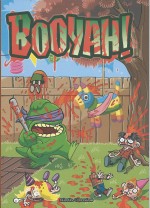
Booyah!


By Loran, translated by FNIC (Sloth Publishing)
ISBN: 978-1-908830-00-5

The Continent has long been the home of superbly crafted, challenging comics fare – unbelievable amounts of it in all manner of styles and genres – and English readers have suffered for decades due to the paucity of decent translations to our churlish mother tongue.

That’s not to say that what we have seen (especially recently with the advent of the wonderful Cinebook line of European classics) hasn’t been wonderful; it’s simply that there’s so very much we still haven’t…

Thus I’m delighted to welcome a new company into the Anglo-arena with this gloriously anarchic offering from cartoon wild-man Laurent Crenn AKA Loran and his horrifically hilarious Bouyoul, who’s jumped the Pond and had his passport stamped – in blood – as the cute and cuddly catastrophe-in-action Booyah!

Loran’s work was first seen in Anus Horibilis, working with co-founders Fred and Jean-Louis Marco, producing the shocking shenanigans of not only this effervescent, well-meaning pariah but also Captain Caca, Gringo Malo and Les Rangers de l’Espace and latterly at Atelier du Préau and Le Cycliste.

The little devil’s – Bouyoul, not Loran’s – second swing at fame is covered in this delicious initial translated collection and commence with ‘Happy Birthday’ as the well-intentioned green gargoyle hosts a celebration for the local kids, before his customary lack of fine coordination and impulse control, combined with sheer bad luck, turn the joyous anniversary into a bloodbath that is many attendees’ last…

A little old lady, her cat ‘Domino’ and Booyah’s determination to prove he’s not a monster all conspire to ruin the emerald atrocity’s day before ‘Mr. Sandman, Bring Me a Scream’ reveals a disastrous, savage and surreal encounter with the master of dreams which clearly shows why neither of them should be trusted as babysitters, whilst the short, sharp ‘Interlude’ features a silent exploit that proves the amiable horror is no fisherman’s friend…

The rest of this supremely engaging, perilously poor taste comedy of terrors features the epic extravaganza ‘Night of the Living Dead Scout Zombies from Hell’ as a troupe of pious lads and their redoubtable guardian Father Barnaby come upon Booyah asleep in the woods. After an initial misunderstanding where the aged cleric tries to exorcise “the demon” and dies of a heart attack, the affable abnormality takes charge of the cub pack and tries to lead them out of the wilderness. Tragically the earth where they first bury poor old Barnaby is a secret testing ground for a new genetically modified crop – one the scurrilous Monsanlys© Corporation are only just discovering has some rather terrifying side-effects…

By the time Booyah gets the scouts to the edge of the forest he’s lost two more kids to tragic, explosively explicit accidents. They too have rejoined the bosom of the earth and the kingdom of heaven. As darkness falls the soil is ruptured by ghastly vegetable zombies sporting the standard super-infectious bite and soon the green goon and his last two charges (no longer good clean-living Christian boys, alas) are fighting for all they’re worth to suppress the horticultural horrors who have decimated the National Scout Jamboree…

Outrageously off-kilter, starkly sardonic and brutally hysterical, Booyah is the absolute antidote to anodyne touchy-feely cartoon capers, and if you love your comedy dark and your fantasy unexpurgated and splashed with spurting gut-bustingly jovial gore, this manically inventive immature-readers-only hoot (think of The SimpsonsItchy and Scratchy with the kid gloves off) is definitely worth a few moments of your time.
© 2011 La Martiniere. English translation © 2011 Sloth Publishing, Ltd.

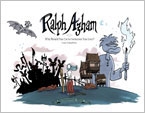
Ralph Azham volume 1: Why Would You Lie to Someone You Love?

By Lewis Trondheim, coloured by Brigitte Findakly and translated by Kim Thompson (Fantagraphics Books)
ISBN: 978-1-60699-593-8

Win’s Christmas Gift Recommendation: one for the boys and girls who grew up but never stopped imagining… 8/10

With over 100 books bearing his pen-name (his secret identity is actually Laurent Chabosy), writer/artist/editor and educator Lewis Trondheim is one of Europe’s most prolific comics creators: illustrating his own work, overseeing animated cartoons of adaptations of previous successes such as La Mouche (The Fly) and Kaput and Zösky or editing the younger-readers book series Shampooing for Dargaud.

His most famous tales are such global hits as ‘Les Formidables Aventures de Lapinot’ (translated as The Spiffy Adventures of McConey), (with Joann Sfar) the Donjon series of nested fantasy epics (translated here as the conjoined sagas Dungeon: Parade, Dungeon: Monstres and Dungeon: the Early Years) and his utterly beguiling cartoon diaries sequence Little Nothings.

In his spare time, and when not girdling the globe from convention to symposium to festival, the dourly shy and neurotically introspective savant has written for satirical magazine Psikopat and provided scripts for many of the continent’s most popular artists such as Fabrice Parme (Le Roi Catastrophe, Vénézia), Manu Larcenet (Les Cosmonautes du futur), José Parrondo (Allez Raconte and Papa Raconte) and Thierry Robin (Petit Père Noël).

Trondheimis a cartoonist of uncanny wit, outrageous imagination, piercing perspicacity, comforting affability and self-deprecating empathy who prefers to scrupulously control what is known and said about him…

His latest English language project (originally released by Belgian outfit Éditions Dupuis in 2001) returns to the realm of anthropomorphic fantasy in a saga designed as six volumes of wryly cynical faux-heroism revolving around failed Messiah and all-around disappointment Ralph Azham.

In his mountainous rural village, teenaged slacker Ralph is barely tolerated. He’s lazy, rude to his elders, constantly flouts authority, is always mouthing off and perpetually gets into trouble. Moreover when he turned blue on the Night of the Double Moon – a certain sign of magical powers and an indicator that one may be the long-awaited Chosen One – he subsequently failed the tests of The Envoy and was ignominiously returned to the village.

Now he’s just an obnoxious waste of space whose only gift is the unnerving ability to tell when someone is pregnant or going to die…

The desolate village is slowly expiring too. Situated in a depressing gully and old riverbed, the place comprises barely a dozen families now; the hard subsistence toil gradually forcing the farmers to emigrate to the less hostile but crowded lowlands. Also, with the annual visit from the rapacious marauding barbarian horde forever looming, the place has precious little comfort or security to offer the dour citizens.

When the elders send Ralph out on a useless herb-gathering mission so they can have a council meeting without his annoying presence, the pariah is accosted by coquettish, scheming Claire who tries to seduce him and make him take her away from it all. After all, a boy with his gifts could surely make some money in the civilised parts of the world…

Ralph spurns her and returns to eavesdrop on the village meeting, but when she follows and forcefully tries again, her big brother Piatch observes everything and attacks in a vain effort to defend her long-spent honour. The running fight crashes through the village and many of the indignant elders join in. When the well-thrashed Ralph furiously exposes many of their marital secrets he finds himself confined to the pigsty for two months by the shamed and outraged citizens…

Later that night his long-suffering father Bastien passes Ralph food and a knife, sadly recalling those distant days when the entire populace thought the boy was their literal ticket to salvation. After all, when the Chosen One was finally found, his mighty powers would totally destroy the terrible threat of predatory conqueror Vom Syrus and save the entire nation.

The whole episode was ill-starred. On their last night together, father and son were trapped in a cave-in and Ralph discovered his unsettling but militarily useless power. Even after they escaped death by suffocation, the airborne pilgrimage to fabled Astolia went tragically wrong – just how bad only Bastien knew for certain – and when the boy was returned to the village the populace’s high expectations soon soured.

They’d been taking it out on Ralph ever since…

In the pigpen Claire tries once more to sway the fed-up and furious boy wonder, but he’s already declined one attempt to help him escape. Wastrel Ralph has no intention of ever leaving his doting dad. Later as Bastien quizzes him on why he’s still there the alarm is sounded. The horde is near…

The village is perfectly divided. Exactly half want to fight whilst the others favour abject surrender and throwing themselves on the invaders’ mercies. Unbelievably, now they desperately need Ralph to settle matters as the tie-breaking vote. The outcast is utterly unable to ignore the irony or resist the temptation to make them all squirm, but he is distracted by the ailing Filbert kid. The lad isn’t very well and it is another night of the Double Moon…

When the militant faction proves to be the most determined to win and acquiesces to Ralph’s outrageous and humiliating demands the vote is cast and the villagers begin building a huge deadfall trap to kill as many Horde raiders as possible, guided by the pariah’s father who was once a military engineer.

As the labours progress, further hidden secrets of Ralph’s interesting time in Astolia are revealed, but even as the weary folk return to their homes the trap is sprung: not by the invaders but rather one of their own.

Sore loser Mortimer knew that only he was right and thus couldn’t abide by the results of the vote…

In the cascade of rocks little Raoul Filbert was injured and as the enraged mob hunt for the new village pariah, forgotten Ralph carries the wounded child to the wise woman Auntie Milla. As she tends to the lad something happens to Ralph too. Soon he realises that his powers have changed and he can see dead people…

When he meets his father he realises that the ghost of the Envoy from his long-ago journey is attached to Bastien and soon the awful  truth of his boyhood trip to Astolia comes tumbling out…

Milla too was part of the conspiracy, and now that Ralph knows the horrible, selfish cause for his years of abuse and ostracization he severs all ties with his father. Suddenly the alarm sounds and the old soldier rushes back to the village where the horde has arrived. Dejected Ralph picks up the sleeping Raoul and follows, but in the dark nobody has noticed that the little lad’s head has turned blue…

In a wild and cataclysmic display of arcane power Raoul destroys half the village and routs the panicked barbarians, but once they have recovered their wits the Horde outriders give chase. However when the azure couple are cornered, Ralph’s new gift and the spirits of the pursuers’ previous victims combine to save them both, before a final cataclysm erupts and wipes out the invaders and most of the village too…

After one final fractious confrontation with the surviving elders, Ralph heads for the plains and summons the latest Astolian Envoy to take him and Raoul to the city where the new Chosen One can be trained. However, as they prepare to take off on the civil servant’s triple-headed winged reptile, Claire rushes up, demanding to join them.

She feels she has the right since her cat ears and tiger stripes have turned a vibrant shade of blue…

Mesmerising and superbly enjoyable, this unfolding epic features a truly intriguing and clay-footed hero in a fantastic world of regrettably shallow and typically callous everyday folk, venal, self-serving and barely worth saving even if a Messiah can be found…

This engagingly sly and witty fantasy adventure tale for grown-ups begins here in a 96-page, full-colour landscape (218x168mm) sturdy hardcover edition and promises to become another must-not-miss epic masterpiece from one of the world’s greatest comic geniuses.

Contents © DUPUIS 2001 byTrondheim. All rights reserved. This edition © 2012 Fantagraphics Books. All rights reserved.

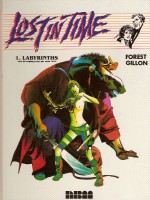
Lost in Time:


By Jean-Claude Forest & Paul Gillon with an introduction by Alex Toth (NBM)
ISBN: 0-918348-18-8

France has had an ongoing love affair with science fiction that goes back at least to the works of Jules Verne and – depending upon your viewpoint – possibly even as far back as Cyrano de Bergerac’s posthumously published fantasy stories L’Autre Monde: ou les États et Empires de la Lune (The Other World: or the States and Empires of the Moon) and Les États et Empires du Soleil (The States and Empires of the Sun) published in 1657 and 1662, and their comic iterations have always been groundbreaking, superbly realised and deeply enjoyable.

A perfect case in point is Les Naufragés du Temps (alternately translated as either Castaways in Time or, as here, Lost in Time) created in 1964 byJean-ClaudeForest and classical master-draughtsman Paul Gillon.

Forest(1930-1998) was a Parisian and graduate of the Paris School of Design who began selling strips while still a student. His Flèche Noire (Black Arrow) led to a career illustrating for newspapers and magazines such as France-Soir, Les Nouvelles Littéraires and Fiction in the 1950s, all whilst producing the Charlie Chaplin-based comic series Charlot and acting as chief artist for publisher Hachette’s science fiction imprint Le Rayon Fantastique, for whom he produced illustrations and covers for imported authors A. E. Van Vogt, Jack Williamson, and others.

In 1962 he created Barbarella for V-Magazine and the sexy icon quickly took the county and the world by storm, consequently generating an explosion of SF Bandes dessinées features. Forest never looked back, subsequently creating Baby Cyanide and more serious tales like Hypocrite; the Verne-inspired Mysterious Planet; La Jonque Fantôme Vue de l’Orchestre and Enfants, c’est l’Hydragon qui Passe.

He also found time to script for other artists: Ici Même for Jacques Tardi, occult detective series Leonid Beaudragon for Didier Savard and with Gillon on the subject of today’s review – a classic of both comics and science fiction inexplicably all-but-ignored by English language publishers since the 1980s…

Paul Gillon (1926-2011) was also born inParisand suffered from debilitating Tuberculosis in early life. After his full recovery the isolated shut-in became something of a brilliant wild child, being expelled from many schools including the prestigious Ecole des Arts Graphiques.

As a teenager he considered a career in film, theatre or fashion but slipped almost accidentally into the world of cartooning and caricature, working freelance for such arts magazines as Samedi-Soir, France Dimanche and Gavroche.

The end of the war created chaotic circumstances in France and gave birth to a whole new comics industry and in 1947 Gillon began illustrating for the popular weekly Vaillant, both on existing adventures strips such as Wango and Lynx Blanc (both written by Roger Lécureux) and Jean Ollivier’s Le Cormoran as well as the later spin-off Jérémie which Gillon also scripted.

In 1950 he created Fils de Chine (Sons of China) with Lécureux which ran for three years.

Working in a refined and highly classicist style as personified by the likes of industry giants Alex Raymond, Milton Caniff and Hal Foster, Gillon also wrote and drew shorter complete pieces for titles such as 34 Camera, Femmes D’Aujourd’hui, Reves and Radar but his big break came in September 1959 when he began illustrating a daily soap-opera strip for national newspaper France Soir.

He would render the stunningly beautiful human heartbreaks of ’13, rue de l’Espoir’ until the end of 1972, becoming a household name in the process…

Based on the American serial The Heart of Juliet Jones and scripted by Jacques and François Gall, the feature followed the fortunes of vivacious Parisienne Françoise Morel, and unfolding daily took the heroine and the Family Morel through some of the most tumultuous years of modern European social change in nearly 4200 strips which were naturally compiled into two collected Albums – something else which should be translated into English but probably won’t be…

Throughout that period Gillon continued in comics, producing Jérémie, working for the Disney comic Journal de Mickey and other magazines and trying out new venues and genres.

Les Naufrages du Temps first appeared in 1964, part of the line-up in short-lived French comic Chouchou. A decade after the periodical closed the strip was reprinted and completed in daily newspaper France-Soir before being released as 2 bichromic (two-coloured) albums from major publisher Hachette in 1974 and 1975.  Two further book full-colour volumes followed in 1976.

In 1977 the saga was serialized in groundbreaking Sci-fi magazine Metal Hurlant, prompting publisher Les Humanoides Associes to re-release the four albums (L’Etoile Endormie or The Sleeping Star, La Mort Sinueuse – The Creeping Death, Labyrinthes – Labyrinths – and L’Univers Cannibale – The Cannibal Universe) in colour, before continuing the series with Gillon scripting as well as illustrating until its end in 1989: a total of six further volumes.

Never idle, Gillon then created spy-thriller Les Leviathans (The Leviathans) for Les Humanoides and adult science fiction epic La Survivante (The Survivor) for L’Echo des Savanes, adapted literary classics such as Victor Hugo’s Notre Dame de Paris and Herman Melville’s Moby Dick and re-imagined the legend of Joan of Arc as the erotic  epic Jehanne. His later efforts included Processus de Survie (Survival Process) in 1984 and La Derniere des Salles Obscures (The Last of the Dark Rooms) in 1998.

He remains one ofFrance’s most honoured, celebrated and revered comics creators and just why so few of his incredibly illustrated tales have been translated is an utter mystery to me.

One that did make the jump was Lost in Time: Labyrinths, released as a spectacular hardback by NBM in 1987 and one of the few European imports to be seen “cold” in the USA (i.e. without first running as a serial in Heavy Metal magazine).

As I’ve previously mentioned Labyrinths was the third album of the French series and opened with a neceassry preamble…

So just to recap something we hadn’t actually seen: at the end of the 20th century humanity was imperilled by “the Scourge” – a plague of extraterrestrial spores and/or a global sickness of its own negligent making. Chris Cavallieri and Valerie Haurele were selected for a shot at survival and placed in suspended animation in individual space-capsules to preserve the best of our race and possibly reconstruct our lost glories in a newer age.

A thousand years later Chris was awakened into a bewildering but thriving multi-species civilisation in deadly danger. Earth was a derelict, plague world inhabited by mutant monsters, and a multi-species civilisation had abandoned it and grown to inhabit a hugely re-configured Solar system.

Helping the inhabitants of the patchwork “System” – ex-pat human, alien and genetically altered/hybridised animal-beings – to defeat an invasion by alien winged rats dubbed the Thrass, Chris fortuitously found Valerie’s lost capsule and revived her – but the longed-for happy event led to utter disaster.

Throughout their millennial slumber both ancient human lovers had dreamt of each other and their perfect reunion, but once they were together again in a furious new future they discovered that they could not stand each other…
This tale begins after the defeated Thrass have fled the System and Valerie, rejected by Chris, has disappeared. The resurrected Ancient and his new-found true love Mara (one of the scientists who first recovered and rehabilitated Christopher) are the topic of much discussion amongst his new friends Dr. Otomoro and military cyborg Major Lisdal, whilst Chris himself haunts morgues and seedy dives of the pan-cosmopolitan city of Roobo-ein-Sarra on System capital Limovan, unable to shake his destructive and obsessive fear for the fate of his millennial ex-lover…

Depressed, despondent and bitterly confused, Chris wanders the exotic streets and bazaars where hordes of newly-liberated beings manically celebrate their hard-won safety and security, unaware that he has been targeted by sinister plotters. An old “frenemy”, Morfina, accosts him and, past injuries and seductions forgotten, lures the old Earthman to the Mood Market, a vast, baroque area of bordellos run by legendary criminal overlord The Boar, a burly, erudite and unctuous humanoid with a Tapir’s head.

(In the original this major series villain is in fact the Tapir – I’ve no idea why he was so erroneously renamed but have a sneaking suspicion that it involves European prejudices about English and American educational attainment…)

Completely off-guard, Chris succumbs to sybaritic release and is framed for the murder of a diplomat and his companion whilst out of his head. Once awake and panicked by the corpses around him, the Last Earthman accepts the extremely costly aid of the Boar to escape…

Even Christopher believes himself guilty until he discusses the affair with Mara, Lisdal and Otomoro in the cold light of day. However, even as the wool is pulled from his eyes and he realises his precarious predicament, the bamboozled ancient is utterly unaware that The Boar is working with the compliant vindictive Valerie, who is briefing the crime-lord on all Chris’s secrets…

When Lisdal suggests seeking help from brilliant scientific maverick Saravon Leobart the friends are welcomed by the aged sage, but the Boar moves quickly, sending his gamin cyber-assassin Baby to quickly whisk Chris and Mara away under the pretext that the police have arrested Lisdal and Otomoro…

It’s all a colossal bluff: the Boar needs Chris to recover a deadly pre-Scourge secret weapon cached away at the time of humanity’s fall and all the data needed to find and operate it lies buried in the Ancient’s subconscious. Chris is completely unaware that the thing even exists: his mind was re-programmed before his hibernation and only the vengeful Valerie holds the secret of retrieving it…

Soon the Boar and his “guests” are hurtling deep into the outer system with Leobart, Morfina and Chris’ friends in hot pursuit. After a brutal clash in space Chris and Mara are rescued but the Boar is ready and willing to retaliate and even the benevolent Leobart is not all he seems…

To Be Continued…

This is a beautiful, stately and supremely authoritative adult fantasy thriller, tantalisingly teasing the reader with the promise of so much more. The second part was released in English as Lost in Time: Cannibal World in 1987, but even that only moved the saga forward without comfortably ending things. As far as I know the only other Gillon works to make it into English are the first two volumes of The Survivor…

Mature, solid science fiction with thoroughly believable and pettily human characters confronted with fantastic situations, lots of action and loads of nudity: how on Earth has this sublime series remained a secret French Possession for so very long?
© Les Humanoides Associes. © NBM 1986 for the English edition.

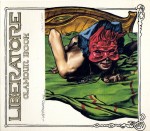
Liberatore Glamour Book


Edited by Vincenzo Mollica & Antonio Vianovi (Glamour International Productions)
No ISBN

A lot of people may find the graphic arts collections under review here to be shocking, unacceptably violent and even revolting or, worse yet, dirty.

If that’s you, please stop right here and come back tomorrow when there will something you’ll approve of but will almost certainly offend someone else.

Italy has a rich and varied comics culture with some highbrow classics and lots and lots of cheap, cheerful, cheesy and even sordid commercial filler – just like everywhere else. Italian illustration superstar Gaetano “Tanino” Liberatore, like most masters of the form, paid his dues and worked his way up the ranks until he eventually found stardom, infamy and his ideal working environment…

He was born in 1953 in Quadri in the province of Chieti. After the usual kind of artistic childhood the kid went to school in Pescara and studied architecture at the University of Rome before moving into the world of work as an advertising illustrator in 1975.

He first met his fellow philosophical seditionist and punk-soul brother (writer, artist and publisher) Stefano Tamburini in 1978 and, in conjunction with strident activist cartoonist Andrea Pazienza, they created ‘Rankxerox’ for the magazine Cannibale. The character evolved and moved to Il Male and eventually Frigidaire, fully realised now as the RanXerox we know today – every bit Libertore’s signature character the way Eisner has The Spirit, and Hergé Tintin…

Liberatore rapidly developed as both artist and writer, with strips ‘Bordello’ and ‘Client’ appearing in Il Male, but when the new, Tamburini-scripted, syndicated RanXerox became a star of French magazine L’Écho des Savanes in 1981, Tanino moved to Paris and began working simultaneously on tales for the more prestigious Gallic market in such magazines as Tranfert, Métal Hurlant, À Suivre and Chic.

A shocking hit in the US Heavy Metal magazine, RanXerox then led to Liberatore jumping the pond and producing material for Twisted Tales and men’s magazine Hustler.

When Tamburini died suddenly in 1986, Liberatore quit comics for nearly a decade. Returning to straight commercial illustration, he worked in movies and designed book and record covers. Eventually, comics captured his attention again, and he produced two new RanXerox tales in 1993 and 1996 (with Jean-Luc Fromental and Alain Chabat), and a piece in Batman Black and White, assorted covers, and illustrated Pierre Pelot and Yves Coppens’s mass-market paperback ‘Le Rêve de Lucy’. As the Nineties closed, he finally came storming back in stunning style with the brilliant, award-winning Lucy L’Espoir in 2007, in which he and writer Patrick Norbert freely adapted a life-story for the famous prehistoric humanoid Australopithecus Afarensis remains found by anthropologists Coppens, Donald Johanson and Maurice Taieb.

The early Liberatore is the unqualified master of shock tactics. His beautifully rendered work dwells with obsessive, aggressive fascination of the grotesque, both visually and thematically. Stylish elegance goes hand-in-hand with horrifying, blunt scarification, in-your-face casually acceptable deformity and abnormality as suave, raffish he-men readily range beside hideous human travesties, ugly children and wanton, fearsome under-age harlots and murderous junkies.

His worlds are not ones where anybody should feel safe or comfortable in visiting…

One fascinating fact often neglected is that the artist usually drew his stunning pages same-size or even smaller than the printed final work – a complete reversal of the regular way comics were produced – and used a huge variety of materials to achieve his artistic effects, from cheap felt pens to high quality pencils, paints or markers and even lipstick and found objects…

That spectacular facility for experimentation is perfectly displayed in the book under review here. In the early 1980s the Italian outfit which produced Popular Arts magazine Glamour Illustrated released a series of phenomenal art-books, collecting and cataloguing the extant works of many modern maestros of mature modern sequential narrative which had limited distribution in Britain – despite the best efforts of specialist importer Titan Distributors – and all those tomes are long past due for revision and reissuing…

This glorious collection of Liberatore’s early years, simultaneously transcribed in Italian, French and English, gathers hundreds of works and excerpts within its 204 pages (many of them full-colour high-gloss inserts), traces the artistic development and displays the incredible ability and versatility of this incomparable, iconoclastic stylist, divided as usual into early ‘Unpublished Works’, ‘Black and White’ – printed pieces and extracts ranging from comics pages and panels, pin-ups, ads, illustrations, posters and covers – and concluding extensive ‘Colour’ section.

The ‘Unpublished Works’ section here include masses of Liberatore’s superb pencil drawings and preliminary sketches, unfinished and self- rejected pages as well as commercial designs, calendars, and a ton of fanzine work dedicated to music sensations such as Frank Zappa, Paul McCartney, Grateful Dead and so on, choreographed fight scenes and designs for every aspect of his finished pieces and is capped by an extra ‘Donne’ chapter featuring a stunning sequence of pencil studies of women…

‘Black and White’ contains a wealth of work showing the artist’s fantastic versatility as seen in record jackets, magazine covers and illustration, satirical comics and cartoons plus loads of strips for publications as varied as Cannibale, Il Male, Frigidaire, Transfert, RanXerox and a host of others.

The ‘Colour’ section reveals, in a wealth of different hues and stylisations, his canon of covers for comics, magazines, books and records; posters, cartoons, works in progress, strips, stage art for theatrical performances, paintings, along with many pages and extracts from his strips produced in Italy and France, and American works for Hustler, Heavy Metal and Marvel’s Savage Sword of Conan.

The collection also contains impressively comprehensive checklists which detail in full Liberatore’s vast publication record to date in their ‘Chronology’ and ‘Bibliography’ sections.

As you would expect, there is a breathtaking amount of beautifully rendered flesh and deeply unsettling hyper-violence and subversive visual political polemic on display – and I’m sure I don’t know which is the most distressingly affecting – in an unrelenting series of lascivious situations and occasionally genuinely disturbing circumstances… and his brutally sly sense of humour.

Liberatore is another world-class storyteller English speakers have too long been deprived of, and books like this have never been more desperately in need of updating and re-release …
No copyright notice again so I’m assuming:
© 1972-1985 Gaetano Liberatore. All rights reserved. If anybody knows better please let me know and we’ll amend the entry.

Zeppelin – Stories from the Warzone


By Pepe Moreno (Catalan Communications)
ISBN: 978-0-87416-021-5

Born in 1954, Spanish creator Pepe Moreno began his comics career illustrating for horror and adventure anthologies and children’s papers such as S.O.S., Pumby and Pulgarcito, Star and Bliz. He moved to America in 1977, working for Warren’s Creepy, Eerie 1984/1994 and Vampirella, as well as contributing to humour magazine National Lampoon before inevitably gravitating to Heavy Metal where the short, uncompromising post-punk sci-fi strips collected in this album caught the attention of Epic Illustrated editor Archie Goodwin.

The breakthrough strip Generation Zero led to the graphic novels Rebel, Joe’s Air Force and Gene Kong, but ever-restless, Moreno’s growing fascination with real-world technology led him first into animation (Tiger Sharks, Thunder Cats and Silver Hawks) and eventually into the formative field of computer-assisted illustration, resulting in a return to comics for the high-profile futuristic Batman thriller Digital Justice, one of the first comics sagas created completely on screen rather than on paper.

He then created an early CD-ROM thriller (Hellcab) in 1993, and these days spends most of his time working in high-end video games.

Crafted in the politically contentious yet conservative mid-Eighties when dystopian dreams of fallen empires abounded and post-apocalyptic survivalism was the prevailing zeitgeist, the short tales gathered here capture – in a beguiling burst of pop-art style and colour – a profusion of weird war tales that push man and imagination to ultimate limits… Following a Foreword from Moreno, the merciless wonderment begins with the eponymous ‘Zeppelin’ as two F-4 Phantom jets take off from an American aircraft carrier and encounter something far beyond a human capacity to understand, before being lost in time and accidentally triggering one of the most infamous disasters in recorded history…

‘La Mort en Rose’ focuses on a weary Tommy in the trenches of The Great War, when response to a new Boche poison gas utterly confounds and horrifies the German Generals who sanctioned it. Suffice to say those aged masters of war made sure it was never used again…

Back then we all thought that the next war would probably be the very last one, and that sentiment informs the last-ditch battles and eventually ironic defeat of the commander of ‘Bunker 6A’, whilst the stunning artistic experimentalism of ‘Kamikaze’ renders it the most memorable war-story in the collection despite its truly hackneyed “twist” ending…

‘The Fix’ follows a semi-delusional space ferry pilot back to a wasteland Earth and a reward that is neither just nor fit for heroes, and ‘Space Crusader’ reminds us that missionary zeal knows no limits when the pious warrior aboard Inquisitor II lands on the welcoming and innocently obliging planet of the hot naked chicks…

This slim, technicolor tome terminates with ‘Epus’ a dark contemporary battle-yarn that sees a dying GI in Vietnam somehow sucked back in time to challenge an ancient god of conflict for an answer to mankind’s martial madness…

Vivid pinball, poster and bubblegum hues blend with a stunning capacity to render machinery, monstrosity and ordnance to produce a wryly cynical paean to war-fever and programmed paranoia that will delight all fans of science fiction and blockbuster action.

Inexplicably out-of-print, this is plain-and-simple adult escapism no comics connoisseur could possible resist …
© 1986 Pepe Moreno. English language edition © 1986 Catalan Communications. All rights reserved.

The Adventures of Blake and Mortimer – The Secret of the Swordfish: volumes 2 & 3 Mortimer’s Escape and SX-1 Counter-Attacks!


By Edgar P. Jacobs translated by Clarence E. Holland (Blake and Mortimer Editions)
ISBNs: 978-9-06737-005-9 & 978-9-06737-007-3

Belgian Edgard Félix Pierre Jacobs (March 30th 1904 – February 20th 1987) is rightly considered to be one of the founding fathers of the Continental comics industry. Although his output is relatively meagre compared to some of his contemporaries, the iconic series he worked on practically formed the backbone of the art-form in Europe, and his splendidly adroit yet roguish and thoroughly British adventurers Blake and Mortimer, created for the very first issue of Le Journal de Tintin in 1946, swiftly became an unmissable staple of post-war European kids’ life the way Dan Dare was in 1950s Britain.

Edgar P. Jacobs was born inBrussels, a precocious child who began feverishly drawing from an early age but was even more obsessed with music and the performing arts – especially opera. He attended a commercial school but loathed the idea of office work and instead avidly pursued the arts and drama on graduation in 1919.

A succession of odd jobs at opera-houses (including scene-painting, set decoration, and working as both an acting and singing extra) supplanted his private performance studies, and in 1929 Jacobs won an award from the Government for classical singing.

His proposed operatic career was thwarted by the Great Depression when the arts suffered massive cutbacks following the global stock market crash, and he was compelled to pick up whatever dramatic work was going, although this did include some singing and performing.

Jacobs switched to commercial illustration in 1940 with regular work in the magazine Bravo; as well as illustrating short stories and novels. He famously took over the syndicated Flash Gordon strip when the occupying German authorities banned Alex Raymond’s quintessentially All-American Hero and the publishers desperately needed someone to satisfactorily complete the saga.

Jacobs’ ‘Stormer Gordon’ lasted less than a month before being similarly embargoed by the Occupation forces, after which the man of many talents created his own epic science-fantasy feature in the legendary Le Rayon U, a milestone in both Belgian comics and science fiction adventure.

During this period Jacobs and Tintin creator Hergé got together, and whilst creating the weekly U Ray, the younger man began working on Tintin too, colouring the original black and white strips of The Shooting Star from the newspaper Le Soir for an upcoming album collection. By 1944 he was performing a similar role for Tintin in the Congo, Tintin in America, King Ottokar’s Sceptre and The Blue Lotus. By now Jacobs was also contributing to the drawing too, working on the extended epic The Seven Crystal Balls/Prisoners of the Sun.

After the war and liberation, publisher Raymond Leblanc convinced Hergé, Jacobs and a number of other comicstrip creatives to work for his proposed new venture. Founding publishing house Le Lombard, Leblanc also commissioned Le Journal de Tintin, an anthology comic with editions inBelgium,France andHolland edited by Herge, starring the intrepid boy reporter and a host of newer heroes.

Beside Hergé, Jacobs and writer Jacques van Melkebeke, the comic featured Paul Cuvelier’s ‘Corentin’ and Jacques Laudy’s ‘The Legend of the Four Aymon Brothers’. Laudy had been a friend of Jacobs’ since they worked together on Bravo, and the first instalment of the epic thriller serial ‘Le secret de l’Espadon’ starred a bluff, gruff British scientist and an English Military Intelligence officer (who was closely modelled on Laudy): Professor Philip Mortimer and Captain Francis Blake…

The initial storyline ran from issue #1 (26th September 1946 to September 8th 1949) and cemented Jacobs’ status as a star in his own right. In 1950, with the first 18 pages slightly redrawn, The Secret of the Swordfish became Le Lombard’s first album release with the concluding part published three years later. These volumes were reprinted nine more times between 1955 and 1982 with an additional single complete edition released in 1964.

In 1984 the story was reformatted and repackaged as three volumes with additional material – mostly covers from the weekly Tintin – added to the story as splash pages, and the first of these forms the basis for the English language book under discussion today.

Hergé and Jacobs purportedly suffered a split in 1947 when the former refused to grant the latter a by-line on new Tintin material, but since the two remained friends for life and Jacobs continued to produce Blake and Mortimer for the weekly comic, I think it’s fair to say that if such was the case it was a pretty minor spat. I rather suspect that The Secret of the Swordfish was simply taking up more and more of the diligent artist’s time and attention…

Although all the subsequent Blake and Mortimer sagas have been wonderfully retranslated and published by CineBook in recent years, this initial epic introductory adventure and its concluding two volumes remain frustratingly in the back-issue twilight zone, possibly due to their superficial embracing of the prevailing prejudices of the time.

By having the overarching enemies of mankind be a secret Asiatic “Yellow Peril” empire of evil, there’s some potential for offence – unless one actually reads the books and finds that any assumed racism is countered throughout by an equal amount of “good” ethnic people and “evil” white folk, so with no other version available I’m happily using these huge (312 x 232mm) 1986 iterations for this review.

And I’ll be reviewing those subsequent Cinebook tales by Jacobs and his successors in due course, but don’t wait for me… go out and get them all now!

Here and now, however, let’s recap Ruthless Pursuit, wherein a clandestine clique in the Himalayas launched a global Blitzkrieg at the command of Basam-Damdu, Emperor of Tibet. The warlord of a secret race of belligerent conquerors, whose arsenal of technological super-weapons were wielded by an army of the world’s wickedest rogues such as the diabolical Colonel Olrik dreamed of ruling the entire Earth and his sneak attack almost accomplished all his schemes in one fell swoop.

Happily however, English physicist Philip Mortimer and MI5 Captain Francis Blake were aware of the threat and were racing to finish the boffin’s radical new aircraft at a hidden British industrial complex. When the attack came the old friends swung into immediate action and narrowly escaped destruction in a devastating bomber raid…

The Golden Rocket launched just as Olrik’s bombers attacked and easily outdistanced the rapacious Empire forces, leaving ruined homes behind them as they flew into a hostile world now brutally controlled by Basam-Damdu…

Seeking to join British Middle East resistance forces, the fugitives’ flight ended prematurely and the Rocket crashed in the rocky wilds between Iran and of Afghanistan. Parachuting free, Blake and Mortimer survived a host of perils and escaped capture more than once as they slowly, inexorably made their way to the distant rendezvous, before meeting a British-trained native Sergeant Ahmed Nasir.

The loyal Indian had served with Blake during the last war and was delighted to see him again, but as the trio laboriously made their way to the target site, Olrik had already found it and captured their last hope…

Using commando tactics to infiltrate the enemy camp and stealing the villainous Colonel’s own Red-Wing super-jet, the heroes made their way towards a fall-back point but were again shot down – this time by friendly fire as rebels saw the stolen plane as an enemy target…

Surviving this crash too, the trio were ferried in relative safety by the apologetic tribesmen to the enemy-occupied town of Turbat and sheltered by a friendly Khan administrator. However the man’s servant, a spy of the Empire-appointed Wazir, recognised the Englishmen and Nasir realised too far late the danger they all faced…

Sending his loyal Sergeant away, Blake tried valiantly frantically to save Mortimer whilst a platoon of Empire soldiers rapidly mounted the stairs to their exposed room…

The frantic action begins in Mortimer’s Escape (alternatively titled The Fantastic Pursuit inside) with soldiers bursting into an empty chamber before being themselves attacked by the Khan. After a bloody firefight the Englishmen emerge from their cunning hiding place and flee Turbat, which has been seized by a furious spur-of-the-moment rebellion.

Unknown to the fugitives, the devious spy Bezendjas is hard on their heels and soon finds an opportunity to inform Olrik. With the city in flames and fighting in every street the callous colonel abandons his own troops to pursue Nasir, Blake and Mortimer into the wastes beyond the walls…

On stolen horses the heroes endure all the ferocious hardships of the desert but cannot outdistance Olrik’s staff-car. After days of relentless pursuit they reach the rocky coastline and almost stumble into another Empire patrol, and whilst ducking them Blake almost falls to his doom. Narrowly escaping death, the trio continue to climb steep escarpments and it is dusk before the Intelligence Officer realises that he has lost the precious plans and documents they have been carrying since they fled England…

Realising that somebody must reach the British resistance at their hidden Eastern base, the valiant comrades split up. Blake and Nasir continue onwards whilst Mortimer returns to the accident site. Finding the plans is a stroke of sheer good fortune, immediately countered by an ambush from Olrik’s troops.

Despite a Herculean last stand the scientist is at last taken prisoner but only after successfully hiding the lost plans…

Three weeks later Olrik is called to account in the exotic city-fortress ofLhasa. Basam-Damdu’s ruling council are unhappy with the Colonel’s lack of progress in breaking the captive scientist, and even more infuriated by a tidal-wave of sabotage and armed rebellion throughout their newly-conquered territories. Even Olrik’s own spies are warning him that his days as an agent of the Yellow Empire might be numbered…

Given two days to make Mortimer talk, the Colonel returns to his base inKarachijust as another rebel raid allows Nasir to infiltrate the Empire’s HQ. Blake is also abroad in the city, having joined British forces in the area.

With less than a day to act, the MI5 officer rendezvous with a British submarine and travels to a vast atomic powered secret installation under the Straits of Hormuz, where the Royal Navy are preparing for a massive counter-attack on the Empire. With raids liberating interned soldiers all the time, the ranks of scientists, technicians and soldiers are swelling daily…

Meanwhile, Nasir has begun a desperate plan to free Mortimer, who is still adamantly refusing to talk of the mysterious “Swordfish” Olrik’s agents continually hear rumours of…

Aware of his danger and the Sergeant’s efforts, Mortimer instead cunningly informs Nasir of the lost plans’ location, even as the impatient Emperor’s personal torturer arrives fromLhasa…

Always concerned with the greater good, Blake and a commando team secure the concealed plans and are met by Nasir who has been forced fromKarachiafter realising the spy Bezendjas has recognised him. It appears that time has run out for their scholarly comrade…

Mortimer, however, has taken fate into his own hands. When the sadistic Doctor Fo begins his interrogation, the Professor breaks free and escapes into fortress grounds during an earth-shattering storm. Trapped in a tower with only a handgun, he is determined to sell his life dearly, but is rescued by Blake and Nasir in a Navy Helicopter.

Using the storm for cover the heroes evade jet pursuit and an enemy naval sweep to link up with a British sub and escape into the night…

The saga concludes in SX1 Counter-Attacks: a tension-drenched race against time as

Blake, Mortimer and the last ofGreat Britain’s military forces prepare for a last ditch strike using the Professor’s greatest inventions to win freedom for the oppressed peoples of the world…

The story starts with a stunning reprise of past events (cunningly compiled from a succession of six full page illustrations which I assume were originally covers from the weekly Le Journal de Tintin), after which a daring commando raid frees a trainload of British prisoners. Brought to a fabulous subterranean secret base, the scientists and engineers discover an underground railway, factory and armaments facilities and even an atomic pile, all working furiously to complete the mysterious super-weapon dubbed “Swordfish”.

The liberated men all readily join the volunteers, blithely unaware that Olric is amongst them in a cunning disguise. Even as preparations for the Big Push rapidly produce results, a series of disastrous accidents soon lead to one inescapable conclusion: there is a saboteur in the citadel…

Eventually Olrik becomes overconfident and Mortimer exposes the infiltrator in a crafty trap, but after a fraught confrontation the Colonel escapes after almost causing a nuclear catastrophe. Fleeing across the seabed, the harried spy narrowly avoids capture by diver teams and even a hungry giant octopus…

The flight takes its toll upon Olrik and he barely reaches land alive. Luckily for him Bezendjas had been checking out that area of coastline and finds the rogue trapped in his stolen deep-sea diver suit. After a lengthy period the dazed desperado recovers and delivers his hard-won information. Soon all the region’s Imperial forces are converging on the British bastion…

As air and sea forces bombard the rocky island and sea floor citadel, Olrik dispatches crack troops to break in via a revealed land entrance resulting in a staggering battle in the depths of the Earth.

They were almost in time…

After months of desperate struggle, however, Mortimer and his liberated scientists have completed Swordfish: a hypersonic attack plane with uncanny manoeuvrability and appallingly destructive armaments.

Launched from beneath the sea, the sleek and sinister plane single-handedly wipes the Empire jets from the skies before sinking dozens of the attacking naval vessels. Ruthlessly piloting SX1 is Francis Blake; and even as he wreaks havoc upon the invading force he is joined by SX2 – a second unstoppable super-jet…

Soon the Yellow Empire is in full retreat and a squadron of Swordfish is completed. With the occupied planet in full revolt, it’s not long before Lhasa itself gets a taste of the flaming death it callously inflicted upon a peaceful, unsuspecting and now most vengeful world…

They were only just in time: the insane and malignant Emperor was mere moments away from launching a doomsday flight of missiles to every corner of the planet he so briefly owned…

Gripping and fantastic in the best tradition of pulp sci-fi and Boy’s Own Adventures, the exploits of Blake and Mortimer are the very epitome of True Brit grit and determination, always delivering grand old-fashioned Blood and Thunder thrills and spills in timeless fashion and with staggering visual verve and dash. Despite the high body count and dated milieu, any kid able to suspend modern mores and cultural disbelief (call it an alternative earth history if you want) will experience the adventure of their lives… and so will their children.
© 1986, 1987 Editions Blake & Mortimer. All rights reserved.

Gods from Outer Space: Atlantis, Men and Monsters


Inspired by the works of Erich von Däniken, freely interpreted by Alfred Górny, Arnold Mostowicz & Rosińskiego Bogusław Polch and translated from the German edition by Michael Heron (Methuen)
ISBNs: 0-416 87-160-7

Here in the West, Poland isn’t known for generating graphic novels or albums, although there has always been a thriving comics culture and many Polish creators have found fame in far-off lands. This pithy, quirky science fiction speculation is the second of four volumes to make a break across the borders and only then because of the notorious celebrity name attached to the project…

Once upon a time the ludicrous theories of Swiss author, convicted conman and fraudster Erich Anton Paul von Däniken captured the public imagination with his postulate that aliens had visited Earth in human prehistory and reshaped the destiny of our ancient ancestors.

Although mostly discredited these days, that tantalising kernel of an idea still persists in many places; and how different life might be if the imaginative and inventive writer had simply done what he should have with such a great notion and just made a cracking science fiction epic out of his “researches”…

Happily others have done just that and the result is a quirky yet enticing intergalactic generational saga that resulted in a mini-phenomenon in Poland which spread, despite all the restrictions of an embattled Cold War satellite-economy, through Germany and on to a number of other nations in at least a dozen different languages.

In 1977, publisher Alfred Górny, who generally specialised in sports and tourism, contacted his counterparts at West German non-fiction outfit Econ Verlag with a proposition for creating a new and mutually profitable cartoon album series.

Górny wanted to produce the series in Polandand had lined up the superb Grzegorz RosiÅ„ski to draw it. Unfortunately the artist quit before the job began, instead accepting the job of illustrating sci-fi barbarian series Thorgal for Jean Van Hamme in the prestigious French comic Tintin, after which the nation’s most prolific and popular comics artist, Jerzy Wróblewski, also stepped in before dropping out.

Górny and scripter Arnold Mostowicz settled for newcomer RosiÅ„skiego BogusÅ‚aw Polch – who would eventually win a measure of international renown for sci-fi/political/private eye thriller Funky Koval – to delineate the epic, meandering, saga of alien civil war, primeval strife and the birth and destruction of a primordial lost civilisation as well as the propagation of most of our world’s myths, legends and religions.

When finances and resources in the Warsaw Pact nation began to evaporate, Econ Verlag took on the international syndication responsibilities and the series took on a life of its own.

The result was eight original albums – LÄ…dowanie w Andach’ (Landing in the Andes), ‘Ludzie i potwory’ (Men and Monsters), ‘Walka o planetÄ™’ (The Struggle for the Planet), ‘Bunt Olbrzymów’ (Giants’ Mutiny); ‘ZagÅ‚ada Wielkiej Wyspy’ (Great Island’s Doom), ‘Planeta pod kontrolÄ…’ (The Planet under Control), ‘Tajemnica Piramidy’ (The Mystery of the Pyramid) and ‘Ostatni Rozkaz’ (the Last Command). The series was even rebound in two huge compilation volumes for Polish consumption: true collector’s items these days…

In 1978 British publisher Methuen Children’s Books (then also publishing Hergé’s Tintin) picked up the English language rights for the first four books and released them – complete with spurious fringe-science trimmings and photo-extras – to a largely unimpressed British public.

Now, with time having stripped away the ludicrous faux facts and messianic furore underpinning the tales, I’m reviewing what is actually a rather impressive, entertaining slice of speculative fiction dressed in a workmanlike yet enthralling no-nonsense art style that will delight fans of illustrated storytelling…

The adventure began millennia ago with Descent in the Andes, as a colossal flying saucer carrying hundreds of scientists from Delos in the Sagittarius Nebula establishes orbit above Earth. Mission leader Ais – the only woman in the vast complement of scientists and technicians – and her lieutenants Chat and Roub oversee the mission dictated by the Great Brain of Delos to find a new world for the race, since their home planet was on the verge of annihilation. The men are resolved to re-order the wild blue planet beneath them, using their incredible science to create a Delosian sub-species able to thrive on the alien world and propagate their perfect culture and civilisation. The plan is to seed this world and then great ship will depart, finding more suitable worlds and repeating the procedure…

As Earth and its life-forms are probed by the Delosians, tensions mount among the crew: Chat and Roub are increasingly at odds and soon after a ground-base is established, the latter foments mutiny and forcibly attempts to make Ais his bed-mate…

The colonists’ attempts to create a labour force by domesticating the smart apes soon falter as loneliness and native intoxicants begin to unravel the discipline of the superior beings and the lonely, over-worked crewmen descend into brawling and inter-species fraternisation…

When Ais steps down hard on the malcontents, Roub, who violently advocates abandoning the mission and taking over the welcoming world below, sees his chance to further undermine her. The crisis breaks when the fuel for the aerosondes – planetary transport shuttles – suddenly runs out. Chat kills a saboteur and denounces Roub, but before outright war erupts a startling message announces the arrival of a second vessel fromDelos…

Meanwhile supreme scientist Zan‘s experiments on the native females have concluded and his findings indicate that for the mission to succeed, he must directly reconfigure the ape-beings’ genetic make-up, a step Ais is reluctant to consider…

Whilst Ais and Chat supervised construction of a vast landing-field base in what we know as the Andes, Roub fomented open rebellion. The militant rocketed into space, intent on destroying the orbiting ship and forcing the Delosians to settle on Earth, with Ais in hot pursuit.

After a vicious battle she drove Roub off the vessel and followed him back to Earth where Chat tracked him to his final fate in the deadly beast-filled jungles…

Their troubles were far from over. The second expedition, under the command of Beroub, had set up operations on a far-distant continent, but the back-up colony suddenly fell prey to an unknown contagion and, as Ais and Zan rocketed off to investigate, they barely survived a cataclysmic volcanic eruption which completely eradicated the Nazca facility…

With the entire colony wiped out, Chat was trapped in space and Zan and Ais had no choice but to head for unknown peril on the far distant Atlantic continent…

Atlantis, Men and Monsters picks up the story as Ais, Zan and pilot Eness land at the troubled second base and soon discover the cause of the disease. Somebody has adulterated the chemical solution used by the Delosians to aid respiration in Earth’s inimical atmosphere, turning it into a slow-acting poison.

Suspicion immediately falls upon their head scientist Satham, who seems to be plagued with the same lust for domination that afflicted Roub.

Ais is utterly determined to carry out the edicts of the Great Brain and decides to act decisively – as soon as she has proof…

Taking charge of the recovering survivors, she orders Zan to begin his genetic manipulation of the vast island’s carnivorous primates, wedding their DNA to the civilised germ-plasm of the Delosians.

During this process Satham and his cronies disappear and Ais uncovers his plans: a plethora of hideous, savage hybrids designed for conflict. Satham was making an army of monsters…

Ensuring that Zan’s benign, intelligent humanoids are secured in a protective wildlife preserve, Ais and a small team then track the deranged renegade and discover a third Delosian star-saucer crashed in a desert. There is no sign of the crew, and much of the intergalactic juggernaut’s machinery has been removed…

Satham has constructed a huge secret complex beneath an inland sea and is far along in his plans to build force to dominate the world, but is not so far removed from rationality that he will kill the only species-compatible female on Earth. Capturing Ais, he shows off his abhorrent triumphs and urges her to join him, but underestimates her determination and dedication, as well as Zan’s ingenuity…

Engineering her escape from afar, the master technologist lays siege to the submerged fortress and devastatingly destroys the lake to reveal Satham’s citadel to the massed firepower ofDelos, before rescuing Ais.

Sathan brokers a tenuous truce, but almost immediately reneges and lures his enemies into a explosive booby-trap aboard the downed star-saucer…

Ais was ready for such a move however and, after narrowly escaping, leads an all-out attack on the exposed fortress of horror, recovering the imprisoned crew of the doomed third ship and activating a dormant volcano under Satham’s facility, although the rebel himself eludes capture.

Meanwhile, tragedy has struck Zan’s “children”. Placed in a protective garden, the genetically augmented humanoids initially seemed a great success, but after eating the fruit of one particular tree they erupted into manic, mindless violence. The gourd had somehow triggered a regression to their more aggressive forebears and a spontaneous wave of violence compelled them to savagely attack and kill each other… all but one male and female…

Increasingly convinced that this Blue Planet is steeped in some inescapable psychic evil, Ais and Zan resolve to carry on regardless of setbacks when Satham attacks with a legion of monstrous beasts he has constructed and grown. After a fierce and decisive battle above the surviving hominid prototypes, Ais’ forces are finally triumphant, having used blazing energy guns and the flaming jets of the Aerosondes to burn the winged, fanged and clawed demon-beasts into oblivion – a racial memory forever seared into the consciousness of the first man and woman of Earth…

With the danger temporarily abated, the Delosians rededicate themselves to forever protecting their manufactured progeny and making their new Blue World the last bastion of their culture and civilisation.

Of course, there are more terrible tests to face; especially since Satham’s body cannot be found…

There’s a bucket-load of plot and plenty of action packed into this colourful, oversized (292x219mm) 52 page tome, and the increasingly sleek, slick illustration from Polch is beguilingly seductive and something no traditional science fiction connoisseur could resist. Maybe it’s time to revisit this lost series and even go looking for a few more of those embargoed comics classics from the Land of the White Eagle…
© 1978 Econ Verlag GmbH, Dusseldorf. English translation © 1978 Methuen Children’s Books, Ltd.

Judge Dredd: the Complete Case Files 01


By John Wagner, Pat Mills, Carlos Ezquerra, Ian Gibson, Mike McMahon, Brian Bolland & various (Rebellion)
ISBN: 978-1-90426-579-0

Britain’s last great comic icon could be described as a combination of the other two, combining the futuristic milieu and thrills of Dan Dare with the terrifying anarchy and irreverent absurdity of Dennis the Menace. He’s also well on the way to becoming the longest-lasting adventure character in our admittedly meagre comics stable, having been continually published every week since February 1977 when he first appeared in the second issue of science-fiction anthology 2000AD – and now that the Dandy’s slated for cancellation, veterans Korky the Cat and Desperate Dan might one day be overtaken in the comedy stakes too…

However with at least 52 2000AD strips a year, annuals, specials, a newspaper strip (in the Daily Star and later The Metro), the Judge Dredd Megazine, numerous reprinted classic comics collections and even two rather appalling DC Comics spin-off titles, that adds up to a phenomenal amount of material, most of which is still happily in print.

Bolland by his own admission was an uneconomically slow artist and much of his Dredd work appeared as weekly portions of large epics with other artists handling other episodes,

Judicial Briefing: Dredd and his dystopian ultra-metropolis of Mega-City One – originally it was to be a 21st century New York – were created by a very talented committee including Pat Mills, Kelvin Gosnell, Carlos Ezquerra, Mike McMahon and others, but with the major contribution coming from legendary writer John Wagner, who has written the largest portion of the canon under his own and several pseudonyms.

Joe Dredd is a fanatically dedicated Judge in the super-city, where hundreds of millions of citizens idle away their days in a world where robots are cheaper and more efficient than humans, and jobs are both beloved pastime and treasured commodity. Boredom has reached epidemic proportions and almost everybody is just one askance glance away mental meltdown. Judges are peacekeepers who maintain order at all costs: investigating, taking action and trying all crimes and disturbances to the hard-won equilibrium of the constantly boiling melting pot. Justice is always immediate…

Dredd’s world is a polluted and precarious Future (In)Tense with all the key analogues for successful science fiction (as ever a social looking-glass for the times it’s created in) situated and sharply attuned to a Cold War Consumer Civilisation. The planet is divided into political camps with post-nuclear holocaust America locked in a slow death-struggle with the Sov Judges of the old Eastern Communist blocs. The Eastern lawmen are militaristic, oppressive and totalitarian – and that’s by the US Judges’ standards – so just imagine what they’re actually like…

They are necessary fascists in a world permanently on the edge of catastrophe, and sadly, what far too many readers never realise is that the strip is a gigantic satirical black comedy with oodles of outrageous, vicarious cathartic action.

Such was not the case when the super-cop debuted in 2000AD Prog (that’s issue number to you) #2 (March 5th 1977), stuck at the back of the new weekly comic in a tale finally scripted after much intensive re-hashing by Peter Harris and illustrated by Mike McMahon & Carlos Ezquerra.

The blazing, humourless, no-nonsense (all that would happily come later) action yarn introduced the bike-riding Sentinel of Order in the tale of brutal bandit Whitey whose savage crime spree was ended with ferocious efficiency before the thug was sentenced to Devil’s Island – a high-rise artificial plateau surrounded by the City’s constant stream of lethal, never-ending, high-speed traffic…

In Prog 3 he investigated The New You in a cunning thriller by Kelvin Gosnell & McMahon wherein a crafty crook tried to escape justice by popping into his local face-changing shop, whilst #4 saw the first appearance of the outcast mutants in The Brotherhood of Darkness (Malcolm Shaw & McMahon) when the ghastly pariahs invaded the megalopolis in search of slaves.

The first hints of humour began in Prog 5’s Krong by Shaw & Ezquerra, with the introduction of Dredd’s Italian cleaner Maria, wherein deranged horror film fan and hologram salesman Kevin O’Neill – yes it’s an in-joke – unleashed a giant mechanical gorilla on the city. The issue was the first of many to cover-feature old Stone Face…

Frankenstein 2 pitted Dredd against an audacious medical mastermind hijacking citizens to keep his rich aging clients in fresh, young organs, after which #7 saw ruthless reprobate Ringo’s gang of muggers flaunting their criminality in the very shadow of The Statue of Judgement until Dredd lowered the boom on them…

Charles Herring & Massimo Belardinelli produced the Antique Car Heist in #8, which first indicated that the super-cop’s face was hideously disfigured, when the Judge tracked down a murderous thief who stole an ancient petrol-burning vehicle, after which co-creator John Wagner returned in Prog 9 to begin his staggering run of tales with Robots, illustrated by veteran British science fiction artist Ron Turner, which set the scene for an ambitious mini-saga in #10-17. The gripping vignette was set at the Robot of the Year Show, and revealed the callous cruelty indulged in by citizens upon their mechanical slaves as a by-product of a violent blackmail threat by a disabled maniac in a mechanical-super chair…

Those casual injustices paved the way for Robot Wars (alternately illustrated over the weeks by Ezquerra, Turner, McMahon & Ian Gibson) wherein carpenter-robot Call-Me-Kenneth experienced a mechanical mind meltdown and became a human-hating steel Spartacus, leading a bloody revolution against the fleshy oppressors. The slaughter was widespread and terrible before the Judges regained control, helped in no small part by loyal, lisping Vending droid Walter the Wobot, who became at the epic’s end Dredd’s second live-in comedy foil…

With order restored a sequence of self-contained stories firmed up the vision of the crazed city. In Prog 18 Wagner & McMahon introduced the menace of mind-bending Brainblooms cultivated by a little old lady career criminal, Gerry Finley-Day & John Cooper described the galvanising effect of the Muggers Moon on Mega-City 1’s criminal class whilst Dredd demonstrated the inadvisability of being an uncooperative witness…

Wagner & McMahon introduced Dredd’s bizarre paid informant Max Normal in #20, whose latest tip ended the profitable career of The Comic Pusher, Finley-Day & Turner turned in a workmanlike thriller as the super-cop tackled a seasoned killer with a deadly new weapon in The Solar Sniper and Wagner & Gibson showed the draconian steps Dredd was prepared to take to bring in mutant assassin Mr Buzzz.

Prog 23 launched into all-out ironic satire mode with Finley-Day & McMahon’s Smoker’s Crime when Dredd trailed a killer with a bad nicotine habit to a noxious City Smokatorium, after which Malcolm Shaw, McMahon & Ezquerra revealed the uncanny secret of The Wreath Murders in #24. The next issue began the feature’s long tradition of spoofing TV and media fashions when Wagner & Gibson concocted a lethal illegal game show in You Bet Your Life whilst #26 exposed the sordid illusory joys and dangers of the Dream Palace (McMahon) and #27-28 offered some crucial background on the Judges themselves when Dredd visited The Academy of Law (Wagner & Gibson) to give Cadet Judge Giant his final practical exam. Of course for Dredd there were no half measures or easy going and the novice barely survived his graduation…

With the concluding part in #28, Dredd moved to second spot in 2000AD (behind brutally jingoistic thriller Invasion) and the next issue saw Pat Mills & Gibson tackle robot racism as Klan-analogue The Neon Knights brutalised the reformed and broken artificial citizenry until the Juggernaut Judge crushed them.

Mills then offered tantalising hints on Dredd’s origins in The Return of Rico! (McMahon) when a bitter criminal resurfaced after twenty years on the penal colony of Titan, looking for vengeance upon the Judge who had sentenced him. From his earliest days as a fresh-faced rookie, Joe Dredd had no time for corrupt lawmen – even if one were his own clone-brother…

Whitey escaped from Devil’s Island (Finley-Day & Gibson) in Prog 31, thanks to a cobbled-together device that turned off weather control, but didn’t get far before Dredd sent him back, whilst the fully automated skyscraper resort Komputel (Robert Flynn & McMahon) became a multi-story murder factory that only the City’s greatest Judge could counter before Wagner (frequently using the pseudonym John Howard) took sole control for a series of  savage whacky escapades beginning with #33’s Walter’s Secret Job (Gibson) as the besotted droid was discovered moonlighting as a cabbie to buy pwesents for his beloved master.

McMahon and Gibson illustrated the two-part tale of Mutie the Pig: a flamboyant criminal who was also a bent Judge, and performed the same tag-team effort for The Troggies, a debased colony of ancient humans living under the city and preying on unwary citizens…

Something of a bogie man for wayward kids and exhausted parents, Dredd did himself no favours in Prog 38 when he burst in on Billy Jones (Gibson) and revealed a massive espionage plot utilising toys as surveillance tools, and tackled The Ape Gang in #39 (19th November 1977 and drawn by McMahon), seamlessly graduating to the lead spot whilst shutting down a turf war between augmented, educated, criminal anthropoids in the unruly district dubbed “the Jungle”…

The Mega-City 5000 was an illegal and murderously bloody street race the Judges were determined to shut down, but the gripping action-illustration of the Bill Ward drawn first chapter was sadly overshadowed by hyper-realist rising star Brian Bolland, who began his legendary association with Dredd by concluding the mini-epic in blistering, captivating style in Prog 41.

From out of nowhere in a bold change of pace, Dredd was then seconded to the Moon for a six-month tour of duty in #42 to oversee the rambunctious, nigh-lawless colony set up by the unified efforts of three US Mega-Cities there. The place was as bonkers as Mega-City One and a good deal less civilised – a true Final Frontier town…

The extended epic began with Luna-1 by Wagner & Gibson, with Dredd and stowaway Walter almost shot down en route in a mysterious missile attack and then targeted by a suicide bomb robot before they could even unpack.

‘Showdown on Luna-1’ introduced permanent Deputy-Marshal Judge Tex from Texas-City whose jaded, laissez-faire attitudes got a good shaking up as Dredd demonstrated he was one lawman who wasn’t gong to coast by for the duration of his term in office. Hitting the dusty mean streets, Dredd began to clean up the wild boys in his town by outdrawing a mechanical Robo-Slinger and uncovering another assassination ploy. It seemed that reclusive mega-billionaire Mr. Moonie had a problem with the latest law on his lunar turf…

Whilst dispensing aggravating administrative edicts like a frustrated Solomon, Dredd chafed to hit the streets and do some real work in #44’s McMahon-limned ‘Red Christmas’. An opportunity arose when arrogant axe-murderer Geek Gorgon abducted Walter and demanded a showdown he lived to regret, whilst ’22nd Century Futsie!’ (Gibson) saw Moonie Fabrications clerk Arthur Goodworthy crack under the strain of over-work and go on a destructive binge with Dredd compelled to protect the Future-shocked father’s family from Moonie’s over-zealous security goons.

The plotline at last concluded in Prog 46 with ‘Meet Mr. Moonie’ (Gibson) as Dredd and Walter confronted the manipulative manufacturer and uncovered his horrific secret. The feature moved to the prestigious middle spot with this episode, allowing the artists to really open up and exploit the colour centre-spread, none more so than Bolland as seen in #47’s Land Race as Dredd officiated over a frantic scramble by colonists to secure newly opened plots of habitable territory. Of course there’s always someone who doesn’t want to share…

Ian Gibson then illustrated 2-part drama ‘The Oxygen Desert’ in #48-49, wherein veteran moon-rat Wild Butch Carmody defeats Dredd using his superior knowledge of the airless wastes beyond the airtight domes. Broken, the Judge quits and slides into despondency but all is not as it seems…

Prog 50 saw the debut of single-page comedy supplement Walter the Wobot: Fwiend of Dwedd – but more of that later – whilst the long-suffering Justice found himself knee-boot-deep in an international interplanetary crisis when ‘The First Lunar Olympics’ (Bolland) against a rival lunar colony controlled by the Machiavellian Judges of the Sov-Cities bloc escalated into assassination and a murderous politically-fuelled land grab. The issue was settled in ostensibly civilised manner with strictly controlled ‘War Games’ yet there was still a grievously high body-count by the time the moon-dust settled… This vicious swipe at contemporary sport’s politicisation was and still is bloody, brutal and bitingly funny…

Bolland also illustrated the sardonic saga of ruthless bandits who were up for a lethal laugh in #52’s The Face-Change Crimes, using morphing tech to change their appearances and rob at will until Dredd beat them at their own game, before Wagner & Gibson crafted a four-part mini-epic (Progs 53-56) wherein motor fanatic Dave Paton’s cybernetic, child-like pride-and-joy blew a fuse and terrorised the domed territory, slaughtering humans and even infiltrating Dredd’s own quarters before the Judge finally stopped Elvis, The Killer Car.

Bolland stunningly limned the savagely mordant saga of a gang of killer bandits who hijacked the moon’s air before themselves falling foul of The Oxygen Board in #57, but only managed the first two pages of 58’s Full Earth Crimes leaving Mike McMahon to complete the tale of regularly occurring chaos in the streets whenever the Big Blue Marble dominated the black sky above…

It was a fine and frantic note to end on as with ‘Return to Mega-City’ Dredd rotated back Earthside and business as unusual. Readers were probably baffled as to why the returned cop utterly ignored a plethora of crime and misdemeanours, but Wagner & McMahon provided the logical and perfect answer in a brilliant, action-packed set-up for the madcap dramas to come.

This first Case Files chronicle nominally concludes with Wagner & McMahon’s Firebug from Prog 60 as the ultimate lawgiver dealt with a crazed arsonist literally setting the city ablaze and discovered a venal motive to the apparent madness, but there’s still a wealth of superb bonus material to enjoy before we end this initial outing.

Kicking off proceedings and illustrated by Ezquerra is the controversial First Dredd strip which was bounced from 2000AD #1 and vigorously reworked – a fascinating glimpse of what the series might have been, followed by the first Walter the Wobot: Fwiend of Dwedd stwips (sowwy – couldn’t wesist!) from 2000AD Progs 50-58.

Scripted by Joe Collins, these madcap comedy shorts were an antidote to the savage and brutal action strips in the comic and served to set the scene for Dredd’s later full-on satirical lampoonery.

Tap Dancer was illustrated by Ian Gibson and dealt with an embarrassing plumbing emergency whilst Shoot Pool! (Gibson) saw the Wobot again taking the Judge’s instructions far too literally…

Brian Bolland came aboard to give full rein to his own outrageous sense of the absurd with the 5-part tale of Walter’s Brother, a bizarre tale of evil twins, a cunning frame-up and mugging that inevitably resulted in us learning all we ever needed to know about the insipidly faithful and annoying rust-bucket. Dredd then had to rescue the plastic poltroon from becoming a prate of the airwaves in Radio Walter before the star-struck servant found his 15 seconds of fame as the winner of rigged quiz-show Masterbrain, and this big, big book concludes with a trio of Dredd covers from Progs 10, 44 and 59, courtesy of artists Ezquerra, Kev O’Neill and McMahon.

Always mesmerising and beautifully drawn, these short punchy stories starring Britain’s most successful and iconic modern comics character are the constantly evolving narrative bedrock from which all the later successes of the Mirthless Moral Myrmidon derive. More importantly, they timeless classics that no real comic fan can ignore – and just for a change something that you can easily get your hungry hands on. Even my local library has copies of this masterpiece of British literature and popular culture…

© 1977, 1978, 2006 Rebellion A/S. All rights reserved. Judge Dredd & 2000AD are ® &™ Rebellion A/S.