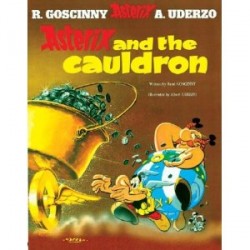
Asterix and the Cauldron, Asterix in Spain & Asterix and the Roman Agent


By Goscinny & Uderzo, translated by Anthea Bell & Derek Hockridge (Orion Books)
ISBNs: 978-075286-628-4, 978-0-75286-630-7 and 978-0-75286-632-1

One of the most-read comics series in the world, the collected chronicles of Asterix the Gaul have been translated into more than 100 languages since his debut in 1959, with animated and live-action movies, TV series, assorted games, toys and even a theme park outside Paris (Parc Astérix, if you’re planning a trip…) spinning off from his hilarious exploits.

More than 325 million copies of 34 Asterix books have sold worldwide, making his joint creators France’s bestselling international authors.

The diminutive, doughty potion-powered champion of Gallic Pride was created by two of the art-form’s greatest proponents, writer René Goscinny & illustrator Albert Uderzo and although their inspirational collaborations ended in 1977 with the death of the prolific scripter, the creative wonderment still continued until relatively recently from Uderzo and assistants – albeit at a slightly reduced rate.

The wonderment works on multiple levels: ostensibly, younger readers revel in the action-packed, lavishly illustrated comedic romps where sneaky, bullying baddies get their just deserts whilst we more worldly readers enthuse over the dry, pun-filled, sly satire, especially as enhanced for English speakers by the brilliantly light touch of translators Anthea Bell & Derek Hockridge, who played no small part in making the indomitable Gaul and his gallant companions so palatable to the Anglo-Saxon world. (Me, I still admire a divinely delivered “Paff!” as much as any painfully potent pun or dry cutting jibe…)

The stories were set on Uderzo’s beloved Brittany coast, where a small village of warriors and their families resisted every effort of the Roman Empire to complete the conquest of Gaul, or alternately, anywhere in the Ancient World, circa 50BC, as the Gallic Gentlemen wandered the fantastic lands of the Empire and beyond…

When the heroes were playing at home, the Romans, unable to defeat this last bastion of Gallic insouciance, resorted to a policy of containment. Thus the little seaside hamlet is permanently hemmed in by the heavily fortified garrisons of Totorum, Aquarium, Laudanum and Compendium.

The Gauls don’t care: they daily defy the world’s greatest military machine simply by going about their everyday affairs, protected by the magic potion of resident druid Getafix and the shrewd wits of the rather diminutive dynamo and his simplistic, supercharged best friend…

Firmly established as a global brand and premium French export by the mid-1960s, Asterix the Gaul continued to grow in quality as Goscinny & Uderzo toiled ever onward, crafting further fabulous sagas; building a stunning legacy of graphic excellence and storytelling gold.

Asterix and the Cauldron was the thirteenth saga, originally running in Pilote #469-491, throughout 1968 and first translated into English in 1976.

The tale is one of treachery, felony and dishonour as fellow Gaulish chieftain Whosemoralsarelastix – a cunning and conniving Roman collaborator – convinces the reluctant but big-hearted Vitalstatistix to guard the occupied cliff-top community’s treasury from Imperial tax collectors.

Despite knowing how untrustworthy the scoundrel is, Gaul must help Gaul and the rogue’s huge onion-soup cauldron, stuffed with his people’s golden Sestertii, is placed under the stewardship of the village’s greatest hero and most trustworthy warrior: Asterix.

However, that night, as a great inter-village feast is consumed, somebody cuts their way into the guard hut and steals the glittering contents of that mighty tureen. Naturally Whosemoralsarelastix wants his money back and the noble Vitalstatistix is honour bound to replace the stolen horde, Disgraced, Asterix is banished until he can refill the empty cauldron with gold…

Trusty Obelix refuses to turn away from his friend and joins the quest, which first takes them to the garrison of Compendium, where the wily warrior intends to refill the empty churn with some of the gold the occupiers have been regularly collecting from Gauls.

Unfortunately, Caesar has been experiencing some cash-flow problems and not only has he been rushing the takings to Rome, he hasn’t even paid his soldiers for months.

With disharmony, mutiny and strike action imminent among the legions Asterix and Obelix realise they must look elsewhere for their loot.

Even their old acquaintances the pirates are cash-strapped – and soon traditionally thrashed – so the doughty duo must seek their fortune at the grand market in Condatum, briefly and disastrously becoming Boar merchants, paid street boxers, actors and charioteers, before turning to crime and planning a bank robbery…

Even here our two just men fare badly. In desperation, they decide to rob Caesar’s tax collector, but Asterix discovers a strange thing. Not only has the destitute Whosemoralsarelastix somehow paid his taxes, but the coins smell of onion soup…

With realisation dawning Asterix visits the cliff-dwelling villagers for a little chat and a mighty reckoning…

Rich with slapstick action and cutting commercial satire (for example the tax collector was a caricature of France’s then Finance Minister Valéry Giscard d’Estaing), this hilarious crime caper is a glorious example of dry yet riotous adventure comedy.
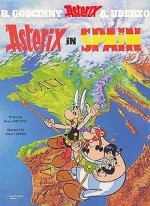

Asterix in Spain promptly followed during 1969 (Pilote #498-519) in France and Astérix en Hispanie was translated into English two years later, recounting how a valiant group of Iberian warriors were similarly holding-out against Caesar’s total conquest of that proud nation.

Chief Huevos Y Bacon was the noble warrior leading the resistance but when his haughty son Pepe was captured all seemed lost. Fearing reprisal or rescue the Romans hastily despatched the hostage lad to the garrison at Totorum, under the command of brutish Spurius Brontosaurus, who has no idea what the “pacified” Gauls of the area are like and has his hands more than full contending with the appallingly behaved and inspirationally vicious young prince.

When his guards encounter Gauls in the great forest they are easily overwhelmed by playful Obelix. Asterix takes Pepe back to the village where, after an ill-advised and painful attempt by Brontosaurus and the legion to reclaim him, the heroes decide to return him to his father. Most pertinent in this decision is the spoiled brat’s obnoxious behaviour…

Brontosaurus has pragmatically decided the kid is perfectly safe with the Gauls and unaware of their planned jaunt to Hispania, smugly returns to his post. Meanwhile, after their mandatory encounter with pirates, Asterix, Obelix and faithful mutt Dogmatix make their leisurely way through the scenic countryside (offering many trenchant asides regarding the modern French passion for Spanish touring holidays) until a chance encounter in an inn reveals to the General how close they are to undoing all his plans.

Venal but no coward the Roman joins their excursion party, captures Asterix and steals the Gaul’s magic potion and plans to destroy Huevos Y Bacon’s resistance forever. However Obelix, Pepe – and Dogmatix – have a plan to spectacularly save the day…

Full of good-natured nationalistic pokes and trans-national teasing, liberally served up with raucous hi-jinks and fast-paced action, this is another magical titbit of all-ages entertainment.

Asterix and the Roman Agent was first seen 1970 in Pilote #531-552, making the jump to English in 1972, and once more featured homeland insecurity as Caesar, under attack by the Roman Senate over the indomitable, unconquerable Gauls, deploys his greatest weapon: a double-edged sword named Tortuous Convolvulus, whose every word and gesture seems to stir ill-feeling and conflict in all who meet him.

Where Force of Arms has failed perhaps this living agent of dissent might forever fracture the Gauls’ unshakable comradeship and solidarity with dose of Roman entente dis-cordiale…

On the crossing, just two minutes with the conniving Convolvulus has the brotherhood of pirates at each other’s throats, and even while discussing the plan with Aquarium’s commander Felix Platypus, the agent’s unique gift sows discord and violence, so when he finally enters the village it’s not long before the high-spirited and fractious Gauls are at war with each other…

The women are cattily sniping at each other, the traders are trading blows and even Asterix and Obelix are on the outs. But that’s not the worst of it: somehow the idea has gotten around that their sharp little champion has sold out to the Romans…

With discord rife the Romans soon have the secret of the magic potion too – or do they? -but the ingenious Convolvulus hasn’t reckoned on two things: the sheer dimness of Imperial troops and the invaluable power of true friendship, leaving Asterix and Obelix a way to overcome their differences, turn the tables and once more save the day.

At last, the agent provocateur is forced to realise that sometimes one can be too smart for one’s own good…

Brittle, barbed and devilishly sharp, this yarn was reputedly based on lingering ill-feeling following an internal power-struggle at Pilote which almost cost editor Goscinny his job. The original title for the tale was La Zizanie – “The Ill-feeling” or “The Dissension”. Seen through the lens of forty years of distance, however, all that can be seen now is stinging, clever, witty observational comedy and magnificently engaging adventure, and surely that’s what matters most?

Asterix sagas are always stuffed with captivating historical titbits, soupcons of healthy cynicism, singularly surreal situations and amazingly addictive action, illustrated in a magically enticing manner. These are perfect comics that everyone should read over and over again.

© 1968-1970 Goscinny/Uderzo. Revised English translation © 2004 Hachette. All rights reserved.
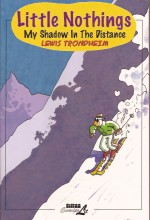
Little Nothings volume 4: My Shadow in the Distance


By Lewis Trondheim, translated by Joe Johnson (NBM/ComicsLit)
ISBN: 978-1-56163-523-8

With over 100 books bearing his pen-name, (Lewis Trondheim is actually Laurent Chabosy) the writer/artist/editor and educator is one of Europe’s most prolific comics creators: illuminating his own work, overseeing animated cartoons of adaptations of previous successes such as La Mouche (The Fly) and Kaput and Zösky or editing the younger-readers book series Shampooing for Dargaud.

His most famous works are the global hits ‘Les Formidables Aventures de Lapinot’ (translated as The Spiffy Adventures of McConey) and, with Joann Sfar, the Donjon (Dungeon) series of nested fantasy epics (translated as the conjoined sagas Dungeon: Parade, Dungeon: Monstres and Dungeon: the Early Years).

In his spare time, and when not girdling the globe from convention to symposium to festival, the dourly shy and neurotically introspective savant has written for satirical magazine Psikopat and provided scripts for many of the continent’s most popular artists – such as Fabrice Parme (Le Roi Catastrophe, Vénézia), Manu Larcenet (Les Cosmonautes du futur), José Parrondo (Allez Raconte and Papa Raconte) and Thierry Robin (Petit Père Noël).

He is a cartoonist of uncanny wit, piercing perspicacity, comforting affability and self-deprecating empathy who prefers to control scrupulously what is known and said about him…

A little while ago the well-travelled graphic self-critic began drawing a deliciously intimate cartoon blog wherein all the people Trondheim knows or encounters are rendered as anthropomorphised animals with him a dowdy, parrot-beaked actor/director. These marvellous meanderings have been periodically released as a series of enchanting full-colour albums. Page after page of whimsical, querulous and enticingly intriguing reportage deliciously rendered in watercolour tones has emerged since and now at last here’s another collecting his daily thoughts on 2009…

This collection focuses heavily on the global peregrinations of Trondheim, with and without his family, to such far-flung places as Iceland, America (for an extended and hilariously unsettling family vacation from New York to Las Vegas), Quebec and Canada, Germany, Prague, Madrid, Italy, Corsica, Argentina, Ushuaia, Antarctica and Africa, with all the attendant joys and night-terrors such voyages engender for him.

As ever he highlights the ways in which humans vary and yet remain intrinsically similar (although only my own German forebears could possibly have devised such a brilliant method of enhancing and yet sanitising men’s urinal experiences…) but also finds time and space to ponder the inevitable decline in quality of movie sequels, roaming credit-card charges, his health, travel etiquette and preparation, the pitfalls of snacking, airports everywhere, the urge to eavesdrop, the varying quality of hotels, weather and climate, forgetfulness, comics conventions, fans and professionals, personal space and getting old, skiing holidays, making your own music and what cats are good for, before concluding with an extended and rather grotesque episode covering his nasal polyp surgery and the inevitable overreaction to it…

These daily bulletins explore little events and really big themes and there are also purely visual moments that you just have to see to believe, whilst the ruminations, micro-dramas and amicably nit-picking pictorial monologues regularly range from his inability to de-clutter, toilet etiquette, gadgets, marriage, parenthood, computers, and getting old, which mercifully comes to us…

Little Nothings is easily one of the most comforting and compelling biographical comics series ever created; gently contemplative, subtly pleasing and ineffably something that no fan of any advanced or significant vintage would care to miss

I once more strongly suggest that if you need a little non-theological, un-theosophical yet hilariously existential spiritual refreshment you take advantage of this fortuitous collection toot da sweet…

© 2009 Trondheim. English translation © 2011 NBM. All Rights Reserved.

The Cabbie vol. 1


By Marti Riera with an introduction by Art Spiegelman (Fantagraphics Books)
ISBN: 978-1-60699-4504

After far too long out of print Fantagraphics have rescued one of the darkest and yet most grimly illuminating classics of European cartooning from relative obscurity with this augmented, remastered reissue of Marti’s The Cabbie – a stylish, nightmarish psycho-sexual noir thriller that has as much seedy kick now as it had when first translated in 1987 by Catalan Communications…

Dick Tracy is one of the most well-known strips in the world and his contributions to the art form are many and indisputable. They occurred over many decades and the medium of graphic narrative grew up with it. Imagine the effect instant exposure – almost over exposure – to such an uncompromising, bombastic, iconic property on the artists of a nation where free-expression and creative autonomy was suppressed for generations.

That’s what happened when the death of General Franco (who held Spain in a fascistic time-warp from his victory in October 1936 until his death in November 1975) instantly opened-up and liberalized all aspects of Spanish life.

As Art Spiegelman says in his introduction ‘decades of political and social repression gave way to a glorious eruption of creativity that allowed a full-fledged counterculture to come to life at just about the same time that America’s “Love Generation” gave way to what Tom Wolfe labelled the “Me Generation.”’

How odd yet fitting then that an American symbol of “the Establishment” so enchanted and captivated the young cartoonist Marti Riera that he assimilated every line and nuance to create this bleak, stripped-down and very angry homage concerning the tribulations of a seedy, desperate taxi-driver trapped in a vanished past and prey to a world at once free and dangerous, ungoverned and chaotic.

Driving the seediest part of town our hero picks up a high-rolling gambler who’s just won big, but his night goes horribly wrong when a knife-wielding thief hijacks the cab and robs his passenger. Luckily the Cabbie can handle himself and he quickly, brutally subdues the thug.

He’s a decent, hard-working man who lives with his ailing mother, humouring her talk of a mysterious inheritance, and allowing her to keep the embalmed cadaver of his father in the spare bedroom, but he’s tragically unaware that his citizen’s arrest will have terrible repercussions for them both.

When the son of the thief he captured is released from prison he immediately begins a grim campaign of retribution against the Cabbie that creates a maelstrom of tragedy, degradation and despair.

This is a harsh and uncompromising tale of escalating crime and uncaring punishments: blackly cynical, existentially scary and populated with a cast of battered, desolate characters of increasingly degenerate desperation. Even the monsters are victims. But for all that The Cabbie is an incredibly compelling drama with strong allegorical overtones and brutally mesmerizing visuals.

Any adult follower of the art form should be conversant with this superb work and with a second volume forthcoming hopefully we soon all will be…
The Cabbie (Taxista) © 2011 Marti. Introduction © 2011 Art Spiegelman. This edition © 2011 Fantagraphics Books.

Valerian and Laureline book 2: The Empire of a Thousand Planets


By J.-C. Méziéres & P. Christin, with colours by E. Tranlé and translated by Jerome Saincantin (Cinebook)
ISBN: 978-1-84918-087-0

Valérian is arguably the most influential comics science fiction series ever drawn – and yes, I am including both Buck Rogers and Flash Gordon in that expansive and undoubtedly contentious statement.

Although to a large extent those venerable strips defined the medium itself, anybody who has seen a Star Wars movie has seen some of Jean-Claude Méziéres & Pierre Christin’s brilliant imaginings which the filmic phenomenon has shamelessly plundered for decades: everything from the look of the Millennium Falcon to Leia‘s Slave Girl outfit -as this second volume powerfully proves in a stunning comparisons feature following after the magnificent adventure contained herein…

Simply put, more carbon-based lifeforms have experienced and marvelled at the uniquely innovative, grungy, lived-in tech realism and light-hearted swashbuckling rollercoaster romps of Méziéres & Christin than any other cartoon spacer ever imagined possible.

The groundbreaking series followed a Franco-Belgian mini-boom in fantasy fiction triggered by Jean-Claude Forest’s 1962 creation Barbarella. Valérian: Spatio-Temporal Agent launched in the November 9th, 1967 edition of Pilote (#420) and was an instant hit. In combination with Greg & Eddy Paape’s Luc Orient and Philippe Druillet’s Lone Sloane, Valérian‘s hot public reception led to the creation of dedicated adult graphic sci fi magazine Métal Hurlant in 1977.

Valérian and Laureline (as the series eventually became) is light-hearted, wildly imaginative time-travelling, space-warping fantasy (a bit like Dr. Who, but not really at all…), drenched in wry, satirical, humanist action and political commentary, starring, in the beginning, an affable, capable, unimaginative and by-the-book cop tasked with protecting the official universal chronology and counteracting paradoxes caused by casual time-travellers.

When Valérian travelled to 11th century France in the initial tale ‘Les Mauvais Rêves (‘Bad Dreams’) he was rescued from doom by a fiery, capable young woman named Laureline whom he brought back to the 28th century super-citadel and administrative wonderland of Galaxity, capital of the Terran Empire. The indomitable lass trained as a Spatio-Temporal operative and began accompanying him on his missions.

Every subsequent Valérian adventure until the 13th was first serialised weekly in Pilote until the conclusion of ‘The Rage of Hypsis’ after which the mind-boggling sagas were only published as all-new complete graphic novels, until the whole spectacular saga resolved and ended in 2010.

The Empire of a Thousand Planets originally ran in Pilote #520-541from October 23rd 1969 to March 19th 1970 and saw the veteran and rookie despatched to the fabled planet Syrte the Magnificent, capital of vast system-wide civilisation and a world in inexplicable and rapid technological and social decline.

The mission is one of threat-assessment: staying in their base time-period (October 2720) the pair are tasked with examining the first galactic civilisation ever discovered that has never experienced any human contact or contamination, but as usual, events don’t go according to plan…

Despite easily blending into a culture with a thousand sentient species, Valerian and Laureline soon find themselves plunged into intrigue and dire danger when the acquisitive girl buys an old watch in the market.

Nobody on Syrte knows what it is since all the creatures of this civilisation have an innate, infallible time-sense, but the gaudy bauble soon attracts the attention of one of the Enlightened – a sinister cult of masked mystics who have the ear of the Emperor and a stranglehold on all technologies….

The Enlightened are responsible for the stagnation within this once-vital interplanetary colossus and they quickly move to eradicate the Spatio-temporal agents. Narrowly escaping doom, the pair reluctantly experience the staggering natural wonders and perils of the wilds beyond the capital city before dutifully returning to retrieve their docked spaceship.

Soon however our dauntless duo are distracted and embroiled in a deadly rebellion fomented by the Commercial Traders Guild. Infiltrating the awesome palace of the puppet-Emperor and exploring the mysterious outer planets Valerian and Laureline discover a long-fomenting plot to destroy Earth – a world supposedly unknown to anyone in this Millennial Empire…

All-out war looms and the Enlightened’s incredible connection to post-Atomic disaster Earth is astonishingly revealed just as inter-stellar conflict erupts between rebels and Imperial forces, with our heroes forced to fully abandon their neutrality and take up arms to save two civilisations a universe apart yet inextricably linked…

Comfortingly, yet unjustly familiar, this spectacular space-opera is fun-filled, action-packed, visually breathtaking and mind-bogglingly ingenious.  Drenched in wide-eyed fantasy wonderment, science fiction adventures have never been better than this.

© Dargaud Paris, 1971 Christin, Méziéres & Tran-Lệ. All rights reserved. English translation © 2011 Cinebook Ltd.

The Hunting Party


By Enki Bilal & Pierre Christin translated by Elizabeth Bell (Les Humanoid/Titan Books)
ISBN: hardback 978-0-96724-017-6,   softcover 978-1-85286-289-3

To highlight the Memoirs of a Cold Utopia exhibition plugged in our Noticeboard section here’s a fascinating graphic novel long overdue for a thorough revisit…

Here’s a masterpiece of subtle moody comics storytelling criminally out of print and long overdue for rediscovery in the frankly incomprehensible modern English language comics marketplace.

Enes Bilalović AKA Enki Bilal was born in Belgrade in 1951 and broke into French comics in 1972 with Le Bal Maudit for Pilote. Throughout the 1970s he grew in skill and fame and achieved English-language celebrity once his work began appearing in America’s Heavy Metal magazine.

Although best known for his self-scripted Nikopol Trilogy (Gods in Chaos, The Woman Trap and Cold Equator) I’ve always felt that his most effective art appeared in this contemplative Cold War drama. Partie de chasseThe Hunting Party – scripted by old comrade Christin is arguably Bilal’s most powerful and heartfelt effort. In recent years Bilal returned to contemporary political themes with his much-lauded self-penned Hatzfeld tetralogy…

As if writing one of the most successful and significant comics series in the world (the groundbreaking and influential Valérian and Laureline series) was not enough, full-time Academician Pierre Christin has still found time over the years to script science-fiction novels, screenplays and a broad selection of comics, beginning in 1966 with Le Rhum du Punch with Valérian co-creator Jean-Claude Mézières.

Christin has produced stellar graphic stories with such artistic luminaries as Jacques Tardi, Raymond Poïvet, Annie Goetzinger, François Boucq, Jijé and many others, but whenever he collaborated with the brilliant Bilal, beginning in 1975 with their exotic and surreal Légendes d’Aujourd’hui or in later classic tales such as The City That Didn’t Exist or The Black Order Brigade, the results have never been less than stunning.

In this, their best work, idealism and human nature have never been more coldly and clearly depicted…

As the Soviet system begins to crack, ten old men of the Party gathered at an exclusive Polish estate for an extended winter holiday of reminiscing and shooting. Stars and survivors in their own Warsaw Pact countries, the guests are all linked in deed and indebted to one charismatic man…

He is legendary figure and hard-line apparatchik Vassili Alexandrovich Chevchenko who has given his long life to the pursuit of the Communist ideal, but is now a doomed man; half-paralysed, rendered mute by a stroke and sidelined by the Politburo which is again repurposing itself, as it has so many times during Chevchenko’s life.

The aged politician’s long career has been one of surrendering self and sacrificing personal desire to serve the State and now he has gathered his closest colleagues about him for one last diverting weekend of vodka, chess, hunting and history…

As the festivities proceed the silent grandee is plagued with red-handed memories of the things he has done and the love he’d lost for the sake of the Dream, but his internal colloquy is balanced by the naïve questions and attitudes of the young and anonymous French Communist hired to translate for the other interloper among the old Comrades – reforming go-getter Sergei Shavanidze, who has been appointed Chevchenko’s successor and can’t wait to start pruning dead wood and outmoded ideas…

The entire history of the Movement is examined via the personal reminiscences of these creaking remnants of the system recalling past glories, old horrors and narrow escapes, but the bemused and bewildered Frenchman has no inkling as he absorbs the secrets of their socialist past of the part he will unwittingly play in its future…

This mesmerising, beguiling and utterly chilling thriller methodically skins the hide from an idealistic dream and spills the dark hot guts of guilt, arrogance and the pursuit of power in a sublime example of graphic narrative’s unique facility to tell a story on a number of levels.

In 1990 Titan Books released The Hunting Party in a captivating softcover album as part of their push to popularise European comics classics and in 1992 Humanoids Publishing published a sturdy oversized (12.6 x 9.4inches) hardback edition for the US market, either of which will delight any fan in search of a more mature and thought-provoking reading experience.
© 1990 Les Humanoides Associes. English language edition © 1990 Titan Books. All Rights Reserved.

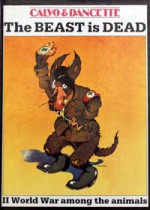
The Beast is Dead: World War II Among the Animals


By Edmond-François Calvo, Victor Dancette & Jacques Zimmerman (Abi Melzer Productions)
No ISBN:

In Acknowledgement of the upcoming Comics in Conflict event at the Imperial War Museum this weekend – see our Noticeboard for details – I’m going to be reviewing a few intriguing and hopefully pertinent classics beginning with this tragically neglected cartoon masterpiece…

As the European phase of World War II staggered to its bloody and inevitable conclusion, the enslaved nations began to reclaim their homelands and various national prides in a glorious wave of liberation. All over the Old World long suppressed stories and accounts, true or otherwise, began to be shared. During France’s occupation publishing was strictly controlled – even comics – but the Nazis couldn’t suppress creative spirit and many conquered citizens resisted in the only ways they safely could.

For sculptor, artist, caricaturist and social satirist Edmond-François Calvo (26/8/1892-11/10/1958) that was by drawing. Watched by his adoring apprentice-artist Albert (Asterix) Uderzo and inspired by the Gallic graphic giant Daumier, the venerable creator of such joyous anthropomorphic classics as ‘Patamousse’, ‘Anatomies Atomiques’, ‘Les Aventures de Rosalie’, ‘Monsieur Royal Présente’, ‘Grandeur et Décadente du Royaume des Bêtes’ and ‘Cricri, Souris d’Appartement’ worked quietly and determinedly on his own devastating war-effort secret weapon.

He latterly specialised in sparkling, socially aware and beautiful family-friendly strips such as ‘Moustache et Trottinette’, ‘Femmes d’Aujourd’hui’, ‘Coquin le Petit Cocker’ and a host of fairytale adaptations for Tintin, Baby Journal, Cricri Journal, Coq Hardi, Bravo!, Pierrot Âmes Vaillantes and Coeurs Vaillants.

Beginning as a caricaturist for Le Canard Enchaîné in 1938 Calvo eventually moved into strip stories, but also had to moonlight with “real” jobs such as woodcarver and innkeeper. By the time France fell to the Germans in June 1940 he was working for Offenstadt/S.P.E. press group, contributing ‘Le Chevalier Chantecler’, ‘D’Artagnan’, ‘Les Grandes Aventures’, ‘Robin des Bois’, ‘Les Voyages de Gulliver’ and the initial three chapters of ‘Patamouche’ to Fillette, L’Épatant, L’As and Junior plus ‘La Croisière Fantastique’, ‘Croquemulot’ and ‘Un Chasseur Sachant Chasser’ to Éditions Sépia.

Most of this material was produced under the stern scrutiny of the all-conquering censors – much like his comics contemporary Hergé in Belgium – but Calvo also found time to produce something far less anodyne or safe.

With both Editor Victor Dancette and writer Jacques Zimmermann providing scripts, and beginning as early as 1941, Calvo began translating the history of the conflict into a staggeringly beautiful and passionately vehement dark fable, outlining the betrayal of the European nations by literal Wolves in the Fold.

After years of patient creation – and presumably limited dissemination amongst trusted confreres – the first part of La Bete est Mort!When the beast is raging’ was published in 1944, followed a year later with the concluding When the animal is struck down’. Both were colossal hits even before the war ended and the volumes were continually reprinted until 1948 when the public clearly decided to move on with their lives…

The story is related in epic full-page painted spreads and captivating, luscious strip instalments and the smooth, slick glamour of Disney’s production style was co-opted to deliver the list of outrages to be addressed and a warning to the future, with each nation being categorised by a national totem.

The French were rabbits, the Italians hyenas and the Japanese monkeys. Britain was populated by bulldogs, Belgium by lions, Russia by polar bears and America by vast herds of buffalo…

Hitler’s inner circle of monsters got special attention: such as Goering the Pig and Himmler the Skunk, but so did the good guys: General de Gaulle was depicted as a magnificent Stork…

A fiercely unrepentant but compellingly lovely polemic by a bloody but unbowed winning side, The Beast is Dead was forgotten until republished in 1977 by Futuropolis. This particular English-language, oversized (225 x 300mm or 9 inches x 12) hardback edition was released in 1985 and includes the introduction from a Dutch edition; a dedication from Uderzo and a monochrome selection of Calvo’s wartime and post-war cartoons.

Magnificent, compelling radiant, hugely influential (without this there would never have been Maus), astoundingly affecting and just plain gorgeous, this modern horror tale of organised inhumanity is out of print but still available if you look hard and since an animated film adaptation was begun in 2005, hopefully there’s a new edition in the works too.
© 1944-1945 Éditions G.P. © 1977 Éditions Futuropolis. © 1984 Abi Melzer Productions.

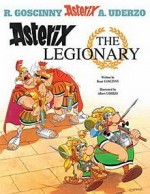
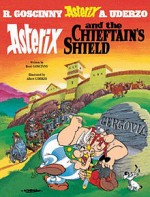
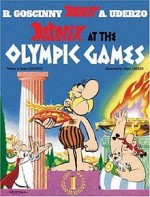
Asterix the Legionary, Asterix and The Chieftain’s Shield & Asterix at The Olympic Games


By Goscinny and Uderzo, translated by Anthea Bell & Derek Hockridge (Orion Books)
ISBNs: 978-0-7528-6621-5, 978-0-7528-6625-3 and 978-0-7528-6626-0

One of the most-read comics in the world, the chronicles of Asterix the Gaul have been translated into more than 100 languages; with animated and  live-action movies, TV series, assorted games and even a theme park (Parc Astérix, near Paris). More than 325 million copies of 34 Asterix books have sold worldwide, making Goscinny & Uderzo France’s bestselling international authors.

The diminutive, doughty hero was created in 1959 by two of the art-form’s greatest proponents, René Goscinny & Albert Uderzo; masters of the form at the peak of their creative powers. Although their perfect partnership ended in 1977 with the death of prolific scripter Goscinny, the creative wonderment still continues – albeit at a slightly reduced rate of rapidity as Uderzo continues to produce new works.

Like everything good, the premise works on multiple levels: ostensibly, younger readers enjoy the action-packed, lavishly illustrated comedic romps where sneaky, bullying baddies get their just deserts whilst more worldly readers enthuse over the dry, pun-filled, sly, witty satire, enhanced for English speakers by the brilliantly light touch of translators Anthea Bell & Derek Hockridge who played no small part in making the indomitable Gaul so palatable to the Anglo-Saxon world. (Personally I still thrill to a perfectly delivered punch in the bracket as much as a painfully swingeing string of bad puns and dry cutting jibes…)

Asterix the Gaul is a cunning underdog who resists the iniquities, experiences the absurdities and observes the myriad wonders of Julius Caesar’s Roman Empire with brains, bravery and a magic potion.

The stories were alternately set on the tip of Uderzo’s beloved Brittany coast, where a small village of redoubtable warriors and their families resisted every effort of the Roman Empire to complete their conquest of Gau,l and throughout the expansive Ancient World circa 50BC.

Unable to defeat this last bastion of Gallic insouciance the mostly victorious invaders resorted to a policy of containment. Thus the little seaside hamlet is permanently hemmed in by the heavily fortified garrisons of Totorum, Aquarium, Laudanum and Compendium.

The Gauls don’t care: they daily defy the world’s greatest military machine by just going about their everyday affairs, protected by the magic potion of resident druid Getafix and the shrewd wits of a rather diminutive dynamo and his simplistic best friend…

Firmly established as a global brand and premium French comics export by the mid-1960s, Asterix the Gaul continued to grow in quality as Goscinny & Uderzo toiled ever onward, crafting further fabulous sagas; building a stunning legacy of graphic excellence and storytelling gold.

In late 1966 they began Asterix the Legionary (running in Pilote #368-389), which was later adapted as half of the plot for the movie Asterix Vs Caesar (the other album incorporated into the animated epic being Asterix the Gladiator).

This clever romp introduced the destabilising concept of true romance to the doughty hero and his prodigious pal Obelix as, whilst boar hunting in the great forest around their still-unconquered village, they encountered the fabulously beautiful Panacea picking mushrooms.

The little darling had freshly returned to the village after years away in Condatum and the sheltered Obelix was instantly smitten. Dazed and confused by the only force that could ever affect him, the gentle giant was teased by Asterix and Getafix, but undaunted, Obelix began bringing the oblivious lass a succession of inappropriate presents.

However, when the befuddled buffoon found Panacea crying he dashingly volunteered to mend her woes. Tragically for him the problem was a boyfriend named Tragicomix, who had been pressed into military service with the Roman Army…

Where other men would take advantage of the hopeless situation, Obelix, afflicted with a True Crush, determined to make Panacea happy and rushed off to rescue her lost love. Ever faithful, Asterix and little Dogmatix accompany him to keep him out of trouble.

In Condatum they discovered that Tragicomic had already been shipped out to Africa where Caesar was battling fellow Roman Scipio in a clandestine Civil War and Asterix realised the only way to find Tragicomix was to enlist in the Roman Army…

In Basic Training they met a motley assortment of fellow recruits – all national stereotypes – allowing for a broad bombardment of gentle ethnic comedy and graphic accent humour. There was Neveratalos the Greek, Goths Allegoric and Hemispheric, Gastronomix from Belgium, Selectivemploymentax the Briton and poor Ptenisnet the Egyptian, who didn’t know the language and thought he was on a holiday package tour…

After lashings of their unique brand of anarchy disrupting regulation army life, Asterix, Obelix and crew shipped out to Africa. When they arrived the war was going badly for Caesar, but more importantly, Tragicomix was missing and believed captured by Scipio’s forces…

With magic potion in hand Asterix, Obelix and Dogmatix decided to take matters in hand…

A hilariously engaging yarn with delicious overtones of the iconic British comedy Carry On Sergeant, this is an action-packed farce big on laughs but with a bittersweet core that will tug at the heartstrings of young and old alike…

Asterix and the Chieftain’s Shield (originally entitled Le bouclier arverne) was the eleventh epic outing for the Greatest French Hero of Them All; debuting in Pilote #399 and running until #421 in 1967. it acted as a kind of tongue in cheek patriotic history lesson and began years before the usual setting of Asterix tales when Gaulish over-chief Vercingetorix surrendered to Caesar at the Battle of Alesia by throwing down his weapons and armour at the Conqueror’s feet.

Such was the shame of the defeated Gauls that the location of the clash was deliberately excised from their memories. Now, nobody remembers where Alesia was…

After the battle the accoutrements lay where they fell until a greedy Legionary stole the Great Shield, subsequently losing it in a game of dice. From there the legendary buckler passed through many scurrilous hands before fading into legend…

Jumping to “modern” times, in the village of indomitable Gauls Chief Vitalstatistix is terribly ill: a sedentary life of over-indulgence has ruined his liver and since Getafix’s druidic potions can’t help him, he has to go to the spa town of Aqua Calidae (Arverne) for a rest-cure and diet.

It isn’t all bad though since his forthright wife Impedimenta has to stay behind….

As a chief he needs an honour guard and Asterix, Obelix and Dogmatix are happy to accompany him, especially as the chief uses the journey to test all the inns and taverns en route. Once there though, the warriors’ robust consumption – and boisterous high jinks – appals all the dieting dignitaries and impatient patients so Asterix and Obelix are summarily kicked out of the Health Resort.

Footloose and fancy-free the boys tour the local countryside of Gergovia idly trying to find the lost site of Alesia until they encounter Roman envoy Noxius Vapus and his cohort. After indulging in their favourite sport of Roman-bashing the lads befriend local merchant Winesandspirix – a veteran of Alesia – while Noxius hightails it to Rome and tells Caesar the Gauls are revolting…

({      } this space provided for you to fill in your own joke)

Set on putting the Gauls in their place and reminding them who’s boss, Caesar determines to hold a Roman Triumph with the shield of Vercingetorix as the centrepiece.

He’s none to happy when he discovers it’s been missing for years…

And thus begins the second stage of this hilariously thrilling detective mystery as the Romans frantically hunt for the missing artefact and Asterix and Obelix set out to thwart them at every turn…

No prizes for guessing which faction succeeds and who scurries home in defeat and disgust in this marvellously slapstick saga with a delightfully daft twist ending…

Asterix at the Olympic Games first appeared weekly in Pilote #434-455, serialised in 1968 to coincide with and capitalise upon the Mexico City Games. The translated British album was released four years later, just before the 1972 Munich Olympiad.

The Romans of Aquarium garrison are in an ebullient mood. Their comrade Gluteus Maximus has been selected to represent Rome at the Greeks’ Great Games in Olympia. Centurion Gaius Veriambitius is happy too, because he knows if Gluteus wins they can both write their ticket in Rome…

It all starts to go horribly wrong when the Roman superman is bested and humiliated by Asterix and Obelix whilst training in the Great Forest. His confidence shattered, Gluteus returns to Aquarium and only regains a modicum of his old form when Veriambitius reminds him that the potion-fuelled Gauls won’t be at the Games…

Meanwhile the men of the village have decided to go to Olympia en masses and have a go themselves…

There follows a uproarious and nigh-scandalous sequence of events as the unbeatable Greeks try to placate their Roman overlords; the Latin competitors undergo the tortures of the arrogant damned to cheat, wheedle and somehow exclude the all-conquering Gauls whilst the basically honest and honourable Asterix devises a cunning yet fair way to beat the politically motivated, greed-inspired “sportsmen” and uphold the best traditions and ideals of the Olympic Games.

Guess who wins…

Spoofing package tours, obnoxious tourists, self-serving sports authorities and doping scandals in equal proportion, this sparkling escapade features some of Uderzo’s most inspired art as he recreates the grandeur and glory of the Ancient World whilst simultaneously graphically lampooning the haughty elites of the Sporting World, the Military and Politics. A genuine classic which should be given to every competitor at London 2012 and especially the organising committees…

Asterix volumes are always stuffed with captivating historical titbits, soupcons of healthy cynicism, singularly surreal action and splendidly addictive adventure, illustrated in a magically enticing manner. These are perfect comics that every one should read over and over again.
© 1967-1969 Goscinny/Uderzo. Revised English translation © 2004 Hachette. All rights reserved.

Desperation Row


By Denis Mérezette & Jean-François di Giorgio (Editions Michel Deligne)
ISBN: 2-87135-019-1

Even in these cosmopolitan times of easy access and no borders a truly monolithic amount of world comics still languishes untranslated and thus unappreciated by a vast pool of potential fans. It’s certainly not the Japanese or Europeans’ fault. Over the decades many publishers, Eastern and Occidental, have tried to crack the American market (let’s be honest here; Britain alone is certainly too small for the effort to mean anything or be cost effective) with usual painful and costly results.

However it does mean that circulating out there are many intriguing lost gems of graphic narrative such as this dark and moody adult thriller that came and went largely unremarked in 1985 but is certainly worthy of a second look and a larger audience in these more cosmopolitan times.

Desperation Row (or more accurately ‘Street of Shadows’) was the debut pairing of Mérezette & di Giorgio, appearing on a few British bookshelves in 1986, a year after publisher De Ligne launched it in France as ‘Rue Des Ombres’ – a terse and intriguingly intense period crime drama set in the mythical, movie-immortalised gutters and slums of New York’s Hell’s Kitchen.

Artist Denis Mérézette’s first published work was ‘Le Berger’ (written by Sédille), released in 1981. He went on to illustrate Duménil’s ‘Algérie Française!’ before joining with Jean-François di Giorgio on ‘Rue des Ombres’ in 1985 and ‘Julie Julie’ in 1986. In 1988 he produced ‘Hank Wetter – Les Carnassiers’ with Philippe Illien, for Magic Strip and adapted, with author De la Royère, B. Clavel’s epic ‘Harricana – Le Royaume du Nord’ in 1992.

Di Giorgio moved from editorial to authorial creativity with his debut albums ‘Rue des Ombres’ and ‘Julie Julie’ after which he began the serial ‘Munro’ (illustrated by Griffo and André Taymans for Spirou) as well as novel adaptations of novels such as Le Pays Perdus and many other strips like ‘Fous de Monk’, ‘Sam Griffith’, ‘Les Aventures de Bouchon le Petit Cochon’, medieval blockbuster ‘Shane’ (with Paul Teng), ‘Le Culte des Ténèbres’ and ‘Mygala’… all stuff I’d love to see make the jump to English.

This bleak noir homage pushes all the visual, tonal and narrative buttons of mythic 20th century America as it follows the foredoomed path of burned-out Parisian Paparazzo Paul; moving through the mean streets of the Bowery and immigrant districts, capturing the sordid glamour of America’s underbelly for the bored readers of Europe.

Tracking an unexplained spate of suicides Paul spots a high roller slumming on skid row and gets far too close to a big story…

Inexplicably ignoring the tawdry instincts of a lifetime, Paul sells wealthy Mr. Ofield the undeveloped film-roll of his Bowery escapade and in return the millionaire offers him a high-paying gig… obtaining compromising and legally airtight photos of his cheating spouse.

Paul succeeds and things start to get really messy: his apartment is searched, thugs beat him up, terrorise his hooker girlfriend and then his building – and the ones either side – are torched. As his fellow news-photographers happily snap away at the maimed and homeless survivors of the conflagration, Paul reaches an epiphany and realises he’s no longer one of their conscienceless fraternity… and that’s when the cheating wife he so recently exposed confronts him and the photographer begins to regret keeping those negatives….

It would seem Mr. Ofield never intended to divorce his wandering wife and now Paul is fatally involved in a deadly, devious war between rival gangsters and an equal ruthless government agency. Paul trades his camera for a hastily purchased gun, but when his old pal and street tipster Shorty is brutally murdered by the beggars who run the Bowery Paul finds himself remorselessly pulled between, honour, ambition and survival and having to decide if he’s a recorder of or participant in life…

Cunningly twisted and nihilistically bleak, this grim thriller suffers somewhat from a mediocre translation, but the plot and art are fearfully engaging and this moving, stylish adult yarn is long overdue for a more sensitive interpretation and new English edition.
© 1985 Editions Michel Deligne S.A., and Mérezette & Giorgio Productions. All rights reserved.

Walt Disney’s High Jinks on the Matterhorn and The Rain God of Uxmal


By Adolf Kabatek and the Gutenberghus Group, translated by Anne Kilborn (London Editions)
ISBNs: 7235-95038 and 7235-9502X

Scrooge McDuck premiered in the Donald Duck tale ‘Christmas on Bear Mountain’ (Four Colour Comics #178 December 1947) as a disposable foil to move along simple tales of Seasonal woe and joy. The old miser was crusty, energetic, menacing, money-mad and yet oddly lovable – and thus far too potentially valuable to be misspent or thrown away. Undoubtedly, the greatest cartoon creation of the legendary and magnificent story showman Carl Barks, the Downy Dodecadillionaire returned often and eventually expanded to fill all available space in the tales from Duckburg.

The comicbook stories and newspaper strips of the Disney studios quickly travelled around the world and were particularly loved and venerated in Europe where Italy, Germany, Britain and especially the Scandinavian countries made them all their own; with supplemental new adventures and frolics that surpassed the efforts of all but Carl Barks himself.

As Disney US gradually downsized their own comics output, eventually even Barks himself and latter-day American giants like Don Rosa were producing new material for the continental Disney Comics of the Gutenberghus Group.

By the 1980s Disney’s once-prodigious presence on the British comics scene had dwindled to almost nothing and latest license holder London Editions began releasing collected albums in the European manner and using all-European talent, and these two oversized, 48 page books (288mm x 218mm) were first released in Germany in 1983.

High Jinks on the Matterhorn opens with an ailing Money-mad Mallard diagnosed with “Cupiditas Pecuniae” and in desperate need of a break away from the pressure of his all-consuming financial empire. Donald and the ever-helpful nephews take him on a restful jaunt to Switzerland, but as soon as the restless octogenarian smells a fresh opportunity to make money the be-feathered brood are plunged into a breakneck scheme involving unlimited cheese production, super-milk and a frantic race up the mighty Mount Matterhorn in search of a legendary super-food for cows…

Bold, fast-paced, visually spectacular and hilariously funny, this worthy successor to the inventive satirical lunacy of Barks is full of all-ages thrills and creamy cartoon goodness.

These volumes come with an educational feature at the back and the space here is occupied with comprehensive and enticing history of the mountain and the men who first conquered it.

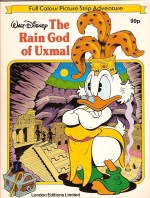
The Rain God of Uxmal returns to classic adventuring as Donald and the boys go in search of Uncle Scrooge after catching a conman who has sold the elderly entrepreneur a non-existent palatial holiday-home in Mexico…

Enlisting the aid of eccentric inventor Gyro Gearloose the would-be rescuers head South in an outrageous, off-beat flying car, but by the time they reach Mexico Scrooge has already stumbled into an incredible situation. The crusty capitalist had been abducted and adopted by a lost tribe of supposedly extinct Mayans and taken to their hidden city of Uxmal. Apparently Scrooge was the spitting image of their ancient god Quaxc-Quaxc and expected to bring rain to the drought-parched hidden kingdom…

After a remarkable journey and some scarily close calls, Donald and Co. turn up in the very nick of time, but seem destined to fail in their rescue bid until mysterious providence takes a terrifying hand in the proceedings…

This is an exciting, exotic and eye-popping romp in the wholesome blockbusting Barks manner: blending wit, history, madcap invention, plucky bravado and sheer wide-eyed wonder into a rollicking rollercoaster ride for readers of every age and vintage.

This volume also describes in fascinating detail the secrets of the real lost city of Uxmal.

Whatever your opinions on the corporate mega-colossus that is Disney today, the quality of the material derived from “The House that Walt Built” is undeniable and no fan of comics and old-fashioned fun should avoid any opportunity to revel in the magic – preferably over and over again…
© 1983, 1985 Walt Disney Productions.

Asterix and the Big Fight, Asterix in Britain and Asterix and the Normans


By René Goscinny & Albert Uderzo, translated by Anthea Bell & Derek Hockridge (Orion)
ISBNs: 978-0-7528-6616-1, 978-0-7528-6618-5 and 978-0-7528-6622-2

Asterix the Gaul is one of France’s most exciting and rewarding contributions to global culture: a cunning little champion of the underdog who resisted the iniquities, experienced the absurdities and observed the myriad wonders of Julius Caesar’s Roman Empire with brains, bravery and a magic potion which bestowed incredible strength, speed and vitality.

One of the most-read comics in the world, his chronicles have been translated into more than 100 languages; with 8 animated and 3 live-action movies, assorted games and even into his own theme park (Parc Astérix, near Paris). More than 325 million copies of 34 Asterix books have sold worldwide, making Goscinny & Uderzo France’s bestselling international authors.

The diminutive, doughty hero was created by two of the art-form’s greatest masters, René Goscinny & Albert Uderzo who were already masters of the form and at the peak of their creative powers. Although their perfect partnership ended in 1977 with the death of the terrifying prolific scripter Goscinny, the creative wonderment still continues – albeit at a slightly reduced rate of rapidity.

Asterix launched in 1959 in the very first issue of Pilote (with a teaser page appearing a week earlier in a promotional issue #0). The feature was a massive hit from the start. Initially Uderzo continued working with Charlier on Michel Tanguy, (Les Aventures de Tanguy et Laverdure), but soon after the first epic escapade was collected as Astérix le gaulois in 1961 it became clear that the series would demand most of his time – especially as the incredible Goscinny never seemed to require rest or run out of ideas (after the writer’s death the publication rate dropped from two books per year to one volume every three to five). By 1967 the strip occupied all Uderzo’s time and attention. In 1974 the partners formed Idéfix Studios to fully exploit their inimitable creation and when Goscinny passed away three years later Uderzo was convinced to continue the adventures as writer and artist, producing a further ten volumes since then.

Like all great literary classics the premise works on two levels: younger readers enjoy an action-packed, lavishly illustrated comedic romp of sneaky, bullying baddies getting their just deserts whilst wrinklier readers enthuse over the dry, pun-filled, sly and witty satire, enhanced for English speakers by the brilliantly light touch of master translators Anthea Bell & Derek Hockridge who played no small part in making the indomitable Gaul so palatable to the Anglo-Saxon world.

The stories were set on the tip of Uderzo’s beloved Brittany coast in the year 50BC, where a small village of redoubtable warriors and their families resisted all efforts of the Roman Empire to complete their conquest of Gaul. Unable to defeat these Horatian hold-outs, the Empire resorted to a policy of containment and the little seaside hamlet is perpetually hemmed in by the heavily fortified garrisons of Totorum, Aquarium, Laudanum and Compendium.

The Gauls don’t care: they daily defy the world’s greatest military machine by just going about their everyday affairs, protected by a magic potion provided by the resident druid and the shrewd wits of a rather diminutive dynamo and his simplistic best friend…

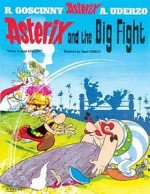
Asterix and the Big Fight first ran in Pilote #261-302 in 1964 (originally entitled Le Combat des chefs‘The Battle of the Chiefs’) and saw another Roman scheme to overwhelm the hirsute hold-outs when Totorum’s commander Centurion Nebulus Nimbus and his aide-de-camp Felonius Caucus tried to use an old Gaulish tradition to rid themselves of the rebels.

The Big Fight is a hand-to-hand duel between chiefs with the winner becoming ruler of the loser’s tribe. All the Romans have to do is find a puppet, have him defeat fat, old Vitalstatistix and their perennial problem goes away for good. Luckily just such a man is Cassius Ceramix: chief of Linoleum, a hulking brute and, most importantly, a keen lover of all things Roman…

Even such a cunning plan is doomed to failure whilst Vitalstatistix uses magic potion to increase his strength, but what if the Druid Getafix is taken out first?

When the Romans attempt to abduct the old mage, Obelix (who had fallen into a vat of potion as a baby and grew into a genial, permanently superhuman, eternally hungry goliath) accidentally bounces a large menhir off the druid’s bonce, causing amnesia and a touch of insanity…

Although not quite what was intended, the incapacitation of Getafix emboldens the plotters and the Gallo-Roman Ceramix’s challenge is quickly delivered and reluctantly accepted. With no magic potion, honour at stake and the entire village endangered, desperate measures are called for. Asterix and Obelix consult the unconventional (even for druids) Psychoanalytix – who specialises in mental disorders – and Vitalstatistix is forced to diet and begin hard physical training!

Unfortunately when Obelix shows Psychoanalytix how Getafix sustained his injury the net result is two crazy druids, who promptly begin a bizarre bout of magical one-upmanship. As the crucial combat begins and Vitalstatistix valiantly battles his hulking, traitorous nemesis, Getafix accidentally cures himself, which is lucky as the treacherous Nebulus Nimbus and Felonius Caucus have no intention of losing and have brought along their Legions to crush the potion-less Gauls, should Ceramix let them down…

Manic and deviously cutting in its jibes at the psychiatric profession, this wildly slapstick romp is genuinely laugh-a-minute and one of the very best Goscinny tales.

Following the established pattern, after a “home” adventure our heroes went globe-trotting in their next exploit – although not very far…

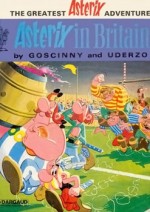
Asterix in Britain originated in 1965 (Pilote #307-334) and followed Caesar’s conquest of our quirky country. It was never a fair fight: Britons always stopped in the afternoon for a cup of hot water and a dash of milk and never at the weekend, so those were the only times the Romans attacked…

After the conquest, in Cantium (Kent) one village of embattled Britons were holding out against the invaders and they had sent Anticlimax to Gaul where his cousin Asterix had successfully resisted the Roman for absolutely ages. Always happy to oblige the Gauls whip up a barrel of magic potion and the wily warrior and Obelix accompany Anticlimax on the return trip. Unfortunately, during a brief brouhaha with a Roman galley in the channel, the invaders discover the mission and begin a massive hunt for the rebels and their precious cargo…

As the trio make their perilous way to the village in Cantium, the entire army of occupation is hard on their heels and it isn’t long before the barrel goes missing…

Simply stuffed with good natured jibes about British cooking, fog, the Tower of Londinium, warm beer, council estates, the still un-dug Channel tunnel, boozing, the Beatles (it was the swinging Sixties, after all), sport, fishing and our national beverage, this action-packed frenetic chase yarn is possibly the funniest of all the Asterix books… if you’re British and possess our rather unique sense of humour, don’tcha know…?

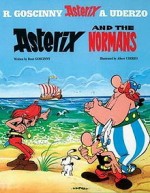
Asterix and the Normans debuted in Pilote #340-361 in 1966 and showed how Vikings (who would eventually colonise parts of France as Northmen or “Normans”) first encountered our heroic Gauls and learned some valuable lessons…

The action opens with Chief Vitalstatistix reluctantly taking charge of his spoiled teenaged nephew Justforkix, intending to make a man of the flashy brat from Lutetia (Paris). The country girls go for his style and modern music (spoofing Elvis Presley in the original and the Rolling Stones in the English translation) and the lad’s glib tongue even convinces the Bard Cacofonix that his “unique” musical talent would be properly appreciated in the big city…

Meanwhile a shipload of Vikings have fetched up on the beach, looking for the answer to a knotty question. Rough, tough and fierce, the Scandinavians have no concept of fear, but since that have heard that the emotion can make people fly they’re determined not to leave until they know all about experiencing terror…

They’ve met their match in the Gaulish villagers, but Justforkix is a different matter. The once-cool lad is a big ball of cowardy-custardness when confronted by the Normans, so the burly barbarians promptly snatch him, insisting he teach them all about that incomprehensible emotion…

Canny Asterix knows fighting the Normans is a waste of time but reasons the only way to get rid of them is to teach them what fear is like. If violence won’t work then what’s need is something truly horrible… but Cacofonix and his assorted musical instruments are already on their way to fame and fortune in Lutetia. If only Obelix and Dogmatix can find him and save the day…

Daft and delicious this superbly silly tale abounds with comedy combat and confusion; a perfect mix of gentle generational jibing and slaphappy slapstick with a twist ending to boot.

Outrageously fast-paced, funny and magnificently illustrated by a supreme artist at the very peak of his form, these historical high jinks cemented Asterix’s growing reputation as a world treasure and as these albums are available in a wealth of differing formats and editions – all readily available from a variety of retail and internet vendors or even your local charity shop – there’s no reason why should miss out on all the fun.

Be warned though, that if pure continuity matters only Orion, the current British publisher, has released the nearly 40 albums in chronological order – and are in the process of re-releasing the tales in Omnibus editions; three tales per tome.

Asterix is sublime comics storytelling and if you’re still not au fait with these Village People you must be as Crazy as the Romans ever were…
© 1964-1965 Goscinny/Uderzo. Revised English translation © 2004 Hachette. All rights reserved.