Merry Christmas, Boys and Girls!

In keeping with my self-imposed Holiday tradition here’s another pick of British Annuals selected not just for nostalgia’s sake but because it’s my house and my rules…
After decades when only American comics and memorabilia were considered collectable or worthy, the resurgence of interest in home-grown material means there’s lots more of this stuff available and if you’re lucky enough to stumble across a vintage volume or modern facsimile, I hope my words convince you to expand your comfort zone and try something old yet new…
Still topping my Xmas wish-list is further collections from fans and publishers who have begun to rescue this magical material from print limbo in (affordable) new collections…
Great writing and art is rotting in boxes and attics or the archives of publishing houses, when it needs to be back in the hands of readers once again. As the tastes of the reading public have never been broader and since a selective sampling of our popular heritage will always appeal to some part of the mass consumer base, let’s all continue rewarding publishers for their efforts and prove that there’s money to be made from these glorious examples of our communal childhood.

Lion Annual 1967

By many and various (Fleetway)
No ISBN: ASIN: B001Q8Y308

From the late 1950s and increasingly through the 1960s, Scotland’s DC Thomson steadily overtook their London-based competitors – monolithic comics publishing giant Amalgamated Press.

Created by Alfred Harmsworth at the beginning of the twentieth century, AP perpetually sought to regain lost ground, and the sheer variety of material the southerners unleashed as commercial countermeasures offered incredible vistas in adventure and – thanks to the defection of Leo Baxendale and Ken Reid to the enemy – eventually found a wealth of anarchic comedy material to challenge the likes of the Bash Street Kids, Dennis the Menace, Minnie the Minx and their unruly ilk.

During the latter end of that period the Batman TV show sent the entire world superhero-crazy. Amalgamated had almost finished absorbing all its other rivals such as Eagle‘s Hulton Press to form Fleetway/Odhams/IPC and were about to incorporate American superheroes into their heady brew of weekly thrills.

Once the biggest player in children’s comics, Amalgamated had stayed at the forefront of sales by latching onto every fad: keeping their material contemporary, if not fresh. The all-consuming company began reprinting the early successes of Marvel comics for a few years; feeding on the growing fashion for US style adventure which had largely supplanted the rather tired True Blue Brit style of Dan Dare or DC Thompson’s Wolf of Kabul.

Even though sales of all British comics were drastically declining, the 1960s were a period of intense and impressive innovation with publishers embracing new sensibilities and constantly trying new types of character and tales. At this time Lion and its stable-mate Valiant were the Boys’ Adventure big guns (although nothing could touch DC Thomson’s Beano and Dandy in the comedy arena).

From that creative zenith comes this sturdy compendium: the 14th Lion Annual (on sale from the end of August 1966) which opens in a blaze of colour with history-feature ‘Famous Planes of World War II’, delivering the crucial specs on the ten most famous flying craft of the conflict as well as the captivating Contents of what’s to come.

The comic action commences with a fully-coloured painted exploit of a beloved icon. ‘Robot Archie and the Invaders’ (illustrated by Alan Philpott) pits the metal marvel and his human sidekicks Ted Ritchie and Ken Dale against malign interplanetary mechanoids.

Created by E. George Cowan & Philpott The Jungle Robot had debuted in Lion‘s first issue in 1952 but vanished from sight after his initial serial. On his return in 1957 Archie became one of the most popular heroes of the British scene.

Prose thriller ‘“Avenger” versus the Atom Sub’ has potent spot illustrations from Bill Lacey and tells how Canadian reporters Rick Slade and Bill Hanley are crucial in scuppering the schemes of mad scientist Dr. Felipe Estramadura and returning a nuclear super submersible to its rightful owners. Then ultra-observant ‘Zip Nolan – Highway Patrol’ motorcycle cop shines in a short strip by Leo Rawlings, explosively capping a blazing oil well…

Joe Colquhoun’s venerable sky warrior ‘Paddy Payne – Fighter Ace!’ solves the mystery of seemingly invisible German fighter planes as a teaser to a glossy monochrome essay feature on pilots who won the Victoria Cross in ‘Warriors with Wings’ (accompanying art from John Batchelor), Graham Coton’s ‘Secrets of the Sea’ shares ghostly tales of nautical mystery and ‘The Bird That Flies Through Space’ reveals the photo-packed details of the then-latest advances in satellite technology.

The fascination of military gaming is explored in ‘War on Your Table Top’ before the comics strike back with medieval crusader ‘Maroc the Mighty’ losing his strength-enhancing magic bracelet yet still overcoming a vile feudal tyrant in a supernatural thriller by Alfredo Marculeta…

Pilot and troubleshooter Steve Darby invades an ‘Island of Secrets’ in text tale of modern-day piracy limned by John Vernon before Tarzan spoof ‘Charlie of the Chimps’ (by Colquhoun or possibly Spanish artist Rafart?) gets into all sorts of bother looking for breakfast.

In ‘The Return of the Sludge’ Lacey paints an all-colour classic as Slade and Hanley face again the all-consuming muck-monster which almost devoured the Earth. With their previous solution now untenable the ingenious journalists are forced to consider a nuclear option…

Coton then embellishes a tense prose tale of Court Martial in ‘Bill Duggan – Sapper Sergeant in King’s Corporal’ before a general knowledge ‘Picture Quiz’ takes us to a Ted Kearnon episode of ‘Zip Nolan – Highway Patrol’ who saves a visiting dignitary from assassination.

The story of the fall of Tippoo Sultan is revealed in text essay ‘The Tiger of Mysore’ after which ‘Robot-Archie and the Z-Ray’ (John Vernon) finds the irrepressible artificial avenger battling a mad scientist in all his monochrome glory before Coton offers more spooky sightings in eerie essay ‘Seen Any Good Ghosts Lately?’

More glossily formal fact-checking follows in photo features on ‘Living Under the Sea’, ‘Trains’, ‘Machines That See in the Dark’ and ‘Armoured Giants’ (tanks to you and me) until the indisputable star of the book makes his unmistakable presence felt.

The Spider was a mysterious super-scientist whose goal was to be the greatest criminal in the world. As conceived by Ted Cowan, he began his public career by forming a small team of crime specialists and when he decided fighting villains was more of a challenge he ordered Professor Pelham and cracksman Roy Ordini to reform too… with limited success.

Painted here in turbulent duo-tones of magenta and black by sublime stylist Reg Bunn, ‘The Spider in Cobra Island’ finds our reformed super-thief challenging a monstrous fiend turning people into zombie slaves and delivers his unique form of justice once again…

Vernon illustrates the prose yarn of ‘The Micro King’ with Special Investigator Mark Zeppelin hard-pressed to catch a maniac with a shrinking ray

In glittering red-&-black the history of elite military regiment The Green Howards is detailed in strip form in ‘The Battling Yorkshiremen!’ before monochrome fantasy fun resumes as ‘Jimmi from Jupiter’ (by Mario Capaldi) uses his alien abilities to teach a bully a memorable lesson and ‘The Rocket Jockeys’ offers a tense text tale of Lunar Mining and meteorite collision with pictures by Selby Donnison.

‘All About the West’ provides cartoon facts and potted history before the Festive furore concludes with mock-heroic shenanigans as a young lad asks ‘What Did You Do In The War, Dad?’ What the boy is told and what artist Bruno Maraffa depicts for us to see are of course radically different tales…

Slowly adapting to a more sophisticated audience, the editors were gradually giving Lion a unique identity as the decade passed. This collection would be the last to feature a general genre feel. Future years had pages filled with increasingly strange and antiheroic – even monstrous – material which made readers into slavish but delighted fanatics. However, viewed from today’s more informed perspectives this book is a splendid collection of graphic treats and story delights to enchant any kid or adult.
© Fleetway Publications Ltd. 1966. All rights reserved.

Batman Annual 1967

By Bill Finger, Jack Miller, Sheldon Moldoff, Joe Certa, Dick Sprang, Henry Boltinoff & various (Atlas Publishing & Distributing Co. Ltd/K. G. Murray Publishing)
No ISBN

Before DC Comics and other American publishers began exporting directly into the UK in 1959, our exposure to their unique brand of fantasy fun came from licensed reprints. British publishers/printers like Len Miller, Alan Class and Top Sellers bought material from the USA – and occasionally Canada – to fill 68-page monochrome anthologies – many of which recycled the same stories for decades.

Less common were the strangely coloured pamphlets produced by Australian outfit K. G. Murray and exported to the UK in a rather sporadic manner. The company also produced sturdy Annuals which had a huge impact on my earliest years (I strongly suspect my adoration of black-&-white artwork stems from seeing supreme stylists like Curt Swan, Carmine Infantino, Gil Kane and Murphy Anderson uncluttered by flat colour…).

In Britain we began seeing hardcover Atlas Batman Annuals in 1960 and, due to the vagaries of licensing, once the TV series started in 1966 were soon inundated with a wealth of choices as Top Sellers and World Distributors (Batman Storybook Annuals) released their own collections between 1967 and 1970.

Since then a number of publishers have carried on the tradition but only one at a time…

This particular tome emerged at the start of that Batman phenomenon which briefly turned the entire planet Camp-Crazed and Bat-Manic, and offers a delightfully eclectic mix of material crafted just before Julie Schwartz’s 1964 stripped-down relaunch of the character.

Here crimebusting is intermixed with alien fighting and idle daydreaming with the world’s greatest crime-fighters indulging in a comfortably strange, masked madness that was the norm in the Caped Crusader’s world.

This collection is printed in the cheap and quirky mix of alternatively monochrome, dual-hued and full-colour pages which made Christmas books such bizarrely beloved treats.

The sublime suspense and joyous adventuring begins with ‘The Return of the Second Batman and Robin Team’ by Bill Finger & Sheldon Moldoff from Batman #135 (October 1960): a sequel to a tale within a tale wherein faithful butler Alfred postulated a time when Bruce Wayne married Batwoman Kathy Kane and retired to let their son join grown-up Dick Grayson as a second generation Dynamic Duo.

Here the originals are forced to don the bat mantles one last time when an old enemy captures the new kids on the block…

British books always preferred to alternate action with short gag strips and the Murray publications depended heavily on the amazing output of DC cartoonist Henry Boltinoff. Delivery man ‘Homer’ then suffers a canine interruption before Batman invades ‘The Lair of the Sea Fox’ (Batman #132; (June 1960, by Finger, Moldoff & Charles Paris). The nefarious underwater brigand’s schemes to use Gotham City’s watery substructure to facilitate his plundering soon founders when the Caped Crusaders break out the Bat-Sub…

Boltinoff’s crystal-gazing ‘Moolah the Mystic’ clears up the ether his way as a prelude to the introduction of this Annual’s engaging co-star. John Jones, Manhunter from Mars debuted at the height of American Flying Saucer fever in Detective Comics #225. He was created by Joe Samachson, and is arguably the first superhero of the Silver Age, beating by a year the new Flash (who launched in Showcase #4 cover-dated October 1956).

The eccentric, often formulaic but never disappointing B-feature strip depicted the clandestine adventures of stranded alien J’onn J’onzz. Hardly evolving at all – except for finally going public as a superhero in issue #273 (November 1959) – the police-centred strip ran in Detective until #326, (1955- 1964 and almost exclusively written by Jack Miller from issue #229 and illustrated from inception by Joe Certa) before shifting over to The House of Mystery (#143 where he continued until #173) and a whole new modus vivendi.

He temporarily faded away during the Great Superhero Cull of 1968-70 but is back in full fettle these days.

His origins were simple: reclusive genius scientist Dr. Erdel built a robot-brain which could access Time, Space and the Fourth Dimension, accidentally plucking an alien scientist from his home on Mars. After a brief conversation with his unfortunate guest, Erdel died to a heart attack whilst attempting to return J’onzz to his point of origin.

Marooned on Earth, the Martian discovered that his new home was riddled with the ancient and primitive cancer of Crime and – being decent and right-thinking – determined to use his natural abilities (telepathy, psychokinesis, super-strength, speed, flight, vision, super-breath, shape-shifting, invisibility, intangibility, invulnerability and more) to eradicate evil, working clandestinely disguised as a human policeman. His only concern was the commonplace chemical reaction of fire which sapped Martians of all their mighty powers…

With his name Americanised to John Jones he enlisted as a Middletown Police Detective: working tirelessly to improve his new home; fighting evil secretly using inherent powers and advanced knowledge with no human even aware of his existence. Here in a thriller from Detective #299 (January 1962) Miller & Certa’s ‘Bodyguard for a Spy’ sees the mighty Manhunter almost fail in his mission because his human assistant Diane Meade is jealous of the beautiful Princess in his charge…

The magnificent Dick Sprang – with Paris inking – astoundingly illustrated Finger’s script for ‘Crimes of the Kite Man’ (Batman #133, August 1960): a full-colour extravaganza with the Caped Crusader hunting an audacious thief plundering the skyscrapers of Gotham whilst ‘The Deadly Dummy’ (Finger, Moldoff & Paris from Batman #134, September 1960) pitted the Dynamic Duo against a diminutive showman-turned-bandit fed up with being laughed at…

Reverting to monochrome, ‘The Martian Show-Off’ (Detective #295, September 1961) poses a confusing conundrum as the eerie extraterrestrial connives to inexplicably deprive a fellow cop of his prestigious 1000th arrest after which ‘Batman’s Interplanetary Rival’ (Detective Comics #282, August 1960) by Finger Moldoff & Paris finds the human heroes constantly upstaged by an alien lawman hungry for fame and concealing a hidden agenda before the interplanetary intrigue – and the Annual action – ends with The Mystery of the Martian Marauders’ (Detective Comics #301, March 1962) as deranged scientist Alvin Reeves fixes Erdel’s robot brain and accidentally brings Martian criminal invaders to Earth. After battling impossible odds the Manhunter triumphs and wins the ability to return at any time to his birthworld…

Cheap, cheerful and deliriously engaging this is a nostalgic treat no baby-boomer could possibly resist
© National Periodicals Publications Inc., New York 1967. Published by arrangement with the K. G. Murray Publishing Company, Pty. Ltd., Sydney.

Smash! Annual 1972

By many and various (IPC Magazines, Ltd)
SBN: 901267-62-7

Power Comics was a sub-brand used by Odhams to differentiate those periodicals which contained reprinted American superhero material from the company’s regular blend of sports, war, western, adventure and humour comics – such as Buster, Lion or Tiger.

During the Swinging Sixties the Power weeklies did much to popularise the budding Marvel universe characters in this country, which was still poorly served by distribution of the original American imports.

Smash! launched with a cover-date of February 5th 1966: an ordinary Odhams anthology weekly which was quickly re-badged as a Power Comic at the end of the year; combining home-grown funnies and British originated thrillers with resized US strips to capitalise on the American superhero bubble created by the Batman TV series.

By a process of publishing attrition it had become Britain’s last general purpose, non-themed weekly of the century. After it was gone all successive debuts were umbrella vehicles specifically focusing on War, Sport, Science Fiction or Humour in dedicated titles such as Battle, Shoot!, 2000AD or Whoopee!

The increasingly expensive American reprints were dropped in 1969 and Smash! was radically retooled with a traditional mix of action, sport and humour strips. Undergoing a full redesign it was relaunched on March 15th 1969 with all-British material and finally disappeared into Valiant in April 1971 after 257 issues. However, the Seasonal specials remained a draw until October 1975 when Smash Annual 1976 properly ended the era. From then on the Fleetway brand had no room for the old guard – except as re-conditioned reprints in cooler, more modern books…

As I’ve monotonously repeated, Christmas Annuals were forward-dated so this monumental mix of shock, awe and haw-haw was probably being put together between spring and September 1971, combining new strip or prose stories of old favourites with remastered reprints from other Odhams’ comics and a wealth of general interest fact features.

Following a contents page/cast pin-up double page spread, the action kicks off with ‘Moonie’s Magic Mate’ – sublimely painted by Carlos Cruz – detailing how the lucky lad’s bellicose genie hijacks him back to ancient Baghdad and gets into a duel with another stroppy wish-granter.

Then the monochrome section starts with Leo Baxendale’s ‘The Swots and the Blots’ – possibly crafted here by Mike Lacey – who put their long-suffering teacher through another hellish week whilst the initial prose thriller sees flying teen ‘Birdman from Baratoga’ return to the island where he was reared by gulls and other avians. Here he encounters a mad scientist with a paralysis ray before prankish ‘Sam’s Spook’ (Terry Bave?) gets his adopted mortal into more trouble.

‘It’s Wacker’ – originally Elmer when first seen in Buster – finds the un-able seaman accidentally sinking every naval berth he occupies, whether land-based or sea-borne, in a riotous romp from Roy Wilson before showman ‘Janus Stark’ makes himself a guinea pig for scientists and discovers a new ability in time to foil an audacious society thief…

Janus Stark was a fantastically innovative and successful strip. Created by Tom Tully for the relaunch of Smash in 1969, the majority of the art was from Solano Lopez’s Argentinean studio, and the eerie moodiness well suited the saga of a foundling who grew up in a grim orphanage to become the greatest escapologist of the Victorian age.

The Man with Rubber Bones also had his own ideas about Justice, and would joyously sort out scoundrels the Law couldn’t or wouldn’t touch. A number of creators worked on this feature which survived until the downsizing of Fleetway’s comics division in 1975 – and even beyond – as Stark escaped oblivion when the series was continued in France – even unto Stark’s eventual death and succession by his son!

Right here, back then we resume with ‘The Haunts of Headless Harry’ which sees the phantom’s pate at war with his torso at a spectral carnival after which monochrome photo-essay ‘“Timb-err!”’ lays out the details on the glamorous career of lumberjacking in Canada.

Hapless fantasist ‘Big ‘Ead’ (another Buster graduate, limned by Nadal) dreams of a life under the big top whilst social injustice and class war catastrophically break out in Reg Parlett’s deliriously witty ‘Consternation Street’…

‘Send for Q-Squad’ – by an artist I recognise but can’t name – finds the elite 5-man team cutting short leave in Cairo to track down and destroy an experimental Nazi death-ray projector in an epic-length exploit, after which ‘Monty Muddle – The Man from Mars’ (originally Milkiway – The Man from Mars in Buster) explores Earth’s penal customs and ‘Smash Hits’ doles out a double helping of single-panel gags.

‘Four-Legged Cops!’ gives the photo-essay lowdown on the history and role of police dogs in Britain, after which ‘Percy’s Pets’ (Stan McMurtry or just possibly Cyril Price) adds a truly pestilential parrot to his menagerie before the compellingly macabre school strip ‘Master of the Marsh’ (Solano Lopez) sees enigmatic hermit/P.E. teacher Patchman roughly dealing with his regular tribe of hooligans and poachers too, to save badgers from being sold as zoo exhibits…

You might have noticed a preponderance of supernatural humour strips here and another follows when the magnificent and prolific Reg Parlett ushers us aboard his chaotic ‘Ghost Ship’ and wannabe pop stars ‘Nick and Nat – The Beat Boys’ (originally The Wacks when they played in Wham! – no, not them, the comic Wham!) experience a little guitar trouble. A full-colour photo-feature then reveals all the secrets of life in the Household Cavalry in ‘Men of Steel’…

‘The World-Wide Wanderers’ were a literally international team of footballers drawn from many different countries – talk about prophetic! – who here star in a prose yarn about a cup final starting in a country riven by revolution and ending on an aircraft carrier at sea.

More nautical nonsense abounds as Wacker’ leads his shipmates on an insane sea safari sparked by a misidentified treasure map whilst a monochrome ‘Sporting Gallery’ of contemporary stars and headliners leads to more circus calamity in ‘The Haunts of Headless Harry’ before ‘Bulls-Eye’ offers snaps of and facts on Britain’s then-thriving boom in archery for kids.

Light-hearted everyman ‘His Sporting Lordship’ was one of the most popular strips of the era. Debuting in Smash!, Henry Nobbins survived the merger with Valiant and only retired just before the comic itself did.

Nobbins was a common labourer when he unexpectedly inherited £5,000,000 and the title Earl of Ranworth. Unfortunately, he couldn’t touch the cash until he restored the family’s sporting reputation… by winning all the championships, prizes and awards that his forebears had held in times past…

Further complicating the issue was rival claimant Parkinson who, with henchman Fred Bloggs, constantly tried to sabotage his attempts. Luckily the new Earl was ably assisted by canny, cunning butler Jarvis…

Here (with art by Douglas Maxted?), the capable manservant has his hands full as Henry joins a basketball team where his nemeses are trying to beat him at his own game…

Photo-facts about winter sports tantalise in ‘Snow Men’ whilst ‘Big ‘Ead’ boasts of his sledding expertise after which ‘Lucky to Live!’ reveals a quartet of actual narrow escapes in a prose essay describing being swallowed by a whale, sinking in quicksand, shooting a man-eating lion and extinguishing an engine fire by climbing onto a plane’s wing… without landing first…

‘The Swots and the Blots’ then tackle a coal mountain in the playground and ‘Master of Escape!’ offers a lavishly illustrated history feature on escapologist Harry Houdini before ‘Consternation Street’ and ‘Monty Muddle’ create a lighter mood as we slip comfortably into the two-colour section (Black and orange, this year) for potted histories of ‘Warriors of the World’ Clive of India and Lawrence of Arabia.

‘Sam’s Spook’ then repopulates a haunted castle devoid of phantoms before Smash’s veteran troubleshooter and action-man barely survives ‘Simon Test’s Million-Pound Gamble’ after two aged One-Percenters wager on his ability to avoid their booby-trapped estate in a supreme thriller by Eric Bradbury or a very skilled ghost-artist…

General knowledge and observational skills are challenged in ‘Mike’s Quick Quiz’, the ‘Ghost Ship’ meets its maritime match and ‘The Beat Boys’ play one final encore as very bad buskers before this compendium of fact fun and thrills concludes with a spectacular and suspenseful Sci Fi thriller reprinted from Buster and moodily limned by Solano Lopez. Here, soon to be veteran villain Doctor Droll debuts, having unleashed a wave of killer action figures on a small English town in ‘March of the Toys’ with only plucky kids Jo and Sandy Douglas aware of his schemes or prepared to stop him.

An interesting and pleasing side-note is that in this lengthy yarn, sister Jo is a crucial component and fully equal partner in the villain’s defeat. That’s a pretty big deal in a boys’ comic story from a period where females almost never appeared except as comedy foils or frustrating authority figures…

As my knowledge of British creators from this time is so woefully inadequate, I wouldn’t be surprised if I’ve misattributed and besmirched the good names of Leo Baxendale, Mike Brown, Gordon Hogg, Stan McMurtry, Graham Allen, Mike Lacey, Terry Bave, Artie Jackson and numerous international artists anonymously utilised throughout this period. Even more so the unsung authors responsible for much of the joy in my early life – and certainly the childhoods of millions of others…

Christmas simply wasn’t right without a heaping helping of these garish, wonder-stuffed compendia offering a vast variety of stories and scenarios. Today’s celebrity, TV and media tie-in packages simply can’t compete, so why not track down a selection of brand-old delights with proven track record and guaranteed staying power…?
© IPC Magazines, Ltd. 1971.

Chance in Hell


By Gilbert Hernandez (Fantagraphics Books)
ISBN: 978-1-56097-833-6

There’s fiction, there’s Meta-fiction and then there is Gilbert Hernandez. In addition to being part of the graphic and literary revolution that was Love and Rockets (where his incredibly insightful tales of Palomar and later stories of those characters collected in Luba gained such critical acclaim) he has produced stand-alone tales such as Sloth, Grip, Birdland and Girl Crazy; all marked by his bold, instinctive, compellingly simplified artwork and a mature, sensitive adoption of the literary techniques of Magical Realism. In comicbook terms he has evolved those techniques and made them his own.

A seemingly tireless experimenter and innovator, in 2006 Beto began to acknowledge some of his cinematic and literary influences such as Roger Corman, John Cassavetes, Elmore Leonard and Jim Thompson: breaking new ground and reprocessing cultural influences that shaped many of us baby-boomers.

In Luba and other tales of Palomar we often glimpsed the troubled life of her half-sister Rosalba “Fritz” Martinez: a brilliant, troubled woman, lisping psychotherapist, sex-worker, belly-dancer and former B-movie starlet of such faux screen gems as Three Mystic Eyes, Blood is the Drug and Love From the Shadows. In her fictive biography Fritzi had begun her film career in a brutal exploitation pic called Chance in Hell…

Hernandez began “adapting” those trashy movies as fully realised graphic novels.

He started with Chance in Hell – although Fritzi only had a bit part in it – and crafted a bleak, violent yet strangely contemplative tale about a girl born into the worst of lives: one which she eventually escaped from if not necessarily grew out of…

Released as a digest-sized monochrome hardback, this sordid saga opens in a place we’ve all seen if not experienced…

Barely a toddler, Empress had already endured the worst the apocalyptic slum could muster: starvation, rape and casual murder as she blithely questioned the other juvenile scavengers in search of “Daddy”…

Even after being “adopted” by one of the boy-gangs her quest continues, punctuated by hunger, violence and the constant attention of well-to-do, predatory men from the city intent on slaking their particular peccadilloes on a child nobody values…

When a misunderstanding results in an ever-escalating slaughter, her protector dies and Empress is spirited away to the city by one of those prowling vultures in suits.

Some years later, exuding the confidence of wealth and experience, Empress is constantly drawn to the Red Light district where the flashy pimps and their human wares ply a never-ending trade. She’s barely a teenager and doesn’t seem to care about the lucky life she leads. The man who ultimately took her from the wastes where the city has always left its unwanted children is decent and honest: a poetry editor. She has never had to feel the terror and pain inflicted on so many others from her station, but still she is restless and increasingly rebellious…

Empress wants to be with the dangerous under-people; the debased and violent survivors. She despises her guardian’s hopes and aspirations that she will one day “rise above”…

Even though her current existence is a comparative paradise, she is drawn to those elements which exemplify her traumatic early years and when she discovers the sordid, sexual secret of her adoptive father something primal resurfaces in her…

Abandoning everything she knows, Empress seeks out a church-run Safe Haven for Girls and grows to womanhood in vague, regimented security. Even after settling down with a good man and becoming a suburban housewife, her disconnection and discontent remain. When a face from her past resurfaces so does her primal conditioning and she seeks out the formative places of her childhood. Tragedy follows tragedy and when the notorious “babykiller” of her youth escapes justice, her mind begins to spiral…

Whatever you’re assuming happens next, you’re almost certainly wrong…

Raw and disturbing yet thoroughly engaging, this tale within a tale eschews all the traditions of dramatic plot for casual causality: stuff happens, we react, more stuff happens, people die, the world goes on…

And yet beneath it all there’s shaded but potent criticism of how we allow our society to treat individuals, and hard questions asked about what we actually mean by the terms “caring” and “humanity”…

For all its experimental veneer and political subtext, Chance in Hell still has all Hernandez’s signature elements: matter-of-fact sexuality, sharp dialogue and sly surrealism to elevate it above the vast body of such fiction. This is a tale no thinking fan of the comics medium should miss…
© 2007 Gilbert Hernandez. All rights reserved.

Savage Sword of Conan volume 1


By Robert E. Howard, Roy Thomas, Barry Windsor-Smith, John Buscema, Pablo Marcos, Gil Kane, Neal Adams, Alfredo Alcala, Alex Niño & various (Dark Horse Books)
ISBN: 978-1-59307-838-6

Win’s Christmas Gift Recommendation: A Rare Bird Well Worth Carving Up… 9/10

During the 1970’s the American comic book industry opened up after more than fifteen years of cautious and calcified publishing practises that had come about as a reaction to the censorious oversight of the self inflicted Comics Code Authority: a publishers’ oversight body created to keep the product wholesome after the industry suffered their very own McCarthy-style Witch-hunt during the 1950s.

One of the first literary hardy perennials to be revisited was Horror/Mystery comics and from them came the creation of a new comics genre. Sword & Sorcery stories had been undergoing a prose revival in the paperback marketplace since the release of softcover editions of Lord of the Rings in 1954 and, by the 1960s, revivals of the two-fisted fantasies of Edgar Rice Burroughs, Otis Adelbert Kline, Fritz Lieber and others were making huge inroads into buying patterns across the world.

The old masters had also been augmented by many modern writers. Michael Moorcock, Lin Carter and others kick-started their prose careers with contemporary versions of man against mage against monsters. The undisputed overlord of the genre was Robert E. Howard with his 1930s pulp masterpiece Conan of Cimmeria.

Gold Key had notionally opened the field in 1964 – and created a cult hit – with Mighty Samson. Then came Clawfang the Barbarian’ in Thrill-O-Rama #2 in 1966. Both steely warriors battled in post-apocalyptic technological wildernesses but in 1969 DC dabbled with previously code-proscribed mysticism in Nightmaster (Showcase #82 -84), following on from the example of CCA-exempt Warren horror anthologies Creepy, Eerie and Vampirella.

Marvel tested the waters with barbarian villain – and Conan prototype – Arkon in Avengers #76 (April 1970) and the same month went all-out with short supernatural thriller ‘The Sword and the Sorcerers’ in their own watered-down horror anthology Chamber of Darkness #4.

Written by Roy Thomas and drawn by fresh-faced Barry Smith (a recent Marvel find who was just breaking out of the company’s still-prevalent Kirby house-style) the tale introduced Starr the Slayer – who also bore no small resemblance to the Barbarian-in-waiting…

Conan the Barbarian debuted with an October 1970 cover-date and – despite some early teething problems, including being cancelled and reinstated in the same month – the comic-strip adventures of Howard’s primal hero were as big a success as the prose yarns they adapted. Conan became a huge hit: a pervasive brand that prompted new prose tales, movies, TV series, cartoon shows, a newspaper strip and all the other paraphernalia of global superstardom.

And American comics changed forever.

In May 1971, Marvel moved into Warren’s territory for a second time, after an abortive attempt in 1968 to create an older-readers, non-Comics Code Spectacular Spider-Man monochrome magazine.

Savage Tales offered stories with stronger tone, mature sexual themes, less bowdlerised violence and partial nudity. It was the perfect place to introduce Futuristic Femizon Thundra and the macabre Man-Thing whilst offering more visceral vignettes starring the company’s resident jungle-man Ka-Zar and red-handed slayer Conan…

The anthology had an eventful reception and the second issue didn’t materialise until October 1973 as part of Marvel’s parent company Curtis Distribution. Conan starred in the first five issues before spinning off into his own adult-oriented monochrome magazine which debuted in August 1974. Free of all Code-mandated restrictions, The Savage Sword of Conan became a haven for mature storytelling with top flight artists queuing up to flex their creative muscles.

In 2007, after winning the license to publish Conan comics, Dark Horse began gathering Marvel’s Savage Sword canon in a series of Essentials-style, 500+ page volumes.

This first titanic tome – also available as an eBook – collects pertinent material from Savage Tales #1-5 and Savage Sword of Conan #1-10: collectively covering May 1971 through February 1976; a period when the character was swiftly becoming the darling of the comics world and his chief scribe Roy Thomas was redefining what American comics could say, show and do…

It all starts here with a much-reprinted classic.

‘The Frost Giant’s Daughter’ is a haunting, racy tale written by Howard and originally adapted in line and tone by Barry Smith for Savage Tales #1. It was later coloured and adulterated for the all-ages comicbook (#16) as it detailed how a lusty young Cimmerian chased a naked nymph into the icy winter and found himself prey in a trap set by gods or monsters…

By the time Savage Tales returned after a two-year hiatus, Barry Windsor-Smith had pretty much left comics but agreed to illustrate ‘Red Nails’ if he could do it his way and at his own pace.

The result was an utter revelation, moody, gory, soaked in dark passion and entrancing in its savage beauty. With some all-but invisible art assistance from Pablo Marcos this journey into the brutal depths of obsession and the decline of empires is the perfect example of how to bow out at the top of one’s creative game.

The adaptation began in ST #2 as Conan and pirate queen Valeria survive a trek through scorching deserts to fetch up in a vast walled city. Stealing inside they find immense riches casually ignored as the last members of the tribes of Tecuhlti and Xotalanc pick each off or wait for the monsters infesting the place to take them…

Soon they are embroiled in a simmering, oppressive war of extinction…

The third issue completed the ghastly epic as the slow war between rival branches of a decadent race explodes into a paroxysm of gore and aroused monsters…

Savage Tales #4 (May 1974) held a brace of tales. ‘Night of the Dark God’ was limned by Gil Kane, Neal Adams, Marcos & Vince Colletta from Howard’s tale The Dark Man. It revealed how Conan came hunting the abductors of his childhood first love and found them just as a terrify mystery idol began exerting its own malefic influence on a hall full of already-enraged warriors…

‘Dweller in the Dark’ was Smith’s swan-song and saw the wandering warrior become a plaything for lascivious Queen Fatima of Corinthia. Her lusts were matched only by her jealousy, however, and it wasn’t long before she had turned against Conan and tried to feed him to the monster lurking below the city…

The fifth and final Conan appearance in Savage Tales was ‘Secret of Skull River’: a wry and laconic yarn Thomas adapted from a John Jakes plot, illustrated by Jim Starlin & Al Milgrom. The barbarian sell-sword is hired to remove a wizard whose experiments are polluting a town. The reward Conan claims for his murderous services surprises everybody…

From there it was only a short jump to his own mature-themed starring vehicle, but although Savage Sword starred Conan it was initially a vehicle for numerous barbarian themed yarns – such as a serialised reprinting of Gil Kane’s epic Blackmark – and other Howard properties such as Bran Mac Morn or Red Sonja. Those aren’t included here, but are well worth searching out too…

The SSOC experience opens with the first issue and ‘Curse of the Undead-Man’ by Thomas, John Buscema & Pablo Marcos, adapted from Howard’s short story Mistress of Death. Here Conan encounters old comrade Red Sonja amongst the fleshpots of The Maul in Zamora’s City of Thieves before falling foul of sorcerer Costranno: a mage for whom being chopped to mincemeat is only a minor inconvenience…

Thomas wrote all the SSOC Conan material included here: blending adaptations of Howard’s stories – Conan’s and his other two-fisted fighting men as well – and such successor authors as Lin Carter or L. Sprague de Camp with original tales.

A stunning visual tour de force, ‘Black Colossus’ in #2 was illustrated by Buscema & Alfredo Alcala; detailing how antediluvian priest Natohk returns from death to imperil the kingdom of Princess Yasmela until stalwart general Conan leads her armies to a victory against armed invaders, uncanny occultism and a legion of devils…

SSOC #3 held two tales, beginning with Buscema & Marcos’ ‘At the Mountain of the Moon-God’ with Conan high in Yasmela’s court and attempting to head off the kingdom’s annexation from encroaching neighbours and encountering mountain-dwelling bandits and a demon pterosaur…

The issue concluded with ‘Demons of the Summit’ – an adaptation of People of the Summit by Björn Nyberg & de Camp – turned into comics by Thomas & Tony DeZuniga as an encounter with more high-living brigands brings the Cimmerian into conflict with a dying race of wizards who want his latest curvy companion to mother their next generation…

Issue #4 features Howard’s ‘Iron Shadows on the Moon’ realised by Buscema & Alcala. Having lost a war whilst leading a Kozak horde, Conan flees into the Vilayet Sea with escaped slave Olivia after killing enemy general Shah Amurath.

On an uncharted island they then encounter ancient statues which come to life at the moon’s touch. The bloodthirsty horrors fall upon a band of pirates watering on the island and after leading them to victory against the supernatural fiends Conan manoeuvres himself into the captain’s role and begins a life of freebooting piracy…

Howard’s ‘A Witch Shall Be Born’ took up most of Savage Sword of Conan #5. Illustrated by Buscema and The Tribe (DeZuniga; Steve Gan; Rudy Mesina; Freddie Fernandez and others) it saw virtuous Queen Taramis replaced by her demonic twin sister Salome, who debauched and ravaged the kingdom of Kauran whilst her accomplice Constantius has her guard captain Conan crucified. After (almost) saving himself, the Cimmerian recuperates with the desert-raiding Zuagirs, and after ousting their brutal chieftain Olgerd Vladislav returns to save Taramis and revenge himself upon the witch…

The epic is balanced by two shorter tales in the next issue. ‘The Sleeper Beneath the Sands’ is a Thomas original with art by Sonny Trinidad and reveals how Olgerd encounters a caravan of clerics en route to pacify an elder god buried since time immemorial beneath the desert. The rejected bandit-lord senses a chance for revenge but soon regrets allowing the beast to wake and luring Conan into its path…

Howard’s Celtic thriller ‘People of the Dark’ is radically adapted by Thomas and stunningly illustrated by master stylist Alex Niño next as, in modern times, Jim O’Brien plots to kill rival Richard Brent to win the hand of Eleanor.

However, a fall into an ancient cavern transports the would-be killer into antediluvian prehistory where – as Conan – he battles the debased descendents of things which were once men. In that forgotten hell a burden is placed upon him and, once returned to the present, O’Brien faces another monster and pays a millennial debt…

‘The Citadel at the Center of Time’ by Thomas, Buscema & Alcala in #7 finds the Cimmerian leading his desert-raiding Zuagirs and attacking a caravan only to be confronted by a sabretooth tiger.

After despatching the wanton killer, Conan learns from the surviving merchants of a great ziggurat with vast riches and only attendant priests to guard them.

Ever-needful of loot to placate his greedy followers, Conan leads an expedition against the eerie edifice but soon finds himself captured and offered up as a sacrificial tool to time wizard Shamash-Shum-Ukin and battling dinosaurs, beasts and brutes from many ages before finally settling his score with the time-meddler…

SSOC #8 offered a wealth of short sharp shockers beginning with ‘The Forever Phial’, illustrated by Tim Conrad doing his best Windsor-Smith riff. Here immortal wizard Ranephi desires to end his interminable existence and manipulates a certain barbarian into helping him out…

The main part of the issue continues Thomas & Kane’s adaptation of Howard’s King Conan novel The Hour of the Dragon, which had begun in Giant-Size Conan but faltered when Marvel ended their oversized specials line.

‘Corsairs Against Stygia’ – inked by Yong Montano – resumes the tale with shanghaied King Conan leading a slave revolt on the ship he’s been abducted upon. Back in Aquilonia a cabal of nobles backed by Stygian wizard Thutothmes have usurped his throne… Having taking control of the ship Conan opts to infiltrates the evil empire to rescue the stolen talisman known as the Heart of Ahriman and end the conflict…

Wrapping up this segment is Lin Carter’s evocative poem ‘Death Song of Conan the Cimmerian’ adapted by Thomas and Jess Jodloman…

Issue #9 offered another new tale by Thomas & Marcos as Conan’s Zuagirs raid another priest-packed caravan and come under the diabolical influence of a small statue with great power. ‘The Curse of the Cat-Goddess’ corrupts, divides and promises many great things: causing the doom of many brothers in arm before the iron-willed Cimmerian ends its seductive threat…

The adaptation of The Hour of the Dragon finally concludes in this hefty tome’s final chapter as SSOC #10 reveals how ‘Conan the Conqueror’ (rendered by Buscema & The Tribe – a loose agglomeration of Marvel’s Filipino art contingent (Tony DeZuniga; Steve Gan; Rudy Mesina; Freddie Fernandez and others)) sneaks into Stygian capitol Khemi to defeat snake-worshipping priests, immortal vampire queen Akivasha and Thutothmes’ inner circle before stealing back the Heart of Ahriman and heading home to occupied Aquilonia to destroy wizard king Xaltotun and his human lackeys and reclaim his stolen throne…

With a painted covers gallery – reproduced only in black-&-white here – by Buscema, Marcos, John Romita, Adams, Boris Vallejo, Mike Kaluta, Niño, Frank Magsino, Frank Brunner and Bob Larkin, plus pin-up/frontispiece art by Marcos, Adams and Esteban Maroto, this weighty collection provides a truly epic experience for all fans of thundering mystic combat and esoteric adventure.

If the clash of arms, roar of monsters, gloating of connivers and destruction of empires sets your pulses racing and blood rushing, this titanic tome is certainly your cup of mead. There are plenty of Thrones in peril, but this all-action extravaganza of sex, slaughter, snow, sand and steel is no Game. Get it and see what real intrigue and barbarism are like…
Savage Sword of Conan® and© 2007 Conan Properties International, LLC. All Rights Reserved.

Fairy Tales of Oscar Wilde volume 3: The Birthday of the Infanta


Adapted by P. Craig Russell with Galen Showman (NBM)
ISBN: 978-1-56163-214-5 (Signed HC)        978-1-56163-775-1 (PB)

Win’s Christmas Gift Recommendation: A Comicbook Gift of the Graphic Magi… 9/10

Craig Russell began his illustrious career in comics during the early 1970s and came to fame young with a groundbreaking run on science fiction adventure series Killraven, Warrior of the Worlds.

Although his increasingly fanciful, meticulous classicist style was derived from the great illustrators of Victorian and Edwardian heroic fantasy and his visual flourishes of Art Nouveau were greatly at odds with the sausage-factory deadlines and sensibilities of the mainstream comicbook industry, the sheer power and beauty of his illustrative work made him a huge draw.

By the 1980s he had largely retired from the merciless daily grind, preferring to work on his own projects (generally adapting operas and plays into sequential narratives) whilst undertaking the occasional high-profile Special for the majors – such as Dr. Strange Annual 1976 (totally reworked and re-released as Dr. Strange: What Is It that Disturbs You, Stephen? in 1996) or Batman: Robin 3000.

As our industry grew up and coincided with the global fantasy boom, Russell returned to the comics industry with Marvel Graphic Novel: Elric (1982), further adapting prose tales of Michael Moorcock’s iconic sword-&-sorcery star in the magazine Epic Illustrated and elsewhere.

Russell’s stage-arts adaptations had begun appearing in 1978: first in the independent Star*Reach specials Night Music and Parsifal and then from 1984 at Eclipse Comics where the revived Night Music became an anthological series showcasing his earlier experimental adaptations; not just operatic dramas but also tales from Kipling’s Jungle Books and other favourite literary landmarks.

In 1992, he began adapting the two volumes of Fairy Tales of Oscar Wilde – a mission he continues to date, deftly balancing tales of pious allegorical wonderment with a wry touch and clear, heartfelt joy in the originating material of a mercurial misunderstood, much-maligned master of devastating, so-quotable epigrams who was briefly the most popular man in London Society…

First published in May 1888, The Happy Prince and Other Tales was Oscar Fingall O’Flahertie Wills Wilde’s first book for children with the lead story merely one of a quintet of literary gems. The others within were The Nightingale and the Rose, The Devoted Friend, The Remarkable Rocket and The Selfish Giant.

It was followed in 1891 by A House of Pomegranates; Wilde’s second book of stories for children which held The Young King, The Fisherman and his Soul, The Star-Child and our subject today The Birthday of the Infanta, with adaptor Russell utilising all his skills to staggering effect to deliver a masterpiece of sardonic whimsy and casual cruelty.

In the glittering court of the King of Spain, the monarch is celebrating his beautiful daughter’s twelfth birthday. For such an occasion the normally closeted, haughty child is allowed to play with other, lesser youngsters whilst conniving courtiers look on and seek any moment of advantage which might further their own prospects.

There’s little chance of that, however. The King is not the man he was and has languished in growing misery since his beloved wife died soon after delivering the sole heir. So bereft is he at the loss of his flighty French bride’s boundless spirit and joyous joie de vivre that he cannot bear to have her interred. Instead her mummified corpse still occupies the chapel in the grand palace…

Thus the Infanta grew up isolated by her elevated position and swamped with magnificence, drowning in privilege and inundated in all things beautiful, but deprived of companionship. Today she takes full advantage of the youthful playthings around her, revelling in every boisterous dance and all attentions paid by the sons and daughters of the Court. The entertainments are even more thrilling: acrobats, jugglers, jongleurs, dancers, magicians and wild beasts all amaze, but nothing delights the lovely child more than the hideous, malformed dwarf-boy who dances for her, lost in his own simple, insensate world.

The deformed, inadvertent fool is a present from two particularly noxious nobles who had seen him capering innocently in the forests and promptly made off with him. The blithe simpleton knows nothing of this, only that his actions in this immaculate garden of boughs and flowers make the most beautiful creature in the world happy… and that her laughter is music to him…

His idiot caperings concluded, the dwarf is given a perfect white rose by the Infanta before the nobles’ children are escorted away. This casual, indifferent act drives him to even greater paroxysms and in his head a dangerous idea forms…

Later he sneaks into the Palace, finding room after room of breathtaking opulence and dazzling magnificence until he reaches at last the Infanta’s apartments. Curiously peeking in, he spies a coarse, misshapen monster mimicking his every move. Never has he seen such a thing of such utter ugliness…

What follows is one of the saddest, most relentless withering denouements in literature; a thinly-veiled yet ferocious condemnation of the brutal force of vanity and deadly power of surface glamour devastatingly depicted with debilitating detail by Russell and his assistant/letterer Galen Showman.

Bring tissues, and probably a stiff drink. You’ll need them.

A deeply moving, studiously horrific and truly tragic fairytale that shows not all endings are happy or even just, The Birthday of the Infanta displays Wilde’s razor-edged social commentary and scathingly beautiful cynicism to full effect; denying us the requisite happy ending and harbouring a cruel barb to prick and train the conscience…

This unsettling yet unmissable adaptation signalled another high point in Russell’s astounding career: another milestone in the long, slow transition of an American mass market medium into a genuine art form.

Most importantly, this and the other volumes in the series are incredibly lovely and irresistibly readable examples of superb writing (so please read Wilde’s original prose tomes too) and sublime examples of comics at their most potent.
© 1998 P. Craig Russell. All rights reserved.

I Hate Fairyland volume 1: Madly Ever After


By Skottie Young, Jean-Francois Beaulieu & various (Image Comics)
ISBN: 978-1-63215-685-3

Win’s Christmas Gift Recommendation: Sugar and Spice and Everything Nicely Reimagined… 10/10

We grow up with fairytales all around us. They’re part of the fabric of our lives. Some people generally outgrow them whilst others take them to heart and make them an intrinsic aspect of their lives…

Have you met Skottie Young?

He’s a guy with feet firmly planted in both camps and well able to alternatively embrace the enchantment of imagination and give it a hilariously cynical mean-spirited drubbing at the same time.

Hopefully you’ll have seen his glorious, multi-award winning interpretation of Baum’s Oz books produced by Marvel and his spectacular run on Rocket Raccoon (and Groot): or perhaps just his gut-bustingly funny baby superhero covers…

Maybe you’re aware of his collaboration with Neal Gaiman on Fortunately the Milk.

If not, there’s so much more in store for you after enjoying this particular slice of mirthful mayhem…

I Hate Fairyland is a truly cathartic little gem: a mind-buggering romp of deliciously wicked simplicity and one I heartily recommend as a palate-cleanser for anyone overdosing on cotton candy, wands and glitter…

Once upon a time little Gertrude wished she could visit the wonderful world of magic and joyous laughter and her wish was inexplicably granted. She met happy shiny people, fairies, elves, giants, talking animals and animated trees, rocks, stars, suns and moons and just loved them all.

Resplendent Queen Cloudia made her an Official Guest of Fairyland and invited her to play a game. When she wanted to go back to her own world the six-year-old simply had to find a magic key and open the door to the realm of reality. The fabulous Fairy Queen even gave Gertrude a quaintly talking bug as guide and helpmeet plus a magic map of all the Known Lands…

That was twenty-seven year ago and although Gert’s body has not aged a day her mind certainly has. It’s also gotten pretty pissed-off at the interminable insufferable task and just wants it all to end.

Of course, as an Official Guest of Fairyland Gert can’t die and has taken to expressing her monumental frustration in acts of staggering violence and brutal excess as she continues hunting for that fluffer-hugging key…

With no other choice, Gert and dissolute bug Larrigon Wentsworth III toil ever onward in search of the way home, enduring horrific – but non-fatal – injuries and taking out their spleen (and often other peoples’) on whoever gets in her way.

After all this time, however, Even Queen Cloudia has had enough. Sadly, she can’t do anything about it whilst Gert is an Official Guest of Fairyland: a privilege that cannot be revoked.

Subtle hints of vast rewards to barbarians and assassins and evil witches all prove worthless too. Between the protection spell and Gert’s own propensity for spectacular bloodletting there’s nothing in the incredible kingdoms to stop her.

And then someone has a really amazing idea. Why not invite another sweet little girl to Fairyland and offer her the same deal? When she finds the key, wins the game and goes back, Gert will lose her Official Guest of Fairyland status and they can be rid of her at last…

Of course that all goes swimmingly, just like Cloudia hoped and everybody but Gert lives happily ever after.

No, it really, really doesn’t work out like that…

To Be Continued…

Collecting the first five issues of the Image Comic series (October 2015 to February 2016) by Young, colourist Jean-Francois Beaulieu and letterer Nate Piekos of Blambot®, this sublimely outrageous treat offers hilariously over-the-top cartoon violence and the most imaginative and inspired use of faux-profanity ever seen in comics.

This is an unmissable wakeup call for everybody whose kids want to be little princesses and proves once and for all that sweet little girls (and probably comics artists) are evil to the core if you push them too far…
© 2016 Skottie Young. All rights reserved.

Shame – New, Revised Review


By Lovern Kindzierski, John Bolton & Todd Klein (Renegade Arts Entertainment)
ISBN: 978-1-987825-04-6

Win’s Christmas Gift Recommendation: An adult Fairy Tale for when the kids have all passed out… 10/10

Life is full of folk-loric warnings:

Red Sun at Morning: Sailor take Warning.
Don’t Eat the Yellow Snow.
Appearances can be Deceiving.

A cliché is a truth repeated so often you get bored and stop listening to the message…

Comics are unequivocally a visual medium and that’s never been more ably demonstrated than in this seductively bewitching allegorical fable from writer Lovern Kindzierski, painter John Bolton and letterer Todd Klein.

Originally released as a 3-part miniseries between 2011 and 2013, the entire saga is housed now in its proper setting: a lavish and sublime full-colour hardback tome, liberally garnished with beguiling bonus features.

So if you’re sitting comfortably – with all the doors locked and windows covered – let’s begin…

Once upon a time in ‘Conception’ a benevolent but painfully unprepossessing witch named Mother Virtue spent all her days doing little favours and grand good deeds for the ordinary and unfortunate, and for these kind actions she was beloved by all. Spiritually, she was probably the most perfect woman in the world, but as for her looks…

She lived life well and grew old and content, but one day after decades of joyous philanthropy, a single selfish thought flashes idly through her mind. Momentarily she longs for a daughter and wishes for it to be true: that she might be a mother in fact as well as name…

It is just the opening malign Shadow of Ignorance Slur needs. Employing dark magics, he instantly impregnates the champion of Good with a malign seed of evil and in gloating triumph brags to the wise-woman that her daughter will be a diabolical demon well-deserving of the name Shame…

Deeply repenting that selfish whim and now dreading the horrors yet to come, Mother Virtue methodically transforms her idyllic cottage in the woods into a floral prison dubbed Cradle; reluctantly repurposed to isolate and eventually contain the thing cruelly growing in her belly. The miserable matron-to-be also assembles a contingent of Dryads to care for and guard the baby.

Once Virtue finally births Shame, she quickly abandons the devil’s burden to be reared in the mystic compound, where it grows strong and cruel but so very beautiful…

After much concentrated effort, however, slavish minions of Shame’s sire finally breach Cradle’s green ramparts and begin schooling the child in vile necromancy to ensure her dire, sordid inheritance. Armed with malefic potency, Shame slowly refashions her garden guardians into something more pliable and appropriately monstrous…

As the devil’s daughter physically ripens, Slur himself comes to his evil child and through him Shame learns the terrifying power of sex. With the aid of an infernal incubus which has stolen seed from many men, she quickens a child in her own belly and eventually births a beautiful baby girl.

Into that infant Slur pours Mother Virtue’s soul; gorily ripped from the despondent dotard’s aging carcase at the moment of her granddaughter’s delivery. Even the nunnery Virtue had locked herself within was no proof against the marauding Shadow of Ignorance…

And with her despised mother now her own child, securely bound within the selfsame floral penitentiary, Shame goes out into the world to make her mark…

‘Pursuit’ takes up the story sixteen years later. The Virtue infant has grown strong and lovely, despite every effort of the malformed and mystically mutated Dryads and Shame’s own diabolical sorcery which have toiled mightily but with no effect in a campaign of corruption which made every day of her young life a savage test of survival.

This daily failure makes Shame – now elevated by her own evil efforts to queen of a mortal kingdom – furious beyond belief.

When not burning witches and wise women who might threaten her absolute domination or having her unconquerable armies ravage neighbouring realms, the haughty hell-spawn spies upon her mother/child with infernal devices, but always comes away bitterly disappointed and incensed….

Elsewhere, a knight of great valour lies dying and mournfully bids his afflicted son Merritt farewell. Today we’d say he has Down’s syndrome but in that far ago and long away time the husky lad simply labours under an extra burden in his desire to be a true hero…

Even with his last breaths, the swift-failing father dreads how his foolish, naïve, beloved boy will fare in a world ruled by the Queen who has ended him…

The hopeless dreaming youth is stubborn above all else and, when Merritt discovers the vegetable hell-mound of Cradle, stories his mother told him long ago run again through his head. A strange, inexplicable yearning compels him to overcome the appalling arcane odds to break in and liberate the beautiful prisoner… although she actually does most of the work…

Free of the malefic mound, all Virtue’s mystic might returns and, far away, Shame’s world reels. Mocking Slur cares little for his daughter but much for his plans and thus reveals Merritt is Destiny’s wild card: a Sword of Fate who might well reshape the future of humanity. Of course, that all depends on whose side he joins…

As the young heroes near the capital they are ambushed. After a tremendous mystic clash, Merritt awakens in a palace with a compelling dark-haired angel ministering to his every need and desire. Meanwhile, far below in a rank, eldritch dungeon, Virtue languishes and patiently adjusts her plans…

This eldritch esoterically erotic epic concludes in classic fashion with ‘Redemption’ as Merritt falls deeper under the sultry sway of the dark queen. As he slowly devolves into her submissive tool of human subjugation, in a fetid subterranean stinkhole, Virtue – under the very noses of her tormentors – weaves her intricate magic with the paltry and debased materials at hand…

Even cradled in the Queen’s arms, the warrior Merritt is still a child shaped by his mother’s bedtime stories and when Virtue contacts him he readily sneaks down to her cell, dreams of nobility and valiant deeds filling his slow, addled head…

Now the scene is set for a final fraught confrontation between mother and daughter, but first Virtue sends Merritt straight to Hell on a vital quest to recover the Hope of the World…

The narrative core of all fairytales is unchanging and ever powerful, so tone and treatment make all the difference between tired rehash and something bold, fresh and unforgettable. This tale certainly qualifies…

Moreover, the photo-based hyper-realised expressionism of John Bolton’s lush painting transforms the familiar settings of fantasy standards and set-pieces into something truly bleak and bizarre to match the grim, earthily seedy meta-reality of Kindzierski’s script.

Bracketed with a Foreword by Colleen Doran and Preface from author Kindzierski at the front and creator commentary courtesy of ‘From the Imagination of John Bolton and Lovern Kindzierski’ at the nether end – featuring an in-depth interview adjudicated by publisher Alexander Finbow and supplemented with a stunning treasure trove of pre-production art, designs and sketches – this astoundingly attractive tome also includes a tantalising glimpse of things to come in the shape of an 8-page preview of forthcoming sequel Tales of Hope…

Dark and nasty yet packed with sumptuous seductions of every stripe, the salutary saga of Shame is every adult fantasist’s desire made real and every comic fan’s most fervent anticipation in one irresistible package…
Shame the story, characters, world and designs are © Lovern Kindzierski, John Bolton and Renegade Arts Canmore Ltd.

Angel Catbird volume 1


By Margaret Atwood, Johnnie Christmas & various (Dark Horse Books)
ISBN: 978-1-50670-063-2

Win’s Christmas Gift Recommendation: Fuzzy Fantasy for Grown-ups… 8/10

Margaret Atwood is a multi-award winning novelist with a string of laudable, famous books (The Handmaid’s Tale, The Blind Assassin) to her name and a couple of dark secrets. As disclosed in her Introduction to this fun-packed fantasy romp, she loves cats and comics and has done so for most of her life…

Thus Angel Catbird; a series of original, digest-sized, full-colour hardbacks relating the adventures of creatures who have lived unknown amongst us from time immemorial and the crossbreed newcomer who shakes up their worlds…

Scripted and co-designed by Atwood, the lively saga is illustrated by Johnnie Christmas, coloured by Tamra Bonvillain and lettered by Nate Piekos of Blambot® and begins as genetic engineer and new private sector worker Strig Feleedus rushes to finish a crucial “super-splicer” formula for his creepy boss at Muroid Inc.

Owner Dr. Muroid has a thing for rats and is extremely eager for Strig to complete his assignment. The perpetual harassment even extends to covert surveillance through his mechanically augmented rat spies…

Upon learning Feleedus has made a midnight hour breakthrough, the deranged doctor pesters his wage-slave into bringing the results straight in, provoking a horrible accident involving Strig, his pet cat Ding, a passing owl, a speeding automobile and the spilled gene-splicing agent prototype…

When Strig comes to, he has been transformed into a bizarre human/cat/bird hybrid who can fly and voraciously gobble down rats, but that’s only the beginning…

Despite eventually regaining his original form, Strig is suddenly made aware of a whole new world he never imagined possible. His senses – especially smell – have become greatly heightened. Co-worker Cate Leone, for example, becomes far more interesting when his nose comes into play. Most intriguing is the fact that somehow Feleedus can understand what birds and alley-cats are saying…

Before long, Strig is submerged in an astonishing new existence: one where animals live exotic alternative lives as half-humans and one to which he has been admitted only through the auspices of his accidental exposure to the super-splicer compound.

Tragically, when he discovers just why Muroid wanted the serum in the first place, it sparks a deadly and explosive interspecies war with the “Angel Catbird” and his shapeshifting animal allies on one side and mad Muroid’s mutant rat hordes on the other….

To Be Continued…

This turbulent tome also includes a wealth of intriguing extras including a large art gallery by illustrative stars such as David Mack, Fábio Moon, Tyler Crook, Matt Kindt, Jen Bartel, Troy Nixey, David Rubín and Charlie Pachter; a fascinating and extensive annotated Sketchbook section from both Christmas and Atwood, plus a detailed and informative rundown on how Tamra Bonvillain turns line-art into extraordinarily complex colour pages.

This book has an ulterior motive and secret life too. The story is frequently footnoted with facts and advice on how to protect felines and avians from harm which originate from the charity catsandbirds.ca, and the tale you enjoy is designed to promote their message of simultaneously keeping cats safe and saving bird lives. Why not look them up and make a donation?

Playful and sly with slickly hidden, razor-sharp edges, this a fable of frolicsome fantasy all mixed up with Fights ‘n’ Tights fun that will delight animal lovers and old-fashioned superhero fans.
Angel Catbird™ & © 2016 Margaret Atwood. All rights reserved.

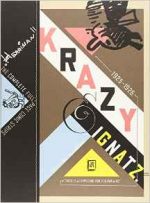
Krazy & Ignatz volume 3 1922-1924: “At Last my Drim of Life Has Come True”


By George Herriman, edited by Bill Blackbeard (Fantagraphics Books)
ISBN: 978-1-60699-477-1

The cartoon strip starring Krazy Kat is unquestionably a pinnacle of graphic innovation, a hugely influential body of work which shaped the early days of the comics industry and became an undisputed treasure of world literature.

Krazy and Ignatz, as it is dubbed in these glorious commemorative collected tomes from Fantagraphics, is a creation which can only be appreciated on its own terms. It developed a unique language – at once both visual and verbal – and dealt with the immeasurable variety of human experience, foibles and peccadilloes with unfaltering warmth and understanding without ever offending anybody.

Sadly however it baffled far more than a few…

It was never a strip for dull, slow or unimaginative people who simply won’t or can’t appreciate the complex multilayered verbal and pictorial whimsy, absurdist philosophy or seamless blending of sardonic slapstick with arcane joshing. It is still the closest thing to pure poesy that narrative art has ever produced.

Herriman was already a successful cartoonist and journalist in 1913 when a cat and mouse who had been cropping up in his outrageous domestic comedy strip The Dingbat Family/The Family Upstairs graduated to their own feature. Krazy Kat debuted in William Randolph Hearst’s New York Evening Journal on Oct 28th 1913 and, largely by dint of the publishing magnate’s overpowering direct influence and interference, gradually spread throughout his vast stable of papers.

Although Hearst and a host of the period’s artistic and literary intelligentsia (notably – but not exclusively – e.e. Cummings, Frank Capra, John Alden Carpenter, Gilbert Seldes, Willem de Kooning, H.L. Mencken and later Jack Kerouac) all adored the strip, many local and regional editors did not; taking every potentially career-ending opportunity to drop it from the comics section.

Eventually the feature found a home and safe haven in the Arts and Drama section of Hearst’s papers. Protected there by the publisher’s heavy-handed patronage, the Kat flourished unharmed by editorial interference and fashion, running generally unmolested until Herriman’s death in April 1944.

The basic premise is simple: Krazy is an effeminate, dreamy, sensitive and romantic feline of indeterminate gender hopelessly in love with Ignatz Mouse: rude crude, brutal, mendacious and thoroughly scurrilous.

Ignatz is a true unreconstructed male; drinking, stealing, constantly neglecting his wife and children and always responding to Krazy’s genteel advances by smiting the Kat with a well-aimed brick (obtained singly or in bulk from noted local brick-maker Kolin Kelly) which the smitten kitten invariably deems tokens of equally recondite affection.

The third crucial element completing an animalistic eternal triangle is lawman Offissa Bull Pupp, who is completely besotted with Krazy, well aware of the Mouse’s true nature, but hamstrung by his own amorous timidity and sense of honour from removing his devilish rival for the foolish feline’s affections.

Krazy is blithely oblivious of Pupp’s dilemma…

Also populating the ever-mutable stage are a stunning supporting cast of inspired bit players such as dreaded deliverer of unplanned, and generally unwanted, babies Joe Stork; hobo Bum Bill Bee, unsavoury trickster Don Kiyoti, busybody Pauline Parrot, self-aggrandizing Walter Cephus Austridge, inscrutable – often unintelligible – Chinese mallard Mock Duck, Joe Turtil and a host of other audacious characters – all equally capable of stealing the limelight and even supporting their own features.

The exotic quixotic episodes occur in and around the Painted Desert environs of Coconino (based on the artist’s vacation retreat in Coconino County, Arizona) where surreal playfulness and the fluid ambiguity of the flora and landscape are perhaps the most important member of the cast.

The strips are a masterful mélange of unique experimental art, wildly expressionistic and strongly referencing Navajo art forms whilst utilising sheer unbridled imagination and delightfully evocative lettering and language: alliterative, phonetically and even onomatopoeically joyous with a compelling musical force (“He’s simpfilly wondafil”, “l’il dahlink” “is it pussible?” or “It aint kendy afta all – it’s a brick”).

Yet for all that, the adventures are poetic, satirical, timely, timeless, bittersweet, self-referential, fourth-wall bending, eerie, idiosyncratic, astonishingly hilarious escapades encompassing every aspect of humour from painfully punning shaggy dog stories to riotous, violent slapstick.

There have been numerous Krazy Kat collections since the late 1970s when the strip was rediscovered by a better-educated, open-minded and far more accepting audience. This third volume – covering 1922-1924 in a reassuringly big and hefty (231 x 15 x 305 mm) softcover edition – completes the controversial, tempest-tossed feature’s run of full-page comic strips and also includes a legendary run of full-colour extra pages Herriman produced in a last-ditch attempt to escape a largely intellectual ghetto and break into the lives of John Q. Public.

The colour works – intense, expansive but never dumbed down – are some of Herriman’s very best and most inspired, but they still failed to hit with the bustling hoi polloi way back then…

Context, background and possible explanations are delivered by Bill Blackbeard in his effusive essay ‘A Kat of Many Kolors: Jazz Pantomime and the Funny Papers in 1922’ describing the creation of the rainbow-hued Saturday specials – which ran for 10 Saturdays from January 7th to March 11th 1922 – and the text feature also covers the tragically lost modern dance ballet created by composer John Alden Carpenter.

After this comes samples of an earlier Herriman strip ‘Little Tommy Tattles’ from 1903 and Michael Tisserand’s scholarly expose ‘Better Late Than Never: Herriman’s First Daily Strip Finally Unearthed!’ describing – with a vast hoard of compelling examples of ‘Mrs. Waitaminnit – the Woman Who is Always Late’ – how funny business got done in the days before newspaper photography, powered flight, laugh tracks or emojis…

The prose section then ends with a moving tribute In Memoriam to Bill Blackbeard ‘The Man Who Saved Comics’ and who, like Moses, toiled long and hard but never got to see his great work completed…

On to the strips then: within this magical atlas of another land and time the unending drama plays out as usual, but with some intriguing diversions. We open with 1922 where, following traditional jests about New Years and voluntary behaviour modifications, the acutely surreal colour pages rub shoulders with the regular monochrome masterpieces, tackling such issues as the growing of breadfruit, jailing “elefints” and door mice and the doors they carry about with them at all times.

The perils of smoking are visually exposed, as are the surprising perils and problems of coconuts, telephone reception in Coconino County and jail overcrowding. Things even get weirdly self-referential when Krazy discovers he’s the star of a newspaper comic strip…

Herriman continues to divide his efforts between beguiling word plays and stunningly smart silent slapstick sequences. Whilst dreaded stork Joe’s natal missions go into overdrive and increasingly awry, disease, despair and sporadic brick provision also provides plenty of drama for Ignatz, Offissa Pupp and the motley irregulars

As the Jazz Era further unfolds through 1923 and 1924, technological advancements such as aeroplanes, radio, motion pictures, flashlights, electrical gimmicks and radium shampoo increasingly offer plenty of fodder for foolish thoughts and deeds.

Seasonal landmarks – New Years, St. Valentine’s Day, Easter, Christmas – take on a greater relevance but the old standbys remain paramount: Prohibition sidestepped; pomposity punctured and penny-pinching money-making schemes from the town’s great and good always coming to nothing…

Also unchanging but infinitely fresh are instances of weather which thinks it’s a comedian, the endless pursuit of hyperactive jumping beans, the street value of the common house brick and a certain foul mouse’s attempts to murder, marmelise and maltreat the Kat, which grow ever more intricate, but are always met with the same unshakeable gratitude and unswerving devotion…

New hobbies are tried: astronomy, inventing, driving automobiles; and Krazy tries to barter a unique singing voice into a career in the entertainment arts.

…And sometimes plain mischief rules such as when Herriman puckishly reverses plot, pictures and dialogue just to see what will happen…

At the nether end of this tome the scholarly amongst you can enjoy some full-colour archival illustration as Jeet Heer discusses ‘The Domestic Herriman: “Us Husbands”’: a strip the tireless artist created as a populist family comedy which ran in Sunday papers for most of 1926. It’s represented here by 48 pages complete with alternating “topper” strips ‘A Big Moment in a Man’s Life’ and ‘Mistakes Will Happen’.

Wrapping up the cartoon gold is another batch of erudite and instructional ‘Ignatz Mouse Debaffler Pages’, providing pertinent facts, snippets of contextual history and necessary notes for the young and potentially perplexed and one last surprise – a lost Krazy Kat page never published before…

Herriman’s epochal classic is a remarkable achievement: in all the arenas of Art and Literature there has never been anything like these comic strips which have shaped our industry and creators, inspired auteurs in fields as disparate as prose fiction, film, dance, animation and music whilst delivering delight and delectation to generations of wonder-starved fans.

If, however, you are one of Them and not Us, or if you actually haven’t experienced the gleeful graphic assault on the sensorium, mental equilibrium and emotional lexicon carefully thrown together by George Herriman from the dawn of the 20th century until the dog days of World War II, this glorious compendium is the most accessible way to do so. Don’t waste the opportunity…
© 2012 Fantagraphics Books. All rights reserved.

The Magic of Sabrina the Teenage Witch: Archie and Friends All-Stars


By Bill Golliher, Abby Denson, George Gladir, Holly G!, Al Nickerson & various (Archie Comics)
ISBN: 978-1-879794-75-7

Sabrina the Teen-Age Witch debuted in Archie’s Madhouse #22 (October 1962), created by George Gladir & Dan de Carlo as a throwaway character in the gag anthology which was simply one more venue for comics’ undisputed kings of kids’ comedy.

Almost instantly she proved popular enough to become a regular in the burgeoning cast surrounding core stars Archie Andrews, Betty Cooper, Veronica Lodge and Jughead Jones.

By 1969 the comely enchantress had grown popular enough to win her own animated Filmation TV series (just like Archie and Josie and the Pussycats), thereby graduating to lead feature in Archie’s TV Laugh Out before finally winning her own title in 1971.

The first volume ran 77 issues from 1971 to 1983 and, when a hugely successful live action TV series launched in 1996, an adapted comicbook iteration appeared in 1997. That version folded in 1999 after a further 32 issues.

Volume 3 – simple entitled Sabrina – was based on new TV show Sabrina the Animated Series. This ran from 2000-2002 for 37 issues before a back-to-basics reboot saw the comicbook revert to Sabrina the Teenage Witch with #38. This carefully blended elements from all the previous print and TV versions.

A creature of seemingly infinite variation and variety, the mystic maid continued in this vein until 2004 and issue #57 wherein – acting on the global popularity of Japanese comics – the company boldly switched format, transforming the series into a manga-style high school comedy-romance in the classic Shōjo manner.

Sabrina is just a typical Greendale High School girl. She lives with her Aunts, Hilda and Zelda Spellman, has a pet cat – Salem – and is tentatively dating childhood pal Harvey Kinkle. The cute but clueless boy reciprocates the affection but is far too scared to rock the boat by acting on his own desires.

Sabrina is an atypical witch: half-mortal (on her mother’s side), living in the mundane world and passing herself off as normal. Complicating here life is snide and snarky Amy Reinhardt – a spiteful mortal rival for Harvey’s affections who will do anything to upset the magical maid’s ambitions…

This particular grimoire of giggles is a collection cherry-picked from #38-56 of that third volume and celebrates the wacky wonder of teen hormones and black magic acting in tandem.

After few pinup pages the magic – illustrated throughout with dazzling verve by artist Holly G! and inker Al Nickerson – starts to unfold with ‘Internet Threat’ (scripted by Bill Golliher) wherein Sabrina starts lazily abusing her gifts and is grounded by her aunts. After Salem find a loophole in the edict, Sabrina tries making magic online and is soon abducted by the arcane and aggressively invasive Empire of Lost E-Mail…

The concluding chapter sees the bellicose byte-brutes similarly capture Hilda and Zelda before the three witches unite to outwit the digital dastards…

The two-part ‘Spell Trouble’ finds the young witch slipping into more bad habits and summarily despatched to an otherworldly after-school program to correct her “spelling” difficulties. Here she meets cute boy Shinji Yamagi: a gorgeous, popular young warlock working to overcome his embarrassing “Spellexia” who is well set to complicate her life with Harvey…

In ‘All’s Fair-y’, a generous act by Hilda allows a plague of ungrateful pixies to infest the house, after which single-pager ‘Purr Pals’ finds Salem looking for feline companionship and hooking up with Josie and the Pussycats…

Holly G! scripts as well as pencils ‘Between a Rock and a Hard Place’ as Amy makes another brazen play for Harvey, forcing Sabrina to compete on her rival’s terms in a talent competition. Of course in love and war all things are fair, even conjuring robot musicians for an instant rock band…

Salem is no ordinary cat. Centuries ago he was Salem Saberhagen: the most powerful warlock on all Earth. After trying to conquer the world he was imprisoned in a cat’s body where he could do no magic, but he can still talk and his rehabilitation is, at best, grudging. However, when his 100-year parole meeting comes due, Sabrina is notably missing from the hearing and mean head witch Enchantra messes with the prodigal’s memory in ‘Sabrina Who?’: an extended epic written by Golliher.

Happily another previously de-powered, ensorcelled animal steps in to save the day, thereby ending her own four-footed enchanted exile in the process…

Holly G!’s ‘Model Witch’ sees Sabrina elected Teen Witch of the Month in a breezy tale recapitulating her origins and family life, after which Golliher introduces a new enemy. A mermaid seductress sets her sights on Harvey and uses deep-sea magic to further her aims in three-part thriller ‘Danger from the Deep’…

A school sleepover in a condemned haunted house sees a pair of aggravating spooks follow Sabrina home until she finds them a far more upscale permanent residence in ‘A Haunting We Will Go’ whilst an exclusive invitation from a prestigious “Other Realm” institution adds to her work woes when Sabrina is offered a place at ‘Charm School’.

The singular honour and the new and old friends already there are hard to resist, but Enchantra’s bratty daughter Lilith is determined to get Sabrina expelled before she even begins…

Back on Earth Abby Denson scripts ‘Bikini Babes’ with the school sorceress trying to boost a mortal friend’s confidence by charming her new swimsuit – and thereby unleashing a social monster – before ‘It’s My Party’ (Golliher, Holly G! & Nickerson) sees Sabrina’s stressed-out life go into overload as a big bash for her Charm School chums looks likely to drive human Harvey right into Amy’s eager clutches. Surprisingly, Shinji has the answer to Sabrina’s woes…

Denson returns to embroil the teen thaumaturge in role-playing game chaos as ‘It’s In the Cards’ sees two very different versions of the fantasy fascination grip both magic and mundane school kids whilst Holly G! details the alarming effects of elemental prankster Jack Frost on Sabrina in ‘Frost Bite’ before everything goes haywire for all witches as a planetary alignment sends their powers hilariously haywire in a ‘Zap Flap’ crafted by George Gladir, Holly G! & Nickerson.

Enticing, funny and genuinely enthralling, these magical riffs on a classic American icon will delight most fans and readers. Sheer exuberant fun; perfectly crafted and utterly irresistible…
© 2011 Archie Comic Publications. All rights reserved.

Shame


By Lovern Kindzierski, John Bolton & Todd Klein (Renegade Arts Entertainment)
ISBN: 978-1-987825-04-6

Win’s Christmas Gift Recommendation: An adult Fairy Tale for when the kids have all passed out… 10/10

Life is full of folk-loric warnings:

  • Red Sun at Morning: Sailor take Warning.
  • Don’t Eat the Yellow Snow.
  • Appearances can be Deceiving.

A cliché is a truth repeated so often you get bored and stop listening to the message…

It’s an unshakable adage that comics are a visual medium and that’s never been more clearly demonstrated than in this seductive and bewitching allegorical fable for full-sized folk from writer Lovern Kindzierski, painter John Bolton and letterer Todd Klein. Originally released as a 3-part prestige format miniseries between 2011 and 2013 the saga has now been collected in a lavish and sublime full-colour hardback garnished with a selection of beguiling bonus features.

Once upon a time in ‘Conception’ a benevolent but painfully unprepossessing witch named Mother Virtue spent all her days doing grand good deeds for the unfortunate, and for these kind actions she was beloved by all. Spiritually, she was probably the most perfect woman in the world…

She lived life well and grew old and content, but one day a selfish thought flashed idly through her mind. Momentarily she longed for a daughter and wished for it to be true: that she be a mother in fact as well as name…

It was just the opening malign Shadow of Ignorance Slur needed. Employing dark magics he instantly impregnates the champion of Good with a malign evil seed and in gloating triumph brags to the wise-woman that her daughter will be a diabolical demon deserving of the name Shame…

Deeply repenting that selfish whim and now dreading the horrors yet to come, Mother Virtue methodically transforms her idyllic cottage into a floral prison dubbed Cradle; repurposed to eventually isolate and contain the thing cruelly growing in her belly.

The miserable mother-to-be also assembles a contingent of Dryads to care for and guard the baby. Once Virtue finally births Shame, she quickly abandons the devil’s burden to be reared in the mystic compound, where it grows strong and cruel but so very beautiful…

Eventually, however, slavish minions of Shame’s sire breach the green ramparts and begin schooling the child in vile necromancy and her dire, sordid inheritance. Armed with malefic potency, Shame slowly refashions her garden guardians into something more pliable and appropriately monstrous…

As she physically ripens, Slur himself comes to his evil child and through him Shame learns the power of sex. With the aid of an infernal incubus which has stolen seed from many men, she quickens a child in her own belly and births a baby girl.

Into that infant Slur pours Mother Virtue’s soul; gorily ripped from the despondent dotard’s aging carcase at the moment of delivery. Even the nunnery Virtue had locked herself within was no proof against the marauding Shadow of Ignorance…

And with her despised mother now her own child, securely bound within the selfsame floral penitentiary, Shame goes out into the world to make her mark…

‘Pursuit’ takes up the story sixteen years later. The Virtue infant has grown strong and lovely, despite every effort of the malformed and mystically mutated Dryads and Shame’s diabolical sorcery which have toiled mightily and made every day of her young life a savage test of survival.

This daily failure makes Shame – now queen of a mortal kingdom – furious beyond belief. When not burning witches and wise women who might threaten her absolute domination or having her unconquerable armies ravage neighbouring realms, the haughty hell-spawn spies upon her mother/child with infernal devices, but is always disappointed….

Elsewhere a valiant knight lies dying and bids his simple, ugly son Merritt farewell. Even with his last breaths, the father dreads how his foolish, naive boy will fare in a world ruled by the Queen who has ended him…

The hopeless dreaming youth is stubborn if nothing else, and when Merritt discovers the vegetable hell-mound of Cradle, stories his mother told him run again through his head. A strange, inexplicable yearning compels him to overcome the appalling arcane odds to break in and liberate the beautiful prisoner… although she actually does most of the work…

Free of the mound, all Virtue’s mystic powers return and, far away, Shame’s world reels. Mocking Slur cares little for his daughter but much for his plans and thus reveals Merritt is Destiny’s wild card: a Sword of Fate who might reshape the future of humanity. Of course it all depends on whose side he joins…

As the young heroes near the capital they are ambushed. After a tremendous mystic clash, Merritt awakens in a palace with a dark-haired angel ministering to his every need and desire. Far below in a rank, eldritch dungeon Virtue languishes and patiently adjusts her plans…

This eldritch erotic epic concludes in classic fashion with ‘Redemption’ as Merritt falls deeper under the sultry sway of the dark queen. As he slowly devolves into her tool of human subjugation, in a fetid subterranean stinkhole, Virtue – under the very noses of her tormentors – weaves her magic with the paltry materials at hand…

Even cradled in the Queen’s arms Merritt is still a child shaped by his mother’s bedtime stories and when Virtue contacts him he readily sneaks down to her cell, dreams of nobility and valiant deeds filling his slow, addled head…

Now the scene is set for a final fraught confrontation between mother and daughter, but first Virtue sends Merritt straight to Hell on a vital quest to recover the Hope of the World…

The narrative core of all fairytales is unchanging and ever powerful, so tone and treatment make all the difference between tired rehashing and something bold, fresh and unforgettable.

Moreover, the photo-based hyper-realised expressionism of John Bolton’s lush painting transforms the familiar settings of fantasy standards and set-pierces into something truly bleak and bizarre to match the grim, earthily seedy meta-reality of Kindzierski’s script.

Bracketed with a Foreword by Colleen Doran and Preface from author Kindzierski at the front and creator commentary courtesy of ‘From the Imagination of John Bolton and Lovern Kindzierski’ at the back – featuring an in-depth interview adjudicated by publisher Alexander Finbow and supplemented with a stunning treasure trove of pre-production art, designs and sketches – this astounding tale also includes a tantalising glimpse of things to come in the shape of an 8-page preview of forthcoming sequel Tales of Hope…

Dark, nasty and packed with sumptuous seductions of every stripe, the salutary saga of Shame is every adult fantasist’s desire made real and every comic fan’s most fervent anticipation in one irresistible package…
Shame the story, characters, world and designs are © Lovern Kindzierski, John Bolton and Renegade Arts Canmore Ltd.