Krazy & Ignatz volume 1 1916-1918: Love in a Kestle or Love in a Hut


By George Herriman, edited by Bill Blackbeard (Fantagraphics Books)
ISBNs: 978-1-60699-316-3

I must admit to feeling like a fool and a fraud reviewing George Herriman’s winningly surreal masterpiece of eternal unrequited love. Although Krazy Kat is unquestionably a pinnacle of graphic innovation, a hugely influential body of work which shaped the early days of the comics industry and a paragon of world literature, some readers – from the strip’s earliest antecedents in 1913 right up to five minutes ago – just cannot “get it”.

All those with the right sequence of genes (“K”, “T”, “Z” and “A”, but not, I suspect “Why”) are lifelong fans within seconds of exposure whilst those sorry few oblivious to the strip’s inimitable charms are beyond anybody’s meagre capacity to help.

Still, since every day there’s newcomers to the wonderful world of comics I’ll assume my inelegant missionary position once more and hope to catch and convert some fresh souls – or, as today’s indisputable pictorial immortal might put it, save some more “lil Ainjils”…

Krazy Kat is not and never has been a strip for dull, slow or unimaginative people who simply won’t or can’t appreciate the complex multilayered verbal and pictorial whimsy, absurdist philosophy or seamless blending of sardonic slapstick with arcane joshing. It is the closest thing to pure poesy that narrative art has ever produced.

Think of it as a visual approximation of Dylan Thomas and Edward Lear playing “I Spy” with James Joyce amongst beautifully harsh and barren cactus fields whilst Gabriel García Márquez types up the shorthand notes and keeps score…

George Herriman was already a successful cartoonist and journalist in 1913 when a cat and mouse who had been cropping up in the corners and backgrounds of his outrageous domestic comedy strip The Dingbat Family/The Family Upstairs finally graduated to their own feature.

Krazy Kat the strip debuted in William Randolph Hearst’s New York Evening Journal on October 28th 1913 and, mainly by dint of the publishing magnate’s overpowering direct influence, spread throughout his vast stable of papers.

Although Hearst and a host of the period’s artistic and literary intelligentsia (which included Frank Capra, e.e. Cummings, John Alden Carpenter, Gilbert Seldes, Willem de Kooning, H.L. Mencken and Jack Kerouac) utterly adored the strip, many local editors -ever-cautious of the opinions of the hoi-polloi who actually bought newspapers – did not, and took every career-threatening opportunity to eject it from the comics section.

Eventually the feature found a home in the Arts and Drama section of Hearst’s vast empire of periodicals. Protected by the publisher’s patronage, the strip flourished unharmed by editorial interference and fashion, running until Herriman’s death in April 1944.

The basic premise of the eccentric enterprise is simple: in an arid, anthropomorphic region of America bordering the mighty Rio Grande dwells Krazy; an effeminate, dreamy, sensitive and romantic feline of indeterminate gender, in uncompromising total love with rude, crude, brutal, mendacious and thoroughly scurrilous, married-with-children (so very many children) bad boy Ignatz Mouse.

Ignatz is a real Man’s Muridae; drinking, stealing, cheating, carousing, neglectful of his spouse and progeny. He revels in spurning Krazy’s genteel advances by regularly, repeatedly and obsessively belting the cat with a well-aimed and mightily thrown brick (obtained singly or in bulk, generally by legitimate purchase from noted local brickmaker Kolin Kelly).

The third member of the classic eternal triangle is lawman Offissa Bull Pupp, hopelessly in love with Krazy, well-aware of the Mouse’s true nature, but bound by his own timidity and sense of honour from removing his rival for the cat’s affections. Krazy is, of course, blithely oblivious of Pupp’s true feelings and dilemma…

Also populating the dusty environs are a stunning supporting cast of inspired anthropomorphic bit players such as Joe Stork, (deliverer of babies), the hobo Bum Bill Bee, larcenous Don Kiyoti, busybody Pauline Parrot, Walter Cephus Austridge, Chinese mallard Mock Duck, Joe Turtil and a host of other audacious characters – all capable of stealing the limelight and even supporting their own features.

The episodes occur in and around the Painted Desert environs of Coconino (based of the artist’s vacation retreat Coconino County, Arizona) and the surreal playfulness and fluid ambiguity of the flora and landscapes are perhaps the most important members of the cast.

These strips are a masterful mélange of wickedly barbed contemporary social satire, folksy yarn-telling, unique experimental art, strongly referencing Navajo art forms and sheer unbridled imagination and delightfully expressive language: alliterative, phonetically and even onomatopoeically joyous and compellingly musical (“He’s simpfilly wondafil”, “A fowl konspirissy – is it pussible?” or “I nevva seen such a great power to kookoo”), yet for all that these adventures are timely, timeless, bittersweet, self-referential, fourth-wall bending, eerie, idiosyncratic and utterly hilarious escapades encompassing every aspect of humour from painfully punning shaggy dog stories to riotous silent-movie slapstick.

The Krazy & Ignatz series of collected Sunday pages was originally contrived by Eclipse Comics and the Turtle Island Foundation and taken over by Fantagraphics when the first publisher succumbed to predatory market conditions in the 1990s. Through diligence and sheer bloody determination matching Hearst’s own, the series was finally completed in 2015.

After years of scarily hand-to-mouth publishing, the entire Katty canon of magnificent Sunday pages has been collected in fabulous compilations and this first colour and monochrome volume opens with ‘And the First Shall Be the Last: A History of Kat Reprints’ and A Word from the Publisher by Kim Thompson delineating at length the eccentric orbit which finally resulted in Herriman’s masterpiece being collected in a complete, uniform, visually stunning 13 volume edition.

That’s followed by ‘The Kat’s Kreation’ from series Editor Bill Blackbeard; a fulsome, fascinating and heavily illustrated history tracing the development of the frankly freakish feline as briefly outlined above, and ‘Before He Went “Krazy”: George Herriman’s Aughts’, offering a liberal sampling of examples of the cartoonists many pre-Coconino strips and features such as ‘Lariat Pete’, ‘Bud Smith, the Boy Who Does Stunts’, ‘Rosy’s Mama’, ‘Zoo Zoo… (Goes Shopping, Entertains, And the Christmas Pie)’, ‘Alexander’ and ‘Daniel and Pansy’, spanning 1903 to 1909, with many sporting a certain prototype mad moggy in the corners…

From there it’s a short hop to the first cautious yet full-bodied escapades from 1916, delivered every seven days from April 23rd to December 31st.

Within that first year, as war raged in Europe and with America edging inexorably closer to the Global Armageddon, the residents of Coconino sported and wiled away their days in careless abandon but totally embroiled within their own – and their neighbours’ – personal dramas.

Big hearted Krazy adopts orphan kitties, accidentally goes boating and ballooning, saves baby birds from predatory mice and rats, survives pirate attacks, constantly endures assault and affectionate attempted murder and does lots of nothing in an utterly addictive, idyllic and eccentric way.

…And gets hit with bricks. Many, heavy and always evoking joyous, grateful raptures and transports of delight from the heart-sore hard-headed recipient…

In 1917 (specifically January 7th to December 30th), the eternal game played out as usual and with an infinite variety of twists, quirks and reversals. However there were also increasingly intriguing diversions to flesh out the picayune proceedings, such as recurring explorations of terrifying trees, grim ghosts and obnoxious Ouija Boards, tributes to Kipling as we discover why the snake rattles, meet Ignatz’s aquatic cousin, observe an invasion of Mexican Jumping Beans and a plague of measles, discover the maritime value of “glowerms”, learn who was behind a brilliant brick-stealing campaign of crime and at last see Krazy become the Bricker and not Brickee…

Fully in control of his medium, Herriman switched into poetic high gear as America finally entered the Great War in 1918.

With strips running from January 6th to December 29th, uncanny brick apparitions scotched somebody’s New Year’s resolutions, cantankerous automobiles began to disrupt the desert days, fun of a sort was had with boomerangs and moving picture mavens began haunting the region. There were deeply strange interactions with weather events, whilst music was made and occasional extended storylines began with the saga of an aberrant Kookoo Klock…

Surreal voyages were undertaken but over and again it was seen that there is literally no place like Krazy and Ignatz’s home. There was only one acknowledgement of Kaiser Bill and it was left to the missile-chucking mouse to deliver it…

And then it was Christmas and a new year and volume lay ahead…

To complete the illustrious experience and explore the ever-shifting sense of reality amidst the constant display of visual virtuosity and verbal verve this big, big book (305 x 230 mm and superbly designed by Chris Ware) ends with rare and informative bonus material such as ‘A Genius of the Comic Page’: a contemporaneous appreciation and loving deconstruction of the strip – with new illustrations from Herriman – by the astoundingly perspicacious and erudite critic Summerfield Baldwin taken from Cartoons Magazine and an oddly enigmatic biography of the reclusive creator in ‘George Herriman 1880-1944′ by Bill Blackbeard.

‘The Ignatz Mouse Debaffler Page’ then closes the show, providing pertinent facts, snippets of contextual history and necessary notes for the young and potentially perplexed…

Herriman’s epochal classic is a genuine Treasure of World Art and Literature. These strips shaped our industry, galvanised comics creators, inspired auteurs in fields as disparate as prose fiction, film, sculpture, dance, animation and jazz and musical theatre whilst always delivering delight and delectation to generations of devoted, wonder-starved fans.

If however, you are one of Them and not Us, or if you actually haven’t experienced the gleeful graphic assault on the sensorium, mental equilibrium and emotional lexicon carefully thrown together by Herriman from the dawn of the 20th century until the dog days of World War II, this glorious parade of cartoon masterpieces are your last chance to become a human before you die…

That was harsh, I know: not everybody gets it and some of them aren’t even stupid or soulless – they’re just unfortunate…

Still, There Is A Heppy Lend Furfur A-Waay if only you try to see…
© 2010 Fantagraphics Books. All rights reserved.

Little Adventures in Oz volume 1


By Eric Shanower (IDW)
ISBN: 978-1-60010-589-0

We all know the story of The Wizard of Oz – or at least the bare bones of it as harvested to make the admittedly stunning 1939 movie classic – but the truth is that there is a vast surplus of fantastic wonders from that legendary 1900 novel by jobbing journalist and prolific author Lyman Frank Baum that remained unfilmed.

Happily this collection of superb and faithful extrapolations by rabid fan Eric Shanower draws heavily from the prose canon, restoring almost all of those glaring tinseltown omissions and alterations whilst keeping in play all those beloved stars the wider world knows. He does so with stunning skill, wondrous wit and mesmerising charm.

As superb an illustrator as author, Shanower (whose far too occasional “straight” comics work includes Prez: Smells Like Teen President, The Elsewhere Prince and the astoundingly ambitious Age of Bronze) produced five original albums set in Baum’s magic kingdom for independent publisher First Comics’ groundbreaking line of graphic novels, all codified as Adventures in Oz.

Between 1986 and 1992 he crafted The Enchanted Apples of Oz, The Secret Island of Oz, The Ice King of Oz, The Forgotten Forest of Oz, and The Blue Witch of Oz; since then going on to release a new prose work, numerous short stories and scholarly contributions to various academic and critical volumes on Baum and his creations.

In 2007 Shanower paired with Skottie Young at Marvel Comics to adapt the original Baum books in a stellar sequence which utterly reinvigorated the immortal franchise. That inspired the repackaging of his earlier one-man show and the comic tales were eventually compiled into a set of scintillating chronicles as Little Adventures in Oz. This initial volume reproduces the first and third so-very beautiful Shanower albums, repackaged and remastered in a splendid new edition, bundled up with a glittering hoard of visual treasures and behind-the-scenes gems to delight every devotee of the canon and lover of modern fairy tales.

The extraordinary excursion to miraculous lands and climes opens with a beautiful map of the incredible kingdom and its environs, before launching into 1986’s The Enchanted Apples of Oz.

Kansas expatriate Dorothy Gale is strolling along the Yellow Brick Road with Scarecrow and wise hen Billina when a magical castle materialises. Entering the sparkling keep, they meet stately Valynn who has in the courtyard ‘The Apple Tree’ which has sustained Oz since time began. Its enchanted fruits are what underpin the realm’s magic; allowing chickens to talk, imbuing inanimate objects with life and dangerously capable of breaking any enchantment…

Such a resource has made the place a target for evil-doers so for many lonely centuries solitary sentinel Valynn has defended the castle, most notably from sinister sorcerer Bortag…

Touched by the guardian’s lonely plight, Dorothy takes her to see Queen Ozma, in hope of relieving her of the onerous duty. Bortag, however, has not ended his depredations and swoops down on his flying swordfish Drox, making short work of Scarecrow and Billina who have volunteered to guard the tree in Valynn’s absence.

His sack full of stolen fruit, the sinister scrumper then rushes to the edge of Oz – just where it meets the Deadly Desert – and feeds his plunder to a hideous sleeping hag. She is the legendarily evil Wicked Witch of the South and, horrifically, at first touch of the plundered pippins ‘The Witch Awakes’…

Secrets are revealed in ‘Bortag’s Unfortunate Past’ as the homely Quadling mage is spurned by the monster he has loved for countless ages. She immediately returns to the tree and begins voraciously consuming Enchanted Apples. With each bite magic diminishes and the fabulous denizens of Oz become increasingly mundane. Billina barely has time to convince the jilted wizard to fix the crisis his unrequited love has caused before she reverts to a mere clucking fowl…

With all Oz’s mystical champions helpless before the Witch, it’s up to Dorothy and grieving, repentant lovelorn Bortag to stop the Witch’s brutal depredations. Luckily, they still have one advantage: ‘The Magic Belt’…

Witty, wise, thrilling and potent with the narrative power of comradeship and redemption, this stunning yarn is followed by another lavishly-limned suspenseful thriller as The Ice King of Oz opens with ‘The Proposal’…

The Emerald City is abuzz with excitement as a heretofore-unknown realm sends a diplomatic delegation to Oz. After the usual exchange of fantastic gifts the ambassador Popsicle drops his bombshell. The Ice King intends to cleave to other traditional forms of alliance by marrying Princess Dorothy…

The revelation is greeted with great surprise and a gentle but firm refusal which only results in ‘Treachery’ as the icy embassage vanishes overnight, taking Ozma with them as a flash-frozen prisoner.

A hurried council-of-war results in hastily-assembled rescue party, supplemented by new companion Flicker. Originally a human Candle-Maker, he was turned into a one of his own tapers by the Wicked Witch of the West. Only recently restored to life, he remains a man made of wax with a head fiercely aflame…

Transported in a magical vehicle by Glinda the Good‘s sorcery, Dorothy, Scarecrow, tin man Nick Chopper and Flicker voyage ever southward to ‘The Land of Ice’ enduring many sub-zero perils until they broach the snowy wastelands and find themselves ‘In the Ice Palace’…

However, after a calamitous confrontation against the cold commander’s amassed legions, our heroes seem doomed to remain ‘In the Ice King’s Power’ until Dorothy’s common sense and Flicker’s valiant determination find a way to pierce his frozen façade…

Compellingly, hypnotically illustrated and written with beguiling grace, this is a fabulous romp for devotees and newcomers alike, and this captivating collection also includes a vast treasure-trove of extras beginning with a sublime Art Gallery of original covers, painted cover studies, character designs, early concept-art, plus the first four pages of an as-yet unfinished tale entitled ‘General Jinjur of Oz’.

Word of Warning: do not read this. It’s utterly brilliant and causes a real wrench when you realise there’s no more and no conclusion…

Also included are a lovely painting of Dorothy and the Cowardly Lion, 5 pages of pencil art layouts for The Enchanted Apples of Oz, a gallery of Shanower Christmas Cards and a watercolour vignette disclosing ‘A Concise History of the Marvelous Land of OZ’.

If you still constantly crave to visit the lost lands of childhood wonder, this superb picture parade is probably your only passport to adventure…

© 2010 Eric Shanower. All rights reserved. © 2010 Idea and Design Works, LLC.

The Deliverer


By Nemanja Moravic Balkanski & various (the Publishing Eye)
ISBN: 978-0-986844-01-0

As I’ve often stated, some comics creators seduce and beguile whilst others choose to inform and affect with confrontational shock tactics. One of the most evocative and uncompromising efforts that I’ve ever seen came from Belgrade émigré Nemanja Moravic “NeMo” Balkanski. Don’t just take my word for it, track down his stunning FIB Chronicles, compiling much of his early material. …And now he’s done it again…

Balkanski was born in Belgrade in 1975 and, after indulging in and mastering a multitude of artistic disciplines from comics to graphic design, theatre arts to film-making, and poetry to performance, emigrated to Vancouver in 2007. When not working as an Art Director or storyboard artist for big and little screen productions he continues to produce thought-provoking comics.

It has all clearly been an inspirational experience and NeMo – a skilful plunderer of social tropes and cultural memes – has absorbed the meat and ephemera of his new environs to produce a stunningly confrontational allegory and state-of-the-union fairy tale with plenty of bite.

Canada, not long from now: society is on the edge of collapse and has been for as long as anyone can recall. And that’s not long: crass, shallow media has all but lobotomised the people, making them sensation-seeking celebrity-hungry drones told how to think and act and especially what to buy from the rich bastards to own everything.

King of those rats is the aged billionaire whose Watchmaker Labs and Watchmaker Studios strives tirelessly to mechanise and monetise every last iota of humanity and spirituality. They have already successfully commoditised sport and sex and are close to replacing their fragile flesh-&-blood customer base with mechanical hybrids…

A land like that expects its citizens to do nothing more than work and be consumers, so it employs a certain kind of lawkeeper: semi-cyborg sadists like Canuck, macho psychotics such as talking police dog Le Chien, lickspittles like Token Indian Winnetou and even sometimes starry-eyed do-gooders like hapless Mountie Sergeant Prickstone, but they’re just not enough to keep order in a city which – although tacitly owned by Watchmaker – still moves to its own decadent rhythms…

When uncompromising natural force Cayenne the Shark eats half of Vancouver – despite the army of gigantic robotic buildings and trucks slowly superseding humanity – a new kind of champion emerges.

The Deliverer used to bring pizza to the slavishly mass media-addicted self-medicating hoi-polloi, making money to buy time with certified sex-worker Lula, but as the end rushes closer he finds that selfishly helping himself is actually working to repair the world…

Clearly the world is made up of far more than what Watchmaker can grasp in his withered, grasping hands and as Prickstone and the Deliverer join the Vancouverite Underground to help the declining First Nation regain their stolen mystic Mojo a concatenation of unlikely circumstances look like turning them into Canadian humanity’s last hope of survival…

Abstruse, blackly humorous, shockingly explicit, complacently violent and bleakly hilarious, this disquieting parable uses the modern go-to story form of the summer Action Blockbuster to tenaciously attack media mass-produced self-image and the casual hypocrisy which runs the world and picks enough scabs off that you simply have to stop and think.

This substantial full-colour landscape-format  hardback is another strident, sardonically whimsical cartoon diagnosis of the state of our society: a uniquely entertaining read the brave and bold and reasonably old must not miss…
© 2015 The Publishing Eye.

Why not scope out the official website and trailer at http://www.thepublishingeye.com/books/the-deliverer/

Monster on the Hill


By Rob Harrell (Top Shelf Productions)
ISBN: 978-1-60309-075-9

Once upon a time in England – but not our England – decent, hardworking folk went about their lives in every county-town, their hearts swollen with well-earned civic pride. Content and progressive Victorians one and all, they congratulated themselves upon their achievements and most especially upon the terrifying merits of their local monsters.

By the year of Our Lord 1867 each minor metropolis had for simply ages been twinned with a ferocious giant creature who would occasionally rampage through the municipality, wrecking shops, houses and public works; thereby doing wonders for the local building professions and tourist trade.

Thriving communities would vie with each other for the distinction of being most periodically and ritually terrorised by their assigned Brobdingnagian beast, with the most fearsome of the creatures even being celebrated with local souvenirs and their images engraved on collectible cigarette cards and albums…

Not so the poor, benighted citizens of Stoker-on-Avon. Their monster was something of a disappointment. In fact he was a bit rubbish…

One morning, soon after a properly petrified family returned from a truly frightful encounter with Tentaculor in neighbouring conurbation Billingwood, plucky ragamuffin, town-crier and newsboy Timothy is peddling his papers. The headline is very similar to many previous ones, declaring that it has been 536 days since their monster last appeared…

Thus he’s on hand to overhear firsthand that disgraced mad scientist Dr. Charles Nathaniel Wilkie has been summoned to meet the town fathers. They have bravely offered to reinstate his license and even let him back into his laboratory – despite past embarrassments and misdemeanours – if he can cure, pep up or somehow put some vim back into their monster…

After struggling up the so-very-steep hill from which the formerly ferocious force of nature surveys his neglected domain, the baffled physician discovers his gimcracks and implements have been jettisoned by the stowed-away Timothy, but that’s not really important. Nothing he has bought or built could possibly have helped the colossal winged-but-flightless non-terror known as Rayburn.

The scourge of Stoker-on-Avon is depressed and doesn’t want to perform. He’s lost all confidence and believes he is a failure…

And thus begins a deliciously funny romp – with a generous plenitude of surreal diversions and divertissements – following the classic lines of a coming-of-age road-trip buddy-movie redemption scenario, as the unlikely human team find a perilously peripatetic way to restore Rayburn’s Mojo, which involves getting too close to another town’s terror, humiliating lessons in stomping, smashing and smooshing and the horrifying, shocking and not at all funny revelation of why every town actually has its own monster…

Crafted with verve and supreme slapstick deftness by strip cartoonist Rob Harrell (Big Top, Life of Zarf) this wondrous cartoon fable is joy for fun and fantasy lovers of every stripe and vintage.
Monster on the Hill ™ & © 2013 Rob Harrell. All Rights Reserved.

Thorgal volume 3: Beyond the Shadows


By Rosiński & Van Hamme, translated by Luke Spear (Cinebook)
ISBN: 978-1-905460-45-8

One of the best and most celebrated adventure series of all time, Thorgal achieves the seemingly impossible, pleasing critics and selling in vast quantities. The prototypical Game of Thrones debuted in iconic weekly Tintin in 1977 with album compilations beginning three years later.

A far-reaching and expansive generational saga, it has won a monolithic international following in fourteen languages and dozens of countries, generating numerous spin-off series, and thus naturally offers a strong presence in the field of global gaming.

In story-terms, the series offers the best of all weird worlds with an ostensibly historical milieu of bold Viking adventure seamlessly incorporating science fiction elements, horrendous beasts, social satire, political intrigue, soap opera, Atlantean mystique and mythically mystical literary standbys such as gods, monsters and devils.

Created by Belgian writer Jean Van Hamme (Domino, XIII, Largo Winch, Blake and Mortimer) and Polish illustrator Grzegorz Rosiński (Kapitan Żbik, Pilot Śmigłowca, Hans, The Revenge of Count Skarbek), the feature grew unstoppably over decades with the creative duo completing 29 albums between 1980 and 2006 when Van Hamme moved on. Thereafter the scripting duties fell to Yves Sente who has collaborated on a further five collections to date.

By the time Van Hamme departed, the canon had grown to cover not only the life of the titular hero and his son Jolan but also other indomitable family members through a number of spin-off series (Kriss de Valnor, Louve, La Jeunesse de Thorgal) under the umbrella title Les Mondes de Thorgal – with all eventually winning their own series of solo albums.

In 1985 American publisher Donning released a superb series of oversized hardcover book translations but Thorgal never really found an English-speaking audience until Cinebook began its own iteration in 2007.

The original French series wanders back and forth through the hero’s life but here, for the present, continuity reigns as Cinebook’s this third double-album edition (comprising 5th & 6th collections Au-delà des ombres and La Chute de Brek Zarith from 1983 and 1984 respectively) leads directly on from the last book wherein Thorgal Aegirsson lost everything that made him human…

The hero was recovered as a baby from a ferocious storm and raised by Northern Viking chief Leif Haraldson. Nobody could possibly know the fortunate foundling had survived a stellar incident which destroyed a starship full of super-scientific aliens. Growing to manhood, the strange boy was eventually forced out of his adopted land by ambitious Gandalf the Mad who feared the young warrior threatened his own claim to the throne.

For all his childhood Thorgal had been inseparable from Gandalf’s daughter Aaricia and, as soon as they were able, they fled together from the poisonous atmosphere to live free from her father’s lethal jealousy and obsessive terror of losing his throne…

Some time later, they were enjoying the hard but gratifying life of simple peasants in a village of serfs. Thorgal was a happy, industrious farm-worker, with solid dependable friends and a wife mere weeks away from birthing her first child. The only problem in their idyllic life was the obsessive love headman’s teenage daughter Shaniah had developed for the glamorous Viking…

Her lies at a harvest feast resulted in Thorgal being implicated in a plot against the land’s overlord Shardar the Powerful, King of Brek Zarith. A suspect inquisition saw Thorgal humiliate arrogant, decadent Prince Veronar. Shardar’s forces were actually in the region seeking information on the whereabouts of fugitive rebel Galathorn, and Thorgal was sentenced to join other captives at the oars. Even here, his indomitable spirit made enemies amongst the slave-masters and new friends of his fellow captives…

Sometime later turncoat Jarl Ewing tried to recruit the Viking to his cause – seizing Shardar’s throne. Veronar overheard and sentenced both warriors to a painful death but as sentence was being carried out their Black Galley was attacked by a small fleet of Viking drakkars (raiding ships). In the chaos Thorgal escaped, freed the oar slaves and dealt permanently with Veronar…

The raiders were old friends. Thorgal reunited with hulking Jorund the Bull and learned that Gandalf had died. His banishment ended, the exile was invited to return home with the Northern Vikings, but refused. All he needed was Aaricia and his coming child.

However, when he reached the village all he found was ash, corpses and Jarl Ewing. The traitor had hired mercenaries to await Thorgal’s return, intending to use Aaricia as a hostage to ensure her husband’s cooperation. She chose death and drowned herself, refusing to be a weapon aimed at her man’s heart…

The debacle sparked a disaster. The mercenaries went wild and pillaged the hamlet, but after taking his revenge Thorgal was left bereft and broken…

The saga resumes a year later in ‘Beyond the Shadows’ as gaunt shaman Wargan wanders into a vile tavern in a sordid settlement in search of noble warrior Thorgal Aegirsson. He quickly stirs up a hornet’s nest of trouble amongst the brutal warriors polluting the hamlet.

After a macabre magical death and violent chase, the wizard drags a stinking, shambling shell-shocked derelict and a sad, over-protective girl named Shaniah to a strange plain of bizarre stone structures where they meet the rebel Galathorn. The Prince still wants to reclaim Brek Zarith from Shardar, but for that he needs Thorgal restored to vital, vibrant humanity…

The task is simpler than the plotters expected. When the Viking hears that Aaricia still lives, his wits return instantly, and when he further learns that she is dying he instantly agrees to travel into the Second World and beyond to save her. The epic path leads to duels with supernatural creatures, a reunion with a notionally friendly goddess and confrontation with the one who weaves life’s threads and cuts them. Although Thorgal convinces the uncanny reaper to restore his beloved wife to health and vigour, there is a frightful cost…

The chilling and spectacular odyssey through the underworld is followed by a far darker and more visceral adventure in ‘The Fall of Brek Zarith’ as deranged potentate Shardar hunkers down in his lavish but unassailable coastal citadel.

When he’s not playfully slaughtering his obsequious, treacherous barons, Shardar spends all his time with Aaricia and her son Jolan. His mages have divined incredible power within the boy and the aging usurper wants it.

He doesn’t seem to care that Galathorn and Thorgal have raised a rebel army which has taken back almost the entire country, nor that their ally Jorund the Bull is leading a fleet of forty berserker-packed drakkars against the sea coast, fuelled with the promise of first pick of Brek Zarith’s treasure vaults…

With the Vikings in clear sight and Galathorn’s forces a day away, Shardar seems remarkably unperturbed. A partial answer to his sanguine mood comes after his soldiers and wizards unleash a devastating secret weapon which routs Jorund’s ships…

Smugly content, the madman resumes his attempts to turn Aaricia to his cause. His courtiers descend into a mad bacchanal that night and are blissfully unaware that a lone scout has penetrated the impregnable keep. Nothing could keep Thorgal away with his wife and son so close and in such peril…

What the warrior finds stuns him: proof positive that Shardar is completely insane or, worse yet, utterly evil beyond human comprehension…

What follows is an astounding battle of wills as the warrior relentlessly pursues the diabolical dictators, escaping an unceasing barrage of deadly traps and devilish devices. However, what neither hunter nor prey is prepared for is the uncanny power of seeming-innocent Jolan or the ferocious devotion of his traumatised, single-minded mother…

Fierce, fantastic and phenomenally gripping, this magnificently illustrated, astonishingly addictive tale offers a multitude of enchanting wonders. Thorgal is every fantasy fan’s ideal dream of unending adventure. How can you possibly resist?
Original editions © Rosiński & Van Hamme 1983-1984 Les Editions du Lombard (Dargaud- Lombard). English translation © 2007 Cinebook Ltd.

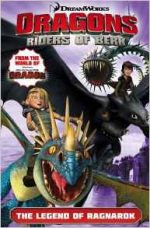
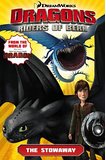
Dreamworks Dragons – Riders of Berk volume 3: The Ice Castle


By Simon Furman, Jack Lawrence, Stephen Downey & various (Titan Comics)
ISBN: 978-1-78276-078-8

DreamWorks Dragons: Riders of Berk and its follow-up Defenders of Berk are part of one of the most popular cartoon franchises around. Loosely adapted from Cressida Cowell’s gloriously charming children’s books, the show is based upon and set between the How to Train Your Dragon movies. Of course if you have children you are almost certainly already aware of that already.

Having wowed young and old alike across the globe, the series has also spawned a series of comic albums and this third digest-sized collection features two stellar incendiary serpentine sagas scripted as ever by the ever-enthralling Simon Furman.

In case you’re not absolutely au fait with the exhilarating word of winged reptiles: brilliant but introverted boy-hero Hiccup saved his island people from being overrun by hostile dragons by befriending them. Now he and his unruly kid compatriots of the Dragon Rider Academy gleefully roam the skies with their devoted scaly friends, getting into trouble and generally saving the day.

When not squabbling with each other, the trusty teens strive to keep the peace between the vast variety of wondrous Wyrms and isolated Berk island’s bombastic Viking homesteaders.

These days, now that the dragons have all been more-or-less domesticated, those duties generally involve finding, taming and cataloguing new species or protecting the village and farms from constant attacks by far nastier folk such as Alvin the Treacherous and his fleet of piratical Outcasts and, occasionally, fresh unknown horrors…

As usual, before the action takes wing there’s a brace of handy information pages reintroducing Hiccup and his devoted Night Fury Toothless, as well as tom-boyish Astrid on Deadly Nadder Stormfly, obnoxious jock Snotlout and Monstrous Nightmare Hookfang, portly dragon-scholar Fishlegs on ponderous Gronckle Meatlug and the terribly dim yet jovially violent twins Tuffnut and Ruffnut on double-headed Zippleback Belch & Barf…

The eponymous epic of ‘The Ice Palace’ (illustrated by Jack Lawrence with the colouring wizardry of Digikore and lettering from Jim Campbell) sees the Berk islanders dealing with another deep-snow winter whilst welcoming unsavoury fur-trader Arngrim Dammen to show his wares. The skins he brings are warm, varied and fabulous, but Astrid is not impressed – until she feels the quality of the merchandise. Her earlier suspicions quickly return, though, once the trader starts asking too many questions about her dragon.

Arngrim blusters on into the small hours, drinking and telling tales to the village men, but there’s something in his manner which also makes smith and armourer Gobber anxious…

Next morning those feelings are proven right when Astrid finds Stormfly has been stolen. The village is in turmoil and the council of war fraught. The seas are vast and the number of islands the thief could head for countless. However, Gobber recalls one detail of the plunderer’s interminable tall-tales and guesses where the scoundel is headed…

As two ships full of angry warriors and Dragon Riders close on their quarry, Hiccup and Astrid take to the skies on Toothless and see a huge number of vessels all on the same heading…

Their destination is clearly Balder Bay, but the Berk longboats can’t sail straight in amongst all those clearly hostile ships. They need to sneak up somehow. Then Gobber directs them to around the island to a terrifying natural feature: a massive wall of lethal jagged icicles known as the Ice Needles…

As Hiccup’s father Chief Stoick leads the men of Berk in the daunting task of scaling the Needles, the Dragon Riders head out on a reconnaissance mission and discover an incredible castle of ice in a vast crater, with Arngrim inside preparing to make the sale of a lifetime. Unfortunately some of that stolen booty is deadly dragon eggs and they’re ready to hatch…

Ending in a fast and furious fight scene of epic proportions, this rip-roaring yarn is a tense and suspenseful action-packed delight.

Cleansing the palate after all that drama is a humour-drenched episode starring brash, testosterone-soaked Snotlout who is forced by Gobber to be a ‘Litter Sitter’ for a day.

With art by Stephen Downey, colours from John Charles and letters by Campbell, the trials of the burly brute as he watches over a rambunctious brood of baby Monstrous Nightmares is a splendid blend of slapstick and sloppy, sticky sentiment…

Despite being ostensibly aimed at excitable juniors and TV kids, this sublimely sharp tome is the kind of smart and engaging fantasy romp no self-indulging fun-fan of any vintage should miss: accessible, entertaining, and wickedly habit-forming.
© 2015 DreamWorks Animation L.L.C.

Von Doogan and the Great Air Race


By Lorenzo Etherington (David Fickling Books)
ISBN: 978-1-910200-82-7

These days, young kids are far more likely to find their formative strip narrative experiences online or between the card-covers of specially tailored graphic novels rather than the comics and periodicals of my long-dead youth.

Once upon a time, however, the comics industry was a commercial colossus which thrived by producing copious amounts of gaudy, flimsy pamphlets covering a multitude of themes, subjects and sub-genres, all further subdivided into a range of successful, self-propagating, seamlessly self-perpetuating age-specific publications.

Such eye-catching items once generated innumerable tales, delights (and cherished memories) intended to entertain, inform and educate such well-defined target demographics as Toddler/Pre-school, Younger and Older Juvenile, General, Girls, Boys and even Young Teens. Today, sadly, Britain seems only capable of maintain a few paltry out-industry, licensed tie-ins and spin-offs for a dwindling younger readership.

Where once cheap and prolific, strip magazines in the 21st century are extremely cost-intensive and manufactured for a highly specific – and dying – niche market, whilst the beguiling and bombastic genres that originally fed and nurtured comics are more immediately disseminated via TV, movies and assorted interactive media.

There are one or two venerable, long-lived holdouts such as The Beano and 2000AD but overall the trend has been downwards for decades.

That maxim was happily turned on its head back in January 2012 when Oxford-based family publisher David Fickling Books launched The Phoenix: a traditional-seeming anthology comic weekly aimed at girls and boys between 6 and 12 which revelled in reviving the good old days of picture-story entertainment Intent whilst embracing the full force of modernity in style and Content.

Still going strong, each issue offers humour, adventure, quizzes, puzzles and educational material in a joyous parade of cartoon fun and fantasy. In the years since its premiere, The Phoenix has gone from strength to strength, winning praise from the Great and the Good, child literacy experts and the only ones who really count – the astoundingly engaged kids and parents who read it…

The Phoenix was voted No. 2 in Time Magazine‘s global list of Top Comics and Graphic Novels and is the only strip publication started in the UK in the last forty years to have reached issue #100. It is now rapidly approaching its double-century. The magazine celebrated its first anniversary by developing a digital edition available globally as a tablet app and is continually expanding its horizons.

It is, most importantly, big and bold and tremendous fun.

On the other hand, whilst comics companies all seem to have given up the ghost, in this country at least, old-school prose publishers and the newborn graphic novel industry have evolved to fill their vacated niche. With a less volatile business model and far more sustainable long-term goals, book sellers have prospered from magazine makers’ surrender, and there have never been so many and varied cartoon and comics chronicles, compilations and tomes for readers to enjoy.

Naturally The Phoenix is part of that growing market, with a superb line of graphic albums repackaging and re-presenting their Greatest Bits.

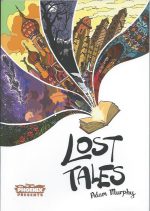
The one we’re looking at today is The Phoenix Presents… Von Doogan and the Great Air Race: a dazzling display of cartoon virtuosity and mind-mangling comic challenges composed by Lorenzo Etherington, originally seen as captivating, addictively challenging weekly instalments of The Dangerous Adventures of Von Doogan.

The serial combined captivating cartoon narrative with observational tests, logic puzzles and other kids’ favourite brain-teasers, craftily taking readers and participants on a magnificently constructed progressive voyage of adventure and discovery in 37 clue, game, maze and mystery-packed episodes.

Our hero is a brilliant and intrepid young explorer with a keen sense of justice and an insatiable thirst for action. Here, following his previous exploit, Von Doogan is in the World Adventurers’ Club with the profits of the Golden Monkey caper burning a hole in pocket. Realising he is incredibly bored, he seeks out a fresh a challenge and is soon off and away…

Recovering, decoding and accepting an invitation to a global Great Air Race, our hero sets out in a hurry, gathering on the way supplies, a plane and a pilot in the form of very bad waitress Abby “Ace” Poontoon.

Then it’s a mad dash to decipher routes, maps and clues en route from one clandestine destination to the next; perpetually tackling – with your help – all manner of conundra (each with a daunting icon reckoning its “impossibility level”) as our heroes zero in on the goal.

As if puzzles such as ‘Secret Sandwich’, ‘The Big Choke’, ‘Cockpit Lockout’ and ‘Blazing Maze’ aren’t enough to challenge the keenest intellectual daredevil, there’s also the knotty problem of a saboteur amongst the intrepid contestants slowing and winnowing out the competition at every stage…

‘Doogan’s Discovery’ …

Naturally we aren’t all as smart as Von Doogan or a six-year old so this spectacular colourful cornucopia comes with a page explaining ‘How the Book Works’, an expansive ‘Equipment Checklist’ and a fulsome secret section offering extra help with ‘The Clues’ and – thankfully – it all wraps up with graphically glitzy explanations in ‘The Solutions’.

There’s even a free printable download page providing your own handy dandy copy of ‘Doogan’s Danger Kit’ to stop you cutting up the one in this mesmerising manuscript of mystery.

Story! Games! Action! … and all there in the irresistible form of entertaining narrative pictures. How much cooler can a book get?
Text and illustrations © Lorenzo Etherington 2016. All rights reserved.

To find out more about The Phoenix or subscribe, visit: www.thephoenixcomic.co.uk
Von Doogan and the Great Air Race will be released on April 7th 2016.

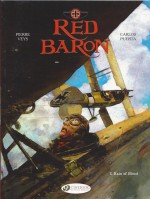
Red Baron volume 1: The Machine Gunner’s Ball


By Pierre Veys & Carlos Puerta, translated by Mark Bence (Cinebook)
ISBN: 978-1-84918-203-4

There have been some astounding comic strips stories about the Great War. Pat Mills & Joe Colquhoun’s Charley’s War still tops the list for me – with Tardi’s It Was the War of the Trenches! and Goddamn This War! – closely following on, but the centennial conflict has generated plenty more thought-provoking sagas for us all to savour.

One particularly beautiful and strangely intriguing fictionalised fantasy – which began as Baron rouge: Le Bal des Mitrailleuses in 2012 – takes a fascinating step into the bizarre with a loosely inspired tale in faux-autobiographic mien described by air ace and military legend Manfred Von Richthofen.

Scripted with great style and Spartan simplicity by prolific bande dessinée writer Pierre Veys (Achille Talon, Adamson, Baker Street, Boule et Bill, les Chevaliers du Fiel), the drama is stunningly illustrated by advertising artist and veteran comics painter Carlos Puerta (Los Archivos de Hazel Loch, Aeróstatas, Tierra de Nadie, Eustaquio, Les Contes de la Perdition) in a staggeringly potent photo-realistic style.

The action begins with ‘Chivalry’ as the infamous Red Baron pursues his latest target through the lavish countryside and historical landmarks of the Front. Driving the British Spad to the fields below, the handsome Hun is in time to see the light fade from his foe’s eyes forever.

The sight gives him ineffable pleasure…

As he returns to the skies Von Richthofen’s mind drifts back a decade to his time in Berlin’s Military Academy and how his expertise in the gymnasium made him a target of the rich Junker scions who clustered around spoiled, vicious Prince Friedrich. Already despised, the proud and cocky young man embarrassed the Prince and walked into the changing rooms expecting a beating…

Then, for the first time, his “power” manifested. Able to somehow read the minds of his attackers, Manfred viciously trounced them all and provoked a fear in his would-be tormentors that carried him safely to graduation…

Talking the strange event over with his pal Willy, Von Richthofen deduced it was the taste of actual danger which triggered his gift and tested the theory by heading for the worst part of town to provoke the peasants and rabble.

He never questioned how or why the savage exercise of brutal violence made him feel indescribably happy…

When the war began, former cavalry officer Manfred had further proof of his talent when he casually acted on a vague impulse and avoided a lethal shelling from a threat he could neither see nor anticipate…

Soon after, he joined the Fliegertruppen (Imperial German Flying Corps) as gunner in a two-man reconnaissance craft and learned that to the men in the trenches below, one nation’s planes were as dangerous as the other’s… and they all needed to be shot at…

Thanks to a whirling propeller, he also painfully realised that he was not beyond harm: a fact that was reiterated when he and pilot Georg were suddenly attacked by a French aircraft and he found himself in his first dogfight over the scenic Belgian landscape…

A shocking blend of staggering beauty and phenomenally visceral violence, The Machine Gunner’s Ball is a strange brew of classic war story and eerie horror yarn. The concept of the semi-mythical knight of the clouds as a psychic psycho-killer is not one that many purists will be happy with, but the conceit is executed with superb conviction and the illustration is both potently authentic and gloriously lovely.

A decidedly different combat concoction and one jaded war lovers should definitely try
Original edition © Zephyr Editions 2012 by Veys & Puerta. All rights reserved. English translation 2014 © Cinebook Ltd.

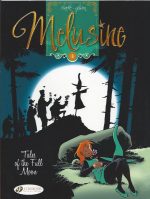
Melusine volume 4: Love Potions


By Clarke (Frédéric Seron) & Gilson, coloured by Cerise and translated by Jerome Saincantin (Cinebook)
ISBN: 978-1-84918-005-4

Like most things in life, this ideal keepsake for Love’s Labours’ Ludicrously Lost comes far too late to be the perfect St. Valentine’s Day recommendation, but let’s face it: if you want to read a comic rather than romance a paramour – imagined, potential or otherwise – there’s little hope for you anyway…

And Dark Gods forbid if you think buying one for him/her/it/they counts as a Romantic Gesture. You deserve everything you get…

Witches – especially cute and sassy teenage ones – have a long and distinguished pedigree in fiction and one of the most seductively engaging first appeared in venerable Belgian magazine Spirou in 1992.

Mélusine is actually a sprightly 119-year-old diligently studying to perfect her craft at Witches’ School. To make ends meet she spends her days – and far too many nights – working as au pair and general dogsbody to a most disgraceful family of haunts and horrors who inhabit/infest a vast, monster-packed, ghost-afflicted chateau some chronologically adrift, anachronistically awry time in the Middle-ish Ages…

The long-lived, much-loved feature is presented in every format from one-page gag strips to full-length comedy tales, all riffing wickedly on supernatural themes and detailing Mélusine’s rather fraught existence is filled with the daily indignities day-job, college studies, the appallingly trivial domestic demands of the master and mistress of the castle and even our magic maid’s large circle of exceedingly peculiar family and friends.

The strip was devised by writer François Gilson (Rebecca, Cactus Club, Garage Isidore) and cartoon humorist Frédéric Seron, AKA Clarke whose numerous features for all-ages Spirou and acerbic adult humour publication Fluide Glacial include Rebecca, Les Cambrioleurs, Durant les Travaux, l’Exposition Continue… and Le Miracle de la Vie.

Under the pseudonym Valda, Seron also created Les Babysitters and as Bluttwurst Les Enquêtes de l’Inspecteur Archibaldo Massicotti, Château Montrachet, Mister President and P.38 et Bas Nylo.

A former fashion illustrator and nephew of comics veteran Pierre Seron, Clarke is one of those insufferable guys who just draws non-stop and is unremittingly funny. He also doubles up as a creator of historical and genre pieces such as Cosa Nostra, Les Histoires de France, Luna Almaden and Nocturnes and apparently is free of the curse of having to sleep…

Collected Mélusine editions began appearing annually or better from 1995 onwards, with the 24th published in 2015 and another due this year. Thus far five of those have shape-shifted into English translations…

Originally released in 1998, Philtres d’amour was Continentally the fifth fantabulous folio of mystic Mélusine mirth and is again most welcoming: primarily comprised of one and two page gags starring the sassy sorceress which delightfully eschew continuity for the sake of new readers’ instant approbation…

As the translated title of this (fourth) Cinebook offering suggests, Love Potions devotes the majority of its content to affairs of the heart – and lower regions – and how to alchemically stack the deck in the game of romance….

When brittle, moody Melusine isn’t being bullied for her inept cleaning skills by the matriarchal ghost-duchess who runs the castle, ducking cat-eating monster Winston, dodging frisky vampire The Count or avoiding the unwelcome and often hostile attentions of horny peasants and over-zealous witch-hunting priests, our saucy sorceress can usually be found practising her spells or consoling and coaching inept, un-improvable and lethally unskilled classmate Cancrelune.

Unlike Mel, this sorry enchantress-in-training is a real basket case: her transformation spells go awfully awry, she can’t remember incantations and her broomstick-riding makes her a menace to herself, any unfortunate observers and even the terrain and buildings around her…

This tantalising tome features the usual melange of slick sight gags and pun-ishing pranks; highlighting how every bug, beast, brute and blundering mortal suffers the pangs of longing and occasionally needs a little Covenly charisma to kick romance into action…

Whether that means changing looks, attitudes or minds already firmly made up, poor harassed student Mel is bombarded with requests to give Eros a hand…

Her admittedly impatiently administered and often rather tetchy aid is pretty hit-or-miss, whether working for peasants, rabbits, tortoises or even other witches, and helping poor Cancrelune is an endless, thankless and frequently risky venture.

Moreover the master and mistress of the castle have obviously never had an ounce of romance in them, even when they were alive…

At least daunting dowager Aunt Adrezelle‘s is always around to supply the novice with advice, a wrinkly shoulder to cry on and, when necessary, a few real remedies…

This turbulent tome also includes a longer jocular jaunt exploring the dull verities of housework, anti-aging elixirs and the selfish ingratitude of property-speculators…

Wrapping up the thaumaturgical hearts-&-flowers is eponymous extended epic ‘Love Potions’ which sees Melusine’s patience pushed to the limits after another attempt by the local priest to “burn the witch” ends up with her helping the locale’s latest scourging saurian marauder find the dragon of his fiery dreams…

Wry, sly, fast-paced and uproariously funny, this compendium of arcane antics is a great taste of the magic of European comics and a beguiling delight for all lovers of the cartoonist’s art. Read before bedtime and share with your loved ones – but only after asking politely first…
Original edition © Dupuis, 1998 by Clarke & Gilson. All rights reserved. English translation 2009 © Cinebook Ltd.

Persia Blues volume 2: Love and War


By Dara Naraghi & Brent Bowman (NBM/ComicsLit)
ISBN: 978-1-56163-977-9

All creative people are a little bit chained to their art-form, and Iranian ex-pat Dara Naraghi far more so than most. As well as his own celebrated Big City Blues comic he’s been responsible for adapting to comics such licensed properties as Robert Patterson’s Witch & Wizard novels, Terminator: Salvation, It! The Terror From Beyond Space and Ghostbusters, writing for DC, Image and IDW and running his own publishing house Ferret Press.

His breakthrough graphic anthology Lifelike set new standards for expressive exploratory tale-telling and he was a founding member of comics creators collective PANEL. He also scripts (and occasionally draws) utterly wonderful tales covering every aspect of the human experience from wild fantasy to chilling slice-of-life in a splendid series of webcomics.

Artist and illustrator Brent Bowman has created art for the Age of Empires collector card game and worked at Caliber Press and Image Comics. He too is a member of PANEL, devoted to pushing the envelope (probably after covering it with doodles and sketches) of graphic narrative.

Together they have conceived a trilogy of graphic novels cunningly blending real-world reportage with fantastic fantasy in a mythic manner both intriguing and captivating. Initial outing Persia Blues: Leaving Home won the 2014 Small Press & Alternative Comics Expo prize for Best Graphic Novel.

That tome introduced spirited young woman Minoo Shirazi who had a history of troublemaking and parental issues in two very different worlds dubbed for discomfort “There” and “Here”…

Far away and long ago a bold warrior woman with an inexplicable incendiary power in her hands battled beside her lover Tyler against brigands and worse to retrieve a holy book in the heyday of the Persian Empire. We’ll call that “Here”…

Over “There” in our world, a forthright, independent Iranian architecture student named Minoo was seen at various moments of her life, constantly challenging the authority of her father and the far more dangerous agents of the theocracy…

In Ancient Persia the war-woman painfully and at first-hand learned of the eternal struggle between the light of Ahura Mazda and dark evil of demonic Ahriman, before becoming embroiled in the struggle – as did her scholarly lover – when a priest was slaughtered by the devil-lord Himself.

A giant, wingless talking griffon then despatched them to distant Persepolis to meet her long-lost mother. The divine messenger also decreed Minoo the Warrior would play a crucial role in the battle between good and evil and must accept her fate…

En route, they encountered famed and legendary Anusiya battling an horrific army of scorpion men and other beasts. Dashing to join the hard-pressed Persian Royal Guard, they turned the tide and the grateful soldiers escorted them to an audience with the Emperor…

In modern times when word of Minoo’s latest brush with the authorities reached her father, once-eminent history professor Bijan Shiraz took unwelcome and unwanted steps to protect the last member of his family.

For years he had been a thorn in the side of the religious fundamentalists rewriting and revising the grand and glorious history of Persia to suit the self-serving demands of a theocratic, clerical dictatorship and consequently his entire family had suffered…

Bijan and his wife Manijeh argued for years. She wanted the family to leave but the scholar refused to leave the proud history of Persia in the hands of revisionists. Minoo often listened, terrified her parents were divorcing, but older brother Ramin was always there to calm her fears…

Three years ago Minoo and her father discussed her recent graduation. Her prospects had long been a brittle bone of contention, and she would not accept the aging intellectual’s argument that she should pursue a Master’s Degree. Not in a country that openly suppresses choice and opportunity for women…

She was utterly astounded when he reveals he had changed his mind and would use all his resources, contacts and waning influence to secure her a University place outside Iran…

And in Persepolis the supreme ruler is revealed as Empress Purandokht, Queen and Protector of the Persian Empire who greets her wandering daughter but does not recognise her…

This is a tale of interconnected contrasts, with the modern scenes – deliberately convoluted by mixing the chronological sequence of flashback events – rendered in stark black line whilst the exotic and thrilling Persian adventure is presented as lush, painterly pencil-grey tones.

Moreover, although the general dialogue and idiom of the ancients is what you’d expect in an historical drama, Tyler and mystic Minoo speak like American 20-somethings, eventually admitting to Purandokht they are from somewhere called “Columbus”…

Following a graphic reintroduction to the major players and a quick recap in ‘Our Story Thus Far’ the twin-tracked tale-telling recommences over “There” in Tehran eleven years ago as young teenager Minoo goes ski-boarding for the first time and meets a boy. Over-protective Ramin’s response is not what she anticipated…

Way back “Here” Tyler and Minoo soon get bored cooling their heels in the palace and – avoiding Purandokht’s hyper-maternal oversight – sneak out to find the nation’s ultimate hero Rostam who might be the only hope to defeat Ahriman’s converging dark forces…

Modern Minoo meanwhile is still settling in at the University of Ohio in America. It is one year ago…

Her fellow Students are all very welcoming but the culture is so different in its minutiae and daily details. However, when she introduces herself to her father’s old friend Professor Yazdi she finds him with a charming young man discussing his Graduate Degree. His name is Tyler Clarke and he is obsessed with the culture and history of Iran. Even more so apparently, after meeting Minoo…

In the wilds of Persia, a wild ride and valiant quest at last leads the strange warriors to mighty Rostam and his wonder steed Rakhsh. Finishing off the demon he has been toying with the heroic marvel joyously accompanies them back to embattled Persepolis…

In Columbus as Tyler and Minoo get better acquainted, the scene suddenly shifts to Iran twelve years previously. The Shiraz family are fragmenting and the kids are dealing with Bijan and Manijeh’s divorce very differently. Jumping ahead seven years, the dutiful daughter is still arguing with dad after he’s been beaten up… again…

Rostam’s tumultuous return to Persepolis is none too soon: his glorious welcome parade is barely begun when the monster armies of Ahriman turn up…

Ten years ago in Tehran, Minoo finally gets to watch football-crazy Ramin play, even if the trip nearly gets her arrested. It’s the best game of his life and the last time she will ever see him…

The battle for Persepolis is long and hard and only the direct intervention of Ahura Mazda saves overmatched Minoo when her flame powers fail…

In America six months ago Tyler took Minoo camping and learned a lot about her, such as her family history and troubles and the fact that she is a demon with a game console…

“Here” as Persepolis reels from the catastrophic assault, “There” in Tehran twenty-one years ago another parental clash left Minoo alone with Daddy, who proudly read his little girl the far-from-bedtime story of the Seven Labours of Rostam…

Although forced from the battlefield Ahriman is undeterred and directly attacks Purandokht in the palace. Although her formidable daughter is in time to drive the devil off, the queen is stricken by the beast’s poisons…

In Tehran eleven years ago the fractured family gather at the hospital. Manijeh’s chemotherapy has failed and surgery is now the only option. Minoo cannot comprehend her father’s reactions…

As before, glimpses of a greater truth come from a brace of Epilogues. The first sees Minoo in Columbus three months ago: Skypeing with the dad she still doesn’t trust but blithely unaware of the trouble he’s in, whilst the second focuses on Persepolis where a distraught daughter is confronted by the all-wise Griffon. He challenges the warrior woman’s understanding of her strangely incomplete existence and asks difficult questions about the father she cannot remember…

To Be Concluded…

Gilded with excerpts of classical poetry by Rumi (13th century Persian poet, jurist, scholar, theologian and Sufi Mystic Jalāl ad-Dīn Muhammad Rūmī AKA Jalāl ad-Dīn Muhammad Balkhī or simply “our master”: very cool and totally worthy of your further attention…), this is a smart and subtle melding past and present, fact and fiction, revelling in exploiting reader expectation and confusion whilst crafting a beguiling multi-layered tale of family, responsibility, guilt, oppression and the hunger for independence which carries the reader along, promoting wonder and second-guessing whilst weaving a tantalising tapestry of mystery.

Engaging, rewarding and just plain refreshingly different, Persia Blues looks set to become a classic for all time…
© 2015 Dara Naraghi and Brent Bowman.