Bram Stoker’s Dracula


Adapted by Roy Thomas, Mike Mignola & John Nyberg (Topps/Titan Books edition)
ISBN: 978-1-85286-474-3

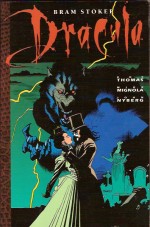
Vampires have never been more popular and the undisputed icon of the cult-fiction genre is indisputably Dracula. One of the best looking graphic novels ever to feature the immortal undead Count came from Topps Comics in 1992 when they produced a four part adaptation of Francis Ford Coppola’s flawed film masterpiece.

Whatever your opinions of the movie, the brutally dark story of love, reincarnation and second chances did generate an exceptionally impressive comics interpretation by master adapter Roy Thomas and moody Meisters-of-the-Macabre Mike Mignola & John Nyberg…

This stripped-down UK edition released by Titan Books opens with the prologue wherein Christian knight Vlad Dracula returns to his castle after a magnificent victory against the invading Turks in 1462, to discover that his beloved wife Elisabeta is dead. The tragic beauty committed suicide when she received a malicious message stating that her husband had been killed…

Grief-stricken, the bloody warrior Vlad turns his back on God and Man…

May 1897 and Jonathan Harker travels to Transylvania following the loss of his colleague R.M. Renfield  to facilitate the voyage of aged wealthy Count Dracula to the thriving modern Metropolis of London. He stumbles into a scene of unbridled terror…

Meanwhile in the heart of the Empire his fiancée Mina Murray indulges her wildly wanton friend Lucy Westenra as the famous beauty strings along three ideal suitors, Dr. Jack Seward, Texan Quincy P. Morris and Arthur Holmwood, the future Lord Godalming.

Mina is a perfect double for the long dead Elisabeta and when Dracula, freshly arrived in England and already causing chaos and disaster, sees her he begins to seduce her. He is less gentle with Lucy and his bestial, bloodletting assaults prompt her three beaus to summon the famed doctor and teacher Abraham Van Helsing to save her life and cure her increasing mania.

Harker has survived his Transylvanian ordeal and hurriedly marries Mina in Romania. Enraged, Dracula renews his assaults and Lucy dies to be reborn as a predatory monster. After dispatching her to eternal rest, Van Helsing, Holmwood, Seward and Quincy Morris, joined by the recently returned and much altered Harker and his new bride, determine to destroy the ancient evil in their midst…

Dracula however, has incredible power and centuries of experience on his side and taints Mina with his blood-drinking curse, before fleeing back to his ancestral lands. Now the mortal champions must follow and excise his awful power before Mina – now aware of her previous existence as Dracula’s wife Elisabeta – succumbs forever to his unholy influence…

Dark, moody, visually stunning and compulsively frenetic, this interpretation is a memorable and intensely fulfilling iteration on a modern myth and one that no fan can ignore.

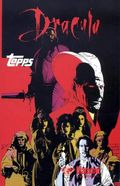
The Titan version of this lost gem is probably the most readily available but the two Topps editions are still around if you’re persistent. The first printing also contains in its 112 pages an introduction from Coppola and an afterword by the film’s writer James V. Hart (whose other credits include screenplays for Contact, Tuck Everlasting, Mary Shelley’s Frankenstein, Hook and Muppet Treasure Island amongst others, whilst the 120 page Previews Exclusive Edition tops that (sorry, my will was suborned by irresistible malign forces) by including a poster, behind-the-scenes glimpses at the film’s creation and cards from the spin-off Dracula Collectible Card set.
© 1993 Columbia Pictures Industries, Inc. All Rights Reserved.

Valerian and Laureline book 1: The City of Shifting Waters


By J.-C. Méziéres & P. Christin, with colours by E. Tranlé and translated by Jerome Saincantin (Cinebook)
ISBN: 978-1-84918-038-2

Valérian is possibly the most influential science fiction series ever drawn – and yes, I am including both Buck Rogers and Flash Gordon in that expansive and undoubtedly contentious statement. Although to a large extent those venerable newspaper strips formed the medium itself, anybody who has seen a Star Wars movie has seen some of Jean-Claude Méziéres & Pierre Christin’s brilliant imaginings which the filmic phenomenon has shamelessly plundered for decades: everything from the look of the Millennium Falcon to Leia’s Slave Girl outfit…

Simply put, more carbon-based lifeforms have experienced and marvelled at the uniquely innovative, grungy, lived-in tech realism and light-hearted swashbuckling rollercoasting of Méziéres & Christin than any other cartoon spacer ever imagined possible.

Valérian: Spatio-Temporal Agent launched in the November 9th, 1967 edition of Pilote (#420, running until February 15th 1968) and was an instant hit. The graphic novel under discussion here ‘The City of Shifting Waters’ is actually the second chronological yarn.

The groundbreaking series followed a Franco-Belgian mini-boom in science fiction triggered by Jean-Claude Forest’s 1962 creation Barbarella.

Other notable successes of the era include Greg & Eddy Paape’s Luc Orient and Philippe Druillet’s Lone Sloane and, which all with Valérian‘s hot public reception led to the creation of dedicated fantasy masterpiece Métal Hurlant in 1977.

Valérian and Laureline (as the series eventually became) is a light-hearted, wildly imaginative time-travel adventure-romp (a bit like Dr. Who, but not really at all…), drenched in wry, satirical, humanist and political commentary, starring (at first) an affable, capable, unimaginative and by-the-book cop tasked with protecting the universal time-lines and counteracting paradoxes caused by casual time-travellers.

When Valérian travelled to 11th century France in the first tale ‘Les Mauvais Rêves (‘Bad Dreams’) he was rescued from a tricky situation by a fiery, capable young woman named Laureline and he brought her back with him to the 28th super-citadel and administrative wonderland of Galaxity, capital of the Terran Empire. The indomitable girl trained as a Spatio-Temporal operative and by the time of this book was accompanying him on his missions throughout time and space.

Every subsequent Valérian adventure until the 13th was first serialised weekly in Pilote until the conclusion of ‘The Rage of Hypsis’ (January 1st – September 1st 1985) after which the mind-bending sagas were published as all new complete graphic novels, until the magnificent opus concluded in 2010.

(One clarifying note: in the canon “Hypsis” is counted as the twelfth tale, due to the collected albums being numbered from ‘The City of Shifting Waters’ – the second story but the first to be released in collected book form. When ‘Bad Dreams’ was finally released in a collected edition in 1983 it was given the number #0.)

The City of Shifting Waters was originally published in two tranches; ‘La Cité des Eaux Mouvantes’ (#455 25th July to 468, 24th October 1968) and ‘Terre en Flammes’ (‘Earth in Flames’, #492-505, 10th April to 10th July 1969), and opens here with the odd couple dispatched to 1986 – when civilisation on earth was destroyed due to ecological negligence and political chicanery – to recapture Xombul, a madman determined to undermine Galaxity and establish himself as Dictator of the Universe.

To attain his goal the renegade has travelled to New York after a nuclear accident has melted the ice caps and flooded the metropolis (and everywhere else), seeking hidden scientific secrets that would allow him to conquer the devastated planet and prevent the Terran Empire from ever forming…

Plunged back into an apocalyptic nightmare where Broadway and Wall Street are under water, jungle vines connect the deserted skyscrapers, Tsunamis are an hourly hazard and bold looters are snatching up the last golden treasures of a lost civilisation, the S-T agents find unique allies to preserve the proper past, survive even greater catastrophes such as the volcanic eruption of Yellowstone Park and frustrate the plans of the most ambitious mass killer in all of history…

Visually spectacular, mind-bogglingly ingenious and steeped in delightful in-jokes (the utterly-mad-yet-brilliant boffin who helps them is a hilarious dead ringer for Jerry Lewis in the 1963 film “The Nutty Professor”) this is still a timelessly perfect Science Fiction masterpiece every fan of the genre – in whatever medium – would be crazy to miss…
© Dargaud Paris, 1976 Christin, Méziéres & Tran-Lệ. All rights reserved. English translation © 2010 Cinebook Ltd.

Marvel Platinum: The Definitive Thor


By Stan Lee, Jack Kirby, John Buscema, Walter Simonson, John Romita Jr., J. Michael Straczynski & various (Marvel)
ISBN: 978-1- 84653-481-2

As the new Thor film screened across the world, Marvel quite understandably released a batch of tie-in books and trade paperback collections to maximise exposure and cater to movie fans wanting to follow up with a comics experience. Under the Marvel Platinum/Definitive Editions umbrella this treasury of tales reprints some obvious landmarks from Journey into Mystery #83, Thor #159, 200, 337-339, Thor Volume 2, # 1-2, 84-85 and Volume 3, #3 which, whilst not all being the absolute “definitive” sagas, do provide a snapshot of just how very well the hoary mere-mortal-into-godlike gladiator concept can work.

And just in case you think I’m kidding about the metamorphic riff, remember Billy Batson first became Captain Marvel in 1940, Tommy Preston regularly powered up into Golden Lad from 1945, Tommy Troy began changing into The Fly in 1959 and Nathaniel Adam initially transformed into Captain Atom in 1960 and that’s just the first few I could think of…

In addition to a Stan Lee introduction, this compendium contains an extensive 23 page text features section detailing career overviews, secret origins and technical trivia, maps, and character profile pages culled from assorted issues of the encyclopaedic Marvel Universe Handbook.

The adventure begins with a modest little fantasy tale from one of the company’s ubiquitous mystery anthologies, where, in the summer of 1962 that tried-and-true comicbook concept (feeble mortal into God-like hero) was employed to add a Superman analogue to their growing roster of costumed adventurers.

Journey into Mystery #83 (cover-dated August 1962) featured the debut of crippled American doctor Donald Blake who took a vacation in Norway only to encounter the vanguard of an alien invasion. Fleeing in terror he was trapped in a cave where lay an old, gnarled walking stick. When in his frustration, he smashed the cane into a huge boulder obstructing his escape; his puny frame was transformed into the Norse God of Thunder, the Mighty Thor!

Plotted by Stan Lee, scripted by Larry Leiber and illustrated by Jack Kirby and Joe Sinnott ‘The Stone Men of Saturn’ is pure early Marvel; bombastic, fast-paced, gloriously illogical and captivatingly action-packed. The hugely under-appreciated Art Simek was the letterer and logo designer.

The character grew from that formulaic beginning into a vast, breathtaking cosmic playground for Kirby’s burgeoning imagination with Journey into Mystery inevitably becoming the Mighty Thor (with #126) but in this collection we skip to issue #159 (December 1968) where the peculiarities and inconsistencies of the Don Blake/Thor relationship were re-examined and finally clarified.

In the comic series it began with a framing sequence by Lee, Kirby & Colletta that book-ended a reprint of ‘The Stone Men of Saturn’ in #158, but here ‘The Answer at Last!’ alone suffices to explain how the immortal godling was locked within the frail body of Don Blake: an epic saga which took the immortal hero back to his long-distant youth and finally revealed that the mortal surgeon was no more than an Odinian construct designed to teach the Thunder God humility and compassion…

Next follows ‘Beware! If This be… Ragnarok!’ (#200, June 1972) by Lee, John Buscema & John  Verpoorten, which interrupted an ongoing battle between Thor and Grecian death-god Pluto to adapt the classical Norse myth of the inevitable fall of the Aesir gods; a stunning graphic prophecy which would inform and shape the next few hundred issues of the series.

Thor settled into an uninspired creative lethargy after the departure of Kirby’s imaginative power and subsequently suffered a qualitative drop after Buscema moved on, leaving the series in the doldrums until a new visionary was found to expand the mythology once again…

Or, more accurately, returned as Walter Simonson had for a brief while been one of those artists slavishly soldiering to rekindle Kirby’s easy synthesis of mythology, science fiction and meta-humanist philosophy, but with as little success as any other.

When Simonson assumed the writing and drawing of the title in November1983 with issue #337 – deeply invested in Kirby’s exploratory, radical visionary process – free to let loose and brave enough to bring his own unique sensibilities to the character, the result was an enchanting and groundbreaking body of work (#337-382 plus the Balder the Brave miniseries) that actually moved beyond Kirby’s Canon and dragged the title out of a creative rut which allowed Simonson’s own successors to sunsequently introduce genuine change to a property that had stagnated for 13 years.

This first iconic story-arc ‘Doom!’, ‘A Fool and his Hammer…’ and ‘Something Old, Something New…’from The Mighty Thor #337-339 shook everything up and made the Thunder God a collectible sensation for the first time in a decade. Moreover the entire tale is but the prologue to a stupendous larger epic which actively addressed the over-used dramatic device of the Doom of the Gods that had haunted this series since the mid-1960s…

The story evolves out of a spell inscribed on Thor’s hammer and seen in the character’s very first appearance. When crippled Don Blake was first transformed into the Thunder God he saw on the magic mallet Mjolnir the legend “Whosoever holds this hammer, if he be worthy, shall possess the power of Thor…”

The saga begins when Blake is asked by super-spy outfit S.H.I.E.L.D. to intercept an Earth-bound fleet of starships which refuel themselves by absorbing suns! Hurtling off into deep space the Storm God boarded one vessel only to be defeated in combat by its alien protector, an artificially augmented warrior named Beta Ray Bill. Moreover, as they crashed to Earth the alien somehow co-opted the mystic mallet’s magic and transformed himself into a warped duplicate of Thor, after which Odin mistook Bill for his son and heir, whisking him to Asgard to defend the Realm Eternal from another monstrous threat! And then…

Enough tomfoolery: suffice to say that the action and surprises pile one upon another as the alien revealed that he was the appointed protector of his Korbinite race, the survivors of which are fleeing a horde of demons who destroyed their civilisation and are determined to hunt them to extinction.

And now they’re all heading towards Earth…

After the mandatory big fight Thor and Bill – each with his own hammer – teamed-up to investigate the demons, with confused love-interest Lady Sif along for the rollercoaster ride, discovering in the process a threat to the entire universe. That tale is not included here, resulting in a rather disappointing letdown as the narrative leaps ahead fifteen years to July 1998 and the relaunch of the thunder god in Mighty Thor Volume 2.

‘In Search of the Gods’ and its sequel ‘Deal with the Devil!’ (by Dan Jurgens, John Romita Jr. & Klaus Janson, Volume 2, #1-2) featured the return of Thor and the Avengers after more than a year way from the Marvel Universe, subcontracted out to Image creators Jim Lee and Rob Liefield in a desperate attempt to improve sales after the apocalyptic Onslaught publishing event.

In a spectacular and visually compelling two-parter, the Thunderer was reinstated into the “real” world just in time to fall in battle against the devastating Asgardian artefact known as the Destroyer. As the Avengers struggled on against the unstoppable creature, the godling’s spirit was melded with an innocent killed during the struggle, only to emerge once more with a human alter-ego and a new lease on life…

The second volume concluded with issues #84-85 (November-December 2004, written by Daniel Berman & Michael Avon Oeming, illustrated by Andrea Divito and colourist Laura Villari) which once and for all depicted the Really, Truly, We Mean It End of the Gods and Day of Ragnarok as Thor himself instigated the final fall to end an ceaseless cycle of suffering and destruction, ultimately defeating the ruthless beings who have manipulated the inhabitants of Asgard since time began…

For the full story you’ll need to seek out Avengers Disassembled: Thor whereas this volume’s cosmic comic sagas conclude with the third issue of Thor Volume 3 and ‘Everything Old is New Again’ by J. Michael Straczynski, Olivier Coipel & Mark Morales (November 2007) with the Storm Lord back from the dead, conjoined once more with Don Blake and looking for the displaced citizens of a restored but empty Asgard, which now floats a few dozen feet above the barren flats of Brockton, Oklahoma.

This all-action tale details the clash between Thor and once best-friend Iron Man in a world that has radically changed since the new lord of Asgard’s demise and resurrection…

As a primer or introductory collection for readers unfamiliar with the stentorian Thunderer this book has a lot to recommend it. I’m also keenly aware of the need for newcomers to have his centuries-long saga presented in some form of chronological order, but in all honesty the final result is a little choppy and very much a one-trick pony. With the staggering breadth of characters and variety of adventures that have been generated during Thor’s long career there’s an inescapable aura of missed opportunity to the tome in question.

However, I cannot deny that what does appear is of great quality and thematically an obvious and thoroughly entertaining accompaniment to the cinema spectacle. Most importantly this is a well-tailored device to turn curious movie-goers into fans of the comic incarnation too. If there’s a film sequel, let’s hope that Marvel has plans to include some of the great material by a vast range of creators omitted from this book in a second, more imaginative volume….

™ and © 1962, 1968, 1972, 1983, 1984, 1998, 2004, 2007, 2011 Marvel Entertainment LCC and its subsidiaries. All rights reserved. A British edition released by Panini UK Ltd.

Kingdom Hearts: Chain of Memories


Adapted by Shiro Amano translated by (TokyoPop)
ISBN: 978-1-59816-67-37-8

Regular readers (if any of you are still alive out there and not bored to death by my pithy ramblings) will already know that I am utterly immune to computer and video games. Nevertheless the industry has generated some intriguing comics material and occasionally I’ll take a peek at what you youngsters are spending your cash on…

Kingdom Hearts is a series of games which stars a new young hero named Sora working in combination with characters and scenarios from Disney’s globe-girdling cinematic canon and elements of the Fighting Fantasy electronic franchise.

This plucky lad travelled to different realms trying to rescue his two best friends Riku and Kairi who had fallen into the cracks between worlds after a wave of Darkness enveloped all the myriad worlds of creation and wicked creatures named The Heartless were unleashed on the kid’s idyllic land of Destiny Islands.

Once the many Realms were separate; barred to each other by Dark Doorways, with a single Chosen One who carried an ultimate key to all locks, able to pass easily between them.

In his quest Sora was joined by Donald Duck, Goofy and Jiminy Cricket who were similarly searching for their lost King Mickey. During the saga Sora came into possession of the fabled Keyblade which can hurl back the Heartless and unlock all doors…

The comic tie-in Kingudamu Hātsu began in 2003 as a serial in Square Enix’s Japanese Monthly Shōnen Gangan before making the inevitable jump to book collections. Subsequent game releases have been similarly incorporated into the print adventures.

Kingdom Hearts: Chain of Memory – which bridges the gap between the first and second games – opens with Riku and Mickey having sacrificed themselves to keep Ansem, the mastermind behind the chaos, sealed behind the  Doorway to Darkness (trapping themselves there as well) and Sora, Jiminy, Donald and Goofy still searching for a way to rescue them.

In their travels the questers encounter a mysterious stranger who directs them to the Castle Oblivion, but on entering they find that the eerie citadel is stealing their memories, making the shadowy stranger’s confusing predictions and warnings even harder to decipher…

Unaware that they are being manipulated by a shady cabal called Organization XIII, the assembled heroes travel to more incredible worlds with the aid of “Memory Cards” arriving in seedy Traverse Town where the heroic Leon helps them defeat a marauding band of Heartless, after which they are accosted and tested by the sinister Axel before arriving in the Arabian town of Agrabah just in time to assist Aladdin and Princess Jasmine in their struggle against the nefarious Jaffar…

Meanwhile on the other side of the Dark Divide Riku is being tempted and tested by the forces of Evil, but at least he has the indomitable strength of the ghostly King Mickey to help him resist the terrors and seductions of the Disney witch Maleficent and the charismatic Ansem…

Fast-paced and engaging, this tale offers some fascinating moments for fans of classic Disney movies and the Fighting Fantasy universe, but generally it reads like a computer game (probably, to be fair,  Shiro Amano’s intention and brief) so if you’re a narrative purist the ride is likely to feel confused, bumpy and little information-intense in all the wrong places.

If you’re open-minded and clear-headed there’s joy to be gleaned from this peculiar all-ages tome but I rather suspect that more traditional fans might prefer to leave their assorted media unalloyed and sedately separated…
Original manga by Shiro Amano/Enterbrain Inc. © Disney. Characters from Final Fantasy © 2005 Square Enix Co., Ltd. All Rights Reserved. English translation © 2006 TokyoPop Ltd.

Shrine of the Morning Mist volume 1


By Hiroki Ugawa, translated and adapted by Jeremiah Bourque & Hope Donovan(TokyoPop)
ISBN: 978-1-59816-343-4

Most manga can be characterised by a fast, raucous and even occasionally choppy style and manner of delivery but the first volume of Hiroki Ugawa’s atmospheric supernatural thriller and moody saga of young love takes its time to get all the elements in play rather than simply steaming in all guns blazing.

Set in the city of Miyoshi in Hiroshima Prefecture (noted for its shrines and beautiful mist-draped landscapes) Asagiri no Miko or Shrine of the Morning Mist first appeared as a serial in the monthly periodical Young King Ours, running eventually to five volumes of eerie mystery, romance comedy and demonic action.

The saga opens here in traditional portentous manner and carefully unfolds the story of young Yuzu Hieda, one of three sisters who are hereditary Miko (a combination of shamans, mediums and priestesses attached to Shinto shrines and temples) attending to the local places of worship.

The sisters are especially gifted with special powers to combat the supernatural threats that menace the locality.

Little more than a teenager herself, schoolgirl Yuzu is troubled by the return of her childhood sweetheart and cousin Tadahiro Amatsu who, after five years away, has come home only to be targeted by evil forces. Despite being teased by sisters Tama and Kurako Yuzu accompanies them to the railway station just in time to save the lad from a sinister, sorcerous old man obsessed with the boy’s blood.

Invited to stay in the Miko’s home the withdrawn boy is disquieted by the teasing and references to his past relationship with Yuzu, but the father of the house proves to be a far-more unforgiving prospect…

Mystic forces are gathering round the introspective, solitary boy – with repercussions felt as far away as Tokyo – and over their dad’s objections Tadahiro is pressured into staying at the Hieda home where he can be properly protected. However next morning when the girls are at school a monolithic, cyclopean demon attacks the house. The assault is instantly perceived by Yuzu who dashes back to save him only to find her long-absent mother already there, having driven off the dark “kami”.

Well, one of them, at least…

Typically even Mother Miyuki thinks Tadahiro and Yuzu are a perfect, predestined couple…

With questions swirling about him, such as “why is everybody so interested in his blood” and “whatever happened to his own parents” the shell-shocked Tadahiro is blissfully unaware that the Miko are forming a protective Council around him, but even he knows something is up when the dark newcomer Koma introduces herself and reveals that she intimately knew his long-departed father…

To be continued…

This uncharacteristically slow-paced, contemplative and almost elegiac tale mystery was partially inspired by a classical tale recorded on the Inō Mononoke scroll and Hiroki Ugawa’s beautiful illustration perfectly captures a sense of brooding ancient powers at war, even during the most juvenile set-piece moments of awkward young romance and generational embarrassment comedy.

A slightly off-beat but intriguing tale for older readers, this black and white volume is printed in the Japanese right-to-left, back to front format.
© 2001 Hiroki Ugawa. All rights reserved. English text © 2006 TokyoPop inc.

Showcase Presents Blackhawk volume 1


By anonymous, Dick Dillin & Chuck Cuidera (DC Comics)
ISBN: 978-1-4012-1983-3

The early days of the American comicbook industry were awash with both opportunity and talent and these factors also coincided with a vast population hungry for cheap entertainment. Comics had no acknowledged fans or collectors; only a large, transient market-place open to all varied aspects of yarn-spinning and tale-telling – a situation which maintained right up to the middle of the 1960s.

Thus, even though loudly isolationist and more than six months away from active inclusion in World War II, creators like Will Eisner and publishers like Everett M. (“Busy”) Arnold felt that Americans were ready for the themed anthology title Military Comics.

Nobody was ready for Blackhawk.

Military Comics #1 launched on May 30th 1941 (with an August cover-date) and included in its gritty, two-fisted line-up Death Patrol by Jack Cole, Miss America, Fred Guardineer’s Blue Tracer, X of the Underground, the Yankee Eagle, Q-Boat, Shot and Shell, Archie Atkins and Loops and Banks by “Bud Ernest” (actually aviation-nut and unsung comics genius Bob Powell), but none of the strips, not even Cole’s surreal and suicidal team of hell-bent fliers, had the instant cachet and sheer appeal of Eisner and Powell’s “Foreign Legion of the Air” led by the charismatic Dark Knight of the airways known only as Blackhawk.

Chuck Cuidera, already famed for creating the original Blue Beetle for Fox, drew ‘the Origin of Blackhawk’ for the first issue, wherein a lone pilot fighting the Nazi invasion of Poland in 1939 was shot down by Nazi Ace Von Tepp; only to rise bloody and unbowed from his plane’s wreckage to form the World’s greatest team of airborne fighting men…

This mysterious paramilitary squadron of unbeatable fliers, dedicated to crushing injustice and smashing the Axis war-machine, battled on all fronts during the war and stayed together to crush international crime, Communism and every threat to democracy from alien invaders to supernatural monsters, becoming one of the true milestones of the US industry. Eisner wrote the first four Blackhawk episodes before moving on and Cuidera stayed until issue #11 – although he triumphantly returned in later years.

There were many melodramatic touches that made the Blackhawks so memorable in the eyes of a wide-eyed populace of thrill-hungry kids. There was the cool, black leather uniforms and peaked caps. The unique, outrageous – but authentic – Grumman F5F-1 Skyrocket planes they flew from their secret island base and of course their eerie battle-cry “Hawkaaaaa!”

But perhaps the oddest idiosyncrasy to modern readers was that they had their own song (would you be more comfortable if we started calling it an international anthem?) which Blackhawk, André, Stanislaus, Olaf, Chuck, Hendrickson and Chop-Chop would sing as they plummeted into battle (to see the music and lyrics check out the Blackhawk Archives edition); just remember this number was written for seven really tough leather-clad guys to sing while dodging bullets…

Quality adapted well to peacetime demands: Plastic Man and Doll Man lasted far longer than most Golden Age superhero titles, whilst the rest of the line adapted into tough-guy crime, war, western, horror and racy comedy titles. The Blackhawks soared to even greater heights, starring in their own movie serial in 1952. However the hostility of the marketplace to mature-targeted titles after the adoption of the self-censorious Comics Code was a clear sign of the times; as 1956 ended Arnold sold most of his comics properties and titles to National Publishing Periodicals (now DC) and set up as a general magazine publisher.

Many of the purchases were a huge boost to National’s portfolio, with titles such as GI Combat, Heart Throbs and Blackhawk lasting uninterrupted well into the 1970s (GI Combat survived until in 1987), whilst the unceasing draw and potential of characters such as Uncle Sam, the assorted Freedom Fighters costumed pantheon, Kid Eternity and Plastic Man have paid dividends ever since.

This commodious monochrome collection covers the first National-emblazoned issue (#108, January 1957) through #127 (August 1958) which saw the Air Aces hit the ground running in a monthly title (at a time when Superman and Batman were only published eight times a year) and almost instantly established themselves as a valuable draw in the DC firmament.

Regrettably many of the records are lost so scripter-credits are not available (potential candidates include Ed “France” Herron, Arnold Drake, George Kashdan, Jack Miller, Bill Woolfolk, Jack Schiff and/or Dave Wood) but the art remained in the capable hands of veteran illustrators Dick Dillin and Chuck Cuidera: a team who meshed so seamlessly that they often traded roles with few any the wiser…

Moreover although broadly formulaic the gritty cachet, crime and Sci Fi underpinnings and international jurisdiction of the team always allowed great internal variety within the tales, so with three complete adventures per issue, this terrific tome is a joyous celebration and compelling reminder of simpler yet more intriguing times.

The action begins with ‘The Threat From the Abyss’ an old-school “Commie-Stomper” yarn wherein the Magnificent Seven put paid to a sinister subsea Soviet rocket base, after which ‘Killer Shark’s Secret Weapon’ stuck with the watery theme as the Blackhawks’ greatest foe returned with another outrageous mechanical masterpiece to aid his piratical schemes. Issue #108 concludes with ‘The Mutiny of the Red Sailors’ wherein a mass-defection of Russian mariners in Hong Kong proved to be a cunning scheme to destroy the British Colony.

‘The Avalanche King’ detailed the struggle against Red infiltrators in South America, ‘Blackhawk the Sorcerer!’ saw the team discover a lost outpost of Norman knights who had missed the invasion of England in 1066 and ‘The Raid on Blackhawk Island’ pitted the squad against their own trophies as an intruder invaded their secret base and turned a host of captured super-weapons against them.

Blackhawk #110 opened with ‘The Mystery of Tigress Island’ as the doughty lads battled an all-girl team of rival international aviators, ‘The Prophet of Disaster’ proved to be not a seer but simply a middle Eastern conman and ‘Duel of Giants’ pitted the team against a deranged scientist who could enlarge his body to blockbuster proportions.

‘The Menace of the Machines’ found the heroes battling the incredible gimmicks of a Hollywood special effects wizard who had turned to crime, ‘The Perils of Blackie, the Wonder Bird’ featured the team’s incredible feathered mascot who cunningly turned the tables on the spy-ring which had captured him whilst ‘Trigger Craig’s Magic Carpet’ proved once again that Crime Does Not Pay but also that even ancient sorcery was no match for bold hearts and heavy machine-guns…

‘The Doomed Dogfight’ opened #112 as a Nazi ace schemed to rerun his WWII aerial duel against Blackhawk; criminal counterpart squadron ‘The Crimson Vultures’ proved to be no match for the Dark Knights and ‘The Eighth Blackhawk’ was nothing more than a dirty traitor… or was he?

‘The Volunteers of Doom’ found the team uncovering sabotage whilst testing dangerous super-weapons for the US Government and ‘The Saboteur of Blackhawk Island’ only appeared to be one of the valiant crew before ‘The Cellblock in the Sky’ found the heroes imprisoned by a disenchanted genius in floating cages – but not for long…

‘The Gladiators of Blackhawk Island’ saw a training exercise co-opted by criminals with deadly consequences whilst costumed criminal the Mole almost enslaved ‘20,000 Leagues Beneath the Earth’ and Blackie was transformed into a ravening and uncontrollable menace in ‘The Winged Goliath’.

In ‘The Tyrant’s Return’ a group of Nazi war criminals rallied sympathisers around a new Hitler, ‘Blackie Goes Wild’ saw the gifted raptor  revert to savagery but still thwart a South American revolution whilst ‘The Creature of Blackhawk Island’ saw a extra-dimensional monster foolishly begin smashing through to our reality on the most heavily fortified military base on Earth…

As ‘The Prisoners of the Black Palace’ the old comrades crushed a criminal scheme to quartermaster the entire international underworld, Blackhawk became ‘The Human Torpedo’ to eradicate a sea-going gangster but ended up in contention with a race of mermen, and old Hendrickson became ‘The Outcast Blackhawk’ after failing his annual requalification exams…

Blackhawk #117 began with the team tackling what seemed to be a lost tribe of Vikings in ‘The Menace of the Dragon Boat’ before becoming the targets of a ruthless mastermind in ‘The Seven Little Blackhawks’ and battling a chilling criminal maniac in ‘The Fantastic Mr. Freeze’.

‘The Bandit with 1,000 Nets’ proved to be yet another audacious thief with a novel gimmick whereas the Pacific Ocean was the real enemy when an accident marooned ‘The Blackhawk Robinson Crusoes’ as they hunted the nefarious Sting Ray, before ‘The Human Clay Pigeons’ found the team helpless targets of international assassin and spymaster the Sniper.

A time-travel accident propelled the aviators back to the old West in ‘Blackhawk vs Chief Black Hawk’ and on their return Frenchman Andre inherited a fortune and became ‘The Playboy Blackhawk’ before being kicked off the team. However he was happily back for the all-out dinosaur action of ‘The Valley of the Monsters’…

‘The Challenge of the Wizard’ led in #120 as the crew tackled an ingenious stage magician whilst a well-meaning kid made plenty of trouble for them when he elected himself ‘The Junior Blackhawk!’ before the sinister Professor tricked the heroes into re-enacting ‘The Perils of Ulysses’ with deadly robotic monsters.

‘Secret Weapon of the Archer’ pitted the team against a fantastic attention-seeking costumed menace, whilst ‘The Jinxed Blackhawk’ found the team struggling against bad luck, superstition and a cunning criminal before ‘Siege in the Sahara’ saw them imitating Beau Geste whilst rescuing hijacked atomic weapons from bandit chieftain the Tiger…

‘The Movie that Backfired’ started out as a biopic but developed into a mystery when criminals began making murderous alterations to the script, ‘The Sky Kites’ found the squad battling aerial pirates The Ravens and ‘The Day the Blackhawks Died’ saw the deadly Cobra lay a lethal trap unaware that he was the prey not the predator…

Killer Shark returned to unsuccessfully assault ‘The Underseas Gold Fort’, more leftover Nazis resurfaced to solve a ‘Mystery on Top of the World’ that involved the location of the Reich’s stolen gold and Blackhawk became ‘The Human Rocket’ to thwart an alien invasion.

In issue #124, figures from history were robbing at will and even the Blackhawks were implicated but the ‘Thieves With a Thousand Faces’ proved to be far from supernatural whilst ‘The Beauty and the Blackhawks’ saw shy Chuck apparently bamboozled by a sultry siren whilst ‘The Mechanical Spies From Space’ attempted to establish an Earthly beachhead but were soundly defeated by the Magnificent Seven’s unique blend of human heroism and heavy ordnance.

‘The Secrets of the Blackhawk Time Capsule’ proved an irresistible temptation for scientific super-criminal the Schemer whilst ‘The Sunken Island!’ hid a lost Mongol civilisation in the throes of civil war and ‘The Super Blackhawk’ saw an atomic accident transform the group’s leader into a all-powerful metahuman… unfortunately it did the same for the Mole and his entire gang too…

‘The Secret of the Glass Fort’ revisited the idea as the entire team temporarily received superpowers to battle alien invaders whilst The Prisoner of Zenda provided the plot for ‘Hendrickson, King For a Day’ as the venerable Dutchman doubled for a missing monarch and ‘The Man Who Collected Blackhawks’ quickly learned to regret using his shrinking ray on the toughest crime-fighters in the World…

This stupendous selection climaxes with issue #127: starting with ‘Blackie – the Winged Sky Fighter’ wherein the formidable hawk rescued his human colleagues from an impossible death-trap, after which strongman Olaf took centre-stage as ‘The Show-Off Blackhawk’ when a showbiz career diverted his attention from the most important things in life and the manly monochrome marvels conclude when a criminal infiltrating the squad disguised as American member Chuck seemingly succeeds in killing the legendary leader in man ‘The Ghost of Blackhawk’.

These stories were produced at a pivotal moment in comics history: the last great outpouring of broadly human-scaled action-heroes in a marketplace increasingly filling up with gaudily clad wondermen and superwomen. The iconic blend of weary sophistication and glorious, juvenile bravado where a few good men with wits, firearms and a trusty animal companion could overcome all odds was fading in the light of spectacular scenarios and ubiquitous alien encounters.

For this precious moment though these rousing tales of the miracles that (extra) ordinary guys can accomplish are some of the early Silver Age’s finest moments. Terrific traditional all-ages entertainment and some of the best comics stories of their time, these tales are forgotten gems of their genre and I sincerely hope DC finds the time and money to continue the magic in further collections.

And so will you…

© 1957, 1958, 2008 DC Comics. All Rights Reserved.

Werewolf


By Richard Corben & friends (Catalan Communications)
ISBN: 0-87416-007-3             Del Rey edition ISBN: 978-0-34548-311-9

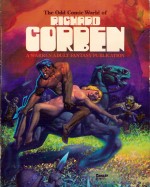
Richard Corben is one of America’s greatest living proponents of comic strip storytelling: an animator, illustrator, publisher and cartoonist springing, as so many have, from the tumultuous wave of independent counterculture commix of the 1960s and 1970s to become a major force in sequential narrative with an unmistakable style and vision. He is equally renowned for his mastery of the airbrush, captivatingly excessive anatomical stylisation and his delightfully wicked, darkly comedic horror, fantasy and science fiction tales.

Until relatively recently Corben steered clear of the Fights ‘n’ Tights comicbook mainstream. He hasn’t sold out – it’s simply that American funnybooks have grown mature enough to accommodate him, due in no small part to his pervasive influence…

Born in Anderson, Missouri in 1940, he graduated with a Fine Arts degree in 1965 and found work as an animator. At that time, the neutered comicbooks of the Comics-Code Authority era were just starting to lose disaffected, malcontented older fans to the hippy-trippy, freewheeling, anything-goes publications of independent-minded creators across the continent who were increasingly making the kind of material Mummy and her lawyers wouldn’t approve of…

Creative impulses honed by ultra-graphic and explicitly mature 1950s EC Comics, Carl Barks’ perfectly crafted Duck tales and other classy early strips, a plethora of young artists like Corben all responded with a variety of small-press publications – including Grim Wit, Slow Death, Skull, Fever Dreams and his own Fantagor – that featured shocking, rebellious, sexed-up, raw, brutal, psychedelically-inspired and enhanced cartoons and strips that mixed the new wave of artists’ unconventional lifestyles with their earliest childhood influences… making the kind of stories that they would like to read…

Corben’s work began to appear in more professionally produced venues. As his style and skills developed he worked for Warren Publishing’s Eerie, Creepy, Vampirella, Comix International and graphically outrageous adult science fiction anthology 1984/1994. He also famously coloured some strips for the revival of Will Eisner’s the Spirit.

In 1975 Corben approached French fantasy phenomenon Métal Hurlant and became a fixture of its American iteration Heavy Metal. Soon he was producing stunning graphic escapades for a number of companies, making animated movies, painting film posters and producing record covers such as the multi-million-selling Meatloaf album Bat Out of Hell. He never stopped making comics but preferred his own independent projects with collaborators such as Harlan Ellison, Bruce Jones and Jan Strnad.

Always garnering huge support and acclaim in Europe his short pieces were regularly collected in albums such as this moody and manic midnight melange that gathered his assorted dabblings with the iconic global curse of lycanthropy into one masterful edition, before selling it back to the Yanks…

I’m reviewing my beloved and spiffy Catalan Communications hardback edition, complete with affectionate introductory tribute from fellow artistic superstar Gaetano Liberatore, but if you can’t find that or the subsequent softcover, as they are both regrettably out-of-print and tricky to find, there was a soft-cover re-release from Del Rey in 2005 that is a bit more accessible and just as good.

Corben regularly revisited old works, adding colour to black and white tales or refining rough edges, but this collection opens with an early strip that is deliciously raw and edgy in blocky monochrome…

‘Dead Hill’ is a dark and punchy taster to set the ball rolling: a saga of vulpine cross-and-double-cross, before the airbrush colour of ‘The Beast of Wolfton’ regales us with the hilariously sardonic and nihilistic tale of a beast that haunts a medieval manor seeking vengeance for the extermination of his kind and the deeply put-upon Lady who finds little to differentiate between the hairy slavering brute and her husband who hunts it with such passion…

Corben returned to that milieu for the nominal sequel ‘Spirit of the Beast’ as the tortured spawn of the werewolf sought penance and forgiveness for his family’s curse, but reckoned without the seductive power of true Evil…

Corben’s infamous signature-stylisation includes acres of male and female nudity, excessive, balletic violence and nigh-grotesquely proportioned male and female physiques, and these are all readily in your face in a full-frontal, chilling and clever interpretation of Red Riding Hood re-imagined here as ‘Roda and the Wolf’.

A brace of wolf-manly sagas first crafted in 1973 for Warren’s horror anthology Creepy follows; beginning with the severed-tongue-in-cheek shocker ‘Lycanklutz’ after which Doug Moench stumps up a Halloween teaser in ‘Change… into Something Comfortable’ and the whole hirsute Hall of Horrors concludes with the John Pocsik scripted Puritan immorality play ‘Fur Trade’.

Richard Corben is a unique visual stylist blessed with a love of the dark and graced with a scathingly sharp sense of humour. Combine that with the World’s apparently insatiable hunger for hairy monsters and this book is just the aperitif any fan needs to start the night right…
© 1979-1984 Richard V. Corben. © 1984 Doug Moench for “Change into Something Comfortable”. © 1984 John Pocsik for “Fur Trade”. Introduction © 1984 Gaetano Liberatore. All rights reserved.

Showcase Presents Warlord volume 1


By Mike Grell, with Vince Colletta & various (DC Comics)
ISBN13: 978-1-4012-2473-8

During the troubled 1970s the American comics industry suffered one of the worst of its periodic downturns and publishers desperately cast about for other genres to bolster the flagging sales of superhero comics.

By revising their self-imposed industry code of practice (administered by the Comics Code Authority) to allow supernatural and horror comics, the publishers tapped into the global revival of interest in spiritualism and the supernatural, and as a by-product opened their doors to Sword-and-Sorcery as a viable genre, with Roy Thomas and Barry Smith’s adaptation of R. E. Howard’s Conan the Barbarian an early exemplar.

DC launched a host of titles into that budding market but although individually interesting nothing seemed to catch the public’s eye until number #8 of the company’s latest try-out title First Issue Special.

In that issue popular new Legion of Super-Heroes artist Mike Grell launched his pastiche, homage and tribute to Edgar Rice Burroughs’s works (particularly Pellucidar – At the Earth’s Core) which, after a rather shaky start (like Conan, the series was cancelled early in the run but rapidly reinstated) went on to become for a time DC’s most popular title.

Blending swords, sorcery and super-science with spectacular, visceral derring-do, the lost land of Skartaris was a venue expertly designed for adventure: stuffed with warriors, mythical creatures, dinosaurs and scantily-clad hotties. How could it possibly fail?

This first stupendous black and white compendium, gathers 1st Issue Special #8 (from November 1975) and Warlord #1-28 (January-February 1976 – December 1979) and delivers wild wonder and breathtaking thrills from the outset.

The magic commences with ‘Land of Fear!’ as in 1969, U2 spy-pilot Colonel Travis Morgan is shot down whilst filming a secret Soviet base. The embattled aviator manages to fly his plane over the North Pole before ditching, expecting to land on frozen Tundra or pack-ice the right side of the Iron Curtain.

Instead he finds himself inside the Earth, marooned in a vast, tropical jungle where the sun never sets. The incredible land is populated by creatures from every era of history and many that never made it into the science books. There are also cavemen, savages, lost races, mythical beasts, barbaric kingdoms and fabulous warrior-women.

Plunging head-on into the madness the baffled airman saves an embattled princess from a hungry saurian before both are captured by soldiers. Taken to the city of Thera, Morgan is taught the language by his fellow captive Tara and makes an implacable enemy of the court wizard Deimos. After surviving an assassination attempt the pair escape into the eternal noon of the land beneath the Earth.

Within months Morgan had his own-bimonthly title written, pencilled and inked by Grell. ‘This Savage World’ saw the lost airman and the Princess of Shamballah fall deeply in love, only to be separated by slavers who leave Morgan to die in #2’s ‘Arena of Death.’ After a stint as a galley slave, Morgan, with Nubian warrior Machiste, led an insurrection of Gladiators which became a full-scale revolution, earning him the title of The Warlord in the process.

However, after this issue the series vanished for months until October-November 1976.

Morgan returned in all his gory glory in #3’s ‘War Gods of Skartaris’, leading his army of liberation and hunting for Tara until he stumbled across his downed aircraft – worshipped as a god by lizard-men and stuffed with lots of twentieth century ordnance… Moreover it had crashed into a temple that gave the first clues to the incredible secret of the lost land…

‘Duel of the Titans’ saw the Warlord’s army lay siege to Thera, where Deimos had seized power and held Tara hostage. The mage’s sorcery was no match for high explosives and inevitably he lost his life to Morgan’s flashing blade.

Warlord #5 saw the reunited lovers heading for Tara’s home city Shamballah, discovering en route ‘The Secret of Skartaris!’ in a lost temple that held millennia-old computer records revealing the entire land to be a lost colony of Atlantis, with much of the magic of the timeless region nothing more than advanced technology. When one such dormant device rocketed Morgan away Tara thought her man was gone forever…

‘Home is a Four-Letter Word!’ saw the displaced aviator returned to the surface-world with eight years gone by since his crash; emerging from a lost outpost in the Andes where a multi-national excavation was being conducted in the Incan ruins of Machu Pichu.

However the scientists used Morgan’s dog-tags to contact his CIA superiors and the suspicious spooks assumed he had defected all these years ago: especially since one of the archaeologists was comely soviet researcher Mariah Romanova… When the intransigent spymasters roused a demonic watchdog Morgan’s only chance was to head back to Skartaris with Mariah in tow…

Back in the temple again, the day he spent on Earth had somehow translated into an interminable time within it. Tara was long gone and Morgan elected to follow her to Shamballah. Stopping in the city of Kiro Morgan and Mariah saved the Warlord’s old comrade Machiste from the insidious horror of ‘The Iron Devil’, after which the trio voyaged together: attacked by cyborg vampires from ‘The City in the Sky’ and braving ‘The Lair of the Snowbeast’, wherein Morgan discovered a unique benefactor and a tragically brief kind of love…

Warlord #10 saw the opening sally in a long-running saga as the ‘Tower of Fear’ found the trio aiding a maiden in distress and inadvertently restoring the underland’s greatest monster to life. ‘Trilogy’ in #11 features a triptych of vignettes to display conflicting aspects of the Warlord’s complex character, after which ‘The Hunter’ pitted the wandering warriors against a manic, vengeful CIA agent who had followed Morgan to Skartaris and ‘All Men Are Mine’ saw the gravely wounded Warlord battle the very personification of death.

Issue #15 ‘Holocaust’ (inked by Joe Rubinstein) marked the series’ advancement to a monthly schedule and finally reunited Morgan and Tara in Shamballah. The obtuse warrior was stunned to see Mariah heartbroken by the couple’s joy, resulting in hers and Machiste’s incensed departure. The biggest shock, though, was Morgan’s introduction to his son, Joshua. However he didn’t have much time to dwell as the city began to explosively self-destruct. As Morgan and Tara tackled the major crisis Deimos struck, abducting the baby…

Vince Colletta came aboard as regular inker with the beginning of ‘The Quest’ as Morgan and Tara hunted down the undead sorcerer starting with ‘Visions in a Crimson Eye’, battling Deimos’ minions and rival magicians, encountering the desert-locked ‘Citadel of Death’ (which revealed some intriguing Skartaran history from the Age of the Wizard Kings) before being briefly distracted by alien invaders in ‘Bloodmoon’.

Scouring Skartaris, Tara and Morgan were reunited with Mariah and Machiste in ‘Wolves of the Steppes’ after which the quartet braved Deimos’ fortress in ‘Battlecry’ as the unliving savant began experimenting on little Joshua, marrying Atlantean science with sinister sorceries…

The epic concluded in Warlord #21 as Morgan was compelled to battle an adult enslaved version of Joshua in ‘Terminator’. When he killed his own son, the Warlord’s heart broke and his love abandoned him… but as ever nothing was as it quite seemed…

Shell-shocked, Morgan lost himself in drink and bloodletting, battling werewolves and worse in ‘The Beast in the Tower’, subterraneans and cannibals in ‘The Children of Ba’al’ and tragically trysting with a love that could not last in ‘Song of Ligia’ before becoming a mercenary in ‘This Sword For Hire’, making a new friend in unscrupulous but flamboyant thief Ashir.

Together they accept ‘The Challenge’ of winning ultimate knowledge and as Deimos begins his next deadly assault Morgan relives all his past lives (which include Lancelot, Jim Bowie and Crazy Horse) whilst experiencing first hand the true story of ‘Atlantis Dying’…

The last issue in this compilation comprises two linked tales. In the first Morgan crushes alien horrors in ‘The Curse of the Cobra Queen’ whilst the long absent Tara, Mariah and Machiste are drawn into a time-warping encounter with the lost masters of ‘Wizard World’ – the opening salvo in another extended epic that you’ll have to wait for the second volume to enjoy…

The tricky concept of relativistic time and how it does or doesn’t seem to function in this Savage Paradise increasingly grated with many readers but as Grell’s stated goal was to produce a perfect environment for yarn-spinning, not a science project, the picky pedant would be best advised to suck it up or stay away.

For we simple, thrill-seeking fantasy lovers, however, these are pure escapist tales of action and adventure, light on plot and angst but aggressively and enthusiastically jam-packed with fun and wonder. These are timeless tales that will enthral, beguile and enchant. As the man himself constantly says “in Skartaris, always expect the unexpected”…

© 1975, 1976, 1977, 1978, 1979, 2009 DC Comics. All Rights Reserved.

Dungeon Quest Book 2


By Joe Daly (Fantagraphics Books)
ISBN: 978-1-60699-436-8

Cartoonist and animator Joe Daly has come a long way and won a lot of friends with his eccentric, eclectic comics narratives since he broke into the American market with the beguiling and memorable Scrublands in 2006. British born and raised in South Africa, Daly quirkily blends elements as diverse as drug-culture, dead-pan comedy, penetrating soul-searching, the irrepressible ebullience of youth, and wry social commentary in a dreamy primitivist manner reminiscent of the truly great Underground Commix (and, for me at least, captivating touches of Bryan Talbot in his Brainstorm Comics days) and absurdist art and music.

His latest, award-winning, on-going project Dungeon Quest is a delightful combination of nerdy discipline and pharmaceutical excess wherein a group of stoner Dungeons and Dragons disciples actually undertake a fantasy voyage to realms fantastical, dangerous and excessively violent.

Now with volume 2, the prime mystical quest to find and reassemble the incredible Atlantean Resonator Guitar takes Millennium Boy (the smart one), Steven (the capable one), Lash Penis (the steroid-fuelled warrior) and Nerdgirl (who doesn’t talk much) through the spider-haunted Fireburg forest to a hidden Masonic temple filled with fresh weapons, cosmic mysteries and even a few rewards and answers – at least to their secondary sub-quest: finding the gender ambiguous prophet-poet Bromedes and returning his magnificent penis-sheath…

Overcoming hunger, privation, a lack of latrines, ancient puzzles, river trolls, a sea of vegetable detritus and a giant leaf monster whilst taking every possible opportunity to get brain-bustingly wasted, the post-modern Argonauts make great strides in their mission and eventually achieve their secondary goal. Nevertheless, there are still miles to go and much to see, snort or kill before they quest is over…

Happily marrying the sensibilities of post-grunge, teenaged waste-lads as typified by Jay and Silent Bob, Harold and Kumar or the assorted boy loons in films like Without a Paddle or even Dude, Where’s My Car? with the meticulous and finicky obsessions of role-playing gamers and the raw thrill of primal myths, this captivating and wittily indulgent yarn is enchantingly rendered in solid, blocky friendly black and white and garnished with lashings of smart-ass attitude.

Strength: vulgar. Intelligence: witty. Dexterity: compelling. Mana: absolutely. Status: unmissable.

© 2011 Joe Daly. All rights reserved.

Ultimate Thor


By Jonathan Hickman, Carlos Pacheco & Dexter Vines (Marvel/Panini UK)
ISBN: 978-1-84653-484-3

In 2000, when Marvel retooled their traditional continuity into a separate, darker, grittier universe more relevant to the video game-playing, movie-watching 21st century readers than the 1960s Lee/Kirby/Ditko ongoing monolith, they started with the most popular characters and only gradually added analogues for the established characters and trademarks.

Even when the Avengers finally appeared as the Ultimates, readers were only sparingly brought up to speed on the assorted back-stories of the alternative heroes and villains – especially the wild, hammer-wielding warrior who couldn’t decide if he was Thorlief Golmen, mental patient, psychiatric nurse and anti-American radical protester or Thor, ancient Norse god of Thunder and battle.

After many struggles against his malicious, reality-warping brother Loki, the immensely powerful Thor is found here as a patient under the care of the European Union Super Soldier program. When his doctors call in linguistic expert and psychotherapist Donald Blake the true and fantastic story of his origins unfold…

Eons ago Asgard was a fantastic place of adventure and glory; an ideal paradise for the young warrior-brothers Balder, Thor and Loki to fight, carouse and enjoy life. But even gods grow older and apart…

The time is just prior to the start of World War II Nazi Occult scientist: Baron Zemo leads an army against Asgard, having already allied himself with the gods’ greatest enemies, the Frost Giants…

All is not as it seems however, and Zemo is no mortal invader. Moreover his intention is to end all the gods and bring about Ragnarok… and despite the magnificent heroics of the Norse deities he succeeds. But now it is revealed that the brothers did not die and were reborn in mortal form on Earth…

Now as an Age of Supermen begins the brothers awake… and one of them is mad…

Compellingly scripted by Jonathan Hickman and beautifully illustrated by Carlos Pacheco & Dexter Vines this lovely yarn (originally released as miniseries Ultimate Comics Thor #1-4) could probably be a mite confusing for readers who haven’t seen Thor’s other Ultimate appearances and certainly is quite choppy in delivery as it in-fills the missing portions of those stories. Even so, this is still a hugely engaging adventure that could easily act as an introduction to those other epics and is well worth your attention.

™ and © 2010 Marvel Entertainment LCC and its subsidiaries. All rights reserved. A British edition released by Panini UK Ltd.