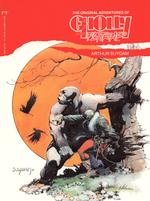
The Original Adventures of Cholly and Flytrap – A Marvel Graphic Novel


By Arthur Suydam (Marvel)
ISBN: 0- 87135-734-8

Scantily clad hot chicks swinging swords have been a staple of fantasy comics from their very inception, but there are none of those on view in this beautifully realised collection from illustrator, designer, screenwriter and musician Arthur Suydam, whose anarchically humorous, offbeat confections and magical renderings have graced such disparate products as magazines Heavy Metal, National Lampoon, Penthouse Comix and Epic Illustrated (where these brutally madcap little graphic novellas first appeared – specifically issues #8, 10, 13, 14 and 34), comicbooks like Tarzan, Conan, Batman, House of Mystery and Marvel Zombies and movie spin-offs Aliens and Predator.

He has also well as produced covers for novels including Max Allan Collins and Mickey Spillane’s collaborative Dead Street and Game box-art for Touch the Dead. Periodically Suydam returns to his own uniquely creative projects such as Mudwogs and the military muck-ups of Cholly and Flytrap, teasingly releasing another snippet every so often…

This then is the other sort of fantasy: lavishly grotesque, manically arch and surreptitiously satirically subversive; a lavish blend of dryly witty pastiches combining elements of Moebius’ Arzach, the imaginative  sci-fi earthiness of Vaughn Bode and a surreal anti-war temperament that imbues the blackly comic ultra-violence with a hauntingly tragic undertone.

Long ago the space-barge Exodus II crashed on an uncharted world. After untold ages the survivors have bred but never prospered, locked as they are in the constant struggle for survival. It’s not that the planet is particularly inhospitable… it’s just that the denizens -indigenous and not – adore war-making and love killing…

Apparently Cholly began life as a bat-riding warrior: an image for the poster advertising the animated Heavy Metal movie, but he was mysteriously transformed into a hot chick on a pterodactyl after acceptance (this sort of inexplicable conceptual metamorphosis happens a lot in film-land) leaving Suydam with a cool-looking visual and a lot of ideas…

Time passed, Marvel started a creator-owned, rights-friendly fantasy periodical in response to the success of Heavy Metal and a reinvented bat-riding, goggles-wearing icon of conflict began appearing. Of course, he had evolved slightly and the chiropteran had become a colossal, naked, bald fat man. Cholly still rode him like a seasoned veteran though…

The collected insanity begins with ‘A Little Love, a Little Hate!’ from 1981, a frenetic chase/duel between a foul-mouthed, flying jacketed war-hawk and his slug-like arch-enemy, which showed Cholly’s streetwise cunning in spectacular, over-the-top fashion.

‘Flightus Interuptus’ followed, an airborne tussle (possibly started before the previous tale?) wherein the high-flying Cholly, sans Flytrap, battled a massive mammary zeppelin-bomber in nothing more that a primitive tri-plane pulled by a brace of the planet’s levitating anti-gravity breasts (no, really). Tragically shot down in the throes of victory, the adaptable aviator found a giant bat to ride (remember kids, recycling even of ideas and art is good for any planet). Sadly the noble beast didn’t last long…

Soldier and human(ish) steed were reunited for the longer saga ‘The Rites of Spring‘ as Suydam expanded his cast and extemporized on the concept of mortals as organic war machines in a Horatian tale of Thermopylan courage with Cholly and faithful, mute Flytrap holding back a veritable horde of slug-troopers and big-ass war-wagons – a smart and lusciously graphic feast of visual violence and sassy back-chat.

‘The End’ begins with the war-lover tooling around the sky on some more of those flying hooters until he encountered a monolithic monster having a furious argument with his own outrageously outspoken boy-bits. Passions aroused and tempers flaring, Cholly was witness to an ending you simply don’t see every day…

The short, sweet, one-trick gags grew into something more complex (a portent of the substantial tales that followed far too infrequently over the next twenty years) in the hilarious concluding Epic entry ‘The Adventures of Cholly and Flytrap’ (plotted by Peter Koch) as the peripatetic pair hauled up at their favourite restaurant for a feed. Impatience, hunger, foreign food and honking big guns never make for a sedate evening…

Topped off with a glorious portfolio of monochrome sketches and working drawings plus the magnificent cover of Epic Illustrated‘s last issue this sumptuous, gratuitous and entrancingly daft eye-candy, released in the extravagantly expansive European Album format (a square-ish, high-gloss page of 285 x 220mm rather than today’s elongated 258 x 168mm) is a mature readers delight and yet another classy piece of work to add to the “why is this out of print?” list.
© 1981, 1982, 1986, 1991 Arthur Suydam. All Rights Reserved.

The Building


By Will Eisner (Kitchen Sink Press)
ISBN: 978-0-87816-025-9 Hardcover 0-87616-024-8

William Erwin Eisner was born in 1906, on March 6th in Brooklyn, and grew up in the ghettos of the city. They never left him. After time served inventing much of the visual semantics, semiotics and syllabary of the medium he dubbed “Sequential Art” in strips, comicbooks, newspaper premiums and instructional comics he then invented the mainstream graphic novel, bringing maturity, acceptability and public recognition to English language comics.

In 1978 Poorhouse Press released A Contract With God and Other Tenement Stories, a collection of four original short stories in comics form. All the tales centre around 55 Dropsie Avenue, a typical 1930’s Bronx tenement, housing poor Jewish and immigrant families. It changed America’s perception of strips and led to 20 further masterpieces from Eisner, consequently opening the door for creators to escape their own creative ghettos of superheroes, funny animals and other juvenilia. At one stroke comics grew up.

Eisner was a consummate creator, honing his skills not just on the legendary Spirit but with years of educational and promotional material. In A Contract With God he moved into unexplored territory with truly sophisticated, mature themes worthy of Steinbeck and F. Scott Fitzgerald, using pictorial fiction as documentary exploration of social experience.

Restlessly plundering his own childhood and love of human nature as well as his belief that environment was a major and active character in fiction, Eisner created The Building; a beguiling portmanteau saga of four lost souls and the pile of bricks and mortar that shaped their lives.

The 14-storey corner-edifice stood at a busy intersection for 80 years but New York is a hungry city and it was eventually torn down, replaced in short months by a prestigious new office complex. One day a quartet of ghosts appeared outside the gleaming new Hammond Building, invisibly waiting for something to happen…

Monroe Mensh had lived in the old building for years. One day a senseless tragedy changed his life forever and plagued with guilt, he spent his remaining days trying to atone. He never did, at least not to his own satisfaction…

Gilda Green could have had her pick of boys, but loved Benny, an unsuccessful poet. After years of waiting she settled for a dentist, security and lifelong dissatisfaction. Gilda never stopped seeing Benny; meeting for lunches and sometimes more outside the old pile as it gradually fell into disrepair. One day she didn’t keep her appointment…

Antonio Tonatti loved music but was never good enough for the big-paying gigs. He started working construction but had an accident. He couldn’t work but the settlement provided enough to live on, so he began playing again on the street corner, just to keep occupied and to make folks feel happier. For decades and more he played. Even whilst the new building was going up he played his corner, until one day he never turned up…

P. J. Hammond came from money and was forced into the family’s Real Estate business. He hated it but eventually became an even bigger bastard than his father. He spent most of his life acquiring properties on that street but the old building eluded him for decades, forcing him into ever greater excess and expense. By the time he finally acquired it he had no capital left to exploit his victory. When he was finally forced to sell, the new owners condescended to name the new skyscraper after him. He didn’t live long enough to gloat…

One morning four ghosts waited outside the Hammond Building, hoping that fate and circumstance would give them a final opportunity to fulfil the existences their sorry lives had not…

Eisner’s elegiac fascination with city life, deep empathy with all aspects of the human condition and instinctive grasp of storytelling produced here a gloriously comi-tragic melodrama, moving and uplifting in the classic manner of such films as It’s a Wonderful Life, The Ghost and Mrs. Muir or The Enchanted Cottage.

You’ll laugh, you’ll cry…

Sometimes the Medium is the Message, especially when the artefact is a substantially solid tome delivering magical artwork in seductive, nostalgic sepia line and tone – and if, like smug old me you’re rereading a signed, numbered hardcover with tipped in illustrative plate for the umpteenth time – then you’re as near to paradise as any jaded old realist can get, but to be frank any edition of Will Eisner’s The Building that you can get, you really, really should…

Art and story © 1987 Will Eisner. © 1987 Kitchen Sink Press. All Rights Reserved.

Anarcoma


By Nazario, translated by David H. Rosenthal (Catalan Communications)
No ISBN

Here’s another warning: this book is filled with graphic homosexual acts, full frontal nudity and coarse language: if that causes you any offence don’t buy this book and don’t read this review. The rest of us will manage without you.

You know what it’s like: sometimes you’re just in the mood for something challenging, different or just plain nasty and nothing better sums up that feeling than this startling pastiche of film noir chic transposed into the even grimmer, darker and nastier milieu of the gay-underworld of post-Franco Spain.

Francisco Franco Bahamonde was a right-wing general who ruled the country from 1947 until his death in 1975, “on behalf” of a puppet monarchy helpless to resist him. His repressive Christian-based attitudes held the country in an iron time-lock for decades as the rest of the world moved an around him. Vera Luque Nazario was an intellectual, college professor and cartoonist living under the fascist regime, but inspired by the freedom and exuberant graphic license displayed in American underground commix, especially the works of R. Crumb, Gilbert Shelton and possibly Spain Rodriguez.

In an oppressive state that openly advocated the “curing” of homosexuals, Nazario founded an artist’s collective or “contracultural group” in 1971 to produce home-grown underground commix (El Rollo Enmascarado, Paupérrimus, Catalina, Purita and others) often incurring the wrath of the Francoist censors and police. His work received far fairer treatment outside Spain, appearing in such groundbreaking mature magazines as It, Actuel, Oz, Gai Pied, and L’Echo des Savanes.

When Franco died the country opened up and there was a tumultuous cascade of artistic expression. Extremely strident adult material designed to shock began to appear in new magazines such as El Víbora, Cannibale and Frigidaire. After years of comics production multi-talented artist Nazario eventually moved into design and record cover production. In recent years he has concentrated on painting and his first prose novel was released in 2006.

Anarcoma began as strip in a porn magazine, but that quickly folded and the artist transferred the feature to El Víbora in 1979, reveling in homoerotic excess in a magazine with no censorial boundaries. It ran for years and this hardcover translation is but the first collection of many.

Symbols of freedom never came more outrageously formed that Anarcoma; a spectacularly endowed, star-struck transvestite private detective who hangs all-out in the notorious red-light district of Las Ramblas. A stunning blend of Humphrey Bogart and Lauren Bacall “she” works as prostitute and club entertainer while pursuing her dream of becoming a real gumshoe like the ones in the American movies she adores…

Life is complicated: ex-army buddy Humphrey is her current her boyfriend, but he won’t leave his wife and kids and Anarcoma’s hobby has won her no friends among both the cops and the criminal gangs run by the ruthless Captain Seahorse. Moreover there are even weirder and more dangerous folk around…

After a series of profound prose appreciations from Alberto Cardín and Ludolfo Paramio and a thoroughly absorbing cartoon cast-list, the ultra-explicit adventure begins…

The city is in turmoil: Professor Onliyu’s latest invention has been stolen. Nobody knows what it does but everybody wants it and Anarcoma thinks she has a lead…

The trail leads through all the sleaziest dives and dens, and implicates almost everybody at one time or another, but when the manic religious order The Black Count and his Knights of Saint Represent and feminist paramilitaries Metamorphosina and her One-Eyed Piranhas start their own conflicting campaigns for the missing machine, Anarcoma is distracted and almost loses her life to a mysterious sex-robot XM2.

Luckily her charms extend and affect even artificial he-men…

Outrageously brutal and sexually graphic, this devastatingly ironic genre mish-mash is audacious and bizarre, but unflinchingly witty as is probes the role of hero in society and eulogises the heady power of liberation.

Anarcoma was first released in 1980, but even by today’s laxer standards the incredibly violent and satirically, staggeringly baroque pastiche is a shocking, controversial piece of work. Raw, shocking and wickedly delightful; the perfect walk on the wild side for people with open minds and broad tastes.
© 1983 by Nazario. English edition © 1983 Catalan Communications. All Rights Reserved.

Agent 13: Acolytes of Death – A TSR Graphic Novel


By Flint Dille, Buzz Dixon & Dan Spiegle (TSR)
ISBN: 0-88038-800-5

Tactical Studies Rules was a backroom venture started in 1973 by Gary Gygax and Don Kaye which they grew into the monolithic role-playing and recreational fantasy empire TSR, Inc. revolutionising home entertainment in the days before cheap home computers and on-line video games.

Beginning with formally published scenarios and rules for Dungeons and Dragons, Cavaliers and Roundheads and others including gaming versions of Marvel Comics characters, Movies, TV shows and cartoon classics like Rocky and Bullwinkle, they swiftly branched out into figures and miniatures, magazines, models, table-top war games, fantasy fiction, collector card-sets and inevitably comics – firstly licensing their properties to companies like DC (Dragonlance, Forgotten Realms, Advanced Dungeons and Dragons and many more before inevitably creating their own line of comicbook and graphic novel “Modules” in the 1990s, based on their own game product, licensed properties such as Indiana Jones, Buck Rogers and even their critically acclaimed fantasy novels.

One of my very favourites is an everything-and-the-kitchen-sink period pulp action romp based on their kids novel series Agent 13: the Midnight Avenger (by Flint Dille and David Marconi) which shamelessly blended elements of the Shadow, Indiana Jones and Mandrake the Magician with classic horror and conspiracy thrillers to produce frantic fast-paced adventures of international intrigue and supernatural suspense set in the days before World War II.

Acolytes of Death is actually the second graphic novel volume (its predecessor Agent 13: the Midnight Avenger adapted to comics form the two novels The Invisible Empire and The Serpentine Assassin) but works as stand-alone saga which finds the indomitable super-spy, trained in the mysteries of ancient Lemuria, engaging his world-wide band of undercover operatives in a deadly quest.

It’s 1939 and at stake is humanity itself as immortal villain and would-be global dictator Itsu nears the end of his undying life. Preparing to enact an arcane ritual to renew his sinister eldritch energies, he convenes all the forces of darkness subject to his will: secret societies, witches, zombies and the world’s first vampire, to seek out the ideal venue for his unholy rebirth…

He has to be stopped: after all, just one of his wicked schemes is manipulating the nations of the Earth into another World War. He has other plans he hasn’t even started yet…

Agent 13’s uncanny powers are a result of his having been trained by the Brotherhood; Itsu’s cult of wizards and ninja-like Jinda Warriors, but the heroic tough guy rebelled and has been destroying these instigators of terror and chaos ever since…

Now in a rollercoaster race from Soviet Russia to Spain to New Orleans, 13, his dedicated associates and the sultry, morally ambivalent mercenary China White struggle to prevent the Dark Savant’s ultimate triumph, but can 13 trust his allies and the omens when so much is at stake…?

Fast-paced, far-fetched, joyous and frenetic, this is pure non-stop, action-packed nonsense of the sort beloved by fans of summer blockbuster movies, stirring and silly but utterly engrossing. The script rattles along and the incredible art by unsung genius Dan Spiegle (ably augmented by letterer Carrie Spiegle and colourist Les Dorscheid) is mesmerising in its expansive majesty.

Published in the extravagant, sleekly luxurious over-sized 285mm x 220mm European album format, this tantalising tome, as a graphic “module” also contains a fold-out map, counters, gaming data and background as well as a rule-set, just in case you and some judiciously selected friends feel like having a go at changing the spectacular ending…
© 1990 TSR, Inc. All Rights Reserved. Agent 13 is a trademark owned by Flint Dille and David Marconi.

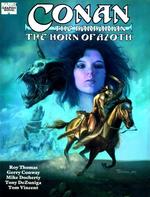
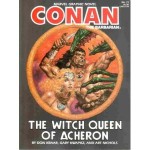
Kull: The Vale of Shadow (A Marvel Graphic Novel)


By Alan Zelenetz & Tony DeZuniga, with Tom Vincent & Michael Heisler (Marvel)
ISBN: 978-0-87135-558-4

Following on from the creation of the comicbook Sword and Sorcery genre in the early 1970s with their magnificent adaptation of pulp superstar Conan the Barbarian, Marvel naturally looked for more of the same, and found it in Robert Ervin Howard’s prototypical wild warrior hero King Kull whose first adventure The Shadow Kingdom was published in the fantasy pulp Weird Tales in August 1929. Two more tales followed before Howard abandoned the character, but nine others and a poem ‘The King and the Oak’ were published posthumously, long after the troubled author had committed suicide.

The S&S genre had undergone a global prose revival through the paperback marketplace since the release of soft-cover editions of Lord of the Rings (first published in 1954), and by the 1960s the resurgence of two-fisted fantasies by such pioneer writers as Edgar Rice Burroughs, Otis Adelbert Kline and Fritz Lieber, whilst many modern writers such as Michael Moorcock and Lin Carter kick-started their careers with contemporary interpretations of man, monster and mage. Without doubt though, nobody did it better than the tragic Texan whose other red-handed stalwart included, Bran Mac Morn, Solomon Kane and El Borak as well tough guys in a variety of other genres such as Steve Costigan, Dark Agnes and Red Sonya of Rogatino.

Marvel Comics tested the waters in early 1970 with a little tale called ‘The Sword and the Sorcerers’ (in horror anthology Chamber of Darkness #4) whose hero Starr the Slayer bore no small resemblance to Conan. It was written by Roy Thomas and drawn by young Englishman Barry Smith, a recent Marvel find, and one who was just breaking out of the company’s Kirby house-style.

Thomas was a huge fan of the prose genre and took great pains to adapt novels and short stories to the graphic medium, even transferring other Howard tales into the canon by replacing his admittedly formulaic leading men with the surly Cimmerian (as Howard himself had done rewriting his unused Kull tale ‘By This Axe, I Rule’ into Conan novella ‘The Phoenix on the Sword’).

Marvel found solid ancillary supporting features with Solomon Kane, Bran Mac Morn and, most successfully King Kull: a wandering Atlantean mercenary who took the throne of a mighty kingdom by force of arms only to spend the rest of his life battling supernatural threats to it and guarding his own back from greedy, ambitious courtiers.

His comics publishing history was as chequered as his prose one; debuting in spectacular manner in Kull the Conqueror (29 issues from 1971-1978 with artistic contributions from Ross Andru, Wally Wood, John and Marie Severin and Mike Ploog among others), a black and white mature magazine Kull and the Barbarians (3 issues, 1975) and a revived, revised, comicbook version from 1982-1985. He even stared with Spider-Man in Marvel Team-Up #112

This sleek and glossy, lavishly oversized gem (285mm x 220mm rather than today’s standard 258 x 168mm) comes from 1989: an eerie, lyrical and poetic tale as the aging King battles his greatest foe and defeats her in characteristically barbaric and unflinching manner…

Kull is dying, sweating and straining on his deathbed as infected wounds seem set to carry him into the great beyond. Gathered for the deathwatch are his most trusted advisors and as they individually reminisce about the gore-spattered gladiator who became Valusia’s greatest monarch, we share their recollections to discover the kind of man he was.

Oblivious, unaware, Kull’s body thrashes and writhes. He struggles on, his soul trapped in an ethereal realm, dancing an erotic duet with the darkly seductive angel of death who has come to take him to the gods…

This eldritch crossing of the final Rubicon is beautifully illustrated in the grand, ostentatiously humanesque manner of the Filipino artists who became such a mainstay of DC and Marvel during the 1970s and early 1980s. Tony DeZuniga was one of the first to break into American comics and his work is always of the highest quality, especially here, enhanced by the glowing, lush hues of colorist Tom Vincent.

Once upon a time Marvel led the publishing pack in high quality original graphic novels: mixing creator-owned properties, licensed assets like Kull and movie adaptations with Marvel Universe tales and even new series launches in extravagant squarebound packages based on the European album model. To me it seems these slim tomes always shine with some intangible extra oomph – perhaps it’s simply the bigger pages with more art on them?

Still readily available, this is a magnificent moody yarn that will delight any fan of the genre and should easily convert a few die-hards too.
© 1989 Conan Properties Inc All Rights Reserved.

Jimbo in Paradise


By Gary Panter (Raw/Pantheon)
ISBN: 978-0-39475-639-4

Gary Panter has been an iconic force in comics and the visual arts since the late 1970s, and his unique distillation of American popular culture through the frenetic lens of his savage design style (alternatively termed “ratty line” or “punk”) has been seen in such varied fields as set design (winning 3 Emmy Awards for Pee-Wee’s Playhouse), interior design, TV and computer animation as well as record covers for Frank Zappa, Red Hot Chili Peppers and many others.

His expressionistic, beautifully ugly, primitivist, high energy anti-art has influenced a generation of cartoonists and illustrators including Matt Groening, whose Simpsons design style owes much to Panter’s innovations in the 1970’s hardcore punk-zine Slash and his contributions to Art Spiegelman’s legendary art comic Raw – from which these wildly eccentric strips are culled.

Long considered a dominant force in punk and alternative comics, Panter is the leading figure of a second generation of “Underground Cartoonists”, doing much to legitimise the movement and elevating this potentially misunderstood arena of graphic narrative to a position of High Art which most mainstream comics have never been able to achieve.

Born in Durant, Oklahoma in December 1st 1950, he became an integral part of the US New Wave movement (not to be confused with our British effete, big-haired, baggy-bloused, excessively made-up electro-pop scene of a decade later). He worked for Time, Rolling Stone, Entertainment Weekly and The New Yorker as well creating his own comics and graphic novels such as, Facetasm, Dal Tokyo and Cola Madnes (created especially for the Japanese market) as well as his signature creation Jimbo: a punk icon whose bizarre life was (mostly) explored in the seminal Raw magazine before being collected into the intimidatingly oversized tomes Adventures in Paradise, Jimbo’s Inferno and Jimbo in Purgatory.

Set – not that it’s particularly relevant – in a semi-futuristic, dystopian urban hodge-podge landscape, burly, kilt-clad Jimbo is just getting by and making do, but stuff always happens to him…

First, a new fast-food place opens up near the derelict building he lives in, but the telepathic robots who run it are really creepy and things start going bad when mutants chase him, trying to steal his burger. He takes refuge in the sewers but life doesn’t get any simpler. In ‘Jimbo’s House is Gigantic, but Condemned’ his skeevy pals Gruten, Zipper and Fluke come for a rather destructive visit, before they all go clubbing – giving the artist license to go hog-wild with stunningly complex full-page art-riots. Of course the authorities take a dim view of all the fun the kids are having…

‘Jim30’ begins a aeries of connected vignettes which abandon formal narrative structure as the punky pariah experiences the downside of waking up, making breakfast and bathing before ‘Jimbo meets Rat-Boy’ introduces our non-hero to a kindred spirit – and his disgusting pet…

After a devilish pastiche of the comic strip Nancy ‘Jimbo Erectus’ describes the evolution of the punk sub-species, after which we return to the future where Jimbo has scored with his buddy Smoggo’s harshly take-charge sister Judy. Now firmly entrenched in a “relationship” Jimbo is now confronted by a whole new world of give-and-take – so when giant cockroaches abduct his girlfriend he and Smoggo must rise to the occasion…

Many of these strips are accompanied by an ancillary strip running at the foot of the pages. Now, at the most inconvenient moment, ‘William & Percy’ take over the main page before the dramatic hunt continues…

Disillusioned, our man contemplates joining the army before opting for the natural life of a primitive shaman in ‘Jimbo is Running Sore’ (complete with graphic diversion ‘Klorex & Purox: the Mad Bombers’). After a brief conversation with God the hunt for Judy resumes; an extended odyssey leading to a fantastic barrage of visual extravaganzas that encompass the explosive death of the world and its aftermath: an eye-popping crescendo of apocalyptic imagery that perfectly captures the philosophy of 20th century punk.

If you’re looking for something a little strong, a little strange, perfectly outrageous and boldly experimental this is the ideal introduction to the works of an absolute maestro.
© 1981, 1982, 1983, 1984, 1985, 1986, 1987, 1988 Gary Panter. All Rights Reserved.

Rip M.D.


By Mitch Schauer, Mike Vosburg, Michael Lessa, & Justin Yamaguchi (Lincoln Butterfield/Fantagraphics Books)
ISBN: 978-1-60699-369-9

Here’s a post-Christmas cracker that will delight monster-fans of all ages and signals a welcome return to upbeat and clever kids’ fiction.

Ripley Plimt is a bright lad with a hobby. Ever since he can remember he has adored classic monster movies. He’s an absolute expert on trivia, minutiae and lore. Now he’s eleven and all grown up he’s come to one inescapable conclusion… it’s all true!

When the kind-hearted lad mends a little bat’s broken wing one night it changes his life forever. Bitten by the fixing bug (but not the bat – that would be ungracious) he applies his unsuspected new skills to repairing the mouldering zombie corpse that shows up later – with the understanding and grudging approval of his parents and Uncle Will – and soon needy werewolves, protoplasmic blobs and ghost cats are all turning up to complicate his life.

The only real flies in the ointment are repulsive mortal kids Pretoria and Stanley DeMann, who used to live in Rip’s house and are prepared to go to extraordinary, murderous lengths to force the easy-going Plimpt family out…

Their millionaire dad is even worse and orchestrates a campaign of very human terror to get his way, almost driving Rip to abandon his unconventional dreams. However, the unscrupulous autocrat has some dark secrets of his own and Limbo the dead cat and a pretty little vampire girl know how best to exploit them…

Writer, artist, Producer, designer and Emmy® Award-winning animator Mitch Schauer (creator of Angry Beavers and Freakazoid!) is a founding member of Lincoln Butterfield, an independent animation company also comprising Robert Hughes and painter Michael Lessa. Comics veteran Mike Vosburg, who inked Schauer’s pencilled art here, has a glittering prize or two himself: as well as his funnybook career, he won his own Emmy® for directing Spawn cartoons and is chief storyboard artist for the Narnia movie franchise. Co-producing this snazzy graphic novel with electrically eclectic comics publisher Fantagraphics Books is LB’s first foray into print – but surely not their last.

With painted colour effects from Lessa and Justin Yamaguchi and including a wonderful development art section, this spectacular, spooktacular romp is a fabulously punchy, action-packed, wickedly funny treat for kids of all ages that will leave every reader voraciously hungry for more…

© 2010. All Rights Reserved. A joint production between Fantagraphics Books and Lincoln Butterfield.

The Ditko Collection Volume 2 1973-1976


By Steve Ditko, edited by Robin Snyder (Fantagraphics Books)
ISBN: 0-930193-27-X

After Steve Ditko left Marvel where his astounding work made the reclusive genius a household name (at least in comicbook terms) he continued working for Charlton Comics and in DC in 1968 began a sporadic association with DC by creating cult classics The Hawk and the Dove and the superbly captivating Beware… The Creeper. It was during this period that the first strips derived from his interpretation of the Objectivist philosophy of novelist Ayn Rand began appearing in fanzines and independent press publications like Witzend and The Collector.

This second softcover book, collected from a variety of independent sources by fan and bibliographer Robin Snyder, represents the remainder of a canon of lost treasures by a driven and dedicated artistic trailblazer whose beliefs have never faltered, whose passion never waned and whose art never stagnated. Produced in bold collage, abstract calligraphic and design essays and a variety of vibrant black and strips in his utterly unique cartoon style, these strident, occasionally didactic, but always bold, impassioned and above all – for Ditko never forgets that this is a medium of Narrative and Art – gripping stories and parables of some of his most honest – and infamous – characters.

The most common complaint about this area of Ditko’s work – and there have been lots – is the sometimes hectoring nature of the dialectic. Nobody likes to be lectured to, but it’s an astonishingly effective method of imparting information: our schools and Universities depend on the form as their primary tool of communication, just as Ditko’s is the comic strip artform.

He’s showing you a truth he believes – but at no time is he holding a gun to your head. If you disagree that’s up to you. He grants you the courtesy of acknowledging you as equal and demands that you act like one. You are ultimately responsible for yourself. It’s a viewpoint and tactic an awful lot of religions could benefit from.

After a new but unused cover piece and an introduction from editor Snyder the polemical panoply gathered here begins with the contents of self-published magazine The Avenging World (1973), beginning with an eponymous cartoon and collage directory of terms-defining vignettes after which some of his most impassioned artwork expands the arguments in ‘The Avenging World Part 2’, followed by the cover of that landmark publication and a highly charged parable ‘The Deadly Alien’.

At heart Ditko is an unreconstructed maker of stories and with ‘Liberty or Death: Libage Vs Chain’ (from the Collector 1974) he returns to the narrative idiom of enigmatic masked mystery heroes for a gripping tale of totalitarian barbarism and the struggle for freedom. ‘Who Owns Original Art?’ is a philosophical statement in essay form after which his satirically barbed ‘H Series: The Screamer’ perfectly marries superheroics, adventure, comedy and blistering social commentary.

After a selection of covers from Wha, the assorted contents follow beginning with hard-bitten incorruptible cop Kage who determinedly solves ‘The Case of the Silent Voice’ despite interference, apathy, malfeasance and the backsliding of his own bosses. ‘Premise to Consequence’ uses Ditko’s facility for exotic science fiction to examine truth and reality and sinister silent avenger ‘The Void’ reveals how even the best of men can betray their own principles.

‘The Captive Spark’ displays Ditko’s beliefs from the birth of civilisation to the sorry present whilst ‘Masquerade’ delightfully follows two journalists as they simultaneously and independently decide to crack a troubling story by becoming masked adventurers. The volume dedicates the remainder of its content to the final amazing exploits of Ditko’s purest ideological champion – the utterly uncompromising Mr. A…

TV reporter Rex Graine is secretly Mr. A: white suited, steel-masked, coldly savage, challenging society, ruthlessly seeking Truth and utterly incapable of moral compromise. In most respects A is an extreme extension of faceless agent of Justice The Question as seen in all his glory in DC’s Action Heroes Archive volume 2

From Mr. A #2 (1975) after the gloriously moody cover comes the gripping battle against duplicitous prestidigitator and media-darling bandit ‘Count Rogue’ and his startling solo campaign against ‘The Brotherhood of the Collective’ whose bullyboy tactics include racketeering, slander, murder and imposture. Also included here is the stunning Mr. A page from the 1976 San Diego Comic Con Program Booklet, a tantalising “coming next” page for the tragically unreleased ‘Mr. A Vs The Polluters‘ and this collection culminates with a true graphic tour de force as the incorruptible, unswerving White Knight battles the ultimate threat in a wordless, untitled masterpiece fans know as ‘Mr. A: Death Vs Love-Song’ (which appeared in The Comic Crusader Storybook in 1976 and from which the cover of this collection is taken).

I love comics. Steve Ditko has produced a disproportionate amount of my favourite, formative fiction over the decades. His is a unique voice wedded to an honest heart blessed with the captivating genius of a graphic master. The tales here have seldom been seen elsewhere; never often enough and always with little fanfare. If you can find this volume and its predecessor you’ll see a lot of his best work, undiluted by colour, and on lovely large (274x212mm) white pages.

Even if you can’t find these, find something – because Steve Ditko is pure comics.
All works © 1973, 1974, 1975, 1976, 1986 Steve Ditko for The Avenging World, The Collector, Inside Comics, Comics Crusader, Wha, Mr. A, San Diego Comic Con Program Booklet and Comic Crusader Storybook respectively. All Rights Reserved.

Hellblazer: The Fear Machine


By Jamie Delano and various & (Vertigo)
ISBN: 978-1-84576-880-5

You’ve either heard of John Constantine by now or you haven’t, so I’ll be as brief as I can. Originally created by Alan Moore during his groundbreaking run on Swamp Thing, he is a mercurial modern wizard, a chancer who plays with magic on his own terms for his own ends. He is not a hero. He is not a nice person. Sometimes though, he’s all there is between us and the void.

Given his own series by popular demand, he premiered in the dying days of Reaganite Atrocity in the US but at the height of Thatcherite Barbarism in England, so as we’re singing the same song now (but with second-rate Britain’s Got Talent cover-artists as leaders) I thought I’d cover a few old gems that might be regaining their relevance in the days ahead…

In 1987 Creative Arts and Liberal attitudes were dirty words in many quarters and the readership of Vertigo was pretty easy to profile. Jamie Delano began the series with relatively safe horror plots, introducing us to Constantine’s unpleasant nature, chequered history and odd acquaintances but even then discriminating fans were aware of a joyously anti-establishment political line and wild metaphorical underpinnings.

Skinheads, racism, Darwinian politics, gruesome supernature and more abound in the dark dystopian present of John Constantine – a world of cutting edge of mysticism, Cyber-shamanism and political soul-stealing. In Delano’s world the edges between science and magic aren’t blurred – they simply don’t exist.

Some terrors are eternal and some seem inextricably tied to a specific time and place: The Fear Machine (collecting issues #14-22 of the mature readers monthly comicbook) is an engrossing extended epic which began when the wizard went on the run after the tabloid press pilloried him as a Satanist serial killer in ‘Touching the Earth’ (by Delano, Richard Piers Rayner & Mark Buckingham).

Forced to flee his inner London comfort-zone he is adopted by a band of neo-pagan Travellers (apparently as responsible for all the ills plaguing society in the 1980s and 1990s as fat people and immigrants are today…) and journeys through the heartland of Britain.

Going native amongst the drop-outs, druggies, bath-dodgers and social misfits Constantine buddies up with an immensely powerful psychic girl named Mercury and her extremely engaging mum, Marj, but even amidst these freewheeling folks he can feel something nasty building. The first inkling occurs in ‘Shepherd’s Warning’ when Mercury discovers an ancient stone circle has been fenced off by a quasi-governmental company named Geotroniks. Someone is trying to shackle Mother Earth’s circulatory system of Ley lines…

Meanwhile elsewhere, people are compelled to kill and mutilate themselves and Geotroniks is watching and taking notes…

When police raid the Travellers campsite in ‘Rough Justice’ Mercury is abducted and imprisoned in a secret complex where the mind’s limits and the Earth’s forces are being radically tested. Cutting edge stuff… if only the subjects and observing scientists can be persuaded to stop committing suicide…

Mike Hoffman illustrated the fourth chapter, ‘Fellow Travellers’ as Constantine headed back to London for help in finding Mercury and uncovering the secrets of Geotroniks. He gains a horrific insight when the train he’s on is devastated by a psychic assault which makes all the passengers destroy themselves…

‘Hate Mail & Love Letters’ (with art by Buckingham & Alfredo Alcala) begins two months later. Marj and the travellers are hiding in the Highlands with a fringe group called the Pagan Nation, led by the mysterious Zed – an old friend of the wily trickster. Constantine keeps digging, but across the country suicide and self harm are increasing. Society itself seems diseased, but at least the Satanist witch hunt has been forgotten as the Press rage on to their next sanctimonious cause celebré…

Touching base with his few police contacts and pet journalists the metropolitan mage soon stumbles into a fresh aspect of the mystery when a Masonic hitman begins removing anyone who could be of use to his enquiries in ‘The Broken Man’. Saving journalist Simon Hughes from assassination in a particularly exotic manner guaranteed to divert attention from his politically damaging investigations, Constantine finds new clues that a the psychic horror and social unrest are all being orchestrated by reactionary aspects of the government and a sinister “Old Boy network”…

And somewhere dark and hidden Mercury’s captors are opening doors to places mortals were never meant to…

As the Pagan Nation’s priestesses work their subtle magics to find the missing girl and save humanity’s soul, a disgusting, conglomerate beast-thing is maturing, made from fear and pain, greed and suffering and deep black despair: provoking a response from and guest-appearance by Morpheus, the Sandman, and prompting Constantine, Hughes and possibly the last decent copper in London to go hunting…

Picking up another recruit in the form of KGB scientist Sergei, events spiral ever faster as the Freemasons – or at least their “Magi Caecus” elite – are revealed to be organising the plot in ‘Betrayal’, combining Cold War paranormal research, economic imperialism, Thatcherite divisive self-gratification and the order’s own quasi-mystical arcana to create a situation in which their guiding principles will control society and the physical world. It nothing more than a greedy power-grab using blood and horror to fuel the engines of change…

All pretence of scientific research at Geotroniks is abandoned in ‘The God of All Gods’ as Masonic hitman Mr. Webster goes off the deep end, ignoring his own Lodge Grandmaster’s orders to abort the project amidst an increasing national atmosphere of mania, determined to free the fearful thing they’ve created and unmake the modern world at all costs. Constantine’s allies are all taken and the wizard is left to fight on alone.

Knee deep in intrigue, conspiracy and spilled guts, humanity seems doomed unless Constantine’s band of unhappy brothers and a bunch of Highland witch women can pull the biggest, bloodiest rabbit out of the mother of all hats in the spectacular conclusion ‘Balance’…

The heady blend of authoritarian intransigence, counterculture optimism, espionage action, murder-mystery conspiracy theories and ancient sex-magic mix perfectly to create an oppressive tract of inexorable terror and smashed hope before the astounding climax forestalls if not saves the day of doom, in this extremely impressive dark chronicle which still resonates with the bleak and cheerless zeitgeist of the time.

This is a superb example of modern horror fiction, inextricably linking politics, religion human nature and sheer bloody-mindedness as the root cause of all ills. That our best chance of survival is a truly reprehensible exploitative monomaniac seems a perfect metaphor for the world we’re locked into…

Clever, subversive and painfully prophetic, even at its most outlandish, this tale jabs at the subconscious with its scratchy edginess and jangles the nerves from beginning to end. An unmissable feast for fear fans, humanists and political mavericks everywhere…

© 1989, 2008 DC Comics. All Rights Reserved.

The Death of Groo the Wanderer (Marvel Graphic Novel #32)


By Sergio Aragonés, Mark Evanier, Stan Sakai & Tom Luth (Epic/Marvel)
ISBN: 0-87135-290-7

Groo is a living paradox: a brilliant fighting man and unbeatable warrior sell-sword and simultaneously the dumbest collection of organic molecules on the planet. Always hungry, he wanders because most places where he pauses burn down, wash away or crash into rubble soon after he gets there. He loves to fight and the entire world trembles at the mention of his name. They do the same when they smell him too…

Produced in unique fashion by Sergio Aragonés, wordsmith Mark Evanier, letterer Stan Sakai (creator of Usagi Yojimbo) and colourist Tom Luth, the idiot’s adventures form one of the longest running humour comicbook series in America and there seems to be no chance of stopping the creators as long as we keep buying these incredible, hilarious sagas…

Both in comic narrative and the infinitely more strenuous field of gag-cartooning Sergio Aragonés has produced vast volumes of excellent work. His darkly skewed sensibilities and grasp of the cosmically absurd, wedded to a totally unique, anarchically meticulous drawing style and frankly terrifying professional discipline, have made his (usually) silent doodles a vibrant proof of the maxims that laughter is universal and a picture is worth a thousand words.

After working for years for Mad Magazine and DC’s horror titles on gag features and the occasional full comic strip, in 1981 with writer and associate Mark Evanier, Aragonés produced a madcap four-page parody of the Sword-and-Sorcery genre as a contribution to the Creators Rights benefit comicbook Destroyer Duck published by Eclipse Comics.

Following a second outing in Mike Grell’s Starslayer (#5) Pacific Comics launched Groo the Wanderer in his own title. After 8 issues (December 1982-April 1984) the troubled company folded but the unsinkable barbarian (that’s a joke I’ll explain later) resurfaced in the Groo Special one-shot from Eclipse (October 1984), before finding a home at Epic Comics: Archie Goodwin’s creator-owned corner of the Marvel Universe.

Aragonés first created his witless warrior in the 1970s but no publisher would take on the property unless he sold all rights – an almost universal situation in the industry until the advent of the Direct Sales market transferred power from companies and distributors to creators and consumers. After an uproarious 120 issue run at Epic, and dozens of graphic novel compilations, the witless wonder moved on to Image and Dark Horse Comics, but they haven’t completely gone belly-up yet…

This all original volume from 1987 reintroduces readers to the smelliest, ugliest, stupidest itinerant mercenary in the world. Luckily he’s also the best swordsman in creation and too thick to be harmed because when he shuffles his unshod, dirty feet into the domain of King Krag he inadvertently encounters a thoroughly nasty man with a good many reasons to psychotically hate him…

At that time the kingdom was being ravaged by a colossal dragon, but as the only man on the planet crazy enough to fight it has a huge bounty on his head, how stupid would he have to be to come and attempt to kill it? – and if you’re having difficulty answering that, either you’ve not been paying attention or Groo has found a new apprentice…

Due to the kind of circumstance-concatenation that only happens in this series, everybody in the land of Groo-haters thinks the oaf is finally dead – even Groo – but with all the folk who have ever suffered at his hands gathered in one place they all start to realise that a world without Groo just isn’t the same…

Fear not however: order, if not sense, is eventually restored – but only after a grand display of confusions, contusions, conflagrations, conflicts, pratfalls, pitfalls, punch-lines and punch-ups. There’s even a little room left over for a soupcon of romance (Mmmm, Soup! Mmmm, leftovers…)

Published in the extravagant, luxurious over-sized 285mm x 220mm European album format which allows even more room for the artist’s tireless tornado of visual gags and graphitti this is a masterpiece of mirth and madness that comedy addicts will love and the great strength of the series is that new readers can start practically anywhere – and still be none the wiser…

Oh yeah, that sinking thing: among his other lack of abilities Groo cannot travel by ship. He’s not sea-sick or anything – it’s just that his physical presence on a nautical apparatus of any sort causes it to sink – and this book has one of the very best riffs on that running (swimming? sinking?) gag I’ve ever seen…
© 1987 Sergio Aragonés. All Rights Reserved.