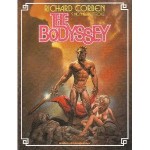
Richard Corben Complete Works volume 2: Underground


By Richard Corben and various (Catalan Communications)
ISBN: 978-0-87416-026-X

Although never a regular contributor to the comicbook mainstream, animator, illustrator, publisher and cartoonist Richard Corben is one of America’s greatest living proponents of sequential narrative: an astoundingly accomplished artist and unique, uncompromising auteur with an unmistakable style and vision.

Corben flowered in the independent counterculture commix of the 1960s and 1970s to become a globally revered, multi-award winning creator. He is most renowned for his mastery of the airbrush and his delight in sardonic, darkly comedic horror, fantasy and science fiction tales.

Born in Anderson, Missouri in 1940, he graduated with a Fine Arts degree in 1965 from the Kansas City Art Institute and began working as an animator. At that time, the Underground movement was just stating to revolutionise, reinvigorate and liberate the medium of comics as a motley crew of independent-minded creators across the continent began making and publishing stories that appealed to their rebellious, pharmacologically-enhanced sensibilities and unconventional lifestyles.

Most of them had been reared on and hugely influenced by 1950s EC Comics or Carl Barks’ Duck tales – and usually both.

Corben started the same way, producing the kind of stories that he would like to read, in as variety of small-press publications including Grim Wit, Slow Death, Skull, Fever Dreams and his own Fantagor often signed with his affectionate pseudonym “Gore”. As his style matured and his skills developed Corben’s work increasingly began to appear in more professionally produced venues. He began working for Warren Publishing in 1970 with tales in Eerie, Creepy, Vampirella, Comix International and latterly, the aggressively audacious adult science fiction anthology 1984. He also famously re-coloured a number of reprinted Spirit strips for the revival of Will Eisner’s the Spirit magazine.

In 1975 Corben submitted work to the French fantasy phenomenon Métal Hurlant and subsequently became a fixture in the magazine’s American iteration Heavy Metal after which his career really took off. Soon he was producing stunning graphic escapades for a number of companies, making animated movies, painting film posters and producing record covers such as the multi-million-selling Meatloaf album Bat Out of Hell. He never stopped making comics but preferred his own independent projects with collaborators such as Harlan Ellison, Bruce Jones and Jan Strnad.

This regrettably out-of-print collection is the second of three collecting his early strip efforts, mostly taken from Fantagor, offering a unique insight into his burgeoning mastery and displaying more powerful, wickedly whimsical and sardonic suspense tales in the EC vein. The first few are in black and white beginning with ‘Inna Pit’ a post apocalyptic comi-tragedy followed by an anti-capitalist eco-fable entitled ‘Dumb Story’

‘Razar the Unhero’ (written by “Starr Armitage” in 1970) is a dark and sexily violent spoof of Sword and Sorcery epics with a deprecating edge whilst Herb Arnold signed his real name to his script for ‘Chard’: a far more straightforward barbarian adventure saga. ‘The Story of Otog’, based on an ancient Japanese folk tale and adapted by Corben and Harvey Sea, is an impressive and moving early taste of more ambitious things to come…

Obnoxious, smug Razar was far too enjoyable a character to abandon and he returned in all his mendacious glory in ‘Necromancer’, a far less jolly romp and the last monochrome tale contained here whereas the Jan Strnad penned ‘To Spear a Fair Maiden’ returned to outrageous tomfoolery, bloody violence and Frat-Boy crassness as the itinerant warrior was hired by a desperate father to save the world by deflowering his daughter before a wizard can turn her valuable virginity into a deadly spell. Of course things do not go as planned…

‘The Secret of Zokma’ is a truly grim and horrific tale of exploration and contamination balanced by the grotesque and hilarious parable of backwoods infidelity ‘Lame Lem’s Love’ and this volume concludes with ‘The Temple’ – a whimsical and vituperative reinterpretation of the Garden of Eden myth with a sting in the tail…

Corben’s infamous signature-stylisation always includes oodles of nudity, extreme and graphic violence and impossibly proportioned male and female physiques, and there’s plenty of all included here. His groundbreaking work reshaped our art-form and the fact that so much of his canon is currently unavailable in English is a crime. Not only are these early works long overdue for a definitive re-issue but all his rude, riotous, raucously ribald revels need to be re-released now…
© 1970, 1971, 1972, 1973, 1986 Richard Corben. © 1986 Catalan Communications. All rights reserved.

Metropolis


By Thea von Harbou, illustrated by Michael W. Kaluta (Donning/Starblaze)
ISBN: 0-89865-519-6

People who work in comics adore their earliest influences, and will spout for hours about them. Not only did they initially fire the young imagination and spark the drive to create but they always provide the creative yardstick by which a writer or artist measures their own achievements and worth. Books, comics, posters, even gum cards (which mysteriously mutated into “Trading Cards” in the 1990s) all fed the colossal hungry Art-sponge which was the developing brain of the kids who make comics.

But by the 1970s an odd phenomenon was increasingly apparent. It became clear that new talent coming into the industry was increasingly aware only of comic-books as a source of pictorial fuel. The great illustrators and storytellers who had inspired the likes of Howard Chaykin, Bernie Wrightson, Mike Kaluta, P. Craig Russell, Charles Vess, Mike Grell, and a host of other top professionals were virtually unknown to many youngsters and aspirants. I suspect the reason for this was the decline of illustrated fiction in magazines – and general magazines in general.

Photographs became a cheaper option than artwork in the late 1960s and as a broad rule populations read less and less each year from that time onwards.

In the late 1980s publisher Donning created a line of oversized deluxe editions reprinting “lost” prose classics of fantasy, illustrated by major comics talents who felt an affinity for the selected texts. Charles Vess illustrated Shakespeare’s A Midsummer Night’s Dream, P. Craig Russell created magic for The Thief of Bagdad and Mike Grell depicted the word’s greatest archer in The Merry Adventures of Robin Hood of Great Renown in Nottinghamshire.

Arch period stylist Mike Kaluta worked on something a little more exotic; illustrating the original film scenario (a broad shooting script used by movie-makers in the days before dialogue) written by Thea von Harbou after her husband returned from a trip to America.

Herr “von Harbou” was German expressionist genius Fritz Lang, and his account of his fevered impressions, responses and reminiscences became the ultimate social futurist fiction film Metropolis – possibly the most stirring, visually rich and influential movie of the silent era – and officially the most expensive film ever made during the pre-talkies era.

If you haven’t seen the film… Do. Go now, a new re-re-restored version was released in 2010 – the most complete yet. I’ll wait…

The plot – in simple terms – concerns the battle between proletarian workers and the rich, educated elite of a colossal city where workers toil in hellish, conformist subterranean regiments to provide a paradise for the bosses and managers who live like gods in the lofty clouds above.

It would be the perfect life for Freder, son of the grand architect Joh Fredersen, except for the fact that he has become besotted with Maria, an activist girl from the depths. The boy will move Heaven and Earth to have her love him. He even abandons his luxuries to become a worker near her…

Distraught Fredersen renews his tempestuous relationship with the crazed science-wizard Rotwang, once ally and rival for the love of the seductive woman Hel.

Rotwang offers his aid but it is a double-edged sword. He kidnaps Maria and constructs an incredible robotic replacement of her, to derail her passive crusade and exact his own long-deferred revenge…

This “novelisation” – for want of a better word – is as engrossing as the film in many ways but the story is elevated by the incredible illustrations produced by Kaluta -5 full page artworks in evocative chalk-and-pastel colour, two incredible double-page spreads in black line plus 32 assorted monochrome half-frames and full pages rendered in black & white line, grey-tones, charcoal, chalk monotones and pastel tints – an absolute banquet for lovers of art deco in particular and immaculate drawing in general.

Whilst no substitute for the filmic experience, this magnificent book is a spectacular combination of art and story that is the perfect companion to that so-influential fantasy masterpiece beloved by generations of youngsters.
© 1988 by the Donning Company/publishers. Art © 1988 Michael W. Kaluta. All rights reserved.

Stigmata


By Lorenzo Mattotti & Claudio Piersanti (Fantagraphics Books)
ISBN: 978-1-60699-409-2

In his latest magnificent endeavour, European giant of graphic narrative Lorenzo Mattotti (see Fires) has teamed with novelist and screenwriter Claudio Piersanti to produce one of the most powerful and evocative examinations of religious experience in recent times with their evocative collaboration Stigmata.

This impressive hardback describes the Job-like trials and tragedies of a brutal, alcoholic shipwreck of a man pushed beyond the brink of tolerance and sanity who finds a kind of peace and resolution, but unlike his Old Testament antecedent the protagonist here begins in misery with nothing before losing even those graces and by the end of his travails has found precious little knowledge or understanding but a sort of peace…

Drunken, brutal, dissolute, middle-aged and heading nowhere, the last thing he needed was holes in his hands that bled but wouldn’t heal. Already despised and feared, the lonely bum worked at a bar, but the wounds and the blood were upsetting even those gin-soaked sots. Moreover people were following him, thinking he possessed some divine secret or power to heal…

Eventually he snapped, wrecking the bar and confronting the vicious gangster who ran it… Some folks were calling him “the Saint”. He didn’t think it was funny…

As the city becomes even more savage and ugly he takes off; tracking down his uncle who worked in a carnival. When he finds the travelling show his uncle is gone – arrested for stealing – but the Carnies accept him and he strikes up a romance with the vivacious Lorena. Even working as a handyman his bleeding hands interfere, but the canny show-people turn it their advantage and set him up in a booth dispensing piety and miracle from his shabby, tawdry “House of Blessings.”

Travelling from town to town he finds a kind of peace but the Carnies’ secret sideline of burglary brings police attention. When his old gangster boss tracks him down and delivers a hideous punishment he destroys the Stigmatic’s last shred of hope and Lorena’s life forever…

And then the storm hits… a tempest of Biblical proportions that changes everything…

Stunning and evocative and rendered in a cacophony of swirling miasmic lines, this fearsome modern parable is a fierce interrogation of faith and destiny which asks uncompromising and uncomfortable questions about the price of Grace and the value of belief. Are these trials, so like Job’s cruel yet purposeful tests, the tough love of a benevolent father, the whims of a despicable devil or the random vagaries of an uncaring fate?

Emotive, shocking and utterly compelling, Stigmata is a grotesque and beautiful metaphysical rollercoaster with existential angst and blind faith gripping each other’s philosophical throats and squeezing really hard. No rational reader or mature comics fan can afford to miss this dark shining delight.

© 2010 Lorenzo Mattotti & Claudio Piersanti. All rights reserved.

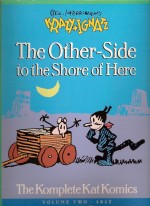
Krazy & Ignatz 1919-1921: “A Kind, Benevolent and Amiable Brick”


By George Herriman (Fantagraphics Books)
ISBN: 978-1-60699-364-4

I must admit to feeling like something of a fraud and an idiot reviewing George Herriman’s masterpiece of eternal unrequited love. Although Krazy Kat is unquestionably a pinnacle of graphic innovation, a hugely influential body of work which shaped the early days of the comics industry and an undisputed treasure of world literature, some readers – from the strip’s querulous beginnings in 1913 right up to this morning – just don’t “get it”. So those in the know are already fans (trust me; they just are) whilst those sorry few who are oblivious to the strip’s inimitable charms are beyond my meagre capacity to reach or help.

Still, since everyday there’s newcomers to the wonderful world of comics I’ll assume the missionary position once more and hope to catch and convert some fresh soul – or as I like to think of it save one more “lil Ainjil”…

Krazy and Ignatz, as it is dubbed in these lovely collected tomes from Fantagraphics, is not and never has been a strip for dull, slow or unimaginative people who simply won’t or can’t appreciate the complex multilayered verbal and pictorial whimsy, absurdist philosophy or seamless blending of sardonic slapstick with arcane joshing. It is the closest thing to pure poesy that narrative art has ever produced.

Think of it as Dylan Thomas and Edward Lear playing “I Spy” with James Joyce amongst dry cactus fields whilst Gabriel García Márquez types up the shorthand notes and keeps score…

Some brief background then: Herriman was already a successful cartoonist and journalist in 1913 when a cat and mouse that had been cropping up in his outrageous domestic comedy strip The Dingbat Family/The Family Upstairs graduated to their own feature. “Krazy Kat” debuted in William Randolph Hearst’s New York Evening Journal on Oct 28, 1913 and mainly by dint of the publishing magnate’s overpowering direct influence spread throughout his vast stable of papers.

Although Hearst and a host of the period’s artistic and literary intelligencia (which included e.e. Cummings, Frank Capra, John Alden Carpenter, Gilbert Seldes, Willem de Kooning, H.L. Mencken and Jack Kerouac) adored the strip many local editors did not and took every career-risking opportunity to drop it from the comics section. Eventually the feature found a home in the Arts and Drama section of Hearst’s papers. Protected by the publisher’s patronage the strip flourished unharmed by editorial interference and fashion and ran until Herriman’s death in April 1944.

The basic premise is simple: Krazy is an effeminate, dreamy, sensitive and romantic feline of indeterminate gender in love with Ignatz Mouse: rude crude, brutal, mendacious and thorougly scurrilous.

Ignatz is a real man; drinking, stealing, neglectful of his wife and children and spurns Krazy’s genteel advances by regularly hitting the cat with a well-aimed brick (obtained singly or in bulk from noted local brickmaker Kolin Kelly). A third member of the eternal triangle is lawman Offissa Bull Pupp, hopelessly in love with Krazy, well aware of the Mouse’s true nature, but bound by his own timidity and sense of honour from removing his rival for the cat’s affections. Krazy is blithely oblivious of Pupp’s dilemma…

Also populated with a stunning supporting cast of inspired anthropomorphic bit players such as Joe Stork, (deliverer of babies), the hobo Bum Bill Bee, Don Kiyoti, busybody Pauline Parrot, Walter Cephus Austridge, the Chinese mallard Mock Duck, Joe Turtil and a host of audacious characters – all capable of stealing the limelight and even supporting their own features – the episodes occur in and around the Painted Desert environs of Coconino (based of the artist’s vacation retreat Coconino County Arizona) and the surreal playfulness and fluid ambiguity of the flora and landscape are perhaps the most important member of the cast.

The strips are a masterful mélange of unique experimental art, strongly referencing Navajo art forms and sheer unbridled imagination and delightfully expressive language: alliterative, phonetically and even onomatopoeically joyous and compellingly musical (“He’s simpfilly wondafil”, “A fowl konspirissy – is it pussible?” or “I nevva seen such a great power to kookoo”), yet for all that the adventures are poetic, satirical, timely, timeless, bittersweet, self-referential, fourth-wall bending, eerie, idiosyncratic and utterly hilarious escapades encompassing every aspect of humour from painfully punning shaggy dog stories to riotous slapstick.

There have been an absolute wealth of Krazy Kat collections since the late 1970s when the fondly remembered strip was generally rediscovered by a far more accepting audience and this particular compendium continues the complete year-by-year series begun by Eclipse and picked up by Fantagraphics when the former ceased trading in 1992. The current publisher’s avowed intent is to complete the collection and then keep the works in print and more power to them for that. This fabulous black and white volume Krazy & Ignatz: “A Kind, Benevolent and Amiable Brick” re-presents the years 1919-1921.

Within this magical atlas of another land and time the eternal game plays out as usual, but with some intriguing diversions such as recurring tribute’s to Kipling’s “Just So Stories” as we discover how the Kookoo Klock works, why bananas hang around in bunches and why Lightning Bugs light up; peer into the misty past to see Kwin Kleopatra Kat and Marcatonni Maus and explore the ever-changing seasons in a constant display of visual virtuosity and verbal verve…

Also included are fascinating articles and background features (‘A Mouse by any Other Name: Krazy and Ignatz’s Early Life Under the Stairs’ by Bill Blackbeard, ‘Geo. Herriman’s Los Angeles’ by Bob Callahan and the highly informative and instructional  ‘Ignatz Mouse Debaffler Pages’), some intimate archival illustrations and photos and even unpublished and lost art.

Herriman’s epochal classic is a genuine Treasure of World Art and Literature and these comic strips have shaped our industry and creators, inspired creative auteurs in fields as disparate as prose fiction, film, dance, animation and jazz music and delivered delight and delectation to generations of devoted wonder-starved fans.

If however, you are one of Them and not Us, or if you actually haven’t experienced the gleeful graphic assault on the sensorium, mental equilibrium and emotional lexicon carefully thrown together by George Herriman from the dawn of the 20th century until the dog days of World War II, this latest glorious annotated compendium from Fantagraphics is one of the most accessible and certainly the most easily obtained book yet, so don’t waste this opportunity.

Just remember: not everybody gets it and some of them aren’t even stupid or soulless – they’re just unfortunate… “There Is A Heppy Lend Furfur A-Waay”…

© 2011 Fantagraphics Books. All rights reserved.

Hal Foster’s Prince Valiant volume 3: 1941-1942


By Hal Foster (Fantagraphics Books)
ISBN: 978-1-60699-407-8

Possibly the most successful and evergreen fantasy creation ever conceived, the Sunday page Prince Valiant in the Days of King Arthur launched on February 13th 1937, a luscious full-colour weekly window onto a perfect realm of fantasy and romance. The strip followed the life and adventures of a refugee boy driven by invaders from his ancestral homeland in faraway Thule who roamed the world and rose to a paramount position amongst the mightiest heroes of fabled Camelot.

Written and drawn by unsurpassed master draftsman Harold “Hal” Foster, that noble scion would grow to manhood in a heady sea of wonderment, visiting far-flung lands and siring a dynasty of equally puissant heroes whilst captivating and influencing generations of readers and thousands of creative types in all the arts.

There have been films, animated series and all manner of toys, games and collections based on the strip – one of the few to have lasted from the thunderous 1930s to the present day (over 3800 episodes and counting) and even in these declining days of the newspaper strip as a viable medium it still claims over 300 American papers as its home. It has even made it into the very ether with an online edition.

Foster produced the strip, one spectacular page a week until 1971, when, after auditioning such notables as Wally Wood and Gray Morrow, Big Ben Bolt artist John Cullen Murphy was selected to draw the feature. Foster carried on as writer and designer until 1980, after which he fully retired and Murphy’s son assumed the writer’s role.

In 2004 the senior Cullen Murphy also retired (he died a month later on July 2nd) and the strip has soldiered on under the extremely talented auspices of artist Gary Gianni and writer Mark Schultz.

This third exquisite hardback volume reprints in glorious colour – spectacularly restored from Foster’s original Printer’s Proofs – the Sunday pages from January 5th 1941 to 20th December 1942.

After an epic clash against corrupt officials in the rapidly declining city of Rome, Valiant and fellow knights Tristan and Gawain headed for home. Splitting up to thwart their incensed pursuers, Valiant took ship on a pirate scow bound for Sicily. Now read on…

After a Dan Nadel’s erudite foreword ‘Modestly, Foster’ the action opens in the shadow of fiery Vesuvius as Val’s vessel is attacked by self-proclaimed Sea-King Angor Wrack. Even the fierce warrior-prince’s martial might is insufficient against such great odds and the boy is eventually captured and enslaved, his fabled Singing Sword confiscated by the victorious pirate.

Thus begins an astonishingly impressive chapter in the hero’s history as Val becomes a galley slave, escapes and washes up starving and semi-comatose on the lost shores of the Misty Isles. Delirious, the boy glimpses his future wife Queen Aleta when she re-provisions his boat before casting him back to the sea’s mercies. The Misty Isles are safe only because of their secret location and the noble girl has broken a great taboo by sparing the shipwrecked lad…

Replenished but lost Val drifts helplessly away but resolves that one day he will discover again the Misty Isles and the enigmatic Aleta…

Eventually he is picked up by more pirates but overwhelms the captain and takes charge. Finding himself in the island paradise of Tambelaine courting the daughters of the aged king Lamorack, Val encounters Angor Wrack once more but fails to regain the Singing Sword, precipitating an extended saga of maritime warfare and spectacular voyaging across the Holy Land from Jaffa to Jerusalem.

The vendetta results in both Angor and Val being taken by Arab slavers, but the boy nobly allows Wrack to escape whilst he battles the Bedouin hordes… Enslaved in Syria Val’s indomitable will and terrifying prowess are insufficient to his need so he seduces his owner’s daughter to effect his escape only to stumble into a marital spat between the region’s greater necromancer and his tempestuous bride.

Reaching Jerusalem Val finally regains his sword and settles all scores with Angor Wrack before determining to return to the hidden Misty Isles, but once again falls afoul of the pirates infesting the region. After incredible hardships he is reunited with Aleta but fate drags them apart again and he departs alone and despondent.

Not for long though, as he reaches Athens and meets the far-larger-than-life Viking Boltar: a Falstaff-like rogue and “honest pirate”. Together they rove across the oceans to the heart of the African jungles…

Securing a huge fortune their dragonship reaches Gaul and Val is reunited with Gawain. After settling a succession of generational feuds between knights and defeating a seductive maniac the paladins at last return to Britain courtesy of Boltar, just in time to be dispatched by Arthur to the far North to scout Hadrian’s Wall and see if it can still keep the belligerent Picts out.

Unfortunately libidinous Gawain abandons Val and the boy is captured by the Caledonian wild-men and their new allies – a far nastier breed of Vikings intent on conquering England. Tortured almost to death the Prince is saved by the ministrations of Julian – a Roman warrior who has seemingly safeguarded the wall for centuries…

When he is recovered Prince Valiant begins to inflict a terrible and studied revenge upon his tormentors…

To Be Continued…

Rendered in an incomprehensibly lovely panorama of glowing art Prince Valiant is a non-stop rollercoaster of stirring action, exotic adventure and grand romance; blending realistic fantasy with sardonic wit and broad humour with unbelievably dark violence (the closing text feature ‘Too Violent for American Dog Lovers’, reveals a number of censored panels and changes editors around the world inflicted upon the saga during this period).

Beautiful, captivating and utterly awe-inspiring the strip is a World Classic of storytelling and something no fan can afford to miss. If you have never experienced the intoxicating majesty and grandeur of Foster’s magnum opus these these magnificent, lavishly substantial deluxe editions are the best way possible to start and will be your gateway to an eye-opening world of wonder and imagination…

Prince Valiant © 2011 King Features Syndicate. All other content and properties © 2011 their respective creators or holders. All rights reserved.

Beowulf – First Graphic Novel #1


By Jerry Bingham, with Ken Bruzenak (First Comics)
ISBN: 978-0-915419-00-5

The mid-1980s were a great time for comics creators. It was as if an entire new industry had opened up with the proliferation of the Direct Sales market and dedicated specialist retail outlets; new companies were experimenting with format and content, and punters had a bit of spare cash to play with. Moreover much of the “kid’s stuff” stigma had finally abated and the country was catching up to the rest of the world in acknowledging that sequential narrative might just be an actual art-form…

Consequently many new companies began competing for the attention and cash of punters who had grown accustomed – or resigned – to getting their four-colour kicks from DC, Marvel Archie and/or Harvey Comics. European and Japanese styled material had been creeping in but by 1983 a host of young companies such as WaRP Graphics, Pacific, Eclipse, Capital, Now, Comico, Dark Horse, First and many others had established themselves and were making impressive inroads.

New talent, established stars and fresh ideas all found a thriving forum to try something a little different both in terms of content and format. Chicago based First Comics was an early frontrunner, with Frank Brunner’s Warp, Mike Grell’s Starslayer and Jon Sable and Howard Chaykin’s Landmark American Flagg!, as well as an impressive line of titles targeting a more sophisticated audience.

In 1984 they followed Marvel and DC’s lead with a line of impressive, European-styled over-sized graphic albums featuring new and out-of-the-ordinary comics sagas (see Time Beavers, Mazinger and two volumes of Time2 to see just how bold, broad and innovative the material could be). The premier release was a stunning and subsequently award-winning (1985 Kirby Award for Best Graphic Album) fantasy epic by Jerry Bingham.

Beowulf is a thrilling, compulsive and intensely visceral visualisation of the Anglo-Saxon epic poem committed to parchment sometime between the 8th and 11th century AD, and recently the subject of many screen iterations and interpretations (from The 13th Warrior to the three “straight” Beowulf movies in 1999, 2005 and 2007 and even the outrageously fun Outlander from 2008).

Need a plot summary? In the far North noble King Hrothgar built a mighty Mead-hall for heroes, but incurred the malignant enmity of the monster Grendel who would raid the citadel and slaughter some of the noble warriors every night. After twelve years of horror a valiant band of heroes led by Beowulf, Prince of the Geats, came to their aid seeking glory and battle…

The clash of Beowulf and Grendel is spectacularly handled as is the succeeding exploit wherein the stalking Horror’s demon mother comes seeking revenge, dragging Beowulf to her hideous lair beneath an icy lake, but the most effective and moving chapter is the very human-scaled Twilight of the Gods as, after fifty years of ruling his Geatish kingdom, aged Beowulf goes to his final glorious battle, dying heroically whilst destroying a ravening firedrake which threatens to eradicate his people: the only proper end for a Northman hero…

Bingham’s raw and fiercely realistic art-style perfectly captures the implacable sense of doom and by employing Prince Valiant‘s text and picture format he imparts the tale with a grandeur often as mythic as Hal Foster’s masterpiece, whilst leaving the art gloriously free of distracting word-balloons.

Letterer/calligrapher Ken Bruzenak’s particular facility perfectly enhances the artistic mood by carefully integrating captions filled with Bingham’s free-verse transliterations of the original 3182 long-poem into this classic interpretation of the epic. This is a wonderful and worthy piece of work that will delight any fan of the medium.

And for a perfect all-ages prose telling of the timeless tale I also heartily recommend Rosemary Sutcliff’s magnificent Beowulf: Dragonslayer: first released in 1961 and captivatingly illustrated by Charles Keeping;  it is still readily available and one of the books that changed my life.
© 1984 First Comics, Inc. All rights reserved.

Betty and Veronica Storybook: Archie & Friends All-Stars Series volume 7


By Dan Parent, Rick Koslowski & Jim Amash (Archie Comics)
ISBN: 978-1-879794-60-3

Archie Andrews has been around for nearly seventy years: a good-hearted lad lacking common sense and Betty Cooper the pretty, sensible girl next door, with all that entails, who loves the ginger goof. Veronica Lodge is a rich, exotic and glamorous debutante who only settles for our boy if there’s nobody better around. She might actually love him too, though. Despite their rivalry, Betty and Veronica are firm friends. Archie, of course, can’t decide who or what he wants…

Archie’s unconventional best friend Jughead Jones is Mercutio to Archie’s Romeo, providing rationality and a reader’s voice, as well as being a powerful catalyst of events in his own right. That charming triangle (+ one) has been the foundation of decades of cartoon magic. Moreover the concept is eternally self-renewing…

Adapting seamlessly to every trend and fad of the growing youth culture, the host of writers and artists who’ve crafted the stories over the decades have made the “everyteen” characters of mythical Riverdale a benchmark for youth and a visual barometer of growing up.

In this collection, reprinting tales from 1995-2009, the warring gal-pals and extended cast of the small-town American Follies are plunged deep into whimsy and fable as writer/artist Dan Parent reinterprets classic fairytales and popular classics like a New World Crackerjack Christmas Panto (and boy, will that reference baffle anybody not British and/or under thirty), providing wry and often outright hilarious takes on the eternal nature and magic of young love…

Dotted with funny fashion page pin-ups such as ‘Storybook Style’ and ‘Bewitching Beauties’, lovely cover reproductions and behind-the-scenes commentaries, the wild whimsy begins with ‘Betty in Wonderland’ (inked by Jim Amash) wherein the ever-helpful Miss Cooper gives up a date with Archie to babysit for a neighbour in need. Letting her imagination run wild, her bedtime reading of the Lewis Carroll classic repopulates the tale with some very familiar faces…

Especially effective are science nerd Dilton as the sagacious caterpillar and Jughead and mean Reggie as Tweedle-Dee and Tweedle-Dum. However picturing Veronica as the vicious Blood-red Queen of Hearts might have been a little too close to the truth…

‘Sleeping Betty’ is another enchanting retelling as baby Princess Betty is cursed by the evil fairy Veronica to fall into a deep sleep on her sixteenth birthday. To thwart the hex the little princess was sent away to be raised in secret, but Veronica’s reach is long… Luckily there’s a red-headed prince hanging around…

‘There’s No Place Like… Riverdale’ (inked by Rich Koslowski) transports Betty and her little cat Carmel to a fantastic land over the rainbow where she lucks into some highly desirable Ruby Sneakers. To get home she needs unconventional help in the unappealing shapes of Archie the Scarecrow, Tin Man Jughead and the Cowardly Reggie, so it’s a good thing that Veronica is less a Wicked Witch and more a sorcerous spoiled brat…

The last tale in this collection is ‘Cinderellas’ (Amash inks again) as both girls find themselves helpless drudges working for an evil new mom and dreaming of a prince to whisk them away. Despite the sabotaging antics of mean stepsister Cheryl Blossom and a pretty second-rate Fairy Godmother, Cideronica and Cinderbetty overcome all odds and go to the Ball. In the slipper-sampling aftermath, thanks to some deft plotting, both girls get a happy ending…

Charming and clever, these tales are a marvellous example of why Archie has been unsurpassed in this genre; providing decades of family friendly fun and wholesome teen entertainment. Moreover, aspiring creators will also delight in the closing Sketch Book section of this collection which provides a fascinating glimpse of Parent’s original pencilled art in 9 pages culled from the preceding stories.

© 2010 Archie Comics Publications, Inc. All rights reserved.

Richard Corben Complete Works volume 1: Underground


By Richard Corben and various (Catalan Communications)
ISBN: 978-0-87416-018-5

Although he has only infrequently strayed into the comicbook mainstream, animator, illustrator, publisher and cartoonist Richard Corben is one of America’s greatest living proponents of sequential narrative: a stunningly accomplished artist and unique, uncompromising stylist who grew out of the independent counterculture commix of the 1960s and 1970s to become a globally revered, multi-award winning creator.

He is best known for his mastery of the airbrush and delight in sardonic, darkly comedic horror and science fiction tales.

Born in Anderson, Missouri in 1940, he graduated from the Kansas City Art Institute with a Fine Arts degree in 1965 and found work as an animator. At that time, the Underground Commix revolution was just beginning as a motley crew of independent-minded creators across the continent began making and publishing stories that appealed to their rebellious, pharmacologically-enhanced sensibilities and unconventional lifestyles. Most of them were hugely influenced either by 1950s tales from EC Comics or Carl Barks’ Duck tales – and occasionally both.

Corben started the same way, producing the kind of stories that he would like to read, in as variety of small-press publications including Grim Wit, Slow Death, Skull, Fever Dreams and his own Fantagor often signed with his affectionate pseudonym “Gore”. As his style matured and his skills developed Corben’s work increasingly began to appear in more professionally produced venues. He began working for Warren Publishing in 1970 with tales in Eerie, Creepy, Vampirella, Comix International and laterally, the aggressively audacious adult science fiction anthology 1984. He also famously re-coloured a number of reprinted Spirit strips for the revival of Will Eisner’s the Spirit magazine.

In 1975 Corben submitted work to the French phenomenon Métal Hurlant and subsequently became a fixture in the magazine’s American iteration Heavy Metal where his career really took off. Soon he was producing stunning adult fantasy tales for a number of companies, making animated movies, painting film posters and producing record covers such as the multi-million-selling Meatloaf album Bat Out of Hell. He never stopped producing comics but always stuck to his own independent projects with collaborators such as Harlan Ellison, Bruce Jones and Jan Strnad.

This regrettably out-of-print collection of those early strip efforts, translated from a European edition by Jim Lisle, features a rather inaccurate introduction by Luis Vigil but boasts a dynamic collection of raw, powerful and wickedly sardonic and whimsical suspense tales in the EC vein that graphically display the artist’s rapid, radical creative development beginning with ‘Heirs of Earth’ (1971), a post-apocalyptic tale of love and cannibalism.

Corben’s infamous signature-stylisation includes lots of nudity, graphic violence and near grotesquely proportioned male and female physiques, none of which are apparent in the tantalisingly low-key spoof ‘Alice in Wanderlust’; an early skit by long-term co-creator Jan Strnad, after which ‘Horrible Harveys House’ (1971) tells an intriguing tale of young lust when film student Jarvis talks his stacked and rather easy girlfriend Zara into visiting an abandoned house to make an “art-movie”. Turns out the place isn’t completely empty after all…

From 1970, ‘Twilight of the Dogs’ is a classic sting-in-the-tale saga as Earth’s last surviving free men uncover some rather unfortunate facts about the aliens who conquered them whilst ‘Gastric Fortitude’ displays another side of love. ‘The Dweller in the Dark’ (from a story by Herb Arnold) is an early exploration of Corben’s fascination with and facility for depicting lost civilisations, wherein rain-forest dwellers Bo Glan and Nipta break taboo to explore a dead city only to fall foul of rapacious, invading white men and ancient things far worse…

All the previous yarns were reproduced in black and white: ranging from pen-line to airbrushed monochrome tones but worlds-within-worlds alien romance ‘Cidopey’ reveals its tragic twist in full colour, as does ‘For the Love of a Daemon’ which shows inklings of the artist’s later airbrush expertise in a boisterous black comedy of Barbarians and hot naked babes in distress.

Jan Strnad also wrote the dark dystopian ‘Kittens for Christian’, a moody post-cataclysm thriller with chilling echoes of Corben’s later graphic novel Vic and Blood (an adaptation and extension of Harlan Ellison’s “A Boy and his Dog”) before this volume concludes on a light and colourful note in the artist’s 1973 collaboration with Doug Moench: ‘Damsel in Dragon Dress’: a gleeful witches brew of fantasy, fairytale foible – a saucy cautionary tale on the unexpected dangers of drug abuse…

Richard Corben is a groundbreaking and rightfully renowned figure in our art-form and the fact that so much of his work is currently unavailable in English is a disgrace. Not only are his early works long overdue for a definitive re-issue but all his rude, riotous, raucously ribald revels need to be re-released now. Until that time stay tuned…
© 1970, 1971, 1972, 1973, 1985 Richard Corben. © 1985 Catalan Communications. All rights reserved.

Conan the Barbarian: The Horn of Azoth – A Marvel Graphic Novel


By Roy Thomas, Gerry Conway, Mike Docherty, Tony DeZuniga & Tom Vincent (Marvel)
ISBN: 978-0-87135-639-0

During the 1970′s, in response to a global downturn in superhero sales, and rise in interest in all things supernatural, the American comic book industry opened up after more than fifteen years of cautious and calcified publishing practices. These had come about as a reaction to the scrupulously-censorious oversight of the self-inflicted Comics Code Authority: A body created by publishers to police their product and keep it palatable and wholesome after the industry suffered their very own McCarthy-inspired Witch-hunt during the 1950s. Thus instead of crime comics – the other big casualty of the CCA – the first genre to be revisited was Horror/Mystery comics and from that came the pulp masterpiece Conan the Cimmerian.

Sword & Sorcery prose stories had undergone a global renaissance in the paperback marketplace since the release of soft-cover editions of Lord of the Rings (first published in 1954), and the 1960s saw the resurgence of the two-fisted fantasies of Edgar Rice Burroughs, Otis Adelbert Kline and Fritz Lieber, whilst many modern writers such as Michael Moorcock and Lin Carter kick-started their careers with contemporary versions of man, monster and mage. Indisputably the grand master of the genre was Robert E. Howard.

Marvel Comics tested the waters in early 1970 with a little tale called ‘The Sword and the Sorcerers’ (from the horror anthology Chamber of Darkness #4) whose hero Starr the Slayer bore no small resemblance to the Barbarian. It was written by Roy Thomas and drawn by young Englishman Barry Smith, a recent Marvel find, and one who was just breaking out of the company’s Kirby house-style.

Despite some early teething problems, including being cancelled and reinstated in the same month, the comic-strip adventures of Robert E. Howard’s characters were as big a success as the prose yarns. Conan became a huge success: a mega-brand that saw new prose tales, a TV series and cartoon show, a newspaper strip and most importantly a Major Motion Picture in 1982.

…And it all largely stemmed from the vast range of comics initiated by Thomas, Windsor-Smith (as he became) and the excellent succession of comics creators that followed.

Thomas was a huge fan of the prose material and took great pains to adapt the novels and short stories into the graphic canon, but he was also one of the top writers in his field and much of the franchise’s success devolves from his visceral grasp on the character, which makes this particular graphic novel of particular interest.

After the success of the first film Thomas and fellow Marvel stalwart Gerry Conway were invited to write the second movie script.  How they did and why their script was accepted and never made is textbook Hollywood (I know whereof I speak: buy us a drink one day and I’ll tell you my own tales of Tinsel Town Tactics) and makes a fascinating introduction to this tome; but the upshot was at the end of the protracted process the scripters had a brilliant Conan yarn that everybody loved but that wasn’t going to be Conan the Destroyer. This meant of course, that with a little wheeler-dealing and a few secured permissions it could be returned to the artform that spawned it…

Thus “King of Thieves” became the superb savage thriller ‘The Horn of Azoth’ and opens with the itinerant Barbarian earning a crust pit-fighting in Shadizar the Wicked until he runs afoul of a local Magistrate – to the legislator’s lasting regret. The burly brigand is captured by the city guard but escapes the dungeons with the aid of a beautiful young witch. Together they flee the city with her giant bodyguard and it transpires that she needs Conan to help her fulfil a dark and ancient prophecy. Of course she tells him it’s to help unearth a fabulous treasure…

Locating the lost fortress and broaching its defences are child’s play for a bandit like the Cimmerian, but the mages within prove an unexpected obstacle and the little band is soon augmented by a boy-wizard with his own hidden agenda and an Amazonian Nubian warrior princess as they all converge on a distant rendezvous with fate.

It’s soon clear that everybody is lying to Conan as warring factions struggle to awaken or re-inter antediluvian god Azoth. Whoever wins the world is equally imperilled and unless he works a miracle Conan is collateral damage in a cosmic war that has been brewing for eons…

With brawny battles, warring wizards and enough suspense to choke a mastodon, this action-packed yarn is rip-roaring fantasy fare, brimming with supernatural horrors, wild women and spectacular titanic clashes, cannily recounted by immensely talented creators at the top of their form. Especially effective is Mike Docherty’s supremely illustrative art, ably enhanced by Tony DeZuniga’s smooth inking and Tom Vincent’s lush colours.

Still available, this is a another magnificently oversized tale (produced in the European Album format with glossy white pages 285mm x 220mm rather than the standard US proportions of 258 x 168mm) that provides another heady swig of untrammelled joy for lovers of the genre and fans of the greatest hero ever to swing a sword or plunder a tomb…
© 1990 Conan Properties Inc All Rights Reserved.

Last of the Dragons – A Marvel Graphic Novel


By Carl Potts, Denny O’Neil, Terry Austin, Marie Severin & James R. Novak (Marvel)
ISBN: 0-87135-335-0

During the 1980s Marvel was an unassailable front-runner in the American comicbook business, outselling all its rivals and increasingly making inroads into the licensed properties market that once went to the Whitman/Dell/Gold Key colossus. Much of their own superhero stable might have become cautious and moribund, but the company was expanding into many other arenas.

When the direct sales market began Marvel started its own creator-owned, rights-friendly fantasy periodical in response to the success of Heavy Metal which in turn led to a blossoming of many bold but comparatively low-selling titles in a host of varied genres.

From that ground breaking Epic Illustrated magazine comes this gloriously absorbing East-meets-West period fantasy (beginning with #15, October 1982 through #20 at the end of 1983) by then-newcomer Carl Potts who plotted and pencilled the tale for scripter Denny O’Neil, inker Terry Austin and colourist Marie Severin to finish and Jim Novak to inscribe.

Collected in 1988 under the Epic Comics imprint and released in the extravagantly expansive European Album format (a square high-gloss page of 285 x 220mm rather than today’s elongated and parsimonious 258 x 168mm) which delivered so much more bang-per-buck, The Last of the Dragons did its part to popularise the now over-exposed Japanese cultural idiom – but it still reads superbly well…

‘The Sundering’ opens in 19th century Japan as aged master swordsman Masanobu meditates in the wilderness until a young warrior disturbs his contemplation by attacking a basking dragon. The magnificent reptiles are gentle, noble creatures but the samurai is hungry for glory and soon wins his bloody trophy…

After the arrogant victor has left Masonobu meets Ho-Kan, a young priest and caretaker of the Dragons. The youth is filled with horror and misery at the brutal sacrilege, but worse is to come for the tearful cleric. As he returns to the temple he stumbles upon a faction of his brother monks secretly conditioning young forest Wyrms, training them to deny their true natures and kill on command…

‘The Vision’ finds Ho-Kan returned to the temple too late: the aggressive monk Shonin has returned from a voyage to the outer world and has reached the conclusion that the Dragons must be used to preserve Japan from insidious change threatened by the encroaching white man’s world. In fact he has already been training the beasts.

When the elders object Shonin’s followers massacre the monks and set out for the wilds of America where they will breed and train hordes of killer lizards under the very noses of the enemy. Few escape the slaughter, but Ho-Kan is one and he will stop the madness somehow…

In a meditative vision he sees Takashi: a half-breed boy whose Christian sailor father abandoned him. The outcast boy was eventually adopted by a ninja clan and became a great fighter. Somehow he holds the key to defeating Shonin…

In ‘The Departure’ Ho-Kan hires the ninjas to stop the warmongering monks but, when he also tries to enlist Masanobu, Shonin’s acolytes capture him. Under torture he reveals all and the wicked clerics then trick the sword-master into fighting the ninjas for them. After killing all but Takashi the monks thereafter invite Masanobu to join them on their journey to the West. The elderly swordsman has no idea that the beasts he guards are hopelessly degraded monsters now.

In ‘The Arrival’ the monks and their hidden cargo take ship for California, unaware that a half-cast crewman has enlisted on a closely-following ship. Takashi the last ninja is bound in his duty and hungry for vengeance. He will not be denied…

When they disembark on a remote bay on the American coast the priests’ intention of slaughtering the sailors and Masanobu goes awry when one of the baby dragons escapes. In the ensuing melee the aged swordsman realises the true state of play and flees into the forests.

The Native American tribes of the Californian forests are helpless before the martial arts and war-dragons of Shonin in ‘The Meeting’ until they meet Takashi – hot on the trail. He defeats and then joins with them. As Takashi and the assembled braves stalk the monks they encounter Masanobu who is also determined to end this dishonourable travesty once and for all…

All of which results in a tumultuous and stirring climax in ‘The Decision’ as all the disparate faction meet to forever decide the fate of a nation, the nature of a species and the future of heroes…

This is a magically compelling tale for fantasy fans and mature readers: an utterly delightful cross-genre romp and one more masterful tale to add to the “why is this out of print?” list.
© 1982, 1983, 1988 Carl Potts. All Rights Reserved.