By Len Wein, Doug Moench, Roy Thomas, Marv Wolfman, David Anthony Kraft, Roger Slifer, Roger Stern, Scott Lobdell, Jean-Marc Lofficier, Randy Lofficier, Gene Colan, Don Perlin, Jim Mooney, Tony DeZuñiga, Ron Wilson, Marshall Rogers, Vicente Alcazar, Fred Hembeck, Geoff Isherwood. Gil Kane, John Romita Sr., & various (MARVEL)
ISBN: 978-1-3029-2923-7 (HB), 978-1-3029-3804-8 (Digital edition)
This book includes some Discriminatory Content produced during less enlightened times.
It’s Black History Month soon as well as US Midterm elections. Here’s some excellent reading matter to get you through it all…
In 1968 the consciousness-raising demonstration of Black Power at the Olympic Games politicised a generation of youngsters. By this time a few comics companies had already made tentative but concerted efforts to address what were national and socio-political iniquities. Nevertheless, issues of race and ethnicity took a bloody long time to filter through to still-impressionable young minds avidly absorbing knowledge and attitudes via four-colour pages that couldn’t even approximate the skin tones of African-Americans.
As with TV and films, breakthroughs were small, incremental and too often reduced to a cold war of daringly liberal “firsts.” Excluding characters in 1940s-1950s jungle themed comic books, Marvel clearly led the field with a recurring character: historically impossible Gabe Jones, a black soldier in Sgt. Fury’s Howling Commandos; debuting in #1 (May 1963).
Technically, he was beaten to that dubious honour by DC’s Jackie Johnson. Created by Robert Kanigher & Joe Kubert, the “negro prizefighter” joined Sgt Rock’s Easy Company in late 1961 (Our Army at War #113), but it was years before he became a regular character…
By the way, so unlikely a character was ol’ Gabe in 1963 that he was – without consulting editor Stan Lee – helpfully re-coloured as Caucasian at the printers, who didn’t realise his ethnicity but just knew that he just couldn’t be non-white.
Jones was eventually followed by actual black superheroes Black Panther in Fantastic Four #52 (July 1966), and The Falcon in Captain America #117 (September 1969). America’s first hero of colour to helm his own title had come and gone largely unnoticed in a little remembered or regarded title from Dell Comics. Debuting December 1965 and created by artist Tony Tallarico & scripter D.J. Arneson, Lobo was a wild west gunslinger battling injustice just like any cowboy would.
Arguably the greater funnybook breakthrough was Joe Robertson, City Editor of the Daily Bugle: an erudite, brave, proudly ordinary mortal distinguished by his sterling character, not costume or skin tone. He debuted in Amazing Spider-Man # 51 (August 1967), proving in every panel thereafter that the world would not end if black folk and white folk shared the same spaces…
This big change slowly grew out of raised public awareness during a terrible time in US history: even worse than today’s festering social wounds and agonisingly commonplace occurrences of cops claiming to misjudge immediate life-or-death situations, perilous racial pressures and a seemingly constant, officially policy of Black Lives Not Mattering and Hispanic-looking ones not counting. These tragedies occur unpardonably often in the UK too, so we’ve nothing to be smug about, and should in fact be calling out and shaming more politicians and rabble-rousers on an hourly basis…
Britain has been afflicted with race riots since the Sixties, leaving simmering scars that only comedians and openly racist power-seekers dare talk about – and even then they aren’t seeking debate but just yanking chains and blowing dogwhistles. Things today don’t seem all that different, except the bile and growing taste for violence is turned towards European accents, or health workers as well as brown skins, and now includes non-white sectarian aggravation too…
As the 1960s gave way to a newer, darker decade, more positive and inclusive incidences of ethnic characters appeared in the US, with DC finally getting an African-America hero in John Stewart (Green Lantern #87 December 1971/January 1972) – although his designation as a replacement Green Lantern might be construed as more conciliatory and insulting than revolutionary.
The first DC hero with his own title was Black Lightning. He didn’t debut until April 1977, although Jack Kirby had introduced Vykin in Forever People #1, the Black Racer in New Gods #3 (March and July 1971) and Shilo Norman as Scott Free’s apprentice (and eventual successor) in Mister Miracle #15 (August 1973). One month later there was Dr. Jericho Drumm AKA Brother Voodoo…
It was a turbulent time culturally, but it was also a life-or-death moment for comics. The American industry was in turmoil if not meltdown, much like the youth of the nation they courted. With costs of production skyrocketing, every title had to be a success and no one seemed clear on what audiences wanted…
Superheroes had dominated the 1960s: peaking globally before explosively falling to ennui and overkill. Traditional genres like horror, westerns, romance and science fiction returned, fed by radical trends in movie-making where another wrinkle had emerged: films by and for African-American audiences. Most called them “Blacksploitation” films…
As previously stated, Marvel was already a pioneer in diversity. As well as a plethora of white Christian males there were pagan gods, female characters (a few but not for long), Atlanteans, extraterrestrials, native Americans and monsters spearheading their own features. Why not another black lead with roots addressing multiple genres at once? Contemporary cinema and prose novel Blaxsploitation had fired up commercial interests throughout America, and in that miasma of outlandish dialogue, daft outfits and barely concealed – and justified – outrage, an angry black man with a shady past and questionable morals must have felt like a surefire hit to Marvel’s bosses. Luke Cage, Hero for Hire launched in the summer of 1972. A year later, Black Panther finally got his own series in Jungle Action #5, with Blade: Vampire Hunter debuting in Tomb of Dracula #10 (July 19730. Surely there was room for more?
Astonishingly soon after, with the Comics Code prohibition against horror hastily rewritten (amazing how plunging sales affects morality), macabre scary comics returned in force and a fresh crop of supernatural superheroes and monsters began appearing on newsstands to supplement those ghosts, ghoulies and goblins already infiltrating the once science-only scenarios of embattled but surviving Fights ‘n’ Tights titles. In fact, tinkering with the Code ban resulted in such an avalanche of horror titles in response to the industry-wide downturn in superhero sales, that it probably caused a few more venerable costumed crusaders to – albeit temporarily – bite the dust.
Almost overnight nasty monsters – both new and reprinted from the1950s – (and narcotics; but that’s another story) became acceptable fare on four-colour pages. Whilst a parade of pre-code reprints made sound business sense, the creative aspect of the latest fascination with supernatural themes was catered to by adapting popular cultural icons, before risking whole new concepts on an untested public. Oddly the last Code-embargoed genre – Crime comics – never figured in this particular populist revival…
As always in entertainment, the watchword was fashion: what was hitting big outside comics was incorporated into the mix as soon as possible. When proto-horror Morbius debuted in Amazing Spider-Man #101 (cover-dated October 1971) and the sky failed to fall in, Marvel moved ahead with a line of shocking superstars. They began with a traditional werewolf and a vampire before chancing something new: a haunted biker tapping into both Easy Rider’s freewheeling motorcycling chic and the prevailing supernatural zeitgeist. Recycling an old western title, the all-new Ghost Rider debuted in Marvel Spotlight #5, August 1972. He’d been preceded by Native American/western hero Red Wolf in #1 and the aforementioned Werewolf by Night in #2-4. From these cautious beginnings spooky floodgates opened to such an extent that there was even room for non-white stars like The Living Mummy and today’s star turn…
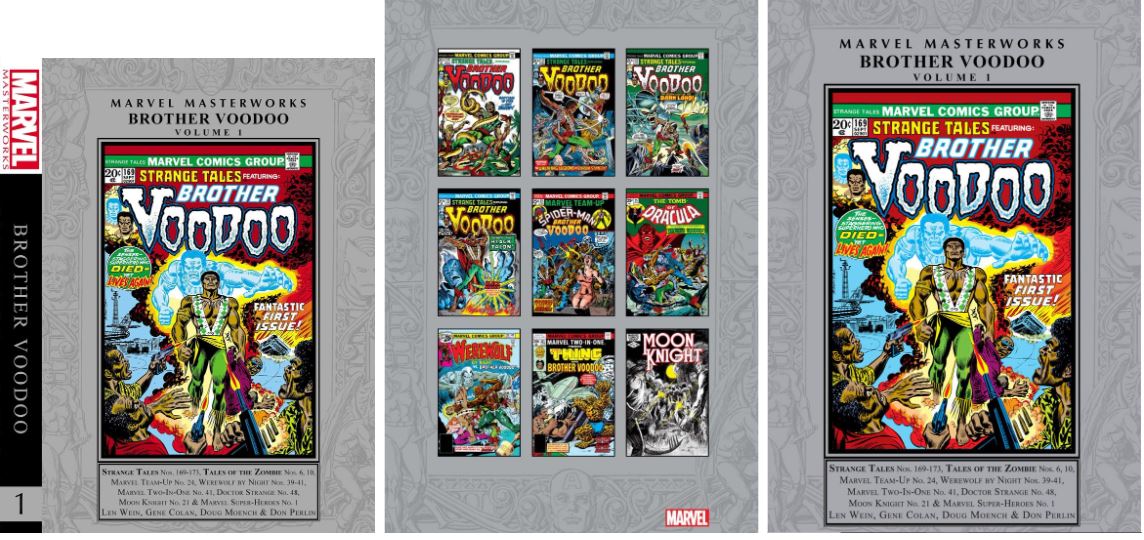
This quirky compendium collects Brother Voodoo’s earliest exploits from a time when he was equal parts tragic outsider/in-joke laughing stock and long before he was reclaimed as a major hero and rebooted as Doctor Voodoo. The adventures from Strange Tales #169-173, Tales of the Zombie #6 &10, Marvel Team-Up #24, Werewolf by Night #38-41, Marvel Two-in-One #41, Doctor Strange #48, Moon Knight #21, Marvel Super-Heroes #1 and Doctor Strange: Sorcerer Supreme #16, 17, & 20 are supplemented by extracts from Tomb of Dracula #34-37. They epically span cover-dates September 1973 to August 1990 and are preceded by an informative Introduction from illustrator Ron Wilson detailing how the series came to be.
Built from an idea by then Editor-in-Chief Roy Thomas, with defining input from Stan Lee, John Romita and eventually assigned to creators Len Wein & Gene Colan, the end result was a complex, convoluted affair spread out over many issues. It’s also painfully fair to say that there’s a lot of dialogue and some notions that haven’t fared well as we’ve become a more inclusive society. If you can’t temper your modern sensibilities in the face of well-meaning but outdated attitudes, it might be best to look elsewhere for early evidence of role models for young black readers…
Brother Voodoo was a series that took its time to tell a tale, and we need to remember that the idea was to create a hero who could have lots of adventures for as long as possible: a new Doctor Strange, Spider-Man or Daredevil created at a moment when society and the comic industry were in total turmoil. Lots of good ideas debuted and died unfulfilled, only to blossom again in years to come. With their hero ready to launch, Marvel capitalised on the zeitgeist as much as possible. The company had launched a wave of titles (many of them cost-effective reprint anthologies) and restored defunct titles to crowd rival publishers off newsstands.
Cover dated May 1968, Strange Tales #168 was officially the final issue of a prestigious horror book that had run from 1951 before becoming a vehicle for The Human Torch, Nick Fury, Agent of S.H.I.E.L.D. and Doctor Strange in the 1960s. When Marvel became a top-selling brand in 1968, its numbering had carried on for Doctor Strange’s first solo title. Then, cover dated September 1973, the book was revived after a 5-year hiatus as a try-out title, kicking off with Brother Voodoo. He occupied #169-174, after which The Golem, classic horror reprints and Jim Starlin’s landmark reinterpretation of Adam Warlock took the magazine to its ultimate oblivion in 1975.
Enough background now: let’s get down among the dead men…
The drama commences in the eponymous ‘Brother Voodoo!’ (Wein, Gene Colan & Dan Adkins), as a UN special investigator lands in Haiti and is suddenly saved from murderous ambush by an oddly-garbed man with incredible powers, emerging from clouds of smoke amidst thunderous frenetic drum beats. Accompanied by elderly aide Bambu, the stranger escorts Dr Maitland to safety even as his mind flashes back to how it all began…
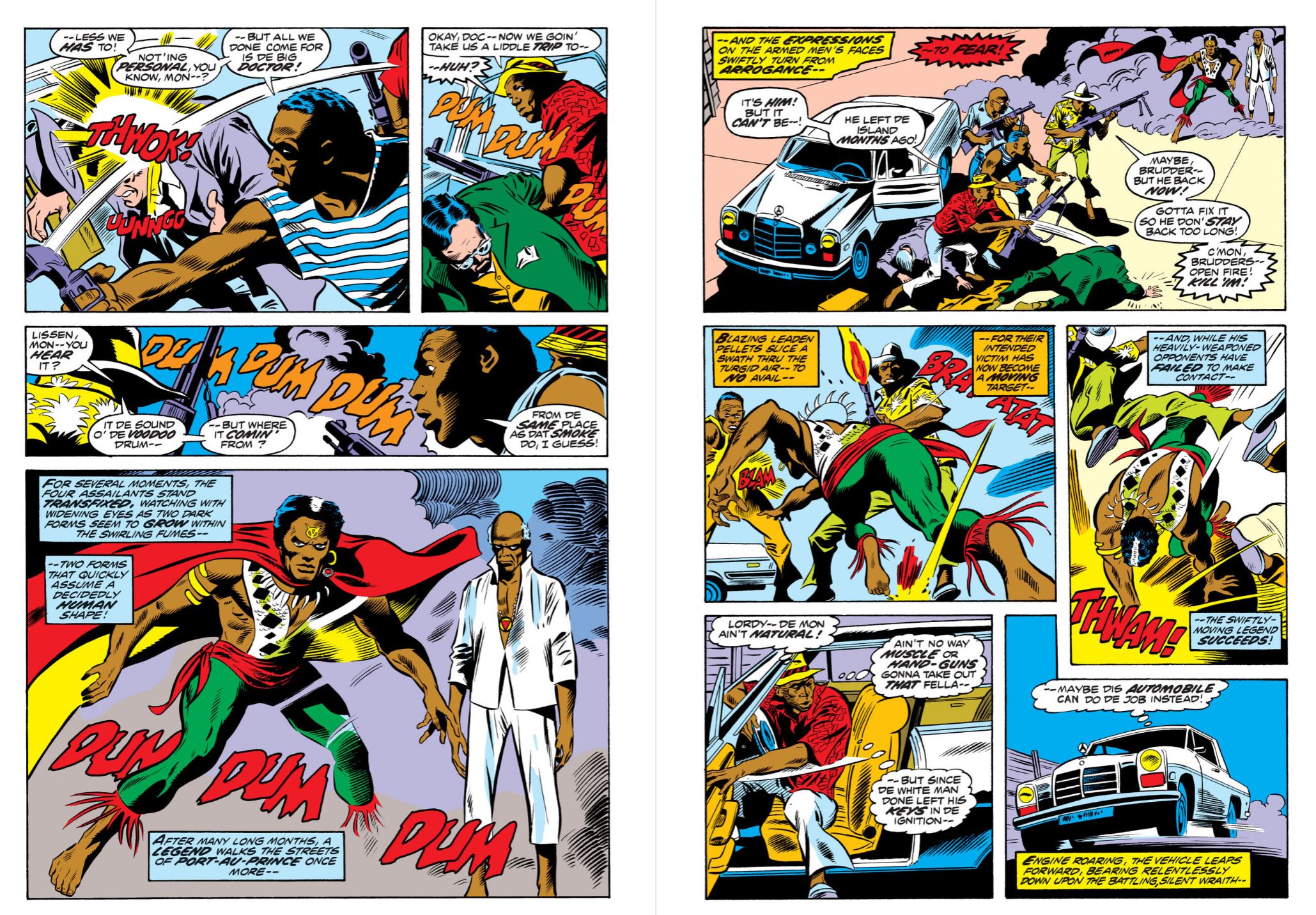
Years ago, Jericho Drumm abandoned his brother Daniel and family heritage as voodoo priests for rationalism, wealth and acclaim of the USA. Almost 20 years later, celebrated psychologist Dr. Drumm returned to Haiti to witness his brother’s murder by magic. Daniel had taken his brother’s preordained place as houngan (voodoo priest) of his people but was dying from a curse laid by evil loa (spirit)/serpent god Damballah. Utterly disbelieving, Jericho was helpless to prevent his brother’s death and his own subsequent humiliation by Damballah, but after swallowing his civilised pride, sought out Daniel’s teacher Papa Jambo. Accepting his fate, Jericho learned the lore and accepted the onerous responsibilities of protecting the world from evil magic.
Now it’s the present and he divides his time between his Caribbean homeland and a medical practice in the French Quarter of New Orleans. Occasional physician Dr. Jericho Drumm ministers to the world’s unknown ailments and hidden horrors…
The origin flashback extended to a second issue ‘Baptism of Fire!’ tracing Jericho’s accelerated course of study and triumphant battle against the loa lord. Amongst his many new gifts, the power that tipped the balance of battle was his eerie ability to channel his dead brother’s power and soul – a chilling tactic only possible because Daniel now lived within him…
With ST #171 we finally learn why the UN is under attack in Haiti when ‘March of the Dead!’ (with Frank Giacoia inking Colan’s gloriously beautiful, increasingly eerie pencils) sees Drumm attacked by the walking dead.
Thanks to the Comics Code, at this time the literal word “zombie” was banned in newsstand publications, compelling writers and editors to take torturous steps to do their job. Marvel’s monochrome magazines used the term with impunity and without sanction, but for the mainstream colour titles, Wein had to coin a new appellation, which is why Brother Voodoo here clashes with “zuvembies” in a graveyard. You couldn’t make it up, could you?
These specific “soulless ones” prowl at the command of sinister Baron Samedi, sabotaging much-needed industry providing jobs for the impoverished nation. This tale catapults BV into the heart of Marvel continuity as the true perpetrators are exposed as far-from-supernatural assailants and one of the MU’s greatest threats to life and liberty – Advanced Idea Mechanics.
Dick Giordano inked #172 & 173 as our hero returns to Louisiana. Seeking to assist a woman targeted by mystic malevolence in ‘Fiend in the Fog!’ Police chief’s daughter Loralee Tate is singled out by voodoo villain and cult leader Black Talon with Drumm inexorably drawn into a massive conspiracy demanding a ‘Sacrifice Play!’ and the (initially) unwelcome aid of local legend Mama Limbo. The spooky thrills culminate in a do-or-die battle with Talon’s tribe, Drumm’s defeat and capture, all resulting in a painful cliffhanger as the series ceased here with the April 1974 episode.
Mere months later, the already drawn conclusion resurfaced in one of those aforementioned mature Marvel magazines. Black Talon’s tale concluded in July’s Tales of the Zombie #6, with Doug Moench scripting Wein’s plot and Frank Chiaramonte inking Colan – who always worked best in monochrome. ‘End of a Legend!’ exposed devious duplicity and reaped a rich harvest of destruction after Drumm broke loose and unleashed all the forces at his command…
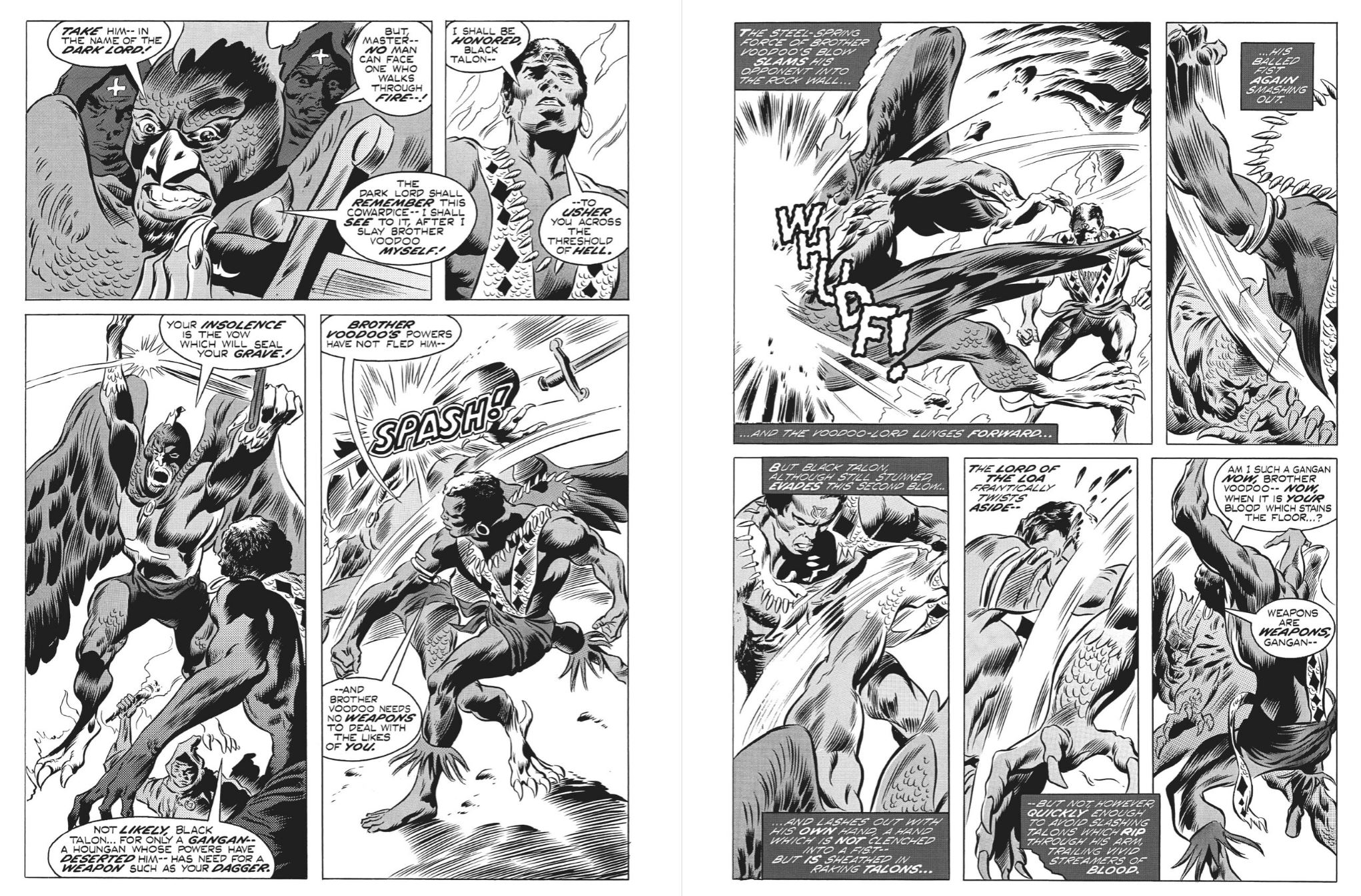
Brother Voodoo next appeared in New York City, joining Spider-Man in Marvel Team-Up #24 (August 1974) in a Wein yarn illustrated by Jim Mooney & Sal Trapani: a decidedly offbeat hero haunting the Big Apple to quash a Manhattan killer cult in ‘Moondog is Another Name for Murder!’ Almost one year later, BV returned as Tales of the Zombie #10 delivered ‘The Resurrection of Papa Jambo!’ (March 1975, by Moench & Tony DeZuñiga) wherein Drumm’s long-departed tutor is forcibly resurrected by malign Dramabu, the Death-Lord. As the revered savant stalks shanty towns in Haiti, claiming sacrificial fodder for his power-hungry new master, the houngan hero & Bambu return to their roots to make some hard decisions and save their people…
Following that, Voodoo joined Marvel’s own ranks of the living dead: reduced to occasional cameos and guests shots in other series. Represented here in excerpts from The Tomb of Dracula #34-37 (July to October 1975 as crafted by Marv Wolfman, Colan & Tom Palmer), he visits the Brazilian Amazon, rescuing vampire hunter Frank Drake from a “zuvembi” army unleashed by the Transylvanian terror. Increasingly though, times & tastes were changing, with superheroes again ascendent as the horror fad faded. Soon, only The Tomb of Dracula would remain…
Lovingly realised by Moench & Don Perlin, furry former phenomenon Werewolf by Night had ridden the storm longer than most: deftly adapting to new trends and ideas by allowing character and not plot to dictate the course. An earlier arc depicting Haiti holding a cure for lycanthrope Raymond Coker was revisited and the extract here from WBN #38 (May 1976) set up an epic intervention and unfolding wonder as Coker requests the aid of Brother Voodoo. Cover-dated July, Werewolf by Night #39 reveals how – after being visited by a trinity of infinite beings who threaten to alter his existence forever – wild werewolf Jack Russell is propelled into a lifechanging crisis. His celestial visitants are also in touch with Coker as he squats in a hut in far off Haiti, and they even appear to Russell’s sister Lissa and girlfriend Topaz.
The “Three Who Are All” are manoeuvring players into a game of cosmic consequences and when Jack gets home, he finds Coker and Drumm waiting. No sooner are introductions made than another army of zuvembies attack and Russell learns that ‘Some are Born to the Night!’ Portentous proclamations of unfulfilled destinies push the adventurers and Topaz back to Haiti where they are abducted and brought to an infernal pit nurturing a shocking travesty of life, with Jack’s old enemy Dr. Glitternight in charge of ‘Souls in Darkness’.
Revealed in WBN #41 as an ex-member of the gestalt once called “Five Who Are All”, the villain’s obsessive monster-making is explained before his attempts to dominate reality are spectacularly thwarted through the return of a missing fourth being and the indomitable resistance of Jack and Brother Voodoo in ‘…And Death Shall Be the Change’…
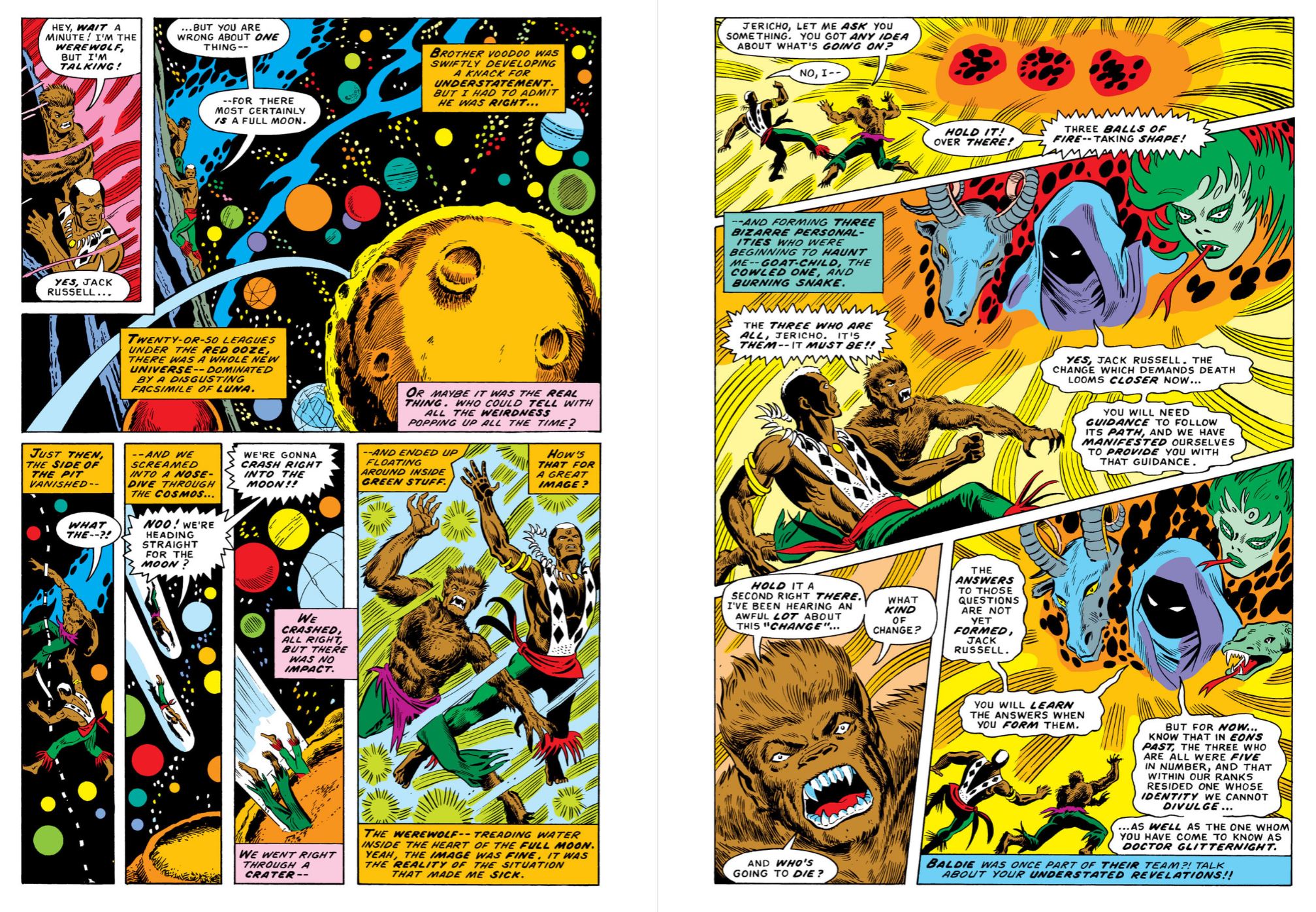
Key to their eventual triumph is the moment when Russell discovers how to transform into a werewolf fully in control of his mental faculties day or night. Returning to the US, the Werewolf-by-Choice naturally became a superhero and moved to New York, but for Jericho Drumm it was time to fade into the shadows once more. As such he was prime fodder for guest vehicle Marvel Two-in-One, and #41 (July 1978) sees David Anthony Kraft, Ron Wilson & Pablo Marcos close an open case where The Black Panther had vanished whilst fighting a “zombie-vampire” stalking New York’s streets and abducting prominent African Americans. Here, concluding chapter ‘Voodoo and Valor!’ sees Drumm volunteer his specialised services to The Thing to save T’Challa, and end the crisis. The trail takes them to Uganda for a confrontation with African supervillain Doctor Spectrum and a far deadlier crazed killer… Idi Amin.
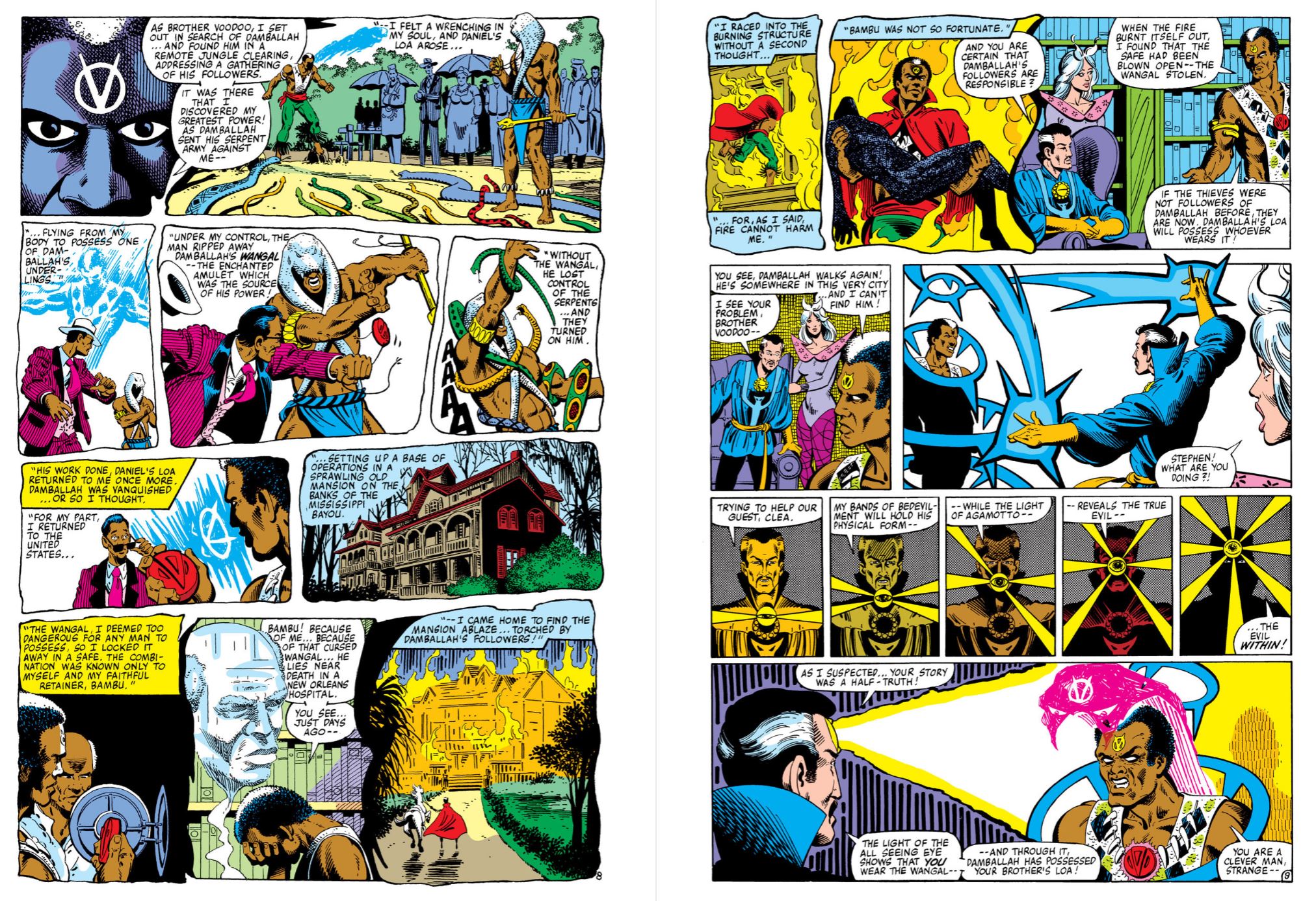
For August 1981’s Doctor Strange #48, Roger Stern, Marshall Rogers & Terry Austin reveal how the voodoo vigilante and his passenger Daniel are possessed by minor god Damballah and require ‘The Power of Dr. Strange’ to restore them to sanity and safety, after which Moon Knight #21 (July 1982) is paid a visit by ‘The Master of Night Earth!’ Crafted by Moench, Vicente Alcazar, John Tartaglione & Bob Camp, this dark delight sees the Fist of Khonshu join Brother Voodoo in Haitian port city Mirebalais. Battling gunrunners before colliding with a thug possessed by Daniel Drumm, the lunar avenger is soon helping head off a revolution: one fought by zuvembies on zombie alligators fighting for a greedy politician with voodoo training…
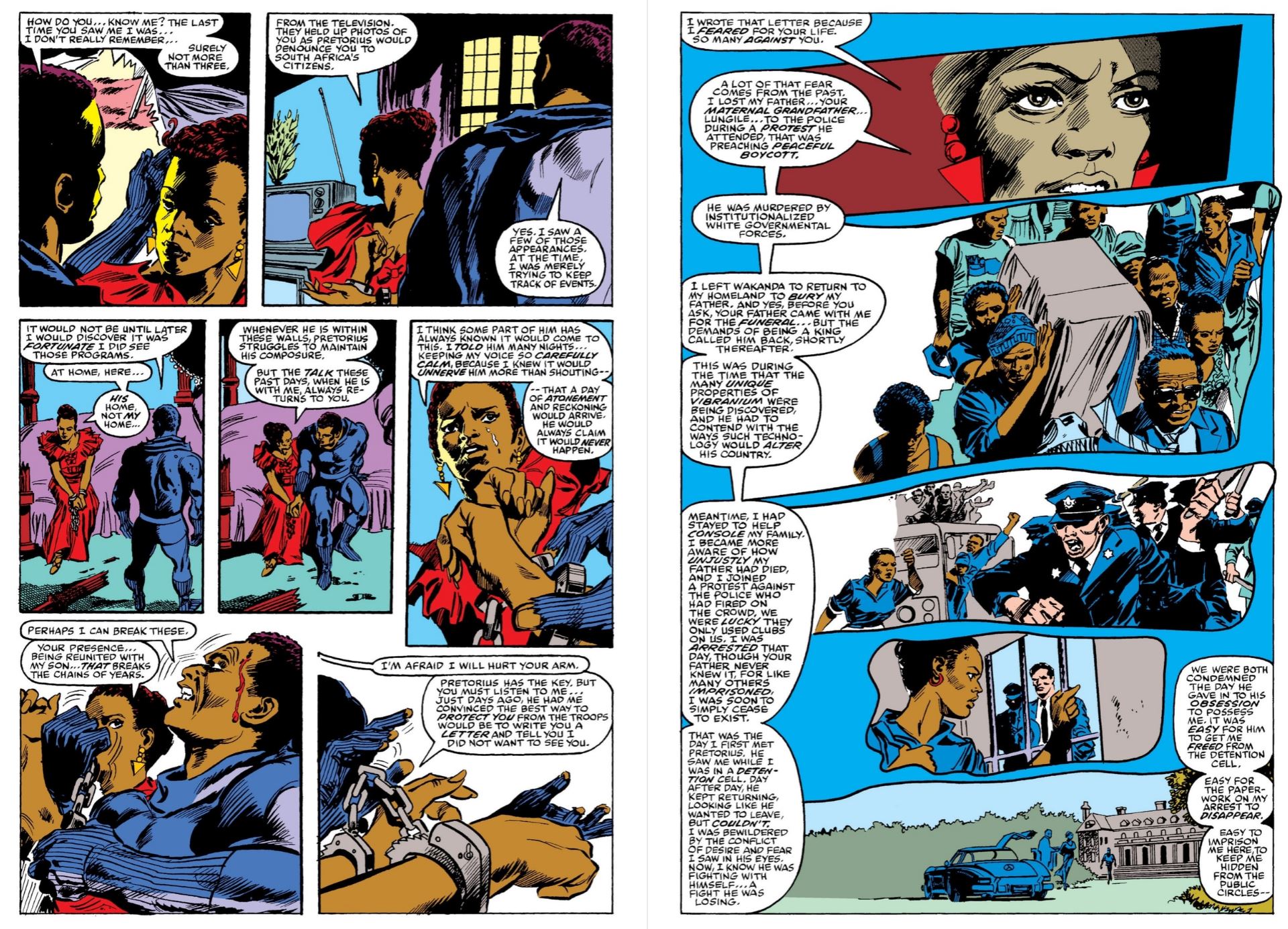
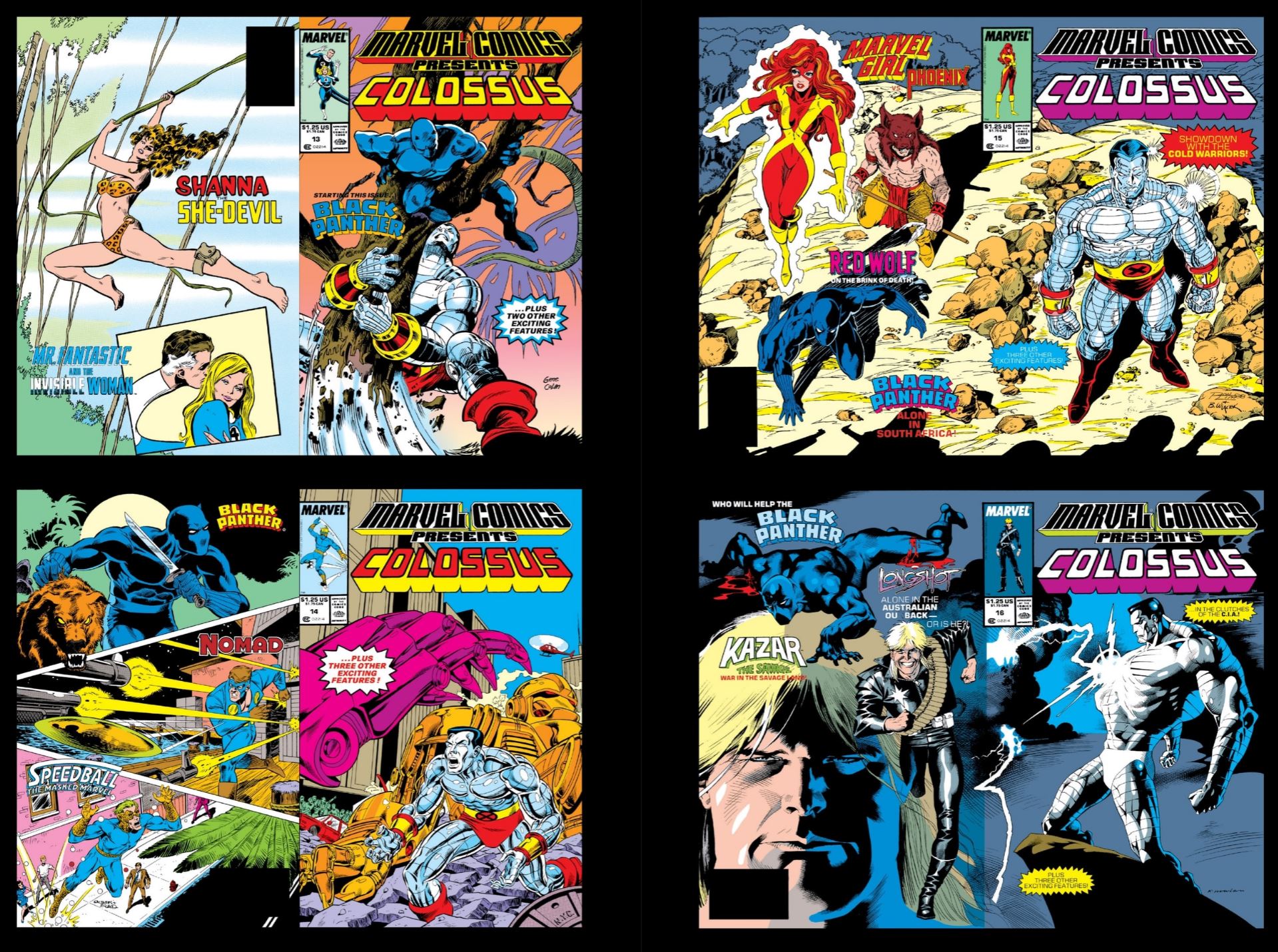
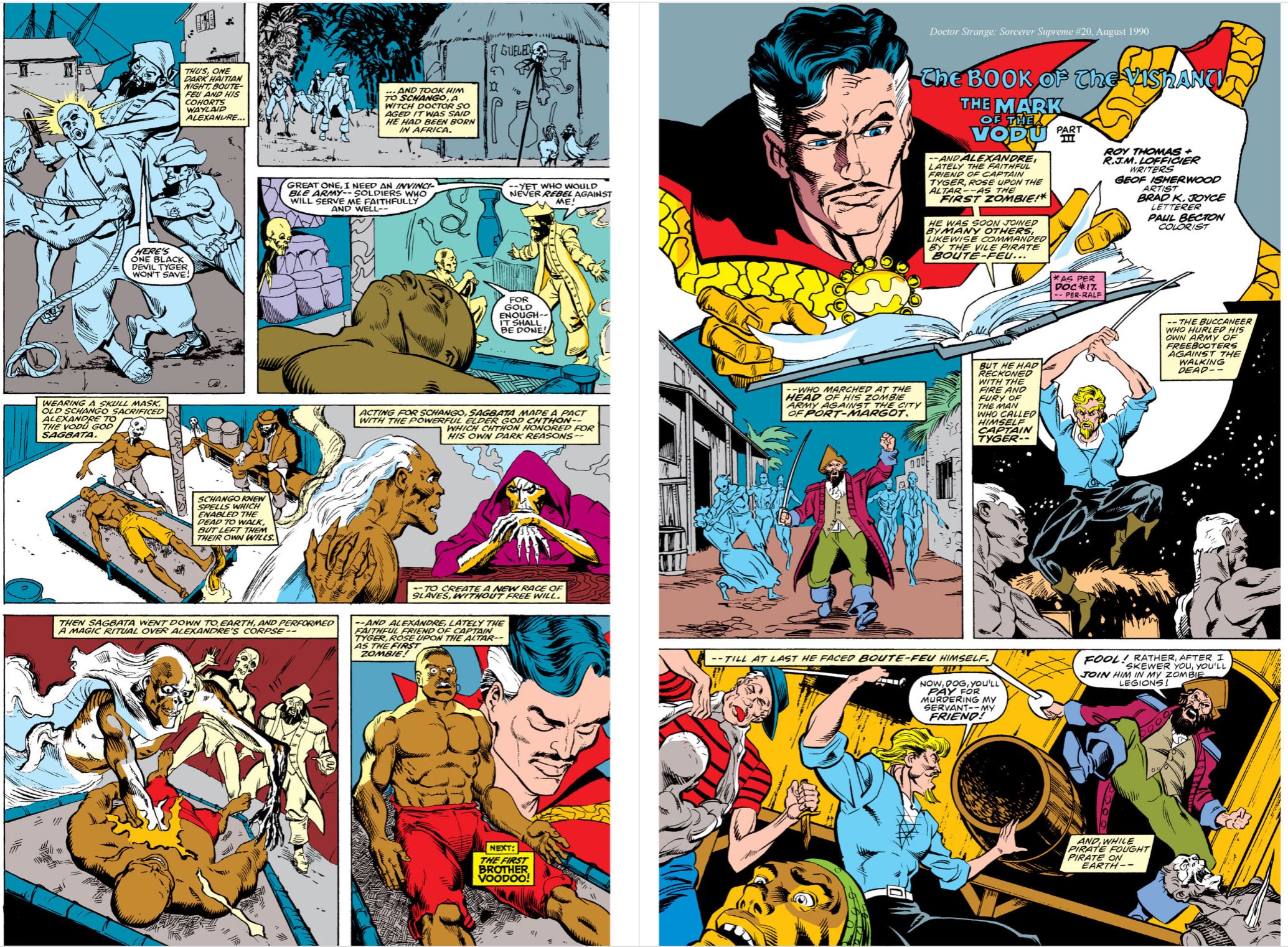
May 1990 brought giant anthology Marvel Super-Heroes (Spring Special) #1where, buried deep inside, Scott Lobdell, Fred Hembeck & Dell Barras detailed short done-in-one saga ‘Don’t Do that Voodoo You Do So Well’ with Jericho saving hurricane victims, encountering again a lost love from his youth. Contemporaneously, he scored a short back-up series in Doctor Strange: Sorcerer Supreme (April-August 1990) seen here as ‘The Book of the Vishanti: The Mark of the Vodû! Part I-III’ as featured in issues #16-17 & 20. A way to reinvent the hero whilst revisiting and revising his origins, the serial (by Roy Thomas, Randy & Jean-Marc Lofficier and illustrators Geoff Isherwood & Mickey Ritter) reprised Voodoo’s career & legacy, whilst laying out how the origins, history and practise of voodoo slotted into Marvel’s cosmology and continuity.
With covers by Romita, Gil Kane, Giordano, Giacoia, Rich Buckler, Ernie Chan, Earl Norem, Palmer, Keith Pollard, Rogers & Austin, Bill Sienkiewicz & Jim Lee; pages of original art by Colan, Kane and a host of forementioned inkers, this tome also offers contemporary house ads; pertinent info pages (Brother Voodoo & Black Talon) from The Official Handbook of the Marvel Universe and 2008’s cover of Essential Marvel Horror volume 2. These are augmented by creator biographies; ‘Introducing Brother Voodoo!’ – an illustrated feature by Tony Isabella from Tales of the Zombie #2 in anticipation of his imminent debut in Strange Tales #169. and ‘Brother Voodoo Lives Again’ from TotZ #5 – discussing his move out of colour comics.
Definitely not everybody’s role model or anyone’s “Great White Hope”, Brother Voodoo remains a noble experiment and intriguing concept that still offers great enjoyment and astounding art for those who like their fun challenging and off centre.
Don’t let other people’s prejudice make up your mind or you might miss out on something special.
© 2021 MARVEL.