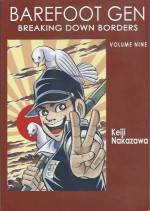
Barefoot Gen volume 9: Breaking Down Borders


By Keiji Nakazawa (Last Gasp)
ISBN: 978-0-86719-600-9

I first found the Educomics magazine I Saw It! in 1982; initially seduced by a garish cover and the Chester Gould-like illustrations. There was precious little translated manga around then and the magazine was lumped in with the wild, wacky and often salaciously outrageous “Underground Comix” on the racks of my regular comics shop, across the road from Goldsmith’s College from where I had just graduated before starting as tea-boy on iconic Warrior magazine.

I was cocky, big-headed and, I thought, extremely well versed in all aspects of comics but still utterly gobsmacked after I read it…

In England we’ve had educational comics for decades, but this was something completely new to me. There was no tasteful distancing here; just an outraged scream of defiance and a direct plea to make things right. This was history and politics and it was deadly serious, not played for laughs or to make points as British cartooning traditionally did.

Constantly revised and refined by its creator and publishers around the world, I Saw It! became Barefoot Gen, and now the entire epic semi-autobiographical saga has being remastered as an unabridged and uncompromising 10-volume English-language translation by Last Gasp under the auspices of Project Gen, a multinational organisation dedicated to peace and the abolition of nuclear weapons.

Hadashi no Gen was first seen in Japan began in 1973, serialised in Shūkan Shōnen Jampu (Weekly Boys Jump) following an occasional 1972 series of stand-alone stories in various magazines which included Kuroi Ame ni Utarete (Struck by Black Rain) and Aru Hi Totsuzen, (One Day, Suddenly).

These eventually led Shonen’s editor Tadasu Nagano to commission the 45-page Ore wa Mita (I Saw It) for a Monthly Jump special devoted to autobiographical works. Nagano clearly recognised that the author – an actual survivor of the word’s first atomic atrocity – had much more to say which readers needed to see and commissioned the serial which has grown into this stunning landmark epic.

The tale was always controversial in a country which still often prefers to ignore rather than confront its mistakes and indiscretions and, after 18 months, Hadashi no Gen was removed from Jump, transferred first to Shimin (Citizen), then Bunka Hyōron (Cultural Criticism), and Kyōiku Hyōron (Educational Criticism).

Like his indomitable hero, Keiji Nakazawa never gave up and his persistence led to a first Japanese book collection in 1975, translated by the original Project Gen team into Russian, English and then other languages including Norwegian, French, German, Italian, Portuguese, Swedish, Finnish, Indonesian, Tagalog and Esperanto.

The author at long last completed his story in 1985 and his telling testament of survival has since been adapted into live-action and anime films, operas, musicals and live-action television dramas.

Undoubtedly mirroring Nakazawa’s own creative journey, this penultimate volume shares the moment it all changed for a hardy, forward-looking and indomitable idealist and individualist who finally found a way to express his anger and effectively fight back against the idiocies and injustices of a world which had let Atom bombs fall, and at last challenge those pedagogues and self-seekers who chose to keep the bad old ways alive even after their people suffered the most hideous of consequences…

Possibly the most inspirational volume of Keiji Nakazawa’s graphic masterpiece, Barefoot Gen: Breaking Down Barriers begins following ‘Some Thoughts About Keiji Nakazawa’ by Project Gen Editor Alan Gleason, who has been with the grand design since 1977 – practically from inception – and offers here telling insights and historical perspective. The other end of this monochrome paperback balances the essay with a biography of the author and invaluable data ‘About Project Gen’…

This stunning graphic manifesto resumes with an ancient history lesson as fearful peasants are told their precious rice paddies are to be destroyed by the local military in order to make a road for troop movements. As one bold serf dares to protest and suffers grievously for it, Gen awakes in the communal shack he and his friends cobbled together out of rubble and scavenged debris of Hiroshima. He shares it with other “bomb-orphans” and, until this morning, his last surviving family member.

Now however older brother Koji Nakaoka is moving out to get married, but at least rambunctious Ryuta and quietly stolid Musubi are staying put. The former reform school kids have become super-salesmen, selling dresses made by radiation-scarred outcasts Natsue and Katsuko on Hiroshima’s gradually restored and rebuilt street corners. The long-term goal is typically ambitious: the girls will sew and the boys will sell until they have saved enough money to open their own shop.

Today however Ryuta is in an excitable state. He’s the most devoted follower of the city’s woefully sub-par baseball team the Hiroshima Carp and is sharing his hopes and fears for the new season with any highly amused passer-by he can corral…

By the time the hapless sports fan returns to uncharacteristically gloomy Gen at the shack another crisis has arisen: a horde of military types are besieging the hovel intent on tearing it down to make way for a proposed “Peace Memorial City” and they don’t care that the kids have lived there for years and have nowhere else to go.

Gen and Ryuta’s vigorous, violent and initially successful “Dirty Protest” defence of their home is savage and disgusting but ultimately doomed to failure…

When the little war is finally lost Gen is painfully marked for life and carries another burden of stored anger, but at least ailing Natsue is not present to see the loss of their home. She is in the mountains, completing a ceramic urn to contain her ashes after she dies…

Gen has known her since the earliest aftermath of the bomb: a young dance student he twice saved from her own fatalistic intent, but recently she has been physically failing. Never quite recovering from appendix surgery, she is now convinced her remaining days are few and is preparing for the end…

Forcibly relocated to a tiny riverside shack, the disparate band gather to celebrate surviving another day, but when exhausted Natsue finally joins them and proudly shows off her beautiful funerary urn Gen “accidentally” shatters it. Next morning, increasingly furious Ryuta attacks his best friend for his clumsiness and apparent lack of remorse in upsetting Natsue and learns the true depth of Gen’s compassion. As their brutal clash accidentally envelopes and infuriates a haughty street fortune teller, Gen reveals he acted deliberately to shock Natsue out of her pervasive death-spiral, believing he can keep her alive by sheer anger. Eying the enraged seer screaming at them, he then concocts an even bolder plan to reinvigorate her vanished will to live…

When Ryuta later leads the entire gang past a heavily-bearded prognosticator-for-hire, the oracle predicts long life and a fabulous future for the fatally-depressed girl but can’t resist also having a hilarious pop at her mouthy Carp-loving companion. The session works splendidly however and Natsue agrees to return to hospital for doctors to treat her still unhealed surgical wounds. Sadly not even unflagging optimism and Gen’s guile can fix everything…

In the tragic aftermath fresh horror emerges as two pious gentlemen intrude upon the youngsters’ grief, offering to arrange a splendid funeral for Natsue. Gen however is not fooled and realises they are simply clever “Vultures” working for the Americans…

In occupied Japan news media was absolutely forbidden from discussing or reporting the effects of atom bombs and the populace had no knowledge of exactly what had happened at Hiroshima and Nagasaki. Indeed, amidst the rubble of the destroyed cities, most of the 300,000 terrified, bewildered survivors had no idea what was happening to their bodies – or that they were not unique or even isolated cases – but were consoled by the seemingly-benign and tireless humanitarian efforts of the Atomic Bomb Casualty Commission.

These were officials employed by the US Occupation forces, tasked with acquiring – even often buying – bodies of recently deceased bomb survivors for scientists to examine. The bomb-makers were hungry for information on the after-effects of their hell-weapons and apparently did not see victims as human. They simply dissected bodies, harvested organs and collated facts: always hungry for more data. Gen had dealt with them before, when they stole the fresh corpse of his little sister Kimie…

The ABCC even pay for teams to go into schools to regularly examine the health of children, working to a hidden agenda aided by local Japanese doctors bribed to send everyone they could to the Americans. For each referral they were rewarded with fancy drugs, many sold for profit to the black market. No one with bomb-related symptoms was treated or cured; just tested and catalogued.

Now with the knowledge enflaming him, Gen responds with brutal violence, beating and driving off the Vultures before he and his friends steal Natsue’s body…

She had died on the 6-month anniversary of the beginning of the Korean War just as General Douglas MacArthur (Supreme Commander for the Allied Powers and de facto Emperor of Japan) convinced US President Truman to announce the deployment of atomic weapons for that conflict too. Thankfully, concerted global outcry convinced them to withdraw the threat…

In January 1951, Gen, Ryuta, Musubi and Katsuko are on a pilgrimage to inter their lost friend’s ashes above the city on Mount Hiji, but are thwarted by the discovery that the ABCC have built a vast complex on the once-beautiful site. After displaying their disdain in the approved scatological manner, the weary mourners decide to place the urn Gen worked so long and hard to reconstruct within the Nakaoka family grave, but as they trudge to the cemetery their precious cargo is stolen by a street urchin.

Giving ferocious chase they corner the little thief and administer the customary beating, leading to a confrontation with an old man who would change Gen’s life forever…

At first artist Seiga Amano cannot believe his grandson Tatsuro would stoop so low, but when he realises why the boy has turned to thievery, his proud heart almost breaks…

Eventually everybody calms down and Gen gives the old painter art materials he has stored ever since an old, dying man briefly stayed at their shack, sharing with the grateful painter the knowledge that his own father was also an artist before the bomb. Their riverside conversation inspires a life-changing aspiration within the lad that turns his life to a new path. Gen begs the elder to teach him everything he knows so that he can prove his new, all-consuming mantra “Art Has No Borders”…

The next lucky happenstance occurs when Gen stumbles onto a sign painter producing a cinema poster for a Kurosawa Double Feature. Toro Otsuki boasts he is the greatest exponent of his craft in Hiroshima, a claim brutally backed up by his thuggish assistant Kurosaki who foolishly attacks the loud-mouthed young gawker only to be soundly trounced for his temerity.

Sadly in the melee the painting is wrecked and honourable, guilt-struck Gen swears to make amends to the artist and his sadistic boss Nakao; an unrepentant former-soldier now bullying his way into civilian life…

When Seiga Amano and grandson Tatsuro pass by and see Gen enduring savage abuse in his attempts to atone, another fight begins and Otsuki breaks an arm, compelling Amano to step in and complete the poster. The rapidly-completed masterpiece instantly mollifies the militant Nakao who sees another business opportunity…

The constant stream the Boss provides is the making of Gen who serves as assistant and willing, eager student to Seiga, rapidly learning the basics of a discipline which will change his life.

As spring arrives more change is in the air. General MacArthur is summoned home and older conservative citizens begin to panic as their surrogate Emperor deserts them. Ryuta is typically scathing of the nervous old farts and isn’t there when a band of thugs target Gen, seeking to chop off his arm. The plucky little scrapper quickly ends their threat and knows jealous Kurosaki is behind the scheme, but after taking a measure of vengeance Gen surprises himself by getting to know his enemy and learning the horrific story of the abuse his fellow bomb orphan suffered at the hands of priests who were supposed to be protecting the lost children of Hiroshima…

With a deeper understanding but no real resolution to their stalled conflict, Gen returns to his diligent studies but his peace of mind will soon be shaken by the return of an old enemy…

Militaristic elements of Japan were deftly re-establishing themselves as the city grew again: attempting to whitewash their pasts for the New Japan. When ardent – and genuine – anti-war protestor Gen sees a poster announcing Denjiro Samejima, running for political office, claiming he opposed the war and was a “soldier for Peace”, Gen boils over at the villain’s hypocrisy and reacts with his usual earthy passion…

During the war that wily demagogue was a secret Black Marketeer who denounced Gen’s father – a genuine anti-war dissident – and led a hate-campaign that tormented the entire Nakaoka family. Now the rogue is profiting by stealing and feigning his beloved father’s ideals and dreams, just like so many other criminals who would deny history and the truth in search of self-advancement…

The scathing insights into the sordid character of political opportunists are potent reminders of why society never changes, reminiscent of George Orwell’s polemics, and by seemingly moving slightly off-message Nakazawa actually drives home his points with far greater force. Barefoot Gen is positively Reithian in its ability to Educate, Inform and Entertain and its legacy will be as pervasive and long-lasting…

And yet even at its most bleak and traumatic Keiji Nakazawa’s magnum opus never forgets to be funny, compelling and enjoyably Human. The broad cartoon style of Keiji Nakazawa’s art has often been the subject of heated discussion; the Disney-esque, simplified rendering felt by some to be at odds with the subject matter, and perhaps diluting the impact of the message. I’d like to categorically refute that.

Mister Nakazawa’s style springs from his earliest influence, Osamu Tezuka, Father of Animé and God of Manga who began his career in 1946 and whose works – Shin Takarajima (New Treasure Island), Tetsuwan Atomu (Astro Boy) and so many more – eased some of the grim realities of being a bomb survivor, providing escape, hope and even a career path to the young boy.

As such the clear line, solid black forms and abstracted visual motifs act as tolerable symbols for much of the horror in this parable. The art defuses, but never dilutes, the terrible facts and scenes of the tragedy and its aftermath. The reader has to be brought through the tale to receive the message and for that purpose the drawings are accurate, simplified and effective. The intent is not to repel (and to be honest, even as they are they’re still pretty hard to take) but to inform, to warn.

So now you’ve been warned, buy this series. Better yet, agitate your local library to get a few sets in as well. Barefoot Gen is a world classic and should be available to absolutely everyone…
© 2009 Keiji Nakazawa. All rights reserved.

Leaf


By Daishu Ma (Fantagraphics Books)
ISBN: 978-1-60699-853-3

Sequential Art – or “comics” as I stubbornly prefer to think of it – is generally typified as a marriage of text with a series of illustrations designed to tell a story and impart a mood, but it’s always been a nebulously open-ended venture with little time for hard and fast rules and happy to avoid definition.

For instance if a story has an overabundance of words in too few pictures, the result is little more than illustrated prose, but if you go the other way and minimise, or even complete exclude words, what you have is the absolute zenith in comics communication. And more often than not, it’s the best writers who use the least verbiage, whether they illustrate the story or not…

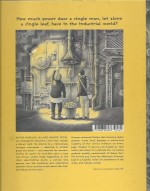
Daishu Ma is a Chinese cartoonist, artist and designer working in Barcelona who, with her first graphic novel Leaf, has joined a rarefied band of international illustrative icons (Jim Woodring, Jason and our own Raymond Briggs being regularly amongst the most prominent) who have frequently eschewed and transcended the printed word and strictures of graphic narrative, allowing methodically crafted imagery to establish scenes, define characters, create nuance and carry a tale.

…Or rather here, a politically-edged, industrially-condemning eco-parable, since her sublime, meticulous and astonishingly beguiling pencil-tone art – enhanced by smartly applied splashes of mood-enhancing pastel colour – exposes a blandly bleak industrial environment on the brink of eradicating the last vestiges of the natural world…

This is a story you must experience for yourself so let’s content ourselves with the basic facts: when a young man on an excursion finds a fallen leaf which pulses with an uncanny, comforting radiance he covertly takes it back to the ever-sprawling city.

His teeming conurbation, bustling office of employment and even extremely basic, always empty apartment are all drab and dolorous despite the plentiful supply of monopolistic artificial lights and he realises that what he’s found is something special, even inspirational.

Increasingly obsessed, he roams the bustling city, seeking someone who can explain what he hides in his home. The revelatory journey takes him to unsuspected, people-packed enclaves of joy, wonder and despondency and into many folks’ lost memories of better times, when he encounters a young woman who has dedicated her life to understanding the rapidly vanishing flora of the world and a strangely timid old man who seems to know all the secrets of light-making…

And once the finder obsessively follows a convoluted trail to a hidden truth, how can he not risk everything in a bold act to change his overcrowded, oppressive, unhappy world?

Entrancing, subtle and seductive in a purely primal manner, Leaf offers a vision of hope for all lovers of beautiful simplicity and natural wonder.

© 2015 Daishu Ma. All rights reserved.

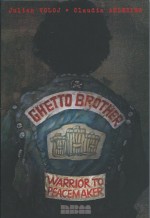
Ghetto Brother – Warrior to Peacemaker


By Julian Voloj & Claudia Ahlering (NBM/Comics/Lit)
ISBN: 978-1-56163-948-9

How’s your modern history? What about your familiarity with the development of contemporary music? Before you answer you might want to take a look at a potent and powerful new graphic documentary created by author and photographer Julian Voloj and artist/illustrator Claudia Ahlering.

In I971 New York City was a broken, dirty metropolis increasingly divided by top-down, enforced gentrification. From the end of the 1950s the mostly ethnically European population of the Bronx had been moving out into the suburbs – a process dubbed the “White Flight” – whilst poorer inner city newcomers, mostly Blacks and Hispanics, were driven or priced out of their cheap bohemian enclaves in Greenwich Village, Little Italy, Chinatown and Soho to fill the vacated places.

Those emptied Manhattan regions now comprise some of the most expensive and exclusive real estate in the Big Apple…

Further social assault came when ruthless urban reformer and City Planner Robert Moses slashed the newly coalescing community of “foreigners” in half by steamrollering the Cross Bronx Expressway through the formerly scenic Borough.

Subsequent blight, administrative neglect and lack of funding soon turned the whole region into isolated islands of forgotten residents, and their hopeless, opportunity-starved kids began forming fiercely territorial gangs to defend spurious concepts of dignity, personal honour and the little territory they called theirs…

The South Bronx became a global byword for urban decay and a breeding ground for violence by the poor upon the poor. By December 1971 it seemed inevitable that the more than one hundred gangs situated in the Borough would wipe each other out and possibly take the entire city with them.

…And then something miraculous happened…

This stunning graphic testament tells in the impassioned words of Benjamin “Yellow Benjy” Melendez how, in the year Dr. Martin Luther King Jr. and Robert Kennedy were assassinated, he formed the Ghetto Brothers, quickly turning it into the largest and most powerful Puerto Rican gang.

It further reveals how the senseless murder of one of his closest friends led to the Hoe Avenue Peace Meeting: a tense, protracted conference where rival gang-lords talked instead of fought and astonishingly agreed to a truce which all but ended gang warfare for a generation.

With fighting curtailed, all those bored, frustrated kids needed new outlets for their pent-up energies and what slowly emerged was today’s Rap and Hip-Hop movement…

Melendez’s path also encompassed music, but he mostly concentrated on turning the Brothers into a rough and ready outreach project for the community, with the gang forming an association with organisations of Puerto Rican nationalism, including the then-new Puerto Rican Socialist Party.

Highlighting long-forgotten events of a critical time through one key individual’s incredible epiphany, this amazing tale then reveals his chance discovery of a hidden and quite shocking personal truth that changed Benjy’s life forever…

Addressing a growing cultural zeitgeist attuned to that time and place as recently seen in books and movie documentaries like Fresh Dressed, Rubble Kings, 80 Blocks From Tiffany’s and Flyin’ Cut Sleeves, this utterly absorbing monochrome chronicle is bracketed by an Introduction from Jeff Chang (author of Can’t Stop Won’t Stop: A History of the Hip-Hop Generation) and the compelling, informative photo-essay ‘The Story Behind the Story’ which further explores that groundbreaking meeting at Hoe Avenue and offers biographies and further reading.
© 2015 Julian Voloj and Claudia Ahlering.

Snakepit Gets Old: Daily Diary Comics 2010-2012


By Ben Snakepit (Microcosm Publishing)
ISBN: 978-1-62106-596-8

If you’ve ever made your own comics or art or music you probably know how addictive that act of creation can become. Pity then poor Ben Snakepit; a bass-playing DIY punk living in Austin, Texas…

He attended Virginia Commonwealth University as a graphic arts major and in 2000 after living his life for a bit began documenting his day. He has done so ever since, three panels per diem, rain or shine, in sickness or in health; immortalising his dire, dreary day-jobs, the bands he’s in and out of (Ghost Knife, Modok, Shit Creek, Shanghai River, J-Church, The Sword), his romantic life, meals, the war against expanding waistlines, sundry friendships, an apparent addiction to computer games, various Star Trek iterations and so many movies and comics. The irresistible making and selling and reading of funnybooks…

The journal cartoons are all delivered in a raw yet deliciously engaging, self-deprecating manner that is impossible to resist, and at the start of this collection he explains why, even though he swore to only draw the strip for ten years (beginning in the summer of 2000), he just can’t stop, before going on to delineate some of the most important moments of his life so far in a non-stop parade of funny, sad, sweet, pitiable and enviable inky snapshots…

Constantly decrying his ability to draw the simplest or most familiar things, he has shared his life in the strips (previously progressively gathered as The Snakepit Book, My Life in a Jugular Vein, Snakepit 2007, Snakepit 2008, Snakepit 2009 and the tome under review here).

As this sublimely readable tome proves, there are actually no unremarkable lives and Snakepit Gets Old is an experience celebrating simple happiness and everyday contentment which you won’t soon forget by a very special author who doesn’t know how to quit…

You can’t see it, but this volume includes a second invisible cover overprinted on the first and only to be seen by holding the book up to the light in a skewed manner. Cool…
He hasn’t said it but I’m guessing © 2015 Ben Snakepit.

Small Press Sunday

I started out in this game just before the pyramids were built, making minicomics, collaborating on fanzines and concocting stripzines with fellow weirdoes, outcasts and comics addicts. Even today, seeing the raw stuff of creativity in hand-crafted paper pamphlets – or better yet professionally printed packages which put dreamers’ money where their mouths are – still gets me going in ways that threaten my tired old heart…

With that in mind here’s a quartet of little gems and treats that have landed in my review tray recently…

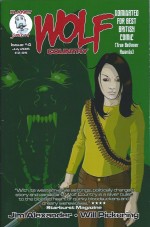
Wolf Country #1-4
By Jim Alexander, Will Pickering & Luke Cooper (Planet Jimbot)

No ISBNs:

As well as stunning graphic novels, independent publisher Planet Jimbot (likely lads Jim Alexander & Jim Campbell) also deliver proper comicbooks, and possibly their best title of the moment is an eerie ongoing otherworld religio-political saga with disturbing echoes of Westerns like Unforgiven and The Searchers.

Of course here the “good guys” are a sect of devout vampires stuck in a fort in the desolate badlands, surrounded by hostile tribes of werewolves, whilst their own progress-minded government are methodically abandoning the old ways they cherish in favour of a soulless, ruthless, rationalist super-state…

Wolf Country #1 by Alexander and illustrator Luke Cooper opens in the big city and introduces ‘Luke’, a young man with a potent future which begins to unfold when a gigantic wolf-thing goes rogue in the metropolis yet is somehow miraculously destroyed by the inconsequential waif.

Three years later the infamous “Boy Who Killed Wolf” has relocated to The Settlement, a fundamentalist outpost on the frontier between vampire and werewolf territories where the faithful follow the doctrines of their Holy Scriptures and daily confront their eternal enemies in the traditional ways. Here, after a close encounter with the hirsute savages, young Luke explains what actually happened that night to his companion, mentor and chief scout Carmichael…

The boy’s unlikely feat made him an overnight sensation among vampire-kind, a symbol of prophecy proved; but the adulation and agendas of others were not for him and as soon as he reached his majority – and despite being an unbeliever – he headed out to The Settlement to live his own life and seek his own answers…

Perhaps it was that drive that compelled him to go native and stay out all alone in the wilderness after he and Carmichael narrowly escaped a wolf attack…


Wolf Country #2 finds Will Pickering taking up the illustrator’s burden – although Cooper remains as cover artist – as ‘Kingdom Come’ follows Settlement leader Zealot Halfpenny as he reluctantly transports a captured werewolf back to the decadent, science-loving city.

It is not his idea. As the helicopter takes the sacrificial beast to The Kingdom for the populace’s regular Bread-and Circuses bloodletting, Halfpenny is ordered to stay aboard whilst a contingent of arrogant, irreverent, heavily-armed troops billet themselves in his spartan badlands fort.

It seems the High Executor himself wants to see the leader of the quaint religious freaks. Apparently there is talk and fallout over The Settlement’s loss of the legendary and beloved “Boy Who Killed Wolf”…

Later, whilst menacing atheist Sergeant Urquhart attempts to intimidate and dominate the settlers, in faraway City Chambers Halfpenny learns the real reason he has been summoned…


The suspense mounts in ‘Wax and Wane’ (WC #3, which also proudly lists the plethora of awards the first two issues garnered) when, at the Settlement, Urquhart presses the devout throwbacks into joining him in a sortie against the lupine tribes just as the moon enters its most dangerous phase.

Meanwhile in the Kingdom, Halfpenny is dragooned into working as a stalking horse for the draconian Department of Purity, interviewing a radical named Fabian currently living in the bloodily bohemian enclave of wrong-thinkers and backwards-lookers dubbed “Free State”…

In the badlands natural foes Carmichael and Urquhart warily test each other out and quite forget who their real enemies are, but in Free State Halfpenny’s interview with Fabian goes disastrously awry. The rebel has honeyed words and access to sacred writings which shake the pious outsider to his core, but before he can properly form a response the Executor’s troops move in and start slaughtering…

Meanwhile back at the Settlement, with the soldiers and male settlers still deep in-country, the massed wolf tribes attack the fort…


Fresh off the presses, Wolf County #4 (with supplemental interior art from Cooper) brings us up to date and pops the mounting tension bubble with all-out action as the Settlement walls are breached before the ‘Cavalry’ arrive, whilst in Free State a murderous riot ensues and Halfpenny reveals the uncanny abilities which underpin his ferocious reverence to Scripture…

And in the bloody aftermath at the fort, an unchecked and out-of-control Urquhart now turns his sadistic attention on the settlers in his quest for the truth about Luke’s whereabouts…

To Be Continued…

Brooding, intriguing and utterly compelling from the get-go, Wolf Country takes an overworked trope and transfuses it with new sparkle and true potency as heroism, passion, faith and ambition all take a pounding as a war between Church and State becomes increasingly derailed by hairy barbarians at the gate and the visions of an outrider from the wilderness divining a dangerous and radical third way for all…

Story © 2013, 2014, 2015 Jim Alexander. Art © 2014, 2015 Will Pickering. Issue one art © 2013, Luke Cooper.

Wolf Country and other fine comics and books are available at the Planet Jimbot shop so go to : https://www.etsy.com/uk/shop/PlanetJimbot

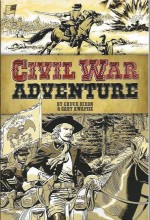
Civil War Adventure


By Chuck Dixon & Gary Kwapisz, with Esteve Polls, Enrique Villagran, Silvestre & Erik Burnham (Dover Comics & Graphic Novels)
ISBN: 978-0-486-79509-6

From its earliest inception, cartooning and graphic narrative has been used to inform. In newspapers, magazines and especially comicbooks the sheer power of pictorial storytelling – with its ability to distil technical recreations of time, place and personage whilst creating deep emotional affinities to past or imagined events – has been used to forge unforgettable images and characters within us. When those stories affect the lives of generations of readers, the force that they can apply in a commercial, social, political or especially educational arena is almost irresistible…

Thus the compelling power of graphic narrative to efficiently, potently and evocatively disseminate vast amounts of information and seductively advocate complex issues with great conviction through layered levels has always been most effectively used in works with a political, social or historical component.

Comics have brought the past to life since they began. Superb examples of a broad view include such triumphs as Jack Jaxon’s Los Tejanos and Comanche Moon or more recently The Loxleys and the War of 1812 and Fight The Power – a Visual History of Protest Among the English Speaking Peoples, but the medium is equally adept in crafting more personal biographs such as Terry Eisele & Jonathon Riddle’s With Only Five Plums or Wilfred Santiago’s “21”: the Story of Roberto Clemente.

And that brings us to another superb and welcome re-release from Dover Comics & Graphic Novels intended to bring “The War Between the States” to life for younger readers.

Originally published by History Graphics Press in 2009 as Civil War Adventure 1: Real History Stories of the War that Divided America, this marvellous monochrome tome – crafted primarily by gritty fantasy comics veterans Chuck Dixon and Gary Kwapisz – alternates actual historical events, maps, diagrams and found writings with a fictionalised thread of tales depicting how the conflict affected one poor Southern family.

The graphic re-enactments are preceded by a ‘Map of the United States’ detailing the division of the States in 1860 and a ‘Civil War Timeline’ which marks key moments and battles (sensibly linking them directly to the stories which follow) after which ‘Choice of Targets’ by Dixon and Esteve Polls features a text vignette explaining the development of snipers and sharpshooters before offering a pithy moment during the second day of the Battle of Gettysburg in 1863 when opposing marksmen found themselves in a life-or-death duel…

‘Berdan’s Sharpshooters’ is a short cartoon lesson on the innovative Union soldier who invented the concept of snipers, promptly followed by a chilling and heartrending incident of battlefield misfortune in Dixon & Kwapisz’s ‘Home Again’ after which an illustrated info and glossary page reproduces an actual letter from a Confederate lad the night before he fell…

‘Mosby Bags a General’ – an all Kwapisz affair – combines a potted history of the South’s most successful raider with a compelling strip revealing how bold Lieutenant John Mosby infiltrated far behind Union lines to capture 58 horses , thirty prisoners and their captain plus sleeping General Stoughton, all in one night…

‘Tempered in Blood’ (Dixon & Kwapisz) then introduces the narrative strand as the simple Campbell clan are torn apart when, after heated family discussion, both father and first son Tybalt sneak off from the farm to enlist in the Spring of 1861.

Each confidently assures themselves that all the shooting will all be over long before harvest and they unknowingly individually abandon Mrs. Campbell and the little sisters to link up with the overconfident volunteers massing for what everybody believes will be one fast knockout blow…

After barely surviving the brutal training that turns hunters, croppers and ploughmen into real soldiers, the Southern heroes finally learn what warfare means at Bull Run…

More contemporary terms, factual data and historical insight is offered in ‘The War is Joined!’ before ‘The Devil’s Due’ (Kwapisz) delves into the atrocity of total warfare as a Bluecoat patrol diligently follows its bald orders to “turn the South into a wasteland”…

A fact-feature page on ‘John Singleton Mosby’ leads to a feature on rising star and flamboyant self-aggrandiser George Armstrong Custer whose rash adventuring leads ‘The Boy General’ (Dixon & Enrique Villagran) into desperate straits against overwhelming rebel opposition… resulting in Custer’s First Stand…

Information pages on the devastating ‘Sharps Rifle’ and the double-pronged naval blockade of the Mississippi River spins off into an account of the duel between ironclad vessels and the brilliant countermeasure devised by Colonel Charles Ellet in ‘Ram Squadron’ (Dixon & Silvestre), capped off with a Kwapisz segment detailing ‘Hell on the Mississippi’ as a Union flotilla horrifically fails to sneak past the naval guns established above Vicksburg…

‘Tempered in Blood II’ returns to the troubled Campbell Clan as Ty wakes in the bloody aftermath of battle to discover his best friend Seth has had enough and absconded. By the time he has found and brought back Seth, however, he discovers his own father has similarly fled.

The elder is not running from bloody death but heading home to save his farm from ruin and family from fever, but that won’t make any difference if he’s picked up by ruthless and remorseless Confederate Picquets…

The tragic true tale of ‘Colonel Cocke’ and his unseemly death gives way to the ribald eccentricity of ‘Darnel Dingus is a…’ which reveals the insane and impecunious ends to which some States descended to ensure their manpower obligations were met. The tale is couched in the story of famous war artist Winslow Homer and a practical joking jackass who learned the hard way that war isn’t funny, and is appended by an grim examination of ‘The Ultimate Punishment’ for desertion under fire and other – even worse – infringements…

The strip section then closes with a sobering and ironic tale of comeuppance in ‘The Letter’ by Erik Burnham & Kwapisz wherein a burned-out sawbones steals a missive from one of his less lucky patients and chases a dream to a woman he has fallen for based solely on her handwriting and prose…

Following one last Kwapisz-illustrated info page – on ‘Battle Field Surgery’ – this stunning introduction to the birth of modern warfare ends with a comparative list of

‘Further Reading’ and a moving notification of how to learn more in ‘If the Valley Was Lost’.

Similar in tone and style to the best of Harvey Kurtzman’s triumphant anti-war classics from Two-Fisted Tales and Frontline Combat, this is a rousing, evocative and potently instructive collection which melds history and horrific entertainment – and not a little grim wit and actual belly-laughs – to bring a pivotal time to vivid life.

© 2009 Chuck Dixon &Gary Kwapisz. All other material © 2015 its respective creators.

Civil War Adventure will be in stores from May 20th 2015 and is available for pre-order now. Check out www.doverpublications.com or your internet retailer or comic shop of choice.

Where the Bird Sings Best


By Alejandro Jodorowsky, translated Alfred MacAdam (Restless Books)
ISBN: 978-1-63206-028-0

Alejandro Jodorowsky Prullansky is a filmmaker, playwright, actor, author, comics writer, world traveller, philosopher and spiritual guru who was born in Tocopilla, Chile in 1929.

How his immediate ancestors got there from pogrom-afflicted Russia at the beginning of the 20th century is only the faintest shadow of the body of this astounding, marvellously mythologized and mesmerisingly “Magic Realism” filtered family history…

The amazing modern polymath is most widely known for such films as Fando y Lis, El Topo, The Holy Mountain, Sante Sangre, The Rainbow Thief, The Dance of Reality and others, as well as his vast comics output, including Anibal 5 (created whilst living in Mexico), Le Lama blanc, Aliot, The Meta-Barons, Borgia, Madwoman of the Sacred Heart and so many more, co-created with some of South America and Europe’s greatest artists.

His decade-long collaboration with Moebius on the Tarot-inspired adventure The Incal (1981-1989) completely redefined and reinvented what comics could aspire to and achieve.

Best regarded for his violently surreal avant-garde films, loaded with highly-charged, inspired imagery – blending mysticism and what he terms “religious provocation” – and his spiritually-informed fantasy and science fiction comics tales, Jodorowsky is also fascinated by humanity’s inner realms and has devised his own doctrine of therapeutic healing: Psychomagic, Psychogenealogy and Initiatic massage. He still remains fully engaged and active in all these creative areas to this day.

He is also a raconteur of spellbinding imagination and truly devilish wit, all fully exercised and demonstrated in this stunning, outrageous re-imagining of the history of his antecedents, which was first published in 1992 as Donde mejor canta un Pájaro.

An astounding prose poem – intoxicatingly translated from the Spanish for this first English-language hardback edition by Professor of Latin American Literature Alfred MacAdam – this is an addictively enjoyable rollercoaster of arcane and obscene episodes seamlessly sewn together as Jodorowsky bounces across time and space, weaving stories of apostate Jewish grandmothers sharing their hatred for God, unworldly yet adaptable husbands, incestuous relations and relatives, all with a knack for finding disasters, wars, inquisitions, exploiters, monstrous suppressions, wanton violence and casual brutality…

The mythologized epic of immigration and Diaspora is filled with unforgettable and improbable sexual situations, fortunes – usually in gold or diamonds – found and lost in the blink of an eye, animal encounters of the most outré kinds, earthquake-surfing and the kind of bizarre wisdom and ad hoc solutions only folk in perpetual crisis resort and adhere to.

The saga is engagingly peopled with utterly unique characters such as an assortment of plebeian and domestic visionary-seers, sheep-abusing Tsar/hermits, dwarves, prophets, prostitutes, sorcerers and demagogues, transsexual ballerinas, unlikely libertines, holistic bee-keeping pioneers, Kabbalists and victims of every stripe, shysters and gentle conmen, fully-immersive lion-tamers and knife-throwers and the ghost of a Rabbi whose path for successive generations of the family involves regular last-minute salvations but not necessarily happiness, safety or security…

With the history slyly couched in terms of entertainment performances and themes of ballet and the circus, the mystic and miraculous generational saga explosively unfolds, reveals and even chronologically doubles back upon itself to share the experiences of a most accursed and blessed clan during the most difficult and dangerous period in human history, and even finds a moment to reveal the true origins and history of the Tarot…

An absolute crescendo of beguiling ideas, breathtakingly shocking, surreal scenarios, unholy grotesques, outspoken opinions and wickedly blasphemous visions, this is a wonder to read and utterly pointless to attempt reviewing.

It’s brilliant, read it now or regret it forever.

Not for the innocent, unimaginative or faint-hearted – although those souls are the ones who would benefit most from seeing it – Where the Bird Sings Best is that rarest of literary curios: a book not to be merely read but fully experienced.
© 2014 Alejandro Jodorowsky. Translation © 2014 Alfred Macadam.

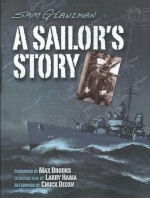
A Sailor’s Story


By Sam Glanzman (Dover Comics & Graphic Novels)
ISBN: 978-0-486-79812-7

Inexplicably, many superb creators who dedicate a lifetime to producing a volume of work are never properly rewarded for their efforts. Probably the most shamefully neglected of these hidden stars – at least in the American comicbook industry – is Sam Glanzman.

With a solid, uniquely informative and engagingly rough-hewn style, “SJG” has worked since the 1940s on a variety of titles for a host of publishers, mostly on material in war, mystery, fantasy and adventure anthologies, but also occasionally on serial characters such as Willy Schulz, Hercules and Tarzan for Charlton, the astoundingly cool (and shamefully still uncollected) Kona, King of Monster Island for Dell and for DC The Haunted Tank and most significantly for us here U.S.S. Stevens (DD 479).

It is this last series of guardedly-autobiographical tales, derived from his tour of duty on that self-same American navy Destroyer during World War II, which formed the precedent for the superb compilation at last collected here – and if anybody from DC is reading this, those U.S.S. Stevens strips are so-very-long overdue for a trade paperback treatment, too…

This criminally neglected talent had been quietly and resolutely generating comics magic for decades in his underplayed, effective and matter-of-fact manner and was still improving – crafting superb narrative art without flash or dazzle, winning fans among the cognoscenti yet largely unnoticed or at least unlauded by mainstream fans – when in 1987 he produced a quasi-autobiographical graphic novel that made quite a few waves.

Marvel editor Larry Hama made the bold decision to publish Glanzman’s understated, unadorned, wryly elegiac account of his days as a young man aboard a Pacific Fleet Destroyer as part of the company’s Original Graphic Novel imprint.

A Sailor’s Story captivatingly related his experiences as a young man aboard the U.S.S. Stevens in a no-nonsense, highly entertaining manner and broke new ground in the progress of the graphic novel as a medium for artistic expression. It also reached a lot of buyers who wouldn’t be caught dead with a copy of Spider-Man or Conan…

It was a high point in American sequential narrative and even spawned a sequel volume – an unprecedented feat for the line at a time when superheroes and licensed properties monopolised the marketplace.

Glanzman is a natural storyteller, with the ability to make dry fact entrancing and everyday events compelling. With his raw, gritty drawing style and powerful sense of colour he weaves memory into magic. His depiction of ship-board life is informative and authentic, and his decision to down-play action and concentrate on character is brave and tremendously effective. He also knows how to make a reader laugh and cry, and when.

A Sailor’s Story is a moving and obviously heartfelt paean to lost days: an impassioned tribute to lost friends and comrades; a war story that glorifies life, not death, by a creator who loved the experience and loves his art-form. When you read this superb book you will too.

Utterly devoid of unnecessary melodrama and conniving faux-angst, the history lesson starts as young Sam J. Glanzman enlists one year after Pearl Harbor – as soon as he turns 18. All the orphan leaves behind him in frigid upstate New York is one friendly farmer who promises to look after his devoted dog Beauty…

What follows is a mesmerising succession of snippets and memories and observations pieced together into a mosaic of life afloat during wartime: learning to speak what amounts to a new language, playing pranks and growing up in a pressure cooker. Along the way you make a few friends, some enemies but mostly just acquaintances: people doing the same things as you at the same time in the same place, but not necessarily for the same reasons and certainly with no dreams except having it all end…

Sam sees the world, the best and worst of life and survives the sailor’s greatest enemies: unseen, distant strangers trying to kill you, mindless tedium and dire, soul-destroying repetitive routine, eventually finding his niche – if never a decent place to sleep…

Through brief and terrifying clashes with the enemy, intimate associations and alliances aboard ship, intimate assignations ashore or on the frequent and increasingly bizarre and hilarious “Liberties” (those breaks from active duty us TV-reared landlubbers all mistakenly think of as “shore leave”), the author debunks the myth of the magic of the seas, only to recreate it recast in terms any modern reader will instantly understand…

Eventually the war ends and long after that so does the sailor’s service, with only the merest few of his unforgettable memories shared…

The sheer overwhelming veracity of the episodes is utterly overwhelming. Raucously funny, ineffably sad – “Beauty’s fate” will break your heart or you’re not and never have been human – devoutly forgiving, patiently understanding and stunningly authentic…

This long longed-for complete edition (thank you, Dover Books!) also includes that sequel from 1989. Wind, Dreams and Dragons returns to the Pacific at the height of the war with a specific theme in mind and, by clever use of narrative devices such as Ship’s Travel Logs incorporated into the beguiling page designs, diagrams and cutaways as part of the text plus astoundingly affecting intimate details – most trenchantly humorous – fondly recalled and seamlessly staged, manages to instil an even more documentary atmosphere into this wonderfully human-scaled drama.

This is used to create a foreboding sense of dread as the crew encounters and learns to live with the then-unknown terror weapon of suicide-pilots who would become a household name to us: Kamikaze…

Combining the folksy, informative charm of the first volume with the “hurry-up-and-wait” tension of modern warfare, all delivered in an increasingly bold and innovative graphic style, Wind, Dreams and Dragons is one of the best explorations ever produced of sea-combat as seen through the eyes of the ordinary seaman and compellingly communicates the terror, resolve and sheer disbelief that men on both sides could sacrifice so much…

This is a fitting and evocative tribute from one who was there to all those who are no longer here…

As if those back-to-back blockbusters were not enough, this oversized (279x210mm), fully colour-remastered paperback tome comes with a flotilla of extras beginning with a Foreword by Max (World War Z) Brooks and Introduction from original editor Larry Hama.

Following the colourful comics there is also a star-studded ‘Tributes’ section by Glanzman’s contemporaries: moving and frequently awe-struck commemorations, appreciations, shared memories and even many art contributions from Alan Barnard, George Pratt, Beau Smith (who shares a personal sketch SJG created for him), Stephen R. Bissette, Carl Potts, Chris Claremont, Denny O’Neil, Kurt Busiek, Stan Lee, Paul Levitz, Joe R. Lansdale, Walt Simonson, Russ Heath, Joe Kubert, Steve Fears, Thomas Yeates, Timothy Truman, Will Franz and Mark Wheatley.

There’s even a splendid photo parade entitled ‘Sam’s Scrapbook’ and warmly impassioned ‘Afterword’ by Chuck Dixon.

Topping everything is a new 10-page black-&-white hauntingly powerful USS Stevens tale entitled ‘Even Dead Birds Have Wings’. Now all we have to do is get those 50 or so USS Stevens micro classics tales into a book too… as soon as possible…

Shockingly raw, painfully authentic, staggeringly beautiful, A Sailor’s Story is a magnificent work by one of the very best of “The Greatest Generation”, a sublimely insightful, affecting and rewarding graphic memoir every home, school and library should have…
Artwork and text © 2015 Sam Glanzman. All other material © 2015 its respective creators.

A Sailor’s Story will be released on May 29th 2015 and is available for pre-order now. Check out www.doverpublications.com or your internet retailer or comic shop of choice.

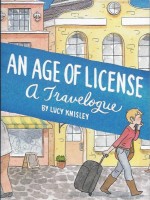
An Age of License – a Travelogue


By Lucy Knisley (Fantagraphics Books)
ISBN: 978-1-60699-768-0

Win’s Christmas Gift Recommendation: a fresh taste of all that’s right about comics and creators… 8/10

Since I first started reading comics (sometime soon after the discovery of fire) the industry and art form has undergone a magical transformation in styles and formats and a huge expansion in content.

Where once the medium was populated with heroes and horrors, fantasies and wish fulfilment exercises, these days literally anything can become the engrossing and absorbing meat of graphic narrative, dependent only upon the skill and passions of dedicated and inspired artisan creators.

A superb example of this broadening of strip horizons is globe-girdling cartooning diarist and epicure Lucy Knisley who has made a career out of documenting her life as it happens, detailing her experiences and fascinations in an engaging and entertaining manner through such graphic missives as French Milk and Relish: My Life in the Kitchen.

Now she’s back with another beguiling slice of graphic verité whish covers a European working vacation come bittersweet lovers tryst.

This latest voyage begins in 2011 when the cat-loving cartoonist was invited to be a guest at Norway’s Raptus Comics Festival. After some understandable dithering and consultation with pals and fellow pros the author agreed, planning to turn the Work Jolly into the start of an extended visit to friends in Germany and vacationing family in France…

As the time nears the daunting plans all come together and Lucy prepares herself by immersing in personal Scandinavian-ness: researching the family history of her Swedish grandparents…

Events obtain a sharper edge in New York in the months immediately preceding the trip as she meets visiting Henrik: a most fanciable lad she agrees to visit in his Stockholm home after the convention…

With her six-venue itinerary sorted all that’s left is for the journey to begin…

Packed with intimate detail and engaging introspection, rendered in clean, clear compelling black line – augmented by occasional bursts of painterly watercolour illustration – this is a fabulously absorbing voyage with a most delightful and forthright travel companion who unstintingly shares her thoughts, feeling and experiences in a manner guaranteed to win over the most jaded fellow passenger – especially as she always garnishes her slivers of new experience with her trademark adventures and observations through the welcoming lens of regional foods made and enjoyed.

Through work, relaxation, the hazy indolence of a love affair and its gradual ending, a phrase she heard in the winemaking region of Beaune in France comes to haunt her.

L’Age license – a time of freedom for youth to try, fail, experiment and learn – fascinates and captivates her and she spends much of her time in France and beyond, searching for its truth, origins and meaning…

Exceedingly funny, sweet, disarmingly incisive, heartwarming, uncompromising and utterly enchanting, this beguiling, moving memoir is a comics experience unlike any other and fans of travel, storytelling and a life well-lived will adore the open, sharing experience it vicariously offers.
An Age of License © 2014 Lucy Knisley. This edition © 2014 Fantagraphics Books, Inc. All rights reserved.

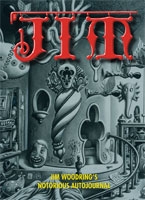
Jim – Jim Woodring’s Notorious Autojournal


By Jim Woodring (Fantagraphics Books)
ISBN: 978-1-60699-752-9

Win’s Christmas Gift Recommendation: A beguiling glimpse into the early thoughts of a narrative master … 9/10

There are a few uniquely gifted and driven comics creators who simply defy categorisation or even description. There’s a pantheon of artisans: Kirby, Ditko, Hergé, Eisner, Clowes, Meskin, Millionaire and a few others who bring something utterly personal and universally effective to their work just beyond the reviewer’s skills (mine certainly) to elucidate, encapsulate or convey. They are perfect in their own way and so emphatically wonderful that no collection of praise and analysis can do them justice.

You just have to read the stuff yourself.

At the top of that distinguished heap of graphic glitterati is Jim Woodring. It’s a position he has maintained for years and clearly appears capable of holding for generations to come.

Woodring’s work has always been challenging, spiritual, grotesque, philosophical, heartbreaking, funny, beautiful and extremely scary. Moreover, even after reading that sentence you will still be absolutely unprepared for what awaits the first time you encounter any of his books – and even more so if you’ve already seen everything he’s created.

Cartoonist, fine artist, toy-maker and artistic Renaissance man, Woodring’s eccentric output has delighted far too small and select an audience since his first mini-comics forays in 1980. Even though the reader may have avidly adored his groundbreaking oneirically autobiographical Fantagraphics magazine Jim (1986 and cherry-picked for this collection), its notional spin-off series Frank (of which the volume Weathercraft won The Stranger 2010 Genius Award for Literature), maybe Tantalizing Stories, Seeing Things or more mainstream features such as his Star Wars and Aliens tales for Dark Horse Comics, there is still never anything but surprise waiting when his next story appears…

An accomplished storytelling technician these days, Woodring grows rather than constructs solidly surreal, abstractly authentic, wildly rational, primal cartoon universes, wherein his meticulous, clean-lined, sturdily ethereal, mannered blend of woodblock prints, R. Crumb landscapes, expressionist Dreamscapes, religious art and monstrous phantasmagoria all live and play and often eat each other.

His stories follow a logical, progressional narrative – often a surging, non-stop chase from one insane invention to the next – layered with multiple levels of meaning but totally devoid of speech or words, boldly assuming the intense involvement of the reader will participate and complete the creative circuit.

Such was not always the case and this superb and sumptuous oversized (292 x 228mm) hardcover compilation – which gathers his earlier formative and breakthrough efforts in colour and monochrome – offers the very best of his strips, paintings, poems and stories from breakthrough autobiographical magazine JIM and other (sadly unnamed) sources between 1980 and 1996.

This compulsive collection also includes a new 24-page strip starring the artist’s hulking, bewhiskered, aggressively paranoid, dream-plagued family man/cartoonist alter ego, and certainly cements his reputation as a master of subconscious exploration, surreal self-expression and slyly ironic comedic excoriation – and it’s still almost impossible to describe.

You really, really, really have to dive in and discover for yourself…

Packed with hallucinatory spot-images and cover illustrations from JIM, the furtive fruits of Woodring’s ever-present dream-recording “autojournal” are prefaced by a beguiling and informative ‘Author’s Note’ before the wonderment begins with ‘Jim #1 in its entirety’: the complete contents of his very first self-published fanzine from 1980.

A master of silent expressive cartooning, Woodring’s playfully inventively fascination with and love of words and tale-making shines through in such laboriously hand-lettered, illustrated epigrammatic vignettes as ‘Lozenge’ and ‘Jim Today’ as well as witty iconographic concoctions like ‘Tales of Bears’ and ‘Troutcapper Hats’ before the first strip saga details a doomed fishing trip in ‘Seafood Platter from Hell’ and a moment of early silent psychedelia reveals how ‘Two Children Inadvertently Kill an Agent of the Devil Through an Excess of Youthful High Spirits’…

Another personal true story and painful brush with disability and imperfection is disclosed in ‘Invisible Hinge’ whilst ‘The Hour of the Kitten’ returns to distressed, disturbed prose before the first of many outrageous faux-ads offers those indispensable conscience-pets ‘Niffers’, preceding another text-trek in ‘A Walk in the Foothills’.

Cats play a large part in these early strips and ‘Big Red’ is probably the cutest bloody-clawed, conscienceless killer you’ll ever meet whilst ‘Enough is Enough’ offers graphic pause before an ad for the home ‘Dreamcorder’ segues into a disturbing poster of rural excess in ‘A Lousy Show’.

‘Particular Mind’ provides a strip encapsulating life-drawing, relationships and hallucinations after which the tempting services provided by ‘Jim’s Discipline Camp’ are counterbalanced by a paean to pharmacopoeia in ‘Good Medicine’.

More savage exploits of ‘Big Red’ lead to a commercial presentation in ‘This is the Meat (…That Changed Me, Dad!)’, whilst ‘Horse Sinister’ describes in prose and pictures another disturbing dream dilemma and ‘At the Old Estate’ introduces a sophisticated loving couple whose wilderness paradise is forever altered by an unwelcome visitor’s incredible revelation. Thereafter a worried young child describes how life changed after he found his parents’ ‘Dinosaur Cage’…

The truly eccentric tale of ‘Li’l Rat’ (from a 1965 story by John Dorman) is followed by a visual feast of images from ‘Jim Book of the Dead’ and a surreal flyer for ‘Rolling Cabine’, after which ‘What the Left Hand Did’ captures in strip form the horrors of mutilation and malformation before the macabre tone-painting ‘Almost Home’ leads to an epic strip of father and son fun beginning with ‘Let’s Play!’…

Jim’s jaunt soon transports him to ‘Powerland’ where dad meets himself, whilst ‘Nidrian Gardner’ revisits a couple of suave swells whilst ‘Looty’ offers consumers a toy they just shouldn’t own…

‘The Hindu Marriage Game’ leads our unhappy bearded fool to a place where his lack of judgement can truly embarrass him whilst ‘Quarry Story’ explores a debilitating recurring dream about the nature of artistic endeavour and ‘This House’ explains how you can live life without ever going outside again…

The first inklings of the mature creator emerge in absurdist romp ‘The Birthday Party’ after which prose shaggy-dog story ‘The Reform of the Apple’ leads to a dark and distressing cartoon confrontation with doom on ‘The Stairs’ before the largely monochrome meanderings give way to stunning full-colour surreal reveries in ‘Screechy Peachy’.

The radiant hues remain for galvanic image ‘Vher Umst Pknipfer?’ and pantomimic rollercoaster romp ‘Trosper’ before bold black & white introspection resumes with a naked lady and a garrulous frog in ‘Dive Deep’.

A ghostly Hispanic condition of drunkenness haunts a bunch of cruelly playful kids in ‘Pulque’ after which young Max asks dad a leading question in ‘Echo’ and radio rebels Chip and Monk meet some girls and risk the wrath of civic authority with illegal broadcasting in ‘A Hometown Tale’, after which an ideal wife has a bad-tempered off-day in ‘Obviously Not’.

As the years progressed many of Woodring’s later spiritual and graphic signature creatures had slowly begun to appear in his strips. Old met new in ‘His Father Was a Great Machine’ wherein strident Jim has an encounter with a phantasmagorical thing, after which little Susan and a determined slug shaped up for an inevitable collision in the prose fable ‘When the Lobster Whistles on the Hill’.

Sheer whimsy informs ‘Cheap Work/Our Hero is a Bastard’ and the bizarre offerings of ‘Jimland Novelties’ whilst ‘The Smudge-Pot’ shows what all magazine letters pages should be like, after which ‘Pulque’ – in full colour strip mode – returns with a message for the dying before ‘Boyfriend of the Weather’ wraps up the surreal voyages with a homey homily and reproductions of Jim #1, volume 2 back cover and Jim #2, volume 2 cover bring this festival of freakish fun to the finale with style, aplomb and oodles of frosting…

Woodring’s work is not to everyone’s taste or sensibilities – otherwise why would I need to plug his work so earnestly – and, as ever, these astounding drawings have the perilous propensity of repeating like cucumber and making one jump long after the book has been put away, but the artist is an undisputed master of graphic narrative and an affirmed innovator always making new art to challenge us and himself.

He makes us love it and leaves us hungry for more and these early offerings provide the perfect starter course for a full bodied feast of fantasy…

Are you feeling peckish yet…?
© 2014 Jim Woodring. All rights reserved.