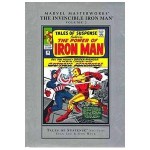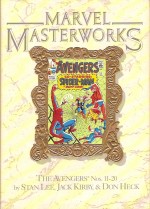
Marvel Masterworks volume 9: The Avengers 11-20


By Stan Lee, Don Heck, Dick Ayers & various (Marvel)
ISBN: 0-87135-595-7   second edition: 978-0-7851-1178-8

Whenever Jack Kirby left a title he’d co-created it took a little while to settle into a new rhythm, and none more so than the collectivised champions called the Avengers. Although writer Stan Lee and the marvellously utilitarian Don Heck were perfectly capable of producing cracking comics entertainments, they never had The King’s unceasing sense of panoramic scope and vast scale which constantly searched for bigger, bolder blasts of excitement. After Kirby, the tales concentrated on human beings in costume, not wild new gods bestriding the Earth…

The wonderment herein contained (covering issues #11-20, December 1964 – September 1965) begins with ‘The Mighty Avengers Meet Spider-Man!’, a clever cross-over tale inked by Chic Stone and featuring the return of time-bending tyrant Kang the Conqueror who attempted to destroy the team by insinuating a robotic duplicate within their serried ranks, which precedes a cracking end-of-the-world thriller with guest Fantastic Four villains Mole Man and the Red Ghost.

‘This Hostage Earth!‘ (inked by Dick Ayers) was a welcome return to grand adventure with lesser lights Giant-Man and the Wasp taking rare lead roles, followed by a rousing gangster thriller of a sort seldom seen outside the pages of Spider-Man or Daredevil, which introduced Marvel universe Mafia analogue The Maggia and another major bad-guy in #13’s ‘The Castle of Count Nefaria!’

That caper ended on a tragic cliffhanger as the Wasp was left gunshot and dying, leading to a high-point in melodramatic tension in #14 (scripted by Paul Laiken & Larry Lieber over Stan’s plot) as the shattered team of heroes scoured the globe for the only surgeon who could save her.

‘Even Avengers Can Die!’ – although of course she didn’t – resolved into a classy alien invader tale with overtones of This Island Earth as Kirby returned to lay out the epic for Heck & Stone to illustrate, which only whetted the appetite for a classic climactic confrontation as the costumed champions finally dealt with the Masters of Evil and Captain America finally avenged the death of his dead partner Bucky.

‘Now, by My Hand, Shall Die a Villain!’ in #15 (laid-out by Kirby, pencilled by Heck with inks by Mike Esposito) featured Captain America and Baron Zemo in one final, fatal confrontation in the heart of the Amazon jungle, whilst the other Avengers and Zemo’s army of masked menaces clashed once more on the streets of New York…

The battle ended in the concluding episode ‘The Old Order Changeth!’ (again visually broken down by Kirby before being finished by Ayers) which presaged a dramatic change in concept for the series; presumably because as Lee increasingly wrote to the company’s unique strengths – tight continuity and strongly individualistic characterisation – he discovered that juggling individual stars in their own titles as well as a combined team episode every month was just incompatible if not impossible.

As Cap and teen sidekick Rick Jones fought their way back to civilisation, the Avengers set-up changed completely with big name stars replaced by three erstwhile villains: Hawkeye, Quicksilver and the Scarlet Witch.

Eventually, led by perennial old soldier Captain America, this relatively powerless group with no outside titles to divide the attention (the Sentinel of Liberty did have a regular feature in Tales of Suspense but it was at that time recounting adventures set during the hero’s WWII career), evolved into another squabbling family of neuroses, extended sub-plots and constant action as valiant underdogs; a formula readers of the time could not get enough of.

Acting on advice from the departing Iron Man the neophytes sought to recruit the Hulk to add raw power to the team, only to be sidetracked by the malevolent Mole Man in #17’s ‘Four Against the Minotaur!’ (Lee, Heck & Ayers), after which they then fell foul of a dastardly “commie” plot ‘When the Commissar Commands!’

This brace of rather run-of-the-mill tales was followed by an ever-improving run of mini-masterpieces which began with a two part gem that provides an origin for Hawkeye and introduces a favourite hero/villain to close this sturdy, full-colour hardback compendium.

‘The Coming of the Swordsman!’ featured a dissolute and disreputable swashbuckler – with just a hint of deeply-buried nobility – who attempted to force his way into the highly respectable team, before becoming an unwilling pawn of a far greater menace – the Mandarin – and was closely followed by the superb ‘Vengeance is Ours!’ inked by the one-and-only Wally Wood wherein the constantly-bickering Avengers finally pulled together as a supernaturally efficient, all-conquering super-team.

These immortal epics are available in numerous formats (including softcover editions of the luxurious and enticing item under review here), but for a selection that will survive the continual re-readings of the delirious, incurable fan nothing beats these substantially lavish and colourful Marvellous Masterwork hardbacks.

After all, if you’re going to enjoy the exploits of Earth’s Mightiest Super-Heroes surely you want to do it in appropriate style?
© 1964, 1965, 1989, 2004 Marvel Characters, Inc. All Rights Reserved.

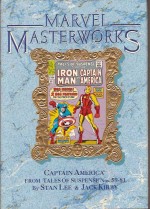
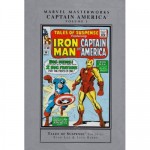
Marvel Masterworks volume 14: Captain America from Tales of Suspense 59-81


By Stan Lee, Jack Kirby & various (Marvel)
ISBN: 0-87135-630-9   second edition 978-0-7851-1176-4

During the earliest days of Marvel Comics Stan Lee and Jack Kirby emulated the same strategy which had worked so tellingly for National Periodicals/DC, but with mixed results. Julie Schwartz had achieved incredible success with his revised versions of DC’s Golden Age greats, so it was only natural to try and revive characters who had dominated the ailing new kids of Timely/Atlas in those halcyon days of yore. A completely new Human Torch had premiered as part of the revolutionary Fantastic Four and in the fourth issue of that title Sub-Mariner resurfaced after a twenty year amnesiac hiatus (everyone concerned had apparently forgotten the initial abortive attempt to revive the superheroes in the mid-1950s).

Torrid Teen Johnny Storm was promptly given his own solo feature in Strange Tales from issue #101 (as collected in Essential Human Torch volume1) where, in #114 the flaming kid fought a malevolent acrobat pretending to be a revived Captain America. An unabashed test-run, the tales was soon eclipsed when the real McCoy promptly surfaced in Avengers #4. After a captivating and centre-stage hogging run in that title the Sentinel of Liberty was quickly awarded his own series as half of the “split-book” Tales of Suspense, beginning with #59 (after another impostor battled titular star Iron Man in the previous issue).

This magnificent full-colour hardback stirringly re-presents those early short sagas which span the period cover-dated November 1964-September 1966), opening with the initial outing ‘Captain America’, scripted by Stan Lee and illustrated by the staggeringly perfect team of Jack Kirby & Chic Stone: an unapologetic all-action romp wherein an army of thugs invades Avengers Mansion since only the one without superpowers is at home… The next issue held more of the same, when ‘The Army of Assassins Strikes!’, this time attempting to overwhelm the inexhaustible human fighting machine at the behest of arch foe Baron Zemo, whilst ‘The Strength of the Sumo!’ was insufficient when Cap invaded Viet Nam to rescue a captured US airman, after which he took on an entire prison’s population to stop the ‘Break-out in Cell Block 10!’

After these gloriously simplistic romps the series took an abrupt turn and began telling tales set in World War II. ‘The Origin of Captain America’, by Lee, Kirby & Frank Ray (AKA Frank Giacoia – one of an increasing wave of DC stalwarts anonymously moonlighting at the House of Ideas) recounted, recapitulated and expanded the way physical wreck Steve Rogers was selected to be the guinea pig for a new super-soldier serum only to have the scientist responsible die in his arms, cut down by a Nazi bullet.

Now forever unique, Rogers was became a living fighting symbol and guardian of America, based as a regular soldier in a boot camp.

It was there he was unmasked by Camp Mascot Bucky Barnes, who blackmailed the hero into making the boy his sidekick. The next issue (Tales of Suspense #64) kicked off a string of spectacular thrillers as the heroes defeated the spies Sando and Omar in ‘Among Us, Wreckers Dwell!’ before Chic Stone returned for the next tale ‘The Red Skull Strikes!’ in which the daring duo foiled the Nazi mastermind’s sabotage plans in America.

‘The Fantastic Origin of the Red Skull!’ saw the series swing into high gear and switch settings to Europe as sub-plots and characterisation were added to the all-out action and spectacle. ‘Lest Tyranny Triumph!’ and ‘The Sentinel and the Spy!’ (both inked by Giacoia) combined espionage and mad science in a plot to murder the head of Allied Command after which the heroic duo stayed in England for ‘Midnight in Greymoor Castle!’ (with art by Dick Ayers over Kirby’s layouts – rough pencils sketches that break down the story elements on a page). The second part ‘If This be Treason!’ had Golden Age veteran and Buck Rogers newspaper strip artist George Tuska perform the same function. The final part (and the last wartime adventure) was ‘When You Lie Down with Dogs…!’ which added Joe Sinnott inks to the mix for a rousing conclusion to this frantic tale of traitors, madmen and terror weapons…

It was back to the present for Tales of Suspense #72 and Lee, Kirby & Tuska revealed that Cap had been telling war stories to his fellow Avengers for the last nine months. ‘The Sleeper Shall Awake!’ began a spectacular contemporary adventure as a Nazi super-robot was activated twenty years after Germany’s defeat to exact a world-shattering vengeance. Continuing its rampage across Europe in ‘Where Walks the Sleeper!’ before concluding in ‘The Final Sleep!’ this masterpiece of tension and suspense perfectly demonstrated the indomitable nature of the ultimate American hero.

Dick Ayers returned with John Tartaglione inking ‘30 Minutes to Live!’ which introduced both Batroc the Leaper and a mysterious girl who would eventually become Cap’s long-term girl-friend, S.H.I.E.L.D. agent Sharon Carter, in a taut 2-part countdown to disaster ending with ‘The Gladiator, The Girl and the Glory’, illustrated by John Romita (Senior). This was the first tale which had no artistic input from Jack Kirby, but he laid out the next issue (TOS #77) for Romita & Giacoia. ‘If a Hostage Should Die!’ again returned to WWII and hinted at both a lost romance and tragedy to come.

‘Them!’ returned Kirby to full pencils and Giacoia to the regular inks-spot as Cap teamed with Nick Fury in the first of the Star-Spangled Avenger’s many adventures as a (more-or-less) Agent of S.H.I.E.L.D. It was followed by ‘The Red Skull Lives!’ as his arch nemesis returned from the grave to menace the Free World again. He was initially aided by the subversive technology group AIM, but stole their ultimate weapon in ‘He Who Holds the Cosmic Cube!’ (inked by Don Heck) – a device which could rewrite reality with but a whim…

This staggeringly fast-paced, rollercoaster collection climaxes with a classic confrontation in ‘The Red Skull Supreme!’ and concludes with one last breathtaking Cap pin-up by Kirby & Ayers.

These are tales of dauntless courage and unmatchable adventure, addictive and superbly illustrated, which rightly returned Captain America to heights his Golden Age compatriots the Torch and the Sub-Mariner never regained – pure escapist magic.

Great, great stuff for the eternally young at heart, perfectly presented in a sturdy deluxe hardcover edition.
© 1963, 1964, 1965, 1990 Marvel Characters, Inc. All rights reserved.

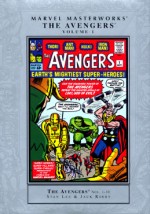
Marvel Masterworks volume 4: The Avengers 1-10


By Stan Lee, Jack Kirby, Don Heck & various (Marvel)
ISBN: 0- 87135-479-9   second edition: 978-0-7851-0590-9

After a period of meteoric expansion, in 1963 the burgeoning Marvel Universe was finally ready to emulate the successful DC concept that had truly kick-started the Silver Age of comics.

The concept of putting a bunch of star eggs in one basket which had made the Justice League of America such a winner had inspired the moribund Atlas outfit of Stan Lee, Jack Kirby and Steve Ditko into inventing “super-characters” of their own and the result was the Fantastic Four. Nearly 18 months later the fledgling House of Ideas had a viable stable of leading men (but only sidekick women) so Lee & Kirby assembled a handful of them and moulded them into a force for justice and high sales…

Seldom has it ever been done with such style and sheer exuberance. Cover dated September, The Avengers #1 launched as part of an expansion package which also included Sgt Fury and his Howling Commandos and The X-Men…

The Coming of the Avengers’ is one of the cannier origin tales in comics. Instead of starting at a zero point and acting as if the reader knew nothing, Stan & Jack (plus inker Dick Ayers) assumed readers had at least a passing familiarity with Marvel’s other titles and wasted very little time or energy on introductions.

In Asgard Loki, god of evil, is imprisoned on a dank isle, hungry for vengeance on his half-brother Thor. Observing Earth he espies the monstrous, misunderstood Hulk and engineers a situation wherein the man-brute seemingly goes on a rampage, just to trick the Thunder God into battling the monster. When the Hulk’s sidekick Rick Jones radios the Fantastic Four for assistance Loki diverts the transmission and smugly awaits the blossoming of his mischief. However Iron Man, Ant-Man and the Wasp also pick up the SOS….

As the heroes converge in the American Southwest to search for the Jade Giant they realize that something is oddly amiss…

This terse, epic, compelling and wide-ranging yarn (New York, New Mexico, Detroit and Asgard in 22 pages) is Lee & Kirby at their bombastic best and one of the greatest stories of the Silver Age (it’s certainly high in my own top ten Marvel Tales) and is followed by ‘The Space Phantom’ (Lee, Kirby & Paul Reinman), in which an alien shape-stealer almost destroys the team from within. With latent animosities exposed by the malignant masquerader, the tale ends with the volatile Hulk quitting the team only to return in #3 as an outright villain in partnership with ‘Sub-Mariner!’ This globe-trotting romp delivered high energy thrills and one of the best battle scenes in comics history as the assorted titans clashed in abandoned tunnels beneath the Rock of Gibraltar.

Avengers #4 – inked by George Roussos – was an epic landmark as Marvel’s biggest sensation of the Golden Age was revived. ‘Captain America joins the Avengers!’ had everything that made the company’s early tales so fresh and vital. The majesty of a legendary warrior returned in our time of greatest need: stark tragedy in the loss of his boon companion Bucky, aliens, gangsters, Sub-Mariner and even wry social commentary and vast amounts of staggering Kirby Action.

Reinman returned to ink ‘The Invasion of the Lava Men’: another brilliant tale of adventure and suspense as the team battled superhuman subterraneans and a world-threatening mutating mountain with the unwilling assistance of the Hulk, but it paled before the supreme shift in quality that was #6.

Chic Stone – arguably Kirby’s best Marvel inker – joined the creative team just as a classic arch-foe debuted. ‘The Masters of Evil!’ forced Nazi super-scientist Baron Zemo out of the South American jungles he’d been skulking in to strike at his hated and now returned nemesis Captain America. To this end the ruthless war-criminal recruited a gang of super-villains to attack New York and destroy the Avengers. The unforgettable clash between our heroes and Radioactive Man, Black Knight and the Melter is an unsurpassed example of Marvel magic to this day.

Issue #7 followed up with two more malevolent recruits for the Masters of Evil as Asgardian outcasts Enchantress and the Executioner joined Zemo just as Iron Man was suspended from the team due to misconduct occurring in his own series (this was the dawn of the close continuity era where events in one series were referenced and even built upon in others).

That may have been ‘Their Darkest Hour!’ but Avengers #8 held the greatest triumph and tragedy as Jack Kirby relinquished his drawing role with the superb and entrancing invasion-from-time thriller which introduced ‘Kang the Conqueror’ (inked with fitting circularity by Dick Ayers).

The Avengers was an entirely different package when the subtle humanity of Don Heck’s work replaced the larger-than-life bombastic bravura of Kirby. The series had rapidly advanced to monthly circulation and even The King could not draw the huge number of pages his expanding workload demanded. Heck was a gifted and trusted artist with a formidable record for meeting deadlines and, under his pencil, sub-plots and character interplay finally got as much space as action and spectacle.

His first outing was the memorable tragedy ‘The Coming of the Wonder Man!’ (inked by Ayers) wherein the Masters of Evil planted superhuman Trojan Horse Simon Williams within the ranks of the Avengers only to have the conflicted infiltrator find deathbed redemption amongst the heroes, whilst this glorious deluxe hardback collection concludes with the introduction of malignant master of time Immortus who combined with the Masters of Evil to engineer a fatal division in the ranks when ‘The Avengers Break Up!’

These immortal epics are available in numerous formats (including softcover editions of the luxurious and enticing item under review here), but for a selection that will survive the continual re-readings of the serious, incurable fan there’s nothing to beat the substantial full-colour feel of these Marvellous Masterwork editions.

After all, if you’re going to enjoy the exploits of Earth’s Mightiest Super-Heroes surely you’ll be wanting to do it in style?
© 1963, 1964, 1988, 2003 Marvel Characters, Inc. All rights reserved.

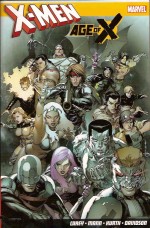
X-Men: Age of X


By Mike Carey, Simon Spurrier, Clay Mann, Steve Kurth, Paul Davidson & various (Marvel/Panini UK)
ISBN: 978-1-84653-490-4

Most people who read comics have a passing familiarity with Marvel’s ever-changing X-Men franchise and most of us have seen alternate world stories so this intriguing and highly entertaining package seems pretty easy to pigeonhole… but appearances can be deceiving.

With a property as valuable as these massed mutants, change is a necessarily good thing, even if you sometimes need a scorecard to keep up. This utterly engrossing tome (collecting Age of X Alpha, X-Men Legacy #245-247, New Mutants volume 3 #22-24 and Age of X Universe #1 and 2) keeps the backstory baggage to the barest minimum for newbies and non-addicts; concentrating instead on building an “end-of-days” tension in a brutally harsh last stand scenario – although the pacing is a little hard to grasp in places.

This Marvel publishing event, which ran from January to April 2011, is a tribute to the Age of Apocalypse mega-crossover of 1995, with an introductory Alpha issue, dedicated stories in X-men core titles and a pair of “Universe” compilations focusing on the non-mutant heroes of the altered continuity.

Written by Mike Carey and illustrated by Mirco Pierfederici, Gabriel Hernandez Walta, Carlo Barberi, Walden Wong, Paco Diaz and Paul Davidson, the initial instalment describes a very different world where all-out species war is being waged between humans and homo superior. Anti-mutant statutes by the Human Coalition have all but eradicated mutantkind and any ordinary mortal who might carry the hated genes to make them.

Three years of inspired atrocity later, the stories of those last remnants of the variant species are examined in telling vignettes: Scott Summers was forced to execute his fellow inmates at a mutant Alcatraz before spectacularly escaping, Sam Guthrie survived the extermination of his entire family, super-powered or not, and Wolverine lost all his abilities destroying a pathogen designed to wipe out all genetic aberrations.

During the darkest moment of this man-made Extinction Event Magneto rescued the last remnants of meta-humanity and created a monumental Fortress X from the ruins of a devastated city. Here the remaining mutants hold out in a desperate all-or-nothing holding action…

After 1000 days of dire and valiant resistance a kind of last ditch détente persists. The humans keep attacking and the mutants perpetually narrowly beat them off. In this world where there are no telepaths and there has never been a Professor X, every day is one more precious moment of defiant unity in the face of imminent doom.

The stalemate continues in X-Men Legacy #245 (Carey, Clay Mann & Jay Leisten) as the resistors continue to defy the human world’s technology and soldiery. Especially vital are the contributions of the Force Warriors: energy-casting mutants whose powers maintain an impenetrable energy-shield around Fortress X. They are led by the charismatic Legion – son of Dr. Moira MacTaggert and an unknown father…

The most tragic hero is Legacy, whose touch can steal memories and abilities. She is not allowed to fight but is tasked with preserving forever the dying memories of mutants who fall in battle.

A few resisters are troubled by more than just the state of the world: something is imperceptibly wrong with reality itself. Metal-morph Madison Jeffries discovers there is something amiss with the stars in the sky; Summers, dubbed the Basilisk, realises that he’s killed some humans more than once and some defenders question why so many mutants are mysteriously imprisoned in the citadel’s dungeons.

Moreover, the enigmatic “X” who runs the fortress seems more concerned with containing them than defeating the human attackers. Even Magneto feels something is being kept from him – and he’s in charge…

When immaterial internee Kitty Pryde escapes the Brig and penetrates the forcefield she discovers something fantastic and X orders her silenced at all costs, precipitating traitorous action from Legacy, Cajun thief Gambit and even Magneto himself…

The New Mutants chapters are illustrated by Steve Kurth & Alex Martinez and follow Basilisk, Legacy and the liberated Pryde as they begin unpicking the darkly credible but ferociously flawed universe they inhabit. A turning point comes when the fugitive fighters free an imposing bald man named Xavier who claims to be a telepath…

Cunningly tapping into the brooding pressure and extreme vivacity of life during wartime and wonderfully reminiscent of William Hope Hodgson’s macabre 1912 classic The Night Land (an absolute “must-read” for all fantasy fans) this is an effective thriller and just a little different from your standard “unite and save the universe” crossover-events with a superb and spectacular surprise climax that will delight regulars and visiting readers alike.

And that’s the only real problem here: because after that satisfactory ending the Age of X Universe stories (written by Simon Spurrier, Jim McCann & Chuck Kim, illustrated by Khoi Pham, Tom Palmer, Paul Davidson & Gabriel Hernandez Walta) follow, totally killing the mood and the flow despite all being extremely well-produced revelatory side-bars and effective character-pieces.

Viewed on their own merits the stories of Spider-Man’s ultimate sacrifice, the brutal and tragic career of Humanity’s Avengers (Captain America, Invisible Woman, Iron Man, Ghost Rider, the arachnoid Redback plus the most disturbing Hulk ever) and hidden secrets of the Mutant-hunting Dr. Strange are extremely impressive. If they’d been disclosed before the big reveal, surprise ending they would have been valuable elements in the greater narrative but chucked in after the fact they just detract from a really impressive story-ending.

This action-packed, compulsive and otherwise excellent volume also includes variant covers by Olivier Coipel and Clayton Mann.

If you want fast, furious and fulfilling Fights ‘n’ Tights magic this is a nearly perfect one-shop stop for your edification and delectation – just make sure you read the last bit after the first bit and before the middle bit…

™ and © 2010 & 2011 Marvel Entertainment LCC and its subsidiaries. All rights reserved. A British edition released by Panini UK Ltd.

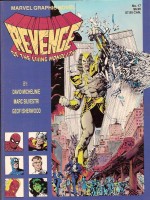
Revenge of the Living Monolith – Marvel Graphic Novel #17


By David Michelinie, Mark Silvestri, Geoff Isherwood & many various (Marvel)
ISBN: 0-87135-083-1

Marvel don’t generally publish original material graphic novel these days but once they were market leader in the field with a range of “big stories” told on larger pages emulating the long-established European Album (285 x 220mm rather than the standard 258 x 168mm of today’s books) featuring not only proprietary characters in out-of-the-ordinary adventures but also licensed assets like Conan, creator-owned properties like Alien Legion and new character debuts.

This extended experiment with big-ticket storytelling in the 1980s and 1990s produced some exciting results that the company has never come close to repeating since. Many of the stories still stand out today – or would if they were still in print.

Released in 1985, Revenge of the Living Monolith is a conventional but highly enjoyable Fights ‘n’ Tights thriller paying glorious homage to those long-gone blockbuster movies with colossal monsters stomping urban population centres into kindling, yet still finds room to add some impressive character gloss to one of Marvel’s most uninspired villains.

Conceived and concocted by Editor Jim Owsley, scripted by David Michelinie and illustrated by Mark Silvestri & Geoff Isherwood (with nearly 4 dozen additional last-minute contributors!) this bombastic yarn is delightfully accessible to all but the most green reader of comics delivering action, tension and winning character byplay to both the faithful readership which made Marvel the premier US comics publisher for such a long time and even the newest kid on the block….

The plot itself is simple and effective: when young Ahmet Abdol was growing up in Cairo, he was bullied and abused for his intellect and imagination. Only the love and devotion of the lovely Filene kept him sane during the years of struggle until he became Egypt’s most respected historian.

However his “sacrilegious” twin discoveries that the ancient Pharaohs were super-powered mutants and that he shared their ancient bloodline brought only scorn, mob violence and shattering tragedy to Abdol and especially to his beloved wife and baby daughter. When his own cosmic powers manifested in the wake of the bloody incident, Abdol was abducted and deified by an ancient cult who saw him as their Living Pharaoh.

After battling the X-Men, Thor and Spider-Man in his mountainous, monstrous incarnation of the Living Monolith the defeated Last God-King was imprisoned in Egypt where he festered and schemed…

After years in forgotten isolation Abdol finally frees himself and begins an incredible plot to remove all his enemies and transform himself into a Cosmic-powered God, beginning by capturing the Fantastic Four and making them his living batteries. Unfortunately even at the point of his apotheosis Abdol is not beyond further heartbreak and a tragedy of his own making provokes him into an agonising rampage of destruction through New York City, with only She-Hulk, Captain America and Spider-Man on hand to combat the swathe of destruction…

Including last-minute cameos from most of Marvel’s costumed pantheon, this spectacular superhero saga is a perfect, if brief, distraction from the world’s woes for every fan of mainstream comics mayhem.
™ & © 1985 Marvel Comics Group/Marvel Characters, Inc. All Rights Reserved.

Essential Ms. Marvel volume 1


By Gerry Conway, Chris Claremont, John Buscema, Sal Buscema, Dave Cockrum, Mike Vosburg & various (Marvel)
ISBN: 978-0-7851-2499-3

Until relatively recently American comics and especially Marvel had very little in the way of positive female role models and almost no viable solo stars. Although there was a woman starring in the very first comic of the Marvel Age, the Invisible Girl took years to become became a potent and independent character in her own right.

The company’s very first starring heroine was Black Fury, a leather-clad, whip-wielding crimebuster from the newspaper strips created by Tarpe Mills in April 1941. She was repackaged as a resized reprint for Timely’s funnybooks and renamed Miss Fury for a four-year run from 1942-1946 – although the tabloid strip survived until 1952. Fury was actually predated by the Silver Scorpion who debuted in Daring Mystery Comics #7 (April 1941), but she was relegated to a minor position in the book’s line-up and a very short shelf-life.

Miss America first appeared in the anthology Marvel Mystery Comics #49 (November1943), created by Otto Binder and artist Al Gabriele and after a few more appearances won her own title in early 1944 received her own book. Miss America Comics lasted but she didn’t as with the second issue (November1944) the format was changed, becoming a combination teen comedy/fashion/domestics tips magazine, and feisty super-heroics were steadily squeezed out. The publication is most famous now for introducing virginal evergreen teen ideal Patsy Walker.

A few others appeared immediately after the War, many spin-offs and sidekicks such as female Sub-Mariner Namora (debuting in Marvel Mystery Comics #82, May 1947 and graduating to her own three issue series in 1948), the Human Torch‘s secretary Mary Mitchell who as Sun Girl starred in her own three issue 1948 series before becoming a wandering sidekick and guest star in Sub-Mariner and Captain America Comics.

Masked detective Blonde Phantom was created by Stan Lee and Syd Shores for All Select Comics #11 (Fall 1946) and sort-of goddess Venus debuted in her own title in August 1948, becoming the gender’s biggest success until the advent of the Jungle Girl fad in the mid-1950s; mostly by dint of the superb stories and art by the great Bill Everett and by ruthlessly changing genres from crime to romance to horror every five minutes…

Jann of the Jungle (by Don Rico & Jay Scott Pike) was just part of an anthology line-up in Jungle Tales #1 (September 1954), but took over the title with the eighth issue (November 1955). Jann of the Jungle continued until issue June 1957 (#17) and spawned a host of in-company imitators such as Leopard Girl, Lorna the Jungle Queen and so on…

During the costumed hero boom of the 1960s Marvel experimented with a title shot for Madame Medusa in Marvel Super-Heroes (#15, July 1968) and a solo series for the Black Widow in Amazing Adventures # 1-8 (August 1970-September 1971). Both were sexy, reformed villainesses, not wholesome girl-next-door heroines… and neither lasted alone for long.

As the costumed crazies craze began to subside in the 1970s, Stan Lee and Roy Thomas looked into creating a girl-friendly boutique of heroines written by women, beginning with Claws of the Cat by Linda Fite, Marie Severin & Wally Wood and Night Nurse by Jean Thomas and Win Mortimer (both #1’s cover-dated November 1972). A new jungle goddess Shanna the She-Devil #1, by Carole Seuling & George Tuska, debuted in December 1972; but despite these impressive creative teams none of these fascinating experiments lasted beyond a fifth issue.

Red Sonja, She-Devil with a Sword, caught every one’s attention in Conan the Barbarian #23 (February 1973) and eventually gained her own series and The Cat mutated into Tigra, the Were-Woman in Giant-Size Creatures #1 (July 1974) but the general editorial position was that books about chicks didn’t sell.

The company kept trying and eventually found the right mix at the right time with Ms. Marvel who launched in her own title cover-dated January 1977. She was followed by the equally copyright-protecting Spider-Woman in Marvel Spotlight #32 (February 1977, winning her own title 15 months later) and Savage She-Hulk (#1, February 1980) as well as the music-biz sponsored Dazzler who premiered in Uncanny X-Men #130 that same month, before inevitably graduating to her own book.

Ms. Marvel was actually Carol Danvers, a United States Air Force security officer introduced in Marvel Super-Heroes #13 (March 1968): the second episode of the saga of Kree warrior Mar-Vell, who had been dispatched to Earth as a spy after the Fantastic Four had repulsed the aliens twice in two months (see Essential Fantastic Four volume 4 and Essential Captain Marvel volume 1).

The series was written by Roy Thomas and illustrated by Gene Colan and the immensely competent Carol investigated the Mar-Vell’s assumed identity of Walter Lawson for months until she was caught up in a devastating battle between the now-defecting alien and his nemesis Yon-Rogg. She was caught in a climactic explosion of alien technology and pretty much vanished from sight until Gerry Conway, John Buscema & Joe Sinnott revived her for ‘This Woman, This Warrior!’ (Ms. Marvel #1, January 1977) as a new chapter began for the company and the industry…

This volume, collecting Ms. Marvel #1-23, relevant portions of Marvel Super-Heroes Magazine #10-11 and Avengers Annual #10, opens with the irrepressible and partially amnesiac Danvers moving to New York to become editor of “Woman” a new magazine for modern misses published by Daily Bugle owner J. Jonah Jameson. Never having fully recovered from her near-death experience, Danvers had left the military and drifted into writing, slowly growing in confidence until the irascible publisher had made her an offer she couldn’t refuse…

At the same time as Carol was getting her feet under a desk a mysterious new masked heroine began appearing, such as when she pitched up to battle the sinister Scorpion in a brutal bank raid. The villain narrowly escaped to rendezvous with Professor Kerwin Korwin of AIM (a high-tech secret society claiming to be Advanced Idea Mechanics) who had promised to increase the Scorpion’s powers and allow him to take long-delayed revenge on Jameson – whom the demented thug blamed for his freakish condition…

Danvers had been secretly having premonitions and blackouts since her involvement in the final battle between Mar-Vell and Yon-Rogg and had no idea she was transforming into Ms. Marvel. Her latest vision-flash occurred too late to save the publisher from abduction but her “Seventh Sense” did allow her to trace the Scorpion before her unwitting new boss is injured, whilst her incredible physical powers and knowledge of Kree combat techniques enabled her to easily trounce the maniac.

‘Enigma of Fear!’ featured a return engagement for the Scorpion as Korwin and AIM made Ms. Marvel their latest science project. Whilst the Professor turned himself into an armoured assassin codenamed Destructor, Carol’s therapist Mike Barnett made an analytical breakthrough with his patient and discovered she was a masked metahuman even before she did. Although she again felled the Scorpion Ms. Marvel was ambushed by the Destructor, but awoke in #3 (scripted by Chris Claremont) to turn the tables in ‘The Lady’s Not For Killing!’

Travelling to Cape Canaveral to interview old friend Salia Petrie for a women astronauts feature, Danvers was soon battling an old Silver Surfer foe on the edge of space and all her occluded memories returned just in time for a final confrontation with the Destructor during which she almost learnt that ‘Death is the Doomsday Man!’ (by Claremont, Jim Mooney & Sinnott).

Android Avenger the Vision guest-starred in #5 as Ms. Marvel crossed a ‘Bridge of No Return’. After Dr. Barnett revealed he knew her secret, Carol was forced to battle the Vision when AIM tricked the artificial hero into protecting a massive, mobile “dirty” bomb, before ‘…And Grotesk Shall Slay Thee!’ pitted her against a subterranean menace determined to eradicate the human race, culminating in a waking ‘Nightmare!’ when she was captured by AIM’s deadly leader Modok and all her secrets were exposed to his malign scientific scrutiny.

Grotesk returned in #8 as ‘The Last Sunset…?‘ almost dawned for the entire planet, whilst ‘Call Me Death-Bird!’ (illustrated by Keith Pollard, Sinnott & Sam Grainger) introduced a mysterious, murderous avian alien who would figure heavily in many an X-Men and Avengers saga, but who spent her early days allied to the unrelenting forces of AIM as they attacked once more in ‘Cry Murder… Cry Modok!’ (art by Sal Buscema & Tom Palmer).

Frank Giacoia inked #11’s ‘Day of the Dark Angel!’ wherein supernal supernatural menaces Hecate, the Witch-Queen and the Elementals attacked the Cape, preventing Carol from rescuing Salia Petrie and her space shuttle crew from an incredible inter-dimensional disaster…

The astonishing action continued in ‘The Warrior… and the Witch-Queen!’ (Sinnott inks) before ‘Homecoming!’ (Mooney & Sinnott) explored Carol’s blue collar origins in Boston as she battled a pair of marauding aliens and ‘Fear Stalks Floor 40’ (illustrated by Carmine Infantino & Steve Leialoha) pitted her against her construction worker, anti-feminist dad even as she was saving his business from the sinister sabotage of the Steeplejack.

Mooney & Tony DeZuniga provided the art for ‘The Shark is a Very Deadly Beast!’ as undersea villain Tiger Shark kidnapped the Sub-Mariner’s teenaged cousin Namorita and only Ms. Marvel, after a brief side trip to Avengers Mansion, was on hand to provide succour in ‘The Deep Deadly Silence!’ (inked by Frank Springer). ‘Shadow of the Gun!’ (Mooney & DeZuniga) enhanced the X-Men connection by introducing shape-shifting mutant Mystique in a raid on S.H.I.E.L.D. to purloin a new super-weapon, which saw impressive service in #18’s ‘The St. Valentine’s Day/Avengers Massacre!’ (Mooney & Ricardo Villamonte): a blockbuster battle that featured the beginning of a deadly plot from within the distant Kree Imperium.

The scheme swiftly culminated in ‘Mirror, Mirror!’ (Infantino & Bob McLeod) as the Kree Supreme Intelligence attempted to reinvigorate his race’s stalled evolutionary path by kidnapping the Earth/Kree hybrid Carol Danvers. However with both her and Captain Marvel hitting his emissary Ronan the Accuser eventually the plotters took the hint and went home empty handed…

Ms. Marvel #20 saw a great big makeover as Carol Danvers finally created her own look and identity in ‘The All-New Ms. Marvel’ courtesy of Claremont, Dave Cockrum & Bob Wiacek wherein the utterly re-purposed hero tackled a hidden kingdom of intelligent post-atomic dinosaurs infesting the American deserts, leading to a catastrophic clash with ‘The Devil in the Dark!’ (inked by Al Milgrom).

Now one of the most hands-on, bombastic battlers in the Marvel pantheon, she was more than ready for a return match with Death-Bird in ‘Second Chance!’ (art by Mike Vosburg & Mike Zeck), but thrown for a total loop when she was fired from Woman Magazine. All these changes came too late as the series’ sales had earmarked it for cancellation. ‘The Woman Who Fell to Earth’ (inked by Bruce D. Patterson) resolved the long-running disappearance of Salia Petrie in a tale guest-starring the time travelling Guardians of the Galaxy, just in time for the end of the road.

The series ended there but two more stories were in various stages of preparation and finally saw print in 1992 (the Summer and Fall issues of oversized anthology publication Marvel Super-Heroes Magazine #10-11) beginning with an untitled, ferocious fight with mutant maniac Sabretooth (by Claremont & Vosburg), followed by ‘Cry, Vengeance!’ (by Claremont, Simon Furman, Vosburg & Mike Gustovich) as Ms. Marvel, now a card-carrying Avenger, faced off against Mystique and her brotherhood of Evil Mutants. This tale features an additional section which explained how Carol was attacked by the young mutant Rogue, permanently lost her powers and memory and was eventually reborn as the cosmic being Binary: which is all well and good but somewhat takes the punch out of the last tale in this collection.

Admittedly Ms. Marvel only has a peripheral role in ‘By Friends… Betrayed!’ from Avengers Annual #10 (1981, by Claremont, Michael Golden & Armando Gil), as a powerless, amnesiac Carol Danvers was rescued from drowning by Spider-Woman, prior to Mystique and Rogue launching an all-out attack on the World’s Mightiest Heroes whilst attempting to free the Brotherhood from custody.

Spectacular and utterly compelling the tale seemed to write a satisfactory conclusion to Carol’s career but in comics nothing is forever…

This comprehensive monochrome chronicle also includes full entries on Death-Bird, Captain Marvel, the Kree and Rogue, taken from the Marvel Universe Handbook.

Always entertaining, often groundbreaking and painfully patronising (occasionally at the same time), the early Ms. Marvel, against all odds, grew into the modern Marvel icon of capable womanhood we see today. These adventures are a valuable grounding of the contemporary champion but also still stand up on their own as intriguing examples of the inevitable fall of even the staunchest of male bastions – superhero stories…

© 1977, 1978, 1979, 1981, 1992, 2007 Marvel Characters, Inc. All Rights Reserved.

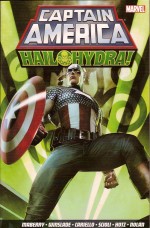
Captain America: Hail Hydra


By Jonathan Maberry, Sergio Cariello, Tom Scioli, Phil Winslade, Kyle Hotz & Graham Nolan (Marvel/Panini UK)
ISBN: 978-1-84653-488-1

Everything changed for a little company called Marvel when, in issue #4 of the Avengers, the assembled heroes recovered the body of US Army Private Steve Rogers floating in a block of ice and consequently resurrected World War II hero Captain America. With this act bridging the years to Timely and Atlas Comics (which had in fact begun with the revival of Sub-Mariner in Fantastic Four #4), Marvel instantly acquired a comforting longevity and potential-packed pre-history: lending an enticing sense of mythic continuance to the fledgling company that instantly gave it the same cachet and enduring grandeur of market leader National/DC.

In 2010, after years of conflicting continuity (and with a movie in the offing), Marvel updated those pivotal events and early future-shocked days in the contemporary world with the stunning re-interpretation Captain America: Man Out of Time before repeating the operation with another generational miniseries: this time following the returned Sentinel of Liberty as he fought an extended campaign against a fearsome and undying foe.

Captain America: Hail Hydra! focuses on five crucial skirmishes fought over the Red, White and true Blue hero’s long years of valiant service wherein the he continually clashed with an organisation of insidious evil and astounding ambition,  with each issue illustrated by a different artist in a pastiche of the relevant time.

The action, illustrated Sergio Cariello, begins in 1944 as Captain America and teen partner Bucky helped German anti-Nazi freedom fighter Trude Lohn smash a plot by the baroquely bonkers, certifiably mad Doctor Geist, who had discovered how to reanimate the dead. During the apocalyptic struggle Cap was injected with the unholy serum and although the triumphant trio succeeded in depriving Hitler of an undead army they had no idea of the sinister scientist’s greater scheme, the ancient society he belonged to or what effect his devil drugs would have on America’s greatest warrior…

Tom Scioli pictured the second instalment in tribute to Jack Kirby, wherein more hints into the history of the cult that would become Hydra were interspersed with Cap’s first days as an Avenger following his half-century enforced hibernation. After reuniting with the now geriatric Trude, he and his new comrades clashed with ex-Nazi Baron Strucker and Geist’s unliving army only to be thoroughly overmatched and outmanoeuvred. The deranged doctor seemed more interested in gathering blood samples from Cap and Thor than winning the battle he had instigated…

A few years later the plan becomes clearer when the Sentinel of Liberty, partner in crime-fighting the Falcon, and African Avenger Black Panther were attacked by an army of zombies attempting to steal the fabled Elixir of Life from a hidden Wakandan repository of knowledge called the Grotto of Solomon. Lavishly rendered by Phil Winslade, the spectacular clash was also lightly dusted with further glimpses of the order’s historic attempts to gather arcane knowledge and artefacts pertaining to their mysterious millennial goal…

For a brief period the US government replaced the Star-Spangled Avenger with a less independent agent and Steve Rogers took the identity of “The Captain”. Kyle Hotz delineates an adventure from those turbulent times as the unencumbered hero tackled Geist’s latest monstrosity and worked with Nick Fury of S.H.I.E.L.D. to get one step ahead of Hydra.

After thwarting a terrifying attack on the heart and soul of America Rogers is forced to consider not only what Geist is truly after but also what his devilish serum might have made of Captain America that fateful night in 1944…

Graham Nolan closes the saga in captivating style as Rogers, now Director of the Avengers, and old partner Bucky (the current Captain America) enlist a garrison of guest stars as they home in on Strucker and Geist just as their incredible seven-thousand year scheme comes to a shocking culmination. Even the World’s Mightiest Heroes would be hard-pressed to overcome the incredible beings Hydra has finally birthed…

This book does have a few niggling plot flaws but nothing so flagrant that it disrupts the overall flow of action and delicious flavour of nostalgia; so unless you’re a dedicated, nit-picking devotee the striking art and rollicking rollercoaster thrills and chills should carry the day nicely, providing a solid dose of immortal, enticing entertainment

Fast-paced, full-on spectacle and clever infilling of the established canon makes Captain America: Hail Hydra! a striking saga that should serve to make many fresh fans for Marvel’s eternally evergreen old soldier.

™ and © 2011 Marvel Entertainment LCC and its subsidiaries. All rights reserved. A British edition released by Panini UK Ltd.

Essential Avengers volume 4


By Roy Thomas, John Buscema, Sal Buscema, Tom Palmer, Neal Adams, Barry Smith & various (Marvel)
ISBN: 978-0-7851-1485-7

The Avengers always proved that putting all one’s star eggs in on single basket paid off big-time; even when all Marvel’s all-stars such as Thor, Captain America and Iron Man were absent, it merely allowed the lesser lights of the team to shine more brightly.

Of course all the founding stars regularly featured due to the rotating, open door policy which meant that most issues included somebody’s fave-rave and the increasingly bold and impressive stories and artwork were no hindrance either.

This monolithic and monumental phonebook-sized fourth tome, collecting the absolute best of the Mighty Avengers‘ world-saving exploits (presenting in crisp, stylish black and white the astounding contents of issues #69-97 of their monthly comic book and the crossover Incredible Hulk #140), confirmed Roy Thomas as a major creative force in comics and consolidated John Buscema’s status as the foremost artist of Marvel’s second age.

These compelling yarns certainly enhanced the reputations of JB’s brother Sal and increased the high profile of the iconoclastic Neal Adams, whose brief stint here, on the X-Men and in a few other select places, set the industry ablaze and spawned a generation of avid artistic imitators…

Opening this epochal tome is ‘Let the Game Begin’ from Avengers #69, by writer Thomas (who wrote all the stories contained here) and illustrated by Sal Buscema & Sam Grainger, wherein the team – Captain America, Yellowjacket, Wasp, Goliath, Iron Man, Vision and Thor – were called to the hospital bedside of ailing Tony Stark just in time to prevent his abduction by the grotesque Growing Man. After battling boldly against the unbeatable homunculus the team were summarily and collectively snatched into the future by old enemy Kang the Conqueror who co-opted the team to act as pieces in a cosmic chess-game with an omnipotent alien called the Grandmaster.

If the Avengers failed the Earth would be eradicated…

Issue #70 and 71 began a fertile period for writer Thomas as he introduced two new teams who would, in the fullness of time, star in their own stellar series: Squadron Supreme and The Invaders.

‘When Strikes the Squadron Sinister!’ saw the Avengers returned to their own time to battle a team of deadly villains (mischievously based on DC’s Justice League of America) and ‘Endgame!’, guest-starring the Black Knight, found the Vision, Black Panther and Yellowjacket dispatched to 1941 to clash with the WWII incarnations of the Sub-Mariner, Human Torch and Captain America…

After foiling Kang’s ambitions the team victoriously returned to the present where Avengers # 72 featured a guest-appearance from Captain Marvel and Rick Jones as ‘Did You Hear the One About Scorpio?’ introduced the menace of super-mob Zodiac, after which ‘The Sting of the Serpent’ (with art by Frank Giacoia & Grainger) pitted the Panther against seditious hate-mongers determined to set New York ablaze, leading to a spectacular and shocking clash between Avengers and Sons of the Serpent in ‘Pursue the Panther!’; the first in a string of glorious issues illustrated by the dream team of John Buscema & Tom Palmer.

The long-missing mutant Avengers Quicksilver and Scarlet Witch returned in #75, desperate to stave off an extra-dimensional invasion and nuclear Armageddon by Conan prototype Arkon the Magnificent in ‘The Warlord and the Witch!’ before the staggering threat was finally thwarted in ‘The Blaze of Battle… the Flames of Love!’ after which a far more mundane and insidious menace manifested when billionaire financier Cornelius Van Lunt almost bankrupted Avengers sponsor Tony Stark, compelling the team to become his ‘Heroes for Hire!’

Sal Buscema popped in to pencil ‘The Man-Ape Always Strikes Twice!’ as the team were targeted by a coterie of vengeful villains competing to join a new league of evil, culminating in a grand clash with the aforementioned anthropoid, Swordsman, Power Man, Living Laser and Grim Reaper in ‘Lo! The Lethal Legion!’, which also heralded the artistic return of Big Brother John.

Marvel introduced its first Native American costumed hero in ‘The Coming of Red Wolf!’ as the Avengers were drawn into a highly personal and decidedly brutal clash between Cornelius Van Lunt and a tribe of Indians he was defrauding. The dramatic dilemma (heralding the team’s entry into the era of “Relevant”, socially conscious tales) divided the team and concluded with Vision, Scarlet Witch and Goliath aiding Red Wolf in ‘When Dies A Legend!’, whilst the remaining team pursued Zodiac.

Sadly the malevolent mob moved first and took the entire island of Manhattan ‘Hostage!’, leaving only the solitary vigilante Daredevil free to save the day, after which Militant Feminism raised its strident head as the Wasp, Black Widow, Scarlet Witch and Madame Medusa were seduced into joining a new team called the Lady Liberators (yes, I know, but the all-male creative team meant well…). However, the Valkyrie who declared ‘Come on in… the Revolution’s Fine!’ had her own sinister agenda that had nothing to do with justice or equality…

Avengers #84 featured part-time paladin Black Knight who was becoming addicted to the bloodthirsty hunger of his Ebony Blade, resulting in an otherworldly confrontation with Arkon and the Enchantress in ‘The Sword and the Sorceress!’ which left half the team lost on a parallel world.

In ‘The World is Not For Burning!’ (inked by Giacoia), Vision, Scarlet Witch and Quicksilver found themselves trapped on an Earth where the Squadron Supreme were the World’s Greatest heroes and a solar Armageddon was only hours away…

‘Brain-Child to the Dark Tower Came…!’ (art by Sal B & Jim Mooney) saw the extremely reluctant allies unite to save a very different world after which, back home, the Black Panther reprised his origin before taking leave of his comrades to assume the throne of his hidden African nation in ‘Look Homeward, Avenger’ (Giacoia & Sal B).

Novelist Harlan Ellison was a very vocal comics fan in the 1970s and occasionally collaborated on Marvel tales. Avengers #88 began a radical adaptation of one his best short stories, beginning with ‘The Summons of Psyklop’ (Ellison, Thomas, Sal Buscema & Mooney) wherein an experiment to cure the Hulk of his destructive nature led to the man-beast’s abduction by a preternatural entity. The saga concluded in The Incredible Hulk #140 (Ellison, Thomas, Herb Trimpe & Grainger) as ‘The Brute… That Shouted Love at the Heart of the Atom!’ saw the Jade Goliath find love and peace in a sub-molecular paradise, only to lose it all…

Avengers #89 began perhaps the most ambitious saga in Marvel’s brief history: an astounding epic of tremendous scope which dumped Earth into a cosmic war the likes of which comics fans had never before seen and creating the template for all multi-part crossovers and publishing events ever since.

It all began relatively quietly as marooned Kree warrior Captain Marvel was finally freed from his prison in the Negative Zone in ‘The Only Good Alien…’ (art by Sal Buscema and Sam Grainger), inadvertently alerting the public to the panic-striking notion that extraterrestrials lurk among us, whilst awakening a long-dormant robotic Kree Sentry which promptly enacted a protocol to devolve humanity to the level of cavemen in ‘Judgment Day’.

Even with Kree heavyweight Ronan the Accuser taking personal charge the scheme was narrowly defeated in ‘Take One Giant Step… Backward!’, but the cat was out of the bag and public opinion had turned against the heroes for concealing the threat of alien incursions.

In a powerful allegory of the Communist Witch-hunts of the 1950s the epic expanded in #92 (Sal B & George Roussos) when ‘All Things Must End!’ saw riots in the streets and political demagogues capitalising on the crisis. Subpoenaed by the authorities, castigated by friends and public, the current team was ordered to disband by their founding fathers Thor, Iron Man and Captain America.

Or were they…?

The plot thickened and the art quality took an exponential leap as Neal Adams and Tom Palmer assumed the chores with the giant-sized #93’s ‘This Beachhead Earth’ as the Vision was nigh-fatally attacked and those same founding fathers evinced no knowledge of having benched the regular team. With Ant-Man forced to undertake ‘A Journey to the Center of the Android!’ to save the Vision’s artificial life, the Avengers become aware of not one but two alien presences on Earth: bellicose Kree and sneaky shape-shifting Skrulls, beginning a ‘War of the Weirds!’ on our fragile globe. Acting too late they were unable to prevent the Scarlet Witch, Quicksilver and Captain Marvel from being abducted by the Skrulls…

‘More than Inhuman!’ in issue #94 embroiled the hidden race of advanced beings called Inhumans in the mix, disclosing that their advanced science and super-powers were the result of genetic meddling by the Kree in the depths of prehistory. Now with their king Black Bolt missing and the nefarious Maximus in charge, the aliens were calling in their ancient markers…

The second chapter ‘1971: A Space Odyssey’ (pencilled by John Buscema) focused on Captain Marvel increasingly pressured to reveal military secrets to his shape-shifting captors as the Skrulls prepared to launch a final devastating attack on their eons-old rivals, whilst on Earth ‘Behold the Mandroids!’ saw the authorities attempt to arrest all costumed heroes…

Avengers #95 ‘Something Inhuman This Way Come…!’ coalesced the disparate story strands as the aquatic Triton helped defeat the Mandroids before beseeching the beleaguered heroes to find his missing monarch and rescue his people from the press-ganging Kree. After so doing, with a solid victory under their belts the Avengers headed into space to liberate their kidnapped comrades and save Earth from becoming collateral damage in the impending Kree-Skrull War…

‘The Andromeda Swarm!’ (with additional inking from Adams and Al Weiss) was perhaps the Avenger’s finest hour, as the small, brave band held off an immense armada of starships, losing one of their number in the conflict, whilst the Kree Supreme Intelligence was revealed to have been pursuing its own clandestine agenda all along and had snatched bewildered sidekick Rick Jones to clinch its terrifyingly ambitious plans.

The astounding final episode ‘Godhood’s End!’ brought the uncanny epic (and this volume) to a perfect end with a literal deus ex machina as the master-plan was finally revealed and the war ended in a costumed hero overload-extravaganza which has never been surpassed in the annals of Fights ‘n’ Tights fiction.

Roy Thomas and John Buscema gloriously led Marvel’s second generation of creators who brilliantly built on and consolidated Lee, Kirby and Ditko’s initial burst of comics creativity: spearheading and constructing a logical, fully functioning wonder- machine of places and events that so many others were inspired by and could add to.

These terrific tales are perfect examples of superheroes done exactly right and also a pivotal step of the little company into the corporate colossus.

© 1967, 1968, 2001 Marvel Characters, Inc. All Rights Reserved.
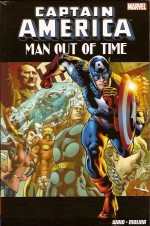
Captain America: Man out of Time


By Mark Waid, Jorge Molina, Karl Kesel & Scott Hanna (Marvel/Panini UK)
ISBN: 978-1-84653-487-4

One of the pivotal moments in Marvel Comics history occurred when the Mighty Avengers recovered a tattered body floating in a block of ice (issue #4, March 1964) and resurrected the World War II hero Captain America. With this act bridging the years to Timely and Atlas Comics begun with the return of the Sub-Mariner in Fantastic Four #4, Marvel confirmed and consolidated a solid, concrete, potential-packed history and created an enticing sense of mythic continuance for the fledgling company that instantly gave it the same cachet and enduring grandeur of market leader National/DC

In 2010, after years of conflicting continuity (and with a movie in the offing) Marvel tasked fan-favourite writer Mark Waid (see Captain America: Operation Rebirth) with updating those pivotal events and early future-shocked days in the contemporary world. Of course that modern milieu is the year 2000, not 1964…

This captivating re-interpretation and updating (collecting the 5 issue miniseries Captain America: Man Out of Time from November 2010-April 2011) opens in the dying days of the war as Steve Rogers and Bucky Barnes are sent from the European frontline to England and an appointment with doom-laden destiny, before seamlessly segueing into the Sentinel of Liberty’s stunned awakening in tomorrow’s world and a meeting with the World’s Mightiest Heroes.

Waid, perfectly complimented by artists Jorge Molina, Karl Kesel & Scott Hanna, wisely leaves the classic adventures largely unchanged, to concentrate on the missing, contemplative moments and personal crises confronting the uncomprehending Steve Rogers, which means that readers completely unaware of the character’s history and exploits might experience a little confusion in places. However, the narrative, although superficially disjointed, is clear-cut enough to counter this and interested new fans can easily fill in the gaps by perusing one of the many available reprint collections, such as Essential Avengers volume 1, which covers the entire period featured here…

In chapter 2 the reeling hero meets ex- Hulk sidekick Rick Jones (an absurdly close double for the departed Bucky), gets a rapid reality check on his new home and finally accepts that there’s no way home for this Old Soldier…

But that’s not strictly true…

Among the many technological miracles his new allies introduce him to is the embryonic science of time-travel and even while battling such threats as the Lava Men and Masters of Evil the unhappy warrior can only think of returning to his proper place and saving his best friend from death…

The old adage “be careful what you wish for” never proved more true than when the time-ravaging Kang the Conqueror attacks: utterly overwhelming the 21st century heroes and casually dispatching Captain America back to 1945. However, his sense of duty, the threat to his new allies and the unpalatable things he had forgotten about “the Good Old Days” prompt Cap into brilliantly escaping his honeyed time-trap and returning to the place where he is most needed before once more saving the day…

Resolved and ready to tackle his Brave New World Captain America is now ready to carve out a whole new legend…

I’m generally less than sanguine about updates and reboots of classic comics material but I will admit that such things are a necessary evil as the years go by, so when the deed is done with sensitivity and imagination (not to mention dynamic, bravura flamboyance) I can only applaud and commend the effort.

Thrilling, superbly entertaining, compelling and genuinely moving Captain America: Man out of Time is a wonderful confection that will delight old aficionados, impress new readers and should serve to make many fresh fans for the immortal Star-Spangled Avenger.

™ and © 2011 Marvel Entertainment LCC and its subsidiaries. All rights reserved. A British edition released by Panini UK Ltd.

Invaders Now!


By Alex Ross, Christos Gage & Caio Reis (Marvel/Panini UK)
ISBN: 978-1-84653-479-9

During World War II superhuman heroes regularly fought alongside merely mortal men-at-arms and far too often the repercussions of those battles echoed down the years growing stronger and not fading away.

After decades of relative European peace and prosperity one of the worst weapons of the conflict appears to have been rediscovered: an incurable disease which mutates victims into savage, blood-crazed monsters… and in America the survivors and heirs of premiere WWII super-team the Invaders are mystically manipulated into reuniting to relive the most painful event of their auspicious and glorious history.

During the lasts months of the war, with the Allies pushing hard towards Berlin, Captain America & Bucky, the Human Torch & Toro, Sub-Mariner, Spitfire and Union Jack, accompanied by trans-dimensional eldritch vigilante the Vision were battling through Holland when they encountered their Nazi counterparts Masterman, Baron Blood, U-Man, Warrior Woman and Iron Cross.

The Blitzkriegers were protecting Hitler’s top geneticist Arnim Zola, who was about to unleash a monstrous bio-weapon intended to turn the tide of the war… a virus that made civilians and enemy soldiers into bestial maniacs.

Faced with a village full of highly contagious, deranged living weapons, the Invaders had no choice but to sterilise the entire area and euthanise the infected victims…

Now nearly seventy years later Vision has been called back to our Reality as somebody is using magic to turn back time and re-run the whole ghastly affair once more. Moreover, Zola’s deadly virus is back and loose in a world where global transport is commonplace and no place is truly isolated…

This plain and simple, old-fashioned blockbuster romp (collecting the 5 issue miniseries from 2010) combines Alex Ross’s ardent passion for classic superhero comics with modern methodology, funnybook mythology with cosmic horror literature, and contemporary terrorism fiction with timeless action-adventure in a captivating countdown thriller scripted by Christos Gage and effectively illustrated by Caio Reis.

Supremely old-school and breathtakingly in tune with 21st century tastes Invaders Now! delivers a thoroughly gratifying good guys vs. bad guys drama drenched in pure bravura escapism.

All-out vintage Marvel Madness for the modern comics maven: you just know you want it…

™ and © 2010 & 2011 Marvel Entertainment LCC and its subsidiaries. All rights reserved. A British edition released by Panini UK Ltd.