Green Arrow/Black Canary: Till Death Do They Part


By Judd Winick, Cliff Chiang, Amanda Conner, Mike Norton, André Coehlo, Wayne Faucher, Rodney Ramos, Patricia Mulvihill, Paul Mounts, David Baron & various (DC Comics)
ISBN: 978-1-77950-929-1 (TPB/Digital edition)

This book includes Discriminatory Content included for dramatic and comedic effect.

Green Arrow is Oliver Queen, a cross between Batman and Robin Hood and one of DC’s Golden All-Stars. He’s been a fixture of the company’s landscape – often for no discernible reason – more or less continually since his debut in More Fun Comics # 73 in 1941. In those heady days origins weren’t considered as important as image and storytelling, so originators Mort Weisinger & George Papp never bothered, leaving later workmen to fill in the blanks. France Herron, Jack Kirby and his wife Roz crafted one that stuck in ‘The Green Arrow’s First Case’ at the start of the Silver Age superhero revival (Adventure Comics #256, January 1959), and variations of it still impact modern iterations.

As a fixture of the DC Universe GA was one of the few costumed heroes to survive the end of the Golden Age, consistently adventuring in the back of other heroes’ comic books, joining the Justice League during the Silver Age return of costumed crusaders before eventually evolving into a spokes-hero of the anti-establishment during the 1960’s period of “Relevant” comics, courtesy of Denny O’Neil and Neal Adams. Under Mike Grell’s 1980/1990s stewardship he became a gritty and popular A-Lister: an urban hunter dealing harshly with corporate thugs, government spooks and serial killers rather than costumed goof-balls.

…And then he was killed and his son took over the role.

…And then the original came back…

Black Canary was one of the first of relatively few Golden Age women crimebusters in DC’s universe, following Wonder Woman, Liberty Belle and Red Tornado (who actually masqueraded as a man) and predating Merry the Gimmick Girl. Bullet Girl, Phantom Lady and Mary Marvel all began their careers in the same time frame but only joined the DC pantheon after the Golden Age officially ended, snapped up in canny acquisitions that are still paying dividends. The Black Canary (Dinah Lance nee Drake) was created by Bob Kanigher & Carmine Infantino, debuting in Flash Comics #86, August 1947. She derived from a surge in femme fatales (mostly criminals or simply misunderstood) debuting due to equivalent exemplars appearing in gritty film noir B-features, but disappeared with most of the other print superdoers at the end of the Golden Age. However she was one of the first to be revived with the Justice Society of America in 1963.

Originally an Earth-Two crimefighter transplanted to our world, BC has been ruthlessly retconned over and again, but most often now Dinah Laurel Lance is the daughter of an earlier, wartime champion. However you feel about the character, two consistent facts have remained since her reintroduction/assimilation in Justice League of America #73-75 (see Crisis on Multiple Earths vol 1 please link to July 9th 2022 and The Justice League Hereby Elects  please link to September 15th 2017): she has vied with Wonder Woman herself for the title of premiere heroine and she has been in a stormy romantic relationship with Green Arrow ever since.

The tempestuous affair – which actually began during the Summer of Love – finally reached a dramatic culmination some years ago when the couple at last named the day, with this fearsomely dramatic and cripplingly funny tome gathering those unforgettable moments in a celebratory chronicle to warm the hearts and chill the souls of sentimental thrill seekers everywhere.

Reprinting Green Arrow and Black Canary Wedding Special and issues #1-14 of the monthly Green Arrow and Black Canary comic book that sprang from it, the saga begins with a hilariously immature retelling of the path to wedlock from scripter Judd Winick & Amanda Conner. Here the first cute-meet, passion, spats and tender moments are reviewed culminating in riotous hen-nights, rowdy stag-parties and a tremendous battle as a huge guard of dishonour – comprising most of the villains in the DCU – attack the assembled heroes when they’re utterly off-guard…

Naturally the bad guys are defeated, the ceremony concludes and the newlyweds head off to enjoy their wedding night.

And then – in circumstances I’m not going to spoil for you – Green Arrow dies again…

Obviously it doesn’t end there. The dramatic moment acts as springboard for a major restart. In the first issue of the new series Winick & Cliff Chiang’s ‘Dead Again’ only shows Ollie Queen in flashbacks as the Black (Widow) Canary goes on a brutal crime-crushing rampage.

‘Here Comes the Bride’ finds her slowly going off the rails. Only Ollie’s son Connor Hawke – heir to the Arrow mantle – seems able to get through to her where friends and allies like Green Lantern, Superman, Oracle and even Ollie’s old sidekicks Speedy and Red Arrow urge her to move on. As usual it takes the ultra-rational Batman to divine what really happened on the wedding night and send the grief spiral into useful new territory…

In ‘The Naked and the Not-Quite-So-Dead’ Dinah and latest Speedy Mia Dearden infiltrate the secret island paradise of the sinister miscreants who secretly abducted and imprisoned Green Arrow (notice how vague I’m being; all for your benefit?) and find where Ollie is currently; and constantly proving to be more trouble than he can possibly be worth. Conner is also on hand, but whilst attempting to spring his wayward dad also falls captive to uniquely overwhelming forces…

‘Hit and Run, Run, Run!’ ramps up the tension as the heroes all escape – but not before one of their number is gravely wounded by a mystery assailant, prior to ‘Dead Again: Please Play Where Daddy Can See You’ turning the tables and revealing that it’s Ollie’s turn to fall apart as his son and protégé fights for life…

With André Coehlo illustrating, heart-warming reverie ‘Child Support’ (another sequence of poignant flashbacks) describes Green Arrow’s history with his family and the extended team Arrow coterie of sidekicks. Soon, however, Dinah must drag Ollie back from the brink of utter despair when brain dead Connor is abducted from the hospital and life-support machines keeping him breathing…

Cliff Chiang returns for ‘Haystack – First Needle’ as the hunt goes global and felons from Prague to New Jersey to London, England learn that the green team don’t act like heroes when one of their own is imperilled.

Illo 2 here please


Limned by Mike Norton & Wayne Faucher ‘Greetings from Faraway Lands’ introduces super tech thief Dodger. As the team stalk the mastermind behind the botched hit on Ollie and abduction of dying Connor, this lovable rogue slowly graduates from an initially unwilling ally into something far more for one naively impressionable archer. With dubious intel now targeting global threat Ras Al Ghul as their foe and his League of Assassins as the murder weapon, ‘Haystack part 3: the Needle’ – by Winick, Norton & Rodney Ramos – exposes even more duplicity and misinformation as a rushed rescue mission successfully liberates a covert captive hero long gone but somehow unmissed…

Sadly for Ollie & Dinah, it’s the wrong one and a semi-delirious Plastic Man joins the expanding cast of hunters for new story arc ‘A League of Their Own’. Winick, Norton & Faucher’s opening chapter ‘Rubber and Glue’ introduces an alternative/impostor League of Assassins with their own outré agenda and incredible resources but as Team Arrow ‘Step Up to the Plate and Swing Away’ in ever stranger locales, it becomes increasingly clear that ‘The Man Behind the Curtain’ is not someone they regularly face.

In fact ‘The Son of the Father, the Father of the Son’ exposes a friend not an enemy behind the plot; albeit one motivated by tragedy and desperation and trapped in the vile manipulations of a true mad scientist mastermind’s vengeance-tinged plot and opportunistic attempts to build a super-powered slave army…

Unexpectedly defeated by the valiant acts of Team Arrow, the malign malefactor gets his comeuppance and a vastly changed, amnesiac but mostly cured Connor  rejoins his family in ‘Home Again, Home Again’ and as father and son seek to bond as they never could before, Oliver Queen realises that always ‘One Door Closes, Another Opens’

To Be Continued…

The book concludes with a stunning and often hilarious variant cover gallery by Ryan Sook, Cliff Chiang, and Amanda Connor, reminding us that Green Arrow and Black Canary are characters who epitomise the modern adventure hero’s best qualities, even if in many ways they are also the most traditional of “Old School” champions. This witty and wild ride is a cracking example of Fights ‘n’ Tights done right and is well worth an investment of your money, time and emotional commitment.
© 2007, 2008, 2009, 2021 DC Comics. All Rights Reserved.

Dear DC Super-Villains


By Michael Northrop & Gustavo Duarte, coloured by Cris Peter & lettered by Wes Abbott (DC Comics)
ISBN: 978-1779500540 (PB/Digital edition)

Win’s Christmas Gift Recommendation: Ideal to Steal Stocking Stuffer… 9/10 (just give it back after reading, okay?)

Superheroes are purely iconic embodiments if not “perfectualisations” of a whole bunch of deep things about humans. Ask any psychologist or modern philosopher. Sadly, such pristine intellectualisations don’t cut much ice (just ask Captain Cold) in the stories-for-money racket; and every hero from Gilgamesh to the Scarlet Pimpernel and every sleuth and super-doer since mass entertainment began owes a huge recurring debt to the bad lurking in the shadows or monster rampaging down main street.

DC have a particularly fine stable of misguided miscreants, justifiable revengers and thieving psychotic loons – just look at how many have their own titles, shows and films – and their antics as much as the heroes we’re supposed to admire are part of children’s awareness and maturing processes (even boys, who I’m forced to admit frequently grow up by a different set of metrics to girls or other flavours of kids).

Reprising or rather expanding their 2019 hit, Michael Northrop (Trapped, Plunked, Gentlemen, TombQuest) and Gustavo Duarte (Bizarro, Monsters! and Other Stories link both please), turn their delightful comedic eyes on the bad guys who might well be a Legion of Doom but still have it in them to answer a few salient questions from some curious kids with a really good search engines…

In Cairo, a major heist is capped by a relaxing moment of downtime as Selina Kyle responds to a ‘Dear Catwoman’ query about getting caught, whilst Earth’s most maximumly imprisoned mad scientist accepts a rash challenge from a heckler who thinks he’s safely anonymous in ‘Dear Lex Luthor’ and ‘Dear Harley Quinn’ shares her experiences of stand-up comedy and chaotic behaviour…

All these messages come courtesy of the Legion of Doom forwarding service but the would-be world conquerors are generally fretful and bad tempered while trying to find a new leader. Those tensions a painfully apparent in ‘Dear Gorilla Grodd’ as the Super-Ape shares school memories – but never bananas – even as ‘Dear Giganta’ offers advice on bullies and being the tallest girl in class.

When a disabled girl challenges ‘Dear Sinestro’ to examine his motivations, it sparks an unexpected sentimental response, and even ruthless hardcase rogue ronin ‘Dear Katana’ also reassesses her life after opening a succinctly sharp email question, whereas the modern-day pirate king only gets “fished” after clicking on ‘Dear Black Manta’, leading to a long-awaited calamitous convergence, supervillain showdown and inevitable big battle with the JLA in concluding chapter ‘Dear DC Super-Villains’

Big, bold, daft and deliriously addictive, this in another superb all-ages action romp packed with laughs and delivering a grand experience for any who red it. Extra material includes ‘Who’s Who in the Legion of Doom’ of the heroes, and creator biographies in ‘Auxiliary Members!’ plus an extract from Metropolis Grove by Drew Brockington. If you love comics and want others to as well you couldn’t do more that point potential fans this way. Actually, just show, tell, or email them: pointing is rude…
© 2021 DC Comics. All Rights Reserved.

Dear Justice League


By Michael Northrop & Gustavo Duarte, coloured by Ma Maiolo & lettered by Wes Abbott (DC Comics)
ISBN: 978-1-4012-8413-8 (PB/Digital edition)

Win’s Christmas Gift Recommendation: Comic Perfection and Ideal Stocking Stuffer… 10/10

Keystone of the DC Universe, the Justice League of America is the reason we have a comics industry today. After the actual invention of the comic book superhero – for which read the launch of Superman in June 1938 – the most significant event in the industry’s progress was the combination of individual sales-points into a group. Thus, what seems blindingly obvious to everyone blessed with four-colour hindsight was irrefutably proven: a number of popular characters combining forces can multiply readership. Plus of course, a whole bunch of superheroes is a lot cooler than just one – or even one and a sidekick…

The Justice Society of America is rightly revered as a landmark in industry development but faded and failed after tastes changed at the end of the 1940s. When Julius Schwartz began reviving and revitalising the nigh-defunct superhero genre in 1956 the true turning point came a few years later with the (inevitable?) teaming of his freshly reconfigured mystery men. When wedded to relatively unchanged costumed big guns who had weathered the first fall of the Superhero, the result was a new, modern, Space-Age version of the JSA and the birth of a new mythology.

The moment that changed everything for us baby-boomers came with The Brave and the Bold #28 (cover dated March 1960): a classical adventure title recently retooled as a try-out magazine like Showcase. Just in time for Christmas 1959, ads began running…

“Just Imagine! The mightiest heroes of our time… have banded together as the Justice League of America to stamp out the forces of evil wherever and whenever they appear!”

When the JLA launched it cemented the growth and validity of the genre, triggering an explosion of new characters at every company producing comics in America and even spread to the rest of the world as the 1960s progressed. Superheroics have waned since, but never gone away, and remain a trigger point for all us kids. However, comics have grown serious and mature, and we increasingly left the kids out of the equation, letting TV cartoons pick up the slack. Even the roster in this tale is informed as much by animation adventures as potent printed page-turners…

Well, superheroes are still kids’ stuff as this superb book – and its sequel – attest. An early entry in DC’s project to bring their characters back to young readers, Dear Justice League takes all the iconic riffs and paraphernalia attached to the team and comedically runs wild with a core conceit: the heroes individually answering emails – or other, older, lesser communications – from young fans with problems to share or questions needing answers.

Played strictly for laughs by Brazilian illustrator/slapstick maestro Gustavo Duarte (Bizarro, Monsters! and Other Stories link both please), the segmented saga is composed by author and journalist Michael Northrop (Trapped, Plunked, Gentlemen, TombQuest) who blends charm with wit and a great deal of heart for maximum effects.

It begins as long-suffering little Ben Silsby gets under some steel-hard skin by texting ‘Dear Superman’, whilst ‘Dear Hawkgirl’ distracts the winged wonder so much during an alien bug battle that she neglects her beloved hamster. Although old foe Black Manta is no problem, the Sea King reads a ‘Dear Aquaman’ question and must ponder hygiene issues to the point of upsetting Hall of Justice roommate Purdey (his goldfish)…

As the team convene to discuss big bug activity, a ‘Dear Wonder Woman’ direct message send the Amazing Amazon off on an embarrassing memory moment whilst ‘Dear Flash’ takes on bullies, poor concentration and bad parenting, ‘Dear Green Lantern’ trades fashion tips and colour swatches with grade school diva-to-be Shalene and ‘Dear Cyborg’ finds a different kind of opponent online and ready to rock…

Ultimate paranoid the Dark Knight doesn’t do email and must find another way to respond to a ‘Dear Batman’ that sets his sentimental heart and brutal boyhood into perspective, which all sets the scene for ET extermination excitement as the bug subplot rattling through all the vignettes boils over into all-ages cartoon action in blockbuster finale ‘Dear Justice League’

Pure comics nostalgia writ large and hard hitting. Enjoy all you oldster kids…

Extra material includes creator biographies, the ‘Hall of Justice Top Secret Files (No Peeking!)’ of our heroes, and their animal ‘Auxiliary Members!’ before concluding with come-hither extracts from other kid-friendly books in the line (specifically the sequel plugged next) and Superman of Smallville by Art Baltazar & Franco.

Fun, deceptively thrilling and infinitely re-readable, this old school treat is a must have item for anyone who loves superheroes.
© 2019, DC Comics All Rights Reserved.

Teen Titans: Year One (New Edition)


By Amy Wolfram, Karl Kerschl & Serge Lapointe, coloured by Stéphane Péru & John Rausch, lettered by Nick J. Napolitano (DC Comics)
ISBN: 978-1-4012-6724-7 (TPB/Digital edition)

Win’s Christmas Gift Recommendation: How Growing-Up-Super Really Feels… 9/10

This book includes Discriminatory Content included for dramatic effect.

The concept of kid hero teams was not a new one when DC finally entrusted their big heroes’ assorted sidekicks with their own regular comic:  resulting in a fab, hip and groovy ensemble as dedicated to helping kids as they were to stamping out insidious evil.

The biggest difference between juvenile wartime groups such as The Young Allies, Newsboy Legion and Boy Commandos or 1950s holdovers like The Little Wise Guys or Boy Explorers and the creation of the Teen Titans was quite simply the burgeoning phenomena of “the Teenager” as a discrete social and commercial force. These were kids who could – and should – be allowed to do things themselves without constant adult “help” or supervision. As early as The Brave and the Bold #54 (June/July 1964), DC’s Powers-That-Be tested the waters in a gripping tale by Bob Haney & Bruno Premiani teaming Robin, Kid Flash and Aqualad.

The wild punt was a huge hit and the kids – supplemented by Wonder Girl and Speedy – got their own title, offering teen tinged tales crafted by old(ish) white guys. To be fair, the sagas were certainly unlike anything else DC was concurrently producing and have certainly withstood the test of time as a peek at Teen Titans The Silver Age volumes 1 & 2 will confirm.

However, ways in which society relates to kids – and vice versa – has changed radically since the hazy crazy, shimmery sixties, and this delicious dose of post-modern retro-revelation details how a new century and fresh thinking can reevaluate the trials and costs of growing up super. Originally released in 2008 as 6-part miniseries Teen Titans: Year One, this coming of ages yarn is packed with humour and pathos as well as action, making many memorable points whilst delivering a wonderful superhero romp. It was crafted by animation screen writer/comics writer Amy Wolfram (Sym-Bionic Titan, Teen Titans, Teen Titans Go!, The Secret Saturdays, Supergirl, Legion of Super-Heroes) and Karl Kerschl (Adventures of Superman, Gotham Academy, All-Flash, Majestic) with the assistance of inker Serge Lapointe, colourists Stéphane Péru & John Rausch and letterer Nick J. Napolitano.

Offering a compelling reinterpretation of those classic quirkily eclectic Silver Age sagas, there’s a heavy emphasis on the kind of adults who would expose kids to violent thugs, murderers and psychopaths on a nightly basis… including the pressures involved all around and the coping mechanisms evolved to manage that kind of life…

It begins with the Boy Wonder distracted and painfully not meeting Batman’s expectations, wasting time with some costumed sidekicks he’s recently met. Soon the kids are trading stories and covertly working together against the likes of The Ant and Ding Dong Daddy, becoming overnight sensations as in the background, psionic monster the Antithesis is making its move.

It all gets crazy serious when the super-juniors realize their guardians and mentors are going off the rails and becoming increasingly dangerous to the world and themselves, and it’s now up to them to save the day and the world…

Despite how heavy that all sounds, the epic exploit – originally entitled “In the Beginning…’, ‘Flash in the Pan’, ‘Young Heroes in Love’ and ‘Awakening’ – is actually bright, breezy, inspiring and frequently hilarious, but it does pull no punches.

Fast paced, funny, compelling and captivating, this is absolute escapism and absolutely delightful and you absolutely should get this book, Absolutely.
© 2008, 2024 DC Comics. All Rights Reserved.

Identity Crisis 20th Anniversary Deluxe Edition


By Brad Meltzer, Rags Morales & Michael Bair & various (DC Comics)
ISBN: 978-1-7795-2592-5 (HB/Digital edition)

Win’s Christmas Gift Recommendation: Dark Highlights Not to Be Forgotten… 9/10

This book includes Discriminatory Content included for dramatic effect.

For most of us older acolytes, comics – drenched as they are in childhoods shared and solitary – are a nostalgic wonderland as much as fantasy playground. We grew up with certain characters and they mean a lot to us. It’s often a wrench to share such golden moments with other – usually new or just younger – disciples, especially if those new guys have different notions on what we communally cherish.

Jam-packed with all the heroes and villains and supporting cast Silver Agers and Boomers grew up with, 2004 miniseries Identity Crisis was, more than any other, the story that changed the tone and timbre of the DC universe forever.

For such an impressive, far-reaching comics event, the core collection is a rather slim and swift read. Whilst the serialised comic book drove the narrative forward in the manner of a whodunit, most of the character by-play and staggeringly tectonic ripples of the bare-bones murder-mystery at the heart of the story could only be properly experienced in interlinked, individual issues of involved (or perhaps “implicated”) titles. As this was all absorbed week-by-week, month-by-month, the cumulative effect was both bewildering and engrossing, and I doubt that such a muti-level entertainment experience could be duplicated or even attempted in traditional publishing… or any other medium.

Comprising and compiling Identity Crisis #1-7, with additional editorial material from Identity Crisis, Absolute Edition, this potent memento mori opens with an ‘Introduction by Dan Didio’ explaining some hows and whys of the tale. Still controversial after all these years, the plot unfolds next, involving DC heroes brutally, painfully and uncompromisingly re-assessing their careers whilst frantically hunting a murderer.

This assailant struck too close to home however, killing Sue Dearborn-Dibny, the beloved and adored-by-all wife of second-string hero/deceptively top drawer detective The Elongated Man. The deed is done in ‘Coffin’, exposing a toxic ‘House of Lies’ and leading to escalating incidents that point to a cape-&-cowl ‘Serial Killer’ on the rampage. However, with heroes at each other’s throats and cuttingly questioning past mistakes – especially a very vocal younger generation of costumed champions only just learning of cover-ups and dubious decisions made by their mentors – eventually, rational heads and deductive procedures force distraught protagonists to ask ‘Who Benefits’.

This leads to revelatory discoveries on ‘Father’s Day’ and appalling disclosures between ‘Husbands and Wives’ before the culprit is unmasked and the superhero community reels and begins a long, painful recovery…

As the investigation proceeds, the heroes – and villains – confront and reassess many of their bedrock principles including tactics, allegiances and even the modern validity of that genre staple, the Secret Identity.

Throughout, characterisation is spot-on and dialogue is memorable with the artwork never short of magnificent. Moreover, this time the aftershocks of revelation did indeed live up to their hype. How sad then than this central book feels like a rushed “Readers Digest” edition, whilst many of the key moments are scattered in a dozen other (unrelated) collections. Maybe it’s time to start more modern omnibus collected editions, and even make them available digitally  too?

As befits a 20th Anniversary Deluxe Edition, there is a vast amount of extra material, and behind the scenes treats including a ‘Cover Gallery’, heavily-illustrated essays ‘The Making of Identity Crisis’, ‘The Making of The Covers’, ‘The Making of the Action Figures’ (!!) and an appreciative memorial piece ‘Remembering Michael Turner’.

Gripping, painful in places but extraordinarily cathartic, Identity Crisis is a book every superhero fan must see and will never forget.
© 2004, 2005, 2011, 2024 DC Comics. All Rights Reserved.

Kingdom Come – New Edition


By Mark Waid & Alex Ross, with Todd Klein & various (DC Comics)
ISBN: 978-1-4012-9096-2 (TPB/Digital edition)

With documentary The Legend of Kingdom Come out and another commemorative edition scheduled for early next year, it’s time to revisit this modern classic once more and prep for all the furore to come. It’s also a damn fine read to amble into the festive season with…

In the mid-1960s a teenaged Jim Shooter wrote a couple of stories about the Legion of Super-Heroes set some years into the team’s own future. Those stories of adult Legionnaires revealed hints of things to come that shackled the series’ plotting and continuity for decades as eager, obsessed fans (by which I mean all of us) waited for the predicted characters to be introduced, presaged relationships to be consummated and heroes to die. By being so utterly impressive and similarly affecting, Kingdom Come accidentally repeated the trick decades later, subsequently painting the entire post Crisis on Infinite Earths DC Universe into the same creative corner until one of the company’s periodic continuity reboots unleashed possibility and uncertainty again…

Envisaged and designed by artist Alex Ross as DC’s answer to groundbreaking epic Marvels, Kingdom Come was originally released as a 4-issue Prestige Format miniseries in 1996 to rapturous acclaim and numerous awards and accolades. Although set in the future and an “imaginary story” released under DC’s Elseworlds imprint, it almost immediately began to affect the company’s mainstream continuity.

Set approximately 20 years into the future, the grandiose saga details a tragic failure and subsequent loss of Faith for Superman and how his attempt to redeem himself almost leads to an even greater and ultimate apocalypse. The events are seen through the eyes and actions of Dantean witness Norman McCay, an aging cleric co-opted by Divine Agent of Wrath the Spectre after the pastor officiates at the last rites of dying superhero Wesley Dodds. As the Sandman, Dodds was cursed for decades with precognitive dreams which compelled him to act as an agent of justice.

Opening chapter ‘Strange Visitor’ reveals a world where metahumans have proliferated to ubiquitous proportions: a sub-culture of constant, violent clashes between the latest generation of costumed villains and vigilantes, all unheeding and uncaring of the collateral damage they daily inflict on the mere mortals around and in all ways beneath them. The shaken preacher sees a final crisis coming, but feels helpless until the darkly angelic Spectre comes to him. Taken on a bewildering voyage of unfolding events, McCay is to act as the ghost’s human perspective whilst the Spirit of Vengeance prepares to pass final judgement on Humanity.

First stop is the secluded hideaway where farmer Kal-El has hidden himself since the ghastly events which compelled him to retire from the Good Fight and the eyes of the World. The Man of Tomorrow was already feeling like a dinosaur when newer, harsher, morally ambiguous mystery-men began to appear. After the Joker murdered the entire Daily Planet staff and hard-line new hero Magog consequently executed him in the street, the public applauded the deed. Heartbroken and appalled, Superman disappeared for a decade. His legendary colleagues also felt the march of unwelcome progress and similarly faded from sight.

With Earth left to the mercies of dangerously irresponsible new vigilantes, civil unrest escalated. The younger heroes displayed poor judgement and no restraint, with the result that within a decade the entire planet had become a chaotic arena for metahuman duels.

Civilisation was fragmenting. The Flash and Batman retreated to their home cities and made them secure, crime-free solitary fortresses. Green Lantern built an emerald castle in the sky, turning his eyes away from Earth and towards the deep black fastnesses of space. Hawkman retreated to the wilderness, Aquaman to his sub-sea kingdom whilst Wonder Woman retired to her hidden paradise. She did not leave until Armageddon came one step closer…

When Magog and his Justice Battalion battled the Parasite in St. Louis, the result was a nuclear accident which destroyed all of Kansas and much of Iowa, Missouri and Nebraska. Overnight the world faced starvation as America’s breadbasket turned into a toxic wasteland. Now with McCay and the Spectre invisibly observing, Princess Diana convinces the bereft Kal-El to return and save the world on his own terms…

In ‘Truth and Justice’ a resurgent Justice League led by Superman begins a campaign of unilateral action to clean up the mess civilisation has become: renditioning “heroes” and “villains” alike, imprisoning every dangerous element of super-humanity and telling governments how to behave, blithely unaware that they are hastening a global catastrophe of Biblical proportions as the Spectre invisibly gathers the facts for his apocalyptic judgement.

In the ensuing chaos, crippled warrior Bruce Wayne rejects Superman’s paternalistic, doctrinaire crusade and allies himself with mortal humanity’s libertarian elite – Ted (Blue Beetle) Kord, Dinah (Black Canary) Lance and Oliver (Green Arrow) Queen – to resist what can only be considered a grab for world domination by its metahuman minority. As helpless McCay watches in horror, Wayne’s group makes its own plans; one more dangerous thread in a tapestry of calamity…

At first Superman’s plans seem blessed to succeed, with many erstwhile threats flocking to his banner and his doctrinaire rules of discipline, but as ever there are self-serving villains with their own agendas. Lex Luthor organises a cabal of like-minded compatriots – Vandal Savage, Catwoman, Riddler, Kobra and Ibn Al Xu’ffasch (“Son of the Demon” Ra’s Al Ghul) – into a “Mankind Liberation Front”. With Shazam-empowered Captain Marvel as their slave, this group are determined the super-freaks shall not win. Their cause is greatly advanced once Wayne’s clique joins them…

‘Up in the Sky’ sees events spiral into catastrophe as McCay, still wracked by his visions of Armageddon, is shown the Gulag where recalcitrant metahumans are dumped. He also witnesses how it will fail, learns from restless spirit Deadman that The Spectre is the literal Angel of Death and watches with growing horror as Luthor’s plan to usurp control from the army of Superman leads to shocking confrontation, betrayal and a deadly countdown to the End of Days…

The deadly drama culminates in a staggering battle of superpowers, last moment salvation and a second chance for humanity in a calamitous world-shaking ‘Never-Ending Battle’

Thanks to McCay’s simple humanity, the world gets another chance and this edition follows up with epilogue ‘One Year Later’ ending the momentous epic on a note of renewed hope…

This particular edition – released as a 20th Anniversary deluxe hardback, a standard trade paperback and in digital format – came with an introduction by author and former DC scribe Elliot S. Maggin, assorted cover reproductions and art-pieces, an illustrated checklist of the vast cast list plus a plethora of creative notes and sketches in the ‘Apocrypha’ section, and even hints at lost glories in ‘Evolution’: notes, photos and drawings for a restored scene that never made it into the miniseries. We will have to see what Kingdom Come DC Compact Comics Edition additionally offers when it’s released next May…

Epic, engaging and operatically spectacular, Kingdom Come is a milestone of the DC Universe and remains to this day a solid slice of superior superhero entertainment, worthy of your undivided attention.
© 1996, 2006, 2008, 2016, 2019 DC Comics. All Rights Reserved.

Win’s Christmas Gift Recommendation: Because Quality Counts …9/10

Teen Titans: The Silver Age volume One


By Bob Haney, Bruno Premiani, Nick Cardy, Irv Novick, Bill Molno, Sal Trapani, Jack Abel & various (DC Comics)
ISBN: 978-1-4012-7508-2 (TPB/Digital edition)

Although primarily concerned with celebrating Pride Month and simultaneously prepping for a really big blowout/hunkering down for the new dystopia following our imminent election, I couldn’t let the month end without shouting out to an anniversary celebrating a publishing landmark that truly changed the comics landscape. Here you go, Groovers and True Believers…

The concept of kid hero teams was not a new one when the 1960s Batman TV show prompted DC to entrust their big stars’ assorted sidekicks with their own regular venue in a fab, hip and groovy ensemble as dedicated to helping kids as they were to stamping out insidious evil. The biggest difference between the creation of the Teen Titans and earlier wartime youth teams like The Young Allies, Newsboy Legion, Boy Champions and Boy Commandos or even 1950s holdovers such as The Little Wise Guys or Boys Ranch was quite simply the burgeoning phenomena of “The Teenager” as a discrete commercial and social force. These newcomers were kids who could – and should – be allowed to do things themselves without constant adult help or supervision.

This quirkily eclectic compilation re-presents the landmark try-out appearances from The Brave and the Bold #54 & 60 and Showcase #59 – collectively debuting in 1964 and1965 – as well as the first 11 issues of the Teen Titans solo title, spanning January/February 1966 to September/October 1967.

As early as April 30th – albeit cover-dated June/July – 1964, The Brave and the Bold #54 saw DC’s Powers-That-Be test the waters in a gripping tale by writer Bob Haney superbly illustrated by unsung genius Bruno Premiani. The Thousand-and-One Dooms of Mr. Twister’ initially united Kid Flash, Aqualad and Robin the Boy Wonder in desperate battle with a modern wizard-cum-Pied Piper who sought to abduct every teen of scenic Hatton Corners. The young heroes accidentally meet in the town by chance after involved students individually invite them to mediate in a long-running dispute with the town’s adults…

This element of a teen “court of appeal” was the motivating principle in many of the group’s subsequent cases. One year later the team reformed for a second adventure (B&B #60, by the same creative team) and introduced two new elements. ‘The Astounding Separated Man’ features more misunderstood kids (weren’t we all?): this time in coastal hamlet Midville and threatened by an outlandish monster whose giant body parts detach and move independently. Wonder Girl was added to the roster (not actually a sidekick, or even a person at that juncture, but rather an SFX incarnation of Wonder Woman as a child – a fact the writer and editor of the series seemed blissfully unaware of (or simply ignored) but most importantly the kids finally had a team name: ‘Teen Titans’.

Their final try-out appearance was in Showcase (#59, November/December 1965) and the birthplace of so many hit comic concepts. It was also the first drawn by the brilliant Nick Cardy (who became synonymous with the 1960s series). ‘The Return of the Teen Titans’ pits the neophyte team against teen pop trio The Flips’ who are apparently also a gang of super-crooks. As was so often the case, the grown-ups had got it all wrong again…

One month later Teen Titans #1 debuted (cover-dated January/February 1966 and released mere weeks before the Batman TV show aired on January 12th), with Robin very much the point of focus on the cover… and most succeeding ones. Haney & Cardy crafted an exotic thriller entitled ‘The Beast-God of Xochatan!’ which sees the team acting as Peace Corps representatives in a South American drama of sabotage, giant robots and magical monsters. The next issue held a fantastic mystery of revenge and young love involving ‘The Million-Year-Old Teen-Ager’ who was preserved by accidental entombment and revived in the 20th century. He might have survived modern intolerance, bullying and culture shock on his own, but when his ancient blood enemy also turned up, the Titans were ready to lend a hand…

‘The Revolt at Harrison High’ in #3 cashed in on a contemporary craze for drag-racing in a tale of bizarre criminality. Produced during a historically iconic era, many readers now can’t help but cringe when reminded of such daft foes as Ding-Dong Daddy and his evil biker gang, and of course the hip, trendy dialogue (it wasn’t that accurate then, let alone now) is pitifully dated, but the plot is strong and the art magnificent.

‘The Secret Olympic Heroes’ guest-starred Green Arrow’s cocky teen partner Speedy in a very human tale of parental pressure at the Olympics, although there’s also skulduggery aplenty from a terrorist organisation intent on disrupting the games. Next TT #5’s ‘The Perilous Capers of the Terrible Teen’ finds the Titans facing the dual task of aiding a troubled young man and capturing elusive super-villain The Ant, despite all evidence indicating that they’re the same person, after which another DC sidekick made his Titans debut.

Illustrated by Bill Molno & Sal Trapani ‘The Fifth Titan’ then brings aboard Beast Boy (the obnoxious juvenile know-it-all from the Doom Patrol). Feeling unappreciated by his adult mentors, the young hero wrongly assumes he’ll be welcomed by his peers. Rejected again, he falls under the spell of an unscrupulous circus owner and the kids need to set things right…

Slow and overly convoluted, it’s possibly the low-point of a stylish run, but many fans disagree, citing #7’s ‘The Mad Mod, Merchant of Menace’ as the biggest stinker. However, beneath painfully dated dialogue there’s a witty, tongue-in-cheek tale of swinging London, cool capers and novel criminality, plus the return of magnificent Nick Cardy to the art chores.

It was back to America for ‘A Killer called Honey Bun’ (illustrated by Irv Novick & Jack Abel): another tale of intolerance and misunderstood kids, played against a backdrop of espionage in Middle America, and featuring a deadly prototype robotic superweapon in the menacing title role…

TT #9’s ‘Big Beach Rumble’ finds the Titans refereeing a swiftly-escalating vendetta between rival colleges on holiday when modern day pirates led by the barbarous Captain Tiger crash the scene. Novick pencilled it and Cardy’s inking made it all very palatable in a light and uncomplicated way. Editor George Kashdan clearly concurred as the art teem continued for the next few issues, beginning with ‘Scramble at Wildcat’: a rowdy crime caper featuring dirt-bikes and desert ghost-towns, with skeevy biker The Scorcher profiting from a pernicious robbery spree…

Wrapping up this first outing, Speedy returned in #11’s spy-thriller ‘Monster Bait’, with the young heroes going undercover to save a boy being blackmailed into betraying his father and his country…

Although dated in delivery now, these tales were an incomprehensibly liberating experience for kids when first released. They betokened a new empathy with increasingly independent youth and sought to address problems that were more relevant to and generated by that specific audience. That they are so captivating in execution is a wonderful bonus. This is absolute escapism and absolutely delightful and you absolutely should get this book.
© 1964, 1965, 1966, 1967, 2017 DC Comics. All Rights Reserved.

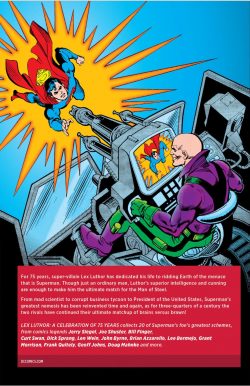
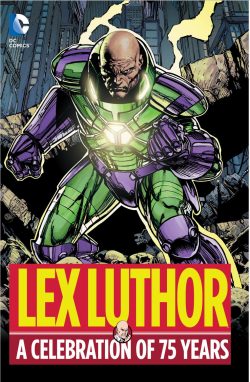
Lex Luthor: A Celebration of 75 Years


By Jerry Siegel & Joe Shuster, Bill Finger, Edmund Hamilton, Len Wein, Cary Bates, Elliot S. Maggin, John Byrne, Roger Stern, Grant Morrison, Greg Rucka, Brian Azzarello, Paul Cornell, Geoff Johns, John Sikela, Wayne Boring, Curt Swan, Jackson Guice, Howard Porter, Matthew Clark, Lee Bermejo, Frank Quitely, Pete Woods, Doug Mahnke & various (DC Comics)
ISBN: 978-1-4012-6207-5 (HB/Digital edition) 978-1- (TPB)

We’re all celebrating the anniversary of the ultimate superhero this year, but who’s thinking of his archenemy – the world’s first true supervillain? Time to address the balance, even if it’s actually two years until the mogul of menace is actually due his bit of candle-covered cake…

Closely paralleling the evolution of the groundbreaking Man of Steel, the exploits of the mercurial Lex Luthor are a vital aspect of comics’ very fabric. In whatever era you choose, the prototypical and ultimate mad scientist epitomises the eternal feud between Brains and Brawn and over eight decades has become the Metropolis Marvel’s true antithesis and nemesis. He’s also evolved into a social barometer and ideal perfect indicator of what different generations deem evil.

This stunning compilation – part of a dedicated series reintroducing and exploiting the comics pedigree of venerable DC icons – comes in Hardback, Trade Paperback and digital formats, sharing a sequence of snapshots detailing what Luthor is at key moments in his never-ending battle with Superman. Groundbreaking appearances are preceded by brief critical analyses of the significant stages in the villain’s development, beginning with Part I: 1940-1969 The Making of a Mastermind.

After history and deconstruction comes sinister adventure as the grim genius debuts in ‘Europe at War Part 2’ (Action Comics #23 April 1940 by Jerry Siegel & Joe Shuster). Although not included here, Action #22 had loudly declared ‘Europe at War’ – a tense, thinly-disguised call to arms for the still-neutral USA, and as the Man of Tomorrow sought to stem the bloodshed, the saga became a continued story (almost unheard of in the early days of funny-book publishing).

Spectacularly concluding in #23, Clark Kent’s European investigations revealed a red-headed fiend employing outlandish science to foment war for profit: intent on conquering the survivors as a modern-day Genghis Khan. The Man of Steel strenuously objected…

Next is ‘The Challenge of Luthor’ (Superman #4, Spring/March1940) and produced at almost the same time: a landmark clash with the rogue scientist who, back then, was still a roguish red-head with a bald and pudgy henchman.

Somehow in the heat of burgeoning deadlines, master got confused with servant in later adventures, and public perception of the villain irrevocably crystalized as the sinister slap-headed super-threat we know today. The fact that Superman was also a star of newspapers – which operated under a different inworld continuity – is widely considered the root cause of that confusion…

Siegel & Shuster’s story involves an earthquake machine and ends with Luthor exhausting his entire arsenal of death-dealing devices attempting to destroy his enemy… with negligible effect.

From Superman #17 (July 1942), ‘When Titans Clash’, by Siegel & John Sikela, depicts how the burly bald bandit uses a mystic “powerstone” to survive his justly earned execution by stealing Superman’s abilities. However, the Action Ace retains his wily intellect and outsmarts his titanically-empowered foe…

Jumping ahead 10 years, ‘Superman’s Super Hold-Up’ (by Bill Finger, Wayne Boring & Stan Kaye from World’s Finest Comics #59 July 1952) is a supremely typical duel of wits in which the Einstein of Evil renders the Metropolis Marvel helpless with the application of a devilish height- and pressure-sensitive mega explosive device… if only for a little while…

WFC #88 (June 1957 by Edmond Hamilton, Dick Sprang & Kaye) offers ‘Superman and Batman’s Greatest Foes!’ wherein “reformed” master criminals Lex and The Joker ostensibly set up in the commercial robot business. Nobody really believes them… as it happens, quite correctly!

As the mythology grew and Luthor became a crucial component of Superman’s story, the bad boy was retroactively inserted into the hero’s childhood. ‘How Luthor Met Superboy!’ (Siegel & Al Plastino in Adventure Comics #271, April 1960) details how Boy of Steel and budding genius were pals until a lab accident burned off Lex’s hair. In his prideful fury Lex blamed the Kryptonian and swore revenge…

In Finger, Curt Swan & John Forte’s ‘The Conquest of Superman’ (Action Comics #277, June 1961) the authorities parole Lex to help with an imminent crisis, only to have the double-dealer escape as soon as the problem is fixed. By the time Superman returns to Earth, Luthor is ready for him…

For October 1963, Superman #164 featured ‘The Showdown between Luthor and Superman’ (Hamilton, Swan & George Klein). The ultimate Silver Age confrontation between the Caped Kryptonian and ultimate antithesis pitted them in an unforgettable clash on devastated planet Lexor – a lost world of forgotten science and fantastic beasts – resulting in ‘The Super-Duel!’ and displayed a whole new side to the often two-dimensional arch-enemy.

Part II: 1970-1986 Luthor Unleashed previews how a more sophisticated readership demanded greater depth in their reading matter and how creators responded by adding a human dimension to the avaricious mad scientist. ‘The Man Who Murdered the Earth’ from Superman #248 (cover-dated February 1972, by Len Wein, Swan & Murphy Anderson). Here Luthor dictates his final testament after creating a Galactic Golem to destroy his sworn enemy, and ponders how his obsession caused the demise of humanity.

For Action Comics’ 45th anniversary, Superman’s two greatest foes – the other being Brainiac – were radically re-imagined for an increasingly harder, harsher world. ‘Luthor Unleashed’ in #544 (June 1983, by Cary Bates, Swan & Anderson) saw the eternal enmity between Lex and Superman lead to Lexor’s destruction and death of Luthor’s new family after the techno-terror once more chose vengeance over love.

Crushed by guilt and hatred, the maniacal genius reinvents himself as an implacable human engine of terror and destruction…

Elliot S. Maggin, Swan & Al Williamson offer a glimpse into the other motivating force in Luthor’s life, exposing ‘The Einstein Connection’ (Superman #416, February 1986) wherein a trawl through the outlaw’s life reveals a hidden link to the greatest physicist in history…

The Silver Age of comic books utterly revolutionised a flagging medium, bringing a modicum of sophistication to the returning sub-genre of masked mystery men. However, after decades of cosy wonderment, Crisis on Infinite Earths transformed the entire DC Universe, leading to a harder, tougher Superman. John Byrne’s radical re-imagining was most potently manifested in Luthor, who morphed from brilliant, obsessed bandit to ruthless billionaire capitalist as seen in the introduction to Part III: 1986-2000 Captain of Industry

The tensions erupt in ‘The Secret Revealed’ (Superman volume 2 #2, February 1987 by Byrne, Terry Austin & Keith Williams) as the pitiless tycoon kidnaps everyone Superman loves to learn his secret. After collating all the data obtained by torture and other means, the corporate colossus jumps to the most mistaken conclusion of his misbegotten life…

‘Metropolis – 900 Miles’ (Superman vol. 2 #9, September 1987 by Byrne & Karl Kesel) then explores the sordid cruelty of the oligarch who cruelly torments a pretty waitress with a loathsome offer and promise of a new life…

‘Talking Heads’ appeared in Action Comics #678 (June 1992, by Roger Stern, Jackson Guice & Ande Parks), set after Luthor – riddled with cancer from wearing a green Kryptonite ring to keep Superman at arms’ length – secretly returned to Metropolis as his own son in a cloned (young and handsome) body. Acting as a philanthropist and with Supergirl as his girlfriend/arm candy, young Luthor has everybody fooled, Sadly, everything looks like falling apart when rogue geneticist Dabney Donovan is arrested and threatens to tell an incredible secret he knows about the richest man in town…

‘Hostile Takeover’ comes from JLA #11 1997) wherein Grant Morrison, Howard Porter & John Dell opened interstellar saga ‘Rock of Ages’ with the Justice League facing a newly-assembled, corporately-inspired Injustice Gang organised by Lex and run on his ruthlessly efficient business model.

Superman, Batman, Wonder Woman, Martian Manhunter, Flash, Green Lantern and Aquaman are targeted by a coalition of arch-enemies comprising Chairman-of-the-Board Lex, Joker, Circe, Mirror Master, Ocean Master and Doctor Light, with ghastly doppelgangers of the World’s Greatest Heroes raining destruction down all over the globe.

Even with new members Aztek and second-generation Green Arrow Connor Hawke on board, the enemy are running the heroes ragged, but the stakes change radically when telepath J’onn J’onzz detects an extinction-level entity heading to Earth from deep space…

The action and tension intensify when the cabal press their advantage whilst New God Metron materialises, warning the JLA that the end of everything is approaching.

As ever, these snippets of a greater saga are more frustrating than fulfilling, so be prepared to hunt down the complete saga. You won’t regret it…

A true Teflon businessman, Lex met the millennium running for President and Part IV: 2000-Present 21st Century Man follows a prose appraisal with ‘The Why’ from President Luthor Secret Files and Origins #1 (2000, by Greg Rucka, Matthew Clark & Ray Snyder). Here the blueprint to power and road to the White House is deconstructed, with daily frustrations and provocations revealing what inspired the nefarious oligarch to throw his hat into the truly evil political ring…

The next (frustratingly incomplete) snippet comes from a miniseries where the antagonist was the star. ‘Lex Luthor Man of Steel Part 3’ by Brian Azzarello & Lee Bermejo offers a dark and brooding look into the heart and soul of Superman’s ultimate eternal foe: adding gravitas to villainy by explaining Lex’s actions in terms of his belief that the heroic Kryptonian is a real and permanent danger to the spirit of humanity.

Luthor – still believed by the world at large to be nothing more than a sharp and philanthropic industrial mogul – allows us a peek into his psyche: viewing the business and social (not to say criminal) machinations undertaken to get a monolithic skyscraper built in Metropolis. The necessary depths sunk to whilst achieving his ambition, and manipulating Superman into clashing with Batman, are powerful metaphors, but the semi-philosophical mutterings – so reminiscent of Ayn Rand’s The Fountainhead – although flavoursome, don’t really add anything to Luthor’s character and even serve to dilute much of the pure evil force of his character.

Flawed characters truly make more believable reading, especially in today’s cynical and sophisticated world, but such renovations shouldn’t be undertaken at the expense of the character’s heart. At the end Luthor is again defeated; diminished without travail and nothing has been risked, won or lost. The order restored is of an unsatisfactory and unstable kind, and our look into the villain’s soul has made him smaller, not more understandable.

Lee Bermejo’s art, however, is astoundingly lovely and fans of drawing should consider buying this simply to stare in wonder at the pages of beauty and power that he’s produced here. Or read the entire story in its own collected edition…

Rather more comprehensive and satisfying is ‘The Gospel According to Lex Luthor’ as first seen in All-Star Superman #5. Crafted by Morrison, Frank Quitely & Jamie Grant from September 2006, here an unrepentant Luthor on Death Row grants Clark Kent the interview of his career and scoop of a lifetime, after which ‘The Black Ring Part 5’ (Action Comics #894, December 2010 by Paul Cornell & Pete Woods) confirms his personal world view as Death of the Endless stops the universe just so she can have a little chat with Lex and see what he’s really like…

This epic trawl through the villain’s career concludes with a startling tale from Justice League volume 2, #31 (August 2014) as, post-Flashpoint, a radically-rebooted New 52 DCU again remade Lex into a villain for the latest generation: brilliant, super-rich, conflicted and hungry for public acclaim and approval. In ‘Injustice League Part 2: Power Players’ by Geoff Johns, Doug Mahnke, Keith Champagne & Christian Alamy, bad-guy Luthor has helped Earth from extradimensional invaders and now wants to be a hero. His solution? Make real superheroes invite him into the Justice League, which can be accomplished by ferreting out Batman’s secret identity and blackmailing the Dark Knight into championing his admission…

Lex Luthor is the most recognizable villain in comics and can justifiably claim that title in whatever era you choose to concentrate on; goggle-eyed Golden Age, sanitised Silver Age or malignant modern/Post-Modern milieux. This book captures just a fraction of all those superb stories and offers a delicious peek into the dark, unhealthy side of rivalry and competition…

This monolithic testament to the inestimable value of a good bad-guy is a true delight for fans of all ages and vintage.
© 1940, 1942, 1952, 1954, 1957, 1960, 1961, 1963, 1972, 1983, 1986, 1987, 1992, 1997, 2001, 2005, 2006, 2007, 2010, 2014, 2015 DC Comics. All Rights Reserved

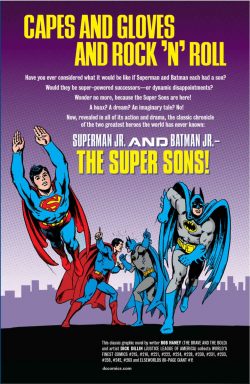
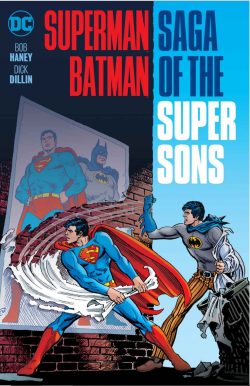
Superman/Batman: Saga of the Super Sons


By Bob Haney & Dick Dillin, with Dennis O’Neil, John Calnan, Ernie Chan, Rich Buckler, Kieron Dwyer & various (DC Comics)
ISBN: 978-1-4012-6968-5 (TPB/Digital edition)

Are you now old enough to yearn for simpler times?

The brilliant expediency of the Parallel Earths concept – and especially its contemporary incarnation Infinite Frontier – lends the daftest tale from DC’s vast back catalogue credibility and contemporary resonance, providing a chance that even the hippest and most happening of the modern pantheon can interact with the most utterly outrageous world concept in the company’s nigh-90-year history. It especially doesn’t hurt here, since – following the Rebirth reboot – the actual sons of the Dark Knight and Man of Tomorrow are now part of an established – and therefore “real” – DC Universe.

Thus, this collection of well-told but initially “imaginary” tales from 1972 to 1976, supplemented by some episodes from more self-conscious times, results from another earnest opportunity to make the fundamental allure of stuffy adult characters relevant to kids and teens.

Written by Bob Haney and drawn by Dick Dillin, The Super-Sons appeared without prior preamble or fanfare in World’s Finest Comics #215, (cover-dated January 1973, and hitting newsstands mid-October 1972). It was a tough time for superhero comics, but a great era for teen rebels. Those free-wheeling, easy-rider, end of the flower-power days generated a huge (and lasting) societal refocussing on “teen consciousness”, and the “Generation Gap” was a phrase on almost every lip.

It didn’t hurt that the concept was already tried and tested. Both Man of Steel and Caped Crusader had already been seen as younger versions of themselves many times over the years, and the evergreen dream of characters who would more closely resonate with youngsters never died in editors’ minds. After all, hadn’t original Boy Wonder Robin been created to give readers someone to closely identify with?

The editors – Murray Boltinoff and E. Nelson Bridwell – clearly saw a way to make their perilously old-school so-very establishment characters instantly pertinent and relevant. Being mercifully oblivious to the more onerous constraints of continuity – some would say logic – they simply and immediately generated tales of the maverick sons of the World’s Finest heroes out of whole cloth.

…And smartly-constructed, well told tales they are. Debut outing ‘Saga of the Super Sons!’ (inked by Henry Scarpelli) sees the young warriors as fully realised young rebels running away from home – on the inevitable motorcycle – and encountering a scurrilous gang-lord.

But worry not, their paternalistic parents are keeping a wary eye on the lads! Speaking as one of the original target market for this experiment, I can admit the parental overview grated then and still does, but as there were so many sequels, enough reader must have liked it…

‘Little Town with a Big Secret!’ appeared in the very next issue: another low key human interest tale, but with a science-fiction twist and the superb inking of Murphy Anderson complimenting Haney & Dillin’s tight murder-mystery yarn.

Crafted by the same team, WF # 221 (January-February 1974) featured ‘Cry Not for My Forsaken Son!’ depicting a troubled runaway boy discovering the difference between merit and worth, and the value of a father as opposed to a biological parent, after which #222’s ‘Evil in Paradise’(inked by Vince Colletta) saw young heroes voyage to an undiscovered Eden to resolve the ancient question of whether Man is intrinsically Good or Evil.

‘The Shocking Switch of the Super-Sons’ (WF #224, cover dated July-August and also inked by Colletta) took teen rebellion to its logical conclusion when a psychologist convinces the boys to trade fathers, whereas ‘Crown for a New Batman!’ provides a radical change of pace as Bruce Wayne Jr. inherits the Mantle and the Mission when dad is murdered!

Never fear, all is not as it seems, fans! This thriller – guest starring Robin – appeared in WFC #228, and was inked by Tex Blaisdell, who inked Curt Swan, on more traditional Lost Civilisation yarn ‘The Girl Whom Time Forgot’ in WF#230…

The Relevancy Era was well over by the time Haney, Dillin & Blaisdell crafted ‘Hero is a Dirty Name’ (#231, July 1975), wherein the Sons are forced to question the motivation for heroism in a thriller guest-starring Green Arrow and The Flash.

In #233’s ‘World Without Men’ (inked by John Calnan) the ever-rambling, soul-searching Super-Sons confront sexual equality issues and unravel a crazy plot to supplant human males, after which ‘The Angel with a Dirty Name’ (by the same team in June 1976’s WFC #238) offers a supervillains and monsters slug-fest indistinguishable from any other Fights ‘n’ Tights tale, before the original series fades out with December’s #242’s in ‘Town of the Timeless Killers’. Illustrated by Ernie Chua (nee Chan) & Calnan, it sees the kids trapped in a haunted ghost town and stalked by immortal gunslingers offering a rather low-key and ignominious close to a bold experiment.

Four years later in mid-March 1980, the boys surprisingly showed up in a momentary revival. Cover-dated June-July and courtesy of Denny O’Neil, Rich Buckler & Dick Giordano in WFC #263, ‘Final Secret of the Super-Sons’ shockingly revealed that the boys were no more than a simulation running on the Man of Steel’s futuristic Super Computer.

In a grim indication of how much of a chokehold shared continuity had grown into, they then escaped into “reality” anyway, accidentally wreaking havoc in a manner The Matrix movies would be proud of…

The collection concludes in a short tale by Haney & Kieron Dwyer from Elseworlds 80-Page Giant in 1999. ‘Superman Jr. is No More!’ is a charming, fitting conclusion to this odd, charming and idiosyncratic mini-saga, embracing the original conceit as it posits what would happen if Superman died and his boy was forced to take over too soon…

Supplemented with a full cover gallery by Nick Cardy, Chan, Calnan, Giordano, Ross Andru & Ty Templeton, these classic yarns are packed with potency and wit. If you’ve an open mind and refined sense of adventure, why not take a look at a few gems (and one or two clunkers) from an era where everybody read comics and nobody took them too seriously?
© 1972, 1973, 1974, 1975, 1976, 1980, 1999, 2017 DC Comics. All Rights Reserved.

Black Lightning


By Dennis O’Neil, Gerry Conway, J.M. DeMatteis, Martin Pasko, Paul Kupperberg, Dick Dillin, George Tuska, Rich Buckler, Marshall Rogers, Mike Netzer/Nasser, Romeo Tanghal, Joe Staton, Pat Broderick, Dick Giordano, Gerald Forton & various (DC Comics)
ISBN: 978-1-4012-7546-4 (TPB/Digital edition)

Black Lightning was the first African American superhero to have his own solo DC title. It launched in 1977 and ran for 11 issues.

When former Olympic decathlete Jefferson Pierce returned to the streets of Metropolis’ Suicide Slum to teach at inner city Garfield High School, he was determined to make a real difference to the disadvantaged and often troubled kids he used to be numbered amongst. However, when he interrupted a drug buy on school grounds and sent the dealer packing, he opened everyone around him to mob vengeance and personal tragedy…

When the ruling racketeers – an organised syndicate dubbed The 100 – came seeking retaliation, one of Pierce’s students paid the ultimate price. The traumatised teacher realised he needed the shield of anonymity if he was to win justice and safety for his beleaguered home and charges…

Happily, tailor Peter Gambi – who had raised Jefferson and taken care of his mother after the elder Pierce was murdered – had some useful ideas and inexplicable access to some pretty far-out technology. Soon, equipped with a strength-&-speed-enhancing forcefield belt and costume, plus a mask and wig that completely changed his appearance, a fierce new vigilante stalked the streets of Metropolis…

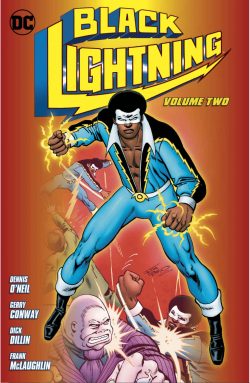
This second outing gathers a flurry of back-up and guest appearances from May 1979 to October 1980, garnered from various titles the urban avenger prowled in after his solo title folded. They cumulatively comprise World’s Finest Comics #256-259 and #261, DC Comics Presents #16, Justice League of America #173-174, Detective Comics #490-491, 495-495 and The Brave and the Bold #163 plus pertinent material from Who’s Who: The Definitive Directory of the DC Universe #3 (1985) and Who’s Who in the DC Universe #16 (1992).

Following an informative Introduction by character originator Tony Isabella reprising Black Lightning: The In-Between Years, the (relatively) down-to-earth superhero antics recommence in ‘Encounter with a Dark Avenger!’ (courtesy of Denny O’Neil, Dick Dillin & Frank Chiaramonte, as seen in World’s Finest Comics #256).

Here the electric warrior is manipulated into a potentially fatal confrontation with equally fervent urban vigilante Green Arrow. As the heroes clash, neither is aware the 100’s ousted boss Tobias Whale is behind their mutual woes…

That short yarn saw Black Lightning as GA’s guest star and served as a prelude to ‘Death Ransom!’ (WFC #257), beginning Pierce’s second (strictly backup) series. Crafted by O’Neil, George Tuska & Bob Smith, it sees a fateful, brutal clash with The Whale, resulting in a wary ceasefire for the archenemies as they unite to destroy a swiftly rebuilding 100 cartel…

Of course, a scorpion’s gotta sting and the alliance only lasts one issue before Whale betrays Lightning’s trust and another innocent dies in ‘The Blood of the Lamb!’ (O’Neil, Rich Buckler & Romeo Tanghal, from World’s Finest #258)…

Issue #259 offers a labyrinthine conundrum as the hero and a horde of gunmen act on a deathbed tip-off, converging on a seedy welfare hotel that might be ‘The Last Hideout’ (O’Neil, Marshall Rogers, Michael Nasser/Netzer & Vince Colletta) of a legendary criminal and his ill-gotten gains. Sadly, only the masked vigilante cares about collateral casualties…

‘Return of the River Rat!’ (O’Neil, Tanghal & Colletta, WFC #261) ends this back-up run on a mediocre note as school chaperone Jefferson Pierce is fortuitously on hand for a river cruise party, just as an exiled mobster attempts to sneak back into the USA by submarine…

A co-starring role in DC Comics Presents #16 (December 1979) finds the street-smart urban avenger and Superman facing a heartsick, violently despondent alien trapped on Earth for millennia in ‘The De-volver!’ (O’Neil, Joe Staton & Frank Chiaramonte) after which the loner gets a nod of approval from Superhero Big Guns…

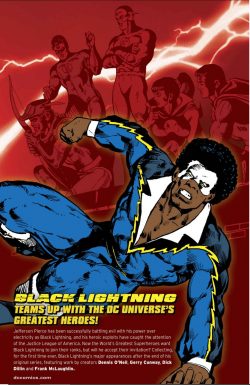
Justice League of America #173-174 (December 1979 and January 1980) sees a smart 2-parter with a twist ending as the League seek to induct the mysterious, unvetted vigilante.

After much fervent, self-righteous and smugly privileged debate, they decide to set their still-unsuspecting candidate a little problem to prove his worth.

However, as a vermin-controlling maniac unleashes terror upon Metropolis, the ‘Testing of a Hero’ and ‘A Plague of Monsters’ (Gerry Conway, Dillin & Frank McLaughlin) takes the old recruitment drive in a very fresh direction and delivers disappointment all around…

Still Not Quite Popular Enough, the hero was found tenure in the more moody but grounded Detective Comics, beginning with #490 (May 1980).

Here Martin Pasko, Pat Broderick & McLaughlin reveal how ‘Lightning Strikes Twice Out!’ as a protracted clash with a ruthless Haitian gang led by Mama Mambu leads to Pierce’s kidnap and loss of his powers and gimmicks in concluding chapter ‘Short-Circuit’ (Detective #491).

A corrupt Senator stealing oil shipments to finance a private army and planned takeover of America is foiled in separate-but-convergent investigations conducted by Black Lightning and Batman in ‘Oil, Oil… Nowhere’ (Paul Kupperberg & Dick Giordano from The Brave and The Bold #163, June 1980) after which J.M. DeMatteis & Gerald Forton assume creative control of the Lightning’s path in Detective Comics #494…

‘Explosion of the Soul’ (cover-dated September 1980) sees the streets haunted by a murderous junkie-killing vigilante, with all Pierce’s investigations leading inexorably back to one of his students…

Ending on a dark note of tragedy, ‘Animals’ (DeMatteis & Forton, Detective #494) then sees the Suicide Slum School Olympics turned into a charnel house when a juvenile street gang seizes the girls’ hockey team and demands safe passage and new lives in Switzerland. When Black Lightning intercedes, events escalate and not everyone gets out alive…

Supplemented with a cover gallery by Ross Andru, Giordano, Jim Aparo, Neal Adams & Dillin, with fact-packed background and data pages about ‘Black Lightning’ from Who’s Who: The Definitive Directory of the DC Universe #3 (1985) and an updated entry from Who’s Who in the DC Universe #16 (1992), this is a potent package of fast-paced Fights ‘n’ Tights thrillers no thriller fan could resist.
© 1979, 1980, 2018 DC Comics. All Rights Reserved.