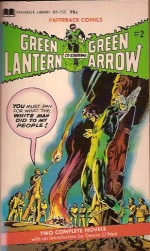
Green Lantern and Green Arrow #2


By Denny O’Neil, Neal Adams, Frank Giacoia & Dan Adkins (Paperback Library)
ISBN: 0-446-64755-1

Once upon a time, comics – like Rock ‘n’ Roll or spray-can street art – was considered outcast, bastard non-Art continually required to explain and justify itself – even when some of the people vainly defending the intrusive fledgling forms were critics and proponents of the other higher creative forms.

And during those less open-minded times, just like the other examples cited, every so often the funnybook industry brought forth something which forced the wider world to sit up and take notice.

This slim paperback – in itself proof positive of the material’s merit because the stories were contained in a proper book and not a flimsy, gaudy, disposable pamphlet (sic) – is a sequel to an earlier collection of some of the most groundbreaking comic adventures in American history; repackaged for an audience finally becoming cognizant that the unfairly dismissed children’s escapism might have something to contribute to the whole of culture and society…

After a decade of earthly crime-busting, interstellar intrigue and spectacular science fiction shenanigans the Silver Age Green Lantern was about to become one of the earliest big-name casualties of a downturn in superhero sales in 1969 prompting Editor Julius Schwartz to try something extraordinary to rescue the series.

The result was a bold experiment which created an industry-wide fad for socially relevant, ecologically aware, mature stories which spread throughout DC’s costumed hero comics and beyond; totally revolutionising the comics scene and nigh-radicalising readers.

Tapping superstars-in-waiting Denny O’Neil & Neal Adams to produce the revolutionary fare, Schwartz watched in fascinated disbelief as the resultant thirteen groundbreaking, landmark tales captured the tone of the times, garnered critical praise, awards and desperately valuable publicity from the outside world, whilst simultaneously registering such poor sales that the series was finally cancelled anyway, with the heroes unceremoniously packed off to the back of marginally less endangered comicbook The Flash.

When these stories (reprinted from Green Lantern/Green Arrow #78-79, July and September 1970) first appeared DC was a company in transition – just like America itself – with new ideas (which in comic-book terms meant “young writers”) being given much leeway: a veritable wave of fresh, raw talent akin to the very start of the industry, when excitable young creators ran wild with fevered imaginations and anything might happen.

Their cause wasn’t hurt by the industry’s swingeing commercial decline: costs were up and the kids just weren’t buying funnybooks in the quantities they used to…

O’Neil, in tight collaboration with hyper-realistic illustrator Adams, attacked all the traditional monoliths of contemporary costumed dramas with tightly targeted, protest- driven stories. Green Arrow had been shoe-horned into the series with Emerald Archer Oliver Queen constantly mouthing off as a hot-headed, liberal sounding-board and platform for a generation-in-crisis whilst staid, quasi-reactionary GL Hal Jordan played the part of the oblivious but well-meaning old guard. At least the Ring-Slinger was able to perceive his faults and more or less willing to listen to new ideas…

This striking book opens with an introduction from Dennis O’Neil before hurling helter-skelter into a chillingly topical headline grabbing yarn…

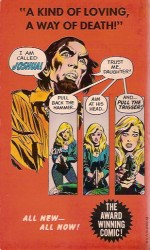
The confused and merely-mortal Green Lantern discovered another unpalatable aspect of human nature in ‘A Kind of Loving, a Way of Death!’ (with inks from Frank Giacoia) when the Arrow’s new girlfriend Black Canary joined the peripatetic cast. Seeking to renew her stalled relationship with the Emerald Archer, she was waylaid by bikers, grievously injured and taken in by a charismatic hippy guru. Sadly Joshua’s wilderness cult owed more to Charles Manson than the Messiah and his brand of Peace and Love only extended to white people: everybody else was simply target practise…

The ongoing shoddy treatment and plight of Native Americans was stunningly highlighted next in ‘Ulysses Star is Still Alive!’ (inked by Dan Adkins) as big-business logging interests attempted to deprive a mountain tribe of their very last scraps of heritage, once more causing the Green Knights to take extraordinarily differing courses of action to help and find a measure of justice…

It’s impossible to assess the effect this early bookstore edition had on the evolution of comics’ status – it certainly didn’t help keep the comicbook series afloat – but  this edition certainly gave credibility to the stories themselves: a fact proved by the number of times and variety of formats these iconic adventures have been reprinted.
© 1970, 1972 National Periodical Publications, Inc. All rights reserved.

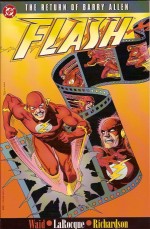
The Flash: the Return of Barry Allen

New revised review

By Mark Waid, Greg LaRocque, Sal Velluto & Roy Richardson (DC Comics)
ISBN: 978-1-56389-268-4

When the Silver Age Flash died during the Crisis on Infinite Earths in 1985, he was promptly succeeded by his grieving shell-shocked sidekick and nephew Wally West, who initially struggled to fill the boots of his groundbreaking predecessor, both in sheer physical ability and, more tellingly, in confidence. Wally felt like a fraud, but like a true hero he soldiered on and eventually rose to esteemed heights.

Just as he was becoming comfortable in the role though, the unthinkable happened… Actually in comics not so unthinkable and that idea is used to telling effect within the text.

Years later just as Wally was coming to terms with his historic heritage and still painful sense of bereavement Barry Allen reappeared, stunned, amnesiac, but unquestionably alive…

This slender chronicle collects issues #74-78 of the Wally West Flash (which originally ran from March to August 1993) and, after ‘Flashback’ – an informative introduction from Mark Waid & Brian Augustyn – opens with a couple of teasing, foreshadowing pages from earlier issues which lead to the late Scarlet Speedster turning up on Wally’s doorstep on Christmas Eve after which the high-speed action opens with ‘Trust’ by Waid, Greg LaRocque – assisted by Sal Velluto – & Roy Richardson.

Heroes have come back before and villains have always pulled imposturing fast ones too, so as Barry’s memories slowly return Wally is suspicious, although his mentor’s oldest friends Jay Garrick and Hal (Green Lantern) Jordan are quickly convinced. But still, something doesn’t seem quite right with the returned, but no longer so easygoing, heroic ideal…

In ‘Running Behind’ Barry and Wally are happily patrolling together and the younger Flash is becoming convinced that nothing more than insecurity and jealousy are colouring his misgivings. Even Garrick, the WWII Flash, is apparently content and cooperating in their unstoppable crime-blitz. Wally is even considering surrendering the name and creating a new heroic persona for himself when, during a skirmish with high-tech bandits Barry inexplicably flies into a psychotic rage…

Helpless, fearing Barry’s derangement is caused by his death and resurrection, Wally watches his mentor progressively lose it in ‘Identity Crisis’, whilst the utterly pragmatic Garrick recruits fellow veteran speedsters Johnny Quick and Max Mercury just in case the worst comes to pass. When the tech-bandits are revealed to be a deadly alien gang Wally and uncle Barry track them down and the younger Flash is apparently killed…

Wally has survived but is hiding: only he knows that his beloved uncle Barry has gone mad, attempting to murder his own nephew, after which in ‘Suicide Run’ the returned Scarlet Speedster tries to kill everybody else who might rival his standing as the Fastest Man Alive…

An incredible accident finally reveals the truth to the despondent Wally as “Barry Allen” goes on a murderous global rampage in ‘Blitzkrieg’ before the youngest Flash returns to lead a dramatic and desperate final charge against the most dangerous man of all time in the staggering, blockbuster, revelatory conclusion ‘The Once and Future Flash’.

That is one of the very best Fights ‘n’ Tights tales of the 1990s, a rollercoaster ride of bluff, misdirection and all-out action that was instrumental in shutting up old coots like me who kept whining about how the new stuff just wasn’t as good as the old…

Despite some less than stellar artwork this is a great tale, captivatingly told and which powerfully pushes the buttons of any superhero fan, whether a Flash follower or not. Catch and enjoy, time after time after time….

© 1993 DC Comics. All Rights Reserved.

Green Lantern and Green Arrow #1


By Denny O’Neil, Neal Adams, John Broome, Gil Kane & various (Paperback Library)
ISBN: 0-446-64729-2 075

Until relatively recent times, comic strips – like rock ‘n’ roll or spray-can street art – were considered an outcast, bastard non-Art form continually required to explain and justify themselves.

And during those less open-minded times, just like the other examples cited, every so often the funnybook industry produced something which forced the wider world to sit up and take notice. In this slim paperback – in itself proof positive of the material’s merit because the stories were contained in a proper book and not a flimsy, gaudy, disposable pamphlet – some of the most groundbreaking tales in American comicbook history were re-presented to an audience finally becoming cognizant that a mere Children’s medium” might have something to contribute to the whole culture and society…

This striking paperback book collection opens with an introduction from Samuel R. Delaney and is rather sensibly followed by the very first Green Lantern tale from Showcase # 22 (September-October 1959), providing much needed background – as well as few solid old-fashioned thrills for readers new to the character and concept.

After the successful revival and reworking of The Flash in 1956, DC (or National Comics as they then were) was keen to build on a seemingly resurgent superhero trend. Showcase #22 hit the stands at the same time as the fourth issue of the new Flash comicbook (#108) with architects of the Silver Age editor Julie Schwartz, writer John Broome and artists Gil Kane & Joe Giella providing a Space Age reworking of a Golden-Age superhero with the magic ring.

Super-science replaced mysticism as Hal Jordan, a young test pilot in California, was transported to the side of a dying alien policeman who had crashed on Earth. Mortally wounded, Abin Sur commanded his power-ring, a device which could materialise thoughts, to seek out a replacement ring-bearer; honest and without fear.

Scanning the planet, it had selected Jordan and brought him to an appointment with destiny. The dying alien bequeathed the ring, a lantern-shaped Battery of Power and his noble profession to the astonished Earthman.

In six pages ‘S.O.S Green Lantern’ established the characters, scenario and narrative thrust of a series that would become the spine of DC continuity, opening a universe of wonder to wide eyed readers of all ages.

However, after a decade of earthly crime-busting, interstellar intrigue and spectacular science fiction shenanigans the Silver Age Green Lantern was about to become one of the earliest big-name casualties of the downturn in superhero sales in 1969 prompting Editor Schwartz to try something extraordinary to rescue the series.

The result was a bold experiment which created a fad for socially relevant, ecologically aware, mature stories which spread throughout DC’s costumed hero comics and beyond; totally revolutionising the industry and nigh-radicalising readers.

Tapping superstars-in-waiting Denny O’Neil and Neal Adams to produce the revolutionary fare, Schwartz watched in fascinated disbelief as the resultant thirteen groundbreaking, landmark tales captured the tone of the times, garnered critical praise, awards and desperately valuable publicity from the outside world, whilst simultaneously registering such poor sales that the series was finally cancelled anyway, with the heroes unceremoniously packed off to the back of marginally less endangered comicbook The Flash.

The main event of this pocket-sized collection re-presents the first two landmark stories, perfectly encapsulating everything Americans were already experiencing in the bubbling cauldron of social turmoil and experimentation on their own doorsteps. Everything was challenged on principle and with issue #76 of Green Lantern (April 1970 and the first issue of the new decade) O’Neil and Adams redefined the nature of superhero adventure with their “Issues”-driven stories; transforming complacent and all-powerful establishment masked boy-scouts into uncertain, questioning champions and strident explorers of the enigma of America.

When these stories first appeared National/DC was a company in transition – just like America itself – with new ideas sought for and acted upon: a wave of fresh, raw talent was hired, akin to the very start of the industry, when excitable scarce-young creators ran wild with imagination. Their cause wasn’t hurt by the industry’s swingeing commercial decline: costs were up and the kids just weren’t buying funnybooks in the quantities they used to so perhaps it was time to see what the next generation had to offer…

O’ Neil, working in tight collaboration with hyper-realistic artist Adams, assaulted all the traditional monoliths of contemporary costumed dramas with tightly targeted, protest- driven stories. The comicbook had been re-designated Green Lantern/Green Arrow with Emerald Archer Oliver Queen constantly mouthing off as a hot-headed, liberal sounding-board and platform for a generation-in-crisis whilst staid, quasi-reactionary GL Hal Jordan played the part of the oblivious but well-meaning old guard. At least the Ring-Slinger was able to perceive his faults and more or less willing to listen to new ideas…

‘No Evil Shall Escape My Sight!’ (inked by Frank Giacoia) is a true landmark of the medium, utterly reinventing the concept of the costumed crusader as newly-minted, freshly bankrupted millionaire Oliver (Green Arrow) Queen challenged his Justice League comrade’s cosy worldview when the lofty space-cop painfully discovered real villains wore business suits, had expense accounts, hurt people just because of skin colour and would happily poison their own nests for short-term gain…

The specific villain du jour was a wealthy landlord whose treatment of his poverty-stricken tenants wasn’t actually illegal but certainly was wickedly immoral… Of course, the fact that this yarn is also a brilliantly devious crime-thriller with science-fiction overtones didn’t exactly hurt either…

The continuation ‘Journey to Desolation’ from #77 was every bit as groundbreaking.

At the conclusion of the #76 an immortal Guardian of the Universe – known as “the Old Timer” – was assigned to accompany the Emerald Duo on a voyage to “discover America”: a soul-searching social exploration into the dichotomies which divided the nation – and a tremendously trendy and popular pastime for the nation’s disaffected citizens back then.

Their first stop brought the trio to a poverty-stricken Appalachian mining town run as a private kingdom by a ruthless entrepreneur happy to use agent-provocateurs and Nazi war criminals to keep his wage slaves in line. When a young protest singer looked likely to become the next Bob Dylan and draw unwelcome publicity, he had to be eliminated – as did the three strangers who drove into town at just the wrong moment…

Although the heroes provided temporary solutions and put away viciously human criminals, these tales were always carefully heavy-handed in exposing bigger ills and issues which couldn’t be fixed with a wave of a Green Ring; invoking an aura of helplessness that was metaphorically emphasised during this story when Hal was summarily stripped of much of his might for no longer being the willing, unquestioning stooge of his officious, high-and-mighty alien masters…

It’s impossible to assess the effect this early bookstore edition had on the evolution of comics’ status – it certainly didn’t help keep the comicbook series afloat – but  this edition certainly gave credibility to the stories themselves: a fact proved by the number of times and variety of formats these iconic adventures have been reprinted.
© 1959, 1970, 1972 National Periodical Publications, Inc.

Green Lantern/Green Arrow volume 1


By Denny O’Neil, Neal Adams, Frank Giacoia, Dick Giordano, Dan Adkins & Berni Wrightson (DC Comics)
ISBN: 978-1-4012-0224-8

After nearly a decade of earthly crime-busting, interstellar intrigue and spectacular science fiction shenanigans the Silver Age Green Lantern was swiftly becoming one of the earliest big-name casualties of the downturn in superhero sales in 1969 and Editor Julie Schwartz knew something extraordinary was needed to save the series.

The result was a bold experiment that created a fad for socially relevant, ecologically aware, more mature stories which spread throughout DC costumed hero comics that totally revolutionised the industry and nigh-radicalised the readers.

Tapping superstars-in-waiting Denny O’Neil and Neal Adams to produce the revolutionary fare, Schwartz watched in fascinated disbelief as the resultant thirteen groundbreaking, landmark tales – the first seven of which are reprinted in this superb colour collection – captured the tone of the times, garnered critical praise and awards within the industry and desperately valuable publicity from the real world outside, whilst simultaneously registering such poor sales that the series was finally cancelled anyway, with the heroes unceremoniously packed off to the back of marginally less endangered comicbook The Flash.

Once safely established and doubling up the die-hard fan-base, the stories resumed their traditional themes – crime, adventure and space opera – and Green Lantern gradually grew popular enough for his own solo title once more….

By the end of the 1960s America was a bubbling cauldron of social turmoil and experimentation. Everything was challenged on principle and with issue #76 of Green Lantern (April 1970 and the first issue of the new decade) O’Neil and comics iconoclast Neal Adams utterly redefined superheroism with their “Issues”-driven stories; transforming complacent establishment masked boy-scouts into uncertain, questioning champions and strident explorers of the enigma of America.

When these stories first appeared DC was a company in transition – just like America itself – with new ideas (which, in comic-book terms meant “young writers”) being given much leeway: a veritable wave of fresh, raw talent akin to the very start of the industry, when excitable young creators ran wild with imagination. Their cause wasn’t hurt by the industry’s swingeing commercial decline: costs were up and the kids just weren’t buying funnybooks in the quantities they used to…

O’ Neil, in tight collaboration with hyper-realistic artist Adams, assaulted all the traditional monoliths of contemporary costumed dramas with tightly targeted, protest- driven stories. The comicbook had been re-designated Green Lantern/Green Arrow with Emerald Archer Oliver Queen constantly mouthing off as a hot-headed, liberal sounding-board and platform for a generation-in-crisis whilst staid, quasi-reactionary GL Hal Jordan played the part of the oblivious but well-meaning old guard. At least the Ring-Slinger was able to perceive his faults and more or less willing to listen to new ideas…

‘No Evil Shall Escape My Sight!’ (inked by Frank Giacoia) is a true landmark of the medium, utterly reinventing the concept of the costumed crusader as newly-minted, freshly bankrupted millionaire Oliver (Green Arrow) Queen challenged his Justice League comrade’s cosy worldview when the lofty space-cop painfully discovered real villains wore business suits, had expense accounts, hurt people just because of skin colour and would happily poison their own nests for short-term gain…

The specific villain du jour was a wealthy landlord whose treatment of his poverty-stricken tenants wasn’t necessarily illegal but certainly was wickedly immoral… Of course, the fact that this yarn is also a brilliantly devious crime-thriller with science-fiction overtones doesn’t exactly hurt either…

‘Journey to Desolation’ in #77 was every bit as groundbreaking.

At the conclusion of the #76 an immortal Guardian of the Universe – known as “the Old Timer” was assigned to accompany the Emerald Duo on a voyage to “discover America”: a soul-searching social exploration into the dichotomies which divided the nation – and a tremendously popular pastime for the nation’s disaffected citizens back then.

The first stop brought the trio to a poverty-stricken mining town run as a private kingdom by a ruthless entrepreneur happy to use agent-provocateurs and Nazi war criminals to keep his wage slaves in line. When a young protest singer looked likely to become the next Bob Dylan and draw unwelcome publicity, he had to be eliminated – as did the three strangers who drove into town at just the wrong moment…

Although the heroes provided temporary solutions and put away viciously human criminals, these tales were always carefully heavy-handed in exposing bigger ills and issues which couldn’t be fixed with a wave of a Green Ring; invoking an aura of helplessness that was metaphorically emphasised during this story when Hal was summarily stripped of much of his power for no longer being the willing, unquestioning stooge of his officious, high-and-mighty alien masters…

The confused and merely-mortal Green Lantern discovered another unpalatable aspect of human nature in ‘A Kind of Loving, a Way of Death!’ when Black Canary joined the peripatetic cast. Seeking to renew her stalled relationship with Green Arrow, she was waylaid by bikers, grievously injured and taken in by a charismatic hippy guru. Sadly Joshua was more Manson than Messiah and his brand of Peace and Love only extended to white people: everybody else was simply target practise…

The continuing plight of Native Americans was stunningly highlighted in ‘Ulysses Star is Still Alive!’ as corporate logging interests attempted to deprive a mountain tribe of their very last scraps of heritage, once more causing the Green Knights to take extraordinarily differing courses of action to help, whilst #80 added a science fiction gloss to a tale of judicial malfeasance in ‘Even an Immortal Can Die!’ (inked by Dick Giordano).

When the Old Timer used his powers to save Green Lantern rather than prevent a pollution catastrophe in the Pacific Northwest, he was chastised by his fellow Guardians and dispatched to the planet Gallo for judgement by the supreme arbiters of Law in the universe. His earthly friends accompanied him and found a disturbing new administration with a decidedly off-kilter view of justice…

Adams’ staggering facility for capturing likenesses added extra-piquancy to this yarn that we’re just not equipped to grasp four decades later, with the usurping, overbearing villain derived from the Judge of the infamous trial of anti-war protesters “The Chicago Eight”.

Insight into the Guardians’ history underpinned ‘Death Be My Destiny!’ when Lantern, Arrow and Canary travelled with the now-sentenced Old Timer to the ancient world of Maltus and found a world literally choking on its own out-of-control population. The uncanny cause cast unlovely light on the perceived role and worth of women in modern society…

Ending this first of a two-set volume on a more traditional note, Green Lantern/Green Arrow #82 enquired ‘How do you Fight a Nightmare?’ (with additional inks from Berni Wrightson) as Green Lantern’s greatest foe unleashed Harpies, Amazons and all manner of female furies on the hapless hero before Black Canary and Green Arrow could turn the tide, whilst asking a few more pertinent questions about women’s rights…

As well as these magnificent still-challenging epics superbly re-coloured by Cory Adams and Jack Adler this chronicle also reprints O’Neil’s effusive introduction from the hardbound. slip-cased turn-of-this-century ‘Hard-Travelling Heroes‘ edition, creator biographies and a illustrated feature ‘Legacy in Print’ which pictorially examines the multifarious collected formats in which these timeless tales have been collected.

© 1970, 1971, 1992, 1977, 2000, 2004 DC Comics. All Rights Reserved.

Showcase Presents Green Lantern volume 5


By Denny O’Neil, Neal Adams, Dick Giordano, Mike Grell & various (DC Comics)
ISBN: 978-0-85768-224-6

Returning to the usual phonebook-sized black and white tome, this fifth collection starring the Emerald Gladiator of Earth-1 (re-presenting the contents of Green Lantern/Green Arrow #76-89 – barring the all-reprint #88and the emerald back-up strips from Flash #217-221, 223-224, 226-228, 230-231, 237-238, 240-243, 245-246) generated groundbreaking, landmark tales from Denny O’Neil & Neal Adams that totally revolutionised the industry, whilst registering such poor sales that the series was cancelled and the heroes unceremoniously shipped into the back of another comicbook. Gradually the emphasis shifted back to crime, adventure and space opera and Green Lantern grew popular enough for his own solo title once more….

By the end of the 1960s America was a bubbling cauldron of social turmoil and experimentation. Everything was challenged and with issue #76 (April 1970 and the first issue of the new decade) Denny O’Neil and comics iconoclast Neal Adams utterly redefined superhero strips with their relevancy-driven stories; transforming complacent establishment masked boy-scouts into uncertain, questioning champions and strident explorers of the revolution.

‘No Evil Shall Escape My Sight!’ (inked by Frank Giacoia) is a landmark in the medium, utterly re-positioning the very concept of the costumed crusader as newly-minted ardent liberal Green Arrow challenged GL’s cosy worldview when the lofty space-cop painfully discovered real villains wore business suits, had expense accounts, hurt people just because of skin colour and would happily poison their own nests for short-term gain…

Of course, the fact that the story is a brilliant crime-thriller with science-fiction overtones magnificently illustrated doesn’t hurt either…

O’ Neil became sole scripter with this story and, in tight collaboration with ultra-realistic art-genius Adams, instantly overturned contemporary costumed dramas with their societally-targeted relevancy-driven protest-stories. The book became Green Lantern/Green Arrow with Emerald Archer Oliver Queen constantly mouthing off as a radical, liberal sounding-board and platform for a generation-in-crisis whilst staid, quasi-reactionary GL Hal Jordan played the part of the oblivious but well-meaning old guard.

At least the Ring-Slinger was aware of his faults and more or less willing to listen to new ideas…

At the time this compendium of stories first appeared DC was a company in transition – as indeed was America itself – with new ideas (which, in comic-book terms meant “young writers”) being given much leeway: a veritable wave of fresh, raw talent akin to the very start of the industry, when excitable young creators ran wild with imagination… Their cause wasn’t hurt by an industry in rapid commercial decline: costs were up and the kids just weren’t buying funnybooks in the volumes they used to…

‘Journey to Desolation’ in #77 was every bit as groundbreaking.

At the conclusion of the last issue an immortal Guardian of the Universe – hereafter known as “the Old Timer” was assigned to accompany the Emerald Duo on a voyage to “discover America”: a soul-searching social exploration into the dichotomies which divided the nation. First stop brought the trio to a poverty-stricken mining town run as a private kingdom by a ruthless entrepreneur happy to use agent-provocateurs and Nazi war criminals to keep his wage slaves in line.

When a young protest singer looked likely to become the next Bob Dylan and draw unwelcome publicity, he had to be eliminated – as did the three strangers who drove into town at just the wrong moment…

Although the heroes provided temporary solutions and put away viciously human criminals, these tales were remarkably blunt in exposing bigger ills and issues that couldn’t be fixed with a wave of a Green Ring; invoking an aura of helplessness that was metaphorically emphasised during this story when Hal was summarily stripped of much of his power for no longer being the willing, unquestioning stooge of his officious, high-and-mighty alien masters…

The confused and far-more-mortal Green Lantern discovered another unpalatable aspect of human nature in ‘A Kind of Loving, a Way of Death!’ when Black Canary joined the peripatetic cast. Seeking to renew her relationship with Green Arrow, she was waylaid by bikers, grievously injured and taken in by a charismatic hippy guru. Unfortunately Joshua was more Manson than Messiah and his brand of Peace and Love only extended to white people: everybody else was simply target practise…

The plight of Native Americans was stunningly high-lighted in ‘Ulysses Star is Still Alive!’ as corporate logging interests attempted to deprive a mountain tribe of their very last scraps of heritage, once more causing the Green Knights to take extraordinarily differing courses of action to help, whilst #80 added a science fiction gloss to a tale of judicial malfeasance in ‘Even an Immortal Can Die!’ (inked by Dick Giordano).

When the Old Timer used his powers to save Green Lantern rather than prevent a pollution catastrophe in the Pacific Northwest, he was chastised by his fellow Guardians and dispatched to the planet Gallo for judgement by the supreme arbiters of Law in the universe.

His earthly friends accompanied him and found a disturbing new administration with a decidedly off-kilter view of justice…

Adams’ staggering facility for capturing likenesses added extra-piquancy to this yarn that we’re just not equipped to grasp four decades later, with the usurping, overbearing villain derived from the Judge of the infamous trial of anti-war protesters “The Chicago Eight”.

Insight into the Guardians’ history underpinned ‘Death Be My Destiny!’ when Lantern, Arrow and Canary travelled with the now-sentenced Old Timer to the ancient world of Maltus (that’s a pun, son: just type Thomas Robert Malthus into your search engine of choice or even look in a book) and found a world literally choking on its own out-of-control population. The uncanny cause cast unlovely light on the perceived role and worth of women in modern society…

Green Lantern/Green Arrow #82 returned briefly to traditional yarn-spinning in ‘How do you Fight a Nightmare?’ (with additional inks from Berni Wrightson) as Green Lantern’s greatest foe unleashed Harpies, Amazons and all manner of female furies on the hapless hero before Black Canary and Green Arrow could turn the tide, whilst ‘…And a Child Shall Destroy Them!’ crept into Hitchcock country to reintroduce Hal Jordan’s old flame Carol Ferris and take a pop at education and discipline in the chilling tale of a supernal mutant in thrall to a doctrinaire little martinet.

Wrightson also inked #84’s staggering attack on out-of-control consumerism, shoddy cost-cutting and the seduction of bread and circuses in ‘Peril in Plastic’ before the comics world changed forever in the two-part saga ‘Snowbirds Don’t Fly’ and ‘They Say It’ll Kill Me…But They Won’t Say When!’

Depiction of drug abuse had been strictly proscribed in comicbooks since the advent of the Comics Code Authority, but by 1971 the elephant in the room was too big to ignore and both Marvel and DC addressed the issue in startlingly powerful tales that opened Pandora’s dirty box forever. When the Green Gladiators were drawn into conflict with a vicious heroin-smuggling gang Oliver Queen was horrified to discover his own sidekick had become an addict…

This sordid, nasty tale did more than merely preach or condemn, but actively sought to explain why young people turned to drugs, just what the consequences could be and even hinted at solutions older people and parents might not want to consider. Forty years on it might all seem a little naïve, but the earnest drive to do something and the sheer dark power of the story still delivers a stunning punch.

For all the critical acclaim and astonishingly innovative work done, sales of Green Lantern/Green Arrow were in a critical nosedive and nothing seemed able to stop the rot. Issue #87 featured two solo tales, the first of which ‘Beware My Power!’ introduced a bold new character to the DCU. John Stewart was a radical activist: an angry black man always spoiling for a fight and prepared to take guff from no-one. Hal Jordan was convinced the Guardians had erred when they appointed Stewart as Green Lantern’s official stand-in, but when a bigoted US presidential candidate tried to foment a race war the Emerald Gladiator was forced to change his tune.

Meanwhile bankrupted millionaire Oliver Queen was faced with a difficult decision when the retiring Mayor of Star City invited him to run for his office. ‘What Can One Man Do?’ written by Elliot Maggin, posed fascinating questions for the proud rebel by inviting him to join “the establishment” he despised, and do some lasting good. The decision was muddied by well-meaning advice from his fellow superheroes and the tragic consequences of a senseless street riot…

Issue #88 was a collection of reprints (not included here) and the series went out on an evocative, allegorical high note in #89 as ‘…And Through Him Save a World…’ (inked by Adams) pitted jobs and self-interest at Carol Ferris’ aviation company against clean air and pure streams in an naturalistic fable wherein an ecological Christ-figure made the ultimate sacrifice to save our planet and where all the Green Heroes’ power could not affect the outcome…

Although the groundbreaking series folded there, the heroics resumed a few months later in the back of The Flash #217 (August-September 1972). ‘The Killing of an Archer!’ began a run of short episodes which eventually led to Green Lantern regaining his own solo series. The O’Neil, Adams & Giordano thriller related how Green Arrow made a fatal mistake and accidentally ended the life of a criminal he was battling. Devastated, the broken swashbuckler abandoned his life and headed for the wilderness to atone or die…

The next episode ramped up the tension as a plot against the Archer was uncovered by Green Lantern and Black Canary in ‘Green Arrow is Dead!’ whilst ‘The Fate of an Archer’ saw Canary critically injured and GL track down Oliver Queen just in time to save her life…

Dick Giordano assumed full illustration duties with ‘Duel for a Death List!’ and the concluding ‘Death-Threat on Titan!’ (Flash #220-221) as the feature returned to its science fiction roots to concentrate solely on Green Lantern once more. In this pacy yarn aliens with an ancient link to the GL Corps began eliminating ring-wielders in preparation for a fantastic strike against the Guardians of the Universe.

Issue #223 continued the interstellar intrigue as an alien interloper attacked in ‘Doomsday… Minus Ten Minutes!’ whilst the next issue presented a clever, thoroughly grounded crime-caper ‘Yellow is a Dirty Little Color!’

In #226-Neal Adams drew his last GL tale ‘The Powerless Power Ring!’ before Dick Dillin, Giordano & Giacoia completed the trilogy in #227-228 with ‘My Ring… My Enemy!’ and ‘My Enemy… Myself!’ wherein atmospheric phenomena, bad mushrooms and invading aliens all combined to make the will-powered weapon a lethal liability.

Flash #230-231 featured ‘The Man From Yesterday!’ and ‘The Man of Destiny!’ (Dillin & Tex Blaisdell) as GL saved one of America’s Revolutionary heroes from aliens who had shanghaied him centuries previously, whilst #233-234 ‘World That Bet on War!’ & ‘And the Winner is Death!’ (Dillin, Terry Austin & Giordano) pitted the Emerald Avenger against gambling-crazed extraterrestrials who used soldiers from Earth history as their games-pieces…

With Flash #237-238 and 240-243 new art sensation Mike Grell came aboard for a six part saga that precipitated Green Lantern back into his own title. Beginning with ‘Let There Be Darkness!’ (inked by Bill Draut) the watchword was “cosmic” as the extra-galactic Ravagers of Olys undertook six destructive, unholy tasks in Green Lantern’s space sector. After thwarting their scheme to occlude the sun over planet Zerbon, destroying the photosynthetic inhabitants, the hero picked up a semi-sentient starfish sidekick in ‘The Day of the Falling Sky!’(Blaisdell inks) whilst preventing the artificial world of Vivarium from collapsing in upon itself.

‘The Floods Will Come!’ brought the Olys to planets Archos, where they attempted to submerge all the landmasses and drown the stone-age dwellers thriving there and Jotham, where the Ravagers almost extinguished the sun in ‘To Kill a Star!’

Earth was the target in ‘All Creatures Great and Small!’ as the Olys used their incredible technology to shrink all mammals but no sooner had Green Lantern negated that threat than the invaders’ de-evolutionary weapons were activated in ‘Dust of the Earth!’ (Austin inks).

Luckily a hominid GL was even more formidable than his Homo Sapiens self…

The buzz of the O’Neil/Grell epic assured Green Lantern of his own series once more, but before the re-launch Flash #345-346 presented one last two-part, back-up bonanza as Dillin & Austin illustrated the eerie mutation of vegetable-themed villain Jason Woodrue who transformed himself into a horrendous monster in ‘Perilous Plan of the Plant Master!’ before subjecting GL to ‘The Fury of the Floronic Man!

From challenging tales of social injustice back to plot-driven sagas of wit and courage, packed with a shining, optimistic sense of wonder and bristling with high-octane action, these evergreen adventures signalled the end of the Silver Age of Comics. Illustrated by some of the most revered names in the business, the exploits in this volume closed one chapter in the life of Green Lantern and opened the doors to today’s sleek and stellar sentinel of the stars.

© 1970, 1971, 1972, 1973, 1974, 1975, 1976, 1977, 2011 DC Comics. All Rights Reserved.

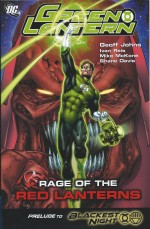
Green Lantern: Agent Orange (Prelude to Blackest Night)


By Geoff Johns, Philip Tan & Jonathan Glapion (DC Comics)
ISBN: 978-1-4012-2420-2

Hal Jordan was a young test pilot in California when an alien policeman crashed on Earth. Mortally wounded, Abin Sur commanded his ring, a device which could materialise thoughts and fuelled by willpower, to seek out a replacement ring-bearer, honest and without fear. Scanning the planet it selected Jordan and brought him to the crash-site. The dying alien bequeathed his ring, the lantern-shaped Battery of Power and his profession to the astonished Earthman.

Over the years Jordan became one of the greatest members of that serried band of law-enforcers, The Green Lantern Corps, which had protected the cosmos from evil for millennia under the auspices of immortal super-beings who dubbed themselves the Guardians of the Universe. These undying patrons of Order were one of the first races in creation and currently dwell in sublime emotionless security on the world of Oa at the very centre of creation.

If all this is new to you then this book should absolutely not be your introduction to the series. Go read (at least) Green Lantern: Secret Origin and preferably all the other collections of this monumental fixture in the comicbook firmament before attempting to decipher the compulsive, compelling, pell-mell onslaught of characters and concepts scripter Geoff Johns throws at the reader as his extended epic thoroughly reshapes the DC Universe.

Following the bombastic, blockbusting Sinestro Corps War the entire cosmos was in turmoil at the revelation that Green was not the only colour and an entire emotional spectrum of puissant energies underpinned and operated upon reality. In increasingly ambitious storylines, Johns began exploring the adherents and disciples of each hue and the forces transformed by or seeking to control them…a situation which led inexorably into DC’s major crossover events Blackest Night and its sequel Brightest Day.

This volume (collecting Green Lantern #39-42 and portions of Blackest Night #0), illustrated by Philip Tan & Jonathan Glapion, Eddy Barrows, Ruy José & Julio Ferreira, opens with a band of Controllers (a splinter group who split from the Guardians eons ago) encountering the possessor of the Orange light of Avarice.

The resultant slaughter precipitates another crisis when its sole user – a bestial, undying monstrosity named Larfleeze – abrogates an ancient secret treaty with the Oans and explodes out of his exile in the Vega system to take whatever takes his voracious fancy…

The very first thing he espies is Hal Jordan, currently overloaded by the exponentially increased power of a Blue Lantern ring overwhelming his own emerald weapon with the azure energy of Hope.

As revelations of the Guardians’ duplicitous past intrigues come to light, the vengeance-crazed, Green Lantern-hunting Fatality is overtaken by the Violet power of Love and becomes a Zamaron Star Sapphire (another dissident faction formed when the female Guardians also abandoned Oa) and attempts an uncomfortable rapprochement with her arch-enemy Green Lantern John Stewart…

Due to the Guardians’ ancient treaty with Larfleeze Vega had always been outside GL Corps jurisdiction and subsequently became a stellar sinkhole and safe-haven for the very worst scum of universe. With nothing left to hide anymore the remaining, still-squabbling Guardians lead a phalanx of their best peacekeepers in a punitive mission to clean out the sector of intergalactic criminals now that the Avatar of Greed has gone…

Sadly Larfleeze has left unique defences and the sortie ends badly. With the Orange Obsessive still hungry for Jordan’s Blue ring (which refuses to leave Hal’s hand and resists all efforts at removal) the Oans are forced to resort to a further deal with the devil…

Meanwhile Sinestro, controlling the Yellow light of Fear, and the diabolical Atrocitus, wielding the corrupting Red light of Rage, are jockeying into position for their own assaults on the embattled Guardians…

Jordan finally overcomes the paralysing burden of too much power and acts decisively to temporarily end the threat of Larfleeze, but not before the Guardians are betrayed from within and the Black light of Death resurrects the greatest threat to life there has ever been…

…Which will only become clear in the next volume.

Feeling uncomfortably like entering a play late and leaving before the end, the spectacle and action here will impress and bewilder in equal amounts, but at least there’s a selection of short complete vignettes included to afford the briefest modicum of narrative closure; beginning with ‘Origins and Omens’ (illustrated by Ivan Reis & Oclair Albert) which explores the history of the Star Sapphires and the salutary ‘Tales of the Orange Lanterns: Weed Killer’ with art by Rafael Albuquerque, which reveals the rise to power of the ravenous Orange subordinate Agent Glomulous…

After a gallery of variant covers and a fascinating design, commentary and sketch section from Philip Tan and Doug Mahnke, the book closes with informational pages on the eight colours of the Emotional Spectrum by Mahnke, Christian Alamy & Tom Nguyen

Combining big-picture theatrics with solid characterization, Green Lantern is an ideal contemporary superhero series, vast in scope, superb in execution and blending just the right amounts of angst, gloss and action in the storytelling mix – but a basic familiarity with DC/Green Lantern history is more necessary than advisable.

Impressive, exciting enticing and engrossing: all terms you’ll happily apply to Green Lantern: Agent Orange – but only after doing your homework and reading the other stuff first…
© 2009 DC Comics. All rights reserved.

Green Lantern: Secret Origin


By Geoff Johns, Ivan Reis & Oclair Albert (DC Comics)
ISBN13: 978-1-4012-2017-4

Following the bombastic, blockbusting Sinestro Corps War scripter Geoff Johns continued his personal mission to make Green Lantern the most important series of the entire DC Universe by taking readers back to the start and producing the latest definitive biography of how he came to be. He sweetened the pot by linking the brand new revelations to the latest of the increasingly ambitious storylines which led into DC’s next two major crossover events Blackest Night and its sequel Brightest Day.

This volume (divided into seven chapter “books” collecting Green Lantern #29-35) written by Johns and illustrated by Ivan Reis and Oclair Albert takes the fundamental facts of the Silver Age story by John Broome & Gil Kane and in-fills with much of the subsequent ephemera that has come since – especially from Green Lantern: Emerald Dawn and the key Alan Moore Green Lantern Corps yarn ‘Tygers’ (reprinted in DC Universe: the Stories of Alan Moore and Across the Universe: the DC Universe Stories of Alan Moore)

The basic facts remain intact (and for that version see Green Lantern Archive volume1 or the Showcase Presents Green Lantern volume 1). Hal Jordan was a young test pilot in California when an alien policeman crashed on Earth. Mortally wounded, Abin Sur commanded his ring, a device which could materialise thoughts, to seek out a replacement ring-bearer, honest and without fear. Scanning the planet it selected Jordan and brought him to the crash-site. The dying alien bequeathed his ring, the lantern-shaped Battery of Power and his profession to the astonished Earthman.

Here however, we start years earlier with Jordan as a boy on the day his test-pilot dad died in a crash and see how the dysfunctional kid grew into a troubled, rebellious man: a thrill-addicted, hot-headed pilot who quickly burned up any good will he might once have deserved. Hooked on flying, he’s stuck in a dead-end job, working for the company that caused his father’s death and new boss Carol Ferris only hired him out of pity. On his very last chance his world changes forever when a spaceship crashes in the desert…

Book 2 opens with Green Lantern Abin Sur; a legend amongst his fellow peace-keepers, but now tainted and weakened by contact with mystic-terrorist psycho-warriors the Five Inversions. His resolution and will-power have been shaken by their poisonous prophecies of galactic doom and whilst transporting their leader, monster-mage Atrocitus, Sur crashes his spaceship on Planet Earth. The Green Lantern has gone rogue; defying the Guardians of the Universe and seeking proof of a coming Rise of Darkness – a “Blackest Night” of Life…

Dying Abin passes on the Ring and duties of a Green Lantern to the astounded Hal, who, unaware of the coming crisis, romps like a school boy with a new toy. Boss Carol, who hasn’t noticed Hal in decades, is suddenly very attentive to the new superhero whilst her creepy research chief Hector Hammond contemplates a rival for his illicit affections, but all Jordan sees is a new life of unfettered opportunity… which only lasts until the Ring and Battery shanghai him to Oa, home of the Guardians, for intensive training in a GL Rookie Boot Camp. Once again the mouthy punk makes more enemies than friends…

Meanwhile back on Earth, Abin’s friend and disciple Sinestro of Korugar has come seeking answers. Reckoned the greatest Green Lantern of all, even he is not without passion, and with his mentor’s death Sinestro’s unshakable resolve has been damaged. Moreover, Hammond has found the crashed ship and, exposed to its fuel core, has begun to mutate into something terrible…

When Sinestro and Hal meet there is no love lost nor respect won, especially after Hammond’s terrifying mental powers manifest as a threat to all humanity…

Until now no-one knew of Sur’s prisoner, but Atrocitus has been busy. Locating death-obsessed mortuary assistant William Hand, the alien seer sets about converting the young man into the harbinger of the Blackest Night – when the Guardians of the Universe will fall and the dead will rise…

Forced to cooperate, Jordan and Sinestro hunt the alien monstrosity and learn the prophecies that drove Abin Sur to his doom, but unaware of the human’s future role they allow Hand to escape with horrifying knowledge and a deadly weapon built by Atrocitus…

Book 7 ends the saga as the two GLs are summoned to Oa, where Hal teaches Sinestro that the Guardians are far from infallible and the Korugarian’s inevitable fall from grace is further hastened when he returns Atrocitus to the dead prison world of Ysmault. As with Abin before him, Sinestro’s resolve is destroyed by the contaminating prophecies of the Five Inversions. Now the universe itself will pay for the Guardian’s arrogance and over-confidence…

Combining big-picture theatrics with solid characterization, Green Lantern is an ideal contemporary superhero series, vast in scope, superb in execution and blending just the right amounts of angst, gloss and action in the storytelling mix – but even in this “jumping on” epic a basic familiarity with DC/Green Lantern history is advisable and necessary.

© 2008 DC Comics. All Rights Reserved.

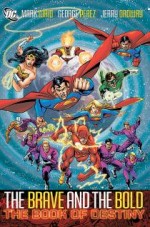
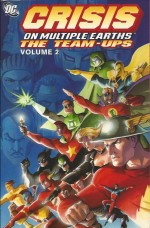
The Greatest Team-Up Stories Ever Told


By various (DC Comics)
ISBN: 0-930289-51-X

When the very concept of high priced graphic novels was just being tested in the early 1990s DC Comics produced a line of glorious hardback compilations spotlighting star characters and celebrating standout stories from the company’s illustrious and varied history decade by decade. They even branched out into themed collections which shaped the output of the industry to this day.

The Greatest Stories collections were revived this century as smaller paperback editions (with mostly differing content) and stand as an impressive and joyous introduction to the fantastic worlds and exploits of the World’s Greatest Superheroes. However for sheer physical satisfaction the older, larger books are by far the better product. Some of them made it to softcover trade paperback editions, but if you can afford it, the big hard ones are the jobs to go for…

From the moment a kid first sees his second superhero the only thing he/she wants is to see how the new costumed marvel stacks up against the first. From the earliest days of the industry (and according to Julie Schwartz’s fascinating introduction here, it was the same with the pulps and dime novels that preceded them) we’ve wanted our idols to meet, associate, battle together – and if you follow the Timely/Marvel model, that means against each other – far more than we want to see them trounce their archenemy one more time…

The Greatest Team-Up Stories Ever Told gathers together a stunning variety of classic tales and a few less famous but still worthy aggregations of heroes, but cleverly kicks off with a union of bad-guys in the Wayne Boring illustrated tale ‘The Terrible Trio!’ (Superman #88, March 1954) as the Man of Steel’s wiliest foes, Lex Luthor, Toyman and the Prankster joined forces to outwit and destroy him, whilst World’s Finest Comics #82 (May-June 1956) saw Batman and Robin join the Man of Tomorrow in a time-travelling romp to 17th century France as ‘The Three Super-Musketeers!’, helping embattled D’Artagnan solve the mystery of the Man in the Iron Mask.

A lot of these stories are regrettably uncredited, but nobody could miss the stunning artwork of Dick Sprang here, and subsequent research has since revealed writer Edmond Hamilton and inker Stan Kaye were also involved in crafting this terrific yarn.

Kid heroes prevailed when Superman was murdered and the Boy Wonder travelled back in time to enlist the victim’s younger self in ‘Superboy Meets Robin’ (Adventure Comics #253, October 1953) illustrated by Al Plastino, whilst two of that title’s venerable back-up stars almost collided in an experimental crossover from issue #267 (December 1959).

At this time Adventure starred Superboy and featured Aquaman and Green Arrow as supporting features. ‘The Manhunt on Land’, with art from Ramona Fradon & Charles Paris, saw villainous Shark Norton trade territories with Green Arrow’s foe The Wizard. Both parts were written by Robert Bernstein, and the two heroes and their sidekicks worked the same case with Aquaman fighting on dry land whilst the Emerald Archer pursued his enemy beneath the waves in his own strip; ‘The Underwater Archers’, illustrated by the excellent Lee Elias.

As I’ve mentioned before, I was one of the “Baby Boomer” crowd who grew up with Gardner Fox and John Broome’s tantalisingly slow reintroduction of Golden Age superheroes during the halcyon, eternally summery days of the 1960s. To me those fascinating counterpart crusaders from Earth-Two weren’t vague and distant memories rubber-stamped by parents or older brothers – they were cool, fascinating and enigmatically new. And for some reason the “proper” heroes of Earth-One held them in high regard and treated them with obvious deference…

It all began, naturally enough, in The Flash, flagship title of the Silver Age Revolution. After ushering in the triumphant return of the costumed superhero, the Scarlet Speedster, with Fox and Broome at the reins, set an unbelievably high standard for metahuman adventure in sharp, witty tales of science and imagination, illustrated with captivating style and clean simplicity by Carmine Infantino.

Fox didn’t write many Flash scripts at this time, but those few he did were all dynamite. None more so than the full-length epic that literally changed the scope of American comics forever. ‘Flash of Two Worlds’ (Flash #123 September 1961, illustrated by Infantino and Joe Giella) introduced alternate Earths to the continuity which resulted in the multiversal structure of the DCU, Crisis on Infinite Earths and all succeeding cosmos-shaking crossover sagas since. And of course where DC led, others followed…

During a benefit gig Flash (police scientist Barry Allen) accidentally slips into another dimension where he finds the comic-book champion he based his own superhero identity upon actually exists. Every adventure he’d avidly absorbed as an eager child was grim reality to Jay Garrick and his mystery-men comrades on the controversially named Earth-2. Locating his idol Barry convinces the elder to come out of retirement just as three Golden Age villains, Shade, Thinker and the Fiddler make their own wicked comeback… Thus is history made and above all else, ‘Flash of Two Worlds’ is still a magical tale that can electrify today’s reader.

The story generated an avalanche of popular and critical approval (big sales figures, too) so after a few more trans-dimensional test runs the ultimate team-up was delivered to slavering fans. ‘Crisis on Earth-One’ (Justice League of America #21, August 1963) and ‘Crisis on Earth-Two’ (#22) combine to become one of the most important stories in DC history and arguably one of the most important tales in American comics. When ‘Flash of Two Worlds’ introduced the concept of Infinite Earths and multiple heroes to the public, pressure had begun almost instantly to bring back the actual heroes of the “Golden Age”. Editorial powers-that-be were hesitant, though, fearing too many heroes would be silly and unmanageable, or worse yet put readers off. If they could see us now…

The story by Fox, Mike Sekowsky Bernard Sachs finds a coalition of assorted villains from each Earth plundering at will and trapping the mighty Justice League in their own HQ. Temporarily helpless the heroes contrive a desperate plan to combine forces with the champions of a bygone era and the result is pure comicbook majesty. It’s impossible for me to be totally objective about this saga. I was a drooling kid in short trousers when I first read it and the thrills haven’t diminished with this umpty-first re-reading. This is what superhero comics are all about!

The wonderment continues here with a science fiction hero team-up from Mystery in Space #90, which had been the home of star-spanning Adam Strange since issue #53 and with #87 Schwartz moved Hawkman and Hawkgirl into the back-up slot, and even granted them occasional cover-privileges before they graduated to their own title. These were brief, engaging action pieces but issue #90 (March 1964) was a full-length mystery thriller pairing the Winged Wonders and Earth’s interplanetary expatriate in a spectacular End-of the-World(s) epic.

‘Planets in Peril!’ written by Fox, illustrated by Carmine Infantino and Murphy Anderson, found our fragile globe instantly transported to the Alpha-Centauri system and heading for a fatal collision with the constantly-under-threat world of Rann at the behest of a scientific madman who eventually proved no match for the high-flying, rocket-powered trio.

Before settling into a comfortable pattern as a Batman team-up title, Brave and the Bold had been a high-adventure anthology, a try-out book like Showcase and a floating team title, pairing disparate heroes together for one-off  adventures. One of the very best of these was ‘The Challenge of the Expanding World’ (#53, April-May 1964) in which the Atom and Flash strove valiantly to free a sub-atomic civilisation from a mad dictator and simultaneously battled to keep that miniature planet from explosively enlarging into our own.

This astounding thriller from Bob Haney and the incredible Alex Toth was followed in the next B&B issue by the origin of the Teen Titans and that event is repeated here. ‘The Thousand-and-One Dooms of Mr. Twister’ (#54, June-July 1964) by Haney, Bruno Premiani and Charles Paris united sidekicks Kid Flash, Aqualad and Robin the Boy Wonder in a desperate battle against a modern wizard-come-Pied Piper who had stolen the teen-agers of American everytown Hatton Corners. The young heroes had met in the town by chance when students invited them to mediate in a long-running dispute with the town adults, but didn’t even have a team name until their second appearance.

By the end of the 1960s America was a bubbling cauldron of social turmoil and experimentation. Everything was challenged and with issue #76 of Green Lantern, Denny O’Neil and comics iconoclast Neal Adams completely redefined contemporary superhero strips with relevancy-driven stories that transformed moribund establishment super-cops into questing champions and explorers of the revolution. ‘No Evil Shall Escape My Sight!’ (O’Neil, Adams & Frank Giacoica, April 1970) is a landmark in the medium, utterly re-positioning the very concept of the costumed crusader as ardent liberal Green Arrow challenges GL’s cosy worldview as the heroes discover true villainy can wear business suits, harm people just because of skin colour and happily poison its own nest for short term gain…

Of course the fact that the story is a brilliant crime-thriller with science-fiction overtones beautifully illustrated doesn’t hurt either…

The Fabulous World of Krypton was a long-running back-up feature in Superman during the 1970s, revealing intriguing glimpses from the history of that lost world. One of the very best is ‘The Greatest Green Lantern of All’ (#257, October, 1972 by Elliot Maggin, Dick Dillin & Dick Giordano) detailing the tragic failure of avian GL Tomar-Re, dispatched to prevent the planet’s detonation and how the Guardians of the Universe had planned to use that world’s greatest bloodline…

Brave and the Bold produced a plethora of tempestuous team-ups starring Batman and his many associates, and at first glance ‘Paperchase’ (#178, September 1981) by Alan Brennert & Jim Aparo from the dying days of the title might seem an odd choice, but don’t be fooled. This pell-mell pairing of Dark Knight and the Creeper in pursuit of an uncanny serial killer is tension-packed, turbo-charged thriller of intoxicating quality.

The narrative section of this collaborative chronicle concludes with the greatest and most influential comics writer of the 1980s, combining his signature character with DC guiding icon for a moody, melancholy masterpiece of horror-tinged melodrama. From DC Comics Presents #85 (September 1985) comes ‘The Jungle Line’ by Alan Moore, Rick Veitch & Al Williamson wherein Superman contracts a fatal disease from a Kryptonian spore and plagued by intermittent powerlessness, oncoming madness and inevitable death, deserts his loved ones and drives slowly south to die in isolation.

Mercifully in the dark green swamps he is found by the world’s plant elemental the Swamp Thing…

The book is edited by Mike Gold, Brian Augustyn & Robert Greenberger, with panoramic and comprehensive endpaper illustrations from Carmine Infantino (who blue-printed the Silver Age of Comicbooks) and text features ‘The Ghosts of Frank and Dick Merriwell’, ‘That Old Time Magic’ and a captivating end-note article ‘Just Imagine, Your Favourite Heroes…’. However for fans of all ages possibly the most beguiling feature in this volume is the tantalising cover reproduction section: team-ups that didn’t make it into this selection, filling in all the half-page breaks which advertised new comics in the originals. I defy any nostalgia-soaked fan not to start muttering “got; got; need it; Mother threw it away…”

This unbelievably enchanting collection is a pure package of superhero magnificence: fun-filled, action-packed and utterly addictive.
© 1954-1985, 1989 DC Comics Inc. All Rights Reserved.

Green Lantern: Wanted: Hal Jordan


By Geoff Johns, Ivan Reis, Daniel Acuña & Oclair Albert (DC Comics)
ISBN13: 978-1-4012-1590-3

With the series well on its way after his turbulent resurrection in Green Lantern: Rebirth this fourth collection continues to build towards the cosmic spectaculars that seem to dominate the modern comics scene: in this case the Sinestro Corps War and Blackest Night.

Collecting issues #14-20 of the monthly comicbook, all the stories are as usual, written by Geoff Johns and the drama starts with the eponymous title feature. ‘Wanted: Hal Jordan’ by Ivan Reis and Oclair Albert picks up a storyline begun during the previous volume (Green Lantern: Revenge of the Green Lanterns). Throughout the previous year many countries enacted new laws against metahumans – good, bad or undecided – and due to increased geo-political tensions Hal Jordan had rejoined the US Air Force.

He and fellow pilots Jillian “Cowgirl” Pearlman and Shane Sellers were shot down by Chechnyan rebels over Russian airspace, captured and tortured before escaping. When “intel” reveals the torturers have resurfaced, the still-traumatised Green Lantern once more invades Russian territory to confront them, but anticipated vengeance turns to a rescue mission when he finds that Cowgirl has already found them and been shot down again. As the forces of an enraged and extremely belligerent Russia attack the Emerald Invader, so too do a host of alien bounty-hunters who have been secretly stalking the hero since his return…

The carnage escalates as the Justice League and other American heroes try to stop Jordan before an international incident becomes a global catastrophe, whilst behind the scenes an old foe is finally making his long-laid plans a terrifying reality…

Taut, visceral and satisfyingly complex, this tale is a prelude to the aforementioned Sinestro Corps War, and features one of the very best cameo Batman “moments” in recent memory.

The volume continues and concludes with a three-part tale illustrated by the wonderful Daniel Acuña which sets up threads for the mega-crisis after the Sinestro shenanigans (now that’s confident forward planning!). ‘The Mystery of the Star Sapphire’ re-examines and clarifies the history and methodology of the alien Zamarons (who older fans will recall are an all-female off-shoot of the Guardians of the Universe) and the purple energy-stone that periodically possessed GL’s old girlfriend Carol Ferris.

After returning to Earth and initially re-absorbing Ferris that pesky jewel jumps ship to what it thinks is Jordan’s latest flame, Cowgirl Pearlman, culminating in a spectacular, breathtaking power-duel that also lays the groundwork for much of the Blackest Night saga.

Combining big-picture theatrics with solid characterisation Green Lantern is the perfect contemporary superhero series, vast in scope, superb in execution and blending just the right amounts of angst, gloss and action in the storytelling mix: but a basic familiarity with DC/Green Lantern history is advisable.

Perhaps you’d best review some of the earlier graphic novel collections and wonderful Showcase Presents editions before tackling this little gem…

© 2006, 2007 DC Comics. All Rights Reserved.
Green Lantern: Revenge of the Green Lanterns


By Geoff Johns, Carlos Pacheco, Ethan Van Sciver, Ivan Reis & others (DC Comics)
ISBN13: 978-1-84576-355-8

Following on from his triumphant resurrection in Green Lantern: Rebirth and return to the superhero “A-List” in Green Lantern: No Fear this third collection recounts the on-going adventures of Hal Jordan, troubled test-pilot and inter-galactic policeman in a sequence that encompassed the One Year Later publishing event (after the Infinite Crisis event, the company re-set the time line of all their publications to begin one year later. This enabled them to reconfigure their characters as they saw fit, provide a jumping on point for new converts and also give themselves some narrative wiggle-room), and firmly placed this series at the hub of all future DC continuity.

Collecting issues #7-13 of the monthly comicbook, all the stories here are written by Geoff Johns and the hints and plot-markers for both the upcoming Sinestro War and Final Crisis epics are liberally sprinkled throughout the yarn re-presented here.

‘A Perfect Life’ illustrated by Carlos Pacheco and Jesus Merino, paired GL with old friend Green Arrow in a riotous showdown with alien marauder Mongul, a two-part blockbuster that gave the veteran warriors a tantalising glimpse of how their lives could, or perhaps should have been.

Next comes ‘Branded’ with art by Ethan Van Sciver and Prentiss Rollins, which sees GL tackle a long-standing enmity with Batman, who cannot bring himself to trust a hero who has already gone rogue once, whilst the pair have to defeat a deadly new version of the Tattooed Man. The end of that tale marks the jumping-off point for One Year Later. The volume continues immediately with the eponymous ‘Revenge of the Green Lanterns’.

During the missing year the Infinite Crisis rocked the DC universe, and in its aftermath world politics shifted. Superheroes are no longer as popular as they once were and many countries have forbidden them to operate within their national borders. The story opens as Green Lantern invades Russian territory (and not for the first time) in hot pursuit of an alien foe, and when challenged by Rocket Red defenders takes out his impatience on them.

It transpires that year ago Hal Jordan rejoined the air force, and with old pals Jillian “Cowgirl” Pearlman and Shane Sellers was shot down by Chechnyan rebels. Held for months before escaping Jordan holds himself responsible: the arrogant hotshot had decided not to wear his ring in combat and his friends suffered torture and maiming because of his complacency. He has much to atone for and his patience with Earth politics is now non-existent…


Moreover, in ‘Revenge of the Green Lanterns’ (pictured by Ivan Reis and Marc Campos) many members of the revived Green Lantern Corps cannot forgive him for the deaths he caused when possessed by the fear-parasite Parallax, so when a lead to missing Lanterns supposedly dead at his hands crashes at his feet Jordan ignores direct orders from the Guardians of the Universe to track them down and sets out with fellow Lantern Guy Gardner for the edge of the universe…

Ending in a spectacular battle against the Cyborg Superman and the robotic Manhunters Hal Jordan’s moment of triumph seems supreme, but throughout the universe creatures of immense violence and evil are being recruited by an implacable old enemy and the Guardians are making secret preparations for an impending catastrophe that will shake the very heavens…

Breathtaking in scope, superb in execution, this is perfect superhero storytelling: but unless you have a basic familiarity with DC /Green Lantern history you’d best review some of the earlier graphic novel collections before even attempting this little cracker…

© 2006 DC Comics. All Rights Reserved.