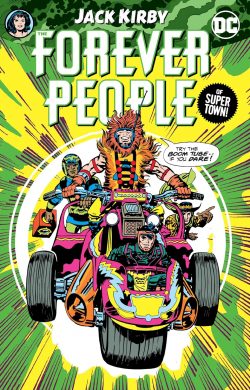
By Jack Kirby, with Vince Colletta, Curt Swan, Werner Roth, Murphy Anderson, Neal Adams, Frank Giacoia, Dick Giordano Heck, Dennis O’Neil, Bob Kanigher, John Costanza, Ben Oda, Mark Evanier, Steve Sherman, Marv Wolfman & various (DC Comics)
ISBN: ?978-1-79950-831-1 (TPB)
This book includes Discriminatory Content produced in less enlightened times.
Jack Kirby was born today in 1917. This is part one of his absolute greatest work and I’ll happily fight you if you disagree…
When Jack Kirby returned to the home of Superman in 1970, he brought with him one of the most powerful concepts in comic book history. The epic grandeur of his Fourth World saga grafted a whole new mythology over the existing DC universe and blew the developing minds of a generation of readers.
It began in Superman’s Pal Jimmy Olsen where he revived his Golden Age kid-team The Newsboy Legion, introducing large-scale cloning in the form of The Project and hinting that the city’s gangsters had extraterrestrial connections, Kirby moved on to new titles The Forever People, New Gods & Mister Miracle; an interlinked triptych of projected finite length titles that together would form a mosaic of staggering potency and grandeur. The groundbreaking titles introduced rival races of gods, dark and light, risen from the ashes of a previous Armageddon to battle forever… and then their eternal conflict spread to Earth…
Kirby’s concepts, as always, fired and inspired his contemporaries and successors. The gods of Apokolips and New Genesis became a crucial keystone of unfolding DC continuity and integral foundation of that entire fictional universe thereafter, surviving numerous revisions and retcons which periodically bedevil long-lived comics fans. Many major talents dabbled with the concept over the years and a host of titles have come and gone starring Kirby’s creations.
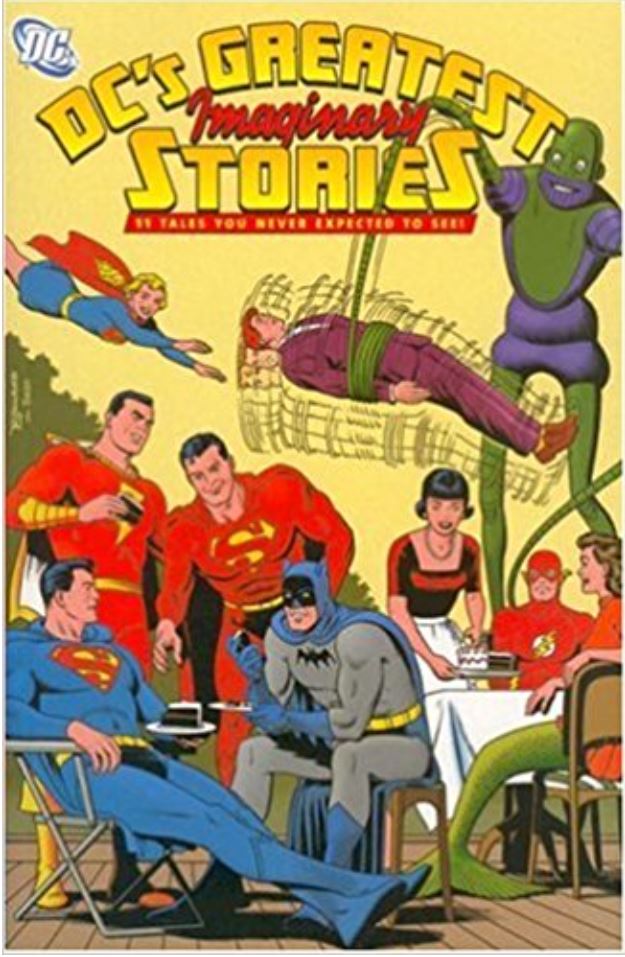
This trade paperback collection reshapes the chronology slightly, rejecting strict release date order for a more syncretic narrative, but does include sidebar material never included in previous collected editions. Here you will see the pertinent contents of Superman’s Pal, Jimmy Olsen #133-139 & #141-143; The Forever People #1-4; Mister Miracle #1-4; The New Gods #1-3, plus relevant (but non-Kirby) material from Superman’s Girl Friend Lois Lane #111, 114 & 115 and Superman #233, all collectively spanning cover-dates January – November 1971.
After his previous acrimonious departure from National/DC, Kirby had found fresh fields and an equally hungry new partner in Stan Lee at the remnants of ailing Atlas Comics (AKA once-mighty Timely Comics). There he launched and spearheaded a revolution in comics storytelling, but after just over a decade of a continual innovation and wonderment, Jack felt increasingly stifled. His efforts had transformed the dying outfit into industry-leader Marvel, but success had left him trapped in a profitable rut. Thus, he moved back to DC to generate another tidal wave of sheer imagination and pure invention. The result was experimental adult magazines Spirit World & In the Days of the Mob followed by a stunning reworking of Superman’s Pal Jimmy Olsen. By the time he had finished, all DC continuity was changed. The latter was a prelude to his landmark Fourth World saga comprising interlinked contemporaneous titles: the very definition of something game-changing and far too far ahead of its time…
Incidentally, on many levels Jimmy Olsen was an ideal match for the King and not an incongruous display of breast-beating or do-or-die audition. Olsen was an idealistic, heroic young man in the thick of the incredible at all times, and Kirby had a long history with such boy heroes. He and Joe Simon had invented the comic book “kid gang” subgenre and for the next two years Kirby revived it with his new take on The Newsboy Legion, albeit interlaced with a future-embracing backstory and aspirational wonder, rather than the poverty, privation and ongoing war of survival embodied by the Forties iteration.
As previously stated, in this tome we don’t start in Metropolis’ Suicide Slum, but long away and far ago as the scene is set by a history lesson from the distant past…
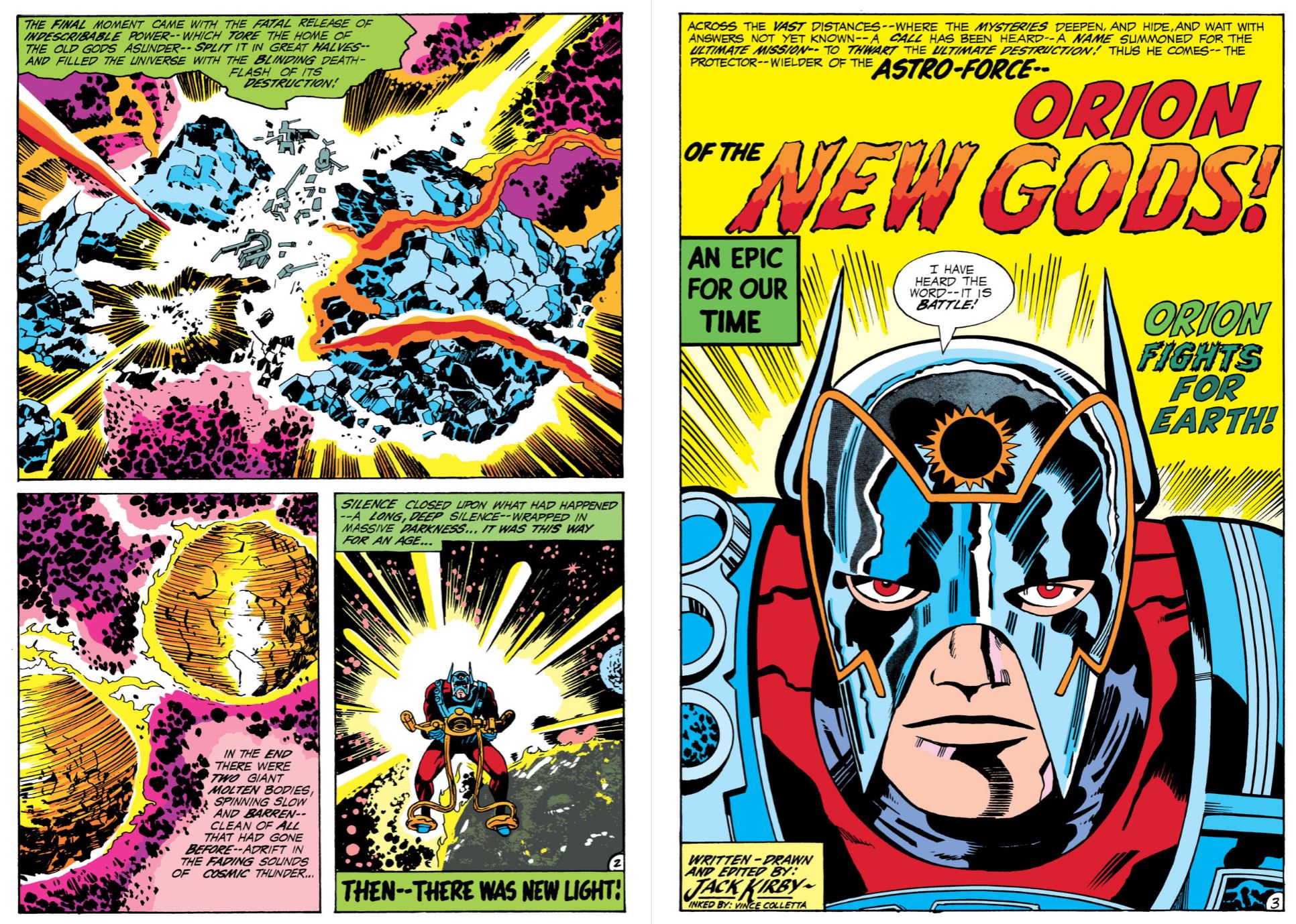
Cover-dated February/March 1971, New Gods #1 opened with an ‘Epilogue’ and closed on a ‘Prologue’ as Kirby & contractually assigned inker Vince Colletta declared ‘Orion Fights for Earth!’ Despite a promise of complete autonomy, the King had surrendered much to get his dream rolling. Crushing deadlines and ridiculous expected monthly page counts were one thing, but his choice of inkers was vetoed, and he had to compromise and accept insulting art edits drawn by regular Superman artists perennially pasted onto Superman’s trademarked face to present something DC demanded. Nevertheless, the work was everything and he persevered…
Here we learned that (relatively) soon after creation began, gods were born, lived and died – primarily by warring with each other. When the Old Gods perished in a cosmos-shaking conflagration their perfect primal world was sundered. When the chaos cooled, fragments had congealed into two new but lesser planets: the dark vicious globe of Apokolips and gleaming pristine orb New Genesis. Over millennia, a fresh generation of superior beings of might and majesty populated the spinning spheres, but sadly, a tragic trait New Gods shared with their progenitors was a capacity for destruction and taste for conflict. Denizens of both worlds always and inevitably found new ways to end each other’s immortal lives.
The tale proper begins on joyous, spiritual New Genesis years after the latest all-out war with Apokolips ceased. Mighty Orion arrives in paradisical Supertown where divine patriarch Highfather communes with cosmic mystery The Source. The ineffable metaphysical conduit despatches the turbulent, ever-anxious wolf in their fold to the antithetical diabolical hell-world, only to find despot Darkseid gone and – against all treaties – captive humans from Earth being “examined” for signs of the tyrant’s dream. For both races the basic tool is Mother Box: sentient circuitry connected to The Source and lifelong cyber-symbiotic companion, able to communicate, advise and manipulate the physical world.
The lord of Apokolips wants to do away with all that and personally control everything. Furthermore he’s decided this means possessing an irresistible, intangible ultimate weapon. The Anti-Life Equation is a cheat code for totalitarianism: the instant negation of choice and free will, and anyone using it would command all that lives. Darkseid’s obsessive search for it had led him to Earth and now he had kidnapped a cross-section of humans to test his extraction methodology. That he is gone and his realm is governed by Mass Control Units means the Evil One has found his key to success…
After batting his way onto the dire world against Parademons, Darkseid’s Dog Cavalry and assorted terror weapons, Orion frees the mortals as New Genesis God of Knowledge Metron delivers advice and a message. Thus, after outwitting and outfighting vile brute Kalibak the Cruel, the peaceful God of War uses a matter-transmitting Boom Tube to return them all to Earth. Darkseid and his elite warrior caste are waiting for him. They have already infiltrated Earth through its criminal class and begun testing humanity in search of the unique mind holding the Equation. Apparently, a sufficient amount of instilled terror should shake it loose…
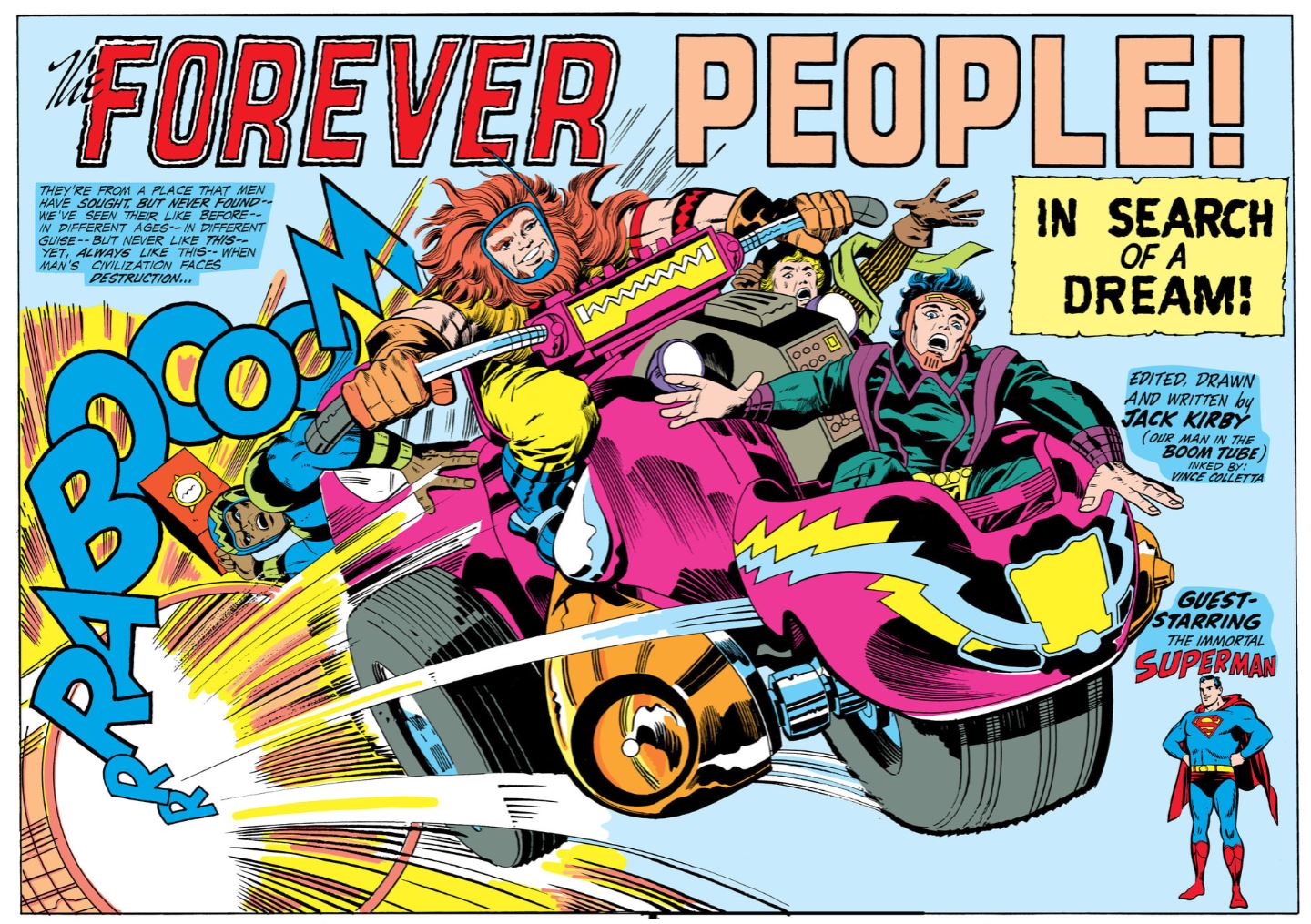
The Forever People #1’s ‘In Search of a Dream!’ sees Kirby wonders unfold following a spectacular and contemporarily astute UFO sighting wherein friends of Jimmy Olsen witnessed the arrival of a quartet of weird wild kids on the strangest bike on – or off – Earth. Because they took pictures, Clark Kent’s life changed forever….
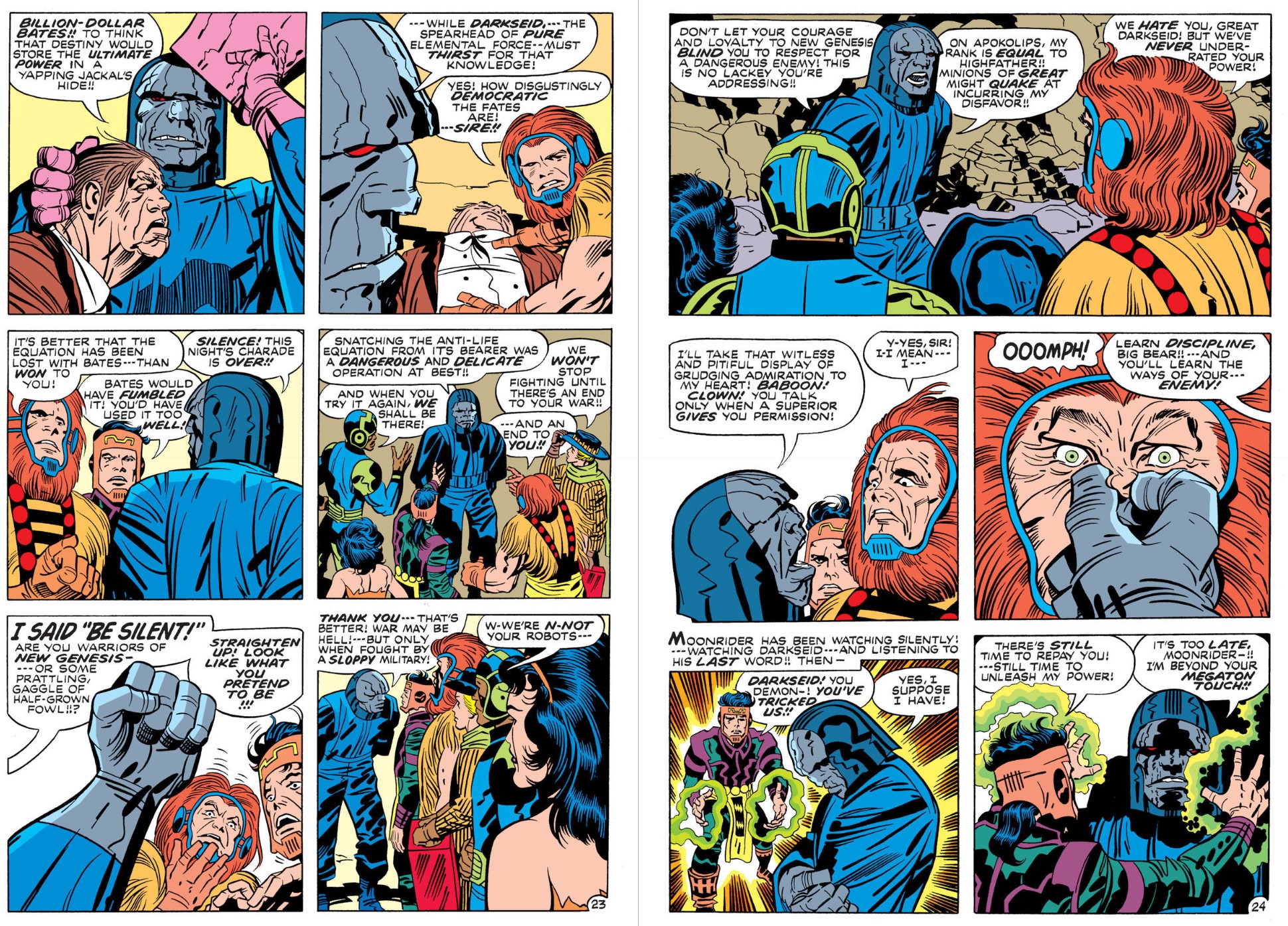
He had just completed a bruising interview that made him question his role and purpose on Earth when Jimmy’s snapshots of those weird kids offer Superman a glimpse of a place where he can be one guy among equals. Curiosity and a painful need to find the newcomers drive the Man of Steel to find them, and brings him into first known contact with the absolute embodiment of intellectual and philosophical totalitarianism. Darkseid had been infiltrating our world, quietly seeking a unique mind concealing a metaphysical ultimate weapon. The Anti-Life Equation was instant, irresistible negation of free will and with it the right despot would command all that lives. Darkseid’s obsessive search had led him to Earth and now he had kidnapped a psychic youngster from a world called New Genesis. Her name was Beautiful Dreamer…
All this Superman learned later, after being ambushed by alien-armed racketeers Intergang and saved by her friends Big Bear, Vykin the Black, Serifan & Mark Moonrider. They were all from that promised land Superman had glimpsed and had abandoned Eden to “get involved”, helping their friend and Earth. They called themselves Forever People…
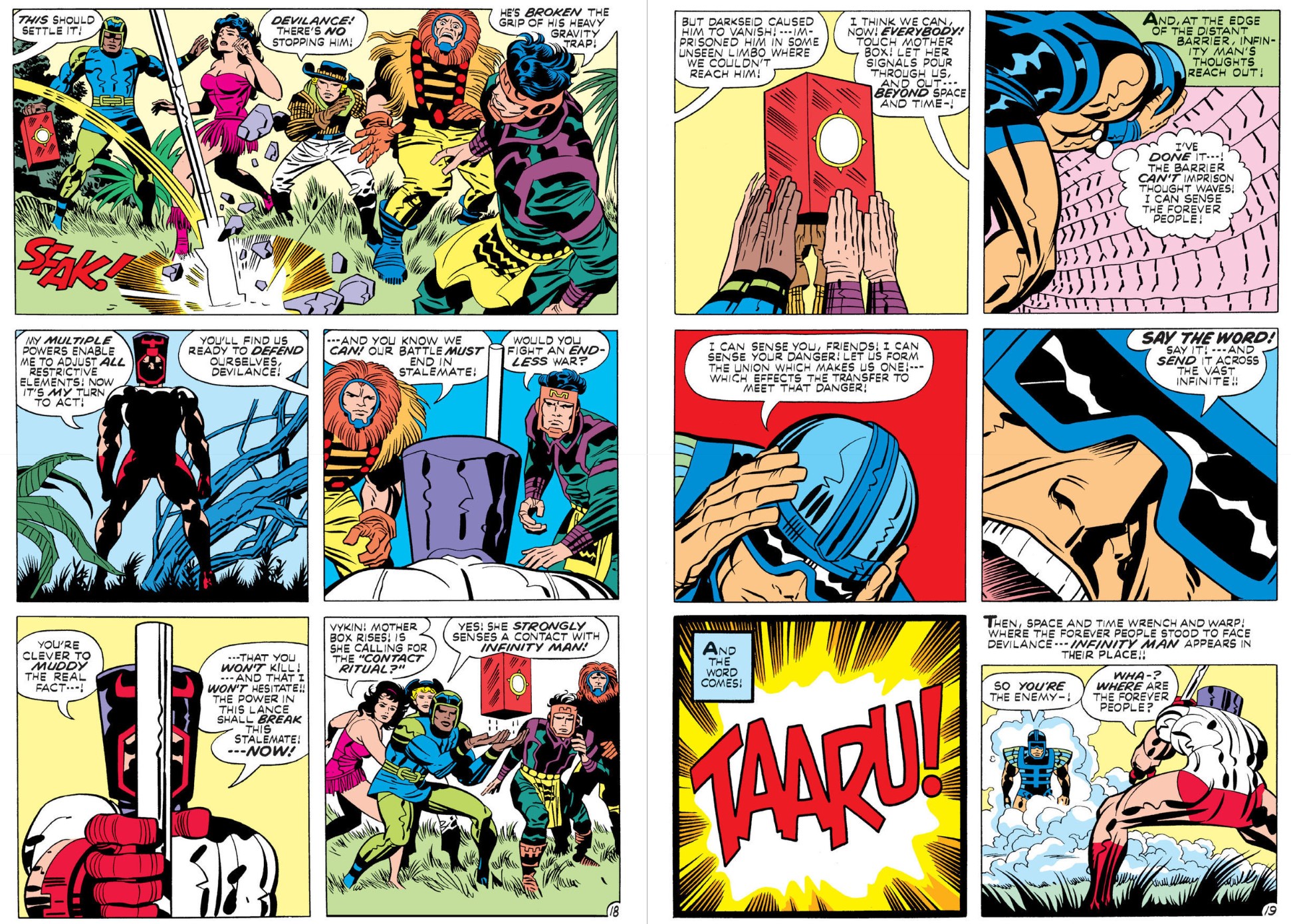
Apparently benevolent, curious kids open to new experiences and welcoming the myriad choices the future holds, they were also trained to handle trouble. When Darkseid’s forces counterattacked and took out Superman they revealed one final trick, combining into an unbeatable enigmatic gestalt being called Infinity Man…
When Darkseid ceded the day, he left a booby trap only Superman could tackle and in return the kids let him travel to Supertown on their fabled paradise planet New Genesis. However, they stressed that any decent, right-thinking person’s place was here, fighting evil by facing Darkseid. For the briefest moment, need overwhelmed duty before, inevitably, the Man of Tomorrow turned back and took up the new never-ending battle…
After Forever People #1, crossovers with DC mainstays were largely sidelined in favour of a tense and relatively isolated new normal. Those kids were Kirby’s way of depicting how conflict affected peripheral players and dragged them in and down, whilst the most important component was seeing seasoned soldiers do their work. New Gods would focus on the war itself. With that all going on, next came something utterly unexpected: a non-hero reflecting a changing world, and seeking to ride the turbulent era’s zeitgeist by looking out for himself and breaking loose of expectations and societal shackles…
Cover-dated February/March 1971, the premiere issue of Mister Miracle – Super Escape Artist sprang the last piece of the puzzle on readers, opening with a sedate set of mysteries counterpointed by emotional tension and explosive action. The star – based on Jack & Roz Kirby’s friend (comics genius, magician/escapologist) Jim Steranko – was a fugitive runaway avoiding (perhaps dodging?) his responsibilities and searching for deeper truths. No matter how wild things got, that set-up was pure reportage…
Inked by Colletta ‘Murder Missile Trap!’ introduces aging entertainer Thaddeus Brown, an old war horse trying to get back in the saddle, practicing his old escapology act to win an unwise wager with Metropolis’ Intergang boss Steel Hand. A terrifying test run is interrupted by a young stranger who observes with shock Brown’s apparent suicide and the panic of equally aged assistant Oberon even as he rushes in to help them. That act of getting involved leads to orphan Scott Free inheriting the identity and stage persona of Mister Miracle after Steel Hand cheats and has Thaddeus shot and killed. Angry, intrigued and ready to settle down at last (or for a while at least), the wanderer (who has an astounding carpet bag of high-tech tricks) wins justice for his predecessor by beating a spectacular rocket trap before opting to try something strange but substantial for a change. However, the coils of his past are already preparing to ensnare him…
That premiere issue (and this collection) also offered a text feature by Marvin Wolfman wherein readers could enjoy ‘A Visit With Jack Kirby’ before New Gods #2 confirms that there are no civilians in war in ‘O’ Deadly Darkseid!’ After fighting off a savage ambush on arrival and confronting Darkseid himself, Orion drafts the shaken, rescued human hostages as his point men and intel unit. Private eye Dave Lincoln, secretary Claudia Shane, student Harvey Lockman and aging insurance salesman Victor Lanza are scared but resolved to help their world however possible, even as the dread tyrant reviews his forces scattered all over Earth applying a range of schemes to make humanity scream and shatter and give up that equation.
As New Genesis’ comrades volunteer for the fight on this isolated island Earth, the call to arms comes in Lincoln’s backyard as God of Depravity DeSaad triggers his gigantic Fear Machine to feed off the paralysing horror it generates. However, thanks to sentient miracle computer Mother Box, his innate personal power and the star-shattering Astro-Force he commands, Orion easily wins the initial skirmish…
This scene & agenda setting saga is complemented with Mark Evanier & Steve Sherman’s prose filler ‘To and From The Source’ prior to FP #2 finding our young explorers exuberantly enjoying their dalliance with a primitive culture. The reunited quintet joyously interact with toiling humanity, and find shelter in a mostly deserted slum with disabled kid Donnie and his aging Uncle Willie. The visiting star kids’ hunger to learn is sadly curtailed when Darkseid steps up his hunt for the equation. The monster’s reasoning says abject terror could shake loose the formula from whoever is afflicted with it, and to that end he orders bug-behemoth Mantis to declare shattering ‘Super War!’ on humanity.
Arguably marginally less powerful than the Master of Apokolips, Mantis can only be countered by Infinity Man, and the Forever People happily ask living computer Mother Box to perform the ritual that will call him and subtract them from existence, sparking a cataclysmic clash. The drama is again augmented by an Evanier & Sherman essay, specifically ‘Buzzing in the Boom Tube’ as is Mister Miracle #2 with ‘Miracle Talk’.
The comics magic preceding it considers the prosaic life of a showman, as amidst a beguiling setting Scott & Oberon plan a theatrical comeback, Sadly, the old stagehand/retainer learns just how different the new kid really is and his suspicions of a wider, wilder side are confirmed as the orphanage Scott fled comes looking for him. Vicious Apokolyptian virago Granny Goodness unleashes the techno-terrors of matter-warping monster Overlord, trapping the targets in the insidious, infernal ‘X-Pit!’ and provoking a battle for their lives and sanity…
Kirby’s arrival coincided with a major overhaul of DC’s biggest gun, and is represented here by the last three pages of Superman #233. The Mn of Tomorrow had been a mega-media star since his launch, with internationally syndicated comics, books, newspaper strips, movie and animated serials plus hugely successful radio and TV shows (live action and animated) making the franchise globally recognizable. Whenever that happens, inevitably overkill and overexposure inescapably set in and the core property needs to be carefully overhauled or vanish forever. Incoming editor Julie Schwartz knew his market and was open to new ideas, and his creative changes were just appearing as 1970 ended. The new direction was also vanguard and trigger for a wealth of controversial, socially-challenging “realistic” story content unseen since the feature’s earliest days: a wave of tales ultimately described as “Relevant”…
As the sixties closed Superman was in dire need of editorial revision. That officially began with Superman #233 in a groundbreaking serial by scripter Dennis J. “Denny” O’Neil, and illustrators Curt Swan & Murphy Anderson: a deliberate very public abandonment of tired old supervillains, fanciful Kryptonian scenarios and otherworldly paraphernalia instantly poked the readership and revitalised the Man of Tomorrow, attracting new readers and began a period of engagingly human-scaled stories making Superman a “must-buy” character all over again.
Although only the portentous ending is included here, the innovations began with ‘Superman Breaks Loose’ as a government experiment to harness Kryptonite as an energy source goes explosively wrong. Closely monitoring, the Metropolis Marvel is blasted across the desert surrounding the isolated lab, but somehow survives a supposedly fatal radiation-bath. Then, reports begin filtering in from all over Earth: every piece of the deadly mineral has been transformed to harmless, common iron! As he goes about his protective, preventative patrols, the liberated hero experiences an emotional high at the prospect of all the good he can now accomplish. He isn’t even phased when the Daily Planet’s new owner Morgan Edge (a key character created by Kirby and Darkseid’s top secret agent) shakes up Clark Kent’s cosy civilian life: summarily ejecting him from the print game to remake him as a roving TV journalist. (for more see DC Finest: Superman – Kryptonite Nevermore)…
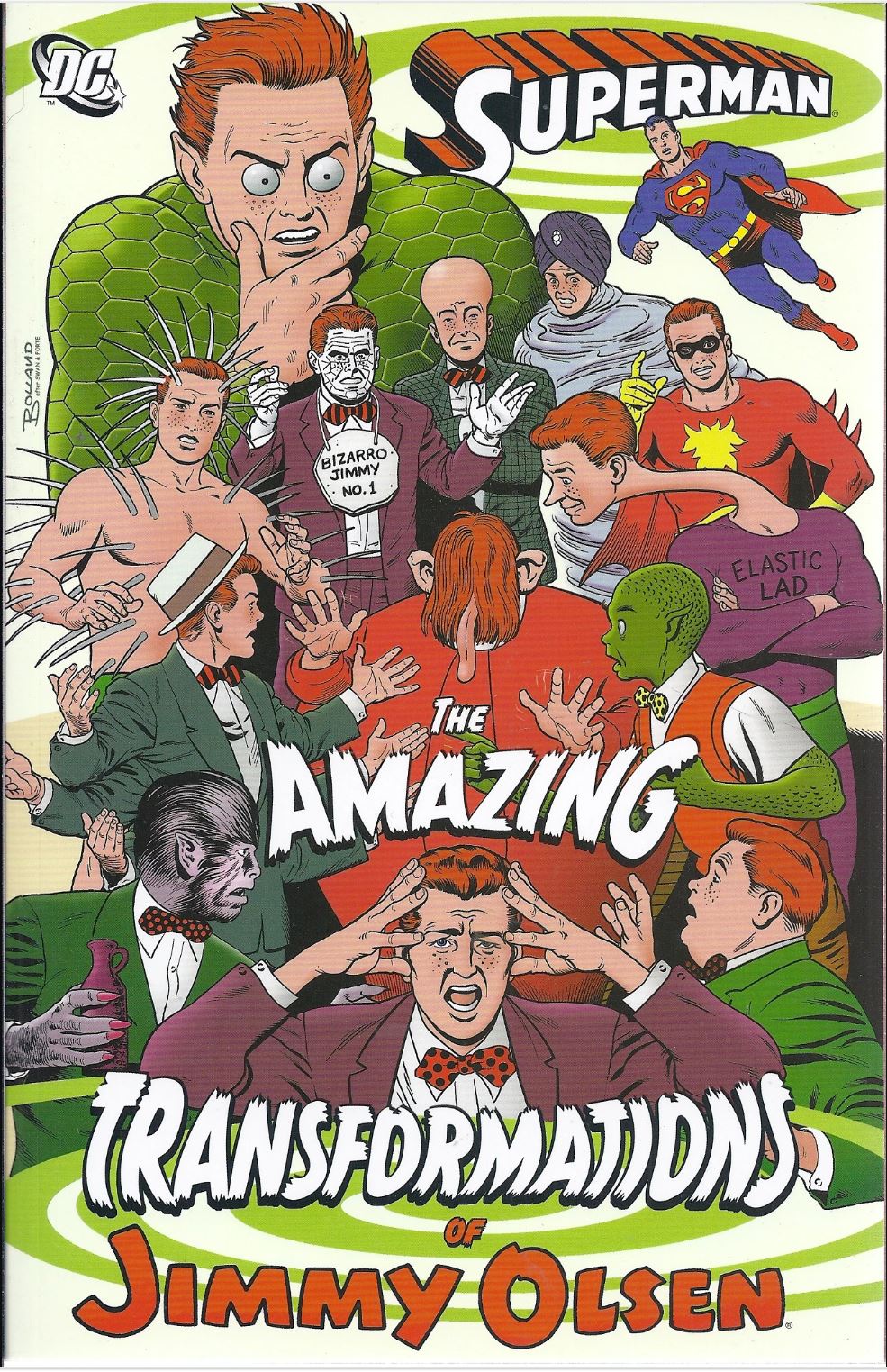
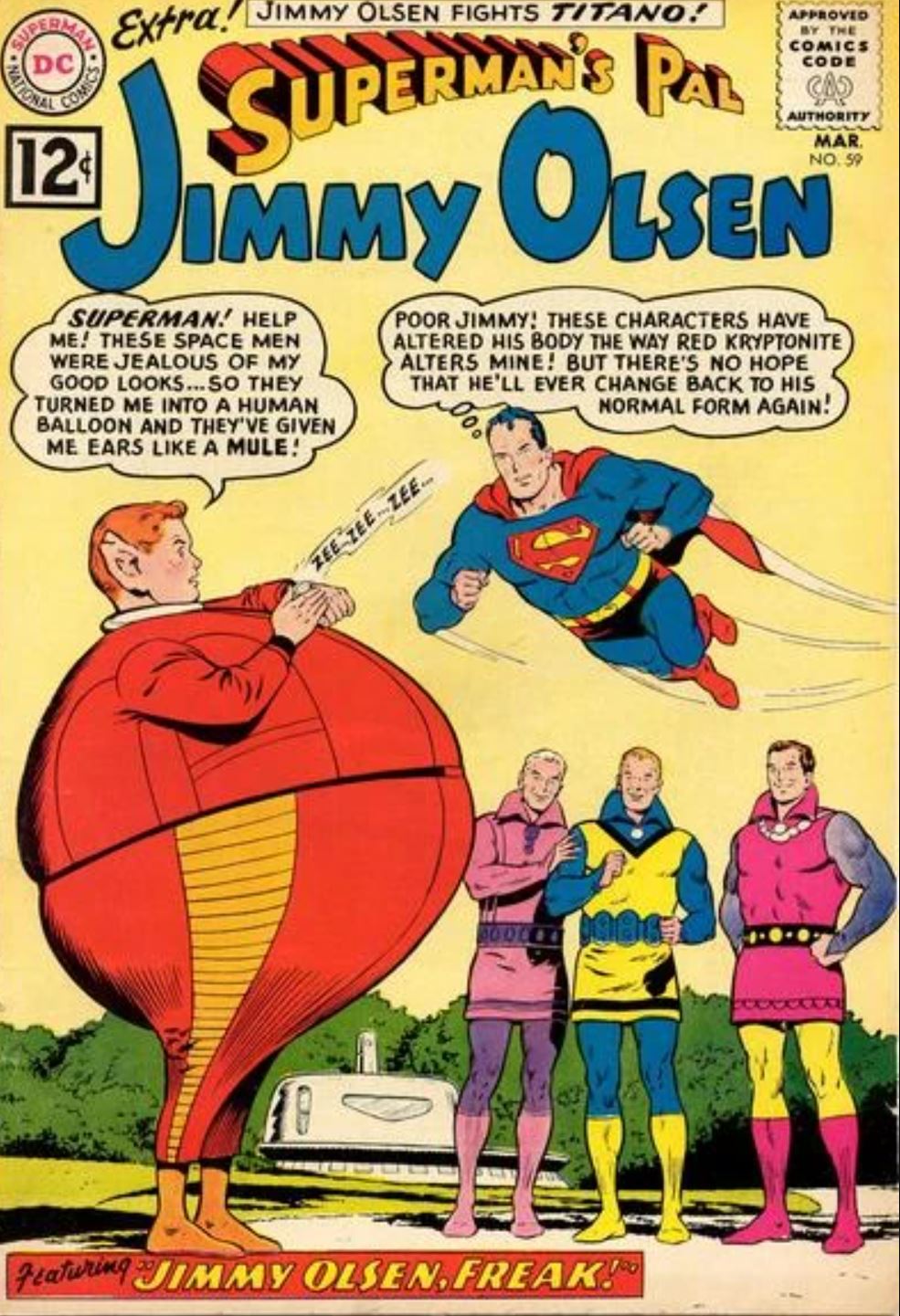
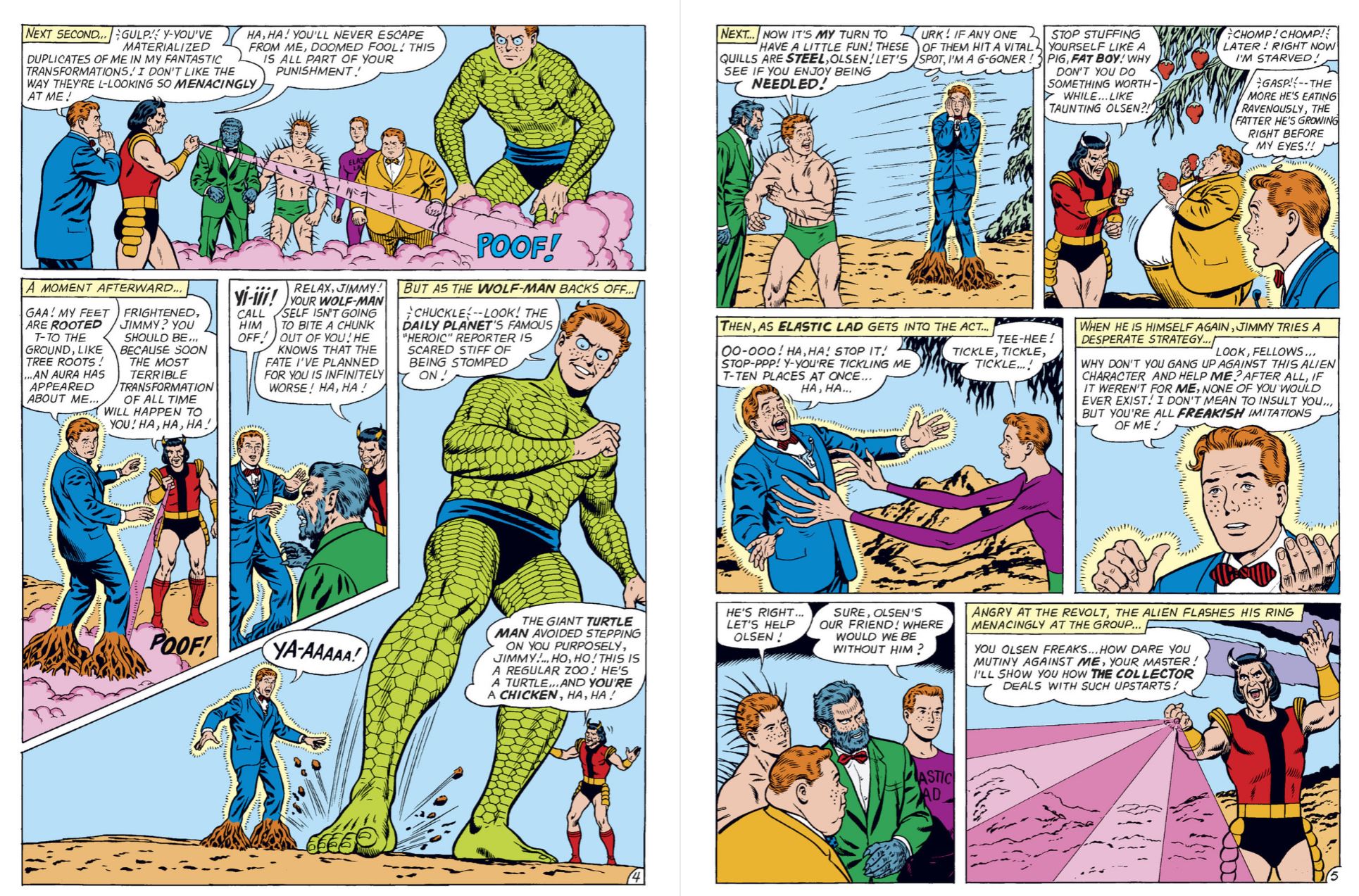
As much humour feature as adventure series, Superman’s Pal Jimmy Olsen was a long-running but increasingly lacklustre spin-off feature spawned by the TV show that had very much reached its end. Latterly, Leo Dorfman had begun the process of ending the cascade of comedic transformations and body-shaming events, remaking Jimmy into a competent, confident action hero and serious investigative journalist. This was in tune with a rebellious new era but stalled when the worlds of DC forever altered on the pages of what was then considered one of their least appreciated and poorest-selling titles. According to fan myth & legend, none of it apparently mattered when Kirby took over. By all popular accounts, he had asked for DC’s worst performing title to prove what he could do, and used that gesture to spearhead a wave of changes whilst adapting grand schemes his old employers at Marvel were too timid to countenance on their pages…
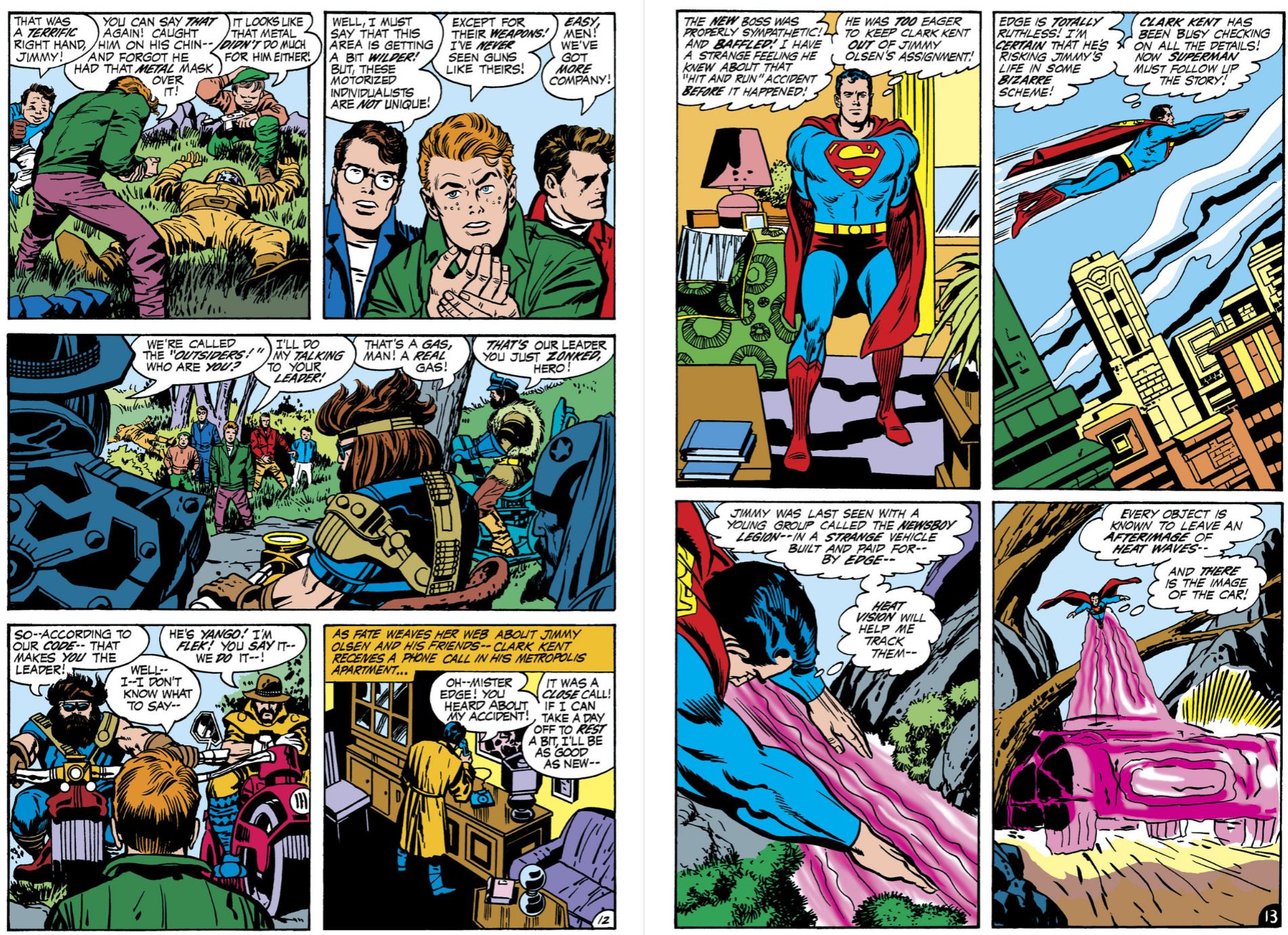
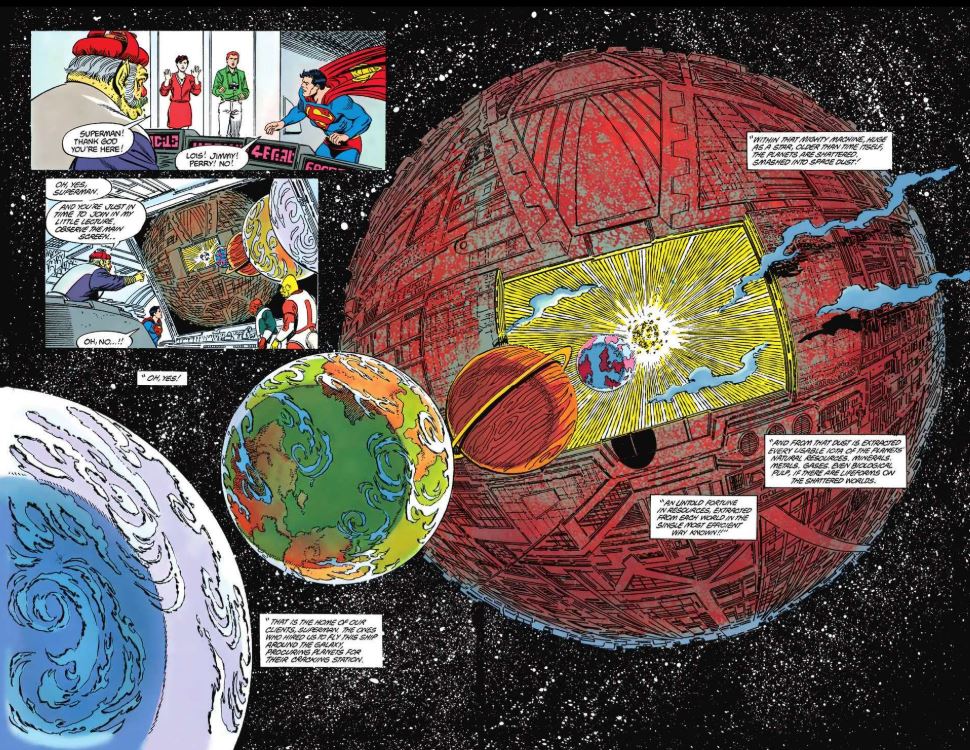
Jack’s first in-universe foray was Superman’s Pal Jimmy Olsen #133, cover-dated October and on sale from August 25, 1970. Suddenly readers were thrown into a bravely strange new world where, out of nowhere, extremely shady incoming Daily Planet owner Morgan Edge gifts Jimmy with a fantastic supercar – the “Whiz Wagon” – demanding that he and his previously unseen pals ‘The Newsboy Legion!’ (technically the “New Newsboy Legion” comprising the sons of Tommy, Big-Words, Gabby & Scrapper, with the addition of African-American, scuba diving addict Flipper Dipper) deliver an exclusive scoop on a bizarre counterculture movement in the wilds outside Metropolis. The mysterious subjects are all weird hippie-types and don’t trust anyone over age 25, so Edge needs to send youth combined with experience, However, the one who can’t be trusted is Edge himself. He has undisclosed connections to crime combine Intergang and a chilling stone-faced alien dubbed Darkseid…
After very publicly surviving an assassination attempt, Clark Kent goes into hiding, allowing Superman to take off after Jimmy and the boys as they probe fantastic unsuspected region dubbed the Wild Area. Here Olsen survives trial by combat to become leader of futuristic biker gang The Outsiders, before being sucked into their quest for meaning by hunting a moving mountain inhabited by techno-pacifists “The Hairies”…
Linking up with the Man of Steel as tremors rock the organically grown refuge city of Habitat, Jimmy and the Newsboys chase the ultimate test of existence alongside other motor nomads, unaware that pal Superman already knows the secret they’re seeking. What Jimmy isn’t aware of is that Edge has boobytrapped the Whiz Wagon to satisfy his vile master’s desire to destroy what might be the next step in human evolution and a threat to his own schemes…
The total reboot closed with the King introducing himself to a prospective new audience text titbit ‘Jack Kirby – CONTINED’ but although Kirby & Colletta put their hearts and souls into the job, and despite Publisher Carmine Infantino’s promise of strict non-intervention, meddling with the concept began early, as regular Superman art staff redrew Superman and Jimmy’s faces. We’ll never know what they tried to do to the overall story arc…
Without pause for breath, exposition or recap SPJO #134 saw Jimmy and his petrol-head wild bunch catch up to monstrous mechanised white whale ‘The Mountain of Judgement!’ after astoundingly taking out Superman with weapons casually discarded by inveterate tinkerers the Hairies. Thankfully, Edge’s bomb is easily defused by the techno-hippies who all share an incredible secret; one the Action Ace is fully aware of. In short order, Jim and the lads are briefed on “The Project”: the US government’s cracking of the human genome and extensive duplication/experimentation on life forms. This had already resulted in cloning the dead, mass-producing soldiers & staff to order and even modifying or reconfiguring chromosomal structures to create “D.N.A.liens”. These included the genetically pacifist techno-wizard Hairies. Moreover, the whole Project is run for the government by none other than slum-kids made good the original Newsboy Legion!
Although commonplace now, the notion of cloning was practically unknown in 1970 and Kirby took the idea and ran with it: blending eternal questions about Life itself with Spy Fi tropes, gangsterism and Bond movie settings, all packed with freaks and monsters and underpinned by a constant threat posed by a mysterious mastermind and his own experimental devils. The inspired auteur was also pulling out all the stops visually and his experimental concepts were backed up by equally innovative art and photo collages. The issue ends with Kirby’s rumination on technology in ‘The Whiz Wagons are Coming!’
Followed by similar thoughts in ‘THE HAIRIES – Super-Race or Man’s Second Chance’, SPJO #135 introduces Simyan & Mokkari, whose raid on the Project’s genetic storehouse provides raw material to constantly reproduce wilder and wilder versions of our heroes in their own hidden ‘Evil Factory!’ Being utterly without restraint or ethical scruple, their goal of destroying the Project for Darkseid is well-advanced, and – as previously stated – Jimmy’s genes are a particularly promising medium for random transformations…
Their control of what they make is less impressive though, and a superstrong, giant Jimmy infused with artificial Kryptonite is teleported without plan into the Project simply to save Simyan & Mokkari from dying at the oversized hands of their own experiment. Although it almost kills Superman and his juvenile pals, the day is saved by the Senior Newsboys’ passion project – a new regrown and modified iteration of their murdered WWII superhero patron Jim Harper – The (Golden) Guardian – in concluding, action-packed background-filling expository chapter ‘The Saga of the D.N.A.liens!’ (cover-dated March 1971). Chronologically this led into the launch of Kirby’s official Fourth World titles Forever People, New Gods and Mister Miracle #1.
Scene set, Jimmy’s further exploits were generally Fourth World adjacent: a forge and funnel for concepts linking Superman to the ongoing narrative of Gods and Armageddons whilst exploring Mankind’s dangerous tendencies and corruptible natures. In Superman’s Pal Jimmy Olsen #137, the Newsboys and Jimmy learn more about their own (utterly non-consensual) contributions to the Project. Without their knowledge Scrapper has been mass-produced as foot-soldiers and guards in different sizes – from six feet to six inches – and innumerable Gabbys man switchboards and communications consoles! As they reel in shock, the Evil Factory strike again. As Jimmy meets The Project’s emergent telepath and resident D.N.A.lien Dubbilex, elsewhere Darkseid demands results forcing Simyan & Mokkari to rashly unleash another Olsen variant on the hidden science citadel. Gifted with astounding strength and uncanny energy powers ‘The Four-Armed Terror!’ has been bred to feed on nuclear radiation and just one of them carves a wave of destruction that extends into the Wild Area on its path to the Project’s atomic power plant. Superman and the boys are easily disposed of and discarded, with the crisis escalating even further after the Apokolyptian biologists lose control of the other quadra-killers and beam the entire rampaging herd into the subterranean Project’s tunnels, forcing Superman to pull out all the stops to get free and save everything in cataclysmic closing chapter ‘The Big Boom!’
Cover-dated June/July 1971, New Gods #3 explored metaphysics and the unknowable. Dwelling in spaces far beyond the rational and mundane, New Gods are subject to forces beyond mortal understanding. One of them is the embodiment of cessation who personally calls for each of them as they perish. ‘Death is the Black Racer!’ opens with glorious, jovial innocent God of Illumination Lightray barely escaping his moment with the great shadow – thanks to coldly methodical Metron, but the close escape finds the cosmic force diverted and deposited on Earth. Throughout the overlapping clashes and conflicts there is undeniable indications that even gods are being moved and shaped by greater forces that have larger plans in motion. Thus the macabre soul collector inexplicably nests within the immobile form of paralysed Vietnam veteran Willie Walker, and – apparently inadvertently – derails a plot by Apokolips-backed mob Intergang to destroy all communications in Metropolis to create chaos and panic…
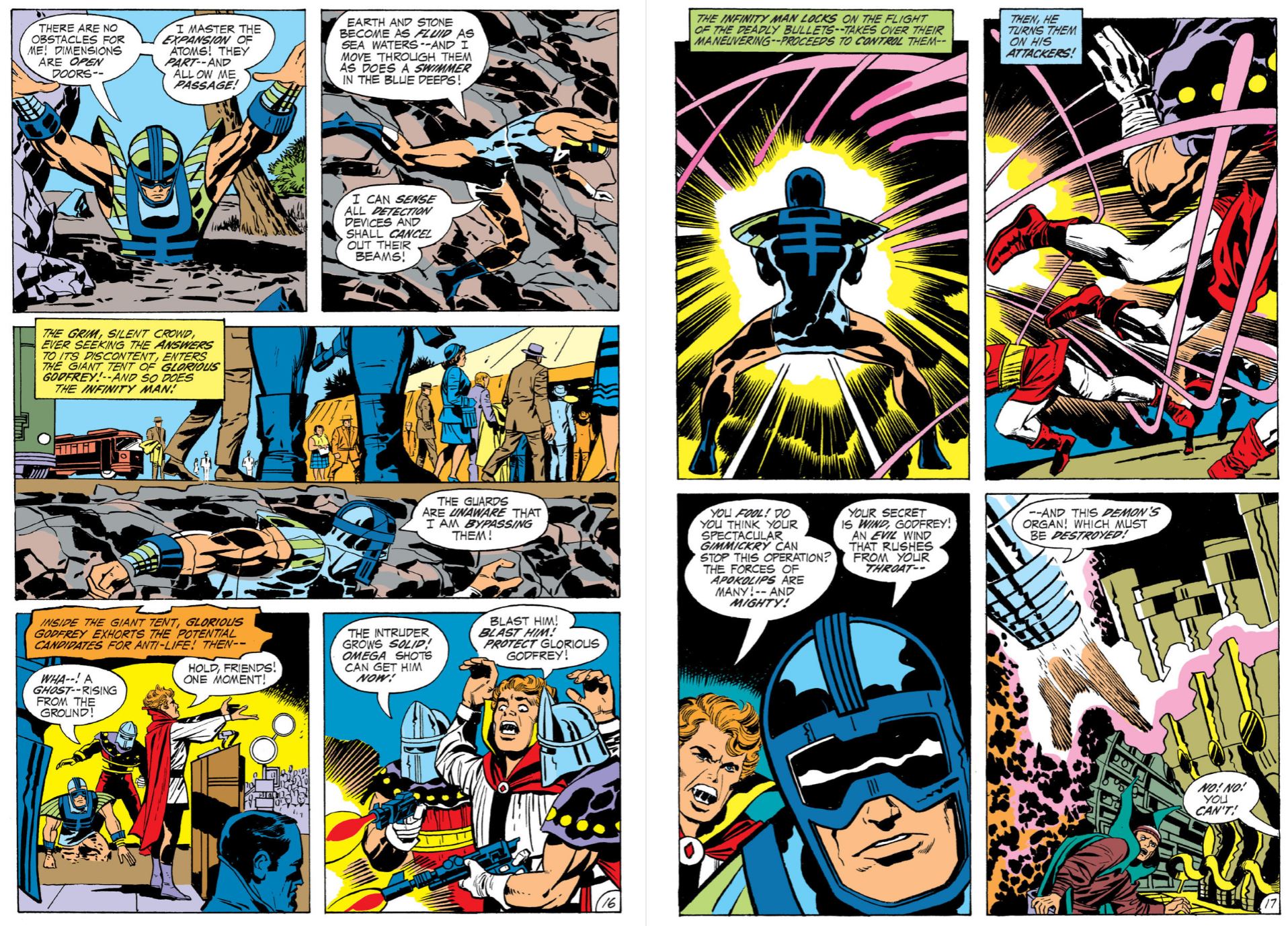
Elsewhere, having explored isolation versus community, introduced outside negation of free will and the concept of terror as addictive sustenance (Darkseid’s vile deputy DeSaad feasts on fear, pain and torture), Forever People #3 tackles head-on the saga’s core concepts. ‘Life vs. Anti-Life!’ probes conformity, personal freedoms, informed choices, organised bigotry and the tyranny of psychological and physical fascism as the wonder kids are tracked down by Justifiers: human zealots who willingly surrendered individual autonomy to what appears to be a televangelist telling them what they want to hear. Defeat doubt by surrendering to Anti-Life. It is Good to kill those who are better or weaker than you. I’m sure we’ve all dabbled with those notions…
Equipped with terrifying Apokolips weapons, Justifiers burn libraries, attack minorities and even drive the kids out of their tatty slum home and onto the attack, infiltrating Apokolyptian infiltrator/demagogue Glorious Godfrey’s appalling recruitment rally. Shockingly, when Infinity Man faces Darkseid, the devil defeats our mysterious angel and the traumatised kids are captured…
Still seeking his separate way Mister Miracle #3 opens a bravura double-issue imbroglio as Scott Free agrees to an honourable duel with dishonourable disembodied robot-wearing intelligence Doctor Bedlam. Darkseid’s war code is strict and binding and finds the escape artist challenged to make his way out of a packed 50-storey skyscraper. The problems comes because the edifice is sealed tight and every person inside it is a raving homicidal maniac thanks to mental murderer Bedlam’s administering of ‘The Paranoid Pill!’…
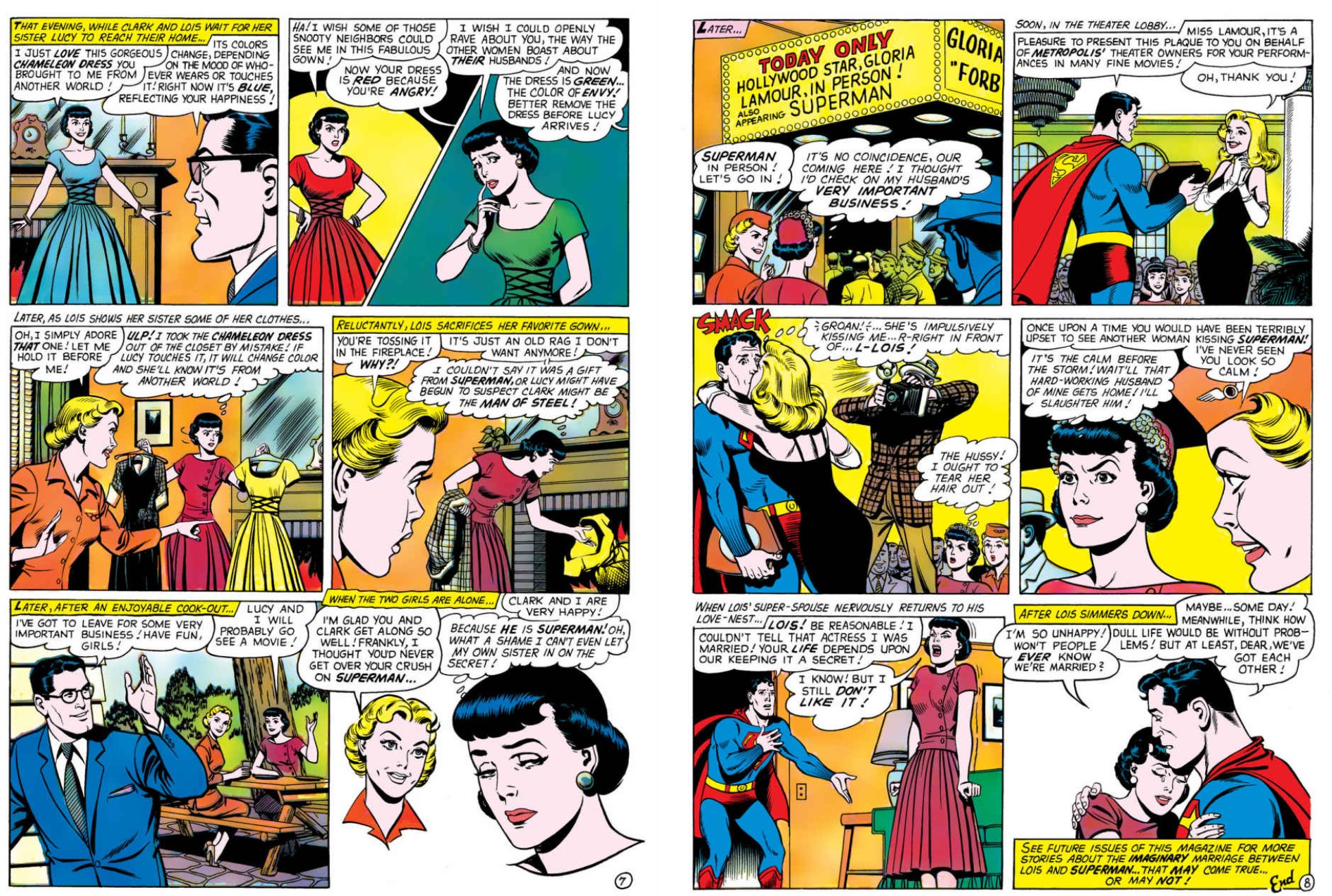
As stated before, Kirby’s Fourth World impacted other titles, particularly the Fourth Estate of Superman’s supporting cast. Here, crafted by Bob Kanigher, Werner Roth & Colletta, ‘The Dark Side of the Justice League!’ from Superman’s Girl Friend Lois Lane #111 (July 1971) sees the feisty newsmaker targeted by a miniature, corrupted JLA grown by the Evil Factory. Turned into a unsuspecting bio-weapon to kill The Man of Steel, the plot fails as The Project had anticipated such a problem and provided Lane with what every girl needs: her own cloned well-armed protection force…
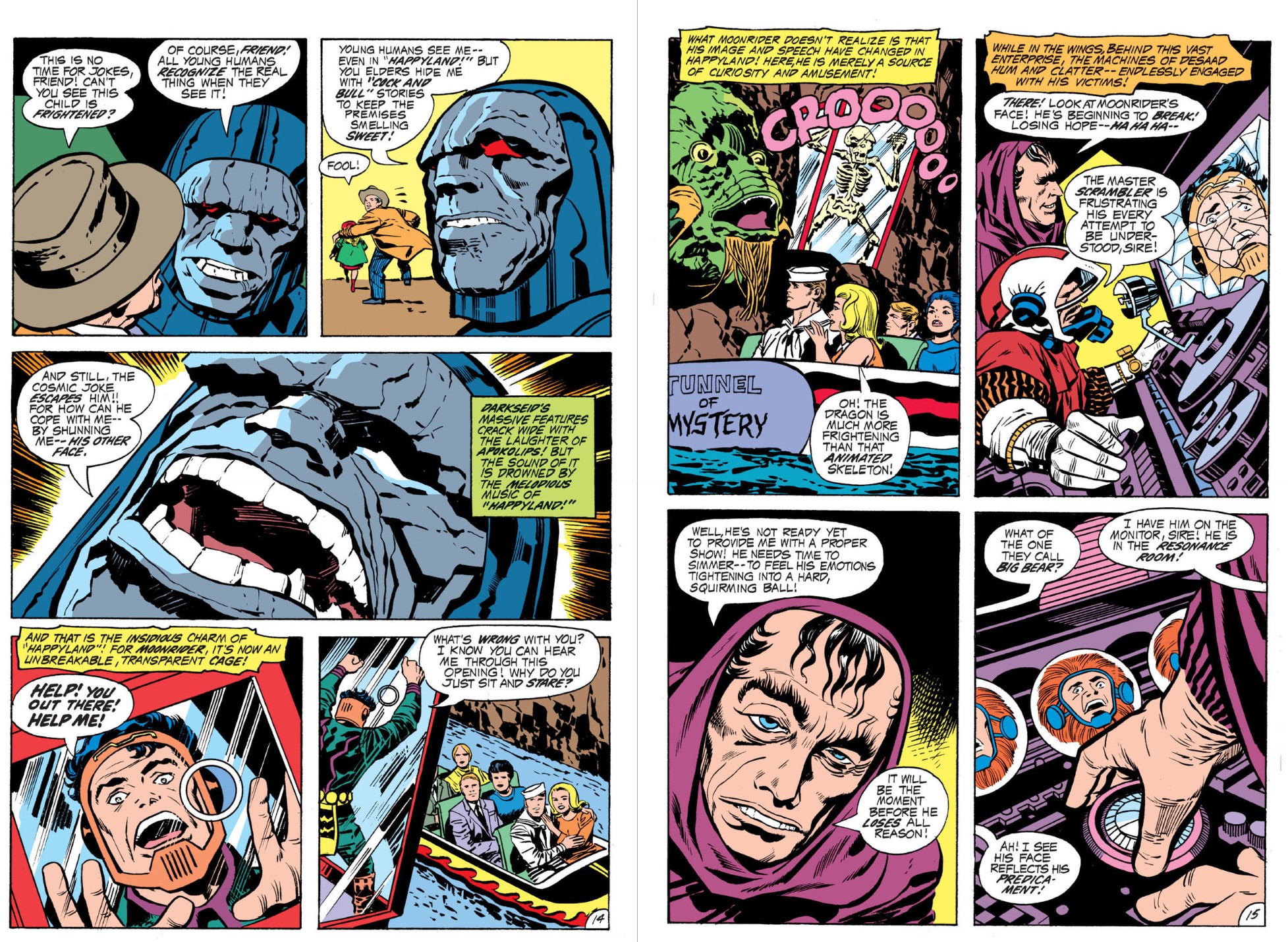
Forever People #4 then horrifically subverts the American Dream as theme park Happyland is revealed as ‘The Kingdom of the Damned’: a sprawling factory built to mass-produce terror by exploiting whimsy and fantasy. Here DeSaad torments countless human victims while others innocently see nothing but toys and robots dancing and playing for their pleasure. To this set-up the captive waifs of New Genesis are added as DeSaad feeds, but they have all underestimated the power of Mother Box who seeks aid and finds it in the form of zen wrestler ‘Sonny Sumo’…
At this juncture DC comic books expanded to 52 pages and as well as reprints, Kirby’s Korner ran short background vignettes. The lost history of the previous war of pantheons was filled in as here when ‘The Young Gods of Supertown Introducing Lonar’ finds a wandering historian picking through cosmic rubble on New Genesis and uncovering a living, breathing remnant of that cataclysmic conflict
This cliffhanger moment is somewhat offset by a trio of Forever People pinups: ‘The Super-Kids of the Century!’, ‘Beautiful Dreamer vs Darkseid!’ and ‘The Infinity Man…
Despite those promises of non-interference, DC editors and promotional staff perpetually sought to “goose up” Kirby’s flagship title. Always a team player, the King acquiesced to a guest-appearance by currently-hot comedian Don Rickles and oddly (in the manner of Marmite) it either worked uproariously or appalled readers. I thought it was a genuinely hilarious hoot. Further undercutting the narrative, the saga was bifurcated by a reprint 80-Page Giant of pre-Kirby Olsen escapades in SPJO #140 (not included here).
Nevertheless #139 & 141 (July’s ‘The Guardian Fights Again!!!’ and September’s ‘Will the Real Don Rickles Panic?’) comprise a compelling tale of Edge’s unfolding evil, Intergang’s growing influence and the creeping menace of Darkseid, as the tyrant allows his tech to be used to send Clark Kent into hyperspace destined for Apokolips whilst Jimmy and the Golden Guardian are poisoned by slow-acting incendiary Pyro-Granulate: a slow death that will turn them into human torches unless they find an antidote.
Slowing them down is equally doomed Galaxy Broadcasting staffer Goody Rickles whom Edge wants gone because he looks like the star Edge wants to sign up – and is really, really annoying…
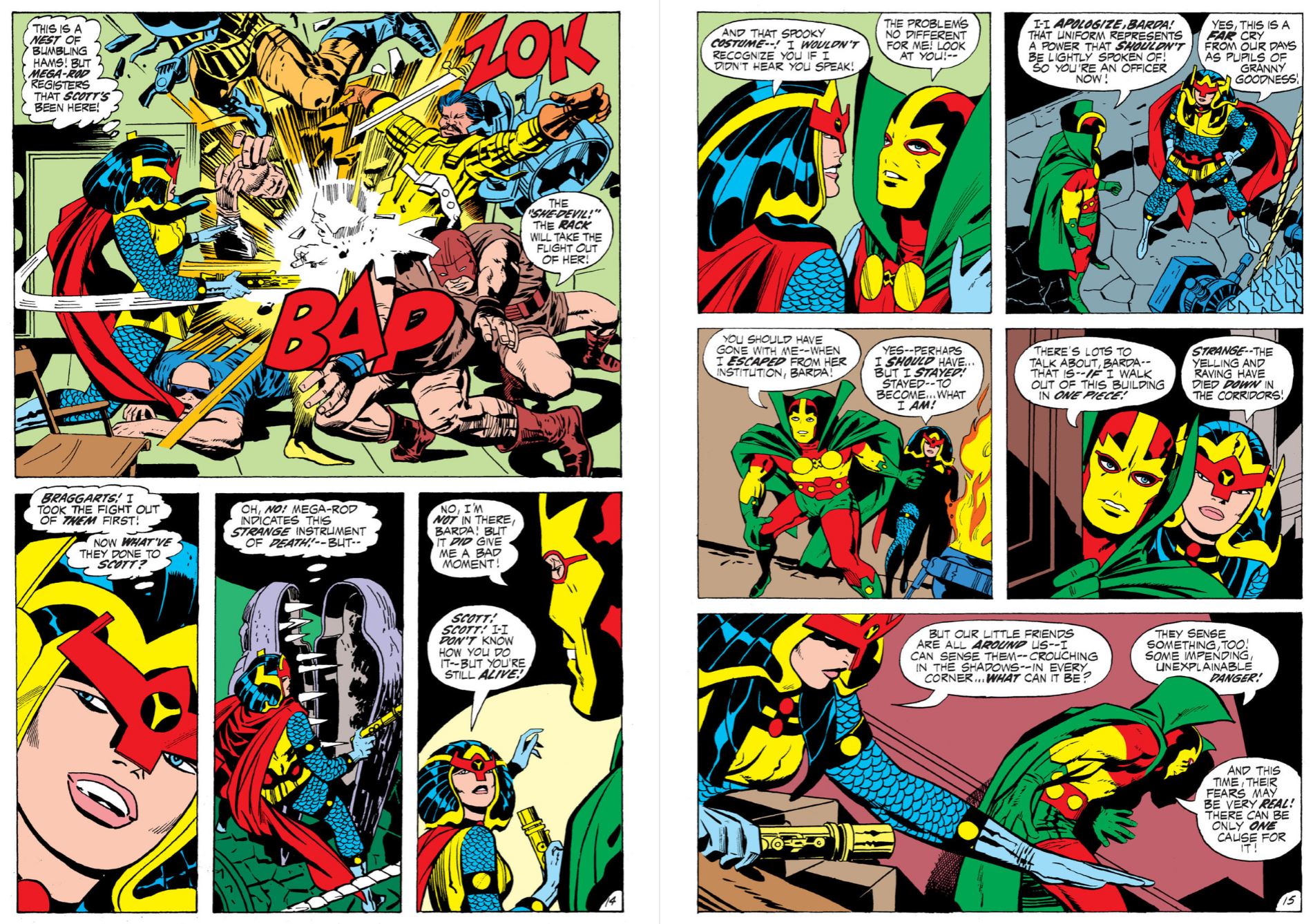
The conclusion is compounded by text feature ‘The Newsboy Legion Returns’ by Evanier & Sherman and a Kirby self-portrait… before the last Mister Miracle inclusion (#4). As Oberon frets back at the Brown mansion, he is visited by another old friend of Scott’s. However, master warrior Big Barda is not out to assassinate the runaway. She seems more interested in his wellbeing and fate and teleports to the trap site in time to watch Mister Miracle deftly avoid ‘The Closing Jaws of Death!’ and humiliate another Apokolips monster. Barda is another abstention from the Apokolips method and a rowdy runaway like no other who will change Scott Free’s life forever in the next volume…
Extracted from Superman’s Girl Friend Lois Lane #114, two brief pages by Kanigher, Roth & Colletta’s ‘The Foe of 100 Faces’ act as a set-up to ‘My Death… by Lois Lane!’ (SGFLL #115) wherein Morgan Edge attempts to kill his nosy top reporter as she closes in on his darkest secret and takes Superman with her. His biggest mistake, however, is attempting to suborn supernal force The Black Racer to do his dirty work…
With Kent, Lane and Superman reasonably safe, Kirby next addressed the rise in horror and supernatural tales via a 2-parter (reeler?) beginning in #142 with ‘The Man from Transilvane!’ Here, seemingly mystic vampire Count Dragorin and his wolfman assistant Lupek target and “turn” Edge’s PA Laura Conway in their desperate hunt for long-missing mad scientist Dabney Donovan. He was a planetologist who apparently built worlds in his secret laboratory and shaped entire civilisations by screening movies across their skies. Like all sensible scientists, Donovan planned to end his research project on a certain day and set up programmed measures involving his ‘Genocide Spray!’ (SPLO #143 ) with no consideration of the beings he had made and discarded… but Jimmy and Superman certainly did…
Elsewhere, the Newsboy Legion had their own case, one that again led to Intergang but also the thug who murdered the original Jim Harper/Guardian…
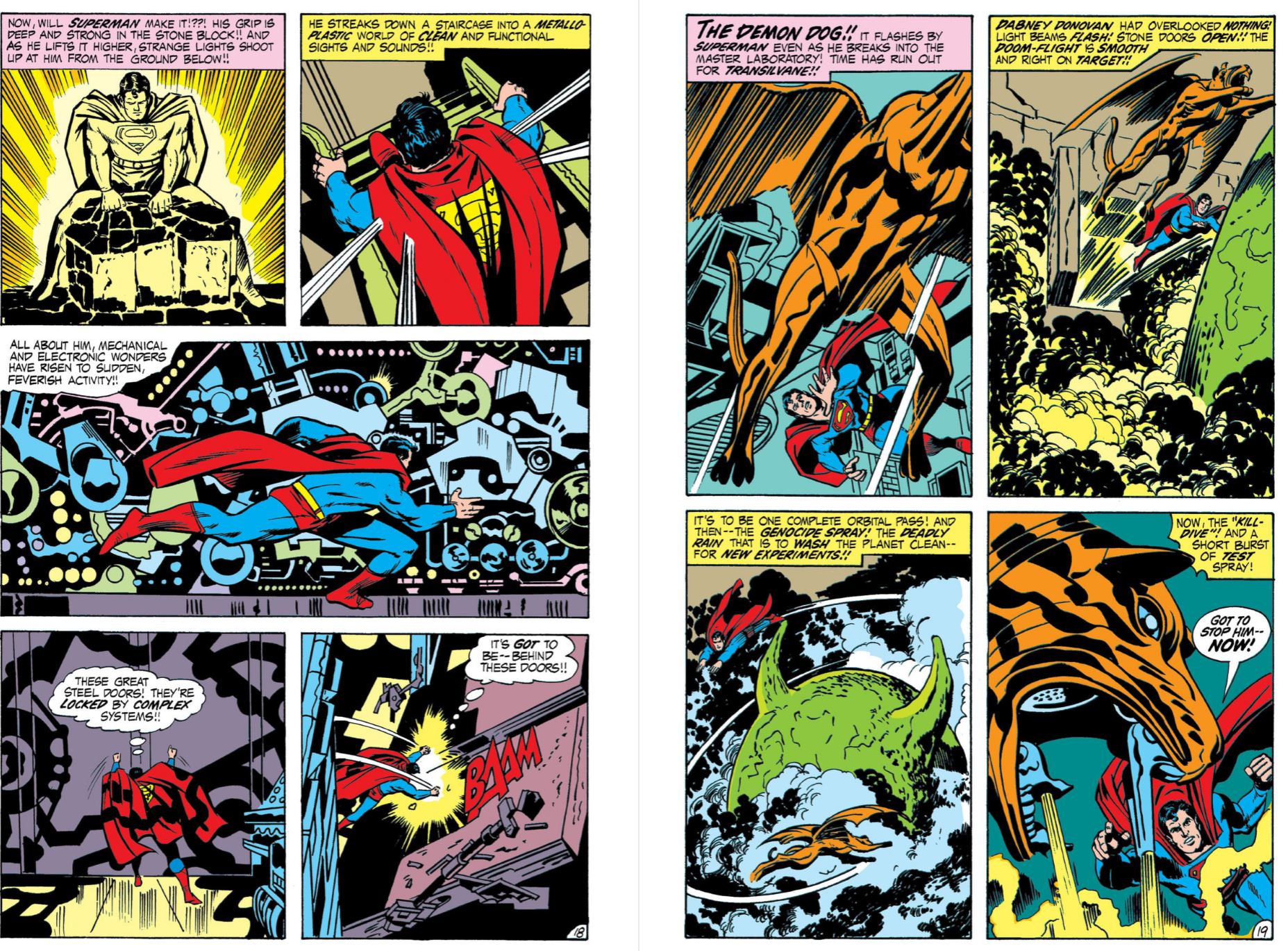
From SPJO #142, Kirby added short background-enhancing vignettes and here 2-pager ‘Strange Stories of the D.N.A. Project!! “Hairie” Secrets Revealed!!!’ offered a glimpse of the techno-hippies and their Mountain of Judgment, whilst the next issue added drama to fact-finding with ‘Strange Stories of the D.N.A. Project!! The Alien Thing!!!’ detailing the terrifying results of creating the first non-human clone…
To Be Continued…
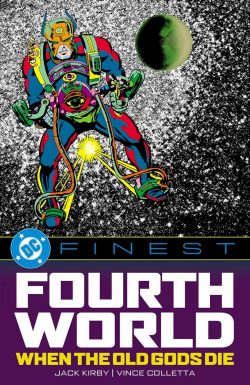
DC Finest: Fourth World – When the Old Gods Die collects foundational chapters of Kirby’s legendary saga; a bold new cosmic playground for so many to forever build upon. Almost overnight and in one broad flourish, Kirby had created one of the most powerful concepts in comic book history. The Fourth World inserted a whole new mythology into the existing DC Universe and blew the developing minds of a generation of readers and especially those who would become the next generation of creators. Who knows what could have happened if the publishers had had a little more courage, patience and vision?
© 1970, 1971, 2007 DC Comics. All Rights Reserved.
Today in 1917 Jack Kirby was born. Also on that date in 1917 pioneering Italian artist Aurelio Galleppini (Tex Willer, Occhio Cupo) arrived, sharing birthdays with Dell Barras (Savage Sword of Conan, Dark Angel, Deaths Head II, Web of Spider-Man) in 1957; colourist Pamela Rambo in 1968 and French ace Joann Sfar (Dungeon, The Rabbi’s Cat, Klezmer, Little Vampire) in 1971.
The great Frederick Burr (Happy Hooligan, And Her Name Was Maud, Alphonse and Gaston) died today in 1937, as did Belgian superstar Willy Vandersteen (Spike and Suzy, Bessy, De Rode Ridder) in 1990 and Dutch Master Bert Bus (Olaf Noord, Theban, de eerste wereldreiziger, Cliff Rendall, Stef Ardoba, Malorix, Russ Bender, Archie the Robot) in 2017.