
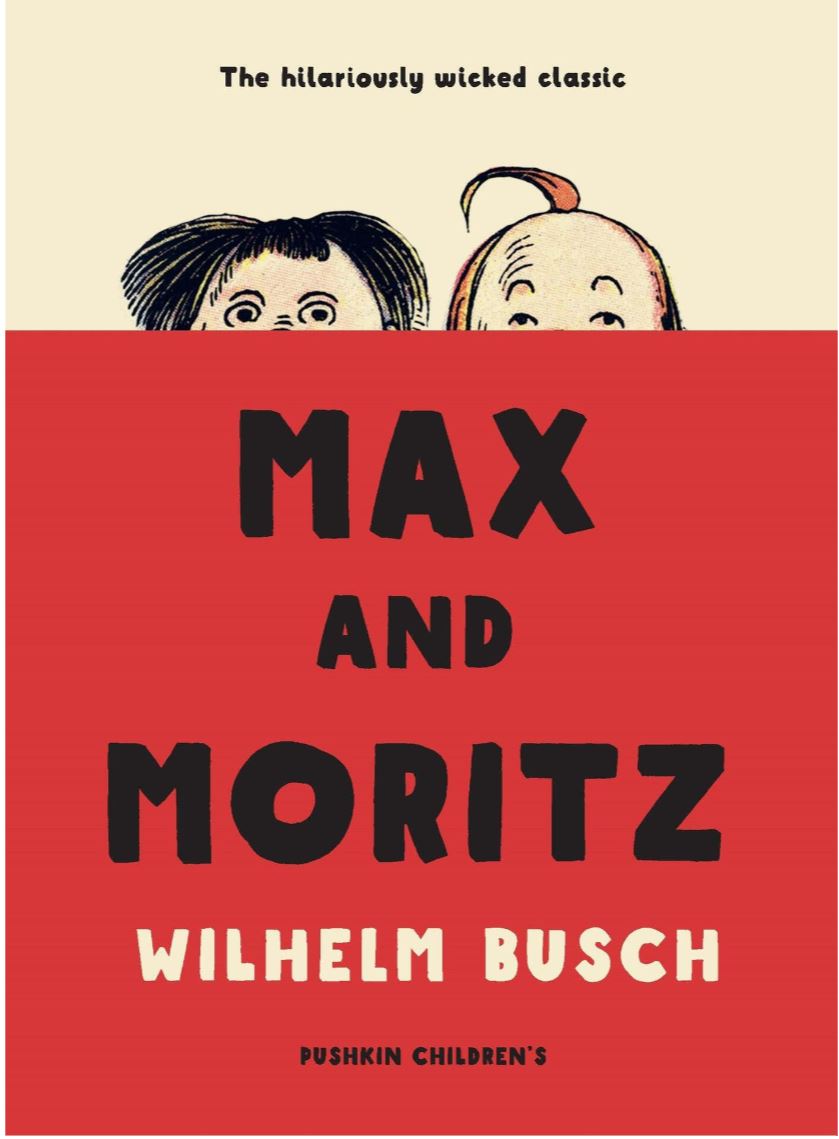
By Heinrich Christian Wilhelm Busch translated /adapted by Mark Ledsom (Puskin Children’s)
ISBN: 978-1-78269-254-6 (HB/Digital edition)
This book includes Discriminatory Content produced in less enlightened times.
Do you remember when exhausted adults would say something – such as a favoured book – was just “for the children”?
For over a century today’s subject was the quintessential tome those grownups were talking about, but just like so many beloved bygone fairy tales, it probably should not have been. Its well-meaning creator was a gentle, witty family guy whose carefully crafted child’s amusement (along with successive pictorial essays and yarns) become a cornerstone of comics development, as well as one of the earliest and most popular graphic narratives of all time…
Naturally, as child-rearing fashions and notions evolved over decades, so too did the go-to exemplars and visually-aided fairy tale-fuelled social primers that helped form succeeding generation. Nevertheless, when you go back and actually read those old reliable kindergarten standbys, you might be able to grasp why so much of our history turned out the way it did…
Joking aside, so much of traditional western childhood behaviour-shaping salutary fare is Germanic in origins but creepy as £@$#!*! As a staunch pedagogue (no, go look that up before you make a fool of yourself) of Teutonic origins I cannot express how inversely proud that makes me feel…
Heinrich Christian Wilhelm Busch was born in Wiedensahl, Germany today in 1832. The eldest of seven surviving children, he led a remarkable, eventful but ultimately tragic life. At his prime, despite poor health he became a successful and acclaimed artist and writer, professional painter and poet, sought after humourist and pioneer of comic strips and children’s publishing…
In an era of burgeoning literacy and ironclad views on morality and propriety, books made to traumatise kids into being good began with Heinrich Hoffman’s 1845 release Struwwelpeter and could be found in most middle class homes across the western world. Thus as part of a welter of articles and commentaries churned out at a time of financial need, jobbing writer/artist Busch added his own with the October 1865 launch of Max und Moritz – Eine Bubengeschichte in sieben Streichen.
It should have been released through Ludwig Richter Press – a producer of children’s books and “Christian Devotional Literature” – but when they rejected it, the manuscript passed to the artist’s previous publisher Kaspar Braun. A slow seller, Max and Moritz – A Story of Seven Boyish Pranks picked up traction in 1868 with a second edition, and by Busch’s death in 1908 had sold nearly 450,000 copies. It wasn’t hurt by teachers attacking it, declaring it “frivolous and an undesirable influence on the moral development of young people.”
None of his later comics prototypes were as successful. At the time of Busch’s death it was translated into English, Danish, Hebrew, Japanese, Polish, Hungarian, Portuguese, Russian, Swedish, Latin and Walloonian, but also banned in many countries or barred to readers under 18. By 1997, there were another 281 dialect and language translations available.
Beautifully illustrated and a hugely popular yet controversial addition to the genre of cautionary tales for the instruction and correction of wayward youth, this edition enjoys a careful and liberal re-translation by Mark Ledsom. However, like most kids’ stories from the latter centuries of the last millennium it comes with terrifying warnings, admonitory notes and a moral message baked in (on this occasion, quite literally).
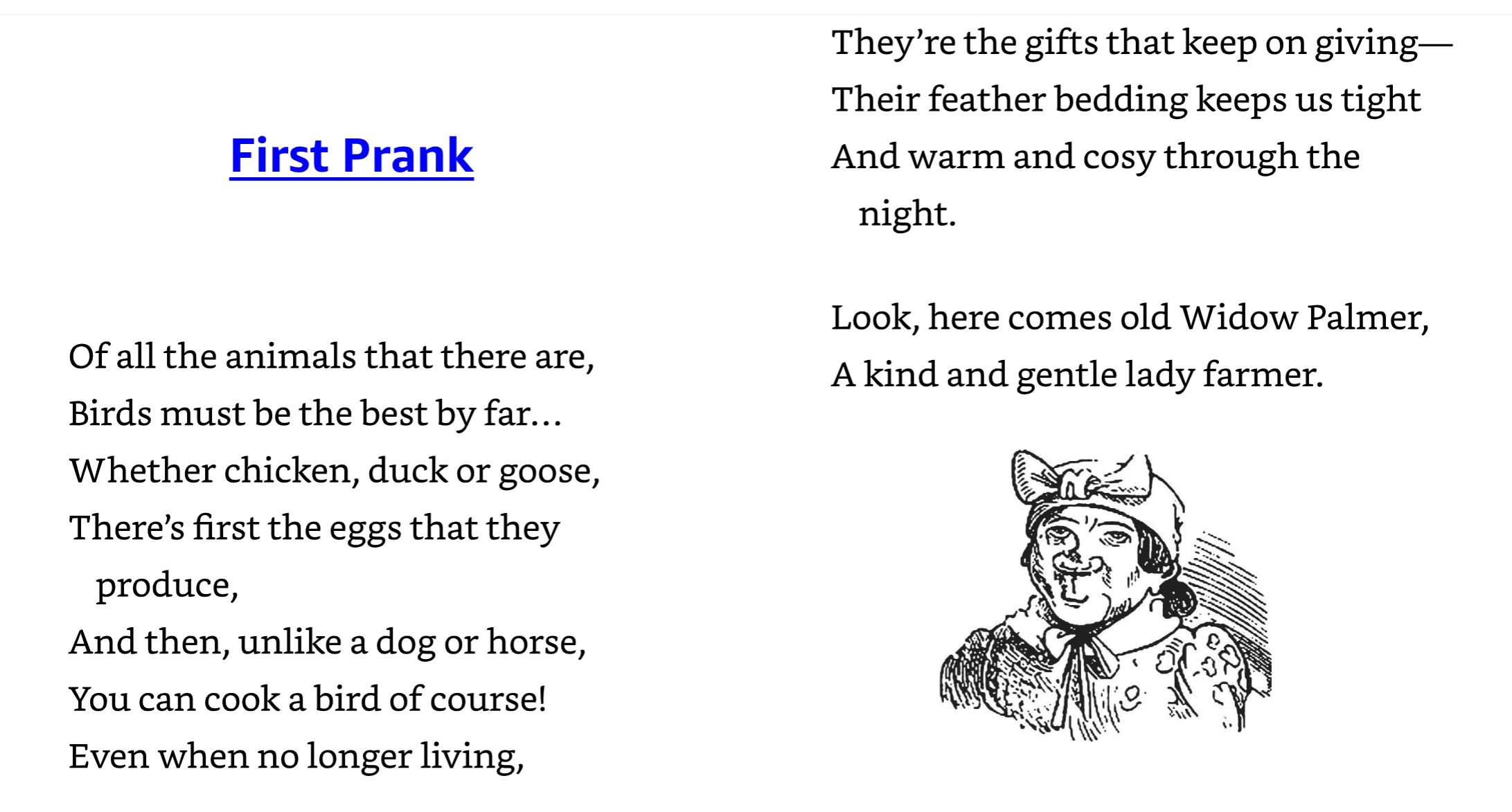
Rendered in stunning pen-& ink linework and described in snappy rhyming couplets we meet a pair of ghastly oiks very reminiscent of Young Tory hopefuls in the ‘Introduction’ prior to the jolly japesters launching their ‘First Prank’ against Old Widow Palmer and her poor poultry…
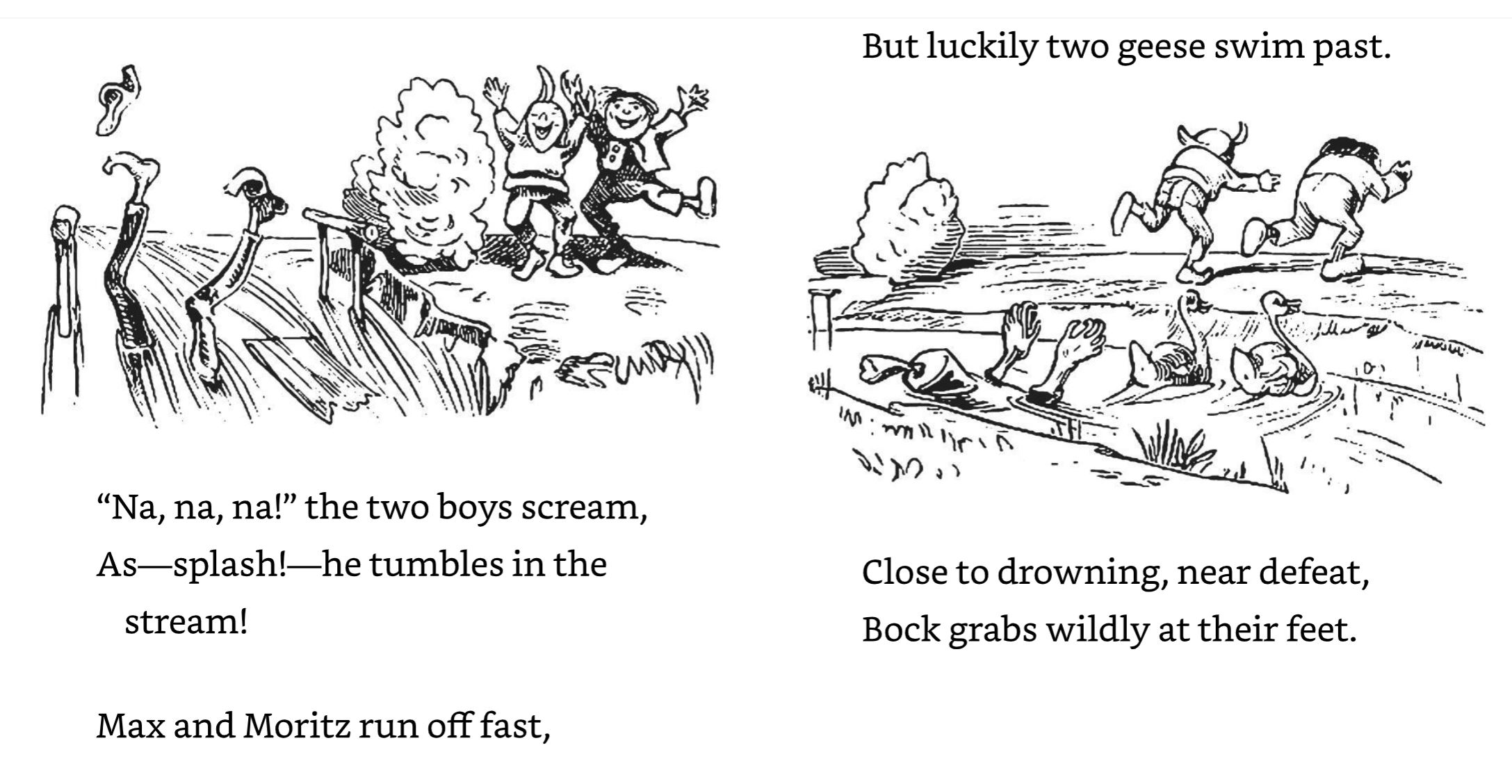
The ‘Second Prank’ expands the lads’ animal cruelty into framing the widow’s dog for theft before a ‘Third Prank’ targets and endangers harmless tailor Mr. Bock whilst teacher Lampel is nigh assassinated in the ‘Fourth Prank’…
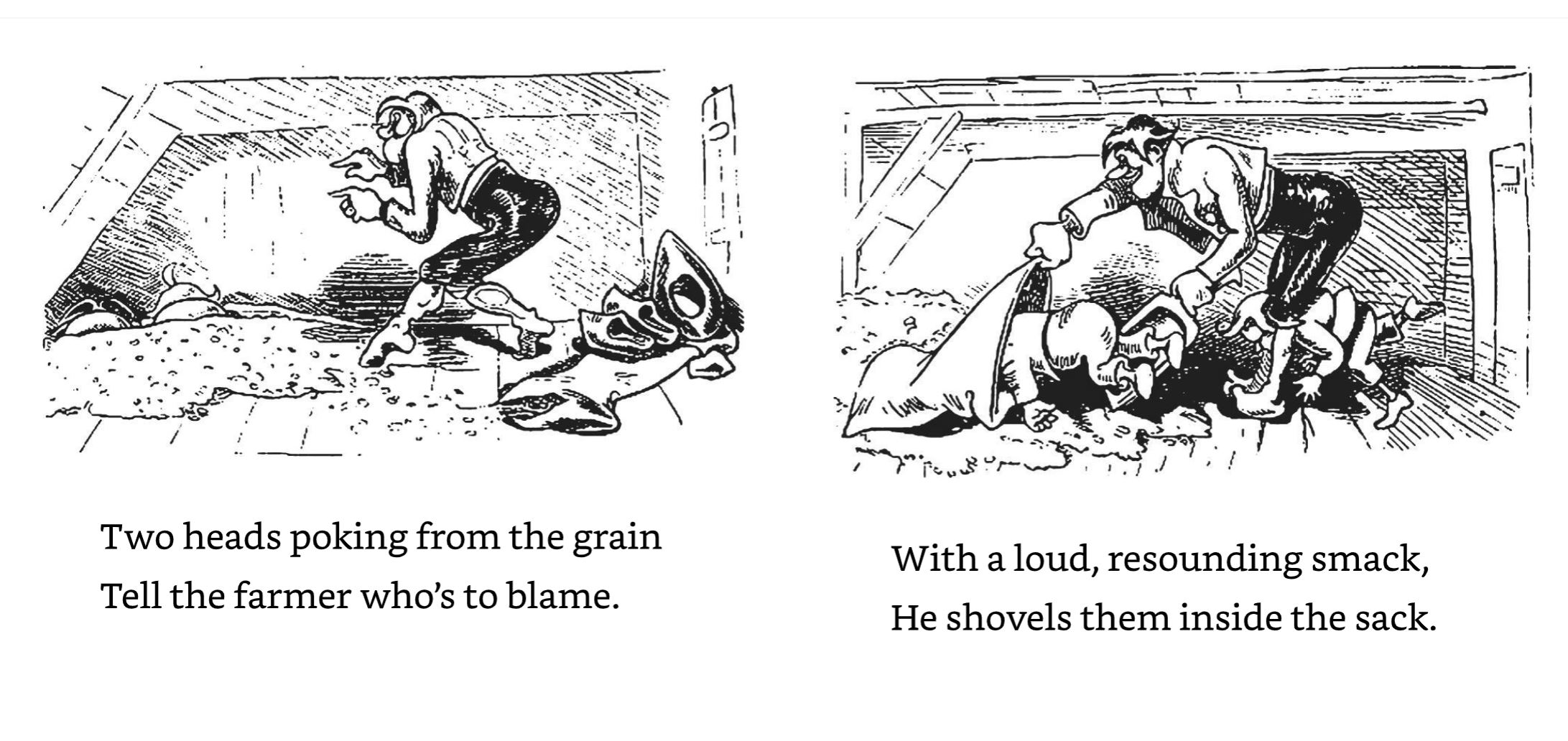
The terrorism encompasses Grandpa Fritz in the ‘Fifth Prank’ as the twisted tots unleash insect hell, after which the ‘Sixth Prank’ sees them burgle, vandalise and pay a stiff price for breaking into the Bakery, before reaping what they sowed after targeting a farmer in their ‘Final Prank’. With justice ferociously served, all that’s left is a sinister summing up, courtesy of a relatively recondite ‘Conclusion’…
Also included here for scholars and show-offs is a foreign language addition of ‘Max und Moritz (Original German Text)’ as well as a fulsome ‘Translator’s Note’ from Ledsom. Noteworthy, remarkable, influential and rather hard to take for many modern readers, Max and Moritz marked a key point in the development of comics… and quite possibly passed a minor Rubicon in human taste. If you need to see how we got here, this is definitely the place to start…
Although the book is in public domain now this version enjoys some proprietary rights.
English translation © 2019 Mark Ledson. All rights reserved.
Today in 1832, German picture story pioneer Wilhelm Busch was born, as was cartoonist Billy De Beck (Barney Google) in 1890; David Breger (Mr Breger, Private Breger, G.I. Joe) in 1908; and Britain’s legendary Denis McLoughin (Roy Carson, Swift Morgan, Buffalo Bill) in 1918 and Argentine line wizard Alberto Breccia (Mort Cinder) one year later.
Good penmanship is crucial in our game but isn’t always apparent, which is why we’re wishing all-star Jerry Grandenetti a posthumous “happy birthday” for today in either 1925 or 1927. Ten years later, unsung giant Tom Sutton (Vampirella, Captain Marvel, Not Brand Echh, Werewolf by Night, Planet of the Apes, The Hacker Files) arrived, complemented by Sara Pichelli (Spider-Man, X-Men, Girl Comics) in 1983.
Ed Dodd’s Mark Trail launched today in 1946, as did UK comic Terrific in 1967 but the date also marks the loss of internationally-acclaimed illustrator Alberto Giolitti (Star Trek, Turok, King Kong, Tarzan, Cisco Kid, Lone Ranger, Cinque anni dopo, Tex Willer ) in 1993; Brant (Wizard of Id) Parker in 2007 and Marty Greim (Thunderbunny, The Shield, Black Terror, Atomic Mouse, Disney characters) in 2017.