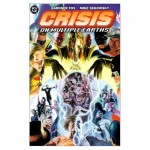
Crisis on Multiple Earths volume 1


By Gardner Fox, Mike Sekowsky, Bernard Sachs & Sid Greene (DC Comics)
ISBN: 978-1-56389-895-2

As I’ve frequently mentioned before, I was one of the “Baby Boomer” crowd which grew up with Julie Schwartz, Gardner Fox and John Broome’s tantalisingly slow reintroduction of Golden Age superheroes during the halcyon, eternally summery days of the early 1960s. To me those fascinating counterpart crusaders from Earth-Two weren’t vague and distant memories rubber-stamped by parents or older brothers – they were cool, fascinating and enigmatically new.

…And for some reason the “proper” heroes of Earth-One held them in high regard and treated them with obvious deference…

It all began, naturally enough, in The Flash; pioneering trendsetter of the Silver Age Revolution. After successfully ushering in the triumphant return of the superhero concept, the Scarlet Speedster with Fox & Broome at the writing reins set an unbelievably high standard for costumed adventure in sharp, witty tales of science and imagination, always illustrated with captivating style and clean simplicity by Carmine Infantino.

The epochal epic that literally changed the scope of American comics forever was Fox’s ‘Flash of Two Worlds’ (Flash #123 September 1961, as seen in Showcase Presents the Flash volume 2) which introduced the theory of alternate Earths to the continuity and by extension resulted in the multiversal structure of the DCU – and all the succeeding cosmos-shaking yearly “Crisis” sagas that grew from it.

And of course, where DC led, others followed…

Received with tumultuous acclaim, the concept was revisited months later in #129′s ‘Double Danger on Earth!’ which also teasingly reintroduced evergreen stalwarts Wonder Woman, Atom, Hawkman, Green Lantern, Doctor Mid-Nite and Black Canary. Clearly Editor Schwartz had something in mind…

‘Vengeance of the Immortal Villain!’ from Flash #137 (June 1963, inked by Giella) was the third incredible Earth-2 crossover, and saw two Flashes unite to defeat 50,000 year old Vandal Savage and save the Justice Society of America: a tale which directly led into the veteran team’s first meeting with the Justice League of America and the start of an annual tradition.

When ‘Flash of Two Worlds’ introduced the concept of Infinite Earths and multiple versions of costumed crusaders, public pressure had begun almost instantly to agitate for the return of the Greats of the “Golden Age” but Editorial powers-that-be were hesitant, fearing too many heroes would be silly and unmanageable, or worse yet, put readers off. If they could see us now…

These innovative yarns generated an avalanche of popular and critical approval (big sales figures, too) so inevitably these trans-dimensional tests led to the ultimate team-up in the summer of 1963.

This gloriously enthralling volume re-presents the first four JLA/JSA convocations: stunning superhero wonderments which never fails to astound and delight beginning with the landmark ‘Crisis on Earth-One’ and ‘Crisis on Earth-Two’ (Justice League of America #21-22, August and September) combining to form one of the most important stories in DC history and arguably one of the most crucial tales in American comics.

Written by Fox and compellingly illustrated by Mike Sekowsky & Bernard Sachs the yarn finds a coalition of assorted villains from each Earth plundering at will, meeting and defeating the mighty Justice League before imprisoning them in their own secret mountain HQ.

Temporarily helpless “our” heroes contrive a desperate plan to combine forces with the champions of another Earth to save the world – both of them – and the result is pure comicbook majesty. It’s impossible for me to be totally objective about this saga. I was a drooling kid in short trousers when I first read it and the thrills haven’t diminished with this umpty-first re-reading.

This is what superhero comics are all about!

‘Crisis on Earth-Three’ and ‘The Most Dangerous Earth of All!’ (Justice League of America #29-30, August and September 1964) reprised the team-up of the Justice League and Justice Society, when the super-beings of a third alternate Earth discovered the secret of trans-universal travel.

Unfortunately Ultraman, Owlman, Superwoman, Johnny Quick and Power Ring were villains on a world without heroes and saw the costumed crime-busters of the JLA/JSA as living practise dummies to sharpen their evil skills upon. With this cracking thriller the annual summer get-together became solidly entrenched in heroic lore, giving fans endless entertainment for years to come and making the approaching end of school holidays less gloomy than they could have been.

(A little note: although the comic cover-date in America was the month by which unsold copies had to be returned – the “off-sale” deadline – export copies to Britain travelled as ballast in freighters. Thus they usually went on to those cool, spinning comic-racks the actual month printed on the front. You can unglaze your eyes and return to the review proper now, and thank you for your patient indulgence.)

The third annual event was a touch different; a largely forgotten and rather experimental tale wherein the dim but extremely larcenous Johnny Thunder of Earth-1 wrested control of the genie-like Thunderbolt from his other-world counterpart and used its magic powers to change the events which led to the creation of all Earth-1’s superheroes. With Earth-1 catastrophically altered in #37’s ‘Earth – Without a Justice League’ it was up to the JSA to come to the rescue in a gripping battle of wits and power before Reality was re-established in the concluding ‘Crisis on Earth-A!’ in #38.

Veteran inker Bernard Sachs retired before the fourth team-up, leaving the amazing Sid Greene to embellish the gloriously whacky saga that sprang out of the global “Batmania” craze engendered by the Batman television series…

A wise-cracking campy tone was fully in play, acknowledging the changing audience profile and this time the stakes were raised to encompass the destruction of both planets in ‘Crisis Between Earth-One and Earth-Two’ and ‘The Bridge Between Earths’ (Justice League of America #46-47, August & September 1966), wherein a bold – if rash – continuum warping experiment dragged the two sidereal worlds towards an inexorable hyper-space collision. Meanwhile, making matters worse, an awesome anti-matter being used the opportunity to break into and explore our positive matter universe whilst the heroes of both worlds were distracted by the destructive rampages of monster-men Blockbuster and Solomon Grundy.

Peppered with wisecracks and “hip” dialogue, it’s sometimes difficult to discern what a cracking yarn this actually is, but if you’re able to forgive or swallow the dated patter, this is one of the very best plotted and illustrated stories in the entire JLA/JSA canon. Furthermore, the vastly talented Greene’s expressive subtlety, beguiling texture and whimsical humour added unheard of depth to Sekowsky’s pencils and the light and frothy comedic scripts of Gardner Fox.

This volume also includes an enthralling introduction by Mark Waid, a comprehensive cover gallery and creator biographies.

These tales won’t suit everybody and I’m as aware as any that in terms of the “super-powered” genre the work here can be boiled down to two bunches of heroes formulaically getting together to deal with extra-extraordinary problems. In mature hindsight, it’s obviously also about sales and the attempted revival of more sellable super characters during a period of intense sales rivalry between DC Comics and Marvel.

But I don’t have to be mature in my off-hours and for those who love costume heroes, who crave these cunningly constructed modern mythologies and actually care, this is simply a grand parade of straightforward action, great causes and momentous victories.

…And since I wouldn’t have it any other way, why should you?
© 1963, 1964, 1965, 1966, 2002 DC Comics. All Rights Reserved.

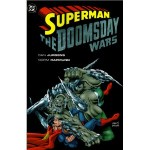
Superman: The Doomsday Wars


By Dan Jurgens & Norm Rapmund (DC Comics)
ISBN: 978-1-84023-124-3

Although largely out of favour these days as all the myriad decades of Superman mythology are gradually reassimilated into DC continuity, the stripped down, gritty post-Crisis on Infinite Earths Man of Steel devised by John Byrne and marvellously built upon by a succession of gifted comics craftsman produced some genuine classics.

This isn’t one of them, but Superman: the Doomsday Wars is a supremely enjoyable and thrilling Fights ‘n’ Tights diversion that should delight anybody in need of a solid piece of mature graphic novel entertainment.

Originally released as a three-part Prestige Format miniseries in 1998, this story blends spectacular blockbuster action and plenty of guest stars with skilful soap opera sub-plots; focussing on the birth of Pete Ross and Lana Lang’s first child just as the greatest physical threat Superman ever faced returned yet again…

Lana, Pete and Clark Kent grew up together in Smallville and shared a lifelong bond, but it was stretched to the breaking point when a present-day battle with Brainiac was curtailed so the Man of Steel could rush back to his hometown for a family emergency.

Lana had just given birth months prematurely and the cottage hospital was not equipped to handle a “premie” with Baby Ross’ massive complications.

Lana was Clark’s first love and knew about his heroic alter-ego. Her oblivious husband Pete was Clark’s best friend but still jumped to all the wrong conclusions when his wife began demanding to see the Metropolis newsman…

Even as Lana begged Superman to take her baby any place where his too-early life could be preserved, the Justice League were being decimated by the devastating Doomsday. As the Metropolis Marvel began cautiously transporting the most precious and fragile thing he had ever held across America to the world’s most advanced Natal care centre in Atlanta he was unaware that his personal Bête Noir was unerringly heading there too, leaving a swathe of carnage in his mindless wake…

Except that Doomsday wasn’t mindless anymore…

By incredible, time-bending means Brainiac had taken over the living engine of destruction, but Doomsday’s pure, unrelenting rage was expelling the master villain’s consciousness. So, in need of a new body, Brainiac took baby Ross (later, unwisely christened “Clark”), determined to remake the infant into a perfect, permanent home for his insidious intellect…

Moving, tragic and revealing many intriguingly insightful moments which shaped the nature and personality of the World’s Greatest Hero, The Doomsday Wars is not merely a power-packed punch-fest – although there is an abundance of action too – but a magically affecting melodrama about choices and repercussions interspersed with a chilling remembrance of the ghastly consequences that followed the last time Clark Kent made the Expedient rather than Right choice…

If you love the genre but need a little more depth in your Costumed Dramas this is a lost gem you’ll be glad you tracked down.
© 1998, 1999 DC Comics. All Rights Reserved.

Kingdom Come


By Mark Waid & Alex Ross (DC Comics)
ISBN: 978-1-4012-2034-1

In the mid 1960s a teenaged Jim Shooter wrote a couple of stories about the Legion of Super-Heroes set some years into the team’s own future. Those stories of the adult Legionnaires revealed hints of things to come that shackled the series’ plotting and continuity for decades as eager, obsessed fans (by which I mean all of us) waited for the predicted characters to be introduced, presaged relationships to be consummated and heroes to die.

By being so impressive and similarly affecting the astonishing miniseries Kingdom Come accidentally repeated the trick and has subsequently painted the entire DC Universe into the same creative corner…

Envisaged and designed by artist Alex Ross as DC’s answer to the epic and groundbreaking Marvels, Kingdom Come was released as a 4-issue Prestige Format miniseries in 1996 to rapturous acclaim and, although set in the future and an “imaginary story” released under DC’s Elseworlds imprint, almost immediately began to affect the company’s mainstream continuity.

Set approximately twenty years into the future the grandiose saga details a tragic failure and subsequent loss of Faith for Superman and how his attempt to redeem himself almost led to an even greater and ultimate apocalypse.

The events are seen through the eyes and actions of Dantean witness Norman McCay, an aging cleric co-opted by Divine Agent of Wrath the Spectre after the pastor officiated at the last rites of dying superhero Wesley Dodds. As the Sandman, Dodds was cursed for decades with precognitive dreams which compelled him to act as an agent of justice.

The first chapter ‘Strange Visitor’ shows a world where metahumans have proliferated to ubiquitous proportions: a sub-culture of constant, violent clashes between the latest generation of costumed villains and vigilantes, all unheeding of the collateral damage they daily inflicted on the mere mortals around them.

The shaken preacher sees a final crisis coming, but feels helpless until the darkly angelic Spectre comes to him and takes him on a voyage of unfolding events and to act as his human perspective whilst the Spirit of Vengeance prepares to pass final judgement on Humanity. First stop is the secluded hideaway where farmer Kal-El has hidden himself since the ghastly events which compelled him to retire from the Good Fight and the eyes of the World.

The Man of Steel was already feeling like a dinosaur when newer, harsher, morally ambiguous mystery-men began to appear. After the Joker murdered the entire Daily Planet staff and hard-line new hero Magog executed him in the street, the public applauded the deed and, heartbroken and appalled, Superman disappeared for a decade. His legendary colleagues also felt the march of unwelcome progress and similarly disappeared.

With Earth left to the mercies of dangerously irresponsible new vigilantes, civil unrest soon escalated. The younger heroes displayed poor judgement and no restraint with the result that within a decade the entire planet had become a chaotic arena for metahuman duels.

Civilisation was fragmenting. Flash and Batman retreated to their home cities and made them secure, crime-free solitary fortresses. Green Lantern built an emerald castle in the sky, turning his eyes away from Earth and into the deep black fastnesses of space. Hawkman retreated to the wilderness, Aquaman to his sub-sea kingdom and Wonder Woman returned to her hidden paradise. She did not leave until Armageddon came one step closer.

When Magog and his Justice Battalion battled the Parasite in St. Louis the result was a nuclear accident which destroyed all of Kansas and much of Iowa, Missouri and Nebraska. Overnight the world f aced starvation as America’s breadbasket turned into a toxic wasteland. Now with McCay and the Spectre invisibly observing, Princess Diana convinces the bereft Kal-El to return and save the world on his own terms…

In ‘Truth and Justice’ a resurgent Justice League led by Superman begins a campaign of unilateral action to clean up the mess civilisation has become; renditioning “heroes” and villains alike, imprisoning all dangerous elements of super-humanity, telling governments how to behave, all utterly unaware that they are hastening a global catastrophe of Biblical proportions as the Spectre invisibly gathers the facts for his apocalyptic judgement.

In the ensuing chaos, crippled warrior Bruce Wayne rejects Superman’ paternalistic, doctrinaire crusade and allies himself with mortal humanity’s libertarian elite – Ted (Blue Beetle) Kord, Dinah (Black Canary) Lance and Oliver (Green Arrow) Queen – to resist what can only be a grab for world domination by the meta-human minority. As the helpless McCay watches in horror Wayne’s group makes its own plans; another dangerous thread in a tapestry of calamity…

At first Superman’s plans seem blessed to succeed, with many erstwhile threats flocking to his banner and his rules of discipline, but as ever there are self-serving villains with their own agendas. Lex Luthor organises a cabal of like-minded compatriots – Vandal Savage, Catwoman, Riddler, Kobra and Ibn Al Xu’ffasch, Son of the Demon Ra’s Al Ghul – into a “Mankind Liberation Front”.

With Captain Marvel as their slave, the group are determined the super-freaks shall not win and their cause is greatly advanced once Wayne’s clique joins them…

‘Up in the Sky’ sees events spiral into a deadly storm as McCay, still wracked by his visions of Armageddon, is shown the Gulag where all the recalcitrant metahumans have been dumped and sees how it will fail, learns from restless spirit Deadman that the Spectre is the Angel of Death and watches with growing helplessness as Luthor’s plan to usurp control from the army of Superman leads to a shocking confrontation, betrayal and a deadly countdown to the End of Days. The deadly drama culminates in a staggering battle of superpowers, last moment salvation and a second chance for humanity in ‘Never-Ending Battle’…

Thanks to McCay’s simple humanity the world gets another chance and this edition follows up with an epilogue ‘One Year Later’ which end this ponderous epic on a note of renewed hope…

This edition comes with an introduction by author and past DC Comics scribe Elliot S. Maggin, assorted cover reproductions and art-pieces, an illustrated checklist of the vast cast list and a plethora of creative notes and sketches in the ‘Apochrypha’ section, plus ‘Evolution’: notes on a restored scene that never made it into the miniseries.

Epic, engaging and operatically impressive Kingdom Come continues to reshape the DC Universe to this day and remains a solid slice of superior superhero entertainment, worthy of your attention.
© 1996, 2008, 2009 DC Comics. All Rights Reserved.
Showcase Presents Metamorpho, the Element Man


By Bob Haney, Ramona Fradon, Joe Orlando, Sal Trapani, Charles Paris & various (DC Comics)
ISBN: 978-1-4012-0762-5

By the time Metamorpho, the Element Man was introduced to the costumed hero-obsessed world the first vestiges of a certifiable boom were just becoming apparent. As such the light-hearted, almost absurdist take struck a right-time, right-place chord, blending far out adventure with tongue-in-cheek comedy.

The character debuted in Brave and the Bold #57 (December 1964-January 1965) and after a follow-up try-out in the next issue catapulted into his own title for an eclectic and oddly engaging 17-issue run. This canny monochrome compendium collects all those eccentric adventures plus team-up tales from Brave and the Bold #66 and 68 and Justice League of America #42

Unlike most of these splendid Showcase editions the team-up stories here are not re-presented in original publication order but closeted together at the back, so if stringent continuity is important to you the always informative credit-pages will enable to navigate the wonderment in the correct sequence…

‘The Origin of Metamorpho’ written by Bob Haney (who created the character and wrote everything except the JLA story) with art from Ramona Fradon & Charles Paris, introduced glamorous he-man Soldier of Fortune Rex Mason, who worked as a globe-trotting artefact procurer and agent for ruthlessly acquisitive scientific genius/business tycoon Simon Stagg. Mason was obnoxious and insolent but his biggest fault as far as his boss was concerned was that the mercenary loved and was loved by the millionaire’s only daughter Sapphire…

Determined to rid himself of Mason, Stagg dispatched him to retrieve a fantastic artefact dubbed the Orb of Ra from the lost pyramid of Ahk-Ton in Egypt, accompanied only by Java, a previously fossilised Neanderthal corpse Rex had discovered in a swamp and which (whom?) Stagg had restored to full life. Mason planned to take his final fabulous fee and whisk Sapphire away from her controlling father forever…

Utterly faithful to the scientific wizard, Java sabotaged the mission and left Mason to die in the tomb, victim of an ancient, glowing meteor. The man-brute rushed back to his master, carrying the Orb and fully expecting Stagg to honour his promise and give him Sapphire in marriage.

Trapped, knowing his time had come; Mason swallowed a suicide pill as the scorching rays of the star-stone burned through him…

Rex did not die but mutated into a ghastly chemical freak capable of shape-shifting and transforming into any of the elements or compounds that comprised the human body: carbon, hydrogen, oxygen, calcium, iron, cobalt and so many others…

Hungry for vengeance, Mason followed and confronted his betrayers but was overcome by the alien energies of the Orb of Ra. An uneasy détente was declared as Mason accepted Stagg’s desperate offer to cure him …if possible.

The rich man was further horrified when Rex revealed his condition to Sapphire and found she still loved him. Totally unaware of Stagg’s true depths of duplicity, Mason began working for the tycoon as a metahuman problem-solver: Metamorpho, the Element Man.

Brave and the Bold #58 (February-March 1965) revealed more of Stagg’s closeted skeletons when old partner Maxwell Tremayne kidnapped the Element Man and later abducted Sapphire in ‘The Junkyard of Doom!’ The deranged armaments manufacturer was once intimately acquainted with the girl’s mother and never quite got over it…

The tryout comics were an unqualified success and Metamorpho promptly debuted in his own title, cover-dated July-August 1965 just as the wildly tongue-in-cheek “High Camp” craze was catching on in all areas of popular culture; blending ironic vaudevillian kitsch with classic movie premises as theatrical mad scientists and scurrilous spies began to appear everywhere.

‘Attack of the Atomic Avenger’ saw nuclear nut-job Kurt Vornak try to crush Stagg Industries only to be turned into a deadly, planet-busting radioactive super-atom, whilst ‘Terror from the Telstar’ pitted the charismatic cast against Nicholas Balkan, a ruthless criminal boss determined to sabotage America’s Space program.

Mad multi-millionaire T.T. Trumbull used his own daughter Zelda to get to Simon Stagg through his heart (accidentally proving to everyone who knew him that the old goat actually had one) as part of his attempt to seize control of America in ‘Who Stole the U.S.A.?’ but the ambitious would-be despot backed up the scheme with an incredible robot specifically designed to destroy Metamorpho. Happily Rex Mason’s guts and ingenuity proved more effective than the Element Man’s astonishing powers…

America saved, the dysfunctional family headed South of the Border becoming embroiled in ‘The Awesome Escapades of the Abominable Playboy’ as Stagg tried to marry Sapphire off to Latino Lothario Cha Cha Chavez. The wilful girl thought she was just making Mason jealous and had no idea of her dad’s true plans and Stagg senior had no conception of Chavez’s real intentions or connections to the local tin-pot dictator…

With this issue the gloriously stylish Ramona Fradon left the series to be replaced by two artists who strove to emulate her unique manner of drawing with varying degrees of success. Luckily veteran inker Charles Paris stayed on to smooth out the rough edges…

First up was E.C. veteran Joe Orlando whose two issue tenure began with the outrageous doppelganger drama ‘Will the Real Metamorpho Please Stand Up?’ wherein eccentric architect Edifice K. Bulwark tried to convince Rex Mason to lend his abilities to his chemical skyscraper project. When Metamorpho declined Bulwark and Stagg decided to create their own Element Man… with predictably disastrous consequences.

‘Never Bet Against an Element Man!’ (#6 May-June 1966) took the team to the French Riviera as gambling grandee Achille Le Heele snookered Simon Stagg and won “ownership” of Metamorpho. The Creepy Conchon’s ultimate goal necessitated stealing the world’s seven greatest wonders (such as the Taj Mahal and Eiffel Tower) and only the Element Man could make that happen…

Sal Trapani took over the pencilling with #7’s ‘Terror from Fahrenheit 5,000!’ as the acronymic super-spy fad hit hard and Metamorpho was enlisted by the C.I.A. to stop suicidal maniac Otto Von Stuttgart from destroying the entire planet by dropping a nuke into the Earth’s core, whilst costumed villain Doc Dread could only be countered by an undercover Metamorpho becoming ‘Element Man, Public Enemy!’ in a diabolical caper of doom and double-cross…

Metamorpho #9 moved into the realm of classic fantasy when suave and sinister despot El Mantanzas marooned the cast in ‘The Valley That Time Forgot!’ to battle cavemen and antediluvian alien automatons before a new catalysing element was added in ‘The Sinister Snares of Stingaree!’ with the introduction of Urania Blackwell – a secret agent who had somehow been transformed into an Element Girl with all Metamorpho’s incredible abilities. Not only was she dedicated to eradicating evil such as the criminal cabal Cyclops, but Urania was also the perfect paramour for Rex Mason… he even cancelled his wedding to Sapphire to go gang-busting with her…

With a new frisson of sexual chemistry sizzling beneath the surface, ‘They Came From Beyond?’ found the conflicted Element Man battling an apparent alien invasion whilst ‘The Trap of the Test-Tube Terrors!’ saw another attempt to cure Rex Mason of his unwanted powers allow mad scientist Franz Zorb access to Stagg Industry labs long enough to build an army of chemical horrors.

The plot thickened with Zorb’s theft of a Nucleonic Moleculizer, prompting a continuation in #14 wherein Urania was abducted only to triumphantly experience ‘The Return From Limbo’…

Events and stories grew increasingly outlandish and outrageous as the TV superhero craze intensified and ‘Enter the Thunderer!’ (#14, September-October 1967) saw Rex pulled between Sapphire and Urania as the extraterrestrial Neutrog terrorised the planet in preparation for the awesome arrival of his mighty mutant master. The next instalment heralded an ‘Hour of Armageddon!’ as the uniquely menacing Thunderer assumed control of Earth until boy genius Billy Barton assisted the Elemental defenders in defeating the mutant horror.

Trapani inked himself for Metamorpho #16; an homage to H. Rider Haggard’s “She” wherein ‘Jezeba, Queen of Fury!’ changed the Element Man’s life forever. When Sapphire Stagg married playboy Wally Bannister, the heartbroken Element Man undertook a mission to find the lost city of Ma-Phoor. Here he encountered an undying beauty who wanted to conquer the world and just happened to be Sapphire’s exact double.

Moreover the immortal empress of a lost civilisation had once loved an Element Man of her own: a Roman named Algon who had been transformed into a chemical warrior two millennia previously. Believing herself reunited with her lost love Jezeba finally launched her long-delayed attack on the outside world with disastrous, tragic consequences…

The strangely appetising series came to a shuddering and unsatisfactory halt with the next issue as the superhero bubble burst and costumed comic characters suffered their second recession in fifteen years. Metamorpho was one of the first casualties, cancelled just as (or perhaps because) the series was emerging from its quirky comedic shell with the March-April 1968 issue.

‘Last Mile for an Element Man!’, illustrated by Jack Sparling, saw Mason tried and executed for the murder of Wally Bannister, resurrected by Urania Blackwell and set on the trail of true killer Algon. Along the way Mason and Element Girl uncovered a vast, incredible conspiracy and rededicated themselves to defending humanity at all costs. The tale ended on a never-resolved cliffhanger: when Metamorpho was revived a few years later no mention was ever made of these last game-changing issues…

The elemental entertainment doesn’t end here though as this tome somewhat expiates the frustrating denouement with three terrific team-up tales beginning with Brave and the Bold #66 (June-July 1966) ‘Wreck the Renegade Robots’ as a mad scientist usurped control of the Metal Men just as their creator Will Magnus was preoccupied turning Metamorpho back into an ordinary mortal.

Two issues later (B& B #68October-November 1966) the still Chemically Active Crime-buster was battling the Penguin, Joker and Riddler as well as a fearsomely mutated Caped Crusader in the thoroughly bizarre ‘Alias the Bat-Hulk!’ – both tales courtesy of Haney, Mike Sekowsky & Mike Esposito.

Sekowsky also drew the last story in this volume. Justice League of America #42 (February 1966) had the hero join the World’s Greatest Superheroes to defeat a cosmic menace deemed “the Unimaginable”. The grateful champions instantly offered him membership but were surprised when and why ‘Metamorpho Says… No!’ in a classic adventure written by Gardner Fox and inked by Bernard Sachs.

The wonderment finally subsides after a lovely pin-up of the Element Man and his core cast by Fradon and Paris.

Individually enticing, always exciting but oddly frustrating in total this book will delight readers who aren’t too wedded to cloying continuity but simply seek a few moments of casual, fantastic escapism.
© 1965-1967, 2005 DC Comics. All Rights Reserved.
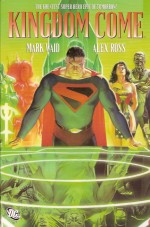
Showcase Presents Justice League of America volume 5


By Mike Friedrich, Len Wein, Dick Dillin & various (DC Comics)
ISBN: 978-0-85768-195-9

After the actual invention of the comicbook superhero – for which read the Action Comics debut of Superman in 1938 – the most significant event in the industry’s progress was the combination of individual sales-points into a group. Thus what seems blindingly obvious to us with the benefit of four-colour hindsight was proven: a number of popular characters could multiply readership by combining forces. Plus, of course, a mob of superheroes is just so much cooler than one (…or one-and-a-half if there’s a sidekick involved…).

And so the Justice Society of America is rightly revered as a true landmark in the development of comicbooks and when Julius Schwartz revived the superhero genre in the late 1950s, the key moment came with the inevitable banding together of the reconfigured mystery men.

That moment came with issue #28 of The Brave and the Bold, a classical adventure title that had recently transformed into a try-out magazine like Showcase. Just before Christmas 1959 the ads began running. “Just Imagine! The mightiest heroes of our time… have banded together as the Justice League of America to stamp out the forces of evil wherever and whenever they appear!”

The rest was history: the JLA captivated the youth of a nation, reinvigorated an industry and even inspired a small family-concern into creating the Fantastic Four, thereby transforming the art-form itself

Following a spectacular rise, TV spin-offs brought international awareness which led to catastrophic overexposure: by 1968 the superhero boom looked to be dying just as its predecessor had at the end of the 1940s. Sales were down generally in the industry and costs were beginning to spiral. More importantly “free” entertainment, in the form of television, was by now ensconced in even the poorest household. If you were a kid in the sixties, think just how many brilliant cartoon shows were created in that decade, when artists like Alex Toth and Doug Wildey worked in West Coast animation studios.

Moreover, comicbook heroes were now appearing on the small screen. Superman, Aquaman, Batman, the Marvel heroes and even the JLA were there every Saturday in your own living room even after the global bubble had burst…

It was a time of great political and social upheaval. Change was everywhere and unrest even reached the corridors of DC. When a number of creators agitated for increased work-benefits the request was not looked upon kindly. Many left the company – not always voluntarily – for other outfits. Some quit the business altogether.

This fifth monochrome volume compellingly reflects the signs of the times as new writers fostered a “new wave” before slowly and safely returning the World’s Greatest Superheroes to the tried and tested Fights ‘n’ Tights arena…

Collecting issues #84-106 (and re-presenting the stirring covers of #85 and 93: giant editions which reprinted issues #10-11and #13 and18, respectively), this tome covers the period when the market changed forever, and comics stopped being a casual, disposable mass-entertainment.

By the end of this volume the publishers had begun the conceptual and commercial transition from a mass-market medium which slavishly followed trends and fashions to become a niche industry producing only what its dedicated fans wanted…

The dramas begin here with Justice League of America #84 (November 1970) and a guest-script from veteran writer Robert Kanigher illustrated by Dick Dillin & Joe Giella. ‘The Devil in Paradise!’ wherein a well-meaning but demented scientist builds his own Eden to escape the world’s increasing savagery before attempting to cleanse the Earth and start civilisation afresh.

With superheroes on the outs the team was severely truncated too. Issue #86 tackled impending global starvation as Mike Friedrich began a run of excellent eco-thrillers with ‘Earth’s Final Hour!’ as businessman Theo Zappa traded away the planet’s plankton (base of our entire food-chain) to a race of aliens with only Superman, Batman, Flash, Aquaman, Atom and Hawkman on hand to thwart him, whilst #87’s ‘Batman… King of the World!’ brought in occasional guest-star Zatanna and the semi-retired Green Lantern to tackle a deadly alien robot raider: a devious and cleverly veiled attack on Big Business and the Vietnam war, most famous these days for introducing a group of alien superheroes mischievously based on Marvels Mighty Avengers…

The human spirit and enduring humanity were highlighted when ancient refugees from the lost city of Mu returned to find us in charge of the planet they had abandoned millennia ago. ‘The Last Survivors of Earth!’ showed that even when superheroes were outmatched by scientifically-instigated global catastrophes, the simple patience, charity and self-confidence of ordinary folks can move mountains and save worlds.

‘The Most Dangerous Dreams of All!’ is one of the oddest tales in JLA history with a thinly disguised Harlan Ellison psychically inserting himself into the consciousness of Superman and Batman to woo the Black Canary with near-fatal repercussions, in a self-indulgent but intriguing examination of the creative process whilst #90’s ‘Plague of the Pale People!’ saw Aquaman’s submerged kingdom of Atlantis conquered by a primitive sub-sea tribe (the Saremites from Flash #109 – for which story check out Showcase Presents the Flash volume 1) using nerve gas negligently dumped in the ocean by the  US military.

In a mordant and powerful parable about lost faith and taking responsibility the JLA were forced to deal with problems much tougher than repelling invaders and locking up bad-guys…

Justice League of America #91 (August 1971) began the hero-heavy first part of the annual JLA/JSA team-up with ‘Earth… the Monster-Maker!’ as the Supermen, Flashes, Green Lanterns, Hawkmen, Atoms and Robins of two separate Realities simultaneously and ineffectually battled an alien boy and his symbiotically-linked dog on two planets a universe apart, until ‘Solomon Grundy… the One and Only!’ gave them a life saving lesson on togetherness and lateral thinking…

Following the cover of reprint giant #93, Neal Adams stepped in to provide additional pencils for the tense mystery ‘Where Strikes Demonfang?’ as ghostly guardian Deadman helped Batman, Aquaman and Green Arrow foil a murder mission by the previously infallible Merlyn and the League of Assassins. The issue ended on a cliffhanger as Flash, Green Lantern and Hawkman were lost in a teleporter accident leaving Batman, Black Canary, Green Arrow and the Atom to fight ‘The Private War of Johnny Dune!’ wherein a disaffected black Vietnam veteran discovered the power and temptation of superpowers. Tragically even the ability to control minds wasn’t enough to change an unjust society two hundred years in the making…

The JLA returned to large-scale cosmic drama with issue #96 as Superman located the lost Leaguers on the distant yet familiar world of Rann (at least if you’ve read Showcase Presents Adam Strange volume 1) battling a planet-killing energy vampire in ‘The Coming of… Starbreaker!’

Their hard-won triumph only brought Earth to the attention of the extinction-event-level villain, leading to #97’s ‘The Day the Earth Screams!’ – a 37-page epic incorporating and recapitulating the team’s origin from #9 – resulting in a positively charged team, aided by Golden Age magician Sargon the Sorcerer, finally crushing the Stellar Leech in the climactic ‘No More Tomorrows!’

Environment-in-extremis was once more the theme in #99’s ‘Seeds of Destruction!’ as two alien Johnny Appleseeds began reseeding Earth with plants irrespective of whether or not humans want – or can survive – their monstrous crop…

Justice League of America #100 (August 1972) heralded the move away from relevancy and hot button social topics and a return to full-on Costumed melodramas beginning with a colossal three way team-up featuring almost every hero in the then-DC pantheon.

Beginning as part of the annual JLA/JSA summer blockbuster ‘The Unknown Soldier of Victory!’ featured the debut of Len Wein as scripter as the assembled champions of two Earths began a monumental hunt through time to retrieve forgotten heroes the Seven Soldiers of Victory; not simply out of common decency but because the vanished vigilantes held the answer to defeating a criminal mastermind literally holding the world of Earth-2 to ransom.

The quest continued in ‘The Hand that Shook the World!’ before ending in one adventurer’s gallant final sacrifice in #102’s ‘And One of Us Must Die!’ (with additional inking from Dick Giordano).

Returned to their own planet the JLA teamed up with and then inducted one of the few mystery men who hadn’t accompanied them to Earth-2 in ‘A Stranger Walks Among Us!’ (Wein, Dillin & Giordano) as the cross-genre horror-hero Phantom Stranger foiled a plot to sorcerously slaughter six Leaguers during the annual Halloween carnival in Rutland, Vermont, after which Green Lantern’s arch-enemy Hector Hammond orchestrated an attack on his old foe by setting an unstoppable monster loose on the League in ‘The Shaggy Man Will Get You if You Don’t Watch Out!’

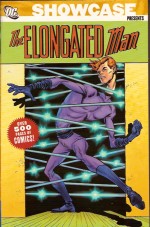
The “More-the-Merrier” recruitment drive continued in #105 as the Elongated Man signed up to save the day against marauding, malignant putty-men in ‘Specter in the Shadows!’, anonymously aided by a miraculously resurrected robotic Red Tornado who joined up in #106, unaware that he had been reprogrammed into becoming a ‘Wolf in the Fold!’ which neatly concludes this delightful fifth volume of extraordinary exploits.

The Justice League of America has become a keystone of American comics and these tales are still among the most thought-provoking, controversial and purely entertaining episodes in their half-century history.

Just Imagine…

© 1968-1972, 2011 DC Comics. All Rights Reserved.
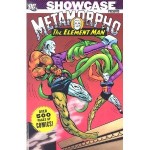
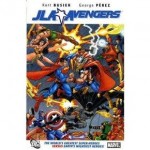
JLA vol. 13: Rules Of Engagement


By Joe Kelly, Rick Veitch, Darryl Banks, Doug Mankhe, Duncan Rouleau & various (DC Comics)
ISBN 978-1-84023-923-5

When the Justice League of America, driving force and cornerstone of the Silver Age of Comics, were relaunched in 1997 (see JLA: New World Order) the sheer bravura quality of the stories propelled the series back to the forefront of industry attention, making as many new fans as it recaptured old ones; but the intoxicating sheen of “fresh and new” never lasts and by the time of these tales there had been numerous changes of creative personnel – usually a bad sign…

However Joe Kelly’s tenure proved to be a marvellous blend of steadying hands and iconoclastic antics through which the JLA happily continued their tricky task of keeping excitement levels stoked for a fan-base cursed with a criminally short attention span.

Kelly’s run on the series has some notable highs (and lows) and this portmanteau collection (gathering issues #77-82 of the monthly comicbook) happily falls into the former category as the team readjusted to modern life after the time-lost traumas of the Obsidian Age (see JLA:The Obsidian Age).

However the adventure actually kicks off with an impressive, clever and fast-paced fill-in tale from Rick Veitch, Darryl Banks & Wayne Faucher wherein the team – Batman, Superman, Atom, Wonder Woman, Flash, Green Lantern John Stewart and Firestorm – are attacked by a civilisation-crushing cosmic wanderer which achieves its goals by invading brains and stealing knowledge in ‘Stardust Memories’…

That threat successfully circumvented, the World’s Greatest Superheroes learn of an interplanetary conflict that looks likely to divide the team forever in the eponymous two-parter ‘Rules of Engagement’ by Kelly, Doug Mankhe and Tom Nguyen. With half the team travelling, uninvited, many light-years to stop a war, the remainder of the JLA stay to police Earth, giving the opportunity to add some long-missed sub-plots to the usually straightforward storytelling; specifically some unpleasant hints into new member Faith’s clouded past, a long-deferred romantic dinner for Bruce Wayne and Amazonian Princess Diana and the beginnings of a very hot time for the Martian Manhunter with fiery potential paramour Scorch…

On the distant world of Kylaq, Leaguers Superman, Wonder Woman, Major Disaster, Manitou Raven, John Stewart and Faith act unilaterally to prevent the invasion of the Peacemaker Collective but are keenly aware that once they succeed they leave the rescued world to the mercies of its own highly suspect government… especially Defense Minister Kanjar Ro, intergalactic slave-trader and one of their oldest, most despotic foes…

The last half of the book fills in some of Faith’s background as the reunited team are called to an Oregon cult compound where a new Messiah has created Safe Haven: a separatist enclave for metahuman children. Unfortunately, the Federal Authorities are not prepared to leave them alone and the resultant clash of ideologies leaves a thousand dead children on the crippled consciences of the devastated superheroes…

Yet something isn’t right: why does each JLA-er believe that they alone are responsible for the massacre? Moreover, what is the actual goal of master manipulator Manson and how does neo-Nazi team Axis America fit into the scheme?

This thrilling, action-packed three-part mystery saga comes courtesy of Kelly, Duncan Rouleau & Aaron Sowd and satisfyingly closes this fast and furious selection of witty, engaging, beautiful and incredibly exciting yarns: some of the best modern superhero adventures ever created and a reading treat well worth your time and attention.

© 2003, 2004 DC Comics. All Rights Reserved.

Showcase Presents Booster Gold


By Dan Jurgens & various (DC Comics)
ISBN: 978-1-84576-852-2

After the cosmos-crunching Crisis on Infinite Earths re-sculpted the DC Universe in the mid-1980s, a host of characters got floor-up rebuilds for the tougher, no-nonsense, straight-shooting New American readership of the Reagan-era and a number of corporate buy-outs such as Blue Beetle, Captain Atom and The Question joined the DC roster with their own much-hyped solo titles. There were even a couple of all-new big launches for the altered sensibilities of the Decade of Excess such as Suicide Squad and a Shiny, Happy Hero named Booster Gold.

This economical black and white edition (released to coincide with the hero’s relaunch as a time-roving chronal cop) features the entire 25 issue run of Booster Gold volume 1 (from February 1986 to February 1988), plus a crossover appearance from Action Comics #594 and his redefined backstory from Secret Origins #35 (December 1988).

The blue and yellow paladin appeared amidst plenty of hoopla in his own title cover-dated February 1986 (the first post-Crisis premiere of the freshly integrated superhero line) and presented a wholly different approach to the traditional DC costumed boy-scout.  Created, written and drawn by Dan Jurgens with inks by Mike DeCarlo ‘The Big Fall’ introduced a brash, cocky, mysterious metahuman golden-boy jock who had set up his stall as a superhero in Metropolis, actively seeking corporate sponsorships, selling endorsements and with a management team in place to maximise the profit potential of his crusading celebrity.

Accompanied everywhere by a sentient flying-football-shaped  robot Skeets, the glitzy showboat soon encountered high-tech criminal gang The 1000 and their super-enforcer Blackguard, earning the ire of sinister mastermind The Director and the shallow approbation of models, actresses, headline-hungry journalists, politicians and the ever fickle public…

In issue #2’s ‘Cold Redemption’ Blackguard was assisted by thought-casting mercenary Mindancer as the Director’s campaign of malice led to another close call for Booster. Meanwhile his highly public private life took a tawdry turn in ‘The Night Has a Thousand Eyes’ when opportunistic starlet Monica Lake began briefing the media on her “relationship” with the Man of Gold. He was unable to refute the claims since he was knee-deep in hired thugs and super-villains at the time…

That cataclysmic combat in #4 resulted in a tremendous ‘Crash’ when urban vigilante The Thorn dropped in to help scuttle the 1000’s latest scheme, but once the dust settled Booster found himself in real trouble as business manager Dirk Davis was so busy licensing his boss for a comicbook that he failed to head off an IRS audit…

It appeared Booster Gold had no official record and had never paid a penny in taxes…

In ‘Face Off’, our hero saved an entire stadium of ice hockey fans from avaricious terrorist Mr. Twister, earning himself a reprieve from the Federal authorities, after which an alien refugee crashed in Metropolis’ Centennial Park in #6’s ‘To Cross the Rubicon’, just as Man of Gold met Man of Steel for the long-awaited origin saga.

Michael Jon “Booster” Carter was a rising sports star in the 25th century who fell in with a gambling syndicate and began fixing games for cash pay-outs. When he was caught and banned from competition he could only find menial work as a night-watchman in The Space Museum. Whilst there he struck up a friendship with automated tour-guide and security-bot Skeets, embarking on a bold plan to redeem himself.

Stealing a mysterious flight ring and force-field belt plus energy-rods, an alien super-suit and wrist-blasters, Booster used the Museum’s prize exhibit, Rip Hunter’s time machine, to travel to 20th Century Age of Heroes and earn all the fame and glory his mistakes had cost him in his own time…

Superman, already antagonistic because of Booster’s attitude, is ready to arrest him for theft when the almost forgotten alien attacks…

They all awaken on a distant world embroiled in a vicious civil war and still at odds. As a result of ‘The Lesson’ and a vicious battle Superman and Booster Gold both learned some uncomfortable truths and agreed to tolerate each other when they returned home. Meanwhile, back in Metropolis, Dirk Davis and company PA Trixie Collins hired hotshot scientist Jack Soo to build a super-suit that would enable Booster to hire a camera-friendly, eye-candy, girly sidekick…

More questions were answered in the two-part ‘Time Bridge’ when the 30th century Legion of Super-Heroes discovered evidence that their flight-rings and forcefield technology were being used by a temporal fugitive named Michael Carter. Dispatched to 1985 by the Time Institute, Ultra Boy, Chameleon Boy and Brainiac 5 arrived soon after the fugitive Carter and became involved in his very first case. The Director and shape-shifting assassin Chiller were planning to murder and replace Ronald Reagan but in the best superhero tradition Carter and the Legionnaires misunderstood each other’s intentions and butted heads…The plot might have succeeded had not Skeets intervened, allowing Carter to save the day and get official Presidential approval. Ronnie even got to name the new hero…

Back in 1986 the long-building final clash with the Director began in #10 with ‘Death Grip of the 1000’ when Dirk’s daughter was kidnapped and he was coerced into betraying Booster, just as the nefarious super-mob unleashed a horde of robotic terrors on Metropolis to wear out the Man of Gold and assess his weaknesses…

After Trixie was also abducted in ‘When Glass Houses Shatter’ the 1000 increased the pressure by setting blockbusting thug Shockwave on Booster, resulting in the utter destruction of the hero’s corporate headquarters and home before a frenzied and frenetic final clash in ‘War’…

With the threat of the 1000 ended ‘The Tomorrow Run’ (inked by Gary Martin) found Booster at death’s door, not because of his numerous injuries but because his 25th century body had succumbed to 20th century diseases. Set during the Legends publishing event, which saw the public turn violently against costumed heroes, the dying Carter was rescued from a mob by Trixie wearing Jack Soo’s completed super-suit after which the cast resolve to take Michael back to the future where he can be properly treated, even though Booster’s offences carried a mandatory death penalty in his home era…

Recruiting young Rip Hunter (destined to become the Master of Time) Trixie and Dr. Soo accompanied the distressed hero to a time where ruthless Darwinian capitalism ruled and everything Michael Carter once dreamed of had turned to bitter ashes…

‘A Future Lost’ (inked by DeCarlo) followed Booster and Trixie as they searched for a cure (and his missing twin sister Michelle) whilst Hunter and Soo attempted to find a way to return them all to 1986.

Booster’s illness was only cured after they were arrested: the authorities believing it barbaric to execute anybody too sick to stand up, before ‘Runback’ (inked by Bruce D. Patterson) concluded the saga in fine style with the missing Carter twin saving the day and retreating to the 20th century with the time-lost travellers.

Booster Gold’s close call had a salutary effect on his attitudes and character. ‘Fresh Start’ (inked by Bob Lewis) saw a kinder, gentler corporate entrepreneur begin to re-establish his heroic credentials with the celebrity-crazed public of Metropolis, to the extent that Maxwell Lord even offered him membership in the newly re-formed Justice League, just as sultry assassin Cheshire began raiding a biotech company recently acquired by Booster Gold International…

‘Dream of Terror’ (inked by Arne Starr) revealed all as new owner Booster discovered that his latest corporate asset had been making bio-toxins designed to eradicate all “undeserving” individuals (for which read non-white and poor) and that its creator was currently loose in Mexico City with the lethal bug. Moreover, the deranged biochemist had bamboozled militant hero the Hawk into acting as bodyguard while his plans to “save humanity from itself” took effect…

Decarlo returned to ink ‘Showdown’ in #18, as a relentless lawman from Booster’s home-time tracked him down through history, determined to render final judgement before ‘Revenge of the Rainbow Raider’ (inked by Al Vey) pitted the Man of Gold against the colour-blind and utterly demented Flash villain in a two-part revenge thriller that saw our hero rendered sightless and his future shocked sister go native amongst the 20th century primitives.

The tale concluded with ‘The Colors of Justice’ as Dr. Soo came to Booster’s rescue whilst Michelle was being kidnapped by extra-dimensional invaders…

Up until this moment the art in this volume, whilst always competent, had been suffering an annoying hindrance, designed as it was for high quality, full-colour comicbooks, not stark, black and white reproduction. Although legible, discernable and adequate, much of the earlier art is fine-lined, lacking contrasting dark areas and often giving the impression that the illustrations lack solidity and definition.

With Booster Gold #21 the marvellous Ty Templeton became regular inker and his bold, luscious brush-strokes brought a reassuring firmness and texture to the proceedings. As if to affirm the artistic redirection the stories became a tad darker too…

‘Invasion From Dimension X’ has Booster’s search for his missing sister impinge on a covert intrusion by belligerent aliens first encountered and defeated by the Teen Titans (see Showcase Presents Teen Titans volume 2). To make matters worse the extra-dimensionals are using Michelle as a power-source to fuel their invasion, resulting in ‘Tortured Options’ for Booster who had to decide between saving Michelle or the city of Minneapolis when the invaders opened their assault with a colossal monster attack…

Guest-starring Justice League International, the astounding battle climaxed in public triumph and personal tragedy after which the heart-broken, embittered Booster seemingly attacked Superman in ‘All That Glisters’ (Action Comics #594, November 1987, by John Byrne & Keith Williams); a terse, brutal confrontation that concluded in Booster Gold #23 and ‘Blind Obsession’ (Jurgens & Roy Richardson) as the real Man of Gold crushed a Kryptonite-powered facsimile android designed by the world’s most unscrupulous businessman to kill Superman and frame his closest commercial rival…

If only they had known that at that very moment Booster Gold International was being bankrupted by a traitor at the heart of the company…

After Crisis on Infinite Earths and Legends, DC’s third company-wide crossover Millennium saw Steve Englehart describe how robotic peacekeepers called Manhunters had infiltrated Earth to abort the next stage in human evolution. Built by the Guardians of the Universe billions of years ago, the automated peacekeepers had rebelled against their creators and now planned to thwart their makers’ latest project, destroying or suborning Earth’s costumed defenders in the process.

In its original form each weekly instalment of Millennium acted as a catalyst for events which played out in the rest of the DC Universe’s comics. In addition to the miniseries itself, Millennium spread across 21 titles for two months – another 37 issues – for a grand total of 44 comic-books. Issues #24 and 25 of Booster Gold were two of them.

‘Betrayal’ revealed that one of Michael Carter’s inner circle had been a Manhunter agent all along and had bankrupted the hero at the most propitious moment simply so that the robots could buy his loyalty during their assault on humanity…

The series came to a shocking climax in ‘The End’ as the scheme worked and Booster actually switched sides… or did he?

After the surprisingly satisfying and upbeat denouement Booster became a perennial star of Justice League International where, with fellow homeless hero Blue Beetle, he became half of the one of funniest double-acts in comics. As “Blue and Gold” the hapless, cash-strapped odd couple were always at the heart of the action – pecuniary or otherwise – and the final tale here ‘From the Depths’ (by Jurgens & Tim Dzon, originally presented in Secret Origins #35, December 1988) reprised the early tragic days of Michael Jon Carter in a brief and exceedingly impressive tale played as much to tug the heartstrings as tickle the funny-bone…

As a frontrunner of the new DC, Booster Gold was a radical experiment in character that didn’t always succeed, but which definitely and exponentially improved as the months rolled by. The early episodes are a necessary chore but by the time the volume ends it’s a real shame that the now thoroughly entertaining and enjoyable ride is over. Perhaps not to every Fights ‘n’ Tights fan’s taste; these formative fictions are absolutely vital to your understanding of the later classics. Cheap and fun this book is worth the investment simply because of what follows in such comics gems as Justice League International volume 1 and 2 and Booster Gold: Blue and Gold.

© 1986, 1987, 1988, 2008 DC Comics. All Rights Reserved.

JLA volumes 11 & 12: Obsidian Age books 1 & 2


By Joe Kelly, Doug Mankhe, Tom Nguyen & various (DC Comics)
ISBNs: 978-1-84023-702-3 & 978-1-84023-709-2

When the World’s Greatest Superheroes and cornerstone of the Silver Age of Comics were relaunched in 1997 (see JLA: New World Order) the intrinsic quality actually lived up to the massive hype and made as many new fans as it won back old ones, but the glistening aura of “fresh and new” never lasts forever and by the time of these tales there had been numerous changes of creative team – usually a bad sign…

However Joe Kelly, Doug Mankhe and Tom Nguyen’s tenure proved to be a competent blend of steadying hands and boldly iconoclastic antics through which the JLA happily continued their tricky task of keeping excitement levels stoked for a fan-base cursed with a criminally short attention-span.

Kelly’s run on the series has some notable highs (and lows) and these two impressive editions collect the author’s boldest and most audacious adventure, an epic which spanned a year of publication and rewrote millennia of DC continuity.

Collecting issues # 66-71 and # 72-76 respectively, The Obsidian Age began in Book 1 with ‘The Destroyers Part 1’ wherein peculiar water-based events and phenomena indicated that Aquaman – believed killed in a catastrophe which eradicated Atlantis – was alive and trying to contact his JLA comrades. When the team are subsequently attacked by an ancient mystical warrior they get their first clue that it’s not “somewhere” but “somewhen”…

‘The Destroyers Part 2’ sees the team recovering from a second attack by the terrifying Tezumak and shaman Manitou Raven whose coordinated manipulations bring the heroes into the ruins of ‘Stillborn Atlantis’ and all-out combat with the deranged Ocean Master. When Tempest (the all grown-up Aqualad and now a magical adept himself) and a conclave of mystic heroes, including Zatanna, Faust and Doctors Occult and Fate, are called in to assess the deteriorating situation in the no-longer sunken city, the assembled champions of science and magic realise that something truly terrible is about to be unleashed….

Renewed assaults from the past indicate another global crisis and when the JLA discover a message from Aquaman they head back 3000 years to discover an unsuspected era of Atlantean domination. With Superman, Batman, Wonder Woman, Flash, Green Lantern, Martian Manhunter and Plastic Man gone, a stand-in team of heroes are left to guard the world but the ancient mastermind behind the menace has also prepared a contemporary trap for the substitute JLA…

‘New Blood’ (illustrated by Yvel Guichet & Mark Propst) features Zatanna and the Atom trying to stave off a concatenation of clearly unnatural natural disasters with the aid of Green Arrow, Captain Marvel, Firestorm, Jason Blood (with and without Etrigan the Demon), Hawkgirl, ex-villain and troubled soul Major Disaster, Nightwing and new find Faith (as well as a little help from the Justice Society of America) – a desperate scratch-team woefully overmatched and under-trained…

Meanwhile the strands of mystery are unravelled in ‘Revisionist History’ which finds the time-lost First Team in 1000BC where an above-the-waves Atlantis leads a coalition of nations and super-warriors in a campaign to conquer the known world by sword and sorcery. This unknown episode of human history contravenes all the records and clandestine reconnaissance by the JLA reveals an enchantress named Gamemnae is behind the scheme.

But her plans extend far beyond her own epoch and to that end she has kidnapped the 21st century water-breathing Atlanteans and enslaved their king Aquaman…

However Gamemnae’s own team is far from united: Manitou Raven and his bride Dawn are deeply troubled by the venality of their allies and the obvious nobility of the Justice Leaguers… Meanwhile back in the future the last story of Book 1 returns focus to the new team in ‘Transition’ (by Guichet & Propst again) as the planet is ravaged by geological catastrophes and Gamemnae’s millennial booby-trap activates, intent on conquering the world of tomorrow by suborning its meta-human and mystic defenders…

Ending on a stunning mystery cliffhanger this volume also includes a behind-the-scenes text feature on the formidable enemy team ‘The Ancients’ including a delightful assemblage of design sketches.


Obsidian Age Book 2 opens with a handy précis of previous events before launching into ‘History is Written By…’ (Kelly, Mahnke & Nguyen) wherein the JLA battles hopeless odds in ancient Atlantis whilst trying to liberate the enslaved water-breathing descendents, and in modern times ‘Last Call’ (Guichet & Propst) finds the alternative League faring badly against Gamemnae’s monstrous animated time-trap until a ghostly message from the past enables them to turn the tide…

‘Obsidian’ follows the final tragic battle between the JLA and The Ancients, revealing how Gamemnae’s future assaults began whilst Manitou finally succumbs to his conscience and changes sides. ‘Tragic Kingdom’ (by Mahnke, Guichet, Darryl Banks, Dietrich Smith and inkers Nguyen, Propst, Wayne Faucher & Sean Parsons) simultaneously provides the origin and final fall of the deadly Witch-Queen in a cataclysmic confrontation that bends times, breaks the barriers between life and death and costs one of the heroes everything…

The story-portion culminates in ‘Picking up the Pieces’ (with art from Lewis LaRosa & Al Milgrom)  as the JLA conclude a 3000 year quest to restore their fallen comrade and re-jig their roster in the aftermath of the epic adventure that has left them all changed…

This volume ends with an insightful and revealing ‘Afterword’ by Kelly.

The action of Obsidian Age takes place in the devastated aftermath of the DC Crossover Event “Our Worlds At War” wherein an alien doomsday device named Imperiex almost destroyed the planet – but there’s enough useful background and build-up in the chapters collected in both books to circumvent any possible confusion should that saga have passed you by…

Engaging, engrossing and especially entertaining this is a superior superhero slugfest that will appeal to a lot of readers who thought the Fights ‘n’ Tights genre beyond or beneath them…
© 2002, 2003 DC Comics. All Rights Reserved.

Young Justice: A League of Their Own


By Peter David, D. Curtis Johnson, Todd Nauck, Ale Garza & others (DC Comics)
ISBN: 978-1-84023-197-7

There are many facets that contribute to the “perfect mix” in the creation of any continuing character in comics. How much more so then, when the idea is to build a superhero team that will stand out from the seething masses that already exist? In the mid-1990s a fresh batch of sidekicks and super-kids started cropping up at DC after some years of thematic disfavour, and as the name and modus operandi of the Teen Titans was already established something new needed to be done with them.

But why were kid crimebusters back at all? Ignoring the inherent stupidity – and illegality if you acknowledge child-endangerment laws – of superhero apprenticeships for trainees who can’t even shave yet, why should callow champions appeal at all to comics readers?

I don’t buy the old line about giving young readers someone to identify with: the kids I grew up with all wanted to be the adult who drove the whatever-mobile, not a snotty smartass brat in short pants. Every mission would be like going to school with your dad…

I suspect it’s actually the reverse case: duffers like me with responsibilities and chores could fantasize about being powerful, effective and dangerously irresponsible: able to beat people up without having to surrender that hormone-fuelled, irredeemably juvenile frat-boy capacity for goofy fun that we’ve all missed ever since it finally died away…

After a delightfully cool try-out miniseries (see Justice League: World Without Grown-Ups) the latest crop of “ands…” soon stampeded into their own highly habit-forming monthly series. Also included in that introductory graphic novel collection was a subtly distressing tale wherein Robin, Superboy and Impulse rescued a young girl composed entirely of smoke and vapour from a supposedly benign federal agency: the Department of ExtraNormal Operations.

This second collection (repackaging issues #1-7 of the monthly comicbook with portions of Young Justice Secret Files #1) features fan-favourite writer Peter David scripting some inspired, tongue-in-cheek, gloriously self-referential adolescent lunacy, beginning with ‘Young, Just Us’ (illustrated by Todd Nauck & Lary Stucker) wherein the unlikely lads go for a sleepover in the old Justice League Secret Sanctuary and fall into a whole new career.

When a nearby archaeological dig uncovers an ancient New Gods Supercycle the boys are too busy vandalising the decommissioned mountain lair until the android Red Tornado objects. Before things become too tense the boys are called to the dig-site where DEO operatives Fite and Maad are attempting to confiscate the alien tech. After a brief skirmish with a fabulously mutated minor villain (transformed by a booby trap!) the bike adopts the kids and makes a break for it…

After a brief interlude with the pneumatically empowered Mighty Endowed the action switches to the Middle East for ‘Sheik, Rattle and Roll’ where the semi-sentient trans-dimensional cycle has brought Robin, Superboy and Impulse. Apparently uncounted years ago an Apokoliptian warrior named Riproar was entombed beneath a mountain after stealing the bike from New Genesis. Now the machine, enslaved to the thief’s ancient programming, is compelled to free the monster, but it has brought some superheroes to fight Riproar once he’s loose. Of course, they’re rather small heroes…

Hilariously victorious, the kids return to America just in time for Halloween and a riotous Trick or Treat time travel romp as meddling kids dabbling in magic snatch a nerdy Fifth Dimensional scholar out of his appointed place – endangering the entire continuum. Sadly, although YJ’s best efforts in ‘The Issue Before the One Where the Girls Show Up!’ restore reality they might have had a delayed bad influence on the quietly studious Master Mxyzptlk…

A bunch of chicks join the boys’ club in ‘Harm’s Way’ as writer David unerringly injects some dark undercurrents into the frenetic fun. Impulse’s sometime associate Arrowette (a second generation trick archer forced into the biz by her fearsome stage-struck mother) is being hunted by a psychotic youth who intends to become the world’s greatest villain and that aforementioned mist-girl Secret and the latest incarnation of Wonder Girl are dragged into the clinically sociopathic Harm’s lethal practice run before the assembled boys and girls finally manage to drive him off…

D. Curtis Johnson, Ale Garza & Cabin Boy then step in for ‘Take Back the Night’ as Secret leads the now fully-co-ed team in a raid against the clandestine and quasi-legal DEO orphanage-academy where metahuman kids are “trained” to use their abilities. It seems an awful lot of these youngsters aren’t there voluntarily or even with their parents’ approval…

‘First, Do No Harm’ (David, Nauck & Stucker) sees the return of the malevolent young nemesis as he invades their HQ and turns Red Tornado into a weapon of Mass destruction (that’s a pun that only makes sense after I mention that the Pope guest-stars in this tale). As the Justice League step in, the tale wraps up with a majestic twist ending…

The senior superstars are concerned about the kid’s behaviour and set a test, but since this is comics, that naturally goes spectacularly wrong in ‘Judgement Day’ as the ghost of alien horror Despero turns the simulation into a very practical demonstration of utter mayhem…

This terrific tome concludes with the edgy and hilarious ‘Conferences’ as the assorted guardians and mentors convene for a highly contentious parents/teachers evening, blissfully unaware that their boy and girls have snuck off for an unsanctioned – and unchaperoned – overnight camping trip together. As ever, it’s not what you’d expect but it is incredibly entertaining…

Teen issues and traditional caped crusading are perfectly combined with captivating adventure and deft, daft home-room laughs in this magical blend of tension and high jinks, comedy, pathos and even genuine horror in Young Justice.

The secret joy of sidekicks has always been the sheer bravura fun they inject into a tale and this book totally epitomises that most magical of essences. Unleash your inner urchin with this bright shiny gem and pray that now the kids have their own cartoon show DC will finally get around to releasing all the Young Justice tales in graphic novel collections.
© 1998, 1999, 2000 DC Comics. All Rights Reserved.

JLA volume 9: Terror Incognita


By Mark Waid & various (DC Comics)
ISBN: 978-1-56389-936-2

By the time of these tales (reprinting issues #55-60) the Justice League of America had become once more a fully integrated part of the DCU and no longer a high-profile niche project for creative superstars. Mark Waid, joined here by Chuck Dixon and Scott Beatty, proved that the heroes were the true stars in a succession of fast, furious and funny fights ‘n’ tights romps that managed to blend high concept and big science with all the classical riffs beloved by long-term fans.

Starting off this volume is the extended, eponymous dark and devilish thriller ‘Terror Incognita’ as the sinister White Martians (first rearing their pallid spiky heads in JLA: New World Order) return to transform the planet into their own recreational slaughterhouse. Launching the campaign with a series of blistering personalised psychic assaults in ‘Came the Pale Riders’ by Waid, Bryan Hitch and Paul Neary, their intensifying efforts were met with valiant resistance in ‘Harvest’ (illustrated by Mike S. Miller & Dave Meikis), before Batman led the counterpunch with plenty of guest-stars in tow in ‘Mind Over Matter’ (Miller & Neary) resulting in a calamitous crescendo and glorious triumph in ‘Dying Breath’.

With no appreciable pause for breath the team then became involved in the cross-company publishing event that saw “Jokerised” super-villains running amok throughout the DCU (see Batman: the Joker’s Last Laugh for further details).

‘Bipolar Disorder’ (scripted by Chuck Dixon and Scott Beatty, with art from Darryl Banks & Wayne Faucher) saw magnetic malcontent and world class lunatic Dr. Polaris made even crazier when infected by the Crazy Clown’s unique brand of insanity, stretching Superman, Batman, Wonder Woman, Flash, Green Lantern, Martian Manhunter and Plastic Man to their utmost in a bid to preserve the planet deep in the icy Antarctic wastes…

Rounding out the book is a classy Christmas neo-classic as Plastic Man reveals how Santa Claus joined the JLA in the outrageously engrossing ‘Merry Christmas, Justice League… Now Die!’ by Waid, Cliff Rathburn & Paul Neary.

Witty, engaging, beautiful and incredibly exciting these are some of the best superhero adventures ever created: timeless, rewarding sagas that must be part of your permanent collection…
© 2001, 2002 DC Comics. All Rights Reserved.