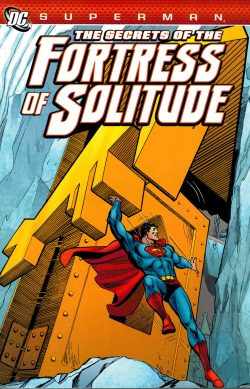
DC Finest: Superman – Kryptonite Nevermore


By Dennis O’Neil, Leo Dorfman, Cary Bates, Len Wein, Curt Swan & Murphy Anderson, Ross Andru & Mike Esposito, Dick Giordano, Carmine Infantino, Neal Adams & various (DC Comics)
ISBN: 978-1-79950-165-7 (TPB/Digital edition)

This book includes Discriminatory Content produced in less enlightened times

This stunning compilation is part of the DC Finest editions line: full colour chronologically curated paperback compilations delivering “affordably priced” comic books generally around 600 pages and highlighting past glories.Whilst primarily and understandably concentrating on the superhero character pantheon, there will also be genre selections like horror and war books, and themed compendia. Sadly, they’re not yet available digitally, as were the last decade’s Bronze, Silver and Golden Age collections, but we live in hope…

Superman is the comic book champion who started the whole genre and, in the decades since his 1938 debut, has probably undertaken every kind of adventure imaginable. With that in mind it’s tempting and very rewarding to gather up whole swathes of his inventory and periodically re-present them in specific themed collections, such as this one commemorating one his greatest extended adventures. The episodes contained herein were originally released just as comics fandom was becoming a powerful – if headless – lobbying force reshaping the industry to its own specialised desires and remains a true landmark of the superhero genre. Moreover the brand overhaul seen here was a major concerted effort to re-energise the Man of Steel at a time when comics superheroes were experincing a major die-back…

When Julie Schwartz took over editorial responsibility for the Superman title in 1970, he was expected to shake things up with nothing less than spectacular results. To that end, he incorporated many key characters and events simultaneously developing as part of fellow iconoclast Jack Kirby’s freshly unfolding “Fourth World”. That bold experiment was a breathtaking tour de force of cosmic wonderment which brought a staggering new universe to fans: instantly and permanently changing the way comics were perceived and how the entire medium could be received. Don’t think for a moment that the 1985 reboot triggered by Crisis on Infinite Earths was new or innovative… just necessary…

As the Sixties closed, Schwartz was again breathing fresh life into a powerful but moribund icon – a job he had been excelling at since more-or-less singlehandedly kickstarting the Silver Age of Comics. Superman had been a mega-media star since his launch, with internationally syndicated comics, books, newspaper strips, movie and cinema serials plus hugely successful radio and TV shows (live action and animated) making the franchise globally recognizable. Whenever that happens, inevitably overkill and overexposure inescapably set in and the core property needs to be carefully overhauled or vanish forever. I’ll bet you can think of plenty of really famous and ubiquitous things from your childhood that one day you simply stopped noticing. Happily, sometimes they can be reborn…

Schwartz knew his market and was open to new ideas, and his creative changes were just appearing in 1971. The new direction was also vanguard and trigger for a wealth of controversial, socially-challenging “realistic” story content unseen since the feature’s earliest days: a wave of tales ultimately described as “Relevant”…

With iconic covers by Curt Swan, Carmine Infantino, Neal Adams, Dick Giordano, Murphy Anderson & Jack Adler, this titanic tome collects in whole or in part the Man of Steel’s first comics renaissance through exploits from Action Comics #393-406 and Superman #233-238 and #240-242, spanning cover dates October 1970 to December 1971.

On sale from 27th August 1970, Action Comics #393 hinted at rather than heralded a new era as ‘Syperman Meets Super-Houdini!’ In a tale by prolific lead super-scribe Leo Dorfman and artists Curt Swan & Murphy Anderson (AKA “Swanderson”) the ultimate hero faces a moral dilemma when reformed crimnal turned escape artist “Hair-breadth” Holahan is blackmailed to resume his criminal ways – or lose his abducted son. Of course, Superman can help…

Following a Superman Scrapbook Pinup, with Swanderson reworking a classic Golden Age Superman contents page, second strip ‘The Day Superboy Became Superman!’ (by Dorfman as Geoff Brown with Ross Andru & Mike Esposito illustrating) depicts a pivotal moment for college boy Clark Kent as radical student Marla Harvey showed the so-conservative law-&-order adherent what those concepts meant to people trapped in poverty and privation…

The updating of an icon continued in AC #394 with Swanderson illustrating both ‘Midas of Metropolis’ and low key “Geoff Brown” character vignette ‘Requiem for a Hot Rod’. The lead yarn pits Superman against world’s richest man Cyrus Brand, who seemingly infects the Action Ace with his own all-encompsing lust for money, only to find the hero is incorruptible and knows actual crime when he sees it, whilst a humourous follow-up sees Clark and Lois Lane at a vintage car event, cleverly exposing a bully rigging games of chicken for cash…

Action #395 revealed ‘The Secrets of Superman’s Fortress’ with a dynamic cutaway spread fuelling an “untold tale” of an early romantic encounter with a sexy alien Superman could have loved. Sadly, super-powered Althera was of an incompatible species… and also a slaver…

Dorfman was the go-to guy for supernatural tales and weird phenomena articles, and at the forefront of a shift in tone as DC characters and titles embraced the global resurgence in spooky horror and mystery fare. Next here a back-up guest starring Supergirl explores the uncanny powers and shocking truth of accident inducing accessory ‘The Credit Card of Catastrophe’, but comes down down heavily on the side of rationality and confidence trickery in the end…

As the sixties closed and with his various screen appearances a thing of the past, Superman was soon in dire need of an editorial overhaul. That officially began with Superman #233 in a groundbreaking epic serial edited by incoming reboot wunderkind Julius Schwartz that was heavily promoted in advance. Crafted by scripter Dennis J. “Denny” O’Neil, and ubiquitous illustrators Swan & Anderson – although stand-in Dick Giordano inked #240 – a deliberate and very public abandonment of tired old super-villains, fanciful Kryptonian scenarios and otherworldly paraphernalia instantly poked the readership and revitalised the Man of Tomorrow, attracting new readers and beginning a period of engagingly human-scaled stories making Superman a “must-buy” character all over again.

The innovations began with ‘Superman Breaks Loose’ as a government experiment to harness Kryptonite as an energy source goes explosively wrong. Closely monitoring the test, the Metropolis Marvel is blasted across the desert surrounding the isolated lab, but somehow survives a supposedly fatal radiation-bath. Then, reports begin filtering in from all over Earth: every piece of the deadly mineral has been transformed to harmless, common iron! As he goes about his protective, preventative patrols, the liberated hero experiences an emotional high at the prospect of all the good he can now accomplish. He isn’t even phased when the Daily Planet’s new owner Morgan Edge – a key character created by Jack Kirby for his soon to unfold Fourth World Saga – shakes up Clark Kent’s cosy civilian life: summarily ejecting him from the print game and remaking him as a roving TV journalist…

Meanwhile, the desert site of his recent crashlanding offers a moment of deep foreboding as Superman’s irradiated imprint in the sand shockingly grows solid and shambles away in ghastly parody of life…

Over in Action Comics #396, editors Murray Boltinoff & E. Nelson Bridwell continued in their editorial positions (right up until #419 December 1972) but heralded the beginning of a radical new age with a 2-chapter Imaginary Story (hey, didn’t Alan Moore do that too?) ‘The Super-Panhandler of Metropolis!’ was set years from “now”, where a highly advanced Earth wonders why and how Superman disappeared. Media mogul Jimmy Olsen discovers the shocking truth of the hero’s degrading decline in #397 as ‘Secret of the Wheel-Chair Superman!’ sentimentally focuses on a pitiable but still valiant do-gooder giving everything for those in need, and thereby saving himself too.

For this colossal collection, each issue’s stand-alone back-up has been moved to allow an uninterrupted lead story and for reader convenience of comprehension. Thus, next comes #396’s Brown/Swanderson teaser ‘The Invaders from Nowhere!’: an intellectual mystery with Superman perplexed and imperiiled by super-technological aliens somehow living inside his own infallible arctic citadel. It is bolstered by the legendary ad that announced the big change in Metropolis…

Rendered by Swan & Vince Colletta, ‘A New Year Brings a New Beginning for Superman 1971’ announced Clark’s job change and enhanced cast, trumpeted that Jimmy Olsen and Lois Lane would be joined by The Newsboy Legion and Rose and the Thorn and that Supergirl would get a new look, as well as suspending the venerable World’s Finest team of Superman, Batman & Robin, with the title becoming a Superman team-up book…

‘The Super-Captive of the Sea!’ was AC #397’s closer, wherein the Man of Tomorrow is indefinitely trapped beneath the oceans thanks to aquatic aliens flooding Earth’s skies with red sun refracting crystal clouds. They wanted Superman for their own world, but foolishly understimated his ingenuity and determination…

O’Niel & Swanderson’s intensely sophisticated suspenseful overhaul properly resumes in Superman #234’s ‘How to Tame a Wild Volcano!’ as an out-of-control, politically untouchable plantation owner/human trafficker refuses to let his indentured workforce flee an imminent eruption on the island of Boki. Handicapped by international laws, the Man of Steel can only fume helplessly as the UN blunders towards a diplomatic solution, and his anxiety intensifies when a sinister sand-thing inadvertently and agonisingly drains him of his powers. Crashed to Earth in a turbulent squall, the de-powered champion is attacked by work boss Boysie Harker’s thugs and instantly responds to the foolish provocation, relying for a change on determination rather than overwhelming might to save the day…

In #235, the ‘Sinister Scream of the Devil’s Harp’ tacitly acknowledged fasionable arcane influences – remember, the comics industry and wider world was enjoying a periodic revival of interest in supernatural themes and stories – as mystery musician and apparent polymath Ferlin Nyxly reveals the secret of his ever-growing aptitudes and gifts is an archaic artefact which steals from living beings knowledge, talents and even Superman’s alien abilities. The Man of Steel is initially unaware of the drain as he’s trying to communicate with his eerily silent dusty doppelganger, but once Nyxly graduates to a full-on raving super-menace self-proclaimed “Pan”, the taciturn homunculus unexpectedly joins its living template to trounce the power plunderer…

“The Youth” and their music take centre stage in Action #398 as Kent’s news round-up of the college campus scene unmasks sinister sonic skulduggery that – accidentally combined with Kryptonian recording tech – makes Superman an out-of-control rioter thanks to ‘The Pied Piper of Steel’, after which Dorfman/Brown reveal a horrifiying transformation for Supergirl into a ‘Spawn of the Unknown’

Superman #236 offered a Batman cameo and science fictional morality play when cherubic E.T.’s seek Superman’s assistance to defeat a band of devils and rescue Kent’s friends from Hell. However, the ‘Planet of the Angels’ proves to be nothing of the kind, and the Man of Steel must pull out all the stops to save his adopted homeworld from a very real Armageddon, whilst in Action #399 ‘Superman, You’re Dead… Dead… Dead!’, finds the hero trapped with other great men of the past abducted by future historians and accidentally discovering a ghastly end that awaits him, before realising that something’s not quite right, whilst B-feature ‘Superbaby’s Lost World’ sees the Tot of Tomorrow lost in a theme park and exploited as cover by charismatic bandits Connie & Hyde. Of course this innocent waif is far more than anyone can handle…

Superman #237 sees him save an astronaut only to see him succumb to a madness-inducing mutative disease. After another savage confrontation with the Sand-thing further debilitates him, the harried hero is present as more mortals fall to the contagion. Convinced he is both carrier and cause, the ‘Enemy of Earth’ considers quarantining in space. Meanwhile, Lois tumbles into another lethal predicament and Kal-el’s instinctive intervention seemingly confirms his earlier diagnosis, before another clash with the sandy simulacrum on the edge of space presents an incredible truth.

Painfully debilitated, Superman nevertheless saves Lois and again meets the ever-more human creature. Now able to speak, it offers a chilling warning and the Man of Steel realises exactly what it is taking from him and what it might become…

In Action #400 ‘My Son… Is He Man or Beast?’ sees Superman made reluctant guardian to troubled teen Gregor Nagy: an angry boy with astounding shapeshifting powers that will inevitably kill him, whilst back-up ‘Duel of Doom!’ offers an untold Tale of Kandor as students, rivals and lovers Yllura and Arvor vie for academic awards, almost die together and ultimately learn the value of teamwork and togetherness…

The Man of Tomorrow is a mere shadow of his former self in Superman #238, unable to prevent terrorists taking over a magma-tapping drilling rig and endangering all Earth in ‘Menace at 1000 Degrees!’ With Lois among their hostages and the madmen threatening to detonate a nuke in the pipeline, the Action Ace desperately begs his doppelganger to assist him, but its cold rejection forces the depleted hero to take the biggest gamble of his life…

Superman #239 was an all-reprint giant featuring the hero in his incalculably all-powerful days – so not included here – before Action Comics #401 & 402 address the growing contemporary political crisis of First Nations’ rights in ‘Invaders Go Home’ and ‘This Hostage Must Die!’ The continued tale sees Superman taken hostage by Indian protesters seeking to stop the US government taking a piece of sacred ground for a rocket base. Despite being apparently helpless before the magic of Angry Young Medicineman Dan Red Hawk the Action Ace is playing a covert game and hunting a criminal profit motive behind all the passionate rhetoric and popular dissent…

Cary Bates scripted #401’s back-up yarn as ‘The Boy Whe Begged to Die!’ sees our hero forced to use his superwits when he’s accidentally activates a mega-timebomb and fails to evacuate every civilian in time whilst Brown delivers #402’s ‘The Feud of the Titans!’ as Superman and Supergirl inexplicably go to war for possesion of the Fortress of Solitude…

The physically diminished Caped Kryptonian returned in Superman #240 (O’Neil, Swan and Dick Giordano inks) to confront his own lessened state and seek a solution. In ‘To Save a Superman’, his inability to extinguish a tenement fire and the wider world’s realisation that their unconquerable champion is now vulnerable and fallible makes his dilemma dangerously common knowledge. Especially interested are the Anti-Superman Gang who immediately allocate all resources to destroying their nemesis. After one particularly close call, Clark is visited by an ancient Asian sage who somehow knows his other identity and offers an unconventional solution…

From 1968 superhero comics began to decline – just as they had at the end of the 1940s – so publishers sought fresh ways to maintain their readerships as tastes changed. Back then, the industry depended on newsstand sales, and if you weren’t popular, you died. Editor Jack Miller, innovating illustrator Mike Sekowsky and relatively new scripter Denny O’Neil came up with a radical proposal and made history by depowering the only female superhero then in the marketplace. They had the mystical Amazons leave our dimension, taking with them all their magic – including Wonder Woman‘s powers and all her weapons…

Reduced to humble humanity she chose to stay on Earth, assuming and legitimising her own secret identity of Diana Prince and resolved to fighting injustice as a mortal. Tutored by blind Buddhist monk I Ching, she trained as a martial artist, and quickly became a formidable enemy of contemporary evil. Now, I Ching claims he can repair Superman’s difficulties and restore his dwindling might, but evil eyes are watching. Arriving clandestinely, Superman allows the adept to remove his remaining Kryptonian powers as a precursor to fully regaining them, allowing the ASG opportunity to strike. In the resultant brutal melee, the all-too-human hero triumphs in the hardest fight of his life…

The saga continues with Swanderson back on art in #241, withSuperman overcoming momentary but nigh-overwhelming temptation to put down his oppressive burden of duty and lead a normal life. Admonished and resolved, he submits to Ching’s resumed remedy ritual and finds his spirit soaring to where the sand-being lurks, before explosively reclaiming the stolen powers. Leaving the gritty golem a shattered husk, the astral Kal-El brings the awesome energies back to their true owner and a triumphant hero returns to saving the world…

Over the next few days, however, it becomes clear that something has gone wrong. The Man of Tomorrow has become arrogant, erratic and unpredictable, acting rashly, overreacting and even making stupid mistakes. In her boutique, Diana Prince discusses the problem with Ching and the sagacious teacher deduces that whilst merely mortal and fighting ASG thugs, Superman received punishing blows to the head which have caused a brain injury that did not heal when his powers returned…

When the out-of-control hero refuses to listen, Diana & Ching track down the dying sand-thing and beg its aid. The elderly savant recognises it as a formless creature from other-dimensional Quarrm and listens to the amazing story of its entrance into our world. He also suggests a way for it to regain some of what it recently lost…

Superman, meanwhile, has blithely gone about his deranged business until savagely attacked by a statue of a Chinese war-demon. Also able to steal his power, it has been possessed by a second fugitive from Quarrm. It has no conscience and wears ‘The Shape of Fear!’…

The shocking saga concludes in ‘The Ultimate Battle’ as the second Quarrmer falls under the sway of two petty thugs who use it to put freshly de-powered Superman into hospital…

Rushed into emergency surgery, the Kryptonian fights for his life as sand-thing confronts war-demon in the streets. Events take an even more bizarre turn once the latter drives off its foe and turns towards the hospital to finish off the flesh-&-blood Superman…

Regaining consciousness – and a portion of his power – the Metropolis Marvel battles the beast to a standstill but needs the aid of his silicon stand-in to drive the thing back beyond the pale. With the immediate threat ended, Man of Steel and Man of Sand face off one last time, each determined to ensure his own existence no matter the cost…

The stunning conclusion was a brilliant stroke on the part of the creators, one which left Superman approximately half the Man of Tomorrow he used to be. Of course, he eventually returned to his unassailable, god-like power levels but never quite regained the tension-free smug assurance of his pre-1970s self…

For now though, with the epic ended day-to-day dilemmas resume with Action #403 and Bates & Swanderson’s ‘Attack of the Micro-Murderer’, wherein the Krptonian is attacked and fatally infected by sentient time-travelling micobe Zohtt before millions of earthlings donate blood to flush his system clean, after which Brown channels Daniel Keyes’ Flowers for Algernon for ‘The Man With the X-Ray Mind’ as an intellectually-challenged janitor develops and tragically loses astounding mental abilities…

Dorfman scripted #404’s ‘Kneel to Your Conqueror, Superman!’ wherein governemntal secret weapon/supergenius Rufus Caesar goes rogue and devises tech to steal The Action Ace’s powers, before inevitably overreaching and reaping every tyrant’s fate. As Geoff Brown, the multi-faceted writer offers another glimpse at our hero’s college years with ‘The Day They Killed Clark Kent’ relating a memorable teaching moment after a hazing incident is covertly commandeered and redirected by the Adolescent of Steel. Then Bates introduces ‘The Starry-Eyed Siren of Space!’ in Superman #243, as cosmic catastrophe catapults the Caped Kryptonian into an encounter with disembodied ultra-mentalities Kond & Rija. Sadly, the latter recalls the long forgotten joys of physicality and constructs an organic form to woo Superman, leaving Rija no choice but to do similar and win back his mate…

‘Superman, Bodyguard or Assassin?!’ leads in Action #405, as Bates posits an Imaginary Story near future where a Psy-ops expert turns the Man of Steel into an assassin pointed at the US President. He follows up with regulation continuity thriller ‘The Most Dangerous Bug in the World?’ as Clark Kent is swept up in a product demo that threatens to expose his secret identity. Over in Superman #244, O’Neil anticipates early AI anxiety and human responses via the rampages of ‘The Electronic Ghost of Metropolis!’, before AC #406 sees Dorfman deal with the rise of counter cultures and semi-religious cults as telejournalist Clark Kent investigates a charismatic ‘Master of Miracles’. What he discovers is a devious plot orchestrated by someone very close to his home and his heart…

For the same issue, the writer dons his “Brown” mantle to expose a restless and beleagured supernatural alchemist inhabiting the Tower of London for centuries as ‘The Ghost That Haunted Clark Kent’ before the wraparound superhero-bedecked cover for all reprint giant Superman #245 and Curt Swan’s pencilled model sheet ‘The Man of Many Faces’ penultimately usher in final wonder ‘Danger… Monster at Work!’ from #246, with Len Wein debuting as super-scribe and introducing an extended cast of Clark Kent’s neighbours in a wry and witty warning tale of pollution gone mad and monsters in Metropolis’ sewers, perfectly limned by Swan & Anderson…

A fresh approach, snappy dialogue and more human-scaled concerns to balance outrageous implausible fantasy elements all wedded to gripping plots and sublime art make Kryptonite Nevermore one of the very best Superman sagas ever created, and its wonderful to see the other stories of the time included for balance and to prove that this was very much the Man of Steel getting his long-needed second wind for the next comics age.

A must-have graphic collection to sit on the same shelf as Watchmen, Batman: Year One, Segar’s Popeye, Gottfredson’s Mickey Mouse, The Fourth World Saga, Kirby & Lee’s Galactus Trilogy and Chaykin’s American Flagg!, this is a shining exemplar of action- adventure comics captured at their most perfect moment. Why don’t you have this yet?
© 1970, 1971, 2025 DC Comics. All Rights Reserved.

Superman: The War Years – 1938-1945


By Roy Thomas, Jerry Siegel & Joe Shuster with Don Cameron, Mort Weisinger, Fred Ray, Jack Burnley, Wayne Boring, Leo Nowak, Ed Dobrotka, John Sikela, Sam Citron, Ira Yarbrough, George Roussos, Stan Kaye & various (DC/Chartwell Books)
ISBN: 978-0-7858-3282-9 (Album HB)

This book includes Discriminatory Content produced in less enlightened times.

The creation of Superman and his unprecedented adoption by a desperate, joy-starved generation quite literally gave birth to a genre if not an actual art form. Within three years of his debut in the summer of 1938, the intoxicating mix of eye-popping action and social wish-fulfilment which hallmarked the early exploits of the Man of Tomorrow had grown to encompass cops-and-robbers crime-busting, reforming dramas, science fiction, fantasy and even whimsical comedy: all deep and abiding issues for the American public at that time.

However, once the war in Europe and the East snared America’s consciousness, combat themes and patriotic imagery dominated most comicbook covers if not interiors and the Man of Steel was again in the vanguard.

In comic book terms Superman was master of the world and had already utterly changed the shape of the fledgling industry. There was a popular newspaper strip, a thrice-weekly radio serial, games, toys, foreign and overseas syndication and the Fleischer studio’s astounding animated cartoons. Thankfully, the quality of the source material was increasing with every four-colour release and the energy and enthusiasm of Jerry Siegel & Joe Shuster informed and infected the burgeoning studio that grew around them to cope with the relentless demand.

Superman was definitely every kid’s hero, and the raw, untutored yet captivating episodes reprinted here were also completely embraced by the wider public, as the new so very portable entertainment medium of comic books became a vital tonic for the troops and all the ones they had left behind…

I sometimes think – like many others of my era and inclinations – that superhero comics are never more apt or effective than when whole-heartedly combating global fascism with explosive, improbable excitement courtesy of a myriad of mysterious, masked marvel men. All the most evocatively visceral moments of the genre seem to come when gaudy gladiators soundly thrashed – and I hope you’ll please forgive the appropriated contemporary colloquialism – “Nips and Nazis”. Isn’t it great then that they’re political legacy remains and a whole new diverse, multinational bunch are back again for the latest costumed cavorters to knock around some more?

This superb hardcover archive – unavailable digitally but still readily accessible in paper formats – has been curated by comic book pioneer Roy Thomas, exclusively honing in on the euphoric output of the war years, even though in those long-ago dark days, publishers and creators were wise enough to offset their tales of espionage and imminent invasion with a barrage of home-grown threats and gentler or even more whimsical fare…

A past master of WWII era material, Thomas opens this tome with a scene-setting Introduction and prefaces each chapter division with an essay offering tone and context before the four-colour glories commence with Part 1: The Road to War, as following the cover to Action Comics #1, the first Superman story begins.

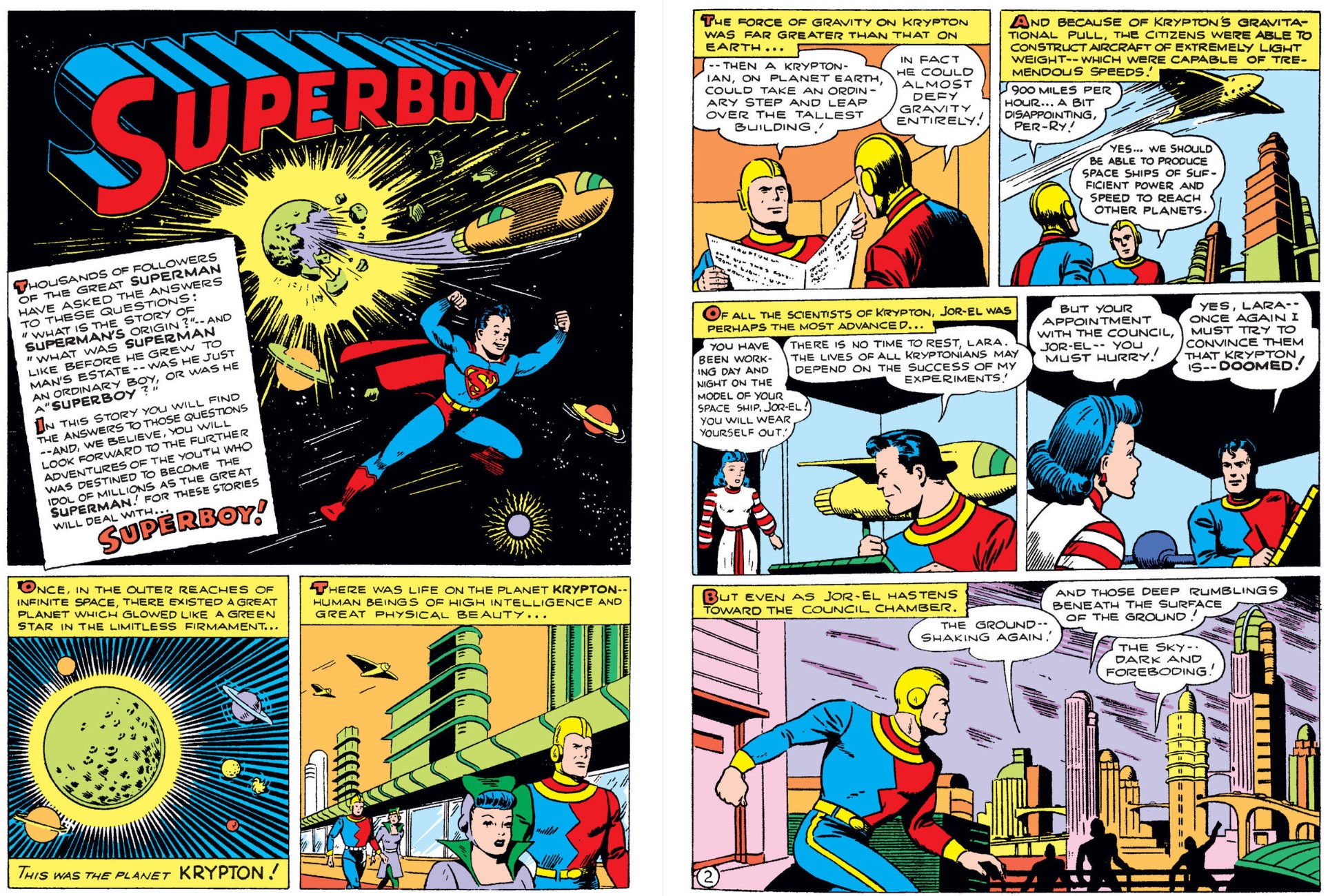
Most of early tales were untitled, but for everyone’s convenience have in later years been given descriptive appellations by editors. Thus, after describing the foundling’s escape from exploding Planet Krypton and explaining his astonishing powers in nine panels, with absolutely no preamble the wonderment begins in ‘Superman, Champion of the Oppressed’ and ‘War in San Monte’ from Action Comics #1 & 2 (June and July 1938 by Jerry Seigel & Joe Shuster) as a costumed crusader who masquerades by day as reporter Clark Kent began averting numerous tragedies.

As well as saving an innocent woman from the electric chair and delivering rough justice to a wife-beater, the tireless crusader works over racketeer Butch Matson – consequently saving suave and feisty colleague Lois Lane from abduction and worse, since she was attempting to vamp the thug at the time! The mysterious Man of Steel made a big impression on her by then outing a lobbyist for the armaments industry who was bribing Senators on behalf of greedy munitions interests fomenting war in Europe…

The next breathtaking instalment ‘Revolution in San Monte’ sees the mercurial mystery-man travelling to the war-zone and spectacularly shutting down hostilities already in progress…

Maintaining the combat theme, the cover of Action Comics #10 (March 1939) follows and the cover and first two pages of Superman #1 (Summer 1939): an expanded 2-page origin describing the alien foundling’s escape from Krypton, his childhood with unnamed Earthling foster parents and eventual journey to the big city. A back-cover ad for the Superman of American club and the October 1939 Action Comics #17 cover precedes Fall 1939’s Superman #2 cover and rousing yarn ‘Superman Champions Universal Peace!’, depicting the dynamic wonder man once more thwarting unscrupulous munitions manufacturers by crushing a gang who had stolen the world’s deadliest poison gas weapon…

After another concise history lesson Part 2: War Comes to Europe re-presents a stunning outreach article thanks to Look Magazine commissioning a legendary special feature by the original creators for their 27th February 1943 issue. ‘How Superman Would End the War’ is a glorious piece of wish-fulfilment which still delights, as the Man of Tomorrow arrests and hauls budding belligerents Hitler and Stalin to a League of Nations court in Geneva.

Accompanied by the March 1940 cover, Action Comics #22 & #23 then declares ‘Europe at War’: a tense, thinly disguised call to arms for the still neutral USA, and in a continued story – almost unheard of in those early days of funnybook publishing. Here Lois and Clark’s fact-finding mission (by Siegel, Shuster and inker Paul Cassidy) spectacularly escalates, and after astounding carnage reveals a scientist named Luthor to be behind the international conflict…

The anti-aircraft cover for Superman #7 (November/December 1940) and an ad for the Superman Radio Program precede Siegal, Wayne Boring & Don Komisarow’s ‘The Sinister Sagdorf’ (Superman #8 January/February 1941). This topical thriller spotlights enemy agents infiltrating American infrastructure whilst ‘The Dukalia Spy Ring’ (Superman #10 May/June 1941) references the 1936 Olympics and sees the Action Ace trounce thinly-veiled Nazis at an international sports festival and expose vicious foreign propaganda: themes regarded as fanciful suspense and paranoia as the US was still at this time still officially neutral in the “European War”.

Behind Fred Ray’s Armed services cover for Superman #12 (September/October 1941, ‘Peril on Pogo Island’ (Siegel, Shuster & Leo Nowak) finds Lois and Clark at the mercy of rampaging tribesmen, although spies from a certain foreign power are at the back of it all, after which a Fred Ray gallery of covers – Action Comics #43 (December 1941), Superman #13 (November/December 1941), Action Comics #44 (January 1942) and Superman #14 (January/February 1942) – concludes the chapter.

All of these were prepared long before December 7th changed the face and nature of the conflict…

After Japan’s attack on Pearl Harbor everything changed and Part 3: America Goes to War reflects the swift shift to a war footing, beginning with the notorious Siegel & Boring ‘Superman Daily Strips’ from January/February 1942, wherein an overeager Clark Kent tries too hard to enlist and only succeeds in getting himself declared 4F (unfit to fight)…

Timeless Fred Ray patriotic masterpieces from Superman #17 (July/August 1942) and #18 (September/October 1942) precede a stirring yarn from the latter. ‘The Conquest of a City’ (Siegel & John Sikela) sees Nazi agents using a civil defence drill to infiltrate the National Guard and conquer Metropolis in the Fuehrer’s name… until Superman spearheads a counter-attack…

The other great patriotic cover master was Hardin “Jack” Burnley and a quartet of his very best follow – Action Comics #54 (November 1942) & #55 (December 1942), World’s Finest Comics #8 (Winter 1942 with Batman & Robin thrown in for good measure) and Superman #20 (January/February 1943). That last also provides ‘Destroyers from the Depths’ wherein Hitler himself orders dastardly Herr Fange to unleash an armada of marine monstrosities on Allied shipping and coastal towns. Of course, they prove no match for the mighty magnificent Man of Steel…

After Burnley’s Action Comics #58 cover (March 1943), Siegel, Ed Dobrotka & Sikela detail the saga of ‘X-Alloy’ from Superman #21 (March/April 1943) as a secret army of Nazi infiltrators and fifth columnists steal US industrial secrets and would have conquered the nation from within if not for the ever-vigilant Man of Steel. Sikela’s cover Action Comics #59 (April 1943) concludes this section as Part 4: In for the Duration discusses the long, hard struggle to crush the Axis. By the time of these tales, the intense apprehension of the early war years had been replaced with eager anticipation as tyranny’s forces were being rolled back on every Front…

Following Burnley’s May 1943 Action Comics #60 cover, Superman #22 May/June 1943 provides Siegel & Sam Citron’s ‘Meet the Squiffles’: a light-hearted but barbed flight of whimsy wherein Adolf Hitler is approached by the king of a scurrilous band of pixies who offer to sabotage America’s mighty weapons. Neither nefarious rogue had factored Superman – or patriotic US gremlins – into their schemes though…

Action #62 (July 1943) and Superman #22 (July/August 1943) showcase two of Burnley’s very best covers, with the latter fronting an astounding masterpiece of graphic polemic. Don Cameron scripts and Citron illustrates ‘America’s Secret Weapon!’: a rousing paean to US military might wherein Clark and Lois report on cadet manoeuvres and the Man of Steel becomes an inspiration to demoralised troops in training. Covers by Burnley for Action #63 (August 1943) and Superman #24 (September/October 1943) – which latter provides ‘Suicide Voyage’ – follow. This exuberant yarn by Cameron, Dobrotka & George Roussos finds Clark (and pesky stowaway Lois) visiting the Arctic as part of a mission to rescue downed American aviators. Of course, no one is expecting a secret invasion by combined Nazi and Japanese forces, but Superman and a patriotic polar bear are grateful for the resultant bracing exercise…

‘The Man Superman Refused to Help’ comes from Superman #25 (November/December 1943) and follows Burnley and Stan Kaye’s November 1943 cover for Action Comics #66. In a far more considered and thoughtful tale from Siegel, Ira Yarbrough & Roussos expose the American Nazi Party – dubbed the “101% Americanism Society” – whilst offering a rousing tale of social injustice as an US war hero is wrongly implicated in the fascists’ scheme until the Man of Steel investigates…

Next up and from the same issue is a much reprinted and deservedly lauded patriotic classic.

‘I Sustain the Wings!’ by Mort Weisinger & Fred Ray was created in conjunction with the Army Air Forces Technical Training Command under Major General Walter R. Weaver, designed to boost enlistment in the maintenance services of the military. In this stirring tale Clark attends a Technical Training Command school as part of the Daily Planet’s attempt to address a shortfall in vital services recruitment (a genuine problem at this time in our real world) but the creators still find space for our hero to delightfully play cupid to a lovestruck kid who really wants to be a hot shot pilot and not a mere “grease monkey”…

Wayne Boring & Roussos’ cover for Superman #26 (January/February 1944) precedes Boring’s ‘Superman Sunday Strips #220-227’ for January -March 1944, with the Metropolis Marvel heading to multiple theatres of War to deliver letters from loved ones on the Home Front after which Roussos’ ‘Public Service Announcement’ (from Superman #28, May 1944) urges everyone to donate waste paper – like comic books!

July/August 1944’s Boring cover for Superman #29 finds Lois greeting the USA’s real Supermen – servicemen all – before Action #76 (September 1944 and Kaye over Boring) leads to anonymously-scripted ‘The Rubber Band’ from World’s Finest Comics #15 (Fall 1944). Illustrated by Sikela & Nowak and concentrating on domestic problems, it details the exploits of a gang of black market tyre thieves who are given a patriotic “heads-up” after Superman dumps their boss on the Pacific front line where US soldiers are fighting and dying for all Americans…

Drawn by Boring, ‘Superman Sunday Strips #280-282? (March 1945) then rubbish and belittle the last vestiges of the Third Reich as Hitler and his inner circle desperately try to convince the Action Ace to defect to the side comprised of Supermen like them…

In Superman #34 (May/June 1945) Cameron, Citron & Roussos attempt to repeat the magic formula of ‘I Sustain the Wings’ with ‘The United States Navy!’ as Clark is despatched to follow three college football heroes as they progress in different maritime specialisations through the hellish war in the Pacific.

The enthralling sally through Superman’s martial exploits conclude with one final Thomas-authored article as Part 5: Atoms for Peace? reveals how the fruits of the Manhattan Project changed everything…

As fresh and thrilling now as they ever were, these endlessly re-readable epics are perfectly situated in these gloriously luxurious editions; worthy, long-lasting vehicles for the greatest and most influential comics stories the art form has ever produced. Such Golden Age tales are priceless enjoyment at absurdly affordable prices and in a durable, comfortingly approachable format. What dedicated comics fan could possibly resist them?
™ & © 2015 DC Comics. All Rights Reserved.

Superman: The Golden Age Dailies 1944 to 1947 (volume 2)


By Alvin Schwartz, Wayne Boring & the Superman Studio (IDW/Library of American Comics)
ISBN: 978-1-68405-197-7 (HB)

This book includes Discriminatory Content produced in less enlightened times.

The American comic book industry – if it still existed at all – would be utterly unrecognisable without Superman. Jerry Siegel & Joe Shuster’s unprecedented invention was first fervidly adopted by a desperate and joy-starved generation, and gave birth to a genre if not an actual art form. Spawning an army of imitators and variations within three years of his 1938 debut, the intoxicating blend of breakneck, breathtaking action and wish-fulfilment epitomising the early Man of Steel grew to encompass cops-&-robbers crimebusting, socially reforming dramas, sci fi fantasy, whimsical comedy and, once the war in Europe and the East sucked in America, patriotic relevance for a host of gods, heroes and monsters, all dedicated to profit through exuberant, eye-popping excess and vigorous, dashing derring-do.

From the outset, in comic book terms Superman was master of the world. Moreover, whilst transforming the shape of the fledgling funnybook biz, the Man of Tomorrow irresistibly expanded into all areas of the entertainment media. Although we all think of the Cleveland boys’ iconic invention as epitome and acme of comics creation, the truth is that very soon after his springtime debut in Action Comics #1 the Man of Steel was a fictional multimedia monolith in the same league as Popeye, Tarzan, Sherlock Holmes and Mickey Mouse. We parochial and possessive comics fans too often regard our purest and most powerful icons in purely graphic narrative terms, but the likes of Batman, Spider-Man, Avengers and their hyperkinetic kind long ago outgrew four-colour origins to become fully mythologized modern media creatures familiar in mass markets, across all platforms and age ranges…

In the last century and even more so in this one, far more people have seen and heard the Man of Steel than have ever read his comic books. These globally syndicated newspaper strips alone were enjoyed by countless millions, and by the time his 20th anniversary rolled around, at the very start of what we call the Silver Age of Comics, he had been a thrice-weekly radio serial star, headlined 17 astounding animated cartoons, become a novel attraction (written by George Lowther) and helmed two feature films. He had then seamlessly segued into the next Big Thing – television. His first smash 8-season live-action show was but the first of many, making Superman a perennial sure-fire success for toys, games, food, puzzle and apparel manufacturers all over the planet.

Although pretty much a spent force these days, for the majority of the previous century the newspaper comic strip was the Holy Grail all American cartoonists and graphic narrative storytellers hungered for. Syndicated across the country – and often the world – a strip feature could be seen by millions if not billions of readers and was generally accepted as a more mature and sophisticated form of literature than comic books. It also – at the start! – paid better, and rightly so. Some of the most enduring, entertaining characters and concepts of all time were devised to lure readers from one particular paper to another and many of the best became cornerstones of a global culture. Mutt and Jeff, Flash Gordon, Dick Tracy, Buck Rogers, Charlie Brown and so many more escaped humble, tawdry newsprint origins to become meta-real: existing in the minds of earthlings from Albuquerque to Zanzibar. Most still do…

The daily Superman newspaper strip launched on 16th January 1939, swiftly augmented by a full-colour Sunday page from November 5th of that year. Originally crafted by luminaries like Siegel & Shuster and their studio (Paul Cassidy, Leo Nowak, Dennis Neville, John Sikela, Ed Dobrotka, Paul J. Lauretta & Wayne Boring), the mammoth task soon required additional talents like strip veteran Jack Burnley and writers including Whitney Ellsworth, Jack Schiff & Alvin Schwartz. The McClure Syndicate feature ran continuously until May 1966, appearing, at its peak, in over 300 daily and 90 Sunday newspapers: a combined average readership of more than 20 million. Eventually, Win Mortimer & Curt Swan joined the unflagging Boring & Stan Kaye, whilst Bill Finger and Siegel also provided stories, telling serial tales largely divorced from comic book continuity throughout years when superheroes were scarcely seen.

This second volume of the Library of American Comics collection continues the vast reprint program begun in the Sterling/Kitchen Sink softcover editions which ceased production in 1999. All of that material – and these books too – are long overdue for re-release and digital editions. Here, however, the never-ending battle resumes with Siegel & Shuster and their helpers ceding control to new creators, but still addressing the World War the USA was close to ending. These sorties in “the never-ending battle” occur over episodes #31-46, pages #1815 through 2594, and publication dates October 30th 1944 to April 26 1947.

We open with an Introduction by Sidney Friefertig, discussing the changes from conflict to reconstruction and sharing why and how the strip aroused the ire of military intelligence and the FBI after casually stepping on the toes of the ultra-top-secret Manhattan Project. All they had wanted was to explore how atomic energy might affect the Action Ace. Also in review is the Man of Tomorrow’s post-war evolution via new scribe (and later poet, novelist and essayist) Alvin Schwartz (1916-2011) in the ever-evolving social stewpot of Metropolis and an increasingly smaller world.

With the majority of material credited to Schwartz (Batman, Wonder Woman, Aquaman, Tomahawk, Newsboy Legion, Slam Bradley, House of Mystery, A Date With Judy, Buzzy, Bizarro) and increasingly the sole province of artist Wayne Boring, the compilation kicks off with Episode 31 (strips #1815-1844 as seen between October 30th and December 2nd 1944) and the dilemma of ‘Superman’s Secret Revealed!’ as “World’s Richest Girl” Aline Wail announces her betrothal to the Man of Steel. Nobody is more despondent than Lois Lane or more surprised than Clark Kent, but by the time this genuine teletype typo is spotted, the story has gone global and Aline’s actual fiancé Aubrey Jones has been outed by frantic reporters – including Lois – as the superhero; thanks to a concatenation of accidents and misconceptions…

Sadly, inveterate gambler Aubrey needs to keep the deception going if he’s to pay off his bookies, and plans to cash in by suing Lois and the Daily Planet, until the real Superman steps in to divert and dispel the mounting media madness…

‘Lois Lane, Millionaire’ (strips #1845-1904, December 4th 1944 – February 10th 1945) then details how a murderous lawyer Homer G. Clutch and his virtual slave Mortimer attempt to procure the feisty journalist’s unsuspected inheritance of $3,000,000 from recently departed Grand-uncle Phineas Lane. Of course, to get the cash, Lois must marry within 10 days of receiving the official letter of notification, and account executor Clutch has many ways of intercepting the pay-out. Moreover, when Clark breaks the story, his scoop makes Lois the target of every other chancer and ne’er-do-well in town. They also all make it onto Clutch’s to-do list before Superman – and ironical fate – end Lane’s dreams of idle indolence…

Mundane crime gives way to wild fantasy next as ‘The Obnoxious Ogies’ (#1905-1946, February 12th – March 31st 1945) are annoying heard but not seen. When the invisible fairy pranksters attach themselves to Superman they make his life – and Clark’s – a cacophony of chaos until the Metropolis Marvel concocts something even these puckish pranksters cannot cope with…

Spanning April 2nd to June 23rd, strips #1947-2018 reveal ‘The Science of Superman’ as intractable intransigent physics Professor Ebenezer Duste refuses student Gil Gilmore his degree because the callow youth used clearly fictious examples of a Man of Tomorrow’s power set in his thesis. With his future career and current romance endangered the kid enlists Superman himself but even he cannot convince the sage of his authenticity, until at the height of a spiralling campaign of bizarre stunts, Duste finally finds his opinions shaken by attentive widow Prunella Busby who has her own way of winning an argument…

When a Daily Planet cooking contest prize goes to elderly spinsters Annabelle and Amelia, they parlay the reception into a longed-for meeting with Superman, inadvertently drawing the cataclysmic attention of Extra-Dimensional prankster Mr. Mxyztplk in ‘A Recipe for Disaster’ (June 25th – August 25th, strips #2019-2072)

Eager to impress, the sprite embarks on a career as a chef to win their attention/annoy the pants off his arch enemy and scare all Metropolis witless. It takes all Superman’s ingenuity and large helping of cunning from the old biddies before the Myxy can be convinced to go home again…

Lois finally finds herself ‘Engaged to Superman’ (#2073-2138, August 27th – November 10th) but when she insists that Clark be Best Man it triggers a wave of popular resentment among the city’s women, who protest in the streets and literally strike a blow for romance. As if that weren’t bad enough, mob chief Gaunt suspends all operations until after the wedding, planning to curb Superman’s anti-crime activities by threatening his bride. First, though, he has to marry Lois and the unhappy couple keep postponing the big day…

Domestic screwball comedy gives way to more traditional dramatic fare when Superman must save the Daily Planet – and Clark’s reputation – after a disgruntled employee publishes implausible predictions that Superman must make come true in ‘Phoney Prophecies’ (#2139-2198, November 12th 1945 to January 19th 1946) after which ‘Lois Lane, Editor’ (January 21st – April 6th, strips #2199-2264) confirms her courage, capability and ingenuity when high powered crooks seek to end her crusading crime reporting by seeking to buy her off with a major promotion. However, staunch and valiant, Miss Lane subverts the plot and makes The Daily Sphere a certified success before exposing the villains and negotiating a most rewarding return to the Planet…

A fantastic crimewave heralds the return of super-science bandit Lex Luthor (AKA Dr. Phineas Hackensack) between April 8th and June 1st (#2265-2312) as the villain unleashes ‘The Red Plague’ as a means of getting Superman into his lab and subjecting to a battery of horrific tests all designed to end his life. When all else fails he turns the Man of Steel into a living atomic bomb but once again tastes bitter defeat, after which ‘The Golden Scam’ (June 3rd – July 20th, #2313-2354) sees super conman J. Phineas Foxtrap gulled by his own greed and lose another fortune after selling fake gold bars to suckers with Superman’s approval. Of course, thanks to maverick atomic boffin Dr. Al Kemist, this time the ingots are completely genuine and vile trickster gets a taste of his own medicine…

In ‘Labors of Love’ (#2355-2378; July 22nd to August 17th) Superman again resolves to propose to Lois, but his heartfelt efforts are continually sabotaged by Mr. Mxyztplk, who spitefully decides that she’s actually the only girl in creation fit to be his mate. Cue crazed chaos, calamity and just a little carnage….

The trend towards whimsy and intellectual challenges continued when Lois is ordered to edit the Planet’s “Advice to the Lovelorn” column. She consequently asks our hero to cure a lazy dockside bum of being old, useless and unemployed in ‘Superman Finds a Job’ (#2379-2432; August 19th – October 2nd. He triumphs by inspiring aging wastrel Sam Brodie to discover his true calling and at last take the wrinkly hand of not-so-patient lady love Miss Tillie Crockett, but it’s a close call and takes all his super-wits and a lot of dumb luck…

Pure wickedness informs ‘The Prankster’s Peculiar Premonitions’ (#2433-2462; October 21st – November 23rd) as the lethal Joker-wannabe feigns clairvoyance and prophecy to humiliate Superman and plunder the city, before a war of aerial signwriters breaks out in ‘Sky Pirates’ (November 25th 1946 to January 4th 1947 and instalments #2463-2498) with a rogue pilot instigating a cunning crime wave of the air.

‘Portrait of a Crime’ (January 6th – February 8th; #2499-2528) introduces devious painter Pierre Laguerre who seeks to remove the Man of Steel from action by the strangest of methods, prior to the book concluding on a potent note of social relevancy.

‘Juvenile Delinquency’ (#2529-2594; February 10th to April 26th 1947) finds privileged brat Stanton Gladstone team up with dead-end kid Nicky Darrow to run wild, have fun and teach their respective families a lesson in parenting. However, rowdy rebellion escalates to felony and possibly murder when veteran criminals lead by top thug Big Jim step in to exploit the situation. Now Superman must not only punish the irredeemably wicked but save what remains of the boys’ tarnished innocence…

These yarns offer timeless wonders and mesmerising excitement for lovers of action and fantasy. The raw-boned early Superman is beyond compare and if you can handle the warts of the era or just crave simpler stories from less angst-wracked times, the adventures gathered here are ideal comics reading, and this a book you simply must see.
© 2018 DC Comics. All rights reserved. Superman and all related names, characters and elements are ™ DC Comics.

DC Finest: Aquaman – The King of Atlantis


By Robert Bernstein & Ramona Fradon, with Jack Miller, Joe Millard, Otto Binder, George Kashdan, Bob Haney, Nick Cardy, Kurt Schaffenberger, Curt Swan, Jim Mooney, Sheldon Moldoff, Stan Kaye, Charles Paris & various (DC Comics)
ISBN: 978-1-77952-989-3 (TPB)

This book includes Discriminatory Content produced in less enlightened times.

It’s a big year for comics anniversaries, and we can’t let this guy go unmentioned. This epic compilation is one of the long-awaited DC Finest editions: full colour continuations of their chronolgically curated monochrome Showcase Presents line, delivering “affordably priced, large-size (comic book dimensions and generally around 600 pages) paperback collections”. Whilst primarily and understandably concentrating on superheroes, later releases will also cover genre selections like horror and war books, and themed compendia. Sadly, they’re not yet available digitally, as were the last decade’s Bronze, Silver & Golden Age collections, but we live in hope…

Aquaman is that oddest of comic book phenomena: a survivor. One of the few superheroes to carry on in unbroken exploits since the Golden Age, the Sea King has endured endless cancellations, reboots and makeovers in the name of trendy relevance and fickle fashion but has somehow always recovered: coming back fresher, stronger and more intriguing. He’s also one of the earliest comic champions to make the jump to cartoon TV stardom…

Created by Mort Weisinger & Paul Norris, Aquaman began his reign in in the wake of and in response to Timely Comics’ barnstorming antihero Namor the Sub-Mariner. The watery latecomer debuted in More Fun Comics #73 (November 1941) beside fellow born survivor Green Arrow. Strictly second-string for most of his career, the Marine marvel nevertheless swam on far beyond many stronger features, rendered with style by Norris, Louis Cazeneuve, John Daly, Charles Paris, and ultimately young Ramona Fradon, who took over drawing in 1954.

The Fifties Superhero Interregnum saw Fradon (countless genre anthology tales, The Brave & The Bold, Metamorpho, Fantastic Four, Super Friends, Plastic Man, Freedom Fighters, Brenda Starr, SpongeBob Comics) assume full art chores, by which time Aquaman was settled like a barnacle in a regular Adventure Comics back-up slot, offering slick, smart and extremely genteel aquatic action. She was to draw every single adventure until 1960, making the feature one of the best looking if only mildly thrilling hero strips of the era.

By then, Aquaman had settled into a nice regular back-up slot in Adventure Comics that Fradon drew without missing a beat until 1961: indelibly stamping the submersible stalwart with her unique blend of charm and sleek competence. Month after month, page by page the hero inexhaustibly solved maritime mysteries, crushed nautical naughtiness, wandered and time-travelled, rescuing fish and people from subsea disaster, solving whatever crimes he came across and generally promoting American paternal niceness.

In 1956, Showcase #4 rekindled the reading public’s imagination and slowly but surely spawned a fresh zest for costumed crimebusters. As well as re-imagining its lost Golden Age stalwarts, National/DC undertook to update and remake its hoary survivors. Records are incomplete, sadly, so we don’t always know who wrote what, but this compilation definitely gathers a wealth of Aquaman strips from Adventure Comics #229-284 (October 1956-May 1961), plus short yarns from Superman’s Girlfriend Lois Lane #12 (October 1959), Action Comics #272 (January 1961), Detective Comics #293-300 (July 1961- February 1962) and World’s Finest Comics #125 (May 1962), plus the longer stories from Showcase #30-33 (January/February to July/August 1961), and at long last those from Aquaman #1-3 (cover-dated January/February -May/June 1962)…

Without preamble we dive right into a quartet of sagas by an author unknown, with Adventure Comics #229 revealing how the Sea King spends time in crime-infested Canadian waters and auditions a number of sea creatures to seeking to be ‘Aquaman’s Undersea Partner’, after which smugglers use a stolen shrinking ray to briefly turn the hero into ‘The Tom Thumb Aquaman’ prior to being his being perplexed and endangered by a computor’s prediction of ‘Three Fates for Aquaman’.

Although a citizen of the world, the Marine Marvel was American by default, decent by choice and patriotic by inclination, always helping law men and peacekeepers. Thus AC #232 (January 1957) wryly describes how the Sea King is asked to boost recruitment by joining a US ship’s crew incognito in ‘Aquaman Joins the Navy!’
Aquaman endured public scorn and mockery after comedy impersonator Wackyman used high tech mecahnical sea creatures to lampoon the hero. However, the reasons for the skits of ‘The Sea Clown’ were far from innocent, after which Jack Miller tapped into UFO fever, revealing how aliens from Pluto demand the Sea King fill ‘The Super-Aquarium’ with his “finny friends” before an unknown writer made him ‘The Show-off of the Sea’, ruining an actor’s TV big break… but for the very best of reasons.

In Adventure #236 Otto Binder detailed a battle against a crooked shipping magnate who unleashed ‘The Iceberg of Doom’ before four more uncredited tales swiftly ensued. Chemical pollution was the reason behind Aquaman’s brutal cruelty in ‘The Secret of the Sea King’, a plot to mine shipping lanes was crushed in ‘The Floating Doom’, and ‘The Voyage of the Good Ship Aquaman’ finds the big hearted hero helping an elderly rescue ship skipper before #240 reveals how he helps a children’s author complete ‘The Alphabet Book of the Sea!’ whilst Miller wrote ‘The Mutiny Against Aquaman’ wherein a crooked lawyer poisons his sea pals to facilitate cheating a young man out of an inheritance…

Editorial wisdom at the time decreed comics were ephemeral throway fodder that not even the readership cared about, so many themes and plots resurfaced over the course of months. In ‘The Amazing Feats of Aqua-Melvin’ another, different clown is tranfused with the hero’s blood and develops similar powers, but not the acumen to realise he’s being conned by crooks, whilst in 243 ‘Aquaman’s Amazing Bets!’ the Sea King teaches a gambler/conman a lesson before Robert Bernstein breaks hearts by unleashing ‘The Copy Cat Creature!’ – a fabulous loving beastie from primeval times that adores Aquaman but is simply too big and boisterous to allowed to live in the modern world

In #245, George Kashdan introduces ‘The Sorceror of the Sea’ who outpowers the watery wonder, just as he’s trying to put modern pirates out of business, before we visit ‘The Town That Went Underwater’ where an apparently obsessed Aquaman is determined to make every inhaitant visit his new underwater theme park. Of course, there is deadly reason behind his antics…

Miller detailed ‘Aquaman’s Super Sea-Squad!’ next as his top-trained fish pals help stave off nuclear disaster and a month later wrote how he became ‘The Traitor of the Seven Seas!’: allowing aliens to abduct his beloved sea creatures, after which Bernstein described how aseries of head blows turn the hero evil and greedy. Luckily, faithful octopus Topo is amatch for the piratical Barnacle Gang exploiting the sea change in ‘Wanted: Aqua-Crook!’

For Adventure Comics #250, Joe Millard & Fradon delivered ‘The Guinea Pig of the Sea’ as the Sea King is abducted by a well-intentioned but obsessive researcher fed up with waiting for a moment in the hero’s hectic schedule to open up, prior to being catapulted into the future to find Earth ‘A World Without Water!’ – and remember at this juncture Aquaman needed water every 60 munutes or he would die…

Millard gave way to Miller for a salty tale of Aquaman’s plight as ‘The Robinson Crusoe of the Sea’ (Adventure Comics #252, September 1958), when a chemical spill renders the Sea King allergic to seawater, offering a charming sequence of crisis management stunts by Topo…

Now an affable, dedicated seagoing nomad with a tendency to find trouble, Aquaman braves ‘The Ocean of 1,000,000 B.C.’ (by Bernstein in AC #253, October 1958) after swimming through a time warp, helping a seashore-dwelling caveman against a marauding dragon before finding his way back to the future, in time to end ‘The Menace of the Electric Man’ – a rare dark drama by Miller involving an escaped convict who gains deadly voltaic powers…

Three from Berstein begin with whimsical fantasy ‘Aquaman’s Double Trouble!’ as too many crises at once lead to sea God Neptune stepping in for the hero whilst in ‘The Ordeal of Aquaman!’ crooks maroon the hero in an “arid desert” only to discover how water aware the hero is, prior to battling a crook surgically altered and modified to become ‘The Imitation Aquaman!’

Miller wrote a brace of action tales beginning with #258’s ‘The Incredible Fish of Doctor Danton!’ as Aquaman and a young scientist battle sea beasts mutated by atomic radiation, before the hero is cast out of his body by a crook and must take psychic residence in a fish before ending up ‘The Octopus Man!’ and regaining his own form…

As the Silver Age took true hold, the Sea King’s initial revamp began in Adventure Comics #260 (May 1959) with Bernstein & Fradon’s ‘How Aquaman Got His Powers!’ with the Sea King interfering in US naval manoeuvres to keep Atlantis safe from discovery and harm. From here on, the hero’s nebulous origin – offspring of a union between a human (American) lighthouse keeper and refugee from the embargoed undersea city – was expanded upon and filled out. Eventually, all the trappings of the modern superhero manifested: themed hideout, steadfast sidekick and even supervillains! Moreover, greater attention was paid to continuity and the concept of one shared universe…

In #261, Bernstein pits the hero against a deranged lion tamer in ‘Aquaman Duels the Animal Master!’, and has him launch ‘The Undersea Hospital!’ for ailing sea creatures a month later, before Miller has the hero bring democracy and fair elections to an island nation in AC #263’s ‘The Great Ocean Election!’ prior to Bernstein taking us to New Venice (a US city with canals not roads) where ‘Aquaman and His Sea-Police!’ teach rude and uncaring malefactors how to use boats properly and not litter their submerged marine metropolis…

For Adventure #265 (October 1959) he & Fradon exposed ‘The Secret of the Super Safe!’ detailing a plan to keep the subsea stalwart in soggy isolation whilst dealing with a counterfeiter and blackmailers, before an early crossover heralded Aquaman’s entrance into the wider DC universe.

DC supported the popular 1950s Adventures of Superman TV show with a number of successful spin-off titles. Superman’s Girlfriend Lois Lane #12 (October 1959) featured ‘The Mermaid of Metropolis’ wherein the plucky “news hen” suffers crippling injuries in a scuba-diving accident. On hand to save her is Aquaman and a surgeon who turns her (without her permission or even knowledge!) into a mermaid so she can live a worthwhile life without legs beneath the waves…

I know, I know: but just accepting the adage “Simpler Times” often helps me at times like this. In all seriousness, this silly story by Bernstein is a key moment in the development of DC’s shared universe continuity. The fact that it’s drawn by Kurt Schaffenberger – one of the most accomplished artists ever to work in American comics – makes it even more adorable, for all its silliness; and you can’t make me change my mind…
As National/DC began cautiously remodelling its superhero survivors, amongst the first to feel the benefits were Green Arrow and the Subsea Sentinel. The program included a new origin and expanded cast for each and here (AC #266, November 1959) Bernstein & Fradon tested the waters as ‘Aquaman Meets Aquagirl!’ This offered more information on fabled modern Atlantis whilst testing the waters (Sorry! Not sorry) for a possible sidekick. Remember, in those days the Sea King spent most of his time explaining things to an octopus…

In Adventure Comics #267 the editors tried a novel experiment. At this time the title starred Superboy plus two back-up features – generally Aquaman and Green Arrow. That issue’s seagoing saga ‘The Manhunt on Land!’ saw villain Shark Norton trade territories with GA’s foe The Wizard. A rare crossover with both parts written by Bernstein; the heroes worked the same case with the Sea King facing Norton under open skies whilst the Emerald Archer pursued his foe beneath the waves in his own exploit. Illustrated by the great Lee Elias, ‘The Underwater Archers!’ was a fitting climax to the test, but sadly the arrow portion of the show didn’t make it into this tome, being apparently six pages too many…

In the next issue’s ‘The Adventures of Aquaboy!’ we saw the early years of the Sea King, and following that, permanent sidekick Aqualad was introduced in #269 (February 1960) as Bernstein & Fradon completed the refit by introducing permanent junior partner ‘The Kid from Atlantis!’: a young, purple-eyed outcast from the forbidden city possessing the same powers as Aquaman but terrified of fish… at least until the Sea King applies a little firm but kindly psychology. By the end of the tale the little guy has happily adapted and would help patrol the endless oceans – and add a child’s awestruck perspective to the mix – for nearly a decade thereafter.

With Bernstein & Fradon firmly in control, in quick succession came birthday surprise ‘The Menace of Aqualad!’ (which premiered the Aqua-Cave), battle against mad scientist Captain Noah who was happy to trigger ‘The Second Deluge!’ in his quest for riches, and first proper supervillain ‘The Human Flying Fish!’: a convict rebuilt by a different mad scientist to be Aquaman’s evil counterpart and superior. After all that the heroes took a breather from evil to swim ‘Around the World in 80 Hours!’ only to face constant peril as all Earth’s seagoing crooks used their planned course as a killing ground…

Miller introduced spoiled rich brat Dale Conroy who spends millions to become the hero’s ‘Aqua-Queen!’ in #274, prior to intriguing mystery ‘The Interplanetary Mission!’ in Adventure Comics #275. This was published mere months after the Justice League of America debuted in The Brave and the Bold #28, wherein aliens ask for Aquaman’s help on a rescue mission in space. They are, in fact, human crooks seeking an irresistible weapon and hoping to dupe the bush league hero: securing Kryptonite by to use against Superman. The Man of Steel did not appear, but nets of shared continuity were being gradually interwoven. Heroes would no longer work in assured solitude…

It was back to business as usual for ‘The Aqua-thief of the Seven Seas!’ as Aquaman must clear his name after being framed for stealing a chest full of diamonds, whilst a topical global sporting event prompts the Sea King to organise ‘The Underwater Olympics’ – even though he has ulterior motives that involve more Kryptonite and secret plans. In #278, poor ‘Aqualad Goes to School!’, before proving he has no real need of education, after which cautionary tale ‘Silly Sailors of the Sea!’ see the seagoing heroes give wayward boat joyriders a lesson in responsibility. All of these light pieces were setting the scene for a really Big Event…

Cover-dated January/February 1961, Showcase #30 saw Jack Miller & Fradon vastly expand upon the origin of Aquaman in full-length epic ‘The Creatures from Atlantis!’ Here extra-dimensional creatures conquer the sunken civilisation and Aquaman and Aqualad infiltrate the forbidden city to save the so-superior beings who had always shunned them. From this point on, fanciful whimsy would be downplayed in favour of character-driven drama.

The epic reimagination is followed by another prototype team-up as seen in Action Comics #272 (January 1961) ‘Superman’s Rival Mental Man!’: a clever criminal-sting yarn by Jerry Siegel, Curt Swan & Stan Kaye, centring around Lois’ unsuspected talents as a comic strip artist and career sidestep. Typically, her success as a cartoon creator somehow causes her invention “Mental Man” to come to life and woo her… or does he?

Back in Adventure Comics #280 ‘The Lost Ocean!’ finds the sea sentinels fighting a giant Jurassic centipede to save their favourite TV show before offering more of the same in Showcase #31 (March/April 1961). Second full-length try-out ‘The Sea Beasts from One Million B.C.’ is a wild romp of fabulous creatures, dotty scientists and evolution rays presaging a new path for the Sea King, as Miller scripted the debut Aquaman yarn for comics veteran Nick Cardy. He would visually make Aquaman his own for the next half-decade.

Adventure Comics #282 then delivered tense thriller ‘One Hour to Doom!’ Inked by Charles Paris, this was Fradon’s last Aqua art job for nearly a year and a half, revealing how the heroes survive being trapped on land and away from life-sustaining water, before Showcase #32 (May/June 1961) offered another spectacular epic as Miller & Cardy pull out all the stops for ‘The Creature King of the Sea!’: an action-packed deadly duel against a monstrous villain with murder in mind.

It segued into ‘The Charge of Aquaman’s Sea Soldiers!’, drawn by Jim Mooney in Adventure #284, with the salty stars and their finny legions battling Professor Snark’s scheme to convert Earth’s ocean to fresh water. With this tale the series upped sticks for a new home, replaced by Tales of the Bizarro World. Aquaman and Aqualad were headed to the hind end of Detective Comics, beginning with #293 (July 1961) where they needed only six pages to solve Miller & Cardy’s mystery of ‘The Sensational Sea Scoops’ uncovered by a reporter tracking a submarine pirates. All this time the artist – who had initially altered his drawing style to mirror Fradon – had been gradually reverting to his natural humanistic mode. By the time of fourth Showcase outing ‘Prisoners of the Aqua-Planet’ (#33), the Sea King was a rugged, burly He-Man, and his world – no matter how fantastic – now had an added edge of realism to it, even in this wild romp as the heroes are pressganged into an interplanetary war and shanghaied to a distant water-world…

Detective #294’s deceptively displayed ‘The Fantastic Fish that Defeated Aquaman’ whilst DC #295 saw our heroes defy ‘The Curse of the Sea Hermit’ (Kashdan script), before a new month exposed ‘The Mystery of Demon Island!’ by Miller and the unflagging Cardy. To accompany his more realistic art, and perhaps in honour of their new home, stories became – briefly – less fantasy oriented. ‘Aqualad, Stand-In for a Star’ – (#297 by Miller & Batman regular Sheldon Moldoff) was a standard hero-in-Hollywood crime caper, before Cardy returned to draw #298’s‘The Secret Sentry of the Sea’ – encompassing security duty at a secret international treaty signing…

The next month saw another milestone. After two decades of continuous adventuring the Sea King finally got a comic book of his own. Aquaman #1 (January/February 1962) was a 25-page fantasy thriller introducing one of the most controversial supporting characters in comics lore. Pixie-like Water-Sprite Quisp was part of a strange trend for cute imps and elves who attached themselves to far too many heroes of the time, but his contributions in ‘The Invasion of the Fire-Trolls’ and succeeding issues were numerous and obviously carefully calculated and considered…

The wanderer’s residency in Detective Comics was coming to an end. In #299 the sea scions taught an old blowhard a lesson in tall-tale telling whilst #300’s relic theft-&-recovery case ‘The Mystery of the Undersea Safari!’ was the last Aqua-caper before he moved again, this time to World’s Finest Comics. However, prior to that, his own second issue appeared. ‘Captain Sykes’ Deadly Missions’ is a lovely-looking thriller with fabulous monsters and a flamboyant pirate blackmailing the Sea King into retrieving deadly mystical artefacts.

The World’s Finest run started with #125’s ‘Aquaman’s Super-Sidekick’ by Miller & Cardy as the junior partner briefly becomes an unstoppable uncontrollable pintsized powerhouse before Aquaman #3 closes this compilation in grand style and full-length thrills as ‘The Aquaman from Atlantis’ offers more exposure for the lost city in a tale of traitors, treasures and time-travelling bandit who accidentally takes Aquaman back to the era of swords, sandals and strange creatures…

The 72 adventures gathered here encompass and embrace a period of renewal, taking Aquaman from peripatetic back-up bit-player to his own comic book and the brink of TV stardom. The stories were intentionally undemanding fare, ranging from simply charming to simply bewildering examples of all-ages action to rank alongside the best the company offered at that time. That’s what made them ideal templates for tales of later TV-spawned iterations like Super Friends, Batman: The Brave and the Bold and especially landmark sixties icon The Superman/Aquaman Hour. Comics writers from those years include the abovementioned Bernstein, Binder, Miller, Millard, Kashdan, as well (possibly) as Bob Haney, Edmund Hamiliton, Jerry Coleman and other DC regulars. However at the start the art was always by Fradon, whose captivatingly clean economical line always made the pictures something special…

DC has a long history of gentle, innocuous yarn-spinning with quality artwork. Fradon’s Aquaman is one of the most neglected runs of such universally-accessible material, and it’s a sheer pleasure to discover just how readable they still are. When the opportunity arises to compare her astounding work to the best of a stellar talent like as Nick Cardy, this book becomes a true fan’s must-have item and even more so when the stories are still suitable for kids of all ages. Even though it’s not complete and not available digitally yet, this is a landmark moment for all lovers of pure cartooning brilliance and all-ages adventure storytelling. Why not treat the entire family to a seaside spectacle of timelessly inviting adventure?
© 1956-1962, 2024 DC Comics. All Rights Reserved.

DC Finest: Superman Family – The Giant Turtle Man


By Jerry Siegel, Otto Binder, Robert Bernstein, Jerry Coleman, Leo Dorfman, Curt Swan, Jim Mooney, Kurt Schaffenberger, George Papp, Al Plastino, John Forte, Sheldon Moldoff, Stan Kaye & various (DC Comics)
ISBN: 978-1-79950-110-7 (TPB)

This book includes Discriminatory Content produced in less enlightened times.

On April 18th 1938 when the Man of Tomorrow debuted in Action Comics #1, he was instantly the centre of attention. However, even then the need for a solid supporting cast was apparent and cleverly catered for. Glamorous daredevil reporter Lois Lane premiered right beside Clark Kent and was his constant companion and foil from the outset. Although unnamed, a plucky red-headed, freckled kid started working alongside Lois & Clark from issue #6 (November 1938) onwards.

His first name was disclosed in Superman #13 (November-December 1941), having already been revealed as Jimmy Olsen to radio fans as he was a major player in The Adventures of Superman show from its debut on April 15th 1940. As someone the same age as the target audience: on hand for the hero to explain stuff to (all for the listener’s benefit), Jimmy was the closest thing to a sidekick the Action Ace ever needed. He’s remained a sporadic yet amazingly popular one ever since.

When the similarly titled TV show launched in the autumn of 1952, it was again an overnight sensation and National Periodical Publications began cautiously expanding their revitalised franchise with new characters and titles. First to get a promotion to solo-star status was the Daily Planet’s impetuously capable if occasionally conveniently naive “cub reporter”. His addictively charming, light-hearted escapades began in Superman’s Pal Jimmy Olsen #1 (September/October 1954): only one of many spin-off stars in the Caped Kryptonian’s ever-expanding entourage.

Nevertheless, despite characters burgeoning on the pages of Superman’s titles it took three years for cautious Editors to tentatively extend the franchise again. In 1957, just as the Silver Age of Comics was getting underway, try-out title Showcase – which had already launched The Flash in #4 and Challengers of the Unknown in #6 – followed up with two issues entitled Superman’s Girl Friend Lois Lane (#9 & 10). Also conveniently naïve when a story demanded it, the “plucky News-hen” was awarded a series of her own. Technically it was her second, since in the 1940s she had commanded a regular solo-spot in Superman.

In previous reviews I’ve banged on about the patronising, parochial – and to at least some of us – potentially offensive portrayals of kids and most especially women during this period, and although some fairer, more affirmative instances were starting to appear, those warnings still bear repeating. Read with eyes open and social conscience primed please…

At that time, hers was one of precious few titles with a female lead, and, in the context of today, one that causes many 21st century fans understandable qualms of conscience. Within the confines of her series the valiant, capable and determined working woman careered crazily from man-hungry, unscrupulous paranoid bitch through ditzy simpleton to indomitable and brilliant troubleshooter – often all in the same issue. The comic book was clearly intended to appeal to the family demographic that made I Love Lucy a national phenomenon, and many stories were played for laughs in the same patriarchal, parochial manner: a “gosh, aren’t ladies funny?” tone that appals me today – but not as much as the fact that I still love them to bits.

That they’re mostly sublimely illustrated by the wonderfully whimsical Kurt Schaffenberger softens the repeated blows, but really, at my age I should know better…

For the close Superman Family and extended cast the tone of the times dictated a highly strictured code of conduct and parameters: Daily Planet Editor Perry White was a stern, shouty, elder statesman with a heart of gold, Cub Reporter Jimmy was a brave, impulsive, unseasoned fool – with a heart of gold – and Lois was brash, impetuous, unscrupulous and nosy, obsessed with marrying Superman, despite being – deep down – another possessor of an auric aorta. There were also more people with blue or green skin than brown or other human shades, but as I’m trying to plug this book’s virtues I’m just shutting up now.

While I’m at it though, this stunning compilation is another DC Finest editions: full colour extensions of their monochrome Showcase Presents line, delivering “affordably priced, large-size (comic book dimensions generally around 600 pages) paperback collections” highlighting past glories. Sadly, as yet they’re unavailable digitally but we live in hope…

Somehow, even with such byzantine editorial mandates in place the talented writers and artists assigned to detail these wholesomely uncanny exploits crafted tales both beguiling and breathtakingly memorable… and usually as funny as they were thrilling.

By today’s standards, Superman’s Pal Jimmy Olsen wasn’t quite as contentious, but still far too often stories meant to amuse portrayed the bright, bold boy in demeaning if not downright cruel situations and experiencing humiliating physical transformations. Even so, a winning blend of slapstick adventure, action, fantasy and science fiction (in the gentle, insidiously charming manner scripter Otto Binder had perfected 15 years previously at Fawcett Comics on Captain Marvel) made the series one of the most popular of the era. Again, originally most yarns were played for laughs in a father-knows-best manner and tone which can again appal me today, even though I still count them amongst some of my very favourite comics. Confusing, ain’t it?

This cinematically timely, intriguingly chronologically comprehensive compendium collects exploits starring the Man of Steel’s mates and kin (and pets) as first seen in Action Comics #266, 277 & 278, Adventure Comics #287, Superman #142,143 & 147, Superboy #87, 90 & 92, Superman’s Girlfriend, Lois Lane #19-28, and Superman’s Pal Jimmy Olsen #47-56, cumulatively spanning July 1960 to October 1961: a period of infinite wackiness and outrageous absurdity, but heralding the inevitable dawning of a more serious milieu for the Action Ace and those close to him.

This particular series of ethical conundrums commence with ‘The World’s Mightiest Cat!’ by Jerry Siegel & Jim Mooney, as the Supergirl story in back of Action Comics #266 finds her secret identity of foundling Linda Lee endangered by a fellow orphan at Midvale Orphanage who thinks her ginger cat Streaky has super powers…

Our perpetual lady-in-waiting follows in 3 yarns limned by Schaffenberger as Superman’s Girlfriend, Lois Lane #19 (August 1960) opens with Robert Bernstein’s ‘The Day Lois Lane Forgot Superman!’ Here, devoted sister Lucy convinces her perennially heartbroken elder sibling to try hypnosis and get past her destructive obsession. Sadly, when it works, Lois finds time to pester Clark so much he has no time to save the world…

When an accident seemingly catapults Lois into history she becomes enamoured of Samson, a hero with a secret identity and ‘The Superman of the Past!’ This quirky yarn by Binder segues into a new occasional series from Siegel & Schaffenberger. ‘Mr. and Mrs. Clark (Superman) Kent!’ was the first of a poignant tragi-comedy feature depicting the laughter and tears that might result if Lois secretly married the Man of Steel. Although seemingly having achieved her heart’s desire, she is officially only married to dull, safe Clark, and must keep her relationship with Superman secret: unable to brag or show pride and forced to swallow the rage she feels whenever another woman throws herself at the still eligible bachelor hero…

For an artefact of an era uncomfortably dismissive of women, there’s actually genuine heart and understanding in this tale, and a minimum of snide sniping about “silly, empty-headed girls”. Perhaps it was the influence of the tailored-for-adults Superman newspaper strip Siegel was simultaneously scripting leaking into the funnybook line….

Superman’s Pal Jimmy Olsen #47 sees Jimmy in over his head, impersonating escaped convict Winky McCoy and trapped as ‘The King of Crime!’ in a cracking thriller by Bernstein, Curt Swan & John Forte, before the impatiently underage lad transforms into a husky 30-something thanks to another Professor Phineas Potter potion in ‘Jimmy Grows Up!’  Here Binder sagely proves maturity isn’t everything, before Siegel wraps up the issue with a rousing romp as alien producers who previously made horror movies starring Superman & Jimmy return to Earth seeking sequels. It soon transpires that the robot reporter they use to replace Jimmy doesn’t like the prospect of being junked at shooting’s end, and tries to do away with the original in ‘The Monsters from Earth!’

SGLL #20 (October 1960) opens whimsically with ‘Superman’s Flight from Lois Lane’ (Siegel & Schaffenberger), as the Man of Steel escapes into his own past to see if a different life-path might result in a civilian existence unencumbered by “nosy snooping females”. Disc jockey Clark soon learns his inquisitive assistant Liza Landis makes Lois look positively disinterested and gladly ends the experiment, after which ‘The Luckiest Girl in Metropolis!’ (Bernstein & Al Plastino) finds Lois targeted by a Machiavellian mobster seeking to destroy her credibility as a witness, prior to Siegel & Schaffenberger revisiting the Imaginary Mr. & Mrs. scenario with ‘Lois Lane’s Super-Daughter!’ wherein attempts to adopt Linda Lee lead to heartbreak and disaster…

That same month in all-Swan & Forte Jimmy Olsen #48, anonymously scripted ‘The Story of Camp Superman!’ presents heartwarming mystery as the cub works as counsellor to troubled kids – one of whom knows entirely too much about Superman – whilst ‘The Disguises of Danger!’ revisits undercover Jimmy’s acting gifts to get close to a cunning crook. Binder’s ‘The Mystery of the Tiny Supermen!’ sees the Kryptonian Bottled City Kandor’s miniscule Superman Emergency Squad harass Olsen in a devious ploy to prevent his accidentally exposing the Man of Steel’s civilian identity…

All-Schaffenberger Lois Lane #21 delivers a double length epic by author unknown wherein the Anti-Superman Gang utilise explosive toys to endanger the pesky reporter in ‘The Lois Lane Doll!’ It compels the Action Ace to hide her in his Fortress of Solitude, but even that proves insufficient and she finds refuge – and unlikely romance – ‘Trapped in Kandor!’ Siegel then pens a classic yarn of bitter rivalry as the two women most dear to Superman gain incredible abilities and duke it out like men in ‘The Battle Between Super-Lois and Super-Lana!’

SPJO #49 leads with ‘Jimmy’s Gorilla Identity!’ as the luckless lad meets DC stalwart Congo Bill and gets his personality trapped in the hunter’s occasional alter ego – giant golden ape Congorilla. Next, Prof. Potter is blamed for – but entirely innocent of – turning the kid into ‘The Fat Boy of Metropolis!’ in a daft but clever crime caper, prior to Siegel playing with contemporary trends as Jimmy impersonates a rock ‘n’ roll star to impress Lucy Lane in ‘Alias, Chip O’Doole!’…

In Superman #142 (January 1961), Schaffenberger limns Binder’s ‘Lois Lane’s Secret Helper!’ wherein faithful super dog Krypto cunningly plays matchmaker to secure a comfy future for himself, before SGLL #22 – another all Schaffenberger affair – starts with a Red Kryptonite experiment afflicting the Metropolis Marvel with a compulsion to repeatedly pop the question to dubious and suspicious Lois in Siegel’s ‘The Day When Superman Proposed!’

Bernstein’s ‘Lois Lane’s X-Ray Vision!’ sees irradiated sunglasses create a tidal wave of problems for Superman, before making her the ‘Sweetheart of Robin Hood!’ in another time-shift dream seeing the reporter courted by a very familiar-seeming Defender of Truth, Justice and the Nottinghamshire Way…

In SPJO #50, Siegel, Swan & Sheldon Moldoff’s ‘The Lord of Olsen Castle!’ sees Jimmy as potential heir to a Swedish castle and title. All he must do is accomplish a slew of fantastic feats and defeat an ogre, utterly unaware Superman and a host of Kryptonians are secretly pitching in. ‘The Weirdest Asteroid in Space’ (Binder, Swan & Moldoff) then offers a bold monster mystery before another Potter experiment shifts all Superman’s might into his teen pal in ‘The Super-Life of Jimmy Olsen!’ (by an unknown author and illustrated by Plastino).

Superman #143 (February 1961 by Siegel & Forte) celebrates ‘Lois Lane’s Lucky Day!’ as the courageous reporter busts up a crooked carnival with some unsuspected Kryptonian help, before Lois Lane #23 opens with Binder & Schaffenberger’s riotous romp ‘The 10 Feats of Elastic Lass!’  Here our impetuous journalist borrows Jimmy’s stretching serum to track down mad bomber The Wrecker, before debunking ‘The Curse of Lena Thorul!’ (Siegel): exposing a bewitching beauty’s incredible connection to Lex Luthor and leading into another Seigel Imaginary visit to a possible future wherein ‘The Wife of Superman!’ is worn to a frazzle by twin super-toddlers and yearns for her old job at the Daily Planet…

Jimmy Olsen #51 discloses ‘Jimmy Olsen’s 1000th Scoop!’ (Bernstein, Swan & Forte), with the prospective milestone repeatedly delayed by Superman for the best possible reasons, after which a sultry alien takes an unlikely shine to the lad. Unfortunately, ‘The Girl with Green Hair’ (Binder, Swan & Forte) is the result of a scheme by a well-meaning third party to get Lucy to be nicer to Jimmy and it all goes painfully, horribly wrong before ‘The Dream Detective!’ (Swan & Kaye) finds the callow cub inexplicably develop psychometric abilities and unravel mysteries in his sleep…

In Superboy #87, Bernstein & George Papp reveal ‘When Lana Lang First Suspected Clark Kent!’ proving that even when he was a kid, pesky smart girls kept trying to expose his secret identity even as ‘Krypto’s First Romance!’ (Siegel & Papp) finds the star -spanning superdog falling for Kolli – a comely canine shot into space by nasty humanoids on planet Mogar as part of their war preparations. Tragically, Krypto’s brief fling is doomed from the start and he has to make an appalling decision and sacrifice…

‘The Super-Surprise!’ opens Lois Lane #24: an anonymously scripted thriller sending Lois undercover as a platinum blonde, to scupper a plot against Superman, and superbly rendered by Schaffenberger, as is Bernstein’s ‘The Perfect Husband!’, wherein a TV dating show leads Lois into a doomed affair with a he-man hunk almost the spitting image of Clark. Almost…

The issue closes on Bernstein & Forte’s ‘Lois Lane… Traitor!’ with her in the frame for murdering the King of Pahla… until the incredible, unbelievable true culprit comes forward. Also available that month, Superman’s Pal Jimmy Olsen #52 featured Leo Dorfman, Swan & Kaye’s ‘The Specter of the Haunted House!’ as a gang of cunning thieves use supernatural sceptic Olsen as a patsy for a robbery scheme, before ‘The Perils of Jimmy Olsen!’ (Swan & Forte art) sees the laid-up apprentice scribe use a robot double to perform feats of escalating daring… and stupidity. ‘Jimmy Olsen, Wolfman!’ (Siegel, Swan & Kaye) then delivers a welcome sequel to an earlier tale wherein Superman’s Pal is again afflicted by lycanthropy thanks to the pranks of 5th dimensional imp Mr. Mxyzptlk

In Lois Lane #25 Siegel & Schaffenberger’s Imaginary series reaches a bittersweet high point in ‘Lois Lane and Superman, Newlyweds!’ as the severely sidelined spouse convinces hubby to announce their relationship to the world… and faces shocking consequences. The brilliant reporter side is highlighted in Bernstein’s diabolical thriller ‘Lois Lane’s Darkest Secret!’ with the daring investigator risking her life to draw out a mesmeric master criminal before ‘The Three Lives of Lois Lane!’ (uncredited, with Forte illustrating) sees her surviving a car crash, only to be subsumed into the personalities of dead historical figures Florence Nightingale, Betsy Ross and Queen Isabella of Spain. Here, Superman can only stay near and try to limit the damage her episodes create…

SPJO #53 opens with Siegel, Swan & Kaye’s ‘The Boy in the Bottle!’ as Jimmy suffers future shock whilst trapped in Kandor, after which sheer medical mischance results in Siegel, Swan & Forte’s now-legendary saga of ‘The Giant Turtle Man!’ and an oddly casualty-free monster rampage before ‘The Black Magician!’ (unknown writer, Swan & Forte) finds Olsen banished to King Arthur’s court by spiteful Mr. Mxyzptlk. Action Comics #277 then offers a truly delightful Supergirl yarn crafted by Siegel & Mooney. ‘The Battle of the Super-Pets!’ finds Streaky typically envious after she pays attention to shameless ingratiating mutt Krypto. When Superman suggests they compete for her attentions to prove who’s best (no, really!), they select the most unlucky locale of all for their arena…

Superman’s Girlfriend, Lois Lane #26 delivers three more Schaffenberger classics, starting with Siegel’s ‘The Day Superman Married Lana Lang!’  In this imaginary tragedy, the Action Ace finally settles down with his childhood sweetheart, but lives to regret it, whilst ‘Lois Lane’s Childhood!’ (Siegel) reveals how the lives of Kal-El on doomed Krypton and baby Lois on Earth were intertwined by fate and providence, before Bernstein’s ‘The Mad Woman of Metropolis’ closes the comics cavalcade on a stunning high. Here, Lois foils a diabolical plot by criminals to murder Clark and drive her insane, whilst for SPJO #54, Bernstein, Swan & Kaye’s ‘Elastic Lad’s Wrestling Match!’ finds Jimmy incensed after deducing that the grappling game is fixed and fake (shocking, no?).  The outraged fan uses his occasionally empowered alter ego to expose the institutionalised shenanigans, after which he comes into possession of Mr. Mxyzptlk’s magic wishing hat and – through a succession of whacky happenstances – saves Superman as ‘King of the Giant Ants!’ An unrecorded writer then employs Swan & Kaye’s gift for comedy to catalogue the horrors of literal infantilisation after the impetuous boy reporter accidentally transforms himself into ‘Baby Jimmy Olsen!’

Action Comics #278 exposed ‘The Super Powers of Perry White!’ (Jerry Coleman, Swan & Kaye) with the senescent editor suddenly gaining incredible abilities and an inexplicable urge to conquer the world, whilst in Superboy #90 another uncredited script – this time delineated by Papp – shares ‘Pete Ross’ Super-Secret!’ as Clark’s best friend discovers his alien alter ego. SGLL #27 follows, opening with Bernstein & Schaffenberger’s ‘Lois Lane’s Super-Brain!’ When Lois accidentally mutates herself into a creature with a colossal cranium she spends all her time and boosted intellect trying to hide it from Superman, before baffling mystery ‘The Battle of the Sisters!’ (Siegel Swan & Kaye) seemingly sees the Man of Steel ditch Lois for hot, blonde, younger sibling Lucy, prior to Bernstein & Schaffenberger relating ‘The Last Days of Lois Lane!’ as – believing herself fatally irradiated – the dedicated journalist resolves to risk what time she has left scoring the most dangerous scoops ever…

One of the most consistent motifs in fiction is the “Dark Opposite” or “player on the other side”: a complete antithesis of the protagonist often bearing many apparent similarities. Rock yourself to sleep at night if you wish, listing such deadly doppelgangers from Professor Moriarty to Gladstone Gander

“Imperfect” Superman duplicate Bizarro either debuted as a misunderstood freak/unwilling monster in Binder & Papp’s captivatingly tragic ‘The Battle with Bizarro’ (Superboy #68, October 1958 and not included here) or in the similarly titled Superman newspaper strip sequence written by Alvin Schwartz (episode 105, pages #6147-6242, spanning August 25th -December 13th 1958), with the latter scribe claiming he’d thought up the idea months earlier. The newsprint version was certainly first to employ those eccentric reversed-logic thought-patterns and idiomatic speech impediment…

Although later played primarily for laughs, such as in his tenure in Tales of The Bizarro World (Adventure Comics #285-299 June 1961 – August 1962), most early comic book appearances of the dippy double were generally moving, child-appropriate tragedies, unlike here – Adventure Comics #287 – as ‘Jimmy Olsen’s Kookie Scoops!’ reveal the backwards-living artificial beings kidnapping him to run their newspaper on their square planet Htrae…

Next ‘Krypto Battles Titano’ (Superman #147, by Siegel & Plastino) after the Dog of Steel voyages back to the Age of Dinosaurs to romp, inadvertently saving humanity from alien invasion beside the Kryptonite-mutated giant ape. Then, SPJO #55 and Plastino plus unknown author introduce ‘The Monster That Loved Aqua-Jimmy!’ The odd coupling occurs after Olsen gains the powers of Aquaman and stands (swims?) in for him in the world’s oceans. The rest of the issue offers tales from Bernstein, Swan & Kaye, beginning withJimmy the Red, Thor’s Best Pal!’ wherein a magic tablet hurls the lucky lad back to ancient Scandinavia to befriend the god of thunder and help defeat Loki, after which ‘Jimmy Olsen’s Secret Power!’ exposes seeming betrayal as a strange new talent literally repels his best pal…

Pausing women’s business for now, Superman’s Girlfriend, Lois Lane #28 begins with ‘The Lois Lane of the Future!’ as Siegel & Forte supervise the Man of Tomorrow being banished to the far future by Lex Luthor. There he meets – and is incredibly annoyed by – super-powered possible descendent Lois 4XR until he finds his way home, prior to Schaffenberger & Siegel’s ‘Lois Lane’s Super-Lesson!’ with Superman secretly aiding billionaire Rajah Bandhi win her hand in marriage after she cruelly scorns and spurns him (!!) and concluding with Bill Finger & Schaffenberger’s ‘Lois Lane, Gun Moll!’ as another Luthor scheme apparently turns her into the most vicious criminal in Metropolis…

Cover-dated October 1961, Superman’s Pal Jimmy Olsen #56 leads with Imaginary Story ‘The Son of Jimmy Olsen!’ by Siegel & Schaffenberger, as Superman & Lois’ daughter elopes with the rash child of Jimmy & Lucy, culminating in catastrophic consequences. It’s followed by a return to consensual Continuity and Siegel & Forte’s mystery tale ‘The Jinx of Metropolis!’ as Jimmy suddenly becomes sudden death to anything metallic. This ushers us into Bernstein & Plastino’s Hollywood glamour-soaked yarn ‘Jimmy Olsen’s Sweethearts’, wherein Lucy is outraged – and utterly baffled – to find Jimmy apparently two-timing her with every starlet in Tinseltown. Of course, all is not what it seems…

This monumental memento to simpler, weirder times concludes with a shaggy dog tale from Superboy #92, where Coleman & Papp debuted ‘Krypto’s Arch-Enemy!’ after teenaged Lex Luthor’s canine companion Destructo stumbles into a lab experiment and gains superpowers. Obviously, the Bad Boy (and his mighty dog) seek to settle old scores, but happily Krypto is too smart for them…

As well as containing some of the most delightful episodes of the pre-angst, cosmically catastrophic DC, these fun, thrilling, deeply peculiar and, yes, occasionally offensive tales perfectly capture the changing tone and tastes reshaping comics moving from the smug, safe 1950s to the seditious, rebellious 1960s, all the while keeping to the prime directive of the industry: “keep them entertained and keep them wanting more.”

Despite all the well-intentioned quibbles from my high horse here in the 21st century, I think these stories still have a huge amount to offer funnybook fun-seekers and strongly urge you to check them out for yourselves. You won’t be sorry…
© 1960, 1961, 2025 DC Comics. All Rights Reserved.
Birds of Prey volume 1


By Chuck Dixon, Jordan Gorfinkel, Gary Frank, Jennifer Graves, Matt Haley, Sal Buscema, Stefano Raffaele, Dick Giordano, Greg Land & various (DC Comics)
ISBN: 978-1-4012-5816-0 (TPB/Digital edition)

This book includes Discriminatory Content produced in less enlightened times.

Truly groundbreaking at the time, the exploits of the Birds of Prey recount the missions and lives of a rotating team of female crimefighters led by Barbara Gordon, the computer genius and omega level coder known to her inner circle as Oracle. Child of Gotham City Police Commissioner James Gordon, her own career as Batgirl was ended when the Joker blew out her spine during a terrifying kidnap attempt. Trapped in a wheelchair, she hungered for justice and sought new ways to make a difference in a very bad world…

Reinventing herself as a covert information-gatherer for Batman’s clique of avengers and defenders, she made herself an invaluable resource for the entire superhero community, but in the first of these collected tales Babs undertakes a new project that will allow her to become an even more effective crusader against injustice…

This volume contains the numerous one-shots, specials and miniseries that successfully introduced an eye-popping, mindblowing blend of no-nonsense bad-girl attitude and spectacular all-out action which finally convinced timid editorial powers-that-be of the commercial viability of a team composed of nothing but female superheroes. Who could possibly have guessed that some readers would like effective, positive, clever women kicking evil butt, and that boys would follow the adventures of violent, sexy, usually underdressed chicks hitting bad-guys – and occasionally each other? Or even eventually spawn their own TV series and sub-genre?

Gathered here, Black Canary/Oracle: Birds of Prey #1, Birds of Prey: Revolution, a pertinent section of Showcase ’96 #3, Birds of Prey: Manhunt #1-4, Birds of Prey: Revolution #1, Birds of Prey: Wolves #1 and Birds of Prey: Batgirl #1 (collectively spanning cover-dates June 1996 through February 1998) comprise a breathtaking riot of dynamic, glossy crimebusting, heavily highlighting the kind of wickedness costumed crusaders generally ignored back then: white collar and thoroughly black-hearted…

Opening tale ‘One Man’s Hell’ is written by Chuck Dixon and illustrated by Gary Frank & John Dell: set at a time when veteran martial arts crime-crusher Black Canary (AKA Dinah Laurel Lance) was slowly going to hell after the death of her long-time lover Oliver Queen. Of course, he got better a few years later (don’t they all?).

Broke, uncontrolled and hellbent on self-destruction, the increasingly violent, adrenaline-addicted heroine is contacted by a mysterious unseen presence and dispatched to a third world country to investigate a series of “terrorist attacks” that always seem to profit one unimpeachably benevolent philanthropist. With nothing left to lose, the Canary undertakes a tragically brutal mission and gains an impossibly valuable prize: purpose.

Peppered with an intriguing array of guest-stars and villains, this socially-conscious high-octane thriller established the Canary as one of the most competent and engaging combatants of the DCU and a roving agent of conscience and retribution more than capable of tackling any villainous scum clever enough to stay below regular superhero radar: a reputation enhanced in the sequel ‘Revolution’. Here Dixon, Stefano Raffaele & Bob McLeod craft a superbly compelling tale from a time when Oracle is no more than a rumour to everybody but Batman and Dinah Lance – and even they only get “intel” and advice from an anonymous voice over phone, by text or via radio-jewellery in a mysteriously provided new combat Canary uniform. Here Dinah and her silent partner track a human trafficking ring to failed state Santa Prisca and stumble into a dirty campaign by American interests to topple the standing dictator. Not for long…

When the venerable Showcase try-out title was revived in the 1990s it was as a monthly anthology highlighting old, unemployed characters and tapping into events already originated, rather than offering wholly new concepts. It swiftly becoming a place to test the popularity of DC’s bit players, with a huge range of heroes and team-ups passing through its eclectic pages. This made it a perfect place to trot out the new team for a broader audience who might have ignored the one-shots with girls on the cover…

Showcase ’96 #3 cover-starred Black Canary and Lois Lane, featuring a frantic collusion between the reporter, the street fighter and the still “silent partner” Oracle in a tale scripted by series editor Jordan B. Gorfinkel, laid out by Jennifer Graves and finished by Stan Woch. ‘Birds of a Feather’ sees Superman’s then Girlfriend and the Birds taking out a metahuman gangmaster who enslaves migrant workers to work in Metropolis’ secret sweat shops. Punchy and potent, the tales led to a 4-issue miniseries introducing a new wrinkle in the format – pairing Oracle and the Canary with an ever-changing cast of DC’s women warriors.

‘Manhunt’ has Dixon again scripting a breakneck, raucous thriller which begins ‘Where Revenge Delights’ (illustrated by Matt Haley & Wade Von Grawbadger) wherein the Birds’ pursuit of a philandering embezzler/scam-artist leads them to heated conflict and grudging alliance with The Huntress – a mob-busting vigilante even Batman thinks plays too rough…

She also wants the revoltingly skeevy Archer Braun (whom she knows and loathes as “Tynan Sinclair”) but her motives soon seem a good deal more personal than professional…

The two regular agents cautiously agree to cooperate, but the mix gets even headier after Selina Kyle invites herself to the lynching party in ‘Girl Crazy’ (enjoying additional inking from John Lowe). Over the strident objections of the never-more-helpless and frustrated Oracle, Canary consents. Braun, it seems, is into bigger, nastier crimes than anyone suspected and has made the terminal error of bilking the notorious Catwoman

Fed up with Babs shouting in her ear, Canary goes offline, subsequently getting captured by Braun, ‘The Man That Got Away’ (inked by Cam Smith) and clearly a major threat. He might even be a secret metahuman…

Shanghaied to a criminal enclave in Kazakhstan for the stunning conclusion ‘Ladies Choice’ (with art by Sal Buscema, Haley & Von Grawbadger) Canary is more-or-less rescued by the unlikely and unhappy pairing of Catwoman & Huntress, but none of them is ready or able to handle Braun’s last surprise – Lady Shiva Woosan – the world’s greatest martial arts assassin.

Birds of Prey: Revolution (#1, February 1997, limned by Stefano Raffeale & Bob McLeod) then switches locale back to Caribbean rogue state/playground of the evil idle rich Santa Prisca, where the Canary trusts the wrong allies but still manages to shut down a human trafficking ring and drug-peddling general with delusions of grandeur.

Cover-dated October and illustrated by Dick Giordano & Wayne Faucher, one-shot Birds of Prey: Wolves #1 sees long-festering tensions over suitable targets seemingly split the core duo. However, after separately stopping Eastern European mobsters and a gang of high-tech home invaders, the heroes realize that flying solo is for the birds and they are better together, before the action and adventure pause after the long-awaited Birds of Prey: Batgirl #1 (February 1998, with art by Greg Land & Drew Geraci). The launch proper offers a baffling mystery, with a somehow fully physically functional Batgirl battling beside Black Canary to end the threat of the mindbending Mad Hatter and a host of Batman’s most vicious foes. All is obviously not as it seems, but the true nature of the spellbinding threat is almost too much for cerebral savant Oracle. Almost…

To Be Continued…

These rollercoaster rides of thrills, spills and consistently beautifully edgy, sardonic attitude finally won the Birds their own regular series. It quickly became one of DC’s best and most consistently engaging superhero adventure series of the nineties and Noughties and has manifested some type of team for readers ever since. This opening salvo is both landmark and groundbreaking and is still a fantastically fun adventure to delight any comics Fights ‘n’ Tights follower.
© 1995, 1996, 1997, 1998, 2015 DC Comics. All Rights Reserved.
Superman: The Golden Age Dailies 1942 to 1944


By Jerry Siegel & Joe Shuster, Whitney Ellsworth, Wayne Boring & the Superman Studio (IDW/ Library of American Comics)
ISBN: 978-1-63140-383-5 (HB)

This book includes Discriminatory Content produced in less enlightened times.

In this month of romantic anticipation and disillusionment, it’s worth reminding ourselves that every iconic hero of strips and comics has a dutiful, stalwart inamorata waiting ever so patently in the wings for their moment to spoon and swoon or be rescued. Here’s another vintage outing for one of the earliest and most resolute…

The American comic book industry – if it existed at all – would be utterly unrecognisable without Superman. Jerry Siegel & Joe Shuster’s unprecedented invention was first fervidly adopted by a desperate and joy-starved generation, and gave birth to a genre if not an actual art form. Spawning an army of imitators and variations within three years of his 1938 debut, the intoxicating blend of breakneck, breathtaking action and wish-fulfilment which epitomised the early Man of Steel grew to encompass cops-&-robbers crimebusting, socially reforming dramas, sci fi fantasy, whimsical comedy and, once the war in Europe and the East sucked in America, patriotic relevance for a host of gods, heroes and monsters, all dedicated to profit through exuberant, eye-popping excess and vigorous dashing derring-do.

From the outset, in comic book terms Superman was master of the world. Moreover, whilst transforming the shape of the fledgling funnybook biz, the Man of Tomorrow irresistibly expanded into all areas of the entertainment media. Although we all think of the Cleveland boys’ iconic invention as epitome and acme of comics creation, the truth is that very soon after his springtime debut in Action Comics #1 the Man of Steel was a fictional multimedia monolith in the same league as Popeye, Tarzan, Sherlock Holmes and Mickey Mouse. We parochial and possessive comics fans too often regard our purest and most powerful icons in purely graphic narrative terms, but the likes of Batman, Spider-Man, Avengers and their hyperkinetic kind long ago outgrew four-colour origins to become fully mythologized modern media creatures familiar in mass markets, across all platforms and age ranges…

Far more people have seen and heard the Man of Steel than have ever read his comic books. These globally syndicated newspaper strips alone were enjoyed by countless millions, and by the time his 20th anniversary rolled around, at the very start of what we call the Silver Age of Comics, he had been a thrice-weekly radio serial star, headlined 17 astounding animated cartoons, become a novel attraction (written by George Lowther) and helmed two feature films and his first smash 8-season live-action television show. Superman was a perennial sure-fire success for toy, game, puzzle and apparel manufacturers all over the planet.

Although pretty much a spent force these days, for the majority of the previous century the newspaper comic strip was the Holy Grail that all American cartoonists and graphic narrative storytellers hungered for. Syndicated across the country – and often the planet – it was seen by millions, if not billions, of readers and generally accepted as a more mature and sophisticated form of literature than comic books. It also paid better, and rightly so. Some of the most enduring and entertaining characters and concepts of all time were created to lure readers from one particular paper to another and many of them grew to be part of a global culture. Mutt and Jeff, Flash Gordon, Dick Tracy, Buck Rogers, Charlie Brown and so many more escaped humble, tawdry newsprint origins to become meta-real: existing in the minds of earthlings from Albuquerque to Zanzibar. Most still do…

The daily Superman newspaper strip launched on 16th January 1939, augmented by a full-colour Sunday page from November 5th of that year. Originally crafted by luminaries like Siegel & Shuster and their studio (Paul Cassidy, Leo Nowak, Dennis Neville, John Sikela, Ed Dobrotka, Paul J. Lauretta & Wayne Boring), the mammoth task required additional talents like strip veteran Jack Burnley and writers including Whitney Ellsworth, Jack Schiff & Alvin Schwartz.

The McClure Syndicate feature ran continuously until May 1966, appearing, at its peak, in over 300 daily and 90 Sunday newspapers; a combined readership of more than 20 million. Eventually, Win Mortimer and Curt Swan joined the unflagging Boring & Stan Kaye whilst Bill Finger and Siegel provided stories, telling serial tales largely divorced from comic book continuity throughout years when superheroes were scarcely seen.

This is the first volume of the Library of American Comics collection, which picks up from the Sterling/Kitchen Sing softcover editions which ceased production in 1999. All of the material is long overdue for re-release and digital editions. Here, however, the never-ending battle resumes with Siegel & Shuster and their helpers addressing the world war had just become part of. This superb collection – still not available digitally, despite its superb quality and sublime content – opens with an Introduction by John Wells discussing the Man of Tomorrow’s role of during those days of combat and fear, comprises episodes #20-30, pages 967 through 1814, and publication dates February 16th 1942 to October 28th 1944. It begins with ‘Lair of the Leer’ (February 16 – May 23 1942, #967-1050) as following Pearl Harbor, Clark Kent tries to enlist but fails the physical. In his eagerness, the hero had accidentally activated his super vision and read an eye chart in another room!

Marooned at home, Superman instead counters a wave of sabotage instigated by a murderous maniac dubbed The Leer and addresses Congress, swearing to defend the homeland while America’s brave boys settle the fascists overseas…via a string of Japanese, Italian and German operatives, seeking to destroy government, shipping transport infrastructure and arms plants. As he tirelessly stops these attempts, savvy Lois Lane investigates and soon is in the thick of the action…

The challenge is swiftly taken up by the master spy who mistakenly targets male reporter Clark, but gets snoopy Lois anyway; a mistake that leads to his undoing and his end…

Dialling down fury and spectacle, strips 1051-1115 reveal the secret of ‘The Steel Mill Poet’ (May 25-August 8) as Lois & Clark visit critical war industry site the Canby steel mill where fanciful dowager Mrs Canby believes her cousin’s odes and ditties will uplift the sweaty toilers. With morale plummeting Superman goes looking for her vanished husband, and finds himself playing cupid to two generations of steel tycoons whilst also scotching a sabotage scheme unlike any other…

The naval war features heavily in ‘The Monocle Menace’ (August 10-November 21, #1116-1205) as a new malicious mastermind targets shipping and support services by creating a evil Superman doppelganger, although his real objective is a secret formula. As usual Lois is first on the case and has a ringside seat to an ever-escalating battle of super-powers against super science; even saving her hero when the Man of Steel succumbs to sinister mesmerism and seemingly switches sides!

With Wayne Boring taking more and more of the drawing duties, Seasonal whimsy informs the 23rd exploit as Hitler, Mussolini and General Tojo combine forces to shatter the moral of the world by having ‘Santa Claus Kidnapped’ (November 23-December 19, strips 1206-1229). This compels Superman to go undercover in Berlin, saving Saint Nick and giving the German resistance a big boost before returning to truly nasty business by countering ‘The Villainy of the Voice’ (December 21 1942 to April 17 1943, and 1230-1331). Here an anonymous plotter uses a whispering campaign of insinuation and innuendo to terrorise key workers until Lois and Clark expose the rat and his insidious gang of spying blackmailers and extortionists…

As the Daily Planet’s top reporters are despatched to “war-torn Europe”, Lois &Clark accidentally encounter super spy ‘The Nefarious Noname’ (April 19-June 26, 1332-1391) and are sucked into a Hitchcockian chase around London in pursuit of stolen Allied invasion plans. “Luckily” Superman is also on hand to help them against the freakish, many-eyed psionic mutant terror commanding the enemy agents and a ferocious battle of powers and war of wills ends with the right side victorious again…

Returning safely to America, LL & CK are just in time to see how ‘The Sneer Strikes’ (June 28 – August 21, #1392-1439) as the brother of the Leer targets Japanese Internment Camps in a remarkably even-handed exploration of what we now consider one of the darkest ethical moments in US history. Hopefully that’s not a statement I’ll have amend over the next four years…

Back then though, the reporters’ investigative visits uncover spy schemes and escape plots, forcing the Man of Steel to use his disguise powers to go undercover, infiltrating the Nipponese gang as they attempt to destroy US/Chinese relations and foil a West Coast invasion. The war was slowly turning in the Allies’ favour and reader burnout was growing, so it’s no surprise story #27 moved into solid mystery territory with ‘Where is Lois Lane?’ (August 23 – November 18, #1440-1518) as Clark and Jimmy Olsen realise the woman working at the Daily Planet with them has vanished. Moreover, every aspect of her non-work life – home, neighbours, friends – has been eradicated…

It’s even more confusing when she suddenly reappears, claiming everyone else is crazy. Maybe its because she’s been replaced by an enemy agent wearing her face and form carrying out a bizarre ploy to make Superman her slave and destroy the US economy…

A different kind of whimsy is in play when Lois’s niece – a habitual liar who could shame Baron Munchausen, if not the 47th President – debuts in ‘Little Susie’s Fibs’ (November 19 1943 – February 19 1944, #1519-1598). The fabricating deceiver is an inveterate troublemaker, and when she sees Clark become Superman the scene is set for an avalanche of chaos, after Susie confronts Kent. Of course, he denies everything but cannot find a way to prove he is NOT the Man of Steel telling a lie, and the fantastic hilarity goes into overdrive when ‘The Mischievous Mr. Mxyztplk’ first manifests (February 21 – July 19, #1599-1727). Forewarned by medium Madame Zodia, Lois & Clark are still utterly unprepared for a spate of poltergeist phenomena at the Planet building, heralding the arrival of a fun-addicted magical imp who doesn’t care who gets hurt whilst he’s getting his giggles…

As if his antics aren’t enough to fully occupy the Action Ace, the “Most Beautiful Woman in the World” chooses that moment to stop covering her face, no longer caring about the fights and accidents her looks generate. With men rioting and suiciding everywhere, the imp sets his heart on her too, but Miss Dreamface seeks to steal Superman’s, even though faithful old flame Ted is still chasing her too. The frenzy mounts and peaks in Metropolis, setting the scene for tragedy and disaster, even if true love eventually finds a way to restore order…

Acclaimed favourite of the Superman radio show, the Daily Planet copy boy got his first taste of pictorial fame in concluding sequence #30 ‘King Jimmy Olsen’ (July 20-October 28 1944, #1728-1814). Here the dauntless is lad abducted by hidden super-scientific kingdom Thymaung. The boy is the exact double of ruler Rahma, and a council of usurpers want to replace their noble boy king with a pliable primitive they can control and who will front their campaign to conquer Earth. Unfortunately for them, Superman tracks down his pal, but insists the kid plays along until the Man of Tomorrow can safely liberate the captive king. A whirlwind ride of action, fantasy and first love, it heralds a new era of decreasingly political satire in favour of gender stereotyping and reinforcement masked as a comedic “battle of the sexes”. There will be more of that next time -and all through the “Atomic age” of the 1950s & 1960s…

For now though, these yarns offer timeless wonders and mesmerising excitement for lovers of action and fantasy. The raw-boned early Superman is beyond compare. If you can handle the warts of the era or just crave simpler stories from less angst-wracked times, they are ideal comics reading, and this a book you simply must see.
© 2016 DC Comics. All rights reserved. Superman and all related names, characters and elements are ™ DC Comics.

Superman: The Man of Steel volume 2


By John Byrne, Marv Wolfman, Paul Levitz, Jerry Ordway, Greg LaRoque, Erik Larsen, Karl Kesel, Dick Giordano, Keith Williams, Mike DeCarlo, Arne Starr, P. Craig Russell, Bob Smith, Jose Marzan Jr., John Beatty, India Inc. (Giordano, Kesel, Bob Lewis, Ordway, Russell, Smith, Robert Ian, Bill Wray), Kurt Schaffenberger & various (DC Comics)
ISBN: 978-1-7795-0591-0 (HB/Digital edition)

This book includes Discriminatory Content produced in less enlightened times.

In 1985 when DC Comics rationalise, reconstructed and reinvigorated their continuity with Crisis on Infinite Earths they also used the event to simultaneously regenerate their key properties. The biggest gun they had was Superman and it’s hard to argue that the change was not before time. The big guy was in a bit of a slump, but he’d weathered those before. So how could a root and branch retooling be anything but a pathetic marketing ploy that would alienate “real” fans for a few fly-by-night Johnny-come-latelies who would jump ship as soon as the next fad surfaced? The new Superman was going to suck…

They couldn’t have been more wrong.

It began with all Superman titles being “cancelled” (actually suspended) for three months, and yes, for the first time in decades, that did make the real-world media sit up and take notice of the character everybody thought they knew. However, there was method in this seeming corporate madness. The missing mainstays were replaced by a 6-part miniseries running from October to December 1986. Entitled Man of Steel, it was written and drawn by Marvel’s mainstream superstar John Byrne – fresh off a spectacular, groundbreaking run on Fantastic Four – inked by venerated veteran Dick Giordano. The bold manoeuvre was a huge and instant success. So much so that when it was first collected as a stand-alone compilation album in 1991, it became one of comics’ premiere “break-out” hits in the new format that would eventually become the industry standard for reaching mass readerships. Nowadays few people buy the periodical pamphlets but almost everybody has read a graphic novel…

From that overwhelming start the Action Ace seamlessly returned to his suspended comic book homes, enjoying the addition of a third monthly title that premiered that same month. Superman, Adventures of Superman, and Action Comics (which became a fan-pleasing team-up title guest-starring other favourites of the DC Universe, in the manner of the cancelled DC Comics Presents) were instant best-sellers. The back-to-basics approach lured many readers to – and, crucially back to – the Superman franchise, but the sheer quality of the stories and art are what convinced them to stay. Such cracking, clear-cut superhero exploits are a high point in the Action Ace’s decades-long career, and these collections are certainly the easiest way to enjoy one of the most impressive reinventions of a comic book icon.

So successful was the relaunch that by the early 1990’s Superman would be carrying four monthly titles as well as Specials, Annuals, guest shots and regular appearances in titles like Justice League – quite a turnaround from the earlier heydays of the Man of Steel when editors were frantic about never overexposing their meal-ticket.

In Superman’s 85th year of more-or-less consecutive and continuous publication, a new sequence of collections brought Byrne & Co.’s tales to a new generation of fans, and at long last we’re getting around to plugging the rest of them whilst adding our usual plea that the series continues and re-presents more of this wonderful material…

Spanning cover-dates May to December 1987 and re-presenting Superman #5-11, Action #588-593 and Adventures of Superman #429-435, plus crossover issues Legion of Super-Heroes #37-38 with relevant informative bio-pages from Who’s Who: The Definitive Directory of the DC Universe #13 & 23 and Who’s Who Update 1987 #2, 4-5, this monumental sequel compilation follows the Never-Ending Battle in unfolding, overlapping story order, not chronological release dates, and opens with ‘How Did I Get Here?’ – a reprinting of editor Mike Carlin’s introduction from a 2006 collection before the Actions and Adventures continue to unfold…

With Byrne’s so-very-controversial reboot of the world’s first superhero a solid smashing hit, the collaborative teams tasked with ensuring his continued success really hit their stride with the tales here, beginning with ‘The Mummy Strikes’ and ‘The Last Five Hundred’ (Byrne & inker Karl Kesel, from Superman #5-6). This introduces a first hint of romance between the Man of Tomorrow and Wonder Woman before Lois Lane and Clark Kent are embroiled in an extraterrestrial invasion that started half a million years ago, and features rogue robots and antediluvian bodysnatchers.

In ‘Old Ties’ (Adventures of Superman #429) Marv Wolfman & Jerry Ordway reveal the catastrophic repercussions of hidden race of alien telepaths the Circle transferring their expansionist attentions from rogue state Qurac to Metropolis, before segueing into a sidereal saga from Action Comics #588-589. Here Byrne & Giordano combine the Caped Kryptonian with Hawkman & Hawkwoman in ‘All Wars Must End’ – an epic battle against malign Thanagarian invaders – before meeting Arisia, Salaak, Kilowog, Katma Tui and other luminaries of the Green Lantern Corps who rescue the star-lost Superman in ‘Green on Green’ before uniting together and eliminating an unstoppable planet-eating beast.

Superman #7 by Byrne & Kesel follows ‘Rampage!’ as a petty male colleague sabotages a Metropolis lab experiment, accidentally mutating his boss Dr. Kitty Faulkner into a super-strong, rage-fuelled monstrosity. Thankfully, Superman is on hand and keeps a cool head, but only until Adventures of Superman #430 which sees the Metropolis Marvel ‘Homeward Bound!’ courtesy of Wolfman & Ordway before resorting to harsh measures in pitched battle against metahuman bandits the Fearsome Five. In Action Comics #590 Byrne & Giordano explored ‘Better Living Dying Through Chemistry’, wherein a bizarre toxic accident turns ambulatory waste dump Chemo into a giant Superman clone. Happily, its old adversaries The Metal Men are on hand to aid in the extremely violent clean-up…

As the ripples of Crisis on Infinite Earths pinged across the new DCU, there were a few bumps to smooth out that had missed being sorted during the big show. One of the most confusing was how the new Superman was never a costumed, crusading Boy of Steel. This epic tome includes two critical issues of Legion of Super-Heroes (#37-38) which outlines and resolves the dilemma that occurred after the Man of Tomorrow’s retcon eliminated his entire career and achievements as Superboy. The crossover event provided a classic back-writing exercise to solve an impossible post-Crisis paradox whilst giving us old geeks one chance to see a favourite character die in a way all heroes should…

Legion of Super-Heroes #37 (August 1987, by Paul Levitz, Greg LaRoque, Mike DeCarlo & Arne Starr) sets the scene for ‘A Twist in Time’ as a team of 30th century Legionnaires head back to 1960s Smallville to visit inspirational founding member Superboy only to find themselves attacked by their greatest ally and inspiration – the Time Trapper. The saga segues into Byrne & Kesel’s ‘Future Shock’ (Superman #8) as a strange squad of aliens appear in his beloved boyhood hometown. Mistaking Superman for Superboy, the Legionnaires attack, and after an inconclusive clash concludes, start piecing together an incredible act of villainy and cosmic manipulation that has made suckers of them all…

When a kill-crazed Superboy shows up the tale shifts to Action #491 as Byrne & Keith Williams reveal a ‘Past Imperfect’ where the youthful and adult Kal-Els butt heads until a ghastly truth is exposed, leading to Levitz, LaRoque & DeCarlo’s stunning and tragic conclusion in Legion of Super-Heroes #38, where the devious reality-warping mastermind behind the scheme falls to ignominious defeat at the hands of ‘The Greatest Hero of Them All’

Back on solid ground and his own reality the one-&-only Superman then battles a new kind of maniac malcontent in ‘They Call Him… Doctor Stratos’ (Adventures of Superman #431 by Wolfman, Erik Larsen & embellishment tag-team “India Inc.”), delivering a crushing defeat to a weather-warping would-be god before Byrne & Kesel’s Superman #9 sees the Last Son of Krypton meet The Joker for the first time in a maniacally murderous battle of wits ‘To Laugh and Die in Metropolis’

Accompanied by inker P. Craig Russell, Wolfman & Ordway open extended story arc Gangwar with ‘From the Streets, to the Streets!’ as a mystery mastermind foments chaos and teen unrest, with unsavoury tycoon Lex Luthor implicated. Social worker/troubled youth mentor Jose Delgado returns, but seems as helpless as Superman, Lois or Jimmy Olsen in saving Perry White’s son from a life of crime or imminent incarceration…

Inked by Keith Williams, Byrne teams the Man of Steel with Jack Kirby’s New Gods Big Barda and Mr. Miracle in fighting depraved Apokolips émigré Sleez during ‘A Walk on the Darkside’ and sequel ‘The Suicide Snare’ before channelling our hero’s pre-Crisis days in ‘The Super Menace of Metropolis’. Aided by Kesel, he reveals how Luthor tries to discredit the Action Ace by boosting his powers after which Bob Smith joins Ordway illustrating ‘A Tragedy in Five Acts’: the second part of Gangwar where escalating street chaos leads to a life-altering injury for Jose Delgado…

For Superman #11, Byrne & Kesel reintroduce a carefully revamped fifth dimensional prankster in wickedly barbed, in-joke drenched Mr. Mxyzptlk romp ‘The Name Game’, whilst in AoS #435,Wolfman, Ordway & José Marzan complete this collection’s comics section with Gangwar conclusion ‘Shambles’ – introducing mystery street hero Gangbuster, before #436’s ‘The Circle Turns’ finds Superman assaulted by psychic delusions thanks to the vengeful alien telepaths: two slower tales building on the strong continuity and character interactions that typified this incarnation of the Man of Tomorrow.

Bonus features this time include previous collection covers by Ordway, and augmenting the Costumed Dramas are more extracted character profiles from Who’s Who: The Definitive Directory of the DC Universe #13 & 23 and Who’s Who Update 1987 #2, 4-5, featuring Mr. Mxyzptlk, Rampage!, Superboy (Kurt Schaffenberger inks), The Legion of Super-Heroes (by LaRoque & Larry Mahlstedt), and Time Trapper (Keith Giffen & Rick A, Bryant) before a big bold pin-up of the Man of Steel ends the fun for now.

These superhero sagas are true a high point in the Man of Tomorrow’s near nine decades of existence and these astoundingly readable collections are certainly the easiest way to enjoy a stand-out reinvention of the ultimate comic-book icon.
© 1986, 1987, 2020 DC Comics. All Rights Reserved.
Superman: The Dailies volume III: 1941-1942


By Jerry Siegel & Joe Shuster & the Superman Studio (Kitchen Sink Press/DC)
ISBN: 978-1-56389-462-9 (TPB)

Win’s Christmas Gift Recommendation: Up, Up And Forever Away …10/10

This book includes Discriminatory Content produced in less enlightened times.

The American comic book industry – if it existed at all – would be utterly unrecognisable without Superman. Jerry Siegel & Joe Shuster’s unprecedented invention was fervidly adopted by a desperate and joy-starved generation and quite literally gave birth to a genre if not an actual art form. Spawning an army of imitators and variations within three years of his 1938 debut, the intoxicating blend of breakneck, breathtaking action and wish-fulfilment which epitomised the early Man of Steel grew to encompass cops-&-robbers crimebusting, socially reforming dramas, sci fi fantasy, whimsical comedy and, once the war in Europe and the East sucked in America, patriotic relevance for a host of gods, heroes and monsters, all dedicated to profit through exuberant, eye-popping excess and vigorous dashing derring-do.

From the outset, in comic book terms Superman was master of the world. Moreover, whilst transforming the shape of the fledgling funnybook biz, the Man of Tomorrow irresistibly expanded into all areas of the entertainment media. Although we all think of the Cleveland boys’ iconic invention as epitome and acme of comics creation, the truth is that very soon after his springtime debut in Action Comics #1 the Man of Steel was a fictional multimedia monolith in the same league as Popeye, Tarzan, Sherlock Holmes and Mickey Mouse.

We parochial and possessive comics fans too often regard our purest and most powerful icons in purely graphic narrative terms, but the likes of Batman, Spider-Man, Avengers and their hyperkinetic kind long ago outgrew four-colour origins to become fully mythologized modern media creatures familiar in mass markets, across all platforms and age ranges…

Far more people have seen and heard the Man of Steel than have ever read his comic books. His globally syndicated newspaper strips alone were enjoyed by countless millions, and by the time his 20th anniversary rolled around, at the very start of what we call the Silver Age of Comics, he had been a thrice-weekly radio serial star, headlined a series of astounding animated cartoons, become a novel attraction (written by George Lowther) and helmed two films and his first smash, 8-season live-action television show. Superman was a perennial sure-fire success for toy, game, puzzle and apparel manufacturers all over the planet.

Although pretty much a spent force these days, for the majority of the previous century the newspaper comic strip was the Holy Grail that all American cartoonists and graphic narrative storytellers hungered for. Syndicated across the country – and often the planet – it was seen by millions, if not billions, of readers and generally accepted as a more mature and sophisticated form of literature than comic-books. It also paid better, and rightly so. Some of the most enduring and entertaining characters and concepts of all time were created to lure readers from one particular paper to another and many of them grew to be part of a global culture. Mutt and Jeff, Flash Gordon, Dick Tracy, Buck Rogers, Charlie Brown and so many more escaped their humble tawdry newsprint origins to become meta-real: existing in the minds of earthlings from Albuquerque to Zanzibar. Most still do…

The daily Superman newspaper strip launched on 16th January 1939, augmented by a full-colour Sunday page from November 5th of that year. Originally crafted by luminaries like Siegel & Shuster and their studio (Paul Cassidy, Leo Nowak, Dennis Neville, John Sikela, Ed Dobrotka, Paul J. Lauretta & Wayne Boring), the mammoth task required additional talents like strip veteran Jack Burnley and writers including Whitney Ellsworth, Jack Schiff & Alvin Schwartz. The McClure Syndicate feature ran continuously until May 1966, appearing, at its peak, in over 300 daily and 90 Sunday newspapers; a combined readership of more than 20 million. Eventually, Win Mortimer and Curt Swan joined the unflagging Boring & Stan Kaye whilst Bill Finger and Siegel provided stories, telling serial tales largely divorced from comic book continuity throughout years when superheroes were scarcely seen.

This superb, long overdue for re-release collection comes from 1999, re-presents strips #673-866 (episodes 20-28) and is preceded by Steve Vance’s informative, picture and photo-packed introduction ‘Superman Goes Hollywood’, focussing on the hero’s spectacular early triumphs on the big screen in animated and live action formats. If I live long enough, next year I’ll move on to the IDW American classics volumes…

The never-ending battle resumes with Siegel & Shuster attempting something quite spectacular. Although daily strips were never meant to be packaged as units of entertainment but rather present an ongoing, non-stop reading experience, all funnies features incorporated an internal “beginning-middle-end” structure that allowed new readers (preferably in new client regions) to hop aboard the adventure bus. With these tales, however, the creators built in a serial within a serial motif as one deadly enemy enlisted a horde of foes to face the Man of tomorrow, each in his/their own tale…

The saga began on March 10th 1941, as sequence #20, with the initial chapter playing out until April 19th by launching ‘The League to Destroy Superman’ (episodes #673-708). It begins as Daily Planet reporter Clark Kent investigates shady property tycoon Ralph Roland and uncovers a viper’s nest of thugs and bandits resulting in the news hound’s attempted murder. However, after applying his usual heavy-handed solutions, Superman is accused of the manslaughter of one of Roland’s staff – the honest, “nice guy” partner Horace Danvers

Shocked by the accusation and now doubting himself, the Man of Steel is unaware outraged, affronted, arrogant Roland has convened a forum of crime bosses, enemy spies, mad scientists and professional killers, offering $1,000,000 to anyone who can eradicate the vigilante riff-raff…

First to try is Spanish self-proclaimed “super-scientist” Carlos who – with ferocious flunky Rolf – unleashes a wave of diabolical inventions between April 21st and May 22nd in ‘The Scientists of Sudden Death’ (#709-736), all based around luring the caped champion into lethal traps baited with abducted person of interest Lois Lane

The League had also agreed to a gentlemanly running order of attempts, but fiery murderess the Blond Tigress keeps jumping the gun due to her hidden personal stake in the contest…

After epically failing, Carlos is readily replaced by overconfident technologist Block whose weapon can derail trains and shoot planes from the sky but also falls short in ‘The Death Ray’ (#737-774 May 23rd – July 5th).

While the Action Ace is drawing fire, Lois and the Tigress individually and jointly address the bigger mystery of who killed Danvers, and why organised crime is seemingly acting on some hidden mastermind’s agenda: an investigation that keeps both fully in harm’s way all year long…

Evil engineer Coker comes next, but although confident his electro-dart gun can do the job, its short range requires an extra effort and employment of deadly doppelganger ‘The Pseudo-Superman’ (#775-798, July 7th – August 2nd) to get his high-flying target into range. Cue a confusing comedy of errors, twisty twin tumult, and sudden deaths before next contender Slag – AKA ‘The Deadly Dwarf’ – (#799-840 August 4th – September 20th) tries his shaky old hand by deploying his incredible gift for hypnotism. Despite provoking a wave of suicides, terrorism and destruction, Slag too fails to collect the bounty, prompting chemist Fant to modify his plans to kill the hero via a hyper-capsule ‘Explosion’ (#841- 854 September 22nd – October 7th). However, even recruiting Blond Tigress to vamp and distract the caped wonder has no appreciable effect, and last genius standing Sleez orchestrates a crimewave and employs lethal ultimate weapon ‘The Electric Rod’ (#855-876 October 8th – November 1st) with as little success as all his competitors. With the field clear the deeply conflicted final contestant at last officially strikes, but ‘The Blond Tigress Regrets’ (#877-888, November 3rd – November 15th) that she might be playing on the wrong team. That’s confirmed when Lois solves the murder mystery and exposes the big shot behind Superman’s frame up…

The compendium concludes with a slice of justified infomercial bragging as – in loose conjunction with the Man of Tomorrow’s screen triumphs – ‘Superman’s Hollywood Debut’ (#889-966, November 17th 1941 – February 14th 1942) follows Lois & Clark to Lala Land where an impending movie biopic is being hampered by a dearth of suitable leading men. Even after that problem is fixed when klutzy Kent takes off his glasses, a rash of weird accidents seems to indicate someone doesn’t want this Super-flick released…

Cue lights! Action! Cartoonists….

Offering timeless wonders and mesmerising excitement for lovers of action and fantasy, the early Superman is beyond compare. If you love the era or just crave simpler stories from less angst-wracked times, these are perfect comics reading, and this a book you simply must see.
Superman: The Dailies volume III co-published by DC Comics and Kitchen Sink Press. Covers, introduction and all related names, characters and elements are ™ & © DC Comics 1998, 1999. All Rights Reserved.

Identity Crisis 20th Anniversary Deluxe Edition


By Brad Meltzer, Rags Morales & Michael Bair & various (DC Comics)
ISBN: 978-1-7795-2592-5 (HB/Digital edition)

Win’s Christmas Gift Recommendation: Dark Highlights Not to Be Forgotten… 9/10

This book includes Discriminatory Content included for dramatic effect.

For most of us older acolytes, comics – drenched as they are in childhoods shared and solitary – are a nostalgic wonderland as much as fantasy playground. We grew up with certain characters and they mean a lot to us. It’s often a wrench to share such golden moments with other – usually new or just younger – disciples, especially if those new guys have different notions on what we communally cherish.

Jam-packed with all the heroes and villains and supporting cast Silver Agers and Boomers grew up with, 2004 miniseries Identity Crisis was, more than any other, the story that changed the tone and timbre of the DC universe forever.

For such an impressive, far-reaching comics event, the core collection is a rather slim and swift read. Whilst the serialised comic book drove the narrative forward in the manner of a whodunit, most of the character by-play and staggeringly tectonic ripples of the bare-bones murder-mystery at the heart of the story could only be properly experienced in interlinked, individual issues of involved (or perhaps “implicated”) titles. As this was all absorbed week-by-week, month-by-month, the cumulative effect was both bewildering and engrossing, and I doubt that such a muti-level entertainment experience could be duplicated or even attempted in traditional publishing… or any other medium.

Comprising and compiling Identity Crisis #1-7, with additional editorial material from Identity Crisis, Absolute Edition, this potent memento mori opens with an ‘Introduction by Dan Didio’ explaining some hows and whys of the tale. Still controversial after all these years, the plot unfolds next, involving DC heroes brutally, painfully and uncompromisingly re-assessing their careers whilst frantically hunting a murderer.

This assailant struck too close to home however, killing Sue Dearborn-Dibny, the beloved and adored-by-all wife of second-string hero/deceptively top drawer detective The Elongated Man. The deed is done in ‘Coffin’, exposing a toxic ‘House of Lies’ and leading to escalating incidents that point to a cape-&-cowl ‘Serial Killer’ on the rampage. However, with heroes at each other’s throats and cuttingly questioning past mistakes – especially a very vocal younger generation of costumed champions only just learning of cover-ups and dubious decisions made by their mentors – eventually, rational heads and deductive procedures force distraught protagonists to ask ‘Who Benefits’.

This leads to revelatory discoveries on ‘Father’s Day’ and appalling disclosures between ‘Husbands and Wives’ before the culprit is unmasked and the superhero community reels and begins a long, painful recovery…

As the investigation proceeds, the heroes – and villains – confront and reassess many of their bedrock principles including tactics, allegiances and even the modern validity of that genre staple, the Secret Identity.

Throughout, characterisation is spot-on and dialogue is memorable with the artwork never short of magnificent. Moreover, this time the aftershocks of revelation did indeed live up to their hype. How sad then than this central book feels like a rushed “Readers Digest” edition, whilst many of the key moments are scattered in a dozen other (unrelated) collections. Maybe it’s time to start more modern omnibus collected editions, and even make them available digitally  too?

As befits a 20th Anniversary Deluxe Edition, there is a vast amount of extra material, and behind the scenes treats including a ‘Cover Gallery’, heavily-illustrated essays ‘The Making of Identity Crisis’, ‘The Making of The Covers’, ‘The Making of the Action Figures’ (!!) and an appreciative memorial piece ‘Remembering Michael Turner’.

Gripping, painful in places but extraordinarily cathartic, Identity Crisis is a book every superhero fan must see and will never forget.
© 2004, 2005, 2011, 2024 DC Comics. All Rights Reserved.