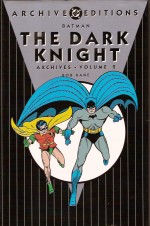
Batman: the Dark Knight Archives volume 2


By Bob Kane, Bill Finger, Jerry Robinson & George Roussos (DC Comics)
ISBN: 1-56389-183-2

By the time of the spectacular action, adventure and mystery classics contained in this magnificent full-colour hardback tome (re-presenting the classic contents of Batman #5-8, Spring 1941 to December 1941/January 1942), the Dynamic Duo were bona fide sensations whose heroic exploits not only thrilled millions of eager readers but also provided artistic inspiration for a generation of comics creators – both potential and actually working then and there…

Scripted by Bill Finger, with art from Bob Kane aided and abetted by Jerry Robinson & George Roussos (who also lettered many of the stories and even provided the effulgent introductory interview with historian Joe Desris which opens this volume) these stories are key moments in the heroes’ careers and still stunningly compelling examples of comics storytelling at its very best.

The magic commences with ‘The Riddle of the Missing Card!’ wherein the ever-deadly Joker rises from the dead once more and embarks on a grisly spree of gambling crimes based on playing cards and the poor unfortunate souls who rescued him, whilst ‘Book of Enchantment’ finds the Gotham Gangbusters scientifically teleported into a fantastic dimension of fairytale horrors. ‘The Case of the Honest Crook’ is the kind of humanistic mystery/second-chance story of redemption earned that Finger excelled at: Batman tackles bandit Joe Sands who has just robbed a store of $6 when he could have taken hundreds. His hard luck story soon leads to real bad guys though…

The last story from Batman #5 ‘Crime Does Not Pay’ deals with the perennial problem of good kids going bad and once again salvation is at hand after a mind-boggling amount of action and mayhem…

Issue #6 saw the title achieve bi-monthly status as the ravenous fans clamoured for more, more, more masked mystery-man madness. ‘Murder on Parole’ saw Batman and Robin hunt down a prominent citizen who was freeing criminals to work as his part-time criminal army after which ‘The Clock Maker’ gave them a deadly old time as he maniacally murdered the people who purchased his fine chronometers before the City Crime-crushers headed for the Texas oil-fields and waded hip-deep in murder and robbery to solve ‘The Secret of the Iron Jungle’. This magnificent romp led inexorably to an undercover case as Bruce Wayne investigated Gotham’s ‘Suicide Beat!’ where three policemen had already died whilst on patrol…

Batman #7 (October/November 1941) began with ‘Wanted: Practical Jokers’ and naturally starred the scene-stealing psychotic Clown Prince of Crime, who had unleashed a host of deadly body-doubles to play hob with the terrified citizenry, whilst ‘The Trouble Trap’ found the Dynamic Duo soundly smashing a Spiritualist racket. They then headed for the Deep Forests to clear up ‘The North Woods Mystery’ of a murdered lumber tycoon.

The last tale in this issue is something of a landmark case, as well as being a powerful and emotional melodrama. ‘The People vs. the Batman’ had Bruce Wayne framed for murder and the Caped Crusaders finally sworn in as official police operatives. They would not be vigilantes again until the grim and gritty 1980’s…

Eight weeks later Batman #8 came out, cover dated December 1941-January 1942. Such a meteoric rise and expansion during a time of extreme paper shortages gives heady evidence to the burgeoning popularity of the characters. Behind a superbly evocative “Infinity” cover by Fred Ray and Jerry Robinson lurked four striking tales of astounding bravura adventure.

‘Stone Walls Do Not A Prison Make’ was a brooding prison drama, with Batman breaking into jail to battle a Big Boss who ruled the city from his cell, followed by a rare foray into science fiction as a scientist abused by money-grubbing financial backers turned himself into a deadly radioactive marauder in ‘The Strange Case of Professor Radium’ (this tale was radically revised and recycled by Finger & Kane as a sequence of the Batman daily newspaper strip from September 23rd to November 2nd 1946).

‘The Superstition Murders’ is still a gripping and textbook example of the “ABC Murders” plot, far better read than read about and ‘The Cross Country Crimes’ perfectly ends this trip to the vault of comic treasures with a tale of the Joker rampaging across America in a dazzling blend of larceny and lunacy whilst trying to flee from the vengeful Gotham Guardians.

These are the stories that forged the character and success of Batman. The works of co-creators Finger and Kane and the multi-talented assistants Robinson & Roussos are spectacular and timeless examples of perfect superhero fiction. Put them in a lavish deluxe package like this, include the pop art masterpieces that were the covers of those classics plus handy creator biographies, and you have pretty much the perfect comic book.
© 1940-1941, 1995 DC Comics. All Rights Reserved.
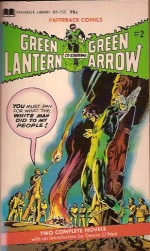
Green Lantern and Green Arrow #2


By Denny O’Neil, Neal Adams, Frank Giacoia & Dan Adkins (Paperback Library)
ISBN: 0-446-64755-1

Once upon a time, comics – like Rock ‘n’ Roll or spray-can street art – was considered outcast, bastard non-Art continually required to explain and justify itself – even when some of the people vainly defending the intrusive fledgling forms were critics and proponents of the other higher creative forms.

And during those less open-minded times, just like the other examples cited, every so often the funnybook industry brought forth something which forced the wider world to sit up and take notice.

This slim paperback – in itself proof positive of the material’s merit because the stories were contained in a proper book and not a flimsy, gaudy, disposable pamphlet (sic) – is a sequel to an earlier collection of some of the most groundbreaking comic adventures in American history; repackaged for an audience finally becoming cognizant that the unfairly dismissed children’s escapism might have something to contribute to the whole of culture and society…

After a decade of earthly crime-busting, interstellar intrigue and spectacular science fiction shenanigans the Silver Age Green Lantern was about to become one of the earliest big-name casualties of a downturn in superhero sales in 1969 prompting Editor Julius Schwartz to try something extraordinary to rescue the series.

The result was a bold experiment which created an industry-wide fad for socially relevant, ecologically aware, mature stories which spread throughout DC’s costumed hero comics and beyond; totally revolutionising the comics scene and nigh-radicalising readers.

Tapping superstars-in-waiting Denny O’Neil & Neal Adams to produce the revolutionary fare, Schwartz watched in fascinated disbelief as the resultant thirteen groundbreaking, landmark tales captured the tone of the times, garnered critical praise, awards and desperately valuable publicity from the outside world, whilst simultaneously registering such poor sales that the series was finally cancelled anyway, with the heroes unceremoniously packed off to the back of marginally less endangered comicbook The Flash.

When these stories (reprinted from Green Lantern/Green Arrow #78-79, July and September 1970) first appeared DC was a company in transition – just like America itself – with new ideas (which in comic-book terms meant “young writers”) being given much leeway: a veritable wave of fresh, raw talent akin to the very start of the industry, when excitable young creators ran wild with fevered imaginations and anything might happen.

Their cause wasn’t hurt by the industry’s swingeing commercial decline: costs were up and the kids just weren’t buying funnybooks in the quantities they used to…

O’Neil, in tight collaboration with hyper-realistic illustrator Adams, attacked all the traditional monoliths of contemporary costumed dramas with tightly targeted, protest- driven stories. Green Arrow had been shoe-horned into the series with Emerald Archer Oliver Queen constantly mouthing off as a hot-headed, liberal sounding-board and platform for a generation-in-crisis whilst staid, quasi-reactionary GL Hal Jordan played the part of the oblivious but well-meaning old guard. At least the Ring-Slinger was able to perceive his faults and more or less willing to listen to new ideas…

This striking book opens with an introduction from Dennis O’Neil before hurling helter-skelter into a chillingly topical headline grabbing yarn…

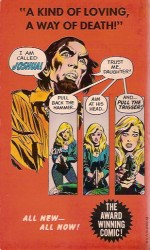
The confused and merely-mortal Green Lantern discovered another unpalatable aspect of human nature in ‘A Kind of Loving, a Way of Death!’ (with inks from Frank Giacoia) when the Arrow’s new girlfriend Black Canary joined the peripatetic cast. Seeking to renew her stalled relationship with the Emerald Archer, she was waylaid by bikers, grievously injured and taken in by a charismatic hippy guru. Sadly Joshua’s wilderness cult owed more to Charles Manson than the Messiah and his brand of Peace and Love only extended to white people: everybody else was simply target practise…

The ongoing shoddy treatment and plight of Native Americans was stunningly highlighted next in ‘Ulysses Star is Still Alive!’ (inked by Dan Adkins) as big-business logging interests attempted to deprive a mountain tribe of their very last scraps of heritage, once more causing the Green Knights to take extraordinarily differing courses of action to help and find a measure of justice…

It’s impossible to assess the effect this early bookstore edition had on the evolution of comics’ status – it certainly didn’t help keep the comicbook series afloat – but  this edition certainly gave credibility to the stories themselves: a fact proved by the number of times and variety of formats these iconic adventures have been reprinted.
© 1970, 1972 National Periodical Publications, Inc. All rights reserved.

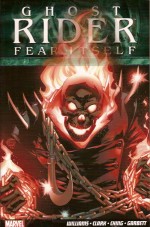
Ghost Rider: Fear Itself


By Rob Williams, Matthew Clark, Brian Ching, Lee Garbett & various (Marvel/Panini UK)
ISBN: 978-1-84653-499-7

In recent times Marvel has eschewed colossal braided mega-crossover events in favour of smaller, themed mini-epics but following the release of the Captain America and Thor films – not to mention the upcoming Avengers celluloid blockbuster – the time obviously seemed right to once more plunge their entire Universe into cataclysmic chaos and rebirth.

This collection gathers the prologue an 5-issue miniseries which reintroduced the Ghost Rider to contemporary continuity and can even be read without reference to the Fear Itself core volume and subsequent spin-off books (stemming from the 30-odd regular titles, miniseries and specials the saga expanded into).

In the main storyline an antediluvian Asgardian menace resurfaces and by possessing a selection of Earth’s heroes and villains sets in motion a terrifying bloodbath of carnage to feed on the fear of mankind and topple the established Norse pantheon. With that much spiritual energy unleashed its no surprise that other supernatural entities begin to feel threatened…

Years ago carnival stunt-cyclist Johnny Blaze sold his soul to the devil in an attempt to save his foster-father from cancer. As is always the way of such things Satan – or arch-liar Mephisto, as he actually was – followed the letter, but not spirit of the contract. Crash Simpson died anyway and when the Dark Lord came for Johnny only the love of an innocent saved the bad-boy biker from eternal pain and damnation.

Temporarily thwarted Johnny was afflicted with a body that burned with the fires of Hell every time the sun went down and became the unwilling host for outcast demon Zarathos – the spirit of vengeance.

In later years Blaze briefly escaped his doom and a tragic boy named Danny Ketch assumed the role of Zarathos’ host and prison.

Now in a classy fright-fest by Rob Williams (Cla$$war, 2000AD‘s Low Life) and artists Matthew Clark, Brian Ching, Lee Garbett & Sean Parsons, with additional art from Valerio Schiti, the Angel from Hell possesses a new host and is unleashed again to punish the guilty, beginning in the Prologue issue ‘Give Up the Ghost’ wherein the emotionally shattered but still valiantly heroic Blaze – once again bonded to the flaming phantom – is tricked by the mysterious adept Adam into surrendering the curse to a more than willing new vessel…

As the fear-mongering “Worthy” decimate the planet and humanity’s psyche, a female Ghost Rider roars through the ruins on her flaming bike saving the innocent and destroying the things which prey on mortals, but finds her match in the transformed Asgardian herald Skadi…

Meanwhile the liberated Blaze is confronted by his lifelong tormentor Mephisto who reveals that he is not the only Great Big Liar in creation: Adam, who claims to be the First Man, has a plan for the new Ghost Rider which will alter mankind forever…

Adam wants to eradicate all sin on Earth using the gullible, girlish novitiate acolyte Alejandra as his weapon but that is actually an even worse proposition and fate than anything any devil could devise…

Driven by conscience, Blaze makes another Devil’s Bargain to save humanity whilst the sheltered child who now contains the Ghost Rider begins to carry out Adam’s plan with staggering success.

Raiding Adam’s hidden temple. Blaze joins forces with British Zombie wizard Seeker – who knows far more than he’s letting on – just as Adam’s devoted disciple begins to find her own mind and path…

With the planet sliding swiftly into physical cataclysm and psychic Armageddon can the disparate forces of Free Will unite in time to save us all from salvation…?

The book ends on a superbly powerful human note as the mortal who eventually retains the power of Zarathos goes on a mission of old-fashioned vengeance only to be confronted with the most appalling of father figures…

Cool, action-packed, mightily moving and wryly witty, this is a splendid reinvention of a character who has been in equal amounts both the best and worst of Marvel’s mighty pantheon and one well worth a little of your time and money.

Ghost Rider: Fear Itself is scheduled for British release on January 12th 2012.

™ & © 2012 Marvel & Subs. Licensed by Marvel Characters B.V. through Panini S.p.A. Italy. A British Edition by Panini UK Ltd.

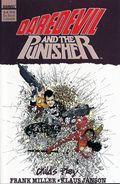
Daredevil and the Punisher: Child’s Play


By Frank Miller & Klaus Janson (Marvel)
ISBN: 978-087135-351-1

Here’s another slim, sleek and sublimely enticing lost treasure from the early days of graphic novel compilations that will undoubtedly enthral fans of hard-bitten, high-calibre Fights ‘n’ Tights fracas.

Released in 1988, this full-colour 64-page compendium collected three unforgettable issues of Daredevil (#182-184 from May-July 1982) which perfectly encapsulated everything that made the first Frank Miller run such a momentous, unmissable, “must-read” series…

Matt Murdock is a blind lawyer whose remaining senses hyper-compensate, making him an astonishing acrobat, formidable fighter and living lie-detector. Very much a second-string hero for most of his early years, Daredevil was nonetheless a striking and popular one, due in large part to the captivatingly humanistic art of Gene Colan. He fought gangsters, a variety of super-villains and even the occasional monster or alien invasion. He quipped and wise-cracked his way through life and life-threatening combat, but under the auspices of Jim Shooter, Roger McKenzie and finally Miller himself, the character transformed into a dark, moody avenger and grim, quasi-religious metaphor of justice and retribution…

Frank Castle saw his family gunned down in Central Park after witnessing a mob hit and thereafter dedicated his life to eradicating criminals everywhere. His methods are violent and permanent. It’s intriguing to note that unlike most heroes who debuted as villains (Wolverine comes to mind) the Punisher actually became more immoral, anti-social and murderous, not less: the buying public shifted its communal perspective – Castle never toned down or cleaned up his act nor did his moral compass ever deviate…

The story goes that Marvel were reluctant to give The Punisher a starring vehicle in their standard colour comic-book line, feeling the character’s very nature made him a bad guy and not a good one.

Debuting as a deluded villain in Amazing Spider-Man #129 (February 1974), Castle was created by Gerry Conway, John Romita Sr. & Ross Andru, in response to popular prose anti-heroes such as Don Pendleton’s Mack Bolan: the Executioner and at of other returning Viet Nam vets who all turned their training and talents to wiping out organised crime.

Maybe that genre’s due for a revival as sandy GI boots hit US soil in the months to come…?

The crazed crime-crusher had previously starred in Marvel Preview #2 (1975) and Marvel Super Action #1 (1976) but as these were both black-and-white magazines aimed at a far more mature audience: however in the early 1980s a number of high profile guest-shots: Captain America #241, Amazing Spider-Man Annual #15 (covered recently in Sensational Spider-Man) and the extended epic here, convinced the Powers-That-Be to finally risk a miniseries on the maniac vigilante (see The Punisher by Steven Grant & Mike Zeck. You all know where that led…

In this collection, a reeling Matt Murdock is trying to cope with the murder of his first love Elektra when ‘Child’s Play’ sees Castle clandestinely removed from prison by a government spook to stop a shipment of drugs the authorities can’t touch.

Once he’s killed the gangsters, however, The Punisher refuses to go back to jail…

This story, concerning school kids using drugs, was begun by McKenzie & Miller but shelved for a year, before being reworked into a stunningly powerful and unsettling tale once Miller and Klaus Janson assumed the full creative chores on the title. When Matt Murdock visits a High School he is a helpless witness as a little girl goes berserk, attacking staff and pupils before throwing herself out of a third floor window.

She was high on Angel Dust and as the appalled hero vows to track down the dealers he encounters her bereaved and distraught younger brother Billy, determined to exact his own vengeance and later the coldly calculating Castle who has the same idea and far more experience…

The hunt leads inexorably to a certain street pusher and DD, Billy and the Punisher all find their target at the same time. After a spectacular battle the thoroughly beaten Daredevil has only a bullet-ridden corpse and Billy with a smoking gun…

The kid is innocent – and so, this time at least, is Castle – and after Murdock proves it in court, the investigation resumes with the focus falling on the pusher’s boss Hogman. When DD’s super-hearing confirms the gangster’s claims of innocence his alter-ego Murdock then successfully defends the vile dealer, only to have the exonerated slime-ball gloatingly admit to having committed the murder after all…

Horrified, shocked, betrayed and determined to enforce justice, DD finds a connection to a highly-placed member of the school faculty deeply involved with Hogman in the concluding ‘Good Guys Wear Red’ but far too late: Castle and Billy have both decided the end the matter Hogman’s way…

Tough, disturbing, beautiful and chillingly plausible, this epic encounter redefined both sides of the heroic coin for a decade to come and remains one  of the most impressive stories in both character’s canons.

With creator biographies and commentaries from Ralph Macchio, Mike Baron and Anne Nocenti this oft re-printed tale (in 2000 it was repackaged and released with a new cover as The Punisher vs. Daredevil) marks a genuine highpoint in the serried careers of both horrifically human heroes and is well worth tracking down.
© 1988 Marvel Entertainment Group, Inc. All rights reserved.

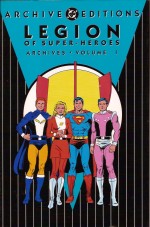
Legion of Super-Heroes: Archive Edition Volume 1


By Otto Binder, Jerry Siegel, Edmond Hamilton, Curt Swan, John Forte, Jim Mooney & various (DC Comics)
ISBN: 1-56389-020-8

Once upon a time, in the far future, a band of super-powered kids from dozens of alien civilisations took inspiration from the legend of the greatest champion of all time and formed a club of heroes. One day those Children of Tomorrow came back in time and invited that legend to join them…

And thus began the vast and epic saga of the Legion of Super-Heroes, as first envisioned by writer Otto Binder and artist Al Plastino in early 1958, just as the revived comicbook genre of superheroes was gathering an inexorable head of steam. Since that time the popularity of the Legion has perpetually waxed and waned, with their complex continuity continually tweaked and rebooted, retconned and overwritten again and again to comply with editorial diktat and popular whim.

We Silver Age Legion fans are indubitably the most persistent, passionate, finicky and snitty of all – and editors crossed us at their peril – so when DC announced that it would be gathering all the titanic team’s appearances in a chronological series of deluxe hardcover Archive Editions we were overjoyed (actually most of us thought it was about time and long overdue…) and eager.

This glorious, far-and-wide ranging full-colour premier compendium assembles the many preliminary appearances of these valiant Tomorrow People and their inevitable progress towards and attainment of their own feature; including all pertinent material from Adventure Comics #247, 267, 282, 290, 293, and 300-305, Action Comics #267, 276, 287 and 289, Superboy #86, 89, 98, Superman #147 – a period spanning 1958-1963. Also included are an introduction by editor, publisher and devotee Mike Gold, creator biographies and a Curt Swan cover gallery (all inked by either Stan Kaye or George Klein) featuring all the burgeoning band of brothers’ pole positions from Adventure Comics #247, 267, 282, 290, 293, 300, 302, Superboy #89 and 98 and Superman #147.

The multi-hued mob of universe-savers first manifested in Adventure Comics #247 (April 1958) in a Superboy tale wherein three mysterious kids invited the Boy of Steel to the 30th century to join a team of metahuman champions all inspired by his historic career. Created by Otto Binder & Al Plastino, the throwaway concept inflamed public imagination and after a slew of further appearances throughout Superman Family titles, the LSH eventually took over Superboy’s lead spot in Adventure for their own far-flung, quirky escapades, with the Caped Kid Kryptonian reduced to “one of the in-crowd”…

However here the excitement was still gradually building when the kids returned more than 18 months later in Adventure #267 (December 1959) for Jerry Siegel & George Papp to play with.

In ‘Prisoner of the Super-Heroes!‘ the teen wonders reappeared to attack and incarcerate the Boy of Steel because of a misunderstood ancient record…

The following summer Supergirl met the Legion in Action Comics #267 (August 1960, by Siegel & Jim Mooney) as Lightning Lad, Saturn Girl and Cosmic Boy secretly travelled to “modern day” America to invite the Maid of Might to join the team, in a repetition of their offer to Superboy 15 years previously (in nit-picking fact they claimed to be the children of the original team – a fact glossed over and forgotten these days: don’t time-travel stories make your head hurt…?).

Due to a dubious technicality, young and eager Kara Zor-El failed her initiation at the hands of ‘The Three Super-Heroes’ and was asked to reapply later – but at least we got to meet a few more Legionnaires, including Chameleon Boy, Invisible Kid and Colossal Boy…

With the editors still cautiously testing the waters, it was Superboy #86 (January 1961) before the ‘The Army of Living Kryptonite Men!’ by Siegel & Papp turned the LSH into a last-minute Deus ex Machina to save the Smallville Sentinel from juvenile delinquent Lex Luthor’s most insidious assault. Two months later in Adventure #282, Binder & Papp introduced Star Boy as a romantic rival for the Krypton Kid in ‘Lana Lang and the Legion of Super-Heroes!’

Action #276 (May 1961) introduced ‘Supergirl’s Three Super Girl-Friends’ by Siegel & Mooney, which finally saw the her crack the plasti-glass ceiling and join the team, sponsored by Saturn Girl, Phantom Girl and Triplicate Girl. We also met for the first time Bouncing Boy, Shrinking Violet, Sun Boy and potential bad-boy love-interest Brainiac 5 (well at least his distant ancestor Brainiac was a very bad boy…)

Next comes a pivotal two-part tale ‘Superboy’s Big Brother’ (by Robert Bernstein & Papp from Superboy #89, June 1961) in which an amnesiac, super-powered space traveller crashes in Smallville, speaking Kryptonese and carrying star-maps written by the Boy of Steel’s long-dead father…

Jubilant, baffled and suspicious in equal amounts Superboy eventually, tragically discovered ‘The Secret of Mon-El’ by accidentally exposing the stranger to a lingering, inexorable death, before desperately providing critical life-support by depositing the dying alien in the Phantom Zone until a cure could be found…

With an August 1961 cover-date Superman #147 unleashed ‘The Legion of Super-Villains’ (Siegel, Curt Swan & Sheldon Moldoff): a stand-out thriller featuring Lex Luthor and the adult Legion coming far too close to destroying the Action Ace until the temporal cavalry arrived…

Adventure #290 (November 1961, by Bernstein & Papp) seemingly gave Sun Boy a starring role in ‘The Secret of the Seventh Super-Hero!’ – a clever tale of redemption and second chances, followed in #293 (February 1962) by a gripping thriller from Siegel, Swan & George Klein: ‘The Legion of Super-Traitors’ wherein the future heroes were turned evil, prompting Saturn Girl to recruit a Legion of Super-Pets including Krypto, Streaky the Super Cat, Beppo, the monkey from Krypton and Comet the magical Super-horse to save the world – and yes, I typed all that with a reasonably straight face…

‘Supergirl’s Greatest Challenge!’ by Siegel & Mooney (Action #287 April 1962) saw her visit the Legion (quibblers be warned: it was mistakenly described as the 21st century in this story) to save future Earth from invasion. She also met a telepathic descendent of her cat Streaky. His perhaps ill-considered name was Whizzy…

Action #289 featured ‘Superman’s Super-Courtship!’ wherein the Girl of Steel scoured the universe for an ideal mate for her cousin. One highly possible candidate was the adult Saturn Woman, but her husband Lightning Man objected… Perhaps charming at the time, but modern sensibilities might quail at the conclusion that his perfect match was a doppelganger of Supergirl herself, but thankfully a bit older…

By the release of Superboy #98 (July 1962), the decision had been made. The buying public wanted more Legion stories and once ‘The Boy With Ultra-Powers’ by Siegel, Swan & Klein had introduced a mysterious lad with greater powers than the Boy of Steel, the focus shifted to Adventure Comics #300 (cover dated September 1962) wherein the futuristic super-squad finally landed their own gig; even occasionally stealing the odd cover-spot from the still top-featured Superboy.

Tales of the Legion of Super-Heroes opened its stellar run with ‘The Face Behind the Lead Mask!’ by Siegel, John Forte & Plastino; a fast-paced premier which pitted Superboy and the 30th century champions against an impossibly unbeatable foe until Mon-El, long-trapped in the Phantom Zone, briefly escaped a millennium of confinement and saved the day…

In those halcyon days humour was as important as action, imagination and drama, so many early escapades were light-hearted and moralistic. Issue #301 offered hope to fat kids everywhere with ‘The Secret Origin of Bouncing Boy!’ by regular creative team Siegel & Forte, wherein the process of open auditions was instigated (providing devoted fans with loads of truly bizarre and memorable applicants over the years) whilst allowing the rebounding human rotunda to give a salutary pep talk and inspirational recount of heroism persevering over adversity.

Adventure #302 featured ‘Sun Boy’s Lost Power!’ as the golden boy was forced to resign until fortune and boldness restored his abilities whilst ‘The Fantastic Spy!’ in #303 provided a tense tale of espionage and possible betrayal by new member Matter-Eater Lad.

The happy readership was stunned by the events of #304 when Saturn Girl engineered ‘The Stolen Super-Powers!’ to make herself a one-woman Legion. Of course it was for the best possible reasons, but still didn’t prevent the shocking murder of Lightning Lad…

With comfortable complacency utterly destroyed, #305 further shook everything up with ‘The Secret of the Mystery Legionnaire!’ who turned out to be the long-suffering Mon-El finally cured and freed from his Phantom Zone prison.

The Legion is undoubtedly one of the most beloved and bewildering creations in American comicbook history and largely responsible for the growth of the groundswell movement that became Comics Fandom. Moreover, these sparkling, simplistic and astoundingly addictive stories as much as the innovations of Julie Schwartz’s Justice League fired up the interest and imaginations of a generation of young readers and built the industry we all know today.

Naive, silly, joyous, stirring and utterly compelling yarns are precious and fun beyond any ability to explain but if you love comics and haven’t read this stuff, you are the poorer for it and need to enrich your future life as soon as possible.
© 1958-1964, 1991 DC Comics. All Rights Reserved.
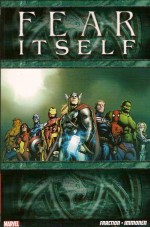
Fear Itself


By Ed Brubaker, Matt Fraction, Scott Eaton, Stuart Immonen & various (Marvel/Panini UK)
ISBN: 978-1-84653-494-2

Recently at Marvel, colossal braided mega-crossover events have been somewhat downplayed in favour of smaller mini-epics (the last biggie was Secret Invasion in 2008, I think), but following the release of the Captain America and Thor movies – not to mention the upcoming Avengers celluloid blockbuster – the time obviously seemed right to once more plunge their entire Universe into cataclysmic chaos and rebirth.

Collecting the one-shot Fear Itself Prologue: the Book of the Skull (March 2011) and the subsequent seven-issue core miniseries (which branched out into 30-odd other regular titles, miniseries and specials) this certainly spectacular puff-piece effectively presents a world-changing blockbuster via the comic equivalent of edited highlights whilst tempting readers to find the detail in the numerous spin-off books.

Quite simply: you can happily have old-fashioned funny-book fun and thrills just reading the basic story here and, should you want more, that’s available too

‘Book of the Skull’ by Ed Brubaker, Scott Eaton & Mark Morales follows Sin, daughter of the Fascist monster as she and Baron Zemo uncover a mystic weapon summoned to Earth during World War II, but rendered temporarily harmless in 1942 by The Invaders Captain America, Bucky and Sub-Mariner.

Only it wasn’t so much harmless as waiting for someone with the right blend of madness, need, hunger and sheer evil to wield it…

‘Fear Itself’ by Matt Fraction, Stuart Immonen & Wade von Grawbadger then opens with ‘The Serpent’ as global civil unrest and disobedience escalates into rioting as Sin picks up the mystic hammer which has been waiting for her, and transforms her into Skadi, herald of a dark and deadly menace from out of antediluvian Asgardian history…

The Home of the Gods has fallen to Earth in Oklahoma and, as Iron Man and the Avengers rally there to rebuild the Shining City, Odin appears and forcibly abducts the entire populace, even Thor, whom he has to batter into unconsciousness first.

Meanwhile Skadi has freed ancient fear-feeding god the Serpent from his prison on the sea-floor…

Soon seven other hammers turn the world’s most powerful denizens into harbingers of terror and mass destruction in ‘The Worthy’…

The Juggernaut, Hulk, Absorbing Man, Titania, Attuma, Grey Gargoyle and Thing are devastating the planet, generating global fear to feed the freed Asgardian outcast and in ‘The Hammer that Fell on Yancy Street’ the Avengers suffer their first tragic fatality, whilst in the nether-space which once housed the Citadel of the Gods the imprisoned Thor joins a secret rebellion against the clearly deranged Odin.

The All-Father plans to starve the fear-feeding Serpent of his food-source by scouring Earth of all life…

With ‘Worlds on Fire’ and the carnage and bloodletting ever-increasing, Thor escapes to Earth determined to aid his human allies and thwart his father’s insane scheme, just as retired hero Steve Rogers once again takes up the mantle of America’s Greatest Hero, and Iron Man forms an unlikely alliance to craft magical weaponry to combat the chaos before ‘Brawl’ finds the hammer-wielding Worthy uniting to crush human resistance, with the death-toll and slaughter escalating to extinction-event levels in ‘Blood-Tied & Doomed’ before Iron Man returns to turn the tide and save what remains of the day and humanity in the cataclysmic finale ‘Thor’s Day’ as the true history of the Gods is revealed and all Earths heroes, human, mortal or other, unite for one tragic last hurrah…

And make no mistake, this time even some of the A-list stars don’t make it…

Not that that means anything in comics, but it does make for an impressive – and breathtaking, beautifully illustrated – read, whilst the four portentous Epilogues (by a host of guest-creators) hint at more horror and heartbreak to come…

Owing far more to the aforementioned recent rash of movies and the general timbre of the times than the rugged mythologies created by Stan Lee and Jack Kirby, this is nevertheless a pretty effective cosmic punch-up which resets the playing field for the next few years and should make very friendly future reading for new and returning fans tantalised by the company’s Hollywood iterations.

With a splendid gallery of variant covers from Joe Quesada, Steve McNiven, Pablo Manuel Rivera, Guiseppe Camuncoli, Terry Dodson, Billy Tan, Humberto Ramos, Ed McGuinness, Mike McKone, this plot-light and action-overloaded epic should delight newer or less continuity-locked readers of Costumed Dramas and adventurous art lovers everywhere…

™ & © 2012 Marvel & Subs. Licensed by Marvel Characters B.V. through Panini S.p.A. Italy. A British Edition by Panini UK Ltd.

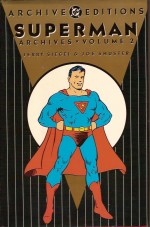
Superman Archives volume 2


By Jerry Siegel & Joe Shuster and the Superman Studio (DC Comics)
ISBN: 0930289-76-5

By 1940 the intoxicating blend of sensational superlative action and social crusading which hallmarked the early exploits of the Man of Tomorrow had gradually expanded to encompass traditional cops-and-robbers crime-busting and outright fantasy and science fictional elements.

With a thrice-weekly radio serial, games, toys, a newspaper strip and a growing international media presence, Superman was swiftly becoming everybody’s hero, as this classic compendium re-presenting issues #5-8 of his landmark solo title ideally illustrates.

This first-edition deluxe hardback opens with a beguiling Foreword from author, strip-writer, historian and fervent fan Ron Goulart but no contents page or creator credits, so for the sake of expediency I’ve used information and story-titles from later collections to facilitate the review. Besides, if you just buy this brilliant, lavish, full-colour hardback treasure-trove, you’ll be too busy reading the glorious stories to worry over such petty details…

Superman #5 (Summer 1940) was the last quarterly issue: from the next the comicbook would be published every two months – a heartbreakingly tough schedule for Jerry Siegel, Joe Shuster and their burgeoning Superman Studio, then comprising Paul Cassidy, Leo Nowak, Dennis Neville and Jack Burnley. They would continue to expand rapidly in the months to come.

This issue is a superb combination of human drama, crime and wicked science beginning with ‘The Slot Machine Racket’, a particularly hard-hitting yarn exposing the rise in gambling machines and one-armed bandits targeting young kids and their meagre allowances, which, after a delightful ‘Super Strength: Rules for Summer Living’ health and exercise feature and a Supermen of America ad, continued in similar vein with ‘Campaign Against the Planet’, wherein corrupt politicians attempted to bribe, intimidate and ultimately end the crusading paper’s search for truth and justice.

After two-fisted genre prose vignette ‘Power of the Press’ by George Chute, arch-villainy manifested with the insidious, toxic threat of ‘Luthor’s Incense Machine’ and, after another text thriller ‘Murder in the Wind’ by Jack Willis, cartoon capers with dizzy Dachshund ‘Shorty’ and a joke page, Superman crushed Big Business chicanery by exposing the scandal of ‘The Wonder Drug’.

Issue #6, produced by Siegel and the Studio, with Shuster only overseeing and drawing key figures and faces, contained four more lengthy adventures and led with ‘Lois Lane, Murderer’ as the Man of Action saved his plucky journalistic rival from a dastardly frame up, then took a break while Chute’s text thriller ‘Too Big for Marbles’ and hobo humorist Driftin’Dave (by Alger) offered a change of pace, after which Superman rescued a small town from a gangster invasion in ‘Racketeer Terror in Gateston.’

Jack Burnley produced the Super Strength exercise tips which preceded ‘Terror Stalks San Caluma’ with our hero’s efforts to avert a disaster hampered by a blackmailer who’d discovered his secret identity. Legend in waiting Gardner Fox authored exotic prose murder-mystery ‘The Strangest Case’ and fact-page ‘Sporting Close-Ups!’ happily set up the stunning final act as the Man of Steel uncovered ‘The Construction Scam’ foiling and spectacularly fixing a corrupt company’s shoddy, death-trap buildings.

Superman #7(November/December1940) firstly found the Action Ace embroiled in local politics when he confronted ‘Metropolis’ Most Savage Racketeers’ and, after a George Papp Fantastic Facts feature and gypsy tall-tale text-piece ‘Rinaldo’s Revenge’ by G.B. Armbruster, proceeding to crush horrific man-made disasters orchestrated by property speculators in ‘The Exploding Citizens’…

Shorty played the canine fool again before the Man of Tomorrow stamped out City Hall corruption in ‘Superman’s Clean-Up Campaign’ – illustrated by Wayne Boring, who inked Shuster on the last tale of this issue where the Caped Crimebuster put villainous high society bandits ‘The Black Gang’ exactly where they belonged… behind iron bars.

Released in time for the Holiday Season, Superman #8 (cover-dated January-February 1941) was another spectacular and varied compendium containing four big adventures and a flurry of filler features.

The fantastic fantasy romp ‘The Giants of Professor Zee’ (illustrated by Paul Cassidy), found the hero battling man-made monsters and merciless greed and, following a page each of ‘Laffs’ and ‘Nature News…’, plumped for topical tension and suspense in ‘The Fifth Column’ (depicted by Boring & Don Komisarow) with Superman rounding up spies and saboteurs, before comprehensively cleaning up uncommon criminals in ‘The Carnival Crooks’ (Cassidy again).

Text tale ‘Knotty Problem’ by Ed Carlisle and Ray McGill’s ‘Snapshots with our Candid Cartoon Camera’ led to a breathtaking disaster tale which this splendid volume. The cover-featured ‘Perrone and the Drug Gang’ featured an increasingly rare comic-book outing for Shuster – inked by Boring – wherein the Metropolis Marvel battled doped-up thugs and the corrupt drug-dealing lawyers who controlled them for – illegal – profit.

One off the most enticing aspects of these volumes is the faithful and entrancing inclusion of all the covers, period ads, pin-ups and special offers… with the Superman merchandise page alone worth the price of admission…

My admiration for the stripped-down purity and power of these Golden Age tales is boundless. Nothing has ever come near them for joyous, child-like perfection and every genuine fan really should make them a permanent part of his or her life.
© 1940, 1990 DC Comics. All Rights Reserved.
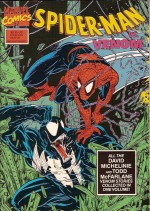
Spider-Man vs. Venom


By David Michelinie & Todd McFarlane (Marvel Comics)
ISBN: 2-48852-363-8,   2nd edition 978-0-87135-616-1

There was a period in the mid 1990s where, to all intents and purposes, the corporate monolith known as Marvel Comics seemed to have completely lost the plot. An awful lot of stories from that period will hopefully never be reprinted, but some of them weren’t completely beyond redemption.

During the Marvel Super Heroes Secret Wars of 1984-1985, Spider-Man picked a super-scientific new costume which turned out to be a hungry alien parasite which slowly began to permanently bond to its unwitting wearer.

After being discovered and removed by Reed Richards of the Fantastic Four “the Symbiote” ultimately escaped and, like a crazed and jilted lover, tried to re-establish its relationship with the horrified hero; seemingly destroying itself in the attempt.

During a stellar run of scripts by David Michelinie, the beast was revived with a new host and became one of the most acclaimed Marvel villains of all time, helped in no small part by the escalating popularity of rising star artist Todd McFarlane…

This rapidly rushed out compendium from 1990 collected literally every scrap of extant material featuring the new nemesis, comprising a teaser page from Amazing Spider-Man #298 (March 1988), two from #299, the entirety of #300 and an epic showdown from # 315-317 (May-July 1989).

Those orphan pages show a shadowy bestial character obsessing over clippings of the Wall-crawler before breaking into the apartment of Peter and Mary Jane Watson-Parker, before the main event begins with ‘Venom’ wherein the monstrous shape-shifting stalker, having terrorised Peter’s new bride, begins a chilling campaign to psychologically punish Spider-Man.

Venom is a huge hulking, distorted carbon copy of the Web-spinner: a murderous psychopath constituted of disgraced reporter Eddie Brock (who obsessively hates Parker the photo-journalist) permanently bonded with the bitter, rejected parasite whose animalistic devotion was spurned by an ungrateful host who even tried to kill it…

The story is a stunning blend of action and suspense with an unforgettable classic duel between Good and Evil which famously saw Spider-Man finally return to his original Ditko-designed costume and kicked off a riotous run of astounding stories from Michelinie & McFarlane, culminating in the titanic triptych ‘A Matter of Life and Debt!’, ‘Dead Meat’ and ‘The Sand and the Fury!’ with Brock bloodily breaking out of super-penitentiary The Vault to resume his campaign of hate while the oblivious Spider-Man is preoccupied with meta-thug Hydro Man and Peter Parker is embroiled in a deadly gambling debt drama concerning Aunt May’s current beau Nathan Lubensky…

Making his way across America, Venom begins to hunt his enemy’s nearest and dearest, starting with old flame and occasional crime-fighting comrade Black Cat, before moving on to Mary Jane and even frail old May Parker…

Pushed to breaking point Spider-Man gives Venom what he’s been demanding: a final all-out, one-on-one battle to the death…

Of course neither character died and the savage, shape-changing Symbiote – a perfect dark-side version of the Amazing Arachnid – went on to his own blood-drenched series. Eventually the spidery foes reached a tenuous détente and Venom became a “Lethal Protector”, dispensing his highly individualistic brand of justice everywhere but Spider-Man’s hometown.

This run of tales pushed the Wondrous Web-spinner to a peak of popularity and critical acclaim, with tense, terse tales of terror and triumph which inevitably resulted in ultimate arch-villain Venom gradually rehabilitating just enough to become one of the grim-and-gritty, dark anti-heroes which positively infested comics of that era (which explains why they’re also included in the sturdy compendium Spider-Man: Birth of Venom which additionally features Secret Wars #8, Amazing Spider #253-259, Fantastic Four #274 and Web of Spider-Man #1).

Whichever book you find however, if you’re a big fan of frantic Fights ‘n’ Tights action comics these are tales you just can’t ignore.
© 1990 Marvel Entertainment Group/Marvel Characters, Inc. All rights reserved.

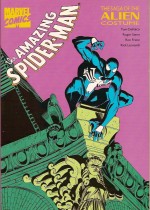
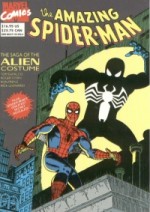
Amazing Spider-Man: the Saga of the Alien Costume


By Tom DeFalco, Roger Stern, Ron Frenz, Rick Leonardi & various (Marvel Comics)
ISBN: 978-0-87135-396-2

In the mid 1980s as part of a huge attention-getting exercise Spider-Man exchanged his heavily copyrighted and thoroughly trademarked costume whilst on another planet during the first Marvel Secret Wars. It was replaced with a magnificently stylish black and white number for the duration of the 12 issue maxi-series in his own titles (except the all-reprint Marvel Tales, of course) which over the course of the year revealed the true horrifying nature of the extraterrestrial  ensemble…

Collecting Amazing Spider-Man #252-259 (May-December 1984), continuity-wise this captivating extended epic opens at the conclusion of the Secret Wars Saga with Spider-Man and Curt Connors – occasionally the lethally maniacal monster called the Lizard – explosively returning to Earth after a week when most of the world’s heroes and villains had simply vanished.

To clear up any potential confusion: Marvel Super Heroes Secret Wars debuted in May 1984 and ran for twelve monthly issues until April 1985. In it a selection of metahumans good and bad were shanghaied by a godlike being dubbed The Beyonder and compelled to interminably battle each other. All other Marvel comics of that month chronologically happened in the apparent aftermath of that struggle with most of the heroes and villains returned, coyly refusing to divulge what had happened on Battleworld …a cheap but extremely effective ploy which kept fans glued to the Limited Series in the months that followed.

This compendium from 1988 opens with an introduction and design sketches before catapulting us into action in ‘Homecoming!’ by Roger Stern, Tom DeFalco, Ron Frenz & Brett Breeding as spectators in Central Park see a mysterious black garbed stranger explode out of an alien artefact … only the first of many costumed characters to escape the Beyonder’s world.

Spider-Man takes the shell-shocked Connors back to his family and then begins to explore his new uniform: a thought controlled, self-activating, metamorphic ball with chameleon capabilities and able to construct webbing out of its own mass. The smart-cloth is astonishing, but weary Peter Parker has family to see and a city to reacquaint himself with. The hero promises himself he’ll further research the incredible material at a later date…

The wonderful Rick Leonardi & Bill Anderson illustrated DeFalco’s powerful crime thriller ‘By Myself Betrayed!’ wherein a prominent football player, sucked into gambling and match-fixing, dragged the Web-spinner into conflict with new gang-lord The Rose. As his new uniform increasingly, obsessively amazes Peter with its rather disturbing autonomy (it comes to him unbidden and regularly envelops him while he sleeps), the hero uncomprehendingly alienates his beloved Aunt May when he drops out of college…

‘With Great Power…’ (inked by Joe Rubinstein) found the wall-crawler battling terrorist mercenary Jack O’Lantern for possession of the hi-tech battle-van designed and built by the terrifying Hobgoblin when he should have been reconciling with May, whilst ‘Even a Ghost Can Fear the Night!’ (DeFalco, Frenz & Rubinstein) introduced charismatic septuagenarian cat-burglar Black Fox (whose outfit coincidentally resembled Spidey’s new kit) who became a hapless pawn of the merciless but cash-strapped Red Ghost and his Super-Apes.

Compelled to rob until he was caught by Spider-Man, the Fox orchestrated a spectacular battle between the Wall-crawler and the Ghost before getting away with all the loot…

‘Introducing… Puma!’ found an increasingly weary and listless Spider-Man attacked by a Native American super-mercenary hired by the Rose. The Arachnid’s gang-busting crusade in partnership with reformed thief/new girlfriend Black Cat was making life too hot and unprofitable for the ambitious mobster. That calamitous clash carried over into ‘Beware the Claws of Puma!’ furiously escalating until criminal overlord The Kingpin stepped in to stop it, forcing the Rose to ally himself with the murderous Hobgoblin. The issue ended with an exhausted Parker confronted with a stunning revelation from his old lover Mary Jane Watson…

The shock prompted Peter into seeking out ‘The Sinister Secret of Spider-Man’s New Costume!’ Plagued by nightmares, perpetually tired and debilitated the Web-spinner visited the Fantastic Four and was disgusted and horrified to learn that his suit was alive: a parasite slowly attaching itself to him body and soul…

Meanwhile Hobgoblin and the Rose’s uneasily alliance had resulted in bloody, undeclared war on the Kingpin…

With Reed Richards’ help the creature was removed from Spider-Man and imprisoned and this collection concludes with the poignant ‘All My Pasts Remembered!’ as Mary Jane finally tells Peter her tragic life story after which the free, reinvigorated and re-dedicated hero determined to put a stop to Hobgoblin for good…

But that’s a tale for another tome…

This run of tales marvellously rejuvenated the Amazing Arachnid and kicked off a period of superbly gripping and imaginative stories, culminating with the creation of arch hero/villain Venom (which is why these tales can also be found in the sturdy compendium Spider-Man: Birth of Venom with addition material from Secret Wars #8, Amazing Spider #298-300, 315-317, Fantastic Four #274 and Web of Spider-Man #1).

Whichever book you buy, if you’re a fan of superhero comics these are tales you just don’t want to miss.
© 1988 Marvel Entertainment Group/Marvel Characters, Inc. All rights reserved.

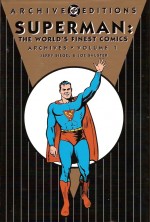
Superman: the World’s Finest Comics Archives volume 1


By Jerry Siegel & Joe Shuster, Leo Nowak, John Sikela (DC Comics)
ISBN: 978-1-4012-0151-7

The debut of Superman propelled National Comics to the forefront of their fledgling industry and in 1939 the company was licensed to produce a commemorative comicbook celebrating the opening of the New York World’s Fair, with the Man of Tomorrow prominently featured on the appropriately titled New York World’s Fair Comics among such four-colour stars as Zatara, Butch the Pup, Gingersnap and The Sandman.

This glorious deluxe hardback edition collects that epochal early mass-market premium appearance plus his return in Worlds Fair 1940, as well as the Superman stories from World’s Best #1 and World’s Finest Comics #2-15 in gleaming, seductive full-colour and also includes a beguiling Foreword by fan, historian, author and film producer Michael Uslan as well as the now-traditional creator biographies.

The spectacular card-cover 96 page anthologies were a huge hit and convinced the editors that an over-sized anthology of their pantheon of characters, with Superman and Batman prominently featured, would be a worthwhile proposition. The format was retained for a wholly company-owned, quarterly high-end package, retailing for the then hefty price of 15¢. Launching as World’s Best Comics #1 (Spring 1941), the book transformed into World’s Finest Comics from #2, beginning a stellar 45 year run which only ended as part of the massive clear-out and decluttering exercise that was Crisis on Infinite Earths.

With stunning, eye-catching covers from Sheldon Mayer, Jack Burnley, Fred Ray and others, this fabulously exuberant compendium opens with ‘Superman at the World’s Fair’ by Jerry Siegel & Joe Shuster, wherein Clark Kent and Lois Lane were dispatched to cover the gala event giving the mystery man an opportunity to contribute his own exhibit and bag a bunch of rotten robbers to boot…

A year later he was ‘At the 1940’s World’s Fair’ (lavishly illustrated by Burnley) foiling an attempt by another gang of ne’er-do-wells to steal a huge emerald.

With success assured World’s Best Comics launched early in 1941 and from that landmark edition comes gripping disaster-thriller ‘Superman vs. the Rainmaker’ illustrated by Paul Cassidy, after which World’s Finest Comics #2 provided thrills and spills in Siegel, Leo Nowak, Cassidy & Shuster’s ‘The Unknown X’, a fast-paced mystery of sinister murder-masterminds and maritime menace, whilst ‘The Case of the Death Express’ was a tense thriller about train-wreckers (by Nowak) from the Fall issue.

World’s Finest Comics #4 featured ‘The Case of the Crime Crusade’ by Siegel, Nowak & John Sikela, another socially relevant racketeering yarn highlighting the bravery of fiery editor Perry White and combining a crusading campaign to modernise the city’s transport system with a battle against bomb-wielding gangsters, whilst ‘The Case of the Flying Castle’ had Superman breach the Tower of Terror to confront an Indian curse and an unscrupulous businessman and WF #6 (Summer 1942, Siegel, Nowak & Sikela) saw ‘The Man of Steel vs. the Man of Metal’ pitting our hero and newsboy Jimmy Olsen against Metalo, a mad scientist whose discoveries made him every inch Superman’s physical match…

‘The Eight Doomed Men’ in issue #7 were a coterie of ruthless millionaires targeted for murder because of the wicked past deeds of their privileged college fraternity; a crime mystery spiced up with flamboyant high-tech weaponry that pushed the Action Ace to his limits whilst ‘Talent Unlimited’ (Siegel, Sam Criton & Sikela) saw Superman track down a missing heiress who had abandoned wealth for a stage career and poor but honest theatrical friends. Unfortunately, even though she didn’t want her money, other people did…

From World’s Finest Comics #9 on, no record of the scripter(s) identities are available but there’s no appreciable drop in quality to be seen as ‘One Second to Live’ (drawn by Sikela) found the Man of Tomorrow clearing an innocent man of murder and saving him from the electric chair, whilst ‘The Insect Terror’ (Nowak & Sikela) saw an incredible battle with a super-villain whose giant bugs almost consumed Metropolis before ‘The City of Hate’ (Sikela) found Lois and Clark’s search for the “Four Most Worthy Citizens” leading them to demagogues, hate-mongers and the worst of humanity before finally succeeding…

Another case of social injustice was exposed and rectified in WF #12’s ‘The Man who Stole a Reputation’ (illustrated by Ira Yarbrough) wherein a downtrodden clerk chucked in his job and sought out the glamorous rewards of crime until Superman demonstrated the error of his thinking and ‘The Freedom of the Press’ found Clark and Lois looking for the Daily Planet’s centennial scoop; oblivious to the gangsters determined to wreck the paper forever, whilst Sikela’s ‘Desert Town’ took the Man of Steel to the wild west and a hidden citadel of crooks determined to sabotage the building of a new city over their secret hideout…

The last tale in this volume is ‘The Rubber Band’ illustrated by Sikela & Nowak from World’s Finest Comics #15 (Fall 1944) which details the exploits of a gang of black market tyre thieves who were given a patriotic “heads-up” after Superman dumped their boss on the Pacific front line where US soldiers were fighting and dying…

These blockbusting yarns, released at three month intervals, provide a perfect snapshot of the Caped Kryptonian’s amazing development from unstoppable, outlaw social activist to trusted paragon of American virtues in timeless tales which have never lost their edge or their power to enthral and beguile and, as always, this formidable Archive Edition is the most luxurious and satisfying of ways to enjoy them over and over again.

So why aren’t you…?
© 1940, 1941, 1942, 1943, 1944, 2004 DC Comics. All Rights Reserved.