Showcase presents Teen Titans volume 2


By Bob Haney, Nick Cardy & various (DC Comics)
ISBN: 978-1-84576-677-1

It’s hard to grasp now that once kid heroes were a rarity and during the beginning of the Silver Age, often considered a liability. Now the massive brand that is the Teen Titans (with numerous comicbook iterations, a superbly successful TV show and even an award-winning early reading comic (Aw, Yeaah! Tiny Titans!) their continuance is as assured as anything in our biz, but during the tumultuous 1960s the series – never a great seller – courted controversy and an actual teenaged readership by confronting controversial issues head on.

I must have been just lucky, because these stories of lost youth searching for meaning were released just as I turned into a teenager.  They resonated because they were talking directly to me.  It didn’t hurt that they were brilliantly written, fantastically illustrated and staggeringly fresh and contemporary.  I’m delighted to declare that age hasn’t diminished their quality or impact either, merely cemented their worth and importance.

The concept of underage hero-teams was not a new one when the Batman TV show prompted DC to entrust the big heroes’ assorted sidekicks with their own regular comic in a hip and groovy ensemble as dedicated to helping kids as they were to stamping out insidious evil.

The biggest difference between wartime groups like The Young Allies, Boy Commandos and Newsboy Legion or such 1950s holdovers as The Little Wise Guys or Boys Ranch and the creation of the Titans was quite simply the burgeoning phenomena of “The Teenager” as a discrete social and commercial force. These were kids who could be allowed to do things themselves (within reason) without constant adult help or supervision. As early as June-July 1964 Brave and the Bold #54 had tested the waters with a gripping tale by Bob Haney & Bruno Premiani in which Kid Flash, Aqualad and Robin thwarted a modern-day Pied Piper.

What had been a straight team-up was formalised a year later when the heroes reunited and included Wonder Girl in a proper super-group with a team-name: Teen Titans. With this second collected volume of those early exploits the series had hit a creative peak, with spectacular, groundbreaking artwork and fresh, different stories that increasingly showed youngsters had opinions and attitudes of their own – and often that they could be at odds with those of their mystery-men mentors…

Collecting Teen Titans #19-36, and the team-up appearances from Brave and the Bold #83 and 94 and World’s Finest Comics #205, these stories cover the most significant period of social and political unrest in American history and do it from the perspective of the underdogs, the seekers, the rebels…

The wonderment begins with a beautifully realised comedy-thriller as boy Bowman Speedy joins the team. ‘Teen Titans: Stepping Stones for a Giant Killer!’ (#19, January/February 1969) by Mike Friedrich, Gil Kane & Wally Wood, pitted the team against youthful criminal mastermind Punch who planned to kill the Justice League of America and thought a trial run against the junior division a smart idea…

Brave and the Bold # 83 (April-May 1969) took a radical turn as the Teen Titans (sans Aqualad, who was dropped to appear in Aquaman and because there just ain’t that much sub-sea malfeasance) tried to save Bruce Wayne’s latest foster-son from his own inner demons in a tense thriller about trust and betrayal in the Bob Haney & Neal Adams epic ‘Punish Not my Evil Son!’. TT #20 took a long running plot-thread about extra-dimensional invaders and gave it a counterculture twist in ‘Titans Fit the Battle of Jericho’, a spectacular rollercoaster romp written by Neal Adams, penciled by him and Sal Amendola and inked by brush-maestro Nick Cardy – one of the all-out prettiest illustration jobs of that decade.

Symbolic super-teens Hawk and Dove joined the proceedings for #21’s ‘Citadel of Fear’ (Adams and Cardy), chasing smugglers, finding aliens and ramping up the surly teen rebellion quotient whilst moving the invaders story-arc towards a stunning conclusion. ‘Halfway to Holocaust’ is only half of #22; the abduction of Kid Flash and Robin leading to a cross-planar climax as Wonder Girl, Speedy and a radical new ally quashed the invasion forever, but still leaving enough room for a long overdue makeover in ‘The Origin of Wonder Girl’ by Marv Wolfman, Kane & Cardy.

For years the series had fudged the fact that the younger Amazon Princess was not actually human, a sidekick, or even a person, but rather an incarnation of the adult Wonder Woman as a child. As continuity backwriting strengthened its stranglehold on the industry it was felt that the team-tottie needed a fuller background and this moving tale revealed that she was in fact a human foundling rescued by Wonder Woman and raised on Paradise Island where their super-science gave her all the powers of a true Amazon. They even found her a name – Donna Troy – and an apartment, complete with hot roommate. All Donna had to do was sew herself a glitzy new costume…

Now thoroughly grounded the team jetted south in #23’s fast-paced yarn ‘The Rock ‘n’ Roll Rogue’ (by Haney, Kane & Cardy), trying to rescue musical rebel Sammy Soul from his grasping family and his lost dad from Amazonian headhunters. ‘Skis of Death!’ (#24, November-December 1969) by the same creative team saw the quartet holidaying in the mountains and uncovering a scam to defraud Native Americans of their lands. It was a terrific old-style tale but with the next issue the most radical change in DC’s cautious publishing history made Teen Titans a comic which had thrown out the rulebook…

For a series which spoke so directly to young people, it’s remarkable to think that ‘The Titans Kill a Saint?’ and its radical departure from traditional superhero stories was crafted by Bob Kanigher and Nick Cardy – two of the most senior creators in the business. It set the scene for a different kind of human-scaled adventure that was truly gripping, bravely innovative. For the relatively short time the experiment continued, readers had no idea what was going to happen next…

While on a night out in their civilian identities Robin, Kid Flash, Speedy, Wonder Girl, Hawk and Dove meet a telepathic go-go dancer Lilith who warns them of trouble. Cassandra-like they ignore her warnings, and a direct result a globally revered Nobel Laureate is gunned down.

So soon after the death of John and Robert Kennedy, Martin Luther King and the even more controversial murder of Malcolm X this was stunning stuff and in response all but Robin abandoned their costumed personas and with the help of mysterious millionaire philanthropist Mr. Jupiter dedicated their unique abilities to exploring humanity and finding human ways to atone and make a difference…

With Lilith beside them they undertake different sorts of missions, beginning with ‘A Penny For a Black Star’ in which they attempt to live in a poverty-wracked inner city ghetto, where they find Mal Duncan, a street kid who becomes the first African-American in space, although it’s a one-way trip…

Issue #27 reintroduces an eerie element of fantasy as ‘Nightmare in Space’ (Kanigher, George Tuska, Carmine Infantino & Cardy) finds the Titans en route to the Moon to rescue Mal but encountering something far beyond the ken of human imagining.

Meanwhile on Earth Donna Troy’s roommate Sharon had stumbled upon an alien incursion. ‘Blindspot’ by Steve Skeates & Nick Cardy, was tangentially linked to another innovative saga then playing out in Aquaman’s comicbook. Both were edited by young Dick Giordano, who was at this time responsible for the vast proportion of bold new material coming out of DC, even whilst proving himself one of the best inkers in the field.

You’ll need to see a (hopefully) forthcoming Aquaman Showcase edition for that delight, but suffice to say that the Sea King’s foe Ocean Master had allied himself with aliens and Sharon became involved just as Aqualad returned looking for help. Unable to understand the Titan’s reluctance to get involved he tries to go it alone but hits a problem only the original team can fix, which they do in Skeates & Cardy concluding instalment ‘Captives!’

However, once the alien threat is thwarted the heroes once more lay down their powers and costumes…

Teen Titans #30 featured three short tales, all written by Skeates. ‘Greed… Kills!‘ illustrated by Cardy, is a canny mystery exploring street and white-collar crime, ‘Whirlwind’ a Kid Flash prose novelette with art from Sal Amendola and ‘Some Call it Noise’ (Infantino & Cardy) an Aqualad solo tale in which his girlfriend Aquagirl takes a near-fatal wrong turn at a rock concert.

Student politics took centre-stage in #31’s lead feature ‘To Order is to Destroy’ (Skeates, Tuska & Cardy as the young heroes investigate a trouble-free campus where unhappy or difficult scholars are given a small brain operation to help them “concentrate” whilst a Hawk and Dove solo ‘From One to Twenty’ pitted quarrelsome Don and Hank Hall against a crafty band of murderous counterfeiters in a deft crime-caper by Skeates, Tuska & Cardy.

The gifted trio then opened up the fantasy element again with a time-travelling, parallel universe epic beginning in #32 with ‘A Mystical Realm, A World Gone Mad’ as Mal and Kid Flash accidentally changed the past turning Earth into a magical madscape. However undoing their error resulted in a Neanderthal teenager being trapped in our time, presenting the group with their greatest challenge: turning a savage primitive into a modern man.

Illustrated by Tuska and Cardy ‘Less Than Human’ signaled the full return of Bob Haney as writer and the gradual return of powers and costumes picked up pace as the grand experiment, if not over, was restated in terms that looked less harshly on bread and butter fights ‘n’ tights scenarios.

Brave and the Bold #94 (February-March 1971) was a powerful counter-culture thriller as the team infiltrated an inner city commune to solve a nuclear bomb-plot in ‘Rebels in the Streets’ and the exigencies of publishing moved the series into the blossoming world of the supernatural as costumed heroes temporarily faded in favour of tales of mystery and imagination.

‘The Demon of Dog Island’ (Haney, Tuska & Cardy) found the team, including Robin who had quietly rejoined during the civilisation of cave-boy Gnarrk, desperately battling to prevent Wonder Girl’s possession by a gypsy ghost whilst ‘The Computer that Captured a Town’ (World’s Finest Comics #205, September 1971) cleverly examined racism and sexism as Superman found the Titans trapped in a town that had mysteriously re-adopted the values of the 1890s (Skeates, Dick Dillin & Joe Giella)…

Teen Titans #35 continued the supernatural theme as the team traveled to Verona in ‘Intruders of the Forbidden Crypt’ (Haney, Tuska & Cardy) wherein Lilith and the son of Mr. Jupiter’s business rival found themselves drawn into a beguiling web of tragedy as they were compelled to relive the doomed love of Romeo and Juliet despite all the rationalisations of modern science and the best efforts of the young heroes…

‘A Titan is Born’ by the same creators was a rite of passage for Mal as the everyman hero had to face the murderous Gargoyle alone and unaided, whilst the reincarnation tragedy concluded with fate foiled in ‘The Tomb Be their Destiny’, the cover feature of #36. Filling out that issue and this book are two brief vignettes, the Aqualad three pager teaser ‘The Girl of the Shadows’ by Skeates & Jim Aparo and an impressive opening episode in the origin of Lilith. ‘The Teen-Ager From Nowhere’ by Haney & Cardy showed the ten year old orphan’s first prescient exploit and the distrust that it engendered, promising much more to come: a perfect place to end this second monochrome masterpiece of graphic literature…

Although perhaps dated in delivery, these tales were a liberating experience for kids when first released. They truly betokened a new empathy with independent youth and tried to address problems that were more relevant to and generated by that specific audience. That they are so captivating in execution is a wonderful bonus. This is absolute escapism and absolutely delightful.

© 1969, 1970, 1971, 1972, 2007 DC Comics. All Rights Reserved.
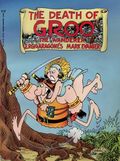
The Death of Groo the Wanderer (Marvel Graphic Novel #32)


By Sergio Aragonés, Mark Evanier, Stan Sakai & Tom Luth (Epic/Marvel)
ISBN: 0-87135-290-7

Groo is a living paradox: a brilliant fighting man and unbeatable warrior sell-sword and simultaneously the dumbest collection of organic molecules on the planet. Always hungry, he wanders because most places where he pauses burn down, wash away or crash into rubble soon after he gets there. He loves to fight and the entire world trembles at the mention of his name. They do the same when they smell him too…

Produced in unique fashion by Sergio Aragonés, wordsmith Mark Evanier, letterer Stan Sakai (creator of Usagi Yojimbo) and colourist Tom Luth, the idiot’s adventures form one of the longest running humour comicbook series in America and there seems to be no chance of stopping the creators as long as we keep buying these incredible, hilarious sagas…

Both in comic narrative and the infinitely more strenuous field of gag-cartooning Sergio Aragonés has produced vast volumes of excellent work. His darkly skewed sensibilities and grasp of the cosmically absurd, wedded to a totally unique, anarchically meticulous drawing style and frankly terrifying professional discipline, have made his (usually) silent doodles a vibrant proof of the maxims that laughter is universal and a picture is worth a thousand words.

After working for years for Mad Magazine and DC’s horror titles on gag features and the occasional full comic strip, in 1981 with writer and associate Mark Evanier, Aragonés produced a madcap four-page parody of the Sword-and-Sorcery genre as a contribution to the Creators Rights benefit comicbook Destroyer Duck published by Eclipse Comics.

Following a second outing in Mike Grell’s Starslayer (#5) Pacific Comics launched Groo the Wanderer in his own title. After 8 issues (December 1982-April 1984) the troubled company folded but the unsinkable barbarian (that’s a joke I’ll explain later) resurfaced in the Groo Special one-shot from Eclipse (October 1984), before finding a home at Epic Comics: Archie Goodwin’s creator-owned corner of the Marvel Universe.

Aragonés first created his witless warrior in the 1970s but no publisher would take on the property unless he sold all rights – an almost universal situation in the industry until the advent of the Direct Sales market transferred power from companies and distributors to creators and consumers. After an uproarious 120 issue run at Epic, and dozens of graphic novel compilations, the witless wonder moved on to Image and Dark Horse Comics, but they haven’t completely gone belly-up yet…

This all original volume from 1987 reintroduces readers to the smelliest, ugliest, stupidest itinerant mercenary in the world. Luckily he’s also the best swordsman in creation and too thick to be harmed because when he shuffles his unshod, dirty feet into the domain of King Krag he inadvertently encounters a thoroughly nasty man with a good many reasons to psychotically hate him…

At that time the kingdom was being ravaged by a colossal dragon, but as the only man on the planet crazy enough to fight it has a huge bounty on his head, how stupid would he have to be to come and attempt to kill it? – and if you’re having difficulty answering that, either you’ve not been paying attention or Groo has found a new apprentice…

Due to the kind of circumstance-concatenation that only happens in this series, everybody in the land of Groo-haters thinks the oaf is finally dead – even Groo – but with all the folk who have ever suffered at his hands gathered in one place they all start to realise that a world without Groo just isn’t the same…

Fear not however: order, if not sense, is eventually restored – but only after a grand display of confusions, contusions, conflagrations, conflicts, pratfalls, pitfalls, punch-lines and punch-ups. There’s even a little room left over for a soupcon of romance (Mmmm, Soup! Mmmm, leftovers…)

Published in the extravagant, luxurious over-sized 285mm x 220mm European album format which allows even more room for the artist’s tireless tornado of visual gags and graphitti this is a masterpiece of mirth and madness that comedy addicts will love and the great strength of the series is that new readers can start practically anywhere – and still be none the wiser…

Oh yeah, that sinking thing: among his other lack of abilities Groo cannot travel by ship. He’s not sea-sick or anything – it’s just that his physical presence on a nautical apparatus of any sort causes it to sink – and this book has one of the very best riffs on that running (swimming? sinking?) gag I’ve ever seen…
© 1987 Sergio Aragonés. All Rights Reserved.

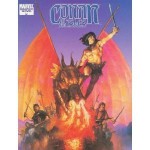
Conan of the Isles (Marvel Graphic Novel #42)


By Roy Thomas & John Buscema, with Danny Bulanadi, Ricardo Villamonte, Armando Gil and Dave Simons (Marvel)
ISBN: 978-0-87135-483-9

During the 1970′s the American comic book industry opened up after more than fifteen years of cautious and calcified publishing practices that had come about as a reaction to the scrupulously-censorious oversight of the self-inflicted Comics Code Authority: A body created by the publishers to police their product and keep it palatable and wholesome after the industry suffered their very own McCarthy-inspired Witch-hunt during the 1950s. One of the first genres to be revisited was Horror/Mystery comics and from that came the pulp masterpiece Conan the Cimmerian.

Simultaneously, Sword & Sorcery stories had undergone a global prose revival in the paperback marketplace since the release of soft-cover editions of Lord of the Rings (first published in 1954), and the 1960s saw the resurgence of the two-fisted fantasies of Edgar Rice Burroughs, Otis Adelbert Kline, Fritz Lieber, whilst many modern writers such as Michael Moorcock and Lin Carter kick-started their careers with contemporary versions of man, monster and mage. Indisputably the grand master of the genre was Robert E. Howard.

Marvel Comics tested the waters in early 1970 with a little tale called ‘The Sword and the Sorcerers’ (from the horror anthology Chamber of Darkness #4) whose hero Starr the Slayer bore no small resemblance to the Barbarian. It was written by Roy Thomas and drawn by young Englishman Barry Smith, a recent Marvel find, and one who was just breaking out of the company’s Kirby house-style.

Despite some early teething problems, including being cancelled and reinstated in the same month, the comic-strip adventures of Robert E. Howard’s characters were as big a success as the prose yarns. Conan became a huge success: a mega-brand that saw new prose tales, movies, a TV series and cartoon show, a newspaper strip and all the other paraphernalia of success. And it all largely stemmed from the vast range of comics initiated by Thomas, Windsor-Smith (as he became) and the excellent succession of comics creators that followed.

Thomas was a huge fan of the prose material and took great pains to adapt the novels and short stories into the graphic canon. From the latter days when the barbarian was an established Marvel mainstay comes this utterly enchanting adaptation of the hero’s last recorded adventure, written by L. Sprague de Camp and Lin Carter, first released in 1968.

The Cimmerian’s wanderings had eventually led him to the throne of a vast kingdom, the founding of a dynasty and after twenty years, terminal boredom. He had outlived his comrades and beloved wife Zenobia and chafed under the yoke of responsibility. When seven hundred citizens of Tarantia were terrifyingly consumed by blazing bloody lights King Conan was furious and bewildered until a ghostly vision bade him to hunt down and destroy these marauding Red Shadows.

Secretly abdicating in favour of his son Conn, the aging warrior vanished from Court, returning to the life of a pirate, and as “Amra the Lion” gathered a crew of valiant brigands to covertly hunt down the master of the crimson shades – who have subsequently spread their depredations throughout the known world.

Still formidable and burdened with fearsome responsibilities, Amra and old comrades Sigurd of Vanaheim and Yasunga the Black Corsair rove the scattered islands of the Western Ocean, seeking their hidden foe and battling monsters, rogues and maddening mechanical dooms.

Even though nearly seventy years old Conan drove himself hard and soon the ship of rogues found their hidden foe in the form of the priest-cult of Xotli and their uncanny Black Kraken warriors of lost Atlantis. When the pirates were all captured Conan alone infiltrated the hidden citadel to solve the mystery of the Red Shadows, rescue his crew and save the whole Hyperborean world…

Divided into three chapters, ‘Red Shadows and Black Kraken!’ (inked by Danny Bulanadi, Ricardo Villamonte & Armando Gil), ‘Dragons from an Unknown Sea!’ and ‘Gods of Light and Darkness!’ (both inked by Dave Simons), I rather suspect this tale was originally intended for the comicbook spin-off King Conan before being bumped into this sleek and glossy oversized format

Once upon a time Marvel led the publishing pack in the development of high quality original graphic novels: mixing creator-owned properties, licensed assets like Conan, Marvel Universe tales and even new series launches in extravagant over-sized packages (a standard 285mm x 220mm rather than the now customary 258 x 168mm) that felt and looked like far more than an average comicbook no matter how good, bad or incomprehensible (a polite way of saying outside the average Marvel Zombie’s comfort zone) the contents might have been.

Fast-paced, action packed and stuffed with the red-handed wonderment beloved by his fans, Conan of the Isles is rip-roaring pulp fare, brimming with supernatural horrors, scantily-clad damsels in distress and spectacular derring-do, cannily recounted by veteran creators at the top of their form. Still readily available this is a classy tale that will delight any fan of the genre and could easily convert a few die-hards too.
© 1982, 1988 Conan Properties Inc All Rights Reserved.

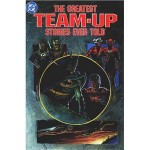
The Greatest Team-Up Stories Ever Told


By various (DC Comics)
ISBN: 0-930289-51-X

When the very concept of high priced graphic novels was just being tested in the early 1990s DC Comics produced a line of glorious hardback compilations spotlighting star characters and celebrating standout stories from the company’s illustrious and varied history decade by decade. They even branched out into themed collections which shaped the output of the industry to this day.

The Greatest Stories collections were revived this century as smaller paperback editions (with mostly differing content) and stand as an impressive and joyous introduction to the fantastic worlds and exploits of the World’s Greatest Superheroes. However for sheer physical satisfaction the older, larger books are by far the better product. Some of them made it to softcover trade paperback editions, but if you can afford it, the big hard ones are the jobs to go for…

From the moment a kid first sees his second superhero the only thing he/she wants is to see how the new costumed marvel stacks up against the first. From the earliest days of the industry (and according to Julie Schwartz’s fascinating introduction here, it was the same with the pulps and dime novels that preceded them) we’ve wanted our idols to meet, associate, battle together – and if you follow the Timely/Marvel model, that means against each other – far more than we want to see them trounce their archenemy one more time…

The Greatest Team-Up Stories Ever Told gathers together a stunning variety of classic tales and a few less famous but still worthy aggregations of heroes, but cleverly kicks off with a union of bad-guys in the Wayne Boring illustrated tale ‘The Terrible Trio!’ (Superman #88, March 1954) as the Man of Steel’s wiliest foes, Lex Luthor, Toyman and the Prankster joined forces to outwit and destroy him, whilst World’s Finest Comics #82 (May-June 1956) saw Batman and Robin join the Man of Tomorrow in a time-travelling romp to 17th century France as ‘The Three Super-Musketeers!’, helping embattled D’Artagnan solve the mystery of the Man in the Iron Mask.

A lot of these stories are regrettably uncredited, but nobody could miss the stunning artwork of Dick Sprang here, and subsequent research has since revealed writer Edmond Hamilton and inker Stan Kaye were also involved in crafting this terrific yarn.

Kid heroes prevailed when Superman was murdered and the Boy Wonder travelled back in time to enlist the victim’s younger self in ‘Superboy Meets Robin’ (Adventure Comics #253, October 1953) illustrated by Al Plastino, whilst two of that title’s venerable back-up stars almost collided in an experimental crossover from issue #267 (December 1959).

At this time Adventure starred Superboy and featured Aquaman and Green Arrow as supporting features. ‘The Manhunt on Land’, with art from Ramona Fradon & Charles Paris, saw villainous Shark Norton trade territories with Green Arrow’s foe The Wizard. Both parts were written by Robert Bernstein, and the two heroes and their sidekicks worked the same case with Aquaman fighting on dry land whilst the Emerald Archer pursued his enemy beneath the waves in his own strip; ‘The Underwater Archers’, illustrated by the excellent Lee Elias.

As I’ve mentioned before, I was one of the “Baby Boomer” crowd who grew up with Gardner Fox and John Broome’s tantalisingly slow reintroduction of Golden Age superheroes during the halcyon, eternally summery days of the 1960s. To me those fascinating counterpart crusaders from Earth-Two weren’t vague and distant memories rubber-stamped by parents or older brothers – they were cool, fascinating and enigmatically new. And for some reason the “proper” heroes of Earth-One held them in high regard and treated them with obvious deference…

It all began, naturally enough, in The Flash, flagship title of the Silver Age Revolution. After ushering in the triumphant return of the costumed superhero, the Scarlet Speedster, with Fox and Broome at the reins, set an unbelievably high standard for metahuman adventure in sharp, witty tales of science and imagination, illustrated with captivating style and clean simplicity by Carmine Infantino.

Fox didn’t write many Flash scripts at this time, but those few he did were all dynamite. None more so than the full-length epic that literally changed the scope of American comics forever. ‘Flash of Two Worlds’ (Flash #123 September 1961, illustrated by Infantino and Joe Giella) introduced alternate Earths to the continuity which resulted in the multiversal structure of the DCU, Crisis on Infinite Earths and all succeeding cosmos-shaking crossover sagas since. And of course where DC led, others followed…

During a benefit gig Flash (police scientist Barry Allen) accidentally slips into another dimension where he finds the comic-book champion he based his own superhero identity upon actually exists. Every adventure he’d avidly absorbed as an eager child was grim reality to Jay Garrick and his mystery-men comrades on the controversially named Earth-2. Locating his idol Barry convinces the elder to come out of retirement just as three Golden Age villains, Shade, Thinker and the Fiddler make their own wicked comeback… Thus is history made and above all else, ‘Flash of Two Worlds’ is still a magical tale that can electrify today’s reader.

The story generated an avalanche of popular and critical approval (big sales figures, too) so after a few more trans-dimensional test runs the ultimate team-up was delivered to slavering fans. ‘Crisis on Earth-One’ (Justice League of America #21, August 1963) and ‘Crisis on Earth-Two’ (#22) combine to become one of the most important stories in DC history and arguably one of the most important tales in American comics. When ‘Flash of Two Worlds’ introduced the concept of Infinite Earths and multiple heroes to the public, pressure had begun almost instantly to bring back the actual heroes of the “Golden Age”. Editorial powers-that-be were hesitant, though, fearing too many heroes would be silly and unmanageable, or worse yet put readers off. If they could see us now…

The story by Fox, Mike Sekowsky Bernard Sachs finds a coalition of assorted villains from each Earth plundering at will and trapping the mighty Justice League in their own HQ. Temporarily helpless the heroes contrive a desperate plan to combine forces with the champions of a bygone era and the result is pure comicbook majesty. It’s impossible for me to be totally objective about this saga. I was a drooling kid in short trousers when I first read it and the thrills haven’t diminished with this umpty-first re-reading. This is what superhero comics are all about!

The wonderment continues here with a science fiction hero team-up from Mystery in Space #90, which had been the home of star-spanning Adam Strange since issue #53 and with #87 Schwartz moved Hawkman and Hawkgirl into the back-up slot, and even granted them occasional cover-privileges before they graduated to their own title. These were brief, engaging action pieces but issue #90 (March 1964) was a full-length mystery thriller pairing the Winged Wonders and Earth’s interplanetary expatriate in a spectacular End-of the-World(s) epic.

‘Planets in Peril!’ written by Fox, illustrated by Carmine Infantino and Murphy Anderson, found our fragile globe instantly transported to the Alpha-Centauri system and heading for a fatal collision with the constantly-under-threat world of Rann at the behest of a scientific madman who eventually proved no match for the high-flying, rocket-powered trio.

Before settling into a comfortable pattern as a Batman team-up title, Brave and the Bold had been a high-adventure anthology, a try-out book like Showcase and a floating team title, pairing disparate heroes together for one-off  adventures. One of the very best of these was ‘The Challenge of the Expanding World’ (#53, April-May 1964) in which the Atom and Flash strove valiantly to free a sub-atomic civilisation from a mad dictator and simultaneously battled to keep that miniature planet from explosively enlarging into our own.

This astounding thriller from Bob Haney and the incredible Alex Toth was followed in the next B&B issue by the origin of the Teen Titans and that event is repeated here. ‘The Thousand-and-One Dooms of Mr. Twister’ (#54, June-July 1964) by Haney, Bruno Premiani and Charles Paris united sidekicks Kid Flash, Aqualad and Robin the Boy Wonder in a desperate battle against a modern wizard-come-Pied Piper who had stolen the teen-agers of American everytown Hatton Corners. The young heroes had met in the town by chance when students invited them to mediate in a long-running dispute with the town adults, but didn’t even have a team name until their second appearance.

By the end of the 1960s America was a bubbling cauldron of social turmoil and experimentation. Everything was challenged and with issue #76 of Green Lantern, Denny O’Neil and comics iconoclast Neal Adams completely redefined contemporary superhero strips with relevancy-driven stories that transformed moribund establishment super-cops into questing champions and explorers of the revolution. ‘No Evil Shall Escape My Sight!’ (O’Neil, Adams & Frank Giacoica, April 1970) is a landmark in the medium, utterly re-positioning the very concept of the costumed crusader as ardent liberal Green Arrow challenges GL’s cosy worldview as the heroes discover true villainy can wear business suits, harm people just because of skin colour and happily poison its own nest for short term gain…

Of course the fact that the story is a brilliant crime-thriller with science-fiction overtones beautifully illustrated doesn’t hurt either…

The Fabulous World of Krypton was a long-running back-up feature in Superman during the 1970s, revealing intriguing glimpses from the history of that lost world. One of the very best is ‘The Greatest Green Lantern of All’ (#257, October, 1972 by Elliot Maggin, Dick Dillin & Dick Giordano) detailing the tragic failure of avian GL Tomar-Re, dispatched to prevent the planet’s detonation and how the Guardians of the Universe had planned to use that world’s greatest bloodline…

Brave and the Bold produced a plethora of tempestuous team-ups starring Batman and his many associates, and at first glance ‘Paperchase’ (#178, September 1981) by Alan Brennert & Jim Aparo from the dying days of the title might seem an odd choice, but don’t be fooled. This pell-mell pairing of Dark Knight and the Creeper in pursuit of an uncanny serial killer is tension-packed, turbo-charged thriller of intoxicating quality.

The narrative section of this collaborative chronicle concludes with the greatest and most influential comics writer of the 1980s, combining his signature character with DC guiding icon for a moody, melancholy masterpiece of horror-tinged melodrama. From DC Comics Presents #85 (September 1985) comes ‘The Jungle Line’ by Alan Moore, Rick Veitch & Al Williamson wherein Superman contracts a fatal disease from a Kryptonian spore and plagued by intermittent powerlessness, oncoming madness and inevitable death, deserts his loved ones and drives slowly south to die in isolation.

Mercifully in the dark green swamps he is found by the world’s plant elemental the Swamp Thing…

The book is edited by Mike Gold, Brian Augustyn & Robert Greenberger, with panoramic and comprehensive endpaper illustrations from Carmine Infantino (who blue-printed the Silver Age of Comicbooks) and text features ‘The Ghosts of Frank and Dick Merriwell’, ‘That Old Time Magic’ and a captivating end-note article ‘Just Imagine, Your Favourite Heroes…’. However for fans of all ages possibly the most beguiling feature in this volume is the tantalising cover reproduction section: team-ups that didn’t make it into this selection, filling in all the half-page breaks which advertised new comics in the originals. I defy any nostalgia-soaked fan not to start muttering “got; got; need it; Mother threw it away…”

This unbelievably enchanting collection is a pure package of superhero magnificence: fun-filled, action-packed and utterly addictive.
© 1954-1985, 1989 DC Comics Inc. All Rights Reserved.

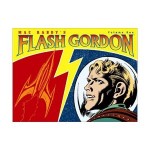
Mac Raboy’s Flash Gordon: Volume 1 Sunday Strips from 1948-1953


By Don Moore & Mac Raboy (Dark Horse)
ISBN: 978-1-56971-882-7

By most lights Flash Gordon is the most influential comic strip in the world. When the hero debuted on Sunday January 7th 1934 (with the superb Jungle Jim running as a supplementary “topper” strip) as an answer to the revolutionary, inspirational, but quirkily clunky Buck Rogers by Philip Nolan and Dick Calkins (which also began on January 7th, but in 1929) two new elements were added to the wonderment; Classical Lyricism and poetic dynamism. It became a weekly invitation to stunning exotic glamour and astonishing beauty.

Where Rogers blended traditional adventure and high science concepts, Flash Gordon reinterpreted fairy tales, heroic epics and mythology, spectacularly draping them in the trappings of the contemporary future, with varying ‘Rays’, ‘Engines’ and ‘Motors’ substituting for trusty swords and lances – although there were also plenty of those – and exotic craft and contraptions standing in for galleons, chariots and magic carpets. It was a narrative trick that kept the far-fetched satisfactorily familiar – and was continued by Raboy and Moore in their run. Look closely and you’ll see cowboys, gangsters and of course, flying saucer fetishes adding contemporary flourish to the fanciful fables in this volume…

Most important of all, the sheer artistic talent of Raymond, his compositional skills, fine line-work, eye for unmuddled detail and just plain genius for drawing beautiful people and things, swiftly made this the strip that all young artists swiped from.

When all-original comic books began a few years later, literally dozens of talented kids used the clean-lined Romanticism of Gordon as their model and ticket to future success in the field of adventure strips. Almost all the others went with Milton Caniff’s expressionistic masterpiece Terry and the Pirates (and to see one of his better disciples check out Beyond Mars, illustrated by the wonderful Lee Elias).

Flash Gordon began on present-day Earth (which was 1934, remember?) with a rogue planet about to smash the World. As global panic ensued, polo player Flash and fellow passenger Dale Arden narrowly escaped disaster when a meteor fragment downed their airliner. They landed on the estate of tormented genius Dr. Hans Zarkov, who imprisoned them in the rocket-ship he had built.

His plan? To fly the ship directly at the astral invader and deflect it from Earth by crashing into it…!

Thus began a decade of sheer escapist magic in a Ruritanian Neverland: a blend of Camelot, Oz and every fabled paradise that promised paradise yet concealed hidden vipers, ogres and demons, all cloaked in a glimmering sheen of sleek futurism. Worthy adversaries such as utterly evil but magnetic Ming, emperor of the fantastic wandering planet; myriad exotic races and shattering conflicts offered a fantastic alternative to drab and dangerous reality for millions of avid readers around the world.

Alex Raymond’s ‘On the Planet Mongo’ with Don Moore doing the bulk of the scripting, ran every Sunday until 1944, when the artist joined the Marines. On his return he eschewed wild imaginings for sober reality and created the gentleman detective serial Rip Kirby. The continuous, unmissable weekly appointment with sheer wonderment, continued under the artistic auspices of Austin Briggs – who had drawn the daily black and white instalments since 1940.

In 1948, eight years after beginning his career drawing for the Harry A. Chesler production “shop” comicbook artist Emanual “Mac” Raboy took over the illustration of the Sunday page. Moore remained as scripter and began co-writing with the artist.

Raboy’s sleek, fine-line brush style, heavily influenced by his idol Raymond, had made his work on Captain Marvel Jr., Kid Eternity and the especially Green Lama a benchmark of artistic quality in the proliferating superhero genre. His seemingly inevitable assumption of the extraordinary exploits led to a renaissance of the strip and in the rapidly evolving post-war world Flash Gordon became once more a benchmark of timeless, escapist quality that only Hal Foster’s Prince Valiant could touch.

This first 260 page volume, produced in landscape format and printed in bold stark monochrome (although one or two strips appear to have been scanned from printed colour copies) covers the period January 8th 1948 to May 10th 1953 and opens with Flash as President of Mongo when Slyk, a refugee from the believed-uninhabited moon of Lunita, arrives. Beseeching assistance to liberate his world from the tyrannical depredations of the wicked siblings Rudo and Lura, the Lunite accompanies Flash, Dale Arden and Dr. Zarkov to his hidden moon where the heroes are soon captured before Slyk saves the day.

This short transitional tale set up an unfailingly popular formula of nightmarish beasts, distressed damsels and outrageous adventure that would last until Raboy’s death in 1967.

Returning to Mongo Flash and Co. discovered a red comet hurtling towards that fabulous world. Whilst trying to deflect it they become trapped by the civilisation who inhabit its interior, creatures to whom gravity is but a toy… Once more romance, intrigue and beautifully depicted action were the order of many days until the trio toppled the masters and placed far more agreeable rulers in charge, saving their adopted world and the greater universe.

The saga lasted until June of 1949 and was promptly followed by a stunning undersea odyssey as a brief trip to Mongo’s beaches led Flash and Dale into murky waters when they rescued captivating Merma from monstrous sub-sea marauder Sharki and became enmeshed in a watery range-war and tricky romantic quadrangle involving hidden kingdoms, scaly savages and outrageous leviathans and sea-beasts.

It was off to the frozen principality of Polaria next where ambitious Prince Polon was covering up a plague of giant monsters preying on the people. Of course the scurvy villain was behind the plot, using size-shifting rays and his ultimate aim was to become dictator of all Mongo…

The scheme obviously gave other regional rulers ideas. No sooner did President Flash return than he was off again to the Tropix Islands where “Queen” Rubia had fomented rebellion and seceded from the democratic federation of Mongo States. Hands-on Flash went undercover with Dale in an Arabian adventure to rival Sinbad’s greatest: before the people were liberated and the despots destroyed there was a panoply of spectacular action and fantastic creatures to survive…

Rubia, defeated, was dispatched to the prison moon Exilia, but all was not right on that grim penal colony. Once more surreptitiously investigating our hero discovered that villains had taken over the penal-planet and were preparing to attack civilized Mongo. Luckily Rubia and criminal mastermind Zin believed Flash to be his own double, dispatched to Exilia for impersonating the President – but they’re were not fooled for long…

This awesome extended epic ran from 6th March to November 5th 1950 and was followed by a proposed change-of-pace as Flash and Dale took off for a much-needed vacation on Earth. Unfortunately ever-malicious Rubia sabotaged their ship and they crash-landed on the unexplored Planet Zeta. It surely came as no surprise to fans when they discovered another beautifully barbarous lost civilisation there…

Zeta was a world of colossal plants and feudal warriors, but hid a dangerous secret. Something in the environment consumed metal. Within minutes Flash and Dale saw their ship and weapons melt away… Befriended instead of attacked the castaways found the inhabitants lived on a world seemingly immune to technological advancement, controlled by “wizards” who soon decided that Flash was a threat…

Flash discovers the metal-eating plague was artificial and helped the Zetans rebel and they helped him construct a new ship. Once more en route for Earth Flash and Dale encountered a stranger meteor, but without further mishap arrived safely. On March 25th 1951 (17 years and some months after they departed) two of earth’s first star-travellers finally returned to their birthworld and were feted like royalty. Sadly they should have paid closer attention to that vagrant space-rock as soon, Earth was under attack by strategically aimed meteors.

With Einsteinish Professor Brite in tow, Flash and Dale tracked the attacks to the Moon where they met beetle-men and human dictator Rak who planned to conquer Earth with his lunar meteor gun. He had never encountered a man like Flash Gordon before…

With Rak’s threat ended Flash helped Earth build a sentinel Space Platform, but when he, Dale, engineer Dr. Ruff and his annoying niece Ginger began work 1000 miles up they clashed with a strange race of flying saucer-riding space gnomes from Mars…

At this time Mars clearly preferred, if not actually needed, Earth women and with Dale and Ginger abducted, another sterling romp ensued. Flash outfoxed the malign gnome-king Toxo before subsequently leading a full expedition to the Red planet where he discovered another advanced feudal civilisation and that Martian women – or at least their Queen, Menta – had no worries, looks-wise…

Menta was however, a spoiled and murderous psychopath determined to conquer Earth…

This epic ran until February 24th 1952, whereupon Flash returned to Earth to discover his homeworld gripped in a new Ice Age. Jetting to the Arctic the good guys found Frost Giants from Saturn (the fifth moon Rhea to be exact) and that the big Freeze was artificially induced. Although he destroyed their forward base the Giants dragged Flash back to Rhea and inadvertently introduced human smallpox into their population…

Earth commander “Icy” Stark abandoned Dale after a space battle but Flash, with new Rhean allies rescued her and once more led a hostage society to overthrow its unfit rulers. On the return to Earth the fleet encountered a guided comet and met a new foe in Pyron the Comet Master.

Reunited with Dr. Zarkov the heroes battled the demented scientist’s horrendous creatures, saving Earth from flaming doom but were catapulted helplessly to the surface of enigmatic Venus for the last complete adventure in this stellar collection.

Not only is our solar system teeming with unsuspected life, but it appeared most of it was ruled by complete sods, as Flash, Dale and Zarkov battled winged tree-men, swamp horrors and the nefarious overlord Stang, enduring staggering hardship and hazard before crushing the tyrant and freeing two separate races from terror.

With a new ship, the far-flung travellers set off for Earth but were forced to land on the Moon where a secret human base had been established. For unknown reasons Dr. Stella and her thuggish aide Marc detained and delayed them, but when an increasing number of close shaves and mysterious accidents occurred, a little digging revealed that they were the unwitting guests of ruthless space pirates…

As is probably fitting for one of the world’s greatest continuity strips this first volume ends on a gripping cliffhanger, but with so much incredible action, drawn with such magnificent style there’s no way any fan of classic adventure can possibly feel short-changed

Mac Raboy was the last of the Golden Age of romanticist pencillers; his lush and lavish flowing adoration of the perfect human form was already fading from popular taste (for example the Daily feature at this time switched to the solid, chunky, He-manly burly, realism of Dan Barry and even Frank Frazetta) but here at least the last outpost of beautiful heroism and pretty perils prevailed, and thanks to Dark Horse you can visit as easily and often as Flash and Dale popped between planets, just by picking up this book and ones which followed…
© 2003 King Features Syndicate Inc. ™ Hearst Holdings, Inc. All Rights Reserved.

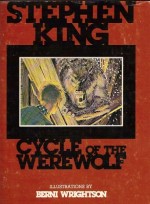
Cycle of the Werewolf


By Stephen King, illustrated by Berni Wrightson (Land of Enchantment/Signet/New English Library)
ISBNs deluxe hardback edition: 0-9603828, paperback 978-0-45005-878-3

Not so much a novel as a serial of connected short stories Cycle of the Werewolf is comprised of a dozen discrete episodes describing a series of brutal killings which occur in the isolated New England town of Tarker’s Mills, Maine. The clue is in the title but for the terrified inhabitants it’s some while before the penny drops and the Full Moon Murderer is correctly profiled as a supernatural hairy slavering monster and not a bunch of accidents of a malicious human madman…

Divided into twelve chapters, the blood-soaked year is lavishly illustrated by comics legend Berni Wrightson in 12 lush and gory colour paintings, 12 moody black and white pen drawings and another dozen stunning monochrome spreads to delineate the changing months. It is some of his best work ever and seems to be to mark the moment he switched from pen and ink disciple of EC horror maestro “Ghastly” Graham Ingels and became a paint and colour illustrator in his own right.

The controversial project – most King followers don’t like this tale very much – began life as a proposed horror-calendar but grew and evolved into a terrifying picture book novella, initially released as a collectors edition hardcover in 1983, with a limited signed edition also available. The story was filmed as Silver Bullet in 1985 and released in a mass-market paperback edition by Signet in the US and New English Library here.

Moreover comics fans aren’t the only continuity completists and I should mention that one of the survivor’s of King’s vampire classic Salem’s Lot meets a grisly end here as May’s victim, whilst the inclusion of peripatetic preacher Father Callahan means that technically Cycle of the Werewolf is a part of King’s Dark Tower/Wheel of Ka sequence of novels.

Whereas the oversized hardback I’m reviewing might be a little difficult to find – but not impossible – the illustrated Signet softcover edition is pretty common, and speaking as someone who’s not the biggest devotee of King’s horror writing, I can honestly say that as supernatural chillers go this story ain’t that bad, whilst the art is completely astounding.
This edition © 1983 Land of Enchantment. Text © 1983 Stephen King. Illustrations © 1983 Berni Wrightson. All rights reserved.

Special Exits (A Graphic Memoir)


By Joyce Farmer (Fantagraphics Books)
ISBN: 978-1-60699-381-1

There’s no happy ending here. The heroes die. That’s the point…

Joyce Farmer has been a “name” underground cartoonist since 1975 when she and Lyn Chevely formed Nanny Goat Productions in response to the oppressive, aggressive sexism prevalent in a most Counterculture commix of the time. Among their shocking, groundbreaking and extremely influential creations were the informative 1973 graphic tract ‘Abortion Eve’ and their women-only anthology series Tits & Clits. Farmer has since appeared in Wimmen’s Comix, Zero-Zero and other alternative publications.

In this deeply moving fictionalised account, Farmer uses all her considerable skills to confront the issue of ordinary mortality on the most personal terms as she tells the tale of the four years in which she saw both her parents slowly fade away. Death is a bastardised, trivialised and melodramatically sensationalised phenomenon in comics, and how genuine lives end a touchy subject in our medically nigh-miraculous modern world, so serious, sensitive and above all sensible explorations of the inescapable situation that faces us all are pretty few and far between.

Set at the end of the 1980s and beginning of the 1990s this slowly unfolding, quiet drama follows Lars and Rachel as age and increasing infirmity eat away at their treasured independence, and tracks their growing voluntary isolation and inescapably increasing reliance on daughter Laura for the basics of life. Food, sanitation, even human company, all slip inexorably from their own control leading to loss of facility, faculties, confidence, companionship and inevitably, life itself.

That bald statement tells what happens, but the seductive power of this story is not “what” but “how” as with concise, underplayed warmth and deceptively simple line drawing Farmer makes Lars, Rachel and Laura come vibrantly alive. Rachel’s unswerving faith, once-rugged Lars’ stoic acceptance of diminishing physical and mental resources and Laura’s dogged determination to defend her parents’ wishes and dignity from a society and system that increasingly has no room for anybody who won’t go with the flow, in the face of her own imminent loss, is a master-class in grace under fire.

It’s a hard, harsh narrative trick to introduce characters just to kill them off but even with that knowledge paramount in our minds it’s impossible not to become great friends with these good people deep in the act of leaving us forever.

Written with impressive empathy and obviously heartfelt, angry frustration even years later, this memoir confronts issues that will affect every single one of us whether or not we have the guts to face it, and the light airy art and terrific supporting cast – especially Ching the cat – keeps the tone hopeful and ultimately upbeat even through the worst of all times.

This is a book you must read. Like Robert Crumb, I too found tears in my eyes at the book’s end – and so will you. There is no conclusion reached; just a resolution to move on… but the brave example of the ordinary heroes is one we should all learn from…

Unsentimental, education and inspirational Special Exits is a tale no rational mortal can afford to miss.

© 2010 Joyce Farmer. This edition © 2010 Fantagraphics Books. All rights reserved.

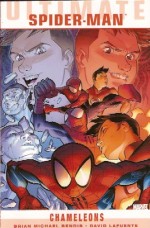
Ultimate Spider-Man book 2: Chameleons


By Brian Michael Bendis, Takeshi Miyazawa & Davis LaFuente (Marvel/Panini UK)
ISBN: 978-1-84653-466-9

The Marvel Ultimates project began in 2000 with a drastically modernizing refit of key characters and concepts to bring them into line with contemporary consumers – perceived to be a separate market to the baby-boomers and their declining descendents who seemed content with the assorted efforts which sprang from the hearts and minds of Kirby, Ditko and Lee.

Eventually the stripped-down new universe became as overcrowded and continuity-constricted as the original, leading to the 2008 “Ultimatum” publishing event which thinned the new herd – and millions of ordinary mortals into the bargain.

Although a commercial success the epic was largely slated by the fans who had bought it, and the ongoing “Ultimatum Comics” quietly soldiered on without “mentioning the War…”

The key and era-ending event was actually a colossal tsunami that drowned the superhero-heavy island of Manhattan and this second post-tidal wave collection (assembling issues #7-14 of the relaunched Ultimate Comics Spider-Man) picks up the story of young Peter Parker and his unique house-guests all slowly readjusting to their altered state.

Parker is sixteen (but looks 12), the perennial hard-luck loser kid: a brilliant geek just trying to get by in a world where daily education is infinitely more scary than monsters and villains. Between High School and slinging fast food (Burger Frog is his only source of income since the Daily Bugle drowned) he still finds time to fight crime although his very public heroics during the crisis have made him a beloved hero of police and citizenry alike – which is the creepiest thing he has ever endured.

He lives in a big house with his Aunt May, and despite his low self-image has stellar hottie Gwen Stacy for a devoted girlfriend, but perpetually endures the teen-angsty situation of equally stellar hottie Mary Jane Watson (his ex-squeeze) hanging around and acting all grown-up about it. He briefly dated mutant babe Kitty Pride: remember when not having any girlfriend was the textbook definition of “loser”?

Many kids are homeless after the deluge, with schools and accommodation stretched to breaking point, so feisty May Parker has opened her doors to a select band of orphaned super-teens like the Human Torch and Iceman, as well as Gwen. Peter’s secret identity was constantly threatened before; how can he possibly conceal his adventurous life when two such famous characters are suddenly sharing the bathroom and his exploits…?

This second delightful collection opens with a new presence in the Ultimate Universe as near-neighbour Rick Jones is possessed by an ancient intergalactic presence. Cool Youngbloods Spidey, Torch and Iceman befriend the bewildered lad and are dragged along on a tumultuous fact-finding mission to secret base Project Pegasus just in time to clash with the sexy sirens of the all-girl Serpent Squad and discover that poor Rick – now calling himself “Nova” – is a cosmic “Chosen One” destined to save the World…

That two-part, laugh-packed thriller leads into decidedly darker territory in #9 as shallow jerk Johnny Storm finds the girl of his dreams in a new mysterious Spider-Girl whilst anti-mutant feeling grows and Kitty Pryde is almost snatched from school by brutally heavy-handed government agents.

On the run, Kitty goes dangerously rogue whilst her friends attempt to go public with the Authorities’ quasi-legal black-bag operation, enlisting the Fourth Estate in the form of the newly-restored Daily Bugle…

Unfortunately whilst trying to break the story of the Government’s anti-mutant agenda Peter Parker is abducted by an enigmatic shapechanger who borrows his form, his powers and his life. Issues #11-14 detail the Chameleon’s vindictive campaign to trash Spidey’s private life whilst using his stolen powers to go on a highly profitable, very public crime spree.

Meanwhile the real Peter is the prisoner of a second psychotic shapeshifter, who also has J. Jonah Jameson under wraps. In close proximity with Pete for days, the wily veteran newsman has deduced the boy’s greatest secret… The climax is breathtaking and portentous. Although temporarily safe, Parker’s life is about to go very badly wrong…

Combining smart dialogue and teen soap opera dynamics with spectacular action – beautifully rendered by artists Takeshi Miyazawa, David Lafuente and colourist Justin Ponsor – Brian Michael Bendis blends hilarious hi-jinks with staggering tension and shocking plot-twists to produce one of the most enjoyable takes on the wall-crawler in decades.

This series goes from strength to strength: a marvellously compelling and enjoyable costumed drama that easily overcomes its troubled origins. Absolutely worth any jaded superhero fan’s time and money Ultimate Spider-Man is well on the way to becoming an unmissable hit…
™ and © 2010 Marvel Entertainment LCC and its subsidiaries. All rights reserved. A British edition released by Panini UK Ltd.

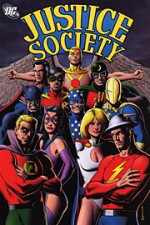
Justice Society Volume 2


By Paul Levitz, Joe Staton & various (DC Comics)
ISBN: 978-1-4012-1194-3

This second of twin volumes gathering the 1970s revival of the fabled Justice Society of America collects issues #68-74 of All-Star Comics plus the series’ continuation and conclusion from giant anthology title Adventure Comics #461-466.

Set on the parallel world of Earth-2 the veteran team was leavened with a smattering of teen heroes combined into a contentious, generation-gap fuelled “Super Squad” – although by the start of this book that rather naff sub-title has been quietly dropped and the assembled multi-generational team are all JSA-ers. .

Those youngsters included a grown up Robin, Sylvester Pemberton, the Star-Spangled Kid (a teen superhero from the 1940s who had been lost in time for decades) and a busty young nymphet who quickly became the feisty favourite of a generation of growing boys: Kara Zor-L – Power Girl.

By issue #68 (October, 1977) the curvy Kryptonian was clearly the star of the show and as ‘Divided We Stand!’ by Paul Levitz, Joe Staton & Bob Layton, concluded a long-running scheme by the villainous Psycho-Pirate to discredit and destroy the JSA she was well on the way to her first solo outing in Showcase #97-98 (reprinted in Power Girl). Meanwhile Green Lantern resumed a maniacal rampage through Gotham City and Police Commissioner Bruce Wayne took steps to bring the seemingly out-of control team to book.

In #69’s ‘United We Fall!’ Commissioner Wayne bought in his own team of retired JSA-ers to arrest the “rogue” heroes, resulting in a classic fanboy dream duel as Dr. Fate, Wildcat, Hawkman, Flash, GL and Star Spangled Kid battled the one-time Batman, Robin, Hourman, Starman, Dr. Midnight and Wonder Woman. It was a colourful catastrophe in waiting until Power Girl and Superman intervened to reveal the true cause of all the madness. And in the background, a new character was about to make a landmark debut…

With order (temporarily) restored ‘A Parting of the Ways!’ focussed on Wildcat and Star Spangled Kid as the off-duty heroes stumbled upon a high-tech gang of super-thieves called the Strike Force. The robbers initially proved too much for the pair and even new star The Huntress, but with a pair of startling revelations in ‘The Deadliest Game in Town!’ the trio finally triumphed. In the aftermath the Kid resigned and the daughter of Batman and Catwoman (alternate Earth, remember?) replaced him.

All-Star Comics #72 reintroduced a couple of classic Golden Age villainesses in ‘A Thorn by Any Other Name’ as the floral psychopath returned to poison Wildcat, leaving Helena Wayne to battle the original Huntress for the cure and the rights to the name…

The concluding ‘Be it Ever So Deadly’ (with Joe Giella taking over the in inkers role) saw the entire team in action as Huntress battled Huntress whilst Thorn and the Sportsmaster did their deadly best to destroy the heroes and their loved ones. Simultaneously in Egypt Hawkman and Dr. Fate stumbled upon a deadly ancient menace to all of reality…

The late 1970s was a perilous period for comics with drastically dwindling sales. Many titles were abruptly cancelled in a “DC Implosion” and All-Star Comics was one of the casualties. Issue #74 was the last and pitted the entire team against a mystic Armageddon perpetrated by the nigh-omnipotent Master Summoner who orchestrated a ‘World on the Edge of Ending’ before once more the Justice Society triumphed.

Although their book was gone the series continued in the massive 68 page anthology title Adventure Comics, beginning in #461 with the blockbuster tale intended for the anniversary 75th issue. Drawn and inked by Staton, ‘Only Legends Live Forever’ detailed the last case of Batman as the Dark Knight came out of retirement to battle a seeming nonentity who had mysteriously acquired god-like power.

Divided into two chapters, #462 delivered the shocking conclusion ‘The Legend Lives Again!’ whilst ‘The Night of the Soul Thief!’ saw Huntress, Robin and the assembled JSA deliver righteous justice to the mysterious mastermind who had truly orchestrated the death of the World’s Greatest Detective.

Adventure #464 provided an intriguing insight into aging warrior Wildcat as with ‘To Everything There is a Season…’ he embraced his own mortality and began a new career as a teacher of heroes, whilst ‘Countdown to Disaster!’ (inked by Dave Hunt) saw Flash, Green Lantern, Hawkman, Power Girl, Huntress and Dr. Fate hunt a doomsday device lost in the teeming masses of Gotham. It would be last modern solo outing of the team for decades.

But not the last in this volume: that honour falls to another Levitz & Staton landmark history lesson wherein they revealed why the team vanished at beginning of the 1950s. From Adventure #466 ‘The Defeat of the Justice Society!’ showed how the American Government betrayed their greatest champions during the McCarthy Witch-hunts provoking them into withdrawing from public, heroic life for over a decade – that is until the costumed stalwarts of Earth-1 started the whole Fights ‘n’ Tights scene all over again…

Although perhaps a little dated now, these exuberant, rapid-paced and imaginative yarns perfectly blend the naive charm of Golden Age derring-do with cynical yet hopeful modern sensibilities that will always hold out hope for hero to save the day. Fun, furious and ferociously fun, this is stuff non mystery-man maven can do without.
© 1977, 1978, 1979, 2006 DC Comics. All rights reserved.