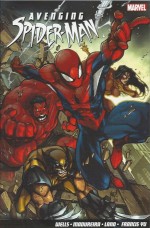
Avenging Spider-Man: My Friends Can Beat Up Your Friends


By Zeb Wells, Joe Madureira, Greg Land, Leinil Francis Yu, Jay Leisten & Gerardo Alanguilan (Marvel/Panini UK)
ISBN: 978-1-84653-509-3

Since Spider-Man first joined the Avengers he has spent a lot of time questioning his worth and fittingness and that nervous insecurity informs this delightful compendium of brief sidebar stories starring the wall-crawler and individual members of the World’s Mightiest Heroes in team-up action.

Collecting the first five issues of team-up title The Avenging Spider-Man, which began at the end of 2011 – presumably to capitalise on the then-impending Avengers film release – this engaging and upbeat compendium is as big on laughs as mayhem, as you’d expect with award-winning Robot Chicken scripter Zeb Wells at the keyboard…

The madcap mayhem begins with a three-part collaboration illustrated by Joe Madureira and co-starring military monolith Red Hulk wherein the subterranean Moloids once ruled over by the Mole Man attack during the New York Marathon and kidnap Mayor J. Jonah Jameson.

The only heroes available are the criminally mismatched and constantly bickering web-spinner and Crimson Colossus, who follow, by the most inconvenient and embarrassing method possible, the raiders back into the very bowels of the Earth…

There they discover that an even nastier race of deep Earth dwellers, the Molans, led by a brutal barbarian named Ra’ktar, have invaded the Mole Man’s lands and now are intent on taking the surface too. The only thing stopping them so far is a ceremonial single-combat duel between the monstrous Molan and the surface world “king” Mayor Jameson…

Understandably Red Hulk steps in as JJJ’s champion, with the Wall-crawler revelling in his own inadequacies and insecurities again, but when Ra’ktar kills the Scarlet Steamroller (don’t worry kids, it’s only a flesh wound: a really, really deep, incredibly debilitating flesh wound) Spider-Man has to suck it in and step up, once more defeating impossible odds and saving the day in his own inimitable, embarrassing and hilarious way…

Next up is a stand alone story pairing the web-spinner with the coolly capable and obnoxiously arrogant Hawkeye (limned by Greg Land & Jay Leisten) which superbly illustrates Spider-Man’s warmth, humanity and abiding empathy as the fractious allies foil an attempt by the sinister Serpent Society to unleash poison gas in the heart of the city, but without doubt the undisputed prize here is a magical buddy-bonding yarn featuring Captain America which charismatically concludes this compendium.

The wonderment begins when some recently rediscovered pre-WWII comics strips by ambitious and aspiring kid-cartoonist Steve Rogers leads to a mutual acknowledgement of both Cap and Spidey’s inner nerd… and just in case you’ve no soul, there’s also plenty of spectacular costumed conflict as the Avengers track down and polish off the remaining scaly scallywags of the Serpent Society in a cracking yarn illustrated by Leinil Francis Yu & Gerardo Alanguilan…

By turns outrageous, poignant, sentimental, suspenseful and always intoxicatingly action-packed, this is a welcome return to the good old fun-stuffed thriller frolics Spider-Man was born for…

™ & © 2012 Marvel and subs. Licensed by Marvel Characters B.V. through Panini S.p.A, Italy. All Rights Reserved. A British edition published by Panini UK, Ltd.

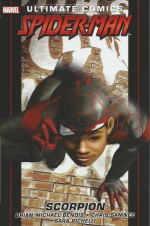
Ultimate Comics Spider-Man: Scorpion


By Brian Michael Bendis & Sara Pichelli (Marvel/Panini UK)
ISBN: 978-1-84653-515-4

When the Ultimate Comics Spider-Man died, a new hero in his image arose…

Marvel’s Ultimates imprint began in 2000 with a post-modern take on major characters and concepts to bring them into line with the tastes of a 21st century readership – a wholly different market from those baby-boomers and their descendents content to stick with the precepts sprung from founding talents Jack Kirby, Steve Ditko and Stan Lee… or simply those unable or unwilling to deal with the five decades (seven if you include the Golden Age Timely tales retroactively co-opted into the mix) of continuity baggage which saturated the originals.

Eventually even this darkly nihilistic new universe became as continuity-constricted as its ancestor and in 2008 the cleansing event “Ultimatum” culminated in a reign of terror which excised dozens of super-humans and millions of lesser mortals in a devastating tsunami which inundated Manhattan, courtesy of mutant menace Magneto.

In the aftermath Peter Parker and his fellow meta-human survivors struggled to restore order to a dangerous new world.

Spider-Man finally gained a measure of acceptance and was hailed a hero when he valiantly and very publicly met his end during a catastrophic super-villain showdown…

This collection (collecting Ultimate Comics Spider-Man #6-10) follows child prodigy Miles Morales as the freshly empowered 13 year old learns to cope with his astounding new physical abilities, discovers the painful cost of living a daily life of lies and how an inescapable sense of responsibility is the worst of all possible threats…

Now a day resident at the prestigious and life-changing Brooklyn Visions Academy Boarding School, Miles spends only weekends at home and is coming to terms with some unpleasant truths. Foremost is that he has secrets to keep from his parents, but also poisoning the air is the fact that his father used to be a street-thug and now passionately hates costumed heroes – like Spider-Man.

Almost as bad is the discovery that Miles’ Uncle Aaron is a major thief and bad-guy known in the game as the Prowler…

Ever since a living piece of Aaron’s loot bit Miles and transformed him into a super-strong and fast kid who can walk up walls, turn invisible and deliver a devastating venom charge through his hands, the Prowler has been laying low, and the action opens here as he resurfaces in Mexico, narrowly escaping a deal-gone-sour with local super-powered gang-lord the Scorpion.

Meanwhile the replacement Spider-Man has been making a name for himself in New York, and news of a junior Arachnid Avenger is soon making global headlines… Classmate, confidante and fellow nerd Ganke undertakes to train Miles using candid footage of the deceased Peter Parker in action and, when continued sightings of the boy hero reach Aaron south of the border, the wily rogue instantly puts two and two together and heads back to the Big Apple.

As the troubled teen tackles street scum and even old Spidey villains such as Omega Red, triumphing more by luck than skill or judgement, Aaron murders underworld tech-guru The Tinkerer and co-opts his ingenious arsenal of criminal gadgets before confronting Miles at school: offering hints at a possible partnership…

Since Peter Parker perished his Aunt May and true love Gwen Stacy have been world travelling. They’re in Paris when the shocking news of a successor reaches them…

In New York harassed Police Captain Quaid is also coming to terms with another Wall-crawling crazy to complicate his life but is utterly unaware that major grief has hit town as the Scorpion, following the Prowler, has seen New York is wide open for a new Kingpin of Crime to step in and take over…

After a spectacular battle against The Ringer, Spider-Man and Quaid reach an accommodation of sorts, but the Prowler’s first North American clash with the Scorpion doesn’t go nearly as well and Aaron Morales once again accosts his nephew with veiled threats and a shocking offer…

Of course it all devolves into a fist-fight before calmer heads prevail and Miles really thinks over what’s on the table: one of the world’s most effective and capable villains is offering to train him in combat, strategy and survival on the streets whilst schooling him in the myriad ways the underworld works…

Only problem is that the Prowler has no intention of reforming and won’t say what he expects in return…

To Be Continued…

Brian Michael Bendis, Chris Samnee & Sara Pichelli have crafted a stirring new chapter which offers intriguing new insights into the morally ambiguous and far less black-and-white world of modern Fights ‘n’ Tights dramas, and as usual this volume also contains a gallery of alternate covers to delight and thrill.

Tense, breathtaking, action-packed, evocative and portentous suspense; full of the light-hearted, self-aware and razor sharp humour which blessed the original Lee/Ditko tales, and lovely to look at, this second collection (which does end on a cliffhanger , I’m afraid) looks set to prove that the new Spider-Man is here to stay – unless they kill him too…
A British Edition ™ & © 2012 Marvel & Subs. Licensed by Marvel Characters B.V. and published by Panini UK, Ltd. All rights reserved.

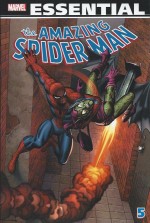
Essential Spider-Man volume 5


By Stan Lee, Roy Thomas, Gerry Conway, Gil Kane, John Romita & various (Marvel)
ISBN: 978-0-7851-1865-7

The Amazing Spider-Man was always a comic-book that matured with or perhaps just slightly ahead of its fan-base.

This fifth exceptionally economical monochrome volume of chronological web-spinning adventures sees the World’s Most Misunderstood Hero through another rocky period of transformation as the great second era of Amazing Arachnid artists moved inevitably to a close. Although the elder John Romita would remain closely connected to the Wall-Crawler’s adventures for a little time yet, these tales would be his last long run as lead illustrator on the series.

Stan Lee’s scripts were completely in tune with the times – as glimpsed by a lot of kid’s parents at least – and the burgeoning use of pure soap opera plots kept older readers glued to the series even if the bombastic battle sequences didn’t.

Thematically, there’s still a large percentage of old-fashioned crime and gangsterism and a dependence on mystery plots. The balance of costumed super-antagonists was finely balanced with thugs, hoods and mob-bosses, but these were not the individual gangs of the Ditko days.

Now Organised Crime and Mafia analogue The Maggia were the big criminal-cultural touchstone as comics caught up with modern movies and the headlines. Moreover during this period Lee finally defied Comics Code Authority mandates to tell a powerful tale of drug abuse which would (along with DC’s Green Lantern tales dealing with the same issue) force the industry’s censoring body to expunge the ludicrous dictat that comics could never mention narcotics under any circumstances…

This volume, reprinting Amazing Spider-Man #90-113, spans November 1970 to October 1972 and even includes some stunning art-in-progress and unfinished Gil Kane pages from issues #98 and 102 to edify and astound the readers, so be prepared to be utterly amazed…

Following directly on from ‘Doc Ock Lives!’ – which ended the previous Essential Edition on a cataclysmic cliffhanger – the action here opens with ‘And Death Shall Come!’ by Stan Lee, pencilled by Gil Kane & inked by John Romita Sr., wherein the multi-limbed menace ran riot in the city and Peter Parker’s attempts to stop him led to the death of a beloved cast member…

With the tragic demise, Spider-Man became a wanted fugitive and Jonah Jameson began backing “Law and Order” election hopeful Sam Bullitt in a campaign ‘To Smash the Spider!’, utterly unaware of the politician’s disreputable past, but the secret came out in #92’s ‘When Iceman Attacks’.

The ambitious demagogue convinced the youngest X-Man that Spider-Man had kidnapped Parker’s paramour Gwen Stacy but the Wondrous Wall-Crawler’s explosive battle against the mutant exposed the corrupt and explicitly racist Bullit in an all-out action extravaganza featuring some of the best action art of the decade by two of the industry’s greatest names.

Romita resumed pencilling with issue #93, which saw the return of a forgotten foe in ‘The Lady and… The Prowler!’. Hobie Brown was a super-burglar gone straight, but when he saw that the Amazing Arachnid was wanted, he too was all to ready to believe the media hype and not his old benefactor…

Amazing Spider-Man #94 (Lee, Romita & Sal Buscema) offered a new glimpse of the fabled origin of the hero as part of a dynamic dust-up with the Beetle ‘On Wings of Death!’ after which Peter headed for London to woo his estranged girlfriend Gwen, who had fled the manic violence of America.

Sadly ‘Trap for a Terrorist’ found the city under threat of destruction from radical bombers, which only Spider-Man could handle, so she returned home, never knowing Parker had come after her. Everything was forgotten in the next issue when deeply disturbed and partially amnesiac industrialist Norman Osborn remembered he was the Green Goblin and once more attacked Peter in #96’s ‘…And Now, the Goblin!’ by Lee, Kane & Romita.

Lee had long wanted to address the contemporary drugs situation in his stories but was forbidden by Comics Code strictures. When the US Department of Health, Education and Welfare approached him to tackle the issue he produced the three-part Goblin tale. When it was declined Code approval he went ahead and published it anyway…

Although the return of the madman who knew all Spider-Man’s secrets was the big fan-draw the real meat of the tale was how Osborn’s son Harry – a perfectly normal rich white kid – could be drawn into a web of addiction, abuse and toxic overdose…

Frank Giacoia began inking Kane with the second instalment ‘In the Grip of the Goblin!’ as the elder Osborn ran riot, almost killing the wall-crawler and preparing for his final deadly assault even as his son lay dying, before the saga spectacularly concluded with ‘The Goblin’s Last Gasp!’ wherein the villain’s deeply buried paternal love proved his undoing and Parker’s salvation…

Amazing Spider-Man #99 ‘A Day in the Life of…’ was an action-packed palate-cleanser with Peter and Gwen finally getting their love-life back on track, only marginally marred by a prison breakout which was easily quelled by the Arachnid Avenger, but the anniversary 100th issue ‘The Spider or the Man?’ proved to be a game-changing shocker as, determined to retire and marry, Peter attempts to destroy his powers with an untested serum.

The result was a hallucinogenic trip wherein Kane & Giacoia got to draw an all-out battle between Spidey and a host of old enemies and a waking nightmare when Peter regained consciousness and discovered he had grown four extra arms…

With #101 Roy Thomas stepped in as scripter for ‘A Monster Called… Morbius!’, as the eight-limbed Parker desperately sought a way to reverse his condition and stumbled across a murderous costumed horror who drank human blood. To make matters worse old foe The Lizard turned up, determined to kill them both…

Amongst the many things banned by the Comics Code in 1954 were horror staples vampires and werewolves, but the changing comics tastes and rising costs of the early 1970s were seeing Superhero titles dropping like flies in snowstorm. With interest in suspense and the supernatural growing, all companies were pushing to re-establish scary comics again and the covert introduction of a “Living Vampire” here led to another challenge to the CCA, the eventually revision of the horror section of the Code and the resurgent rise of supernatural heroes and titles.

For one month Marvel also experimented with double-sized comicbooks (DC’s switch to 52-page issues lasted almost a year: August 1971-June 1972 cover-dates) and Amazing Spider-Man #102 featured an immense, three-chapter blockbuster beginning with ‘Vampire at Large!’ as octo-webspinner and anthropoid reptile joined forces to hunt the bloodsucker after discovering a factor in the vampire’s saliva which could cure both part-time monsters’ respective conditions.

‘The Way it Began’ diverged from the tale to present the tragic secret origin of Nobel Prize winning biologist Michael Morbius and how be turned himself into a haunted night horror before ‘The Curse and the Cure!’ brought the tale to a blistering conclusion and restored the status quo.

Designed as another extra-long epic, ‘Walk the Savage Land!’ began in the now conventional sized #103 but was sliced in half and finished as #104 ‘The Beauty and the Brute’ in #104. When the Daily Bugle suffered a financial crisis, Jameson took Peter Parker and Gwen Stacy on a monster hunt to the Lost World under the Antarctic, encountering not only dinosaurs and cavemen but also noble savage Ka-Zar, perfidious villain Kraven the Hunter and even terrifying alien baby Gog in a fabulous pastiche and homage to Willis O’Brien’s King Kong from Thomas, Kane & Giacoia.

Capitalising on an era rife with social unrest and political protest, Stan Lee returned in #105 with ‘The Spider Slayer!’ as the New York City police put spy cameras on every rooftop and discredited technologist Spencer Smythe resurfaced with an even more formidable anti-Spider-Man robot for Jamison to set against the Wall-crawler. The story also featured the release of Harry Osborn from drug rehab and old Parker gadfly Flash Thompson came back from Vietnam, but the big shock was discovering the once beneficent Smythe had gone bonkers…

Responsible for the Police spy-eyes too, Smythe had photographed Spidey without his mask and in ‘Squash! Goes the Spider!’ (triumphantly pencilled by the returning Romita) the Professor sold out old employer Jameson, allied with criminal gangs and attempted to plunder the city. When the Amazing Arachnid tried to stop the banditry he found himself facing the ultimate Spider-Slayer before valiantly battling his way to victory in ‘Spidey Smashes Thru!’

The secret of Flash Thompson began to unravel in issue #108’s ‘Vengeance from Vietnam!’ (with Romita inking his own pencils) as the troubled war hero revealed an American war atrocity which had left a peaceful in-country village devastated, a benign mystic comatose and set a vengeful cult upon the saddened soldier’s guilt-ridden heels, which even all Spider-Man’s best efforts could not deflect or deter.

The campaign of terror was only concluded in #109 when ‘Enter: Dr. Strange!’ saw the Master of the Mystic Arts divine the truth and set things aright, after which #110’s ‘The Birth of… the Gibbon!’ found the world-weary wall-crawler battling shunned and lonely outcast Martin Blank, whose anthropoid frame and lack of friends had made his life a living hell…

The Gibbon was back a month later when Kraven brainwashed the hapless outcast ‘To Stalk a Spider!’ in a tale which saw the beginning of young Gerry Conway’s tenure on the title, whilst #112 saw another periodic crisis of faith for Peter Parker when ‘Spidey Cops Out!’ found the hero ready to chuck it all in until another nightmarish old adversary resurfaced as part of a burgeoning gang war…

We end as we began with #113 and ‘They Call the Doctor… Octopus!’ (Conway & Romita with art assistance from Tony Mortellaro and Jim Starlin) as the city is plunged into chaos when the multi-limbed madman squares off against the mysterious gang-boss Hammerhead with a rededicated but fearfully overmatched Spider-Man caught in the middle…

For the cataclysmic outcome you’ll need to see volume 6…

Despite that major qualification this is still a fantastic book about an increasingly relevant teen icon and symbol. Spider-Man at this time became a crucial part of many youngsters’ lives and did so by living a life as close to theirs as social mores and the Comics Code would allow.

Blending cultural veracity with stunning art and making a dramatic virtue of the awkwardness, confusion and sense of powerlessness that most of the readership experienced daily resulted in an irresistibly intoxicating read, delivered in addictive soap-opera instalments, but none of that would be relevant if the stories weren’t so compellingly entertaining. This intoxicating transitional book is Stan Lee’s Spider-Man at his very best and also shows the way in which the hero began to finally outgrow his (co)creator.
© 1970, 1971, 1972, 2011 Marvel Entertainment Group, Inc. All rights reserved.

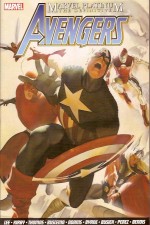
Marvel Platinum: the Definitive Avengers


By Stan Lee, Jack Kirby, Roy Thomas, John Buscema, Neal Adams, John Byrne, Kurt Busiek, George Pérez, Brian Michael Bendis & various (Marvel/Panini UK)
ISBN: 978-1-84653-507-9

The Avengers have always proved that putting all one’s star eggs in one single basket pays off big-time: even when all Marvel’s all-stars such as Thor, Captain America and Iron Man were absent, it merely allowed the team’s lesser lights to shine more brightly.

Of course all the founding stars regularly featured due to the rotating, open-door policy which meant most issues included somebody’s fave-rave – and the boldly grand-scale impressive stories and artwork were no hindrance either.

As the new Avengers film screens across the world, Marvel has again released a bunch of tie-in books and trade paperback collections to maximise exposure and cater to those movie fans wanting to follow up the cinematic exposure with a comics experience.

Under the Marvel Platinum/Definitive Editions umbrella, this treasury of tales reprints some obvious landmarks from the pantheon’s serried history, specifically Avengers volume 1 #1, 4, 57, 93, Avengers West Coast #51-52, Avengers volume 3, #10-11, Avengers volume 1 #503, Avengers Finale and New Avengers #3 which, whilst not all absolutely “definitive” epics, certainly offer a sublime snapshot of just how very great the ever-shifting team of titans can be.

During the Marvel Renaissance of the early 1960’s Stan Lee and Jack Kirby aped the tactic which had worked so tellingly for DC Comics, but with mixed results. Julie Schwartz had incredible success with revised and modernised versions of the company’s Golden Age greats, so it seemed natural to try and revive the characters that had dominated Timely/Atlas in those halcyon days. The JLA inspired Fantastic Four featured a new Human Torch and before long Sub-Mariner was back too…

As the costumed hero revival brought continuing success, the next stage was obvious and is covered here at then end of the volume by historian Mike Conroy’s informative essay ‘The True Origin of the Avengers’…

The concept of combining individual stars into a group had already made the Justice League of America a commercial winner and inspired the moribund Atlas outfit of Stan Lee, Jack Kirby and Steve Ditko to invent many “super-characters” after the Fantastic Four. Nearly 18 months later the fledgling House of Ideas had a viable stable of leading men (but only sidekick women) so Lee & Kirby assembled a handful of them and moulded them into a force for justice and even higher sales…

After a period of meteoric expansion, in 1963 the burgeoning Marvel Universe was finally ready to emulate the successful DC concept that had truly kick-started the Silver Age of comics and this stunning historical retrospective begins as it should with two stories from the groundbreaking Lee/Kirby run which graced the first eight issues of the World’s Mightiest Heroes.

Seldom has it ever been done with such style and sheer exuberance. Cover-dated September, The Avengers #1 launched as part of an expansion package which also included Sgt Fury and his Howling Commandos and The X-Men…

The Coming of the Avengers’ is one of the cannier origin tales in comics. Instead of starting at a zero point and acting as if the reader knew nothing, Stan & Jack (plus inker Dick Ayers) assumed readers had at least a passing familiarity with their other efforts and wasted very little time or energy on introductions.

In Asgard Loki, god of evil, was imprisoned on a dank isle, hungry for vengeance on his half-brother Thor. Observing Earth he espied the monstrous, misunderstood Hulk and engineered a situation wherein the man-brute seemingly went berserk to trick the Thunder God into battling the monster. When the Hulk’s sidekick Rick Jones radioed the Fantastic Four for assistance, Loki diverted the transmission and smugly waited for the mayhem to manifest.

Unfortunately for him, Iron Man, Ant-Man and the Wasp also picked up the SOS….

As the heroes converged in the American Southwest to search for the Jade Giant they realized that something was oddly amiss…

This terse, epic, compelling and wide-ranging yarn (New York, New Mexico, Detroit and Asgard in 22 pages) is Lee & Kirby at their bombastic best and one of the greatest adventure stories of the Silver Age and is followed by the long-awaited return of the last of the “Big Three”…

Avengers #4 (March 1964) was a true landmark of the genre as Marvel’s greatest Golden Age sensation was revived. ‘Captain America Joins the Avengers!’ has everything that made the company’s early tales so fresh and vital. The majesty of a legendary warrior (that most of the readers had never heard of!) returned in our time of greatest need, stark tragedy in the loss of his boon companion Bucky, aliens, gangsters, Sub-Mariner and even wry social commentary. This story by Lee, Kirby & George Roussos just cannot be bettered.

In #57 (October 1968) Roy Thomas, John Buscema & George Klein produced a Golden Age revival of their own as ‘Behold… the Vision!’ introduced a terrifying android apparition designed by arch-foe Ultron to destroy the heroes. Sadly not appearing here is the conclusion wherein the eerie, amnesiac, artificial man with complete control of his mass and density discovered a fraction of his origins and joined the human heroes….

Avengers #89-97 comprised perhaps the most ambitious and certainly boldest saga in Marvel’s early history: an astounding epic of tremendous scope which dumped Earth into a cosmic war the likes of which comics fans had never before seen and creating the template for all multi-part crossovers and publishing events ever since.

The Kree-Skull War captivated a generation of comics readers and from that epic comes the extra-long ‘This Beachhead Earth’ (Avengers #93 November 1972, by Thomas, Neal Adams & Tom Palmer) as the Vision was almost destroyed by alien invaders and Ant-Man was forced to undertake ‘A Journey to the Center of the Android!’ to save the android’s unconventional life. Thereafter the Avengers became aware of not one but two alien presences on Earth: bellicose Kree and sneaky shape-shifting Skrulls, beginning a ‘War of the Weirds!’ on our fragile globe.

Acting too late, the assembled team were unable to prevent the Scarlet Witch, Quicksilver and Captain Marvel from being abducted by the Skrulls…

That cliff-hanging drama is followed by a revelatory two-part tale from Avengers West Coast #51-52 (November and December 1989) by John Byrne & Mike Machlan which opens with ‘I Sing of Arms and Heroes…’ wherein the Scarlet Witch hunted for her missing children only to discover some horrifying truths about them and her own powers. The tragedy was only resolved when demonic foe Master Pandemonium and supernal arch-tempter Mephisto deprived her of everything she had ever believed, wanted or loved in ‘Fragments of a Greater Darkness’…

Avengers volume 3, #10-11 (November and December 1998) by Kurt Busiek, George Pérez, Al Vey & Bob Wiacek) recaps the history and celebrates the team’s anniversary with a parade in ‘Pomp and Pageantry’ until the ghostly Grim Reaper hijacked the affair and attacked them through the medium of their own dead yet resurrected members Wonder Man, Mockingbird, Swordsman, Hellcat, Dr. Druid, Thunderstrike and Captain Marvel. At the same time the increasingly unstable Scarlet Witch learned the true nature of her reality-altering powers in the catastrophic concluding clash ‘…Always an Avenger!’

A few years later the “World’s Mightiest Heroes” were shut down and rebooted in a highly publicised event known as Avengers Disassembled. Of course it was only to replace them with both The New and The Young Avengers. Affiliated comic-books Thor, Iron Man, Captain America, Fantastic Four and Spectacular Spider-Man ran parallel but not necessarily interconnected story-arcs to accompany the Big Show.

Said Show consisted of the worst day in the team’s history as a trusted comrade betrayed the World’s Mightiest Superteam resulting in the destruction of everything they held dear and the death of several members, all of which originally appeared in issues #500-503 plus the one-shot Avengers Finale.

From that epic event comes the closing chapter ‘Chaos part four’ (#503, December 2004, by Brian Michael Bendis, David Finch, Olivier Coipel & Danny Miki) wherein the uncomprehending, surviving heroes discovered and reluctantly despatched the true author of all their woes and losses, after which the moody and elegiac Avengers Finale signalled the end of an era in a powerful tribute by a host of creators including Bendis and artists Finch, Miki, Frank D’Armata, Alex Maleev, Steve Epting, Lee Weeks, Brian Reber, Michael Gaydos, Eric Powell, Darick Robertson, Mike Mayhew, Andy Troy, David Mack, Gary Frank, Mike Avon Oeming, Pete Patanzis, Jim Cheung, Mark Morales, Justin Ponsor, Steve McNiven, George Pérez, Mike Perkins, Neal Adams & Laura Martin.

It is undeniably one of the best superhero “Last Battles” ever created, and loses little impact whether it was your five hundredth or first experience with these tragic heroes.

Shocking and beautiful, there was a genuine feeling of an “End of Days” to this epic Armageddon.

The final comics tale in this sturdy volume comes from New Avengers #3 (March 2005) as, in the aftermath of a massive breakout of super-villains, Captain America and Iron Man tried to put the band back together with a whole new generation including Luke Cage, Spider-Woman and the Amazing Spider-Man.

‘Breakout Part 3’ is just a fraction of a longer epic by Bendis, Finch, Allen Martinez, Miki & Victor Olazaba, but ends this action-adventure compendium on a solid note indicating that the best is still yet to come…

Also contained herein is an extensive prose feature covering the history of the team, the aforementioned ‘true origin’ piece and a raft of classic covers to tantalise and tempt…

This book is one of the very best of these perennial supplements to cinema spectacle, but more importantly it is a supremely well-tailored device to turn curious movie-goers into fans of the comic incarnation too. If there’s a movie sequel, I’m sure Marvel has plans for reprinting much of the masterful material necessarily omitted here, but at least until then we have a superb selection to entice newcomers and charm the veteran American Dreamers.
™ and © 1963, 1964, 1968, 1972, 1989, 1998, 2004, 2005, 2012 Marvel & subs. Licensed by Marvel Characters B.V. through Panini S.p.A, Italy. All Rights Reserved. A British edition published by Panini UK, Ltd.
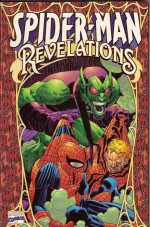
Spider-Man: Revelations


By Todd DeZago, J.M. DeMatteis, Tom DeFalco, Howard Mackie, Luke Ross, Mike Wieringo, Steve Skroce, John Romita Jr. & various (Marvel)
ISBN: 0-7851-0560-3

There was a time in the mid 1990s where, to all intents and purposes, the corporate monolith known as Marvel Comics seemed to have completely lost the plot. An awful lot of stories from that period will hopefully never be reprinted, but some of them at least weren’t completely beyond redemption.

If you mention “the Clone Saga” to an older Spider-Man fan you’ll probably see a shudder of horror pass through the poor sap, although if pushed, many will secretly profess to have liked some parts of it.

For the uninitiated: Peter Parker was cloned by his old biology teacher Miles Warren AKA the Jackal, and the Amazing Arachnid had to defeat his alchemical double in a grim identity-duel, resulting in the copy’s death. Years later the hero discovered that he was in fact the doppelganger and a grungy nomadic biker calling himself Ben Reilly was the true, non-artificial man.

As the convoluted drama interminably played out, Parker – who had married Mary Jane Watson during those intervening years when he had battled in mask and webs – eventually surrendered the Spider-Man persona and whilst Reilly swung across the city battling a host of foes, the happy couple settled down to await the birth of their first child…

This slim collection, re-presenting Spectacular Spider-Man #240, Sensational Spider-Man #11, Amazing Spider-Man #418 and an extended Peter Parker, Spider-Man #75 – which included 14 extra pages to the conclusion – shook up the status quo all over again and set up a whole new deadly undercurrent and milieu for the World’s Most Misunderstood Superhero…

The game-changing drama began in Spectacular Spider-Man #240’s ‘Walking into Spiderwebs’ (November 1996, by Todd DeZago, J.M. DeMatteis, Luke Ross & John Stanisci) wherein Reilly’s best friend Dr. Seward Trainer revealed his true colours after curing one of the Wall-crawler’s greatest enemies and discovered that he had been secretly serving another for all the time Ben had known him.

Meanwhile the happy couple eagerly prepared for the imminent birth of their firstborn unaware that the most incomprehensible danger was closing in on them…

‘Deadly Diversions’ by DeZago, Mike Wieringo & Richard Case from Sensational Spider-Man #11 (December 1996) found Peter and Ben discussing the memories they shared but only which only one of them had actually experienced when a deadly robot attacked and Parker was forced to resume the super-heroic life he’d missed so much – if only briefly – alongside the new/old Spider-Man.

Across town Mary Jane had gone into labour but there were complications: the most notable being that she was blithely unaware that the doctors attending her were in the pay of the malicious mastermind who had waited years and moved mountains to get revenge on everyone with the name “Parker” and all the people who knew them…

Tom DeFalco, Steve Skroce & Bud LaRosa crafted the stunning blockbusting shocker ‘Torment’ from Amazing Spider-Man #418 (December 1996) as Ben and Peter tackled a host of deadly automatons and Mary Jane endured every expectant mother’s greatest nightmare, before the staggering extended climax of ‘Night of the Goblin’ by Howard Mackie, John Romita Jr. & Scott Hanna from Peter Parker, Spider-Man #75 (December 1996) revealed the hidden history of the hero and his greatest foe.

With nothing but vengeance on the agenda, the clash between good and evil escalated into a cataclysmic Armageddon which would leave only one Arachnoid Avenger alive and victory a bitter taste in the Web-spinner’s mouth…

Irrespective of how the Clone Saga played out, was retro-fitted, ignored, reworked and re-imagined since; at the time this classy little book was released, Revelations shook up the Marvel Universe all over again and annoyed as many fans as it delighted.

With the benefit of a little distance however the tale reads exceptionally well and works exceedingly hard to set the ever-unfolding epic of Spider-Man back onto a solid dramatic footing: one that stripped the character back down to its effective essentials and cleared the scene for even bigger and bolder efforts.

Gripping and beautifully executed, this is a Fights ‘n’ Tights treat for all action and adventure fans.
© 1996, 1997 Marvel Characters. Inc. All rights reserved.

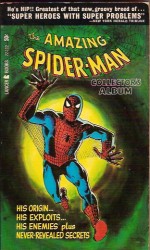
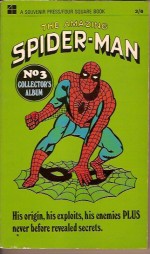
The Amazing Spider-Man Collectors Album (US and UK editions)


By Stan Lee, Jack Kirby, Steve Ditko & various (Lancer/Four Square)
“ISBNs” 72-122 (Lancer) and 1792 (Four Square)

This is another one purely for driven nostalgics, consumed collectors and historical nit-pickers, highlighting the Swinging Sixties’ transatlantic paperback debut of the hero who would become Marvel’s greatest creative triumph…

One thing you could never accuse entrepreneurial maestro Stan Lee of was reticence, especially in promoting his burgeoning line of superstars. In the 1960s most adults, including the people who worked in the field, considered comic-books a ghetto. Some disguised their identities whilst others were “just there until they caught a break.” Stan, Jack Kirby and Steve Ditko had another idea… change the perception.

Whilst the artists pursued their personal creative visions, the editorial mastermind pursued every opportunity to break down the ghetto walls: college lecture tours, animated TV shows (of frankly dubious quality at the start, but constantly improving), foreign franchising and of course getting their product onto “real” bookshelves in real book shops.

There had been a revolution in popular fiction during the 1950s with a huge expansion of cheap paperback books: companies developed extensive genre niche-markets, such as war, western, romance, science-fiction and fantasy. With fans hungry for product from their cheap ubiquitous lines, many old novels and short story collections were republished, introducing a new generation to such authors as Edgar Rice Burroughs, Robert E. Howard, Otis Adelbert Kline, H.P. Lovecraft, August Derleth and others.

In 1955, spurred on by the huge parallel success of cartoon and gag book collections, Bill Gaines began releasing paperback compendiums culling the best strips and features from his landmark humour magazine Mad and comics’ Silver Age was mirrored in popular publishing by an insatiable hunger for escapist fantasy fiction. In 1964 Bantam Books began reprinting the earliest pulp adventures of Doc Savage, triggering a revival of pulp prose superheroes, and seemed the ideal partner when Marvel – on the back of the “Batmania” craze – began a short-lived attempt to “novelise” their comic book stable with The Avengers Battle the Earth-Wrecker and Captain America in the Great Gold Steal.

Far more successful were repackaged books by various publishers: reformatting their comics stories in cheap and cheerful softcovers:

Archie Comics released their Marvel knock-off restyled superheroes in the gloriously silly High Camp Superheroes, Tower collected the adventures of their big two Dynamo and No-Man, DC (then National Periodical Publications) released a number of Batman books and an impressive compendium of Superman stories and Marvel, punching far above their weight, unleashed a sextet of paperbacks featuring five of their stars: Fantastic Four (two volumes), the Incredible Hulk, Daredevil, Thor and of course the Amazing Spider-Man.

Now during the heady, turbulent Sixties pulp heroics seemingly returned: imaginative “Thud and Blunder” fantasy tales that were the epitome of “cool”, and Marvel’s canny pursuit of foreign markets instantly paid big dividends.

Their characters, creators and stories were already familiar to British readers, appearing both in Odhams‘ weekly comics Wham!, Pow!, Smash!, Fantastic and Terrific and also in the black and white monthly anthologies published by Alan Class since 1959…

So when Lancer began releasing Marvel’s Mightiest in potent and portable little collections it was simple to negotiate British iterations of those editions although they were not as cheap and had shorter page counts.

A word about artwork here: modern comics are almost universally full-coloured in Britain and America, but for over a century black and white was the only real choice for most mass market publishers – additional (colour) plates being just too expensive for shoe-string operations to indulge in. Even the colour of 1960s comics was cheap and primitive and solid black line, expertly applied by master artists, was the very life-force of sequential narrative.

These days computer enhanced art can hide a multitude of weaknesses – if not actual pictorial sins – but back then companies lived or died on the draughting skills of their artists: so even in basic black and white – and the printing of paperbacks was as basic as the accountants and bean-counters could get it – the Kirbys and Ditkos and Wally Woods of the industry exploded out of those little pages and electrified the readership. I can’t see that happening with many modern artists deprived of their slick paper and 16 million colour palettes…

As I’ve already mentioned US and UK editions vary significantly. Although both re-present – in truncated, resized monochrome – startling early Marvel tales the British Four Square editions are a measly 128 pages, as opposed to the 176 page Lancer editions: necessitating missing stories and odd filler pages. Moreover the UK books are fronted by deliberately garish and poorly drawn “cartoony covers” instead of art by Ditko or Kirby, as if the publishers were embarrassed by the content…

The Amazing Spider-Man Lancer edition by Lee & Steve Ditko was published in 1966 and opens with ‘Duel With Daredevil’ (from #16, September 1964) which depicted the Wall-crawler’s first bombastic meeting with the sightless Man Without Fear as they teamed up to battle the sinister Ringmaster and his Circus of Evil.

This was followed by ‘The Origin of Spider-Man’ from the first issue (March 1963): recapping the story of how nerdy high-schooler Peter Parker was bitten by a radioactive spider, became a TV star and failed to prevent the murder of his Uncle Ben. After a pin-up of The Burglar the tale continues, introducing gadfly J. Jonah Jameson and relating how the Amazing Arachnid saved a malfunctioning space capsule before revealing ‘The Secrets of Spider-Man!’ which combined portions of the info-features seen in Amazing Spider-Man Annual’s #1 & 2 from 1964 and 1965.

Thus far the US book and the Four Square paperback released in 1967 are all but identical – covers excluded of course – and apart from Kirby pin-up pages of the Hulk, Thor and Fantastic Four, that’s where Britain’s thrills stop dead, whereas the Lancer volume has another complete story and more in store.

From Amazing Spider-Man #13 ‘The Menace of Mysterio!’ introduced an eldritch, seemingly unbeatable bounty-hunter hired by Daily Bugle publisher Jameson to capture the misunderstood hero. Of course the stalker was a complete sham eventually revealed to be pursuing his own dark agenda, but the battle to stop him was – and still is – one of Spidey’s most spectacular exploits…

This edition ends with another brace of Ditko pin-ups – a roster of guest-stars in one, and the magnificent web-spinner at his moody best in the other…

Nowadays all these adventures are readily available in assorted colour collections or dynamic monochrome Essential Editions but for we surviving baby-boomers the sheer thrill of experiencing these books again is a buzz you can’t beat. Moreover there’s still something vaguely subversive about seeing comics in proper book form, as opposed to the widely available, larger and more socially acceptable graphic novels. Strip art might finally be winning the war for mainstream public recognition, but we’ve all lost some indefinable unifying camaraderie of outsider-hood along the way…

These paperbacks and all the others are still there to be found by those who want to own the artefact as well as the material: I suspect that whether you revere the message or the medium that carries it pretty much defines who you are and how you view comics and the world.

Wanna try and guess where I stand, True Believer…?
© 1966 and 1967 the Marvel Comics Group. All Rights Reserved.

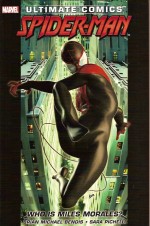
Ultimate Comics Spider-Man: Who is Miles Morales?


By Brian Michael Bendis & Sara Pichelli (Marvel/Panini UK)
ISBN: 978-1-84653-503-1

When the Ultimate Comics Spider-Man died writer Brian Michael Bendis and Marvel promised that a new hero would arise from the ashes…

Marvel’s Ultimates imprint began in 2000 with a new post-modern take on major characters and concepts to bring them into line with the tastes of 21st century readers – apparently a wholly different market from those baby-boomers and their descendents content to stick with the precepts sprung from founding talents Jack Kirby, Steve Ditko and Stan Lee… or simply those unable or unwilling to deal with the five decades (seven if you include the Golden Age Timely tales retroactively co-opted into the mix) of continuity baggage which saturated the originals.

Eventually even this darkly nihilistic new universe became as continuity-constricted as its ancestor and in 2008 the cleansing event “Ultimatum” culminated in a reign of terror which excised dozens of super-humans and millions of lesser mortals in a devastating tsunami which inundated Manhattan courtesy of mutant menace Magneto.

In the aftermath Peter Parker and his fellow meta-human survivors struggled to restore order to a dangerous new world.

Spider-Man finally gained a measure of acceptance and was hailed a hero when he valiantly and very publicly met his end during a catastrophic super-villain confrontation…

This collection (re-presenting the introductory teaser from Ultimate Comics Fallout #4 – August 2011 – and the follow-up Ultimate Comics Spider-Man: Who is Miles Morales? #1-5) introduces a new and even younger Arachnid Avenger and describes how, just like his predecessor, a troubled boy learned the painful price of misusing the unique gifts fate had bestowed…

The epic opens with a skinny kid having the poor taste to parade around town in a cheap imitation costume of fallen hero Spider-Man encountering and somehow defeating vicious super-villain The Kangaroo before the revelations begin by spinning back to the recent past where manic industrialist Norman Osborn repeats the genetic experiment which first gave Peter Parker his powers (see Ultimate Spider-Man volume 1: Power and Responsibility) via artificially-mutated spider bite.

Unfortunately the deranged mastermind didn’t expect a burglar to waltz in and accidentally carry off the new test subject as part of his haul…

When grade-schooler Miles Morales got into the prestigious and life-changing Brooklyn Visions Academy Boarding School by the most callous of chances, the brilliant African American/Latino boy quickly and cynically realised that life is pretty much a crap-shoot and unfair to boot. Feeling guilty about his unjust success and sorry for the 697 other poor kids who didn’t get a chance, he snuck off to visit his uncle Aaron.

The visit had to be secret since his uncle was a “bad influence”: a career criminal dubbed The Prowler. Whilst there, a great big spider with a number on its back bit Miles and he began to feel very odd…

For a start he began to turn invisible…

Suddenly super-fast and strong, able to leap huge distances and fade from view, Miles rushed over to see his geeky pal Ganke, a brilliant nerd already attending Brooklyn Visions. Applying “scientific” testing the boy also discovers Miles can deliver shocking, destructive charges through his hands. When Miles goes home Ganke did more research and deduced a connection to the new hero Spider-Man; pushing his friend towards also becoming a costumed crusader.

However, after Miles assisted during a tenement fire, saving a mother and baby, shock set in and he decided never to use his powers again…

Time passed: Miles and Ganke had been roommates at the Academy for almost a year when news of a major metahuman clash rocked the city. The troubled Miles headed out and was a bystander at the scene of Spider-Man’s death.

Seeing a brave man perish so valiantly, Miles was once more consumed by guilt: if he had used his own powers when they first manifested he might have been able to help; to save a truly great hero…

As part of the crowd attending Parker’s memorial Miles and Ganke talked to another mourner, a girl who actually knew Parker. Gwen Stacy offered quiet insights to the grieving child which altered the course of his life forever: “with great power comes great responsibility…”

Clad in a Halloween Spidey costume borrowed from Ganke, Miles took to the night streets for the first time and stopped the Kangaroo from committing murder…

His third night out the exhilarated boy encountered the terrifying and furiously indignant Spider-Woman who thrashed and arrested him, dragging him to Government agency S.H.I.E.L.D where Hawkeye, Iron Man and master manipulator Nick Fury coldly assessed him.

However, before they could reach a decision on Miles’ fate, the murderous Electro broke free of the building’s medical custody ward and went on a rampage.

Despite defeating all the seasoned heroes the voltage villain was completely unprepared for a new Spider-Man: especially as the boy had a whole extra range of powers including camouflage capabilities and an irresistible “venom-strike” sting…

As Miles considered the full implications of his victory, Fury imparted a staggeringly simple homily: “With great power…”

Brian Michael Bendis and Sara Pichelli have crafted a stirring new chapter which is both engaging and intriguing and the volume also contains a gallery of alternate covers by Marko Djurdjevic and Pichelli.

Tense, breathtaking, action-packed, evocative and full of the light-hearted, self-aware humour which blessed the original Lee/Ditko tales, this is a controversial but worthy way to continue and advance the legend that Fights ‘n’ Tights addicts will admire and adore…
A British Edition ™ & © 2012 Marvel & Subs. Licensed by Marvel Characters B.V. and published by Panini UK, Ltd. All rights reserved.
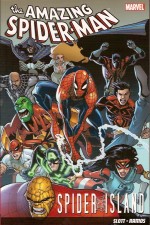
Amazing Spider-Man: Spider Island


By Dan Slott, Fred Van Lente, Rick Remender, Humberto Ramos, Stefano Caselli  & various (Marvel/Panini UK)
ISBN: 978-1-84653-501-7

When the Spider-Man continuity was drastically and controversially altered for the ‘Brand New Day’ publishing event a refreshed, now single-and-never-been-married Peter Parker was parachuted into a new life, so if this is your first Web-spinning yarn in a while – or if you’re drawing your cues from the movies – prepare yourself for a little confusion. That being said, this classy collection of Web-spun wonderment is more accessible than most: a spectacular summer blockbuster yarn with New York overwhelmed by monsters, a hideous all-consuming threat and packed to the spiracles (look it up: I’m being clever again) with returning villains from Spidey’s less complicated glory-days…

Gathering Spider-Island: Deadly Foes, Amazing Spider-Man #666-672, Venom #6-8, and background material, original art, text-features and interviews from Marvel Spotlight Spider-Island, the manic Marvel mayhem commences when clone-builder Miles Warren AKA The Jackal resurrects the warped Peter Parker doppelganger Kaine and upgrades him for malicious purposes and a hidden new boss; turning the recent cadaver into a monstrous multi-limbed humanoid Tarantula…

Meanwhile in ‘Prologue: the One and Only’ the webslinger is riding a wave of popularity in New York City despite every effort of new Mayor J. Jonah Jameson and even in his civilian identity is having a pretty good life. The original hard-luck kid has a great, well-paid job designing high-tech gadgets, is fast friends with the city’s greatest scientists Tony Stark and Reed Richards and even has a devoted, hot, new girlfriend; forensic cop Carlie Cooper.

But now, something very strange is happening: all over Manhattan people are starting to manifest spider-powers and government asset Flash Thompson is put on alert in his role as new black-ops agent Venom, keeping the supposedly retired and disabled war-hero from the bedside of his estranged and terminal father…

When Peter recently lost his Spider-sense, clairvoyant arachnid hero Madame Web convinced him to study martial arts with Shang-Chi, fabled Master of Kung Fu, to prepare for a dire future crisis, but his hectic schedule – constantly moving from Horizon Labs to Fantastic Four HQ and Avengers Mansion – means he is one of the last to know that a manufactured plague is turning New York into a city of Spider People, just as Jackal, Tarantula and their sultry secret leader are unleashing yet another arachnoid atrocity…

‘The Amazing Spider-Manhattan’ sees the infestation grow as Carlie reveals she has Spider-powers and the Jackal assembles an army of arachnid-enhanced thugs to plunder and run riot, further spreading the contagion. A city-wide epidemic forces Jameson to close all exits from the New York and quarantine the populace as the superheroes begin a desperate holding action against a wave of wall-crawling criminals.

When the original-and-genuine tries to join them in ‘Peter Parker, the Unspectacular Spider-Man’ he is sent away since he’s indistinguishable from many of the thugs, but the indomitable lad soon finds a way to strike back and even recruit reinforcements for the hard-pressed defenders.

Across town Venom is stalking the cause of the plague and Eddie Brock, originally possessed by the selfsame alien Symbiote, discovers that he has become a natural cure for the Spider-infection: a living ‘Anti-Venom’…

The covert paramilitary predator had overcome and captured the Jackal’s new Spider-King, but the whole operation was a trick; allowing the beast to sneak thousands of spider-babies out of the quarantined city, ready to infect the entire country. Moreover when Flash discovers that the original identity of the horrific Spider-King was in fact America’s greatest hero he is caught between honour and duty…

In ‘Arachnotopia’ Peter Parker is leading the fightback but helpless to combat the next stage of the disease as victims begin to mutate from spider-powered humans into carnivorous, monstrous eight-legged freaks. His life is made even more difficult when he sees Carlie so clearly using his powers better than he ever did…

Meanwhile Reed Richards, frantically seeking a cure, sees that complete infestation of Manhattan is only a matter of hours away…

With the mystery mastermind revealed there are ‘Spiders, Spiders Everywhere’ but a glimmer of hope remains as Flash/Venom infiltrates the Queen’s arachnoid inner circle, just as Peter’s old flame Mary Jane Watson discovers her own inner arthropod and joins the struggle armed with an advantage no other infectee can – or would want to – boast…

The next Venom instalment sees Flash clash with Anti-Venom before dragging the all-too-willing Brock back to Reed Richards…

Meanwhile the Queen has established mental contact with every victim and uses them as a battery: a web of life feeding her transformative energy and, when the cure is synthesised, she compels all her thralls to resist it and the people administering it…

In the final Venom episode Flash valiantly tackles the Queen head-on but is easily defeated. Luckily one of the first infectees to be cured was that legendary hero trapped inside the Spider-King…

Unfortunately the disease has already reached peak infection and the triumphant Queen transforms into a skyscraper-sized arachnoid colossus ready and able to turn the world into a planet of spiders. With everything to fight for and no hope, Mary Jane and a most unexpected ally lead one final assault by the remaining assembled heroes on the monumental monstrosity, giving the one true Amazing Spider-Man a valiant last chance to spectacularly save everyone…

In ‘Epilogue: the Naked City’ a city wide “Morning After” focuses on the staggering aftermath of the climactic clash and cannily resets the scene for a fresh start in the Spidey universe with departures, arrivals and a whole new outlook for Marvel’s most iconic hero…

Although not necessary, readers might also benefit from a quick re-reading of Spectacular Spider-Man: Disassembled, but this gloriously bombastic rollercoaster action-romp from writers Dan Slott, Fred Van Lente and Rick Remender, illustrated by Humberto Ramos, Stefano Caselli, Tom Fowler, Minck Oosterveer, Carlos Cuevas, Victor Olazaba & Karl Kesel forms not only a terrific Fights ‘n’ Tights tale but also serves as a stand-alone saga and perfect jumping-on point for readers new or returning. With the aforementioned added features pages and a stunning gallery of variant covers by

Ramos, Greg Land, Gabriele Dell’Otto, Stephanie Hans & Stuart Immonen Spider-Island is possibly one of the best Spider-Man books in years.

This British edition of Amazing Spider-Man: Spider Island is set for release on January 19th 2012.
™ & © 2012 Marvel & Subs. Licensed by Marvel Characters B.V. through Panini S.p.A. Italy. A British Edition by Panini UK Ltd.

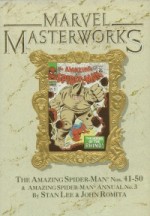
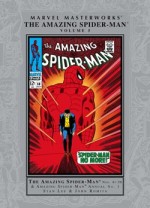
Marvel Masterworks volume 22: Amazing-Spider-Man 41-50 & Annual 3


By Stan Lee, John Romita Sr. & various (Marvel)
ISBN: 0-87135-914-6

The rise and rise of the wondrous web-spinner continued and even increased pace as the decade progressed, and by the time of the tales in this fourth sumptuous hardcover (collecting Amazing Spider-Man #41-50 and Annual 3, spanning October 1966 to July 1967) Peter Parker and friends were on the way to being household names as well as the darlings of college campuses and the media intelligentsia.

By 1966 Stan Lee and Steve Ditko could no longer work together on their greatest creation. After increasingly fraught months the artist simply resigned, leaving Spider-Man without an illustrator. Meanwhile John Romita had been lured away from DC’s romance line and given odd assignments before assuming the artistic reins of Daredevil, the Man Without Fear.

Now he was co-piloting the company’s biggest property and expected to run with it.

With issue #41 and ‘The Horns of the Rhino!’ Romita took complete artistic control, inking his own pencils in a blockbusting rip-roarer as a super-strong spy tasked with abducting J. Jonah Jameson‘s astronaut son was stopped by the Astounding Arachnid, who found the victim a far harder proposition in the next issue. Amazing Spider-Man #42 ‘The Birth of a Super-Hero!’ saw John Jameson mutated by space-spores and go on a terrifying rampage in a explosive, entertaining yarn only really remembered for the last panel of the final page…

Mary Jane Watson had been a running gag for years; a prospective blind-date arranged by Aunt May whom Peter had narrowly avoided – and the creators had skilfully not depicted – for the duration of time that our hero had been involved with Betty Brant, Liz Allen, and latterly Gwen Stacy. In that last frame the gob-smacked young man finally realised that he been ducking the hottest chick in New York for two years!

‘Rhino on the Rampage!’ in #43 gave the horn-headed villain one more crack at Jameson and Spidey, but the emphasis was solidly on foreshadowing future foes and building Pete and MJ’s relationship.

The Marvel mayhem continued with the return of a tragedy-drenched old foe as Stan & John reintroduced biologist Curt Conners in #44′s ‘Where Crawls the Lizard!’. The deadly reptilian marauder threatened Humanity itself and it took all of the wall-crawler’s resourcefulness to stop him in the cataclysmic concluding chapter ‘Spidey Smashes Out!’

Issue #46 introduced another all-new menace in the form of seismic super-thief ‘The Sinister Shocker!’ who proved little match for the Web-spinner whilst ‘In the Hands of the Hunter!’ brought back a fighting-mad and extremely vengeful Kraven to menace the family of Peter Parker’s new best friend Harry Osborn.

Apparently the obsessive big-game hunter had entered into a contract with Harry’s father (the super-villainous Green Goblin until a psychotic break turned him into a traumatised amnesiac) and now the Russian rogue wanted paying off or payback…

Luckily Spider-Man was on hand to dissuade him, but it’s interesting to note that at this time the student life and soap-opera sub-plots became increasingly important to the mix, with glamour girls Mary Jane and Gwen Stacy (superbly delineated by the masterful Romita) as well as former bully Flash Thompson and the Osborns getting as much or more “page-time” as Aunt May or the Daily Bugle staff, who had previously monopolised the non-costumed portions of the ongoing saga.

Amazing Spider-Man #48 introduced Blackie Drago: a ruthless thug who shared a prison cell with one of the wall-crawler’s oldest foes. At death’s door the ailing super-villain revealed his technological secrets, enabling Drago to escape and master ‘The Wings of the Vulture!’

Younger, faster, tougher, the new Vulture defeated Spider-Man and in #49′s ‘From the Depths of Defeat!’ battled Kraven the Hunter until a restored and reinvigorated Wall-crawler stepped in to thrash them both.

Issue #50 introduced one of Marvel’s greatest villains in the first of a three part yarn that saw the beginnings of romance between Parker and Gwen Stacy and the death of a cast member, re-established Spidey’s war on cheap thugs and common criminals (a key component of the hero’s appeal was that no criminal was too small for him to bother with) and saw a crisis of conscience force him to quit in ‘Spider-Man No More!’ only to return and become entangled ‘In the Clutches of… the Kingpin!’ (inked by Mike Esposito, moonlighting from DC as Mickey Demeo).

The remaining two chapters of that groundbreaking, gang-busting triptych are reproduced in the next volume but there’s still one last treat in store…

This chronicle concludes with ‘…To Become an Avenger!’ (Amazing Spider-Man Annual # 3 and out of sequence – so if you’re that way inclined read this tale first) as the World’s Mightiest Heroes offered the Web-Spinner membership in the team and an end to most of his pecuniary and P.R. woes if he could capture the Hulk.

As usual all was not as it seemed but the action-drenched epic, courtesy of Lee, Romita (on layouts), Don Heck & Demeo/Esposito is the kind of guest-heavy package that made those summer specials a kid’s ultimate delight.

Topped off with a cover gallery and glorious pin-ups of the entire cast of Peter Parker’s life, one last Ditko action-page and a group shot of Spidey with all the heroes stronger than him, this classic compendium is the ideal way to introduce or reacquaint readers with the formative Spider-Man. The brilliant adventures are superb value and this series of books should be the first choice of any adult with a present to buy for an impressionable child.

…Or for their greedy, needy selves…
© 1966, 1967, 1997 Marvel Entertainment Group, Inc. All rights reserved.

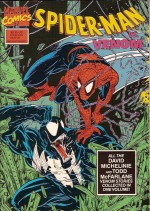
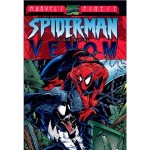
Spider-Man vs. Venom


By David Michelinie & Todd McFarlane (Marvel Comics)
ISBN: 2-48852-363-8,   2nd edition 978-0-87135-616-1

There was a period in the mid 1990s where, to all intents and purposes, the corporate monolith known as Marvel Comics seemed to have completely lost the plot. An awful lot of stories from that period will hopefully never be reprinted, but some of them weren’t completely beyond redemption.

During the Marvel Super Heroes Secret Wars of 1984-1985, Spider-Man picked a super-scientific new costume which turned out to be a hungry alien parasite which slowly began to permanently bond to its unwitting wearer.

After being discovered and removed by Reed Richards of the Fantastic Four “the Symbiote” ultimately escaped and, like a crazed and jilted lover, tried to re-establish its relationship with the horrified hero; seemingly destroying itself in the attempt.

During a stellar run of scripts by David Michelinie, the beast was revived with a new host and became one of the most acclaimed Marvel villains of all time, helped in no small part by the escalating popularity of rising star artist Todd McFarlane…

This rapidly rushed out compendium from 1990 collected literally every scrap of extant material featuring the new nemesis, comprising a teaser page from Amazing Spider-Man #298 (March 1988), two from #299, the entirety of #300 and an epic showdown from # 315-317 (May-July 1989).

Those orphan pages show a shadowy bestial character obsessing over clippings of the Wall-crawler before breaking into the apartment of Peter and Mary Jane Watson-Parker, before the main event begins with ‘Venom’ wherein the monstrous shape-shifting stalker, having terrorised Peter’s new bride, begins a chilling campaign to psychologically punish Spider-Man.

Venom is a huge hulking, distorted carbon copy of the Web-spinner: a murderous psychopath constituted of disgraced reporter Eddie Brock (who obsessively hates Parker the photo-journalist) permanently bonded with the bitter, rejected parasite whose animalistic devotion was spurned by an ungrateful host who even tried to kill it…

The story is a stunning blend of action and suspense with an unforgettable classic duel between Good and Evil which famously saw Spider-Man finally return to his original Ditko-designed costume and kicked off a riotous run of astounding stories from Michelinie & McFarlane, culminating in the titanic triptych ‘A Matter of Life and Debt!’, ‘Dead Meat’ and ‘The Sand and the Fury!’ with Brock bloodily breaking out of super-penitentiary The Vault to resume his campaign of hate while the oblivious Spider-Man is preoccupied with meta-thug Hydro Man and Peter Parker is embroiled in a deadly gambling debt drama concerning Aunt May’s current beau Nathan Lubensky…

Making his way across America, Venom begins to hunt his enemy’s nearest and dearest, starting with old flame and occasional crime-fighting comrade Black Cat, before moving on to Mary Jane and even frail old May Parker…

Pushed to breaking point Spider-Man gives Venom what he’s been demanding: a final all-out, one-on-one battle to the death…

Of course neither character died and the savage, shape-changing Symbiote – a perfect dark-side version of the Amazing Arachnid – went on to his own blood-drenched series. Eventually the spidery foes reached a tenuous détente and Venom became a “Lethal Protector”, dispensing his highly individualistic brand of justice everywhere but Spider-Man’s hometown.

This run of tales pushed the Wondrous Web-spinner to a peak of popularity and critical acclaim, with tense, terse tales of terror and triumph which inevitably resulted in ultimate arch-villain Venom gradually rehabilitating just enough to become one of the grim-and-gritty, dark anti-heroes which positively infested comics of that era (which explains why they’re also included in the sturdy compendium Spider-Man: Birth of Venom which additionally features Secret Wars #8, Amazing Spider #253-259, Fantastic Four #274 and Web of Spider-Man #1).

Whichever book you find however, if you’re a big fan of frantic Fights ‘n’ Tights action comics these are tales you just can’t ignore.
© 1990 Marvel Entertainment Group/Marvel Characters, Inc. All rights reserved.