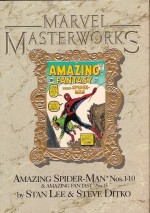
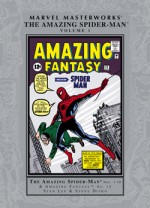
Marvel Masterworks volume 1: The Amazing Spider-Man 1-10


By Stan Lee & Steve Ditko (Marvel)
ISBN: 0-87135-305-9, 2nd edition 978-0-7851-1181-8

Marvel is often termed “the House that Jack Built” and King Kirby’s contributions are undeniable and inescapable in the creation of a new kind of comicbook story-telling, but there was another unique visionary toiling at Atlas-Comics-as-was: one whose creativity and even philosophy seemed diametrically opposed to the bludgeoning power, vast imaginative scope and clean, broad lines of Kirby’s ever-expanding search for the external and infinite.

Steve Ditko was quiet and unassuming, voluntarily diffident to the point of invisibility though his work was both subtle and striking: innovative, meticulously polished, always questing for detail, he ever explored the man within. He found heroism – and humour and ultimate evil – all contained within the frail but noble confines of human scope and consciousness. His drawing could be oddly disquieting… and, when he wanted, almost creepy.

Drawing extremely well-received monster and mystery tales for Stan Lee, Ditko had been given his own title. Amazing Adventures/Amazing Adult Fantasy featured a subtler brand of yarn than Rampaging Aliens and Furry Underpants Monsters and the ilk which, though individually entertaining, had been slowly losing traction in the world of comics ever since National/DC had successfully reintroduced costumed heroes. Lee & Kirby had responded with Fantastic Four and the ahead-of-its-time Incredible Hulk but there was no indication of the renaissance to come when the already cancelled Amazing Fantasy #15 cover featured a brand new and rather creepy adventure character.

In 11 captivating pages ‘Spider-Man!’ told the parable of Peter Parker, a smart but alienated kid bitten by a radioactive spider on a High School science trip. Discovering he had developed arachnid abilities which he augmented with his own natural engineering genius, he did what any lonely, geeky nerd would do when given such a gift – he tried to cash in for girls, fame and money.

Making a costume to hide his identity in case he made a fool of himself, Parker became a minor celebrity – and a self-important one. To his eternal regret, when a thief fled past he didn’t lift a finger to stop him, only to find when he returned home that his uncle Ben had been murdered.

Crazy for vengeance, Parker hunted the assailant who had made his beloved Aunt May a widow and killed the only father he had ever known, only to find that it was the felon he couldn’t be bothered with. His social irresponsibility had led to the death of the man who raised him and the boy swore to always use his powers to help others…

It wasn’t a new story, but the setting was one familiar to every kid reading it and the artwork was downright spooky. This wasn’t the gleaming high-tech world of moon-rockets, giant monsters and flying cars – this stuff could happen to anybody…

Amazing Fantasy #15 came out the same month as Tales to Astonish #35 (cover-dated September 1962) – the first to feature the Astonishing Ant-Man in costumed capers, but it was the last issue of Ditko’s Amazing playground.

However the tragic last-ditch tale had struck a chord with the reading public and by Christmas a new comicbook superstar was ready to launch in his own title, with Ditko eager to show what he could do with his first returning character since the demise of the Charlton hero Captain Atom (see Action Heroes Archive volume 1).

Holding on to the “Amazing” prefix to jog reader’s memories, the bi-monthly Amazing Spider-Man #1 had a March 1963 cover-date and two complete stories. It prominently featured the Fantastic Four and took the readers by storm. The opening tale, again simply entitled ‘Spider-Man!’, recapitulated the origin whilst adding a brilliant twist to the conventional mix.

The wall-crawling hero was feared and reviled by the general public thanks in no small part to J. Jonah Jameson, a newspaper magnate who pilloried the adventurer from spite and for profit. With time-honoured comicbook irony, Spider-Man then had to save Jameson’s astronaut son John from a faulty space capsule…

The second yarn ‘Vs the Chameleon!’ found the cash-strapped kid trying to force his way onto the roster – and payroll – of the Fantastic Four whilst elsewhere a spy perfectly impersonated the web-spinner to steal military secrets, in a stunning example of the high-strung, antagonistic crossovers and cameos that so startled the jaded kids of the early 1960s.

Heroes just didn’t act like that…

With the second issue our new champion began a meteoric rise in quality and innovative storytelling. ‘Duel to the Death with the Vulture!’ found Parker chasing a flying thief as much for profit as justice. Desperate to help his aunt make ends meet, Spider-Man began to take photos of his cases to sell to Jameson’s Daily Bugle, making his personal gadfly his sole means of support.

Along with comedy and soap-operatic melodrama Ditko’s action sequences were imaginative and magnificently visceral, with odd angle shots and quirky, mis-balanced poses adding a vertiginous sense of unease to fight scenes. But crime wasn’t the only threat to the world and Spider-Man was just as (un)comfortable battling “aliens” in ‘The Uncanny Threat of the Terrible Tinkerer!’

Amazing Spider-Man #3 introduced possibly the apprentice hero’s greatest enemy in ‘Versus Doctor Octopus’, a full-length epic wherein a dedicated scientist survived an atomic accident only to find his self-designed mechanical tentacles permanently grafted to his body. Power-mad, Otto Octavius initially thrashed Spider-Man, sending the lad into a depression until an impromptu pep-talk from the Human Torch galvanized Spider-Man to one of his greatest victories.

‘Nothing Can Stop… the Sandman!’ was another instant classic wherein a common thug who had gained the power to transform to sand (another pesky nuclear snafu) invaded Parker’s school, and had to stopped at all costs whilst issue #5 found the web-spinner ‘Marked for Destruction by Dr. Doom!’ – not so much winning as surviving his battle against the deadliest man on Earth. Presumably he didn’t mind too much as this marked the transition from bi-monthly to monthly status for the series. In this tale Parker’s social nemesis, jock bully Flash Thompson, first displayed depths beyond the usual in contemporary comicbooks, beginning one of the best love/hate buddy relationships in popular literature…

Sometime mentor Dr. Curtis Connors debuted in #6 when Spidey came ‘Face-to-face with… The Lizard!’ as the wallcrawler fought his battle far from the concrete canyons and comfort zone of New York – specifically in the murky Florida Everglades. Parker was back in the Big Apple in #7 to breathtakingly tackle ‘The Return of the Vulture’.

Fun and youthful hi-jinks were a signature feature of the series, as was Parker’s budding romance with “older woman” Betty Brant, Jameson’s PA at the Daily Bugle. Youthful exuberance was the underlying drive in #8′s lead tale ‘The Living Brain!’ an ambulatory robot calculator that threatened to expose Spider-Man’s secret identity before running amok at beleaguered Midtown High, just as Parker was finally beating the stuffings out of school bully Flash Thompson.

This 17 page joy was accompanied by ‘Spiderman Tackles the Torch!’ (a 6 page vignette drawn by Jack Kirby and inked by Ditko) wherein a boisterous wall-crawler gate-crashed a beach part thrown by the flaming hero’s girlfriend… with explosive consequences.

Amazing Spider-Man #9 was a qualitative step-up in dramatic terms as Aunt May was revealed to be chronically ill – adding to Parker’s financial woes – and the action was supplied by ‘The Man Called Electro!’ a super-criminal with grand aspirations. Spider-Man was always a loner, never far from the streets and small-scale-crime, and with this tale wherein he also quells a prison riot single handed, Ditko’s preference for tales of gangersterism began to show through; a predilection confirmed in #10′s ‘The Enforcers!’ a classy mystery where a masked mastermind known as the Big Man used a position of trust at the Bugle to organize all the New York mobs into one unbeatable army against decency. Longer plot-strands were also introduced as Betty Brant mysteriously vanished (her fate to be revealed in the next issue and here the second Mighty Marvel Masterworks volume), but most fans remember this one for the spectacularly climactic seven-page fight scene in an underworld chop-shop that has still never been topped for action-choreography.

These immortal epics are available in numerous formats (including softcover editions of the luxurious and enticing hardback under review here), but for a selection that will survive the continual re-readings of the serious, incurable fan there’s nothing to beat the substantial full-colour feel of these Marvellous Masterwork editions.
© 1962, 1963, 1964, 1987, 2003 Marvel Characters, Inc. All Rights Reserved.
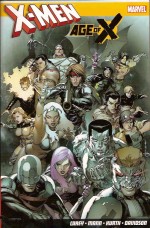
X-Men: Age of X


By Mike Carey, Simon Spurrier, Clay Mann, Steve Kurth, Paul Davidson & various (Marvel/Panini UK)
ISBN: 978-1-84653-490-4

Most people who read comics have a passing familiarity with Marvel’s ever-changing X-Men franchise and most of us have seen alternate world stories so this intriguing and highly entertaining package seems pretty easy to pigeonhole… but appearances can be deceiving.

With a property as valuable as these massed mutants, change is a necessarily good thing, even if you sometimes need a scorecard to keep up. This utterly engrossing tome (collecting Age of X Alpha, X-Men Legacy #245-247, New Mutants volume 3 #22-24 and Age of X Universe #1 and 2) keeps the backstory baggage to the barest minimum for newbies and non-addicts; concentrating instead on building an “end-of-days” tension in a brutally harsh last stand scenario – although the pacing is a little hard to grasp in places.

This Marvel publishing event, which ran from January to April 2011, is a tribute to the Age of Apocalypse mega-crossover of 1995, with an introductory Alpha issue, dedicated stories in X-men core titles and a pair of “Universe” compilations focusing on the non-mutant heroes of the altered continuity.

Written by Mike Carey and illustrated by Mirco Pierfederici, Gabriel Hernandez Walta, Carlo Barberi, Walden Wong, Paco Diaz and Paul Davidson, the initial instalment describes a very different world where all-out species war is being waged between humans and homo superior. Anti-mutant statutes by the Human Coalition have all but eradicated mutantkind and any ordinary mortal who might carry the hated genes to make them.

Three years of inspired atrocity later, the stories of those last remnants of the variant species are examined in telling vignettes: Scott Summers was forced to execute his fellow inmates at a mutant Alcatraz before spectacularly escaping, Sam Guthrie survived the extermination of his entire family, super-powered or not, and Wolverine lost all his abilities destroying a pathogen designed to wipe out all genetic aberrations.

During the darkest moment of this man-made Extinction Event Magneto rescued the last remnants of meta-humanity and created a monumental Fortress X from the ruins of a devastated city. Here the remaining mutants hold out in a desperate all-or-nothing holding action…

After 1000 days of dire and valiant resistance a kind of last ditch détente persists. The humans keep attacking and the mutants perpetually narrowly beat them off. In this world where there are no telepaths and there has never been a Professor X, every day is one more precious moment of defiant unity in the face of imminent doom.

The stalemate continues in X-Men Legacy #245 (Carey, Clay Mann & Jay Leisten) as the resistors continue to defy the human world’s technology and soldiery. Especially vital are the contributions of the Force Warriors: energy-casting mutants whose powers maintain an impenetrable energy-shield around Fortress X. They are led by the charismatic Legion – son of Dr. Moira MacTaggert and an unknown father…

The most tragic hero is Legacy, whose touch can steal memories and abilities. She is not allowed to fight but is tasked with preserving forever the dying memories of mutants who fall in battle.

A few resisters are troubled by more than just the state of the world: something is imperceptibly wrong with reality itself. Metal-morph Madison Jeffries discovers there is something amiss with the stars in the sky; Summers, dubbed the Basilisk, realises that he’s killed some humans more than once and some defenders question why so many mutants are mysteriously imprisoned in the citadel’s dungeons.

Moreover, the enigmatic “X” who runs the fortress seems more concerned with containing them than defeating the human attackers. Even Magneto feels something is being kept from him – and he’s in charge…

When immaterial internee Kitty Pryde escapes the Brig and penetrates the forcefield she discovers something fantastic and X orders her silenced at all costs, precipitating traitorous action from Legacy, Cajun thief Gambit and even Magneto himself…

The New Mutants chapters are illustrated by Steve Kurth & Alex Martinez and follow Basilisk, Legacy and the liberated Pryde as they begin unpicking the darkly credible but ferociously flawed universe they inhabit. A turning point comes when the fugitive fighters free an imposing bald man named Xavier who claims to be a telepath…

Cunningly tapping into the brooding pressure and extreme vivacity of life during wartime and wonderfully reminiscent of William Hope Hodgson’s macabre 1912 classic The Night Land (an absolute “must-read” for all fantasy fans) this is an effective thriller and just a little different from your standard “unite and save the universe” crossover-events with a superb and spectacular surprise climax that will delight regulars and visiting readers alike.

And that’s the only real problem here: because after that satisfactory ending the Age of X Universe stories (written by Simon Spurrier, Jim McCann & Chuck Kim, illustrated by Khoi Pham, Tom Palmer, Paul Davidson & Gabriel Hernandez Walta) follow, totally killing the mood and the flow despite all being extremely well-produced revelatory side-bars and effective character-pieces.

Viewed on their own merits the stories of Spider-Man’s ultimate sacrifice, the brutal and tragic career of Humanity’s Avengers (Captain America, Invisible Woman, Iron Man, Ghost Rider, the arachnoid Redback plus the most disturbing Hulk ever) and hidden secrets of the Mutant-hunting Dr. Strange are extremely impressive. If they’d been disclosed before the big reveal, surprise ending they would have been valuable elements in the greater narrative but chucked in after the fact they just detract from a really impressive story-ending.

This action-packed, compulsive and otherwise excellent volume also includes variant covers by Olivier Coipel and Clayton Mann.

If you want fast, furious and fulfilling Fights ‘n’ Tights magic this is a nearly perfect one-shop stop for your edification and delectation – just make sure you read the last bit after the first bit and before the middle bit…

™ and © 2010 & 2011 Marvel Entertainment LCC and its subsidiaries. All rights reserved. A British edition released by Panini UK Ltd.

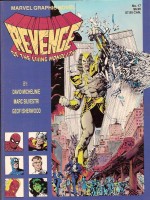
Revenge of the Living Monolith – Marvel Graphic Novel #17


By David Michelinie, Mark Silvestri, Geoff Isherwood & many various (Marvel)
ISBN: 0-87135-083-1

Marvel don’t generally publish original material graphic novel these days but once they were market leader in the field with a range of “big stories” told on larger pages emulating the long-established European Album (285 x 220mm rather than the standard 258 x 168mm of today’s books) featuring not only proprietary characters in out-of-the-ordinary adventures but also licensed assets like Conan, creator-owned properties like Alien Legion and new character debuts.

This extended experiment with big-ticket storytelling in the 1980s and 1990s produced some exciting results that the company has never come close to repeating since. Many of the stories still stand out today – or would if they were still in print.

Released in 1985, Revenge of the Living Monolith is a conventional but highly enjoyable Fights ‘n’ Tights thriller paying glorious homage to those long-gone blockbuster movies with colossal monsters stomping urban population centres into kindling, yet still finds room to add some impressive character gloss to one of Marvel’s most uninspired villains.

Conceived and concocted by Editor Jim Owsley, scripted by David Michelinie and illustrated by Mark Silvestri & Geoff Isherwood (with nearly 4 dozen additional last-minute contributors!) this bombastic yarn is delightfully accessible to all but the most green reader of comics delivering action, tension and winning character byplay to both the faithful readership which made Marvel the premier US comics publisher for such a long time and even the newest kid on the block….

The plot itself is simple and effective: when young Ahmet Abdol was growing up in Cairo, he was bullied and abused for his intellect and imagination. Only the love and devotion of the lovely Filene kept him sane during the years of struggle until he became Egypt’s most respected historian.

However his “sacrilegious” twin discoveries that the ancient Pharaohs were super-powered mutants and that he shared their ancient bloodline brought only scorn, mob violence and shattering tragedy to Abdol and especially to his beloved wife and baby daughter. When his own cosmic powers manifested in the wake of the bloody incident, Abdol was abducted and deified by an ancient cult who saw him as their Living Pharaoh.

After battling the X-Men, Thor and Spider-Man in his mountainous, monstrous incarnation of the Living Monolith the defeated Last God-King was imprisoned in Egypt where he festered and schemed…

After years in forgotten isolation Abdol finally frees himself and begins an incredible plot to remove all his enemies and transform himself into a Cosmic-powered God, beginning by capturing the Fantastic Four and making them his living batteries. Unfortunately even at the point of his apotheosis Abdol is not beyond further heartbreak and a tragedy of his own making provokes him into an agonising rampage of destruction through New York City, with only She-Hulk, Captain America and Spider-Man on hand to combat the swathe of destruction…

Including last-minute cameos from most of Marvel’s costumed pantheon, this spectacular superhero saga is a perfect, if brief, distraction from the world’s woes for every fan of mainstream comics mayhem.
™ & © 1985 Marvel Comics Group/Marvel Characters, Inc. All Rights Reserved.
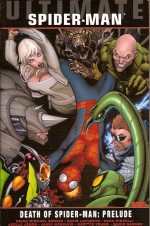
Ultimate Spider-Man: Death of Spider-Man: Prelude


By Brian Michael Bendis, David LaFuente, Sara Picheli, Joёlle Jones, Jamie McKelvie, Skottie Young & Chris Samnee (Marvel/Panini UK)
ISBN: 978-1-84653-486-7

Marvel’s Ultimates sub-imprint began in 2000 with key characters and concepts retooled to bring them into line with the tastes of modern readers – a potentially discrete and fresh new market from the baby-boomers and their descendents content to stick with the universe which had sprung from the fantastic founding talents of Jack Kirby, Steve Ditko and Stan Lee – or most likely – one unable or unwilling to deal with the five decades (seven if you include the Golden Age Timely tales retroactively co-opted into the mix) of continuity baggage that had accumulated around the originals.

Eventually this darkly nihilistic alternate universe became as continuity-constricted as its predecessor and in 2008 the cleansing event “Ultimatum” culminated in a reign of terror which apparently (this is still comics, after all) killed dozens of super-humans and millions of lesser mortals.

Although a huge seller (for modern comics at least) the saga was largely slated by the fans who bought it. The ongoing new “Ultimatum Comics” line quietly back-pedalled on its declared intentions, quietly soldiering on without “mentioning the war…”

The key and era-ending event was a colossal wave that inundated the superhero-heavy island of Manhattan and this latest compendium (assembling issue #15 of the post-Tsunami Ultimate Comics Spider-Man series and #150-155 of the same comicbook after it reverted to its original pre wash-rinse-reset-spin-cycle numbering) continues the superhero soap opera of young survivors readjusting to their altered state.

However time is a great reconciler and now the revitalised imprint is slowly gaining ground and winning favour as this third collection of the other Wallcrawler surely attests.

Peter Parker is fifteen (but looks 12), the perennial hard-luck loser kid: a secretive yet brilliant geek just trying to get by in a world where daily education is infinitely more trouble than beating monsters and villains. Between High School and slinging fast food (Burger Frog is his only source of income since the Daily Bugle drowned) he still finds time to fight crime although his very public heroics during the crisis have made him a beloved hero of police and citizenry alike – which is the creepiest thing he has ever endured.

He lives in a big house with his Aunt May and despite his low self-esteem inexplicably has stellar lovelies such as Gwen Stacy, Mary Jane Watson (his ex-squeeze) and others seemingly hungry for his scrawny bod. He even briefly dated mutant babe Kitty Pride: remember when not having a girlfriend was the very definition of “loser”?

Many kids were made homeless after the deluge and with schools and accommodation stretched to breaking point, May Parker opened her doors to a select band of orphaned super-kids like the Human Torch, Iceman and even the troubled – and tempting – Gwen, all living anonymously in the relatively unaffected borough of Queens.

At the end of the previous volume a shapeshifting villain replaced Parker, virtually assaulting both Mary Jane and Gwen and committing crimes as Spider-Man whilst the real Peter and J. Jonah Jamison languished in captivity. During their eventual escape the ruthless publisher deduced Parker’s Arachnid identity and got shot in the head. Now with super-spy organisation S.H.I.E.L.D taking charge of the aftermath Peter finds his fate in the hands of a bunch of take-charge adults who think they know what’s best for him…

The grown-ups, including Government super-team Ultimates Iron Man, Thor and Captain America, decide to teach him how to be a proper hero, so not only does the poor kid have to untangle the mess the Chameleons made of his turbulent love-life, but Peter has to go to a “summer school” where he’s the only pupil…

Meanwhile at his regular school old enemy Bombshell – another jailbait hottie – enrols in his class, claiming she’s turning over a new leaf just as Mary Jane and Gwen face off resulting in one of them running away from home…

Meanwhile extreme burglar Black Cat and criminal mastermind Mysterio have come to an impasse regarding a piece of property previously owned by the recently murdered Kingpin. Unfortunately the Zodiac Key is an extinction-level artefact activated by thought so as they struggle for it whole chunks of New York are vaporised.

Having drawn the short-straw Iron Man is Spidey’s reluctant mentor when the disaster hits and the two supremely outclassed science-geeks are all that’s available to save the day in a crisis which could end the Earth itself…

In the aftermath Peter and once nemesis Jonah Jamison strike an unexpected deal and all Peter’s girl problems converge as Gwen, Mary Jane and Kitty Pryde attend his sixteenth birthday party. It all ends on a remarkably happy note but this volume is, after all, only a prelude…

As ever these stories are as much about the tribulations of growing up as saving the world and writer Bendis superbly blends comedy, teen angst, melodrama and frantic action in a seamless stream of clever scenes and thrilling set pieces, all superbly illustrated by David LaFuente, Sara Picheli, Joёlle Jones, Jamie McKelvie, Skottie Young & Chris Samnee to produce one of the most enjoyable takes on the wall-crawler in decades.

This series is constantly improving and always offers marvellously compelling and enjoyable costumed drama that easily overcomes its opportunistic origins. An absolute must for every fun-loving jaded superhero fan…

™ and © 2011 Marvel Entertainment LCC and its subsidiaries. All rights reserved. A British edition released by Panini UK Ltd.

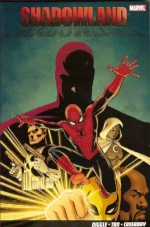
Shadowland


By Andy Diggle, Billy Tan, Matt Banning & Victor Olazaba (Marvel/Panini UK)
ISBN: 978-1-84653-473-7

It’s not often that perennial publishers’ favourite tool the braided mega-crossover throws up a segment that can be read truly independently of its multifarious spin-offs but Marvel seem to have accomplished that in the core miniseries which forms the backbone of the 2010 event Shadowland; a dark, moody and deliciously down-to-earth thriller headlining the companies less-cosmic, street-level heroes and villains…

Written by the always excellent Andy Diggle and illustrated by Billy Tan, with inking contribution from Matt Banning & Victor Olazaba and covers by John Cassaday, the five issue miniseries collected here originally ran from September 2010 to the beginning of 2011 and the repercussions of that tale are still ongoing.

After psychotic mass-murderer Bullseye killed 107 people by blowing up a building in the Hell’s Kitchen slum of New York City, guilt-wracked urban avenger Daredevil embraced a new tactic in his war on Evil and took control of The Hand, an 800 year old ninja cult which had previously battled against a number of heroes including Wolverine, the Avengers, X-Men and DD himself.

Erecting a colossal medieval castle on the site of the demolished edifice DD tasked his now-loyal warriors with keeping the streets safe at all costs. The area quickly became a no-go zone, shunned by the police and abandoned by criminals. The scumbags that didn’t leave soon disappeared…

At first Daredevil’s old friends make excuses for him but it soon becomes apparent that something is not right about the Man Without Fear, especially after the hero kills Bullseye in pitched battle…

Meanwhile in the background, Wilson Fisk, one-time Kingpin of New York, knows more than he’s telling and is subtly shaping events to his own ends. When New York inexplicably explodes in panic, unrest and rioting a heartsick band of Daredevil’s friends realise they must end his reign of remorseless “Justice” whatever the cost…

Guest-starring practically everybody but with feature roles for Iron Fist, Luke Cage, Spider-Man, White Tiger, Moon Knight, Colleen Wing & Misty Knight, the Punisher, Shang Chi – Master of Kung Fu, Ghost Rider, Wolverine and Elektra this is a non-stop rocket-ride of action and suspense, seamlessly blending black magic with urban vigilante tropes and tactics as the warriors of virtue battle unimaginable perils and the sinister machinations of more than one hidden mastermind to save their city and, if possible, the soul of Matt Murdock, Man Without Pity…

There is of course far more to the saga than appears here – and if you want the full story you’ll need to see Daredevil #508-512, Thunderbolts #148-149; Shadowland miniseries Blood on the Streets, Power Man, Moon Knight and Daughters of the Shadow plus the dedicated one-shots Shadowland: Spider-Man, Shadowland: Elektra, Shadowland: Bullseye and Shadowland: Ghost Rider. Conversely, you could await the full epic in graphic novel collections…

However should this striking tome be the only portion you want to read you won’t spend any time wondering what the heck is going on between pages and panels and you will experience the heady satisfaction of a great yarn well-told and beautifully executed.

™ & © 2010, 2011 Marvel Entertainment LCC and its subsidiaries. All rights reserved. A British edition released by Panini UK Ltd.

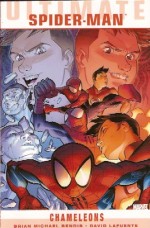
Ultimate Spider-Man book 2: Chameleons


By Brian Michael Bendis, Takeshi Miyazawa & Davis LaFuente (Marvel/Panini UK)
ISBN: 978-1-84653-466-9

The Marvel Ultimates project began in 2000 with a drastically modernizing refit of key characters and concepts to bring them into line with contemporary consumers – perceived to be a separate market to the baby-boomers and their declining descendents who seemed content with the assorted efforts which sprang from the hearts and minds of Kirby, Ditko and Lee.

Eventually the stripped-down new universe became as overcrowded and continuity-constricted as the original, leading to the 2008 “Ultimatum” publishing event which thinned the new herd – and millions of ordinary mortals into the bargain.

Although a commercial success the epic was largely slated by the fans who had bought it, and the ongoing “Ultimatum Comics” quietly soldiered on without “mentioning the War…”

The key and era-ending event was actually a colossal tsunami that drowned the superhero-heavy island of Manhattan and this second post-tidal wave collection (assembling issues #7-14 of the relaunched Ultimate Comics Spider-Man) picks up the story of young Peter Parker and his unique house-guests all slowly readjusting to their altered state.

Parker is sixteen (but looks 12), the perennial hard-luck loser kid: a brilliant geek just trying to get by in a world where daily education is infinitely more scary than monsters and villains. Between High School and slinging fast food (Burger Frog is his only source of income since the Daily Bugle drowned) he still finds time to fight crime although his very public heroics during the crisis have made him a beloved hero of police and citizenry alike – which is the creepiest thing he has ever endured.

He lives in a big house with his Aunt May, and despite his low self-image has stellar hottie Gwen Stacy for a devoted girlfriend, but perpetually endures the teen-angsty situation of equally stellar hottie Mary Jane Watson (his ex-squeeze) hanging around and acting all grown-up about it. He briefly dated mutant babe Kitty Pride: remember when not having any girlfriend was the textbook definition of “loser”?

Many kids are homeless after the deluge, with schools and accommodation stretched to breaking point, so feisty May Parker has opened her doors to a select band of orphaned super-teens like the Human Torch and Iceman, as well as Gwen. Peter’s secret identity was constantly threatened before; how can he possibly conceal his adventurous life when two such famous characters are suddenly sharing the bathroom and his exploits…?

This second delightful collection opens with a new presence in the Ultimate Universe as near-neighbour Rick Jones is possessed by an ancient intergalactic presence. Cool Youngbloods Spidey, Torch and Iceman befriend the bewildered lad and are dragged along on a tumultuous fact-finding mission to secret base Project Pegasus just in time to clash with the sexy sirens of the all-girl Serpent Squad and discover that poor Rick – now calling himself “Nova” – is a cosmic “Chosen One” destined to save the World…

That two-part, laugh-packed thriller leads into decidedly darker territory in #9 as shallow jerk Johnny Storm finds the girl of his dreams in a new mysterious Spider-Girl whilst anti-mutant feeling grows and Kitty Pryde is almost snatched from school by brutally heavy-handed government agents.

On the run, Kitty goes dangerously rogue whilst her friends attempt to go public with the Authorities’ quasi-legal black-bag operation, enlisting the Fourth Estate in the form of the newly-restored Daily Bugle…

Unfortunately whilst trying to break the story of the Government’s anti-mutant agenda Peter Parker is abducted by an enigmatic shapechanger who borrows his form, his powers and his life. Issues #11-14 detail the Chameleon’s vindictive campaign to trash Spidey’s private life whilst using his stolen powers to go on a highly profitable, very public crime spree.

Meanwhile the real Peter is the prisoner of a second psychotic shapeshifter, who also has J. Jonah Jameson under wraps. In close proximity with Pete for days, the wily veteran newsman has deduced the boy’s greatest secret… The climax is breathtaking and portentous. Although temporarily safe, Parker’s life is about to go very badly wrong…

Combining smart dialogue and teen soap opera dynamics with spectacular action – beautifully rendered by artists Takeshi Miyazawa, David Lafuente and colourist Justin Ponsor – Brian Michael Bendis blends hilarious hi-jinks with staggering tension and shocking plot-twists to produce one of the most enjoyable takes on the wall-crawler in decades.

This series goes from strength to strength: a marvellously compelling and enjoyable costumed drama that easily overcomes its troubled origins. Absolutely worth any jaded superhero fan’s time and money Ultimate Spider-Man is well on the way to becoming an unmissable hit…
™ and © 2010 Marvel Entertainment LCC and its subsidiaries. All rights reserved. A British edition released by Panini UK Ltd.

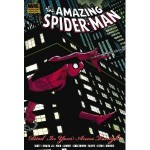
Amazing Spider-Man: Died in Your Arms Tonight


By Stan Lee, Mark Waid, Marc Guggenheim, Joe Quesada, John Romita Jr. & others (Marvel Comics)
ISBN: 978-0-7851-4485-4

When the Spider-Man continuity was drastically and controversially altered at the end of the “One More Day” publishing event a refreshed, now single-and-never-been-married Peter Parker was parachuted into a new life, so if this is your first Web-spinning yarn in a while or if you’re drawing your cues from the movies prepare yourself for a little confusion. That being said this collection of Web-spun wonderment is more accessible than most: a vast celebratory collection commemorating then 600th issue of the landmark comic-book and stuffed with vignettes, mini-masterpieces and clever nostalgia-steeped moments.

Gathering the contents of Amazing Spider-Man #600-601, material from Amazing Spider-Man Family #7 and Amazing Spider-Man Annual #36, the merry Marvel Magic leads off with the comedic ‘Identity Crisis’ by Stan Lee & Marcos Martin, a whimsical look back and shaggy psychiatrist story, Whilst Mark Waid, Colleen Doran & Jose Villarrubia’s ‘My Brother’s Son’ is a glorious sentimental glimpse into Ben Parker’s life with the child Peter that will bring a tear to every fan’s eye. Written by Marc Guggenheim and illustrated by Mitch & Elizabeth Breitweiser offers a glimpse into the heart of Aunt May on the eve of her marriage to J. Jonah Jameson’s father.

From Amazing Spider-Man Family #7 comes ‘Just an Old Sweet Story’ by Roger Stern, Val Semeiks & Mike Getty, revealing how May Reilly and Ben Parker met and married, whilst Amazing Spider-Man Annual #36 provides Guggenheim, Pat Olliffe & Andy Lanning’s ‘Peter Parker Must Die’ as the impending Bride and Groom’s families meet for the rehearsal dinner in Boston.

This romp introduces a whole new sub-cast into the Wall-Crawling mix with the rambunctious Reilly Clan and also debuts a new villain intent on Peter’s demise. Or is the Raptor actually after somebody else? Also on offer are two more enchanting mood-pieces; ‘A Night at the Museum’ by Zeb Wells, Derec Donovan & Antonio Fabela, reminiscing about one of the most embarrassing moments in Spidey history and Bob Gale & Mario Alberti’s lovely ‘If I Was Spider-Man’ as the hero overhears kids answering the age-old question with startling honesty and profundity…

The latter half of this book is taken up with the stunning lead feature and its sequel. ‘Last Legs’ by Dan Slott, John Romita Jr. & Klaus Janson is set during the wedding of Aunt May and Pa Jameson and recounts the last assault by Dr. Octopus, dying from years of being smacked around by the good guys and determined to make the City of New York remember his passing. Moreover as he almost married May Parker himself once, Ock’s not averse to playing gooseberry there if he can…

Packed with guest-stars like Daredevil, the Avengers and Fantastic Four, all of Manhattan is held hostage to the madman’s final rampage until Spider-Man and the Torch save the day and still get to the church on time. But at the reception there’s still one more shock for Peter Parker…

Issue #601 presents a trio of tales set The Day After, beginning with Waid and Alberti’s ‘Red-Headed Stranger: No Place Like Home’ as the repercussions of Peter’s drunken response to the sudden return of Mary Jane Watson (missing for months) leaves him homeless and clueless whilst ‘The Very Best Version of Myself’ by Brian Michael Bendis & Joe Quesada shows the true heroic power of the wall-crawler and the concluding ‘Violent Visions’ (Joe Kelly, Max Fiumara & Chris Chuckry launches the next big thing as a war against Spider-themed characters begins with the “death” of precognitive bit-player Madame Web…

Stuffed with a gallery of covers and alternate art-pieces by such luminaries as John Romita Jr., Joe Quesada, Joe Suitor, Olivier Coipel, Alex Ross, J. Scott Campbell and John Romita Sr. this treasury of delights proves the modern Wall-Crawler still has a broad reach and major appeal for fans old and new. This is the perfect place to rejoin or jump on if the Webbed Wonder crawled off your radar in recent years…

© 2009 Marvel Publishing, Inc, a subsidiary of Marvel Entertainment, Inc. All Rights Reserved.

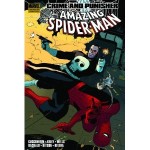
Amazing Spider-Man: Crime and Punisher


By Marc Guggenheim, Joe Kelly, Barry Kitson, Chris Bachalo & various (Marvel Comics)
ISBN: 978-0-7851-5417-6

Although a little disingenuous and rather disjointed for my tastes Crime and Punisher is a splendid slice of spidery superhero shenanigans that proves the modern Wall-Crawler still has a broad reach and plot-themes to suit many moods and occasions.

First off ignore the term “Crime” as the very best part of this collection (comprising Amazing Spider-Man #474-577, and portions of Spider-Man: Brand New Day -Extra!! #1) is a poignant and moving human interest tale with oldest friend Flash Thompson reaching a huge and shocking turning point in his life after returning from a tour of duty in Iraq.

Written by Marc Guggenheim, illustrated by Barry Kitson & Mark Farmer, this low-key tale of inspiration and ordinary heroism is a genuinely moving tribute to soldiers and one of the best Spidey tales of the last twenty years, but it is light-years away from the dark and frenetic retooling of the strictly B-List villain that follows.

‘Death of a Wise Guy’ by Joe Kelly, Chris Bachalo & Tim Townsend (from Spider-Man: Brand New Day -Extra!! #1) tells the secret history of the screen-gangster obsessed young Mafioso who became the brain-damaged cyborg Hammerhead and how his painful rehabilitation and rebuilding under the aegis of new criminal mastermind Mister Negative elevates a clownish super-thug to the top of the villain heap…

When the Spider-Man continuity was drastically and controversially altered at the end of the “One More Day” publishing event a refreshed, now single-and-never-been-married Peter Parker was parachuted into a new life, so if this is your first Web-spinning yarn in a while or if you’re drawing your cues from the movies be prepared to be a little confused.

Therefore this tale from the follow-up “Brand New Day” event sees Parker, a photographer for independent newspaper Front Line stumbling on Negative and Hammerhead’s scheme to consolidate the street gangs into a vast army of boy-soldiers, in ‘Family Ties’ (Amazing Spider-Man #475-6, with additional inks from Jaime Mendoza & Al Vey), a brooding, brutally epic clash wherein Parker puts his life on the line to save Gangsta kids from the Cyborg’s join-or-die recruitment campaign. Kelly’s signature wild comedy perfectly counterpoints the savage battles and highlights the quantum leap in malice the new Hammerhead is capable of…

The book ends with Punisher reluctantly and spectacularly reuniting with Spider-Man to stop their mutual old foe Moses Magnum, a ruthless arms-merchant who has found a way to weaponise Gamma radiation: giving any buyer a serum that producers berserker incredible Hulks to order…

‘Old Hunting Buddies’ (Amazing Spider-Man #477) parts 1 and 2 are written by Zeb Wells, drawn by Paolo Rivera and coloured by Javier Rodriguez & Dean White, with Kelly Kitson & Farmer’s ‘A Bookie Minute Mystery’ bisecting the saga. This last is a cheery little interlude that touches base with J. Jonah Jameson, recovering from heart-surgery and already making plans for his inevitable return…

Fast-paced, bold and extremely engrossing the quality of the individual tales is undeniable, but like an old time Vaudeville Show there’s a marked lack of cohesion, a start instead of a beginning and a close but no ending. Pretty even if lacking in context, it would be a shame if these stories were missed or passed over, so any Fights ‘n’ Tights fan should really give this book a look if they haven’t already…

© 2008, 2009 Marvel Characters, Inc.  All Rights Reserved.
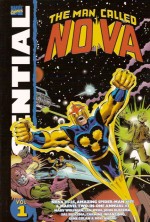
Essential Nova volume 1


By Marv Wolfman, John and Sal Buscema, Carmine Infantino & various (Marvel)
ISBN: 978-0-7851-2093-9

By 1975 the first wave of fans-turned-writers were well ensconced at all the major American comic-book companies. Two fanzine graduates, Len Wein and Marv Wolfman had achieved stellar successes early on, and then risen to the ranks of writer/editors at Marvel, a company in trouble both creatively and in terms of sales. After a meteoric rise and a virtual root and branch overhaul of the industry in the 1960s the House of Ideas – and every other comics publisher except Archie – were suffering from a mass desertion of fans who had simply found other uses for their mad-money.

Whereas Charlton and Gold Key dwindled and eventually died and DC vigorously explored new genres to bolster their flagging sales, Marvel chose to exploit their record with superheroes and foster new titles within a universe it was increasingly impossible to buy only a portion of…

The Man Called Nova was in fact a boy named Richard Rider, a working class nebbish in the tradition of Peter Parker – except he was good at sports and bad at learning – who attended Harry S. Truman High School, where his strict dad was the principal. His mom worked as a police dispatcher and he had a younger brother, Robert, who was a bit of a genius. Other superficial differences to the Spider-Man canon included girlfriend Ginger and best friends Bernie and Caps, but he did have his own school bully, Mike Burley…

An earlier version, “Black Nova” had apparently appeared in the Wolfman/Wein fan mag Super Adventures in 1966, but with a few revisions and an artistic make-over by the legendary John Romita (Senior) the Human Rocket was launched into the Marvel Universe in his own title, beginning in September 1976, ably supported by the illustration A-Team of John Buscema and Joe Sinnott.

‘Nova’, which borrowed as heavily from Green Lantern as well as Spider-Man’s origin, was structured like a classic four-chapter Lee/Kirby early Fantastic Four tale, and rapidly introduced its large cast before quickly zipping to the life-changing moment in Rider’s life when an star-ship with a dying alien aboard transfers to the lad all the mighty powers of an extraterrestrial peacekeeper and warrior.

Centurion Rhomann Dey had tracked a deadly marauder to Earth. Zorr had already destroyed the idyllic world of Xandar, but the severely wounded vengeance seeking Nova Prime was too near death and could not avenge the genocide. Trusting to fate, Dey beamed his powers and abilities towards the planet below where Richard Rider was struck by the energy bolt and plunged into a coma. On awakening Rich realised he had gained awesome powers and the responsibilities of the last Nova Centurion.

The tale is standard origin fare, beautifully rendered by Buscema and Sinnott, but the story really begins with #2’s ‘The First Night of… The Condor!’ as Wolfman, playing to his own strengths, introduced an extended storyline featuring a host of new villains whilst concentrating on filling out the lives of the supporting cast. There was still plenty of action as the neophyte hero learned to use his new powers (one thing the energy transfer didn’t provide was an instruction manual) but battles against winged criminal mastermind Condor and his enigmatic, reluctant pawn Powerhouse plus #3’s brutal super-thug (‘…The Deadly Diamondhead is Ready to Strike!’ illustrated by new art-team Sal Buscema & Tom Palmer) were clearly not as important as laying plot-threads for a big event to come.

Nova #4 saw the first of many guest-star appearances (and the first of three covers by the inimitable Jack Kirby). ‘Nova Against the Mighty Thor’ introduced The Corruptor, a bestial being who turned the Thunder God into a raging berserker whom only the new kid on the block could stop, whilst ‘Evil is the Earth-Shaker!’ pitted the lad against subterranean despot Tyranus and his latest engine of destruction, although a slick sub-plot concerning the Human Rocket’s attempt to become a comic book star still delivers some tongue-in-cheek chuckles to this day…

Issue #6 saw those long-laid plans begin to mature as Condor, Diamondhead and Powerhouse returned to capture Nova, whilst their hidden foe was revealed in ‘And So… The Sphinx!’ (inked by Frank Giacoia), another world-class, immortal super-villain patiently waiting his turn to conquer the world. Meanwhile young Caps had been abducted by another new bad-guy who would eventually make big waves for the Human Rocket.

‘War in Space!’ found Nova a brainwashed ally of his former foes in an invasion of Rhomann Dey’s still orbiting star-ship – an invaluable weapon in the encroaching war with the Sphinx, only to be marooned in deep space once his mind cleared. On narrowly escaping he found himself outmatched by Caps’ kidnapper in ‘When Megaman Comes Calling… Don’t Answer!’ – a tumultuous, time-bending epic that concluded in #9’s ‘Fear in the Funhouse!’

Nova #10 began the final (yeah, right) battle in ‘Four Against the Sphinx!’ with Condor, Diamondhead and Powerhouse in all-out battle against the immortal mage with the hapless Human Rocket caught in the crossfire, whilst ‘Nova No More’ had the hero’s memories removed to take him out of the game; a tactic that only partially worked since he was back for the next issue’s classy crossover with the Spectacular Spider-Man.

‘Who is the Man Called Photon?’ by Wolfman, Sal Buscema & Giacoia, teamed the young heroes in a fair-play murder mystery when Rich Rider’s uncle was killed by a costumed thief. However there were ploys within ploys occurring and after the mandatory hero head-butting the kids joined forces and the mystery was resolved in Amazing Spider-Man #171’s ‘Photon is Another Name For…?’ courtesy of Wein, Ross Andru & Mike Esposito.

Joe Sinnott returned in Nova #13, as another lengthy tale began with the introduction of new hero Crime-Buster in ‘Watch Out World, the Sandman is Back!’, wherein the once formidable villain took a beating and fell under the influence of a far more sinister menace. Meanwhile Rich’s dad was going through some bad times and had fallen into the clutches of a dangerous organisation…

The story continued in the Dick Giordano inked ‘Massacre at Truman High!’ as Sandman attacked Nova’s school and the mystery mastermind was revealed for in-the-know older fans before the guest-star stuffed action-riot ‘The Fury Before the Storm!’ saw Carmine Infantino take over the pencilling and Tom Palmer return to the brushstrokes.

When a bunch of established heroes attack the newbie all at once it’s even money they’re fakes, but Nick Fury of super-spy agency S.H.I.E.L.D. was real enough and deputised the fledgling fighter for #16’s ‘Death is the Yellow Claw!’ and #17’s spectacular confrontation ‘Tidal Wave!’ As the kid came good and saved the city of New York from a soggy demise the long awaited conclusion occurred in ‘The Final Showdown!’, inked, as was ‘Beginnings’ a short side-bar story dealing with the fate of the elder Rider, by the agglomeration of last-minute-deadline busters dubbed “the Tribe.”

A new foe debuted in #19: ‘Blackout Means Business and his Business is Murder!’ opened the final large story-arc of the series as a ebon-energy wielding maniac attacked Nova, but before that epic completely engaged, the Human Rocket guest-starred with the Thing in Marvel Two-in-One Annual #3 (1978) in a simple yet entertaining tussle with god-like cosmic marauders entitled ‘When Strike the Monitors!’ an interlude crafted by Wolfman, Sal Buscema, Giacoia & Dave Hunt.

Hunt stayed on as inker for Nova #20 as the steadily improving young hero went after the cabal that had nearly destroyed his dad in ‘At Last… The Inner Circle!’ leading to a breakthrough in comics conventions as the Human Rocket revealed his alter ego to his family in ‘Is the World Ready for the Shocking Secret of Nova?’ (with art by John Buscema, Bob McLeod & Joe Rubinstein), whilst a long-forgotten crusader and some familiar villains resurfaced in ‘The Coming of the Comet!’ (#22, Infantino & Steve Leialoha) and long-hidden cyborg mastermind Dr. Sun (an old Dracula foe, of all things) revealed himself in ‘From the Dregs of Defeat!’ executing his scheme to seize control of the lost Nova Prime star-ship and its super-computers.

A huge epic was impressively unfolding but the Human Rocket’s days were numbered. Penultimate issue #24 (inked by Esposito) introduced ‘The New Champions!’ as Dr. Sun battled the Sphinx for the star-ship, with Crime-Buster, the Comet, Powerhouse and Diamondhead dragged along on a one-way voyage to the ruins of Xandar, lost home of the Nova Centurions.

This volume ends with #25, a hastily restructured yarn as the cancellation axe hit the series before it could properly conclude. ‘Invasion of the Body Changers!’ by Wolfman, Infantino & Klaus Janson saw the unhappy crew lost in space and attacked by shape-shifting alien Skrulls, all somehow implicated in the destruction of Xandar, but the answers to the multitude of questions raised were to be eventually resolved in a couple of issues of the Fantastic Four and latterly Rom: Spaceknight: episodes not included here, thus rendering this collection aggravatingly incomplete.

There’s a lot of good, solid entertainment and beautiful superhero art in this book, and Nova has proved his intrinsic value by returning again and again, but by leaving this edition on such a frustrating open end, the editors have reduced what could have been a fine fights ‘n’ tights collection into nothing more than a historical oddity. Stories need conclusions and mine is that we readers deserve so much better than this.

© 1976, 1977, 1978, 1979, 2006 Marvel Characters, Inc.  All Rights Reserved.
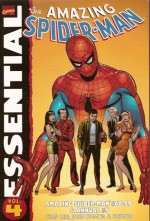
Essential Spider-Man volume 4


By Stan Lee, John Romita, John Buscema, Jim Mooney and various (Marvel)
ISBN: 978-0-7851-1865-7

This fourth exceptionally economical monochrome volume of chronological Spider-Man adventures sees the World’s Most Misunderstood Hero through another rocky period of transformation as the great second era of Amazing Arachnid artists comes to a close. Although the elder John Romita would remain closely connected to the Wall-Crawler’s adventures for some time to come it would be – apart from a brief return after the book had passed its first centenary – his last time as lead illustrator on the series.

Stan Lee’s scripts were completely in tune with the times – as seen by a lot of kid’s parents at least – and the increasing use of pure soap opera plots kept older readers glued to the series even if the bombastic battle sequences didn’t. The Amazing Spider-Man was a comic-book that matured with or perhaps just slightly ahead of its fan-base.

Thematically, there’s still a large percentage of old-fashioned crime and gangsterism and an increasing use of mystery plots. The dependence on costumed super-foes as antagonists was finely balanced with thugs, hoods and mob-bosses, but these were not the individual gangs of the Ditko days. Now Organised Crime and the Mafia analogue The Maggia were the big criminal-cultural touchstone as comics caught up with modern movies and the headlines.

This volume (reprinting Amazing Spider-Man #66-89 and Amazing Spider-Man Annual #5) kicks off with a sinister two-part tale featuring one of Steve Ditko’s most visually arresting villains. ‘The Madness of Mysterio’ and ‘To Squash a Spider’ (issues #66-67, by Lee, Romita, Don Heck, Mike “DeMeo” Esposito, and Jim Mooney) saw the master of FX illusion engineer his most outlandish stunt on our hero, whilst in the background the amnesiac Norman Osborn slowly began to regain his memory.

This plot thread would culminate in the first return of the Green Goblin, but frustratingly, even though there’s plenty of brooding build-up here you won’t find the actual culminating story (which appeared in the abortive magazine venture Spectacular Spider-Man #2) in this volume. Perhaps more interestingly, this yarn introduced Randy Robertson, college student son of the Daily Bugle’s city editor and one of the first young black regular roles in Silver Age comics. Lee was increasingly making a stand on Civil Rights issues at this time of unrest and Marvel would blaze a trail for African American characters in their titles. There would also be a growth of student and college issues during a period when American campuses were coming under intense media scrutiny…

However before that another mystery in the Webspinner’s life was cleared up. Amazing Spider-Man Annual #5 by Lee and his brother Larry Lieber (with inking from Esposito – still in his clandestine “Mickey DeMeo” guise) revealed the secret behind the deaths of ‘The Parents of Peter Parker’, an exotic spy-thriller which took Spider-Man to the Algerian Casbah and a confrontation with the Red Skull. Nit-pickers and continuity-mavens will no doubt be relieved to hear that the villain was in fact the second Soviet master-villain who featured in Captain America revival of 1953-1954, and not the Nazi original that Lee and Co had clearly forgotten was in “suspended animation” throughout that decade when writing this otherwise perfect action romp and heartstring-tugging melodrama…

That annual also provided a nifty Daily Bugle cast pin-up, a speculative sports feature displaying the advantages of Spider powers, a NYC street-map of the various locations where the Spidey saga unfolded and a spoof section displaying how the Wallcrawler would look if published by Disney/Gold Key, DC or Archie Comics, or drawn by Al “Li’l Abner” Capp, Chester “Dick Tracy” Gould and Charles “Peanuts” Schulz. ‘Here We Go A-Plotting!’ a comedic glimpse at work in the Marvel Bullpen, uncredited but unmistakably drawn by the wonderful Marie Severin concludes the joyous Annual extras included here.

Issue #68 (by Lee Romita & Mooney) began a long-running saga featuring the pursuit of an ancient stone tablet by various nefarious forces, beginning with The Kingpin who exploited a ‘Crisis on the Campus!’ to steal the artifact. Meanwhile Peter Parker, already struggling with debt, a perpetually at-Death’s-Door Aunt May, relationship grief with girlfriend Gwen Stacy and no time to study was accused of not being involved enough by his fellow students…

‘Mission: Crush the Kingpin!’ further tightened the screws as the student unrest exploded into violence and the corpulent crime czar framed the hero for the tablet’s theft. Hounded and harried in ‘Spider-Man Wanted!’ he nevertheless managed to defeat the Kingpin only to (briefly) believe himself a killer when he attacked J. Jonah Jameson in a fit of rage causing an apparent heart attack in the obsessive, hero-hating publisher.

At his lowest ebb, and still possessing the tablet, he was attacked by the sometime Avenger Quicksilver in ‘The Speedster and the Spider!’ in issue #71, before John Buscema came aboard as layout-man in ‘Rocked by: the Shocker!’

No sooner did Spider-Man leave the stone tablet with Gwen’s dad – Police Chief Stacy – than the vibrating villain attacked, stealing the petrified artifact and precipitating a frantic underworld Civil War as the Maggia dispatched brutal enforcer Man-Mountain Marko to retrieve it at all costs in ‘The Web Closes!’ (by Lee, Buscema, Romita & Mooney).

Upstart lawyer Caesar Cicero was making his move to depose aged Don of Dons Silvermane, but the ancient boss knew the secret if not the methodology of the tablet and had abducted biologist Curt Connors and his family to reconstruct the formula on the stone and bring him ultimate victory.

Unfortunately nobody but Spider-Man knew that Connors was also the lethal Lizard and that the slightest stress could free the reptilian monster to once more threaten all humanity. ‘If this be Bedlam!’ (illustrated by Romita & Mooney) led directly into ‘Death Without Warning!’ as the unleashed power of the tablet caused a cataclysmic battle that seemingly destroyed one warring faction forever, decimated the mobs, but also freed a far more deadly monster threat…

Amazing Spider-Man #76 saw John Buscema become full penciller because ‘The Lizard Lives!’ and the concluding ‘In the Blaze of Battle!’ found the Webspinner trying to defeat, cure and keep the tragic secret of his friend Connors all whilst preventing the guest-starring Human Torch from destroying the marauding rogue reptile forever, whilst #78’s ‘The Night of the Prowler!’ featured (probably) John Romita Junior’s first ever creator credit for “suggesting” the tragic young black man Hobie Brown, who turned his frustrations and inventive genius to criminal purposes until set straight by Spider-Man in the concluding ‘To Prowl No More!’

With #80 a policy of single-issue adventures was instituted: short snappy thrillers that delivered maximum thrills and instant satisfaction. First off was a return for the Wallcrawler’s first super-foe in ‘On the Trail of the Chameleon!’ followed by the action-packed if somewhat ridiculous ‘The Coming of The Kangaroo!’ (a clear contender for daftest origin of all time) and Romita senior returned as penciller for ‘And Then Came Electro!’

There were big revelations about the Kingpin in the three part saga that featured in issues #83-85 with the introduction of ‘The Schemer’ (Lee, Romita & “DeMeo”), a mysterious outsider determined to destroy and usurp the power of the sumo-like crime-lord. ‘The Kingpin Strikes Back!’ (art by Romita, Buscema & Mooney) and ‘The Secret of the Schemer!’ changed the Marvel Universe radically, not just by disclosing some of the family history of one of the company’s greatest villains, but also by sending Peter Parker’s eternal gadfly Flash Thompson to a dubious fate in Vietnam…

‘Beware… the Black Widow!’ saw Romita and Mooney redesign and relaunch the Soviet super-spy and sometime Avenger in an enjoyable if highly formulaic misunderstanding clash-of-heroes yarn with an ailing Spider-Man never really endangered, whilst the next issue ‘Unmasked at Last!’ found Parker, convinced that his powers were forever gone, expose his secret identity to all the guests at his girlfriend’s party…

Using the kind of logic and subterfuge that only works in comics and sitcoms Parker and Hobie Brown convinced everybody that it was only a flu-induced aberration in time for the fateful return of the Webslinger’s greatest foe in #88 as the Romita & Mooney art team bow out on a high in ‘The Arms of Doctor Octopus!’

The deranged scientist had gained telepathic control of his incredible mechanical tentacles and sent them on a rampage of destruction through New York. Freeing himself from prison the villain then seized a jet full of Chinese dignitaries and demanded a multi-million dollar ransom until once more defeated and apparently destroyed by Spider-Man.

This volume ends in the most annoying manner possible with Amazing Spider-Man #89, a turning point in the series as the undisputed master of super-heroic anatomy Gil Kane assumed the penciling role (inked by Romita) for ‘Doc Ock Lives!’ wherein the villain attacked once more and hurled the overwhelmed hero to his doom… the result of which you’ll need volume 5 to see.

Moreover that selfsame climatic conclusion signalled the tragic demise of a major character and a genuine turning point in the history of the Amazing Arachnid.

Seriously guys: you couldn’t afford 21 more pages to give this book a proper narrative resolution? What kind of editors or publishers do that to valued fans and especially any new readers you might be cultivating?

Despite that major qualification this is still a fantastic book about an increasingly important teen icon and symbol. Spider-Man at this time became a permanent, unmissable part of many youngsters’ lives and did so by living a life as close to theirs as social mores and the Comics Code would allow. Blending cultural authenticity with spectacular art, and making a dramatic virtue of the awkwardness, confusion and sense of powerlessness that most of the readership experienced daily resulted in an irresistibly intoxicating read, delivered in addictive soap-opera instalments, but none of that would be relevant if the stories weren’t so compellingly entertaining. This book is Stan Lee’s Marvel and Spider-Man at their peak.

© 1968, 1969, 1970, 2005 Marvel Entertainment Group, Inc. All rights reserved.