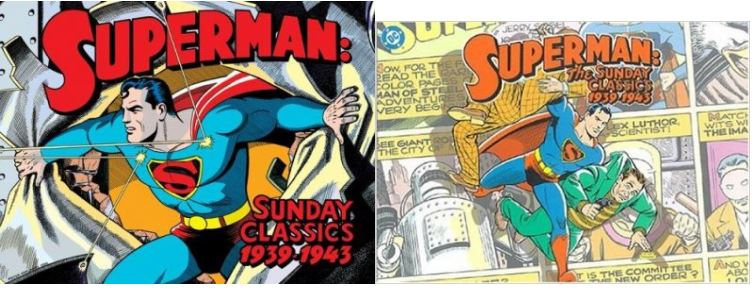
Superman Sunday Classics Strips 1-183 (1939-1943)


By Jerry Siegel & Joe Shuster & the Superman Studio (DC/Kitchen Sink Press: Sterling Publishing Co. Inc.)
ISBN: 978-1-40273-786-2 (Sterling) 978-1-56389-472-5(DC/KS)

It’s indisputable that the American comic book industry – if it existed at all – would have been an utterly unrecognisable thing without Superman. Jerry Siegel & Joe Shuster’s unprecedented invention was rapturously adopted by a desperate and joy-starved generation, quite literally giving birth to a genre if not an actual art form.

Within three years of his 1938 debut, the intoxicating blend of breakneck, breathtaking action and wish-fulfilment that epitomised the early Man of Tomorrow spawned an impossible army of imitators. The original’s antics and variations grew to encompass cops-and-robbers crime-busting, socially reforming dramas, science fiction fantasies, and whimsical comedy. Once the war in Europe and the East ensnared America, patriotic relevance for a host of gods, heroes and monsters exploded: all dedicated to exuberant, eye-popping excess and vigorous dashing derring-do.

In comicbook terms Superman was master of the world. Moreover, whilst transforming the shape of the fledgling funnybook industry, the Metropolis Marvel relentlessly expanded into all areas of the entertainment media. Although we all think of the Cleveland boys’ iconic invention as the epitome and acme of comicbook creation, the truth is that very soon after his debut in Action Comics #1, the Man of Steel became a fictional multimedia monolith in the same league as Popeye, Tarzan, Sherlock Holmes and Mickey Mouse.

We parochial and possessive comics fans too often regard our purest, most powerful icons in purely graphic narrative terms, but the likes of Batman, Spider-Man, The Avengers and their hyperkinetic kind long ago outgrew four-colour origins and are now fully mythologized media creatures instantly familiar in mass markets, across all platforms and age ranges…

Far more people have seen or heard an actor as Superman than have ever read his comicbooks. The globally syndicated newspaper strips alone reached untold millions, and by the time his 20th anniversary rolled around at the very start of what we know as the Silver Age of Comics, Superman was a thrice-weekly radio serial regular and starred in an astounding animated cartoon series, two films, on TV and a prose novel by George Lowther.

He was a perennial sure-fire success for toy, game, puzzle and apparel manufacturers and had just ended that first smash live-action television presence. In his future were three more shows (Superboy, Lois & Clark and Smallville), a stage musical, a string of blockbuster movie franchises and an almost seamless succession of games, bubble gum cards and TV cartoons beginning with The New Adventures of Superman in 1966 and continuing ever since. Even his superdog Krypto got in on the small-screen act…

Although pretty much a spent force these days, for the majority of the last century the newspaper comic strip was the Holy Grail that all American cartoonists and graphic narrative storytellers hungered for. Syndicated across the country – and often the planet – it was seen by millions, if not billions, of readers and generally accepted as a more mature and sophisticated form of literature than comic-books. It also paid better.

And rightly so: some of the most enduring and entertaining characters and concepts of all time were created to lure readers from one particular paper to another and many of them grew to be part of a global culture.

Mutt and Jeff, Flash Gordon, Dick Tracy, Buck Rogers, Charlie Brown and so many more escaped their humble tawdry newsprint origins to become meta-real: existing in the minds of earthlings from Albuquerque to Zanzibar. Most of them still do…

However it was considered something of a risky double-edged sword when a comicbook character became so popular that it swam against the tide (after all, weren’t the funny-books invented just to reprint the strips in cheap accessible form?) to become a genuinely mass-entertainment syndicated serial strip.

Superman was the first comic book star to make that leap – six months after exploding out of Action Comics – with only a few ever successfully following. Wonder Woman, Batman (eventually) and teen icon Archie Andrews made the jump in the 1940s with only a handful like Spider-Man, Howard the Duck and Conan the Barbarian doing so since.

The Superman daily newspaper comic strip launched on 16th January 1939, supplemented by a full-colour Sunday page from November 5th of that year. Originally crafted by Siegel & Shuster – whose primary focus switched immediately from comic books to the more prestigious and lucrative tabloid iteration – and their hand-picked studio (Paul Cassidy, Leo Nowak, Dennis Neville, John Sikela, Ed Dobrotka, Paul J. Lauretta & Wayne Boring), the mammoth daily grind soon required the additional talents of Jack Burnley and supplementary writers including Whitney Ellsworth, Jack Schiff & Alvin Schwartz.

This superb collection – doubly out-of-print and still not available digitally, despite its superb quality and sublime content – opens with an Introduction by contemporary Super-Scribe Roger Stern. He effusively recaps the sensation and spotlights his creators, before we see the first 19 complete tales of the primal powerhouse in stunning full colour stupendously unfold.

Whether in pamphlet or local periodical, these tales of the modern Hercules exploded into the consciousness of the world. No one had ever seen a fictionalised hero throw all the rules of physics away and burst into unstoppable, improbable action on every page. In fact, editors and publishers’ greatest concern was that the implausible antics would turn off audiences. Clearly, they could not have been more wrong…

Thus early episodes simply establish the set-up of an Alien Wonder among us, masquerading as an extremely puny human at a “great metropolitan newspaper”… when not crushing evil as his flamboyant alter-ego. These stories are all about constant action and escalating spectacle, displaying the incredible power of a bombastic, heroic man of the people…

On the first Sunday in November 1939 the parade of marvels commenced with a single introductory page describing Superman’s origins in ‘The Man of Tomorrow’ followed seven days later by initial adventure ‘Twenty-Four Hours to Ruin’ which found the Action Ace in a non-stop rush of blood and thunder, saving a logging concern from sabotage and hostile takeover by gangsters.

Crime segued into scientific fantasy when Superman saved ‘The Mindless Slaves of Dr. Grout’ from forced labour as the villain fomented a coup against America…

Inklings of true comic book themes and more complex storylines arrived as Clark Kent and Lois Lane were despatched to investigate the ‘Giants of Doom Valley’: discovering a race of hostile subterranean invaders for Superman to discourage, before ‘Assassins and Spies’ took them into the most pressing concern of the era after agents of a foreign power spread sedition and terror on America’s shores to bolster a European war.

A mysterious mastermind then employed super-science, coercion, abduction and giant insects to ensure ‘The Chosen’ carried out his plans of global financial dominance before a more bucolic tale saw Superman helping Lois escape fatal consequences as ‘The Dangerous Inheritance’ left her with 5,000 acres of seemingly worthless scrubland. Not everyone agreed with the assessment and the Man of Steel was never busier…

Woe in the wilderness gave way to big city bombast as ‘The Bandit Robots of Metropolis’ caused carnage in search of cash, pushing the Man of Steel to his physical and intellectual limits and priming him for a landmark clash against ‘Luthor, Master of Evil’ who turns the weather into a weapon in his escalating war against mankind.

A cunning murderer sought to frame a professional automobile driver in ‘Death Race’ whilst a high-tech propaganda campaign almost destabilised the city when ‘The Committee for a New Order’ pirated the airwaves. Crushing their campaign of terror, Superman was embroiled in a blistering battle against vile enemy agents who knew Lois was his Achilles’ Heel…

Another corporate assault on trade is exposed when freight drivers are poisoned by crooks trying to ‘Destroy All Trucks’ of a businessman’s rivals, after which a mirage-making super-villain pillages Metropolis until her galvanic guardian saw through ‘The Image’

When Clark’s ‘Arson Evidence’ convicts an innocent man, his other self moves Heaven and Earth to exonerate the jailbird and ferret out the true fire-fiend, after which – it being almost three years since his debut – Superman spent two weeks reminding old readers and informing new ones why and how he was ‘The Champion of Democracy’.

To a large extent mention of World War II was kept to a minimum on the Action Ace’s funny pages, but now ‘The Superman Truck’ – detailing how a prototype military transport was relentlessly targeted by saboteurs – plunged right in to conflict with a subplot about a reluctant taxi driver enlisting in the Army Transport Corps. Tracing his induction and training, this yarn was a cunningly-conceived weekly ad and plea for appropriately patriotic readers to enlist…

Military motifs continued as a ship full of diplomats and war correspondents was set afire by an incendiary madman allied to in-over-their-heads Fifth Columnists. It’s not long before ‘The Blaze’ is in critical timberland, acting on his own deranged impulses and leaving the Metropolis Marvel with the huge job of saving America’s war effort…

Showbiz raised its glamorous head when Clark and Lois were sent to cover the morale-boosting ‘Hollywood Victory Caravan’ tour, only to stumble into backbiting, sabotage, intrigue and murder at the hands of Nazi infiltrators.

Wrapping up the vintage spills and thrills is another fervent comics call to arms as Superman – and Clark – take a well-intentioned but lazy and perpetually backsliding wastrel in hand. How he is shepherded through aviator ‘Cadet Training’ to a useful existence as a warrior of Democracy is a rousing wonder to behold.

Supplementing the gloriously rip-roaring, pell-mell adventure are spellbinding extra features including ‘How Superman Would End World War II’ (first seen in the February 27th 1940 issue of mainstream icon Look magazine), promo ads and a 1942 ‘Superman Pinup’.

This specific Sterling Publishing volume is a reissue of the 1999 DC/Kitchen Sink co-production, but either edition offers timeless wonders and mesmerising excitement for lovers of action and fantasy. If you love the era or just crave simpler stories from less angst-wracked times, these yarns are perfect comics reading, and this a book you simply must have.
Superman and all related names, characters and elements are ™ & © DC Comics © 2006. All rights reserved.
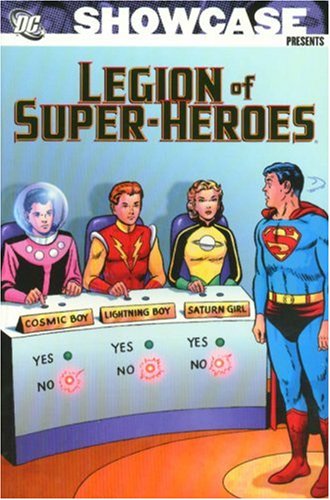
Showcase Presents Legion of Super-Heroes volume 1


By Otto Binder, Jerry Siegel, Robert Bernstein, Edmond Hamilton, Al Plastino, Curt Swan, John Forte, Jim Mooney, & various (DC Comics)
ISBN: 978-1- 4012-1382-4 (TPB)

Once upon a time in the far future, super-powered kids from many alien civilisations took inspiration from the greatest legend of all time and banded together as a club of heroes. One day those Children of Tomorrow came back in time and invited that legend to join them…

Thus, began the vast and epic saga of the Legion of Super-Heroes, as first envisioned by writer Otto Binder & artist Al Plastino when the many-handed mob of juvenile universe-savers debuted in Adventure Comics #247 (April 1958), just as the revived superhero genre was gathering an inexorable head of steam in America. Happy 65th Anniversary, team!

Since that time the fortunes and popularity of the Legion have perpetually waxed and waned, with their future history tweaked and rebooted, retconned and overwritten again and again to comply with editorial diktat and popular whim.

This glorious, far-and-wide ranging collection assembles the preliminary appearances of the valiant Tomorrow People, tracking their progress towards and attainment of their own feature. It re-presents in stunning monochrome all pertinent tales from Adventure Comics #247, 267, 282, 290, 293, 300-321, Action Comics #267, 276, 287, 289, Superboy #86, 89, 98, Superman #147, Superman Annual #4 and Superman’s Pal Jimmy Olsen #72 and 76.

As already stated, the many-handed mob of youthful worlds-savers debuted in Adventure #247, dreamed up for a Superboy tale wherein three mysterious kids invite the Boy of Steel to the 30th century. He is being vetted to join a team of metahuman champions unanimously inspired by his historic career. Binder & Plastino’s throwaway concept inflamed public imagination and after a slew of further appearances throughout Superman Family titles, the LSH eventually took over Superboy’s lead spot in Adventure: thereafter enjoying their own far-flung, quirky escapades, with the Kid Kryptonian reduced to “one of the in-crowd”…

However here the excitement was still gradually building as the kids returned for an encore 18 months later, Adventure #267 (December 1959) saw Jerry Siegel & George Papp make the Boy of Steel ‘Prisoner of the Super-Heroes!’ when the teen wonders attacked and incarcerated Superboy of Steel because of a misunderstood ancient historical record…

The following summer Supergirl met the Legion in Action Comics #267 (Siegel & Jim Mooney, August 1960) as Lightning Lad, Saturn Girl and Cosmic Boy secretly travelled to “modern day” America to invite the Maid of Might onto the team, in a repetition of their offer to Superboy 15 years previously (in nit-picking fact they claimed to be the children of the original team – a fact glossed over and forgotten these days. Don’t time-travel stories make your head hurt?).

Due to a dubious technicality, young and eager Kara Zor-El failed her initiation at the hands of ‘The Three Super-Heroes’ and was asked to reapply later – but at least we got to meet a few more Legionnaires, including Chameleon Boy, Invisible Kid and Colossal Boy.

With the editors still cautiously testing the waters, it was Superboy #86 (January 1961) before the ‘The Army of Living Kryptonite Men!’ by Siegel & Papp turned the LSH into a last-minute Deus ex Machina to save the Smallville Sentinel from juvenile delinquent Lex Luthor’s most insidious assault. Two months later, in Adventure #282, Binder & Papp introduced Star Boy as a romantic rival for the Krypton Kid in ‘Lana Lang and the Legion of Super-Heroes!’

Action Comics #276 (May 1961) debuted Supergirl’s Three Super Girl-Friends’ (Siegel & Mooney) which finally saw her crack the plasti-glass ceiling and join the team, sponsored by Saturn Girl, Phantom Girl and Triplicate Girl. We also met for the first time Bouncing Boy, Shrinking Violet, Sun Boy and potential bad-boy love-interest Brainiac 5 (well at least his distant ancestor Brainiac was a very bad boy…)

Next comes pivotal 2-part tale ‘Superboy’s Big Brother’ (by Robert Bernstein & Papp from Superboy #89 and June 1961) in which an amnesiac, super-powered space traveller crashes in Smallville, speaking Kryptonese and carrying star-maps written by the Boy of Steel’s long-dead father…

Jubilant, baffled and suspicious in equal amounts, Superboy eventually, tragically discovers The Secret of Mon-El’ by accidentally exposing the stranger to a lingering, inexorable death, before providing critical life-support by depositing the dying alien in the Phantom Zone until a cure can be found…

Sporting an August 1961 cover-date, Superman #147 unleashed ‘The Legion of Super-Villains’ (Siegel, Curt Swan & Sheldon Moldoff): a stand-out thriller featuring Luthor and an evil adult Legion coming far too close to destroying the Action Ace until the temporal cavalry arrives…

In Adventure #290 (November), Bernstein & Papp seemingly gave Sun Boy a starring role in ‘The Secret of the Seventh Super-Hero!’ – a clever tale of redemption and second chances, which is followed in #293 (February 1962) by a gripping thriller from Siegel, Swan & George Klein. The Legion of Super-Traitors’ sees the future heroes turn evil, prompting Saturn Girl to recruit a Legion of Super-Pets – comprising Krypto, Streaky the Super Cat, Beppo, the monkey from Krypton and magical Super-horse Comet to save the world…

‘Supergirl’s Greatest Challenge!’ (Siegel & Mooney, Action #287 April) sees her visit the Legion (quibblers be warned: for some reason it was mis-determined as the 21st century in here) to save future Earth from invasion). She also meets a telepathic descendent of her cat Streaky. His name is Whizzy (I could have omitted that fact but chose not to – once more for smug, comedic effect and in sympathy with all humans-with-cats everywhere)…

Action #289 featured ‘Superman’s Super-Courtship!’ wherein the Girl of Steel scours the universe to locate an ideal mate for her cousin. One highly possible candidate is adult Saturn Woman, but her husband Lightning Man objects…

Perhaps charming at the time, although modern sensibilities might quail at the conclusion that his perfect match is a doppelganger of Kara herself… albeit – and thankfully – a bit older…

By the release of Superboy #98 (July 1962), the decision had been made. The buying public wanted more Legion stories and after ‘The Boy With Ultra-Powers’ by Siegel, Swan & Klein introduces an enigmatic lad with greater powers than the Boy of Steel, focus shifted to Adventure Comics #300 (cover dated September 1962) where the super-squad finally landed their own gig; even occasionally taking an alternating cover-spot from still top-featured Superboy.

Tales of the Legion of Super-Heroes opened its stellar run with Siegel, John Forte & Plastino’s ‘The Face Behind the Lead Mask!’; a fast-paced premier pitting Superboy and the 30th century champions against an unbeatable foe until Mon-El, long-trapped in the Phantom Zone, temporarily escapes a millennium of confinement to save the day…

In those halcyon days humour was as important as action, imagination and drama, so many early exploits were light-hearted – if a little  moralistic. Issue #301 offered hope and role model to fat kids everywhere with ‘The Secret Origin of Bouncing Boy!’ by regular creative team Siegel & Forte. This yarn formalised a process of open auditions – providing devoted fans with loads of truly bizarre and memorable applicants over the years – whilst allowing the rebounding human rotunda to give a salutary pep talk and inspirational recount of heroism persevering over adversity.

Adventure #302 featured ‘Sun Boy’s Lost Power!’, as the golden boy is forced to resign until fortune and boldness restore his abilities, whilst ‘The Fantastic Spy!’ in #303 provides a tense tale of espionage and possible betrayal by new member Matter-Eater Lad.

The readership was stunned by the events of #304 when Saturn Girl engineers ‘The Stolen Super-Powers!’ to make herself a one-woman Legion. Of course, it was for the best possible reasons, but still doesn’t prevent the shocking murder of Lightning Lad…

With cosy complacency utterly destroyed, #305 further shook everything up with ‘The Secret of the Mystery Legionnaire!’ who turns out to be the long-suffering Mon-El finally cured and freed from his Phantom Zone prison.

Normally I’d try to be more obscure about story details – after all my intention is to get new people reading old comics, but these “spoiler” revelations are key to further understanding here and you all know these characters are still around, don’t you?

Pulp science fiction writer Edmond Hamilton took over the major scripting role with #306, and introducing ‘The Legion of Substitute Heroes!’ (quirkily, perfectly illustrated by John Forte). This is a group of rejected applicants who selflessly band together to clandestinely assist the champions who spurned them, after which transmuting orphan Element Lad joins the major team. He seeks vengeance on space pirates who had wiped out his entire species in ‘The Secret Power of the Mystery Super-Hero!’ before #308 seemingly sees ‘The Return of Lightning Lad!’

Actual Spoiler Warning: skip to the next paragraph NOW!!! if you don’t want to know it’s actually his similarly empowered sister who – once unmasked and unmanned – takes her brother’s place as Lightning Lass

‘The Legion of Super-Monsters!’ is a straightforward clash with embittered applicant Jungle King who takes rejection far too personally and gathers a deadly clutch of space beasts to wreak havoc and vengeance, whilst #310’s ‘The Doom of the Super-Heroes!’: a frantic battle for survival against an impossible foe.

Adventure #311 opens ‘The War Between the Substitute Heroes and the Legionnaires!’ with a cease-and-desist order from the A-Team that turns into secret salvation as the plucky, stubborn outcasts carry on regardless under the very noses of the blithely oblivious LSH…

The next issue (September 1963) features the ‘The Super-Sacrifice of the Legionnaires!’ and inevitable resurrection of Lightning Lad – but only after the harrowing sacrifice of one devoted team-member, after which Superman’s Pal Jimmy Olsen #72 (October, by Siegel, Swan & Klein) visits ‘The World of Doomed Olsens!’ Depicting an intriguing enigma as the cub-reporter is confronted by materialisations of his most memorable metamorphoses, it’s all just a prank by those naughty Legion scamps – but one with a serious purpose behind the jolly japery…

Adventure #313’s ‘The Condemned Legionnaires!’ (Hamilton, Swan, Klein & Forte) affords Supergirl a starring role after the sinister Satan Girl infects the team with a deadly plague, forcing them all into perpetual quarantine, before ‘The Super-Villains of All Ages!’ (art by Forte) reveals how a manic mastermind steals a Legion Time-Bubble to recruit the greatest monsters and malcontents of history – Nero, Hitler and John Dillinger – as his irresistible army of crime.

Why he’s surprised when they double-cross him and possess Superboy, Mon-El and Ultra Boy is beyond me , but happily, the lesser legionnaires still prove more a match for the brain-switched rogues. Then ‘The Legionnaires Super-Contest!’ in #315 finally sees the Substitute Heroes go public, for which the primary team offer to allow one of them to join the big boys. Which one? That’s the contest part…

Issue #316’s ‘The Renegade Super-Hero!’ outs one trusted teammate as a career criminal who then goes on the run, but there’s more to the tale than at first appears, after which the heroes confront The Menace of Dream Girl!’: a ravishing clairvoyant who beguiles her way into the Legion for her own obscure, arcane reasons. In her knowing way she presages the coming of deadly foe The Time Trapper and even finds time to convert electrically redundant sister of recently-resurrected Lightning Lad into gravity-warping Light Lass.

Adventure #318 sees The Mutiny of the Legionnaires!’ as Sun Boy succumbs to battle fatigue and became a draconian Captain Bligh during an extended rescue mission, whilst in Superman’s Pal Jimmy Olsen #76 (April 1964) Siegel & Forte describe Elastic Lad Jimmy and his Legion Romances!’ wherein the plucky journo is inveigled into the future and finds himself inexplicably irresistible to the costumed champions of Tomorrow. It isn’t his primitive charm, though…

Hamilton & Forte began a strong run of grittier tales from #319 on, beginning with ‘The Legion’s Suicide Squad!’ as the Science Police ask the team to destroy, at all costs, a monolithic space fortress, whilst #320 debuts daring new character in Dev-Em, a forgotten survivor of Superman’s dead homeworld who was little more than a petty thug when Superboy first defeated him. Now in ‘The Revenge of the Knave From Krypton!’ ( Siegel, Forte, Papp, Moldoff & Plastino), the rapscallion returns as either a reformed undercover cop or the greatest traitor in history…

The story portion of this titanic tome concludes with Adventure Comics #321 and Hamilton, Forte & Plastino’s ‘The Code of the Legion!’, revealing the team’s underlying Articles of Procedure during a dire espionage flap, simultaneously testing one Legionnaire to the limits of his honour and ingenuity and actually ending another’s service forever.

Perhaps. Sort of…

An appropriate extra from Superman Annual #4, follows: featuring a 2-page informational guide and pictorial check-list illustrated by Swan & Klein which was amended and supplemented in Adventure #316 with additional pages of stunning micro-pin-ups, all faithfully included here. This fabulously innocent and imaginative chronicle also includes every cover the team starred on: mostly the work of honorary Legionnaire Curt Swan and inkers George Klein, Stan Kaye & Sheldon Moldoff.

The Legion is undoubtedly one of the most beloved and bewildering creations in American comic book history and largely responsible for the growth of the groundswell movement that became Comics Fandom. Moreover, these sparkling, simplistic and devastatingly addictive stories as much as the legendary Julie Schwartz Justice League fired up the interest and imaginations of a generation of young readers and built the industry we all know today.

These naive, silly, joyous, stirring and utterly compelling yarns are precious and fun beyond any ability to explain – even if we old lags gently mock them to ourselves and one another. If you love comics and haven’t read this stuff, you are the poorer for it and need to enrich your future life as soon as possible.
© 1958-1964, 2007 DC Comics. All Rights Reserved.

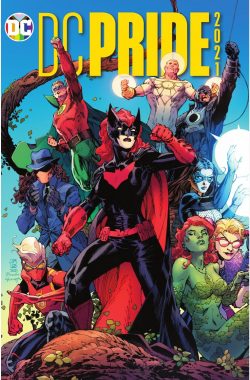
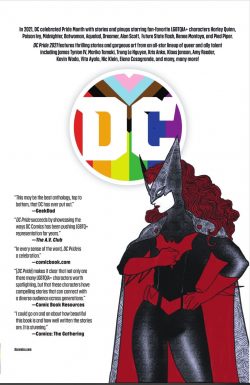
DC Pride 2021


By Vita Ayala, Sina Grace, Sam Johns, Danny Lore, Nicole Maines, Steve Orlando, Andrea Shea, Mariko Tamika, James Tynion IV, Andrew Wheeler, Stephen Byrne, Elena Casagrande, Klaus Janson, Nic Klein, Trung Le Nguyen, Amancay Nahuelpan, Slylar Patridge, Amy Reeder, Ro Stein & Ted Brandt, Lisa Sterle, Rachael Stott, Luciano Vecchio & various (DC Comics)
ISBN: 978-1-88456-804-6 (HB/Digital edition)

Since the 1960s and the birth of the Civil Rights Movement, comics have always been at the forefront of the battle for equality. Maybe more so in terms of racial issues at the start and not so much on gender disparity or sexual complexity, but now most print and screen superheroes work towards greater diversity and inclusion. The most noticeable strides and breakthroughs have come from industry leaders DC and Marvel, but maybe it’s just that more is expected of them…

In 2021, the former celebrated accumulated personal freedoms by collecting one-shot DC Pride #1 and select material from similarly-themed specials New Years Evil #1, Mysteries of Love in Space #1 and Young Monsters in Love #1 (cumulatively spanning 2018-2021), celebrating the infinite variety of interpersonal relationships focusing on LGBTQIA+ characters in the DC catalogue as interpreted by creators equally all-embracing.

The compilation – variously lettered by Aditya Bidikar, Josh Reed, Arian Maher, Becca Carey, Steve Wands, Tom Napolitano and Dave Sharpe – opens with a fulsome Foreword from Out & Proud bestselling author and comics scribe Mark Andreyko before we plunge into assorted antics…

James Tynion IV & Trung Le Nguyen begin the festivities with ‘The Wrong Side of the Looking Glass’ as Batwoman Kate Kane confronts memories of her twin sister/deranged arch nemesis Alice and how her enforced solitude after Beth Kane seemingly died may have affected her own life path, after which John Constantine meets magician Extraño in a pub and starts chatting. Gregorio de la Vega was officially DC’s first openly gay super-character, debuting in weekly megaseries Millennium #2 (January 1988) and latterly as a member of The New Guardians. For ‘Time in a Bottle’ creators Steve Orlando & Stephen Byrne pit him in a tall tale contest co-starring Midnighter and featuring queer Nazi vampire cultist Count Berlin

Vita Ayala, Skylar Patridge and colourist José Villarrubia then set lesbian cop Renee Montoya and her alter ego The Question on the trail of a missing politician in ‘Try the Girl’ whilst Mariko Tamaki, Amy Reeder & Marissa Louise have Harley Quinn & Poison Ivy spectacularly and near-lethally address their unique relationship problems in ‘Another Word for a Truck to Move Your Furniture’.

After being in the closet since the 1930s, original Green Lantern Alan Scott shares the story of his first love with openly out son Todd AKA Obsidian. As related by Sam Johns, Klaus Janson & colourist Dave McCaig, ‘He’s the Light of My Life!’ is a sweet romantic interlude balanced by ‘Clothes Makeup Gift’ – by Danny Lore, Lisa Sterle & Enrica Angiolini – a female wherein future Flash multitasks prepping for a date with a new girlfriend and taking down a Mirror Master knockoff Reflek

The Flash connection continues with reformed Rogue Pied Piper foiling and then mentoring social activist outlaw Drummer Boy in wry caper ‘Be Gay, Do Crime’ by Sina Grace, Ro Stein & Ted Brandt before DCTV superhero Dreamer makes their comic book debut in ‘Date Night’, courtesy of Nicole Maines, Rachael Stott and Angiolini.

Arch villains Monsieur Mallah and The Brain prove to gay cop Maggie Sawyer that love truly comes in all forms in Orlando & Nic Klein’s moving confrontation ‘Visibility’ after which Lobo’s troubled, long-abandoned daughter Crush learns some hard truths from the wrong role model in ‘Crushed’ by Andrea Shea and Amancay Nahuelpan Trish Mulvihill…

Harley Quinn offers her particular seasonal felicitations to Renee Montoya and Gotham City in Ayala, Elena Casagrande & Jordie Bellaire’s rendition of ‘Little Christmas Tree’ prior to a host of gay heroes attending a Pride March and forming a team of their own to battle Eclipso in ‘Love Life’ by Andrew Wheeler, Luciano Vecchio & Rez Lokus.

The combination of Aqualad Jackson Hyde, Aerie, Wink, Apollo & Midnighter, Bunker, Tasmanian Devil, The Ray, Shining Knight, Steel/Natasha Irons, Sylvan Ortega, Tremor, Traci 13, Extraño, Batwoman and Crush proved unbeatable and led to them proudly declaring themselves Justice League Queer

This award-winning collection also comes with a cover gallery including 17 variant covers for DC titles during Pride Month and featuring many other out stars, crafted by David Talaski, Brittney Williams, Kevin Wada, Kris Anka, Nick Robles, Sophie Campbell, Travis Moore & Alejandro Sánchez, Jen Bartel, Paulina Ganucheau, Stephen Byrne and Yoshi Yoshitani and closes with a screen-loaded fact feature.

‘DCTV: The Pride Profiles’ offers brief interviews, and Q-&-As of LGBTQ characters in The CW shows – including Batwoman/Ryan Wilder (played by Javicia Leslie), Dreamer (Nicole Maines), White Canary/Sara Lance (Caity Lotz), John Constantine (Matt Ryan), Thunder (Nafessa Williams) and Negative Man (Matt Bomer).

Forthright, fun, thrilling and fabulous, feel free to find and feast on these comics and stories.
© 2018, 2019, 2021, 2022 DC Comics. All Rights Reserved.

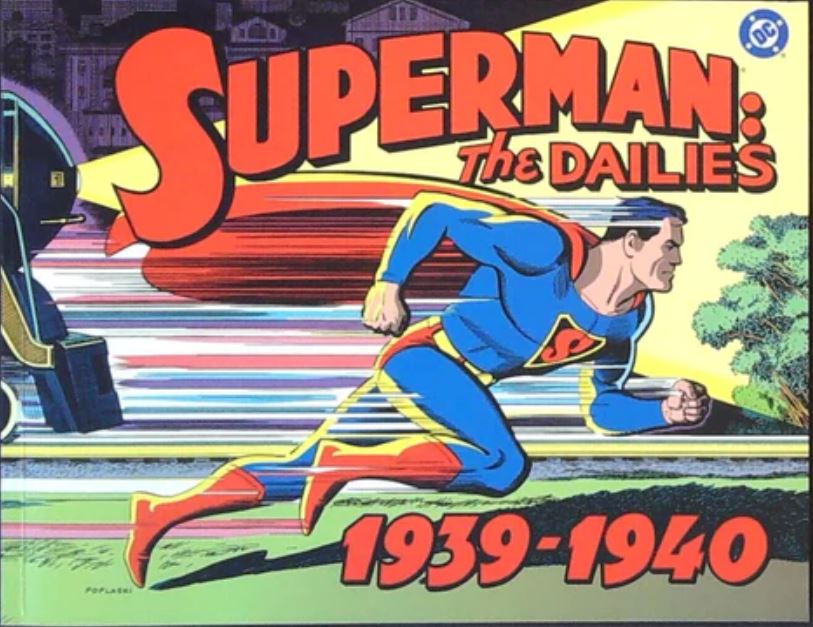
Superman: The Dailies 1939-1940


By Jerry Siegel & Joe Shuster with Paul Cassidy (DC/Kitchen Sink Press)
ISBN: 978-1-56389-460-2 (TPB)

It’s indisputable that the American comic book industry – if it existed at all – would have been an utterly unrecognisable thing without Superman. Jerry Siegel & Joe Shuster’s unprecedented invention was rapturously adopted by a desperate and joy-starved generation, quite literally giving birth to a genre if not an actual art form.

Within three years of his 1938 debut, the intoxicating blend of breakneck, breathtaking action and wish-fulfilment that epitomised the early Man of Tomorrow spawned an impossible army of imitators. The original’s antics and variations grew to encompass cops-and-robbers crime-busting, socially reforming dramas, science fiction fantasies, and whimsical comedy. Once the war in Europe and the East ensnared America, patriotic relevance for a host of gods, heroes and monsters exploded: all dedicated to exuberant, eye-popping excess and vigorous dashing derring-do.

In comic book terms Superman was master of the world. Moreover, whilst transforming the shape of the fledgling funnybook industry, the Metropolis Marvel relentlessly expanded into all areas of the entertainment media. Although we all think of the Cleveland boys’ iconic invention as the epitome and acme of comicbook creation, the truth is that very soon after his debut in Action Comics #1, the Man of Steel became a fictional multimedia monolith in the same league as Popeye, Tarzan, Sherlock Holmes and Mickey Mouse.

We parochial and possessive comics fans too often regard our purest, most powerful icons in purely graphic narrative terms, but the likes of Batman, Spider-Man, The Avengers and their hyperkinetic kind long ago outgrew four-colour origins and are now fully mythologized media creatures instantly recognisable globally across all platforms and age ranges…

Far more people have seen or heard an actor as Superman than have ever read his comic books. The globally syndicated newspaper strips alone reached untold millions, and by the time his 20th anniversary rolled around, Superman was a thrice-weekly radio serial regular and starred in an astounding animated cartoon series, two films, on TV and a prose novel by George Lowther.

He was a perennial sure-fire success for toy, game, puzzle and apparel manufacturers and had just ended that first smash live-action television presence. In his future were three more shows (Superboy, Lois & Clark and Smallville), a stage musical, a string of blockbuster movie franchises and an almost seamless succession of games, bubble gum cards and TV cartoons beginning with The New Adventures of Superman in 1966 and continuing ever since. Even his super-dog Krypto got in on the small-screen act…

Although pretty much a spent force these days, for the majority of the last century the newspaper comic strip was the Holy Grail that all American cartoonists and graphic narrative storytellers hungered for. Syndicated across the country – and often the planet – it was seen by millions, if not billions, of readers and generally accepted as a more mature and sophisticated form of literature than comic books. It also paid better.

And rightly so: some of the most enduring and entertaining characters and concepts of all time were created to lure readers from one particular paper to another and many of them grew to be part of a global culture.

Mutt and Jeff, Flash Gordon, Dick Tracy, Buck Rogers, Charlie Brown and so many more escaped their humble tawdry newsprint origins to become meta-real: existing in the minds of earthlings from Albuquerque to Zanzibar. Most of them still do…

However it was considered something of a risky double-edged sword when a comicbook character became so popular that it swam against the tide (after all, weren’t the funny-books invented just to reprint the strips in cheap accessible form?) to become a genuinely mass-entertainment syndicated serial strip.

Superman was the first comic book star to make that leap – six months after exploding out of Action Comics – with only a few ever successfully following. Wonder Woman, Batman (eventually) and teen icon Archie Andrews made the jump in the 1940s with only a handful like Spider-Man, Howard the Duck and Conan the Barbarian doing so since.

The Superman daily newspaper strip launched on 16th January 1939, and was eventually supplemented by a full-colour Sunday page from November 5th of that so momentous year. Originally crafted by Siegel & Shuster – whose primary focus switched immediately from comic books to the more prestigious and lucrative tabloid iteration – and their hand-picked studio (including Paul Cassidy, Leo Nowak, Dennis Neville, John Sikela, Ed Dobrotka, Paul J. Lauretta & Wayne Boring), the mammoth grind soon required the additional talents of Jack Burnley and even co-writers like Whitney Ellsworth, Jack Schiff & Alvin Schwartz.

This superb collection from 1999 – long overdue for re-release, especially in this anniversary year! – opens with an Introduction by James Vance, declaring ‘A Job for Superman’ before effusively recapping the overnight sensation conception, reviewing his antecedents and regaling us with the acts of his creators (and assistants like Cassidy).

Then we see the first 10 tales (nine and a half actually) of the primal powerhouse in all-action monochrome. Wisely and boldly, the first serial – ‘Superman Comes to Earth’ (16th – 28th January 1939) only depicts the Man of Tomorrow on the last of the 12 daily episodes. Instead, Siegel & Shuster took readers to doomed planet Krypton for the first time and revealed how desperate scientist Jor-L and wife Lora were thwarted in their attempts to save the population from their own indifference and ignorance and compelled in desperation to save their newborn son by sending him away in a prototype test rocket aimed at planet Earth. Almost as an afterthought, the last strip reveals how the infant was found, adopted, raised and now operates in secret as vigilante do-gooder Superman…

Whether in pamphlet or local periodical, these tales of the modern Hercules exploded into the consciousness of the world. No one had ever seen a fictionalised hero throw all the rules of physics away and burst into unstoppable, improbable action on every page and panel. In fact, editors and publishers’ greatest concern was that the implausible antics would turn off audiences. Clearly, they could not have been more wrong…

That’s only one reason why the indomitable champion confronted problems and issues every reader was familiar with. Second adventure ‘War on Crime’ (30th January – 18th February) combined social activism and civic corruption as the mighty Man of Tomorrow begins his crusading career by rescuing ten men trapped in a vault. In fact he only saves eight and realises that he needs to be in a place where information can reach him instantly. Thus Clark Kent applies for a job at The Daily Star and stumbles into a deadly case of graft, gangsterism and high-level corruption ferreted out by dynamic reporter Lois Lane. After Superman cleans up the racketeers, the shy unassuming new guy confirms his position by scooping Lois to the first interview with the mysterious costumed vigilante…

A boxing drama follows as the Man of Steel saves a derelict from suicide and uncovers a tragic case of match-fixing and shattered dreams. ‘The Comeback of Larry Trent’ (20th February – 18th March) begins with Superman masquerading as the supposedly finished former heavyweight champion in a whirlwind tour of spectacular bouts, whilst training and rehabilitating the stumblebum to reclaim his title personally in the big championship match. Of course, the Action Ace is on hand when Trent’s crooked manager tries to dope him a second time…

Lois begins her own rise to stardom when she’s relegated to the lonely hearts and lovelorn section, turning up a sinister case of a blackmailed husband entrapped by ‘Jewel Smugglers’ (20th March – April 1st) victimising refugees fleeing war in Europe. Naturally, Superman is lurking in the shadows, ready to handle any necessary roughness required…

A string of fatalities on a construction site takes the hero into the sordid depths of capitalism in ‘Skyscraper of Death’ (3rd – 29th April) as he tackles a saboteur and exposes a ruthless businessman happy to kill innocent workers to destroy a rival, after which ‘The Most Deadly Weapon’ (1st May – 10th June) reflects the tone of the times in a chilling tale of espionage and realpolitik. When Kent interviews Professor Runyan about his deadly new poison gas, the chemist is kidnapped and murdered by spies from a foreign nation. In hot pursuit, Kent discovers the plot was instigated by an arms dealer profiteering from an ongoing civil war and calls in his other – true – self to recover (and ultimately destroy) the formula, punish the perpetrators and even spectacularly force both sides to make peace…

Early episodes never stinted on action and increasingly ingenious ways of displaying Superman’s miraculous abilities. The plan was to simply establish the set-up of an Alien Wonder among us, masquerading as an extremely puny human at a “great metropolitan newspaper” when not crushing evil as his flamboyant alter-ego. These stories are all about constant action and escalating spectacle, displaying the incredible power of a bombastic, heroic man of the people…

Heralding longer stories and more evocative plots, Siegel returned to social crusading for ‘Superman and the Runaway’ (12th June – 22nd July), as the Man of Steel recues orphan Frankie Dennis from imminent destruction and discovers a tale of shocking corruption and abuse at the State Orphanage the boy would rather die than return to. Realising this is no job for Superman, Kent enlists Lois and Frankie to expose monstrous, murderous Superintendent Lyman, but severely underestimates the grafter’s ruthlessness…

Romance taints the air next as ‘Royal Deathplot’ (24th July – 11th November) finds Superman foiling a plan to literally torpedo the diplomatic mission of visiting dignitaries King Boru and Princess Tania of Rangoria. His epic and breathtaking sea battle against a submarine is only the tip of an iceberg of trouble as Superman – and even briefly Kent – find favour in the eyes of the princess, even as elements in the royals’ own embassage continually seek their destruction. Far from impressed, but hot on a scoop, Lois sticks close and plays fifth wheel and rival to super-smitten Tania until the Man of Steel can foil the plot, crush the sinister mad scientist behind it and stabilise the political situation at home and abroad…

Historians might be interested to know that during this yarn, the use of art assistant Cassidy became markedly more noticeable. Other than handling character faces himself, Shuster was happy for the other artists to express themselves in how Siegel’s scripts were interpreted…

Major events were in store both for the hero and the whole of humanity and ‘Underworld Politics’ (13th November – 16th December) signalled the closing of a chapter. Simple cathartic super-deeds would soon take a back seat to grander designs, but only after the tale of how Superman – and especially Lois – destroyed the seemingly impregnable party machine of crooked political boss Mike Hennessey. That well-connected unworthy thought he could terrorise and even murder a crusading new District Attorney, but he was so very wrong…

After his fall Lois thought she had the front page sewed up, but didn’t figure on World War being declared in Europe…

This initial volume of pioneering paper perils begins a saga of sabotage and ‘Unnatural Disasters’ (18th December 1939 – January 6th 1940) as a mysterious gang blow up a dam and then poison the reservoir. Moments too late in each instance, all Superman can do is save what lives he can and determine to avenge the dead…

To Be Continued…

Offering timeless wonders and mesmerising excitement for lovers of action and fantasy, the early Superman is beyond compare. If you love the era or just crave simpler stories from less angst-wracked times, these yarns are perfect comics reading, and this a book you simply must see.
Superman: The Dailies volume 1 copublished by DC Comics and Kitchen Sink Press. Covers, introduction and all related names, characters and elements are ™ & © DC Comics 1998, 1999. All Rights Reserved.

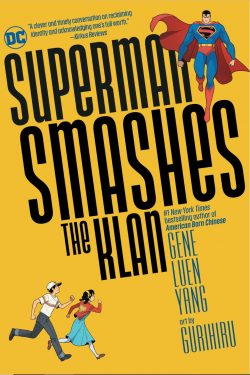
Superman Smashes the Klan


By Gene Luen Yang & Gurihiru (DC Comics)
ISBN: 978-1-7795-0421-0 (TPB/Digital edition)

It’s indisputable that the American comic book industry – if it existed at all – would have been an utterly unrecognisable thing without Superman. Siegel & Shuster’s unprecedented invention was rapturously adopted by a desperate and joy-starved generation, quite literally giving birth to a genre if not an actual art form.

Spawning an astounding army of imitators within 3 years of his 1938 debut, the intoxicating blend of breakneck breathtaking action and cathartic wish-fulfilment epitomising the primal Man of Tomorrow expanded to encompass cops-&-robbers crime-busting, science fiction, fantasy, whimsical comedy, socially reforming dramas – and, once the war in Europe and the East engulfed America – patriotic relevance for a host of gods, champions and monsters, all dedicated to profit through exuberant, eye-popping excess and vigorous dashing derring-do.

In comic book terms Superman was master of the world and, whilst transforming the fledgling funnybook industry, the Metropolis Marvel was also inexorably expanding into all areas of entertainment media. Although we all think of Jerry & Joe’s iconic invention as the epitome and acme of kid stuff creation, the truth is that very soon after his debut in Action Comics #1, the Man of Steel became an all-ages fictional multimedia monolith in the same league as Popeye, Tarzan, Sherlock Holmes and Mickey Mouse.

We parochial, possessive comics fans too often regard our purest and most powerful icons in purely graphic narrative terms, but the likes of Batman, Spider-Man, The Avengers and all their hyperkinetic kin long ago outgrew their 4-colour origins. These days, comics characters don’t really succeed until they’ve been fully mythologized creatures instantly recognisable across all platforms and age ranges… especially by TV, video games and movies…

Far more people have seen or heard an actor as Superman than have ever read his comic tales. The globally syndicated newspaper strips alone reached untold millions, and by the time his 20th anniversary rolled around at the very start of what we know as the Silver Age of Comics, Superman had become an immensely popular, thrice-weekly radio serial milestone with its own spin-off: a landmark novel by radio-show scripter George Lowther.

The audible exploits were translated into 17 astounding animated cartoons by the Fleischer Studios and latterly into live action via two movie serials (Superman 1948 and Atom Man vs Superman 1950) plus a proper movie in 1951 (Superman and the Mole Men).

These paved the way for groundbreaking television series Adventures of Superman which owned the 1950s: running 104 original episodes across six seasons, from September 1952 to April 1958 and for decades after in reruns.

The Man of Steel was a perennial sure-fire success for toy, game, puzzle and apparel manufacturers and had just ended that first smash live-action television presence. In his future were more shows (Superboy, Lois & Clark, Smallville, Superman & Lois), a stage musical, two blockbuster movie franchises and an almost seamless succession of games, bubble gum cards and TV cartoons beginning with The New Adventures of Superman in 1966 and continuing ever since. Even superdog Krypto got in on the small-screen act, and that’s not including spin-offs for Supergirl and even planet Krypton

There have always been “other” versions of Superman, but arguably the most important – even more than his epic newspaper strip career – was the radio serial. The daily newspaper strip launched on 16th January 1939, supplemented by a full-colour Sunday page from November 5th and on February 12th 1940, the Mutual Network transmitted the Man of Tomorrow into homes across America. Initially sponsored by Kellog’s Pep and broadcast as 15-minute episodes three times a week (and in some regions 5 days a week), the show grew into half-hour instalments by August 1942 and continued until February 4th 1949. Thereafter it shifted to ABC in an evening slot and thrice weekly afternoons until March 1st 1951: a total of 2,088 episodes and 128 different storylines. There was even an Australian version with Anzac actors: a total of 1040 episodes from 1949 -1954…

The US serial’s scripters and directors (including B. P. Freeman & Jack Johnstone, Robert & Jessica Maxwell, George F. Lowther, Allen Ducovny & Mitchell Grayson) introduced many innovations that became canonical in comics continuity – such as team-ups with Batman & Robin, inventing Jimmy Olsen and Kryptonite and the immortal opening mantra that began “Up in the Sky! It’s a Bird! It’s a Plane!”…

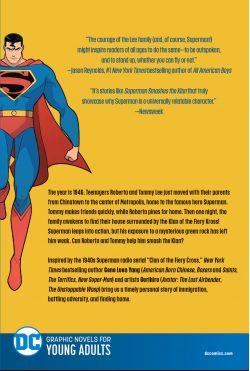
The show fuelled the imaginations of millions through wonder and action, but also embraced the refugee hero’s socially crusading roots. In 1946, inspired by a resurgence of activity by the Ku Klux Klan, the writers used the 118th saga to fight back against intolerance and bigotry with ‘The Clan of the Fiery Cross’. It began on June 10th and ran16 episodes into July, detailing how a Chinese -American family moves to Metropolis and is targeted by hooded racists until the Action Ace steps in and steps up…

How that ancient tale was revived and adapted into a 3-issue miniseries for DC’s Young Adult imprint by award-winning Gene Luen Yang (American Born Chinese, Boxers and Saints, Avatar: The Last Airbender, New Super-Man) and Japanese women’s illustration collective Gurihiru AKA Chifuyu Sasaki & Naoko Kawano (Avatar: The Last Airbender, Sonic, Unbelievable Gwenpool Power Pack, Tails of the Pet Avengers and more) is recounted at the end of this enthralling adaptation.

‘Superman and Me by Gene Luen Yang’ traces the turbulent and often ludicrous history of the Ku Klux Klan; slavery in the US, Jim Crow laws; The Chinese Exclusion Act; the advent and impact of Superman; abuses of the well-intentioned 1944 G.I. Bill and the radio show that uniquely united non-racist Americans whilst effectively setting the Klan back 20 years…

The story itself is charming, inspirational and decidedly hard-hitting in a manner easily accessible to youngsters; beginning with the Metropolis Marvel still learning about his powers. Strong, fast and able to leap tall buildings, Superman knows very little about his origins but still drives himself tirelessly to save the helpless and punish the guilty.

That starts to change after a titanic battle against leftover Nazi terrorist Atom Man. In the course of a brutal clash, our hero is exposed to a strange green crystal empowering his foe: one that which makes him sick for the first time in his life and triggers bizarre hallucinations – weird smells, odd conversations and images of being a monstrous alien…

As Superman’s friend – “negro” Police Inspector William Henderson – carts off the defeated Nazi, across town Lan-Shin Li is also feeling billious. Her family are driving into Metropolis and their new house, but she already misses Chinatown. She also can’t get used to being called “Roberta Lee” now…

Father’s new job as Chief Bacteriologist for Doctors Segret Wilson and William Jennings at the Metropolis Health Department is a huge triumph and advancement, and her easy-going brother Tommy is ecstatic to move into a white neighbourhood, but mother speaks very little English and is always frightened. Roberta just hates change and misses old friends…

Her anxiety remains high even after new neighbour Jimmy Olsen welcomes them and invites the kids to join the local baseball team. It only really fades after seeing Superman running past at superspeed. Something about him nudges Roberta’s brilliant scientific mind…

Sporting paragon Tommy is a big hit at the Unity House community center, but Roberta just feels out of place, especially after starting pitcher Chuck Riggs uses racist slurs and is fired from the team.

The incident escalates when Chuck sounds off to his Uncle Matt, and that unrepentant racist has his friends leave a burning cross on the Lee’s lawn. As Grand Scorpion of the Klan of the Fiery Kross, he strives to keep America free from impurity, and decides it’s time Chuck also started defending the besieged white race…

Scared and already regretful and repentant, Chuck goes along with the adults, but when he tries to firebomb the house, Roberta recognises him despite his hooded robes…

By-passer Bill Henderson and his buddies help extinguish the flames, but the Inspector cannot convince the Lees to file a complaint. The incident does, however, make Roberta determined to stay and fight back…

Clark Kent and Lois Lane soon arrive and start asking questions. Something about little Roberta reminds the clandestine Kryptonian of growing up in Smallville, particularly those times when his hidden abilities made him feel like an outsider… or even a monster.

… And elsewhere, the secrets of Atom Man and the alien green rock are being decoded by mysterious scientists with a nasty agenda: potential tyrants intent on making mischief at the heart of a brave new society. Soon after, events escalate when the Klan kidnap Tommy and Roberta furiously confronts Chuck…

Thus begins a powerful and rewarding adventure detailing not simply the antagonisms of outsiders and ultra-conservatives, and incomers against entrenched privilege, but also how diversity and inclusion benefits everyone on so many levels. It’s also a smart saga of good versus evil, growth, accommodation and acceptance and a parable of how a wise child taught the Man of Steel where he was going wrong and how to use his powers correctly…

An immigrant’s tale about knowing oneself and adapting to change, Superman Smashes the Klan is wise and welcoming and wants you to see the best in everyone everywhere.
© 2020, DC Comics. All Rights Reserved. Essay by Gene Luen Yang © 2019 Humble Comics LLC.

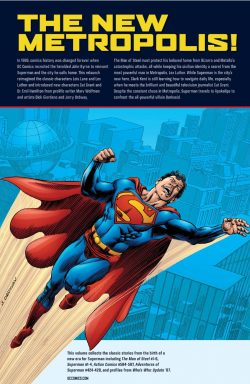
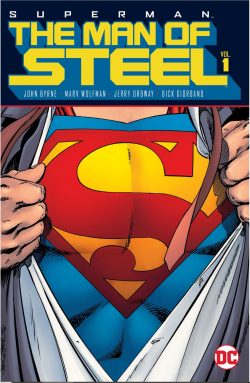
Superman: The Man of Steel volume 1


By John Byrne, Marv Wolfman, Jerry Ordway, Dick Giordano, Terry Austin, Mike Machlan, Karl Kesel & various (DC Comics)
ISBN: 978-1-7795-0491-3 (HB/Digital edition)

In 1985 when DC Comics decided to rationalise, reconstruct and reinvigorate their continuity with Crisis on Infinite Earths they used the event to simultaneously regenerate their key properties at the same time. The biggest gun they had was Superman and it’s hard to argue that the change was not before time.

The big guy was in a bit of a slump, but he’d weathered those before. So how could a root and branch retooling be anything but a pathetic marketing ploy that would alienate the real fans for a few fly-by-night Johnny-come-latelies who would jump ship as soon as the next fad surfaced? This new Superman was going to suck…

They couldn’t have been more wrong.

The public furore began with all DC’s Superman titles being “cancelled” (actually suspended) for three months, and yes, that did make the real-world media sit-up and take notice of the character everybody thought they knew for the first time in decades. However, there was method in this seeming corporate madness.

The missing mainstays were replaced by a 6-part miniseries running from October to December 1986. Entitled Man of Steel, it was written and drawn by Marvel’s mainstream superstar John Byrne and inked by venerated veteran Dick Giordano.

The bold manoeuvre was a huge and instant success. So much so that when it was first collected as a stand-alone compilation album in 1991, it became one of comics’ premiere “break-out” hits in a new format that would eventually become the industry standard for reaching mass readerships. Nowadays few people buy the periodical pamphlets but almost everybody has read a graphic novel…

From that overwhelming start the Action Ace seamlessly returned to his suspended comic book homes, enjoying the addition of a third monthly title which premiered that same month.

Superman, Adventures of Superman, and Action Comics (which acted as a fan-pleasing team-up book guest-starring other favourites of the DC Universe, in the manner of the cancelled DC Comics Presents) were instant best-sellers.

So successful was the relaunch that by the early 1990’s Superman would be carrying four monthly titles as well as Specials, Annuals, guest shots and regular appearances in titles such as Justice League.

Quite a turnaround from the earlier heydays of the Man of Steel when editors were frantic about never overexposing their meal-ticket.

In Superman’s 85th year of more-or-less consecutive and continuous publication, this collection begins with the six self-contained stories from key points in Superman’s career, newly readjusted for contemporary consumption in the wake of that aforementioned worlds-shattering Crisis.

Spanning to cover-dates October 1986 to June 1987 and re-presenting The Man of Steel #1-6, Superman #1-4, Action #584-587 and Adventures of Superman #424-428 plus relevant pages from Who’s Who: Update ‘87 #1, 3, 4 this initial herculean compilation opens with the a reprinting of Byrne’s introduction from the 1991 collection ‘Superman: A Personal View’ before the revelations unfold…

Newsstands and comic stores on July 10th 1986 welcomed a startlingly new and bleakly dystopian Krypton in #1 as ‘Prologue: From Out of the Green Dawn…’ followed the child’s voyage in a self-propelled birthing matrix to a primitive world.

Discovered by childless couple Jonathan and Martha Kent, the alien foundling spends his years growing secretly in Smallville, indistinguishable from other earthlings until strange abilities begin to gradually manifest and hint at ‘The Secret’

Eighteen years after his arrival, the boy learns of his extraterrestrial origins and leaves home to wander the world. Clark Kent eventually settles in Metropolis and we get a rapid re-education of what is and isn’t canonical as he performs his first public super-exploit, meets with Lois Lane, joins the Daily Planet and gets an identity-obscuring costume in ‘The Exposure’ and ‘Epilogue: The Super-Hero’

Lois takes centre-stage for the second issue, scheming and manipulating to secure the first in-depth interview with the new hero before losing out to neophyte colleague Kent whose first big scoop becomes ‘The Story of the Century!’

The third chapter recounts the Metropolis Marvel’s first meeting with Batman as ‘One Night in Gotham City…’ reveals a fractious and reluctant team-up to capture murdering thief Magpie. The unsatisfactory encounter sees the heroes part warily, not knowing if they will become friends or foes…

‘Enemy Mine…’ in MoS #4 expands and redefines the new Lex Luthor: a genius, multi-billionaire industrialist who was the most powerful man in Metropolis until the Caped Crime-buster appeared. When the tycoon overreaches himself in trying to suborn the hero with cash, he is publicly humiliated and swears vengeance and eternal enmity…

By the time of ‘The Mirror, Crack’d…’ in #5, Luthor is Superman’s greatest foe – albeit one who scrupulously maintains a veneer of respectability and plausible deniability. Here, Luthor’s clandestine attempt to clone his own Man of Tomorrow results in a monstrous flawed duplicate dubbed Bizarro and introduces Lois’ sister Lucy to play hapless victim in a moving tale of triumph and tragedy.

The reimagination concludes with ‘The Haunting’ as a troubled Clark/Superman returns to Smallville. Reuniting with childhood sweetheart Lana Lang – who shares his secrets and knows as much as he of his alien origins – the strange visitor finally learns of his Kryptonian origins and heritage when the long-hidden birthing matrix projects a recorded message from his long-dead parents and details their hopes and plans for him…

The shock and reaction of his foster family only affirms his dedication and connection to humanity…

John Byrne was a controversial choice at the time, but he magnificently recaptured the exuberant excitement and visually compelling, socially aware innovation which informed and galvanised Jerry Seigel & Joe Shuster’s inspired creation. Man of Steel granted a new generation the same kind of intoxicating four-colour fantasy that was the original Superman, and made it possible to be a fan again, no matter your age or prejudice. Superman had always been great, but Byrne had once again made him thrilling. Rivetingly so.

The never-ending battle recommenced on a monthly schedule with Superman volume 2 #1, where Byrne & Terry Austin reveal a ‘Heart of Stone’: presenting a new Metallo as thug John Corben is remade as a Terminator-style cyborg with a human brain and a Kryptonite heart by a deranged xenophobic scientist. The transition culminates in a deadly battle and baffling mystery portending big troubles to come. The focus then shifts to Action #584 and ‘Squatter!’ (by Byrne & Giordano) as a body-snatching mental force suborns the Metropolis Marvel and necessitates a team-up with the Teen Titans. The accent is predominantly on breakneck pace and all-out costumed conflict here…

Superman #2 (by Byrne & Austin) then describes ‘The Secret Revealed!’ as modern-day robber baron Luthor makes the biggest mistake of his life after kidnapping and torturing Kent’s first girlfriend Lana Lang

This is followed by Marv Wolfman & Jerry Ordway’s ‘Man O’War!’ and ‘Going the Gauntlet’ (Adventures of Superman #424 & 425, and inked by Mike Machlan). The drama introduces tragic Dr. Emil Hamilton and rival reporter Cat Grant to the mythology as the Action Ace battles high-tech terrorists sponsored by rogue state Qurac and proves to be no respecter of international boundaries like his pre-Crisis counterpart…

These politically and socially aware dramas would become a truer and more lasting template for the modern Man of Tomorrow after Byrne’s eventual retirement from the character…

The Phantom Stranger guests in a battle against a deadly manifestation of unquiet spirits in ‘And the Graves Give Up Their Dead…’ (Byrne & Giordano, Action #585) before the next three chapters address the Superman segment of multi-part crossover event Legends.

Byrne & Austin’s Superman #3 began with ‘Legends of the Darkside!’, as Clark Kent is abducted to Apokolips by its evil master. He escapes to become a rebel leader of the lowly “Hunger Dogs” in Adventures… #426, wherein Wolfman, Ordway & Machlan give us an amnesiac Superman on Apokolips rising ‘From the Dregs’ before the rousing yarn concludes with ‘The Champion!’ as Action Comics #586 (Byrne & Giordano) reintroduces Jack Kirby’s New Gods post-Crisis icons Orion and Lightray, just in time for a blistering battle royale beyond the stars between the Man of Steel and deadly Darkseid

Once the cosmic dust settled, it was back to the regular Never-Ending Battle, with Superman #4 introducing deranged lone gunman ‘Bloodsport!’ courtesy of Byrne & inker Karl Kesel. The merciless shooter is more than just crazy, however: some hidden genius has given him the ability to manifest wonder weapons from thin air and he never runs out of ammo…

Wolfman & Ordway generally concentrated on longer, more suspensefully dramatic character-based tales. Adventures of Superman #427-428 (cover-dated April & May 1987) took the Man of Tomorrow on a punishing visit to rogue state Qurac and an encounter with hidden alien telepaths The Circle: a visceral and beautiful tale of un-realpolitik. ‘Mind Games’ and ‘Personal Best’ combine a much more relevant, realistic slant with lots of character sub-plots featuring assorted staff and family of the Daily Planet.

The story portion of this first volume concludes with Byrne & Giordano back in Action (#587), crafting spectacle, thrills and instant gratification with ‘Cityscape!’ by teaming Superman with Jack Kirby’s Etrigan the Demon. The magic happens when sorceress Morgaine Le Fay seeks to become immortal by warping time itself…

Augmenting the Costumed Dramas are more recovered text commentaries and appreciations from earlier collections: specifically Ray Bradbury’s ‘Why Superman? Why Today?’ (1991), Wolfman’s ‘Reinventing the Wheel’ (2003) and Ordway’s ‘The Adventures of Superman’ from 2004. These are followed by the covers of earlier Superman: The Man of Steel compendia – all by Ordway – and pages taken from supplemental comics reading tool Who’s Who: Update ‘87.

Plucked from issues #1, 3, 4 are Byrne’s Amazing Grace, Bizarro, Bloodsport, Host, Lex Luthor, Krypton and Kryptonite, Lois Lane, Magpie and Metallo before a big bold pin-up of the Man of Steel ends the fun for now.

The back-to-basics approach successfully lured many readers to – and back to – the Superman franchise, but the sheer quality of the stories and art are what convinced them to stay. Such cracking, clear-cut superhero exploits are a high point in the Action Ace’s decades-long career, and these collections are the best way to enjoy one of the most impressive reinventions of the ultimate comic-book icon.
© 1986, 1987, 2020 DC Comics. All Rights Reserved.

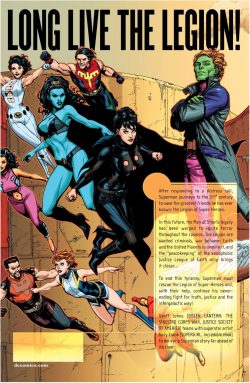
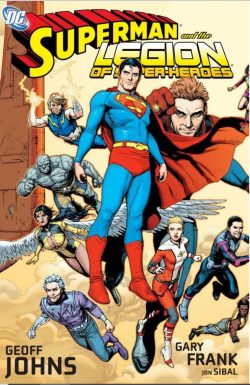
Superman and the Legion of Super-Heroes


By Geoff Johns, Gary Frank, Jon Sibal & various (DC Comics)
ISBN: 978-1-4012-1819-5 (HC/Digital edition) 978-1-4012-1904-8 (TPB/Digital edition)

Superman started the whole modern era of fantasy heroes: outlandish, flamboyant, indomitable, infallible, unconquerable.

He also saved a foundering industry and invented an entirely new genre of storytelling – Super heroes. Since May 1938 he has unstoppably evolved into a mighty presence in all aspects of art, culture and commerce, even as his natal comicbook universe has organically and exponentially expanded.

Long ago and far away a scientifically advanced civilisation perished, but not before its greatest genius sent his baby son to safety in a star-spanning ship. It landed in simple, rural Kansas where the interplanetary orphan was reared by decent folk as one of us…

Once upon a time, in the far future, a band of super-powered kids from dozens of alien civilisations took inspiration from the greatest legend of all time and formed a club of heroes. One day these Children of Tomorrow came back in time and invited that legend to join them…

And thus began the vast and epic saga of Superman and – tangentially – the Legion of Super-Heroes as envisioned by writer Otto Binder & artist Al Plastino in Adventure Comics #247 (cover-dated April 1958 and approximately 20 years after Kal-El’s debut).

Since that time, the fortunes and popularity of the Legion have perpetually waxed and waned, with their future history tweaked and rebooted, retconned and unwritten over and again to comply with editorial diktat and popular trends.

One always popular publishing stratagem is to re-embrace those innocent, silly, joyous, stirring and utterly compelling pre-Crisis on Infinite Earths tales, but shading them with contemporary sensibilities. With this in mind Geoff Johns gradually reinstituted the Lore of the Legion in a number of his assignments during the early part of this century.

Beginning most notably with Justice League of America: The Lightning Saga and culminating in the epic New Krypton and War against Brainiac sagas, the Legion were restored: once again carving out a splendid and unique niche in the DC Universe.

Along the way came this superb, nostalgia-laced cracker which re-established direct contact between the futuristic paladins and the current Man of Tomorrow…

Compiling Action Comics #858-863 (December 2007 through May 2008), this collected chronicle – sporting an Introduction from veteran LSH creator Keith Giffen – finds the Legion back in the 21st century, seeking Superman to save Tomorrow’s World once more.

Long ago the Legion had regularly visited: spiriting the young Kryptonian to a place and time where he didn’t have to hide his true nature. However, once he began his official and adult public career, the visits ceased and his memories were suppressed to safeguard the integrity of history and the inviolability of the timeline.

Now a desperate squad of Legionnaires must reawaken those memories since the Man of Steel is the last hope for a world on the edge of destruction. In the millennium since his debut, the myth of Superman has become a beacon of justice and tolerance throughout the Utopian Universe, but recently a radical, xenophobic anti-alien movement has swept Earth, marginalising, interning and even executing all non-Terrans.

Moreover, a super-powered team of Legion rejects has formed a Justice League of Earth to spearhead a crusade against all extraterrestrial immigrants, and outrageously claim Superman was actually a true-born Earthling. They have even declared him the figurehead and spiritual leader of their pogrom…

Of course, Kal-El of Krypton must travel to the future and not only save the day but scour the racist stain from his name: a task made infinitely harder because Earth-Man, psychotic supremacist leader of the Earth-First faction, has turned yellow sun Sol a power-sapping red…

Bold, thrilling and utterly enthralling, the last-ditch struggle of a few brave aliens against a racist, fascistic and unrepentantly ruthless totalitarian tomorrow is the stuff of pure comic-book dreams. Superman strives to unravel a poisonous future where all his hopes and aspirations have been twisted and soiled, with only his truest childhood friends to aid him. It’s all made chillingly authentic thanks to the incredibly intense and hyper-realistic art of Gary Frank & Jon Sibal, making it all seem not only plausible and inevitable, but also inescapably horrible…

Sweetening the deal is a stunning covers and variants gallery by Frank, Adam Kubert, Steve Lightle, Mike Grell & Al Milgrom, plus pages of notes, roughs and designs from Frank’s preparatory work before embarking on the epic adventure.

Unforgettable, total Fights ‘n’ Tights future shock in the best way possible, and a major high point for fans of all ages…
© 2007, 2008 DC Comics. All Rights Reserved.

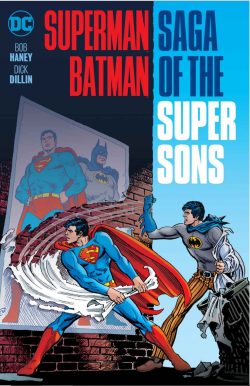
Superman/Batman: Saga of the Super Sons


By Bob Haney & Dick Dillin, with Dennis O’Neil, John Calnan, Ernie Chan, Rich Buckler, Kieron Dwyer & various (DC Comics)
ISBN: 978-1-4012-6968-5 (TPB/Digital edition)

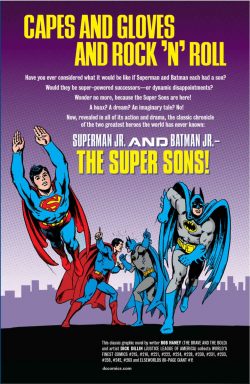
Are you now old enough to yearn for simpler times?

The brilliant expediency of the Parallel Earths concept – and especially its contemporary incarnation Infinite Frontier – lends the daftest tale from DC’s vast back catalogue credibility and contemporary resonance, providing a chance that even the hippest and most happening of the modern pantheon can interact with the most utterly outrageous world concept in the company’s nigh-90-year history. It especially doesn’t hurt here, since – following the Rebirth reboot – the actual sons of the Dark Knight and Man of Tomorrow are now part of an established – and therefore “real” – DC Universe.

Thus, this collection of well-told but initially “imaginary” tales from 1972 to 1976, supplemented by some episodes from more self-conscious times, results from another earnest opportunity to make the fundamental allure of stuffy adult characters relevant to kids and teens.

Written by Bob Haney and drawn by Dick Dillin, The Super-Sons appeared without prior preamble or fanfare in World’s Finest Comics #215, (cover-dated January 1973, and hitting newsstands mid-October 1972). It was a tough time for superhero comics, but a great era for teen rebels. Those free-wheeling, easy-rider, end of the flower-power days generated a huge (and lasting) societal refocussing on “teen consciousness”, and the “Generation Gap” was a phrase on almost every lip.

It didn’t hurt that the concept was already tried and tested. Both Man of Steel and Caped Crusader had already been seen as younger versions of themselves many times over the years, and the evergreen dream of characters who would more closely resonate with youngsters never died in editors’ minds. After all, hadn’t original Boy Wonder Robin been created to give readers someone to closely identify with?

The editors – Murray Boltinoff and E. Nelson Bridwell – clearly saw a way to make their perilously old-school so-very establishment characters instantly pertinent and relevant. Being mercifully oblivious to the more onerous constraints of continuity – some would say logic – they simply and immediately generated tales of the maverick sons of the World’s Finest heroes out of whole cloth.

…And smartly-constructed, well told tales they are. Debut outing ‘Saga of the Super Sons!’ (inked by Henry Scarpelli) sees the young warriors as fully realised young rebels running away from home – on the inevitable motorcycle – and encountering a scurrilous gang-lord.

But worry not, their paternalistic parents are keeping a wary eye on the lads! Speaking as one of the original target market for this experiment, I can admit the parental overview grated then and still does, but as there were so many sequels, enough reader must have liked it…

‘Little Town with a Big Secret!’ appeared in the very next issue: another low key human interest tale, but with a science-fiction twist and the superb inking of Murphy Anderson complimenting Haney & Dillin’s tight murder-mystery yarn.

Crafted by the same team, WF # 221 (January-February 1974) featured ‘Cry Not for My Forsaken Son!’ depicting a troubled runaway boy discovering the difference between merit and worth, and the value of a father as opposed to a biological parent, after which #222’s ‘Evil in Paradise’(inked by Vince Colletta) saw young heroes voyage to an undiscovered Eden to resolve the ancient question of whether Man is intrinsically Good or Evil.

‘The Shocking Switch of the Super-Sons’ (WF #224, cover dated July-August and also inked by Colletta) took teen rebellion to its logical conclusion when a psychologist convinces the boys to trade fathers, whereas ‘Crown for a New Batman!’ provides a radical change of pace as Bruce Wayne Jr. inherits the Mantle and the Mission when dad is murdered!

Never fear, all is not as it seems, fans! This thriller – guest starring Robin – appeared in WFC #228, and was inked by Tex Blaisdell, who inked Curt Swan, on more traditional Lost Civilisation yarn ‘The Girl Whom Time Forgot’ in WF#230…

The Relevancy Era was well over by the time Haney, Dillin & Blaisdell crafted ‘Hero is a Dirty Name’ (#231, July 1975), wherein the Sons are forced to question the motivation for heroism in a thriller guest-starring Green Arrow and The Flash.

In #233’s ‘World Without Men’ (inked by John Calnan) the ever-rambling, soul-searching Super-Sons confront sexual equality issues and unravel a crazy plot to supplant human males, after which ‘The Angel with a Dirty Name’ (by the same team in June 1976’s WFC #238) offers a supervillains and monsters slug-fest indistinguishable from any other Fights ‘n’ Tights tale, before the original series fades out with December’s #242’s in ‘Town of the Timeless Killers’. Illustrated by Ernie Chua (nee Chan) & Calnan, it sees the kids trapped in a haunted ghost town and stalked by immortal gunslingers offering a rather low-key and ignominious close to a bold experiment.

Four years later in mid-March 1980, the boys surprisingly showed up in a momentary revival. Cover-dated June-July and courtesy of Denny O’Neil, Rich Buckler & Dick Giordano in WFC #263, ‘Final Secret of the Super-Sons’ shockingly revealed that the boys were no more than a simulation running on the Man of Steel’s futuristic Super Computer.

In a grim indication of how much of a chokehold shared continuity had grown into, they then escaped into “reality” anyway, accidentally wreaking havoc in a manner The Matrix movies would be proud of…

The collection concludes in a short tale by Haney & Kieron Dwyer from Elseworlds 80-Page Giant in 1999. ‘Superman Jr. is No More!’ is a charming, fitting conclusion to this odd, charming and idiosyncratic mini-saga, embracing the original conceit as it posits what would happen if Superman died and his boy was forced to take over too soon…

Supplemented with a full cover gallery by Nick Cardy, Chan, Calnan, Giordano, Ross Andru & Ty Templeton, these classic yarns are packed with potency and wit. If you’ve an open mind and refined sense of adventure, why not take a look at a few gems (and one or two clunkers) from an era where everybody read comics and nobody took them too seriously?
© 1972, 1973, 1974, 1975, 1976, 1980, 1999, 2017 DC Comics. All Rights Reserved.

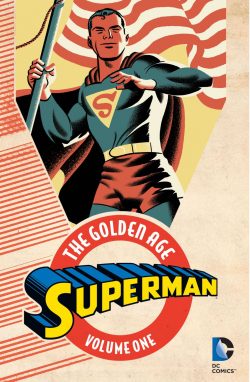
Superman – The Golden Age volume one


By Jerry Siegel & Joe Shuster & various (DC Comics)
ISBN: 978-1-4012-9109-2 (TPB/Digital edition)

Almost exactly 85 years ago, Superman started the whole modern era of fantasy heroes: outlandish, flamboyant indomitable, infallible, unconquerable. He also saved a foundering industry by birthing an entirely new genre of storytelling – the Super Hero.

Since April 18th 1938 (the generally agreed day copies of Action Comics #1 first went on sale) he has grown into a mighty presence in all aspects of art, culture and commerce, even as his natal comic book universe organically grew and expanded.

Within three years of that debut, the intoxicating blend of eye-popping action and social wish-fulfilment that had hallmarked the early exploits of the Man of Tomorrow had grown: encompassing crime-busting, reforming dramas, science fiction, fantasy and even whimsical comedy. However, once the war in Europe and the East seized America’s communal consciousness, combat themes and patriotic imagery dominated most comic book covers, if not interiors.

In comic book terms at least, Superman was soon a true master of the world, utterly changing the shape of the fledgling industry. There was a popular newspaper strip, a thrice-weekly radio serial, games, toys, foreign and overseas syndication and as the decade turned, the Fleischer studio’s astounding animated cartoons.

Moreover, the quality of the source material was increasing with every four-colour release as the energy and enthusiasm of originators Jerry Siegel & Joe Shuster went on to inform and infect the burgeoning studio which grew around them to cope with the relentless demand.

These tales have been reprinted many times, but this superb compilation series is arguably the best, offering the original stories in chronological publishing order and spanning cover-dates June 1938 to December 1939. It features the groundbreaking sagas from Action Comics #1-19 and Superman #1-3, plus his pivotal appearance in New York’s World Fair No. 1. Although most of the early tales were untitled, here, for everyone’s convenience, they have been given descriptive appellations by the editors.

Thus – after describing the foundling’s escape from exploding planet Krypton and offering a scientific rationale for his incredible abilities and astonishing powers in 9 panels – with absolutely no preamble the wonderment begins with Action #1’s primal thriller ‘Superman: Champion of the Oppressed!’ Here, an enigmatic costumed crusader – who secretly masquerades by day as mild-mannered reporter Clark Kent – begins averting numerous tragedies…

As well as saving an innocent woman from the Electric Chair and roughing up an abusive “wife beater”, the tireless crusader works over racketeer Butch Matson and consequently saves feisty colleague Lois Lane from abduction and worse before outing a lobbyist for the armaments industry bribing Senators on behalf of the greedy munitions interests fomenting the war in Europe…

One month later came Action #2 and the next breathtaking instalment as the mercurial mystery-man travels to that war-zone to spectacularly dampen down hostilities already in progress in ‘Revolution in San Monte Part 2’ before ‘The Blakely Mine Disaster’ finds the Man of Steel responding to a coal-mine cave-in and exposing corrupt corporate practises before cleaning up gamblers ruthlessly fixing games and players in #4’s ‘Superman Plays Football’.

The Action Ace’s untapped physical potential is highlighted in the next issue as ‘Superman and the Dam’ pits the human dynamo against the power of a devastating natural disaster, after which issue #6 sees canny chiseller Nick Williams attempting to monetise the hero – without asking first. ‘Superman’s Phony Manager’ even attempts to replace the real thing with a cheap knock-off, but quickly learns a most painful and memorable lesson in ethics…

Although Superman starred on the first cover, National’s cautious editors were initially dubious about the alien strongman’s lasting appeal and fell back upon more traditional genre scenes for the following issues (all by Leo E. O’Mealia and all included here).

Superman – and Joe Shuster’s – second cover graced Action Comics #7 (on sale from October 25th but cover-dated December 1938) prompting a big jump in sales, even as the riotous romp inside revealed why ‘Superman Joins the Circus’ – with the mystery man crushing racketeers taking over the Big Top.

Fred Guardineer produced genre covers for #8 and 9 whilst their interiors saw ‘Superman in the Slums’ working to save young delinquents from a future life of crime and depravity before latterly detailing how the city’s cop disastrous decision to stop the costumed vigilante’s unsanctioned interference plays out in ‘Wanted: Superman’. That manhunt ended in an uncomfortable stalemate that endured for years…

Action Comics #7 had been one of the company’s highest-selling issues ever, so #10 again sported a stunning Shuster shot, whilst Siegel’s smart story ‘Superman Goes to Prison’ struck another telling blow against institutionalised injustice, as the Man of Tomorrow infiltrated a penitentiary to expose the brutal horrors of State Chain Gangs.

Action #11 offered a maritime cover by Guardineer whilst inside heartless conmen driving investors to penury and suicide soon regret the Metropolis Marvel intercession in ‘Superman and the “Black Gold” Swindle’.

Guardineer’s cover of magician hero Zatara for issue #12 was a shared affair, incorporating another landmark as the Man of Steel was given a cameo badge declaring his presence inside each and every issue. Between those covers, ‘Superman Declares War on Reckless Drivers’ is a hard-hitting tale of casual joy-riders, cost-cutting automobile manufacturers, corrupt lawmakers and dodgy car salesmen who all feel the wrath of the hero after a friend of Clark Kent dies in a hit-&-run incident.

By now, the editors had realised that Superman had propelled National Comics to the forefront of the new industry, and in 1939 the company was licensed to create a comic book commemorative edition celebrating the opening of the New York World’s Fair. The Man of Tomorrow naturally topped the bill on the appropriately titled New York World’s Fair Comics at the forefront of such early DC four-colour stars as Zatara, Butch the Pup, Gingersnap and gas-masked vigilante The Sandman.

Following an inspirational cover by Sheldon Mayer, Siegel & Shuster’s ‘Superman at the World’s Fair’ describes how Lois and Clark are dispatched to cover the event, giving our hero an opportunity to contribute his own exhibit and bag a bunch of brutal bandits to boot…

Back in Action Comics #13 (June 1939 and another Shuster cover) the road-rage theme of the previous issue continued with ‘Superman vs. the Cab Protective League’ as the tireless foe of felons faces a murderous gang trying to take over the city’s taxi companies. The tale also introduces – in almost invisibly low key – The Man of Steel’s first recurring nemesis – The Ultra-Humanite

Next follows a truncated version of Superman #1. This is because the industry’s first solo-starring comic book simply reprinted the earliest tales from Action, albeit supplemented with new and recovered material – which is all that’s featured at this point.

Behind the truly iconic and much recycled Shuster cover, the first episode was at last printed in full as ‘Origin of Superman’, describing the alien foundling’s escape from doomed planet Krypton, his childhood with unnamed Earthling foster parents and eventual journey to the big city…

Also included in those 6 pages (cut from Action #1, and restored to the solo vehicle entitled ‘Prelude to ‘Superman, Champion of the Oppressed’”) is the Man of Steel’s routing of a lynch mob and capture of the real killer which preceded his spectacular saving of the accused murderess that started the legend. Rounding off the unseen treasures is the solo page ‘A Scientific Explanation of Superman’s Amazing Strength!’, a 2-page prose adventure of the Caped Crime-crusher, a biographical feature on Siegel & Shuster and a glorious Shuster pin-up from the premier issue’s back cover.

Sporting another Guardineer Zatara cover, Action #14 saw the return of the manic money-mad deranged scientist in ‘Superman Meets the Ultra-Humanite’, wherein the mercenary malcontent switches his incredible intellect from incessant graft, corruption and murder to an obsessive campaign to destroy the Man of Steel.

Whilst Shuster concentrated on the interior epic ‘Superman on the High Seas’ – wherein the heroic hurricane tackles sub-sea pirates and dry land gangsters – Guardineer then made some history as illustrator of an aquatic Superman cover for #15. He also produced the Foreign Legion cover on #16, wherein ‘Superman and the Numbers Racket’ sees the hero save an embezzler from suicide before wrecking another wicked gambling cabal.

Superman’s rise was meteoric and inexorable. He was the indisputable star of Action, plus his own dedicated title and a daily newspaper strip had begun on 16th January 1939, with a separate Sunday strip following from November 5th of that year. The fictive Man of Tomorrow was the actual Man of the Hour and was swiftly garnering millions of new fans.

A thrice-weekly radio serial was in the offing, and would launch on February 12th 1940. With games, toys, and a growing international media presence, Superman was swiftly becoming everybody’s favourite hero…

The second issue of Superman’s own title opened with ‘The Comeback of Larry Trent’ – a stirring human drama wherein the Action Ace clears the name of the broken heavyweight boxer, coincidentally cleaning the scum out of the fight game, and is followed by ‘Superman’s Tips for Super-Health’ before ‘Superman Champions Universal Peace!’ depicts the hero once more tackling unscrupulous munitions manufacturers by crushing a gang who had stolen the world’s deadliest poison gas.

‘Superman and the Skyscrapers’ finds newshound Kent investigating suspicious deaths in the construction industry, drawing his alter ego into conflict with mindless thugs and their fat-cat corporate boss, after which a contemporary ad and a Superman text tale bring the issue to a close.

Action Comics #17 declared ‘The Return of the Ultra-Humanite’ in a vicious and bloody caper involving extortion and the wanton sinking of US ships. and featured a classic Shuster Super-cover as the Man of Steel was awarded all the odd-numbered issues for his attention-grabbing playground.

That didn’t last long: after Guardineer’s final adventure cover – a bi-plane dog fight on #18 – and which led into ‘Superman’s Super-Campaign’ with both Kent and the Caped Kryptonian determinedly crushing a merciless blackmailer, Superman simply monopolised every cover from #19 onwards. That issue disclosed the peril of ‘Superman and the Purple Plague’ as the city reeled in the grip of a deadly epidemic created by Ultra-Humanite.

Closing this frenetic fun and thrill-filled compendium is the truncated contents of Superman #3, offering only the first and last strips originally contained therein, as the other two were reprints of Action Comics #5 and 6.

‘Superman and the Runaway’, however, is a gripping, shockingly uncompromising exposé of corrupt orphanages, after which – following a brief lesson on ‘Attaining Super-Health: a Few Hints from Superman!’ – Lois finally goes out on a date with hapless Clark – but only because she needs to get closer to a gang of murderous smugglers. Happily, Kent’s hidden alter ego is on hand to rescue her in the bombastic gang-busting style in ‘Superman and the Jewel Smugglers’

Although the gaudy burlesque of monsters and super-villains lay years ahead of our hero, these primitive and raw, captivating tales of corruption, disaster and social injustice are just as engrossing and speak powerfully of the tenor of the times then and now! The perilous parade of rip-roaring action, hoods, masterminds, plagues, disasters, lost kids and distressed damsels are all dealt with in direct, enthralling and captivatingly cathartic manner by our relentlessly entertaining champion’s summarily swift and decisive fashion.

As fresh and compelling now as they ever were, these endlessly re-readable epics perfectly display the savage intensity and sly wit of Siegel’s stories – which literally defined what being a Super Hero means – whilst Shuster created the basic iconography for all others to follow.

Golden Age tales are priceless enjoyment. What comics fan could possibly resist them?
© 1938, 1939, 2016 DC Comics. All Rights Reserved.

Superman vs. the Revenge Squad!


By Karl Kesel, David Michelinie, Jerry Ordway, Louise Simonson, Roger Stern, Jon Bogdanove, Sal Buscema, Tom Grummett, Stuart Immonen, Ron Lim, Tom Morgan, Paul Ryan, Brett Breeding, Klaus Janson, Dennis Janke, Jose Marzan Jr., Denis Rodier& various (DC Comics)
ISBN: 978-1-56389-487-9 (TPB)

The Man of Steel celebrates 85 years of continuous publication this year. His existence dictated and defined the entire US Comic book industry, but in this anniversary year, what’s most remarkable is how little of the truly vast variety of his exploits and achievements DC Comics currently consider worthy of us seeing…

Here’s another thrilling snapshot exemplifying an era of superb creativity following Superman’s 1987 reboot in the wake of Crisis on Infinite Earths. If you’re counting, the tale first appeared – in whole or in part – in Adventures of Superman #539, 542, 543, Action Comics #726, 730, Superman: Man of Steel #61 & 65 and Superman: Man of Tomorrow #7, cumulatively spanning October 1996 to February 1997.

By extracting pertinent episodes from a selection of sub-plots as well as entire episodes, a tag team of creators – writers Karl Kesel, David Michelinie, Jerry Ordway, Louise Simonson and Roger Stern in close conjunction with artists Jon Bogdanove, Sal Buscema, Tom Grummett, Stuart Immonen, Ron Lim, Tom Morgan, Paul Ryan, Brett Breeding, Klaus Janson, Dennis Janke, Jose Marzan Jr. & Denis Rodier – constructed a crafty and exciting romp pitting the Metropolis Marvel against a peculiar array of particularly irate enemies, all unknowingly working for a mysterious mastermind who was far from what he appeared…

The action commences with ‘Dopplegangster’ wherein a clone from the top-secret Cadmus Project intercepts a high-tech intruder and is infected with a hideous condition which brings all the long-suppressed and submerged evil of conventionally bred progenitor to the surface.

The invader is Misa, a spoiled, fun-loving, metahuman brat with incredible futuristic devices who had previously plagued Superman and the Project. Here, however, her skirmish with the re-grown Floyd “Bullets” Barstow has profound and lasting effects: accidentally transforming him into a troubled paranoid soul who might suddenly transform at any moment into a brutal Anomaly: armed with elemental shape-changing powers and unhindered any shred of conscience at all.

Meanwhile in Metropolis, Superman has his hands full defending the city and shuffling his new job as Editor of The Daily Planet, whilst venerable boss Perry White recovers from lung cancer and subsequent chemotherapy. Clark’s burden gets no easier when living weapons-platform Barrage returns in ‘Arms’, determined to kill Police Chief Maggie Sawyer whom he blames for the loss of his right limb. Moreover, anarchic troublemaker Riot – a raving loon who generates living duplicates every time he is struck – also pops up to make mischief and mayhem in ‘Losin’ It’.

‘Hero or Villain?’ concentrates on the history of Lex Luthor, providing insight and oversight to the multi-billionaire inventor who is currently under arrest and awaiting trial, even as alien superwoman Maxima frets and festers in her futile quest to find a suitable mate.

The Man of Steel was her first choice and he refused her (often violently) many times. Once again she tries to have her way with him and the forceful rejection sends her straight into the influence of someone who is gathering a team to destroy the Caped Kryptonian forever…

A unified assault begins in ‘The Honeymoon’s Over’ as Riot, Misa, Anomaly and Barrage meet Maxima and take their communal shot at the mutual enemy in ‘President of the United Hates’.

There is something not quite right about their enigmatic, shadowy leader and besides, what strategic genius would put five incompatible, uncontrollable egomaniacs in the same team and expect them to have a ghost of a chance against Superman?

The final, spectacular battle inevitably goes awry for the rogues in ‘Losers’, and as the dust settles all the evidence points to only one possible culprit for the Revenge Squad’s campaign of terror. But is it really that clear-cut?

Although a little disconnected in places – the storyline ran simultaneously and concurrently with another extended saga (collected in Superman Transformed!) and the excision of irrelevant pages doesn’t lend itself to a seamless and smooth read – this tale perfectly exemplifies the brilliant blend of cosmic adventure, fights ‘n’ tights action, soap opera drama and sheer enthusiastic excitement that typified the Superman franchise of this era.

This kind of close-plotted continuity was a hallmark of the 1980s-1990s Superman, and that such a strong tale could be constituted from snippets around the main story is a lasting tribute to the efficacy and power of the technique. Superman vs. the Revenge Squad! is a delightfully old-fashioned fun-fest that will delight fans of The Legend and followers of the genre alike. It should really be a part of everyone’s Krypton Chronicles, and DC are missing a trick not making it so…
© 1996, 1997, 1999 DC Comics. All Rights Reserved.