
Days of Sand


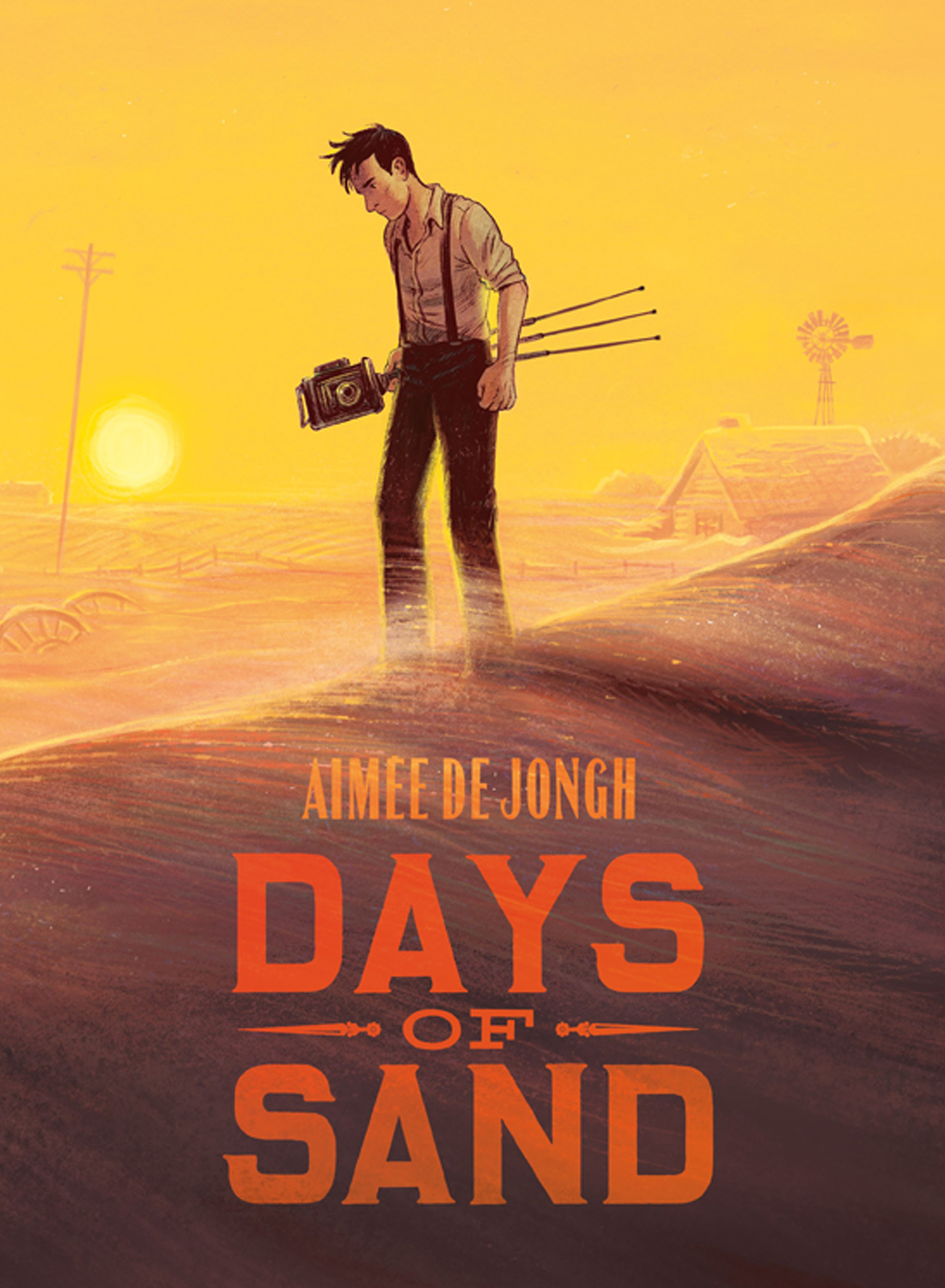
By Aimée De Jongh, translated by Christopher Bradley (SelfMadeHero) 
ISBN: 978-1-914224-04-1 (HB)  

Certain eras and locales constantly resonate with both narrative consumers and creators. The mythical Wild West, the trenches of the Somme, Ancient Rome, 1940s Hollywood and so many more emotionally evocative enclaves of mythologised moments spark responses of drama, tension and tales crying out to be told.  

One of the most evocative derives from Depression-era America, but rather than a noir-drenched misty Big City, Aimée De Jongh drew her inspiration from a scrupulously documented decade long human catastrophe that inescapably presages ecological collapse in our imminent future. 

The Netherlands-born comics creator, story-boarder, Director and animator studied at Rotterdam, Ghent and Paris before beginning her career as a newspaper cartoonist. While releasing graphic novels The Return of the Honey Buzzard, Blossoms in Autumn and Taxi!, the multi-disciplined, multi award-winning artist worked in television, on music videos and animated movies (Aurora), for gallery shows (Janus), and latterly turned to graphic journalism, detailing refugee life in Greece’s migrant camps. 

Combining overlapping interests in travel, documentary and ecology, her latest opus tells a carefully curated and fictionalized account of one young man’s reaction to the 1930’s Dust Bowl disaster and the resultant diaspora it triggered over ten years of drought.  

To research the tale – released in Europe in 2021 as two-volume Jours de sable – De Jongh travelled extensively through the region (Oklahoma to California), visiting remaining historical sites and museums while accessing the precious wealth of photographic material sponsored by the contemporary Farm Security Administration. This federal entity recorded the tragedy which forms the narrative spine of this story.  

De Jongh’s blog offers interested readers further insights and this book includes commentary and many of the original photographs that ultimately moved the event from environmental aberration to cultural myth and human tragedy. 

This is not a tale about plot and action but premise and reaction. Captivatingly rendered with colour acting as a special effects suite and utilizing original 1930s photographs throughout, it sees unemployed photographer John Clark take a job in 1937: hired like many others to document the human and economic effects of a decade-long drought and bad farming practises on the people of Oklahoma. Trapped at the heart of an un-Natural Disaster, they daily endure the frightening and no-longer gradual transition of their once lush lands of milk and honey and grass and fruitfulness into a new Sahara desert… 

Unfortunately, Clark has more baggage than just a shooting script and camera cases, and as he carries out his task, he slowly loses perspective and secure distance in the face of awestriking nature and humanity in its rawest, most reduced state. How can his camera intrude and explore when he’s as much lost and unbalanced as any of his subjects? 

It’s easy to read in subtextual messages and apply modern tropes and memes ranging from the movie Dune to the current global migrant crisis or each and every western government’s insipid pettifogging disinclination to take charge or an iota of responsibility. The world has never been in a worse state and if this book motivates anyone to make a change – however small – that’s a big win. However, it’s not the point.  

Terror, loss, hopeless misery and hunger for a better life have always been with us. The fact that our imminent doom is self-inflicted is irrelevant. The fact that everyone is/will be affected is a non sequitur. What’s germane is that when Kent or Hampshire are dust bowls and all Pacific islands are underwater, it’s still going to come down at some point to every one of us making a decision…  

An international hit garnering many honours and accolades, Days of Sand is staggering beautiful, distressingly unforgettable and never more timely, but please don’t dismiss it as a trendy and pretty polemic. This is a timeless examination of individual human choice in reaction to overwhelming, immeasurable forces and how individuals may respond. What’s presented here is one concerned artist’s narrative riposte. What’s yours? 

Jours de sable © DARGAUD-BENELUX (DARGAUD-LOMBARD S.A.) 2021, by Aimée De Jongh. All rights reserved  

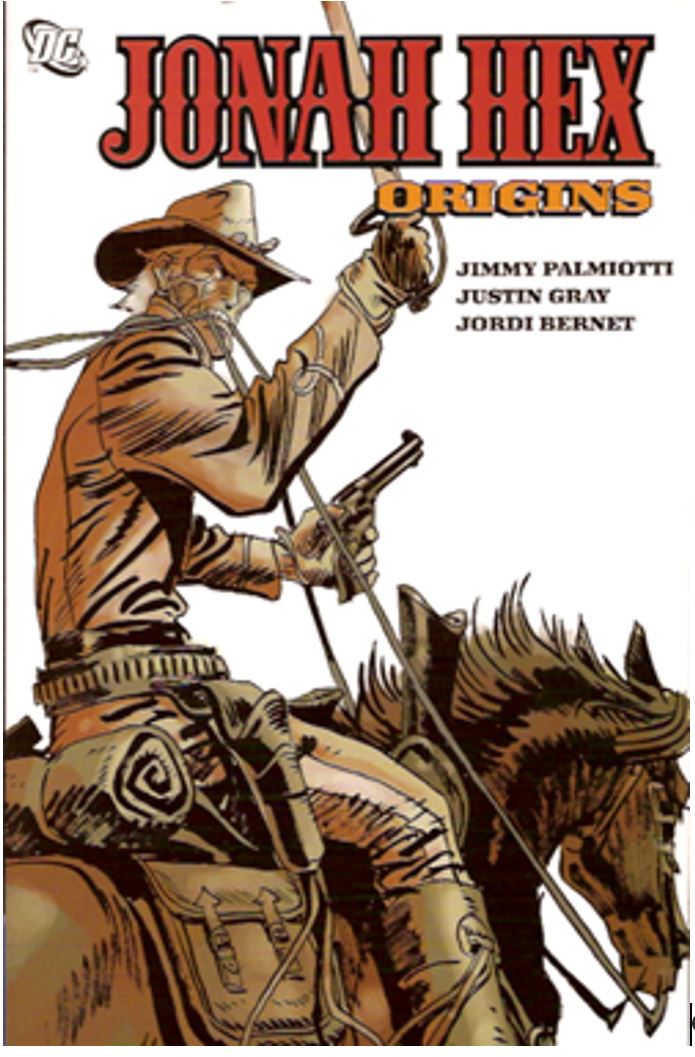
Jonah Hex volume 3: Origins


By Jimmy Palmiotti, Justin Gray, Jordi Bernet, and others (DC Comics) 

ISBN: 978-1-84576-629-0 (TPB/Digital edition) 

The Western is an odd genre that can be sub-divided into two discrete halves: the sparkly, shiny version that dominated kids’ books, comics and television for decades, exemplified by Zane Grey stories and heroes like Roy Rogers and Gene Autry. Then there’s the other half… 

That kind of cowboy grimy, gritty, excessively dark and nihilisticwas done best for decades by Europeans in such strips as Jean-Michel Charlier’s Lieutenant Blueberry or Bonelli & Galleppini’s Tex Willer and made their way into US culture through the films of Sam Peckinpah and Sergio Leone.  

Jonah Hex is very best of this latter sort. 

DC opened a stable of clean-cut gun-slingers as the super-hero genre imploded in 1949, with dashing and highly readable luminaries like Johnny Thunder, Nighthawk, The Trigger Twins, Matt Savage and dozens of others in a marketplace that seemed limitless in its voracious hunger for chaps in chaps.  

However, all things end and by the early sixties the sagebrush brigade had dwindled to a few venerable properties. A flurry of superheroes hogged the newsstands during the Silver Age from 1956, but as the 1960s closed, they were waning again and thematic changes in the cinematic Cowboy filtered through to a comics industry suffering its second super-hero retreat in twenty years.  

All-Star Western #1 was released with an August/September 1970 cover date, filled with Pow-Wow Smith reprints, and became an all-new anthology with its second issue. It featured numerous creative all-stars, including Robert Kanigher, Neal Adams, Gray Morrow, Al Williamson, Gil Kane, Angelo Torres, & Dick Giordano, working on Outlaw!, Billy the Kid and cult sleeper-hit El Diablo: combining shoot-em-up shenanigans with supernatural chills, in deference to the real hit genre-type that saved comics in those dark days – horror stories. 

Issue #10 introduced a disfigured, irascible, shockingly lethal bounty hunter created by writer John Albano & Tony DeZuñiga and DC finally found its greatest and most enduring Western Warrior…  

Hex is the very model of a modern anti-hero. Coarse, callous, proudly uneducated, the relentless manhunter is clad in battered Confederate Grey, half his face lost to a hideous past injury. He offers the aspect of a brutal thug little better than the scum he hunts  and is a man to avoid – or so you’d think on first appearances…  

Hex is arguably the most memorable western comic character ever created. He’s certainly the darkest and most grippingly realised, as is the brutal and uncompromising world he inhabits. His 21st century revival portrayed him as a ruthless demon with gun or knife, hunting men for the price on their heads in the years following the American civil war.  

This collection (reprinting issues #13-18 of the 2006 monthly series) revisits his origin and offers fascinating insights not only in gripping lead tale ‘Retribution’ – illustrated by the utterly superb Jordi Bernet – but also in haunting, nihilistically evocative cautionary tale ‘The Ballad of Tallulah Black’ (beguiling painted by Phil Noto), and blackly comedic ‘I Walk Alone’, drawn with unsuspected subtlety by Val Semeiks. 

Jonah Hex was always the “Western for people who didn’t like Westerns” and cliché aside, it’s still true. This is a perfect book for any adult beginning or returning to comics. 
© 2007 DC Comics. All Rights Reserved. 

Lone Wolf & Cub volume 4: The Bell Warden


By Kazuo Koike & Goseki Kojima, translated by Dana Lewis (Dark Horse Manga) 

ISBN: 978-1-56971-505-5 (TPB/digital edition) 

Best known in the West as Lone Wolf and Cub, the epic Samurai saga created by Kazuo Koike & Goseki Kojima is without doubt a global classic of comics literature. An example of the popular “Chanbara” or “sword-fighting” genre of print and screen, Kozure Okami was serialised in Weekly Manga Action from September 1970 until April 1976. It was an immense and overwhelming “Seinen” (“Men’s manga”) hit… 

The tales prompted thematic companion series Kubikiri Asa (Samurai Executioner) which ran from 1972-1976, but the major draw – at home and, increasingly, abroad – was always the nomadic wanderings of doomed noble ÅŒgami Ittō and his solemn, silent child. 

Revered and influential, Kozure Okami was followed after years of supplication by fans and editors by sequel Shin Lone Wolf & Cub (illustrated by Hideki Mori) and even spawned – through Koike’s indirect participation – science fiction homage Lone Wolf 2100 by Mike Kennedy & Francisco Ruiz Velasco. 

The original saga has been successfully adapted to most other media, spawning movies, plays, TV series (plural), games and merchandise. The property is infamously still in Hollywood pre-production. 

The several thousand pages of enthralling, exotic, intoxicating narrative art produced by these legendary creators eventually filled 28 collected volumes, beguiling generations of readers in Japan and, inevitably, the world. More importantly, their philosophically nihilistic odyssey – with its timeless themes and iconic visuals – has influenced hordes of other creators. The many manga, comics and movies these stories have inspired around the globe are impossible to count. Frank Miller, who illustrated the cover of this edition, referenced the series in Daredevil, his dystopian opus Ronin, The Dark Knight Returns and Sin City. Max Allan Collin’s Road to Perdition is a proudly unashamed tribute to the masterpiece of vengeance-fiction. Stan Sakai has superbly spoofed, pastiched and celebrated the wanderer’s path in his own epic Usagi Yojimbo, and even children’s cartoon shows such as Samurai Jack are direct descendants of this astounding achievement of graphic narrative. The material has become part of a shared world culture. 

In the West, we first saw the translated tales in 1987, as 45 Prestige Format editions from First Comics. That innovative trailblazer foundered before getting even a third of the way through the vast canon, after which Dark Horse Comics assumed the rights, systematically reprinting and translating the entire epic into 28 tankōbon-style editions of about 300 pages each, between September 2000-December 2002. Once the entire epic was translated, it was all placed online through the Dark Horse Digital project. 

Following a cautionary ‘Note to Readers’ – on stylistic interpretation – this moodily morbid monochrome collection truly gets underway, keeping many terms and concepts western readers may find unfamiliar. Therefore this edition offers at the close a Glossary providing detailed context on the term used in the stories, plus profiles of author Koike Kazuo & illustrator Kojima Goseki and another instalment of ‘The Ronin Report’ by Tim Ervin-Gore. The occasional series of articles here offers a rundown on exotic weaponry of the era in Weapons Glossary: Part one…  

Set in the era of the Tokugawa Shogunate, the saga concerns a foredoomed wandering killer who was once the Shogun’s official executioner: capable of cleaving a man in half with one stroke. An eminent individual of esteemed imperial standing, elevated social position and impeccable honour, ÅŒgami Ittō lost it all and now roams feudal Japan as a doomed soul hellbent for the dire, demon-haunted underworld of Meifumado. 

When the noble’s wife was murdered and his clan dishonoured due to the machinations of the treacherous, politically ambitious Yagyu Clan, the Emperor ordered ÅŒgami to commit suicide. Instead, he rebelled, choosing to be a despised Ronin (masterless samurai) assassin, pledged to revenge himself until all his betrayers were dead …or Hell claimed him. His son, toddler Daigoro, also chose the path of destruction and together they roam grimly evocative landscapes of feudal Japan, one step ahead of doom, with death behind and before them. 

Unflinching formula informs early episodes: the acceptance of a commission to kill an impossible target necessitates forging a cunning plan where relentless determination leads to inevitable success. Throughout each episode plot is underscored with bleak philosophical musings alternately informed by Buddhist teachings in conjunction with or in opposition to the unflinching personal honour code of Bushido… 

That tactic is eschewed for a simple commission in opening tale ‘Tsuji Genshichi the Bell Warden’ with the assassin hired by a prestigious and honourable official. Greater Edo runs to the timetable of nine great bells, dictating the flow of civilised time and acting as emergency alarm system in times of crisis. All that power and responsibility is controlled by one man: The Bell Warden. 

As with most hereditary official posts, great glory and vast wealth inevitably accrues to the position, but now the aging incumbent is preparing his successor. He has three candidates and grave misgivings about the worth and dedication of each. His solution: hire the most infamous outlaw in Japan to chop off the right (bell-ringing) arm. If they can’t survive and overcome they are none of them the man for the job… 

Drowning in his own ocean of duty, ÅŒgami accepts the commission and isn’t surprised to discover there is a hidden agenda in play… 

As the nation modernised – or lost its ethical core – noble samurai economised by firing their retainers and hiring domestic mercenaries. As this new class – “Chugen-Gashira” – grew in power, they feathered their own nests; increasingly turning to villainy and chicanery, further debasing Japan’s moral core. They were shielded by their own base-born origins, since upholders of the old ways could not “punch down” to retaliate.  

In ‘Unfaithful Retainers’, when two noble children seek redress for their father’s assault, the Lone Wolf also falls foul of his own entrenched self-image, and must concoct a byzantine scheme to reach the guilty party and deliver honourable justice…  

Daigoro takes centre stage in ‘Parting Frost’ as his father goes missing during a mission. As his supplies run out and winter snows start to melt , the boy is compelled to strike out in search of his father, only to encounter a Samurai who discerns exactly who and what he is. Testing the child to destruction with fire and steel, obsessive Iki Jizamon is only foiled by the abrupt return of the cub’s far from happy sire… 

Set in a brutal uncompromising world of privilege and misogyny, these episodes are unflinching and explicit in their treatment of violence – especially sexual violence. In detailing another historical aspect of the culture, ‘Performer’ focusses on a particular underclass: Gōmune. The term grouped together all street folk who busked for money: female minstrels, dancers, sleight-of-hand conjurers, weapons-demonstrators, kabuki actors, drummers, travelling players puppeteers, preachers, contortionists, storytellers acrobat and countless others all entertaining for coins. Naturally, they had no protection under law and when a swordswoman martial artist was brutalised by woman-hating warrior using treachery and hypnotism, she was unavenged… 

In her shame and fury, O-Yuki had her body further desecrated by horrific, attention-diverting tattoos, giving her a momentary advantage as she butchered a succession of Samurai on her way to finding one in particular… 

Accepting a commission from a lord rapidly being depleted of soldier-servants, Ōgami plays detective but finds himself deeply conflicted when he finally corners his prey. However, his given word is inviolate, his philosophy is unflinching and a job must be done… 

These stories are deeply metaphorical and work on many levels most of us westerners just won’t grasp on first reading – even with contextual aid provided by the bonus features. That only makes them more exotic and fascinating. Also a little unsettling is the even-handed treatment of women in the tales. Within the confines of the notoriously stratified culture being depicted, females – from servants to courtesans, prostitutes to highborn ladies – are all fully rounded characters, with their own motivations and drives. The wolf’s female allies are valiant and dependable, and his foes, whether targets or mere enemy combatants in his path, are treated with professional respect. He kills them just as if they were men… 

Whichever English transliteration you prefer – Wolf and Baby Carriage is what I was first introduced to – Kazuo Koike & Goseki Kojima’s grandiose, thought-provoking, hell-bent Samurai tragedy is one of those too-rare breakthrough classics of global comics literature. A breathtaking tour de force, these are comics you must not miss. 

© 1995, 2000 Kazuo Koike & Goseki Kojima. All other material © 2000 Dark Horse Comics, Inc. Cover art © 2000 Frank Miller. All rights reserved. 

The Set-Up


By
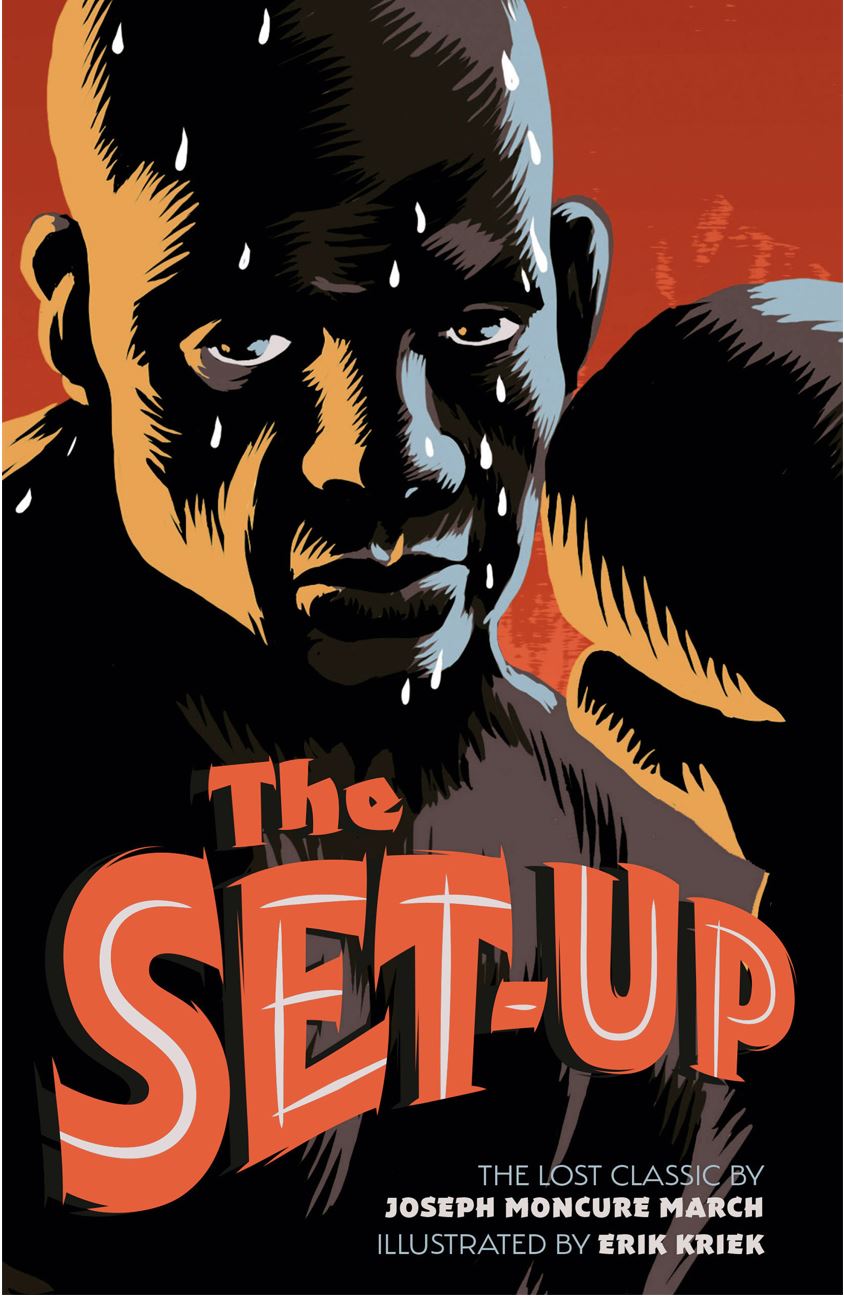
Joseph Moncure March illustrated by Erik Kriek (Korero Press)
ISBN: 978-1-91274-008-6 (HB) eISBN: 978-1-91274-012-3 

I’ve never understood boxing as a sport. Where I come from, you don’t hit people for money or fame but because you don’t like them, have a grievance with them or because they’re a member of the Tory Cabinet. I suppose that’ s pretty much the same thing these days. 

However, it’s an indisputable fact that for billons of humans over thousands of years, pugilism in its various forms has captivated, enthralled and on rare occasion, enhanced the lives of those both participating and spectating.  

Entire sub-cultures have embraced the Fight Game and it has in return elevated a few (some actual combatants, but a far greater number of managers, promoters and – disturbingly – “owners” of society’s officially sanctioned domestic gladiators) to positions of wealth and power. Many love to watch and many more are irresistibly drawn to compete…  

Despite – or more likely because of – modern rules and legal oversight the industry is apparently not as flagrantly in the pockets of crime bosses as in its early golden years, but once upon a time in the mid-20th century Boxing matches were the great leveller: drawing hoods and heroes, media stars and mobster scum, intellectuals and imbeciles… 

In 1928, white Jazz Age poet and essayist Joseph Moncure March wrote a highly successful and influential long-form poem about boxing that stripped away much of the glamour by focussing on the criminality and poverty-driven desperation that underpinned it.  

March was a war veteran, a college protégé of Robert Frost and first managing editor of The New Yorker, and infamous for his other poem. Bawdy, antisocial, deliberatively provocative and shocking, The Wild Party took three years to find a publisher. The Set-Up was similarly divisive and influential. You can find all you need to know about the odes and their author in Masha Thorpe’s brilliantly informative and erudite Introduction which combines appraisal and appreciation with history lesson in a critical biography of the pioneering poet. It also candidly discusses the major bone of contention this uncompromising revival will  stir up: Race.   

Protagonist Pansy Jones is an ex-con, over the hill fighter: an old Negro grateful for one final chance at a payoff against a younger, fitter, tougher opponent. It’s his last bout and he wants to go out with pride and dignity. Sadly, the match is fixed, but his crooked promoters have opted not to tell him and kept his portion of the pay-off for themselves… 

It sounds cliched now, but that’s because the printed poem was a monster hit during the Depression Era, spawning countless swipes and a popular but utterly bowdlerised 1947 noir film adaptation which omitted the uncompromising elements of commonplace bigotry the saga wallows in.  

Although in 1947 the author strenuously protested the replacement of Pansy with a white fighter, when The Set-Up was rereleased in 1968, March himself “de-nationalized” the tale, removing the brooding racial tensions and character that carried the original. 

What we have here now is the restored original text which wallows in grime, crime and poverty with fully-realized, universally grotesque, sordid and unsavoury characters all taking their piece of the action from desperate men pummelling each other for other people’s callous gratification… 
The tale is told in relentless rhyme and pitiless beats presaging modern Hip Hop culture: brutal, bleak, repetitive; glorifying another kind of gang culture and clinging to the notion of a last chance to win if you are man enough. This is dawn-era storytelling with classical themes delivered as primordial Rap in its purest, most primal form: drenched with aggression, hostility, nihilism, misogyny, explicit but accepted racism and, always, frustrated hope. 

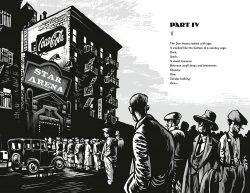
March eschews conventional stanzas for explosive couplets, displaying verbal virtuosity and building scene-setting mood through a driving beat and mesmerising rhythm. Visually they are delivered in this edition like blows, laid in typographic blasts in clinches with starkly effective illustration cunningly informed by the works of graphic genius Will Eisner. 

The art is astounding, crafted by a modern master with his head firmly set towards past times. 

Amsterdam-born Erik Kriek (In the Pines – 5 Murder Ballads; silent superhero spoof Gutsman; Little Andy Roid; Welcome to Creek Country; Mika, the Little Bear That Didn’t Want to Go To Sleep) is a graduate of the Rietveld Academy for Art and Design and an in-demand illustrator of books – such as Holland’s Tolkien and Harry Potter editions – magazines, apparel, skateboards, ad infinitum.  

As well as being a musical historian and afficionado, he can turn his hand to many visual styles and graphic disciplines. Gutsman was reconceived as a soundless mime ballet in 2006 and his collection of Lovecraft adaptations Het onzienbare, en andere verhalen H. P. Lovecraft has been republished in many languages… 

Here he again extends his artistic range and demonstrates chiaroscuric virtuosity and versatility in the resurrection of a landmark of American poetry and precursor of noir sensibilities that has, in its own way, also reshaped the landscape of modern popular culture. You already know the story from a hundred other sources, so I’m not saying more, but I will share a few interior pages… 

Restored and beautifully augmented by stunning potent imagery, The Set-Up is a found classic addressing issues we still all struggle with and is a contest you must see.
© 2022 Korero Press Ltd. All rights reserved. 

The Set -Up will be published on April 21st 2022 and is available for pre-order now. 

Yakari and Nanabozho


By Derib & Job, coloured by Dominque and translated by Jerome Saincantin (Cinebook)
ISBN: 978-1849181778 (Album PB/Digital edition)

Children’s magazine Le Crapaud à lunettes was founded in 1964 by Swiss journalist André Jobin who began writing stories for it under the pseudonym Job. Three years later he hired fellow French-Swiss artist Claude de Ribaupierre who had begun his own career as an assistant at Studio Peyo (home of Les Schtroumpfs), working on Smurfs strips for venerable weekly Spirou. Together they created the well-received Adventures of the Owl Pythagore and two years later struck pure gold with their next collaboration.

Debuting in 1969, Yakari delightfully detailed the life of a young Sioux boy on the Great Plains; sometime after the introduction of horses by the Conquistadores and before the coming of the modern White Man.

Overflowing with gentle whimsy, the beguiling saga celebrates a bucolic existence in tune with nature and free from strife, punctuated with the odd crisis generally resolved without fame or fanfare by a little lad who is smart, compassionate, brave… and can converse with all animals…

As “Derib”, de Ribaupierre – equally excellent in both enticing, comically dynamic “Marcinelle” cartoon style and a devastatingly compelling realistic action illustration form – became one of the Continent’s most prolific, celebrated and beloved creators through such groundbreaking strips as Celui-qui-est-né-deux-fois, Jo (the first comic on AIDS ever published), Pour toi, Sandra and La Grande Saga Indienne).

Over decades, many of his masterworks feature beloved Western themes, magnificent geographical backdrops and epic landscapes, with Yakari regarded by most fans and critics to be the feature which catapulted him to deserved mega-stardom.

First serialised in 1978, Yakari et Nanabozho was the fourth European album – released just as the strip transferred to prestigious Le Journal de Tintin – but was only translated by Cinebook in 2013, making it officially the 11th English-language album. That’s not going to be a problem for chronology or continuity addicts, since – as ever – the tale is both stunningly simple and effectively timeless…

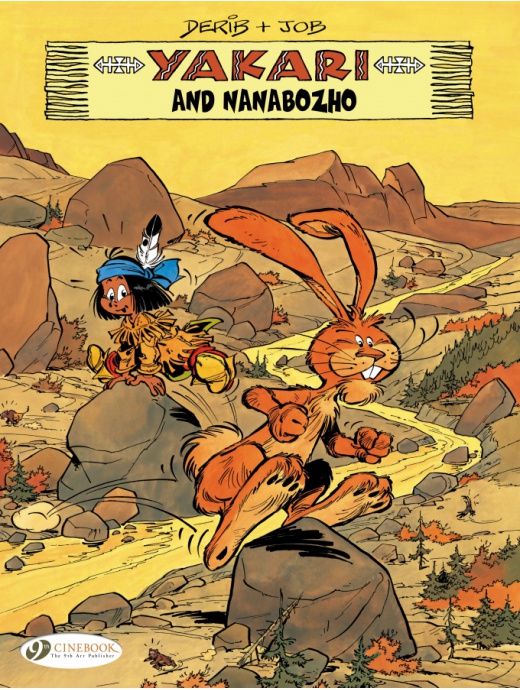
It all begins one bright sunny day as the little wonder wanders out to the Rock of the Bear to meet his friend Rainbow. On arrival there’s no sign of her but he does meet a gigantic and extremely voluble desert hare claiming to be Trickster Spirit Nanabozho – a statement proven by making some astounding adjustments to the dubious little lad’s height.

The Great Rabbit claims to be Rainbow’s totem animal, much like Great Eagle watches over and protects Yakari, and the loopy lepine wants the boy to accompany him on a quest. Ever since a travelling tale-teller arrived in camp, sharing shocking stories of the far north, where it’s so cold the bears are snowy white, headstrong Rainbow has wanted to see the amazing creatures for herself. Eager to please his protégé, the Brobdingnagian bunny agrees to help her, even supplying magic walking moccasins to reduce the hardships of the journey. Unfortunately the impatient, excited child wouldn’t wait for the Trickster and Yakari to join her and has put them on unsupervised. Unable to resist the enchanted slippers, Rainbow has started her trek, not knowing where she’s going or how to stop…

Now with boy and bunny transforming into giants and tiny mites as circumstances demand, they hare off after their impetuous friend, following the path of a magic talisman dubbed ‘the Straight Arrow’ and assisted by such beneficial creatures as a night moose.

…And when they at last find Rainbow, the travellers decide that as they’ve come so far, they might as well complete the journey to the Land of the White Bears, aided by a fabulous flying canoe…

Always visually spectacular, seductively smart and happily heart-warming, Job’s sparse plot here affords Derib unmissable opportunities to go wild with the illustrations; creating a lush, lavish and eye-popping fantasy wonderland breathtaking to behold.

This is Really Big Sky storytelling with a delicious twist in its colossal fluffy tail…

The exploits of the valiant little voyager who speaks to animals and enjoys a unique place in an exotic world is a decades-long celebration of joyously gentle, marvellously moving and enticingly entertaining adventure, honouring and eulogising an iconic culture with grace, wit, wonder and especially humour. These gentle sagas are true landmarks of comics literature and Yakari is a strip no fan of graphic entertainment should ignore.
Original edition © 1978 Le Lombard/Dargaud by Derib & Job. English translation 2013 © Cinebook Ltd.

The Bluecoats volume 11: Cossack Circus


By Willy Lambil & Raoul Cauvin, translated by Jerome Saincantin (Cinebook)
ISBN: 978-1-84918-383-3 (Album PB/Digital edition)

Devised by Louis “Salvé” Salvérius & Raoul Cauvin – who scripted the first 64 best-selling volumes until his retirement in 2020 – Les Tuniques Bleues (The Bluecoats) debuted at the end of the 1960s, specifically created to replace Lucky Luke when the laconic maverick defected from weekly anthology Le Journal de Spirou to rival publication Pilote.

Ever since its first sallies, the substitute strip swiftly became one of the most popular bande dessinée series in Europe… and in case you were wondering, the stellar series is now scribed by Jose-Luis Munuera and the BeKa writing partnership…

Salvé was a cartoonist of the Gallic big-foot/big-nose humour school, and when he died suddenly in 1972, his replacement, Willy “Lambil” Lambillotte gradually adopted more realistic – but still overtly comedic – tone and manner. Lambil is Belgian, born in 1936 and, after studying Fine Art in college, joined publishing giant Dupuis in 1952 as a letterer.

Born in 1938, scripter Cauvin is also Belgian and – before entering Dupuis’ animation department in 1960 – studied Lithography. He soon discovered his true calling – comedy writing – and began a glittering and prolific career at Le Journal de Spirou. In addition to Bluecoats he scripted dozens of long-running, award winning series including Cédric, Les Femmes en Blanc and Agent 212: more than 240 separate albums. The Bluecoats alone has sold more than 15 million copies of its 65 (and counting) album sequence.

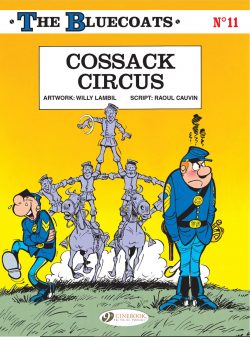
Our long-suffering protagonists are Sergeant Cornelius Chesterfield and Corporal Blutch; worthy fools in the manner of Laurel & Hardy: hapless, ill-starred US cavalrymen defending America during the War Between the States.

The original format featured single-page gags set around an Indian-plagued Wild West fort, but from the second volume – Du Nord au Sud – the sad-sack soldiers were situated back East, fighting in the American Civil War. All subsequent adventures – despite ranging far beyond the traditional environs of America and taking in a lot of genuine and thoroughly researched history – are set within the timeframe of the Secession conflict.

Blutch is your run-of-the-mill, whinging little-man-in-the street: work-shy, mouthy, devious and especially critical of the army and its inept commanders. Ducking, diving, even deserting whenever he can, he’s you or me – except sometimes he’s smart. principled or heroic if no easier option is available.

Chesterfield is a big, burly professional fighting man; a career soldier who passionately believes in the patriotism and esprit-de-corps of the Military. He is brave, never shirks his duty and hungers to be a medal-wearing hero. He also loves his cynical little troll of a pal. They quarrel like a married couple, fight like brothers and simply cannot agree on the point and purpose of the horrendous war they are trapped in… a situation that stretches their friendship to breaking point in this deceptively edgy instalment.

Cossack Circus is the 11th translated Cinebook album (and 12th sequential European release). As Les Tuniques Bleues: Les bleus tournent cosaques it debuted on the continent in 1976, serialised in Le Journal de Spirou #2000-2014 before collection as an album in 1977.

As so often it opens with another spectacular bloodbath instigated by apparently invulnerable maniac Captain Stark. The glory-addicted cavalry charger has now decimated the Union Army (and remember, that’s the side he’s fighting for) to such an extent that there’s no one left to ride into the Confederate guns…

Having depleted everyone who can be “volunteered” into the army and faced with the prospect of sending in officers or withdrawing, “The Brass” devise a brilliant solution: diverting immigrants who have been induced to America to work in the now-empty mines into nice blue uniforms…

Assigning Chesterfield and Blutch as “recruiters” and instructors, the Generals sit back in anticipation of literally fresh blood. They will soon come to regret this stratagem.

When the squabbling squaddies arrive at the holding camp, their misgivings are confirmed on discovering the future cavalrymen speak no English, and have no idea that they are now expected to officially enlist and give their lives for their new country. To the Russian- and Chinese-speaking internees, this is just a stop en route to their new life underground. If the army has its way, that’s almost the truth…

Without interpreters, our Bluecoats are helpless to convey their demands, which Blutch is increasingly convinced are illegal, immoral and stupid. His arguments with duty-blinded Chesterfield bring them to blows, and mutual murder, testing their affection for each other to the limits.

Ultimately, depriving the foreigners of food leads to their signing papers they don’t understand and donning uniforms they instinctively do, but mounting animosity vanishes when the boot camp prisoners are given horses. After Blutch demonstrates a few mounted manoeuvres he almost dies of embarrassment when the Russian clods seamlessly perform astounding synchronised riding tricks while screaming with joy… or perhaps singing?

At that moment, the camp commandant hands over their despatch orders. Next stop: the Front where Stark is itching to lead another charge into death (for everyone else ) and glory (for him)…

However, as the former best buddies carry out their orders with feelings poles apart, fate has a bizarre denouement in store, which manifests once the hereditary equestrian performers are unleashed on a battlefield they choose to see as the biggest circus ring on Earth…

Combining searing satire with stunning slapstick, this yarn is as much iron fist as velvet glove, delivering a hugely gratifying poke at the blood-&-glory boys of history. Deftly delivering an anti-war saga targeting younger, less world-weary audiences, this tale is agonisingly authentic, and always in good taste while delivering an uncompromising portrayal of state-sanctioned mass-violence. These are comedic tales whose humour makes the occasional moments of shocking verity doubly powerful and hard-hitting.

Thankfully, the divergent attitudes expressed by our put-upon pair, and their inevitable rapprochement in the midst of a magnificent plot twist, makes this battle anything but arrant folly. Funny, thrilling, beautifully realised and eminently readable, Bluecoats is the kind of war-story and Western to appeal to the best, not worst, of the human spirit.
© Dupuis 1977 by Lambil & Cauvin. All rights reserved. English translation © 2018 Cinebook Ltd.

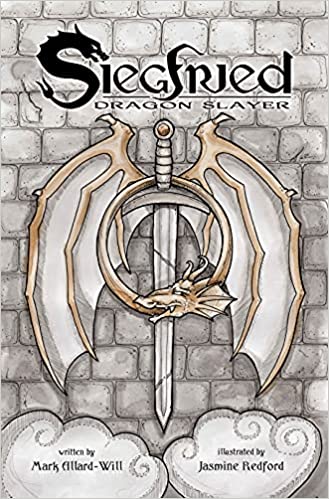
Siegfried: Dragon Slayer


By Mark Allard-Will, Jasmine Redford & various (Renegade Arts Entertainment)

ISBN: 978-1-98975-413-9 (TPB/Digital edition)

There are many heroic stories, but precious few that grow beyond their place of origin to become global forces of imagination. Gilgamesh, Journey to the West, The Mahabharata, the Iliad, Odyssey and Aenid, the Twelve Labours of Hercules, Beowulf, Le Morte D’Arthur and Robin Hood probably all qualify, but only one has shaped modern narrative and been endlessly recreated, reworked and homage, pilfered from and reassembled: The Völsunga Saga.

The basis of Wagner’s loudest operas, Tolkien’s entire mythology, countless fairy tales, comic books – from Natasha Alterici’s Heathen to Marvel’s Thor -, novels, plays, movies and the best animated short ever made (What’s Opera, Doc? was the first cartoon to be entered into the National Film Registry of the United States of America!), these Germano-Danish myths and folktales informed the very nature of heroism in modern culture and have become a potent undercurrent of western concepts of honour, justice and vengeance.

It’s all pretty heady stuff and now writer Mark Allard-Will and illustrator Jasmine Redford have bravely made it their quest to strip back all the accumulated clutter and baggage of centuries and overlapping cultures to share the original saga in a brace of vivid and engaging graphic narratives tailored for modern readers.

Book I (of II) finds oblivious young Prince Siegfried of Denmark hungry for glory even as he is slyly groomed by sinister tutor Regin, whose patient wisdom and many lessons are all subtly honed in on a hidden purpose of his own. This plotter dreams of gold, but of a very special nature, and he deftly plants the notion of the boy killing a certain dragon and claiming both its hoard and acclaim beyond measure…

King Alf is not impatient Siegfried’s father, but rather mother Hjordis’ new husband: a good man hard-pressed by regional politics and growing tired of the unruly disruptive force inside his own castle. Against his better judgement Alf allows the boy’s increasingly wild demands. These include a suitable war-horse, won with the aid of a strange cloaked wanderer with only one eye.

A war sword able to cleave dragon scale is a harder prospect. Regin’s efforts at the forge prove inadequate, but hope comes when the queen shows her son fragments of a mighty weapon and shares the story of her son’s dead father Sigmund. Long ago at a wedding, a one-eyed stranger plunged a magnificent magical sword into a tree. After all had failed to pull free the blade “Gram”, timid, cautious Sigmund easily loosed the sword. After Sigmund refused to sell it to his brother – King Siggeir – the monarch instituted a plague of murder and fratricide employing, incarceration torture, werewolves and shapeshifters.

Surviving to win justice and the crown, Sigmund attempted to unite the eternally-warring German kingdoms, but his political marriage to Hjordis only enraged rival suitor King Lyngi, who brought carnage and conflict where there was briefly peace. In a climactic duel, the kings clashed and a one-eyed stranger smashed Gram, leaving Sigmund to his fate…

The queen’s intent was to dampen her son’s passion for great deeds, but had the opposite effect. Having Regin reforge Gram, Siegfried sets out on a downward path, brutally and covertly raiding Saxony to kill Lyngi in just revenge before finally acquiescing to Regin’s persistence and seeking out the dragon Fafnir.

The boy’s hunger for glory overrules his growing suspicions about his tutor, and Regin can only dream of his own long-delayed vengeance and a certain ring of gold…

This accomplished adaptation of the original Germanic myths fairly crackles along, blending mystery and intrigue in a stylish yet restrained animated style. The narrative is rendered in a limited colour palette reminiscent of scrollwork and tapestries and the tome also offers a range of concept and character sketches by Redford, as well as a trove of full-colour treats in a ‘Pinup Gallery’ by guest artists Steven Charles Rosia, James Francis, Matt Smith, Elaine M. Will, Davis Dewsbury & Sharon Gauthier and Audra Balion.
Siegfried: Dragon Slayer story, characters and art © 2021 Mark Allard-Will and Jasmine Redford. All rights reserved.

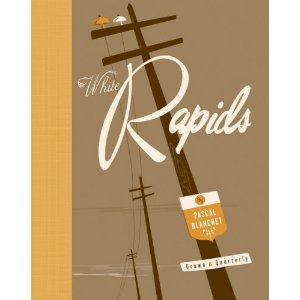
White Rapids


By Pascal Blanchet, translated by Helge Dascher (Drawn & Quarterly)
ISBN: 978-1-897299-24-1 (Album PB)

A fascinating moment in relatively recent social history was brought magically to life in this captivating and innovative graphic novel which eschewed the traditional iconography and lexicography of sequential narrative, instead utilising the bold stylisations of art deco design and the gloriously folksy imagery of 1950s Modernism (think the architecture and landscape of David Suchet’s definitive television Poirot and the movie Metropolis wedded to the crinkly curlicue characters populating the title sequences of Bewitched or Those Magnificent Men in Their Flying Machines).

The effect is like looking at a period brochure, which tragically underscores the bold and far too typical story of the town which lived and died at the behest of forces beyond the control of the everyday working stiffs who lived there.

A design tour de force, this was the first translated work of award-winning Québécois creator Pascal Blanchet who transformed the history from dry fact into a magnificent torrent of visual music. And no, you can’t find this bloody book anywhere. It’s why I’m re-reviewing it, in the hope some wise (and probably Canadian) publisher will revive it…

In the 1920s, Canada’s growing power demands were supplied by private companies, and the most efficient generation method was hydroelectric, created by damming the mighty rivers of the country. In 1928 the Shawinigan Water & Power Company decided to build a new dam in a remote northern region of the St. Maurice River at Rapide Blanc, a section where the waters narrowed into the eponymous fast-running white waters of the title.

To operate a power-plant in such an inaccessible – and for nearly half of each year, actively hostile – region, a company town needed to be built for workers and their families. Moreover, for any man to bring his family into such a wilderness, it would have to be an impressive and wonderful town indeed…

Blanchet avoids the tempting option of personalising or dramatizing the tale, preferring to let mood, impression, atmosphere and style describe the birth, brief life and sad, sudden death of White Rapids (here’s a clue: it involved bottom lines and transfers of ownership, not evolving environmentalism) as a gleaming moment of Enlightened Capitalism actually doing the right and decent thing for the Proletarian Worker winked out and was washed away.

This is like no other Graphic Novel you’ve ever seen and is stunningly effective for all that; rendered in reduced hues of orange, brown and grey, marvellously devoid of the heretofore presumed necessary clichés of narrative convention. It also avoids the dynamic seductions of Protagonist/Antagonist and the avid fetishism of Vitruvian representational faces and forms that underpin all comics art no matter how avant-garde.

This is a beautiful work and deserves every award it’s ever won as well as your rapt attention. Why not start a internet campaign to have some solid citizen publisher bring it back for us all to share?
© 2006, 2007 Pascal Blanchet. All Rights Reserved.

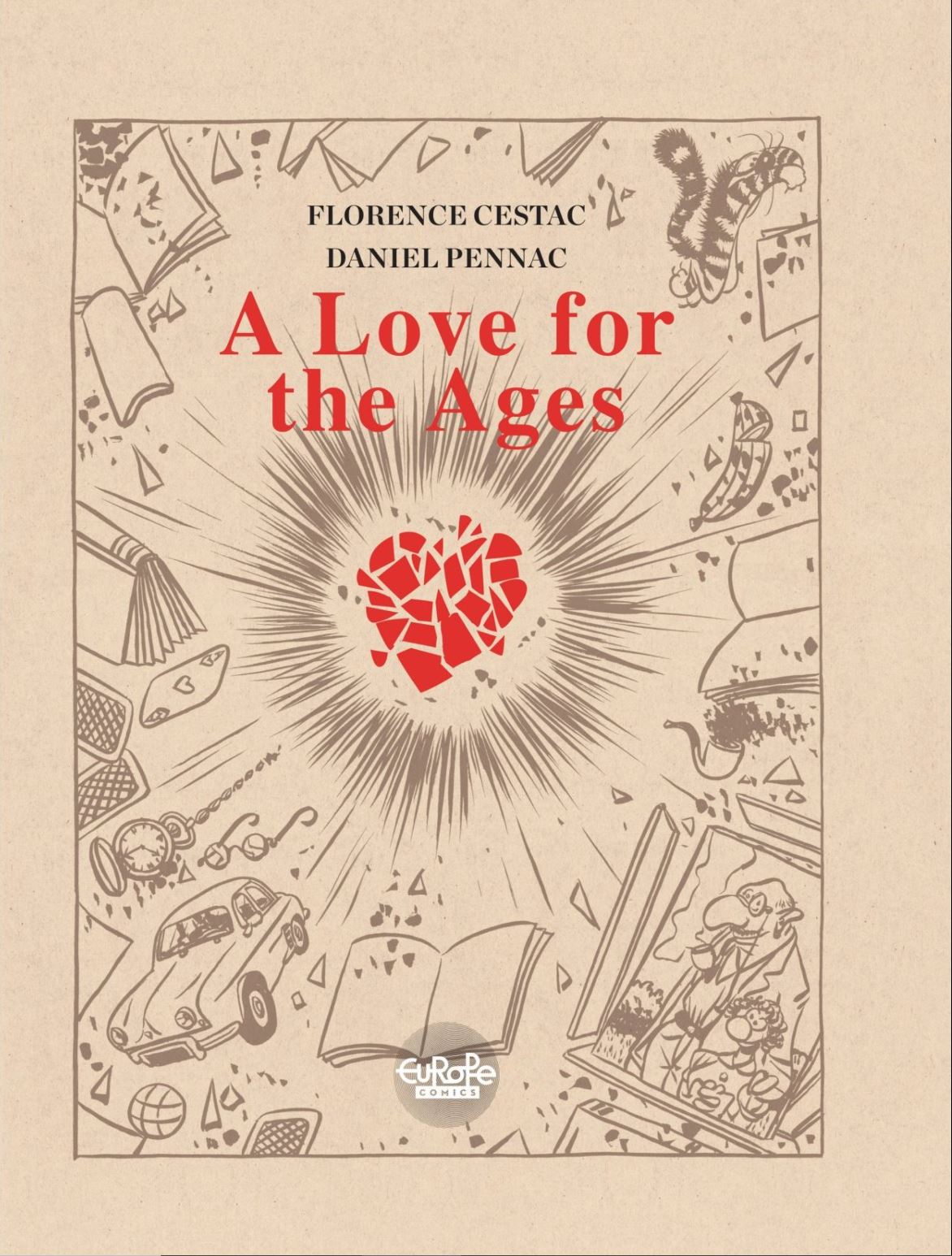
A Love for the Ages


By Florence Cestac & Daniel Pennac translated by Edward Gauvin (Europe Comics )
No ISBN: 978-1-910395-63-9 (digital edition)

A writer and an artist go into a restaurant. They make comics for a living, but tonight the talk is of love. Before long, the entire place is involved in the conversation. No, not conversation, Story. Any relationship that has, is or may develop is irrelevant here. The writer is talking about years ago when an impressionable waif encountered and observed the most incredible romance and was forever after beguiled…

Now it’s time to immortalise the affair through words and pictures, and like that keenly observed life of domestic paradise, it must be perfect…

Memories flow, snippets are recalled and a story within a story unfolds and gels. Years back, before the Riviera reinvented itself as a haunt of international snobs and wastrels, inland from Nice in rural La-colle-sur-loup, old folks congregated in picturesque village enclaves and  grandparents got stuck with the youngsters in summer.

Bored and watchful, our kid and his local pals’ best chance of amusement was watching Jean and Germaine Bozignac: she, a delightfully feisty and affably bubbly sharing soul, and he, a hideously ugly yet startlingly charismatic and charming rogue. By all lights, Jean should have been a blight on the community: a cheating cardsharp who never worked after being cut off and disowned from his aristocratic wine-growing family. Yet somehow, the disgraced Marquis was adored by most and accepted by all.

Jean and Germaine were inseparable and lived by, with and through books, and on the day the little the writer-to-be learned that the cashiered lord’s reduced circumstances stemmed solely from his refusing to give up house servant Germaine, the passionate child’s future was set. This was what Love Should and Must be…

Expansive yet grounded, witty, compelling and outrageously funny in all the right ways, A Love for the Ages is the kind of tale our continental cousins excel at: light, fluffy, hilarious yet packed with heartbreaking moments and lined with hidden steel to hit hard when you least expect it.

Only available in English digitally at present, this is what it means to be in love all your life – and trust me I know whereof I speak: my good lady wife has put up with me for nearly 33 years and all I’ve ever had are flesh wounds, contusions and minor bouts of food poisoning. If that’s not proof of a love divine, then what is?
© 2015 DARGAUD – Cestac & Pennac. All rights reserved

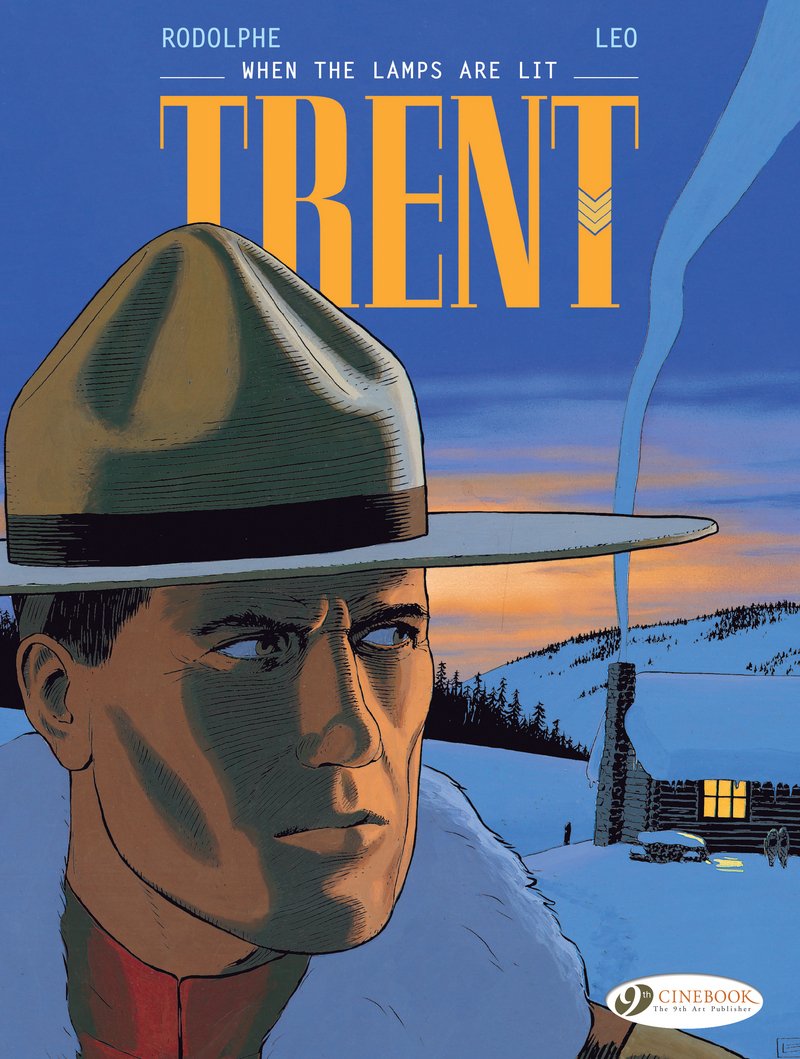
Trent volume 3: When the Lamps are Lit


By Rodolphe & Léo with colour by Marie-Paule Alluard, translated by Jerome Saincantin (Cinebook)
ISBN: 978-1-84918-836-4 (Album PB)

I’m thinking about relationships and romance at the moment, and comics have always explored pair-bonds as a fundamental aspect of any genre they exploit. It’s not always about simple attainment of a dream either. Sometimes, failure and the loss of love is more powerful, rewarding and/or entertaining than “True Love Ways”. The attendant emotion certainly has generated some astoundingly moving fiction…

European comics audiences have long been fascinated with the mythologised American experience, whether it be the Big Sky Wild West or later eras of crime-riddled, gangster-fuelled dramas. They also have a vested historical interest in the northernmost parts of the New World which has resulted in some pretty cool graphic extravaganzas.

Léo is actually Brazilian artist and storymaker Luiz Eduardo de Oliveira Filho: born in Rio de Janeiro on December 13th, 1944. Attaining a degree in mechanical engineering from Puerto Alegre in 1968, he was a government employee for three years, until forced to flee the country because of his political views. While a military dictatorship ran Brazil, he lived in Chile and Argentina before illegally returning to his homeland in 1974. To survive, he worked as a designer/graphic artist in Sao Paulo and created his first comics art for O Bicho magazine.

In 1981 he migrated to Paris, seeking to pursue a career in Bande Dessinée, and found work with Pilote and L’Echo des Savanes as well as more advertising and graphics fare. The big break came when Jean-Claude Forest invited him to draw stories for Okapi which led to regular illustration work for Bayard Presse. In 1988 Léo began his long association with scripter and scenarist Rodolphe D. Jacquette – AKA Rodolphe.

His prolific, celebrated writing partner has been a giant of comics since the 1970s: a Literature graduate who transitioned from teaching and running libraries to creating poetry and writing criticism, novels, biographies, children’s stories and music journalism. In 1975, after meeting Jacques Lob, he expanded his portfolio to write for a vast number of artists and strip illustrators in magazines ranging from Pilote and Circus to À Suivre and Métal Hurlant. Amongst his most successful endeavours are Raffini (with Ferrandez) and L’Autre Monde (Florence Magnin) but his collaborations in all genres and age ranges are too numerous to list here.

In 1991 he began working with Léo on a period adventure series of the far north. Taciturn, introspective and fiercely driven Royal Canadian Mounted Police sergeant Philip Trent premiered in L’Homme Mort, forging a lonely path through the 19th century Dominion over eight tempestuous, hard-bitten albums between then and 2000. He also prompted the collaborators’ later fantasy classics Kenya (and its spin-offs), Centaurus and Porte de Brazenac.

Cast very much in the classic adventure mould perfected by Jack London and John Buchan, Trent is a man of few words, deep thoughts and unyielding principles who gets the job done whilst stifling emotional turmoil boiling deep within him, but is the very embodiment of the phrase “still waters run deep”…

As ‘Quand S’allument Les Lampes’, this third adventure comes from 1993, with the solitary man and his faithful hound “Dog” trudging into and through another snow-wrapped town (stunning rendered as always by Leo) to eventually make camp alone in the frozen woods beyond. His thoughts dwell on the warm loving families therein, and wander back, as they always will, to Agnes.

He had saved her – but not her brother – and was given a clear invitation that he had never acted upon. Now, under the cold stars, he makes a decision. Applying for leave, he travels to Providence with marriage in mind, but on arrival finds a dilapidated, empty house and learns that his Miss St. Yves had reached the same conclusion years ago… and with another man…

Shaken and crushed, he finds a saloon and picks up a whisky glass…

Weeks later, a penniless broken staggering shambles, he plagues the barkeeps of a nameless frontier railtown, pitied and despised by residents as they go about their business and try to avoid the rummy in the gutter.

Howling constantly with desolated loss, Trent’s only human connection is bar girl Mary Lou, but he is blind to her more than Christian interest. Wendley City is all bustle and terror. The railway will bring wealth – and is already reaping dividends – but it’s also drawn out human wolves. Seemingly invisible outlaws dubbed “the Coalmen” have targeted elderly residents for months, cruelly torturing and killing to extract the savings of the weakest townsfolk…

After another night of atrocity, an outraged posse manages to wound a suspect before losing him. The fugitive hides under the stoop drunken sot Trent is slumped on, and in gratitude offers the despised reprobate a job if he has the stomach for bad business and can sober up…

The final act contains a brutal denouement and reveals a cunning and extended undercover scheme to catch the Coalmen, but one that turned on the implacable Mountie’s honest despair and deadly near all-consuming brush with loss and loneliness…

Mission accomplished, the quiet man returns to duty and the wastelands he patrols to preserve the safety of the families he cannot find a way to join…

Another beguiling and introspective voyage of internal discovery, where environment and locales are as much lead characters as hero and foe, When the Lamps are Lit offers suspense, action, drama and poignant evocation in a compelling confection that will appeal to any fan of widescreen cinematic crime fiction or epic western drama.
Original edition © Dargaud Editeur Paris 1993 by Rodolphe & Léo. All rights reserved. English translation © 2017 Cinebook Ltd.