Commando: True Brit


By Many & various (DC Thomson/Carlton Books)
ISBN: 978-1-84442-121-3 (HB)

DC Thomson is probably the most influential comics publisher in British history. The Beano and Dandy revolutionised children’s comedy comics, newspaper strips Oor Wullie and The Broons (both created by writer Editor R. D. Low and legendary artist Dudley D. Watkins) have become a genetic marker for Scottishness and the uniquely British “ordinary hero” grew from the prose-packed pages of Adventure, Rover, Wizard, Skipper and Hotspur.

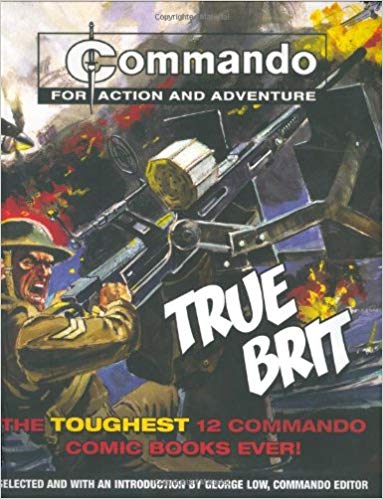
After decades of deft consumer-led publication for youngsters, in 1961 the company launched a digest-sized paperback title dubbed Commando. Broadly the size of a paperback book, it boasted 68 pages per issue and an average of two panels a page for its single stand-alone adventure tale, as well as the venerable British extras of themed information pages.

Not to belabour the point, but each issue told a complete war story (usually of World War I or II – although all theatres of conflict have featured since), a true rarity for British comics which usually ran action and thriller material in one or two-page instalments over many weeks. The sagas were tasteful yet gripping yarns of valour and heroism: stark black and white dramas which came charged with grit and authenticity. The full painted covers made them look more like novels than comics and they were a huge and instant success. They’re still being published today and are even available in digital editions.

This lovely volume comes from 2006, gathering an even dozen mini-epics selected by series editor George Low, and, although much of the collection’s original marketing concentrated on the baser nostalgic element by exhorting the reader to remember dashing about the playground shouting “Achtung” or “Donner und Blitzen” and saluting like Storm-troopers, these tales – subtitled “The Toughest 12 Commando Books Ever” are exemplary and compelling examples of dramatic comic storytelling.

Because of company policy these tales are all uncredited, (and I’d rather not prove my vast ignorance by guessing who did what), so unless you feel like consulting the numerous online sites devoted to the material, you’ll have to be content with the work itself, and that in itself is reward enough. So in this anniversary week, if you’re looking for a more homegrown comics experience, superbly-written and wonderfully illustrated, check out ‘Guns on the Peak’, ‘The Fighting Few’, ‘Bright Blade of Courage’, ‘The Haunted Jungle’, ‘Tiger in the Tail’, ‘The Specialists’, ‘Mighty Midget’, ‘VLR: Very Long Range’, ‘Flak Fever’, ‘Fight or Die!’, ‘Fearless Freddy’ and ‘Another Tight Spot…’ in this brilliant compilation.
™ & © 2006 DC Thomson & Co. Ltd. All Rights Reserved.

High Command – The stories of Sir Winston Churchill and General Montgomery


By Frank Bellamy & Clifford Makins (Dragon’s Dream)
ISBN: 978-9-06332-901-3 (PB)

Inexcusably absent as we commemorate the achievements and sacrifices of earlier generations are these twin neglected classics of British comic strip art, crafted by one of the world’s most talented narrative illustrators. These wonderful biographical series originally ran in The Eagle: the most influential comic of post-war Britain, which launched on April 14th 1950, to astound readers weekly until 26th April 1969.

It was the brainchild of a Southport vicar, the Reverend Marcus Morris, who was at that time concerned over the detrimental effects of American comicbooks on British children. He posited a good, solid, thoroughly decent Christian-inspired antidote and sought out like-minded creators. After jobbing around a dummy to many British publishers for over a year with little success, he eventually found an unlikely home at Hulton Press, a company that produced adult general interest magazines such as Lilliput and Picture Post.

The result was a huge hit spawning clones Swift, Robin and Girl (targeting other demographic sectors of the children’s market), as well as radio series, books, toys and all other sorts of merchandising.

An incredible huge number of soon-to-be prominent creative figures in many arenas of media worked on the weekly, and although Dan Dare is deservedly revered as the star, many other strips were as popular at the time, many even rivalling the lead in quality and entertainment value. As was the trend of the times, the content combined fact with fiction, stressing learning and discernment equally with adventure, thrills and fun…

At its peak, The Eagle sold close to a million copies a week, but eventually changing tastes and a game of “musical owners” killed the title. In 1960, Hulton sold out to comics megalith Odhams, who then became Longacre Press. A year later they were bought by The Daily Mirror Group who evolved into IPC. And so it goes in publishing…

In cost-cutting exercises, many later issues carried (relatively) cheap and oh-so-trendy Marvel Comics reprints rather than British originated material. It took time, but the Yankee cultural Invaders won out in the end…

With the April 26th 1969 issue Eagle was merged into Lion, eventually disappearing altogether. Successive generations have revived the prestigious glamour-soaked title, but never its success.

From its glorious Reithian heyday (“Educate, Elucidate and Entertain”) comes a brace of brief biographical serials devoted to two men who were crucial to the war effort that had imperilled the readership’s forebears, originally collected into a classy album by Dragons Dream in 1981.

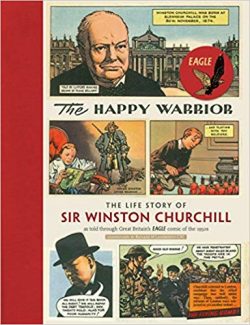
The first half was reprinted in 2014 as slim scarcely seen paperback The Happy Warrior: The Life Story of Sir Winston Churchill as Told Through the Eagle Comic of the 1950’s (ISBN: 978-1-90650-990-3) with a scholarly commentary from Richard M. Langworth CBE, but we’re long overdue for the combined volume to resurface (you will never know the effort involved in not just saying “the Full Monty” there…)

In High Command, however, we can devour the life story of Sir Winston Churchill and the quiet general (both scripted by Clifford Makins), beginning with the icon of Bulldog Spirit. Originally titled The Happy Warrior, the prestigious full-page back cover feature (running from October 4th 1957 until September1958) was Frank Bellamy’s first full colour strip. He followed up with Montgomery of Alamein (volume 13, #10-27, spanning March 10th to 7th July 1962), delivering twice the punch and more revelatory design in two-page colour-spreads that utterly spellbound readers, whether they were war-fans or not…

Churchill himself approved the early strips and was rumoured to have been consulted before the artist began the experimental layouts that elevated Bellamy from being merely a highly skilled representational draughtsman into the trailblazing innovator who revolutionized the comic page.

The tireless experimenter also began the explorations of the use of local and expressionistic colour palettes that would result in the extraordinary Fraser of Africa, Heros the Spartan and the deservedly legendary Thunderbirds strips.

The Churchill story follows the great man from his early days at Eton through military service in Cuba as a war correspondent, and into politics. Although a large proportion deals with World War II – and in a spectacular, tense and thrilling manner – the subtler skill Bellamy displays in depicting the transition of dynamic, handsome man of action into burly political heavyweight over the weeks is impressive and astonishing. It should be mentioned, though, that this collection doesn’t reproduce the climactic, triumphal last page, a portrait that is half-pin-up, half summation and all hagiography.

Bernard Law Montgomery’s graphic biography benefited from Bellamy’s newfound expertise in two ways. Firstly, the page count was doubled, and the artist capitalized on this by producing groundbreaking double page spreads that worked across gutters (the white spaces that divide the pictures). This allowed him to craft even more startling page and panel designs.

Secondly, Bellamy had now become extremely proficient in both staging the script and creating mood with colour. This strip is pictorial poetry in motion.

Makins doesn’t hang about either. Taking only three episodes to get from school days in Hammersmith, army service in India and promotion to Brigade Major by the end of the Great War, Monty’s WWII achievements are given full play, allowing Bellamy to create an awesome display of action-packed war comics over the remaining fifteen double-paged episodes. There really hasn’t been anything to match this level of quality and sophistication in combat comics before or since.

If you strain you might detect a tinge of post-war triumphalism in the scripts, but these accounts are historically accurate and phenomenally stirring to look at. If you love comic art you should hunt these down, or at least pray that somebody, somewhere has the sense to reprint this work.
© 1981 Dragon’s Dream B.V. ©1981 I.P.C. Magazines Ltd.

Will Eisner’s Hawks of the Seas


By Will Eisner & various
ISBN: 1569714274 (Dark Horse)

ISBN: 0-87816-022-1 (HB) ISBN: 0-87816-023-X (TPB) (Kitchen Sink Press)

It is pretty much accepted today that Will Eisner was one of the prime creative forces that shaped the comicbook industry, but still many of his milestones escape public acclaim in the English-speaking world. This is one long overdue for fresh efforts and digital immortality.

From 1936 to 1938 Eisner worked as a jobbing cartoonist in the comics production firm known as the Eisner-Eiger Shop, creating strips to be published in both domestic US and foreign markets.

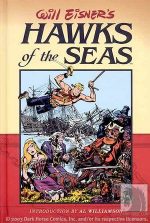
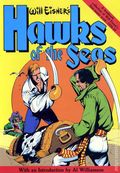
Using the pen-name Willis B. Rensie he wrote and drew the saga of the mysterious American adventurer known only as “The Hawk”, who sailed the 18th century Caribbean seas with his piratical band. An intellectual and dreamer, the freebooter had been taken as a slave, and now dedicated his life to destroying the slave trade and punishing injustice.

With a stalwart and scurvy crew of characters at his back, this charismatic blend of Robin Hood, Sir Francis Drake and the Count of Monte Cristo captivated readers all over the world in single-page instalments of swashbuckling thrills delivered via spectacular bravura art and narrative ingenuity: appearing in newspapers and weekly magazines as far apart as England, South America, France, and Australia.

After years as a lost classic, it was gathered into an awesome collected edition (measuring 376 x 270) by Dennis Kitchen, thanks mainly to happenstance and the good graces of another comics legend, Al Williamson. He had been a huge fan of the strip when it ran in Paquin – a weekly strip anthology magazine he’d read growing up in Bogota, Colombia.

Years later, now revered professional artist Williamson acquired an almost complete run of publisher’s proof sheets – in Spanish – which when translated and re-lettered would form the basis of this volume. Fellow well-wishers in France, England and Australia also contributed pages for an almost complete run.

Almost lost again, Hawks of the Seas was re-issued in 2003 by Dark Horse as part of their Will Eisner Library (although at a more modest and bookshelf-friendly size) and stands as a fascinating insight into this creator’s imaginative power, moral and philosophical fascinations and spellbinding ability to tell a great story with magical pictures. It’s also a thumping good tale of pirates and derring-do that will captivate kids of all ages, so let’s some savvy publisher makes the necessary moves soon.

Forget Jack Sparrow: get on the trail of The Hawk…
© 1986 Kitchen Sink Press. 2003 Will Eisner. All rights reserved.

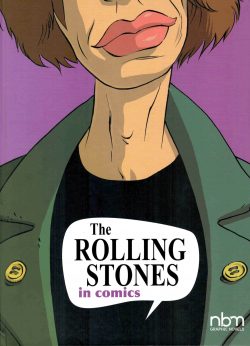
The Rolling Stones in Comics


By Céka, Marin Trystam, Patrick Lacan, Dimitri Piot, Kyung-Eun Park, Domas, Clément Baloup, Dominique Hennebaut, Amandine Puntous, Lapuss, Bast, Patès, Filippo Néri & Piero Ruggeri, Anthony Audibert, Bruno Loth, Aurélie Neyret, Sanzito, Sarah Williamson, Joël Alessandra & Carine Becker, Mao Suy-Heng & various: translated by Montana Kane (NBM)
ISBN: 978-1-68112-198-7 (HB)

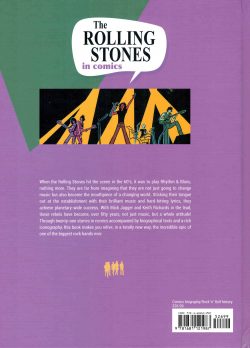
Graphic biographies are all the rage at the moment and this one – originally released on the continent in 2017 – is another instant classic likely to appeal to a far larger mainstream audience than comics usually reach. It certainly deserves to…

Like its thematic companion and predecessor featuring The Beatles, The Rolling Stones in Comics is designed to evoke the same nostalgic excitement via cannily repackaged popular culture factoids, contemporary quotes and snippets of celebrity history – accompanied by a stunning assemblage of candid photographs, posters and other memorabilia – in brief, themed essays with cartoon vignettes chronologically highlighting key moments in the development of a band comprising remarkable men of wealth and taste…

Scripted throughout by author and advertising copywriter Céka (with the strips illustrated by an army of top talent) the saga begins with a brief biography of Michael Phillipe Jagger, Keith Richards, Brian Jones, Bill Wyman and Charlie Watts in featurette ‘The Stones, Before the Stones’, before Marin Trystam takes us back to Kent in June 1960 where two youngsters with a love of American Blues albums meet on a train in ‘Blessed Be the Vinyl’…

‘Make Way, Here Come the Blues Boys!’ then details the music scene in England at that time and offers a definition of R&B, after which Patrick Lacan takes us back further in time to reveal the slave roots of a name and the ‘Rollin’ Stones Blues’, whilst ‘Rags Before Riches’ recalls the band’s early poverty, scarce gigs and squalid first creative den, vividly realised in Dimitri Piot’s strip depiction of life in August 1962 at ‘102, Edith Grove’.

The early line-up solidifies in 1963 as ‘Crank Up the Amp!’ covers the contributions of Charlie and Bill, with Kyung-Eun Park limning Brian Jones’ attempts at being a manager in ‘Screw You!’ before Publicist Supreme and Soho Svengali Andrew Loog Oldham takes the band in hand in photo-essay ‘The Man Who Created the Stones’, with Domas recapturing in comics form a defining moment from September 1963 when Stones met Beatles in ‘I Wanna Be Your Man’…

With Oldham as manager, the climb begins in earnest as the band meet the man who infamously turned down the Beatles and seal a record deal in ‘Make Mine Decca’, whilst illustrator Clément Baloup reveals the secrets of Ian Stewart… ‘The Sixth Stone’.

The story of how Jagger and Richards evolved from musicians into songwriters is covered in ‘Singer, Songwriter’, with Dominique Hennebaut capturing that struggle pictorially with the harsh debut of ‘The Glimmer Twins’, after which the dark side manifests in a recapitulation of felonies and misdemeanours in ‘Drug City’, as Amandine Puntous illustrates the police raid on the band now known as ‘The Redlands Affair’.

The band’s growing status as rebels of youth culture is dissected ‘Rock and Role?’, with Lapuss capturing a few shameful truths about the seductive power of wealth and the “Richest Hippie in England” in cartoon vignette ‘Rebel in a Bentley’, after which the tragic life and death of Brian is explored in ‘Light Hair and Dark Thoughts’, before Bast illuminates the 1969 demise of the ‘Fallen Angel’…

The arrival of Mick Taylor and the search for a new sound is covered in ‘Back to the Future’, and Patès accompanying strip explains the intricacies of guitar chord techniques for Keith’s invention of ‘Open Tuning’, even as ‘The End of the Sixties’ manifests in more death and tragedy as Filippo Néri & Piero Ruggeri recapture the shocking debacle of rock festival ‘Altamont’…

After Drugs and Rock and Roll, the Sex part of the unholy trinity comes under the spotlight in photo-essay ‘Some Girls’, whilst Anthony Audibert illustrates the bizarre practices of Jagger’s filmic debut in Nick Roeg’s ‘Performance’, before winding back to making music withy explorations of ‘Harmonica, Sitar, etc.’, as Bruno Loth traces the ultimate love story in ‘Keith and his Electric Guitars’.

The bad times are spotlighted in ‘Smog Over Stone Land’, with Aurélie Neyret encapsulating the release of “the Greatest Slow Song of All Time” in ‘Summer of ’73’ before another momentous personnel change occurs as detailed in ‘Bye Bye The Kid, Hello Ronnie!’, after which Sanzito illumines the most important aspect of the newcomer’s contribution in ‘Dr. Wood’…

Individual – and often ignominious – career paths are traced in ‘Oh, Solo Mio’, and Sarah Williamson draws us into the infamous Jagger/Jeff Beck Nassau album in ‘Erase It!’, before reconciliation and the era of live touring is tackled in ‘Thrills and Chills’, with Joël Alessandra & Carine Becker capturing the band’s rituals and coping mechanisms in strip catalogue ‘Sex, Drugs and… Ping Pong’.

The death of Ian Stewart and resignation of Bill Wyman are marked in ‘The Rolling Stones, Minus Two’, after which Sanzito explores the mind of Wyman in ‘Stone Alone’, whilst silent, diffident Jazz wizard Charlie Watts gets his solo moment in essay ‘Who’s the Guy in the Back?’ and Patès illustrative tribute to ‘The Silent Stone’, before the saga culminates in a status check and a few prognostications in ‘The Stones, Are STILL Rolling’, and Mao Suy-Heng’s strip glorifying the ‘Century Tour’.

This engrossing time capsule concludes on a suitably whimsical note as ‘Nine Fun Facts About This Legendary Band!’ offers engaging anecdotes and factlets to delight – but surely not surprise? – everyone who loves to hear of classic Rock & Roll hedonism. The Rolling Stones in Comics is an astoundingly readable and craftily rendered treasure for comics and music fans alike: one that resonates with anybody who loves to listen and look. Sometimes, you can actually get what you want…

It’s only ink on paper but I like it… and so will you. Satisfaction guaranteed.
© 2017 Editions Petit as Petit. © 2019 NBM for the English translation.

Most NBM books are also available in digital formats. For more information and other great reads see http://www.nbmpub.com/

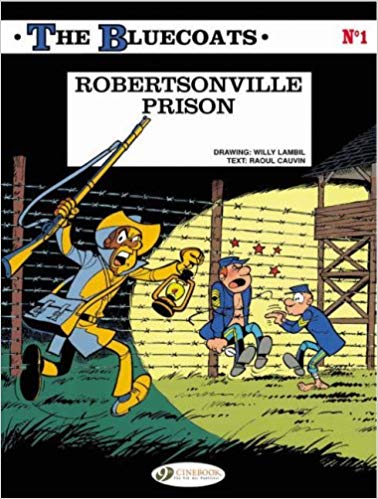
Bluecoats volume 1: Robertsonville Prison


By Lambil & Raoul Cauvin, translated by Erica Jeffrey (Cinebook)
ISBN: 978-905460-71-7

The mythology of the American West has never been better loved or more honourably treated than by Europeans. Hergé was a passionate devotee, and the range of incredible comics material from Tex Willer to Blueberry, Yakari to Lucky Luke display over and over again our fascination with all aspects of that legendary time and place.

Les Tuniques Bleues or Bluecoats began at the end of the 1960s, visually created by Louis “Salvé” Salvérius and scripted by Raoul Colvin – who has also written the succeeding 62 volumes of this much-loved Belgian comedy western series. The strip was created on the fly to replace the aforementioned Lucky Luke when the gunslinger defected from prominent weekly anthology Le Journal de Spirou to rival comic Pilote, and is one of the most popular series on the Continent.

After its initial run, Bluecoats graduated to the collected album format (published by French publishing powerhouse Dupuis) that we’re all so familiar with in Un chariot dans l’OuestA Wagon in the West – in 1972).

Salvé was an artist proficient in the Gallic style of big-foot/big-nose humour cartooning, and when he died suddenly in 1972 his replacement Willy “Lambil” Lambillotte gradually leavened the previous broad style with a more realistic – but still comedic – illustrative manner. Lambil is Belgian, born in 1936, and after studying Fine Art, joined Dupuis as a letterer in 1952.

In 1959 he created Sandy – about an Australian teen and a kangaroo – later self-parodying it and himself with Hobby and Koala and Panty et son kangaroo as well as creating the comics industry satire ‘Pauvre Lampil’.

Belgian writer Raoul Cauvin was born in 1938 and, after studying Lithography joined Dupuis’ animation department in 1960. His glittering and prolific writing career began soon after. Almost exclusively a humourist and always for Le Journal de Spirou, other than Bluecoats he has written at least 22 other long-running and award-winning series – more than 240 separate albums. Bluecoats alone has sold in the region of 20 million copies.

The protagonists are Sergeant Cornelius Chesterfield and Corporal Blutch, a hopeless double act of buffoons in the manner of Laurel and Hardy, or perhaps Abbot & Costello or our own Morecambe & Wise: two hapless and ill-starred cavalrymen posted to the wilds of the arid frontier.

The first strips were single-page gags based around an Indian-plagued Wild West fort but with the second volume Du Nord au Sud (North and South) the sorry soldiers went back East to fight in the American Civil War (this scenario was retconned in the 18th album Blue retro which described how the everyman chumps were first drafted into the military).

All subsequent adventures, although ranging all over the planet and taking in a lot of genuine and thoroughly researched history, are set within that tragic conflict.

Blutch is your average little man in the street: work-shy, reluctant and ever-critical of the army – especially his inept commanders. Ducking, diving, deserting when he can, he’s you or me – except sometimes he’s quite smart and heroic if no other easier option is available. Chesterfield is a big man, a career soldier, who has bought into all the patriotism and esprit de corps. He is brave, never shirks his duty and wants to be a hero. He also loves his cynical little pal. They quarrel like a married couple, fight like brothers and simply cannot agree on the point and purpose of the horrendous war they are trapped in…

Robertsonville Prison, the first release in the series from Cinebooks, is actually the sixth French volume. Available in paperback and digital formats, it’s loosely based on the actual Confederate-run Andersonville Prison compound in Georgia. It finds the irascible, inseparable pair captured after a calamitous battle and interned with many other Union soldiers. However, these two aren’t prepared to stay put – albeit for vastly differing reasons – and a series of increasingly bold and bonkers escape ploys eventually result in a crazy but appropriate reversal of fortunes…

The secret to the unbelievable success of Les Tuniques Bleues is that it is an anti-war comedy like M.A.S.H. or Catch 22, cleverly pitched at a young and less cynical audience. Historically authentic, uncompromising in terms of portrayed violence but always in good taste, the attitudes expressed by our oafish, down-to-earth anti-heroes never make glorious war anything but arrant folly and, like the hilarious yet insanely tragic war memoirs of Spike Milligan, these are comedic tales whose very humour makes the occasional moments of shocking verity doubly powerful and hard-hitting.

Fun, informative, beautifully realised and tellingly worthy, Bluecoats is the kind of battle book that any parent would be happy to let their children read – if they can bear to let go of it themselves…
© Dupuis 1975 by Lambil & Cauvin. English edition © 2008 Cinebook Ltd. All Rights Reserved.

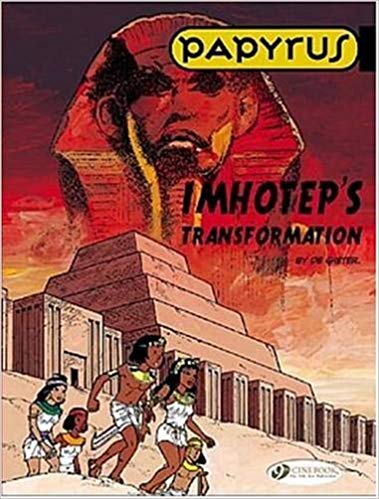
Papyrus volume 2: Imhotep’s Transformation


By Lucien De Geiter, coloured by Colette De Geiter: translated by Luke Spear (Cinebooks)
ISBN: 978-1- 905460-50-2

Once you get a certain taste in your mind you just can’t stop – well I can’t – so here’s another all-ages Euro-classic saga just not available through American funnybooks these days – although you can now get it digitally…

British and European comics have always been happier with historical strips than our cousins across the pond (a pugnacious part of me wants to say that’s because we have so much more past to play with – and yes, I know they’re responsible for Prince Valiant, but it’s an exception, not a rule) and our Franco-Belgian brethren in particular have made an astonishing art form out of days gone by.

The happy combination of past lives and world-changing events blended with drama, action and especially broad humour has resulted in a genre uniquely suited to beguiling readers of all ages and tastes. Don’t take my word for it – just check out Asterix, Adèle Blanc-Sec, The Towers of Bois-Maury, Iznogoud or Thorgal to name the merest few which have made it into English, or even our own much missed classics such as Olac the Gladiator, Dick Turpin, Heros the Spartan or Wrath of the Gods …all long overdue for collection in mass market album form and on the interweb-tubes….

Papyrus is the spectacular magnum opus of Belgian cartoonist Lucien de Gieter. It began in 1974 in the legendary weekly Le Journal de Spirou, running to 35 albums, plus a wealth of merchandise, a television cartoon show and a video game.

The plucky “fellah” (look it up) was blessed by the gods and gifted with a magic sword courtesy of the daughter of crocodile-headed Sobek. His original brief was to free supreme Horus from imprisonment in the Black Pyramid of Ombos and thereby restore peace to the Two Kingdoms. More immediately however the lad was also charged with protecting Pharaoh’s wilful and high-handed daughter Theti-Cheri – a princess with an unmatchable talent for finding trouble…

De Gieter was born in 1932 and, studied at Saint-Luc Art Institute in Brussels, before going into industrial design and interior decorating. He made the logical jump into sequential narrative in 1961, first through ‘mini-récits’ inserts (fold-in, half-sized-booklets) for Spirou, of his jovial little cowboy Pony, and later by writing for established regulars as Kiko, Jem, Eddy Ryssack and Francis.

He then joined Peyo’s studio as inker on Les Schtroumpfs – AKA The Smurfs – and took over the long-running newspaper strip Poussy.

In the mid-1960s he created South Seas mermaid fantasy Tôôôt et Puit even as Pony was promoted to the full-sized pages of Spirou, so De Gieter deep-sixed his Smurfs gig to expand his horizons producing work for Le Journal de Tintin and Le Journal de Mickey.

From 1972-1974 he assisted cartooning legend Berck on Mischa for Germany’s Primo, whilst putting the finishing touches to his new project. This creation would occupy his full attention – and delight millions of fervent fans – for the next 40 years.

The annals of Papyrus encompass a huge range of themes and milieus: blending boys-own adventure with historical fiction and interventionist mythology, gradually evolving from traditionally appealing “Bigfoot” cartoon content towards a more realistic, dramatic and authentic iteration. Throughout, these light fantasy romps depict a fearlessly forthright boy fisherman favoured by the gods as a hero of Egypt and friend to Pharaohs.

Imhotep’s Transformation was the second Cinebook translation (and 8th yarn, originally released in 1985 as La Métamorphose d’Imhotep): opening with our hero and his one-legged friend Imhotep (no relation) paddling a canoe through the marshes of the Nile.

The peaceful idyll is wrecked when Theti-Cheri and her handmaidens hurtle by in their flashy boat, but the boys don’t mind as they have a message for the princess.

The new holy statue of her father has arrived from the Priests of Memphis and the daughter of Heaven is required at the ceremony to install it at the pyramid of Saqqara before the annual “Heb Sed” King’s Jubilee.

As the girls and boys race back, an old peasant is attacked by a crocodile. Diving after him, Papyrus wrestles the reptile away and is about to kill it when Sobek appears, beseeching him to spare it.

On the surface Theti-Cheri and her attendants are ministering to the aged victim and the princess can’t help noticing how he bears an uncanny resemblance to her dad…

By the time they all reach the pyramid, the monumental task of hauling the statue into place is well under way, but suddenly blood begins pouring out of the monolith’s eyes. Terrified workers panic and the colossal effigy slips, crashing to destruction. The populace are aghast and murmurs of curses and ill omens abound…

Rather than running away, Imhotep heads for the rubble and discovers the statue’s head is hollow. Moreover, inside there is a dead dwarf and a smashed flask which had held blood…

Papyrus is in the royal compound where the recent events have blighted the anticipation of the court. During Heb Sed, the Pharaoh has to run around the sacred pyramid three times and fire his bow at the four corners of the kingdoms to prove his fitness to rule, but now it appears the gods have turned against their chosen emissary on Earth…

Papyrus is not so sure and when he tries to speak to a royal server the man bolts. Giving chase, the lad is in time to prevent the attendant’s murder, but not his escape.

And then a cry goes up: Pharaoh has been poisoned…

Knowing there is no love lost between the Memphis Priests of Ptah and the loyal Theban clerics doctoring the fallen king, Papyrus warns of a possible plot, but has no proof. What is worse, Chepseska, leader of the Memphis faction, is of royal blood too and will inherit if Pharaoh is unable to complete the Heb Sed ritual…

As loyal physicians and priests struggle to save their overlord’s life, Theti-Cheri remembers the old man in the swamp. If only the crocodile bite has not left him too weak to run…

The doughty dotard is willing to try and also knows of a wise woman whose knowledge of herbs can cure Pharaoh, but ruthless Chepseska is on to the kids’ ploy and dispatches a band of killers to stop Papyrus and Imhotep.

The gods, however, are behind the brave lads and after the assassins fall to the ghastly judgement of Sobek, the boys rush an antidote back to Saqqara, only to fall into the lost tomb of Great Imhotep, first Pharaoh, builder-god and divine lord of the Ibis.

With time running out for his distant descendent, the resurrected ruler rouses himself to administer justice for Egypt and inflict the punishment of the gods upon the usurpers…

This is an amazing exploit to thrill and astound fans of fantastic fantasy and bombastic adventure. Papyrus is a brilliant addition to the family-friendly pantheon of continental champions who marry heroism and humour with wit and charm, and anybody who has worn out those Tintin or Asterix volumes would be wise beyond their years in acquiring these classic chronicles tales.

…And Cinebook would be smart to keep on translating these magical yarns, too…
© Dupuis, 1985 by De Gieter. All rights reserved. English translation © 2008 Cinebook Ltd.

Blade of the Immortal volume 1: Blood of a Thousand


By Hiroaki Samura translated by Dana Lewis & Toren Smith (Dark Horse)
ISBN: 978-1-56971-239-9

Born in Chiba Prefecture in 1970, manga master Hiroaki Samura differs from many of his contemporary colleagues in that he actually pursued classical art training before abandoning oil paints and easels for the monochrome freedom and easy license of the “whimsical drawings” industry.

He was, however, plucked from college in the early 1990s before finishing his degree, to find huge success creating the astonishing fantasy saga Mugen no Jūnin (The Inhabitant of Infinity) for Seinen magazine Afternoon.

The series ran from June 25th 1993 to December 25th 2012, a total of 30 volumes which spectacularly blended ubiquitous Samurai comics themes and scenarios with vengeful supernatural plots, political intrigues, existential philosophy and punk-era nihilism. Its driven, murderously efficient antihero constantly deployed his outrageously eccentric arsenal of fanciful edged weapons, whilst pondering the merits of salvation and the meaning and point of living too long…

The series was picked by Dark Horse in 1996 and released as Blade of the Immortal, first as a monthly comicbook series (the first six issues of which comprise this monochrome masterpiece) and, from 2007 onwards, exclusively in collected graphic novel editions. These days you can take the creative anachronism one step beyond and enjoy the high-energy antics in digital fashion…

One note of caution for purists: the series’ dialogue is written in an updated, quirkily moderne literary style which strives for emotional veracity rather than (faux) period authenticity, so it might all be a little disconcerting at first…

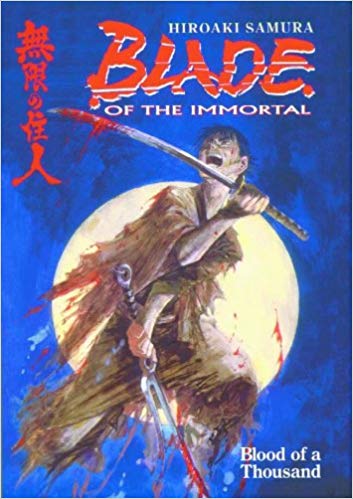
Set in middle of the Tokugawa Shogunate (between 1600 and 1868 CE), this first sublimely engaging volume opens with ‘About the Translation’ – a prose section explaining the translation process and the symbology of the piece – before the graphic miracles begin with ‘Prologue: Criminal’; introducing debased and unsavoury ronin Manji: one-eyed outlaw and weary killer looking for peace and redemption in all the wrong places…

The “Slayer of 100 Good Men” – including his own peacekeeper brother-in-law – Manji is currently stalking Gyobutsu “Johnny”: a mass-murderer who kills his victims whilst disguised as a priest.

When a cunning trap goes wrong, the debased ronin manfully ignores a pistol shot through his brain to finish his sacrilegious quarry.

This ronin is no longer as other men. There are worms in his head, and as they knit his inexplicably non-fatal wound back together, Manji broods.

In his despicable past he was a cheap sell-sword who killed as he pleased. When his misdeeds brought him into conflict with his “cop” brother-in-law he simply butchered him. The shock drove his sister Machi mad.

She was the only thing Manji ever cared about…

Yaobikuni has no problem with living forever – she won’t die until she’s saved every soul in Japan – and when the unkillable reprobate again meets the 800-year old nun who inflicted on him the sacred Kessen-chu bloodworms which can heal any hurt, she draws him into the old pointless discussion about salvation.

Yaobikuni urges him to give up the sword, but all he wants to do is die….

Even if he could, it’s no longer an option now that he has to care for his grievously damaged sister Machi…

The problem is savagely solved when the vengeful brother and 20-strong gang of “Johnny” abduct her, determined to make her murderous brother pay emotionally and physically for the death of their leader.

Manji’s botched rescue attempt leaves him triumphant above a sea of corpses and utterly alone in the world…

Pushed too far, he finds Yaobikuni and offers her a deal: if he kills one thousand truly evil men, she must remove the Kessen-chu and let Manji rest at last.

Despite misgivings that he’s just found another way to keep on killing, the nun agrees…

‘Conquest’ debuts young Rin, whose father Asano was targeted for slaughter by a merciless gang of anarchist thugs calling themselves the Ittō-ryÅ«.

Long ago, the grandfather of their leader Anotsu Kagehisa had been shamefully and unjustly expelled from Asano’s Mutenichi-ryÅ« fencing dojo, and the grandson resolved to destroy all such schools and the socially stratified, arrogantly smug advocates of privilege who populate them.

Gathering an army of similarly aggrieved, like-minded rebels and outcasts, Anotsu murdered many Swords-masters: destroying their legacies and accumulating a powerful army before seeking his ultimate triumph over a despised ancestral enemy…

After ending Rin’s father, Anotsu gave her mother O-Toki to his men, but told them to leave the little girl alone.

Rin never saw her mother again and now, aged sixteen, the last sword of the Mutenichi- ryū School is in the metropolis of Edo looking for payback. What she finds is a jolly little nun who suggests she seek out a maimed-and-mangy, mean-looking ronin to act as her bodyguard…

They don’t hit it off. Manji is condescending and patronising and wants her to prove her contention that members of Ittō-ryÅ« are genuinely evil before he subtracts them from his target tally of 1000 human monsters…

Reaching an agreement of sorts, the pair join forces, unaware that Rin has been followed by Anotsu’s macabre lieutenant Kuroi Sabato. The deranged psycho-poet has been sending taunting verses to the girl ever since that fateful night, whilst secretly treasuring his macabre keepsake of her mother O-Toki all these lonely years…

Now he’s ready for Rin to complete a ghastly set of horrific personalised trophies, but the satanic stalker has never met – or killed – anyone like Manji before…

The eerie epic closes here with ‘Genius’ wherein the decidedly odd couple seek aid and assistance from an old friend of Rin’s father. Retired samurai Sōri has dedicated his remaining years to becoming an artist, but still struggles to master the tricky discipline of “sword-painting”.

The uncouth Manji can barely contain his scornful taunts, especially as the artist seems unwilling to assist a lady in distress, apparently far more concerned with the trivial problem that he can never get the reds right in his compositions…

Of course, the revenant ronin has no idea that once Sōri was the Shogun’s Ninja …

More of Anotsu’s psycho-killer goons have followed Rin and Manji to the painter’s lodgings however, looking for the blade-wielding girl genius who killed the lethally adept Kuroi. When they attack the sleeping Rin, they soon discover to their everlasting regret the mettle of her new allies…

In the stillness after the slaughter, Rin and Manji move on to continue their vendetta against the Ittō-ryū, but Sōri regretfully remains behind to pursue his art. At least now he knows what pigments suit him best…

‘An Interview with Hiroaki Samura’ and a selection of cover illustrations from the comicbook iteration complete this viscerally brutal, staggeringly beguiling first volume of mythic martial mastery…

Although crafting other works such as the western Emerald, romantic comedies, erotic works and horror stories such as Night of the Succubus and Bradherley’s Coach, Blade of the Immortal is unquestionably Mr. Samura’s signature creation and a truly unparalleled delight for fans of not just manga but for all lovers of dark fantasy.
© 1996, 1997 Hiroaki Samura. All rights reserved. English translation rights arranged through Kodansha Ltd. New and adapted artwork & text © 1996, 1997 Studio Proteus and Dark Horse Comics Inc. All other material © 2000 Dark Horse Comics Inc. All rights reserved.

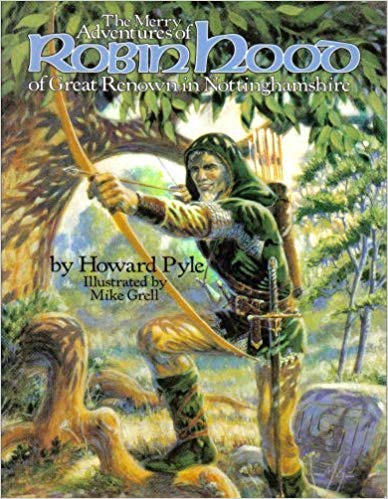
The Merry Adventures of Robin Hood of Great Renown in Nottinghamshire


By Howard Pyle, illustrated by Mike Grell (Donning/Starblaze edition)
ISBN: 978-0-89865-602-2 (TPB)

People who work in comics adore their earliest influences, and will spout for hours about them. Not only did they initially fire the young imagination and spark the drive to create but they always provide the creative yardstick by which a writer or artist measures their own achievements and worth.

Books, comics, posters, even gum cards (which mysteriously mutated into “Trading Cards” in the 1990s) all fed the colossal hungry Art-sponge which was the developing brain of the kids who make comics.

But by the 1970s an odd phenomenon was increasingly apparent. New talent coming into the industry was increasingly and overwhelmingly only aware of only comicbooks as a source of pictorial fuel. The great illustrators and storytellers who had inspired the likes of Howard Chaykin, Bernie Wrightson, Mike Kaluta, P. Craig Russell, Charles Vess, Mike Grell, and a host of other top professionals were virtually unknown to many youngsters and aspirants.

I suspect the reason for this was the decline of illustrated fiction in magazines – and of magazines in general. Photographs became a cheaper option than artwork in the late 1960s and generally populations read less and less each year from that time onwards.

In the late 1980s publisher Donning created a line of oversized deluxe editions reprinting “lost” classics of fantasy, illustrated by major comics talents who felt an affinity for the selected texts. Vess illustrated Shakespeare’s A Midsummer Night’s Dream, Kaluta did likewise with the script for the silent movie Metropolis, P. Craig Russell created magic for The Thief of Bagdad and Grell took the biggest risk of his career by providing new illustrations (6 in colour and 15 monochrome) for a fantasy masterpiece beloved by generations of youngsters – and still today an incredibly popular reissue in loads of different formats…

The Merry Adventures of Robin Hood was first published in 1883; the first work of art prodigy and father of modern illustration Howard Pyle. A jobbing magazine illustrator, Pyle (1853-1911) gathered together many of the stories and legends about the bowman of Sherwood Forest, translating them into a captivating ripping yarn for youngsters. He furnished his book with 23 spellbinding pictures that created a mythic past for millions of readers.

It became the definitive work on the character: all iterations since has been working from or in reaction to this immensely readable and influential book. If you’d care to see the wondrous original illustrations you should track down The Merry Adventures of Robin Hood, a signet paperback (ISBN: 978-0451522849) which accurately reproduces the 1883 edition complete with Pyle’s drawings.

Pyle was a master storyteller and an incomparable artist who produced many other books illustrated in his unmistakable pen and ink flourish: both adaptations of heroic stories and wholly original material. These include: Otto of the Silver Hand, Pepper and Salt, The Wonder Clock, Men of Iron, The Garden Behind the Moon, plus a quartet of tomes that delineated the life of King Arthur: The Story of King Arthur and His Knights, The Story of the Champions of the Round Table, The Story of Lancelot and His Companions, and The Story of the Grail and the Passing of Arthur.

Believe it or not though, these books are not his greatest legacy and achievement. Pyle was a dedicated teacher also. In 1896 he took a position at the Drexel Institute of Arts and Sciences in Philadelphia where the first students included Violet Oakley, Maxfield Parrish, and Jessie Willcox Smith.

He held summer classes at Chadd’s Ford, Pennsylvania where the initial attendees included Stanley Arthurs, W.J. Aylward, Ida Daugherty, Harvey Dunn, George Harding, Percy Ivory, Thornton Oakley, Frank Schoonover and the just-as-legendary N.C. Wyeth (Dunn caught the bug here – becoming another dedicated educator, passing on the spark and the drive unto the next generation).

In 1903 Pyle founded his own art school in Wilmington, Virginia, and his dedicated, passionate and immensely talented followers became known as The Brandywine School. Why were they so successful and influential?

In a word: Action.

Before Howard Pyle, illustration was formal, staged, lovingly rendered but utterly static. There was no more life than in a posed photograph of the period with all elements locked in paralysis. Pyle introduced flowing, dynamic motion to illustrated art. He created “Life”.

All of which is a long way of saying that this is a great book with sumptuous Grell illustrations – especially the six paintings (a luxury most publisher’s budgets wouldn’t permit very often in Pyle’s lifetime) – and if you’re a fan of his work you should own it. However, you might also want to track down a reproduction of the original (as I said, there are many) with those groundbreaking original drawings and enjoy the pictorial component which inspired Grell fully as much as that stirring prose.
Art © 1989 Mike Grell.

Road to America


By Baru, with colour by Daniel Ledran (Drawn & Quarterly Publications)
ISBN: 978-1-89659-752-2

We privileged ones live in a world where gratification – if not instant – is far from arduous to attain or hard to enjoy. For us the only struggle is choosing how best to indulge ourselves and, if you’re a comics nut like me, the biggest mystery in a hedonistic existence is why so many truly superb artistic efforts get sidelined or forgotten, when relative immortality is merely a matter of scanning and publishing/posting.

Here’s a lost treasure that proves my point. I’ve got this in its paperback form, but I’d happily pay again to get it digitally. That won’t feed one single starving kid, but reading it in a freely accessible form might inspire them…

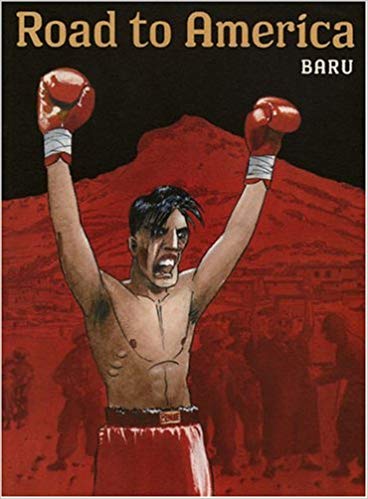
Sport, despite being a world obsession, has oddly dropped out of the remit of most comics storytellers these days which is both odd and a shame. The Road to America, by Baru, uses the fervour of the immigrant’s dream and the fierce metaphor of struggle as depicted in the boxing ring to create a compelling tale of adversity against a true historical backdrop.

Set in Algeria in the 1950s – when the country was struggling to achieve independence from France – it’s the story of the bloody rise of impoverished street urchin, Said Boudiaf. Becoming a boxer, he literally smashes his way out of the slums to the glittering lights of Paris, even as his less utilisable brother turns to bombs and a more permanent form of bloodletting as a freedom fighter determined to overthrow French Colonial rule.

Said is an unstoppable force in the ring, and becomes a sporting hero, but in the real world he’s a leaf in the wind. Civilised, cultured (white) French citizens despise his ethnicity whilst capitalising on his achievements, and he’s regarded as a puppet by the Algerian resistance forces. Nevertheless, both sides want him for his propaganda value….

Said wants nothing more than personal freedom. His fights are non-political, as is all sport, but when his successes mount, and his unstoppable rise culminates in him winning the French Championship, politics claims him anyway as a race-riot between native Algerian and French spectators erupts in the stadium.

The tragic culmination occurs when Said makes it to America, and qualifies for the World title, but on returning to Paris to train for the bout he is sucked into the events of October 17th 1961 – the day when a protest march against anti-Algerian policies and heavy-handed police suppression leads to a bloody riot and a terrible massacre…

This beautifully executed tale is both blunt and subtle: weaving threads of ambition, morality, freedom, sacrifice and prejudice, both personal and social, into a compelling if sometimes chaotic narrative that is a joy to behold but often a bitter pill to swallow.

Doesn’t that sound like something we should all be reading in the current world climate?
© 2002 Baru. All rights reserved.

Town of Evening Calm, Country of Cherry Blossoms


By Fumiyo Kouno (jaPress/Last Gasp)
ISBN: 978-0-86719-721-1 (HB)

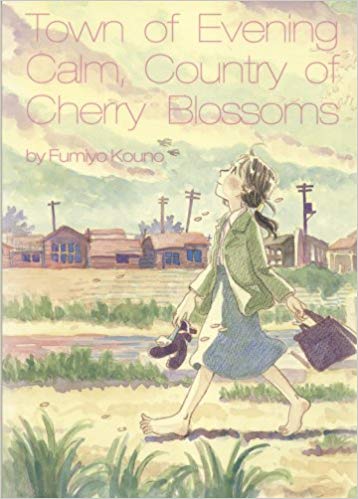
First published in 2003/2004 in Japan’s Weekly Manga Action YÅ«nagi no Machi, Sakura no Kuni (Town of Evening Calm, Country of Cherry Blossoms) is an award-winning (2004 Grand Prize for manga, Japan Media Arts Festival and the 2005 Tezuka Osamu Cultural Prize Creative Award) collection of interlinked, generational short stories. The compelling stories deal with the aftermath of the atom bombing of Hiroshima, and particularly the treatment of bomb-affected survivors (“hibakusha”) by a culture that has traditionally shunned imperfection and studiously ignored unpleasant truths.

The book was made into an award-winning feature film and radio serial in 2007.

The project was instigated by her editor rather than Fumiyo Kouno (or Kōno Fumiyo, if you’d like to acknowledge her actual name): a native of modern Hiroshima and manga maker (Kokko-san; In a Corner of This World), who apparently never considered herself as being affected by the ghastly events of August 6th 1945.

The first story – ‘Town of Evening Calm’ – is set in 1955 and follows teenager Minami Hirano as she goes about her daily life in the slowly-recovering city. She lives with her ailing mother and sister in a seedy shack and ruminates on those she’s lost: father and two sisters to the bomb and baby brother Asahi who was mercifully staying with rural relatives when the bomb hit.

She hasn’t seen him since that day. Her aunt thought it best to keep the healthy boy away, and subsequently adopted him. The surviving family bravely struggle as seamstresses and clerks, trying to save enough money to visit him. Minami has an admirer; a shy young man named Yutaka Uchikoshi, who tries bombarding the quietly independent girl with presents, but ten years after the bomb, the explosion is inexorably still claiming victims. As tragedy looms, Minami is unaware that her long-lost brother is coming to see her…

Follow-up ‘Country of Cherry Blossoms’ is divided into two separate tales. The first is set in Tokyo in 1987 with tomboy schoolgirl Nanami Ishikawa railing against her life. She is Asahi’s daughter – a second-generation victim – and has never met her hibakusha relatives, but when her brother Nagio is hospitalised she sneaks into his room with new friend Toko Tone and showers him with cherry blossom petals to show him the spring he’s missing, unaware that his asthmatic condition is considered by many to be the taint of the bomb…

Admonished by her grandmother, she goes on about her life but as the family moves nearer the hospital, she abruptly loses touch with Toko…

Part Two takes up the story in 2004. Asahi has recently retired and moved in with Nanami, when medical graduate Nagio mentions that he has seen Toko at the hospital where he works. Nanami has other things to worry about: Asahi is disappearing for days at a time and she thinks he might be senile…

One day she follows him, and – just as years before with Nagio – Toko, a virtual stranger, appears and shares her journey and revelations. The troubled old man is travelling to the rebuilt Hiroshima, driven by an irresistible impulse, and as they follow him Nanami discovers that real reason Toko stopped seeing her family…

Pensive, serene and deftly sensitive, almost elegiac, this book deals with uncomfortable issues by advocating tolerance, understanding and endurance rather than the bombastic unyielding defiance of Keiji Nakazawa’s landmark Barefoot Gen, and the message hits home all the harder for it.

Initially reluctant to produce a work about Hiroshima, Ms. Kōno discovered a strong voice within – and her own unrealised, unexpressed attitudes – when faced with the behaviour still directed toward hibakusha more than five decades later. As she states in the Afterword of this superb commemorative hardcover, it was “unnatural and irresponsible for me to consciously try to avoid the issue” and she decided that “drawing something is better than drawing nothing at all.”

As far as I can tell this moving portmanteau is still only available in paperback form but it’s well worth tracking down: a quietly magnificent tribute to the truism that “Life goes on” and the proposition that even polite and passive intolerance should always be resisted. This is a book every politician in the world should read. It also holds a harsh lesson every cosy, comfortable family in existence needs to absorb… and it needs to be back in print and available digitally, too.
© 2003, 2009 Fumiyo Kouno. All Rights Reserved.