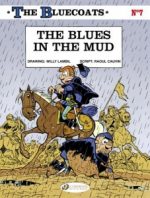
The Bluecoats volume 7: The Blues in the Mud


By Willy Lambil & Raoul Cauvin, translated by Jerome Saincantin (Cinebook)
ISBN: 978-1-84918-183-9

Les Tuniques Bleues began at the end of the 1960s, created by Louis “Salvé” Salvérius & Raoul Colvin – who has solo-written every best-selling volume since. The strip was created to replace Western wonder man Lucky Luke when the laconic gunslinger defected from weekly anthology Spirou to comic rival Pilote. His rapidly-rendered replacement swiftly became one of the most popular bande dessinée series on the Continent…

Salvé was a cartoonist of the Gallic big-foot/big-nose humour style, and when he died suddenly in 1972 his replacement, Willy “Lambil” Lambillotte slowly introduced a more edgy and realistic – although still broadly comedic – illustrative manner. Lambil is Belgian-born (in 1936) and – after studying Fine Art in college – joined publishing giant Dupuis as a letterer in 1952.

Born in 1938, scripter Raoul Cauvin is also Belgian and before joining Dupuis’ animation department in 1960 studied Lithography. He soon discovered his true calling as a comedy writer and began a glittering and prolific career at Spirou.

In addition to Bluecoats Cauvin has written dozens of other long-running, award winning series including Cédric, Les Femmes en Blanc and Agent 212: more than 240 separate albums in total. The Bluecoats alone has sold more than 15 million copies.

The sorry protagonists of the show are Sergeant Cornelius Chesterfield and Corporal Blutch: a pair of worthy fools in the manner of Laurel and Hardy; hapless, ill-starred US cavalrymen posted to the wild frontier and various key points of mythic America.

The original format was single-page gags about an Indian-plagued cavalry fort, but with the second volume ‘Du Nord au Sud’ (North and South) the sad-sack soldiers went back East to fight in the American Civil War (this tale was rewritten in the 18th album ‘Blue rétro’ to describe how the chumps were drafted into the military during the war).

All subsequent adventures – despite ranging far beyond the traditional environs of America and taking in a lot of genuine and thoroughly researched history – are set within the timeframe of the Secession conflict.

Blutch is your average whinging little-man-in-the street: work-shy, mouthy, devious and especially critical of the army and its inept commanders. Ducking, diving, feigning death and even deserting whenever he can, he’s you or me – except sometimes he’s quite smart and heroic if no other, easier option is available.

Chesterfield is a big burly man; a career soldier who has passionately bought into all the patriotism and esprit-de-corps of the Military. He is brave, never shirks his duty and wants to be a hero. He also loves his cynical little pal. They quarrel like a married couple, fight like brothers but simply cannot agree on the point and purpose of the horrendous war they are trapped in…

The Blues in the Mud was first seen on the continent in 1978 as 13th album Les Bleus dans la gadoue, and opens here with our surly stalwarts on patrol. Riding through glorious autumn countryside, they stop at a lake to wash off the dust and find another Union soldier already indulging. However, closer scrutiny soon reveals that this young man is actually a woman…

She tearfully shares her shameful secret with them. Dear brother John vanished soon after enlisting and – terrified that he has deserted and besmirched the Cassidy honour – she has secretly taken his place to search for him…

Although Blutch thinks she’s crazy, the tragic tale goes right to Chesterfield’s head and heart. He promises that they will look out for her as she looks out for her brother but, after teaching her a few tricks to avoid getting killed by Confederate gunfire or her own commanders’ idiotic orders, Blutch starts to wonder about their winsome protégé…

As the weather turns foul and torrents of rain turn battlefields into swamps and skirmishes into messy, inconclusive mud-baths, Chesterfield’s overprotective nature starts men and officers talking – particularly about how the grizzly non-com keeps making the new recruit cry…

Platonically besotted, the Sarge doesn’t notice how “Private Cassidy” keeps disappearing, and when Blutch testily points it out, only assumes she’s looking for that missing brother and her nervousness is just fear of being caught…

Alas for all concerned, the little corporal soon determines, any fear of being caught is due to the fact that she’s a spy who has the Sarge wrapped around her little finger…

Finally, however even Chesterfield has to face facts and in his righteous indignation makes Blutch help him ride right into the Confederate camp to arrest her…

After that gallant gesture goes horribly wrong the Bluecoats manage to get back to their own lines only to find that they’ve been charged with desertion and are being fitted up for a firing squad…

Is there anything or anyone that can possibly save them?

Another hugely amusing, savagely anti-war saga targeting young and less cynical audiences, this tale is particularly trenchant on the pointless nature of the conflict, with a large portion of the tale devoted to depicting the grim hilarity of soldiers unable to stand in a constantly-shifting morass doing their utmost to kill their equally enmired opponents, even if they can’t actually tell friend from foe anymore…

Historically authentic, always in good taste despite its uncompromising portrayal of violence, the attitudes expressed by the down-to-earth pair never make battle anything but arrant folly and, like the hilarious yet insanely tragic war-memoirs of Spike Milligan, these are comedic tales whose very humour makes the occasional moments of shocking verity doubly powerful and hard-hitting.

Fun, informative, beautifully realised and eminently readable, Bluecoats is the sort of war-story that appeals to the best, not worst, of the human spirit.
© Dupuis 1978 by Lambil & Cauvin. English translation © 2013 Cinebook Ltd. All rights reserved.

Jonah Hex volume 6: Bullets Don’t Lie


By Justin Gray, Jimmy Palmiotti, Paulo Siqueira, Jordi Bernet, Darwyn Cooke, Mark Sparacio, J.H. Williams III, Rafa Garres & various (DC Comics)
ISBN: 978-1-4012-2157-7

Always savvy enough to apply a broad variety of experimental approaches to this grittiest of human heroes, the assembled string of all-star artists working with scripters Justin Grey & Jimmy Palmiotti on this incarnation of Jonah Hex deftly blended a blackly ironic streak of wit with a sanguine view of morality and justice to produce some of the most accessible and enjoyable comics fiction available from the period.

In this sixth paperback (or digital, should you be so inclined) collection, reprinting issues #31-36 of the comic book series from 2006, these six stand-alone sagas serve to show the ravaged and determinedly dissolute bounty hunter yet again facing the worst that humanity can offer… or sink to…

Coloured by Rob Schwager and Dave Stewart, the six-gun sextet starts with a wry and devious manhunt illustrated by Paulo Siqueira & Amilton Santos wherein the greatest bounty hunter in the west is hired to bring in infamous outlaw ‘The Red Mask’.

Sadly, the entire affair is a set-up from start to finish – a fact Hex is aware of almost from the start…

Murder-mystery gives way to exotic macho mayhem and a deft tribute – limned by the legendary Jordi Bernet – to Sergio Leone’s signature “Spaghetti-Westerns” as Jonah is enticed to visit Mexico by a rich man who wants him to kill ‘The Matador’ who seduced his wife.

Having made the mistake of refusing the job, Hex endures the millionaire’s sadistic displeasure before uniting with his original target to hand out some US-style retribution…

Much-missed hyper-stylist Darwyn Cooke illustrates the shocking trials of sub-arctic survivalism as ‘The Hunting Trip’ takes Hex deep into Canada and up against vicious, corrupt Mounties, inadvertently teaching a young orphan boy the cruellest facts of life…

Even a cold-hearted killer like Jonah Hex has a breaking point and ‘Outrunning Shadows’ – with rather stiff and static painted art by Mark Sparacio – sees the bounty killer turn his back on slaughter to peacefully settle down.

Sadly, greed and human nature never change and before long he’s forced to drop his dreams and pick up his guns again…

After another particularly bloody job, Hex lets his guard down enough to accept the hospitality of the local lawman. After envying the childless couple’s domestic bliss, Jonah’s refusal of ‘A Crude Offer’ on their part leads to a situation gunplay won’t fix in a tense thriller pictured by J.H. Williams III.

Wrapping up the hard-hitting feast of thrills is a grimly uncompromising examination of racism and self-loathing illustrated by Rafa Garres. Wearing Confederate grey in the aftermath of the war always brought Hex trouble but never as much as this time when the sight of him terrifies a young negro girl into killing herself.

When the appalled, guilt-ridden gunslinger is lynched by her outraged kin and friends, Hex is saved by the recently-convened Ku Klux Klan who also attribute far too much to the clothes he wears and not the beliefs he holds…

After dealing with the white marauders in a manner they so richly deserve, Hex makes the sole survivor dig ‘Seven Graves Six Feet Deep’…

With captivating covers from Richard Corben, Bernet, Cooke, Andy Kubert & Pete Carlsson, Williams III and Garres, Bullets Don’t Lie is an explosively grim, yet blackly comedic collection starring the very best Western anti-hero ever created: doling out a fabulously intoxicating blend of action and social commentary no fan of the genre or top-notch comics magic will want to miss.
© 2006, 2007 DC Comics. All Rights Reserved.

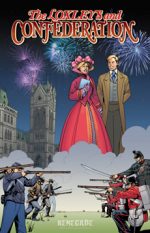
The Loxleys and Confederation

New Revised Review

By Mark Zuehlke, Alexander Finbow, Niigaanwewidam James Sinclair, Claude St. Aubin, Christopher Chuckry & Todd Klein & (Renegade Arts Entertainment)
ISBN: 978-0-9921-5089-1

The Dominion of Canada officially came into existence on July 1st 1867. With the 150th anniversary looming imminent, what better time to revisit how that happy circumstance came to be, especially as the fine folk at Turnaround Distribution have just sent me a splendid full-colour hardback book all about it…

As you’d expect from the residents of the largely sensible portion of the North American continent, the residents of Canada have been planning their celebrations for some time now. A few years ago, a superb graphic novel was produced by an independent creative outfit called Renegade Arts Entertainment which commemorated the anniversary and captivatingly explored how America and the British colonies clashed. The book was The Loxleys and the War of 1812: a welcoming fictionalisation of history for youngsters, examining the facts of the clash through the eyes and experiences of one extended family caught up in the conflict. You could read our review but you’d be far better off getting the book itself.

After enjoying great success the story was followed this magnificent sequel which recapitulates the fateful first European incursion into the vast northern regions, the (mostly) shameful interactions with the native peoples there and the complex, dramatic campaign which resulted in a disparate aggregation of fiercely independent colonies finally accepting that they were all stronger together…

Written by Canadian military historian Mark Zuehlke, with story contributions from Alexander Finbow and scholar, commentator, author, and advocate on Indigenous Issues Niigaanwewidam James Sinclair, this compulsively engaging story is illustrated with captivating veracity by Claude St. Aubin with colours courtesy of Christopher Chuckry and lettering from Todd Klein.

The show opens with a character gallery of both the fictitious Loxleys and notable historic personages of the period and includes an impassioned Foreword by co-writer Finbow, before the graphic elucidation begins with a Prologue set in 1534.

In that landmark year French explorer Jacques Cartier sails up what will be later be called the St. Lawrence River. Sadly the “civilised” trailblazer then acts rather rudely towards the natives he finds there…

After that rather inauspicious start, grudging trades are made but when Cartier finally leaves he takes with him the two sons of local chief Donnacona. The Frenchman still wants treasure and insistently urges the native boys to direct him to a priceless valuable they call “Kanata”…

Skipping ahead to 1864 we find the Loxley clan has grown in numbers, prosperity and influence. It is August 1st and 13-year old Lillian is recording in her journal the event of the family’s first great gathering in years.

Amidst the usual chatter of aging, absences and ailments, the elders are preoccupied with a thorny political problem. The United States has been at war with itself for four years but that struggle is almost over and the local consensus is that many Yankee warhawks are eager to continue fighting; using their deplorable political tenet of “Manifest Destiny” to conquer and possess the entire continent, not only from East to West but also from South to North…

The only bulwark against such unvarnished empire-building is a unified nation to resist them rather than the loose association of independent British colonies that now exists. While talk of Confederation has been in the air for quite a while, little headway has been made in each colony’s obstinate, insular ruling assemblies…

Now, with invasion from the USA a serious prospect once more, and economic pressures also working against the disunited and isolated enclaves, the move towards a grand union of the regions and territories is more vital than ever and politicians are actually talking to each other and making progress.

The prospect is of particular interest to young Lillian, who is subsequently invited to accompany her illustrator mother and journalist grandfather as they journey first to Prince Edward Island, then Quebec and eventually all over and around the scattered colonies and even to England itself: following the prominent political movers and shakers seeking to build a safe, strong and resilient nation.

As the little group follows the torturous efforts to unify the imperilled regions, drama (and romance in the case of Lillian) is never far off. The debates perpetually appear to take one step forward and two back as regional issues and grudges always hold back the urgent drive to combine even as the outer world constantly impinges on what might seem to be a strictly colonial issue.

The Loxleys are in Washington and actual witnesses to the assassination of President Lincoln – the strongest voice against an invasion of Canada. They later witness for themselves the extent of anti-Canadian feeling which exhibits as the annulment of trade deals in the Capitol, and demagogic aggression and bombast in New York which results in a brutal raid on neighbouring cross-border township New Brunswick. The invasion is carried out by radical activist Fenians who believe they can parley such attacks on British possessions into independence for Ireland…

Of course, such an incursion can be seen only one way by the colonies previously holding out against an official union…

Thus unfolds an amazingly compelling lesson which traces a largely marginalised section of history, couched in absorbing human terms and rendered totally irresistible for being seen through the lens of an idealistic child’s eyes: a girl becoming a woman whilst her little bailiwick became a mighty nation…

Also woven into the tale – thanks to the input of Niigaanwewidam James Sinclair – is a telling examination and assessment of the shameful Official Policy of assimilation which legitimised the maltreatment of indigenous people throughout Canada’s history: a trend more fully probed in the Afterword: Looking for Kanata.

That sobering discussion follows further historically pertinent extracts ‘From the Dairy of Lillian Stock 1867’ which encapsulate events personal and national following the establishment of Canada as a nation-state.

Informative, engaging, even-handed and intensely gripping, this account of ordinary people at the core of grand historical accomplishments is an astonishingly readable chronicle which again proves one of my most fervently held beliefs: comics are the perfect means to wed learning with fun and a well-made graphic treatise is an unbeatable mode with which to Elucidate, Educate and Enjoy.

So buy this and do so…
The Loxleys and Confederation © 2015 Renegade Arts Canmore Ltd.

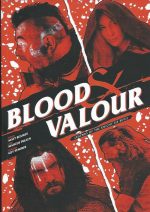
Blood & Valour – Legends of the Knight Sir Bevis


By Matt Beames, Marcus Pullen, Guy Stauber & various
ISBN: 978-0-99575-110-1

As well as being a monumentally terrific way of entertaining yourself, comics are a supremely efficient means of bringing history and literature to life. That in no way means they are a substitute for the original source matter, although in this instance I can forgive anybody not immersing themselves in the texts that inspired this trusty monochrome paperback celebrating the adventurous life of an all-but forgotten mythic warrior every bit the equal of King Arthur, Robin Hood or Beowulf…

Boeve de Haumtone or Bevis of Hampton is an Anglo-Norman and later Middle English Metrical romance saga about a classic warrior hero which spread across Europe during the middle ages and is still held in high regard in most of the world but here.

As a mediaeval prose epic, it was translated into French, Dutch, German, Italian, Irish, Venetian and Welsh. From there the tale migrated ever eastward, becoming part of many national mythologies through translations into Old Norse, Yiddish, Polish, Romanian, Serbo-Croatian, Belarusian and Russian. This is a champion with a truly international pedigree.

To celebrate the 600th anniversary of Agincourt, The Digital Art Program of Eastleigh Borough Council and the Eastleigh Tech Hub in conjunction with the Agincourt 600 Programme conceived a series of projects to mark the occasion and advertise the key role the town which would eventually become the Port of Southampton played in those epochal days.

One such is the comics series this tome is the first compilation of: an adaptation of the life and adventures of a legendary chivalric local hero inextricably linked to the area.

Written and adapted by Matt Beames with illustration by Marcus Pullen and colour-insert photo splash-pages by Guy Stauber, this initial volume only opens the epic account, detailing Bevis’ childhood and novice warrior training before closing with the dark betrayal that sets him upon his savage life’s path…

Sir Guy, Earl of Hampton was a mighty warrior who came late to marriage. His bride was the daughter of the King of Scotland and by no means a willing partner in the arranged match. Rumours abounded that the Countess already had a lover, German prince Conrad. She was also a witch, but Guy seemed oblivious to his wilful young wife’s faults. He truly loved her, even though she took no pains to hide her aloof hostility to him or his southern demesne.

Even the birth of their son Bevis did not soften her. She rejected the child at the moment of his birth, leaving him to be reared by wetnurses, nannies and latterly the Earl himself with his trusted battle-comrade and brother Sir Saber. By the time he was ten years old, Bevis was a master of sword and lance: a truly formidable fighter awaiting only the full strength of his maturity…

As the boy grew, his mother increasingly chafed at her fate and resolved to be happy again, whatever the cost. Thus she plotted with old lover Conrad to murder her husband, using corrupt knight Sir Murdour as her go-between and emissary to Germany.

Through vile treachery Sir Guy was ambushed and butchered by Murdour and an army of Teutons before Conrad installed himself as the new Lord of Hampton beside the willing and murderous Countess who was the architect of all their woes.

When Bevis challenges his mother, she banishes him to the sheep flocks and the custody of his Uncle Saber but later decides it would be best if the lad died after Bevis attempts to re-enter the family castle to exact revenge…

When Conrad baulks at the thought, she blackmails Saber to accomplish the vile task but he too cannot descend to so low a deed and instead fakes the boy’s murder before sending Bevis away from England to grow into the mighty man he must be to avenge his sire. However, before leaving the boy begins to balance the scales of justice by despatching Sir Murdour…

To Be Continued…

With a Foreword by Dr Cheryl Butler and contextualising Afterword by Dr Lynn Forest-Hill, plus a behind-the-scenes section detailing the entire creative process from script and visual design to finished art by way of a photo-reference shoot, this bold revival of a mythic British hero is heavy on action and suspense and affords a most engaging introduction to one of our most slighted icons.
Story & scripts © 2016/2017 Matt Beames. Panels © 2016/2017 Marcus Pullen. Covers & splash pages © 2016/2017. Guy Stauber. All rights reserved.

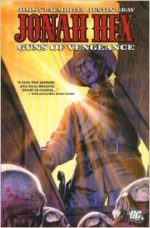
Jonah Hex volume 2: Guns of Vengeance


By Justin Gray, Jimmy Palmiotti, Luke Ross, Dylan Teague, Val Semeiks, Phil Noto, Tony DeZuñiga, David Michael Beck, Paul Gulacy & various (DC Comics)
ISBN: 978-1-4012-1249-0

Confident enough to apply fantasy concepts to this grittiest of human heroes, the assembled string of all-star artists working with scripters Justin Grey & Jimmy Palmiotti on this recent incarnation of Jonah Hex deftly blended a blackly ironic streak of wit with a sanguine view of morality and justice to produce some of the most accessible and enjoyable comics fiction available from the period.

In this collection, reprinting issues #7-12 of the comic book series from 2006, six stand-alone sagas serve to show the ravaged and determinedly dissolute bounty hunter yet again facing the worst that humanity can offer, and even includes a deliciously wry face off with the devil himself…

Illustrated by Luke Ross, the red-handed slaughter opens in Blood Creek, Texas as Hex genteelly crashes a matrimonial affair in search of an absconded felon, only to witness a scene of callous catastrophe perpetrated by a jilted former suitor and his army of hirelings. Resolves to teach the killers their final lesson to assuage the bride’s loss, even Hex’s apocalyptic brand of vengeance-taking is not enough for her after enduring ‘One Wedding and Fifty Funerals’…

The lone gunman is usually able to handle everything the universe can throw at him with the same irascible aplomb, but when an old friend comes looking for help Hex realises far too late that he’s on the wrong side of a fight and helping a monster in ‘Never Turn a Blind Eye’ (with art by Dylan Teague, Val Semeiks & Dan Green)…

Another raw exposure of the inner core of righteousness that drives Hex – whatever his aspect and actions might hint to the contrary – underpins the eerie ‘Gettin’ Un-Haunted’ (rendered by legendary Hex co-creator Tony DeZuñiga).

Here a chance and tragic encounter with a little girl results in years of heartbreak until the scarred shootist devises a cunning scheme to exorcise his demons and lay some mutual ghosts at the same time…

It’s a short ride from guilty misery to Grand Guignol as the misshapen manhunter fetches up in Black Swamp, Louisiana, forced to deal with a family of people-stealing cannibals (and worse). Although they intended him to be ‘Gator Bait’ (Phil Noto art), the ornery Galahad has a few ideas of his own on the subject of making the punishment fit the crime…

Whilst displaying the addictive thread of black humour that runs through these stories Grey, Palmiotti and inspired draughtsman David Michael Beck reunite the surly bounty hunter with ensorcelled Spirit of Justice and sometime ally El Diablo for a fun time at ‘The Hangin’ Tree’.

Despite being almost murdered by a troop of circus freaks, the ghostly avenger’s unsubtle prodding of Hex convinces him to go gunning for a pack of crazed pistoleros intent on eradicating the perfidious performers…

Concluding this odyssey of ordeals is a sub-arctic argosy ranging through the depths of a Utah winter. When Hex sets out to save a colony of Mormons from prejudice and maniacal bounty killers, he soon discovers that yet again few things are simply black and white in the ‘Bloodstained Snow’ (limned by Paul Gulacy): a dark confection of outrage and revenge which is conceptually the most adult and complex in this book.

With covers by Giuseppe Camuncoli & Lorenzo Ruggiero, Beck, DeZuñiga, Noto, Art Thibert and Ross, Guns of Vengeance is an explosively grim, yet wickedly funny collection starring the very best Western anti-hero ever created: offering a sly blend of action and social commentary no fan of the genre or top-notch excitement will want to miss.
© 2006, 2007 DC Comics. All Rights Reserved.

Solomon Kane volume 2: Death’s Black Riders


By Scott Allie, Mario Guevara, Juan Ferreyra & various (Dark Horse)
ISBN: 978-1-59582-590-2

Following on from their revitalisation – if not actual creation – of the comicbook Sword and Sorcery genre in the early 1970s with their magnificent adaptation of pulp superstar Conan the Barbarian, Marvel Comics quite naturally looked for more of the same, and found ample material in Robert Ervin Howard’s other warrior heroes such as King Kull, Bran Mac Morn and dour Puritan Avenger Solomon Kane.

The fantasy genre had undergone a global prose revival in the paperback marketplace since the release of soft-cover editions of Lord of the Rings (first published in 1954), and the 1960s resurgence of two-fisted action extravaganzas by such pioneer writers as Edgar Rice Burroughs, Otis Adelbert Kline and Fritz Lieber. This led to a generation of modern writers such as Michael Moorcock and Lin Carter kick-starting their literary careers with contemporary interpretations of man, monster and mage. Without doubt, though, nobody did it better than the tragic Texan whose other red-handed stalwarts and tough guys such as El Borak, Steve Costigan, Dark Agnes and Red Sonya of Rogatino excelled in a host of associated genres and like milieux.

As a prose paragon, Solomon Kane debuted in the August 1928 issue of Weird Tales in a gripping tale of vengeance entitled “Red Shadows”; thereafter making seven more appearances before abruptly vanishing in 1932 as his creator concentrated on the far more successful Conan.

Three more tales, some epic poems and a few unfinished ideas and passages remained unpublished until 1968 when renewed interest in the author’s work prompted publishers to disinter and complete the yarns.

Apart from two noteworthy 4-colour exceptions, during the 1970s and 1980s, Marvel was content to leave Solomon Kane to monochrome adaptations of canonical Howard stories in Dracula Lives, Savage Sword of Conan, Monsters Unleashed and other older-reader magazines, but with his 21st century transfer to the Dark Horse stable, the Holy Terror has flourished in broader, lavishly-hued and much-expanded interpretations of the short stories and assorted unfinished snippets left when the prolific Howard took his life in 1936.

Beginning in 2008 and released as a succession of miniseries, these almost-new adventures offer modern fans a far darker and more moody iteration of the driven, doom-laden wanderer. This second volume features as graphic narrative short story Rattle of the Bones combined with a mere fragment of recovered prose latterly dubbed Death’s Black Riders, with scripter Scott Allie fleshing out the meagre fare for modern audiences. The strips were originally published in 4-issue miniseries Solomon Kane: Death’s Black Riders and are supplemented here by an all-new short continued saga which originally ran online in MySpace Dark Horse Presents #27 and 28.

For the uninitiated: Kane is a 17th century disenfranchised English soldier-of-fortune on a self-appointed mission to scour the Earth doing God’s Work. He interprets that to mean punishing the wicked and destroying devils and monsters. With no seeming plan, the devout Puritan lets fate guide his footsteps ever onwards towards trouble…

The drama opens here where the previous collection left off. Having survived epic clashes with demon wolves, devilish pagans and satanic thralls, the surly pilgrim is still lost in Germany’s vast and foreboding Black Forest and eager to find his way out.

Sadly, his wanderings merely lead to more conflict as he encounters the remains of a band of slaughtered gypsies where an extremely capable Frenchman named Gaston battles against a vile pack of voracious double-mouthed, distressingly equine talking horrors.

Joining the fray, the chilling churchman kills three of ‘Death’s Black Riders’, but not in time to save any but Gaston from the beast’s butchery…

Although something about the Frenchman disturbs and unsettles him, Kane accompanies the sole survivor as they make their way on foot through the benighted forest, eventually coming upon a lonely inn, blithely unaware that the hostelry is afflicted by ‘The Rattle of Bones’…

The deeply suspicious landlord is far from welcoming but the wanderers’ misgivings are offset by inclement weather and the fact that the four-legged devils are still at large and probably close at hand. Despite gaining entry behind the stout walls and sturdy doors the travellers are cautiously on guard as they assess their temporary dwelling, especially after discovering their room cannot be secured from the inside…

Searching for bars and barricades, they come upon a room with a skeleton chained to a wall and Gaston – in an act of courage-bolstering bravado – smashes the aged links with his sword. Not long after, the Frenchman makes his long-delayed move, ambushing Kane and attempting to steal his purse. Too late the puritan recognises infamous bandit Gaston the Butcher, but before he can save himself the demented innkeeper strikes…

This madman had been preying on visitors for years, despatching those unfortunate enough to share his hospitality. The lunatic even managed to kill a travelling sorcerer and was wise enough to chain up his corpse so that the enchanter could not strike back at from beyond the grave…

Thus, although recently added to the murderer’s tally, Gaston’s revenge comes as the skeleton prowling the inn finds the target it has waited decades to meet again, and in the gory aftermath the aghast Kane prepares to take his chance with the forest when a pounding comes upon the door. It is a terrified Catholic priest and at his heels is a pack of ravening horse-like monsters…

The terrifying tension rises to fever pitch as ‘The Black Riders Return’ to lay siege to the inn with puritan and priest trading doctrinal sallies whilst battling the bludgeoning beasts outside and evading the unquiet sorcerer’s unburied corpse within the house…

As a shattering storm rages, the war of Good and Evil reaches an appalling crescendo, and when day breaks only one man walks away…

A non-stop parade of peril and explosive action, the art here is both beguiling and emphatically evocative with Mario (The Lone Ranger and Tonto) Guevara’s pencils ably augmented by the potent palette of colourist Juan Ferreyra (Rex Mundi), but the tone changes utterly as Guy Davis assumes the illustration chores for Allie’s eerie follow-up ‘All the Damned Souls at Sea’…

Here the exhausted, world-weary horror hunter takes ship for his long-missed England, intent on seeing once more his beloved childhood haunts of Devon.

Typically, however, Kane clashes with a witch before boarding and, as he reminisces during the crossing of his previous voyages battling the Spanish navy, an uncanny transformation grips the ship, remaking it into a predatory beast hungry for sailors’ souls…

As always, this turbulent battle-scarred tome is packed with fascinating artistic extras and behind-the-scenes bonuses such as a gallery of covers and art pieces from Mike Mignola, Jason Shawn Alexander and Darick Robertson plus creative insights via ‘The Art of Solomon Kane’ with sketches, designs, process art and commentary by Guevara, Davis, Chad Vaughn and Allie.

Powerful, engaging and sumptuously spooky, this fight-filled fantasy fear-fest will delight both fans of the original canon and all lovers of darkly dreaming, ghost-busting thrillers.
© 2009 Solomon Kane Inc. (“SKI”). Solomon Kane and all related characters, names and logos are ™ and ® SKI.

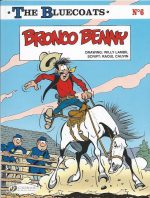
The Bluecoats volume 6: Bronco Benny


By Willy Lambil & Raoul Cauvin, translated by Erica Jeffrey (Cinebook)
ISBN: 978-1-84918-146-4

The glamour of the American Experience has fascinated Europeans virtually since the actual days of owlhoots and gunfighters. Hergé was an absolute devotee, and the spectrum of memorable comics ranges from Italy’s Tex Willer to such Franco-Belgian classics as Blueberry and Lucky Luke, and even to colonial dramas such as Pioneers of the New World or Milo Manara & Hugo Pratt’s Indian Summer.

Les Tuniques Bleues began at the end of the 1960s, created by Louis “Salvé” Salvérius & Raoul Colvin – who has solo-written every best-selling volume since. The strip was created to replace Lucky Luke when the laconic gunslinger defected from weekly anthology Spirou to rival comic Pilote, and his rapidly-rendered replacement swiftly became one of the most popular bande dessinée series on the Continent.

Salvé was a cartoonist of the Gallic big-foot/big-nose humour style, and when he died suddenly in 1972 his replacement, Willy “Lambil” Lambillotte slowly introduced a more realistic – although still broadly comedic – illustrative manner. Lambil is Belgian-born (in 1936) and – after studying Fine Art in college – joined publishing giant Dupuis as a letterer in 1952.

Born in 1938, scripter Raoul Cauvin is also Belgian and before joining Dupuis’ animation department in 1960 studied Lithography. He soon discovered his true calling as a comedy writer and began a glittering and prolific career at Spirou.

In addition to Bluecoats he has written dozens of other long-running, award winning series including Cédric, Les Femmes en Blanc and Agent 212: more than 240 separate albums. The Bluecoats alone has sold more than 15 million copies.

The sorry protagonists of the series are Sergeant Cornelius Chesterfield and Corporal Blutch: a pair of worthy fools in the manner of Laurel and Hardy, hapless, ill-starred US cavalrymen posted to the wild frontier and various key points of mythic America.

The original format was single-page gags about an Indian-plagued Wild West fort, but with the second volume ‘Du Nord au Sud’ (North and South) the sad-sack soldiers went back East to fight in the American Civil War (this tale was rewritten in the 18th album ‘Blue rétro’ to describe how the chumps were drafted into the military during the war). All subsequent adventures, despite ranging far beyond the traditional environs of America and taking in a lot of genuine and thoroughly researched history, are set within the timeframe of the Secession conflict.

Blutch is your average whinging little-man-in-the street: work-shy, mouthy, devious and especially critical of the army and its inept commanders. Ducking, diving, even deserting whenever he can, he’s you or me – except sometimes he’s quite smart and heroic if no other easier option is available.

Chesterfield is a big burly man; a career soldier who has passionately bought into all the patriotism and esprit-de-corps of the Military. He is brave, never shirks his duty and wants to be a hero. He also loves his cynical little pal. They quarrel like a married couple, fight like brothers but simply cannot agree on the point and purpose of the horrendous war they are trapped in…

Bronco Benny is the sixth translated Cinebook album (chronologically the 16th French volume) and opens with our surly stalwarts waiting at a rail depot for much-needed fresh materiel…

As usual the war has stalled due to lack of crucial resources. This time the dearth is horses to ride, but when the train carrying the replacement mounts unloads, what Chesterfield and Blutch find is a shambles which makes them want to laugh and cry…

The smugly-isolated General Staff quickly retire to their comfortable residence and are soon back in high-level conference. Callously obnoxious Young Turk Captain Stillman posits a most practical – if appallingly unethical – solution to the equine stalemate: don’t pay the soldiers until after the forthcoming battle and use the money to purchase mounts from horse traders beyond the western mountains. To make sure the sale and transport goes according to plan the Captain intends sending the smallest military detail possible, but they will be accompanied by Bronco Benny, the greatest horse-breaker in the world…

Next day, luckless Blutch and Chesterfield set out on the suicide mission they have been volunteered for with strong, silent Benny in attendance. They are astounded by how easily they pass through Confederate pickets and defences. They also have no idea that the enemy is well aware of the plan and is allowing them expedited passage…

Travelling the arid rocky region to the traders’ ranch our heroes are surprised when a band of Indians attack. The Bluecoats only escape through sheer dumb luck and after rendezvousing with the mustang-hunters discover the natives are in uproar because the horsemen have captured a magnificent white stallion the Indians revere as a god…

It’s love at first sight for Benny. He is utterly smitten with the mustang dubbed “Traveller” and the next few days fade to a bruised blur as he strives to break the mighty wonder horse. Sadly, after he does, the true nature of the horse-traders is exposed and Blutch and Chesterfield realise they’ve been suckered yet again…

However, even after being deprived of cash, horses and dignity and left to die at the hands of the furious Indians, Sarge has a plan to fix things and, whilst it doesn’t exactly work as expected, it does get him and his pals back to Union lines in time to witness one more horrific, pointlessly stupid battle and subsequent slaughter with no apparent winner…

This is another hugely amusing savagely anti-war saga targeting young and less cynical audiences. Historically authentic, always in good taste despite its uncompromising portrayal of violence, the attitudes expressed by the down-to-earth pair never make battle anything but arrant folly and, like the hilarious yet insanely tragic war-memoirs of Spike Milligan, these are comedic tales whose very humour makes the occasional moments of shocking verity doubly powerful and hard-hitting.

Fun, informative, beautifully realised and eminently readable, Bluecoats is the sort of war-story that appeals to the best, not worst, of the human spirit.
© Dupuis 1980 by Lambil & Cauvin. English translation © 2012 Cinebook Ltd. All rights reserved.
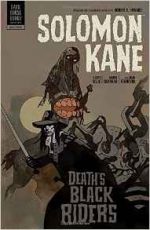
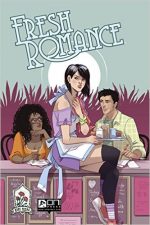
Fresh Romance volume 1


By Kate Leth & Arielle Jovellanos, Sarah Vaughn & Sarah Winifred Searle, Sarah Kuhn & Sally Jane Thompson, Marguerite Bennett & Trungles, Keiron Gillen & Christine Norrie & various (Rosy Press/Oni Press)
ISBN: 978-1-62010-346-3                  eISBN: 978-1-62010-347-0 (Kickstarter exclusive)

Once upon a time romance comics were the backbone of the comicbook industry, selling in the millions and capturing the crucial yet elusive and fickle women’s market where war, westerns and superhero titles just couldn’t get a foothold.

Times passed, fashions changed and the genre all but vanished in comics form, to occasionally resurface in rare re-emergences filled with quality writing and art but still unable to justify the expense of a regular print slot.

Thankfully the internet changed all that, with devotees able to create, disseminate and consume articles of visual amour free of draconian and tawdry business pressures. One such enterprise was anthological enterprise Fresh Romance from Rosy Press which offers startlingly uncompromising modern love stories in a broad variety of styles and themes and tones from simple person-meets-person encounters to classical pastiches to rom-com rollercoaster rides.

So well-received were these tales that in partnership with Oni Press the stories have made the retrograde jump back into physical form such as this initial collection…

Supplemented throughout with round-robin discussions and commentaries from the creators involved the wide-eyed wonderment opens with a no-holds-barred, ferociously contemporary spin on the coming-of-age ritual known as Prom Night…

‘School Spirit’ by scripter Kate Leth, illustrator Arielle Jovellanos, colourist Amanda Scurti and letterer Taylor Esposito details the build up to that very special occasion, focussing on unwitting chick-magnet Miles, haughty queen-bee Justine, moody Corrine and eager-beaver over-achiever Malie.

None of their peers are privy to their true natures, though. Miles’ reputation is largely bogus, allowing him to act as a beard for two of the girls whilst the lass he really likes has a secret she joyously shares with him alone: she’s a witch with fantastic powers she’s just desperate to exercise even though her dads forbid her getting intimate with mortals…

Pressure mounts as the Prom approaches and all four are reaching emotional crisis points: all they want to do is be themselves and be done with secrets…

But when the subterfuge falls apart just before the big event all the quartet can do is make it a night everybody will remember…

In stark contrast ‘Ruined volume 1’ by Sarah Vaughn & Sarah Winifred Searle (lettered by Ryan Ferrier) serves up a heaping helping of stolid and claustrophobic Regency romance in the manner of Jane Austen as young Catherine dolorously acquiesces to parental pressure and marries a man she does not know. As her parents constantly remind her, it’s the best she can hope now that her reputation has been so utterly despoiled by her recent indiscretion…

Her marriage into the prestigious but impoverished Davener family was never going to be a famous love match but after being packed off to his decrepit and distant estate Catherine’s slow acceptance of her taciturn, inscrutable husband is constantly impeded by one inescapable quandary. If no decent man would want her in her present state, why has Andrew Davener made her his bride?

Does he want her? Is he, in fact, a decent man?

A beguiling and compelling take on the traditional gothic novel – complete with troubled sister-in-law and antagonistic elder dowager in residence – Ruined does not conclude in this volume and leaves the reader hungry for a resolution…

From staid conformity to wild abandon as ‘The Ruby Equation’ by Sarah Kuhn & Sally Jane Thompson (coloured by Savanna Ganucheau and lettered by Steve Wands) pursues wild whimsy in a little coffee shop which serves as a dating drop-in centre run by extra-dimensional super-entities masquerading as baristas and waitresses.

These wondrous creatures are intent on helping their unwitting human clients find true happiness, but impatient young operative Ruby can’t wait to finish this dumb assignment and progress to missions of truly cosmic importance.

Sadly for her, Ruby can’t close the deal with prospective happy couple Josh and Megan, and she’s the only one who can’t see that they are not perfect soul-mates. Not when one of them is actually the only being Ruby could ever love…

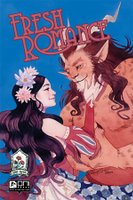
A dark reinterpretation of a very familiar fairytale, ‘Beauties’ by Marguerite Bennett & Trungles – lettered by Rachel Deering – sees a beautiful beast captured and enslaved by a callous prince and his cruel daughters, only to win over one of his tormentors and trigger an uncanny transformation. With love triumphing over every adversity the liberated lovers must then seek escape or death together whatever the ultimate cost…

As icing on the cake this collection closes with a delightful bonus vignette by Keiron Gillen & Christine Norrie. ‘First, Last and Always’ slyly reveals the cautious, cunning politics that underlie that initial brushing of lips that presages the start of everything…

Powerful, charming, engaging and endearing, these yarns of yearning and fulfilment are superb examples of how varied comics can be. Why not let a little romance into your heart today?
Fresh Romance volume One © 2016 Rosy Press. All individual stories are the property of and © their respective creators. All rights reserved.

Dreams in Thin Air


By Michael Magnus Nybrandt & Thomas Engelbrecht Mikkelsen translated by Steffen Rayburn-Maarup (Conundrum Press)
ISBN: 978-1-77262-010-8

Fantastic battles against overwhelming odds and magnificent, unlikely victories are the lifeblood of graphic narratives – and most of our popular fiction these days, I suppose – but seeing such triumphs in our own mundane mortal coil is barely credible in the real world.

Happily, miracles do occur, and one such forms the basis of this stunningly engaging chronicle of a good heart and love of sport defeating the political skulduggery of an oppressive yet publicity-shy superpower.

Delivered as a sturdy and compelling full-colour landscape format hardback, Dreams in Thin Air details the struggle of a young Danish man whose life was changed by a pre-college visit to Tibet: the things he saw and the people he met…

To make the story even more accessible, the man at the centre of events tells his own story, teamed here with Danish comics superstar and educator Thomas Engelbrecht Mikkelsen (Wizards of Vestmannaeyjar, Einherjar) who adds zest, verve and spectacular imagination to the already heady mix…

Following a Foreword by His Holiness, the Dalai Lama, the story opens near the end as impassioned, frustrated Michael Magnus Nybrandt paces outside the Chinese Embassy in Copenhagen. We don’t know it yet but Michael has gambled years of hard work, devious conniving and soul-destroying dedication on a true long shot…

‘Chapter 1: Towards Tibet’ then takes us back to 1997 when Michael and his friend Thomas land at Lhasa Airport and are only saved from disaster by the quick thinking of Tibetan guide Jamphel Yeshi, who rescues the idealistic Scandinavians from a potentially lethal encounter with bribe-seeking Chinese Guards.

As they ride away from the airport the Europeans observe over and again the brutal results of China’s annexation and systematic eradication of Tibetan culture begun in the aftermath of the 1950 invasion. Of course, the gun-toting occupiers called it an act of “liberation”…

The white boys’ feelings as they contrast the broken relics of a glorious past with the urbanised concrete wastelands inflicted by two generations of self-serving Chinese occupiers are obvious and exceedingly painful, and before long they check out of their state-sponsored hotel and go on a trans-Tibetan tandem ride, looking for the real country…

In ‘The Easy Way’ that joyous if exhausting excursion brings them into constant contact with the earthy, gregarious Tibetans and solidifies a feeling in Michael that he must do something to help them. The revelation of exactly what that might be comes after they arrive at a shattered temple and meet Lama Tsarong.

During their stopover, the Europeans meet young monks in training and discover the Tibetans’ abiding passion for football – the proper “beautiful game” and not the dandified Rugby played by Americans…

Later, Michael endures a bizarre dream in which he is the coach of a Tibetan National Team. That’s clearly an impossible notion. Thanks to China’s political clout and annexation policy, there is no such nation as Tibet, only outlaw enclaves of dispossessed Tibetans living as exiles in well-wishing countries such as India and Nepal.

No politically expedient government on Earth recognises the annexed but unforgotten land and it has no official national standing in any arena… even sports…

In August 1997 Nybrandt returns to Denmark and resumes his education in Aarhus. He is part of the landmark radical education initiative dubbed Kaospilot, but despite all his studies cannot shift his focus away from that vivid dream…

At that time privately-sponsored Kaospilot trained less than 40 students per year in leadership, business design, process design and project design. The private school’s educational philosophy stresses personal development, values-based entrepreneurship, socially-responsible innovation and – above all else – creativity.

Although Michael strives to adapt to the program, eventually he gives in to his obsession and retools his lessons and educational modules to the ultimate goal of creating a Tibetan National Football team and getting them international matches…

And that’s when his problems really begin, as the full political might of the People’s Republic is brought to bear, not just on him but also on Denmark itself. In ‘Dharamsala’ that subtle, silent opposition becomes far more overt, even as Nybrandt tirelessly works with Tibetan bigwigs – in the conquered mountain country itself and throughout the rest of the world.

Undaunted, he sources players, finds sponsors bold enough to buck the Chinese government; sidestepping petty-minded obfuscations like visa-sabotage and rescinded travel permits and even terrifying physical assaults from thinly-disguised political bully boys in China’s pay…

The tide starts to turn in ‘Dharma Player’ after a meeting with the Dalai Lama and the arrangement of an international fixture against Greenland’s national team. With the threat of public legitimisation of a “non-country”, China begins turning the geo-political screws: threatening economic sanctions that might bankrupt Denmark and even more dire unspecified consequences…

On the brink of defeat, Michael thinks furiously and realises that although the prestige of international sport has caused all his problems, it has also provided a once-in-a-lifetime possible solution. All he has to do is confront the Chinese ambassador and not blink first…

The result was a milestone in the modern history of oppressed, subjugated Tibet and resulted in ‘Ninety Minutes of Recognition’ as China was forced to climb down and allow the match to take place…

Being a true story, this gloriously inspirational tale can also offer a photo-reportage-packed ‘Epilogue by the Author’, geographical and socio-political synopsis on the country at ‘The Roof of the World’ and a heartfelt ‘Acknowledgments’ section dedicated to the brave souls who made the miracle happen and brought this book into print.

Compelling, hugely entertaining and astoundingly uplifting, Dreams in Thin Air is a wonderful tribute to the power of sport and the resolve of good people. Don’t wait for the inevitable feelgood movie: read this magnificent graphic testament right now and experience the all-too-rare joy of good intentions triumphing over smugly overwhelming ensconced power…
English Edition © Michael Magnus Nybrandt, Thomas Engelbrecht Mikkelsen and Conundrum Press 2017.

Jonah Hex: Welcome to Paradise


By John Albano, Michael Fleischer, Tony DeZuñiga, Doug Wildey, Noly Panaligan, George Moliterni, José Luis García-López & various (DC Comics)
ISBN: 978-1-4012-2757-9

Western stories are shaped by an odd duality. The genre can almost be sub-divided into two discrete halves: the sparkly, shiny version that dominated kids’ books, comics and television for decades, as typified by Zane Grey stories and heroes such as Roy Rogers and Gene Autry – and the other stuff.

That kind of cowboy tale- grimy, gritty, excessively dark – was done best for years by Europeans in such strips as Jean-Michel Charlier’s Lieutenant Blueberry or Bonelli and Galleppini’s Tex Willer which gradually made their way into US culture through the films of Sam Peckinpah and Sergio Leone. Jonah Hex is the USA’s greatest example of the latter sort…

DC (or National Periodicals as it then as) had generated a stable of clean-cut gun-slingers since the collapse of the super-hero genre in 1949, with such dashing – and highly readable – luminaries as Johnny Thunder, The Trigger Twins, Nighthawk, Matt Savage and dozens of others in a marketplace that seemed insatiable in its voracious hunger for chaps in chaps. However, all things end, and by the early sixties the sagebrush stalwarts had dwindled to a few venerable properties.

As the 1960s closed, thematic changes in the cinematic Cowboy filtered through to a comics industry suffering its second super-hero sundown in twenty years. Although a critical success, the light-hearted Western series Bat Lash couldn’t garner a solid following, but DC, desperate for a genre readers would warm to, retrenched and revived an old title, gambling once again on heroes who were no longer simply boy scouts with six-guns.

All-Star Western #1 was released with an August/September 1970 cover date, filled with Pow-Wow Smith reprints and became an all-new anthology with its second bi-monthly issue. The magazine was allocated a large number of creative all-stars, including Robert Kanigher, Neal Adams, Gray Morrow, Al Williamson, Gil Kane, Angelo Torres and Dick Giordano, working on such strips as Outlaw!, Billy the Kid and the cult sleeper hit El Diablo, which combined shoot-’em-up shenanigans with supernatural chills, in deference to the real hit genre-type that saved comics in those dark days: horror comics…

It wasn’t until the tenth issue and introduction of a grotesquely disfigured, irascible bounty hunter created by writer John Albano and Tony DeZuñiga that the company found its greatest and most enduring Western warrior.

This superb collection of the garish gunman’s early appearances has been around for a few years, with no apparent sign of a sequel yet, so consider this a heartfelt attempt to generate a few sales and more interest…

Our star is the very model of the modern anti-hero. Jonah Hex first appeared in All-Star Comics #10, a coarse and callous bounty hunter clad in shabbily battered Confederate Grey tunic and hat, half his face lost to some hideous past injury; a brutal thug little better than the scum he hunted – and certainly a man to avoid…

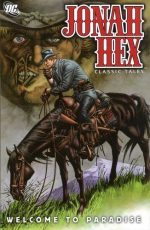
Collecting key stories from All-Star Western #10, Weird Western Tales #14, 17, 22, 26, 29, 30 and Jonah Hex #2 and 4 (ranging from March 1972 to September 1977), the grisly gunplay begins with Albano & DeZuñiga’s ‘Welcome to Paradise’ which introduced the character and his world in a powerful action thriller, with a subtle sting of sentimentality that anyone who has seen the classic western “Shane” cannot fail to appreciate.

From the first bullets blazing, blistering set-up Albano was constantly hinting at the tortured depths hidden behind Hex’s hellishly scarred visage and deadly proficiency. With the next issue the comic had been re-titled Weird Western Tales (aligning it with the company’s highly successful horror/mystery books) and the adventures continually plumbed the depths oh human malice and depravity…

From the very start the series sought to redress some of the most unpalatable motifs of old style cowboy literature and any fan of films like Soldier Blue or Little Big Man or familiar with Dee Brown’s iconoclastic book Bury My Heart at Wounded Knee will feel a grim sense of vicarious satisfaction and redress at most of the stories here.

There’s also a huge degree of world-weary cynicism that wasn’t to be found in other comics until well past the Watergate Scandal, when America as whole lost its social and political innocence…

From Weird Western #14, ‘Killers Die Alone!’ – by Albano & DeZuñiga – is a vicious tear jerker of a tale where Hex’s only friend valiantly dies to save him the vengeance of killers who blame the bounty hunter for their brother’s death. There is then a reckoning that is the stuff of nightmares…

‘The Hangin’ Woman’ (WWT #17) is a classy thriller wherein Hex runs afoul of a sadistic harridan who rules her hometown with hemp and hot lead before meeting an ending both ironic and much-deserved…

It was left to new writer Michael Fleisher (assisted at first by Russell Carley) to reveal Hex’s secrets, beginning with Weird Western Tales #22’s ‘Showdown at Hard Times’. A chance meeting in a stagecoach put a cabal of ex-Confederate soldiers on the trail of their ex-comrade for some unspecified earlier betrayal and it inevitably ended in a six-gun bloodbath, whilst creating an ominous returning nemesis for the grizzled gunslinger.

Train-robbers were the bad guys in the superb traditionally-informed caper ‘Face-Off with the Gallagher Boys!’ scripted by Fleischer and illustrated by the inimitable Doug Wildey, after which more details of Jonah’s chequered past are revealed in #29’s ‘Breakout at Fort Charlotte’ limned by Noly Panaligan. It was the first chapter of a two-part extravaganza that gorily concluded in #30 in ‘The Trial’ (illustrated by George Moliterni) as a battalion of Confederate veterans and former comrades-in-arms passed judgement on the man they believed to be the worst traitor in the history of the South…

Eventually Hex graduated from Weird Western Tales into his own solo title and the final brace of tales in this primal primer are both drawn by the magnificent José Luis García-López. In ‘The Lair of the Parrot!’, Fleischer has the doom-drenched wanderer sucked into a scheme designed by US Secret Service agent Ned Landon to infiltrate the gang of flamboyant Mexican bandit and border raider El Papagayo. Hex is none to happy when he finally realises Landon has been playing both sides for personal gain and left the bounty hunter to the brigand’s tender mercies after framing him for murder in Texas…

The tale continues in ‘The Day of the Chameleon!’ as a disguise artist steals Hex’s identity to perpetrate even more brazen crimes at the behest of a rich and powerful man determined to destroy bounty hunter at all costs…

Happily Jonah has unsuspected allies determined to save him from the villain and his own prideful stubborn nature…

With a cover gallery by DeZuñiga, Luis Dominguez and García-López, this splendid selection of uncanny exploits proves Jonah Hex is the most unique and original character in cowboy comics: darkly comedic, riotously rowdy, chilling and cathartically satisfying. His saga is a Western for those who despise the form whilst being the perfect modern interpretation of a great storytelling tradition. No matter what your reading preference, this is a collection you don’t want to miss.
© 1972-1975, 1977, 2010 DC Comics. All Rights Reserved.