Ken Reid’s Creepy Creations


By Ken Reid, with Reg Parlett, Robert Nixon & various (Rebellion Studios)
ISBN: 978-1-78108-660-5 (HB/Digital edition)

If you know British Comics, you’ll know Ken Reid. He was one of a select and singular pantheon of rebellious, youthful artistic prodigies who – largely unsung – went about transforming British Comics, entertaining millions and inspiring hundreds of those readers to become cartoonists too.

Reid was born in Manchester in 1919 and drew from the moment he could hold an implement. Aged nine, he was confined to bed for six months with a tubercular hip, and occupied himself by constantly scribbling and sketching. He left school before his fourteenth birthday and won a scholarship to Salford Art School, but never graduated. He was, by all accounts, expelled for cutting classes to hang about in cafes. Undaunted, he set up as a commercial artist, but floundered until his dad began acting as his agent.

Ken’s big break was a blagger’s triumph. Accompanied by his unbelievably supportive and astute father, Ken talked his way into an interview with the Art Editor of the Manchester Evening News and came away with a commission for a strip for its new Children’s Section. The Adventures of Fudge the Elf launched in 1938 and ran until 1963 with only a single, albeit lengthy, hiatus from 1941 to 1946 when Reid served in the armed forces.

From the late 1940s onwards, Reid dallied with the resurgent comics periodicals: with work (Super Sam, Billy Boffin, Foxy) published in Comic Cuts and submissions to The Eagle, before a fortuitous family connection (Dandy illustrator Bill Holroyd was Reid’s brother-in-law) brought DC Thomson managing editor R.D. Low to his door with a cast-iron offer of work. On April 18th 1953, Roger the Dodger debuted in The Beano. Reid drew the feature until 1959 whilst creating many more, including the fabulously mordant doomed mariner Jonah, Ali Ha-Ha and the 40 Thieves, Grandpa and Jinx amongst many more.

In 1964, Reid and equally under-appreciated co-superstar Leo Baxendale jumped ship to work for DCT’s arch-rival Odhams Press. This gave Ken greater license to explore his ghoulish side: concentrating on comic horror yarns and grotesque situations in strips like Frankie Stein, and The Nervs for Wham! And Smash! as well as more visually wholesome but still strikingly surreal fare as Queen of the Seas and Dare-a-Day Davy.

In 1971 Reid devised Face Ache – arguably his career masterpiece – for new title Jet. The hilariously horrific strip was popular enough to survive the comic’s demise – after a paltry 22 weeks – and was carried over in a merger with stalwart periodical Buster where it thrived until 1987. During that time, Reid continued innovating and creating through a horde of new strips such as Harry Hammertoe the Soccer Spook, Wanted Posters, Martha’s Monster Makeup, Tom’s Horror World and a dozen others. One of those – and the worthy subject of this splendid collection – is Creepy Creations. Gathered here are all 79 full colour portraits from Shiver & Shake: episodes spanning March 10th 1973 to October 5th 1974 as well as related works from contemporaneous Christmas annuals.

After the initial suggestion and 8 original designs by Reid, Creepy Creations featured carefully crafted comedic horrors and mirthful monsters inspired by submissions from readers, who got their names in print plus the-then princely sum of One Pound (£1!) Sterling for their successful efforts. The mechanics and details of the process are all covered in a wealth of preliminary articles beginning with ‘Creepy Creation Spotter’s Guide’ listing the geographical locations so crucial to the feature’s popularity and is backed up by a fond – if somewhat frightful – family reminiscence from Anthony J. Reid (Ken’s son) in ‘The Erupting Pressure Cooker of Preston Brook’.

The convoluted history of Ken’s feature (which came and went by way of 1960s cult icon Power Comics, Mad magazine, Topps Trading Cards and even stranger stops), originally intended to save him having to draw the same old characters every day, is detailed in an engrossing historical overview by Irmantas Povilaika dubbed ‘Plus a “Funny Monsters” Competition with These Fantastic Prizes’ before the true wonderment ensues.

Astounding popular from beginning to end, Creepy Creations offered a ghastly, giggle-infused grotesque every week: a string of macabre graphic snapshots (some, apparently, too horrific to be published at the time!) beloved by kids who adore being grossed out.

Seen here are ratified Reid-beasts like ‘The One-Eyed Wonk of Wigan,’, ‘The Chip Chomping Tater Terror of Tring’ and the ‘The Boggle-Eyed Butty-Biter of Sandwich’, his stunning kid collaborations on arcane animals like ‘The Gruesome Ghoul from Goole’ or ‘Nelly, the Kneecap-Nipping Telly from Newcastle’, and – due to the staggering demands of weekly deadlines – also offers cartoon contributions from UK comics star Reg Parlett & Robert Nixon.

Supplementing and completing the eldritch, emetic experience are a selection of Creepy Creations Extras, comprising images and frontispieces from Christmas Annuals, the entire ‘Creepy Creations Calendar for 1975’, 4-pages of ‘Mini Monsters’ and the entire zany zodiac of ‘Your HORRORscope’

Piling up even more comedy gold, this tome also includes tantalising excepts from the Leo Baxendale Sweeny Toddler compilation and Reid’s magnificent World-Wide Wonders collections.

Ken Reid died in 1987 from complications of a stroke he’d suffered on February 2nd. He was at his drawing board, putting the finishing touches to a Face Ache strip. On his passing, the strip was taken over by Frank Diarmid who drew until its cancellation in October 1988.

This astoundingly absorbing comedy classic is another perfect example of resolutely British humorous sensibilities – absurdist, anarchic and gleefully grotesque – and these cartoon capers are amongst the most memorable and re-readable exploits in all of British comics history: painfully funny, beautifully rendered and ridiculously unforgettable. This a treasure-trove of laughs to span generations which demands to be in every family bookcase.
© 1973, 1974, & 2018 Rebellion Publishing Ltd. All Rights Reserved.

Batman: Black and White volume 1


By Ted McKeever, Bruce Timm, Klaus Janson, Archie Goodwin & Gary Gianni, Katsuhiro Otomo, Joe Kubert, Howard Chaykin, Walter Simonson, José Muñoz, Jan Strnad & Richard Corben, Kent Williams, Chuck Dixon & Jorge Zaffino, Neil Gaiman & Simon Bisley, Andrew Helfer & Liberatore, Bill Sienkiewicz, Matt Wagner, Dennis O’Neil & Teddy Kristiansen, Brian Bolland, Kevin Nowlan, Brian Stelfreeze, Michael Allred, Moebius, Michael Kaluta, Tony Salmons, P. Craig Russell, Marc Silvestri, Alex Ross, Neal Adams & various (DC Comics)
ISBN: 978-1-4012-1589-7 (TPB/Digital edition)

Batman is a creature of the night. Batman is the world’s greatest detective, escapologist and master of disguise. Batman fights criminals, mad men and bad women, aliens and monsters. Batman is all this and more. In a world of fabulous eerily distorted hues and constantly shifting blinding colour (mostly red) he sees in black and white… and now so will you…

As recapped in a sagacious Introduction, in the early 1990s Batman: Black and White was originally envisioned as an experimental limited series, with editors Marl Chiarello & Scott Peterson inviting the world’s greatest comics creators – whether new to the character or long-time veterans – to tell “their” story of the Gotham Gangbuster. They would be free of all continuity constraints but operating under the sole proviso that the result should be designed to work in stark monochrome.

Results were astounding, challenging and inevitably, multi-award winning. If you are any sort of Bat-fan or aficionado of the art form there will be something in this wonderful tome to blow your socks off. Just don’t read it in front of your Nan – she spent hours knitting them.

Here is a spectacular showing from some of our world’s greatest talents, producing short complete tales without benefit or hindrance of colour. Moreover, the experiment was such a success that despite some company resistance to its very concept, the miniseries won much acclaim and many awards. Its success led to a regular black-&-white “out-continuity” slot in monthly anthology comic Gotham Knights. Those stories were collected in two subsequent B:BAW volumes. The experiment even evolved a subgenre of monochrome books starring many four-colour superstars from different companies: most of them exploiting the cultural label of “Noir”…

The groundbreaking enigmatic variations open with Ted McKeever’s ‘Perpetual Mourning’ wherein a quiet visit to the morgue opens a small dark window into the hero’s mind after which a panoply of assorted treats unfold, ranging from Archie Goodwin & Gary Gianni’s period piece ‘Heroes’ to poignant Good Evening, Midnight’ written & illustrated by Klaus Janson with the hero scrutinised by the one who knows him best.

Steeped in the animated show’s trappings, Bruce Timm’s tragic ‘Two of a Kind’ interrogates Harvey Dent and Two Face’s life whereas just plain wild and weird declamatory epics The Third Mask’ (by Katsuhiro Otomo) and Joe Kubert’s deeply symbolic ‘The Hunt’ are highly personal takes from major league creators showing why The Batman continues to grip public consciousness in almost any permutation or milieu.

As much thematic metaphor as artistic exercise, stories were not restricted to current DC continuity, but encouraged exploration of the character via impressionistic, personal forays such as ‘Petty Crimes’ by Howard Chaykin, with Archie Goodwin returning to script eerily memorable Jazz thriller ‘The Devil’s Trumpet’ for the astounding stylist José Muñoz.

Walter Simonson crafts future science myth ‘Legend’ whilst Jan Strnad & Richard Corben collaborate on bleak urban fable ‘Monster Maker’, even as Kent Williams revisits the night the Waynes died in ‘Dead Boys Eyes’, whilst Chuck Dixon & Jorge Zaffino’s ‘The Devil’s Children’ examines GCPD’s unique attitude to the Gotham Guardian…

Neil Gaiman & Simon Bisley’s ‘A Black and White World’ is arguably the weakest entry in the book, relying on “Fourth Wall cleverness” rather than actual plot, whereas Andrew Helfer & Liberatore’s insightful kidnap tale ‘In Dreams’ delivers a powerful punch, as does Matt Wagner’s fabulously stylish action romp ‘Heist’, before ‘Bent Twig’ delivers intense whimsy and deep, challenging philosophical questioning from Bill Sienkiewicz – and all shrouded under an ostensibly seasonal theme.

The same setting plays ‘A Slaying Song Tonight’ by Dennis O’Neil & Teddy Kristiansen, whilst Brian Bolland produces the beautifully disturbing ‘An Innocent Guy’. Strnad encores by scripting ‘Monsters in the Closet’ for forensically brilliant Kevin Nowlan, as does O’Neil for Brian Stelfreeze in chilling y introspective ‘Leavetaking’.

Chiarello’s Introduction explains how the project began and acknowledges its conceptual debt to Archie Goodwin’s tenure as writer/editor of Eerie and Warren Publication’s other groundbreaking monochrome magazines, but the collection is also superbly supplemented with background and developmental material, pin-ups and sketch pages from the likes of Michael Allred, Moebius, Michael Kaluta, Tony Salmons, P. Craig Russell, Marc Silvestri, Alex Ross and Neal Adams.

These are uncompromising visions of The Dark Knight that reshaped the medium, returning noir style and themes by offering mayhem in moody monochrome. They are Batman at his most primal and should be on every fan’s radar…
© 2000 DC Comics. All Rights Reserved.

Neroy Sphinx: Playing to Lose


By Daniel Whiston, Dave Thomson & various (Markosia)
ISBN: 978-1-916968-30-1 (TPB/Digital edition)

If you grew up British in the last 50 years reading home-produced action/adventure comics, you were primarily consuming either war or science fiction tales – preferably both. 2000AD launched in February 1977 and rapidly reshaped the minds of generations of readers. It has done so ever since, affecting and inspiring hundreds of creators.

Very much in the mould of that anarchic, subversive and wickedly cynical weekly came a small press fanzine phenomenon which spawned its own home-grown stars. This titanic tome happily revisits one of the most appallingly appealing and inexplicably endearing of those players: a devious, irredeemably self-serving chancer (like so many traditional British comics rogues ranging from Charlie Peace and Grimly Feendish to The Spider) who finds the fate of humanity unhappily and inappropriately piled on his shifty, unwilling and mostly uncaring shoulders…

Neroy Sphinx first began intermittently appearing in Indie comics icon FutureQuake – specifically and sporadically between #4-20 from 2005 to 2012. In his previous compilation (Neroy Sphinx: Back in the Game and still readily available through back issue venues and internet retailers large and small) the criminal trickster was dragooned into becoming the saviour of Humanity and unlikely nemesis of encroaching dark cosmic gods: a fate even he could not weasel out of.

Sphinx is a born rogue failed politician and inveterate manipulator, whom readers of a certain age might liken to Minder’s Arthur Daley in space. However, the imaginatively inventive rapscallion is graced with a steely inner core allowing him to scheme ruthlessly and casually expend strangers, bystanders, friends and acquaintances like confetti. Many cosmic buses have had Sphinx’s associates cheerily thrown under them, but at least now he’s doing his nefarious thing for a good cause….

Written throughout by Daniel Whiston, and illustrated by Dave Thomson, the culmination of his quixotic escapades are gathered in this bombastic monochrome tome, set long after the collapse of EarthFed and reopening of an Arterial Wormhole that once connected Human space systems to a wider intergalactic civilisation. Sadly it also allowed access to predatory alien gods from Space Hell…

Recruited by ultra-psionic former ally Clarence Griffin as the lynchpin of a decades-long survival plan, Sphinx (his memories selectively edited) resumes his unwanted burden after ‘Down Among the Damned Men’, where Griffin sacrifices another innocent to the great vision he’s seen. As monstrous horrors ravage creation and creep closer to total domination, Griffin and artificial lifeform/hired muscle Fenris track down the AWOL schemer for ‘The Train Job’ and the “recovery” of a certain cosmic artefact Neroy stashed away years previously. He says all he needs now is their help in securing the billions in bullion on board to buy a spaceship…

A clash with surviving members of old enemies the Dubblz clan heaps even higher the pile of collateral casualties when the would-be saviours go ‘Junkyard Shopping’ but at least finally get them off-world, but as their eventual destination is recently invaded Cassiopia System and the much-diminished Dubblz are still on their tails, the ‘Misguided Pursuits’ they indulge in only succeeds in obtaining the artefact by lumbering them with another useless hanger-on. Ensign Eudora Carver is the sole survivor of a human ship caught by the invaders, and has a potent connection to the arcane star sceptre they were hunting…

Now ‘Keep it Clean’ finds her and her extremely disturbing rescuers landing on the “ancient sublime citadel of the Gr’tk” and attacked by a legion of greedy alien hangers-on occupying a celestial shanty town and keen to keep these new rivals away from the cast-off gifts of the primal beings…

As the voyagers explore the cosmic citadel and unpick the sordid truths of eons of cosmic history and legend, their mission to repel invasion and damnation goes from bad to worse in succeeding chapters ‘Cat and Mouse and Cheddar Too’ and ‘The Fiddle Game’. Here they try ‘Pushing the Limits’ of inter-species relations while seeking a way to end Hell-being encroachment, but progress stalls after they raid a vault in ‘Good Thing, Small Package’.

Another friend is sacrificed in ‘Temptation Game’ before their last chance to ‘Bring it All Down’ delivers victory of a kind and a new start in epilogue ‘Ice Baby’

With an Introduction by comics writer/novelist Michael Carroll, and a handy potted chronology of human development and our rogue’s rap sheet courtesy of ‘The Story So Far…’ (spanning 2344 when Griffin dragooned the con man into public service up until 2360 when the saga at last commences to conclude) this much-anticipated sequel is another ambitious, gloriously engaging and exceedingly well-executed space-opera romp with a broad scope and a deft touch to delight lovers of edgily light-hearted fantastic fiction.
™ & © 2024 Daniel Whiston, Dave Thomson & Markosia Enterprises, Ltd. All Rights Reserved.
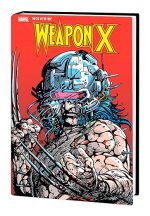
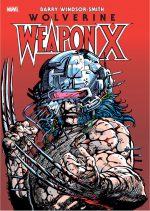
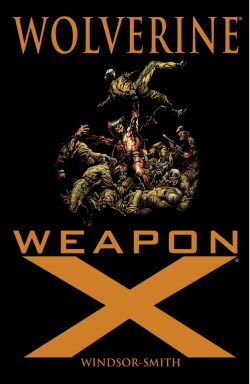
Wolverine: Weapon X Gallery Edition


By Barry Windsor-Smith, with Chris Claremont, Frank Tieri, Avalon’s Raymund Lee, Jim Novak, Tom Orzechowski & various (MARVEL)
ISBN: 978-1-3029-3395-1 (HB/Digital edition) TPB

Wolverine is all things to most people and in his long life has worn many hats: Comrade, Ally, Avenger, Teacher, Protector, Punisher. He first saw print in a tantalising teaser-glimpse at the end of The Incredible Hulk #180 (cover-dated October 1974 and Happy 50th, Eyy?): prior to indulging in a full-on scrap with the Green Goliath – and accursed cannibal critter The Wendigo – in the next issue. The Canadian super-agent was just one more throwaway foe for one of Marvel’s mightiest stars, and vanished until All-New, All Different X-Men launched.

The semi-feral Canadian mutant with fearsome claws and killer attitude rode – or perhaps fuelled – the meteoric rise of those rebooted outcast heroes. He inevitably won a miniseries try-out and his own series: two in fact, in fortnightly anthology Marvel Comics Presents and an eponymous monthly book (of which more later and elsewhere).

In guest shots across the MU plus cartoons and movies he carved out a unique slice of super-star status and screen immortality. He hasn’t looked back since, and over those years many untold tales of the aged agent (eventually revealed to have been born in the 19th century) explored his erased exploits in ever-increasing intensity and detail. Over decades, his many secret origins and a stream of revelatory disclosures regarding his extended, self-obscured life slowly seeped out. Cursed with recurring periodic bouts of amnesia, mind-wiped ad nauseum by sinister or even well-meaning friends and foes, the Chaotic Canucklehead packed a lot of adventurous living into decades of existence – but mostly didn’t remember much of it. This permanently unploughed field conveniently resulted in a crop of dramatically mysterious, undisclosed back-histories, the absolute best of which is re-presented here.

Spanning March to September of 1991 in 8-page instalments, Marvel Comics Presents # 72-84 hosted a much-demanded semi-origin for the mystery mutant, revealing how he was internally enrobed with wonder-metal adamantium. The tale delivered a ‘Prologue’, 12 highly visual revelatory chapters and a concluding ‘Interlude & Escape’. In 1993, when the tale was collected into a graphic novel, Larry Hama wrote a prose ‘Epilogue’ to dot all the “I”s and cross all the “T”s, and that’s included here, plus thematic continuations to the saga that shook the Marvel firmament. Those include an excerpt from Wolverine #166 and the contents of the Smith co-crafted X-Men #205.

A visual tour de force with truly visceral imagery – almost medical torture porn – the story of how a burned-out spy walks into a bar and eventually regains his senses sometime later, changed beyond all recognition, is told in overlapping, interwoven flashbacks within flashbacks.

The abduction, who did to what to “Logan” under the illicit auspices of “Experiment X” – and why – is all here to experience in gorge-rising detail, but the easy answers you want won’t be easy to see. The monstrous tale of forced transmutation, fight for survival and autonomy and the dichotomy of what separates Man from Animal reveals facts yet leaves truths to later stories. What you have here is how a victim of atrocity overcomes his tormentors and lives free by not dying… and it is truly spectacular.

Written, illustrated, coloured and lettered by Barry Windsor-Smith, Weapon X is short and pretty to look upon, a masterpiece of visual storytelling that must be seen to be believed. It’s also a superb shock-horror tribute to Frankenstein, exposing the true nature of the tortured soul underneath the imposed layers unknown enemies have smothered Logan in for so very long and the first step towards his ultimate emancipation.

Following the Hama conclusion, an extract from Wolverine #166 (September 2001) sees Windsor-Smith return to his opus in a flashback sequence scripted by Frank Tieri: focusing on one of the nameless army grunts (and rare survivor) who faced the berserk escaping Experiment X. Accompanied by Windsor-Smith’s cover for #167 and mirrored by his cover for Uncanny X-Men # 205 (May 1986), they precede his collaboration with Chris Claremont on ‘Wounded Wolf’; another boldly visual triumph as Wolverine faces vengeance-crazed, adamantium augmented cyborg Lady Deathstrike in a compelling fable of obsession guest-starring little Katie Power from pre-teen titans Power Pack.

Although there are many versions of this collection available, this Gallery Edition is a dream for fans of Windsor-Smith art, closing with 17 pages of original art and a selection of X-related covers, images and pin-ups by the author. These are culled from the back of Wolverine #4, Marvel Comics Presents # 72-84, and assorted X-collections including Weapon X Hardcover (1993), Weapon X Trade Paperback (2001), Wolverine: Weapon X Marvel Premiere Classic Hardcover,  X-Men: Lifedeath Marvel Premiere Classic Hardcover, There are also house ads, promo posters, and variant covers for Uncanny X-Men #395, New X-Men #115,and Deadpool #57-60.

Short, fierce, relentless and unmissable.
© 2022 MARVEL.

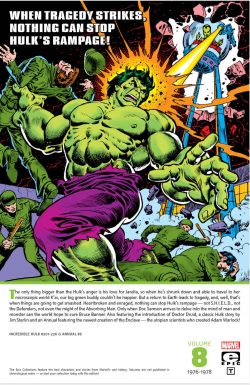
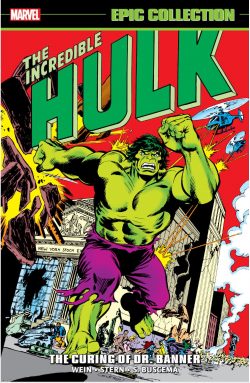
Incredible Hulk Epic Edition volume 8 (1976-1978): The Curing of Dr. Banner


By Len Wein, Roger Stern, Sal Buscema, Herb Trimpe, Jim Starlin, David Anthony Kraft, George Tuska, Keith Pollard, Joe Staton, Ernie Chan, Tom Palmer, Alfredo Alcala, Frank Giacoia, Mike Esposito, Joe Sinnott, Josef Rubinstein & various (MARVEL)
ISBN: 978-1-3029-4879-5 (TPB/Digital edition)

Bruce Banner was a military scientist accidentally caught in a gamma bomb blast of his own devising. As a result, stress and other factors trigger transformations into a big green monster of unstoppable strength and fury. One of Marvel’s earliest innovations and first failure, after initially troubled early years he finally found his size-700 feet and a format that worked, becoming one of the company’s premiere antiheroes and most popular features.

The Gamma Goliath was always graced with artists who understood the allure of shattering action, the sheer cathartic reader-release rush of spectacular “Hulk Smash!” moments, and here – following in the debris-strewn wake of Jack Kirby, Steve Ditko, Marie Severin and Herb Trimpe – Sal Buscema was showing the world what he could do when unleashed…

This chronologically complete compendium re-presents Incredible Hulk King Size Annual #6 and issues #201- 226 of his monthly magazine, spanning July 1976 – August 1978.

Crafted by writer Len Wein and illustrated by Buscema & Joe Staton, Hulk #201 features ‘The Sword and the Sorcerer!’ wherein the monster is marooned on a perilously primitive sub-atomic world just long enough to liberate its people from brutal despot (and demon-possessed pawn) Kronak the Barbarian before starting to shrink uncontrollably. He soon arrives in the promised land of his beloved long-lost alien love Queen Jarella

 ‘Havoc at the Heart of the Atom’ reveals how his last visit had rendered the barbarous world tectonically unstable and wrecked the ancient civilisation which once had the power to blend Banner’s mind with the Hulk’s body. Moreover, the once-gentle population then turned on the queen they held responsible…

Reunited with his beloved, the simplistic brute swears to fix the problem confronting the antediluvian horror who first hijacked him to the Microverse… and who still craves bloody revenge. Once again evil fails at great personal cost. The ‘Assault on Psyklop!’ delivers crushing defeat to the vile insectoid and a guardedly happy ending for the man-brute – until a rescue attempt from Earth brings Hulk home, carrying an astounded Jarella with him…

Herb Trimpe briefly returned in #204 to plot and pencil a tale of time-bending might-have-beens, as brilliant theoretician Kerwin Kronus offers to eradicate Banner’s problems by turning back time and undoing the accident which created the Hulk. Sadly, the experiment succeeds all too well: briefly forming an alternate timeline wherein original sidekick Rick Jones died and the time-master became an even greater menace to reality. Banner/Hulk must make a heartbreaking sacrifice to close that unacceptably ‘Vicious Circle’

‘Do Not Forsake Me!’ in #205 depicts the most tragic moment in the Green Goliath’s tortured life when Jarella sacrifices herself to save a child from rampaging robbery robot Crypto-Man, leaving the bereft Hulk ‘A Man-Brute Berserk!’ His trail of destruction leads from Gamma Base, New Mexico all the way to New York City where even his friends and allies cannot calm the grieving green goliath, leading to a brutal battle ‘Alone Against the Defenders!’ who finally realise compassion is the only method that will work against their traumatised ally-turned-foe…

The bereft beast is still beside Defender-in-Chief Doctor Strange for David Anthony Kraft, Trimpe and inkers Frank Giacoia & Mike Esposito for Incredible Hulk King Size Annual #6’s ‘Beware the Beehive!’ wherein a band of mad scientists attempt to recreate their greatest success and failure. Morlak, Hamilton, Shinsky and Zota were a rogue science collective known as The Enclave, who – from their hidden “Beehive” lair – had originally spawned puissant artificial man Him (latterly AKA Adam Warlock).

Here, three of them reunite for another go at building a compliant god they can control, but when they abduct Stephen Strange to replace their missing fourth, the magician has the Jade Juggernaut save him from the experiment’s inevitable consequences: a compassionless super-slave dubbed Paragon whose first task is to eradicate Strange and subdue mankind. Happily, after a border-shattering, army-crunching global rampage, that’s when the Hulk kicks the wall in and goes to work…

In Incredible Hulk #208 Wein, Buscema & Staton reveal ‘A Monster in Our Midst!’ as Bruce Banner finally rejects ending his pain-wracked existence and begins a new and – hopefully – stress-reduced life where his alter ego will never be seen again. That resolve only lasts as long as it takes maniacal Crusher Creel – freed as a consequence of the Jade Juggernaut’s most recent rampage – to accept a commission from a triumvirate of hooded schemers who want the Hulk dead. Of course, even though ‘The Absorbing Man is Out for Blood!’, the super-thug proves no match for Hulk’s unfettered fury, but his well-deserved drubbing results in Banner collapsing unconscious in alley where he is eventually found by a mystic do-gooder in search of an ally…

With #210, Ernie Chan became Buscema’s regular inker as Wein’s ‘And Call the Doctor… Druid!’ finds both Banner and his brutish alter ego crucial to a plan to defeat ancient mutant Maha Yogi, his vast mercenary army and alien bodyguard Mongu before they complete their preparations for world domination. Although the battles of ‘The Monster and the Mystic!’ are a close-run thing, virtue is eventually victorious, but makes little difference to the Hulk’s former teen companion Jim Wilson as he hitchhikes across America, utterly unaware he is the target of a vicious criminal conspiracy. The plots hatch once Jim reaches New York City where his hidden tormentors decide that he must be ‘Crushed by… the Constrictor!’ Neither they nor their ruthless high-tech hitman expected the Hulk to intervene…

With a friend and confidante who shares his secrets, you’d expect Banner’s life to get a little easier, but the authorities never stop hunting the Hulk, who initially realises ‘You Just Don’t Quarrel with the Quintronic Man!’ (inked by Tom Palmer) before bouncing back to trash a formidable five-man mecha suit. As Chan returns, this bout leads to a frenzied clash with a new hyper-powered hero resolved to make his name by defeating America’s most terrifying monster in ‘The Jack of Hearts is Wild!’

Macabre old enemy Bi-Beast is resurrected in #215; still eager to eradicate humanity in ‘Home is Where the Hurt Is’ and nearly succeeding after seizing control of SHIELD’s Helicarrier. Only desperate action by General Thaddeus Ross saves the day, as the old soldier uses the carrier’s tech to shanghai Banner: letting nature take its savage course and hoping the right monster wins the inevitable blockbuster battle before a ‘Countdown to Catastrophe!’ leaves the planet a smoking ruin…

A moodily poignant change of pace comes in #217 as ‘The Circus of Lost Souls!’ sees the shell-shocked Hulk lost somewhere in Europe, defending a band of carnival freaks from the dastardly depredations of The Ringmaster and his Circus of Crime: a solid demarcation signalling Wein’s move  away from scripting in favour of co-plotting, allowing Roger Stern to find his own big green feet to guide the Green Goliath’s future…

That begins with ‘The Rhino Doesn’t Stop Here Anymore’ (#218 by Wein & Stern, with George Tuska, Keith Pollard & Chan handling visuals) as super-strong, gamma-tainted psychologist “Doc” Leonard Samson takes centre stage battling the ruthless Rhino, whilst in #219 Banner learns ‘No Man is an Island!’ (Wein, Stern, Sal Buscema & Chan) after hiring on as a freighter deckhand, only to have it sunk from under him by submarine-based pirate Cap’n Barracuda. Washed ashore on a desert atoll, Hulk is befriended by a deluded soul who believes himself to be Robinson Crusoe. As events unfold an even stranger truth is revealed when Barracuda captures the madman to pluck the secret of making monsters from his broken mind. The cruel corsair has utterly underestimated the ferocious loyalty and compassion of the Hulk, who unleashes devastating destructive ‘Fury at 5000 Fathoms!’

With Stern in authorial control, Sal Buscema is joined by Alfredo Alcala for #221’s ‘Show Me the Way to Go Home’, with still all-at-sea Banner rescued from drowning by marine explorer Walt Newell. He ferries his exhausted passenger back to Manhattan where he is recognised as Banner. Realising he has unwittingly unleashed The Hulk on a major population centre, Newell exposes his own secret identity as subsea superhero Stingray and pursues his former guest. The battle is painfully one-sided and Stingray near death when Jim Wilson intervenes, saving the marine crusader’s life, but only at the cost of Hulk’s trust…

Wein returned for one last hurrah in #222, scripting a plot by artist Jim Starlin (abetted by Alcala). A potently creepy horror yarn begins as the Jade Juggernaut tears through another unfortunate army unit before being gassed into unconsciousness. Banner awakens in the care of two children living in a cave, but they’re not surprised by the fugitive’s transformations: not since the radioactive stuff changed their little brother…

Now people have been disappearing and although they haven’t grasped the truth of it yet, Bruce instantly grasps what is involved in ‘Feeding Billy’… and what his intended role is…

Now firmly established, Stern began an ambitious storyline in #223 (illustrated by Sal & Josef Rubinstein) as ‘The Curing of Dr. Banner!’ sees the monster’s human half spontaneously purged of the gamma radiation that triggers his changes. Heading for Gamma Base to verify his findings, Bruce discovers the entire facility has been taken over: mind-controlled by his ultimate archenemy…

As the villain makes everyone ‘Follow the Leader!’, Doc Samson and General Ross escape and beg Banner to again sacrifice his humanity for the sake of mankind. Only the Hulk has ever defeated The Leader and their only hope is to recall and harness his unstoppable fury. Tragically, the halfway measures fail at the final moment and the villain has cause to ask ‘Is There Hulk After Death?’ With Bruce seemingly deceased, his compatriots jumpstart his system with another overwhelming dose of gamma rays and soon everybody involved has cause to regret the resurrection of the original Gamma Goliath as another ordnance-obliterating clash with the military in #226’s ‘Big Monster on Campus!’ (Stern, Buscema & Joe Sinnott) leads to the man-monster invading his old college and suffering a psychological trauma that could end his rampages forever…

To Be Hulk-inued…

Graced throughout with covers by Rich Buckler, John Romita, Trimpe, Dan Adkins, Dave Cockrum, Marie Severin, Giacoia, Ed Hannigan, Chan, Starlin, Rubinstein and Ron Wilson, this cataclysmically cathartic tome is rounded out with a blitz of bonus features. Front & back covers for The Incredible Hulk Marvel Treasury Edition #17 (1978) by Jeff Aclin & Tony DeZuñiga precede a panoramic landscape pin-up poster by Trimpe of Hulk smashing the Hulkbusters from a UK Marvel mag (by way of F.O.O.M. #19). These are followed by an airbrush treat by Ken Steacy, starring old Jade Jaws, Ant-Man & The Wasp as first seen on Marvel Comics Index #7A (1978) plus its star-studded frontispiece by Franc Reyes. Contemporary house ads lead into an unused Cockrum cover and a selection of original art by Buckler, Chan, Starlin, Alcala, Buscema & Rubinstein, said pictorial treasure treats climaxing with 5 stunningly beautiful pencilled pages of a never-completed story by Wein and Swamp Thing co-creator Bernie Wrightson.

The Incredible Hulk is one of the most well-known comic characters on Earth, and these stories, as much as the cartoons, TV shows, games, toys, action figures and movies are the reason why. For an uncomplicated, earnestly vicarious experience of Might actually being Right, you can’t do better than these exciting episodes, so why not Go Green now?
© MARVEL 2023

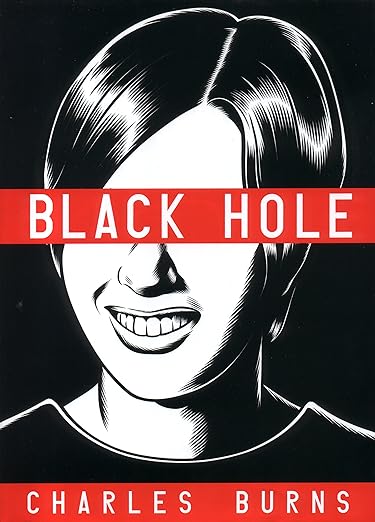
Black Hole


By Charles Burns (Jonathan Cape)
ISBN: 978-0-37542-380-2 (HB) 978-0-22407-778-1 (TPB)

On this day in 2019, those happy Big Science people at the Event Horizon Telescope Project released the first picture of a black hole as located at the centre of galaxy M87. No one’s done a graphic novel of that yet but there’s this superb tome that seems to have slipped from common consciousness…

One of the most impressive and justifiably lauded graphic novels ever, Black Hole is a powerfully evocative allegorical horror story about sex, youth and transformation, but don’t let that deter you from reading it. It’s also a clever, moving, chilling and somehow uplifting tale displaying the bravura mastery of one of the greatest exponents of sequential narrative the English language has ever produced – even if he has found his spiritual and commercial home producing comics in Europe.

Originally released as a 12-issue limited series under the aegis of Kitchen Sink Press, the tale was rescued and completed through Fantagraphics when the pioneering Underground publisher folded in 1999. On completion, Black Hole was promptly released in book form by Pantheon Press in 2005, although many fans and critics despaired at the abridged version which left out many of Burns’ most potent full-page character studies of the deeply troubled cast “an error of economy” corrected in subsequent editions. It won eleven of the comic world’s most prestigious awards and I’m revisiting my battered Jonathan Cape UK edition because it’s still not available digitally

It’s the 1970s in Seattle, and there’s something very peculiar happening amongst local teens out in the safe secure suburbs. In ‘Biology 101’, Keith Pearson can’t concentrate on properly dissecting his frog because his lab partner is Chris Rhodes, the veritable and literal girl of his dreams.

Trying to keep cool only makes things worse and when he suddenly slips into a fantastic psychedelic daydream, the swirling images resolve into a horrific miasma of sex, torn flesh and a sucking void. Suddenly he’s regaining consciousness on the floor with the entire class standing over him. They’re all laughing at him… all except Chris.

‘Planet Xeno’ is a quiet patch of woodland adults don’t know about, where kids can kick back, drink, smoke, get stoned and just talk. The big topic among the guys is “the bug”: a sexually transmitted disease that causes bizarre, unpredictable mutations like uncontrolled growths, extra digits, pigmentation changes, and new orifices that don’t bleed…

As Keith and best buds Dee and Todd shoot the breeze and goof off, they discover an odd encampment, strewn with old toys and bottles and junk. Some of the sufferers of the “Teen Plague” have relocated here to the forest, founding a makeshift camp away from prying eyes and wagging tongues. When Keith finds a girl’s shed skin hanging from a bush, he fears creepy mutants are closing in and suffers a crazy disorienting premonition…

In ‘SSSSSSSSSS’ Chris is dreaming: a ghastly phantasmagoria involving naked swimming in pollution, a bunch of strange guys, monsters and that fainting kid Keith turning into a serpent. It all ends with her examining the new holes in her body before ripping off her old skin and leaving it hanging on a bush…

She’s drinking illicit beer by the lake in ‘Racing Towards Something’, remembering that wild party a week ago and what she did with the cool guy Rob Facincanni. As she came on to him he kept trying to tell her something but she was in no mood to listen. She just didn’t want to be the good girl anymore…

She recalls the moment of explosive climax and horror when she discovered a hideous second mouth in his neck… and the noises. It seemed to be speaking…

In the sordid guilty aftermath she felt awful but had no idea what that furtive, disappointing assignation had done to her.

Rob is still sleeping with Lisa. She’s accepted the cost of the curse and the ghastly changes in her body, but what she won’t take is him screwing around. She has heard Rob’s second mouth talking as they lay together and needs to know ‘Who’s Chris?’

Keith and his bros are getting stoned again when he hears some guys have just watched the so-virginal Chris skinny-dipping and seen her sex-caused mutation. The virgin queen isn’t any more…

In ‘Cut’ their teasing proves too much and he storms off into the scrub, accidentally spotting the object of his desire as she gets dressed again. Guiltily voyeuristic, he’s prompted to action when she steps on broken glass and cries out. Dashing to her rescue he bandages her foot, too ashamed to admit just how much of her he’s really seen. All Keith knows is that someday he will be with her. Fate was obviously on his side…

‘Bag Action’ finds him and Dee trying to buy weed from some skeevy college guys, but our frustrated romantic is utterly unable to get lascivious, furtive, distracting naked images of Chris out of his mind.

However, after sampling some of the dope in the Frat boys’ dilapidated house, he meets their housemate Eliza: an eccentric artist extremely high, nearly naked and very hungry. Just as baked, achingly horny and fascinated by her cute tail (not a euphemism), Keith almost has sex with her but is interrupted by his idiot pal at just the wrong moment…

Many of those infected by The Bug are camped out in the woods now and ‘Cook Out’ finds them having a desperate party around a roaring fire. Rob is there, bemoaning the fact Lisa has kicked him out, but he’s also acutely aware that the sex-warped kids are getting oddly wild, manic, even dangerous…

‘Seeing Double’ finds downcast, devastated Chris talking things over with Rob at the outcast encampment. The naive fool has just discovered what’s she got and what it means. Lost and disgusted, convinced she’s a dirty monster with a biological Scarlet Letter as part of her flesh, Chris drinks and talks and, eventually, finds comfort in her bad boy’s arms…

In ‘Windowpane’ Pearson, Dee and Todd drop their first tabs of acid and head for a party at Jill’s house. Increasingly morose and troubled Keith is feeling ever-more isolated and alienated and the LSD coursing through his system isn’t helping, When Dee and Jill start to make out, he leaves and finds her big sister crying outside. After she shouts at him he turns and, still tripping off his nut, heads into the woods.

Lost and confused, he sees horrific and bizarre things in the trees and bushes before stumbling into some of the infected kids around their fire. In a wave of expiation he begins to talk and keeps on going, slowly coming down amongst temporary friends. Keith has no suspicion that some of the things he saw were not imaginary at all…

‘Under Open Skies’ sees Chris and Rob playing hooky. Fully committed to each other now, they head to the coast and a perfect solitary day of love at the beach. They think it’s all going to be okay but the voice from Rob’s other mouth says otherwise…

Back home again, Chris’ recent good times are ruined by her parents’ reaction. Grounded, the former good girl makes up her mind and, gathering a few possessions, elopes with her lover to a new life in ‘The Woods’ where grotesquely bestial but kindly Dave Barnes takes them under his wing.

Although they have bonded, Rob cannot stay with Chris and returns to his home and High School. Although he spends as much time as possible at the encampment, Chris is too often alone and on one of her excursions into the wilds finds a bizarre and frightening shrine. Little does she know it’s one of the things the tripping Keith thought he’d hallucinated…

Summer grinds on and Pearson plucks up nerve to go back to the college guys’ house. ‘Lizard Queen’ Eliza is on the porch, drawing but obviously upset by something. Confused, scared and without knowing what they’re doing. they end up in bed consummating that long-postponed act of drug-fuelled passion…

Chris’ days of innocent passion end suddenly when Rob is brutally attacked by a lurking intruder in ‘I’m Sorry’. She descends into a stupor for days until spotting nice safe Keith at one of the camp’s evening bonfire parties. Soon, he’s arranged for her to move into an empty property he’s housesitting over ‘Summer Vacation’ but even though he’s attentive, kind, solicitous and so clearly wants to be with her, he’s just not Rob.

Chris has been going slowly crazy since her beloved boy vanished: reliving memories good and bad, feeling scared and abandoned, playing dangerously with the gun he left her “for protection”. Keith is still plagued by nightmares and X-rated thoughts of Eliza in ‘A Dream Girl’, but hopeful he now has a chance with Chris. That swiftly changes when he checks on her and discovers the house he’s supposed to be guarding has been trashed. There’s garbage everywhere, a bunch of her fellow outcasts have moved in and she’s clearly avoiding him, locked in a room, constantly “sleeping”…

Despondent, confused Pearson doesn’t know what to do. Chris is having some kind of breakdown and the house – his responsibility – is a wreck. The lovesick fool is trapped and crumbling when Eliza breezes back into his life. If only his own bug mutation wasn’t so hideous…

Heading back to the home once more he finds Chris has gone and the pigsty has become a charnel house. All summer there has been a frightening, oppressive presence in the woods and with the Fall coming the mood is beginning to darken. When Dave is barracked and abused whilst trying to buy takeout food, he snaps and pulls out Chris’ gun. Calmly taking his fried chicken from the crime-scene he walks back to the woods and the troubled soul known as ‘Rick the Dick’. It’s going to be their last meal…

Keith meanwhile has found his own happy ending, ‘Driving South’ with gloriously free spirited, undemanding Eliza, but is still gripped by what he found at the house. At least he and Eliza helped survivors get away, but now – happily content with his idyllic artist girl and after all the horrible secrets they’ve shared – he can’t help wondering what happened to Chris.

That mystery and how Dave got the gun are only revealed in the compulsively low key and wildly visual climax ‘The End’

Complex, convoluted, utterly compelling, expressive, evocative and deeply, disturbingly phantasmagorical, Black Hole is a comics masterpiece of graphic genius and astoundingly utilised allegory and metaphor merged with the eternal dissatisfaction and alienation of youth. It explores and reexamines evolution and cultural ostracization as well as the verities of love, aspiration, jealousy and death to concoct a tale no other medium could (although perhaps Luis Buñuel, David Lynch or David Cronenberg might have made a good go of it in film).

If you are over 16 and haven’t read it, do – and soon.
© 2005 Charles Burns. All rights reserved.

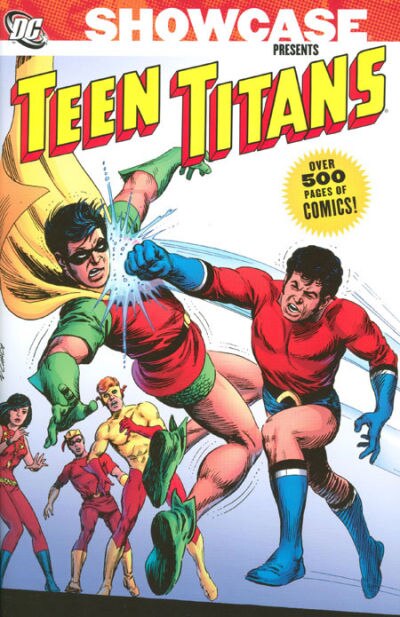
Showcase Presents Teen Titans volume 2


By Mike Friedrich, Bob Haney, Neal Adams, Marv Wolfman, Robert Kanigher, Steve Skeates, Gil Kane, Wally Wood, Nick Cardy, Sal Amendola, George Tuska, Carmine Infantino, Dick Dillin, Joe Giella, Jim Aparo & various (DC Comics)
ISBN: 978-1-84576-677-1 (TPB)

Hey, Super Kids! Happy 60th Anniversary!

It’s perhaps hard to grasp these days that once kid heroes were a rarity and at the beginning of the Silver Age, often considered a liability. Now the massive Teen Titans brand – with numerous comic book iterations, assorted TV shows, movies and even an award-winning early reading version (Aw, Yeaah! Tiny Titans!) their continuance as assured as anything in our biz. Nevertheless, during the tumultuous 1960s the series – never a top seller – courted controversy and actual teenage readers by confronting controversial issues head on.

I must have been just lucky, because these stories of lost youth searching for great truths and meaning were released just as I turned Teen. They resonated especially because they were talking directly to me. It didn’t hurt that they were brilliantly written, fantastically illustrated and staggeringly fresh and contemporary. I’m delighted to declare that age hasn’t diminished their quality or impact either, merely cemented their worth and importance.

The concept of underage hero-teams was not a new one when the Batman TV show fuelled DC’s move to entrust big heroes’ assorted sidekicks with their own regular comic as a hip and groovy ensemble as dedicated to helping kids as they were to stamping out insidious evil.

The biggest difference between wartime groups like The Young Allies, Boy Commandos or Newsboy Legion and such 1950s holdovers as The Little Wise Guys or Boys Ranch and the DC’s new team was quite simply the burgeoning phenomena of “The Teenager” as a discrete social and commercial power bloc. These were kids who could be allowed to do things themselves (within reason) without constant adult aid or supervision. As early as spring 1964, Brave and the Bold #54 had tested the waters in a gripping tale by Bob Haney & Bruno Premiani in which Kid Flash, Aqualad and Robin foiled a modern-day Pied Piper.

What had been a straight team-up was formalised a year later when the heroes reunited and included Wonder Girl in a proper super-group with a team-name: Teen Titans. With the stories in this second merely monochrome print-only relic of a collected volume of those early exploits the series had hit a creative peak, with spectacular, groundbreaking artwork and fresh, different stories that increasingly showed youngsters had opinions and attitudes of their own – and often that they could be at odds with those of their mystery-men mentors…

Spanning cover-dated January 1969 to December 1971 and collecting Teen Titans #19-36, and team-up appearances from Brave and the Bold #83 & 94 and World’s Finest Comics #205, these tales cover the most significant period of social and political unrest in American history and do it from the perspective of the underdogs, the seekers, the rebels…

The wonderment begins with a beautifully realised comedy-thriller as boy bowman Speedy enlists. ‘Teen Titans: Stepping Stones for a Giant Killer!’ (#19, January/February 1969), by Mike Friedrich, Gil Kane & Wally Wood, pitted the team against youthful evil mastermind Punch who planned to kill the Justice League of America and thought a trial run against the junior division a smart idea…

Brave and the Bold # 83 (April/May 1969) took a radical turn as the Titans (sans Aqualad, who was dropped from the squad to appear in Aquaman and because there just ain’t that much sub-sea skulduggery) tried to save Bruce Wayne’s latest foster-son from his own inner demons in a tense thriller about trust and betrayal in the Haney & Neal Adams epic ‘Punish Not my Evil Son!’. TT #20 took a long running plot-thread about extra-dimensional invaders and gave it a counterculture twist in ‘Titans Fit the Battle of Jericho’, a rollicking romp written by Neal Adams, pencilled by him & Sal Amendola and inked by brush-maestro Nick Cardy – one of the all-out prettiest illustration jobs of that decade.

Exemplars of the era/symbolic super-teens Hawk and Dove join proceedings for #21’s ‘Citadel of Fear’ (Adams & Cardy): chasing smugglers, finding aliens and ramping up the surly teen rebellion quotient whilst moving the invaders story-arc towards its stunning conclusion. ‘Halfway to Holocaust’ is only half of #22, the abduction of Kid Flash & Robin leading to a cross-planar climax as Wonder Girl, Speedy and a radical new ally quash the invasion threat forever, but still leaving enough room for a long overdue makeover in ‘The Origin of Wonder Girl’ by Marv Wolfman, Kane & Cardy. For years the series – and DC editors in general – had fudged the fact the younger Amazon Princess was not actually human, a sidekick, or even a person, but rather an incarnation of Wonder Woman as a child. As continuity backwriting strengthened its stranglehold on the industry, it was finally felt that the team’s distaff member needed a fuller background of her own.

This moving tale revealed she was in fact a human foundling rescued by Princess Diana and raised on Paradise Island where super-science gave her all the powers of a true Amazon. They even found her a name – Donna Troy – and an apartment, complete with hot roommate. All Donna had to do was sew herself a glitzy new figure-hugging costume…

Now thoroughly grounded, the team jetted south in #23’s fast-paced yarn ‘The Rock ‘n’ Roll Rogue’ (by Haney, Kane & Cardy), trying to rescue musical rebel Sammy Soul from his grasping family and – by extension – his lost dad from Amazonian headhunters. ‘Skis of Death!’ (#24, November/December) by the same creative crew has the quartet holidaying in the mountains and uncovering a scam to defraud Native Americans of their lands. It was a terrific old-style tale, but with the next issue the most radical change in DC’s cautious publishing history made Teen Titans a comic which had thrown out the rulebook…

For a series which spoke so directly to young people, it’s remarkable to think that ‘The Titans Kill a Saint?’ and its radical departure from traditional superhero stories was crafted by Bob Kanigher & Nick Cardy – two of the most senior creators in the business. The emotion-charged thriller set the scene for a different type of human-scaled adventures that were truly gripping and bravely innovative. For the relatively short time the experiment continued, readers had no idea what might happen next…

While on a night out in their civilian identities, Robin, Kid Flash, Speedy, Wonder Girl, Hawk and Dove meet telepathic go-go dancer Lilith who warns them of impending trouble. Cassandra-like, they ignore her warnings and a direct result a globally revered Nobel Laureate is gunned down. Coming so soon after the deaths of John F. and Robert Kennedy, Dr. Martin Luther King Jr. and Malcolm X, this was stunning stuff and in traumatised response all but Robin abandon their costumed personas and – with the help of mysterious millionaire philanthropist and mentor Mr. Jupiter – dedicate their unique abilities to exploring humanity’s flaws and graces: seeking fundamentally human ways to atone and make a difference in the world…

With Lilith beside them, they undertake different sorts of missions, beginning with ‘A Penny For a Black Star’ in which they attempt to live in a poverty-wracked inner city ghetto, where they find Mal Duncan, a street kid who becomes the first African-American in space…although it’s a one-way trip.

TT #27 reintroduced eerie elements of fantasy as ‘Nightmare in Space’ (Kanigher, George Tuska, Carmine Infantino & Cardy) sees the Titans en route to the Moon to rescue Mal, before encountering something far beyond the ken of mortal imagining. Meanwhile on Earth, Donna’s roommate Sharon stumbles upon an alien incursion. ‘Blindspot’ by Steve Skeates & Cardy was tangentially linked to another innovative saga then playing out in Aquaman’s comic book. You’ll need to see Aquaman: The Search For Mera and Aquaman: Deadly Waters for that extended delight. Both were edited by fresh-faced Dick Giordano, who was at this time responsible for the majority of innovative new material coming out of DC, even whilst proving himself one of the best inkers in the field.

Suffice to say that the Sea King’s foe Ocean Master had allied himself with aliens and Sharon became involved just as Aqualad returned looking for help. Unable to understand the Titan’s reluctance to get involved, Garth tries to go it alone but hits a snag only the original team can fix, which they do in Skeates & Cardy’s concluding chapter ‘Captives!’ However, once the alien threat is thwarted our heroes once more lay down their powers and costumes, but they have much to ponder after seeing what benefits their unique gifts can bring…

Teen Titans #30 featured three short tales, written by Skeates. Illustrated by Cardy, ‘Greed… Kills!’ is a cunning mystery exploring street and white-collar crime, whereas ‘Whirlwind’ is a Kid Flash prose novelette with art by Amendola before ‘Some Call it Noise’ (Infantino & Cardy) delivers an Aqualad solo tale in which his girlfriend Tula – AKA Aquagirl – takes a near-fatal wrong turn at a surface world rock concert.

Student politics took centre-stage in #31’s lead feature ‘To Order is to Destroy’ (Skeates, Tuska & Cardy) as the young heroes investigate a totally trouble-free campus where unhappy or difficult scholars are given a small brain operation to help them “concentrate”, whilst Hawk & Dove solo strip ‘From One to Twenty’ pits quarrelsome Don and Hank Hall against a band of murderous counterfeiters in a deft crime-caper from Skeates, Tuska & Cardy.

The creators then open up the fantasy element again with a time-travelling, parallel universe epic beginning in #32 with ‘A Mystical Realm, A World Gone Mad’ as Mal and Kid Flash accidentally change the past, turning Earth into a magical mad-scape. However, undoing their error results in a Neanderthal teenager being trapped in our time, presenting the group with their greatest challenge: educating a savage primitive and making him into a civilised modern man. Illustrated by Tuska & Cardy, ‘Less Than Human’ signalled the return of Bob Haney as main writer and triggered a gradual return of powers and costumes as the author picked up the pace of Jupiter’s grand experiment, restating it in terms that looked less harshly on comics’ bread & butter fights ‘n’ tights scenarios.

Brave and the Bold #94 (February-March 1971, by Haney & Cardy) offered potent counter-culture thrills as the team infiltrate an inner city commune to negate a nuclear bomb-plot in ‘Rebels in the Streets’, before the exigencies of publishing moved the series into the world of the supernatural as costumed heroes temporarily faded away in favour of tales of mystery and imagination. Haney, Tuska & Cardy’s ‘The Demon of Dog Island’ sees the team – including Robin who had quietly rejoined during the civilisation of cave-boy Gnarrk – desperately battling to prevent Wonder Girl’s possession by a gypsy ghost.

Skeates, Dick Dillin & Joe Giella crated ‘The Computer That Captured a Town’ in World’s Finest Comics #205 (September 1971), slyly examining racism and sexism as Superman finds the Titans trapped in a small town that had mysteriously re-adopted the values of the 1890s – a lot like middle America today but with culprits a lot easier to punch in the face…

Teen Titans #35 reiterated supernatural themes as the team travels to Verona in ‘Intruders of the Forbidden Crypt’ (Haney, Tuska & Cardy) wherein Lilith and the son of Mr. Jupiter’s business rival are drawn into a mesmerising web of tragedy: compelled to relive the doomed love of Romeo and Juliet despite all the rationalisations of modern science and the best efforts of the young heroes…

By the same creators, ‘A Titan is Born’ is a rite of passage for Mal as the everyman “token black guy” faces and defeats the murderous Gargoyle alone and unaided, before the reincarnation tragedy concludes with fate foiled in ‘The Tomb Be their Destiny’: the cover feature of #36. Filling out that issue and this book are two brief vignettes: Aqualad 3-page teaser ‘The Girl of the Shadows’ by Skeates & Jim Aparo and Haney & Cardy’s beguiling opening episode in the origin of Lilith ‘The Teen-Ager From Nowhere’. This showed a 10-year-old orphan’s first prescient exploit and the distrust it engendered, promising much more to come: a perfect place to end this second monochrome masterpiece of graphic literature.

Although perhaps dated in delivery now, these tales were a liberating experience for kids when first released. They truly betokened new empathy with independent youth and tried to address problems that were more relevant to and generated by that specific audience. That they are so captivating in execution is a wonderful bonus. This is absolute escapism and absolutely delightful and demand a fresh edition as soon as possible.
© 1969, 1970, 1971, 1972, 2007 DC Comics. All Rights Reserved.

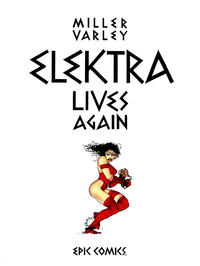
Elektra Lives Again


By Frank Miller & Lynn Varley (Marvel/Epic Comics)
ISBN (hardback):0-87135-738-0 ISBN13 (softcover): 978-0-7851-0890-0

Matt Murdock is a blind lawyer who fights crime and injustice as Daredevil: a costumed acrobat and martial artist whose other senses are so hyper-sensitive he can track a bullet leaving a gun, hear pulse-rates across a street and identify felons by their scent. In college he loved and lost a girl named Elektra Natchios, whose father was murdered before her eyes. She left Matt and became a ninja assassin. Years later they briefly reunited before she was murdered by Bullseye, one of Daredevil’s greatest foes.

Ninja masters The Hand brought Elektra back from death before Murdock granted her final redemption and peace. He was left not knowing if she was actually dead or alive.

Now plagued by nightmares in which her murdered victims are pursuing her, sightless Murdock is being driven mad by visions of her. In the waking world, The Hand are back too and plan to kill Bullseye and reanimate him as their Prime Assassin. Elektra is definitely alive now and intends to stop them…

This cold, lyrical tale of love and horror is a powerful example of Frank Miller’s ability to tell a raw, stripped-down iconic story. Although an uncomfortable fit for the continuity conscious, its bleak and desolate scenario, the balletic grace of the action sequences – all superbly finished with the icy palette of Lynn Varley’s painted colours – and the sheer depth of characterisation makes this one of the most compelling Daredevil stories ever told, although not one to read if unfamiliar with Elektra’s back-story.

Best to track down those stories – collected as Daredevil Visionaries: Frank Miller: Volume II, or in Daredevil Masterworks and Epic Collection editions – first then …

I’m looking at the superb hardback released in 1990, but the most recent release was as part of the ultra-rare, digitally unavailable Elektra by Frank Miller & Bill Sienkiewicz Omnibus from 2016: one of number of revived editions spanning 2002 to 2008. It will be worth your efforts as this multi-award-winning saga is a remarkably impressive and contemplative psychological thriller of obsession and loss and one of the high points in Daredevil’s 60-year history.
© 1990 Epic Comics. © 2002 Marvel Characters, Inc. All Rights Reserved.

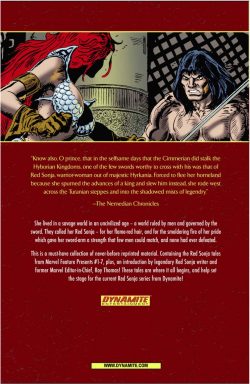
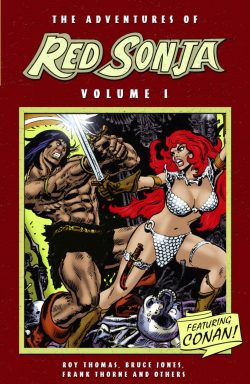
The Adventures of Red Sonja volume 1


By Roy Thomas, Bruce Jones, Frank Thorne, Dick Giordano, Esteban Maroto, Neal Adams, Ernie Chan & various (Dynamite Entertainment)
ISBN: 978-1-93330-507-3 (TPB/Digital edition)

Once upon a time, busty women expertly wielding swords and kicking butt were rarer than politicians and business leaders who respected personal boundaries. Then – for an inexplicably long time – it seemed no lady’s ensemble was complete without a favourite pig-sticker and accompanying armour accessories. That phenomenon eventually settled into women who fight kitted out and tooled up and those who battled unfeasibly underdressed and usually in gear that looked like it really chafed…

If you’d like more fascinating insights on this state of affairs in entertainment arenas you should also check out Jill Bearup’s Just Stab Me Now and/or her YouTube commentaries and lectures on safely and convincingly fighting with sharp objects, heavy implements and a sanguine attitude…

Meanwhile back in comics, you can probably trace the trend for combative, unsuitably cuirassed or chest plated cuties (just stab ME any time now!) to one breakthrough character. Although Diana Prince/Wonder Woman, Valkyrie, Asgardian goddess Sif and even Modesty Blaise all used bladed weapons on a daily basis, none of them ever racked up the kill quotient you’d expect or believe of women in battle until ‘The Song of Red Sonja’ (Conan the Barbarian #23, February 1973).

Drawn, inked and coloured by Barry Windsor-Smith with Roy Thomas scripting, the fragment of a larger epic introduced a dark-eyed hellion to the world. The tale became one of the most popular and reprinted stories of the decade, winning that year’s Academy of Comic Book Arts Awards in the Best Individual Story (Dramatic) category.

Although based on Robert E. Howard’s Russian war-woman Red Sonya of Rogatine (as seen in the 16th century-set thriller The Shadow of the Vulture, with a smidgen of Dark Agnes de Chastillon thrown into the mix) the comic book Red Sonja is very much Thomas’ brainchild.

In his Introduction here – ‘A Fond Look Back at Big Red’ – he shares many secrets of her convoluted genesis, development and achievements as part of the first (of three) archival collection (available in trade paperback and digital editions) of her Marvel appearances. Originally released at a time when accepted editorial wisdom declared comics starring women didn’t sell, Marvel Feature (volume 2) was launched to capitalise on a groundswell of popular interest stemming from Sonja’s ongoing guest shots in Conan stories. This first compilation collects issues #1-7 (November 1975-November 1976) and opens with a then scarce-seen reprint…

Sonja graduated from cameo queen to her first solo role in a short eponymous tale scripted by Thomas and illustrated by Esteban Maroto, Neal Adams & Ernie Chan, tucked into the premiere issue of monochrome mature-reader magazine Savage Sword of Conan – cover-dated August 1974. Colourised by Jose Villarrubia and edited to remove the racier bits, it filled out the premier general distribution Marvel Feature, and revealed in sumptuous style how the wandering woman mercenary undertook a mission for King Ghannif of Pah-Dishah. That task led to her momentous first meeting with Conan and her successful completion of the mission; which was supposed to pay off with the potentate’s most treasured gift. When that reward turned out to be a position as his next wife, Sonja’s response was swift, sharp and so very memorable…

That captivating catch-up yarn leads here to ‘The Temple of Abomination’ (Thomas & Dick Giordano) as the restless sell-sword stumbles upon a lost church dedicated to debauched antediluvian gods and saves a dying priest of Mitra from further torture at the paws of monstrous beast-men…

MF #2 delivered the last key component of Red Sonja’s ascendancy as Frank Thorne (June 16th 1930-March 7th 2021) signed on as illustrator. One of the most individualistic talents in American comics, he began his career in 1948, drawing romances for Standard Comics with the legendary Alex Toth before graduating to better paid newspaper strips. Thorne illustrated Perry Mason for King Features Syndicate and at Dell/Gold Key drew Flash Gordon, Jungle Jim and The Green Hornet, as well as the first years of seminal sci-fi classic Mighty Samson.

At DC he produced compelling work on Tomahawk and Son of Tomahawk before being hired by Thomas at Marvel to illustrate (belated) breakthrough strip Red Sonja. Forever-after connected with feisty, earthy, highly sexualised women, in 1978 Thorne created outrageously bawdy (some say vulgar) swordswoman Ghita of Alizarr for Warren’s adult science fantasy anthology 1984/1994 and a succession of adult satirical strips like Moonshine McJugs for Playboy and Danger Rangerette for The National Lampoon. He won the National Cartoonists Award for Comic Books, an Inkpot Award, a Playboy Editorial Award and countless international honorariums over his astoundingly long career. Throughout his controversial career, steadfast supportive wife Marilyn worked beside him. Their 69-year marriage ended when they both died on same day – March 7th 2021.

Applying his loose, vigorous style and frenetic design sense to a meticulously plotted script from Bruce Jones, Thorne hit the ground running with ‘Blood of the Hunter’ wherein Sonja tricks formidable rival Rejak the Tracker out of an enigmatic golden key. She has also unsuspectingly unleashed a whirlwind or torment as the hunter remorselessly stalks Sonja, butchering everyone she befriends and driving her to the brink of death before their final confrontation…

Marvel Feature #3 reveals the secret of the key after Sonja takes some very bad advice from an old wise-woman and reawakens a colossal death-engine from an earlier age in ‘Balek Lives!’ before endless meanderings bring her to a village terrorised by a mythological threat. However, when she looks into the ‘Eyes of the Gorgon’ she discovers the most merciless monsters are merely human. That same lesson is repeated when ‘The Bear God Walks’ but – after joining a profitable bounty hunt for a marauding beast – Sonja and her new comrades soon find that fake horrors can inadvertently summon up real ones…

With #6, Thomas returned as scripter and set up a crossover with Conan and then-paramour Bêlit: pirate queen of the Black Coast. Although the concomitant issues of Conan the Barbarian (#66-68) aren’t reproduced here, the story is constructed in such a way that most readers won’t notice anything amiss…

Thus, ‘Beware the Sacred Sons of Set’ sees Sonja – after routing a pack of jackal-headed humanoid assailants – commissioned by Karanthes, High Priest of the Ibis God, to secure a magical page torn from mystic grimoire the Iron-Bound Book of Skelos in demon-haunted Stygia. She’s barely aware of an unending war between ancient deities, or that old colleague and rival Conan of Cimmeria is similarly seeking the arcane artefact…

After clashing repeatedly with her rivals and defeating numerous beasts and terrors, Sonja believes she has gained the upper hand in ‘The Battle of the Barbarians’, but there is more at stake than any doughty warrior can imagine…

To Be Continued…

Augmented by a colour-remastered cover gallery by Gil Kane and Thorne, this is a bold and bombastic furiously fun fiesta for fantasy action fans of all ages, genders or persuasions.

RED SONJA® and related logos, characters, names and distinctive likenesses thereof are trademarks of Red Sonja Corporation unless otherwise noted. All Rights Reserved.
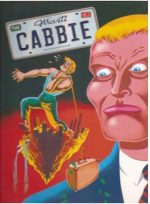
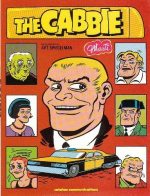
The Cabbie volume 1


By Marti, with an introduction by Art Spiegelman (Fantagraphics Books)
ISBN: 978-1-60699-4504 (HB/Fantagraphics) 978-0874160420 (Album PB Catalan Communications)

Although out of print since 1987, in 2011 Fantagraphics rescued from relative obscurity one of the darkest yet most grimly illuminating classics of European cartooning in this remastered and augmented reissue of The Cabbie: a stylish, nightmarish psycho-sexual noir thriller that has as much seedy kick now as it had when first translated by Catalan Communications…

Now as the macabre maestro has died, my conscience prompts me to pay for neglecting such wonderful comics and it’s only right we should pause to revisit his greatest achievement. Maybe some publisher will endeavour to bring some of his other dark wonders – like Doctor Vertigo, Propaganda Moderna, crime fantasy-thriller Calvario Hills, Cien dibujos por la libertad de Prensa or Terrorista – to a wider international audience.

Marti Riera Ferrer (1955 – 19th January 2024) was born in Barcelona during the heyday of fascist rule. He studied at the Massana School of Arts and Crafts where his efforts coincided with the Generalissimo’s death, and from 1975 to 1979 a liberalisation saw “Marti” creating comics for alterative magazines like Rock COMIC and Star.

From its launch in 1979 he also began contributing to apocalyptic iconoclast El Vibora: short stories and series such as Tony Nuevaola and – with Rodolfo – Lola Lista contra los Nada. These efforts brought international interest and Marti began appearing in Raw and Drawn & Quarterly. Il TaxistaThe Cabbie – began in 1982 and he episodically added to the canon over succeeding years, and although semi-retired from the early Nineties he continued generating other material at his own pace for the magazine Makoki and Tobalina. These tales varied from erotic fiction to general illustrated fare.

Dick Tracy is one of the most well-known strips on Earth and the super-cop’s contributions to the art form are many and indisputable. They occurred over many decades and the medium of graphic narrative grew up with it. Imagine the effect instant exposure – or overexposure – to such an uncompromising, bombastic, iconic property on the artists of a nation where free-expression and creative autonomy was suppressed for generations. That’s what happened when the death of General Franco (who had held Spain in a fascistic time-warp from his victory in April 1939 until his death in November 1975) opened up and liberalised all aspects of Spanish life. When Marti saw the strip he was changed for life…

As Art Spiegelman says in his introduction, “decades of political and social repression gave way to a glorious eruption of creativity that allowed a full-fledged counterculture to come to life at just about the same time that America’s “Love Generation” gave way to what Tom Wolfe labelled the “Me Generation.””

How odd yet fitting then that an American symbol of “The Establishment” so enchanted and captivated young cartoonist Marti Riera that he assimilated every line and nuance to create a bleak, stripped-down and extremely angry homage detailing the tribulations of a seedy, desperate taxi-driver trapped in an abruptly vanished past and prey to a world at once free and dangerous, ungoverned and chaotic…

Driving around the seediest part of town our hero picks up a high-rolling gambler who’s just won big, but the driver’s night goes horribly wrong when a knife-wielding thief hijacks the cab and robs his passenger. Luckily, the Cabbie can handle himself and he quickly, brutally subdues the thug.

Our protagonist is a decent, hard-working man who lives with his ailing mother, humouring her talk of a mysterious inheritance, and allowing her to keep the embalmed cadaver of his father in the spare bedroom, but he’s tragically unaware that his citizen’s arrest will have terrible repercussions for them both. When the son of the thief he captured is released from prison, the ingrate immediately begins a grim campaign of retribution against the Cabbie that creates a maelstrom of tragedy, degradation and despair.

This is a harsh, uncompromising tale of escalating crime and uncaring punishments: blackly cynical, existentially scary and populated with a cast of battered, desolate characters of increasingly degenerate desperation. Even the monsters are victims, but for all that The Cabbie is an incredibly compelling drama with strong allegorical overtones and brutally mesmerizing visuals.

Any mature devotee of comics should be conversant with Marti’s superb work, and with a second volume out there and the hope of digital editions (One bloody Day!), hopefully we soon all will be…
The Cabbie (Taxista) © 2011 Marti. Introduction © 2011 Art Spiegelman. This edition © 2011 Fantagraphics Books.